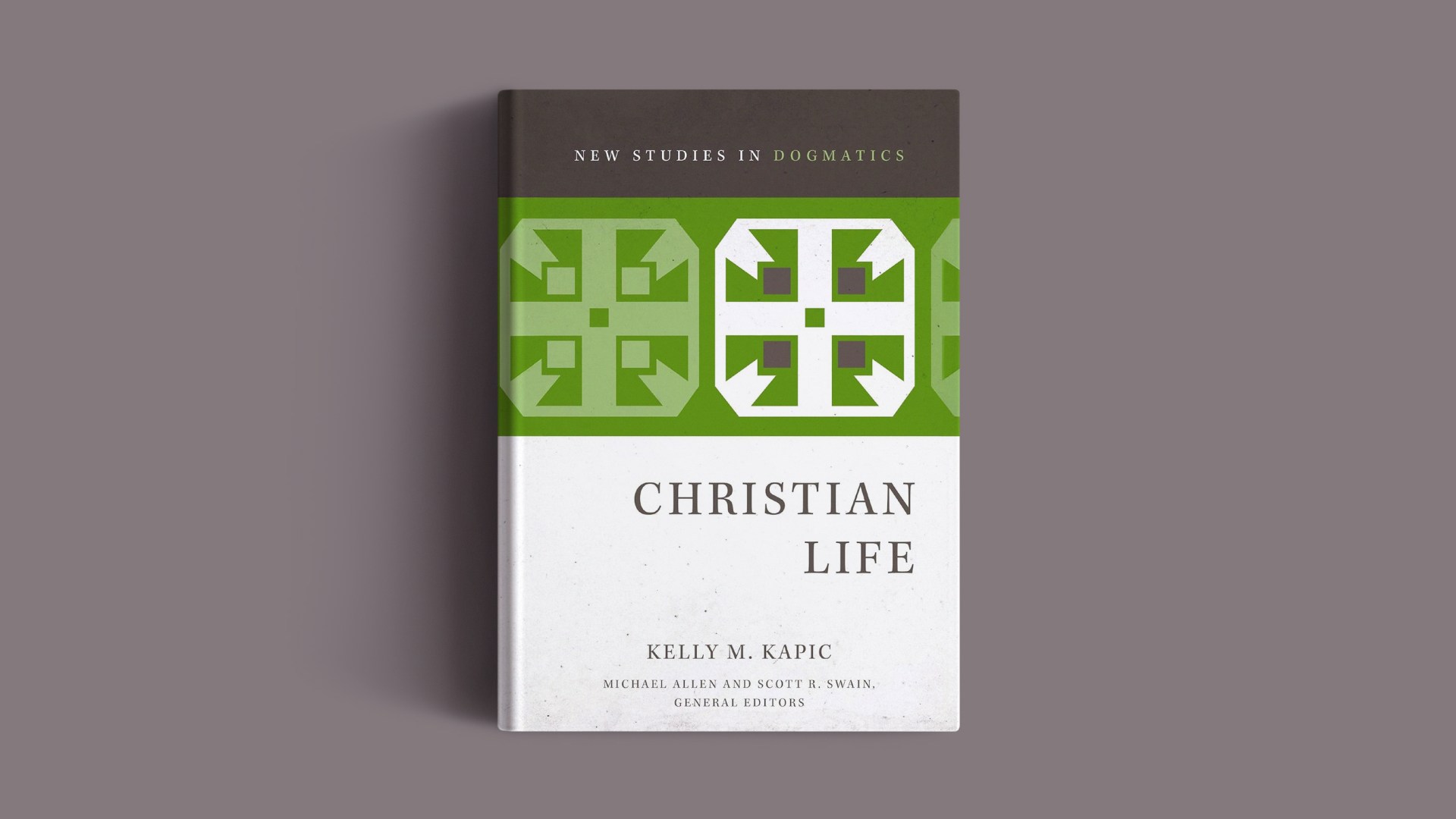
At a time when the word Christian has become a political football thrown about to gain favor and garner power, theologian Kelly Kapic provides a winsome corrective that I believe all Christians, especially American evangelicals, need to hear. In his new book Christian Life, he says the Christian life is “a response to the love of God.” Sounds simple, right? Yet simple is not simplistic.

God’s love is cosmic. It is also richly triune. Kapic writes, “We experience the life-giving power of the Spirit who unites us to the crucified and risen Savior as we learn to rest in the deep love of the Father.” Since the triune God is eternally self-giving, the human response to this love will likewise be the same. Union with the triune God requires a response of self-giving love for others. This is Christian life.
Kapic echoes what recent biblical scholars, such as John Barclay and Teresa McCaskill, and theologians, such as Tom McCall and Willie Jennings, have argued: God’s grace is unconditioned (you cannot earn it), but it is not unconditional (God still expects a response—he wants a relationship). In Kapic’s words, “While God does not need our obedience in order to love us, we who are made alive in Christ are called to participate actively in the Spirit’s work in and through the body of Christ.”
While many American evangelicals reductively equate Christian belief with assent to a set of doctrines in order to “not go to hell,” this is a far cry from the fullness of Christian life. As Kapic argues, truths about the Father, Son, and Spirit are meant to shape the Christian life, a life growing out of union to Christ, a life that fosters gratitude and responsive love.
If Christian faith is more than doctrinal assent but proceeds from union with Christ and reveals itself through self-sacrificing love, this has implications for how we view discomfort, inconvenience, and suffering.

For instance, in Hannah Nation’s research, believers within the Chinese house church understand unity with Christ to necessitate suffering with Christ. The logic goes like this: Since the servant is not above the master (John 15:20) and because the master suffered, those united to the master will suffer. In a 2025 paper Nation presented at the Evangelical Theological Society, she called such a union “the backbone of public witness” for these Chinese believers. This lived theology does not glorify suffering, but it expects that a broken world will reject a crucified king and those unified with him. The Christian life, then, does not equate material abundance, health, and safety with God’s blessing.
Kapic’s book, like Nation’s work, provides the theological legs on which the Christian life stands. If we are united with Christ’s life by the power of the Holy Spirit, we will embody love—love of neighbor, love of enemy, love of creation, and even love of self. Such self-love, when mediated through this union, means we love ourselves through the Son’s love. Kapic explains, “When we turn from Christ to the ego [self], if we are speaking of Christian life, we are not, in fact, turning from Christ at all.”
Instead, we are relationally constituted; I am now in Christ. Therefore, I am able to more fully love myself since this self-love comes from Christ’s love of me. We can love fully because we have been fully loved. The Christian life is secure because its identity and value come from Christ, so we can run toward others rather than away from them.
Kapic reminds the church that our love proceeds from God’s love. But what is equally important is the way he offers this corrective. He models a winsome charity without falling for extremes. For instance, he neither elevates subjective, personal experience over God’s character nor elevates the objective reality of God in a way that becomes impersonal.


Many evangelical Christians either view personal experience suspiciously or see it as the sole determinant of a Christian life. Kapic presents a mediating position, valuing personal experience while not making it the sole determiner of a person’s faith. He writes that the more we can understand who God is and what he has done for us, the more we will be compelled to live with radical love toward God and others.
Richly experiencing a loving God draws us to worship. The more I read and reflected on the triune God’s immense love and goodness (an objective reality), the more my awe and love for God increased (subjective feelings). I found Christian Life shaping me more into the image of the Son. We are drawn into the life of love of the triune God. The incarnate Son is a human who has fully received the love of the Father and is also God our Savior, expressing the perfect love of the Father on our behalf. By the Spirit of Christ, we can receive the love of the Father and then love others.
Kapic’s book concludes by focusing on the body of Christ, the church, as one of the primary contexts in which Christians learn to love others. While, for many, the reputation of the church has fallen, it is nevertheless vital. We are united to Christ, so we are also united to one another. Our union with Christ matures in the context of the church. When we gather, we participate in Christ’s own threefold ministry: “He as our great Priest, King, and Prophet not only receives our worship but is also the leader of our prayers, laments, and corporate worship.”
As Kapic emphasizes, Jesus is not only the one we worship but also, mysteriously, the leader of our worship. Our union to Christ therefore connects us vertically to the triune God and horizontally to our spiritual siblings. Thus, just as a life of responsive gratitude is nonnegotiable for Christian life, so is participation in the corporate body of Christ.
This understanding of the church as the context of our joint formation pushes against individualism. It recognizes the unifying work of the Spirit, who gives gifts to each member (1 Cor. 12:11) and keeps Jesus central. Kapic emphasizes how the church, especially through local, corporate worship, is meant to shape our Christian lives.
Sunday liturgies ought to foster our communion with God and each other and have a demonstrable effect in our lives. Kapic notes, “If you want to know what people really believe or trust, observe their lives, actions, instincts, and intuitions; pay special attention to their checkbooks and day planners.”


Ultimately, Christian Life is about God’s agency and our response. Kapic draws the life-giving water of Christ from a deep well of theological tradition. Pay heed as he unpacks dense language and concepts. Theology isn’t just for experts. It is crucial to our daily lives, for understanding our identity and place in the world. To know who we are and how to live, we need deep theology, and Kapic draws up the bucket and hands readers a cup.
May Kapic’s Christian Life make readers long for more of Christ’s life-giving water, and may that change us to live out the self-giving life in grateful response to our union with the triune God.
Christa McKirland is dean of faculty and lecturer in systematic theology at Carey Baptist College in New Zealand. Her books include A Theology of Authority: Rethinking Leadership in the Church and God’s Provision, Humanity’s Need: The Gift of our Dependence.