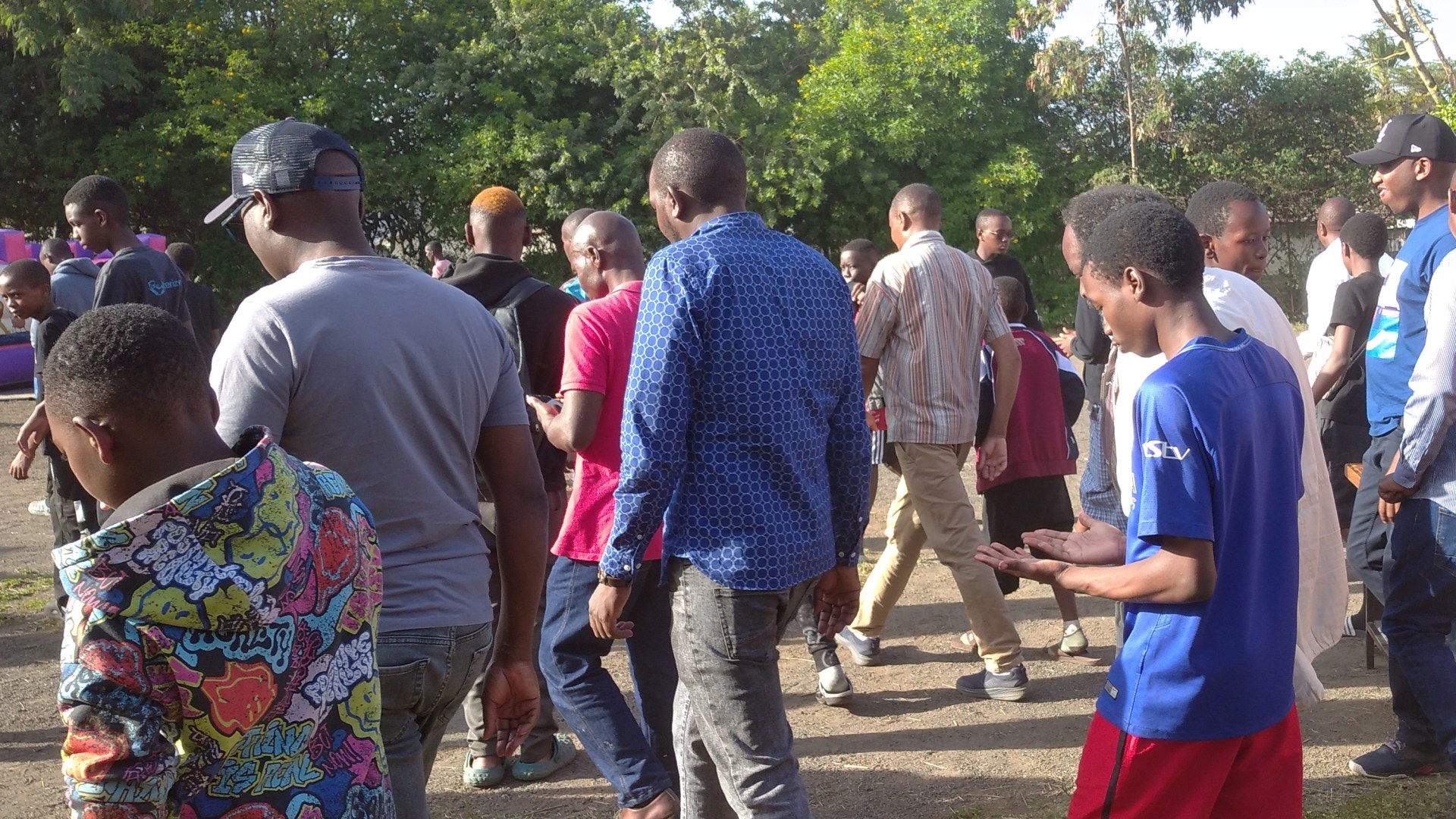
Twenty-five 12 and 13-year-old boys and their fathers huddled around a bonfire on a 64-degree November night in Nairobi, Kenya. They warmed themselves, ate goat meat, talked, and laughed. Their fathers prayed for them and offered them advice, readying their sons for a coming-of-age ceremony the next day.
For the previous ten days, the boys had stayed together at East Africa School of Theology, Buruburu, preparing to “graduate” into manhood. As part of that preparation, a doctor came to the campus to complete their circumcisions—a long standing Kenyan rite of passage. Program organizers then spent days teaching the boys about spiritual disciplines, Christian identity, sexuality, responding to peer pressure and drug abuse, and other topics.
Gregory Anemba signed his son up for this camp experience because he didn’t want his 12-year-old to participate in a traditional Kenya coming-of-age ceremony, which often includes tribal religion, chauvinistic views of women, and an introduction to alcohol.
“[Traditional circumcisers] invoke altars, and children are dedicated to demonic spirits,” said Anemba. Traditional ceremonies can also contain food and drink offerings to ancestors or Mother Earth.
Anemba said finding the Rites of Passage Experience (ROPES) program, which was founded in 1997 by five local churches, was providential. “I liked it because of the godly values that are taught there,” he said, pointing to the program’s focus on spiritual, emotional, and relational health.
Rites of passage practices are common in Africa and vary by cultural group. In Kenya, circumcision rites have marked the transition from boyhood into manhood for most men since time immemorable. Unlike circumcision in the Old Testament, the Kenyan practice serves as a time to initiate youth into adulthood and the identity and values of their community. While some parents quietly take their children to the doctor for circumcision, ceremonies are the norm.
Churches across Kenya are introducing more faith-based coming-of-age ceremonies in hopes of preventing families from turning to traditional spiritualist ceremonies or even leaving the church during circumcision season, which occurs in November or December once every two years.
Traditional rites begin at night with the boy’s maternal uncle slaughtering a cow and tying its entrails around the boy’s neck to symbolize his mother’s dowry—also a cow—returning to his family. Early the next morning, a traditional practitioner—usually without medical training—circumcises the boy and his peers by the riverbank. The teens live together during a 7-14 day healing period, then attend an initiation ceremony with singing, dancing, traditional liquor, and sometimes sexual orgies.
Caleb Wekesa, a pastor in Bungoma County in western Kenya, said boys and their families at his church receive cultural pressure to seek out traditional rites of passage. Wekesa said three men left his church because they wanted their sons circumcised traditionally, contrary to what the church advised. Even a deacon left, never to return.
“Sometimes when they leave, they go and join other churches where they are accommodated,” Wekesa said.
Tanari Trust, an organization founded and overseen by five Nairobi-area churches, started the ROPES program, holding their first camp in 1997. Since then, many other churches have adopted the concept and run their own versions.
Sasino Sijenyi, who has helped organize ROPES programs for Kenya Assemblies of God for the last four years, said more churches now recognize the importance of transition ceremonies for young people.
“The Church stepped in when they realized that parents were secretly taking their children who are in church to traditionalists for circumcision,” he told CT.
He explained that they support African cultural practices while rejecting the unbiblical aspects of the rites.
The ROPES graduation ceremony includes nods to Kenyan culture—such as singing, dancing, and cultural gifts—while keeping the message Christian. Organizers honor themes such as honor for parents and community responsibility, ideas valued in Christianity and African culture. During graduations, ROPES gifts each boy with a Maasai shuka (cloth wrapper) symbolizing protection, a traditional beaded multi-colored belt (to remind them to exercise self-control over their sexuality), and a rungu (club) to symbolize responsibility.
Churches receive pushback from traditionalists who want rites of passage to remain under their domain, not the domain of pastors and ministry leaders. Despite Christian alternatives, some parents still take their children to traditionalists.
“It seems that parents, even though they are Christians, still don’t get out of culture,” said Sasino.
Philip Kimone, a Christian and a father of three, supports rites of passage, but not by churches. He argued that even Jesus was circumcised in a Jewish cultural rite, so Kenyans should be circumcised according to their cultural traditions.
“The church cannot take over culture,” Kimone said. He also criticized church ceremonies, saying they only teach boys about the Bible and neglect to teach African history and identity: “That is where I divorce with the church conducting rite of passage.”
He also objects to single mothers participating in church graduations in the absence of the boys’ fathers. In Kenyan culture, only men typically attend coming-of-age ceremonies.
Sasino disagreed, saying churches draw from Jesus’ example in Luke 2:41-52, when both Mary and Joseph took 12-year-old Jesus to the temple and found him there again after leaving him behind.
Still, Sasino tries to find men who will stand in as fathers for boys who have none: “Some boys are embarrassed when their single mothers come during their graduation.”
Sasino hopes Christian-based rites of passage will provide a corrective to traditionalist views of circumcision.
“We remind them that circumcision is not what makes a man,” he said. “It is just a rite that reminds them of the event.”