





Ten years ago, I was at the unhealthiest moment of my life.
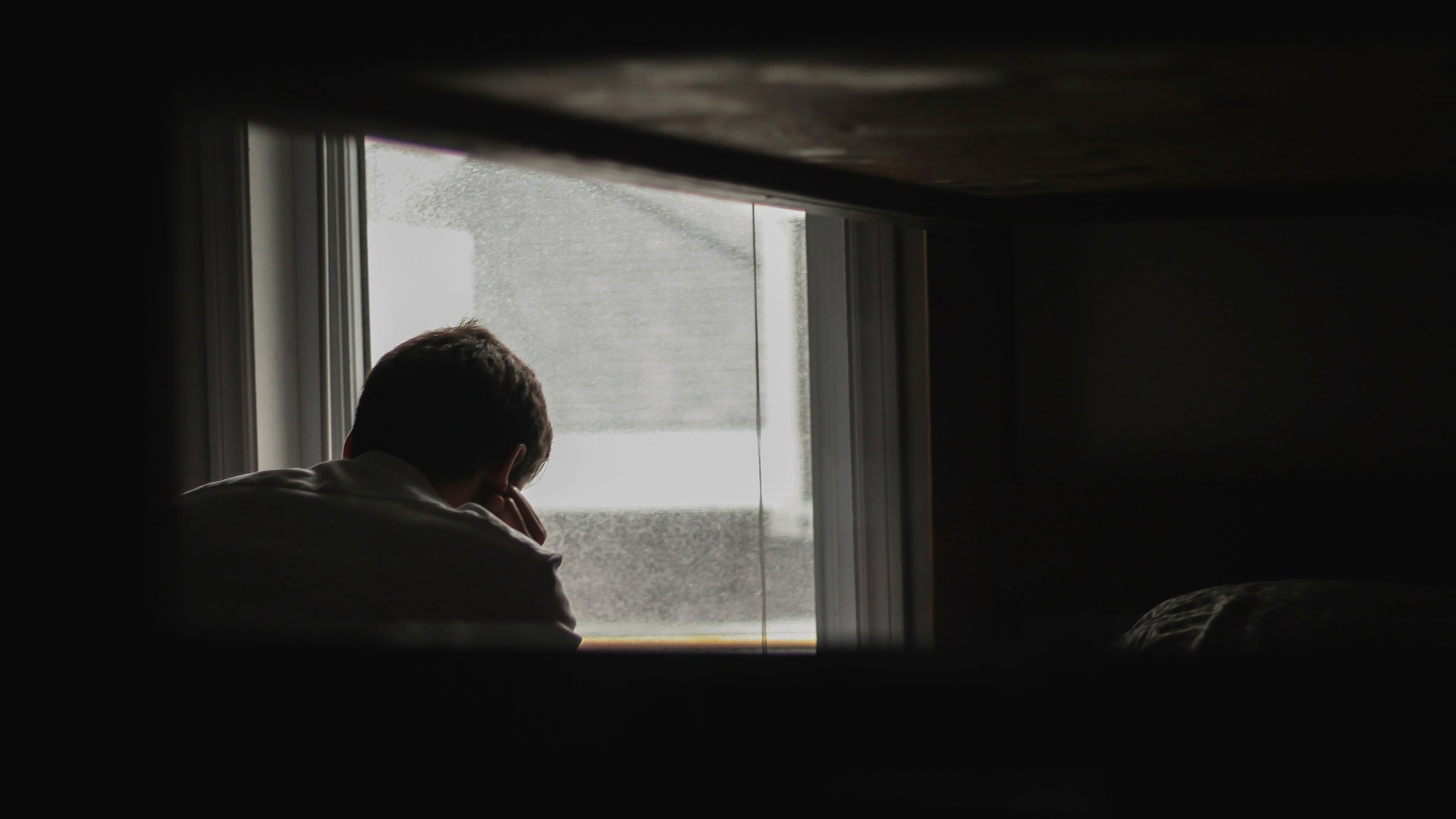
I was a former missionary who had become a corporate lawyer. I had a head filled with great theology, but my job in mergers and acquisitions at an international law firm—combined with parenting two young sons—had driven my body into the ground. I suffered from constant panic attacks and insomnia, the kind that left me with suicidal thoughts and no sleep unless I took sleeping pills or had a few drinks.
I am no longer that person. I now run a law firm; I have four young boys; I write books. My life is certainly not less complicated, but panic attacks are a distant memory and I’m arguably in the best shape of my life.
Lest that sound boastful, let me be clear—God saved me. When I was spiraling out of control, I didn’t know what to do. But God used the grace of spiritual and physical disciplines to change everything about my life.
It started with a new year’s conversation I still remember to this day. I sat down with two of my best friends and asked them to keep me accountable to a few daily and weekly rhythms in the new year.
A decade later, I’m still wrestling with why habits are so spiritual—including health-related ones. Here are four things that I’ve learned.

First, you are mostly your habits. From Aristotle to James Clear, most of humanity has been clear on what makes up a life: our habits. According to one study, about two-thirds of daily actions are not choices we consciously make; they are the product of habit.
This is particularly important when it comes to our bad habits. Take mine at that time: scrolling emails constantly at home, eating things that make me feel horrible, snapping at my kids. All of us know better.
But the part of our brain that knows better is not the part that is churning along in habit. So we become the way I was: a good head with bad routines.
The problem is, when your head goes one way and your habit goes another, your heart tends to follow the habit. Habits start to get really spiritual really quick.
Second, habits are worship drivers. We are living in a resurgence of liturgy. Liturgies are the things in a worship service we put on repeat because we want to be formed in the image of the God we worship. But notice the similarity of habits and liturgy: Both things we do over and over, both things form us.
The big difference is that liturgy admits that it’s about worship. In our day-to-day lives, our patterns often obscure what we worship. But that doesn’t mean we’re not worshiping. The only question is what we are worshiping.
Third, your body is spiritual. It’s impossible to talk about habit without talking about embodiment, because we’re talking about a lower brain function. The impact of habit is very different from the impact of head knowledge. One does not automatically transfer to the other. You have to take knowledge and put it into practice. And that’s when whole-life transformation begins to happen. Jesus illustrated this very colorfully for us (Matt. 7:24–27).
Modern Christians tend to get nervous here, because we think that when we talk about the body, we are leaving the realm of spirituality. But this is not how the Bible sees the world. God made our bodies. He called them good. He saved us by the body of his Son. He is going to raise our bodies to new life. As C. S. Lewis put it in Mere Christianity, it’s no use trying to be more spiritual than God.
This is precisely why the spiritual disciplines are so physical, and why physical disciplines are so spiritual. It’s we who divide up the world into sacred and secular. Well, us and the Enemy. But it is not God. He’s very clear on this: Our bodies are sacred—and our habits are too.
Fourth, physical disciplines are spiritual disciplines. This means that the ways we eat and exercise are as spiritual as the ways we fast and pray. I am a living testimony to this. I will attest that spiritual disciplines like morning kneeling prayer and putting Scripture before phone absolutely changed my life ten years ago. But I am a lawyer, and I would not be telling the whole truth and nothing but the truth if I did not say that respecting sleep, embracing a healthy diet, and practicing regular exercise changed my mental health as much as the spiritual disciplines.
This is because anxiety is never just a head problem; it’s always a habit problem too. (The reverse is true as well, by the way.)
But I used to worry this fact somehow meant I was admitting that “the world’s” solutions to my mental health were better than God’s solutions. I don’t know when I forgot that all truth is God’s truth. I don’t know where I missed that everything biological is also theological. I don’t know why I didn’t take “honor God with your bodies” (1 Cor. 6:20) as seriously as “make disciples of all nations” (Matt. 28:19).
But I didn’t. I was a product of our modern, gnostic moment like we all are, and I had limited Christianity to a head project. But even people who love the head like Abraham Kuyper said that Christ calls out “Mine!” over every square inch of the universe. That means bodies too.

To Dust We Will Return
When you put all of the above together, you realize that your embodied habits have an enormous spiritual impact on what the Bible calls “the heart.” The way I like to put this is that the body teaches the soul. By that, I mean that God doesn’t just use our knowledge of him to shape our habits; he also uses our habits to shape our knowledge of him.
For example, moderate exercise is not only good for our health but also trains our heart to respect discipline of all kinds. For the sake of loving our families better and for the sake of self-control, Christians should see some form of exercise, however limited, as holy and useful to the Christian life.
Likewise, eating simply and healthily is not only good for our physical and mental health. It’s central to interrupting everyday idolatries such as gluttony and vanity. Christians should see a healthy diet as central to stewarding their body to love neighbor, and as central to rejecting loving anything more than God.
And a sleep rhythm is as spiritually formative as a sabbath rhythm is physically formative. Christians cannot be people who preach a gospel of peace while living in the unrest of incessant work. Calling it a night or taking a day off to sabbath are central ways we proclaim the truth of the gospel—and central ways we enjoy the truth of the gospel. On the cross, Jesus said “It is finished” partly so that you can calm down and take a nap.
If I could go back ten years and meet myself in the midst of my anxiety crisis, I would want to encourage that version of myself: “Embrace the new year health habits! God made your body. Caring for it does not have to be vanity. Stewarding your mental health is necessary to loving God and neighbor. So do it for love.”
This new year, I want to encourage you to do the same. Our bodies bear the image of God, and God is love! We shouldn’t idolize our bodies, but we shouldn’t ignore them either. We should image God through them by stewarding them for the sake of loving God and loving others.
Habits won’t change God’s love for you. But God’s love for you should change your habits.
Justin Whitmel Earley is a lawyer, speaker, and author from Richmond, Virginia. He is the CEO of Avodah Legal and the author of numerous bestselling books, including Habits of the Household and, most recently, The Body Teaches the Soul.







