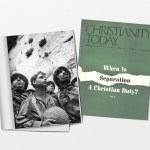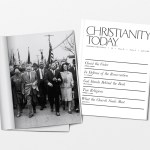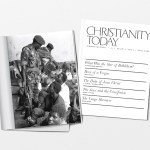
Vietnam violence escalated in 1968 when Communist fighters on a national holiday launched a surprise attack, the Tet Offensive. CT reported on the six American missionaries killed in the fighting.
A blast shattered the calm of the warm tropical night. The tan-walled house, one of three in the Christian and Missionary Alliance compound at Ban Me Thuot, was blown apart. Killed immediately was mission worker Leon Griswold, a retired insurance man from White Plains, New York. His daughter Carolyn, 41, was badly hurt. The local Viet Cong had begun their part of the bloody Tet lunar New Year offensive.
Missionaries in the adjoining residences nursed Miss Griswold through the next day. The Rev. Robert Ziemer and the Rev. C. Edward Thompson realized they were vulnerable to more attacks, even though their concrete buildings were virtually within earshot of American military outposts. They dug a trench out of a garbage pit, just big enough for the whole staff to huddle down for the night.
As expected, the Viet Cong blew up the other two homes. When daylight broke, the two men decided they would appeal to the Viet Cong to get Carolyn to a hospital. They were shot dead on the spot. Then the guerrillas strafed the trench, killing Thompson’s wife and 42-year-old Ruth Wilting, a nurse from Cleveland. …
The Viet Nam war has many peculiarities, and one is that missionary activity has continued despite the military escalation. There have been few wars in which organized evangelistic effort has been carried on as aggressively as it is in this one. Says the Rev. Louis L. King, foreign secretary of the CMA, which has done the bulk of the Viet Nam missionary work: “Far from sounding the death knell to evangelism, the war has opened new doors of remarkable opportunity, and people are generally more responsive than they were.”
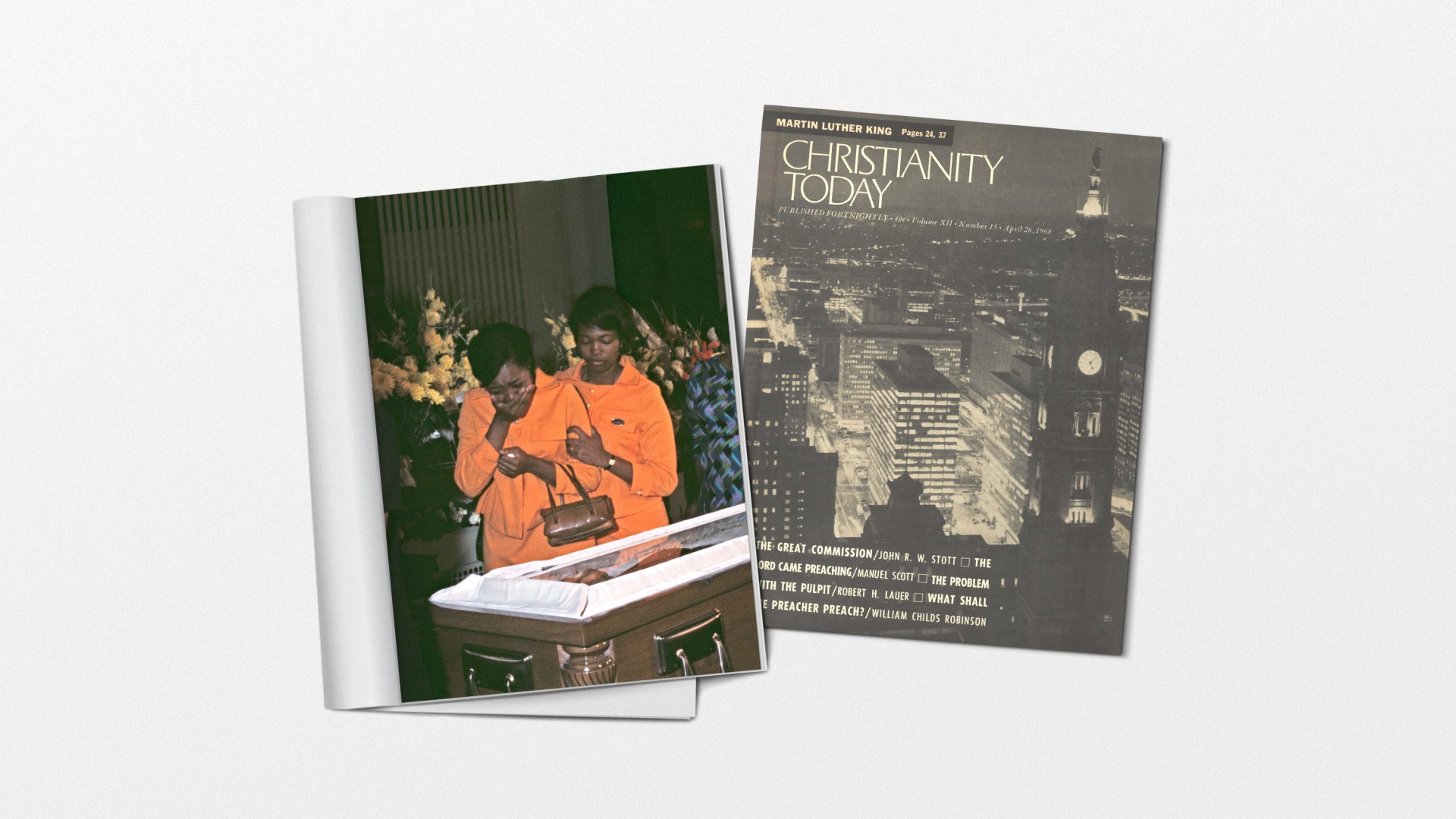
In April, CT reported on the assassination of civil rights leader Martin Luther King Jr. and tried to calculate the national consequences of the loss.
Rarely had a clergyman so shaken a nation.
“I have seen the promised land,” said the gifted orator Dr. Martin Luther King, Jr., the night before he was shot. But his death carried no promise, only ironic dramatization of the impasse between races in America today, for a paroxysm of rioting, looting, arson, and murder in dozens of cities constituted a violent aftermath as senseless as the slaying in Memphis. A machine gun on the steps of the Capitol in Washington, D. C., symbolized the nation’s barely concealed terror over what the coming weeks—and years—would bring. …
Although he was in the public eye only a dozen years, the 39-year-old Baptist minister at his death was probably the American most admired in many other nations. At home his power and glory were on the wane. The 1966 Chicago drive failed to yield lasting results. Newsmen saw his Washington Poor People’s Campaign as a last lunge to outflank militant black separatists, reaffirm the philosophy of effective nonviolence, and reassert King’s civil-rights leadership.
What that campaign, scheduled to begin this week, would have done to King’s movement is impossible to guess now. But friends and foes alike were edgy when a King-led march in the Memphis garbagemen’s strike degenerated into lawlessness, just days before the murder.
King lived daily with the knowledge that he was marked for death. When it came, its violence set in bold relief the tragic predicament of the nation.
Founding editor L. Nelson Bell—always critical of efforts to push racial integration—blamed King for his death. Even though the Civil Rights Movement was nonviolent, Bell said “civil disobedience, seemingly so innocent, has brought in an era of lawlessness and bloodshed.” The lead editorial in the magazine called King’s death a “brutal and outrageous murder” and mourned the apparent failure of the movement he led.
Avowedly as an apostle of nonviolence, King courageously led the struggle against racism. He disowned arrogant concepts of black power but encouraged nonviolent civil disobedience in the name of “higher moral law.”
King was under increasing constraint to intensify the coercive force of his protest to secure swift social change. In the last article he wrote before he was slain he said, “The tactic of nonviolence … has in the last two years not been playing” a transforming role (Look, April 16 issue). He blamed “white racism” for dividing America and asserted that “we need, above all, effective means to force Congress to act resolutely.” His program called for a series of summer “mass nonviolent protests” beginning in Washington, D. C. …
At the same time, legal structures create only the formal possibility of a just society. Desperately needed is a cultivation in American life of the simple Christian virtues of love of neighbor, good will toward men, and a spirit of reconciliation. Here the evangelical churches—if they can find the courage—stand remarkably positioned to reach across racial lines and encourage a new spirit of brotherhood. … The task of the Christian community is to rescue those who are slowly dying of the prejudice and hopelessness that leaves men strangers to the full dignity of human nature as God intends it.
Evangelicals found hope on college campuses in 1968. CT reported that Christians were witnessing to hippies, and the “flower children”—who had once dropped out of society to pursue peace, love, sex, drugs, and music—were turning to faith in Jesus.
Ask Southern Baptist evangelist Arthur Blessit, 27, who runs “His Place,” a coffeehouse on Hollywood’s Sunset Strip. Or converted hippie Ted Wise, 30, who heads “The Living Room,” an evangelical beachhead in San Francisco’s Haight-Ashbury district.
Sunset Strip clubs and sidewalks are clogged nightly with thousands of teens, including each night some 500 who jam into “His Place” for free coffee and sandwiches, gospel “rock, folk, and soul” tunes, and midnight sermons. Result: “Five or six receive Christ every night,” reports Blessit.
Blessit, who believes in “taking the gospel where the action is,” has also scored conversions among the “booze, dope, and sex” clientele at the famed Hollywood-A-Go-Go club during by-popular-demand Tuesday-night shows. His program: “groovy music, testimonies of ‘name’ Christians and former drug-users, and my messages—with no pulled punches.” His associate, Leo Humphrey, 33, recently led club coowner Rose Gazzarri to Christ.
Editor in chief Carl F. H. Henry shared his conversion testimony in 1968.
God stabbed my conscience that night and pinned me to the ground with a fiery bolt of lightning. … I was a newspaperman preoccupied with man’s minutiae when God tracked me down; the Word was pursuing a lost purveyor of words. In this encounter, my own semantic skill meant little. When, shortly after the Almighty One had used lightning to pierce my soul, a university graduate prodded me to pray, I found myself at a loss for words. There I was, a Long Island editor and suburban correspondent quite accustomed to interviewing the high and mighty of this world, yet wholly inept at formulating phrases for the King of Glory. …
My altar rail was the front seat of my automobile; we parked it beside the waters of Great South Bay, locked the doors, and knelt to pray. Phrase by phrase I repeated the words of my friend. … Somewhere in the echoes of eternity I heard the pounding of hammers that marked the Saviour’s crucifixion in my stead.
The presidential campaign heated up that summer—and there was more violence. Robert F. Kennedy, younger brother of the president assassinated just five years before, was himself assassinated. Billy Graham told CT he cried.
Evangelist Billy Graham said he learned of the tragedy when a friend called him at four in the morning. Graham said he then spent several hours in meditation and prayer.
“I don’t weep often,” the evangelist declared, “but today in this beautiful sunshine I wept … for the country that has declined so much in its morality and spirituality.” Graham said the Kennedy shooting “is symbolic of what is happening throughout the country and much of the world.”
CT editors tried to grapple with that symbolism and the grim reality of a nation wracked by political violence.
The American dream is turning into a nightmare. The stunning shock will serve the nation best if the initial disbelief yields a new awareness that the American temper is changing. “The world has gone mad,” remarked Senator Henry Jackson, when informed of the assault on Kennedy. But the grim fact that madness now stalks the streets from Washington to Los Angeles, in a land that long has been a symbol of hope around the world, compounds the tragedy. The worsening crime rate and widening violence in America can only add to the spirit of contemporary despair.
We extend Christian sympathy to the Kennedy family and urge the prayers of believers everywhere in their behalf.
CT looked at the campaign of another candidate for the White House in 1968, publishing a report on Christian support for George Wallace, champion of the “Jim Crow” laws segregating people by race.
The latter-day Crusade of avowed segregationist Wallace has taken on the tinge of a religion—a civil religion, to be sure. A young Birmingham minister who has watched the numerous Wallace drives in Alabama describes the White House bid as “a campaign with messianic ring.” Wallace, he explains, seeks to present himself as the saviour of the United States, a prince of hope, swinging his broad sword in a holy war against evil. …
But the Southern Committee on Political Ethics headed by former Southern Baptist President Brooks Hays charged this month that the Wallace candidacy is based on fear and hostility and racial conflict, and that Wallace has “welcomed the support of many acknowledged and outspoken racists and has given them and their views a platform and a legitimacy they could not otherwise have achieved.”
Wallace won more than 9 million votes and carried majorities in five states. Electoral victory went to Republican Richard Nixon, a former vice president. CT noted he received an unofficial endorsement from Billy Graham.
Evangelist Billy Graham said in Dallas five days before the election that he had voted for Nixon by absentee ballot. …
The evangelist, probably the nation’s best-known and most-respected clergyman, said he would make no speeches for Nixon. “I am trying to avoid political involvement. Perhaps I have already said too much, but I am deeply concerned about my country. It is hard to keep quiet at a time like this. I feel like this is going to be the most important election in American history.” …
Graham said he had come out for Eisenhower in 1952. In 1964 “everybody knew by implication that I was for Lyndon Johnson,” he said, recalling that the two went to church together the Sunday before the election. In the two weeks before that election, Graham got 1.2 million telegrams urging him to endorse either Johnson or Barry Goldwater. His 1968 statement drew about 200 complaint letters, compared to about 60,000 letters his office receives daily.
Graham was happy for Nixon’s election but also said, “I almost feel sorry for the next president, because he will be heading into the eye of a hurricane.” At the end of 1968, CT attempted to describe the storm.
It will take the greatest kind of leadership to reweave these holes and unite the country once again. To this end the President-elect deserves the support of every American and the prayers of each believer.
Nixon … faces the burden of unprecedented problems at home and abroad. … With all these problems on the horizon, it becomes altogether fitting and proper to underline the conviction that the root of human turmoil is theological. As leader of the free world Nixon will need to exert all due influence to treat the symptoms, and his office of authority is ordained of God to do so. But it is left to the churchmen of America, clerical and lay, to address the spirit of man to the end that he will see his need of divine grace and yield to the will of the Almighty.
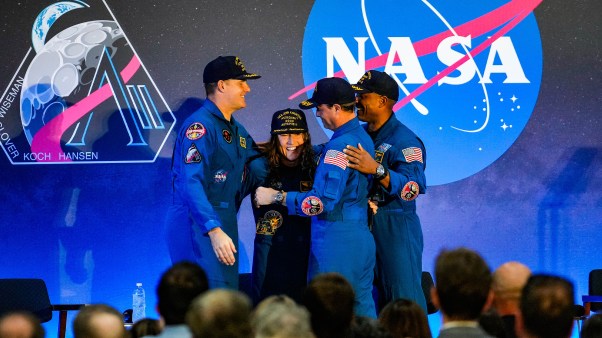
Americans found a reason to look up at the end of 1968. Three astronauts “slipped the surly bonds of earth” and flew a spaceship to an orbit around the moon. They broadcast from there on Christmas Eve and included a reading from chapter one of Genesis 1. CT’s news editor wished them well.
The biblical writers invite man to study the wonders in the skies as tributes to God’s handiwork. And the Apostle Paul declares under inspiration that “God chose to reconcile the whole universe to himself, making peace through the shedding of his blood upon the cross—to reconcile all things, whether on earth or in heaven, through [Christ] alone” (Col. 1:20, NEB).
The noted English Bible scholar F. F. Bruce says that “the more that men discover about the universe of God, the more cause they have for admiring his wisdom and power.” …
In the past God has used the heavens as an instrument to bridge the gap between men and himself (e.g., the Star of Bethlehem). Surely we can pray, “Lord, do it again.” …
All of which is to say that some of us are for you. Bon voyage. In the name of the One who traveled farthest.