I sit at a friend’s kitchen table at her home in our South Minneapolis neighborhood. A vinyl tablecloth wrinkles under my notebook as we work together to make a grocery list for her family so I can shop for her.
She snuggles her young daughter and begins to cry as we talk in the dimly lit room. The shades have been pulled down for weeks; she hasn’t gone anywhere besides work; and her children have not stepped foot outside since December. She is a US citizen of Mexican descent, as are her two children, and her husband is undocumented. She is afraid that her family will be separated.
This past year, many in my community began to prepare for the reality that our city might become the site of an immigration crackdown. Minneapolis has for decades been a haven for refugees and immigrants, and that plus the political dynamics—the administration considers Minnesota a sanctuary state and promised to “come after” such jurisdictions last summer—made this foreseeable.
Years working as an ESL teacher have deeply embedded me in relationships with families from every corner of the globe. So last June, I attended training sessions run by immigration advocacy groups to learn how I could help protect these neighbors. Even so, I was not prepared for the jarring intensity of what we’ve experienced in recent weeks.
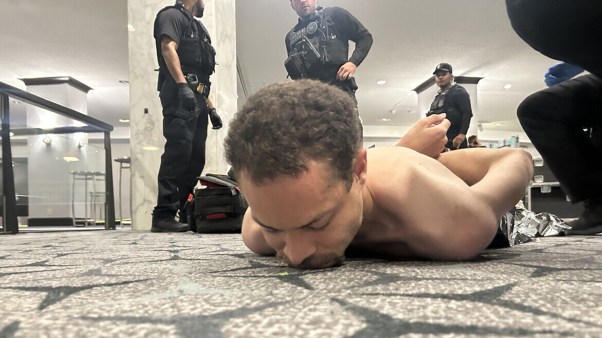
While the rest of the country sees scenes of violence on their screens, we see it in front of our homes, our libraries, our children’s schools, and our churches—all set to a soundtrack of helicopters hovering overhead. I understand why some think of Operation Metro Surge as law enforcement. But from the inside, it feels like an invasion. Masked militia, carrying weapons, have arrived in droves and roam through residential neighborhoods.

Long-standing members of our community are vanishing as federal immigration agents round up far more than the “worst of the worst.” A November analysis of leaked Immigration and Customs Enforcement (ICE) data from the Cato Institute found three in four of those the agency detained had no criminal record, and only 5 percent had a record of violent crime.
Numbers the Department of Homeland Security (DHS) provided to our local Fox station suggest that pattern holds here. A “little more than 10% of ICE arrests fall into [the] category of being the ‘worst of the worst,’” people who have been convicted of crimes other than immigration offenses, Fox 9 reported earlier this month. Of that 10 percent, about half (5 percent of the total, as in the Cato report) were convicted of violent crimes.
Overwhelmingly, then, the people being detained and in many cases deported from Minnesota have not been convicted of nonimmigration offenses. Some have legal immigration status in America. Some are even refugees.
Julie Oostra, a nearby neighbor and friend from church, shares a story that has become all too familiar in the past weeks. “In my work as a notary, helping vulnerable families obtain and certify important contingency documents if they were to be deported, I was asked to help a mother whose 6-year-old son had been detained with his father earlier that day,” she told me:
When I arrived at her house, she was distraught. She basically fell into my arms even though we were strangers, and I held her as she told me she could not locate her son as no known database of minors exists. She wept and clutched her son’s stuffed Spiderman toy, detailing how despite rounds and rounds of phone calls made by her and supporting neighbors, no one could tell her if her son was being held with his father, separately, or if he was even in the state.
This has all been so surreal and chaotic that many of us who are not activists or protestors—including people who support immigration reform and oppose open borders—have felt a civic duty to defend the rule of law, due process, and civil and human rights. Christians around the city have found ourselves grappling with what is ours to do in this crisis.

As federal agents began pouring into Minneapolis weeks ago, I remembered the pull of the Spirit that drew my family to this city. My husband and I had been teaching English in South Korea, and we both felt called toward mission work. But factors in our personal lives seemed to be pointing to Minneapolis, and God reminded me that he had brought the nations to this city. In recent weeks, I felt a strong compulsion to do something to ease the suffering of my city, to care for the foreigners among us.
For days, I struggled with unshakeable stomach pain and anxiety as I watched the unrest and wondered what to do. At first, I helped patrol local schools as a legal observer at drop-off and dismissal, whistle and phone at the ready to alert immigrant families if immigration agents appeared.
But after legally observing several times, I found myself questioning whether I was called to this type of work. I knew it was vitally important. The accountability it provided could help save lives. But I was always nervous, and I kept experiencing doubt: What if I was impeding an arrest of someone who’d committed a horrible crime? How do I follow the biblical call to respect governing authorities while convinced that they are violating a higher moral law? What is the call of Jesus for me in this moment?
Then a close friend asked if I’d accompany her to drop off groceries to a vulnerable family. At the food pantry, a hum of volunteers busy sorting donations filled the air. One helped us gather the groceries the family needed, and we drove to their home with trepidation, warily scanning the streets for immigration agents.
But once we’d safely handed over our boxes and returned to the car, I experienced a profound peace. I knew in that moment that whatever he required of others, the call of Jesus to me in this pivotal time was simple. This is how I can love my neighbor as myself.

In the following days, I discovered a safety net that Christians around the city had woven. I joined a neighborhood care group co-run by John Hildebrand, a member and elder of Calvary Baptist Church here in Minneapolis, which has been fielding needs from vulnerable families in their neighborhoods. Vetted members of the group respond to needs as they arise, offering to give rides, do laundry, bring groceries, or shovel front walks for people—even strangers—afraid to leave their homes.
As I became more involved in this and other care networks, my phone pinging all day with new needs, it occurred to me that this is what it may have been like if the church of Acts 2 had used a group text:
Ride needed, 9:30 a.m., to pick up food at food pantry
Grocery shop needed: family of 5 + a babyVolunteers needed to bring supplies and give rides to released detainees
Looking for rental assistance for a family
In search of midwife or doula for homebirth – mom is too afraid of the hospital
One by one, needs are met.
When I asked Hildebrand what had initially compelled him to be involved in running the care group, he didn’t hesitate. “It’s the story of the good Samaritan,” he told me. “The point of the story is that to be neighborly means to be the one who stops to help. And for me, that’s the call of discipleship. That’s what it means to follow Jesus. It’s to be aligned with and protective of the vulnerable.”
At my own church, which my pastor asked me to keep anonymous because the building has been surveilled by ICE agents, many members assembled into smaller care groups, each “adopting” a family in need.
We soon found that, beyond food, many families were in dire need of basic home and hygiene products. One group leader suggested we establish a hygiene bank, as these products are often hard to come by at food pantries, and within days, the bank went from concept to reality. From the generosity of strangers, the church received towers of supplies. Volunteers worked overtime to sort and stack them. Hygiene products are already going out to families in need, and our church is donating extras to other churches and organizations in the area.

I firmly believe that advocating for good policy is a crucial part of change. Yet I also know Jesus did not spend his years on earth debating Roman law or fighting the empire’s soldiers, as some of his followers hoped he would. He announced his ministry as an anointment of the Spirit “to proclaim good news to the poor … to proclaim freedom for the prisoners and recovery of sight for the blind, to set the oppressed free, to proclaim the year of the Lord’s favor” (Luke 4:18–19). And he called his followers do the same: to feed the hungry, give drink to the thirsty, welcome the stranger, clothe the naked, and visit those in prison (Matt. 25:31–46).
As my city has been rocked by turmoil, I have been honored to witness Christians obeying this command. I’ve seen individual Christians giving their time, goods, and money. I’ve seen churches meet the moment, sharing resources and space. And people outside our faith are noticing too.
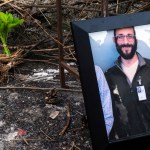
Hildebrand’s church is just over a block away from where Alex Pretti was killed. You can see the church’s steeple in much of the footage from that day. Within hours of the tragedy, church members were on site, passing out coffee and hand warmers outside and inviting people into the sanctuary to escape lingering tear gas and chaos.
Calvary Baptist offered this respite throughout this past weekend and has since received many notes of gratitude. One couple emailed to say that though they’d only gone into the church to use the restroom, Hildebrand told me, “when they went in, they looked around a bit and said a prayer, and they felt God’s presence in that space as strong as they have ever felt it in 71 years.”
I met another community member while working on establishing the hygiene bank. Katie (who only wished to share her first name) still considers herself a Christian but admits that she and her family have not attended church in a long time. They’ve struggled to find a congregation that actually practices what they preach, she said.
“I have been so encouraged by how generous everyone at the church has been in responding to needs without condition or criteria,” she told me. “I feel like while I know people in this congregation have different political viewpoints, everyone is looking at the same north star in this moment, trying to follow the teachings of Jesus versus dogma. I’m rethinking church in all of this and wondering if this is a body I could be a part of.”

These volunteer efforts are at once small and significant. Person by person, church by church, we are caring for our neighbors. Keeping this focus can be difficult in these divisive times that tempt us to choose sides or to be more interested in policies than the people God has put in front of us.
But as a follower of Christ, I have learned and relearned this month that we must be “rooted and grounded in love” (Eph. 3:17, ESV). Our highest call is to love God with the whole of our being and to love our neighbors as ourselves (Matt. 22:37–40). Love can hold boundaries and be firm. Love does not mean lawlessness. But love is kind. It does not dishonor others, is not easily angered, does not delight in evil, and always protects (1 Cor. 13:4–7).
I don’t know what’s coming next for my city or so many people I care about. But my prayer is that God will continue to use me, my church, and Christians throughout Minneapolis to love and serve our neighbors as Jesus did.
Elizabeth Berget is a Minneapolis author whose first book, Love Like a Mother, releases May 2026 with Brazos Press. She writes on Substack at Back of the Flock, and her work has been widely published.