This piece was adapted from Russell Moore’s newsletter. Subscribe here.
In 1981, novelist Walker Percy wrote a column he titled “A View of Abortion with Something to Offend Everybody.” As a Christian, he took on the seared consciences of pro-life people disregarding the poor women who don’t get abortions but can’t feed their babies. As a medical doctor, he took on the seared consciences of pro-choice people who see the unborn child as just a blob of detachable organic matter.
His final word was for the ones he assumed would be the winners of the political moment. To supporters of abortion, he wrote, “According to the opinion polls, it looks as if you may get your way. But you’re not going to have it both ways. You’re going to be told what you’re doing.”
What Percy identified here is much bigger than just one issue. It is rather the temptation, present in all places, to make invisible whatever actions trouble one’s own conscience, to make disposable whatever people one’s own tribe deems unworthy. He knew the fellow pro-lifers he was criticizing would not argue that children of poor women deserved their suffering. They would just say, What poor women in my community? And he knew the abortion rights supporters he was criticizing would speak loudly about choice without ever describing what actually happens in such a choice—and to whom.
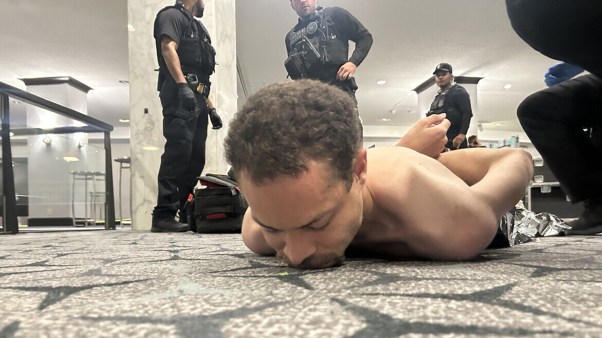
This month, masked federal government agents in Minneapolis shot and killed two American citizens. With the first shooting, that of Renee Good, those arguing that we should ignore ICE’s culpability said Good was attempting to drive into the officers. Slowed-down video footage convinced many people who saw it that this was not the case, but surely the people waving away this killing thought the officer was justified in his response. The second and more recent killing, that of Alex Pretti, seemed much less ambiguous: A man legally carrying a concealed weapon was thrown to the ground, disarmed, and then shot ten times.
Over the past several days, the president’s language has been much more restrained than that of his vice president and his Homeland Security secretary, and homeland security adviser, who in some cases implied and in other cases stated that these two protesters were domestic terrorists.
If this were a mere question of governance and policy, it would still be of great importance. After all, we can see what happens in other places when armed authorities kill with impunity those who protest. And as I wrote two weeks ago on the meaning of Romans 13, the responsibility for holding such power accountable in America’s system of government is ultimately with all of us. But let’s step back from the civic space for a moment.
Some Christians, wherever they are politically, have said what should be obvious and noncontroversial: The killing of people under the circumstances we saw filmed is evil. But others who profess the name of Christ have said Good and Pretti deserved what they received. And still others throat-cleared their way out of making judgments only after the Pretti video became ubiquitous. Even if these were murders, the argument goes, these people shouldn’t have been where they were when they were. The immoral taking of human life, in other words, should be safe, legal, and rare.
People made the same arguments after the murders of Andrew Goodman, Michael Schwerner, and James Chaney in Mississippi in 1964: Nobody is for killing anybody, but if they had stayed home, they would be alive today. People made the same arguments about John Lewis in Selma when police beat him or about Martin Luther King Jr. when he was assassinated. What has changed are not the arguments themselves; the only thing that has changed is the time.
Jesus warned about this when he said to the religious leaders around him, “For you build the tombs of the prophets and decorate the monuments of the righteous, saying, ‘If we had lived in the days of our fathers, we would not have taken part with them in shedding the blood of the prophets’” (Matt. 23:29–30, ESV throughout).
It is clear, of course, that those who want to cover up conversation about these killings expect that most of us will look away and that those who don’t will quickly move on. In Machiavellian terms, these leaders have good reason to assume our willful forgetfulness. They’ve seen it before, over and over again. Maybe you fit into that category: You don’t want to justify what sure seems to be murder, but you don’t want to get out of touch with your tribe either, so you choose not to think about it at all.
Ask not what will happen to your country—although that’s of great and grave importance. Ask what will happen to you.
What happens to you? If, when Charlie Kirk was murdered, your thought was Well, he shouldn’t have said the Second Amendment was worth the lives that were lost in school shootings or if now your thought is Well, they should have stayed home, and they’d be alive today, do you hear yourself? If that’s your response, you don’t object to murder but to murder of people on your side. It would be disastrous for us as a country if we collectively started to think like that. But a soul is even more permanent than a state.
The searing of a conscience—especially by evaluating in terms of tribal belonging what lives are worth living—leads to easier and easier searing in the future. The power to discern good from evil demands “constant practice” (Heb. 5:14). The next-to-end result is chilling: “They kill the widow and the sojourner, and murder the fatherless; and they say, ‘The Lord does not see; the God of Jacob does not perceive’” (Ps. 94:6–7).
Armed agents doing wrong things can perhaps count on masks to shield them from accountability—or on presidential pardons or legal immunities or even the short attention spans of the American people. But what happens to you when you make moral decisions about the life or death of those made in the image of God? That cannot be hidden, at least not permanently, not to the God who judges the living and the dead.
If the universe is meaningless and good and evil are just categories of power or distinctions between friend and enemy, that’s one thing. But if there is an all-seeing God and Jesus is alive, then the judgment seat is quite different from public opinion. You cannot hide a hardened heart behind the fact that you weren’t the one pulling the trigger. God is not a political hack of any party or movement, and he doesn’t observe the Fifth Avenue rule.
The country is in a dangerous time. You might conclude that defeating your enemies is worth ignoring some lives lost—murders you would have denounced if the “other side” had done the killing. You might conclude that a culture war is worth your conscience. If so, you might win. After all, the United States is only 250 years old, and underestimating human virtue and responsibility is often a safe bet in a fallen world.
But you can’t have it both ways. You will be told what you’re doing.
Russell Moore is editor at large and columnist at Christianity Today and leads its Public Theology Project.