I keep seeing people share major news stories with this directive: You have to watch the video.
Dashboard camera footage depicts Sandra Bland’s arrest during a traffic stop, days before she died in a Texas jail. Her confrontation with the officer, who forced her out of her car and held her to the ground, is the latest in a string of incidents caught on tape that raise concern over police treatment of black suspects.
In a series of videos targeting Planned Parenthood, undercover pro-life activists ask employees about how they recover and distribute fetal tissue for research. Like LiveAction’s videos of girls posing as potential clients at clinics, these clips represent 21st-century efforts to expose the abortion giant through the Internet.
Easy to take and share—and hard to argue with—digital videos have become a significant force in today’s fight for social justice. As journalism doctoral student Kimberly Davis writes for ThinkChristian, media have always served as an instrument in activism, “from how the printing press revolutionized the way we communicate important issues to the shocking image of Emmett Till's battered body in a casket—an image which was a catalyst for the Civil Rights movement.”
Nearly two-thirds of Americans carry phones that can shoot pictures and video. Our social media platforms center on these amateur captures: YouTube, Instagram, and Snapchat, plus all the uploads to Facebook and Twitter.
Copwatch, a grassroots group filming police activity on the streets, has boomed more in the past year than its 25-year history, organizers told The New York Times. Participants include friends of Ferguson’s Michael Brown and Baltimore’s Freddie Gray, both killed by police. “We will use the weapons that we have in these cameras,” one said. “There is going to be no more police brutality because we have Copwatch in Baltimore now.”
His assertion reflects the power of raw video in fueling our exposure to—and subsequent outrage over—alleged misconduct. It was less than a year ago that 18-year-old Brown was shot. Since then, we’ve watched the clips of cops killing black suspects including Cleveland’s Tamir Rice, Charleston’s Walter Scott, and Cincinnati’s Samuel Dubose.
Like the hours of cringe-inducing footage from the Planned Parenthood investigations, these videos seem so damningly self-evident. No wonder we’ve become so assured that surveillance will triumph over evil, that technology will indeed fight injustice for us.
But Davis poses a good question: “So we have this tool, this technology that doesn't rely on faulty memory and self-preservation. Is it enough?” The reality is that video doesn’t tell us everything, nor can we rely on our emotional reactions to what we see in the frame to cast judgment. If we put too much trust in video evidence, we risk missing the bigger picture.
While video offers us objective documentation for details such as timing and quotes—elements that can be skewed by human memory—it still has its limitations. Even unedited, raw video can instill “perspective biases.” To state the obvious: every shot, while accurately capturing what’s in the frame, leaves out what’s outside of it.
Studies found that viewers are inclined to sympathize with the perspective from which the video had been filmed. When watching from the point of the cops, they’re more likely to view cops as behaving properly; when they watch from the suspect's point of view, and can see the cop's face and actions, they’re more likely to notice wrong behavior by the cops. “If videotape presented objective reality, as we suppose that it does, that choice wouldn't matter at all,” said legal scholar Adam Benforado on NPR. “But in fact it mattered a lot in these experiments.”
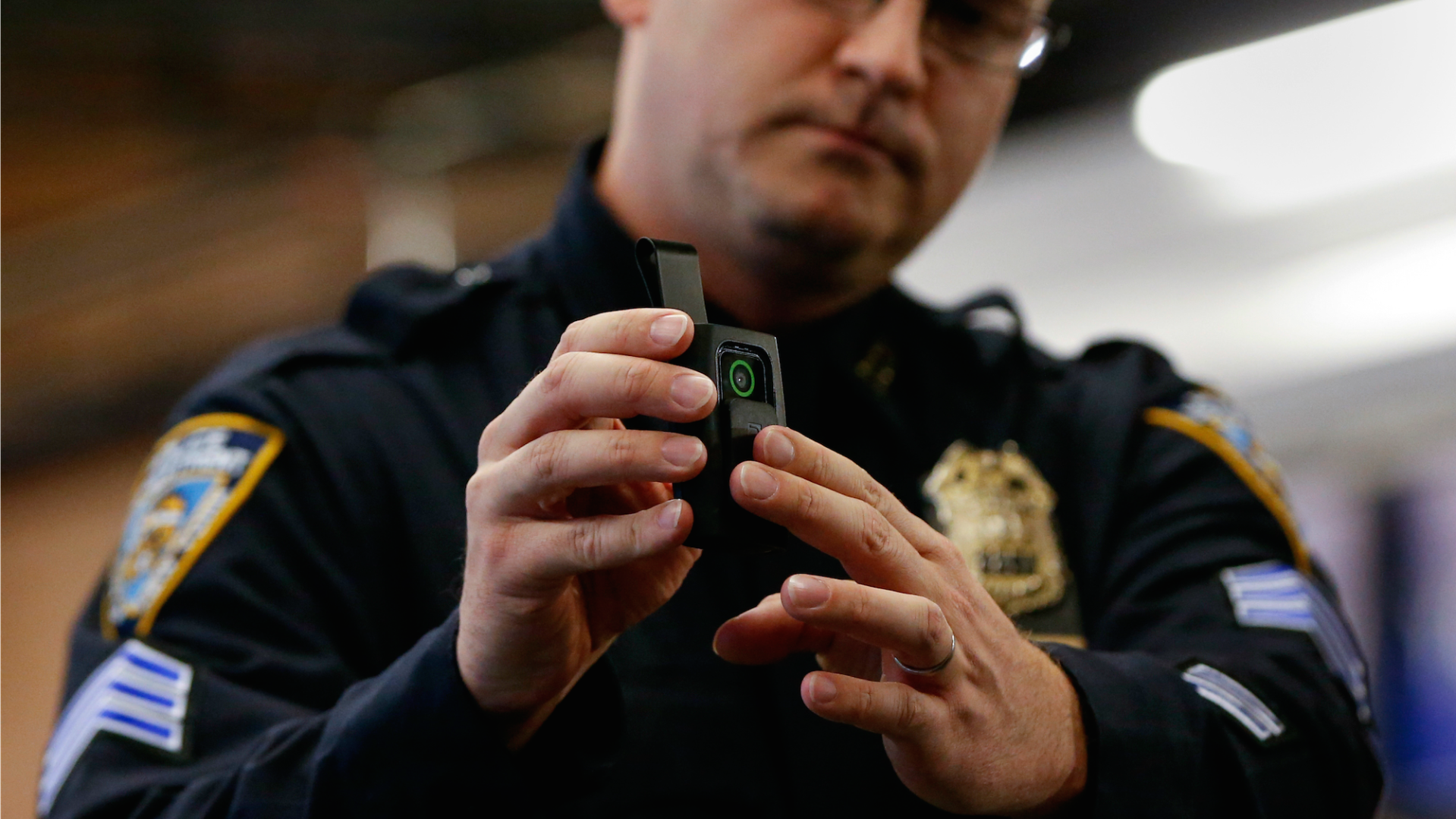
Beyond perspective bias in filming, viewers bring their existing beliefs and biases to any video they watch. Rather than forcing us to change our minds and face “the truth,” video evidence often underscores what we already think, according to research out of Yale Law School and New York University. Plus, police departments are still determining whether devices like body cams actually discourage officer and citizen misconduct.
Video will still play a crucial role in our push for accountability. It has rightly spurred our national conscience over racial justice and care for the unborn, in two recent examples. But recording our interactions isn’t enough to fix our systemic problems, and watching a video clip—whether it’s two minutes long or two hours long—isn’t enough to give us the whole truth. In certain cases, I suspect the truth is actually much scarier, much more atrocious than the part captured on camera for us to see. This footage serves as a starting point, one piece of reliable evidence to point us to the bigger story.
David Daleiden, who leads the pro-life group that produced the Planned Parenthood videos, described their work as bringing Jesus’ presence into the “darkest of places.” As our camera phones and surveillance videos help bring bits of truth to light, we can also pray for God’s direction in how these clips are used as part of our earthly pursuit of justice.
For the sake of the victims, we can do more than tell one another, “You have to watch this video,” by also saying, “Let’s get to the truth of this situation and do what we can to make it right.”