When I was in grad school eight years ago, YouTube’s algorithm recommended I watch pastor Mike Todd’s sermon series on relationships, aptly called Relationship Goals.
I hadn’t heard of Todd before, and at that point not a lot of other people had either. He was a young pastor shepherding Transformation Church, which was then a small congregation in Tulsa. When his sermon on relationships went viral, however, that changed.
Many young Christians—particularly those who are Black—were attracted to his approach and delivery. The sermons were biblical, funny, and relevant (especially for those of us who didn’t know what we were doing in our 20s). Todd’s ministry grew into a megachurch, and the sermon series inspired a popular Christian relationship-advice book. After seeing the success, Amazon greenlit an idea by Hollywood producer DeVon Franklin to transform the book into a romantic comedy, released Wednesday on Prime Video.
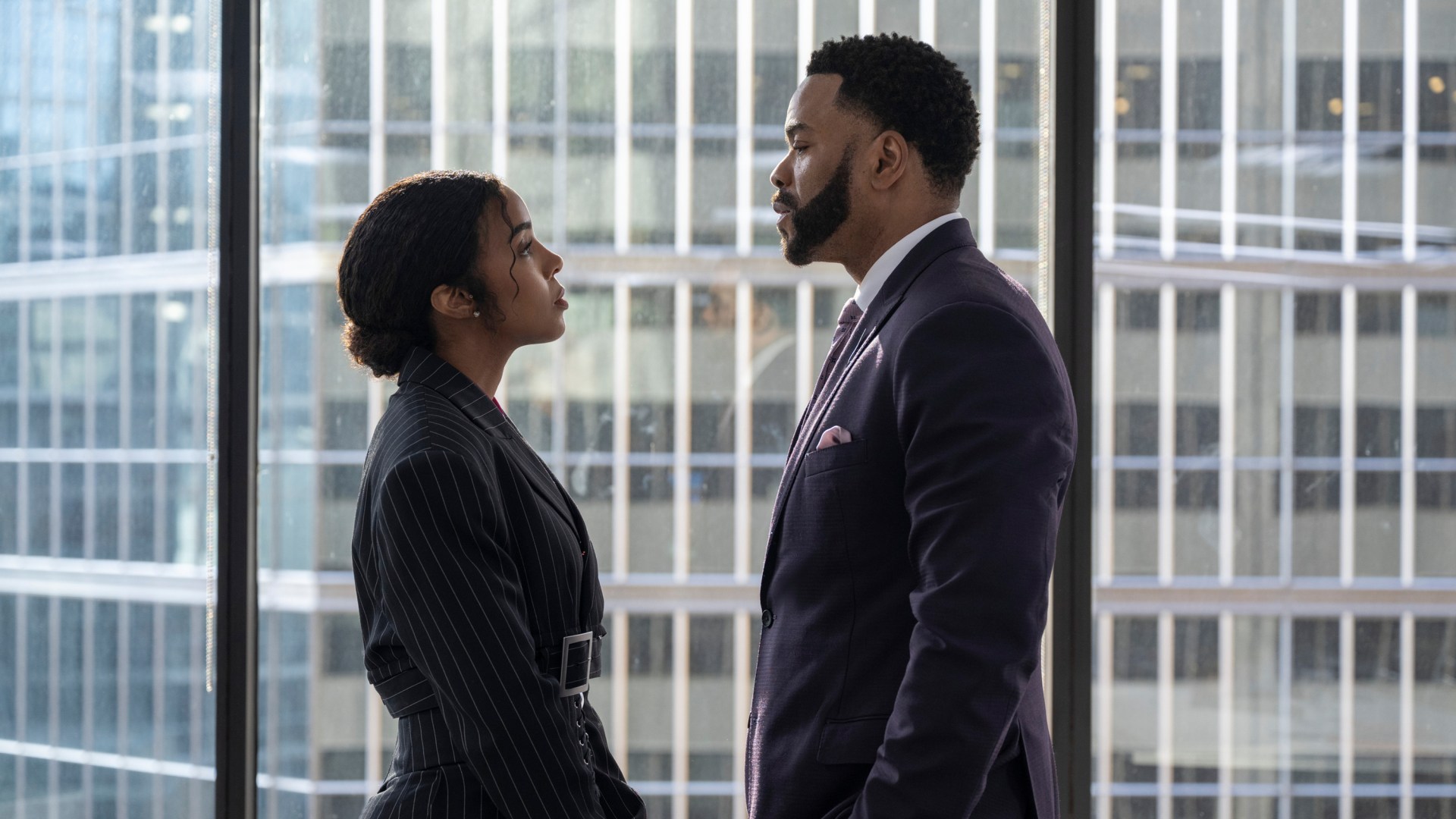
The roughly 90-minute film—also called Relationship Goals—stars singer and actress Kelly Rowland (of Destiny’s Child fame and Beyonce’s best friend) as Leah Caldwell, an ambitious staffer on a fictional morning show in New York called Better Day USA. Leah has plans to replace her boss as the program’s top producer once he retires. But the network overlords are concerned about her ability to be a team player, and they bring in another candidate to compete for the role.
That decision removes the façade of control Leah felt over her life, which Rowland told me during a brief conversation in January is partly what attracted her to the role. “I go through … [the process] of just letting go, I’d say every other quarter or maybe every quarter,” the singer said.
Leah is disappointed by what’s being asked of her and becomes even more annoyed when she learns she’ll be competing with a well-known TV producer whom she once dated and who cheated on her. To prove to her boss that she can be a team player, she swallows her pride and works with her suave ex, Jarrett Roy, on a Valentine’s Day segment about Todd’s book. Jarrett, played by the rapper Method Man, tells her the book helped him turn away from his player ways.


Viewers will spend most of the movie trying to determine whether Roy’s maturation is genuine and whether Leah’s character will open herself up to love. The film also traces how the book impacts Leah’s two close friends, played by actresses Robin Thede and Annie Gonzalez.
When I sat down for an early preview of the movie, I didn’t have high hopes. The last DeVon Franklin film I watched, produced with Tyler Perry, trafficked in a lot of cliché tropes. I expected Relationship Goals to be more of the same, but I was pleasantly surprised. Rowland’s character is compelling and believable, and the situational humor (especially from Gonzalez’s tired-of-bad-dates character) was good enough to elicit several laughs from my husband and me as we watched the film together.
Method Man, whose real name is Clifford Smith Jr., also delivered a decent performance as Jarrett. The movie could have spent more time teasing out what exactly about the book and faith—which his character says is “hotter than ever”—made Jarrett change how he thinks about relationships. But for a lighthearted romantic comedy, those flaws are forgivable.
That said, Relationship Goals does have explicit Christian elements. It shows the morning-show crew traveling to Tulsa to record an interview with Todd and his wife, Natalie, who portray themselves. The two leading characters also attend a worship service at the real Transformation Church, where Todd gives a brief sermon.

Even with those types of scenes, the writers made sure the film didn’t emphasize Christianity so much that it could turn off secular viewers. “I love love,” Rowland told me. “I love rom-coms. And I love [that] the faith aspect of it … wasn’t force-fed down our throat as much as allowing these characters to be human, honest, and real.”
The movie is heavily marketed toward Christians, and many people who follow Todd will likely check it out. Todd told me he put in his two cents wherever he could. But it’s not a Christian movie per se, he and Franklin said during separate interviews. That point was communicated clearly in one scene (spoiler alert) where the two leads sleep together, and there was no dialogue afterward about the act being wrong, nor any movement to tie up the moral loose ends.
Todd noted he wanted to cast a “wider net” with the movie and appeal to people who weren’t already believers. The goal was “to make a movie that had Christian principles in it [and] that transformed people in their everyday” lives, he said. He wants his preteen daughters to watch it, but not until “a few years from now.”
Haleluya Hadero is the Black church editor at Christianity Today.