When 42-year-old Mohsen Rashidi saw the Iranian security forces shoot his friend, a two-time national powerlifting champion, he didn’t hesitate. He rushed to his friend’s side. Regime forces rushed there too—then beat Rashidi, forcing him to retreat to safety.
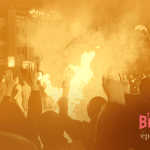
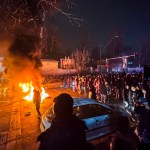
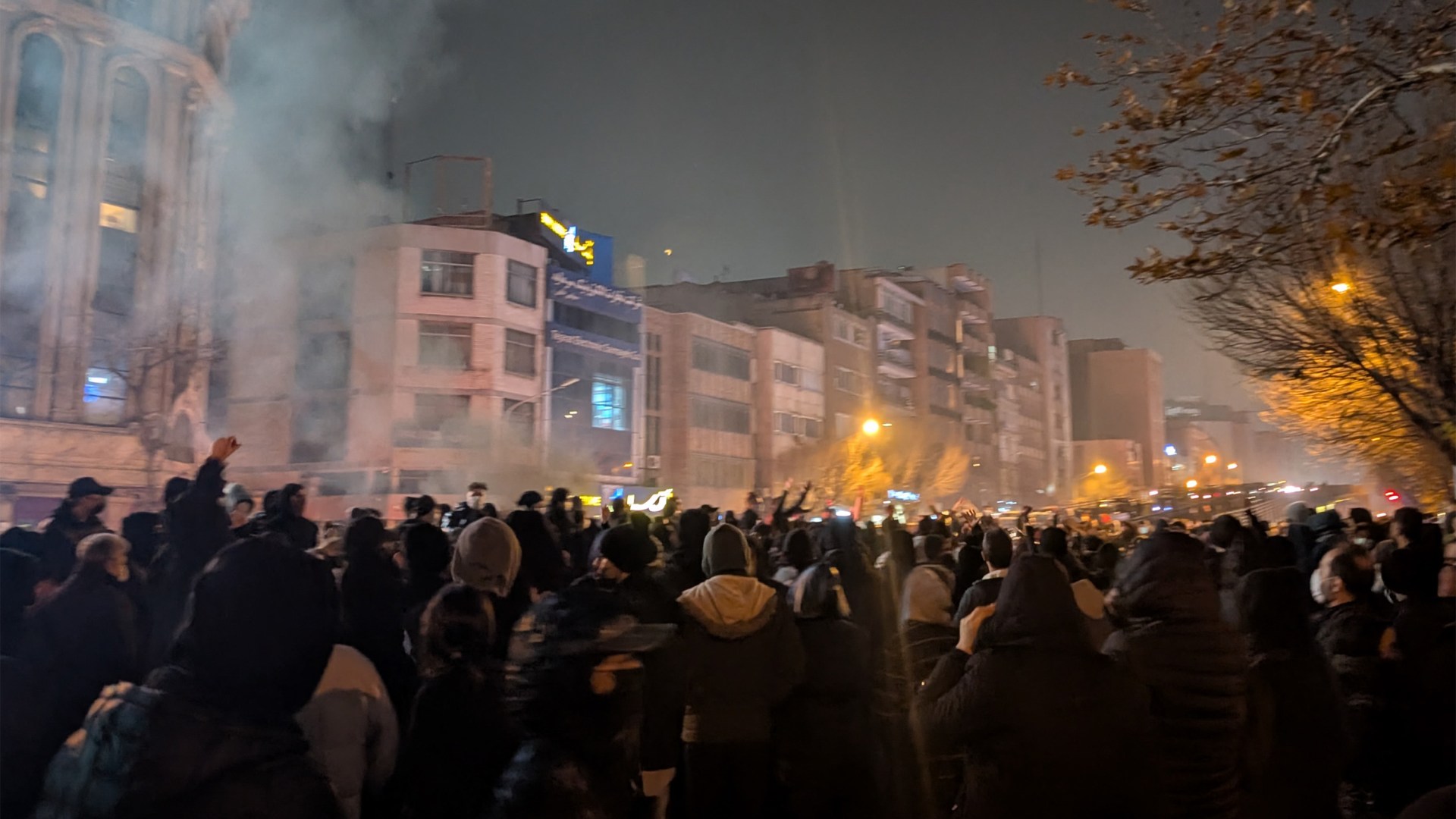
Some witnesses said millions flooded streets in 4,000 locations across Iran on January 8–9, including in Isfahan Province, where Rashidi—a Christian convert and father of three girls—joined the protests. At the same time, the government shut down the internet, cutting off Iran from the rest of the world.
After security forces temporarily retreated on January 9, Rashidi returned to his friend, who lay dead on the street. “Then he tried to carry the body,” said Mansour Borji, director of Article 18, a London-based organization focusing on religious freedom in Iran. Borji said families have reported that authorities refused to release bodies unless relatives paid large sums of money.
As Rashidi attempted to retrieve his friend’s body, security forces shot him in the leg. Several protesters took Rashidi to a hospital, but regime agents refused to grant him entry, and he bled to death, Borji said.
Rashidi was one of 11 Iranian Christians whose deaths Article 18 has confirmed in the wake of bloody crackdowns against protesters last month that rights groups say left more than 6,000 people dead. Borji has also heard about the deaths of at least 7 Christians among the Armenian community in Iran. A weeks-long internet blackout prevented many Iranians from sharing the atrocities they witnessed, but as partial connectivity returned, Borji noted, graphic images and details about the deaths emerged. Two officials of Iran’s Ministry of Health told Time that the actual death toll could be more than 30,000, although reporters could not independently verify that number.
If it is accurate, this was one of the worst killings “not only in Iranian history but perhaps in modern history, in just two days,” Borji said. Meanwhile, Iranian officials put the death toll at about 3,100 people.
What began on December 28 as large-scale protests against Iran’s economic collapse quickly snowballed into a nationwide movement calling for the end of the regime. Reza Pahlavi, the former shah’s son, who spent most of his adult life in exile in the United States, urged Iranians to take to the streets “to fight for their freedom and to overwhelm the security forces with sheer numbers.”
On January 8, US president Donald Trump told radio host Hugh Hewitt that if state forces begin killing people as they have during past protests, “we’re going to hit them very hard.” On January 13, only days after Tehran’s massacre of protesters, Trump posted on social media, “Iranian Patriots, KEEP PROTESTING. … I have cancelled all meetings with Iranian Officials until the senseless killing of protesters STOPS. HELP IS ON ITS WAY.” The president said the regime’s “killers and abusers” would “pay a big price.”
Iranians are still waiting for help from the United States. “That’s probably one of the most frustrating aspects of the whole situation right now,” said Shahrokh Afshar, founder of Fellowship of Iranian Christians. He now pastors an online congregation with Farsi speakers from six countries, including four Christians in Iran. He believes Iranians took Trump’s words literally and anticipated an imminent US attack on the regime’s assets.
“Everyone was hoping he would do something,” Afshar said. Some analysts believe the Trump administration is delaying an attack in order to reinforce air defenses in Israel and at US bases in the region. The aircraft carrier USS Abraham Lincoln and three warships arrived in the Middle East last week amid heightened tensions. On February 3, a US fighter jet shot down an Iranian drone approaching the carrier.
Yet the Trump administration appears to be pivoting toward negotiations, engaging with Iranian officials in talks on Friday about ending Tehran’s enrichment of nuclear fuel. “What sort of deal do you want to make with a government that is as bloodthirsty as this?” Borji said. The two countries made little progress toward a deal but agreed to meet again at an unspecified date.
Secretary of State Marco Rubio said negotiations with Iran must also include discussions about the regime’s ballistic missile program, support for terrorist groups across the region, and attacks on its own people.
Meanwhile, Iranians are attempting to find their loved ones and communicate with the outside world. Reports by locals described bodies piled on top of one another, family members missing, the possibility of mass graves, and security forces shooting the injured inside hospitals.
According to the US-based Human Rights Activists News Agency, the regime has arrested more than 50,000 people and severely injured at least 11,000. One of Afshar’s church members in Turkey was concerned about her nephew, whom authorities detained more than two weeks ago. They released him last week, and his father took him to a local doctor, afraid he may have been poisoned in custody. Some unverified reports claim security forces have poisoned protesters before releasing them. Borji said authorities are arresting doctors treating the wounded and lawyers representing protesters.
Afshar said he hadn’t heard from his four church members in Iran for nearly a month, but the Iranian Christians finally connected with each other over local phone lines last week, and two members left Afshar voice messages on Telegram letting him know all were accounted for. “That’s the best they could do,” Afshar said, noting that Tehran continues to limit internet access. One church member told him the regime is arresting Christians and accusing them of spying for Israel or the United States.
According to Borji, Christians are doubly vulnerable when they attend protests. Iranian authorities already target Christians and have sentenced some to ten or more years in prison for participating in or leading house churches. In 2025, security forces arrested 254 Christians—almost double the number from the year prior. Borji said most of the arrests took place after the 12-day war with Israel in June when the regime was looking for scapegoats.
Of those arrested last year, 57 Christians served sentences of imprisonment, exile, or forced labor, and 43 were still serving their sentences at the end of 2025, Borji added. Others remain in pretrial detention.
The arrests have continued into 2026, Borji said. “What is shocking is even during this time, the Ministry of Intelligence is still arresting and sentencing some of these Christians,” he added.
Borji said Iranians are more united in their calls for the US to strike the Iranian government than they have been in the past due to the regime’s increasingly brutal crackdowns. This has created some theological debate among Iranian Christians about civil disobedience and whether Christians should protest their government. Borji said many Iranian Christians have become more outspoken, and he has heard reports of pastors and priests attending protests and expressing solidarity with victims.
Still, the risks loom large. Afshar said his church members in Iran are understandably worried given the recent bloody crackdowns and ongoing arrests, yet their faith is resilient. One church member told Afshar, “I get on the street and share God’s love with whoever I come across, because the people are desperate and that’s the best I can do. That’s the only thing I can offer them.”