What does it feel like to be a Christian? For some, this will sound like precisely the wrong question to ask. But say all you want about “happy clappy” Christianity or a toxic emphasis on positive feelings in church life: Feelings seem to be an undeniable aspect of Christian identity.

Joy, love, grief, fear—these may not only be emotions, but they often include or involve emotion. We know what grief and joy feel like. And all of these stand out in Scripture not only as part of the human experience but as part of the Christian life.
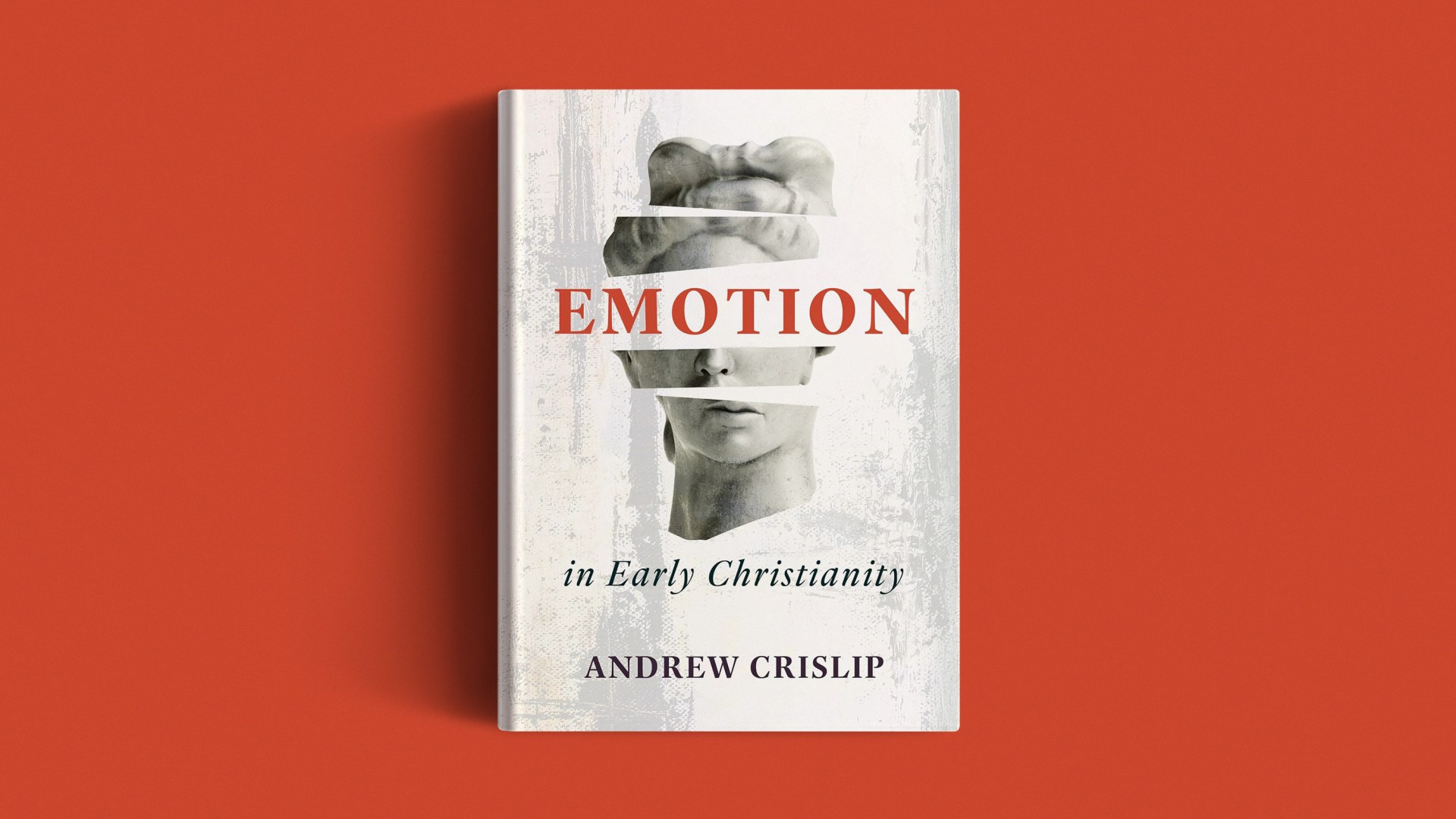
In his new book, Emotion in Early Christianity, historian Andrew Crislip explores what exactly these emotions are doing in Scripture and in the life of the believer. His work is largely descriptive and stops short of considering what it entails to follow biblical commands about emotion in a contemporary culture that rejects the very idea of such commands. But it provides important historical and scriptural insights for anyone seriously thinking about how Christians feel.
Much recent attention to Christian identity has turned to questions of intellect and action, treating Christian life as a matter of confession and discipleship and not feeling. And for many years, emotions received either negative attention or inattention in theological circles. Emotions were treated as either untrustworthy markers of the Christian life or simply beside the point. Presbyterian J. Greshem Machen summed up a key concern when he wrote that “if religion consists merely in feeling the presence of God, it is devoid of any moral quality whatever.”
related


Machen’s criticism of feeling as a marker of faith had in mind early 20th-century theological liberalism, which emphasized feelings of piety and compassion as the marks of Christian faith. Some of this traces back to the great German theologian Frederich Schleiermacher, who described faith as an experience of “absolute dependence” in which feelings of piety would rise up as an indicator of encounter with God. But what Machen rejected was not only an emphasis among liberals: 20th-century evangelicals likewise tended to link awe, wonder, and lament as signs of a person’s commitment to God and spiritual growth.
Yet whatever misguided ideas Christians may have about emotion in faith and worship, Crislip shows that this link between being a Christian and having certain emotional experiences—far from being a corruption brought on liberalism—is a deep part of the early Christian story. Whether we look to John 15 (where Jesus connects being his disciple to love), to any number of Paul’s letters, or to early Christian writings, there is a persistent assumption that following Jesus involves not just thinking certain things but feeling certain things as well.
Crislip’s concerns lie with uncovering how “Christians understood themselves from the start as an intentional emotional community” and how constellations of emotions form the backdrop of the Christian life. Examining joy, sadness, anger, disgust, and envy, Crislip takes the reader through scriptural and early Christian sources to show the range of ways in which Christians linked discipleship and the emotional life. The five emotions mentioned above form the backbone of the book, and though not always the most dominant ones of early Christianity, they correspond to several decades of psychological research about core emotions people tend to experience across cultures.

Crislip draws from a variety of theories of emotion, but his own approach is closest to the constructivist view, which understands emotion as a “concept constructed by humans to make meaning out of the complex interaction between bodily affect and the experiencing of perceiving and predicting the world.” That is, emotions are not free-floating mental passions, waiting to erupt, but neither are they purely a biological reality, a mechanistic product of our brains. Rather, emotions are ways we navigate the world, the process of interpreting various feelings as anger, joy, sadness, and the like.
One of the key insights of Crislip’s work, then, is that emotions are not described in the Bible as spontaneous events in the life of the Christian but as “a form of practice, a way of being, a stance, an orientation, an action to be cultivated, which can transform the self and the world.” Our bodies certainly affect what we feel, but feelings do not only happen to us because of chemical changes in our brain. Crislip finds that in the New Testament and early Christian writings, rightful emotional states—like joy, mournfulness over sin, or opposition to envy—are presented as cultivated responses to which Christians can and should aspire.
Crislip also traces the history of emotions as a part of community formation, building an impressive body of evidence. Together, we are commanded to rejoice. We train together in how to grieve—or when to feel disgusted. Crislip’s handling of envy is among the most compelling portions of the book, as it takes the usual place of pride as the chief of sins.
Less clear in this work is how the historical context of the early church plays into how early Christians’ emotions were formed. The ways these Christians disciplined their emotional lives were not the only games in town. Other religions and movements in their society, especially the early Stoics, also treated emotions as rationally controllable. Part of Crislip’s aim is to establish how Christians differ from their neighbors on this score, but it’s not always clear what exactly the stakes are in this distinction.


Also unclear—but this would in some ways require a very different book—is how emotions contribute to the larger architecture of the Christian life in our quite-different social context. Our society, unlike the world of the early church, is deluged in a psychological discourse that’s likely to see something nefarious in deliberately cultivated emotions in a church setting. Contemporary Americans tend to think of emotion as something that simply happens to you—not quite uncontrollable, perhaps, but generally to be accepted and validated as a matter of personal authenticity. The attitude toward emotion we find within early Christianity—and even Scripture itself—could be labeled emotionally coercive in our day. Commanding someone to rejoice is suspicious, maybe even gaslighting or manipulative.
Crislip doesn’t address that shift in the zeitgeist, and such are the limits of the descriptive project he has put together. Though an excellent retrieval of the complex and nuanced ways in which emotions are part of Christian discipleship, the book leaves open the question of how these emotions should be understood as part of a whole life of worship.
The great benefit of Crislip’s work, however, is that he provides a much more robust and textured understanding of our emotions than is commonly exhibited in the flurry of recent work appealing for a more emotionally healthy Christianity. Urging Christians to have emotional health is all fine and good. But we must also contend with how Scripture and the early church call our emotions—as varied as they are—into the orbit of our worship.
Crislip has shown that there’s often a normative direction for our emotional lives, that God wants and requires us to steer our feelings toward righteousness. This is a challenge other Christians thinking and writing about emotion must now take up with care.
Myles Werntz is the author of Contesting the Body of Christ: Ecclesiology’s Revolutionary Century. He writes at Taking Off and Landing and teaches at Abilene Christian University.