Manuel Mayllazhungo had been detained in upstate New York for a little over a week when ICE officers told him he was being transferred south, to a facility in Louisiana.
Louisiana, Mayllazhungo had heard, was usually a detainee’s final glimpse of America.
The 37-year-old Ecuadorian man shuffled, irons on his wrists and ankles, into a room where guards began processing him to be transported. They searched him and rifled through his pockets.
When a guard pulled out a scrap of paper containing a list of hand-scrawled phone numbers, Mayllazhungo told him he needed it. “That’s the number for my lawyer,” he said. “I need to communicate with her.”
“That won’t help you anymore,” the guard responded. “You’re going to your country. You don’t exist anymore in this country.”
Then, according to Mayllazhungo, who shared his account over the phone in Spanish, the guard dropped the scrap of paper into a trash can.
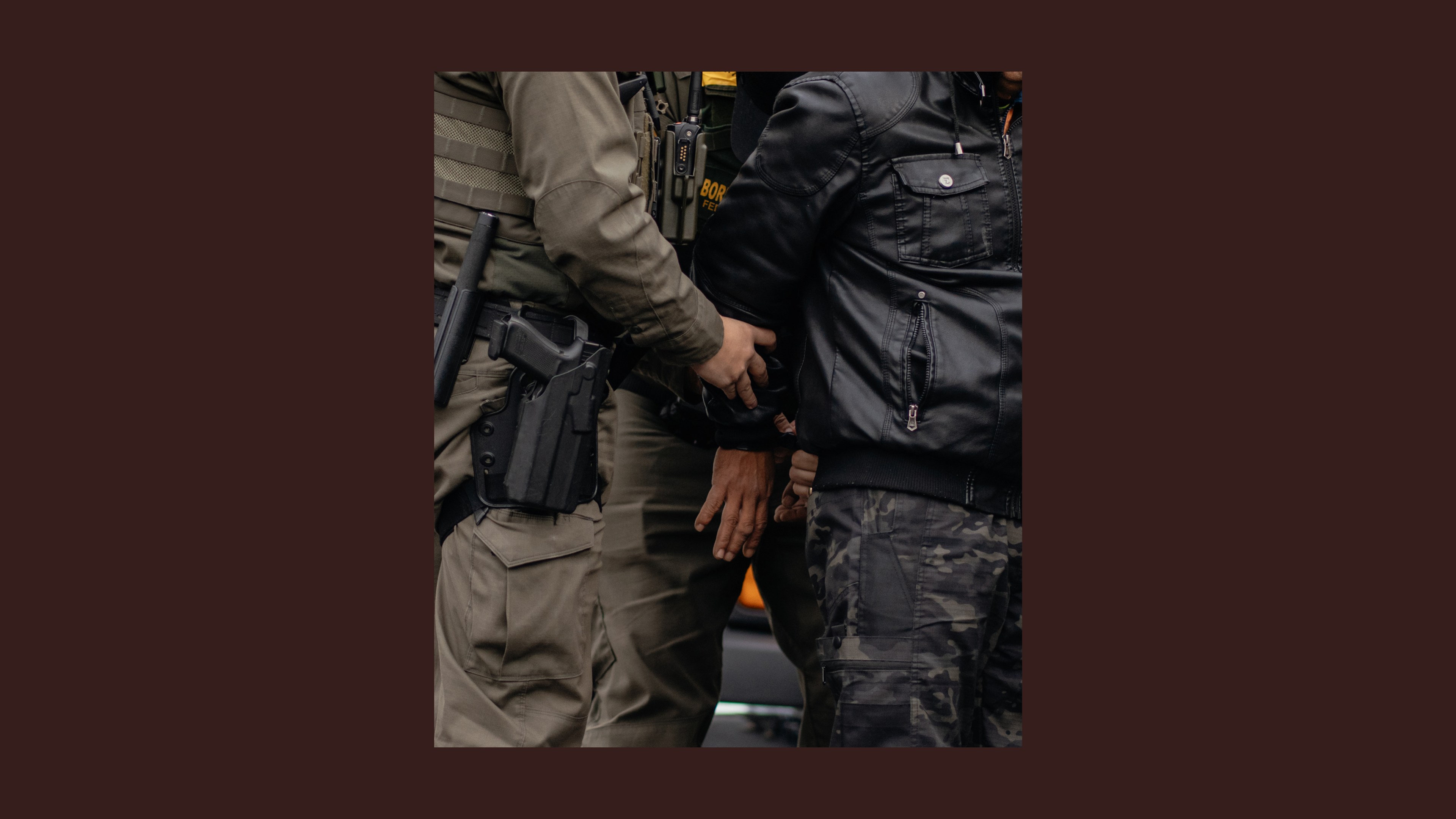
Mayllazhungo had been taken on July 11, 2025, on his way to a roofing job near Buffalo. He and a coworker were parked in a white Chevy van outside an apartment, waiting to pick up another roofer, when masked immigration agents—Mayllazhungo guesses 10 in all—surrounded them. They told him to exit the vehicle or they would break his window and drag him out.
As an agent twisted his arm behind his back and snapped on handcuffs, Mayllazhungo tried to understand why he was being detained. He had a driver’s license. He had a pending U visa, a special status granted to immigrants who are victims of violent crimes and are aiding police investigations. That status came with permission to work and, supposedly, protection against deportation.
Mayllazhungo was no bad guy, he thought. On the contrary, he’d been the victim of assault and robbery—much of his life savings was stolen by men he alleges were United States citizens.
“Here is my work permit,” Mayllazhungo said to an agent who was arresting him. “And he told me, ‘I don’t care.’ They told us, ‘You are criminals.’”
Now, after days in detention, Mayllazhungo had only his partner’s phone number. He knew it by memory. He called María to tell her they were sending him away.
But how much could she help? María, whose last name CT is withholding, spoke limited English and Spanish—her first language was Quichua, same as his. She was undocumented and could not even drive.
For all Mayllazhungo knew, he was falling into a pit where the only exit was Ecuador.
The man had entered federal detention six months into an unprecedented scaling back of due process protections for migrants in the United States. The Trump administration, in its determination to refashion immigration policy, was arguing that detainees are not entitled to challenge their removals before a judge, an assertion the Supreme Court has repeatedly said runs afoul of the Fifth Amendment. The Department of Homeland Security (DHS) also asserted it could deport immigrants with less than a day’s notice, a claim judges have viewed skeptically as a thinly veiled attempt to deprive them of their constitutional right to appeal.
But federal leaders were also circumventing due process in much quieter ways. Though Immigration and Customs Enforcement says that it permits detainees access to legal counsel, the agency has made it increasingly difficult for migrants in some detention centers to connect with the outside world. Such practices are at the heart of lawsuits against DHS alleging mistreatment at an ICE facility near Chicago and at another in Minneapolis.
“It’s always been challenging when someone’s detained,” said Mayllazhungo’s lawyer, Tina Colón Williams. “But it’s never been like this. This is the new era of barriers in communicating with clients and the new era of speed and swiftness in removal.”
As she struggled to reach Mayllazhungo, Williams eventually tried a strategy completely new for her. While he waited to board a flight to Louisiana, she mobilized individuals from four churches across the country to try to free him.
Williams was fresh off maternity leave when ICE arrested Mayllazhungo. His 17-year-old son called her with the news.
Already juggling the demands of being a pastor’s wife and worship leader at her church in New Haven, Connecticut, Williams, a mother of three, was catching up on all the dizzying ways US immigration law had changed while she was out of the game for three months in early 2025.
Williams’s firm, Esperanza Law, specializes in removal defense—representing clients the government intends to deport. Mayllazhungo had first come to the firm for help with a removal order he’d incurred as a teenager after he missed a 2005 immigration hearing. The piece of mail notifying him about the hearing had been sent to the wrong address, so he never saw it. Complicating Mayllazhungo’s current case was the fact that he had also been robbed. He was working with police to identify suspects, so the firm helped him apply for a U visa.
“It’s an incredibly powerful kind of visa,” Williams said. It can erase outstanding removal orders and qualify recipients for a green card. “It’s really helpful to law enforcement to have something like that so people can report crime and criminals can be held accountable.”
The government issues only a limited number of U visas each year, however; the wait to receive one can stretch more than a decade. Qualified applicants like Mayllazhungo receive a preliminary approval—called a “bona fide determination”—that allows them to work while they wait. That generally protects them from deportation.
After Mayllazhungo entered detention, Williams tried to contact the ICE officer assigned to his case and explain his situation. It would be okay, she thought. She’d seen this play out plenty of times.
Years ago, on her very first day at the law firm, she had approached some ICE officers to talk about a client who was about to board a deportation flight. The client was the victim of a crime and was applying for a U visa, she told them. Would they release the client while the visa was pending?
The officers argued against it but eventually sympathized. “It was like, ‘Okay, fine. We’ll give you time,’ ” Williams said.
In another instance, a client suffered a crime, and the day before a deportation hearing, the judge on the case ordered: Shut down the whole thing and don’t move forward with the removal.
So Williams felt reasonably confident she could persuade the people in charge of Mayllazhungo’s detention that “this is all a misunderstanding. Just release him. He has a U visa; like, what’s the point?”
“Maybe I was too naive,” she said later in an interview, “thinking of another era where there was discretion and mercy.”
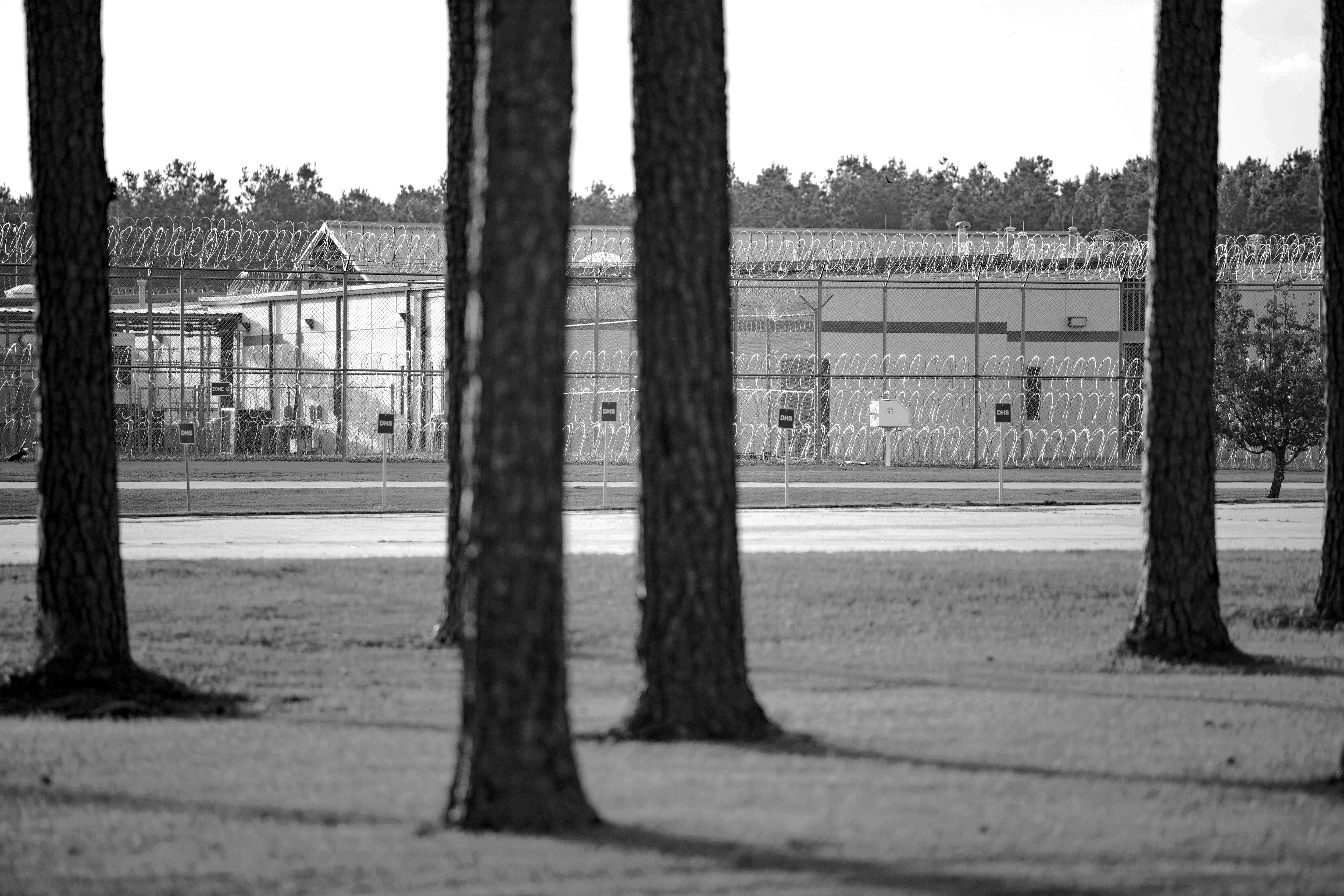
For five days, Williams tried to reach someone. She sent emails to every address she could find, but all went unanswered. She made calls to the ICE detention center in Batavia, New York, where Mayllazhungo was being held, about 45 minutes from Buffalo. She phoned two different ICE field offices. She listened to “oddly cheerful” hold music while waiting for call center operators.
No one would help her. “The detention facilities are basically black holes,” she said.
Finally, she succeeded in scheduling Mayllazhungo for a virtual appointment, a confidential video call where she could get his permission to take the next steps and attempt to have his removal order canceled.
She could also take a statement from him, explaining why he missed his court appointment 20 years ago, explaining that he was a clueless 17-year-old kid at the time. He could share how other lawyers had convinced him that there was no removal order, that it had all been a misunderstanding and therefore he had nothing to worry about. He could share about his two US citizen sons at home in Buffalo, ages 5 and 17, who depended on him as the family’s sole breadwinner.
The evening before the virtual meeting was supposed to take place, Williams and a coworker were driving home from back-to-back court hearings near Boston. The lawyer was eager to see her infant son, to clear her head.
Then her phone rang. María’s contact blinked onto the screen. The woman called often, at all hours. But this call was different. María was panicked. They were taking Manuel to Louisiana, she said. Maybe tonight.
They’re about to remove him, Williams thought.
The lawyer had few tools at her disposal.
Williams knew she would eventually have to petition the judge who had issued Mayllazhungo’s deportation order—a judge in Arizona—to reevaluate his case. The petition would automatically protect Mayllazhungo from deportation, but it was also risky: If the judge decided to keep the removal order in place, Mayllazhungo would probably be deported swiftly.
Petitioning the judge would take time, and Williams was running out of that.
She needed to let ICE know that she was working on reopening the case; they might keep him off a plane for a while if she could contact an officer responsible for Mayllazhungo—something she had so far failed to do by phone and email.
She might reach someone if she went to the detention center in person. But it was already dinnertime, she was still returning from Massachusetts, and the Batavia facility was a six-hour drive from New Haven. Even if she walked in her front door, hugged her husband, walked back out, and drove through the night, Mayllazhungo could be gone by the time she got to Batavia.
Williams needed someone who was already close to Batavia, who could knock on the door of the ICE facility and deliver a message for her.
“Who is going to stop what they’re doing without charging a bunch of money and drop whatever to go print something and file something for a complete stranger?” Williams said. “I think it’s the church.”
She dropped off her coworker and then on her way home called her husband, Josh Williams. He is the lead pastor at Elm City Vineyard Church in New Haven, Connecticut, and he also oversees Vineyard evangelism and justice initiatives at the national level. Did he know anyone in Buffalo who could deliver paperwork for her to a detention center?
By the time Williams arrived home, she was shooting texts to leads. Sometime around 7 p.m., she got a call from the pastor of Buffalo Vineyard Church, Emily Defnet.
“Sorry, I don’t know you,” Williams said. She explained Mayllazhungo’s situation. Could Defnet or someone Defnet trusted leave immediately and drive to Batavia before 9:30? “They would need to print out this form, talk to an ICE agent there, and have the ICE agent call me.”
Defnet could not go herself but said she would check around. She remembers Williams adding, “And by the way, he might already be deported, so this might all be a lost cause.”
The pastor texted her church staff, who texted their own networks. Within an hour, Williams got a call from a woman named Allison Lang, the operations director at a Free Methodist Church in Batavia only two miles from the detention center. “I’m on my way to the church,” Lang told Williams. “We have a printer. Let me know what you need.”
Around 9 p.m., Lang stopped her car in front of the detention center gate, holding some legal papers and a cover letter from Williams.
A man in the guardhouse told her that the ICE officers she needed had gone home for the day. But he took the papers and promised to deliver them to his supervisor when he finished his shift, before midnight.
The following morning, an email appeared in Williams’s inbox from an attorney with the Office of the Principal Legal Advisor, the legal arm of ICE.
Finally, she thought, someone was talking with her. But the message was not encouraging. The ICE attorney told her that only once she filed the motion with the judge in Arizona, and not before, would they pause the deportation.
In other words, ICE would stop nothing unless a court forced it to.
 AP News / Matthew Hinton
That afternoon, Williams received another email, this one from an ICE officer assigned to Mayllazhungo’s case. The detainee was already on his way to Louisiana, the officer said. So Williams tried again: Would ICE consider releasing him while his case was pending, she asked, given its tradition of respect for certified U visa recipients?
It would not. “No explanation,” Williams said. “Just, ‘No.’”
“They knew he had deferred action,” she said, referring to a type of status that delays deportation and that generally accompanies U visas. “He had a bona fide determination. He was the victim of a crime. And they kept him detained anyway.”
The only person who could stop Mayllazhungo’s deportation now was a judge in Phoenix who had never even met him and who had last touched his case so long ago the court records weren’t even available electronically.
Williams would have to draft a large filing in haste, print it, and deliver it to a courthouse on the other side of the country as quickly as possible. Even mailing it overnight seemed out of the question; Mayllazhungo could disappear from the country before the package arrived.
Williams needed someone who could hand-deliver the documents. She grabbed her phone and reached out to her husband again: Did he know any Vineyard people in Phoenix?
He gave her the name of an Arizona woman who works with Vineyard USA, the denomination’s headquarters. For the third time in 48 hours, Williams was on the phone asking favors of a stranger: “Do you have time? Can you do this now?”
A flurry of paperwork: Williams pulled together what she had. She wished she could have consulted with Mayllazhungo first. “That declaration would have helped the motion be stronger,” she said. “But I wasn’t given access to my client.”
She sent a digital copy to the woman in Arizona, who printed and hole-punched two copies and drove them to a federal building in downtown Phoenix.
Motions to reopen a removal case automatically pause a deportation, giving judges time to review the file. After a court employee stamped the documents, Williams breathed a little easier—her client would theoretically remain in the country at least a while longer.
Mayllazhungo did not learn about his reprieve for days. For a week and a half, he remained in Louisiana at a crowded terminal for deportation flights known as the Alexandria Staging Facility.
Around him, other immigrants disappeared constantly into departing planes. No one was calling him—watchdog groups have documented that Alexandria is a “black box” with extremely limited contact with the outside world and frequent complaints of inhumane conditions.
Mayllazhungo was transferred back to Batavia at the end of July. For weeks, he waited on word from the judge. During phone calls with María, he finally let his guard down enough to talk openly about what the family should do next—the line was monitored, but the couple spoke in Quichua, wagering that no one listening would understand them.
They “hoped beyond hope” that the judge would vacate Mayllazhungo’s removal order, Williams said. Barring that, she wanted at least to ask a judge to release Mayllazhungo on bond—a long-standing practice with detained immigrants who pose no public risk.
Except by this time, ICE had shifted its stance. Over the summer, a new Department of Homeland Security (DHS) directive banned judges from granting bond to most detainees, effectively cutting off the avenue by which most immigrants escape detention, including asylum seekers and those without criminal records.
The policy has been challenged in court; anyone who watches prime-time television legal dramas understands that federal and state judges commonly release accused nonviolent criminals on bond while they await trial.
But in early February, two judges on the 5th Circuit Court of Appeals upheld DHS’s practice of indefinite detention—despite more than 3,000 previous rulings from hundreds of federal judges who concluded that denying bond to non-criminal detainees violates Constitutional protections.
The Supreme Court may ultimately decide whether America will have two parallel prison systems: One in which an accused arsonist or embezzler or drug dealer might walk free on bail, and another in which a student who overstayed her visa or a roofer who overlooked a piece of mail must be jailed for months.
María was the first to learn the immigration judge had decided against Mayllazhungo. On August 29, she tried calling Williams twice and got no answer.
Williams was at a press conference at a New Haven high school, standing behind a podium ringed with microphones. She fought back tears as she spoke about a teenage client, Esdrás Zabaleta-Ramirez, whom a judge had just ordered released from ICE custody.
The young man had been detained at his job washing cars. Williams fought for his release as ICE shuttled him between states and tried to expedite his deportation to Guatemala. Zabaleta-Ramirez’s classmates staged rallies. Teachers wrote letters. Now he would, against all odds, be able to return to his junior-year classes.
After the press conference, Williams was venting to a colleague about the difficulty of their work, about how the arbitrary nature of ICE decisions was so demoralizing. The teen’s release was a huge victory, but what was the lesson to be learned? Everything felt random.
Her coworker told her she should take the rest of the day off, get a massage or something. Williams looked at her phone and saw two missed calls from María. She vowed to let it go to voicemail if the woman called a third time.
But on her drive home the phone rang again, and Williams picked up. María explained that she had just looked up Mayllazhungo’s case online and seen that the judge had denied their motion to reopen his case.
He could be deported at any moment.
Williams pulled off to the side of the road and, again, began texting pastors. Her options were limited: Other lawyers might have been able to file a federal case in New York to stop the deportation, but she was not licensed to practice there. She could appeal the Arizona judge’s ruling, but that might stretch on for weeks or months, and Mayllazhungo would have no protection from deportation while the appeal played out.
To keep him in the country as long as possible, her only remaining option was to file with ICE a formal request for stay of removal—in other words, officially asking ICE for mercy.
Soon Williams was on the phone again with Lang, the church administrator in Batavia. They made a plan: The filing would require a thick stack of papers, so Williams would email it to María to have it printed. María would bring it, along with a filing fee, to Lang, who would deliver it to ICE at the Batavia detention center.
Four days later, on September 2, Lang pulled into a gas station off Interstate 90—just across the freeway from the detention center. She parked in front of a Tim Hortons, next to a car with two Ecuadorian women and two children inside.
The women got out. One of them, Mayllazhungo’s adult stepdaughter, spoke English—she said that ICE had also detained her husband that summer.
When they handed Lang a thick package of documents, the heft of it shocked her. She imagined the sensitive information it contained, the reality that these papers might be a man’s last hope for seeing his family again.
The first time Lang delivered paperwork for this family, a month earlier, she sensed that God had called her to do it. “I have no doubt in my mind that the Lord opened up my schedule that evening,” Lang told me.
She felt that same sense of calling this time, but also a rush of grief—holding all those pages, looking at the kids in the back seat of the car and this pair of women who were “beside themselves” with worry, as she described it. “I was not prepared for how much emotional weight was going to come along with meeting his family.”
Lang didn’t really know what to do with that feeling. She had only one idea.
Nobody expected press conferences for Mayllazhungo or his family. But standing with these women between cars at a gas station in upstate New York, Allison Lang grabbed their hands and prayed for them.
Lang was not unfamiliar with prisons. Her father had worked at a medium-security state facility and brought home stories. Other relatives also worked in corrections.
Still, walking through the detention center entrance, Lang felt intimidated. She was mildly surprised that guards had even allowed her in; across the country, politicians and pastors and other officials were being denied access to ICE facilities.
“You can just sense that everybody’s on high alert,” she said.
An officer (“very cordial,” Lang said) seated her in a tiny waiting room. After 45 minutes, a woman emerged and began inspecting the papers, asking questions that Lang texted to Williams.
“I was like, ‘Oh gosh, I don’t know any of this. I didn’t go to school to become a lawyer.’”
The woman wanted to see Manuel’s passport. It wasn’t in the file.
They took all of his IDs when he was detained, Williams wrote Lang.
More ping-ponging text messages: Manuel’s family had a digital copy. Would they accept an email? More waiting. Finally, the officers agreed to receive the file.
Lang drove away feeling grateful that a pastor’s wife–lawyer 400 miles away had tapped her as an unlikely legal courier. “Do I know why? No,” she said. But she would offer that kind of help again, “as great or as little as it turns out to be.”
 Image courtesy Rachel Lacovone / Connecticut Public
Nearly a week later, Williams received a message from ICE that her request for mercy had been denied. Again, the agency offered no explanation.
“It would not be a difficult thing to have released this man,” the lawyer said. “There’s all sorts of compelling factors in this case. I don’t know if they didn’t read it or if they read it and they were just like, ‘Whatever.’”
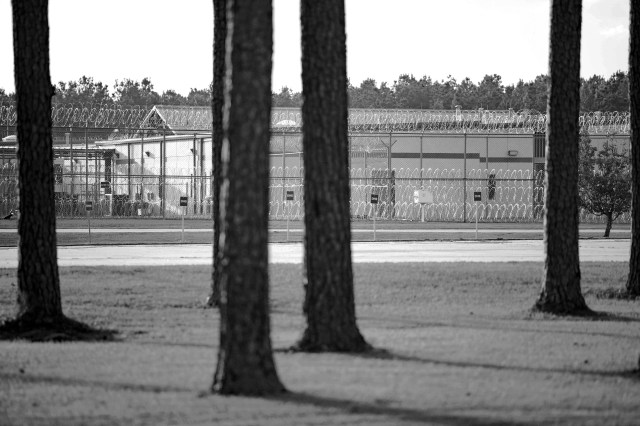
Within days, ICE transferred Mayllazhungo back to the Alexandria Staging Facility in Louisiana.
During his first 24 hours there, Mayllazhungo said, he was handcuffed without food or water. He was given no access to a bathroom.
The facility seemed far too crowded. New men arrived at all times, pouring in by the hundreds. “I don’t know where they were coming from, but they just kept coming,” he said.
Mayllazhungo shivered in a frigid room while he tried to sleep. He was issued a set of clothes to wear but had no access to laundry services. After several days, he washed the uniform in a sink and slept on the uniform while it dried.
Anger reached a boiling point. Detainees complained loudly to guards that they were hungry, that they had asked to use a bathroom and were refused, that they were thirsty.
One day, according to Mayllazhungo, guards told them to get over it. “They said that we deserved worse punishment than we were getting, because we’re criminals.”
That, Mayllazhungo said, is what started the brawl.
Several detainees snapped. Even with their hands and feet cuffed, “they fell on top of ICE,” he said. (Many guards at Alexandria work for Geo Group, the private prison company that manages it, and are not employed by ICE.)
Men grabbed at officers, trying to strike them. Mayllazhungo said guards rushed in from around the facility to break up the fight. Mayllazhungo, who said he did not participate in the conflict, fled with other detainees, pushing each other to escape the chaos.
Mayllazhungo thinks that’s when his wrist broke.
Not until some time after calm returned did he realize he could not move his right hand. He can’t recall the precise moment when he injured it—maybe somewhere in all the shoving, his wrist twisted the wrong way inside the tight cuffs—but it was red and throbbing with pain. He could not make his fingers grab food to bring it to his mouth.
Mayllazhungo said he requested medical care multiple times but received none.
ICE did not respond to multiple requests for comment on this story. The Alexandria Staging Facility is designed to house detainees for no longer than 72 hours, though many have reported longer stays. Mayllazhungo’s descriptions of conditions there are consistent with other accounts.
After five days at Alexandria, Mayllazhungo was bused to another facility in Louisiana about 45 minutes away.There, he was allotted one or two ham sandwiches a day. He could talk to María again. He had a single call with Williams, during which the connection was so bad they could hardly understand one another.
The women were asking Mayllazhungo, Did he want to appeal the judge’s ruling? The lawyer could not promise it would make a difference, but she had reviewed the judge’s decision and spotted all kinds of flaws in the reasoning. There was a chance, if they moved quickly. She said she would drop everything else and fight if Mayllazhungo gave the word.
But he was so tired. He had been in detention now for more than two months. His hand was swollen. Every dollar they spent fighting this in court María could not earn back, because she couldn’t work. Everything, always, was on his shoulders.
“It’s okay,” he finally told them. “Just leave it.”
On one of the last few days of September, Mayllazhungo felt handcuffs drop from his wrists as he stepped off a plane in Guayaquil, Ecuador.
He took a bus into the mountains, toward the village where he had grown up. He had not seen it in 20 years. He had a sister there who would probably take him in.
Now, Mayllazhungo spends his days searching the countryside for odd jobs to earn money to send back to his family. In December, he spent a few days helping a local builder assemble windows.
Back in Buffalo, a local Catholic church has been supporting María and the kids with some basic needs. Other churches have also offered to help.
Williams hates that they could not save her client from deportation. It’s a consolation, maybe, that each filing that church people helped her make “slowed down the process and changed something,” she said. She also believes that “it makes a difference, psychologically, for the families impacted by this, knowing that there are other human beings out there in the world who care and who are willing to help.”
In Ecuador, Mayllazhungo can at least speak to his sons daily by phone. His 5-year-old asks, “Where did you go? Why don’t you come home?”
The phrase he heard over and over—from immigration agents, from detention center guards, from American leaders—echoes in his head and messes with him: “You’re a criminal.” Except, he said, he isn’t. “I was clean,” he said.
Soon after arriving in the mountains, Mayllazhungo saw a doctor about his wrist. An x-ray confirmed it: The bones had broken.
Andy Olsen is senior features writer at Christianity Today.
This article appeared in the March/April 2026 issue of Christianity Today as "The Ministry of Due Process".
Related