





When our editors first started developing these newsletters, we wanted our columnists to feel free to cover whatever books in their field they wanted to share with CT readers.
Andrew Wilson’s monthly theology column hits three genres this month: a playful reader’s guide to the medieval poet Dante, a historical theology text on the Trinity, and an essential catechism. We’d love to hear how you are using this newsletter and which books or columns are standing out to you. Please hit reply and let us know!
Happy Reading,
Kara Bettis Carvalho
Senior Features Editor, Christianity Today
Three Books on Theology
BY ANDREW WILSON
Richard Hughes Gibson, The Way of Dante: Going Through Hell, Purgatory, and Heaven with C. S. Lewis, Dorothy L. Sayers, and Charles Williams (IVP, 2025)
One of the greatest writers in history is also, to the modern reader, one of the most intimidating. Dante Alighieri (1265–1321) was a poetic genius, ranking alongside Homer, Li Bai, Goethe, and Tolstoy as one of the most important writers in any language. C. S. Lewis remarked that reading Dante made Shakespeare seem artificial. Yet many of us are scared to read the Divine Comedy, whether because of its form (intricately rhyming Italian poetry), its subject matter (hell, purgatory, and heaven), or its sheer size. “After all,” as superfan Dorothy Sayers admitted, “fourteen thousand lines are fourteen thousand lines, especially if they are full of Guelfs and Ghibellines and Thomas Aquinas.”
This should make us grateful for Richard Hughes Gibson. In The Way of Dante, he introduces us to the Florentine master by way of his influence on Lewis, Sayers, and the poet Charles Williams. The result is a fine, brief work of literary criticism that does two distinct things. On the one hand, Hughes explores the various ways in which Lewis, Sayers, and Williams wrestled with how to understand, translate, criticize, imitate, and spiritually engage with Dante (chapters 1, 2, 4 and 6). On the other hand, he illuminates the Divine Comedy itself with chapters on the Inferno (3), the Purgatorio (5), and the Paradiso (7).
The most accessible parts of the book explore Dante’s influence on Lewis, whose visions of heaven and hell are familiar through The Great Divorce and the Narnia stories. The most sparkling sections involve Sayers, whose prose is by turns penetrating and mischievous. But fittingly, the star of the book is the Comedy itself, from its terrifying depiction of hellish monotony to the breathtaking splendor of “the love that moves the sun and other stars.”
Matthew W. Bates, The Birth of the Trinity: Jesus, God, and Spirit in New Testament and Early Christian Interpretation of the Old Testament (Oxford University Press, 2015)
When I started Matthew W. Bates’s book, I had never heard of “prosopological exegesis.” By the time I finished, I had become convinced that it was crucial to a proper understanding of multiple New Testament texts—and more importantly, I had been stirred to rejoice in fresh ways as I reflected on the Trinitarian God and the books he inspired.
Prosopological exegesis is a reading technique that, Bates argues, was widely used in the early church and was crucial to the development of Trinitarian doctrine, especially the way we speak of God using personal language. In a nutshell, it involves reading numerous Old Testament texts as dialogues between different divine persons. (Prosopon is the Greek word for “face” or “person.”) In Psalm 110:1, for example, we have the famous words, “The Lord said to my Lord, ‘Sit at my right hand until I make your enemies a footstool for your feet,’” which the Gospels take as being addressed to Christ (Mark 12:35–37). Notice the Trinitarian implications: The Holy Spirit is telling us about something the Father said to the Son.
This is different from typology. David is not speaking about himself here, in a way that Jesus later imitates; David is taking on the voice of a character in a divine drama. Once you notice this, you see it everywhere. “A body you have prepared for me,” says the Son to the Father (Ps. 40:6; Heb. 10:5). “You are my Son; today I have begotten you,” says the Father to the Son (Ps. 2:7; Acts 13:33, ESV). “Your throne, O God, will last forever. … Therefore God, your God, has anointed you,” says the Spirit to the Son about the Father (Ps. 45:6–7; Heb. 1:8–9). In this rigorous yet accessible book, Bates takes us through lots of examples of this reading strategy and shows us how much it has shaped the way we talk about God.
Zacharias Ursinus, The Heidelberg Catechism, 1563
The Heidelberg Catechism is one of the great texts of Christian history. Written in 1563 in the German city of Heidelberg, it consists of 129 questions and answers about Christian faith and practice, organized into 52 sections, one for each Lord’s Day of the year. Confessions and catechisms can sometimes be rather dry affairs, which appear pedantic and fussy to readers from other theological traditions. Heidelberg is the opposite: short, warm, pastoral, practical, rich, and joyful. (And I say that as a nonconformist charismatic pastor who has never baptized a baby in his life.)
The catechism gets off to a flying start. “What is your only comfort in life and in death?” it asks, revealing straight away that the questions will aim at pastoral encouragement, not just doctrinal detail. The answer: “That I am not my own, but belong—body and soul, in life and in death—to my faithful Savior, Jesus Christ. He has fully paid for all my sins with his precious blood, and has set me free from the tyranny of the devil.”
Its final sentence is equally heartwarming. Q: “What does that little word ‘Amen’ express?” A: “‘Amen’ means: This shall truly and surely be! It is even more sure that God listens to my prayer than that I really desire what I pray for.”
In between, the catechism covers the heart of Christianity by going through the Apostles’ Creed, the sacraments, the Ten Commandments, and the Lord’s Prayer. Many of the answers—on the meaning of “Father Almighty” or “Christ” or Communion or the ninth commandment—are utterly delightful. There is hope and joy here for anyone who loves the Lord, whatever they think of Reformed theology.
Thank you to our 2025 Sustaining Partners
Sustaining Partners are special friends of CT who give $1,000 or more to the ministry each year. These important partners are helping more people around the world see how God is at working bringing his kingdom on earth. Learn more about joining this community.
don’t miss
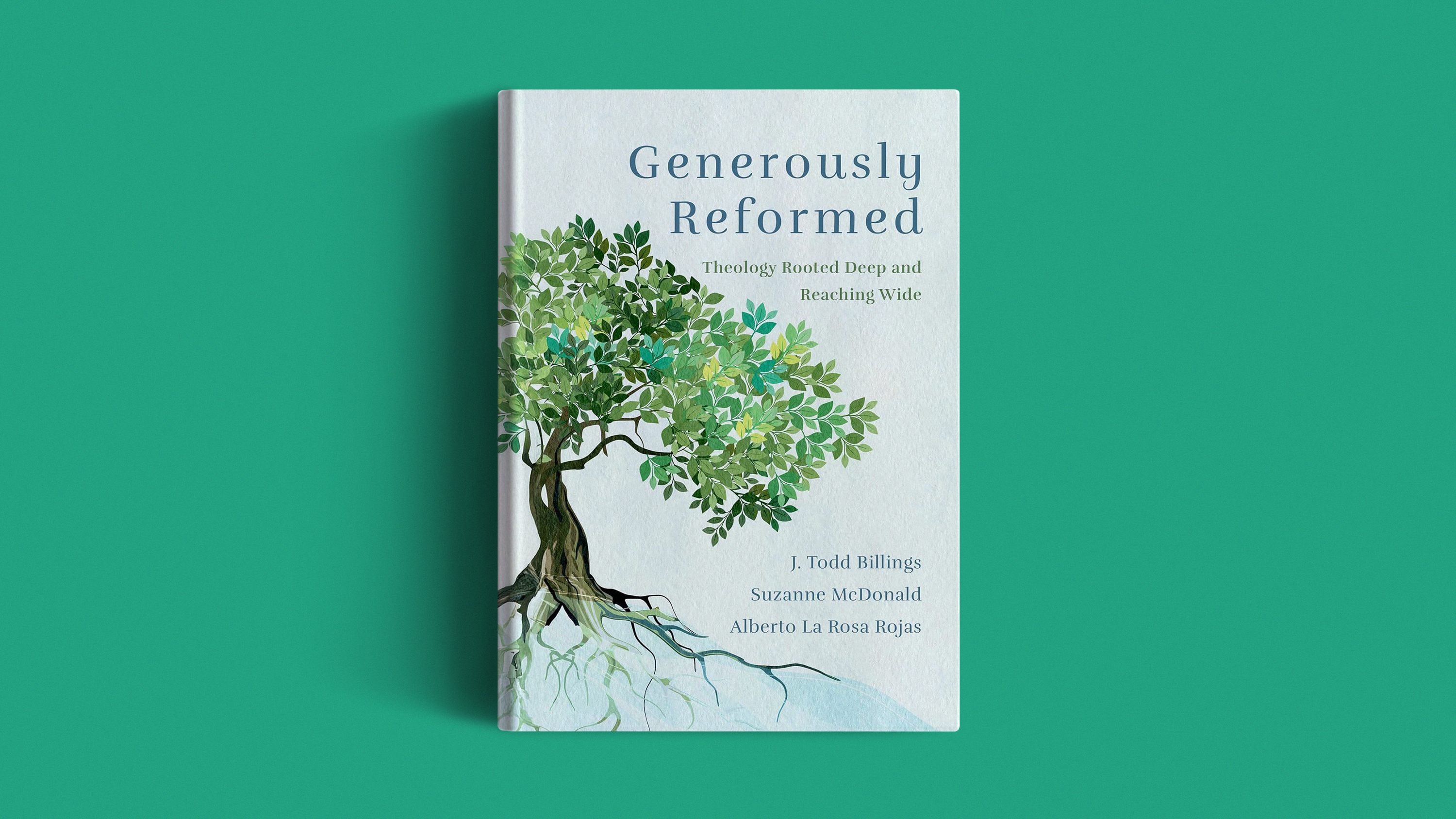
Back in my online dating days, I once had a match almost cancel our dinner plans. No, she hadn’t caught me lying about my age, height, or hairline. But an…
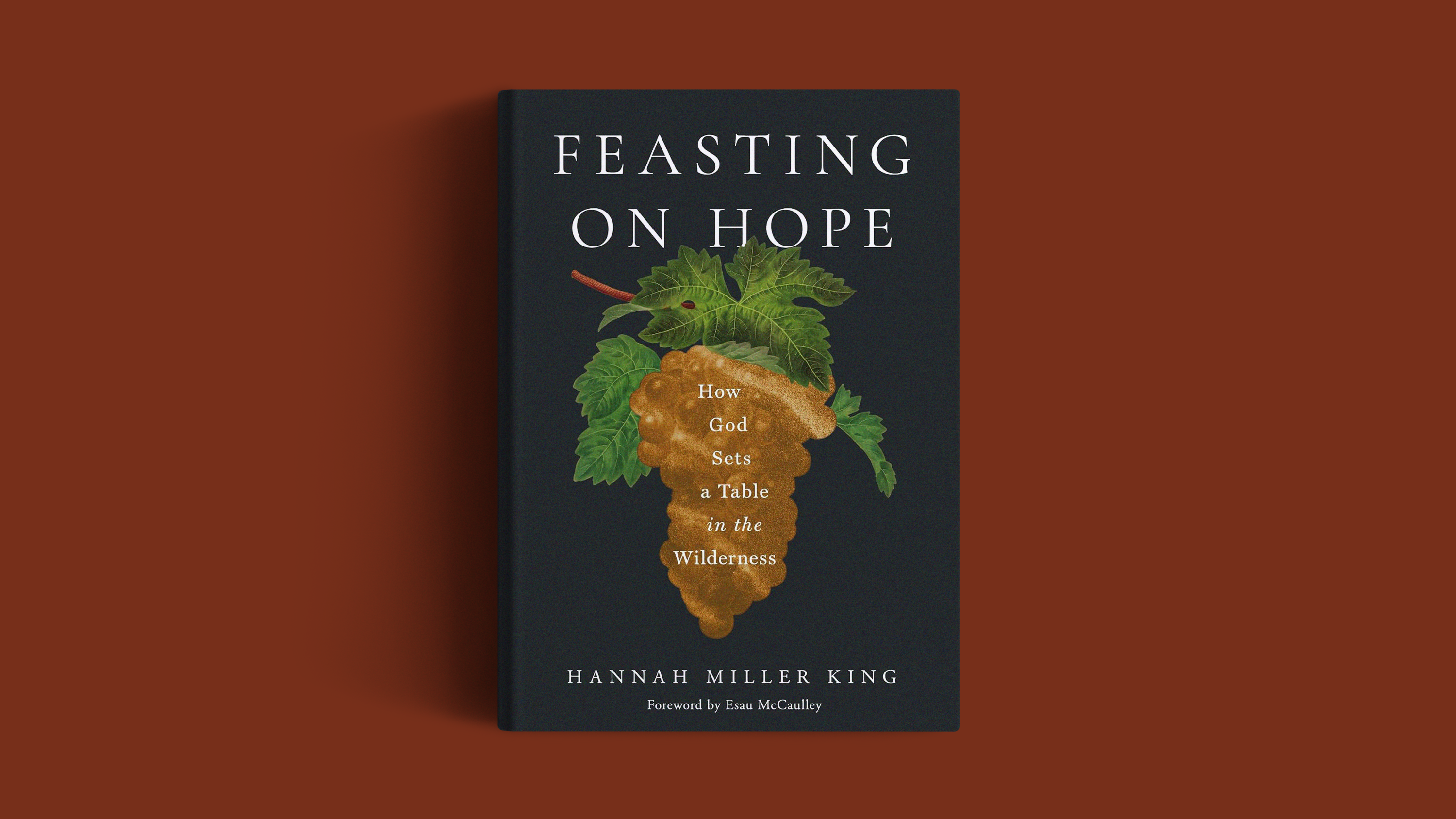
In my church tradition, we never share Communion without first “passing the peace.” This is a moment in the service when we celebrate God’s forgiveness by extending it to each…
in the magazine
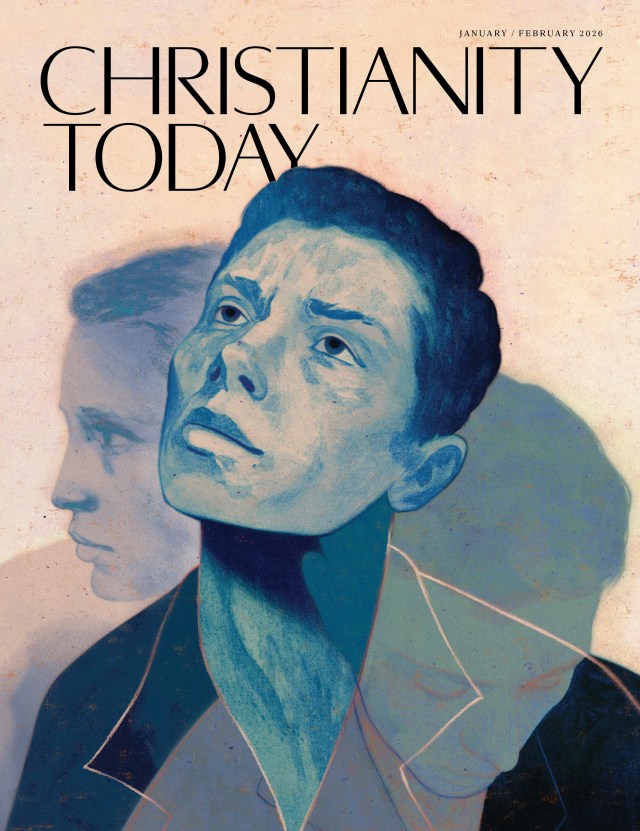
When Jesus taught, he used parables. The kingdom of God is like yeast, a net, a pearl. Then and today, to grasp wisdom and spiritual insight, we need the concrete. We need stories. In this issue of Christianity Today, we focus on testimony—the stories we tell, hear, and proclaim about God’s redemptive work in the world. Testimony is a personal application of the Good News. You’ll read Marvin Olasky’s testimony from Communism to Christ, Jen Wilkin’s call to biblical literacy, and a profile on the friendship between theologian Miroslav Volf and poet Christian Wiman. In an essay on pickleball, David Zahl reminds us that play is also a testament to God’s grace. As you read, we hope you’ll apply the truths of the gospel in your own life, church, and neighborhood. May your life be a testimony to the reality of God’s kingdom.
more from christianity today
related newsletters
CHRISTIANITY TODAY WEEKLY: CTWeekly delivers the best content from ChristianityToday.com to your inbox each week.
CT PASTORS: Each weekly CT Pastors issue equips you with the best wisdom and practical tools for church ministry.
CT books
Each issue contains up-to-date, insightful information about today’s culture, plus analysis of books important to the evangelical thinker.
Delivered free via email to subscribers weekly. Sign up for this newsletter.
You are currently subscribed as no email found. Sign up to more newsletters like this. Manage your email preferences or unsubscribe.




Christianity Today is a 501(c)(3) nonprofit organization.
“Christianity Today” and “CT” are the registered trademarks of Christianity Today International.
Copyright ©2025 Christianity Today, PO Box 788, Wheaton, IL 60187-0788
All rights reserved.