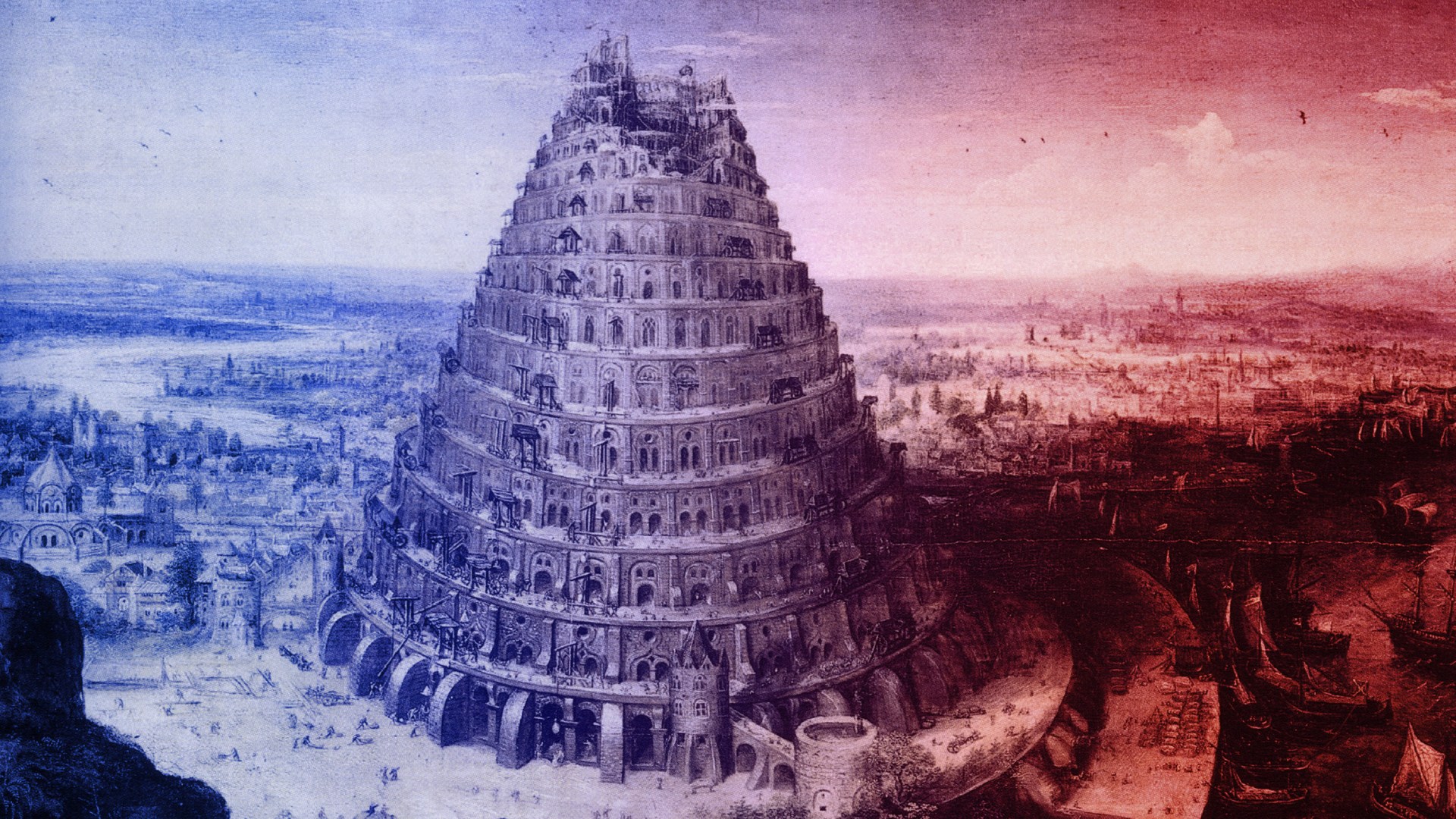
In City of God, Augustine defines a people or tribe as “an assemblage of reasonable beings bound together by a common agreement as to the objects of love.”
Augustine had in view the inevitable tendency of human beings to elevate something to an object of adoration—so much so that it shapes how they understand the world and defines their sense of shared identity.
This tendency helps us understand the seemingly intractable and often-contentious divisions we see in our own culture so many centuries later, especially along ideological lines. What separates people groups from one another—and distinguishes communities, factions, and even nations—is not merely their shared beliefs, institutions, or cultural norms. More fundamentally, it is the objects of their common love: where they collectively place their hopes, aspirations, confidence, and trust. It is, in the deepest sense, what they worship.
Not all objects of worship are equal. To set our hearts on created things rather than the Creator is what Scripture identifies as idolatry. We are most familiar with ancient forms of idolatry, in which worshipers crafted idols from wood or stone, often representing elements of creation such as the sun, fertility, or beauty. But idols can also take more subtle and abstract forms—financial success, social prestige, material possessions, or political power—each rooted in some aspect of God’s created order.
As longtime political science professor David Koyzis suggests in his book, Political Visions and Illusions: A Survey and Christian Critique of Contemporary Ideologies, this latter form of idolatry is “so oblique and less overtly experienced as such” that it often goes unrecognized for what it truly is.

Precisely this kind of idolatry lies at the root of many of the ideological conflicts that dominate modern culture. Contemporary ideologies, as Koyzis argues, are “modern manifestations of that ancient phenomenon called idolatry, complete with their own stories of sin and redemption.” Like their historic counterparts, these ideologies take something in creation and elevate it to an object of worship, ascribing to it salvific and redemptive qualities. Instead of telling the biblical story of creation, fall, redemption, and restoration, ideologies offer rival narratives about what has gone wrong with the world and how it can finally be set right.
Classical and social liberal ideologies, for example, tend to elevate the autonomous individual as the highest good, defining the path to human flourishing as liberation from any force that restricts the progressive pursuit of individual self-interest.
Socialist traditions center equality as society’s ultimate aim while defining injustice chiefly in terms of social and economic disparity. Nationalist movements locate the fundamental threat in the erosion of cultural or political boundaries by the incursion of outsiders and seek salvation through national sovereignty and protectionism. Conservative traditions often prioritize inherited institutions and social practices, believing the preservation of traditional norms and values is the only thing that can save society.
It is not difficult to see why adherents of these ideologies so frequently collide with one another. They begin with different diagnoses of what is most wrong with the world, imagine different sources of salvation, and envision fundamentally different accounts of what a healed society should look like.


To recognize that ideologies function as rival objects of devotion is not to suggest that they are equally just, harmful, or destructive in their social consequences, especially in their most extreme manifestations. Scripture itself recognizes degrees of evil and harm. But it does mean that even the most admirable societal aims become spiritual distortions when we treat them as ultimate.
The deeper weakness all ideologies share is their inherent reductionism. Every idol simplifies human life to secure unfettered devotion. Idols convince adherents to place all their hopes in limited worldviews devoid of any nuance or complexity. They narrow the world’s brokenness to limited sets of problems and elevate partial truths into comprehensive solutions. In the end, ideologies make promises that their narrow moral visions cannot fulfill.
Still, the appeal of ideologies lies in the offer of simplicity and a clear path to deliverance at little perceived cost—so long as we fully embrace their vision of the world. As with the idols of the ancient world, devotion to an ideology always extracts a price. False gods always demand a sacrifice. They require us to elevate one aspect of creation while devaluing others, and in doing so, we sacrifice something essential about our shared humanity.
For example, when we idolize individual freedom, obligations to others appear as threats. When equality becomes absolute, we see particularity and meritocratic distribution as manifestations of injustice.
As the late pastor Tim Keller often observed, idols are not usually inherently bad: They are good things twisted into ultimate things. Individual freedom, equality, tradition, and national belonging are genuinely good. They are part of God’s created order and deserve serious moral attention. But it is a distortion to believe that any one of them, elevated above all others, can heal what is most deeply broken in the human condition. They cannot—not even close.
Koyzis presses this further. With their competing objects of devotion, redemptive stories, charismatic prophets, and loyal followers, modern ideologies, in his view, increasingly resemble rival religions. To commit ourselves fully to an ideological vision—to allow its narrative to become the primary lens through which we interpret the problems and solutions of society—is not merely to adopt a set of social convictions. It is to become devotees of the idol that stands at the center of that vision. Thus, the ideological battles of our culture act less like a conflict over competing ideas and more like a war between worshipers of conflicting idols.
Scripture’s warnings against idolatry are among its most persistent and urgent themes. From the command given to Israel to “have no other gods before me” (Ex. 20:3) to the apostle John’s closing exhortation—“Dear children, keep yourselves from idols” (1 John 5:21)—the biblical concern is unwavering.
God’s prophets warned Israel that life among the surrounding nations would bring constant pressure to adopt their gods. The church, living within an increasingly pluralistic and ideologically saturated culture, faces a strikingly similar danger: the temptation to adopt the dominant idols of the age under the guise of political expediency or moral urgency.
Christianity is incompatible with ideological absorption and co-option because the Christian heart cannot belong to any love or object of worship other than the true and living God. The gospel insists that the deepest problem confronting humanity is not merely the loss of freedom, the persistence of inequality, or the erosion of tradition—serious as these realities are. The fundamental problem is sin, of which idolatry is both a symptom and a source. And the ultimate remedy is not found within any part of the created order, whether in human ingenuity, ideological reform, or a favored social policy. It is found in a Savior who entered the world because of our weakness and who alone can restore creation to God’s purposes.


None of this means ideologies have no value in public life. It means their value is greatest when we do not treat them as ultimate. They have a place—but not first place.
Nor does this mean Christians should settle for merely aligning with the lesser evil when it comes to ideologies. The lesser evil is still evil. It is still idolatry; it still falls short of the kingdom of God.
Christians have a responsibility to subordinate every ideological narrative to the truth found in the gospel as they approach the world. Doing so does not remove believers from civic engagement; it frees them to engage in public life without allegiance to any political agenda, without conflating policy prescriptions with the kingdom of God. Precisely because Christianity is not bound to any single ideological vision, it can bridge divisions rather than becoming another faction within them.
When the apostle Paul addressed the Epicurean and Stoic philosophers in Athens in Acts 17, he began by recognizing what was true in their thinking before exposing its limits. Christians are called to a similar posture today. We can affirm the genuine moral insights embedded in ideological traditions—freedom, equality, tradition, and national sovereignty—while refusing to make any of them ultimate.
In doing so, Christians can support political aims and practical solutions without submitting to the deeper narratives of salvation ideologies promise. We can become both a bridge between competing worldviews and a loving rebuke to the impulse to treat partial answers as ultimate truths. Such an environment creates common ground where reasonable dialogue and compromise can occur. This is how politics and social reform work best.
Christianity exerts its greatest influence in public life when it resists being captured by the limited worldview of modern forms of idolatry. Only from that vantage point can believers retain the clarity they need to address the real challenges facing our societies—while waiting in hope for the restoration only Christ can bring and no ideology can ultimately deliver.
Domonic D. Purviance is a pastor at Cornerstone Church in Atlanta. He cofounded King Culture, a nonprofit organization that equips men to reflect the selfless leadership of Christ.