
As an on-air radio personality, Jason Johnson used to spend his Sunday evenings playing contemporary Christian music at a station in northeast Ohio. But when the COVID-19 pandemic struck six years ago, the station furloughed him. He cobbled together different sources of income to make ends meet.
Initially, Johnson found work as a videographer for a local church. Soon after, he stumbled across another gig: narrating audiobooks from the safety of his home. As lockdowns and other virus safety efforts shut down vast swaths of the country, remote work seemed promising. The audiobook industry was also booming, and with it, the market for narrators.
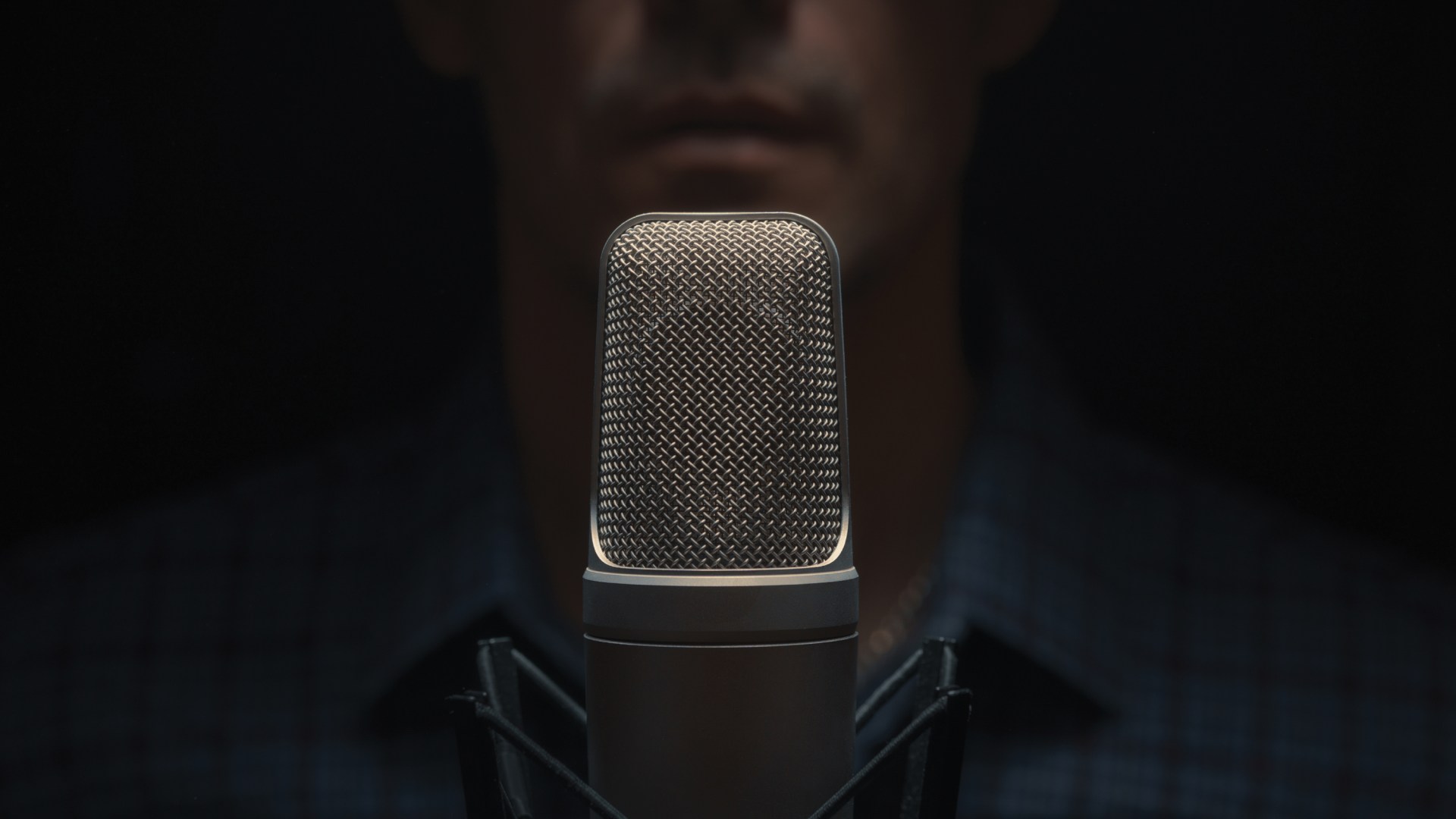
Johnson quickly built his business. He compiled audio samples of advertisements he had read on air during his radio days. He purchased a recording microphone, soundproofing equipment to absorb voice echoes, and editing software that allowed each audiobook to meet the standards set by retailers. He set up a recording studio in his home and advertised his services through his personal website and Fiverr, an online site for freelancers that independent narrators use to find work. Self-publishing authors, Christian organizations, and other publishers reached out, and his business rapidly grew with more referrals.
By 2022, Johnson was narrating full-time, lending his voice to autobiographies, fiction, nonfiction, and Christian books. The freelance gig was lucrative but came with its own set of challenges. A common cold could irritate his vocal cords and lead to canceled—and therefore unpaid—projects. He declined lengthy phone calls with family and friends so he could maintain his voice and ability to record for hours. He felt uncomfortable with some of the materials—such as those that taught prosperity theology—he discovered while narrating. Research and meticulous editing to correct awkward pauses and smooth out his cadence took time. He often had to re-record to correct voice acting and mispronounced words or to delete external noise, like a fan going off at the wrong time. Despite the hurdles, however, he was doing well until the boom in generative artificial intelligence.
In early 2023, roughly two months after OpenAI’s ChatGPT shocked the world with its capabilities, Apple released a catalog of AI-narrated audiobooks on its books app. Smaller audiobook platforms had offered AI narration before, but because Apple has access to billions of phones and was the first major tech company to do so, it had a bigger impact. Apple’s product was free. And “a lot of authors started using it,” Johnson said, including some of his repeat customers. “[My business] started to decline around that time.”
Generative AI tools do not always kill jobs. But they are displacing some workers and not always offering better quality in return. After Apple began offering AI-narrated works for listeners, Johnson said it became challenging to stay competitively priced. Human narrators typically cost thousands of dollars and can take weeks to produce an audiobook, and it’s hard to compete with a product that’s quick and free.
At the same time, Johnson was also limiting the types of projects he accepted so his work didn’t conflict with his evangelical Christian faith. He told me he didn’t feel good knowing that some of the materials he had been recording, including works that dabbled in prosperity theology, could lead listeners away from the truth of Scripture. His new selective approach led to even fewer projects.
Johnson did other gigs to supplement his income: delivering food on DoorDash and packages for Amazon with his own car. But that lifestyle was not sustainable. Eventually, he found another full-time job teaching science and special education at a high school in Brooklyn, New York. In 2024, he ditched his audiobook business.
Since then, other major audiobook platforms have stepped into the AI waters. Last year, both Spotify and Audible said they would sell AI-narrated audiobooks on their platforms even though they don’t use generative AI tools for their own productions. Apple did not immediately comment for this story. But tech companies have generally said AI lowers the barrier to entry for authors who want to convert their work to audio. They also note it allows for rapid translations, giving listeners in different countries a chance to listen to books in their own languages. The AI company ElevenLabs, which has partnered with Spotify, provides narrations in dozens of languages. Meanwhile, Audible offers 100 virtual voices in English, Spanish, French, and Italian with various accents and dialects.
But AI voices can sound monotone and lack human intonation. AI can miss small sounds of life, such as the quiet breaths narrators take in between sentences. Sometimes AI tools mispronounce words and mishandle formatting. One academic reviewer – Lance Eaton of Northeastern University – noted that an AI voice read aloud a bullet point as “bullet point” and could not distinguish when a person was speaking. The reviewer concluded AI audiobooks should stick around because they might offer narrations that would not otherwise exist, but they will be a second-class product.
“The technology has gotten better, but you’re still missing that real human element,” Johnson said. He believes that when the technology develops even more, it will upend most of the industry—but vinyl records still sell today, and he believes there will always be a demand for the human voice. “People are going to say, ‘We want human stuff again.’”
As the technology ramps up, established unions have negotiated protections for the professional narrators they represent. Jane Love, the national director of audiobooks at the SAG-AFTRA union—a partnership between the Screen Actors Guild and the American Federation of Television and Radio Artists—said in a written statement that the labor organization has included language in all its audiobook contracts around the use of artificial intelligence. She added that the union and other interested groups are advocating for federal legislation that would prohibit unauthorized digital replicas of a person’s voice and likeness.
Haleluya Hadero is Black church editor at Christianity Today.