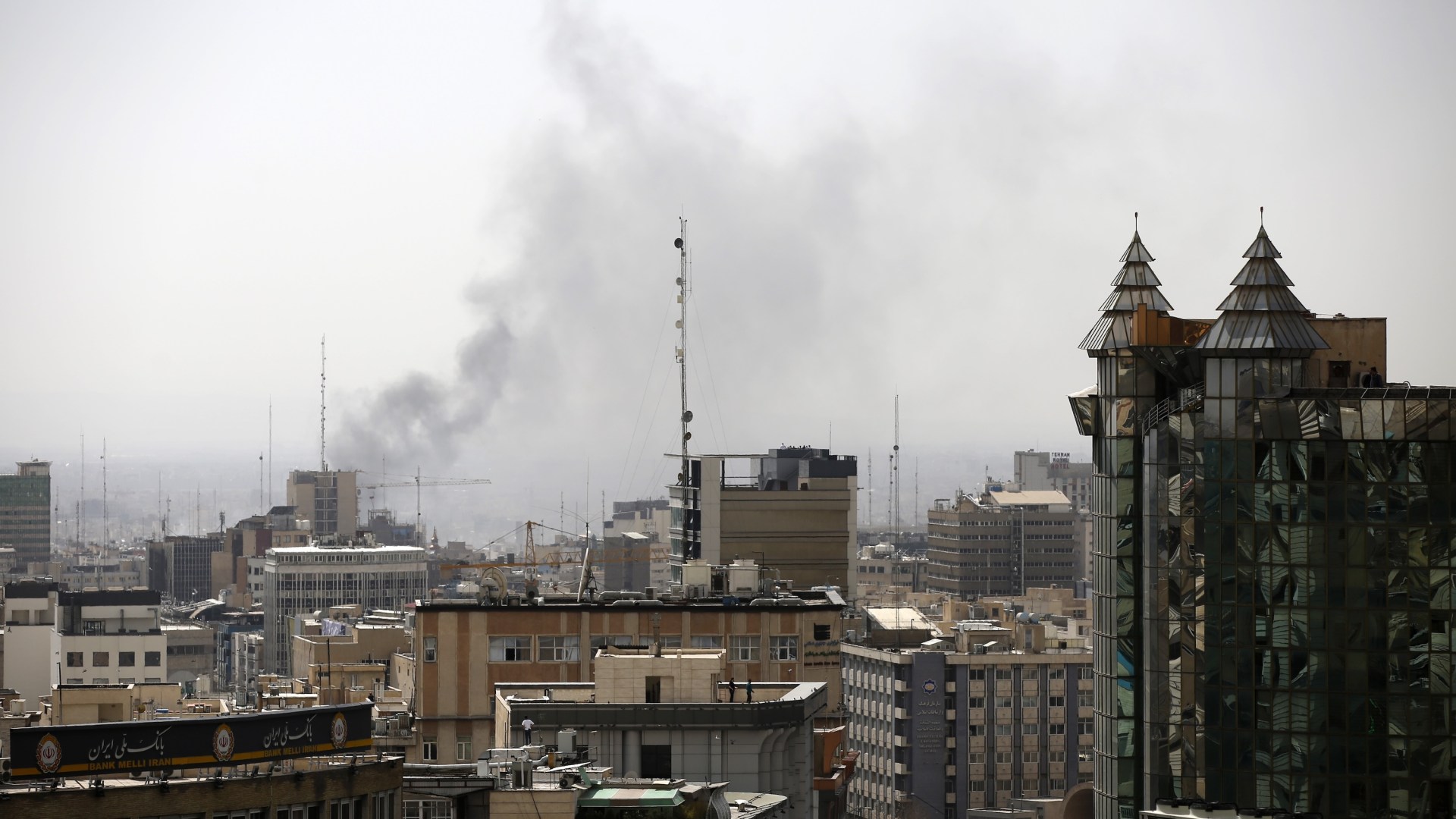
How should American Christians think about Iran, which US and Israeli forces are now attacking with the stated aim of overthrowing its Islamist regime?
Saturday night, President Donald Trump announced that Iranian supreme leader Ayatollah Khamenei had been killed in a strike, and Iranian state media soon confirmed it. And since late December, Iran’s dictatorship has reportedly killed thousands of anti-government protesters, which has been typical of its repressive theocratic rule across 47 years.
Historically known as Persia, Iran is a rare nation to have endured since Bible times. Straddling the crossroads of the world, it sits on the Persian Gulf, with Russia to the north, Pakistan and Afghanistan to the east, Iraq and Turkey to the west, and the wealthy oil sheikhdoms to the south.
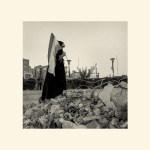
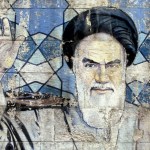
Americans of a certain age will recall Iran’s 1979 revolution, in which Islamist followers of Ayatollah Ruhollah Khomeini overthrew the pro-US monarchy, which the CIA had helped install, and established a murderous theocratic dictatorship led by mullahs. Since then, Tehran’s reigning ideology has defined itself against the United States and Israel. Its first self-created crisis was taking 52 American diplomats hostage for over a year, helping to doom President Jimmy Carter’s reelection in the process.
In the subsequent 47 years, Iran has been a continuous thorn in the flesh for every American president. The Iran-Contra affair—in which weapons were covertly sold to Iran in exchange for supposed help in freeing American hostages held in Lebanon by Iran’s allies—proved catastrophic for the Reagan administration. Every subsequent American leader has contended with Iranian hostility and support for militant proxies in Iraq, Syria, Lebanon, Yemen, and Gaza.
American presidents have also consistently held that Tehran’s sinister ruling ideology—which demands the destruction of Israel and is weaponized by religious fanaticism—makes the prospect of Iranian nuclear weapons unacceptable. The Obama administration negotiated limits on Iran nuclear enrichment in exchange for loosened sanctions. The first Trump administration withdrew from that agreement, ending the concord in favor of renewed economic pressure. Iran’s nuclear program expanded uranium enrichment after US withdrawal from the deal, despite ongoing Israeli covert operations against many of its scientists.
In June of last year, US B-2 bombers hit some Iranian nuclear facilities. Those strikes weakened but did not finish Iran’s regime, which was already reeling from defeats of its allies: Hamas in Gaza, Hezbollah in Lebanon, and the Assad regime in Syria. Another Iranian ally, Russia, has been preoccupied with war against Ukraine.
The current US military strikes seem to be markedly more ambitious, presumably again targeting Iran’s nuclear and ballistic missile developments but also seeking to decapitate the regime’s leadership, beginning with Khamenei.
US bombing is expected to continue, likely for some time. Iran “has been, in only one day, very much destroyed and, even, obliterated,” Trump posted. “The heavy and pinpoint bombing, however, will continue, uninterrupted throughout the week or, as long as necessary to achieve our objective of PEACE THROUGHOUT THE MIDDLE EAST AND, INDEED, THE WORLD!”
related


Nearly all Americans will rejoice if the ayatollah’s regime falls—and rightly so. Almost any alternative government will be less oppressive. This government has retained complete power across nearly five decades through murder, torture, incarceration, corruption, and suppression of public conversation. The recent mass protests evince the regime’s unpopularity among Iranians too, not only for its tyranny but also due to a stagnant economy and adversarial relations with much of the world.
The shine has long since worn off of the theocratic revolution of 1979, in which millions of youthful demonstrators rejected the autocratic but comparatively liberal, secular, Western-aligned shah. The imposition of theocratic rule, though first popular, has created a collapse in religious belief in Iran, as Islam is conflated with the nation’s diabolical, corrupt, and inept rulers. Street protesters—and, no doubt, many other Iranians—have hoped for help from America to overthrow their government.
Now, it seems, they have that help. Yet even with Khamenei’s death confirmed and the possible killings of other key Iranian leaders, it’s unclear what the aftermath will be: Another dictatorship? Some form of democracy? A power vacuum in which new and insidious groups emerge? Or long-term American involvement like in Afghanistan or Iraq?
Reza Pahlavi, the US-based crown prince, son of the late shah, has emerged as the most prominent voice of Iranian protest and swiftly celebrated reports of Khamenei’s demise. Could he lead a constitutional monarchy? Or might the Iranian military or remains of its Islamic Revolutionary Guard Corps seize control?
Any successor regime in Iran, even if dictatorial, would likely be less hostile to America, Israel, and the West. Most Arab states would welcome the change too. Both Russia and China would lose an ally. And, most importantly, the Iranian people would have some real hope of a future without systemic repression and fear.
Here are spiritual and political lessons from Iran. Much if not most of Iran rejected the shah, despite unprecedented prosperity and relative freedom, because his banal secularism did not offer the spiritual purpose and drama of Islamist rule. Iran’s mullahs delivered old-time religion and plenty of excitement—but also murdered thousands, plundered the national treasury, and plunged Iran into decades of futile conflict with its neighbors and much of the world. Theocratic rule discredited religion, ironically creating a more socially secular Iran.
related


As American Christians, we must pray that Iran is delivered from conflict and oppression. May its people again prosper and live in peace, without fear. We can also learn from Iran’s trials and self-inflicted wounds. We can be grateful for what we have—a stable, constitutional government, however flawed—and decline to chase utopian dreams of a perfected society that ignores human nature and delivers only misery, demonization, and war.
We can also pray that the US and Israeli strikes will, like the 1999 NATO air strikes that led to the overthrow of dictator Slobodan Milošević, enact the downfall of Iran’s ruling mullahs without prolonged war or wider chaos. And afterward, Americans must have a national conversation about presidential war powers and the role of congressional authorization—or at least serious consultation, which we have not seen from the Trump administration in the run-up to these strikes.
Finally, the theocracy in Tehran reminds us that a brutal regime governed by supposed religious principles will corrupt and discredit religion. On this side of the eschaton, we Christians should pray for peace, healthy compromise, mutual forbearance, and the free space to practice and share our faith, amid the possibility of prosperity for all. Let’s pray that Iran and America will soon be friends again.
Mark Tooley is president of the Institute on Religion and Democracy and editor of its foreign policy and national security journal, Providence.
Related