Early this week, as the joint US-Israel attack on Iran began, Jews around the world celebrated Purim, the ancient feast commemorating Esther’s rescue of the Jews from Haman of Persia. The Bulletin host Mike Cosper sat down with Yossi Klein Halevi, a journalist and senior fellow at the Shalom Hartman Institute in Jerusalem, to learn more about the Jewish response to these attacks and how the biblical story Israel celebrates this week informs Jews’ understanding of Middle East conflict. Here are edited excerpts from their conversation in episode 258.
How is the mood in Israel, even as people are running to bomb shelters and getting alerts from time to time as well?
On one hand, Israel is resolved—there’s no question. People are ready to make lots of sacrifices to bring this regime down. On the other hand, there’s deep disorientation and fatigue and still a society that’s quietly grieving. We’ve lost several thousand people since October 7 [2023] and thousands wounded in a country that’s completely traumatized. Now we’re back in the trauma.
This is a very strong country, and there’s virtual unanimity among Israelis, certainly in the political system. There’s no opposition at this moment. Everyone understands this is an existential need for Israel and for the future of the Middle East. It doesn’t make it easier on the home front.
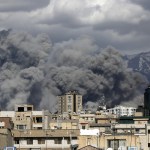
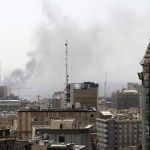
Last night, we had our first-ever missile falling in Jerusalem. The conventional wisdom during all of Israel’s wars, whether against Hezbollah or Hamas or Iran, was that no one would dare fire missiles into Jerusalem because they wouldn’t want to risk destroying Al-Aqsa mosque or the Dome of the Rock, the two main Muslim holy sites in Jerusalem. Last night, Iran changed the ground rules and fired a missile into East Jerusalem.
Israel has been through this since Saddam Hussein and the first Gulf War in 1991, when Iraq fired 39 Scuds into Israeli cities. We’ve been in and out of shelters for 35 years. I raised my kids going in and out of shelters. There were certain ground rules, even to the nonconventional war, and there aren’t anymore. The regime is fighting for its life, and it’s desperate.
You’ve sought energetically in a number of your works to understand your neighbors, both Christian and Muslim. Twenty years ago, you said we can’t let this regime just sit there and build nuclear weapons. How has your understanding developed over the decades?
Being an advocate for reconciliation between Israelis and Palestinians, between Muslims and Jews, looks and works differently in the Middle East than it does, say, at Columbia University. When you’re sitting here in ground zero of radical Islamism, you very quickly understand that there can be no peace without confronting the enemies of peace. The prerequisite for reconciliation between Israelis and Palestinians, for example, is confronting and containing radical Islamism.
Now, I’m also a fierce opponent of my own government, but there are many differences between my government and Hamas. This is a democratically elected government, and I have the option come October, which is when the next Israeli elections are scheduled for, to do everything I can to bring this terrible government down. But when I call this a terrible government, I’m still going to draw a very firm red line between Hamas and even this government. There are elements in this government that are uncomfortably Jewish echoes of radical Islamism. But that’s not true for most of this government. I loathe this government. I have spent much of my last three years actively opposing this government in the streets, sometimes every week, every other day. That, for me, is also part of my commitment to reconciliation.
But when you’re facing radical Islamism, there’s no recourse but to go to war. That’s something a lot of people in the West have forgotten. The West, at least America, once understood that, and I understand that the cumulative impact of the forever wars have undermined the resolve of Americans. However, not to stand up to the Iranian regime when it’s at its weakest point in the last decades would be to compound the mistake of going to war when you shouldn’t have. Not to go to war when you should is not a way of compensating for having gone to war when you shouldn’t have.
What do you think comes next for Iran, especially as the bombs keep dropping, as the Islamic Revolutionary Guard Corps is defanged?
I don’t think this is going to be easy or straightforward. Probably 15 to 20 percent of the public supports the regime. That’s a recipe for regime collapse. I believe the regime will collapse, but it still has enough of its hardcore support to put up a very credible fight. This regime has, for half a century, entrenched itself in all parts of the Iranian infrastructure and suppressed opposition from the very beginning.
Even more importantly, elements within the regime are imbued with an apocalyptic fervor that believes this is the last battle before the return of the Mahdi, the Shiite messiah. The secular West tends to downplay the significance of the theological strain in the regime calculations because the secular West doesn’t understand religion.
In Israel and the Middle East, the lines between religiosity and the national experience are never clear-cut. For example, tonight [March 2] is Purim. The holiday of Purim is about the victory of the ancient Jews of Persia over Haman, who wanted to destroy them. Every Israeli understands the resonance of a war against modern Persia—modern-day Iran—led by a modern Haman. That’s the given language of discourse here. The politicians, the army, the chief of staff speak about it. When the commander of the Israel Defense Forces, Lt. Gen. Eyal Zamir, addressed the nation Sunday, he spoke about the story of Purim.
Here we are 2,500 years after the Purim story. It’s like Groundhog Day except with much more lethal consequences. But there’s also something very powerful about these recurring themes in Jewish history, and sometimes not just themes but literal reenactments. For me as a religious Jew, what we’re experiencing these days gives me pause. I don’t presume to know God’s will, and I’m not sitting looking at the newspaper as if it’s the Word of God and I can interpret what’s happening. I think that there’s a real problem when religious people do that. At the same time, as a religious person, I notice certain patterns that happen in the Israeli story. And I wonder, What is this all about? What’s the message here?
There seems to be something else at work here in this very strange Jewish story. It gives Israelis generally a sense of purpose and, more than that, a framework of meaning to the story. It’s not just about survival. There’s this sense in Israel today as we’re entering Purim: Here we are back with the Persians again.
That’s the Book of Esther itself. It never mentions the name of God once in the entire book. It’s all about the hiddenness of God in providence.
There’s a rabbinic wordplay of the name Esther, which also means in Hebrew “hiddenness,” hester. The Hebrew phrase for God’s hiddenness is hester panim, “God’s face is hidden.” The divine is literally hidden in the Book of Esther. God’s name is never mentioned, yet one can discern in the Book of Esther this uncanny series of coincidences that leads to a redemptive trajectory.
The Book of Esther really works on multiple layers. On the one hand, Mordecai warns Esther that God is going to do this whether you’re part of it or not. And yes, who knows what your fate will be if you opt out? In that sense, he’s not giving her a choice, but he also says something very touching to her. He says a phrase which has become one of the best-known aphorisms in Jewish discourse. It’s been absorbed into modern Israeli discourse: Who knows if you didn’t rise to your status for a time like this? That is that sense of destiny.
In a way, you can sum up Jewish history with everything that Mordecai has told Esther. On the one hand, it’s going to be really bad for you. On the other hand, what a wonderful opportunity. Mordecai is hitting Esther with a combination of fate and destiny. Fate is what’s imposed on you, and destiny is what you choose for yourself. Those are recurring themes both in the story of Purim and in Jewish history. What we’re experiencing now is this convergence of these themes at this moment.
If you had polled Israelis, the decision to go to war would have won by a landslide. Even though we, along with the Iranian people, are the ones who are the most endangered by that decision, we just take it for granted that we must do this for survival. That’s fate. But we also need to do this to stand against evil, and that’s destiny. There is this convergence of fate and destiny at this moment in Israel’s history.
If the regime does fall, what might that mean for religious minorities across the Middle East, not just Jews living in Israel?
This has been a very bad period for religious minorities around the Middle East. It’s hard to say whether this is really going to turn things around in other countries. Think of the countries where the Iranian regime has had such a strong hold—in Iraq, Yemen, and Lebanon. In Yemen, a 2,500-year-old Jewish community was destroyed, and no one is left. The Iraqi Jewry goes back to Babylon, literally 2,500 years, and that community has been completely erased. Baghdad in the 1930s was one-third Jewish. It was the New York of the Arab world.
The longest-lasting Jewish communities in the world, which were in the Middle East, have experienced a massive uprooting. They were destroyed in a single generation, sometimes within a year.
There’s such rage against Shiism in Iran. During the popular uprising in January, there were something like 350 mosques that were burned by outraged mobs. They see Shiism as the reason for their oppression. If the regime falls, religiously, Iran is going to go through major convulsions.
Within Iran, whether they rename themselves literally or reinvent themselves culturally and religiously, Persia is reemerging. I also sense there’s going to be a very strong resurgence of Zoroastrianism and the Baha’i faith, these two indigenous Persian faiths.
I think Christianity is going to have a tremendous flowering in Iran as well. To leave Islam and convert to another faith carries with it a death sentence, so you’re looking at a heroic nucleus of a Christian resurgence there. I think there’s going to be a resurgence of the Jewish community. There’s a large Persian community in Israel, in the US. I suspect there’ll be a reawakening and people will go back, certainly on pilgrimages. I think we’re going to see a tremendous flowering of other religions.