Shortly after joining the faculty at Hope College, I (Kristin) received an email from a student’s parents requesting a meeting. Instead of meeting with the parents, I met with the student. The student shared that her application for an academic program had been rejected. She wanted her parents and me, her adviser, to appeal the decision on her behalf. I told her to contact the program director directly, but she believed that would cause her too much anxiety—she did not want to face the professor who had written the rejection. The student was 20 years old.
As professors at Christian institutions, both of us regularly encounter students’ habits of fear, anxiety, and lack of risk-taking. These moments illustrate a larger trend documented across college campuses and more generally among young people: increasing social unease accompanied by diminishing levels of resilience. Mental health continues to decline among adolescents, and young people report greater anxiety and depression. According to Greg Lukianoff and Jonathan Haidt’s book The Coddling of the American Mind, young people also tend to avoid difficult and frictional experiences that could help them work through this fear and anxiety.
We believe Christian colleges and universities are uniquely equipped to help students reduce anxiety and increase resilience as faculty and staff guide students through frictional experiences.
The term friction-maxxing gained popularity in early 2026. Rather than succumbing to the “life-annihilating suction of technologies of escape,” Kathryn Jezer-Morton wrote, friction-maxxing describes an alternative “orientation toward friction” and emphasizes frictional opportunities for growth. As author and founder of LEADx Kevin Kruse wrote in a recent article for Forbes, “Friction maxxing is the practice of intentionally choosing small, safe inconveniences that build your tolerance for discomfort and bring you joy.”
Applied to college life, friction-maxxing might include going to a professor’s office hours for the first time or taking an interesting class outside of your major that’s scheduled for 8 a.m. It could be sitting at a different table with new people in the dining hall or signing up for a study abroad experience. To be effective, friction-maxxing requires carefully designed curricular and communal experiences that build in so-called inconveniences and disruptions, thus encouraging students to embrace commitment and perseverance, even when encountering hard things.
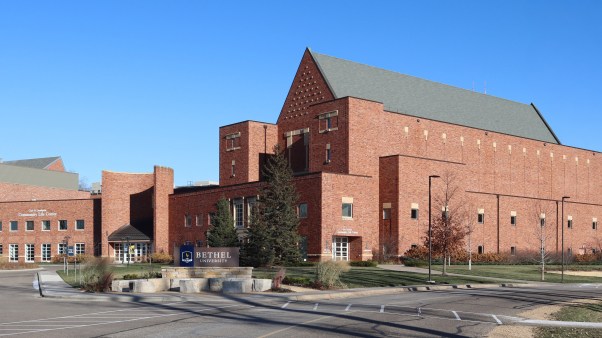
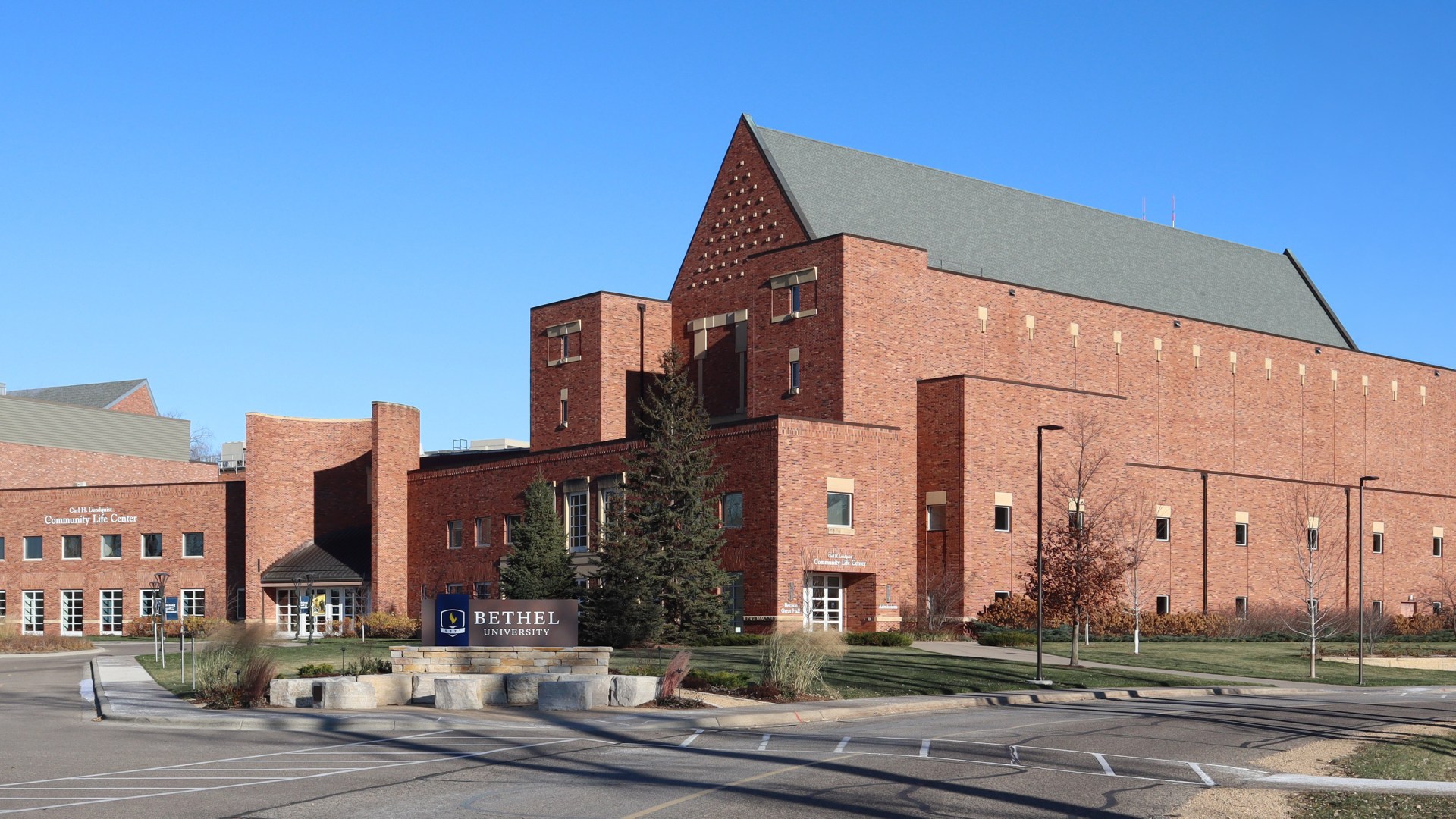
Applied to a Christian college context, friction-maxxing must also include opportunities for students to negotiate faith and intellectual pursuits within a community accountable to the way of Jesus. For example, at Hope College, students can participate in the Emmaus Scholars program, which requires weekly prayer and spiritual learning over shared meals. Students also meet with professors to complete projects that apply a faith-based lens to class content. At Bethel University, students can take three-week, faculty-led study abroad courses during the month of January, pushing them to encounter the world in new ways. From travel writing in Belize to immersion in British primary and secondary schools, students learn in borderless classrooms and then apply that learning to their faith and academic studies. These experiences—and others that intentionally lean into friction—push students to engage deeply and in new ways, persisting despite friction.


The Coddling of the American Mind argues that students today were raised on three “great untruths”: They are fragile, emotions should guide reasoning, and life is a battle between two groups (us versus them). Lukianoff and Haidt explain that rather than prepare young adults for bumps in the road, parents and communities have instead prepared the road, reducing childhood frictions until young people learned to be anxious when encountering the new or unexpected or difficult. By doing so, we have unintentionally communicated to college students that they are fragile and in danger, a habit of the mind that becomes self-fulfilling.
Current college students also grew up in politically polarized environments, experiencing at least three contentious presidential elections in 2016, 2020, and 2024, and nearly continuous protests across the US around policing, racism, sexism, and xenophobia. These students were also children or early adolescents when the COVID-19 pandemic began, disrupting social and behavioral learning for both them and adult role models (who were generally more afraid and anxious during the pandemic). These experiences have increased a sense of precarity and either-or thinking.
We have experienced students’ resulting binary thinking at the colleges where we teach. In her office hours, Elisabeth (an education professor) had a student tell her that homeschooling is the only safe or Christian educational choice for children (though she prepares teachers to work in all types of schools and her own children attend their neighborhood public school). One of Kristin’s colleagues expressed concern about “triggering” a negative student response by bringing a controversial speaker to campus. In a recent seminar course, one of Kristin’s students wrote in a journal that he hoped the class could talk about “real issues” but he was wary that others would “be open to new ideas.” We see these experiences as illustrating a need for a new kind of frictional engagement, one steeped in faith.


New Testament letters to the early church recognize that faith grows only through intention and persistence—what Paul might have termed friction-maxxing if he were writing today. The author of Hebrews reminds his readers to “throw off everything that hinders” and to “run with perseverance” (12:1). In Galatians 6, Paul calls Christians to persevere in fulfilling the law of Christ, writing that the church must “not become weary in doing good” and that “we will reap a harvest if we do not give up” (v. 9). These verses, and others throughout the Bible, call attention to both the practice of faith—long obedience in the same direction, as Eugene Peterson described it—and the value of faith practiced in community.
These passages suggest something that Christian colleges should be uniquely prepared to teach: Faith doesn’t shy away from hard things but instead leans into friction, seeking growth through a long obedience in community. Now, as high school seniors choose which college to attend, we encourage them to consider Christian colleges as uniquely able to model thoughtful and engaged growth.
Christian college faculty are frequently trained in secular environments yet continue to affirm their commitment to historic Christian faith. Faculty have wrestled with the seeming discontinuities between their secular disciplines and their faith and have persevered in their commitment to faith as the primary way of understanding the world.
Faculty believe Christians must pursue lives modeled after Jesus, marked by orthopraxy—service and sacrifice. Carefully designed curricular experiences, such as the one Elisabeth teaches at Bethel University—a general education course focused on educational equity— integrates community-engaged learning with the pursuit of justice as a core expression of Christian faith.

At their best, Christian college communities commit to asking hard questions within theological parameters, collaboratively, and across disciplines. A student majoring in biology at Hope College said her professors regularly talked about frictions between science and faith. While her professors expressed that tension differently, for her their varying responses were the point. Faculty modeled and encouraged generous and robust conversation, even amid disagreements.
Ultimately, eliminating friction is antithetical to the point of education or to Christianity. Instead, as Lukianoff and Haidt write, college should be the “ultimate mental gymnasium, full of advanced equipment, skilled trainers, and therapists.” In the academy, intellectual struggle is how knowledge is forged. There are no new answers without hard questions. There is no progress without failure and persistence. There is no depth without challenge. Faculty at Christian institutions also model this frictional approach to faith: There is no vibrant faith without rigorous refinement, but a faith forged in the fire is a faith worth trusting.
Kristin VanEyk is assistant professor of English education at Hope College in Holland, Michigan, where she teaches writing and education courses. Elisabeth E. Lefebvre is associate professor of education at Bethel University in Minnesota. She writes about education, justice, and community for outlets such as Mockingbird and Reformed Journal. They are also coeditors of the book Purpose and Joy: Pursuing a Meaningful Career in Christian Higher Education (ACU Press, June 2026).