Francis Makemie is sometimes called the father of American Presbyterianism, and he earned that status thanks to two episodes during the last two years of a life that ran from 1658 to 1708.
The first, in 1706, was his organizing the Presbytery of Philadelphia, a grassroots effort of six other pastors that created structures for ordination and church discipline. It lacked oversight from any Old World ecclesiastical body and owed its New World existence to both the exigencies of colonial existence and the religious freedom that Pennsylvania—a colony founded by Quakers—afforded to Protestants from all over Europe.
The second episode that framed Makemie’s reputation was his defiance of British colonial policies in New York. On the way to Boston during the summer of 1707 to recruit pastors for Presbyterian congregations in Pennsylvania, Maryland, and Virginia, Makemie stopped in New York. He and his companion, John Hampton, received a cordial welcome from the colony’s governor, Edward Hyde, Lord Cornbury. Makemie’s meal with the governor never suggested that Presbyterians were unwelcome in New York.
Makemie had no awareness of restrictions on worship and accepted an invitation to preach in a home of local well-wishers. Because Makemie lacked a license, his preaching was against the law, as Lord Cornbury interpreted it. Local authorities had him arrested and imprisoned. Both Makemie and Hampton were in jail for 46 days. When the case went to trial, Makemie mentioned that Quakers and “Papists” had worshiped without penalty. He also appealed to England’s laws of toleration.
An intriguing angle on this claim was whether the Church of England’s prerogatives applied to the colonies as much as to England itself. These arguments were sufficient for the jury to find Makemie not guilty.
That did not clear him for court costs. In A Narrative of a New and Unusual American Imprisonment of Two Presbyterian Ministers and Prosecution of Mr. Francis Makemie (1707), the pastor (who also conducted trade in the Caribbean) itemized his legal fees. Between jailers, justices of the peace, sheriffs, and travel, Makemie was forced to pay more than 81 pounds (the equivalent of almost $25,000 in 2023).
Born in 1658 in Ramelton, a town in Ireland that boasts the oldest Presbyterian church on the island, Makemie’s roots went back to obscure Ulster Protestants who settled earlier in the 17th century. His family’s Presbyterian convictions were no match for either Oliver Cromwell’s government or the Restoration.
As an outsider to the Church of Ireland, Makemie could not attend Trinity College in Dublin, but he enrolled instead in 1676 at the University of Glasgow. Ordained in 1681 by the Presbytery of Laggan in west Ulster, Makemie left for North America two years later with a commission to plant churches among Presbyterian settlers.
When he left Ireland, prospects for Presbyterianism either in Scotland or Ireland were not encouraging. Nothing in Makemie’s subsequent career, however, suggests an attachment to the cause of Presbyterianism either in Scotland or Ireland.
In fact, the young pastor’s movements within England’s North American colonies indicate a strategy of fitting in more than advocating reformation.
The Presbyterian pastor also aligned himself with the Reformed churches of Geneva, France, Scotland, and England. A few years later, during a business trip to Barbados, Makemie lost the polemical edge that had been a trademark of Presbyterianism. He did so in a pamphlet written in 1697 (published in 1699) to defend Reformed Protestants from claims by Anglicans that Presbyterians were a fringe group of Protestants.
Makemie argued that Presbyterians were in fact the “truest and soundest part” of the Church of England. At the same time, he constructed an “ecumenical bridge” between the two British Protestant rivals. Makemie objected to using “Presbyterian” or “Puritan” as epithets. One important reason was that Presbyterians agreed with the Church of England “in all points of Faith, and Divine Ordinances, or parts of Worship.”
The only differences were in “Ceremonies, Government and Discipline.” Did the colonial setting take some of the edge off Presbyterian zeal?
Whatever the demands of his environment, Makemie’s attempt to find a common cause with other British Protestants was indicative of Presbyterians in the English-speaking world after the Glorious Revolution.
By the 18th century, Presbyterians were recalibrating ecclesiastical ideals to gain a foothold in the emerging structures of liberal society. How central Presbyterianism was to other sectors of national life was the question that church officers and members on both sides of the Atlantic needed to answer.
Two hundred years later (1906), leaders of the Presbyterian Church USA, the communion that sprang from the presbytery that Makemie had organized, gathered in Accomack County, Virginia, to unveil a statue that memorialized the colonial pastor.
Henry Van Dyke, professor of literature at Princeton University, composed a poem for the occasion, “Presbyter to Christ in America.” The Dutch American feted the colonial Ulsterman in American cadences:
To thee, plain hero of a rugged race,
      We bring a meed of praise too long delayed.
      Thy fearless word and faithful work have made
The path of God’s republic easier to trace
In this New World: thou has proclaimed the grace
      And power of Christ in many a woodland glade,
      Teaching the truth that leaves men unafraid
Of tyrants’ frowns, or chains, or death’s dark face.

Oh, who can tell how much we owe to thee,
      Makemie, and to labors such as thine,
      For all that makes America the shrine
Of faith untrammeled and of conscience free?
Stand here, gray stone, and consecrate the sod
Where sleeps this brave Scotch-Irish man of God!
Makemie’s life, and his time in prison, became an easy narrative by which to prove American Presbyterianism’s stake in American independence. But reading Makemie’s life forward into American independence misses the revolutionary politics of the 17th century that shaped the Presbyterian’s life and ministry. Makemie himself belonged to a generation that was still recovering from revolutionary wars in England, Scotland, and Ireland during the 1640s and 1650s, which culminated in the beheading of Charles I.
The Ulster Presbyterian was also living with the fallout of another revolution, this one Glorious, which provided a constitutional framework for the English monarchy. As much as Makemie may have inspired American patriots, his career embodied the religious and political uncertainties that characterized the English-speaking world between 1558 and 1689.
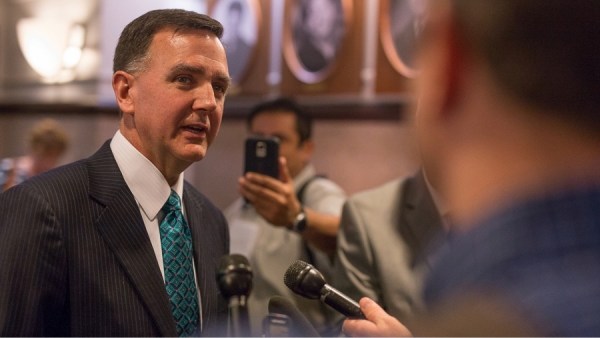
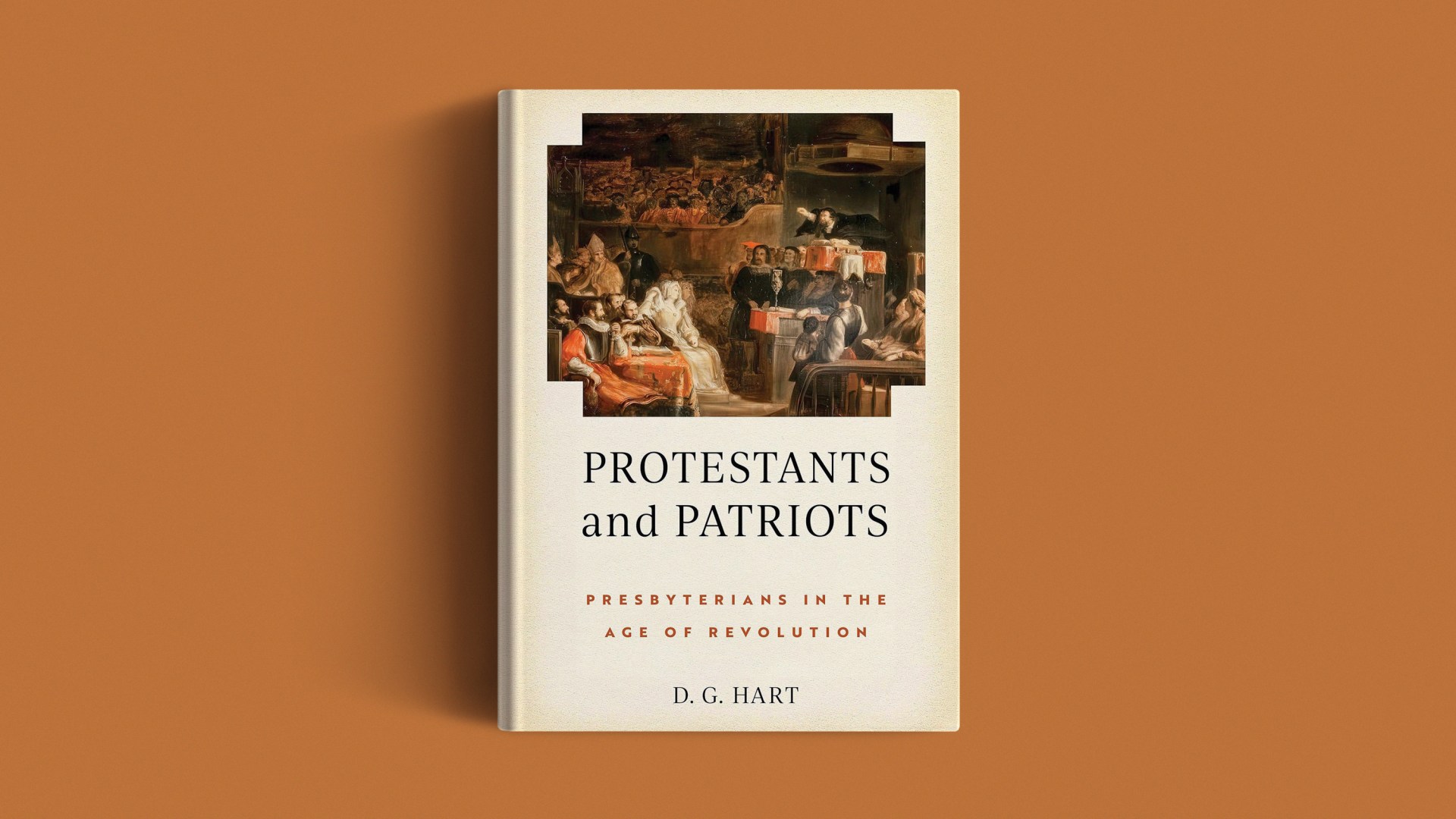
Published with permission from Notre Dame Press, excerpted from Protestants and Patriots: Presbyterians in the Age of Revolution. D. G. Hart is professor of history at Hillsdale College. He is the author of Protestants and Patriots, among other books.