In 1982, a group of friends sold their suburban homes and purchased an underdeveloped 6,500-acre farm on the outskirts of Bulawayo, Zimbabwe. They named it the New Adams Farm and formed what they called the Community of Reconciliation. Their vision was to see white and Black Zimbabweans living and working together in harmony, ending racial tension and violence, and healing hurt. Inspired by their Christian faith, they hoped to model how love triumphs over hate.
Over the next four years, the community grew, with many neighbors gaining agricultural skills, fellowship, and education. One night in 1986, a group of terrorists who saw themselves as liberators of Black people killed 16 white men, women, and children with an axe, forcing some of the members of the Black community to watch. They left one daughter of the founders alive to bear witness to what happened, and the son of one of the other founders, a 6-year-old boy, escaped into the surrounding countryside. All the other white adults and children were brutally murdered.
As the 14-year-old daughter of one of the founding members was being led off to be killed, she asked her father, “How should I pray?” He responded, “Pray for these men, as they are now the ones who need our prayers.” One by one they were killed, and while each of them remained silent, they could be seen uttering prayers under their breaths for their killers.
One of the survivors of this massacre is a man I admire greatly. Forgiveness of this kind of atrocity would take supernatural strength; humanly, it does not seem possible. But forgiveness and reconciliation are what drove the founding adults to pursue their dream, and their lives and deaths bear witness to the possibility of goodness amid such horror. Forgiveness does not minimize the trauma and its ongoing impact, but forgiveness has imbued those who choose it with something otherworldly, an almost superhuman strength.
As our society has become more trauma-informed, best practices regarding mental health have become highly regarded and widely accessible. In this context, the Christian faith has something unique to offer traumatized people—a coherent, embodied foundation for the possibility and practice of forgiveness. When well-meaning friends or family aren’t informed about how trauma works, their pronouncements about forgiveness cheapen the harm a person experiences when something devastating occurs. Teachings about forgiveness have been weaponized as a quick fix, disregarding the impact of trauma.
Yet as we explore the relationship between forgiveness and trauma, we see that whether they are receiving forgiveness or they are offering forgiveness, trauma survivors who practice forgiveness experience notable outcomes. Forgiveness is a radical gift to anyone who is acquainted with trauma and needs to be reclaimed in a world where outrage and fear abound.
I used to think of the word trauma as referring to a surgery required after injury. As the mother of teenagers, I’ve heard the word traumatic thrown around to describe everything from the mildly awkward to comic situations that make great anecdotes to share with friends. But trauma is far more than this, and our awareness of the impact of devastating events on the human person is growing as trauma is studied and attended to by clinicians, researchers, counselors, and concerned family members.
According to the American Psychological Association, trauma is defined as “any disturbing experience that results in significant fear, helplessness, dissociation, confusion, or other disruptive feelings intense enough to have a long-lasting negative effect on a person’s attitudes, behavior, and other aspects of functioning. Traumatic events include those caused by human behavior (e.g., rape, war, industrial accidents) as well as by nature (e.g., earthquakes) and often challenge an individual’s view of the world as a just, safe, and predictable place.”
The consensus among specialists is that trauma is not what happened to you but what happens inside you as a result of what happened to you. Trauma is less about the immediate impact of a devastating event and more about the impact on the whole person. Trauma can evoke two extremes of emotional response: feeling overwhelmed or feeling numb. Overwhelm of the body and the nervous system impacts our capacity to cope with day-to-day challenges, while numbing or dissociation can be a way of coping with stress and surviving in daily life.
If we don’t experience the conditions necessary to process trauma, it becomes stuck and stored in us, leaving lasting emotional, physical, or psychological imprints. It disrupts the nervous system, causing chronic dysregulation, disconnection, or hypervigilance.
Supporting a traumatized person can have a steep learning curve. I experienced this when supporting my husband through post-traumatic stress as a result of abuse he suffered in childhood. And then I had a traumatic experience myself and needed over a year of regular therapy to come through it.
Experiencing trauma goes way beyond thoughts, feelings, or even psychology. Trauma affects the body and is stored in our hormonal and systemic pathways. In Waking the Tiger, Peter Levine writes that “traumatic symptoms are not caused by the ‘triggering’ event itself. They stem from the frozen residue of energy that has not been resolved and discharged; this residue remains trapped in the nervous system where it can wreak havoc on our bodies and spirits.”
In the best-selling book The Body Keeps the Score, Bessel van der Kolk explores how traumatic experiences are encoded in the body and brain, impacting physical and emotional health. His work with Vietnam veterans played a foundational role in his understanding of trauma and its effects. He and others have been able to categorize the symptoms of post-traumatic stress disorder (PTSD). They’ve observed how traumatic memories are not just psychological but also deeply imprinted in the body, leading to hyperarousal, flashbacks, and emotional dysregulation.
Van der Kolk’s work explores the connection between trauma and the body: “The urgent work of the brain after a traumatic event is to suppress it, through forgetting or self-blame,” he says in an interview with The Guardian. But the body does not forget. Physiological changes result in “a recalibration of the brain’s alarm system, an increase in stress hormones, an alteration in the system that filters relevant information from irrelevant.” The stress is stored in the muscles and does not dissipate. This has profound ramifications for talking therapies and their limits: The rational mind cannot do the repair work on its own, since that part is pretending it has already been repaired.
Van der Kolk notes, “We define ‘trauma’ as an event outside the normal human veins of experience. At least one-third of couples, globally, engage in physical violence. The number of kids who get abused and abandoned is just staggering. Domestic violence, staggering. Rapes, staggering.”
If the body stores trauma in muscles and hormonal pathways, then it should “have experiences that deeply and viscerally contradict the helplessness, rage or collapse that result from trauma,” he adds in his book.
Reclaiming the power of forgiveness in trauma-informed care has huge potential for the healing and future flourishing of many who have suffered greatly in our communities. While we should rightly be cautious about the abuse or weaponization of forgiveness, the potential for human well-being in both giving and receiving forgiveness is undeniable.
When recovering from trauma, the embodied nature of healing matters greatly. There is a profound correlation with the center of the Christian faith—the trauma and crucifixion of the incarnate Son of God in history. The Scriptures introduce us to a God who enters his own creation, in his own image, taking on human flesh and tabernacling among us.
An embodied Savior demonstrates God’s love not on an ethereal, ideological, or disembodied level. As a human being, Jesus died the most painful death known to the ancient world. The crucifixion of God in flesh speaks uniquely to our traumatized world.
The Son of God was despised and rejected, shamed and abused, betrayed by loved ones and unjustly accused, stripped naked and displayed for all to see. It is notable that the Gospel writers are careful to detail the psychological and physical abuse suffered by Jesus. The flogging and scourging, the crown of thorns, the mockery, the nails, the thirst, and the spear—the details matter.
To a trauma survivor, the Savior’s suffering is real and graspable. The identification of a loving God with the suffering, pain, and devastation of this world is a meaningful point of connection for the forgiveness and self- forgiveness we may need to receive. The center of the Christian faith is a traumatized Savior who honors the magnitude and significance of our pain by suffering with us and for us.
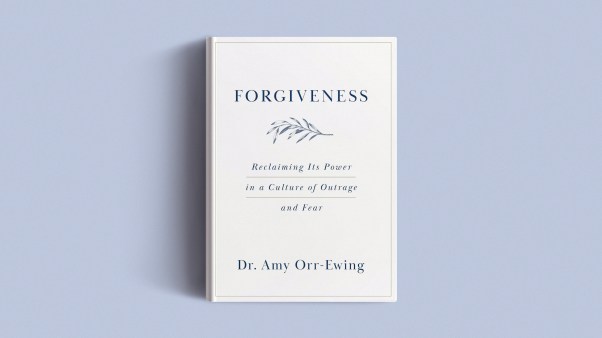
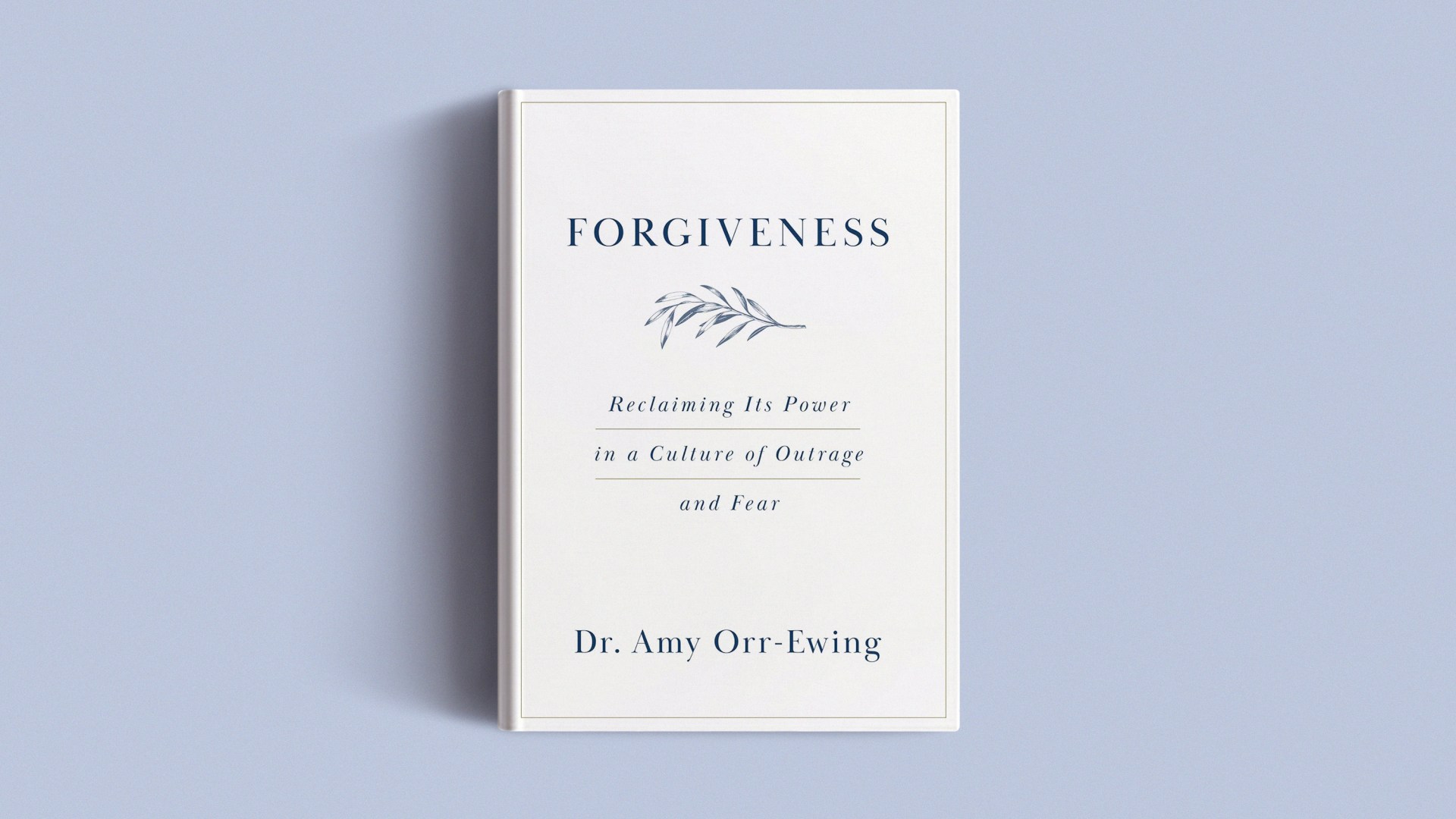
Content taken from Forgiveness by Amy Orr-Ewing, ©2026. Used by permission of Brazos Press, a division of Baker Publishing Group.