In this series

The Italian poet Dante, in his Divine Comedy, said of Francis, “He received from Christ the last seal, which his members bore for two years.” By “the last seal,” Dante meant the Christ-like wounds that appeared on Francis, which Dante interpreted as a confirmation of Francis’s life of Christ-like suffering.
Francis was the first to claim to have received such “stigmata.” But did he actually receive such wounds? What kinds of wounds were these? What caused them? What did they mean? Christian History put these questions to Dr. Lawrence S. Cunningham, professor of theology at the University of Notre Dame. He is author of St. Francis of Assisi (Harper & Row, 1981).
The basic facts about which the early sources on the life of Saint Francis agree are these: Two years before he died, Francis went on retreat with three of his long-time companions, to a mountain called La Verna. He was tired, sick, nearly blind, a person who no longer headed the movement of little brothers he had founded.
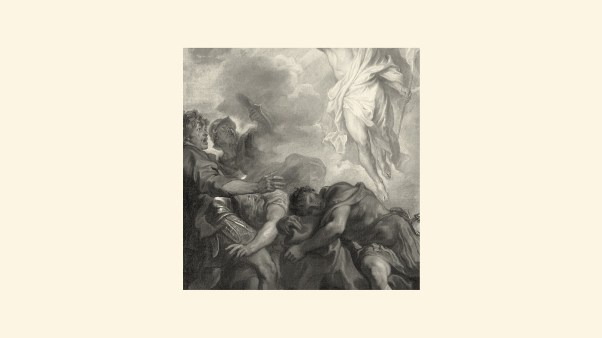
On or about the Feast of the Holy Cross (September 14), he had an ecstatic experience. He saw a vision of a six-winged seraph (compare Isa. 6:2) embracing a crucified man, and the crucified man seemingly pierced Francis’s body.
Afterward, until his death in 1226, Francis carried on his body what appeared to be wounds on his hands, feet, and side. An early account described the wounds as dark scars that would periodically bleed.
In announcing Francis’s death, the head of his order, Brother Elias of Cortona, wrote a circular letter to all the friars. Elias said that those who were with Francis at his death inspected the wounds, which Elias called, for the first time, stigmata.
The Greek word stigma means “brand mark” or “scar.” The word occurs in Paul’s letter to the Galatians: “I carry the brand marks (ta stigmata) of Jesus on my body” (6:17). The same word was carried over by Jerome in his Latin Vulgate version; Elias was simply using Paul’s vocabulary to describe the bodily marks of Francis.
Real Wounds?
This strange phenomenon, which Elias said was “unheard of in our time,” seems not to have been a fiction. It is well attested in the earliest sources.
The early Franciscans collected notarized statements from those who saw the marks on Francis, both during his life and after his death. In less than a decade after Francis’s death, a painting (the Berlingheri altarpiece at Pescia) depicts the wounds on the hands and feet of Francis.
Francis had the stigmata: that seems defensible given the historical evidence, even though, in his own day, there were doubters.
What Caused Them?
Scholars of the stigmata, even Catholic believers like the late Herbert Thurston, S.J., almost unanimously agree that such phenomena are best explained as bodily reactions to intense ecstatic and psychological experiences.
In Francis’s case, the early biographers of Francis clearly connect the stigmata to his intense devotion to the crucified Christ. All of Francis’s preaching about poverty and self-denying love were intimately linked to his understanding of Christ’s sacrifice on the Cross.
Of course, whether a profound experience has ultimately been brought on by God is not in the purview of science to decide. Yet Francis’s demeanor after the experience suggests to some that his was a genuine miracle. He bore his stigmata without becoming obsessed by them or allowing them to become an object of curiosity. After the events on La Verna, and for two years until his death, he still went on preaching tours, despite his ill health.
In addition, during that same period he composed his lyrical poem The Canticle of Brother Sun. If one can judge from that brilliant composition, he did not dwell morbidly on what the poet Gerard Manley Hopkins called “the gnarl of the nails … the niche of the lance.”
Enduring Significance?
Though Francis is the first person in history to have had the stigmata, subsequent Christian history records any number of persons who claimed them.
Take the most famous stigmatic of this century. Capuchin Franciscan friar Padre Pio, who died in 1968, bore bodily wounds for nearly fifty years. He was the object of much interest during his lifetime, and visits to his monastery in Southern Italy had all the air of a medieval pilgrimage.
Other alleged cases of stigmata in our century have proven to be frauds of self-mutilation or cases of psychic pathology.
In any event, it may come as a surprise to some that the Catholic church is very slow to highlight the miraculous significance of phenomena like the stigmata.
In this century, the church kept Padre Pio out of public view for nearly a quarter of a century, for fear that a cult would quickly build up around him.
As far as Francis’s stigmata, even the papal document of canonization (two years after the death of Francis in 1228) makes no mention of it.
Yet the stigmata have had a significant influence on the broader church. Before Francis there had been a tradition, going back at least to Bernard of Clairvaux (1090–1153), that emphasized an emotional piety dwelling on the suffering humanity of Jesus.
Francis’s teaching and experience brought that form of devotion to a new pitch. He added impetus to a mystical tradition that later would break out in various forms: from devotion to the blood of Jesus to modern mystical treatises like The Autobiography of Saint Theresa of Lisieux. One could argue, in fact, that the increasingly realistic depiction of Christ’s wounds in art (especially in crucifixes) can be linked to the widespread acceptance of the story of the stigmata of Francis.
Dr. Lawrence S. Cunningham is professor of theology at the University of Notre Dame. He is the author or editor of sixteen books, most recently Thomas Merton: Spiritual Master: The Essential Writings (Paulist, 1992).