In this series


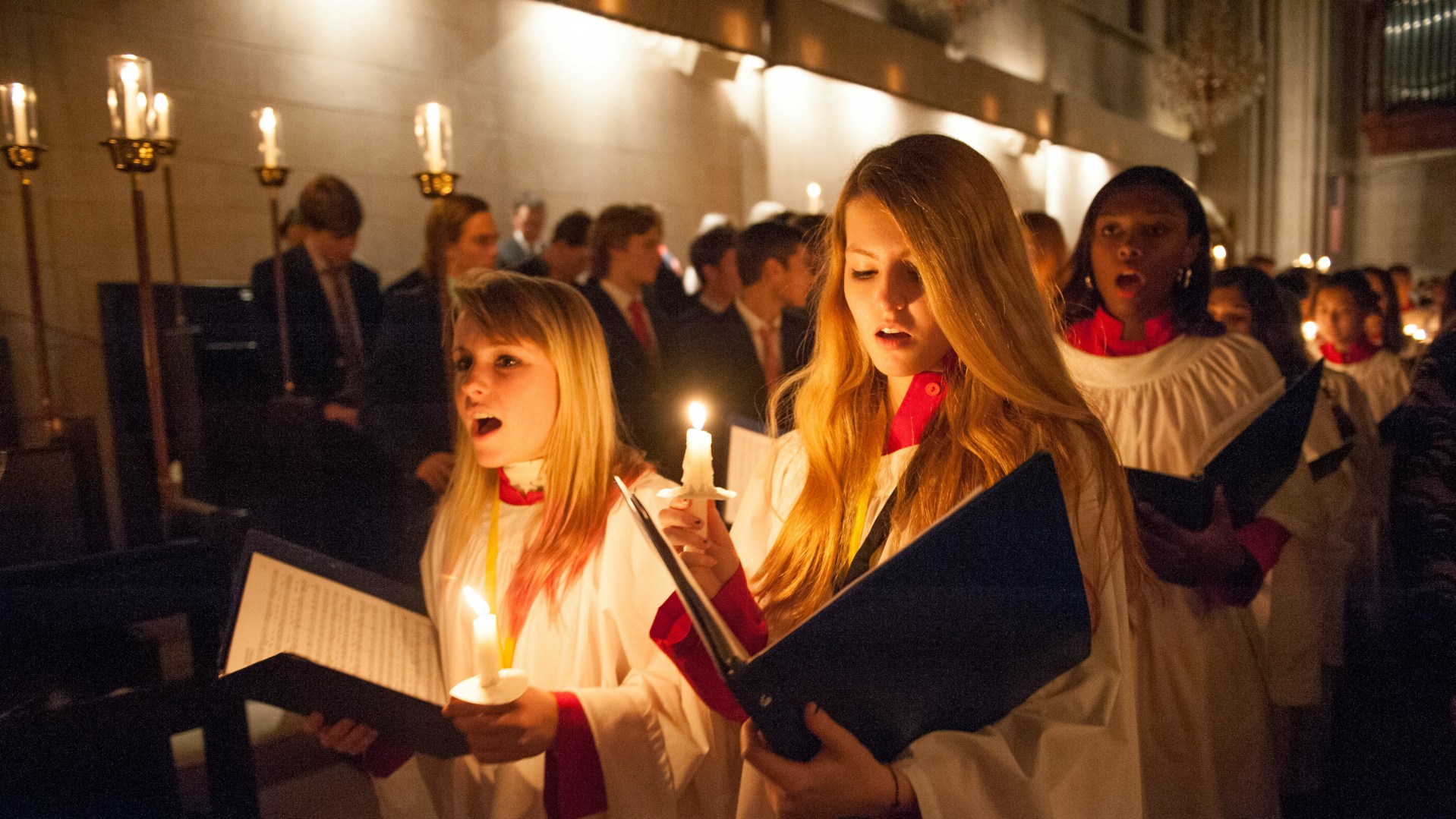
Take a look at the carols you sing this season—you'll find a nice primer on Christology. For starters, name these tunes:
"God of God, and Light of Light begotten, Lo, He abhors not the Virgin's womb; Very God, begotten, not created"
"King of kings, yet born of Mary, As of old on earth He stood, Lord of lords, in human vesture, In the body and the blood"
"Jesus is our childhood's pattern, Day by day like us He grew; He was little, weak, and helpless, Tears and smiles like us he knew"
"O that birth forever blessed, When the Virgin, full of grace, By the Holy Ghost conceiving, Bare the Savior of our race"
"Veiled in flesh the Godhead see; Hail the incarnate Deity"
For most of us, Christmas carols evoke warm memories, but the concepts they communicate were refined in often fiery debates. On December 7, 430, one man's views on "the incarnate Deity" earned him a condemnation from Cyril, archbishop of Alexandria. He was later deposed and exiled by the emperor following the Council of Ephesus. But just how heretical Nestorius's views really were is open to some debate.
During the fourth century, two rival concepts of the Incarnation arose. The school of thought centered in Alexandria focused on Christ's divinity; the school centered in Antioch, Nestorius's home base, emphasized Christ's humanity. The Alexandrian side lobbed a heresy into play when the Venerable Bishop Apollinarius (c. 310-c. 392) suggested Jesus's human mind and will were completely subsumed by his divinity. This idea was refuted by the Council of Constantinople in 381. The Antiochene camp produced its own heresy a few decades later when Nestorius, an outspoken and abrasive preacher, began a sermonic attack against the term Theotokos ("God-bearer") as a designation for Mary. His lay audience thought he meant Jesus was just a man; theologians believed he was suggesting that Christ had two natures and two wills, or was in fact two coexisting persons (one human, one divine). The two-person theory became known as Nestorianism.
But is that what Nestorius really intended to say? Probably not. His attack on Theotokos arose from a fear that the term overemphasized Christ's divinity (the Apollinarian heresy), not from a desire to deny that divinity. Cyril and others defended the title, at least in part, because devotion to the Virgin Mary was already on the rise, and because an assault on the term was in some ways an assault on the many respected theologians who used it. But for his whole life, Nestorius was convinced his beliefs were perfectly orthodox. Though he does seem a bit fuzzy on precisely how Christ's natures blended together, he was most likely a victim of his own strident, unguarded language—the use of which had earned him the nickname "Firebrand." (See issue 51: Heresy in the Early Church for more on Nestorianism and other disputed theologies.)
* Carol quiz answers: O Come, All Ye Faithful; Let All Mortal Flesh Keep Silence; Once in Royal David's City; Of the Father's Love Begotten (yes, a few were a little on the obscure side); Hark! the Herald Angels Sing