News

Evangelicals Murdered as Armed Groups Reclaim Territory in Colombia

Eight Protestants fleeing violence in their home region were found dead after being summoned by an armed group.

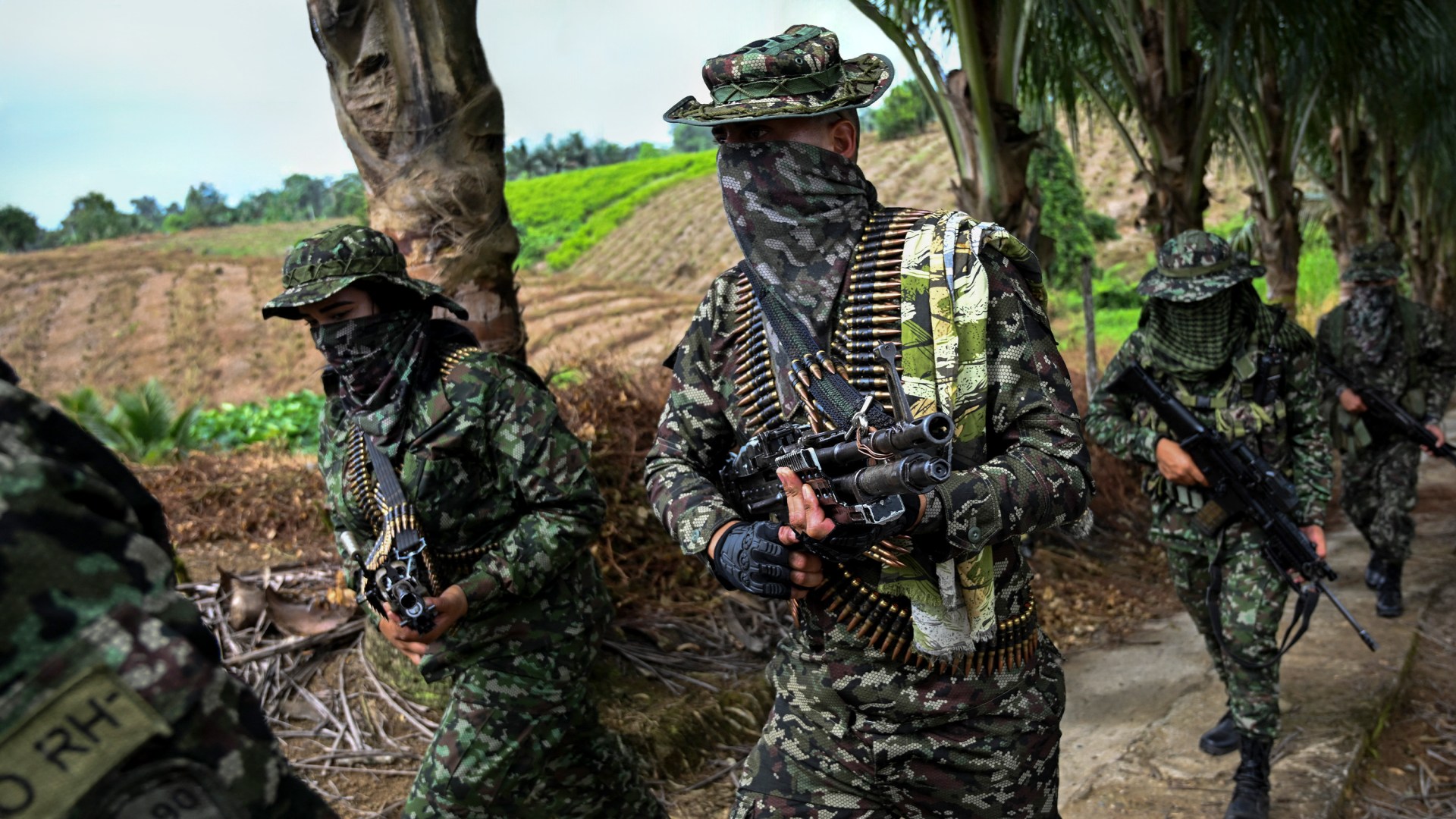
Members of a FARC dissident guerrilla group march on a rural area of Colombia.

Members of a FARC dissident guerrilla group march on a rural area of Colombia.

Christianity Today July 8, 2025
JOAQUIN SARMIENTO / Contributor / Getty

A story of violence, forced displacement, and mistaken identity lies behind the killing of eight Christian leaders in Colombia, whose bodies were discovered last week in a mass grave.

The victims—a pastor from the Iglesia Cristiana Carismática Cuadrangular (ICCC, the Colombian branch of The Foursquare Church) and seven others affiliated with the ICCC and the Iglesia Evangélica Alianza de Colombia—went missing in April.

They had traveled to the village of Puerto Nuevo after a summons from Frente Primero, a dissident group of the Fuerzas Armadas Revolucionarias de Colombia (FARC, Revolutionary Armed Forces of Colombia).

All eight Christians had previously fled from Arauca, a region close to the Venezuelan border where armed groups have increasingly targeted pastors and converts to Protestantism.

According to the prosecutor’s office in Calamar, where the bodies were found, Frente Primero had mistaken the Christians for members of another armed organization, the Ejército de Liberación Nacional (ELN, National Liberation Army), which has one of its bases in the Arauca region. 

“This situation apparently stems from the origins of some of them; they are of Araucanian origin, and in this criminal paranoia, the perpetrators assume they are members of the ELN,” prosecutor Raúl González told the newspaper El Colombiano.

The massacre shocked Christians in Calamar. Images from the burial site showed rudimentary wooden crosses, suggesting that local residents may have tried to honor the victims as best they could before officials reached the gravesite.

The victims have been identified as Nixon Peñalosa, Maryuri Hernández, Isaíd Gómez, Maribel Silva, James Caicedo, Oscar García, Jesús Valero, and Carlos Valero. According to a local pastor, they were “brothers of good testimony, people who always showed their commitment to the community.” 

After the discovery of the bodies, more violence hit the town of Calamar. On Friday, a drone carrying a grenade hit an army base near the city center. 

As a result, the city suspended administrative services for the day, citing risks to the safety of public employees. Churches in the area also moved Sunday evening services up to the early afternoon, between 2 and 3 p.m., to ensure that people would be home by nightfall.

“There is a tense atmosphere, but people have not stopped congregating. We perceive the massacre as an isolated incident, but we ask for much prayer,” said the pastor.

The country’s decades-long armed conflict officially ended with the 2016 peace deal between FARC and the Colombian government, but many parts of the country remain contested territory between state forces and armed groups who rejected or abandoned the accords.

Calamar, a town of 11,000 inhabitants in Guaviare, a jungle region in southeastern Colombia, is in the heart of one of these land conflicts, between Frente Primero (also known as Armando Ríos and ruled by warlord Iván Mordisco) and the faction led by Calarcá Córdoba

Last month, from June 7 to June 21, Mordisco ordered a curfew in the Guaviare from 6 p.m. to 6 a.m.

The region’s economy, which relies on agriculture and livestock, faces challenges related to production and logistics. The difficulty in monitoring enables illegal activities, such as the planting of coca for the production of cocaine.

International observers and Colombian lawmakers alike have condemned the killings. 

“Eight Christian leaders have been massacred in Calamar, Guaviare. This is an atrocious act that brings mourning to the country and an alarming sign that religious freedom is in danger in Colombia’s most forgotten regions,” said Senator Lorena Ríos, a vocal advocate for religious freedom.

Ríos has called for a full investigation by the Attorney General’s Office and the National Protection Unit, demanding justice for the victims and security guarantees for Christian communities in rural conflict zones. 

Several Christian organizations in Colombia, including the Evangelical Confederation, have echoed her demands and called on the government to take decisive action to protect pastors and faith leaders in high-risk areas.

In a post on X, Colombian president Gustavo Petro described the events as “a serious affront to the right to life, religious freedom, and the spiritual and community work that so many people carry out in regions historically plagued by violence,” and he called on state entities to redouble their efforts to protect social and religious leaders.

Christian and Jewish groups harshly criticized Petro last April for choosing an anti-Zionist rabbi named Richard Gamboa as the new director of the Interior Ministry’s Office of Religious Affairs, which is responsible for coordinating interfaith dialogue and promoting religious freedom in the country.

Christian advocacy groups are particularly concerned by this latest incident. Open Doors, a global watchdog for religious persecution, ranks Colombia 46th on its 2025 World Watch List of countries where Christians face the most persecution. The group cites persistent threats, surveillance, and even assassinations of church leaders who oppose the influence of armed groups in rural Colombia.

“Colombia fell 12 spots on the World Watch List, but this shouldn’t be taken as a sign that everything is well,” states Open Doors in its latest report. “Church leaders are particularly at risk because they are seen as competitive influences for the young people that make up much of the guerrilla groups’ ranks.”

Adding to this recent massacre was the murder of pastor Marlon Lora, his wife, and his daughter on December 29, 2024, in Aguachica, César department, in northern Colombia under mysterious circumstances. The investigation conducted by the Attorney General’s Office showed that the hit men apparently mistook one of the victims for the woman they had been paid to kill.

“Calamar is a place of good people, where they want to get ahead. And people who work hard,” said a local pastor. 

“God has been raising people up in different ways here, restoring families, and the church has flourished beautifully,” he said. “But in the midst of all this, we must know that there is a spiritual struggle that is not against flesh and blood but against the works of the murderer. It is our duty to seek God and cry out to him.”

Hernán Restrepo is a Colombian journalist based in Bogotá. Since 2021 he has managed Christianity Today’s Spanish-language social media accounts.

Church Life

All the Light It Hurts to See

Scripture tells us God’s glory is blinding. Chronic migraines helped me see for myself.

A blinding sun overlayed on a painting of Paul's conversion.
Christianity Today July 8, 2025
Illustration by Elizabeth Kaye / Source Images: Unsplash / Wikimedia Commons

I live six blocks from the Pacific Ocean. A desirable location for most. But not for me. When my husband and I walk to the beach in the evenings, as the sun dips beneath the horizon, I never look straight ahead. Instead, I watch the surrounding clouds change colors. That’s all I can bear to see of a sunset: the back of it as it passes me by.

Chronic migraine disorder involves being in pain more often than not, and the stress that this pain induces on the nervous system means that sufferers often struggle with a variety of neurological symptoms. One of my most annoying symptoms is extended periods of photophobia, or light sensitivity.

Yet it’s much more than a “sensitivity,” in my opinion. Photophobia is a barbed wire fence wrapped around my entire world. It turns car headlights and TV screens into flame throwers and laser beams. iPhone flashlights (which people accidentally turn on all too often) drill straight into my skull. I can’t even tolerate regular light bulbs unless they are completely covered by shades.

So, you can probably imagine how I feel about the sun, the biggest light bulb of all, and the ocean, the world’s largest mirror.

Every day I’m reminded that my chronic pain turns good and beautiful things that other people enjoy, like summer or campfires or Christmas decorations, into sources of frustration and fear. And that has spiritual implications.

The first time I noticed this wasn’t while taking in a sunset but while sitting in church. My San Francisco congregation is small and frequently moves from place to place; at the time I first got sick, we met in a conference center with LED track lighting, like what you’d find in a fashion outlet store. Each fixture pointed in a slightly different direction, leaving me with no escape from the overwhelming brightness. The lights near the pulpit were the worst of all. So, during my first year of chronic pain, I spent most Sunday services looking at the floor. (Later on, my church met in a ballroom lit by two giant spotlights. I can’t decide which was worse.)

How was I supposed to engage with people in my church community when I was so preoccupied with avoiding the lights? Connecting with God proved even harder. After all, wasn’t he the one who allowed this sickness that made church so inaccessible to me? I felt like I was being punished for obeying the command not to give up on meeting together (Heb. 10:24–25).

My difficulties with church were just the tip of the iceberg. What I found even more concerning was how quickly and completely my pain choked out every other aspect of my spiritual life. I was usually too distracted by pain to pray, but on the rare occasion that I did, I was unable to conjure even the mere idea of God. It was like talking into thin air.

Reading Scripture was difficult too. God’s Word had always been my map. But now, whenever I opened it, I found myself circling around the same handful of psalms, all of which were laments or complaints. Psalm 88, for example:

Your wrath has swept over me;
            your terrors have destroyed me.

All day long they surround me like a flood;
            they have completely engulfed me.

You have taken from me friend and neighbor—
            darkness is my closest friend. (vv. 16–18)

Whenever I tried branching out, I was confused by the Bible’s frequent references to God as loving, good, and beautiful. This was not the God I knew, at least not anymore. All of the many exhortations to “Praise the Lord!” rang hollow. The map was muddled now, providing directions to a foreign land where I didn’t live and couldn’t possibly belong.

C. S. Lewis wrote that “God whispers to us in our pleasures, speaks in our conscience, but shouts in our pain.” So, though I never went looking for solutions to the crisis created by my chronic pain—most likely because I doubted there was anything to learn, spiritual or otherwise, from my suffering—the answers found me nonetheless.

Over my ringing ears, pounding head, and certainty that pain was all curse and no blessings, I started to hear God shouting something I’d never heard before.

Ezekiel saw the glory of the Lord as a figure that from the waist up “looked like glowing metal, as if full of fire, and that from there down … looked like fire; and brilliant light surrounded him.” When the prophet saw this, he fell to the ground (Ezek. 1:27–28).

During the Transfiguration, Jesus’ face “shone like the sun, and his clothes became as white as the light” as the Father spoke to the disciples out of a “bright cloud” (Matt. 17:2, 5). The disciples ended up face-down on the ground too.

The apostle Paul’s conversion involved a light from heaven that was so bright, it struck him blind, and—you guessed it—he “fell to the ground” (Acts 9:4).

Before getting migraines, I knew these stories, and I knew their shared message: God’s glory is so bright and beautiful, it totally overwhelms those who encounter it. What I didn’t fully take in back then, however, was the physical circumstances these stories likewise shared. They all involved the glory of God manifesting as a light so bright, the witnesses reflexively recoiled. Put another way, these are all examples of divine photophobia.

My photophobia is not the result of a divine encounter, as it was with the apostle Paul. But the discovery of this aspect of my physical experience in Scripture relocated parts of me that had been lost for too long. I still understood so little about God, still felt so far from him in many ways. But when it came to these stories about his blinding glory—or other parts of the Bible that described God as surrounded by light—I realized that by experiencing photophobia, I was, in some small way, able to feel God’s glory in my body. It was as if, on the map, God had drawn an X next to Paul on the road to Damascus or an arrow labeled “You Are Here” pointing to the mountaintop with the disciples.

Perhaps I could connect with God in spite of—no, because of—my pain, and perhaps the photophobia I’d considered a spiritual barrier was actually an invitation into a deeper understanding of my Savior that went straight to my neurons. As I continued to squint beneath the bright lights on Sunday mornings, I was comforted by the possibility that my symptoms were, somehow, holy.

On a recent trip up the California coast, my husband and I decided to pull over to eat lunch on a beach. It was late fall, so the sun glanced off the water even that early in the day, forcing me to tip the brim of my hat down until I couldn’t see the ocean. This was an inconvenience I would usually grumble about, but much to my surprise, I found myself enjoying the sound of the waves and the warmth of the salty air. And as I ate a sandwich we’d picked up at a drive-through, I found myself thinking about how God’s radiance is more than our eyes can behold, just as the sight of the sun hitting the ocean at that moment was more than my eyes could behold.

Would I rather have been able to look directly at the ocean, to fully take in God’s marvelous creation? Yes, definitely. But in the absence of that, I was thankful that divinity can exist alongside difficulty and suffering alongside the sacred.

That day on the beach also gave me a new understanding of Christ and his grace. Jesus’ sacrifice is our only protection from the overwhelming, overpowering glory of God; Jesus is the shade at our right hand that allows us to boldly approach the throne of unapproachable light (Ps. 121:5; 1 Tim. 6:16). Or, to put this in terms a photophobe would understand: Jesus is my hat on the beach, my sunglasses on a bright day, and the colorful clouds surrounding the world’s greatest sunset.

Jesus is also the light of heaven, the sun of the New Jerusalem. And I know that when I see him there, I won’t mourn the sunsets I missed.

Natalie Mead is currently pursuing an MFA while writing a memoir about chronic pain, relationships, and faith. Read more of her writing at nataliemead.com.

News

Inclusive Worship Shouts, Shushes, and Sings to the Lord

Christian researchers examine how autism and neurodivergence could reshape church services.

People with Autism worshiping
Christianity Today July 8, 2025
Illustration by Mallory Rentsch Tlapek / Source Images: Getty, Unsplash

Trent Broussard realized that his son had perfect pitch when the eight-year-old called him out during a worship set. “That’s the wrong key!” his son shouted over and over as Broussard sang a version of Hillsong’s “Mighty to Save.”

Broussard’s son was diagnosed with autism at age three. The Centers for Disease Control estimate that 1 in 31 children in the US have some form of autism, and studies have shown kids with the condition are half as likely to attend religious services. 

Broussard said inclusion of people with neurodivergence can challenge people’s expectations for what a Sunday service should feel like. 

“You may very well get outbursts in the middle of a service,” said Broussard, now an assistant professor of music at Williams Baptist University. 

“We used to get death stares when my son would yell out in church. But we were lucky to have leadership who told us, ‘You’re doing nothing wrong; we want him here, just as he is.’ How I wish that would happen everywhere.” 

Broussard belongs to a growing group of scholars studying the experiences of neurodivergent people in corporate worship. He wrote his dissertation about the inclusion of people with autism in corporate worship in Southern Baptist churches—in hopes that planning worship with neurodiversity in mind can enrich and enliven the life of the church. 

“Most churches that don’t seem very open or accommodating just haven’t had the opportunity to see that things can be done differently,” he said. “We sing about a gospel that is available for all people, of all shapes, forms, and fashions. If our worship doesn’t include all people, that calls into question whether we believe the things we profess about God.”

The emphasis on order in church worship can hinder efforts to make room for neurodivergent people, said Nathan Myrick, assistant professor of church music at Mercer University and the director of a new initiative funded by the Lilly Endowment that aims to study and enhance worship for neurodivergent children through the arts. 

Myrick recommends a more flexible approach. 

“Neurodiversity in our communities can reveal our fear of being out of control,” said Myrick. “So much of our polity and rituals are about exerting control.” 

That’s not to say that there is no value in having some expectations about appropriate behavior in the context of corporate worship, Myrick added. “There is value in learning to participate, but our expectations are overwrought and unrealistic.” 

Myrick and Broussard both noted that, for many churches, emphasis on production and a seamless flow of service can discourage or reject interruptions. And while it’s reasonable to want Sunday morning worship to include times of meditation, prayer, and corporate reading, churches can still let families know that everyone is welcome, even those who struggle to stay still or quiet.  

Sunita Theiss and her seven-year-old son have autism; she has written about the challenges of participating in the life of the local church as a neurodivergent parent with children on the spectrum. 

Theiss points out that every church offers accommodations of some kind for certain populations, though they may not be explicitly labeled “accommodations.” 

“Lots of churches have hearing augmentation or special family-friendly services and events,” she said. “I was recently at a church that had rocking chairs in the back for mothers of young children. My Anglican church doesn’t use incense because we have older congregants who are sensitive to strong smells. Those are accommodations, whether we call them that or not.” 

Theiss says churches that are just starting to take a closer look at the ways their worship practices might exclude those with neurodivergence would benefit from looking at the things they already do to accommodate the needs of their community. 

“All of us have an internal line that we’ve drawn,” said Theiss. “We’re willing to accommodate to a point, but not past that. Each person has their own line, and frequently, for neurodivergent people, the lines are just different.” 

Theiss and Broussard both point out that many adjustments that can help neurodivergent people aren’t complicated or expensive but go a long way in showing welcome. Broussard says that even a simple printed order of service can help some attendees feel more at ease. 

For younger children, he suggests “first, then” charts—simple, graphic depictions of the order of events. Theiss says that having a few freely available tools like fidget toys and noise-reducing headphones helps families with neurodiverse members feel seen and accepted. 

Broussard also says that churches with bigger production budgets should carefully consider how they use lighting during services. 

“When you go to a theater, you’ll see warning signs about things like strobe lights and flashes,” he said. “Lighting is a great tool, but we shouldn’t need that warning for corporate worship.” 

Noise sensitivity is a common characteristic among neurodivergent people. While worship volume can be a sore spot for musicians, serving the community may mean giving up the goal of trying to recreate the immersive worship concerts modeled by megachurches like Hillsong and Bethel. Churches may opt to have separate services or spaces to serve those who prefer a quieter mode of worship. 

There are many unique profiles and needs that accompany neurodivergence, and advocates acknowledge that it’s impossible to perfectly accommodate everyone. 

“We have a sensory mismatch in my own house. I have one kid who needs to wear headphones for the other one to enjoy loud music,” Theiss said. “In a church, multiply that by 100. You aren’t going to be able to accommodate everyone, but you can have some tools available.” 

Emma Friesen, a graduate of Duke University who is entering graduate school to study occupational therapy, experiences sensitivity to loud noises and has felt firsthand the strain of participation in corporate worship. 

“Congregants having seemingly conflicting needs in regard to the corporate worship service makes me think of the miracle of the loaves and fishes,” said Friesen. “In that story, there is enough for everyone, and sometimes that can feel far away from our day-to-day lives.” 

Friesen says that one way churches can start making more room is by intentionally choosing messiness and welcoming mistakes. 

“Creating a culture of informality can go hand in hand with creating a welcoming community,” said Friesen. “At my church, I like how it is not uncommon for a worship leader to pause the sermon because of a passing train or do something like restart a song.”

Broussard also sees value in cultivating communities that actively push against the tendency to platform and celebrate attractiveness and polish. 

“There are churches where everybody on the platform falls into the ‘beautiful people’ category,” said Broussard. “You can see this corporate mindset that it’s more important to have something attractive than it is to honor the dignity of all humans.” 

Secretary of Health and Human Services Robert F. Kennedy Jr. has been criticized recently for making broad claims about the nature of autism spectrum disorder and for saying that autism “destroys lives.” Myrick says that a Christian view of neurodivergence ought to be one that treats its many expressions as examples of the diversity and vibrancy in creation. 

“There’s a theological through line from Genesis to Revelation of the expanse of creation and God’s vision for humanity as fruitful and diverse,” Myrick said. 

A gracious, openhanded set of worship practices that emphasize flexibility and freedom can help make the church auditorium or sanctuary a place where more of the body of Christ can gather. In churches that make no attempt to accommodate neurodivergence, what appears to be order and organization might actually be homogeneity. 

“Contemplating how God might be relating to those in our community who have significant cognitive disabilities can help push our theology towards a bigger view of God’s grace,” said Friesen. “I think that is good news.”

Theology

How Iran Became an Islamic Republic

The political history may be familiar. But the theology of Shiite Islam matters too.

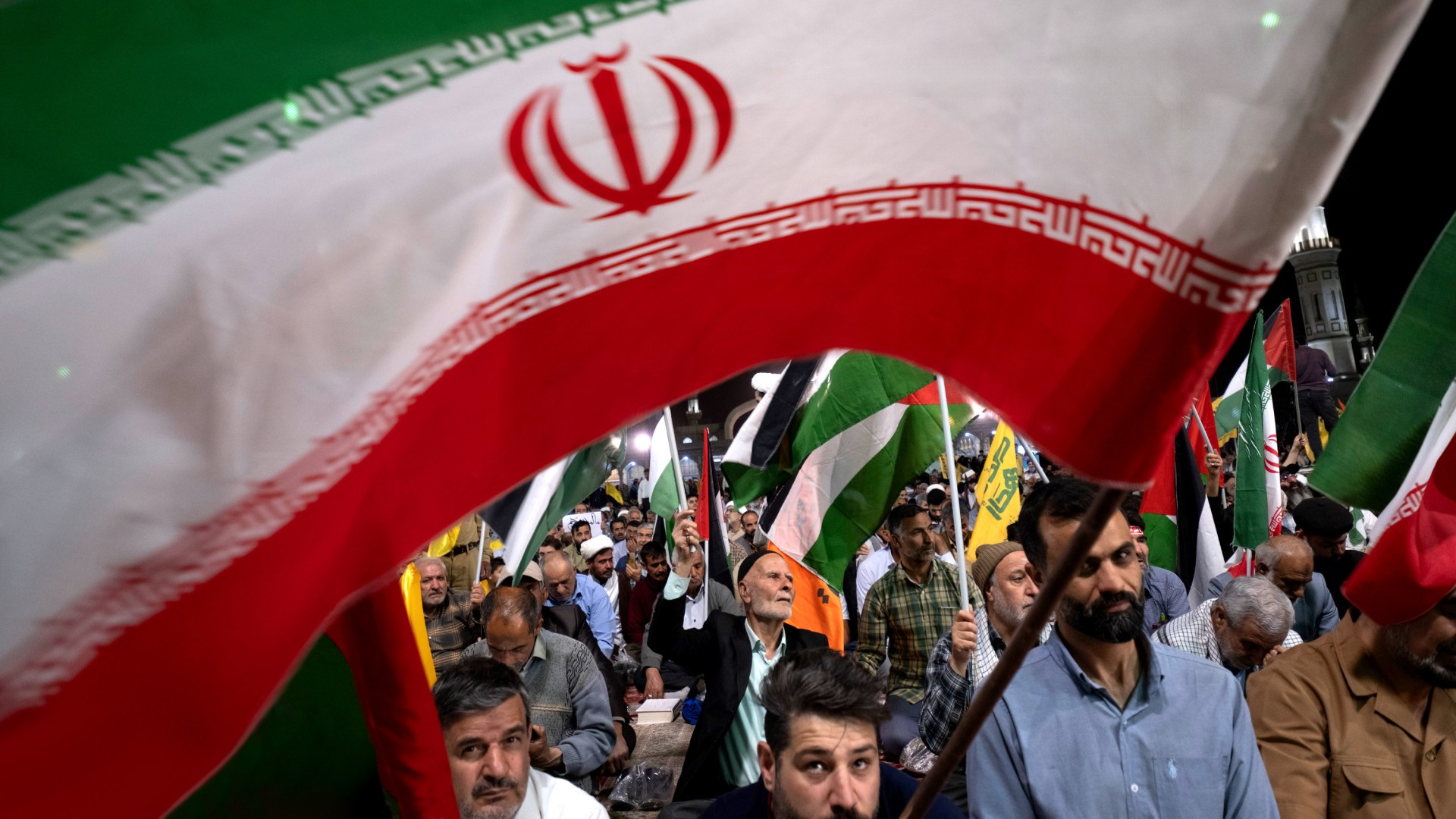
An Iranian protester waves an Iranian flag while participating in a multinational rally at the holy mosque of Jamkara.

An Iranian protester waves an Iranian flag while participating in a multinational rally at the holy mosque of Jamkara.

Christianity Today July 8, 2025
NurPhoto / Contributor / Getty

When asked last month about his goals in attacking Iran, Israeli prime minister Benjamin Netanyahu stated that he sought to stop a nuclear threat. Yet he also expressed hope for a regime change.

“The decision to act,” he said, “is the decision of the Iranian people.”

Although Iranian sentiment is hard to measure, some surveys suggest widespread disillusionment with the country’s rulers. According to the nonprofit Freedom House, Iran ranks No. 20 on its list of the least-free nations in the world. But if Iranians were free to decide, on what basis would they decide what is right?

Shiite Islam offers Iranians a standard it views as just. Iran calls itself an Islamic republic. Many Iranians may appreciate the Western understanding of human rights. But long before Freedom House existed, their sect prized two concepts through which the Shiite people can judge their governments: justice and leadership.

Najam Haider, assistant professor of religion at Columbia University, calls these the core theological beliefs of Shiite Islam. Iran’s constitution purports to enshrine them via the judiciary in wilayat al-faqih, the “guardianship of the jurist.” In plain terms, the religious scholar, an expert in sharia law, is to rule and ensure fidelity to Islam. Iranians can theoretically vote politicians out of office but the chief religious scholar is in charge. He can be removed from his post—but only by fellow religious scholars.

To understand the Iranian government we need to understand Shiite political history. This article is the first in a four-part survey, based on Haider’s Shi’i Islam, Vali Nasr’s The Shia Revival, Mark Bradley’s Iran and Christianity, and interviews with Shiite experts.

Part one is the origin story, describing why Shiites view themselves as cheated out of Muslim leadership. Part two looks at how different branches within the sect responded to this loss. Although Shiite rule is historically rare, part three considers how two premodern dynasties shed light on later developments in Iran. And part four describes two Iranian personalities who played a key role in politicizing the Shiite faith.

The starting point: Politics is never far from Islam, as the Muslim prophet Muhammad also became a head of state. But for centuries, most Shiites waited for divine intervention on their behalf, and did not push to create a government themselves.

Iran is one of only four majority Shiite countries in the world—Iraq, Bahrain, and Azerbaijan are the others—but is unique as the only nation with specifically Shiite governance. The global majority Sunni population may admire Iran for its centrality of religion, its anti-Western posture, or its opposition to Israel. But Sunnis reject the theological basis of wilayat al-faqih.

This article will focus on what Shiites think. An anecdote about the highly revered Shiite hero Ali ibn Abi Talib—also admired by Sunnis—will help us understand a shared conception of justice that was so soon ruptured by politics and war.

In AD 656, Ali, Muhammad’s cousin, became the fourth caliph—successor to the prophet’s political leadership—of the rapidly expanding Muslim empire. And he had clear instructions for his governor in Egypt. Fifteen years earlier, a Muslim general conquered the Coptic Orthodox territory, the breadbasket of the Roman empire. His soldiers took up residence in garrison cities.

“Infuse your heart with mercy, love, and kindness for your subjects … either they are your brothers in religion or equals in creation,” Shiite tradition records Ali saying, “Look after the deprived who need food and shelter.”

Muslim historians say Egyptians welcomed their new rulers. Coptic historians note both liberation from discriminatory Byzantine rule and their varying treatment under Islamic governance. History is written by the winners. But over the centuries that followed, Shiite history, more often than not, came to reflect the perspectives of the Muslims who lost.

Shiites represent only 10–13 percent of Muslims worldwide, tracing their history to the losing side of a civil war that included the assassination of Ali in AD 661 after just five years as leader. After that, Sunnis controlled Islamic governance—through what is known as the caliphate—until its abolition by secular Turkey in 1924.

Iran restored Shiite political power. In 1979, the religious cleric Ayatollah Ruhollah Khomeini became the central figure of an Iranian revolt against the secular and Western-leaning shah. The Iranian Constitution calls this event the Islamic Revolution, though at the time it included strong liberal democratic and communist support. But the result was a kind of theocracy, which Iran then promoted through insurgent movements around the world, including Hamas in Palestine and Hezbollah in Lebanon.

Ali’s attitude about governing Egypt illustrates Shiites’ core theological belief about justice. Leaders are accountable to divinity and are to rule on behalf of the people. These principles are to characterize an institution called the imamate, the governance of a figure Shiites call the imam. In Sunni Islam, imam is a common noun that refers simply to one who leads communal prayer. It can apply also to learned scholars. Shiites invest the term with much deeper meaning.

For them, the imam is the one ideal leader of the entire Muslim community, the just and divinely guided successor to Muhammad. He is not a prophet. But he inherits the same charisma to command the allegiance of the people, and the insight to correctly interpret the Quran. Ali, Shiites believe, was the first imam—designated so by Muhammad.

The victorious Sunnis, however, view Ali as the fourth of four “righteous caliphs,” chosen not by Muhammad but by the consensus of the Muslim community. After these founding fathers of the caliphate, the institution lost its consensual character and devolved into hereditary rule.

Shiites counter by saying that tribal political ambitions prevented Ali from succeeding Muhammad immediately after the prophet’s death in AD 632. The term Shiites means “partisans” or “followers”—those who supported Ali’s claim to office. Shiite opinions vary concerning the first three to occupy the post of caliph, but polemical rhetoric can denounce these first leaders as self-seeking apostates. After Ali’s assassination, Shiites say with much Sunni agreement, that some caliphs ruled as impious autocrats.

Justice in Islam implies treating all individuals fairly according to its law, which the Quran commands Muslims to administer without partiality. Shiites say that the third caliph, however, favored his clan in the appointment of government positions. Ali reversed this policy and denounced discrimination against non-Arab converts. He redistributed wealth to the poor and refused the trappings of political power.

A non-Muslim objection is valid: Shiites have historically assigned second-class dhimmi status to Christians, Jews, and Zoroastrians—the ancient Iranian religion. Open Doors ranks Iran No. 9 on its list of countries where it is hardest to be a Christian, primarily for its treatment of converts from Islam.

But one imam defined the result of just rule as the establishment of self-sufficiency among the people. Iranian citizens of all faiths must judge if their republic qualifies—and if Iran’s vast spending on the military and foreign militias is prompted by self-defense, geopolitical ambition, or enmity against Israel. Is wilayat al-faqih the problem, they may ask, or does the world oppress true Islam?

Yet if Iran’s government falls short in this assessment, what should its Shiite citizens do? The past decades have witnessed large demonstrations against the regime. If protestors wished, they could claim a religious warrant. According to Shiite traditions, Muhammad said, “Whoever takes the right of the oppressed from the oppressor will be with me in paradise as a companion.”

The next article in this series examines how Shiites have responded to against perceived Sunni injustice.

Culture

Have Mercy on Me, a Zynner

The nicotine pouch is popular with Gen Z men like me. That’s a problem for not just our bodies but also our souls.

Several containers of Zyn sitting on top of a photo of a depressed young man.
Christianity Today July 7, 2025
Illustration by Elizabeth Kaye / Source Images: Getty, Unsplash

Some zoomers find their zen through mindfulness apps, wellness retreats, or silent meditation. Others find their Zyn at the gas station for $5.29.

Zyn, a brand of smokeless, spit-free nicotine pouches, has found its way into the bloodstream of my generation. NFL quarterback Baker Mayfield popped one in during a game. Tucker Carlson gushed about them on Theo Von’s podcast. On TikTok, “Zynfluencers” use specific slang like “deckies,” “lip pillows,” and “Zynachinos.” (My friend likes to say “Zynbabwes.”) Whatever you call them, one thing’s clear: Zyn is in.

The data agree. While e-cigarette use among young people has declined, dropping by nearly half a million users between 2023 and 2024, nicotine pouch use has held steady. According to the 2024 National Youth Tobacco Survey, roughly 480,000 young people report current use of nicotine pouches, and among those, nearly 70 percent reach for Zyn.

Who makes up the young Zyn faithful? Simply put: men, whom youth surveys show are more likely to be nicotine pouch users than their female peers. That fits a historic pattern—from the Marlboro Man to the Vape Guy, nicotine products have long leaned male. But I think young male Zyn users are compelled by more than tradition.

How do I know? Because, for a while, I was one of them.

I lost my nicotine virginity in a scene that would give a D.A.R.E. presenter goose bumps. An older student offered me a vape in our high school parking lot, and unfortunately, I just said yes. I still remember the first puff: the sting in my throat, the expectation, the possessing buzz. I was hooked. What started as a curiosity quickly turned into a reflex. Then a habit. Then a problem. By the time I entered college, I was ready to quit.

After a few failed attempts at quitting cold turkey, a friend advised weaning off vape with Zyn, so I tried it out. And they were right—sort of. The urge to hit a Juul soon faded, but the Zyn stayed.

And, honestly, I didn’t mind. I loved Zyn.

Why? A few reasons.

First, the subtlety. There’s no smoke, scent, bulky device, or social stigma. You could slip one in during class, at work, or even while serving at church. Zyn is invisible, is effortless, and causes no unnecessary condemnation.

Second, the efficiency. Unlike cigarettes, you don’t stop to Zyn; you Zyn so you don’t have to stop. The nicotine kicks up dopamine and sharpens focus, providing enough fuel to push through an all nighter, a double shift, or back-to-back deadlines. As one college student put it, “[Zyn] helps me narrow my focus onto what I’m doing in that moment and cut out distractions.” In this framing, Zyn isn’t a vice; it’s a productivity tool.

And lastly, the buzz (of course). Oh, the buzz. Not harsh or overwhelming, but steady and smooth. Zyn didn’t hit like a cigarette or haze my lungs like a vape. It sharpened me, just enough to take the edge off. For a few minutes, I felt more capable. I could do more and think faster and feel better and stress less and sleep less and work longer and push harder and …

Then, suddenly, I realized, I don’t feel anything at all. This tiny, white rectangle was no longer a tool, crutch, shield, or coping mechanism—it was a murderer.

That’s why I had to quit. And I think others should too.

It’s not that nicotine addiction in the church is novel (users included C. S. Lewis and Charles Spurgeon, to name a few) or even that I think nicotine use is necessarily immoral. But I’m particularly concerned about Zyn. Though it may be healthier for the body compared to cigarettes and vapes, it can be far more lethal for the soul.

Why? A few reasons.

First, the subtlety. No smoke, no smell, no pause meant no one noticed my addiction. Not my friends, my classmates, or even my wife. While convenient for my image, that invisibility bred isolation; no one could call out what they couldn’t see. And like the psalmist, “when I kept silent, my bones wasted away” (Ps. 32:3).

Second, the efficiency. Zyn fed the illusion that I was managing life well when I was merely running on fumes. I felt sharp but hollow, busy but numb. I worked longer, slept less, and pushed through when I should’ve stopped. I convinced myself that I was working hard for God, that the output justified the pace. But if God gives sweet rest to the laborer (Ecc. 5:12), why did I feel so restless every time I tried to stop? By the time my Sabbath had devolved into pouch pit stops, I realized the truth: I’d been praying, “Establish the work of my hands” not to the God of Psalm 90 but to the god I kept sealed in a can. I was just a cog in the machine—rising early, staying up late, toiling in vain. I wasn’t flourishing; I was functioning.

And lastly, the buzz (of course). Oh, the buzz. What started as a reward slowly became a replacement. The emotional spectrum of real life faded until joy and sadness became having and craving. Zyn flattened everything: highs, lows, wonder, conviction. But this stoicism didn’t mean my soul was well; it was sedated. And the longer I lived like that, the less I needed to depend on anything outside myself, even God.

With my lips I honored my Lord, and with my lips I hid my master.

It’s not just me. There are many Gen Z men in churches right now quietly dependent on nicotine pouches. Zyn keeps them steady, focused, and emotionally level so subtly that their use of it goes unchallenged. This kind of self-medicated serenity is especially tempting for men, who are already taught to hide weakness and to power through pain. Zyn presents itself as an emotional sponge, soaking up just enough stress or sadness to keep us composed, driven, and in control. For young men chasing achievement and terrified of vulnerability, it makes it easier to “man up,” bury our feelings, and push forward without ever confronting what’s underneath.

But over time, the truth surfaces: Zyn isn’t a sponge; it’s a soul-sucking leech. You stop bringing your needy self to God because the ache that once drove you to him is gone. Your soul no longer pants for living water (Ps. 42:1) because the buzz has numbed its thirst.

We’re trading spiritual dependence for a chemical calm, and we’re left with faith without hunger, worship without depth, and spirituality without surrender. We become what Jesus warned against—not whitewashed tombs but white-pouched ones.

If the church wants to disciple my generation well, it can’t ignore this. For many Gen Z men like me, the biggest obstacle to wholehearted devotion to Jesus isn’t on their phones or at their schools—it’s in their gums.

I’m still in the rehab process, but I’m walking toward freedom. And I hope I’m not alone.

Lord Jesus Christ, Son of God, have mercy on me, a Zynner.

Luke Simon is a content strategist for The Crossing church in Columbia, Missouri, and MDiv student at Covenant Theological Seminary. He has written on Gen Z, technology, masculinity, and the church. You can follow him on X.

Theology

In Defense of Colloquial Theology 

CT Staff

Don’t insult my grandma’s hermeneutics. Her theology may not have come from seminary, but it came from suffering and trust.

A woman praying over a Bible
Christianity Today July 7, 2025
Illustration by Christianity Today / Source Images: Getty

When the world is in chaos, well-meaning people look to console those they love—and there’s no question that the world is in chaos. Our news cycle is swirling with immigrant deportations, polarizing politics, and escalating conflicts in the Middle East. But we might debate those efforts in consolation, the pithy and familiar language Christians tend to use as a means of comfort. 

You’ve probably heard the kind of thing I mean—phrases like these: 

“You yet holding on? Keep on keeping on.” 
“Won’t he do it?” 
“God is good all the time.” 
“He’s a way maker.” 
“He delivered Daniel …” 
“Lord willing and the creek don’t rise.” 

I heard these statements over and over, often from elders with years of faith behind their voices. My grandmother was the daughter of a Church of Christ bishop, and my father became a Christian in the twilight years of my adolescence. As a young man who didn’t truly appreciate the Lord or his people, I didn’t always understand these sayings. Context matters. But even without my full comprehension, they left an impression. They were seeds. Today, I call this language colloquial theology: simple, heartfelt expressions of faith that carry the weight of experience. 

Whether these lines offered comfort or clarity—or, sometimes, just confusion—they stuck with me, and I still hear them regularly from fellow Christians today. Increasingly, though, I also hear colloquial theology coming in for critique. One phrase in particular is continually under fire: “God is still on the throne.” 

The criticism I’m encountering goes something like this: It may be true that God is still on the throne, but that’s not what people need to hear right now. It’s unhelpful, overly simplistic, maybe even tone-deaf in times of crisis. 

I disagree. Strongly. That God is still on the throne is exactly what people need to hear. And sometimes, this truth is all Christians can offer other than our presence, silence, and prayer. 

In a world that feels increasingly unstable—in which violence, suffering, and confusion are the norm—what more grounding truth can we offer than the sovereignty of God? Psalm 47:8 reminds us, “God reigns over the nations; God is seated on his holy throne.” Psalm 103:19 echoes this: “The Lord has established his throne in heaven, and his kingdom rules over all.” 

The prophet Jeremiah repeatedly mentioned “David’s throne.” Why? Because it was a reminder that God’s promises to David and, by extension, all of Israel still stood, even amid exile and sorrow. That throne symbolized covenant, hope, and divine presence. 

In the same way, “God is still on the throne” is a modern Negro spiritual. It’s the cry of faith despite our often-grim conditions. It doesn’t ignore suffering—it acknowledges our pain while affirming the deeper reality of God’s power. The language doesn’t need to be wrapped in academic nuance to wield truth and power. In fact, its simplicity is often its strength. 

To those who scoff at this phrase and others like it as outdated or theologically insufficient, I say this: Don’t insult the hermeneutics of my grandma and other saints who have gone before us. Their theology may not have come from seminary, but it came from suffering and trust. 

And biblical examples of colloquial theology are everywhere. Like the words of the man Jesus had healed in John 9:25: “I was blind but now I see!” (no Greek breakdown necessary). Or the cry of a desperate father in Mark 9:24: “I do believe; help me overcome my unbelief” (raw and honest). Or Joseph’s declaration in Genesis 50:20 (ESV): “You meant evil against me, but God meant it for good” (a theodicy anyone can understand). 

That’s faith. Jesus is pleased by the pithy statement of a desperate mother in Mark 7:24–30. He considers what I imagine to be a colloquial response a statement of faith. It was enough. And Jesus never wasted words. He didn’t need to babble on like the pagans (Matt. 6:7–8). Jesus himself rarely said what people wanted, but what he said was always good. 

The prevalence of social media can deceive us into thinking we must always have a novel or complicated opinion and be able to articulate it with precision. That is a lie. Sometimes, the most faithful or wise thing a person can say is “God is still on the throne.”  

That phrase alone is enough to communicate God’s sovereignty, his presence, his faithfulness. It’s an Ebenezer to future generations, a catechism for the everyday believer. 

Colloquial theology uses simple words to tell deep truths. It’s for those who may not have the vocabulary but certainly have the testimony. If our spiritual stomachs are so sensitive that we now need theological haute cuisine in times of chaos, then maybe the problem isn’t the language—it’s our appetites. Maybe our reason has outrun our trust.  

Not everyone is called to be a philosopher, religious scholar, and charismatic communicator all at once. God accepts the humble faith of a child (Matt. 18:1–4, 10) and warns of the danger of unbridling our tongues (James 3:3–10). He commands us to seek peace and mutual edification among fellow Christians, not attack each other for our faith (Rom. 14:19–22).  

Maybe, even when colloquial theology leaves us frustrated or confused, we should practice the spiritual discipline of keeping our mouths shut. There’s a time and place for theological complexity; we need that too. But don’t tear down the language of people turning to God for comfort amid evil. Let these folks live. Let them declare that God is good and that he’s still on the throne—and rather than deconstructing people’s language, we could sit at the throne with them.

Sho Baraka is editorial director of Big Tent for Christianity Today.

News

The Christian Documentarians Trying to Help Ukraine

As Russia scales up attacks, a team of filmmakers is calling attention to evangelicals being hunted by an empire.”

Christianity Today July 7, 2025
Courtesy of A Faith Under Siege

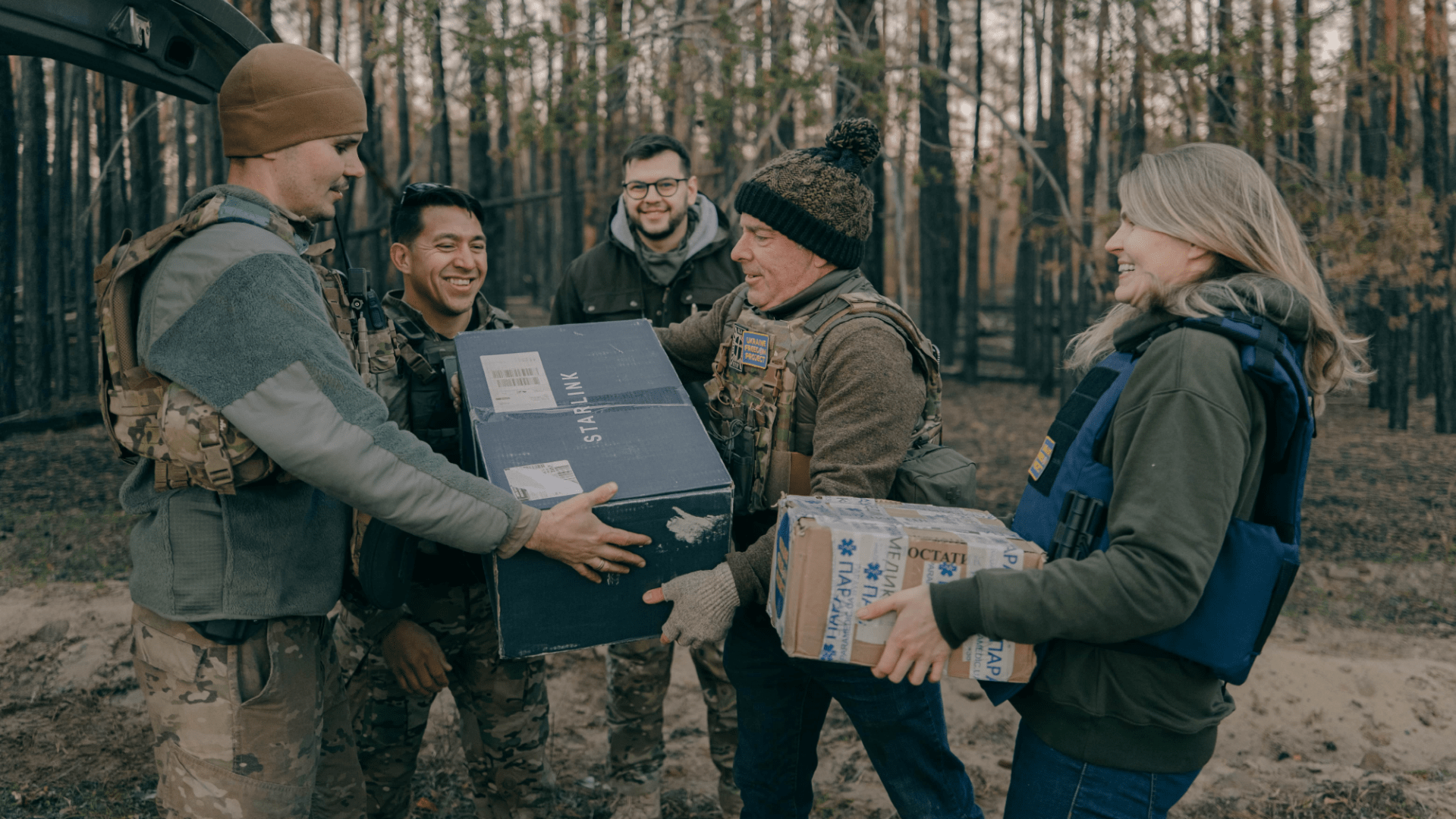
Colby Barrett was at his home in Telluride, Colorado, last year when a friend called with an invitation. He wanted Barrett to join a convoy delivering aid to Ukraine. 

“Absolutely not,” Barrett told him. “There’s a war there.” 

He was also tied up at home. He was in the process of selling his construction business, the peaches at his organic orchard needed harvesting, and his four kids had packed schedules.

Barrett, an evangelical Christian, didn’t know much about Ukraine other than what he saw on the news. But as he did some research, he saw statistics about Christian fatalities in the war and felt God tug at his heart. He rearranged his schedule. In September, he joined a convoy of ambulances, sprinter vans, and cars full of aid.

Then, after the aid delivery, he joined a documentary film crew as a producer and investor, traveling 1,200 miles across the country to try to tell the stories of Ukrainian Christians persevering through persecution and war. He said he hopes he can show others what he saw. 

“It doesn’t make sense for most evangelicals to come to Ukraine and see this themselves,” Barrett told Christianity Today. “The second best option is to virtually be able to show these stories through the film.” 

The producers of A Faith Under Siege: Russia’s Hidden War on Ukraine’s Christians have also taken their message to lawmakers in Washington, DC. Steven Moore, co-executive producer with Ukrainian journalist Anna Shvetsova, has visited more than 120 congressional offices since 2022. 

“We are trying to get good information to conservatives so they can make good decisions,” said Moore, who is also founder of the nonprofit Ukraine Freedom Project. His team has urged lawmakers to make religious freedom in Russian-occupied territory and the return of abducted children a part of ongoing negotiations.

Negotiations in May and June resulted in a series of prisoner exchanges but yielded little progress on ending the war. Russian president Vladimir Putin has said he is open to another round of peace talks, but at the same time declared “all of Ukraine” is part of Russia. 

The past five months have seen an uptick in deadly Russian air campaigns, particularly in the capital. 

From his top floor apartment in Kyiv, Moore has a front-row seat to Russian assaults. He hears the sirens, the whine of the Iranian Shahed drones, and sometimes the boom of an impact several seconds later. The nights are loud and he often struggles to get a good night’s sleep. 

“The streets are not full until noon because everyone’s been up until 4 a.m. listening to Putin give his regards,” said Moore, an American who moved to Ukraine five days after the full-scale invasion began in 2022. “Every night is a record of drones and missiles Putin sends in.” 

Barrett and Moore, who connected after Barrett decided to travel to Ukraine, have witnessed the war’s impact on civilians. They saw the destruction of homes and businesses and profiled grieving Ukrainians, including three men who lost their wives and children. 

“One of the fathers, Serhiy Haidarzhy, who just lost his wife and daughter, was asked to speak at a funeral for another evangelical dad who lost his wife and three kids,” Barrett said. “Nobody needs to see a baby-shaped coffin.”

They also witnessed the invasion’s impact on churches. 

At least 47 Ukrainian religious leaders have died in the fighting. Investigators have documented some cases where Russian soldiers tortured and killed Christian ministers and priests. The invasion has also damaged or destroyed more than 650 religious sites in Ukraine—including evangelical as well as Greek Catholic, Roman Catholic, and Ukrainian Orthodox churches. 

Barrett said Moscow targets evangelical Christians in particular because of their perceived connections to the West. These churches are hard to control, he added, because their ultimate alliance isn’t to the state. 

“We have just one leader,” Ukrainian Baptist Pavlo Unguryan says in the film. “It’s Jesus Christ.”  

The filmmakers interviewed Mykhailo Brytsyn, pastor of Grace Church in Melitopol, and showed footage of Russian soldiers taking over a Grace Church service in September 2022. 

They also have Baptist pastor Oleh Perkachenko detail his narrow escape after drones targeted a prayer meeting in his yard and returned to the same place two days later, destroying his parked car. A drone struck his van while he was driving his kids, then targeted his house when he returned home. His family escaped with minor injuries. 

Moscow’s attacks on non–Russian Orthodox churches began during its first invasion in 2014. Kremlin forces stormed a Pentecostal church in Sloviansk and killed four members, including two of Pastor Oleksandr Pavenko’s sons, also pastors. In 2023, a third son died from a Russian rocket while he was ministering to troops in eastern Ukraine.

Barrett said his conversations with Christians in Ukraine deeply impacted his faith. The film team interviewed more than 40 people in seven cities. The Ukrainians reminded him of the persecuted church in the New Testament. 

“You’ve got this scrappy group of believers that are being basically hunted by an empire that does not like them at all,” he said. 

The situation remains precarious for Christians. In May, Presbyterian pastor Volodymyr Barishnev told CT he thinks most people in his city will leave if Russia occupies Kherson a second time. He’s not sure what would happen to his church. 

The war is in its fourth year, and some Ukrainians have grown discouraged. Russia launched more than 5,000 drones at Ukraine during the month of June, and reports of 50,000 Russian troops gathering near the northeastern town of Sumy have stoked fears of another incursion.

Moore, however, hasn’t given up hope and plans to return to Washington this month for more meetings with lawmakers, including Lindsey Graham. The South Carolina senator said this week that President Donald Trump is ready for the Senate to vote on a new bill, sponsored by Graham, imposing sanctions on Russia and countries purchasing Moscow’s oil and gas. At the same time, the Trump administration decided last week to pause deliveries of some missile defense systems and weapons to Ukraine. 

Barrett said Christians in Ukraine have drawn encouragement from knowing that their stories are being shared. They tell Barrett they welcome “the army of prayer and the army of support” they hope will come from Christians around the world who watch the film and see what’s happening to Ukrainians. 

News

Texas Flood Washes Away Dozens of Young Girls from Christian Camp

Rescue teams continue their search after the Guadalupe River overtook cabins at Camp Mystic, a nondenominational camp in the Hill Country.

A large building with a single room where the side has fallen off to reveal the inside with trees in the background.

A view of a damaged building at Camp Mystic in Hunt, Texas.

Christianity Today July 6, 2025
Ronaldo Schemidt / AFP via Getty Images

The close-knit camp community in the Texas Hill Country will never be the same.

Early morning on the Fourth of July, record-setting flash floods swept away 27 girls at Camp Mystic in Hunt, Texas, and washed through campgrounds where generations of young Texans have spent their summers along the Guadalupe River.

Christians across the state and the country prayed as rescue teams navigated the flooded roads Friday and Saturday to retrieve hundreds of campers in disaster areas, which had lost power, internet, and road access when water levels rose 26 feet in 45 minutes, per state officials.

By Saturday evening, at least five of the missing girls from Camp Mystic—8- and 9-year-old campers and an 18-year-old counselor—had been reported dead along with the co-owner of the Christian girls camp, Dick Eastland. On Sunday, 10 campers and a counselor remained missing.

The death toll across the area rose to over 100 people, including 28 children, with recovery efforts ongoing. One of the young victims from the camp, Sarah Marsh, is the daughter of a professor at Samford University in Birmingham, according to the school’s president, who asked for prayer for the family.

On Monday, the camp made its first official statement, saying, “Camp Mystic is grieving the loss of 27 campers and counselors following the catastrophic flooding on the Guadalupe river. Our hearts are broken alongside our families that are enduring this unimaginable tragedy. We are praying for them constantly.”

The camp thanked state officials and first responders for their help as the search for the missing girls continues and asked for “continued prayers, respect and privacy for each of our families affected.”

At Camp Mystic, the cabins near the river housing the youngest campers—named Twins and Bubble Inn—took on water from both directions. Eastland rushed to rescue girls in one, and his brother Edward Eastland went to the other, directing the sleeping campers to get on the top bunks as flood levels rose higher and eventually reached the roofs.

Pictures of the aftermath inside show a tangle of wet bunk beds, girly bedding, stuffed animals, and electric fans, with dark mud covering the cabins’ red floors. Dick Eastland was found in a black SUV with three girls he had tried to save, camp staff member Craig Althaus said in The Washington Post. Althaus said he found surviving girls on cabin roofs and in trees.

Local churches called for water, food, and men with chainsaws to help the affected areas. They sent pastors to offer counsel amid anxious waiting and tearful hugs at the reunification sites set up at schools and churches.

“Sadly, today is about search and recovery, and unification of parents with children,” wrote one pastor, Joey Tombrella of First Baptist Church Kerrville. Parents just wanted to see their kids again.

In major cities in Texas, neighborhood Facebook groups and Instagram stories circulated photos of smiling elementary-age girls with their names and parents’ phone numbers—in hopes that they would be found soon and their families could finally hear confirmation of their safety.

According to news reports, most parents had only heard from Mystic by email: “We have sustained catastrophic level floods. If your daughter is not accounted for you have been notified. If you have not been personally contacted then your daughter is accounted for.” Dozens received the devastating phone call.

Camp Mystic had welcomed around 750 girls, 8 through 17, for a month-long term five days before the floods hit on Friday.

The nondenominational camp dates back to 1926 and has been run by the same family since 1939, spanning three generations. Counselors lead devotionals at breakfast and each night in the cabins. The camp holds Catholic Mass and a Vespers service each Sunday as well as a sunrise Communion service once a term, gathering at Chapel Hill, a hilltop site with a wooden cross and rows of stone benches.

“Campers and counselors join together to sing songs, listen to scripture, discover ways to grow spiritually, and learn to apply these lessons to their daily life at camp and back home,” according to a camp brochure, which quoted Psalm 121:1 (KJV): “I will lift up mine eyes unto the hills, from whence cometh my help.”

Sleepaway summer camps, especially Christian camps, have proven a powerful formational tool for youth, but they’ve always depended on trust—parents have to believe that camps have staff and policies in place to keep their kids safe.

Camp Mystic has not made public statements regarding its disaster plan. Texas officials helped evacuate Mystic campers by helicopter, with some having to cross a flooded bridge holding a rope to get to safety, according to the Associated Press.

The 700-acre camp is one of several located in Central Texas, north of San Antonio and west of Austin, a hilly, lush retreat dotted with beloved camp properties. The oldest date back a century and are considered “a touchstone of Texas culture.”

Like at Camp Mystic, lower-lying cabins at Camp La Junta flooded, and some boys had to swim to safety before the camp evacuated everyone to First Presbyterian Church in Kerrville. Nearby, Camp Waldemar accounted for its campers and reunited the girls to their families by Saturday. The “Christian-oriented” Camp Stewart for Boys hadn’t yet begun its July session and experienced minimal damage.

Heart O’ the Hills, just a mile up the river from Mystic, wasn’t hosting campers this week, but the camp lodge reportedly flooded up to the third floor, and its longtime director and co-owner, Jane Ragsdale, died in the flood. Like the others, it has canceled its upcoming session due to damage.

The Laity Lodge in Leakey, Texas, still had power and didn’t suffer damage from the floods, so a camp counselor from the ecumenical Christian retreat center came to Kerrville on his day off to volunteer to help. “Knowing that it could have just as easily happened to us—I’m grateful to be here,” he told The Washington Post.

It’s not the first time the waters of the Guadalupe have threatened campers in the area. In July 1987, hundreds of Christian youth at Pot O’ Gold Ranch left on buses and in vans on the last day of Bible camp to escape the overflowing river. Of the 40 kids on the last bus, 10 died in the flash flood—at the time one of the deadliest natural disasters in the Texas Hill Country.

On the 30th anniversary of the tragedy, CT heard from some of the survivors, who remembered desperately holding on to tree limbs as the water rushed past them and asking questions about why God would let this happen to them.

Christian author and parenting expert Sissy Goff, who spent six summers at Camp Waldemar, shared her advice for parents of campers who survived the flash flood, including listening to their kids talk and giving them the chance to connect with others who shared the experience.

A mother of a 10-year-old first-time Mystic camper whose cabin was on higher ground and who was bused to a reunification center told The New York Times that her daughter sang camp songs on the drive home.

Many of these songs have been sung at Mystic since it began. One traditional song, “Morning Prayer / Camp on the Guadalupe,” calls out to God in prayer, “Father in heaven, bless us we pray. Strengthen and guide us all through the day. Comfort and keep us, Lord, in thy will. Here at Camp Mystic, be with us still.”

This is a breaking news story and will be updated.

Theology

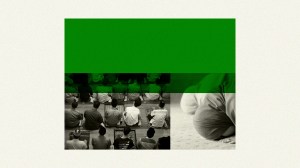
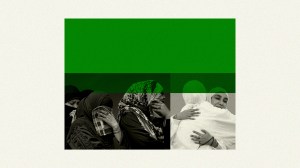
The Basics of Muslim History and Law

At the minimum, here’s what Christians should know.

Muslim reading the Quran
Christianity Today July 3, 2025
Illustration by Christianity Today / Source Images: Getty, Pexels

In this series

(Last of a series. For previous episodes, look here, here, and here.)

As religious historian Rodney Stark has shown, religions compete. Early in the seventh century AD, Judaism was making inroads in Arabia, but it had stringent entry requirements. While some Muslims early on were reluctant to accept new converts because they reduced the tax base (Muslims paid a lower rate), Islam increasingly welcomed everyone who simply declared, “There is no God but Allah, and Muhammad is his prophet.”

As is often the case in religions, a small number of commands proliferates into a vast array of injunctions. Islamic scholars have found within the Quran requirements about food (generally similar to those for Jews who keep kosher), rules concerning marriage and divorce, penalties for crimes, and commercial regulations including a ban on riba (usury).

Muslims are also to abstain from a variety of acts seen as harmful, including gambling. Islam bans consumption not only of drugs, seen as distorting thought, but also of alcohol, with no distinction between drinking a glass of wine and getting drunk.

Many rules are precise. For instance, do not eradicate insects by burning them because fire is to be used only on rats, scorpions, crows, kites, and mad dogs. However, some Iranians now push back against injunctions such as not reading the Quran in a house where there is a dog unless the dog is used for hunting, farming, or herding livestock. (A New York Times headline about Iranian law read, “Dog Walking Is a Clear Crime.”)

Some rules emphasize humility: Don’t boast about how you’ve contributed to build a mosque. Don’t set up elaborate grave markers. Don’t wear clothes just designed to attract attention.

Other rules restrict the activities of women. For example, women are supposed to go on hajj, but only with a husband or male relative. Men can practice polygamy in many Muslim traditions, and more than 25 percent of Muslims in six African countries, most notably Nigeria and Burkina Faso, live in polygamous households. (Some Christians in those countries do as well.) In general, more Muslim and Orthodox Jewish men than women attend services, with separate and usually smaller prayer spaces provided for females. Christianity is opposite.

Sociology is downstream from theology. Muslims say Muhammad received the revelation of the Quran from the angel Jibreel (Gabriel) in AD 610 and became a strong defender of the autonomy and uniqueness of Allah. He took on the task of moving his countrymen from polytheism and decadence to monotheism and morality, but they initially opposed him.   

In AD 622, facing persecution in Mecca, Muhammad escaped 275 miles north to Yathrib, an oasis village later renamed Medina, the city of the prophet. (Muslims today follow a lunar calendar that starts with this trip, called the Hijrah.) Jews in Medina antagonized him by rejecting his message, but Muhammad defeated opponents and unified nomadic Arab tribes before his death in 632.

Believing Muslims say we should have faith in the Quran because Allah literally spoke it to the angel Jibreel, who in turn gave it directly to Muhammad over a 23-year period from the time Muhammad was 40 years old. They say that Muhammad told associates what Jibreel had said and that they memorized his words.

Since Muslims portray Muhammad as sinless, they are to ask themselves every day WWMD: “What would Muhammad do?” Believers try to sleep, eat, drink, and even dress as he did. They try to repeat the special prayers he uttered upon going to sleep and waking up, or even upon entering and leaving the bathroom.

Many also say the Quran praises the extension of Islam through military might: “Surely Allah loves those who fight in His cause in solid ranks as if they were one concrete structure” (Sura 61:4). The Quran condemns those who hang back: “What is the matter with you that when you are asked to march forth in the cause of Allah, you cling firmly to your land? Do you prefer the life of this world over the Hereafter? The enjoyment of this worldly life is insignificant compared to that of the Hereafter. If you do not march forth, He will afflict you with a painful torment and replace you with other people” (9:38–39).

Some Muslims use those verses to commend militant expansion of Islam. Christianity has the Crusades on its permanent record; however, many avoid using the word crusade now. Campus Crusade for Christ changed its name to Cru, and the Christian Anti-Communism Crusade is now past tense. Jesus said, “Give back to Caesar what is Caesar’s” (Matt. 22:21), but Muhammad was a theological, political, and military leader rolled into one.

Unlike Christians who eventually separated church and state, Muslims in the modern era have struggled to define the role of each sphere. The Quran teaches, “Let there be no compulsion in religion” (Sura 2:256), yet the role of government is to enforce the law. Islam permits freedom of worship for Jews and Christians, but not the propagation of their creed.

An oft-cited but disputed tradition from Muhammad says those who leave Islam must be killed. Several Muslim countries have anti-blasphemy laws that include capital punishment, although the level of enforcement varies. Still, cultural rejection that can even include honor killing is one reason fewer people publicly disaffiliate from Islam than from Christianity.

While living in Washington, DC, from 1989 to 1991, I joined a PCA church pastored by scholar Palmer Robertson, who provided a Bible reading plan for most readers and one with about triple the amount “for the hearty ones.” In that tradition, I recommend, at the close of this series, a just-published book by John Tolan, Islam: A New History from Muhammad to the Present (Princeton, 2025).

Regarding the early expansion of Islam, Tolan writes, “The Arabic texts that chronicle these conquests portray them as an acting out of God’s will… through the valorous exploits of Muslim armies.” Religion-based autocracy is also a fact of recent years, as Tolan concludes: “It would take many pages to mention all the heads of state, from Morocco to Indonesia, who mobilized Islam to legitimize their power in the face of their subjects or citizens, or who manipulated various currents of Islam to try to find allies.”

But Tolan also highlights peaceful aspects of Islam, starting with his cover portrait of Rabia al-Adawiyya, a mystic poetess and flute player who lived in what is now Iraq and helped to found Sufism. By official affiliation, it’s a small stream compared to Islam’s Tigris and Euphrates (the Sunni and Shiite sects) but one indication of the religion’s complexity.

addApple PodcastsDown ArrowDown ArrowDown Arrowarrow_left_altLeft ArrowLeft ArrowRight ArrowRight ArrowRight Arrowarrow_up_altUp ArrowUp ArrowAvailable at Amazoncaret-downCloseCloseellipseEmailEmailExpandExpandExternalExternalFacebookfacebook-squarefolderGiftGiftGooglegoogleGoogle KeephamburgerInstagraminstagram-squareLinkLinklinkedin-squareListenListenListenChristianity TodayCT Creative Studio Logologo_orgMegaphoneMenuMenupausePinterestPlayPlayPocketPodcastprintremoveRSSRSSSaveSavesaveSearchSearchsearchSpotifyStitcherTelegramTable of ContentsTable of Contentstwitter-squareWhatsAppXYouTubeYouTube