Church Life

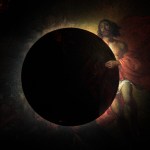
Darkness to Light

A prayer, a prophet, and a poem for those in the dark.

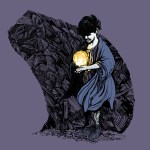
Illustration by Jill DeHaan

The people walking in darkness have seen a great light.” Those prophetic words of Isaiah 9:2 continue to have a powerful resonance for us today. They came true supremely, for the whole world, at Christmas when Christ the Light of the World was born for us in a stable. But they also come true for us time and again in our individual lives when, at times seemingly against all odds, the light of Christ shines anew for us.

I am someone who occasionally experiences the real darkness of depression. Often there seems to be no outward reason for it. It is as though the light in my world suddenly dims or goes out altogether, and I feel that I am stumbling in the dark—or worse, not even stumbling; I can hardly get out of bed or even breathe. But I hold on. I “keep on keeping on,” as Bob Dylan says, and I pray through clenched teeth.

I wrote about that experience once in an Advent poem about Isaiah’s promises that Christ would be given “the key to the house of David” (22:22) and set the prisoners free (61:1):

Even in the darkness where I sit
And huddle in the midst of misery
I can remember freedom, but forget
That every lock must answer to a key.

I go on to confess in that poem:

I cry out for the key I threw away
That turned and over turned with certain touch
And with the lovely lifting of a latch
Opened my darkness to the light of day.

And he does come. After I wrote that poem, the darkness began to lift a little. By way of recovery, I went and stayed a few days on the little sailboat I kept on the River Orwell, on the east coast of England. After a night on the boat, I got up very early in the morning and stood on the foredeck to watch the sun rise over the river. I recited the ancient Advent Antiphon prayer “O Oriens” (O Dayspring), which goes like this:

O Dayspring, splendor of light eternal and sun of Righteousness:
Come and enlighten those who dwell in darkness and the shadow of death.

As the sun rose and I watched the path of its light on the river, my prayer was answered and my inner darkness lifted completely. I celebrated that in another sonnet:

First light and then first lines along the east
To touch and brush a sheen of light on water,
As though behind the sky itself they traced
The shift and shimmer of another river …
So every trace of light begins a grace
In me, a beckoning. The smallest gleam
Is somehow a beginning and a calling;
“Sleeper awake, the darkness was a dream
For you will see the Dayspring at your waking,
Beyond your long last line the dawn is breaking.”

(Poems from Sounding the Seasons, Canterbury Press, 2012, pp. 10–11)

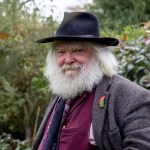
Malcolm Guite is a poet-priest who lectures widely in England and North America on theology and literature and has published various books on poetry, theology, and literary criticism.

Church Life

God of Light and Life

God used a national tragedy to wake me from personal darkness.

Illustration by Jill DeHaan

The summer before my freshman year of high school, I traveled on my first mission trip to New York City to assist several church plants, pray for people on the streets, and share the gospel with people in the park. It was a challenging but fruitful week. I fondly remember getting on my knees and “giving my life to the work of ministry” during our last evening of worship at the Marriott World Trade Center, nestled between the Twin Towers.

It should not surprise us that the Evil One, personal sin, and the world’s pleasures increase their temptation after a spiritual high like I experienced that summer. Indeed, after I entered high school, those moments of service and surrender faded as I was enveloped in my new surroundings. From that point, the lure of a life untethered to a Christian family and the local church led me to move four hours away to attend university. There, unrestrained and intoxicated living brought me to a place of nihilism and hopelessness. Looking back, I realize I spent most of my high school and college years fumbling in the darkness, spiritually empty and aimless.

Then came the morning of September 11, 2001. All of us who experienced it remember where we were on that day of darkness in our country. The unprecedented events surrounding that fateful day brought our nation to its knees. Yet God used that national tragedy to wake me from personal darkness. You see, I was brought to my knees as well.

As I sat alone in my dorm room watching the second plane crash into the South Tower, I could not help but think about that summer before high school. While I watched the towers fall, by God’s grace I could not help but question my trajectory and the inevitable end of my future. Just five years earlier, I had been in those very buildings. On a mission trip. Surrendering my life to gospel ministry.

Not knowing what else to do, I opened a drawer and found a Bible I had reluctantly accepted from a campus ministry in the university courtyard a few months earlier. I began to read the Word of Life prayerfully for the first time in years, and light started to break forth. In the following weeks and months, God began to work in my heart. That Christmas, I returned home, and God set me on a new path.

Post tenebras lux—“after darkness, light.” In moments of darkness, people are drawn to the light. Against the backdrop of darkness, light shines even brighter. As each Christmas approaches, I am reminded of my journey back to Christ, “the light of the world” (John 9:5). Perhaps you or a loved one is walking in a season of darkness. In moments of di!culty, disease, and even death, it’s vital to remember that the God of light is always at work. In him, the darkness cannot overcome, because it does not have the last word (John 1:5). While we may not know what the future holds, we know who holds our futures. And there is no shadow of change in him (James 1:17).

Matthew Z. Capps (MDiv, DMin, PhD candidate) serves as the lead pastor of Fairview Baptist Church in Apex, North Carolina. Matt is the author of Drawn by Beauty and Every Member Matters.

Church Life

The Light of Life

Joni Eareckson Tada’s Advent reflection on this dark-become-light season.

Illustration by Jill DeHaan

When I was a kid, early on Saturday mornings I would gather with neighborhood friends, and—with our parents’ permission—we would ride the streetcar up to the Ambassador Theatre in Gwynn Oak Junction, Baltimore. When the movie was about to begin, we had to walk through a thick velvet curtain to enter the theater. Immediately, we’d bump up against the back row. Only after our eyes adjusted to the dark could we find our seats.

After the show was over, again there was no vestibule to ease ourselves out of darkness and into the light of day. The sun was so dazzling outside that we’d stumble, rub our eyes, and try not to bump into things. The brilliance was a jolt to our senses.

I often think about that experience when I read 1 Peter 2:9, “Proclaim the excellencies of him who called you out of darkness into his marvelous light” (ESV). The spiritual contrast Peter is explaining here is akin to exiting a pitchblack theater and being hit with blinding sunlight.

This verse also describes the jolt I felt when God called me out of my own darkness. You see, more than five decades ago, I broke my neck in a diving accident that left me a quadriplegic. Without use of my hands or legs, I plummeted into deep depression, convinced that God had abandoned me. The depression was like a thick darkness, and it lasted a long time.

Then, Christian friends opened the Bible and shone into my soul John 8:12, where Jesus said, “I am the light of the world. Whoever follows me will never walk in darkness, but will have the light of life.”

It sounded hopeful, and I wanted to believe, yet Jesus’ claim seemed audacious. But a friend explained, “If Jesus loved you enough to die a torturous death to save you, then doesn’t that prove he is trustworthy? That his intentions for you are good?”

It was a jolt to my senses—like parting a heavy curtain and stepping out into a light so bright it illuminated everything. I realized God took no pleasure in my paralysis, but it was part of his mysterious yet trustworthy plan for my life. When the eyes of my heart adjusted to God’s hope-filled light, I felt as though I had awakened from a long nightmare. And although I would remain paralyzed in a wheelchair, my soul would never be the same. God had “called [me] out of darkness into his marvelous light.” It was just like Jesus shouting into a dark grave, “Lazarus, come out!” (John 11:43).

It’s why I love Advent. The world was impossibly dark before the birth of Christ. But then the Light of the World arrived, changing everything. Advent reminds us that “the true light that gives light to everyone [has come] into the world” (John 1:9). During this dark-become-light season, part the curtain and hear Christ’s call: “Come out!” Then, step into the sunshine of his glorious salvation.

Joni Eareckson Tada is founder and CEO of Joni and Friends, an organization that provides Christian outreach in the disability community. Joni is the author of numerous bestselling books, including Joni and Ken: An Untold Love Story and When God Weeps. Joni and her husband, Ken, reside in Calabasas, California.

Church Life

Endurance and Redemption

The hope of my adopted son’s birth began long before last August.

Illustration by Jill DeHaan

I gave birth to my adopted son last year. He was born at home before dawn on a warm August morning. I carried him for 38 weeks—still, he was conceived years before his days in my womb. I delivered a baby in 2024 whose life began in the year 2003.

Mercedes Luna-Munroe was born in New York to Dominican parents. She met her first husband when she was 25. She remembers the day he walked into her parents’ home. The year was 1998. A stranger on an errand, he came to pick up empanadas from her mom and left an impression behind. The stranger became her friend and then her husband in 2000. Sadly, difficulty would devour the young marriage.

Mercedes heard the dreadful word “infertile” at age 26. She was diagnosed with polycystic ovarian syndrome and was given few options beyond in vitro fertilization (IVF). She trod the costly road of conceiving children through IVF and welcomed six embryos in April 2003. Although her journey to children should have ended that year, the story had just begun.

Mercedes became pregnant with two of her six embryos—twin girls named Samantha and Lizbeth. Then the unthinkable happened at 23 weeks of gestation. Her cervix dilated prematurely, and her amniotic sac was accidentally punctured during an examination. An untimely labor ended the lives of her twins. The girls, born on August 11, 2003, lived only a few hours. The traumatic loss of her babies is a heartbreak Mercedes continues to nurse. Her pregnancy with Samantha and Lizbeth would be her last. 

Her doctor transferred two additional embryos to her with no positive pregnancy test. By 2005, Mercedes had two remaining embryos and no marriage. Her memories of this period are saturated with dark shadows. She sank into depression while working to maintain her home and preserve her two frozen embryos. When she could no longer afford to pay the storage fees, Mercedes faced two choices: destroy the tiny lives or donate them. She (and her ex-husband) chose the latter. The embryos were shipped to the National Embryo Donation Center (NEDC) in Knoxville, Tennessee. And here, my family enters the story.
I was battling secondary infertility when I learned of NEDC’s embryo adoption program. My husband and I applied in early 2023 with the hope of adopting an embryo who had been waiting for a long time. Mercedes’ little ones had been frozen for 20 years when we found them. Both embryos were transferred to me in December 2023. One went to be with the Lord; we named him Zion. The other was born on August 11, 2024, and we named him Kian (which means “enduring”). Kian shares a birthday with the twin sisters Mercedes delivered and lost 21 years before.

Kian’s middle name is Immanuel, which means “God with us.” The name appears in Isaiah 7:14. Israel was threatened by strong enemies and shook with fear like a forest shaken by winds. But God was with his people and promised to save them. His word came with a sign: A son would be born and named “God is with us” despite the dark circumstances. This sign, partially fulfilled in Isaiah’s time, was ultimately satisfied one starlit night in Bethlehem. A virgin conceived and bore a son—Jesus the Messiah (Matt. 1:21–23).

God’s people live in a world where traumatic heartbreaks leave us shaken. Yet our God is with us in every darkness. His presence is our light and the source of our hope. I gave birth to an adopted son named Immanuel because the greater Immanuel is a redeemer.

Nana Dolce (MTS) is the author of You Are Redeemed and The Seed of the Woman. She is a guest lecturer at the Reformed Theological Seminary in Washington, DC, and a Charles Simeon Trust instructor. Nana lives in Washington, DC, with her husband and four children.

Church Life

When the Darkness is Inside

Creation brings forth light in which darkness will not have the final word.

Illustration by Jill DeHaan

The opening salvo of the biblical narrative exemplifies a truth that runs through the entirety of the unfolding drama: Light will overcome the darkness.

Open the pages of our sacred book and you are at once introduced to the beautiful theme of illumination. Out of nothing, God calls forth the cosmos with its trillions of burning stars, moons, and celestial lights illuminating what was dark before he spoke. Creation inaugurates an economy of light in which darkness will not have the final word, and this theme remains steady as the story unfolds.

We see light overcoming the darkness when God is present with his people as a pillar of fire illuminating the way in the night (Ex. 13:21–22). In the Psalms, we see that both God and his Word illuminate, as the psalmist declares, “The Lord is my light and my salvation—whom shall I fear?” (27:1) and “Your word is a lamp for my feet, a light on my path” (119:105). In the New Covenant, the theme of light is advanced as John writes about the incarnate Christ: “In him was life, and that life was the light of all mankind. The light shines in the darkness, and the darkness has not overcome it” (John 1:4–5). Even those who follow this incarnate, illuminating Christ are called “the light of the world” (Matt. 5:14–16).

These are but a handful of passages in which God emphasizes the power of light over darkness. All this illuminating beauty—from the burning stars to the light of God’s Word—is glorious news, but the good news of God’s light does not stop there. These instances of God’s illuminating work are all “out there.” There is a distance to them. God’s breathing burning stars into existence is wonderful beyond description, but many times illumination is most needed not “out there” but rather “in here.”

For many of us, a darkness lingers in the crevasse of our souls, showing itself as a crippling feedback loop of self-degradation. It’s a chorus, sung on repeat, from my innermost being that reminds me of my brokenness, my unworthiness, and, most often, my being unlovable. For many of us, the gospel is a true, present, and even gorgeous reality that we have no problem believing on behalf of others. I believe that no one is beyond the reach of the gospel’s cleansing power. I believe that God not only loves you but even likes you. I believe that, in Christ, you are not an unwanted stepchild but an adopted and cherished son or daughter with bold access to your Father, who will never turn you away. And often, I can believe these realities for you, but the darkness inside makes it difficult to see how any of them can be true for me. This is not humility; it’s a perverse inward humiliation in which I sometimes feel as though darkness may have the final word in my self-talk and self-hatred.

Yet God’s illuminating work is not confined to the cosmos— as big as it may be. Though it can be a fight to believe at times, God illuminates not only the sky with burning stars in creation but also those dark corners of our souls. In the darkness-expelling beauty of the gospel, we hear the promise of 1 John 3:20 that even when “our heart condemns us, God is greater than our heart, and he knows everything” (ESV).

The illuminating work of God can be like fireworks that light up the sky and give light to all who look up. But for each of us with a dreadful inner voice, at times the illuminating gospel is more importantly a surgeon, taking the scalpel of Christ’s life, death, and victorious resurrection to the inward darkness, the crevasses of the soul. Places we thought were unredeemable, unlovable, and maybe unfindable, God goes even there in his illuminating work of bringing resurrection where there was death.

Ronnie Kurtz is an assistant professor of systematic theology at Midwestern Baptist Theological Seminary. He is the author of several books, including Fruitful Theology: How the Life of the Mind Leads to the Life of the Soul and Light Unapproachable: Divine Incomprehensibility and the Task of Theology.

Church Life

No Matter How Dark

We are known and seen by the God who knows our deepest need.

Illustration by Jill DeHaan

I spent my 40th birthday in the hospital. This was not my plan.

A fever led to the doctor’s office. The doctor’s office led to a blood test. The blood test led to a phone call telling me to go to the emergency room; they were waiting for me.

That first day in the hospital was chaotic. The second day was full of testing and radiology. The third day, my birthday, I finally settled in. I spent most of that day waiting for my test results to come back so the doctors could determine how to treat me. I called my wife and asked her to bring the kids.

After I hung up, a cardiac surgeon—a man whom I had not met before but who would soon hold my heart in his hands—dropped by. He told me they had seen an issue on my echocardiogram and explained that I was in the early stages of heart failure and would need open-heart surgery.

This was the first time those words were spoken to me. “When?” I said.

He said, “In a few weeks, once we get your infection under control.”

Around the dinner hour, I found myself flipping through the channels. Alone. Struggling. Lost. It was a fine birthday, I told myself. It’s okay. You are going to be okay.

Then came a knock on my door. An older African American woman poked her head in and said, “I have your dinner.”

As she set the tray down on the table beside me, she looked at the number on my ID bracelet and asked me for my name and date of birth. I recited both like I had a hundred times that week.

She nodded, started to leave, and then stopped. “Wait,” she said. “Today is your birthday?”

“It is,” I said.

She straightened herself up, turned to face me, and put her right hand over her left—a portrait of dignity and poise. And then, with just the two of us in the room, she began to sing over me:

Happy birthday to you.
Happy birthday, dear Mr. Ramsey.
Happy birthday to you.

I wept.

It was such a dark day. I felt like my life was in the balance, which it was. And with such a simple gesture, that kind woman was a light. She did not know me. She didn’t know whether I was kind or mean, gentle or abrasive, honest or a liar. She just knew that since I was there in her hospital on my birthday, I was probably feeling a little lost. I mattered to her.

Advent reminds us that no matter how dark we might sense the world to be, we are known and seen by the God who so wonderfully made us and knows our deepest need—met for us perfectly in the gift of his Son, the Lord Jesus Christ.

Russ Ramsey (MDiv, Taylor University; ThM, Covenant Theological Seminary) is a pastor at Christ Presbyterian Church in Nashville, Tennessee, and the author of several books, including Van Gogh Has a Broken Heart.

Church Life

Night Skies and Dark Paths

God is our unwavering guide through incomprehensible darkness.

Illustration by Jill DeHaan

When I stepped from my tent into total darkness, the night was a void that felt expansive and oppressive all at once. Toeing my way forward, I sensed a canopy of trees above—an imagined imprint of the forest I knew to be there. Before the sun had given way to a lightless crescent moon, I had taken a mental snapshot of my surroundings, and it was with this vague and unfounded sense of direction that I stepped carefully ahead, slow and patient, hands outstretched.

I had the odd realization that it didn’t matter where I looked. Eyes forward gave no benefit in this darkness, so I let my purblind gaze wander. As I did, I caught the briefest flicker of light. Somewhere up and far. Angling my head skyward, I caught another pinprick. Stars, here and there, peeking through sprawling tree boughs. Now more appeared, and with increasing regularity the closer I drew to the edge of the woods.

Finally, I shuffled into an open field, and the sky exploded in celestial glory. I was not prepared for the vast greatness of this, the unsullied beauty of a wilderness nightscape. The heavens declared, and I heard it loud and clear.

The eerie thing was, as I gazed upward at the brilliant spectacle, the immediate darkness in which I stood was just as absolute as it had been in the forest. Up there, the Down here, I still couldn’t see past the end of my nose. I stood in that strange discordance—immersed in the dark yet basking in heavenly light.

I thought of Abraham, the spiritual father of stargazers everywhere. When he stood in the wilderness and tilted his face skyward, surely his nights were darker and his constellations brighter than any we see today. I imagined God calling Abraham, scattering visible signs of kingdom promise across the blue-black sky. Look to the heavens. Count the stars, if you can; that’s how generously I will bless you. I imagined Abraham’s stunned face.

Abraham held a promise as clear as the night sky, but his immediate path still led through dark terrain. He stepped forward in faith, hands outstretched, trusting God to steady his steps when he couldn’t see the way. Awash in starlight, Abraham believed God even as he fumbled through the dark. Each flickering star pierced the night, reminding him of the comforting voice that said, “Do not be afraid, Abram. I am your shield” (Gen. 15:1).

Looking to God, trusting him to keep his promises in his own perfect time, Abraham toed his way forward in the darkness of a fallen world, eyes fixed on the inbreaking of God’s light. And “Abraham, having patiently waited, obtained the promise” (Heb. 6:15, ESV). Ultimately, all of Abraham’s faithful stargazing was fulfilled in Jesus, the Light of the World—the one in whom “all the promises of God find their Yes” (John 8:12; 2 Cor. 1:20, ESV).

This is how we wait too. We stand in the night, gazing up at stars of unfailing promise. Sometimes the darkness of our paths is incomprehensible, but the faithfulness of our Guide is unwavering. And as we look to Jesus and await his glorious return, we can always trust him to steady our steps and to lead us “out of darkness into his wonderful light” (1 Pet. 2:9).

Scott James is an elder at The Church at Brook Hills in Birmingham, Alabama, and the author of children’s books and family devotionals, including The Sower, The Expected One, and, releasing in early 2026, Deep Breath, Little Whisper. He is also a pediatric doctor.

Church Life

In the Looming Darkness, Light

Jesus knows betrayal. But he remains the light.

Illustration by Jill DeHaan

I felt like I had been hit by a bus.

Unfortunately, I have been literally hit by a bus, so I know exactly what that feels like. But this was worse than the physical trauma of bleeding parts and broken bones. This was broken trust and a crushed spirit.

This metaphorical bus was the trauma of betrayal.

Betrayal breaks things you didn’t know could be broken and ushers in losses of things you didn’t even know you had until they are gone. The Encyclopedia of Psychological Trauma describes betrayal trauma as occurring “when the people or institutions on which a person depends forsurvival significantly violate that person’s trust or well-being.” Such treachery is life-altering. It changes not only your external life but your inner life too, making you doubt your own judgment and very beliefs because you misplaced them in the ones who broke your trust.

Jesus knows what it is to be betrayed.

On his way to the cross, where he would endure the worst physical pain possible, Jesus experienced perhaps the worst emotional pain possible.

Jesus was betrayed by a member of his innermost circle, handed over by a friend to enemies for mere silver. The incident took place in the darkness of the garden where he had gone to seek his Father’s will and to let his own will be known to God. The sign given for his betrayal was the symbol of love, friendship, and brotherhood: a kiss.

It’s hard to imagine a breach of trust deeper than this.

Yet Jesus knew he would be betrayed—and he kept on ministering anyway. Jesus didn’t accuse his betrayer but allowed the villainous disciple to accuse himself. At their last meal together before the cross, Jesus told the Twelve that one of them would do this. When Judas asked Jesus if he meant him, Jesus simply replied, “You have said so” (Matt. 26:25). And when Judas came for Jesus in the garden, Jesus said to him quietly, “Do what you came for, friend” (v. 50).

Jesus did not despair. He was not confused. He did not seek vengeance. He even instructed one who drew a sword in his defense to put the weapon away (vv. 51–52).

Jesus let the darkness be the darkness while he kept on being the light.

In the emergency room where I was taken after being struck by the bus, while the doctors did what they needed to do and a friend held my hand, there was a moment when I was overcome by pain. Yet in the looming darkness that swirled around me, I saw a light. In that light I felt the presence of God. I felt a peace I couldn’t understand (Phil. 4:7).

Later, in the darkness of betrayal, it was harder to see that light. But it was there. And to that light—to Jesus—I turned. I drew closer to his presence than I’d ever been before. And somehow, I was—and still am—at peace. Because “the light shines in the darkness, and the darkness has not overcome it” (John 1:5).

Karen Swallow Prior (PhD) is a popular writer and speaker. A former English professor, Karen is now a contributing writer for The Dispatch and a columnist for Religion News Service. Her writing has appeared in The New York Times, The Atlantic, Vox, The Washington Post, Christianity Today, and many other places. Her most recent book is You Have a Calling: Finding Your Vocation in the True, Good, and Beautiful (Brazos, 2025).

Church Life

What They Seem

Our Father knows how to give good gifts to his children.

Illustration by Jill DeHaan

There was a bike under the tree.

That’s what Dad said, anyway. But I didn’t see a thing, and I’m pretty sure I had 20/20 vision at 10 years old.

It was the same old yuletide routine with my old man. He began joking on Christmas Eve about what we were getting—and not getting—for Christmas. Our beloved tree sat there, barely upright in all its 1980s glory, gaudy gold tinsel dangling from homemade ornaments that would make any HGTV designer gasp in horror if she could only see it now. But clearly, no bike was lurking under those sad, dying pine needles. Just a gaggle of randomly wrapped presents my grandma had left the week before, none of which were remotely big enough to house any wheels, chains, or handlebars.

I decided to get bold. I asked Dad to promise me that there was a bike under the tree. This would be my ace in the hole, since grown-ups aren’t allowed to lie. To my surprise, he uttered the fateful words “I promise you.” My 10-year-old brain was dumbfounded. If I had been any good at math like Dad or shown any signs of being a fledgling engineering prodigy, I probably could’ve easily figured out the mystery. But I was the happy kid who dressed up like Spider-Man and built secret hideaways in our walkin-closets. You can see my dilemma.

Twelve hours later, in the wee hours of Christmas morning, I practically galloped to the living room with enough energetic glee to power a thousand Christmas trees. Yet there was still no bike under the tree. “I knew it. All men are liars!” I shouted to my oblivious siblings, not realizing my words were a prophetic signpost leading me to a life of preaching in the fairly distant future.

Except here’s the thing: There was a bike under the tree after all. My exhausted, 5:00 a.m. coffee-gulping old man told me to go to the garage, open the door to the crawlspace underneath the house, and look under the blanket. Sure enough, there it was in all its brand-new glory and wonder—sitting directly under the floor where that gaudy, almost needleless tree was somehow still standing.

All I can remember thinking at that moment was It’s settled. My father is a bona fide genius. How did he ever dream up a riddle like this?

Today, I look back fondly at this cherished boyhood memory of Christmas, and I’m reminded that things aren’t always what they seem. Even when my lenses have been clouded by the tears of all the sad things 10-year-olds can’t imagine they will someday have to endure, I still have a Father who knows how to give good gifts to his children (Matt. 7:11).

Every year, Christmas enters my life like the final page of a novel, where all the dark years and dashed expectations give way to the one thing we dare to hope will come true—and his name is Jesus Christ.

Ronnie Martin is director of leader care and renewal for Harbor Network and pastor in residence at Redeemer Community Church in Bloomington, Indiana.

Church Life

Christmas Tears

Christmas reminds us that God took matters into and onto his own hands.

Illustration by Jill DeHaan

Nothing represents the mosaic of the human experience quite like the tears of a newborn. Disorientation and discomfort mingle with joy and victory on that little one’s cheeks. Soon accompanied by the tears of mother and father, these simple drops of liquid carry all we are and all we hope to be. The infant’s cry marks a victory of sorts. New life is here. Hope is here. The little one’s future is pregnant with promise. Yet there remains the mother’s long road to recovery, the stubbed toes and scraped knees as the toddler learns to walk, the development of language, the gathering of experience, and the inevitable disappointments and losses of later years. The way new life arrived on Christmas morning shows us something of what God feels and intends for us. It shapes the expectations hidden within our imaginations and whispers to us the secret of who we really are.

An infant’s tears are a searching for the mother. When God drew near, his first desire was the comforting arms of another. Jesus’ tears remind us he came to the world to hold and be held by it. O Jerusalem, he later laments, how I longed to gather you beneath my wings as a hen gathers her chicks (Matt. 23:37). The infant crying to be held by his mother grew into a man crying to hold us too.

An infant’s tears are an announcement that something is wrong. Without vocabulary, all the child can do is cry. The Lord is birthed in solidarity with a world that cannot adequately express the depths of what ails us. There are, as it were, groans deeper than words. But somehow the tears of a baby capture the depth of it well enough. God did not stay in a far-off country but came near to suffer as we do. Jesus knows what it’s like to be us. 

Jesus’ Christmas tears are a reminder that God’s promises are always fulfilled. These are not wasted, vain tears. They are the tears of one who has come to carry us to a place where our tears will be wiped away. They are the tears of one who will make a way for us to come home. Christmas reminds us that God took matters into and onto his own hands. The newborn tears of Jesus move us forward to his lonely tears in Gethsemane, his agonized tears on the cross, and perhaps even Mary’s despairing tears at the tomb. Jesus’ life began and ended with tears so that, through resurrection, our days of tears would be numbered.

This is why we sing “Joy to the world, the Lord is come.” He came as a mother to hold a world whose tears are beyond expression. In that warm embrace, he carries us, comforts us, strengthens us, and restores us. “Why are you crying?” he gently asks Mary (and us). Just as he did Mary, he will call each of us by name (John 20:15–16). In a flash, in the twinkling of an eye, our tears of labor pain will be replaced by tears of joy. New life is here. Hope is here—our future is now pregnant with promise. Here on this day is all we are and all we will one day become. “Joy to the world, the Lord is come.”

Jonah Sage serves as one of the pastors of Sojourn Church in New Albany, Indiana. He completed his undergraduate studies in philosophy at Miami University (Oxford, Ohio) and received his master of divinity from The Southern Baptist Theological Seminary in 2013.

Apple PodcastsDown ArrowDown ArrowDown Arrowarrow_left_altLeft ArrowLeft ArrowRight ArrowRight ArrowRight Arrowarrow_up_altUp ArrowUp ArrowAvailable at Amazoncaret-downCloseCloseEmailEmailExpandExpandExternalExternalFacebookfacebook-squareGiftGiftGooglegoogleGoogle KeephamburgerInstagraminstagram-squareLinkLinklinkedin-squareListenListenListenChristianity TodayCT Creative Studio Logologo_orgMegaphoneMenuMenupausePinterestPlayPlayPocketPodcastRSSRSSSaveSaveSaveSearchSearchsearchSpotifyStitcherTelegramTable of ContentsTable of Contentstwitter-squareWhatsAppXYouTubeYouTube