
Culture

Carving Out Faith

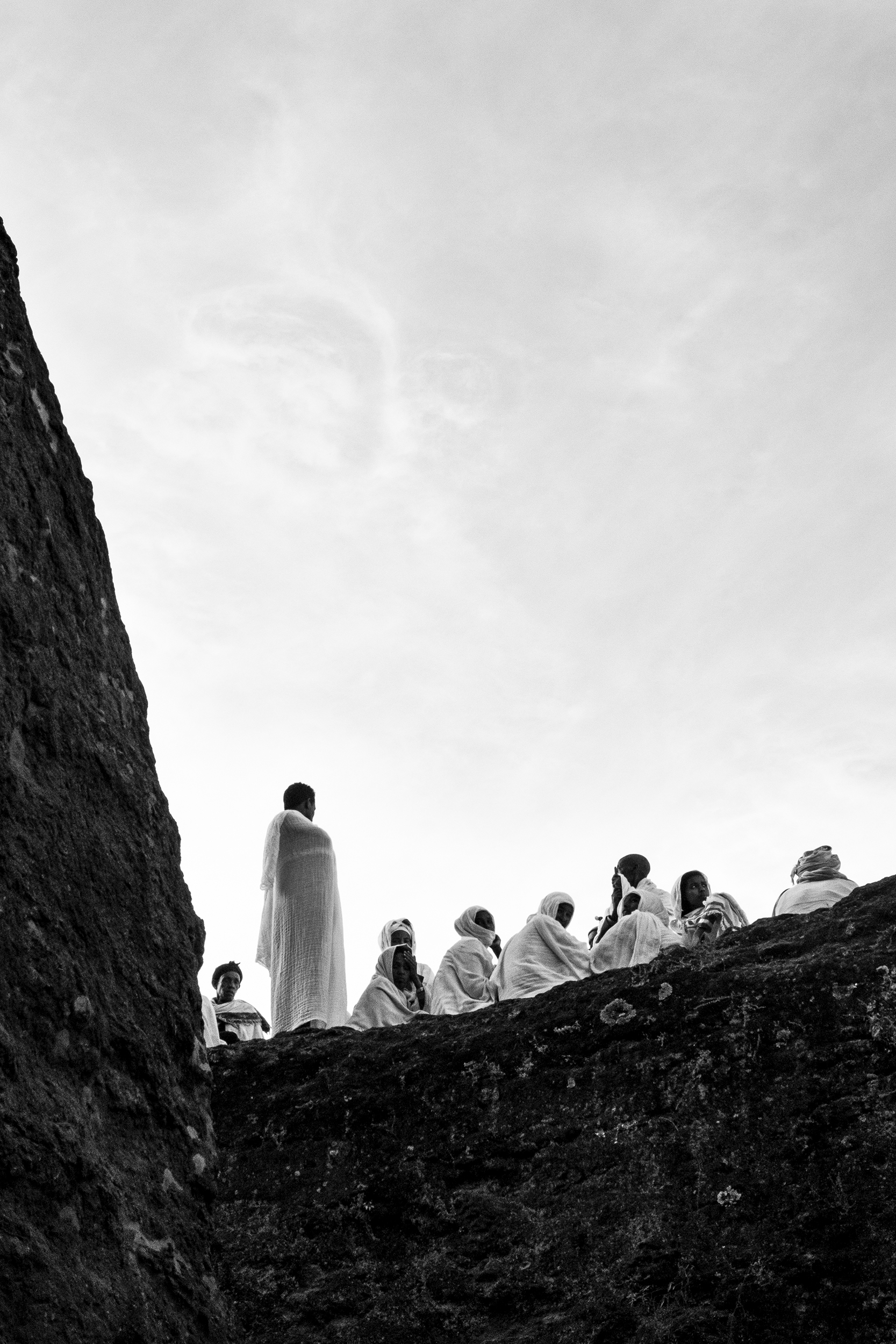
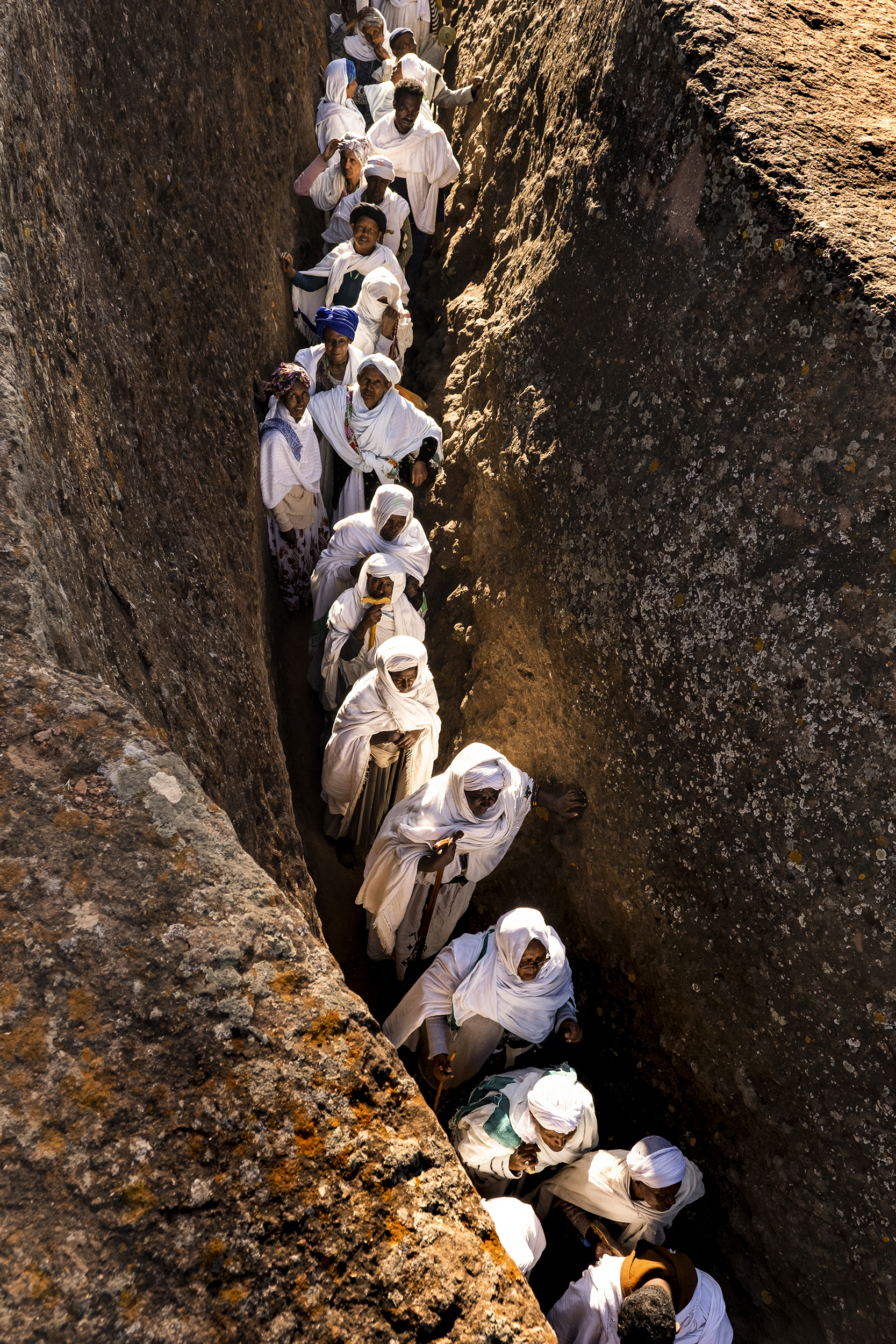
A photo essay highlights thousands of pilgrims observing Christmas in the quiet highland town of Lalibela.

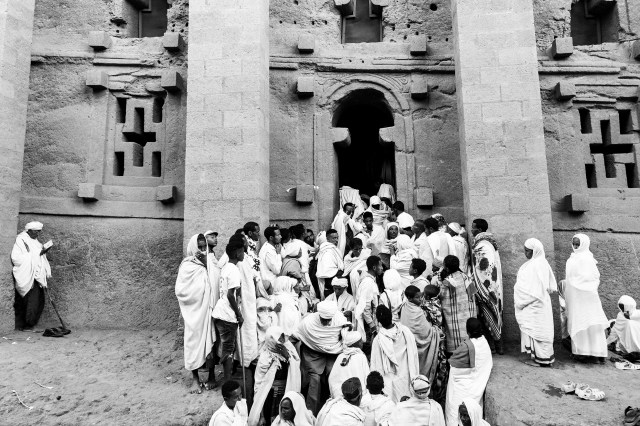
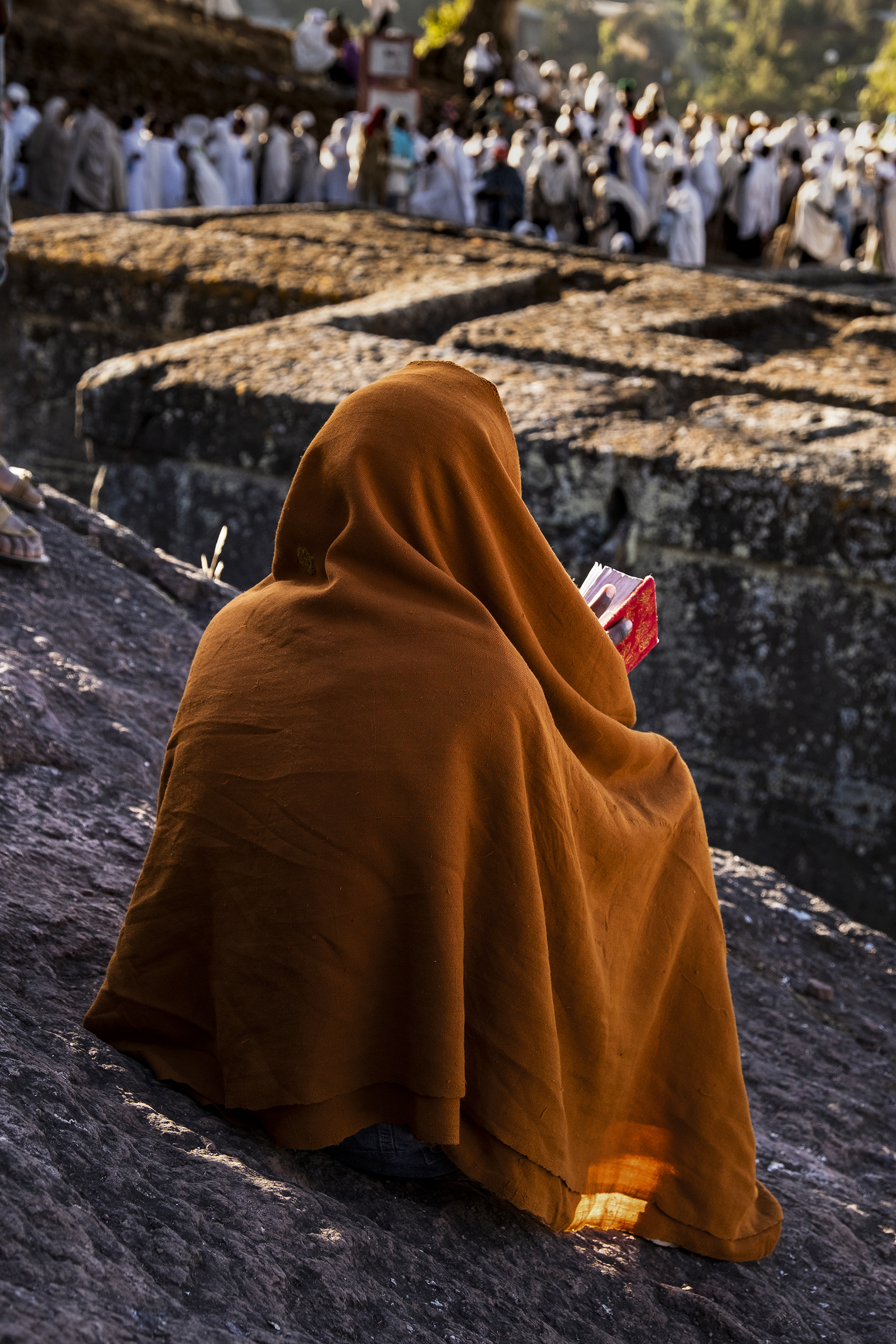
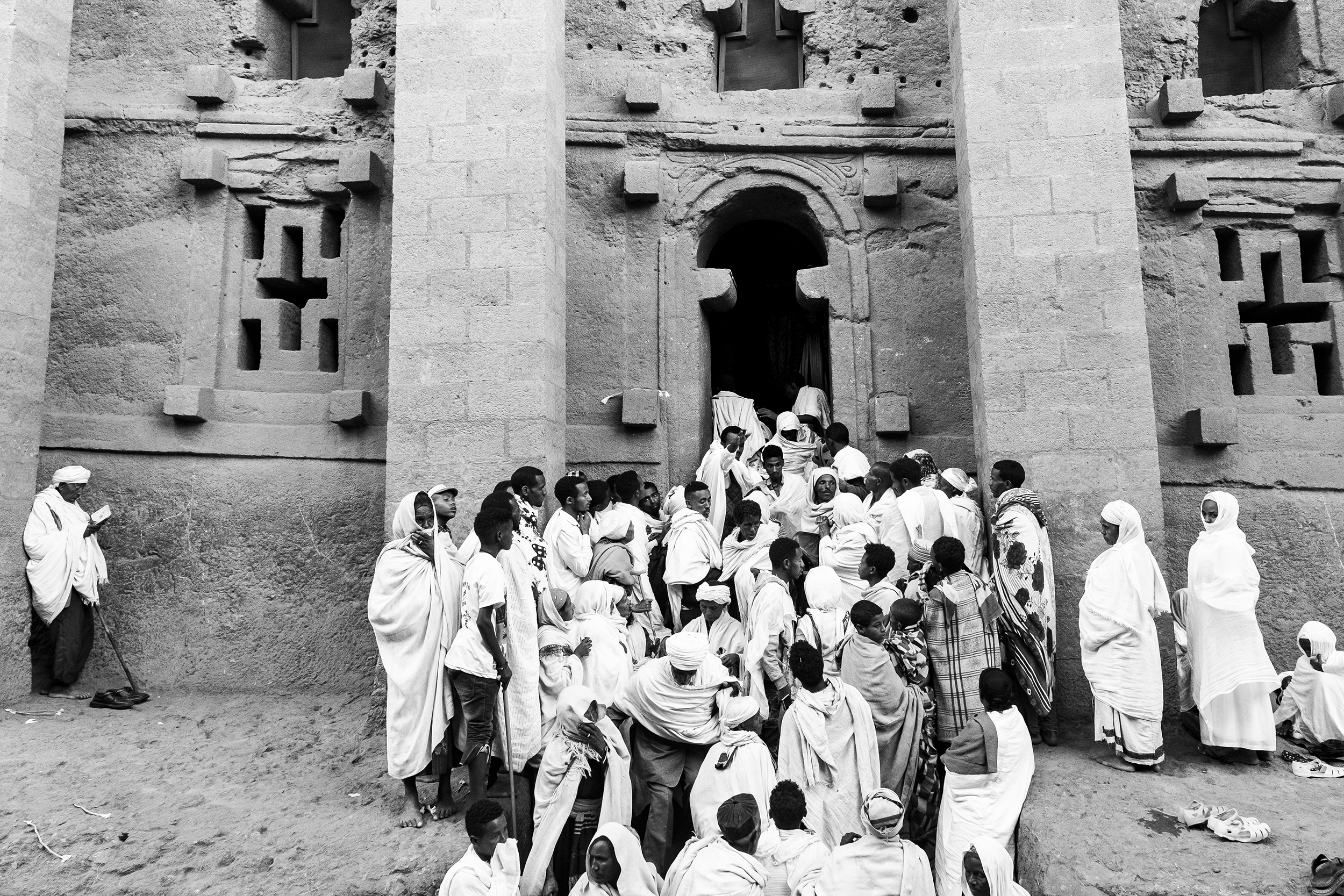
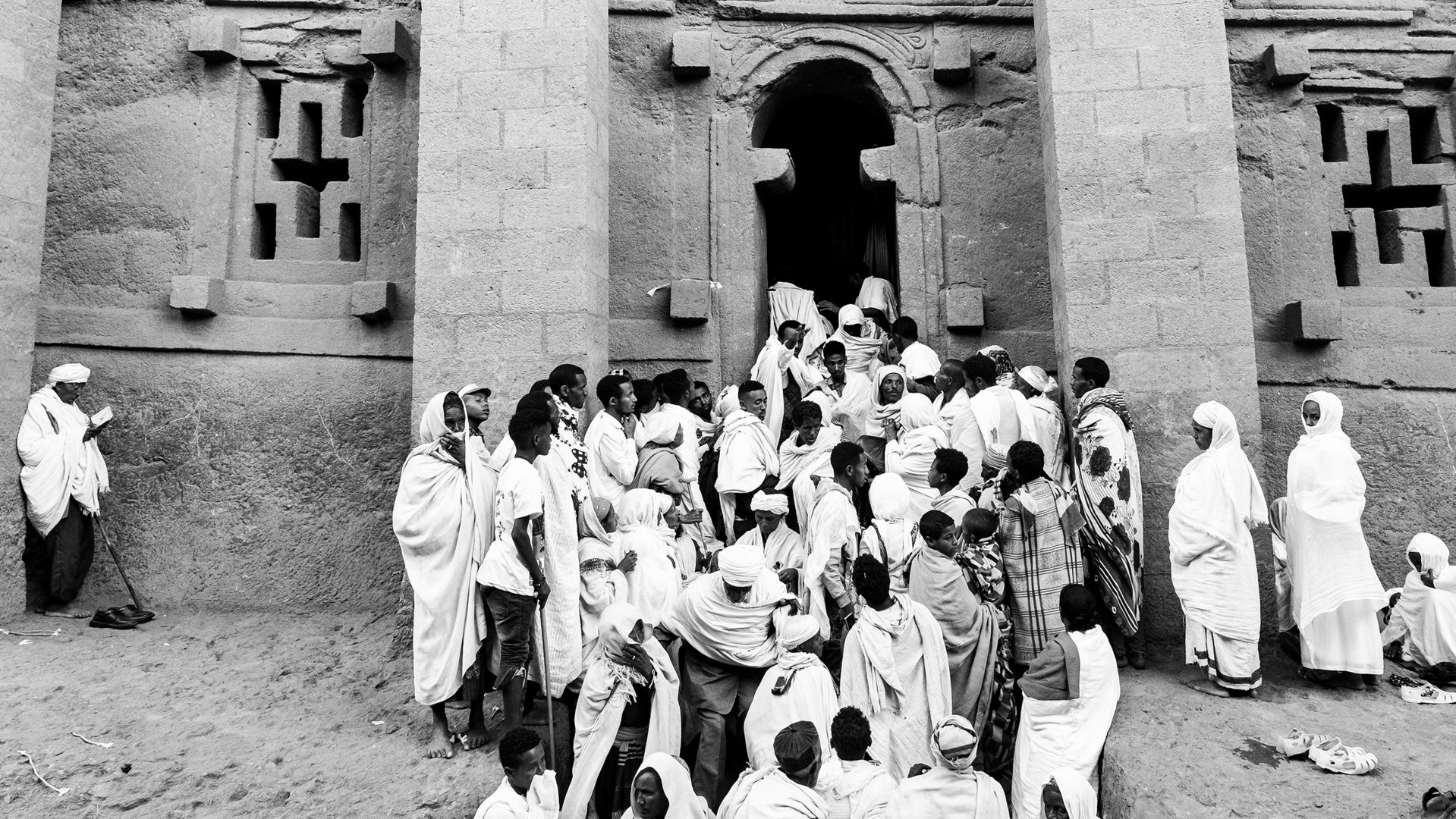
Pilgrims make their way in and out of Biete Medhane Alem (House of the Saviour of the World), the largest of the monolithic churches in Lalibela.

Photo by Andrew Faulk

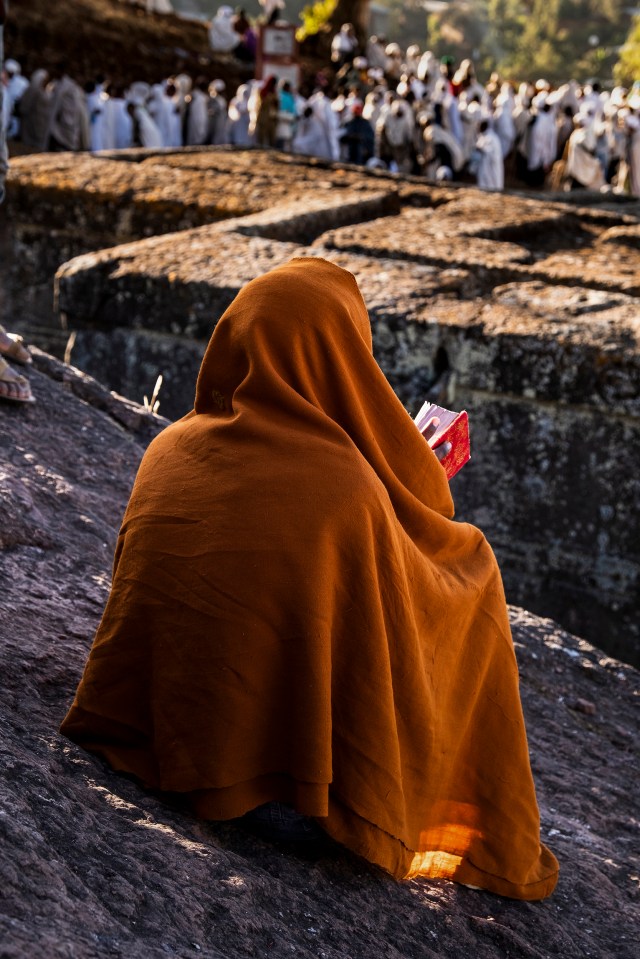
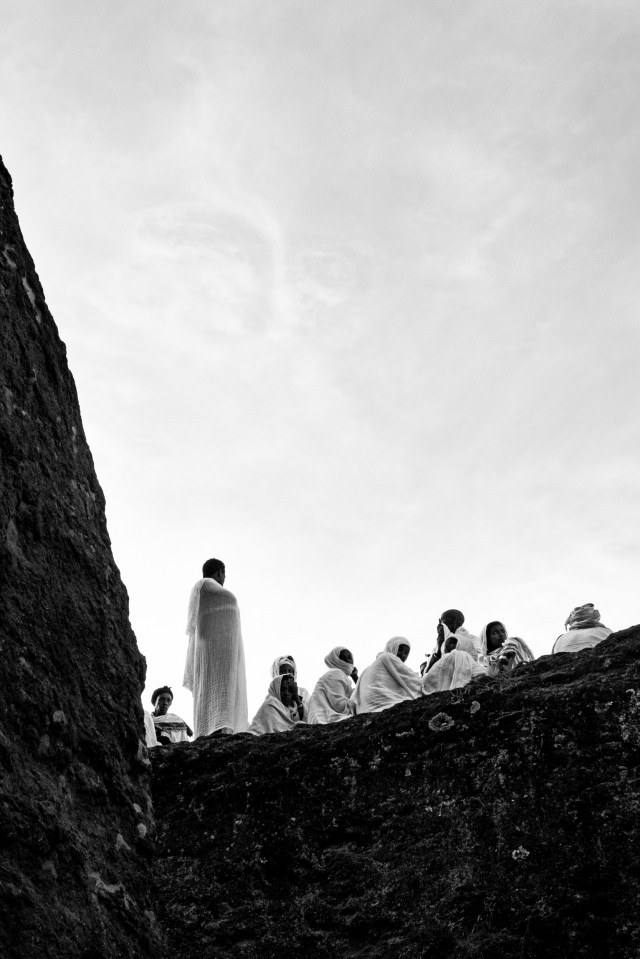
Each January, as Christmas is observed on the Ethiopian Orthodox calendar, the population of the quiet highland town of Lalibela swells with thousands of pilgrims. They arrive from farming villages, market towns, bustling cities, and distant provinces—some walking for days or weeks along dusty roads and others arriving by bus before climbing the last steep miles on foot. All come for Genna, the celebration of Christ’s birth, and to worship at one of Ethiopia’s most revered holy sites.

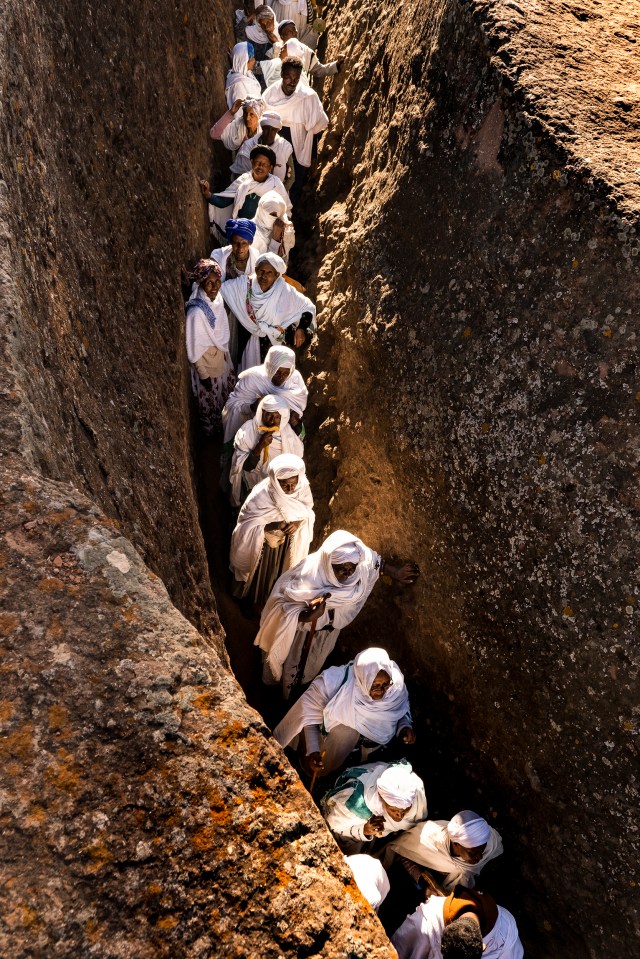
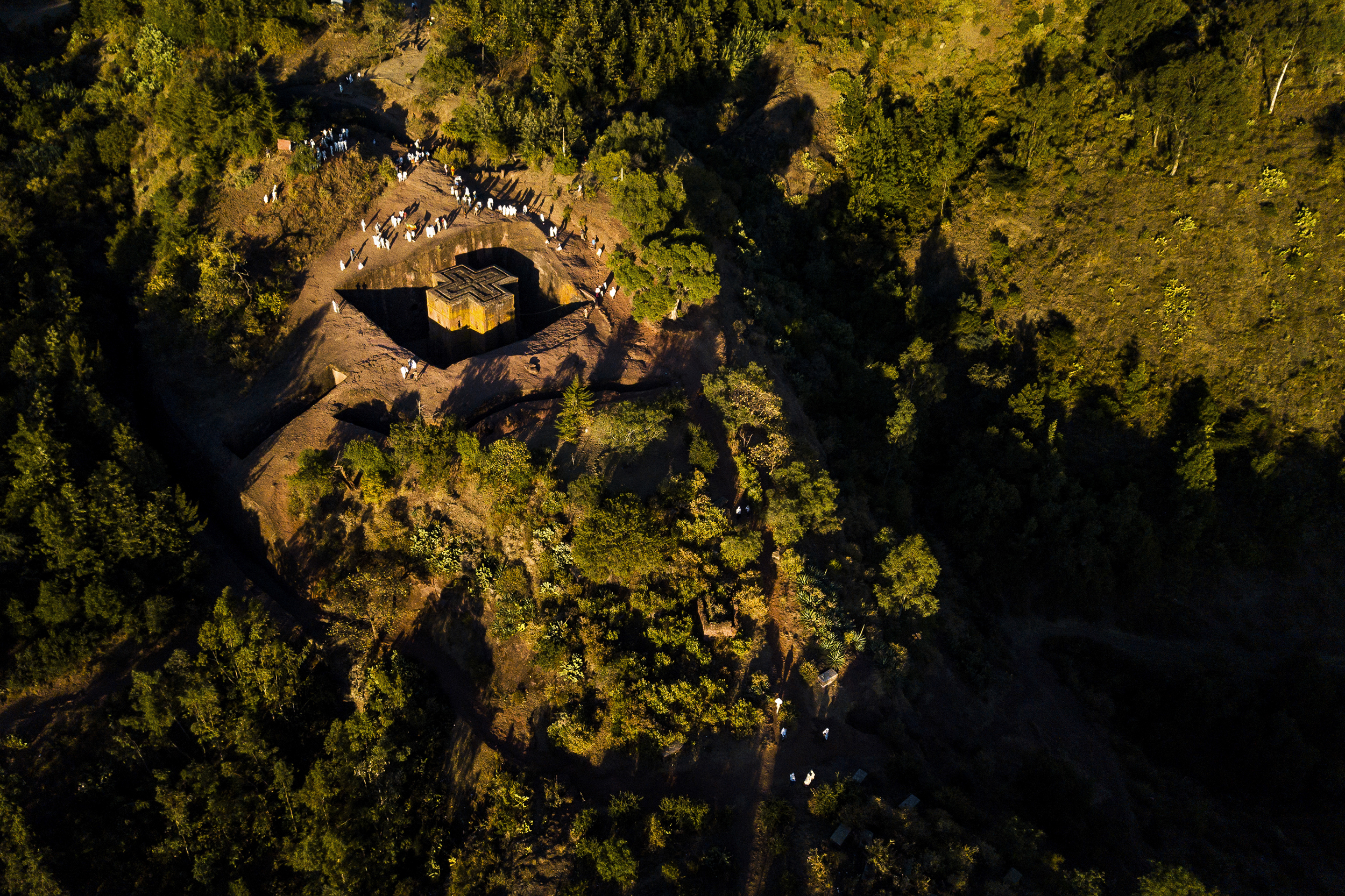
Lalibela’s medieval churches, carved directly from volcanic rock in the 12th and 13th centuries under King Lalibela, were created as a “new Jerusalem” for those unable to travel to the Holy Land. Each is hewn as a monolith, and they are connected by narrow passageways, trenches, and dimly lit tunnels. The most iconic, Biete Ghiorgis, takes the form of a cross cut deep into the earth—its walls descending into shadow while its roof levels with the surrounding ground.

In the cool mountain air, pilgrims wrapped in white cotton shammas press into the complex’s winding entrances. They bow to kiss stone thresholds, kneel on uneven floors worn smooth by centuries of devotion, and gather in candlelit chambers where chants echo off carved walls. The rituals are both communal and personal—moments of reverence link them to prior generations.

For many, the pilgrimage is a rare journey away from the demands of life, a chance to gather with family, friends, and strangers in shared worship. Here, the Christmas story is not only told and preached from the mountainsides but also felt—in stone, in song, and in the footsteps of faith.
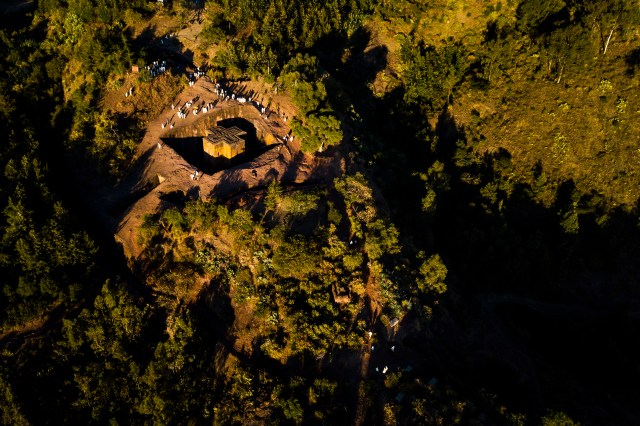
Photo by Andrew Faulkk
The distinct cruciform structure of Biete Ghiorgis is one of 11 churches around Lalibela that are part of the UNESCO World Heritage Site.

Also in this issue

As we enter the holiday season, we consider how the places to which we belong shape us—and how we can be the face of welcome in a broken world. In this issue, you’ll read about how a monastery on Patmos offers quiet in a world of noise and, from Ann Voskamp, how God’s will is a place to find home. Read about modern missions terminology in our roundtable feature and about an astrophysicist’s thoughts on the Incarnation. Be sure to linger over Andy Olsen’s reported feature “An American Deportation” as we consider Christian responses to immigration policies. May we practice hospitality wherever we find ourselves.

They Led at Saddleback Church. ICE Said They Were Safe.

Are ‘Unreached People Groups’ Still a Thing?

A Place for the Placeless

The Incarnation Sheds Light on Astrophysics

Deborah Haarsma

Recalibrating What ‘People’ and ‘Place’ Mean

Chris Howles

God Is Your Father, Not Your Dad

Redlining, Monasteries, and Refugees

The ‘Unreached’ Aren’t Over There

Samuel Law

The Architecture of Revelation

Kyle Dugdale

Review

Picking Up Snakes and Putting Down Roots

Geography Matters More Than You Think

Matthew Hirt

News

Immigrants Welcome in Thomas Kinkade Paintings

People Always Ruin Christmas

Clare Coffey

The Anteroom of Christmas

Lanier Ivester

Review

The Rise and Fall of the ‘Evangelical Vatican’

John G. Turner

Review

A Ukrainian Seminary’s Resilience

Rick Ostrander

Review

The Urban Church’s Junior Partners

Brian Key

The Will of God Is a Place

Text by Ann Voskamp and Photos by Esther Havens

All I Want for Christmas Is a Time Machine

Testimony

Journalism Was My Religion. Then I Encountered Jesus Christ.

Charity Begins with Zoning Reforms

Mark D. Bjelland

Qualms & Proverbs

How Can I Find a Nondenominational Ministry Job?

Karen Swallow Prior, Kevin Antlitz, and Kiara John-Charles

‘Can We Just Ignore It? Nope.’

Kate Lucky

View issue

Our Latest

Public Theology Project

Against the Casinofication of the Church

The Atlantic’s McKay Coppins told me about problems that feel eerily similar to what I see in the church.

Wire Story

The Religion Gender Gap Among the Young Is Disappearing

Bob Smietana - Religion News Service

Women still dominate church pews, but studies find that devotion among Gen Z women has cooled to levels on par with Gen Z men.

Attempts at Cultural Crossover

From Pat Robertson’s soap opera to creation science, CT reported evangelical efforts to go mainstream in 1982.

Just War Theory Is Supposed to Be Frustrating

The venerable theological tradition makes war slower, riskier, costlier, and less efficient—and that’s the point.

Will the Church Enter the Guys’ Group Chat?

Luke Simon

Young men are looking for online presence. The church needs to offer more than weekly breakfasts.

The Russell Moore Show

Karen Swallow Prior on Birds, Bees, and Babies

How should the church address infertility and childlessness?

Wire Story

Young, Educated, and Urban Pastors Are Most Likely to Use AI

Aaron Earls - Lifeway Research

A survey found denominational differences in pastors’ use of the technology, as well as widespread skepticism about its reliability.

The Bulletin

Israel-Lebanon Ceasefire; Trump’s Big, Beautiful Ballroom; and the Strait of Hormuz

Clarissa Moll, Jill Nelson

Israel and Lebanon agree to ceasefire, court approves Trump’s $400 million ballroom, and the Strait of Hormuz affects the world.

addApple PodcastsDown ArrowDown ArrowDown Arrowarrow_left_altLeft ArrowLeft ArrowRight ArrowRight ArrowRight Arrowarrow_up_altUp ArrowUp ArrowAvailable at Amazoncaret-downCloseCloseellipseEmailEmailExpandExpandExternalExternalFacebookfacebook-squarefolderGiftGiftGooglegoogleGoogle KeephamburgerInstagraminstagram-squareLinkLinklinkedin-squareListenListenListenChristianity TodayCT Creative Studio Logologo_orgMegaphoneMenuMenupausePinterestPlayPlayPocketPodcastprintremoveRSSRSSSaveSavesaveSearchSearchsearchSpotifyStitcherTelegramTable of ContentsTable of Contentstwitter-squareWhatsAppXYouTubeYouTube