Culture
Review

The ‘Never Again’ of ‘Nuremberg’ Comes with a Warning

The new film asks how the Holocaust happened: and whether it could happen again.

Russell Crowe as Hermann Göring in ‘Nuremberg.’

Russell Crowe as Hermann Göring in ‘Nuremberg.’

Christianity Today November 12, 2025
Scott Garfield / Courtesy of Sony Pictures Classics

The Nazis possess a special place in our moral imagination. We take them to be a world apart, created by a special confluence of time and circumstance that unleashed unrepeatable horrors. But this understanding obscures something important that this scale of evil may prevent us from seeing.

The Holocaust is of course singular. But many interpretations, in explaining this mass murder of Jews as the result of special psychology, historical circumstance, or political arrangement, have ended up at a misguided conclusion—that surely something like this could never happen again.

It is this question—What makes the Nazis unique?—that the new movie Nuremberg tackles. The film opens in the aftermath of the Second World War with the arrest of Germany’s second-in-command Hermann Göring as he travels with his family in Austria. As the Allies move across Europe, they document concentration camps, and with these discoveries, urgency grows: What should be done with Göring? What kind of punishment fits the systematic murder of millions of Jews, political prisoners, and people with disabilities? The film follows Göring’s subsequent imprisonment as the world prepares for the first international war-crimes trial. All the while, the Allies are unsure how to categorize actions of such moral gravity.

Nuremberg isn’t the first work to home in on this dilemma. The 1961 Judgment at Nuremberg, as well as other TV series and movies, covered the events of 1946. But this treatment has a unique psychological vantage point, drawing from Jack El-Hai’s 2013 book The Nazi and the Psychiatrist, interpreting events through the relationship between Hermann Göring and psychiatrist Douglas Kelley, who was brought in to evaluate the war criminal for trial. Quickly, in the film, the professional relationship becomes a personal crisis. Kelley, along with the rest of the world, grapples for understanding of how something like this could have happened.

Standout performances by Russell Crowe, Rami Malek, and Michael Shannon help transform this courtroom drama into an exploration of how evil works. Driving home the graphic realities of concentration camps, Nuremberg uses archival footage compiled for the original trial. For those unfamiliar with—or debating—the realities of the Second World War, the film offers its case in flesh and bone.

But the events of Nuremberg are primarily an occasion for asking not whether the Holocaust happened but how. Kelley, the psychiatrist, begins to arrive at an answer by noting that Göring is not so much an ideologue as he is a narcissist, seeing in his own person the greatness of the Nazi Reich. His worldview comes through in the way he relates to the other defendants, imagines himself able to outsmart his captors, and touts the Nazi political program as an unassailable demand which anyone should find reasonable.

Kelley, though not a Christian, sees this hubris for its ubiquity—though he fails to convince his countrymen that the desire to make the world over in our own image is not unique to German psychology or the Third Reich’s administrative structure. Goering was proud, and pride is no respecter of time and place. Nuremberg hammers home a basic point about human nature. Pride and its resulting violence are a possible problem everywhere.

Kelley’s insight has proved to be right, in that the mass slaughter of one people by another has certainly not been restricted to the Nazis. Since the word genocide entered the world’s vocabulary in 1942, the crime it names has been repeated several times over.

These ordinary and universal vices—this pride, this desire to subjugate others to our own vision of the world—are not the property of one country or nation. So long as humans are sinners, there is no reason to suspect that any place is exempt from evil.

That lesson comes through in the film’s unexpected final act. Throughout Nuremberg, a young sergeant with particular reasons to seek revenge fantasizes about bringing the captured Nazis to justice. But after the trial, as the moment of execution draws near, his most-hated enemy breaks down in sobs, unable even to dress himself. The sergeant kneels down next to him and says simply, “I am German also.” He accompanies him by the hand to the gallows, staying with his enemy to the end.

The recognition that, in the end, the Nazis are humans—even our neighbors—transforms this story from one of pure revenge to one which invites us to grieve, both for the millions killed by the Nazis and for the denigrated humanity of the Nazis themselves. As the generation that could give firsthand testimony to the Holocaust passes away, Nuremberg is an important film to help Christians remember not only what happened but also how the evil that happened in Germany is the kind of evil that can happen again—and must be repented of everywhere it appears.

Myles Werntz is the author of Contesting the Body of Christ: Ecclesiology’s Revolutionary Century. He writes at Taking Off and Landing and teaches at Abilene Christian University.

Church Life

Chinese House Churches Play Matchmaker

Facing pressure from parents, Christian women struggle to find a man.

A Chinese couple holding hands.
Christianity Today November 11, 2025
simonlong / Getty

All names in this article are pseudonyms except for Wang Xiaofei, as members of house churches face persecution from the Chinese government.

In May, Luo Yiman was laying in her bed in Shanghai, struggling to roll over due to a spinal compression fracture from a car accident, when her mom brought up marriage again.

“All the eligible girls in the village have gotten married this year, except for you two,” she said, referring to Luo and her sister. “You really need someone by your side.”

Luo’s mother and others in her generation think 34 is too old to still be single. Yet Luo noted that since graduating college, she had been too busy working long hours, first as a consultant in Dalian and then a project manager in Shanghai, to find a boyfriend.

In 2020 a friend invited Luo to a local house church, and a year later she became a Christian. Life in the church brought her community and support—many church members brought meals and visited her in the hospital after her accident. But it’s even more difficult to find a husband, as the pool of single Christian men in China is so small.

Luo’s church has more than 100 members, including 20 single women and only five single men, most of them in their 20s. This gender imbalance is common in urban house churches in China, and as a result, many single Christian women struggle to find a spouse.

In Chinese society, many young people are putting off marriage as they pursue their careers, fear the responsibilities of marriage and children, and focus on personal needs over the needs of others. These mindsets are also seeping into the church, according to leaders of singles ministries that CT spoke to. The parents of first-generation Christian singles also struggle to understand their children’s insistence in dating and marrying only fellow Christians.

House churches are banding together to help single Christians meet, while pastors are taking on new roles as matchmakers. Some singles are also learning to trust God and find contentment even if he calls them to a life of singleness.

“Marriage is a divine gift,” Luo wrote in her blog in March. “However, if God has something else for you instead of marriage, that too is a blessing. Embrace it wholeheartedly, as nothing should come between you and your relationship with God, including marriage.”

While the gender imbalance in churches tips toward female, in China as a whole, the one-child policy combined with traditional preference for males has led to a ratio of 105.7 men for every 100 women. The distribution of single men and women vary by region: In rural areas, low-educated single men often find it difficult to find a wife, while in cities, matchmakers consistently see more women than men inquiring for their services. 

Luo longed to find a partner she could connect with on a deeper level. After moving to Shanghai in 2017, she downloaded the popular dating app Soul, as her busy job left her little time to socialize. Yet she was quickly disappointed. Married men reached out to her, as well as others seeking merely one-night stands. She couldn’t tell whether her matches were catfishing her with fake photos and backstories.

Frustrated with online dating, Luo deleted the app. But caught in a cycle of loneliness, she reinstalled it again and again.

Things changed after she accepted Christ in 2021. At her house church, she found a mentor, a badminton partner, and friends who encouraged her when she was feeling weak or down. She found herself becoming more patient and forgiving toward her sister and parents.

“Having a satisfying church life and close relationships with family fulfills my emotional needs,” Luo said. Her desire for a husband remains, although she feels the chances may be slim. “I also look forward to more intimate relationships or experiencing different types of connections.”

Because house churches congregations need to stay under about 50 people to avoid government scrutiny, individual churches don’t have enough congregants to run singles ministries. Some churches organize joint dating events for singles to meet each other. Vis-à-vis is a group in Shanghai that hosts events like afternoon teas, English lessons, and secondhand markets on the weekends where single Christians can mix and mingle. Through these casual activities, leaders model and teach about marriage. A few Christian online dating sites also exist, such as the app Mengai (“Beloved”), where Christians create profiles and the site operator arranges offline meetings between potential matches.

One long-running singles ministry in Shanghai is called Alumni Camp, which leaders from various house churches launched 20 years ago. Every two years, Alumni Camp organizes a cohort of Christian singles who meet every Sunday afternoon for six months. Applicants need to fill out questionnaires about their faith, with questions like whether they read the Bible out of obligation or genuine desire.

Pastors and Bible teachers give talks about the biblical view of marriage. Participants are also assigned reading about marriage. Most singles enjoy the planned fellowship activities, such as gathering in groups to walk around downtown Shanghai and eating together. During the cohort, participants have two chances to submit a list of three fellow participants they would be interested in dating. If there is a match, Alumni Camp shares the other’s contact information.

Despite providing Christian singles with spiritual guidance and mentorship, success rates of Alumni Camp are low, said Xie Yi, a mentor at the organization. Yet she explained that the cohort has a deeper purpose.

“What matters to me is that from the day they leave Alumni Camp, they have a new perspective on choosing a partner and understand why they want to marry,” Xie said.

In Xie’s 10 years of working with Alumni Camp, she’s found that a main reason Christian singles are unable to find a spouse is their unwillingness to let go of their personal preferences. “Especially for women, they carry many expectations”—such as a man’s height or how much money he makes—“and are disappointed when their partners don’t meet them,” she said. “Being willing to compromise on nonessential matters can lead to blessings.”

Another challenge facing Christian singles is parents who meddle in their love life. A 2019 survey by the China Youth Daily’s Social Survey Center found that nearly half of unmarried young people are “concerned that when parents assume a gatekeeper role regarding potential matches before a blind date, their advice and care may lead to acting on their behalf.”

Chen Ye, the pastor of a house church in Shanghai, said that one of the main reasons Christian couples break up is that they are “overly tied to their original families.”

Many parents, including Christians, use secular standards to evaluate their children’s potential spouses, looking at education, family background, appearance, and even political views. Young Christians find themselves having to choose between their parents and their partner, Chen said.

Huang Xintai felt that firsthand. An only child, she long desired to get married and find a companion for life. In 2017, the then-29-year-old met her boyfriend through Alumni Camp. However, when she introduced him to her parents, they were furious. In their eyes, the young Christian man did not measure up to their daughter and her prestigious university background, high-paying job, and good looks. Huang’s parents threatened to cut her off if she didn’t break up with him.

Her mentor at Alumni Camp advised her to stand firm and continue the relationship. Yet Huang felt overwhelmed. She didn’t want to disappoint her parents, who had recently undergone major surgeries, but she also didn’t want to let down her mentor. Under this pressure, her boyfriend decided to break up with her.

To add insult to injury, her mentor chastised her being too influenced by her parents, noting that she lost a good man. That response caused Huang to question her faith.

“I felt very distressed and began to doubt whether I was a saved Christian,” Huang said.

Three years later, when the COVID-19 pandemic hit, Huang could not participate in many of her usual activities like singing in a chorus. As she reevaluated how she spent her time, she started participating in more church ministries. She helped with childcare, translated Christian articles, and connected single church members with families in the congregation.

She got to know more people in her church who were in different life stages. They prayed for her as she shared about her desire to find a husband. At the end of 2021, one church member tagged her in a group chat, saying, “There’s a single Christian man working part-time at my gym. Want to give it a shot?”

Huang agreed. “I first worried that my short-sightedness would lead me to focus on worldly matters again, but my Christian brothers and sisters consistently supported me, helping me view him through a biblical lens,” she recalled. She found herself increasingly drawn to the young man, Zhang San, and his proactive yet humble nature. After a year of dating, they got married. 

Zhang had faced his own share of challenges in before meeting Huang. Church friends introduced him to many single Christian women, but his passiveness left him unsure of what he wanted in a partner. He recalled that his dates lost interest as he never made the first move in the relationship. Yet as he grew in his faith and learned about the attributes of God, he became more willing to take on the responsibility of leading in the relationship.  

Wang Xiaofei, the wife of a house church pastor in Xiamen, noted that the single people at her church are often the ones visiting members who are sick or in need, volunteering at the local orphanage, teaching children’s Sunday school, or working at the church’s school.

“Single Christians are among the most devoted and loyal individuals in Christian schools and churches,” she said. After years of serving singles at the church, she has learned to consider their perspectives more deeply instead of hastily arranging introductions. 

“Everyone has their own thoughts on marriage,” she noted. “When they haven’t crossed that threshold yet, they need understanding and acceptance.”

Huang and Zhang now have a 2-year-old son. They frequently share with younger members of their church how God brought them together.

For the single Christians in their lives, “we should … regularly pray publicly for them,” she said. “Let them feel that they are not alone on this waiting journey; there’s a group accompanying them, just like the apostles waiting for the Holy Spirit at Pentecost, trusting in God’s promises.”

Ideas

Backbone in a Gumby Culture

Editor in Chief

“He was furious, but somehow it put steel into my heart.”

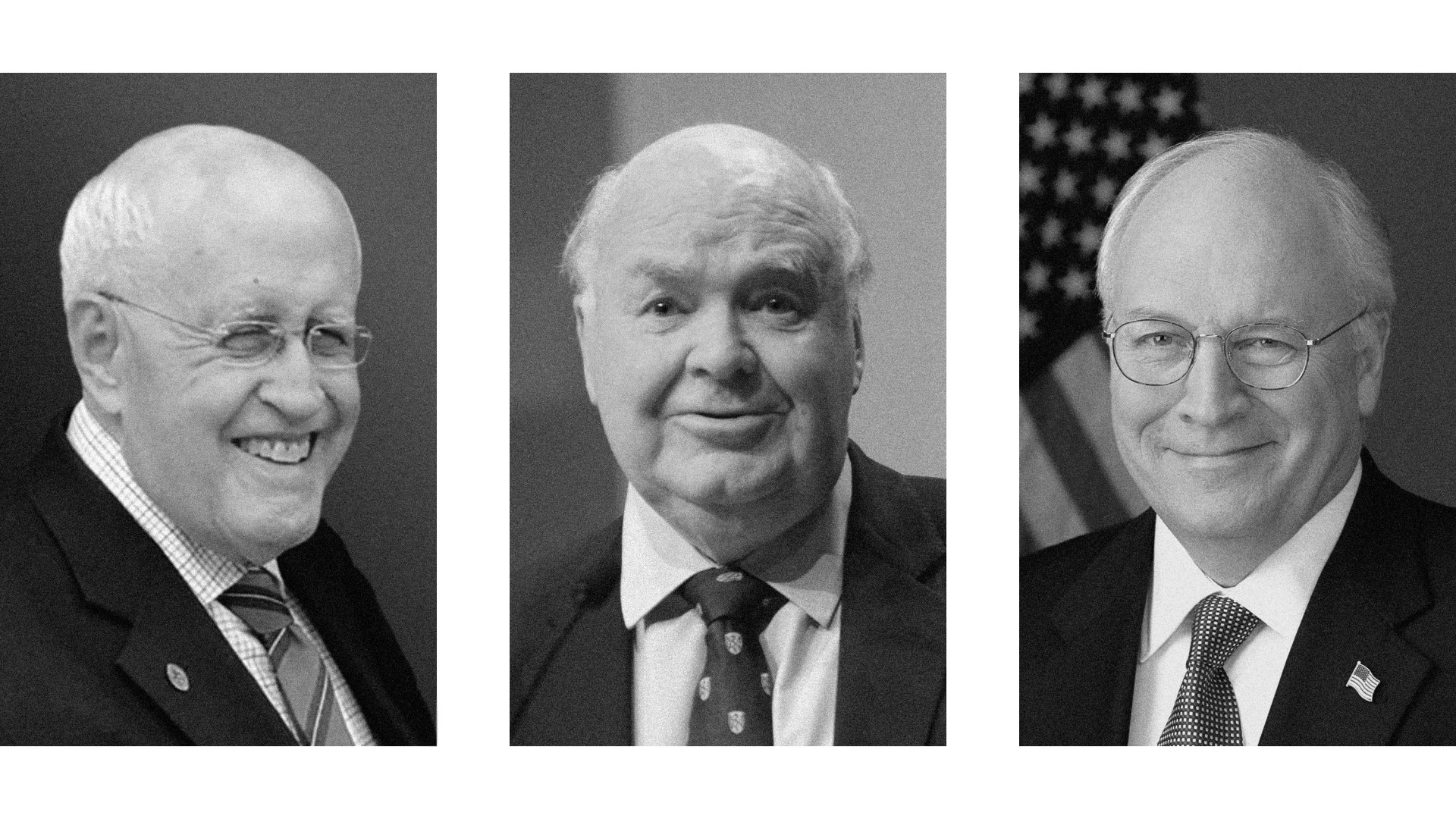
Left to right: Bill Murchison, John Lennox, and Dick Cheney.

Left to right: Bill Murchison, John Lennox, and Dick Cheney.

Christianity Today November 11, 2025
Illustration by Christianity Today / Source Images: WikiMedia Commons, Marvin Olasky

In “Man Knows Not His Time,” Puritan Increase Mather preached in wintry 1696 Boston about the surprise of unexpected dying. Many of us do not know our own times regarding the surprises of unexpected social and political changes. These three men, ages 83, 84, and 82, reacted vigorously to those changes: recently deceased syndicated columnist William (“Bill”) Murchison and Vice President Dick Cheney and still-living Oxford professor John Lennox.

Those who attended Murchison’s October 27 memorial service in Dallas learned he was born in 1942 and graduated from the University of Texas in 1963. He had 60 years as a faith-filled journalist and 50 years as a faithful husband. On CSPAN in 1999, Murchison said, “As a political commentator, it is my conviction that a marriage, a good marriage, is a happier event than an election.”

The service was held at Episcopal Church of the Incarnation, where Murchison was a chalice bearer for 47 years and a vestryman for multiple terms. But he was an Episcopalian with a difference. In his 2009 book Mortal Follies: Episcopalians and the Crisis of Mainline Christianity, Murchison wrote sardonically that “the God you increasingly hear spoken of in Episcopal circles is infinitely tolerant and given to sudden changes of mind” and is “a God that the culture would be proud of, as against a culture that God would be proud of.”

Murchison ardently opposed abortion and supported sexual distinctions: The summer 2025 issue of The Human Life Review, which he helped edit, lists on its cover a Murchison article headlined, “There Are Boys; There Are Girls.” Murchison and I corresponded over the years, and I interviewed him in front of Patrick Henry College students in November 2013. My first question was how journalism had changed during our half century within it. Here’s what he said:

Most journalists had the commitment that whatever they worked for—magazines, newspapers, TV stations—they were not your brains. They were your eyes and your ears. They existed to tell you how to use your own eyes and ears. That came to a sad end in the post-Watergate period when journalism began to reinvent itself as the kind of alternative source of wisdom, competing with colleges and universities and churches in terms of announcing what was important and what needed to be thought about and what we ought to think about it.

Murchison added that the older journalism came out of “people who had not been to Harvard, Yale, even Patrick Henry College.” He continued,

They joined newspapers because they loved to be on the frontlines of events. They loved to tell stories. … They loved to answer questions: What’s all this about? What’s really going on? Why should we care about it? They loved to answer those kinds of questions rather than to pose the question that journalists are fond of posing today: Why don’t you agree with liberal intellectuals?

Murchison, along with reporting for and editing the Dallas Morning News, wrote The Cost of Liberty: The Life of John Dickinson, a biography of the man known as the “Penman of the Revolution” for his highly influential Letters from a Farmer in Pennsylvania (1768). Dickinson, Murchison said, “wrote in favor of what he called ‘balanced moderation,’ the idea that a thorough and wholesome discussion is necessary before extraordinary actions are taken.”  

Murchison in 2013 said that if 21st-century progressives had not demanded such a rapid increase in what they saw as progress, “the level of anger would not have risen.” He added, “We need more people like Dickinson, instead of fewer. The lack of forethought and caution almost makes inevitable the rise of hotheads.”

But Murchison also wanted conservatives “to take prudent action” and said that “Dickinson did not consider burning down the barn to exterminate the vermin to be prudent action, but rather an action with more dire consequences than not.”

Dick Cheney, who died Monday, November 3, at age 84, grew into prudence. He went to Yale University to play football but flunked out twice and had a drunk-driving conviction in 1963 that he said was a turning point in his life. He graduated from the University of Wyoming, had six terms in the Congress, and was secretary of defense and then George W. Bush’s vice president from 2001 to 2009.  

I met Cheney only once and know little about his religious life or lack thereof, and obituaries haven’t provided many details. When asked about his beliefs in Clio, Michigan, in 2004, he said, “Well, I—my family was serious about their faith. My mother sang in the church choir. Dad was the church treasurer, as was his father before him. I grew up as a Methodist. And it has been an important part of my life, and our family’s life.”

Cheney then quickly pivoted:

But it’s also important to remember that one of our great strengths as a nation, one of the great gifts we have as Americans is freedom of religion that, in fact, we do believe in the separation of church and state. … I think it’s perfectly appropriate for us to recognize a divine being in the course of affairs of this nation, as did the Founding Fathers. … Our religious faith and religious convictions played a very important role in the founding of the country. I think it’s very important to a great many Americans.

Not a profession of faith that excites me or probably many CT readers. Nevertheless, while I disagreed with him about some things, in our current context I’m impressed that he had no personal scandals in decades of governmental service and no marital scandals during 61 years of devotion to his wife, Lynne, until death parted them. It takes all kinds of people to keep a ship going, and Cheney did speak of “the fixed stars by which the American ship of state navigates … our belief in limited government, in democracy, in pluralism and the rule of law.”

Steve Hayes, CEO of The Dispatch and a close observer of Cheney’s vice presidency, said on The Bulletin last week that Cheney was private about matters of faith:

That carried over to the way that he addressed issues that we would all deem as important to social conservatives. They moved from the kinds of issues that he was most comfortable with—national security issues, economic issues—into what I think he would describe as softer issues and issues that had more to do with feelings and faith than he was comfortable discussing in public.

Mike Cosper on The Bulletin added, “Late in his life when he stood with his daughter Liz when she bucked the entire party, those were remarkable moments. They were moments of courage.” Russell Moore recalled, “That moment in the 2004 vice presidential debate, when he said to the Democratic nominee John Edwards, I’m at the Senate every Tuesday, presiding over the Senate as vice president. The first time I’ve ever met you is now—behind it was this sense of responsibility. The contrast was just amazing.”

Cheney’s colleagues applauded, sometimes sardonically, his honesty. George W. Bush White House hand Dan Bartlett said in a Miller Center oral history series that he and others knew where they stood with Cheney: “In Washington and politics you get a lot of people who will stab you in the back. Dick Cheney was perfectly comfortable with stabbing you in the chest.”

On to Irish-born John Lennox, who turned 82 on November 7. As a student at the University of Cambridge, Lennox attended the last lectures of C. S. Lewis in 1962 and graduated from that institution with a science PhD in 1970. He then taught about science and religion at the University of Oxford and over the years had debates with Christopher Hitchens, Richard Dawkins, Peter Singer, and others. Lennox is the author of many books, including God’s Undertaker: Has Science Buried God? and Seven Days That Divide the World: The Beginning According to Genesis and Science.

Lennox sees the importance of speaking out, as Murchison and Cheney did. When I interviewed Lennox in front of Patrick Henry College students in 2012, he spoke to them about not hiding their light:

I’ve had bright graduate students saying, “We’re doing biology, and if we were to even suggest that we have a very dimensional Christian faith, we’d be looked at negatively, so we have to be very careful.” I would agree with that, but I think silence cannot be the answer, because in my experience people who say, “I’ll wait until I get tenure” or “I’ll wait until I become CEO,” et cetera—it never happens.

Lennox continued,

When I was 19 at Cambridge I met my first Nobel Prize winner. I sat by him at dinner and didn’t keep quiet about my Christian faith. I tried to talk to him about God and wasn’t very successful. At the end of the meal, he insisted I come to his room for a cup of coffee. He invited three other full professors and just me. He sat me down and said, “Do you want a career in science?” I said, “Yes, sir.” He said, “Give up this childish stuff.” The pressure was colossal. I managed to screw up enough courage to say, “What have you got to offer me? If it’s better than what I’ve got …” He came out with some evolutionism. I said, “If that’s all you have to offer me, I’m going to take the risk.” He was furious, but somehow it put steel into my heart.

Lennox’s bottom line is from the beginning of the Gospel of John. To the students he quoted, “‘In the beginning was the Word.’ That is of profound importance. This is a Word-based universe. In Genesis 1, God, who of course could have done everything at once, did it in sequence. He spoke. Then he spoke again. And he spoke again.”

Lennox said God created the world in six days, but Lennox did not stipulate that “they are 24-hour days within a single earth week.” He went on to tell stories about the departure from teaching of C. S. Lewis, who died on November 22, 1963, the same day as John F. Kennedy and Aldous Huxley:

In 1962 he did a final eight lectures on John Donne and his poetry. It was very cold. Lewis was wearing a hat and very long scarf and a very thick coat. He started to lecture immediately as he came through the door. The room was full of people sitting on the windowsills, sitting on the floor.

As he wound his way to the lectern, he was getting his coat off and his scarf and his hat. By the time he had done all that, you’d already had five minutes of a brilliantly delivered lecture. The fun was at the end of it: He reversed the process precisely. He kept lecturing while he got dressed for the outside chill. His last words were uttered as he fled through the double doors.

I asked Lennox for his most important advice to Christian students. He replied, 

To love the Lord with their mind and begin to take Scripture seriously, because in our university system the problem is the two speeds of education. Their professional education goes up very rapidly, but their education and knowledge of God through his Word remains almost at Sunday school level. I would want to encourage them very strongly to build up their confidence in God and his Word.

Final question: “Advice to non-Christians?” Lennox: “I would want to drive a very big hole in their notion that science has somehow made it impossible to believe in God.”

Culture
Review

In Netflix’s ‘Frankenstein,’ Monster Is More Compelling Than Maker

The Guillermo del Toro adaptation brings unique perspective—but fails to match the depth of its source material.

Jacob Elordi as The Creature in Frankenstein.

Jacob Elordi as The Creature in Frankenstein.

Christianity Today November 11, 2025
Ken Woroner / Netflix / © 2025 Netflix, Inc.

When it was announced that Guillermo del Toro had struck a deal with Netflix to write and direct Frankenstein, an adaptation of Mary Shelley’s 1818 novel, longtime followers of the award-winning Mexican filmmaker couldn’t believe their luck. Del Toro has been making Gothic monster movies for three decades, and now he would finally get to try his hand at the original that started them all.

Sometimes, however, it’s best to leave passion projects to the imagination. Del Toro is an inspired director and Shelley’s novel is a classic, but this adaptation is a mess. It has its moments and its virtues. But in the end it fails to match either the depth of the source material or the richness of del Toro’s other films.

For readers and viewers unfamiliar with either, I’ll begin with del Toro before turning to the novel and where things go wrong (and, at times, right) in the transition to the big screen.

Born in Guadalajara, Mexico, in 1964, Guillermo del Toro Gómez directed his first film before he turned 30 years old. Frankenstein is his 13th, quite the pace given the scale of his larger productions. His work alternates between character-driven atmospheric horror—The Devil’s Backbone (2001) Crimson Peak (2015), and Nightmare Alley (2021)—and big-budget Hollywood blockbusters like Blade II (2002), Hellboy (2004), Hellboy II: The Golden Army (2008), and Pacific Rim (2013).

In 2017 del Toro made The Shape of Water, a love story between a mute janitor and an amphibious anthropoid. Although it is neither fans’ nor critics’ favorite—that title goes to Pan’s Labyrinth (2006), though my heart belongs to Cronos (1992)—it went on to win the Academy Award for Best Picture. Del Toro also won the Award for Best Director, a coronation of sorts.

Del Toro’s style and themes are consistent. When you’re in his cinematic world, you know it. Across every one of his films, he reveals himself as an obsessive, and what he’s obsessed with is creatures.

It’s a word with many meanings, and the director takes advantage of them all. Sometimes creatures refers to the fantastic, and indeed del Toro’s stories feature fairies and vampires and kaiju. Sometimes the word conjures spiritual beings, devils or gods or ghosts. Still other times it is simply monsters, real or imagined—the enormous tentacled behemoth out of the fiction of H. P. Lovecraft or else the fascist regime of Francoist Spain.

Three themes emerge. First, creatures have creators, and accordingly, del Toro is fascinated by the nature of invention, whether artistic, scientific, or technological. As a maker himself, he’s keen to explore the nature of making.

For human beings, the highest mystery of creation is birth and death. And so the second theme of del Toro’s stories is childhood and fatherhood—above all paternity’s perennial failures and their generational effects, usually terminating in tragic violence. Both Eden and the Fall loom large in his imagination.

Finally, creatures are marginal figures, and del Toro’s films are about what it’s like to live on the edge. It’s obvious enough how this applies to ghosts and fairies, vampires and devils. They’re always just out of sight, right around the corner, glimpsed and sought and lost from view.

Yet marginal figures are not only agents of myth or malice. They also include ordinary—or not so ordinary—men and women. Just as del Toro has a special interest in the fantastical, so too he has a special affection for the deplorable. Nightmare Alley, for example, tells the story of a traveling carnival of weirdos, oddballs, and outcasts. At the film’s heart is the “geek,” a down-and-out man reduced to the status of a slave, mocked and gawked at by paying customers and treated worse than a beast.

Nightmare Alley reflects del Toro’s heart for the dispossessed and dejected. His is a preferential option for losers. He puts them on display not to invite us to point and laugh but to show us their humanity, and with it our own.

At the same time, del Toro is himself a maker of monsters and thus a kind of cinematic carnival barker. This is the fundamental ambiguity of his art, an ambiguity he openly interrogates.

All this makes Mary Shelley’s Frankenstein an ideal vehicle for del Toro’s obsessions. For more than two centuries, the novel has permeated our culture to such a degree that it’s difficult to disentangle its legacy from the text. As most readers know, Frankenstein is the name not of the monster but of the monster’s maker. But then, as readers may also know, that phrasing has it the wrong way round. Shelley invites readers to wonder: Who in fact is the monster? Is it the creature or his creator?

Here is what readers may not recall. The subtitle of Frankenstein is “The Modern Prometheus”; Shelley is transposing the myth of the god who gave humans fire into the early 19th century in the wake of the Enlightenment and at the height of the Industrial Revolution. The novel’s subtext is both the transformative nature of technological invention and the unintended consequences that result. (Recall that Prometheus was punished for his gift.)

Furthermore, the novel’s monster is not a stumbling, mumbling oaf but a literate, eloquent, emotionally voluble seeker, a romantic soul in a reanimated corpse. A crucial piece of his journey of self-understanding comes when he reads John Milton’s epic poem Paradise Lost, and in this way Shelley mischievously brings into view the theological questions that lie beneath the surface of her story. After all, Milton’s poem is a retelling of the opening chapters of Genesis. Is the monster a second Adam or a fallen angel? Is Frankenstein godlike, or is he monstrous precisely because, like Adam, he sought to “be like God” (Gen. 3:5)?

Del Toro’s adaptation is admirable in its attempt to be faithful to Shelley. Rather than hide the layers of source material—del Toro retelling Shelley retelling Milton retelling Moses, all shot through with echoes of Greek mythology—the film wears them like a badge of honor. Every image and exchange of dialogue is saturated with religious allusions. Occasionally the result is quite beautiful, such as in the quiet painterly compositions that recur. More often, though, scenes are bent over with the sheer weight of their overt evocations. Del Toro’s overstuffed script leaves little to viewers’ interpretation; he is far too eager to tell you what he means.

Like the novel, the film unfolds in the form of a flashback. Unlike the novel, the story is split in two: first the protagonist’s tale, as told by Victor Frankenstein (Oscar Isaac), then the monster’s tale, as told by the monster himself (Jacob Elordi).

The latter section is far superior to the former. Where the first half is hurried, humorless, and overwrought, the second half is patient, subtle, and affecting. Both leads are accomplished actors, but while Isaac hams it up, Elordi’s performance of the monster as an awkward adolescent, filled equally with fear and awe of the world, is the highlight of the movie. Del Toro wants us to see that the monster’s fury could be cooled, had he a creator sufficiently caring to teach him.

Del Toro contracts and combines some of Shelley’s characters while introducing others. Elizabeth (Mia Goth), the fiancée of Frankenstein’s brother, has left the convent but retains her faith in God. This faith enables her to see Frankenstein for who he is (“Only monsters play God,” she says to him) and to see his creation for what he (not “it”) is: a living soul in need of love. Because love requires another—“It is not good for the man to be alone” (Gen. 2:18)—the monster pleads with Frankenstein to create for him a female companion, to no avail. This Adam is fated to lack both a mother and an Eve.

Frankenstein is a movie about what happens when fathers fail and mothers die—when, in a word, male is severed from female. It is a pointed reflection on the unfortunate grammatical fact that the verb to mother captures the work of a lifetime whereas to father names but a single moment at the very start.

The ending of Shelley’s novel—and here I will spoil a 200-year old book and a 1-month old movie—is pure tragedy. Frankenstein dies, having lost everyone he ever loved. The monster, overwhelmed by self-loathing, walks into the cold north in order to burn himself alive, thereby ridding the world of his presence. “Polluted by crimes, and torn by the bitterest remorse,” he asks, “where can I find rest but in death?”

Though del Toro left the church as an adult, he was raised Roman Catholic, and he is open about Catholicism’s influence on all his films. So too here. The creature tells his creator the story of his life from his own perspective, and to our surprise, this induces not fury but pity. Frankenstein asks for forgiveness, the only time he ever sincerely admits fault. The creature grants it, kissing his maker’s forehead as he dies. The creature then turns north—undying, unkillable, immortal—and walks into the sunrise, his eyes filled with hope for the first time.

There it is again: del Toro’s eye for the unloved, his affection for monsters. He can’t let this one escape our compassion either. I regret the shortcomings that hold back this particular adaptation—the contrived first half, the horrid and unnecessary CGI, the monster’s outlandish fights and brutal rampages that feel torn out of some other movie—but they are worth regretting, because del Toro has a unique perspective on this material. Shelley’s original was biblical in body but pagan in spirit. For del Toro it is just the reverse. His creature looks like a monster on the outside but has a Christian soul.

Brad East is an associate professor of theology at Abilene Christian University. He is the author of four books, including The Church: A Guide to the People of God and Letters to a Future Saint.

Books

More Than a Magic Pill

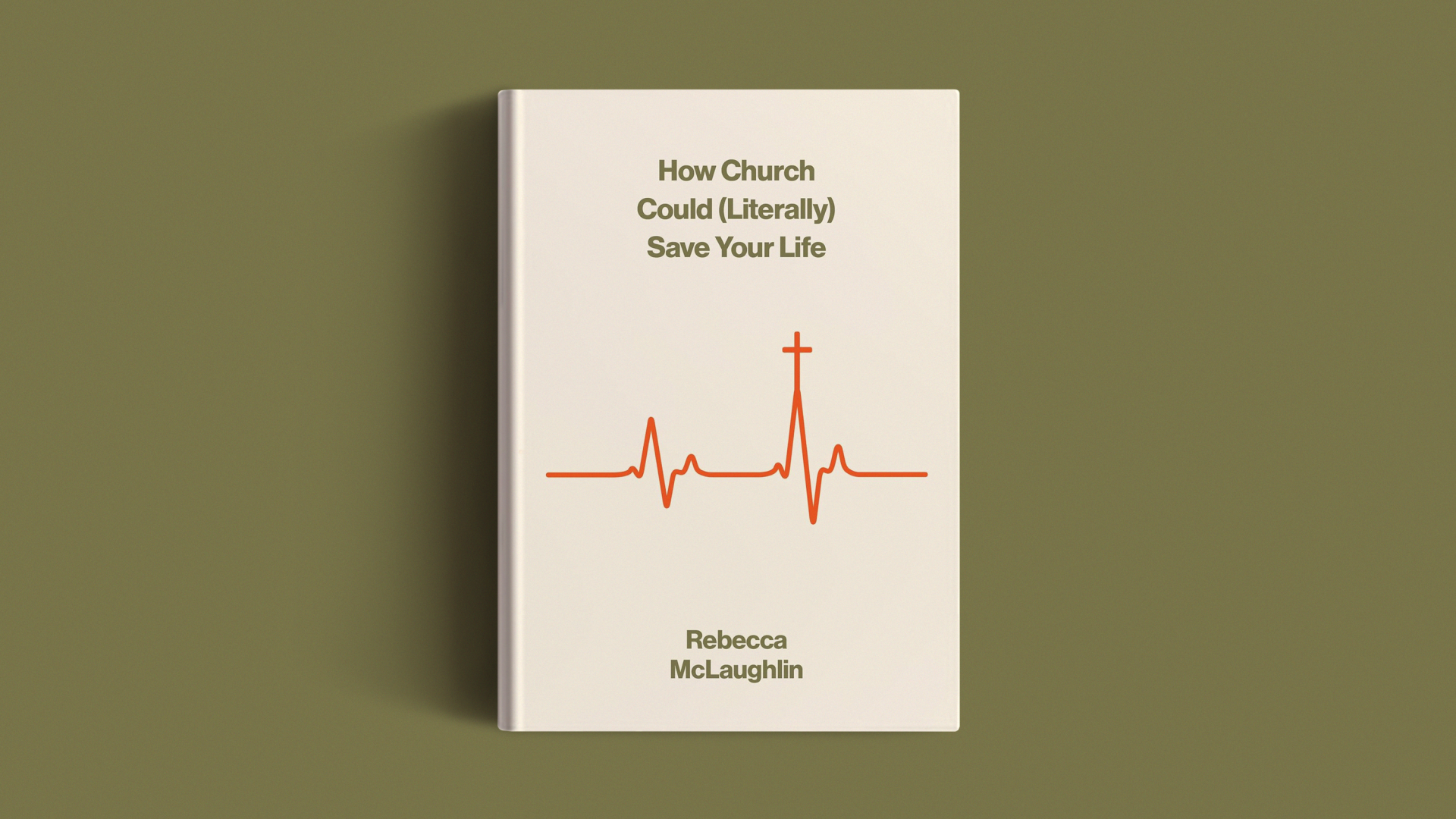
Rebecca McLaughlin’s latest book shows the radical health benefits of church attendance.

The book cover on a green background.
Christianity Today November 11, 2025
Illustration by Christianity Today / Source Images: Getty, Crossway

Each year, people around the world spend trillionsof dollars on health and wellness products. In the US alone, wellness spending accounts for $500 billion annually and is growing at a rate of about 5 percent yearly. A quest for optimal health inspires consumers to invest not only in medical care and counseling but also in vital-signs-monitoring apps, dietary supplements, essential oils, fitness equipment, and a host of gadgets promising better sleep, less stress, and a longer lifespan.

In her latest book, Rebecca McLaughlin, author of the award-winning Confronting Christianity, offers a surprising new remedy for those chasing after health. The cure she recommends doesn’t populate influencers’ top ten lists. It requires no health insurance or physician approval, and market research doesn’t quantify it.

Yet “the script is for something that—if taken at least weekly—could elongate your life expectancy by seven years, significantly increase your chance of happiness, and substantially reduce the likelihood you’ll suffer from depression.”

What could this impressive prescription be? A vitamin? A step-counting app? An intermittent-fasting regimen?

McLaughlin suggests none of these. Rather than pills or strength training, for optimal wellness she recommends a resource freely available to all and life-giving for those who pursue it: church.

In her latest, brief book, How Church Could (Literally) Save Your Life, McLaughlin highlights the mental, physical, moral, and spiritual benefits of regular church attendance. She writes for a skeptical younger audience, an astute approach as Gen Z and millennials are the generations most interested in health and longevity and least likely to cite a religious affiliation.

Among all the consumer groups devoting their dollars to the wellness industry, younger generations have contributed most to its growth. Although Gen Z and millennials make up around a third of the adult population in the US, they drive more than 40 percent of annual wellness expenditures. Immersion in social media at least partially contributes. Gen Zers are more likely than others to seek out health information online rather than see a doctor, and in 2024 wellness content saw the highest growth surge among topics on Instagram.

The prevalence of such online content hints at a deeper issue: a desperation to feel better. Gen Zers and millennials have higher levels of anxiety and burnout than their counterparts and regularly report a need for more effective mental health services. In a quest to stave off exhaustion and find meaning, many turn to the latest diets, supplements, exercise regimens, massage tools, health-tracking devices, and even IV drips for relief. Yet they don’t seek out the support of a church. In fact, research has identified Gen Z as the most religiously unaffiliated generation of our time, with most identifying as “nones.”

In How Church Could (Literally) Save Your Life, McLaughlin reveals a deep understanding of these struggles and offers a pathway for true healing. As she does in Confronting Christianity, McLaughlin demonstrates keen insight into the reservations of young skeptics.

“Maybe you identify as ‘spiritual, but not religious,’” she writes, implying she’s conversed with nones who have described themselves in these terms. “You’d rather climb a mountain or gaze up at the stars than go to church. Perhaps you’ve been put off by racism, abuse, hypocrisy, or hateful attitudes.”

Throughout, McLaughlin maintains a respectful and sympathetic tone, acknowledging each objection as a “fair question” and inviting rather than compelling readers to consider her viewpoint. “I’m honored you’d take time to read this book,” she writes. “You’re likely someone who thinks carefully and wants to see the data before you make a decision.”

McLaughlin outlines compelling research on the physical and mental health benefits of church attendance. She draws heavily from the work of Tyler VanderWeele, professor of epidemiology and director of the Human Flourishing Program at Harvard University’s T. H. Chan School of Public Health. Unlike researchers on this topic from decades past, who primarily produced underpowered cross-sectional studies, VanderWeele and his contemporaries have conducted robust longitudinal studies with cohorts numbering in the tens of thousands.

The findings are striking. Church attendance reduces all-cause mortality by nearly 30 percent over a 15-year period and protects woman against suicide by 400 percent. Weekly churchgoing in women over 40 is as protective against death as annual mammograms, McLaughlin writes. Those attending services more than weekly at age 20 have “a roughly seven-year greater life expectancy than their nonchurchgoing peers.” Churchgoing protects against alcohol, smoking, and drug abuse and decreases the odds of depression by one-third.

Why does a Sunday-morning service confer such dramatic health benefits? Investigators have suggested that social connection and moral beliefs play a role, although they don’t explain the entire effect. In one large study, social support was responsible for only a quarter of the mortality benefit observed with church attendance. “Parents who join the same people each week to cheer for their kids’ sports team won’t see the same level of benefit,” McLaughlin writes. “We humans seem to thrive when we worship together.” 

McLaughlin expects this evidence of thriving through worship to surprise readers. “The benefits of ‘organized religion’ don’t fit with the big story we are telling in the West about the goodness of abandoning traditional beliefs,” she writes. This “big story” that we can achieve happiness through our own self-determination, McLaughlin argues, hasn’t delivered on its promises. Although the youngest generations prize self-definition and freedom from constraints, they have the highest rates of anxiety and depression ever measured. McLaughlin summarizes how such ideology has failed to bear fruit:

Many in the West today attempt to fill in their spiritual gap with New Age practices, a range of sexual relationships, and substance use. More people are in therapy and on antidepressants than at any other time. And yet our mental health across the West has nose-dived. … All our freedom to experiment and self-define without constraints has bred more misery than happiness.

McLaughlin links dismal mental health outcomes with smartphone use and the pandemic but also notes a correlation with declining church attendance:

The results of what has been called “the great dechurching” in America have been measurably bad. Less churchgoing has led to lower mental health and happiness, more loneliness, more drug abuse, more alcoholism, less volunteering, less giving to those in need, reduced life expectancy, and more suicides.

Through argumentation that deftly toes the line between conviction and sensitivity, McLaughlin invites skeptical readers into the support and flourishing of church communities to counteract emptiness. To guide them, she includes a QR code to connect readers with churches, as well as FAQs to allay first-time churchgoers’ concerns. Her book is only the thickness of a gospel tract, perfect for elders to distribute to the curious and questioning.

The greatest gift McLaughlin offers her readers isn’t an invitation to church, however. It’s an invitation into a relationship with the one who makes church so priceless in the first place.

As someone leery of pragmatism, I confess I was wary when I received McLaughlin’s book. The true allure of church isn’t its health benefits or even its social community but the gift of worshiping the God who gave his one and only Son. Period. We worship because he deservesit. He’s worthy of our time, attention, and adoration, and against the backdrop of God’s holiness, all practical justifications for church ring hollow or even seem degrading.  

I was relieved and delighted, however, to discover that although McLaughlin hooks readers with promises of wellness, she lands at the true heart of the matter: the gospel. Drawing from Matthew 9:12–13, McLaughlin emphasizes that more than we need self-help books, pills, or uninterrupted sleep, we need Jesus:

The great physician doesn’t merely pop a magic pill into our hands and wish us luck. He takes our moral sickness on himself and gives his life in place of ours. … In the end, you could attend church all your life and live to ninety-five and never take the pill that really counts.

In How Church Could (Literally) Save Your Life, McLaughlin introduces skeptics to data, invites them to church, and finally guides them toward the one by whose wounds we are healed—no pills, planks, or apps required.

Kathryn Butler is a writer and a former trauma surgeon. Her books include The Dream Keeper Saga series and Between Life and Death: A Gospel-Centered-Guide to End-of-Life Medical Care.

Culture
Review

Puns and Pettiness in ‘The Promised Land’

The YouTube mockumentary works best when it pulls laughs directly from Exodus.

A film still from The Promised Land.
Christianity Today November 10, 2025
© 2025 Milk & Honey Holdings, LLC. All rights reserved.

The character-based drama of The Chosen, the Tolkienesque “fantasy” of House of David, the modern dystopia of the Book of Acts series Testament—playing with genre is a hallmark of this current wave of Bible TV shows.

Now we can add The Promised Land—a mockumentary about Moses leading the Israelites—to the mix. On paper (or parchment), this approach might seem counterintuitive, even offensive. Aren’t there supposed to be majestic pillars of cloud and fire? Don’t the Israelites hear the voice of God? Don’t a lot of people die? Is this really the sort of story we should be making jokes about?

Valid concerns, all. But when the show’s pilot came out last year, you could see what writer-director Mitch Hudson and his team were after. The Moses of the Bible spent a lot of time in the holy, no-sandals-allowed presence of God, yes. But he was also a deeply fallible man who had to deal with the petty complaints of his fellow Israelites. Within that first episode, Moses (Wasim No’mani) is overworked and worn-out until his father-in-law Jethro (Tucker Smallwood) takes him aside and advises him to get some assistants. It’s precisely the sort of workplace arrangement that lends itself to Office-style humor.

Meanwhile, Moses’ bubbly wife Zipporah (Tryphena Wade) keeps getting on the nerves of his prickly big sister Miriam (Shereen Khan). Both story lines take their cue from the Bible—Exodus 18:13–26 and Numbers 12:1, respectively. Maybe there was always latent humor there, just waiting to be staged.

The pilot was a successful-enough proof of concept that five more episodes resulted, and season 1 is now available on The Promised Land’s YouTube channel. Its results are encouraging, if a bit uneven.

Episode 2 gets off to a strong start, taking place during the days the Israelites spent at Mount Sinai before God gave them the Law (Ex. 19). Moses, following Jethro’s advice, assigns different men to lead groups of various sizes. His proud cousin Korah (Brad Culver) grumbles that he got one of the smaller, “stupider” groups.

Moses tells the Israelites to consecrate themselves and asks Joshua (Artoun Nazareth) to make sure no animal or human sets foot on the mountain. Moses then tries to enjoy some “time off.” But his wandering around the camp leaves him worrying that his people skills aren’t as good as, say, Aaron’s (Majed Sayess). (This, too, is drawn from the Bible, which says Aaron was better at public speaking than Moses; see Ex. 4:13–16.)

The show is at its best when it riffs on brief passages like the ones that inspired this episode. The fact that Moses gave different men varying levels of authority is mentioned almost in passing in Scripture. But how did those men respond to their statuses? With jealousy? Ambition? Korah gives us one answer as he tries to prove he’s the best leader of all, whipping his men into shape through nonstop exercise. Meanwhile, Joshua guards the mountain for days, fighting off sleepiness and cheeky, boundary-testing youths.

The series also introduces some extrabiblical story lines, such as Miriam’s efforts to create a meeting tent for the women. The Bible says very little about Miriam compared to her brothers, and fittingly, the Miriam of the series is frustrated that the men of the camp are constantly overlooking her. (She perks up when she thinks Moses says he’s putting “her” in charge while he’s away. It turns out he’s actually referring to a man named Hur; see Ex. 24:14.)

Promised Land’s skillful riffing on the biblical text continues in episode 3, which takes place almost entirely during the 40 days Moses spent on Mount Sinai before receiving the tablets (Ex. 24–32). Most movies jump to the end of that period, when the Israelites gave up and started worshiping the golden calf. But the episode, lingering on those weeks from the people’s perspective, really makes you feel the passage of time as the Israelites squabble and Aaron feels his authority crumbling. When they demand that he craft a new god for them, his capitulation makes sad sense.

But then the Israelites worship the calf, and Moses shows up, horrified at what they’ve done—and the series can’t quite hide from the seriousness of their offense. It does downplay their punishment: The plague that strikes them (32:35) makes them itch, nothing more. Moses’s declaration that they should drink the golden calf (v. 20) plays more like a rhetorical outburst than a compulsory command. And there is no reference at all to the fact that Moses told the Levites to slaughter thousands of their fellow Israelites (vv. 25–29). The episode’s events open a rift between Moses and the people, especially Aaron. Over the next episode or so, the show sometimes forgets how to be funny.

Which is not to say that it stops working entirely. A subplot featuring a craftsman reluctant to build the tabernacle ends on a poignant note. There are positive lessons to learn as Moses and Aaron reconcile. But there’s often a tonal mismatch. The show starts operating like a drama—then Miriam and Zipporah put on false beards so they can sneak into an all-male covenant-study session, and things start to get wacky again. Promised Land could use more out-there moments like this. It tends to be more quietly amusing than laugh-out-loud funny and relies too much on characters looking at the camera as a visual punch line.

Bible nerds will enjoy some of the deep cuts here even as they find quibbles to nitpick. If you’re like me, your eyes lit up when Nahshon (Kamyar Jahan)—an ancestor of King David’s (Ruth 4:20–22)—was introduced as the leader of the tribe of Judah (Num. 2:3). Then you wondered why the show neglected to mention that Nahshon was Aaron’s brother-in-law (Ex. 6:23).

The Promised Land also makes some more obscure biblical details memorable, such as when Oholiab (Ash Kahn)—a specialist in yarn and linen (38:23)—asks everyone to call him “Oho.” (“Oho!”) That’s one name no one who’s seen this show will ever get wrong on Bible-trivia night again.

Season 1 ends with the completion of the tabernacle and the ordination of Aaron as high priest. In just six episodes, it takes the viewer all the way through the second half of Exodus and into the Book of Leviticus. Hudson has said he wants to shoot 40 episodes overall, but there are less than two books of the Bible to go before the Israelites finish their wandering (not counting Deuteronomy, which is basically a recap). So the show is going to have to slow the pace if it wants to make the remaining story last that long.

That could work in The Promised Land’s favor. As noted, the series is at its best when it teases out the implications of seemingly minor passages, and there is plenty of material to work with. You could easily imagine entire episodes that focus on specific laws, like the ones that distinguish between clean and unclean animals (no flying insects unless they have jointed legs, Lev. 11:20–23) or the ones that describe how to, um, go to the bathroom (Deut. 23:12–14). Good thing Season Two—to be filmed in Morocco—is already in the works.

Peter T. Chattaway is a film critic with a special interest in Bible movies.

News

Christian Brides Don’t Need to Wear White

How Scripture offers grace in wedding planning.

A paper doll wedding dress with different colors on it.
Christianity Today November 10, 2025
Illustration by Kate Petrik / Source Images: WikiMedia Commons

The Bulletin and Bible teacher Jen Wilkin respond to a recent article from The New York Times linking American wedding traditions with unhealthy Christian purity culture. 

This conversation is edited and condensed from a discussion that appeared in episode 217 of The Bulletin. Listen to the whole conversation here.

Queen Victoria started the tradition of wearing a white gown when she married Prince Albert in 1840. Writer Gina Ryder argues that argues that purity culture lingers in this tradition that modern women find unnecessarily binding. What is purity culture, and how does it show up in American Christian church culture?

Jen Wilkin: Purity culture goes way back, but its modern, popular conception arose in the 1990s. We started to hear that if you kept yourself pure until marriage, then your marriage was going to be perfect. We heard that a woman’s purity was like a source of value. That’s an ancient idea, but it came forward into modern times in the form of things like the purity ring that made it seem as though you’re married before you’re married. These ideas were intended to allow you to enter into marriage as pure as possible so that your marriage could be as successful as possible.

The hope was that the guys would also get on board, but there was more messaging for women. I grew up with four brothers who would not report having heard as much messaging as we girls got.

Mike Cosper: Religious conservatives want to challenge their young people to avoid sex until marriage for good reason. Scripture affirms the value of abstinence. But the messaging can be very confusing. 

A decade ago, I was sitting with evangelical leaders my age, and the subject of purity culture came up. Everybody told stories about how their youth groups said that sex was filthy, dirty, and nasty—so save it for the one you love. When they got married, they struggled to figure out how to make sex into something that was intimate and satisfying. In the middle of this conversation, an older pastor stopped us at one point and said, “Yeah, but remember: Abstinence is a good thing.” 

In the church, we’re in a long moment of reactivity to the purity culture that a lot of us who are in our 40s and older grew up with. However, there’s actually something valuable at the heart of purity culture, which is that sex is a sacred bond between a husband and a wife and something that should be saved for marriage.

Russell Moore: It’s kind of like dealing with the word legalism. When somebody uses the word legalism, you have to stop and make sure that you’re actually talking about the same thing, because for some people, obedience is legalism. 

Sometimes when people say purity culture, what they mean is the very basic concept that in the early church in Acts 15, one of the few messages given to the new Gentile believers is abstain from sexual immorality, defined as it is in Scripture.

When we come to purity-culture language, we need to stop and figure out what we’re talking about. Purity culture can be anything from father-daughter dances, where a girl commits to allowing her dad to surveil her phone until she’s 35, all the way over to a desire to flee sexual immorality, which is what the Scripture says. We have to understand what we’re talking about before we go forward.

Wilkin: The purity culture of my youth occurred at the cusp of what became a tsunami of the sexual revolution and the rise of birth control. It was grappling with the early stages of what we would now call hookup culture and trying to come up with a solution. I don’t think the implications of what was going to happen were clear at that time.

Purity culture tried to talk about sexuality in way that was spiritual in nature and more than just “Hey, don’t get pregnant.” It was well intended, but it ended up communicating things that were unintentional as well.

Cosper: Look at teen-pregnancy rates in the 1970s and the 1980s, and consider that in light of the AIDS crisis in the 1980s. This sexually transmitted disease had emerged that was new and scary. For a long time, HIV/AIDS was fatal; there was no real treatment. Purity culture also emerges from that. It carried with it a desire to protect young people from teen pregnancy and dying of AIDS.

How do the symbols of weddings in American culture relate? The bride wearing white, the veiled bride, the father giving away the bride—are these Christian ideas? Cultural ones? Are they a mix of both?

Wilkin: I think it’s a mix. My kids are the age where I’m going to a lot of weddings, and I do not find that there are endless discussions about whether the bride should wear white.

Not only that, but because of social media, brides are wearing white to the bridal shower. They’re wearing it to the rehearsal dinner. There’s even a catch phrase: “the little white dress.” I would argue that our wedding traditions, Christian and non-Christian, are being shaped more by Instagram and celebrities than they are by any throwback idea of what a white dress means.

For many people, wedding planning is “choose your own adventure.” Their officiant is a friend who gets licensed online to do the wedding. The wedding party chooses whatever dress they want. These days we’ve lost any sense of liturgy, I would argue, other than a cultural liturgy in the wedding space. The true officiants are the wedding planner, the photographer, and the DJ. 

That doesn’t mean that there aren’t women in more conservative circles who are giving this thought, but it’s been a long time since I’ve talked to a bride who was agonizing over the color of her dress.

Moore: Literally the most controversial thing I ever say—and there’s a lot of things I’ve said that are controversial—is to tell couples that they can’t write their own vows

I say this because the wedding vows aren’t all about the couple. The entire community is pledging to help you to keep these vows. This isn’t just an expression of your love for each other. If you don’t have that kind of intentionality from the church, then a wedding planner runs the service. Incidentally, the same thing happens at the end of life: Often a funeral director runs the service.

Many women bring complex stories to their weddings—abuse, abandonment, sexual pain. These symbols or traditions can really complicate that. How could a Christian view of marriage dismantle some of these complications?

Wilkin: I feel a particular tenderness toward the woman who has suffered abuse. Many women don’t even realize that their “sexual status” when they’re coming into marriage really wasn’t determined by them but some guy who was overly aggressive. They think it’s a transgression of their own.

Contemporary church life sometimes complicates this, because it’s one thing if you’re in a relatively small church where everybody knows you and you don’t have to explain these things. People love you. They care about you. 

So often, though, that’s not the case in our churches today. We move around from church to church. A lot of people aren’t at the same church for a long period of time. Their list of wedding guests is curated from people they’ve only known for a few years. The nature of the gathering itself is not one of people saying, “We know you. We love you, and we’re here to support you.” It’s more a party where you invite people who are significant now. 

We need to be okay with less Instagram perfect and more real community. If you have the people there who know you and love you, that has to be enough for you. This is important from a theological standpoint. Your identity is not just one day but many days. The people who know and love you the most are the ones who can help you move forward in your engagement, on your wedding day, and thereafter.

Cosper: When I would officiate weddings, I would encourage engaged couples to make a list of the people they could call when marriage got really hard. Those are the people who help you keep your vows. 

The modern wedding has become a performative ritual. What can we capture on camera? What can we post on social media? What can we frame and stick up around the house? Instead, a Christian wedding emphasizes, before God and man, a promise to one another. You want the people around you who are going to be able to help you keep that promise through thick and thin.

Moore: In the traditional English wedding ceremony, it says, If anyone has objection to why this man and this woman should not be married, let him speak now or forever hold his peace. No one actually ever expects anyone to say anything, unless it’s in a cheesy romantic comedy where the old boyfriend stands up and says, “I still love you. Come off with me.” 

That phrase is there because the wedding is about the entire community pledging to support—hold accountable—the couple and help them keep their vows. If you have this sense that this ought to be your perfect day and anything that goes wrong is devastating, that’s a really culturally malformed way to begin a marriage.

Wilkin: So much of this has to do with the way that we think about family in general and the way we think about what it is to be a successful adult. We have told our children that the more successful you are, the farther you will live from us and the less contact you’ll have with us after you leave the home. That rolls down into weddings. A wedding becomes a sending off instead of joining in to something that’s bigger than you, that’s been around before you and will be around after you. Realistically, your actual family and your church family are the ones who are going to be there for you for the long haul. The wedding isn’t a moment in time; it’s a piece of something bigger.

Scripture tells us that Christian marriage is meant to image the marriage of Christ and church. For the bride or the groom who has apprehensions about symbolically wearing white, about bringing baggage into a new marriage, what does this picture offer as a promise?

Moore: Revelation 20 depicts the new Jerusalem coming down as a bride out of heaven. In Scripture, Christ clothes that bride in fine linen, but not as a way of marking the significance of the purity of the bride. It is the marriage itself making that reality. So if you want to wear white, wear white. The important thing is that you are committing to make your marriage reflect in a little, broken kind of way that one-flesh union of Christ in his church and the gospel.

News
Excerpt

Apologetics After Christendom

How to share your faith in a “spiritual but not religious” world.

Cityscape with St. Paul's Cathedral, London.

St. Pauls Cathedral, in London

Christianity Today November 10, 2025
Image credit: Jonathan Chng / Unsplash / Edits by CT

How do we translate the gospel for a culture without a common spiritual language? What does evangelism look like in a post-Christian world? Christians who want to share their faith often wrestle with questions like these, doubtful that apologetic methods of the past can assist them as they proclaim the good news of Jesus in the present day.

The Bulletin sat down with Collin Hansen, editor in chief of The Gospel Coalition and coeditor with Skyler R. Flowers and Ivan Mesa of the new book The Gospel After Christendom, to talk about cultural apologetics: what it is, how it addresses the complexities of our modern world, and how the timeless message of Jesus can meet the spiritual longings our friends and neighbors carry.  Listen to the whole conversation in episode 222. Here are edited excerpts.

Many of us grew up with the apologetics of Josh McDowell’s Evidence That Demands a Verdict and Lee Strobel’s The Case for Christ. What is cultural apologetics, and how is it similar to or different from these arguments for Christian faith?

All apologetics help non-Christians to confront and believe in the gospel of Jesus Christ, as well as answer objections to the faith. 

Cultural apologetics differs in that it’s more experiential. For example, while I get questions about the truth of Christianity, which still ultimately matters to us as Christians, more often now the questions I get about Christianity are cultural. Is Christianity good? Is it beautiful? What difference does this make? People want to see—not less than our proclamation of Christ, but an embodied witness, practicing faith to address those goodness and beauty questions. 

Classic, ecclesial apologetics still has its place.No one is going to come to believe in Jesus Christ just because they watch our behavior. Ultimately, they’re going to be confronted with the truth: their sin and Christ’s offer of grace, salvation, and eternal life. Cultural apologetics clarifies the offense of the gospel by clearing out the obstructions that inhibit people from encountering those direct claims. We’re still coming back to the same basic question: “Is this true?” 

Some more abstract, rational thinkers change their minds, which leads to the life of faith. However, the vast majority of us are more concrete, intuitive thinkers. Often cultural apologetics helps adjust people’s intuitions before their head will ultimately follow their heart.

In an “after Christendom” world, our communities don’t share biblical literacy as a common language. Increasingly, we can’t even presume that we share a common moral vision. How do we start conversations about the gospel in a landscape like this? 

Christians often mistakenly think that we are the only moral people and that others are amoral or immoral. But we still live in a highly moralistic time. All of us are the inheritors of Christendom, informed by different versions or aspects of Christianity. This creates competing moral visions. 

Because of this, people need to see, first, that they hold many assumptions about the good life and morality, and those are probably significantly shaped by Christianity. This is the first step because often people imagine themselves to be morally superior if they’re not Christians. To them, being a Christian means you support all sorts of horrible things, especially related to sexuality and issues deep in history. 

After that, you can ask, “What are we aiming for? What is going to produce the good life?” We call this subversive fulfillment: “Will your moral vision produce the results that you seek?” You’re not even bringing up Christianity yet. You’re just trying to help a person consider the implications and outcomes of their own views. As they try to reconcile their desires with their reality, you can show them how Christ fulfills their deepest longings. 

Of course, Christ is also a confrontation of their deepest rebellion; but, first and foremost, we are all made in the image of God. Cultural apologetics recognizes this. A person always has a strange mixture of good aspirations imprinted on their heart and bad manifestations and disordered loves. 

I’d like to do a little case study here to see how this works. Let’s take this hypothetical example:

On the sidelines at my kids’ soccer game, a woman leans over and says, “You know, I’m disappointed to see the Dobbs decision and the fall of abortion rights in this country.” What would it look like, in that moment, for me to contend for the truth, goodness, and beauty of Christianity in the way that you describe? 

I don’t want to go past the obvious—just stating that you disagree. Because of how we ideologically sort, we assume that we want to be around people who are like us. We don’t know if we feel safe living around people who disagree with us on things that we deeply value. That’s both a conservative and liberal mentality. Being able to disagree and explain in a respectful manner is perfectly on the table now.

Tim Keller said that we are affirmed in our individual identity by what our community supports. We’re not just doing whatever we want. We may have impulses in multiple directions. Because of this, we want to excavate to the bottom of the belief. 

When it comes to abortion rights, it would usually be a mistake to suppose that this parent on the sideline explicitly supports the murder of babies. That’s clearly a major part of the package, but usually underneath this belief is a vision of autonomy and freedom. They believe that children are a burden, one of the most constraining things that you could ever experience in life. Therefore, the goal of the good life is to free yourself from all expectations and constraints. 

Since you’re at that soccer game for your kids, you can engage this belief directly: “Isn’t it interesting that the way we actually experience the good life is through our care and love for others? We find our greatest joy, hope, and meaning when we are giving of ourselves to others. 

“Isn’t it interesting that, at the same time you know your greatest love is on that soccer field, you still believe on some level that the essence of life is being freed from love, which is an obligation to others? Those things don’t seem to go together.” 

Conversations like this help people see the stories they live by and invite thoughtful reflection. 

What is the role of spiritual formation as it relates to this apologetic work? 

You can’t give what you don’t have, right? If people look at Christians and see an overwhelming anxiety about the state of the world, if they see anger about people who don’t agree with us, if they see fear about where things are going or who’s in charge— I don’t know how we’re supposed to project any kind of trust or belief in a sovereign God who works all things to his glory and for our good. 

Likewise, if we seek to assimilate people into that anger and fear on either side of the political spectrum, to offer a Christian version of that, that isn’t typified by Scripture’s examples and certainly not by our Savior himself, who died for nobody but his enemies.

Spiritual formation has to start by becoming that nonanxious presence in the Lord, empowered by the Holy Spirit, living according to the objective facts of the finished work of Christ. We do this so that there’s a center to us and a mind that will not be swayed when we’re engaging in day-to-day life, political conversations, or confrontations. Our hearts will not be dismayed because Christ says, I’ll be with you always, to the end of the age. This is necessary for an effective apologist and anyone who wants to meet people in the instability of our culture. 

You’ve said that the stories we tell become the values that we live by. What is a story you think Christians need to tell our culture gently, perhaps, but influentially to reshape it for the common good? 

Carl Henry, Christianity Today’s first editor, wrote The Uneasy Conscience of Modern Fundamentalism in 1947. In it, he asks, Are any of our problems new? Henry wrote this at the dawn of the atomic age. Maybe to a degree, he said. But is anything really new here? 

Of course, there are waves that go up and down. The wind blows in different directions. The Spirit sends revival in one place or another. That’s very true. But overall, Scripture’s pretty normalizing. It tells us what to expect. 

Jesus told us, In this world of much tribulation, take heart. I draw comfort from knowing that Jesus said those words before the Cross, when his disciples did not know what the future held. John is wondering, Jesus, you say, “I have overcome the world.” How have you overcome a world that puts you to death?

That is the ultimate norm to us: that the worst thing that can happen to us is that we can die. And yet Christ has solved that problem through his own resurrection. That great hope guides us as Christians and compels us to share it with others. The same old story is the same Good News.

News

Malaysian Court Vindicates Family of Abducted Pastor

A judge finds authorities complicit in Raymond Koh’s disappearance, granting millions in damages and ordering a new investigation.

The Kuala Lumpur Courts Complex in Malaysia.

The Kuala Lumpur Courts Complex in Malaysia.

Christianity Today November 7, 2025
WikiMedia Commons

Susanna Liew hasn’t seen her husband, Malaysian pastor Raymond Koh, in eight years. She has spent the past five years in a legal battle over his abduction, which authorities failed to investigate thoroughly.

This week, Malaysia finally acknowledged what she had suspected all along. In a high court ruling issued Wednesday, a judge found sufficient evidence that the government and police played a role in Koh’s 2017 disappearance. The verdict granted Koh’s family a total of over 37 million Malaysian ringgit (RM; $8.8 million USD).

The outcome was “unbelievable,” Liew, 69, said, after years of advocating and rallying Christians on her husband’s behalf. “It’s like God-answered prayer … beyond what we can imagine or think, a reflection of God’s faithfulness to his servant.”

The high court concluded that Koh’s kidnappers acted in a “sophisticated manner” that suggested institutional involvement. The judge also ordered the state to reopen the investigation into Koh’s disappearance and report their progress to the attorney general every two months. 



God’s presence was “so evident” during the trial, said Jerald Gomez, the family’s lawyer. “The police could not hide what they had done. Truly with God anything is possible.”

A report issued by the Human Rights Commission Malaysia (known as SUHAKAM) in 2019 similarly found that the 62-year-old pastor did not go voluntarily when his car was boxed in by three black SUVs and masked men hauled him into the back of a vehicle on February 13, 2017. The commission suggested that agents from the Special Branch in Kuala Lumpur, the intelligence and security agency of the Malaysian police, enforced the abduction.

That night, when Koh didn’t show up for a meeting, Liew panicked and went to the police to file a missing person report. Instead, officers interrogated her for five hours about Koh’s ministry activities and whether he proselytized Muslims.

Since then, Liew has fought for truth and justice in her husband’s case, including filing a lawsuit against police and the government in 2020. Though CCTV footage from nearby homes captured the abduction, the government “suppressed evidence, concealed information, and misdirected investigations.” Koh has not been seen since.

The night before the verdict, Liew couldn’t sleep. She felt overwhelmed when she saw around 100 people show up at the courtroom early—some she knew, and others were strangers who had been praying for the Kohs—in the gallery. Some even had to sit on the floor.

“I really felt surrounded by prayers of the saints,” Liew told CT. 

At 5 p.m. on Wednesday, Koh’s family got a glimpse of the justice they had been praying for. When the court ruled in Liew’s favor, people in the gallery applauded. The judge did not stop them. 

The judge continued reading the verdict for two hours, including ordering the government and police to give the Koh family RM 10,000 a day ($2,400 USD) from the date of Koh’s abduction to the day he is found, amounting to more than RM 31 million ($7.6 million). 

The money, which along with other damages totals $8.8 million, would be deposited into a trust fund for her husband because the judge does not consider Koh dead, Liew said. 

“We are overjoyed and thankful to God that we have an honest and fair judgment,” Liew said, reading a statement to the press outside the court. “Though this will not bring pastor Raymond back, it is somewhat a vindication and closure for the family of pastor Raymond Koh.” 

The Malaysian attorney general’s chamber announced plans to appeal the November 5 court verdict.

Liew hopes the ruling continues to exert pressure on officials to provide answers to Koh’s whereabouts. “Right now we don’t know anything—where he is, is he alive, is he dead?” 

Koh, who came to faith at a Christian concert in Singapore in the 1970s, had a long ministry career in Muslim-majority Malaysia. The Evangelical Free Church pastor started the nongovernmental organization Harapan Komuniti to shelter people with HIV, support single mothers, and meet the needs of the most vulnerable.

Prior to his abduction, the country’s Islamic authorities had investigated Harapan Komuniti for attempting to convert Muslims, which is illegal. Although the government dropped the allegations, Koh bore the weight of the accusations and even received two bullets in the mail. 

Koh was experiencing a “spiritual awakening” in the days before he was abducted, Liew said in a recent Voice of the Martyrs (VOM) USA interview. He took prayer walks around the neighborhood and seemed to be filled with an urgency to share the gospel, she said. 

When their three children were younger, the Kohs talked with them about the risks of their father being arrested or jailed. The family prayed and cried together, which “prepared us for any eventuality,” Liew told VOM. 

Tan Soo-Inn, a Malaysian-born preacher in Singapore, met Koh when he was a pastor in Penang in the ’80s. When he heard the news of Liew’s victory in court, Tan didn’t give himself permission to rejoice initially. “The news looked too good to be true,” he said. 

But as reality sank in, he thanked God for his mercy and answered prayers. He thought of Isaiah 1:17: “Learn to do right; seek justice. Defend the oppressed. Take up the cause of the fatherless; plead the case of the widow.”

Some may criticize the Malaysian court for awarding an excessive amount of money to the Kohs, Tan said. But he found the judge’s verdict crucial because it called out the government and police’s failure in Koh’s kidnapping. “It is hard to believe that no one knows what happened to Pastor Raymond,” he said.

The family has sought to forgive the perpetrators of Koh’s abduction. Liew bought a fruit basket for the person who allegedly led the operation to kidnap her husband when she learned that he was in hospital recovering from liver cancer, she revealed in the VOM USA interview. 

“In my heart I felt peace because I obeyed the Lord. I have done what God asked me to do,” she said. “I have forgiven even my enemy.”

News

When God Closes a Church, He Opens Another?

US evangelicals are buying up shuttered Catholic properties.

Christianity Today November 7, 2025

More than 70 years ago, when St. Jude Catholic Parish was established in Joliet, Illinois, the community boasted a robust manufacturing sector with Caterpillar, Texaco, and US Steel among the big companies with plants in or near the gritty far-southwest suburb of Chicago.

But just as that area’s industry has since faded, Joliet’s Catholic congregations have also declined. Last year, the local bishop merged St. Jude into several other parishes, closed the sanctuary, and sold the property.

Buying the church structure and adjacent buildings, nearly eight acres in total: a growing evangelical congregation affiliated with the Assemblies of God. Victory City Church, based in another part of Joliet, purchased the old St. Jude complex for $1.75 million.

“That facility will help us continue in our growth,” said Rusty Railey, who copastors Victory City with his wife, Victoria. The Catholic property proved a more cost-effective option than planned expansion at its current location. “I just look at it as the kindness of the Lord to give it to us and keep it as a church.”

As the Roman Catholic Church shutters parishes in places contending with fewer people in the pews and priests in the pulpits—along with the financial toll of the abuse crisis—it’s often other religious groups who buy and lease the sites.

Local Catholic leaders tend to be grateful that others can use the space for worship and service. But it’s not always a smooth transition. Evangelical churches without experience with bigger facilities may not be ready for the upkeep. And local Catholic parishioners may feel the emotional sting of seeing their former sacred spaces dismantled and reused by other traditions.

At the new Victory City campus, there’s not only the sanctuary but also former school buildings, a gym, a rectory, and a chapel that the former Catholic congregation used for Eucharistic adoration. The church plans to hold worship at the new site early next year and later open an elementary school and possibly a 24-hour prayer space in the chapel.

These changes “just fit more into our mission approach to the city,” Railey said.

Closures and mergers of Catholic sites have ramped up in areas including the Midwest and Northeast, often as part of organized downsizing initiatives by church leadership, sometimes in tandem with bankruptcy filings. At last count, more than 40 Catholic dioceses and religious orders have sought bankruptcy protection, with 13 of those cases pending.

“As we all are aware, many things have changed in the last 50 to 60 years,” wrote Joliet area’s Catholic bishop, Ronald Hicks, to his flock during a “targeted restructuring” that wasn’t among the bankruptcies.

“We have significantly less vocations to the priesthood, our active priests are aging, and our beautiful churches that were built with labors of love and much financial sacrifice are in need of significant repairs, largely due to prolonged deferred maintenance.”

With church attendance dropping across the US, it’s not just Catholic churches that are closing and leaving behind buildings, which are sometimes turned into trendy condos or affordable housing. By some estimates, a record-high 15,000 churches could shut their doors this year.

Real estate broker Matt Messier, whose company Foundry Commercial has sold around 3,000 churches over the last 50 years, estimates that more than half of church properties—whether Catholic or mainline Protestant—get bought by a fellow faith group.

“There’s a lot of churches out there that are renting, so when a [church] building becomes available, they’re looking for that,” said Messier.

Even if evangelical Protestant congregations aren’t looking for high-church sanctuaries with steeples and stained glass, “There’s that functionality … the zoning’s in place. … There’ve been some very, very nice fits.”

An ongoing study on Chicago churches by the University of Notre Dame researchers found the same. “The most common reuse of dedicated church buildings—not only Catholic church buildings—is reuse for another church,” said program director Maddy Johnson.

In Bellwood, a western suburb of Chicago, some members of St. Simeon Catholic Church struggled with seeing their building closed within the last few years and then sold, said Rick Gonzalez. With his wife, Angela, Gonzalez helms the International Christian Fellowship church that bought the St. Simeon site within the past few years for about $1.35 million.

“We did our best with the congregants who were having a hard time,” Gonzalez said. His Pentecostal, nondenominational congregation has a half-dozen sites across Chicagoland. “We welcomed them into the building and reassured them it’ll remain a church.”

A rounded church building with stained glass widows.
The former St. Simeon Catholic Church in Bellwood, Illinois.

Named for the French crusader and monarch of the 13th century, St. Louis the King Catholic Parish was founded in the 1920s in Detroit. Nearly a century later, with the Polish community it’d long served fading away, the parish closed and the church was sold in 2016.

New Greater Zion Hill Missionary Baptist Church, led by pastor Eddie J. Patterson, bought the property. The growing congregation had been renting a smaller place and wanted its own space for its 350 members.

The parish property included a church building, rectory, gym, fellowship room, and commercial kitchen. The school once affiliated with St. Louis the King had already been torn down.

Patterson said what attracted his congregation to the property was “just the beauty of it.” And “they gave a really good deal. … I think it was about $400,000.”

New Greater Zion Hill moved in in 2016. A statue of St. Louis remains on the exterior of the sanctuary, but the Baptist church replaced the crucifix on the interior back wall with a lighted cross.

There have been a few maintenance issues with the property, but nothing major. The church renovated bathrooms to widen stalls and add urinals. With three boilers to supply the buildings, Patterson had to find reliable contractors who could service the campus-wide system. They’re considering a split system that could be more cost-effective for Michigan winters.

“To be honest with you, I was really impressed with how the church was kept,” Patterson said. “This building was built in 1959.”

Another striking church building—featuring Roman columns and a towering steeple—sits along a roadway named for the architect Frank Lloyd Wright in Lakeland, Florida.

For years, the church belonged to a Catholic elementary school called St. Joseph Academy, which closed during the pandemic and was sold to nearby Florida Southern College. Though Florida Southern is affiliated with the United Methodist Church, it now leases the church to an evangelical congregation called City Central Church, founded by former megachurch pastor Jay Dennis.

Dennis retired in 2017 from the First Baptist Church at the Mall in Florida, but after a few years, he said he felt God calling him back into ministry. The Lakeland property became available, and Dennis launched a new congregation there starting in 2021, said associate pastor Lonnie Lawson.

“That building became available in the right timing, in the right ways, and it just worked,” Lawson said. “I would say ‘hand of God’ for sure.”

The congregation started with around 120 to 130 people, and “four years into it, we might be 300, 350 now, so we’re a growing church,” he said, adding that before the church was Catholic, it’d begun as a Baptist worship site in the 1960s.

In Pittsburgh, St. Elizabeth Catholic Church began in 1895 as the first Slovak parish in the city. The church building, still standing in an area known as the Strip District, was built in 1908. It closed in the 1990s amid a merger and was eventually sold, according to an online history.

The initial buyer turned it into a nightclub branded with religious imagery called Sanctuary. It was later renamed Altar Bar, which offered live shows.

On the left: Altar Bar in Pittsburgh, which was formerly St. Elizabeth Catholic Parish. On the right: Altar Bar after being renovated into a campus of Orchard Hill Church.
On the left: Altar Bar in Pittsburgh, which was formerly St. Elizabeth Catholic Parish.
On the right: Altar Bar after being renovated into a campus of Orchard Hill Church.

Once that venue shut down in 2016, multisite Orchard Hill Church bought the building and reverted it back into a Christian worship venue that, after renovations, opened in 2019.

“We’d been looking kind of all over downtown,” said Kurt Bjorklund, senior pastor of the growing evangelical congregation. “One guy in our church called me and said, ‘I know this guy and he’s probably interested in selling,’ and we made a deal without it ever going to market.”

The Altar Bar owner, a Catholic who died earlier this year, “liked the idea of it going back to a church,” Bjorklund said. The neighborhood could be described these days as hipster, and Orchard Hill sees its Strip District campus as one with “primarily a young crowd in age and in heart.”

Not every former Catholic property sale has worked out. Some that were sold proved too costly for the groups or congregations that bought them, and buildings turned into white elephants. Roofs, furnaces, and other upkeep expenses can price congregations out of buildings.

A century-old Gothic church on Chicago’s South Side is one example. Built for a mostly German Catholic parish and initially called St. Martin de Tours, it sold to an evangelical congregation in the 1990s but has been closed since 2017. It now sits rotting, with visible holes in the windows and roof and nuisance calls to the police.

Sometimes, Christian groups buying Catholic sites “are not very large” and not “capable of caring for the properties, then they take them and they fall to pieces,” said Brody Hale, a Massachusetts attorney who has helped Catholic parishioners navigate church bureaucracy to appeal parish closings by local bishops.

And not everyone is happy when Catholic buildings are closed or sold, even if they end up retaining their purpose as a worship site. Parishioners with strong emotional, historical, and spiritual ties to a church mourn the closures and can be disappointed to see their sacred space used by what some consider a rival or even heretical group.

“Catholic bishops are required to protect former Catholic worship sites from what canon law calls ‘sordid use,’” said Notre Dame’s Johnson. “In addition, recent Vatican guidance has encouraged, where possible, proactively finding mission-aligned reuses. What this means for non-Catholic religious reuse of former Catholic sites is a point of debate.”

In the Buffalo, New York, area, a grassroots group called Save Our Buffalo Churches has fought efforts to close Catholic churches. As Catholic leaders continue to shed properties amid bankruptcy proceedings fueled by sex abuse claims, advocates argue that “once a church building is consecrated, the intent is for it to go ‘in perpetuity’ and not be deconsecrated ‘willy-nilly.’”

Mary Pruski, a local parishioner with Save Our Buffalo Churches, knows of no Catholic buildings sold to evangelical congregations. “We certainly wouldn’t mind,” she said. “And some of the disenfranchised Catholics might show up there too.”

Greg Tucker, a spokesman for the Buffalo diocese, said its reorganization has resulted in “many significant changes, most notably the merger, consolidation, and closure of certain parishes” and their sale to other faith groups, including Christians and Muslims. Last year, a press release from the diocese indicated it would have 78 fewer worship sites after mergers and closures.

One major sale involved Christ the King Seminary, a former priest-training ground, which went to the World Mission Society Church of God, a Korean religious organization considered an unorthodox sect by Protestant Christians.

In Canada, a former parish, Mary Queen of the World, became a new location for Calvary Baptist Church.

The Catholic Archdiocese of St. John’s has also been selling properties to satisfy settlements over widespread sexual abuse at a former orphanage called Mount Cashel, among other settings, said Canadian attorney Geoff Budden, whose law firm represents more than 200 of the 350 claimants.

The available parish “presented an opportunity” for the Baptists and for ecumenism, as the pastor of the new site allowed a food pantry run by a Catholic social service agency to remain.

In parts of the South and Southwest, where evangelicals have long had a strong presence, a different problem has emerged: accommodating the growth of Catholic communities, sometimes ethnic churches serving congregants of Asian and African descent, beyond the surge in Latino Catholic immigrants.

Outside Dallas, a Catholic parish serving Vietnamese worshipers recently built a new sanctuary on property bought some years ago from a Church of Christ congregation, according to Danny Muzyka, president and founder of Texas-based Church Realty.

“We’re hunting now for a Ugandan Catholic church in the Fort Worth diocese looking to buy a building,” Muzyka said, adding that the growth of such ethnic congregations is “primarily a function of immigration.”

In Atlanta, Catholic leaders have “opened many very large parishes in the suburbs, and some of these parishes have struggled to have parking lots large enough to fit the number of Catholics wishing to attend their weekend liturgies,” according to a report published in Theology Today in 2021.

The researchers, who include a Jesuit priest affiliated with Georgetown University, concluded: “As parts of the South struggle to provide enough infrastructure to accommodate the influx of parishioners, parts of the Northeast and Midwest find themselves with a surplus of buildings in areas that no longer have enough parishioners to keep them open.”

In Muzyka’s experience, of the church properties being sold, whether Catholic or Protestant, “maybe 30 percent of them are a change of use, meaning the church completely goes away.”

Robert Herguth is a writer based in Chicago and an investigative reporter at the Chicago Sun-Times

Apple PodcastsDown ArrowDown ArrowDown Arrowarrow_left_altLeft ArrowLeft ArrowRight ArrowRight ArrowRight Arrowarrow_up_altUp ArrowUp ArrowAvailable at Amazoncaret-downCloseCloseEmailEmailExpandExpandExternalExternalFacebookfacebook-squareGiftGiftGooglegoogleGoogle KeephamburgerInstagraminstagram-squareLinkLinklinkedin-squareListenListenListenChristianity TodayCT Creative Studio Logologo_orgMegaphoneMenuMenupausePinterestPlayPlayPocketPodcastRSSRSSSaveSaveSaveSearchSearchsearchSpotifyStitcherTelegramTable of ContentsTable of Contentstwitter-squareWhatsAppXYouTubeYouTube