History

Highlights and Lowlights of 1957

In its first full year of publication, CT looked at Civil Rights, Cold War satellites, artificial insemination, and carefully planned evangelism.

A 1957 Christianity Today magazine and a photo of a captured Soviet tank in Hungary.
Christianity Today October 24, 2025
Illustration by Christianity Today / Source Images: Getty, Christianity Today

Last week, Christianity Today began its year-by-year showing of what the magazine thought important since it began in 1956. We’ll present what CT published—warts and all, as in an item on segregation noted below. Today’s installment shows evangelical reactions to the news of 1957. 

We’ll start with a small cloud on the horizon that decades later would become part of a thunderstorm. CT reported on evangelical concern about immigration and the impact a proposed bill might have on the country’s makeup.

The National Association of Evangelicals has voiced objections to Senate Bill 2410, introduced by Senator John F. Kennedy (D.-Mass.)—providing for an annual redistribution of unused quotas.

Such a provision means that quotas from such countries as England, Ireland and Germany, which are seldom filled, could be assigned to regional pools. This would give emigrants from Europe, Asia, Africa and Oceania a second chance of coming to the U. S.

Dr. Clyde W. Taylor, NAE Secretary of Public Affairs, said the bill “provides for a shift of quotas from the unused ones for western and northern Europe, that have provided our main cultural emphasis, to southern and eastern Europe, that are Roman Catholic and decidedly of minority cultural emphasis. 

Following World War II, the victorious Soviet Army had created puppet regimes throughout Eastern Europe. CT editors wondered whether they would last. It look another 32 years for those dictatorships to fall, but in 1957 one writer asked, “The East German State: Has It Feet of Clay?” The cautious answer:

The [Communist] Party itself, hated by the masses, maintains itself in power by brute force. It rationalizes its position by posing, through endless propaganda media, as the agent of transformation, which promises a glorious tomorrow through planned and managed change. … 

East Germany is predominantly Protestant. The Evangelical (Protestant) Church has attracted wide attention for its courageous resistance to the encroachments of the regime. Dr. Jacob, Bishop of Cottbus, declared in Berlin last June that the Church would accept no compromise with atheism and would resist the “theoretical and material godlessness” that underlies the dialectical materialism to which the government professes such slavish adherence. …

The larger ministry of the Church is curtailed in every way imaginable. A church may receive little or no help from the outside; it may export no funds whatsoever. While the supply of paper for atheistic literature is abundant, the publication of religious periodicals is rigidly controlled because of “paper shortages.” Home missions are rigidly curtailed; all but a handful of the Railway Missions ministering to the aged, the infirm and mothers traveling with children have recently been closed. …

If and when Germany is reunited, and if the present government of East Germany is liquidated, the question of what legacy the regime will leave behind is a crucial one. One dares to hope that such a time will reveal that the East German Church has been largely significant in keeping alive the ideas and ideals of Christian civilization during the long night of communist rule.

New technologies raised complicated moral questions. Christians in the late 1950s confronted issues of artificial insemination

Artificial insemination (the procedure whereby a donor renders a woman pregnant through the medium of a physician’s instruments and office) today is no longer an academic question. … In the United States alone thousands of “test-tube” babies are born every year. …

The practice, of course, involves fundamental moral and spiritual considerations. … Does the method used sanction the conception of a child by a man who is not the husband of the mother? Or, in other words, is it possible that circumstances may occur when it is morally and spiritually excusable for a woman to have a child by a third party to her marriage?

Doctors and sociologists in increasing numbers say yes. They point to the impersonal nature of the arrangement; to the natural hunger of married couples for children; to the frustrations that inevitably attend a childless marriage. … They often speak of this act as a simple medical procedure which, to all practical purposes, now allows the husband himself to become a father—although the semen is not actually his.

But the fact remains that the woman who submits herself to artificial insemination has a child by a man who is not her husband. The donor, not the husband, is the true father of the child that is subsequently born. The productive union between this father and this mother is not that of husband and wife. It may properly be asked, therefore, if the infant is not, logically and literally, born out of wedlock?

On the other hand, supporters of artificial insemination point out that the procedure can hardly be called natural intercourse. And without the physical sensations associated with sex, can this be adultery?

But such attempts to justify the practice on account of the procedure employed raise other questions: If the method used to accomplish this conception and pregnancy is without moral stigma, then why wouldn’t it be morally right for any woman to have children this way, even unmarried ones? Why a husband at all? Most women crave the joys of motherhood, spinsters as well as matrons; and millions are denied those joys because they never marry. If it is morally defensible to have children via the test-tube and without benefit of clergy, then why not any woman who desires children, whether single or married? 

CT also addressed racial segregation. The magazine published a pro-segregation piece—for which it later apologized—while the editors themselves wrestled with the limits of legislation and the role Christians should take in leading by example. In the “The Church and the Race Problem,” the editors wrote: 

There are wrongs in the land, and the church had best be the Church, and cry against them; there is no biblical mandate to preserve the shaggy status quo. Community tolerance of violence; forced segregation in public transportation; tactics of fear and intimidation; snobbishness that looks down upon Negro Christians virtually as inferior believers; the indifference to discrimination against the Negro in America even by some churches calling for missionaries to lift the life and culture of the dark-skinned natives of Africa—these factors suggest the deep need for soul-searching and repentance in the churches.

The Church needs to recover the biblical point of view. The Church itself was born in the glory of a multi-tongued and multi-colored Pentecost. It moved swiftly to make Christian brotherhood a reality in the experience of the inhabitants of Africa and Europe, no less than of Asia and the Near East. It did not preoccupy itself with the adoption of strategically worded resolutions at the top level of councils and conventions; it put Christian love to work at the local level. The early Church unleashed a flood of kindness in a world of racial strife; the modern Church has too often unleashed a flood of resolutions. …

In its enthusiasm to do something vital, the Church falls easy prey to secular and socializing programs. It has no mandate to legislate upon the world a program of legal requirements in the name of the Church. Nor dare it disregard the existence of social rights in which the natural preferences of individuals may be expressed without compromising the legal or spiritual rights of others. Forced integration is as contrary to Christian principles as is forced segregation. The reliance on pressure rather than on persuasion has resulted in a marked increase of racial tensions in some areas. Christianity ideally moves upon the life of the community by spiritual means; the secular agencies, on the other hand, tend to resort to force, with the result that their achievements are continually endangered. Paul did not outlaw slavery legally, but he outlawed it spiritually; he sent Onesimus back to Philemon as a brother in Christ. He knew that the Church’s weapons are spiritual, not carnal; that Christian progress is not revolutionary but regenerative. And a recovery of the imperative affectionate neighbor relations, and of the Holy Spirit as the dynamic of Christian living, is still the best—and the only durable—hope for a firm solution of the race problem.

While some churches seem determined to continue with a program excluding other races, and others are thrown into internal tensions between member and member, and member and minister, still others, without fanfare and headlines, have long welcomed all converts to Christ with equal dignity and rights as members of the body of Christ. Any church should be open to believers of any race. Forced segregation, however, involves the abrogation of a citizen’s legal rights as well as his spiritual rights.

The Church by a true example of the equality of all believers may rebuke the conscience of the world. The fellowship of believers still holds a power to vitalize the fellowship of the community at large. What has compromised this power is the secularization of the churches. Let the church be the Church, and the sense of human brotherhood will be revived; the redeemed will find that their differences from each other pale alongside the fact of their unity in Christ, and that their differences from the unredeemed are less important than their common dignity and shame in Adam. The Christian is not without principles on which to base his personal relationships, and they are comprehended in the obligation of love for neighbor. A friendly smile, a kindly word, a courteous act, speak more eloquently than a press release.

A voluntary segregation, even of believers, can well be a Christian procedure. A church may be impoverished by the racial limitations of its membership and also impoverished through indifference to cultural ties. Churches in which integration is not practiced may be just as Christian as those where it is found. The determining factor is exclusion or inclusion because of race. Are the Chinese congregations of New Orleans or Chicago or San Francisco unchristian because they prefer such an alignment? Are all-Negro or all-White churches necessarily monuments to racial prejudice? And may not the publicity of the integrated church reflect an emphasis on spiritual pride as much as the unintegrated church?

The churches in America are on the advance. The searching of soul is a good sign. Little can be gained by organizational pressures; more will be gained from mutual respect and forbearance. The long sweep of history not only shows the church and individual Christians on the side of justice; it shows the content of justice itself lifted and purified by the conscience of the church. In the long run, it will be so in America also even in matters of race. Let us hope this is a decade of decision and deed.

While politics sometimes seemed important—even urgent—CT always directed readers back to the crucial work of gospel proclamation. Readers received regular reports on Billy Graham’s ministry, including his successful evangelistic event in New York City. 

One of the largest crowds in Billy Graham’s New York Crusade turned out the night he delivered a special address to the thousands who had made decisions there to live for Christ. An estimated 19,000 jammed Madison Square Garden for the sermon on “How to Live A Christian Life.” …

[Billy Graham said,] “How does a Christian grow? I am going to list five ways. There are others, but these are five of the most important.

First, a Christian grows when he prays. When you were a baby, you had to learn to walk. You learn to pray the same way. God doesn’t expect your words to be perfect. When I heard my son, Franklin, say ‘da-da’ for the first time, the words were more beautiful than any ever used by Churchill. I am going to be a little worried, however, if he is still saying ‘da-da’ when he is 12 years old. … “Every Christian should have a quiet time alone with God every day. Your spiritual life will never be much without it. …

Second, a Christian grows when he reads the Bible. This should happen every day, without fail. … Turn off the television set and read the Bible. … 

Third, a Christian grows when he leads a disciplined life. Your bodies, minds and tongues should be disciplined. Practice self-control. The Holy Spirit will give you the strength to become Christian soldiers. …

Fourth, a Christian grows by being faithful in his church. Going to church is not optional; it’s necessary. God says we are not to forsake the assembling of ourselves together. … Get into a good church where the Bible is preached and Christ is exalted. Get to work for God. Join a Bible study cell in your church. The communists borrowed this method from the early church and their godless doctrine spread like wildfire.

Five, a Christian grows through service. Be a soul winner. There’s a difference between a witness and a soul winner. A soul winner is filled with the Spirit of God. He visits the sick. He gives to the poor. He loves his enemies. He is kind to his neighbors. Anyone can walk up to another on the street and bark, ‘Brother, are you saved?’ It takes more than that. We have a lot of witnesses today but very few soul winners.”

In November, CT asked evangelical Episcopal priest Samuel M. Shoemaker—widely considered one of the era’s best preachers—to write about revival and “How to Bring a Nation under God.”

What, then, should we seek to persuade America to do if we would see “this nation under God”?

First, this nation must repent. It must repent of all its arrogance, its thunderings about being better than other nations, its loss of God and the terrible consequences in crime, from crooked politicians to dopepeddlers. …

Second, let America return to its houses of worship. It is years since some of our pagan citizens have listened either to the claims of the Gospel, or its moral challenge to their lives. Church-going, for the converted, is the opportunity for the greatest exercise of which man is capable, the worship of Almighty God. …

Third, let America think and act responsibly and unselfishly. It is hard in these days to wean any act, national or personal, from elements of calculation and prudence. We need the infusion into this nation of some more simple integrity and common goodness. …

Fourth, let America seek with all its heart the faith of our fathers from which have come our chief blessings. Free nations must admit the right of any to disbelieve, to accept thanklessly the blessings which believing men have bequeathed to us which come ultimately from God. This liberty is the only way to have an uncoerced truth, a faith that is truly free. But no nation can thrive on neutrality. A wise and wary people will realize that its best leaven are the caring, creative folk who believe in God and therefore try to meet human needs as they arise.

The threat of global communism was a constant topic during the Cold War era that began when World War II ended and sputtered on until the Soviet Union ended in 1991. Americans worried when Russians leaped ahead in the Space Race by launching the first man-made satellites—Sputnik 1 and 2—taking the ideological competition into the heavens.

In 4 B.C. wise men from the East were so attracted by a strange constellation in the sky that they went out of their way to inquire of its meaning. We have reason to wonder whether the launching of Sputnik I and Sputnik II is not saying something of significance to us and we are missing the message.

Scientists tell us that it is the most significant event since the splitting of the atom. Military strategists inform us that it will change the face of future warfare. Were a rocket with an H-bomb warhead to be launched in Moscow, they say, it would destroy New York or Washington twelve minutes later. Several of these rockets could change the course of history, even extinguish Western culture. And prophetic scientists declare that if warfare were thus waged in this fashion, man could be wiped from the face of the earth. …

The message of Amos is appropos to modern America, Sputnik or no Sputnik. …

God wants America to wake up and stop ignoring his threat of future judgment. “Woe to them that are at ease in Zion, and feel secure in the mountain of Samaria … O you who put far away the evil day, and bring near the seat of violence” (6:1, 3). Like those in ancient Zion, Americans are at ease. We trust in our military defenses as much as the Israelites trusted in their natural mountain fortresses. And by concentrating on our strength, we do not even think of God as essential to our defense. …

Our entertainment-loving children are not interested in the rigorous discipline that makes scientists and men of learning. Rather than in studies, they are majoring in football. … America needs to repent for allowing the gods of pleasure and wealth, of might and wisdom, to displace the God of Holy Scripture.

News

Will There Be a Christian Super Bowl Halftime Show?

Conservatives suggest country and Christian artist alternatives for game day.

Attendees pray during a Turning Point USA event on September 24, 2025.

Attendees pray during a Turning Point USA event on September 24, 2025.

Christianity Today October 24, 2025
Alex Wroblewski / Contributor / Getty

On September 28, the NFL announced that popular Puerto Rican recording artist Bad Bunny would headline the 2026 Super Bowl halftime show. The news sparked conservative backlash. A petition on Change.org calling on the NFL to replace Bad Bunny with country artist George Strait—who the petition says “embodies the heart and soul of American music”—has gathered over 66,000 signatures.  

Bad Bunny has been critical of the current administration’s immigration policy and announced earlier this year that he would not include the continental US in his 2025–2026 tour because he was concerned about immigration raids impacting his fans. After the NFL’s announcement, Department of Homeland Security Secretary Kristi Noem stated that the US Immigration and Customs Enforcement (ICE) would be “all over” the Super Bowl. 

On October 9, the conservative political organization Turning Point USA announced on X that it would be producing an alternative “All-American Halftime Show.” The organization has not stated that the event is a direct response to the selection of Bad Bunny as the headliner, who sings primarily in Spanish. The event website does not yet list any confirmed performers, but it does allow visitors to fill out a form and select the musical genres they want to see included in the show. The first option on the list is “anything in English,” followed by Americana, classic rock, country, hip-hop, pop, and worship.

Turning Point USA’s halftime show might not be the only counterprogramming during the 2026 Super Bowl; Christian musicians have also floated the idea of a safe-for-the-whole-family performance. 

On October 4, worship musician Cory Asbury posted a video on Instagram proposing an “alternative, family-friendly halftime show” for the 2026 Super Bowl. Asbury, most widely known as the writer of the song “Reckless Love,” said that the halftime show is usually “raunchy as heck.”  

“What if we threw together an alternate show at a different venue with just the biggest Christian artists and glorified the name of Jesus on a gigantic scale?” Asbury said. 

The next day, Forrest Frank, whose song “Your Way’s Better” hit the Billboard Hot 100 over the summer, posted a reaction video to Asbury’s, which named Frank as a collaborator. The posts sparked excitement and speculation among Christian music fans. 

Currently, it’s unclear whether there has been any direct collaboration between Turning Point USA and Cory Asbury and Forrest Frank. Both Christian artists have been quiet about their plans on social media since their initial posts. 

If Asbury and Frank have their own plans for a Christian alternative show that is not affiliated with Turning Point USA, there could be three separate halftime programs competing for viewers during the 2026 Super Bowl. 

Historian Paul Emory Putz told CT that there is a long history of counterprogramming and evangelistic efforts related to the Super Bowl and its halftime show, which was not the major entertainment event it is now until 1993, when the NFL hired Michael Jackson to perform. The year prior, FOX aired a live episode of the sketch comedy show In Living Color during halftime, and millions of viewers who switched the channel from CBS to FOX didn’t return to the Super Bowl afterward. Viewership in the second half plummeted. 

Jackson’s 1993 performance elevated the status of the Super Bowl halftime show. Evangelistic organizations began to see the event as an opportunity to reach a huge audience with the gospel. In 1993, Sports Outreach America, headed by Ralph Drollinger (now the leader of Capitol Ministries), distributed video tapes featuring Christian athletes sharing their testimonies and encouraged Christians to host watch parties in their homes or churches and show the videos during the halftime show. 

Putz noted that this tradition of using halftime to highlight player testimonies goes back to the 1950s, when evangelistic ministries would take basketball teams overseas and speak to the spectators about Christ’s work in their lives midway through the game. 

Historically, said Putz, sports evangelism and halftime testimonies weren’t explicitly political. “The priorities were evangelism and gospel presentations,” said Putz, who pointed out that eventually, Drollinger left Sports Outreach America because he became more interested in political activism.  

Over the past two decades, Christians have objected to the sexual and sometimes explicit content of Super Bowl halftime shows. The famous wardrobe malfunction during Janet Jackson and Justin Timberlake’s 2004 performance is one example. 

Derwin Gray, a former NFL player and now pastor of Transformation Church, told CT that he thinks it’s understandable for Christians to want to watch a show that their kids can enjoy too. 

“We all know that halftime shows can get risqué,” said Gray. “But you also have a right to just turn off your TV.” 

Gray said that he is concerned about the political dimension of this year’s halftime show backlash. 

“If there is pushback because Bad Bunny is Latino, I think that smacks of bigotry,” said Gray. 

Bad Bunny is one of the most-streamed artists in the world, and 2026 won’t be his first Super Bowl performance—he also appeared with Shakira and Jennifer Lopez in 2020. 

“The [NFL] didn’t choose Bad Bunny because they like, or even care about, his politics,” wrote Xochitl Gonzalez in The Atlantic. “They chose him because he’s enormously popular—he is the most-streamed male artist in the world on Spotify—and that’s good for business.”

Gray said that, as a player, he never cared who the halftime performer was. As a pastor, he hopes that an alternative halftime show doesn’t capture Christians’ enthusiasm because of politics. 

“If there are Christian artists who want to do a Christian halftime show with praise and worship, great,” said Gray. “I hope there’s a gospel presentation. I hope there’s no political agenda.” 

News

As Madagascar’s Government Topples, Pastors Call for Peace

Gen Z–led protests on the African island nation led to a military takeover.

Protesters gather for a civil society rally outside City Hall in Antananarivo, Madagascar on October 13, 2025.

Protesters gather for a civil society rally outside City Hall in Antananarivo, Madagascar on October 13, 2025.

Christianity Today October 24, 2025
Luis Tato / Contributor / Getty

Last week, a military coup toppled Madagascar president Andry Rajoelina, the culmination of weeks of youth protests against the country’s collapsing infrastructure.

The National Assembly impeached Rajoelina on October 14 after he attempted to dissolve it. CAPSAT, an elite military logistics unit, then announced the formation of a two-year transitional council tasked with drafting a new constitution and organizing elections. The High Constitutional Court ratified the takeover and named Colonel Michael Randrianirina interim president.

From exile, Rajoelina denounced the rebellion as “an illegal and unconstitutional attempt to seize power.”

On Monday, Randrianirina chose Herintsalama Rajaonarivelo as his prime minister—a move BBC reports angered protest leaders, who said the businessman’s selection “runs contrary to the desired structural change.” 

The protests began on September 25 as hundreds of young people poured into the streets of the capital of Antananarivo, answering a viral call spread through Facebook and Instagram groups known as Gen Z Madagascar. They protested the nation’s rolling blackouts and the growing scarcity of water—a crisis that has been years in the making and that has only worsened in recent months. Meanwhile, thousands of miles away in New York, Rajoelina praised his country’s progress under his leadership during an address to the United Nations General Assembly.

Although Madagascar’s constitution guarantees the right to assemble, authorities denied permission for the march. Still, the crowd surged forward, placards raised and Malagasy flags snapping in the wind.

Then chaos erupted. Tear gas rolled through the dusty streets, shouts collided with the crack of rubber and live bullets, and protesters scattered as security forces moved in. Looters ransacked shops and homes, gunfire echoed across the city, and frightened bystanders found themselves caught in the crossfire. At least 22 people died during the protest.

Pastor Tanteraka “Tank” Randrianjoary of Tana City Church, located near Democracy Square where the protests took place, remembers that night vividly.

His sister called to say that her company’s van had been grounded—it was too dangerous to drive home. Randrianjoary drove her and her coworkers to their homes, then stopped to help a man with a broken arm and his young daughter who were trying to reach the hospital. Tear gas exploded beside their car as Randrianjoary’s ten-year-old son, who had come along to help, cried in the back seat. Inside their home, Randrianjoary’s wife, Jaela, prayed with their other children for safety—and for peace.

In the days that followed, looters set the Bible Society of Madagascar on fire, destroying about 2,700 Bibles. The protests also spread in cities across the country as their demands broadened: better schools, functioning hospitals, and transparency in government finances.

The United Nations condemned the bloodshed. “I am shocked and saddened by the killings and injuries in the protests over water and power cuts in Madagascar,” said Volker Türk, the UN High Commissioner for Human Rights, urging authorities to avoid “unnecessary and disproportionate force.”

The African Union has suspended Madagascar’s participation due to the coup.

Although Madagascar has seen political unrest before (Rajoelina rose to power 16 years ago through popular protests), this time, social media has united a generation of young protestors. They cite movements in Kenya and Nepal as inspiration. Half of Madagascar’s population is under 18, two-thirds under 30.

A former French colony that gained independence in 1960, Madagascar is home to breathtaking biodiversity—up to 90 percent of its species exist nowhere else in the world. The country also produces 80 percent of the world’s natural vanilla and nearly half of its sapphires. Yet despite this abundance, it remains one of the world’s ten poorest nations. Nearly 90 percent of Malagasy people live below the poverty line.

In Antananarivo, average monthly earnings in 2024 were less than $100 USD. Rural incomes are far lower. Chronic malnutrition affects nearly half of children under five. Over 13 million people lack access to clean water, leading to widespread disease. The country has only three hospital beds per 10,000 residents and a severe doctor shortage. Life expectancy remains low—63 years as of 2021.

Access to basic utilities has sharply deteriorated over the past decade. Nearly  half of Malagasy households lack running water, according to the World Bank, and only 12 percent have access to basic sanitation. Electricity cuts cripple businesses, hospitals, and schools.

These are the issues that keep Pastor Tank awake at night. “In the past few years, Madagascar has gone backward economically,” he said. “Our currency has devalued greatly, and more of our members now struggle to meet basic needs—food, shelter, health care.”

Randrianjoary studied under Redeemer Presbyterian Church’s Timothy Keller and founded Tana City Church in 2012 in hopes of helping build faith and community amid hardship. Randrianjoary and his pastoral staff takean active role in community life—the church holds classes tohelp children develop basic skills, covers school fees and supplies for over 100 students, provides childcare and health care, and supplies groceries to struggling families.

As unrest rose in Antananarivo’s streets, church leaders stepped in to offer calm and accountability. In late September, members of the Council of Christian Churches in Madagascar—representing Catholic, Anglican, Protestant Reformed, and Lutheran denominations—urged an end to the bloodshed and offered to mediate between protestors and the government. But the talks didn’t materialize as they hoped.

The council renewed their offer on October 10, saying they were “already moving forward with mediation between the different parties.” Eighty-five percent of Madagascar’s citizens identify as Christian.

Pastor Andria Rakotomalala of Tana City Church Francophone believes civic responsibility, including advocacy for the poor, is part of the Christian faith.

“We are very resilient. … If there is no food, [we]survive on cassava,” Rakotomalala said. “But resilience cannot replace justice. Holding those in power accountable aligns with the gospel.”

On October 11, Randrianjoary, Rakotomalala, and seven other pastors released a joint statement offering prayer that “God would bring repentance, healing, an end to corruption and an end to lawless behavior at every level of society.”

Rakotomalala hopes Madagascar will become a place of peace. “We need reforms, along with free and fair elections. May there be no more interference to undermine that process.”

Inkwell

The Oldest Career in the World

We’re looking for storytellers. Maybe you’re one of them.

Inkwell October 24, 2025
“Mearcstapa” by Stephen Crotts, Mixed Media, 2025.

Back in the ’80s, they used to have something called career conventions. Toward the end of your schooling, the sports hall would be filled with little stands and a smiling person telling you why a job with the bank, the army, or even as one of those newfangled computer programmers was your very best option. You, as a wide-eyed 16-year-old, were fresh meat.

I sometimes imagine what it would have been like if there’d been a desk in the furthest, shadiest corner of the gymnasium, perhaps with foliage wrapped around the table or desert sand underfoot, where some wizened and mysterious soul may have suggested that you take up the quest of the oldest job of all: a storyteller.

In truth, I wouldn’t have really known what a storyteller was when I was 16, at least not in the way I’m writing about it to you today. It’s become a very popular term these days, encompassing a wide range of disciplines: screenwriting, theatre, movie-making, even advertising. With a modest shrug of the shoulders and a winning grin, the actor can say, “Well, I guess I’m a kind of storyteller,” and we all know what they mean. It gives a sense of an ancient lineage to their art form.

Back at the careers convention of 1987 at Casterton Community College, what I didn’t know about was the kind of storyteller sometimes referred to as a bard, griot, skald, or gleeman—a figure of cultural significance among the tribe, clan, or community. A respected character, sometimes held in awe and even a little fear by the folk gathered around their feet.

The seanchaí (Irish storyteller) could tell stories both long and short, terrible and touching, complex and heartbreakingly simple. They could read the fireside, tavern, or lecture hall they were in, knowing exactly the kind of medicine to prescribe. They weren’t quite religious figures, but they carried a soul-weight nonetheless.

A storyteller reminded the people about who they were, what they’d been through, and where they may be going. This was the pastoral element. This is what came out at moments of collective ceremony: a birth, a wedding, a funeral. 

But when things were a little too cozy, or some kind of corruption needed to be named, the storyteller spoke in a prophetic modality. At a moment like this, they may have used satire, riddles, or uncomfortable tales to make their point. They were not benign figures. They were keenly aware of what words were not being spoken in the community. Storytellers have always dwelt in the tension of the pastoral and the prophetic.

Little 16-year-old me knew none of this. I’d been told stories to by my dad and read to by my mum, but I had little idea that telling stories held a wider, historic weight. Maybe I had a dim idea of a bearded old man on a Welsh mountain with a harp or women chanting stories as they yarned, but it was all firmly in the “long time ago” category.

Because this is where I thought myth lived—in the recesses of ancient history. Stories moved me more than I could understand, but I didn’t think there were any modern-day inheritors of the tribal teller. Maybe the ladies who read stories in the library? Perhaps.

But once they’d put the book down, I didn’t see them as connected to the narrative anymore. The traditional charisma of the teller just wasn’t there. I wasn’t quite convinced that Mrs. Philips from Ashburton Library had led a storyteller’s life, which should be akin to being a pirate or running away with the circus. I could detect no gold teeth or rubies in her pocket. She didn’t even smoke a pipe or have an Irish wolfhound at her feet. Maybe she was a mistress of disguise.

There’s an old Aboriginal idea that you find stories within dreams or by going on walkabouts. You sleep by a river for a couple of days and attend to what it wants to say. You track a jaguar till you are close enough to steal a whisker. Then, maybe, you have a story of heft in your pocket. The notion in many indigenous communities was that the earth reveled in myth, thought in myth, even expressed itself in myth. It’s a mistake to assume that myths are entirely constructed for humans by humans.

Yet life and its catalogue of challenges will often lead us humans back to stories. Back then, the only decent way to talk about a personal problem was through a story. Too many “I” statements, and you diminished it, reducing the religious dimensions of the conundrum you faced. You spoke of yourself through the story and, in doing so, became bigger, and your situation more nuanced and poetic.

We find this approach all over the world. Ancient stories ensured the edges of the tent weren’t too firmly nailed down, that there was plenty of room for interpretation, heated opinion, teary emotion, and bellows of laughter—room for mystery. You would never dare to presume to tell a story what it is.

These stories were passed from storyteller to storyteller; no one claimed entire authorship of the tale. Everyone handled the non-changing bones of the narrative and then brought it to life by adding the beating heart of their own imagination. In this way, great myth-telling was a combination of both tradition and innovation.

In medieval times, this was called the matter and the sense of a story. The matter was the bones, and the sense was the wily genius that the storyteller summoned that particular night. If you never improvised, you would have been considered too dry for the vocation, but if you put no weight on tradition, then you would have been a bird careering too near the sun. It was an endless task weighing these two disciplines, which was a significant part of the apprenticeship as a storyteller.

In many ancient cultures, another element was intimately intertwined with the storyteller’s apprenticeship: the rite of passage. This was an experience, usually around the age I was when I was standing in that careers convention, when you took an extended period alone to fast in a wild place. Maybe a mountaintop, out on the ice, some forested glade. You went to meet God. You went to be shaken. You went to formally announce the end of childhood. This complex process is essentially triadic, often referred to as severance, threshold, and return.

You severed from friends, family, even your usual ideas about yourself, and headed into the threshold time. Other words for that could include the liminal, the contemplative, the thin. Heaven and earth may have gotten a little closer during that period. Maybe on the last night of your excursion, you would stay up, praying for a vision. When you returned, you were brought happily and weepily back into the bosom of your community.

The vision you received was a tender shoot, a subtle thing that required your attention. In some way, your particular revelation would grow into something that ultimately benefited the whole clan. And guess what, the way that vision was often best articulated was in the shape of a story—told orally to the delighted community. If it was especially precious, it would be remembered, it would be danced, it would be repeated, it would be puzzled over, and maybe, over many generations, it would become a myth. There’s really no quick route with this.

Somehow God decided to curate enough mayhem in my own young life that I had no choice but to remember the stories I loved as a child and divine deeper meaning from them. By my early 30s, I found myself living in a tent on a succession of English hills, seeking to be an apprentice to stories in the ecologically savvy way I am describing here.

For four years, the hymn of rain on canvas pattered alongside as I slowly learned many antique fairy tales, many almost forgotten or barely known at all. I also trained in wilderness rites of passage, and the two have gradually entwined rather delightfully. I’ve now written 18 books and have taught all over America, England, and Europe. Approaching my 50th birthday, I went on a 101-day vigil in an English forest. On the last night, I fell into an encounter with Christ that is still circulating in my heart to this day.

The motif of leaving the familiar, encountering the peril and wonder of the numinous, and returning with a growing wisdom is one of the most profound signposts we have to being a real human being. Everyone is carrying this story of their own life, sometimes clumsily, but still gripping. Myth can unfold your wingspan a little, taking your individual life experience and giving it a wider panorama. Stories walk us home. A storyteller blows new breath on old embers.

The God of the Christians was a scandal from start to finish. He was born a fugitive, died an outlaw, rubbed almost everyone the wrong way, was hammered to a cross to pay for it, then had the audacity to come back. How did this figure choose to communicate in the main? Through stories. If we want to be like our teacher, we could try doing the same. Pastoral and prophetic, the sense and the matter, tradition and innovation—I have indeed been scattering breadcrumbs all the way through this essay.

So here we are, back at the careers convention. You’ve tried out a bunch of stalls, are holding a ton of pamphlets, and are maybe feeling a little overtired. Look toward the far end of the hall, back in the shade a bit. Most people have sloped off by now. There I am. Maybe there’s a trail of woodsmoke and some vines crawling around the desk. Possibly a raven quizzically checking you out.

I offer you the invitation that was resolutely not offered to me at 16: Maybe you’re a storyteller. Sleep on it. Dream on it. Wonder on it. Pray on it. Turn off your screens and go on a walkabout. We have a God who thinks in myth, who revels in story, who delights in the truth of fable.

Maybe your quest has just arrived.

Martin Shaw is a writer, mythographer, and Christian thinker who has authored many books, including the upcoming Liturgies of the Wild: Myths that Make Us. He founded the oral tradition and mythic life courses at Stanford University and is director of the Westcountry School of Myth in the UK. Subscribe to his Substack, House of Beasts & Vines, and his YouTube channel, Jawbone.

News

Amid Fragile Cease-Fire, Limited Aid Reaches Gazans

Locals see the price of flour rise and fall as truce is strained and some borders remain closed.

A displaced Palestinian boy carries a box of emergency supplies provided by the World Food Programme (WFP) in the Nuseirat refugee camp in Gaza on October 19, 2025.

A displaced Palestinian boy carries a box of emergency supplies provided by the World Food Programme (WFP) in the Nuseirat refugee camp in Gaza on October 19, 2025.

Christianity Today October 23, 2025
Eyad Baba / Contributor / Getty

The US-brokered peace deal between Israel and Hamas brought hope of imminent relief to Gazans who have suffered under the two-year war. Yet Gaza residents are still struggling to feed their families, said Osama Sawarih, a Muslim-background believer in the Palestinian territory.

In June and July, Sawarih secured food by visiting one of the Gaza Humanitarian Foundation’s (GHF) four aid sites. He eventually stopped as he found the sites unsafe. 

Now Sawarih is feeding his family with food he bought from Gazans who had hijacked aid trucks over the course of the past three months. He has made seven trips to buy aid that was intended for free distribution but wound up in the hands of looters and gangs after the United Nations relaunched aid deliveries in mid-July.

Israel stopped all aid deliveries between March and May, citing Hamas’s purported theft of the deliveries. The blockade created a hunger crisis that made relaunching aid deliveries a dangerous and unstable endeavor.

When the aid-truck looting first began in July, a 55-pound bag of flour cost $120 USD, Sawarih said. Christianity Today agreed not to use Sawarih’s real name, as converts to Christianity face danger in Gaza.

After the October 10 cease-fire that led to the release of all remaining living Israeli hostages, more aid began to arrive and the price of flour went down to $9.

Then, this week, as the cease-fire threatened to tank and Israel announced the southern Rafah crossing would remain closed, the price of flour increased to around $30, Sawarih said.

“If the news of the crossing’s closure is announced, the merchants hide the goods and raise the price double,” he added.

On Sunday, Israel carried out a wave of strikes across Gaza after two Israeli soldiers died from a rocket attack. Hamas denied responsibility.

The soldiers were in the area designated as an Israeli security zone, east of the “yellow line.” Trump’s 20-point plan includes a temporary Israeli security buffer that currently makes up 53 percent of the enclave, which will be reduced incrementally.

At least 26 Palestinians died in the retaliation, according to the Hamas-run Gaza health ministry, which does not distinguish between civilians and combatants. President Trump insisted the cease-fire was still in place and suggested Hamas leadership may not have been involved in the attack against the soldiers.

Dozens of Palestinians have also died in Hamas-led executions in Gaza City, in what many analysts claim were attempts to defeat anti-Hamas clans as the terrorist group emerged from hiding in the wake of the cease-fire.

Meanwhile, US Middle East envoy Steve Witkoff and advisor Jared Kushner arrived in Israel on Monday to ensure the cease-fire remains intact and to address some of the thornier issues in the second phase of the plan, including the disarmament of Hamas and the formation of a stabilization force in the enclave.

Vice President JD Vance joined the diplomats a day later and said the cease-fire process is going “better than expected” but called for “a little bit of patience.” Hamas has yet to return all the bodies of deceased hostages, including some potentially buried under rubble or in unknown locations, Vance said.

Vance also warned that “if Hamas doesn’t cooperate, it will be obliterated.” He did not give a deadline for the group’s disarmament. Earlier this week, Vance announced the creation of a civilian military coordination center in southern Israel, where 200 US troops are actively working alongside international delegations and the Israeli military to promote stability and to rebuild Gaza.

Hanna Massad, founder of the nonprofit Christian Mission to Gaza (CMG), keeps in close touch with friends and church members in Gaza. They told him that the Hamas attacks against locals in Gaza City are less severe now than when the cease-fire was first announced but that people are still nervous.

Gazans are also waiting for more food deliveries. “The aid is coming in, but not as expected,” Massad said. He has heard reports of the United Nations facing challenges with their deliveries.

The armed looting of trucks has continued despite the cease-fire, preventing even distribution. Throngs of people attacked a 10-truck aid convoy arriving from Egypt on October 12, according to The New York Times. A metal cage covered with barbed wire protected the driver.

Members of Gaza Baptist Church in Gaza City have vegetables but no meat or eggs, due to limited quantities of aid reaching the northern city and to inflated prices, Massad noted. The costs of other items have decreased since the cease-fire but have not yet reached pre-war levels.

Together with their ministry partners in Gaza, CMG has continued its food program and plans to distribute 9,000 hot meals of rice and vegetables to Gazans this month. Massad hopes to expand deliveries in the north, where needs are more acute.

Sawarih said the flow of aid in the south is ramping up but also encountering hiccups.

On October 12, Egypt sent its largest-ever aid convoy to Gaza with 400 trucks delivering 9,000 tons of food and supplies. According to the UN World Food Program, an average of 750 metric tons of food are entering the enclave daily—far below the 2,000 metric tons needed to make up for the shortages.

Most of the Egyptian trucks passed through Israel’s Kerem Shalom crossing. The Rafah crossing, Egypt’s primary border crossing into Gaza, was slated to reopen for humanitarian aid under Trump’s plan. But on October 18, Israeli prime minister Benjamin Netanyahu said Hamas must return the bodies of the remaining deceased hostages before it opens.

Sawarih said the process for acquiring the Egyptian aid involves submitting a list of married adults in your clan to the Egyptian Committee, a Cairo-based relief agency, on WhatsApp. His clan is among those who have not received approval, yet “there are lists of large families that have received aid more than once,” Sawarih noted.

He has heard that the GHF sites are closed. A GHF spokesperson told several news agencies last week that the organization has paused operations during the hostage release phase of the cease-fire, but added that its long-term mission to deliver aid remains in place.

Meanwhile, a spokesperson from North Carolina–based Samaritan’s Purse told CT that its direct distributions of food rations at GHF sites are currently suspended “due to the recent developments from the peace agreement,” but that it continues to work with local partners in Gaza to provide critical assistance to families in need. The Christian nonprofit began distributing food, including sachets with fortified peanut butter, in early August.

Despite the hurdles, Sawarih said he is optimistic about an end to the war and hopes for progress at the Gaza reconstruction conference next month. The gathering in Cairo will seek international donors and private sector financing for the rebuilding of Gaza. According to the United Nations, around 78 percent of Gaza’s buildings have been damaged or destroyed.

As Sawarih waits for his aid-delivery approval and the day when food will no longer be scarce, he prays for a continued cease-fire and that “Hamas will no longer be present in Gaza in any form.”

Ideas

Religious OCD and Me

Scrupulosity latches onto the thing we hold most dear—our relationship with God.

A glowing butterfly trapped in a jar.
Christianity Today October 23, 2025
Illustration by Kate Petrik / Source Images: WikiMedia Commons

I didn’t know what scrupulosity was until I was 23 and sitting in a psychiatrist’s office. After months of extended panic attacks, someone I trusted recommended this psychiatrist to me, adding that he was a kind and Christian man. So I made an appointment and sat in his office, unsure of what to expect.

I told him about my incessant shame over sin and the striving to be perfect for Christ. I told him that as a second-grader, I seriously contemplated my salvation and whether or not it had “stuck.” I told him about the hours I spent memorizing the Bible in high school, elusively searching for the peace and joy Scripture talks about. I told him about the twice-a-day calls to my dad for reassurance that I was normal, that my irrational spiritual fears weren’t going to happen. And I told him about the panic attacks I was having, about how they all centered on one big, scary spiritual fear.

He listened to me and then casually told me I had something called scrupulosity, or religious obsessive-compulsive disorder (OCD). He said it so simply, as if there were a neon sign above my head blinking my diagnosis.

Scrupulosity—a subtype of OCD focused on moral or religious obsessions and compulsions—comes from the Latin word for a small stone, evoking the pain of having a pebble stuck in one’s shoe. It is a small thought lodged in the brain. Intrusive in nature, it nags and nags and nags until the sufferer cannot think of anything else but that one thought, often a spiritual fear. And that fear can come in many different forms.

The International OCD Foundation lists many fears that can be categorized as scrupulosity: fear of committing blasphemy or offending/angering God, fear of having committed a sin or behaving overly morally, fear of going to hell or being punished by God, fear of being possessed, fear of death, fear of the loss of impulse control, and obsessively needing to acquire certainty about religious beliefs. Church historians think Christian greats like Martin Luther, John Bunyan, and Saint Thérèse of Lisieux dealt with scrupulosity.

Many of these are fears any “normal” person might hold. Isn’t this just another way of describing legalism? Most people, I assume, do not want to go to hell or be punished by God. The difference between scrupulosity and legalism, however, is that the scrupulous brain cannot let go of that one thought, that one fear. Someone struggling with legalism may experience great relief after a meeting with his or her pastor, but for someone with scrupulosity, that irrational fear will only return. Around and around, that one question spins in the scrupulous brain: What if, what if, what if?

So we read our Bibles for hours a day. We pray the same verse over and over and over again. We confess the same sins—both real and perceived (“just in case”). We find someone to vent to about all of our spiritual fears. These coping mechanisms—these compulsions—work for a little while at providing reassurance. But soon enough, the fears return and the loop continues. Over and over and over again, forever afraid.

Because our OCD latches onto the thing we hold most dear—our relationship with God—the gospel contorts into a doctrine of fear. On the outside, we look like elite Christians, always reading our Bibles and showing up at church whenever the doors are open, but our motivations are driven by fear rather than joy. We have somehow lost the concepts of peace and joy in the equation of our faiths. We need help—both spiritual and psychological—to recover them.

I’ve known people who have been spiritually healed from their OCD. However, my story of healing hasn’t been one miraculous moment. Rather, as Eugene Peterson famously titled his book, it’s been “a long obedience in the same direction.” I have fought this battle daily through deep relationships with family, friends, clergy, trustworthy therapists, kind psychiatrists, and—above it and within it and orchestrating it all—God’s provision and grace.

Early on in my healing journey with scrupulosity, I learned that I can’t control that my brain gets hooked on my spiritual fear, but I can control whether or not I fight it. Fighting it is a losing battle; the more I fight, the bigger the fear will get. Instead, I learned to acknowledge the thoughts; to say, “Okay, I recognize this fear is here, but I don’t need to do anything about it.” Like taking a leaf and setting it in a stream, I have learned (and continue to learn) how to accept fear and then let it go.

Psalm 131 (NRSVue) puts this practice into spiritual terms:

O Lord, my heart is not lifted up,

     my eyes are not raised too high;

I do not occupy myself with things

     too great and too marvelous for me.

But I have calmed and quieted my soul,

     like a weaned child with its mother;

     my soul is like the weaned child that is with me.

O Israel, hope in the Lord

     from this time forth and for evermore.

This psalm reminds me that I can give God all my big, scary spiritual fears; God is able to hold them for me. I do not need to lift my heart up; I do not need to raise my eyes too high. There is so much that is “too great and too marvelous for me.” Instead, I can calm and quiet my soul in the arms of God—the arms of God are big enough to hold all of it.

And I have to continually—each day, each hour, sometimes each moment—remind myself of this. It’s not a one-time switch but a continual process. I am not “healed.” I still take medication every night, and just yesterday I sat in my psychiatrist’s office for a checkup. I also stand in line to receive the Eucharist each week, which transcends my medication and reminds me of Christ’s bodily presence and sacrifice.

It’s been ten years since my diagnosis and discovery—ten years of receiving the Eucharist, taking medication, and going to therapy. Since then, I’ve realized that there are many others out there like me, religious or not (one study conservatively estimated at least 1.5 million Americans). I’ve also realized that so few pastors and spiritual mentors recognize or are aware of scrupulosity.

For those who struggle with this diagnosis, you are deeply loved by a God who longs to draw near to you. Despite the difficulty and the confusion, God is faithful. And above and beyond your big, scary spiritual fears, there is God’s grace—a reality that exists even when it isn’t felt in the moment. Surround yourself with people who speak this grace over you.

For those with spiritual authority, know that those who live with scrupulosity are sitting in your pews. We love God, but we need words of peace spoken over our frayed and fidgeting souls, words of peace when the tumult of our waves rises above our heads.

Drew Brown is a writer currently pursuing his doctor of ministry degree at Western Theological Seminary. He writes on his Substack, Slow Faith.

News

Fewer Hong Kong Youth Interested in Seminary

Many feel disillusioned about the church and its lack of engagement amid the turmoil of the past few years.

China Graduate School of Theology.

China Graduate School of Theology.

Christianity Today October 23, 2025
Image courtesy of China Graduate School of Theology.

After more than a decade of working for Christian media and student ministries, CC Lau decided to enroll in one of Hong Kong’s top seminaries to fulfill her calling to become a pastor and evangelist. Currently, she is studying online part-time at Alliance Bible Seminary while also balancing work and caring for her mother. She hopes to study full-time next year at the seminary’s campus, which is perched on a hill on the remote Hong Kong island of Cheung Chau.

Lau wants to experience living on campus, engaging directly with educators and classmates while pursuing her master of divinity degree. “Face-to-face, you can see hidden dynamics and you can see the teacher’s … example and be more focused in study,” Lau said. “It’s easier to exchange ideas with everyone and understand more comprehensively.”

Lau’s desired pathway to ministry is becoming less common in Hong Kong. Between 2019 and 2024, the number of local full-time students enrolled in Hong Kong seminaries dropped 23 percent, from 929 to 716, according to the Hong Kong Church Census released in March. Enrollment in church-run training institutes, like the college courses held by iSee Church in Wan Chai, plummeted from 54 to 12.

This continues a trend that began more than a decade ago, according to the church census, which the Hong Kong Church Renewal Movement has conducted every five years since 1993. Church attendance is also down by more than 30 percent from 2014. Congregations are aging, and tens of thousands of Christians have emigrated in recent years, largely due to Beijing’s imposition of a national security law in 2020 following Hong Kong pro-democracy protests.

The decline in student numbers is compounded by the fact that Hong Kong has a large number of theology programs: 20 seminaries and church-run institutes are competing for students in the city of 7 million, where less than 20 percent are Christian. Many of the most established seminaries in mainland China—such as Alliance Bible Seminary, which was formed in Wuzhou in 1899—moved to Hong Kong after the Communist takeover of China.

As a result, “the best theological books in Chinese and the best Chinese theologians are still in Hong Kong,” said Jonathan Ro, the accreditation secretary of the Asia Theological Association.


The China Graduate School of Theology (CGST) is one of the most prestigious seminaries in Hong Kong. But even this 50-year-old institution is not immune to the current challenges facing Christian educators in the former British colony.

“Every year, we have financial challenges,” said Bernard Wong, CGST’s president. Compared to a decade ago, the number of full-time students at his seminary has dropped by more than 30 percent.

Wong noted that many young people in Hong Kong have become disillusioned, as they feel the church has not provided answers to the societal turmoil that has roiled Hong Kong in the past six years—widespread protests followed by mass arrests, the imposition of a stringent new national security law, limitations on free speech, and a new “patriots only” legislature.
Although young people love the church, “they are seeing that the church needs to change,” Wong said.

But it isn’t just the lack of concrete responses to current events that have led young, devout Christians to turn away from traditional paths and seek other ways to live out their faith. Many don’t see the need for a seminary degree anymore.

“A lot of people come to me and ask whether they need to go to Bible college or not,” said Sammi Wong (no relation to Bernard Wong), who runs a martial arts ministry. “They think seminary or bible college is only for those who want to do full-time paid ministry. They are good Christians. They have the passion to serve.”

Sammi started out on the traditional path to ministry. He graduated from a Bible college in Australia before moving back to Hong Kong to accept a position as an associate pastor in a local church. After a few years, he began to feel that many people in Hong Kong weren’t being served by the church, including the poor and ethnic minorities. So he resigned from his church to devote himself full-time to working for local Christian nonprofits.

Today, Sammi runs the Hong Kong Gospel Martial Arts Ministry, which uses kung fu to share the gospel in one of Hong Kong’s most disadvantaged districts, Sham Shui Po. He often meets young people who don’t want to work in the local church because “they think there are a lot of boundaries or systems or rules … [that] are a barrier to [doing] ministry.” They want more freedom to meet the needs of the community instead of “doing a lot of admin or meeting with the elders,” Sammi said. Many of these young people end up working in poverty-fighting organizations or social work.

For Hong Kong young people who do want to pursue theological education, many turn online, where resources are plentiful and often free. This sometimes leads them to decide that they don’t need to follow the traditional seminary path, Ro said.

Hong Kong seminaries and Bible colleges have recently begun providing their own online courses, at times reluctantly.

“In the past, online theological training was looked down upon as inferior and not at all something that was accepted,” Ro said. “But now after COVID, everyone knows how to use Zoom. From then, schools have adopted an online model to offer as an alternative to the residential model.”

Hong Kong seminaries have also begun offering weekend and part-time classes to fit busy schedules. But online courses and flexible schedules don’t address the underlying issues that have led a large number of young people to question the value of a seminary education.

“The young people … question the church, question society,” said Nelson Leung, general secretary of Hong Kong Church Renewal Movement. “So they feel that the church cannot respond to social justice changes.”

Leung believes that seminaries need to “reform” to deal with the massive upheaval that Hong Kong and the local church have experienced. That includes outreach to “de-churched” young people, many of whom left the church when they didn’t hear their pastors talking about the pro-democracy protests and the government crackdown happening right outside the church doors. Pastors need to engage with young people in person and through social media, Leung said.

Ro stressed that young people are wondering if seminaries will address their questions about politics and religion “in a holistic and deep theological way.” To survive, seminaries need to be prepared to have answers.

“If you can’t take any position … you are teaching theology in a vacuum that doesn’t deal with a certain reality that you can’t address,” Ro said. “Young people who do come to seminary feel like they are walking on eggshells and they are not sure if they [can] ask a question.”

Culture

Why ‘The Screwtape Letters’ Is Uncomfortable to Watch

The two-actor play uses C. S. Lewis’s classic work to warn people—especially Christians—about the dangers of lukewarm faith.

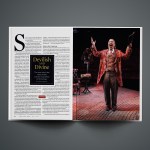
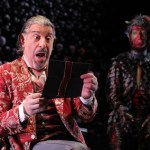
A photo of the actors on stage during the performance.
Christianity Today October 23, 2025
Image: Fellowship for the Performing Arts

If anyone expected a Halloween gimmick, they were disappointed. 

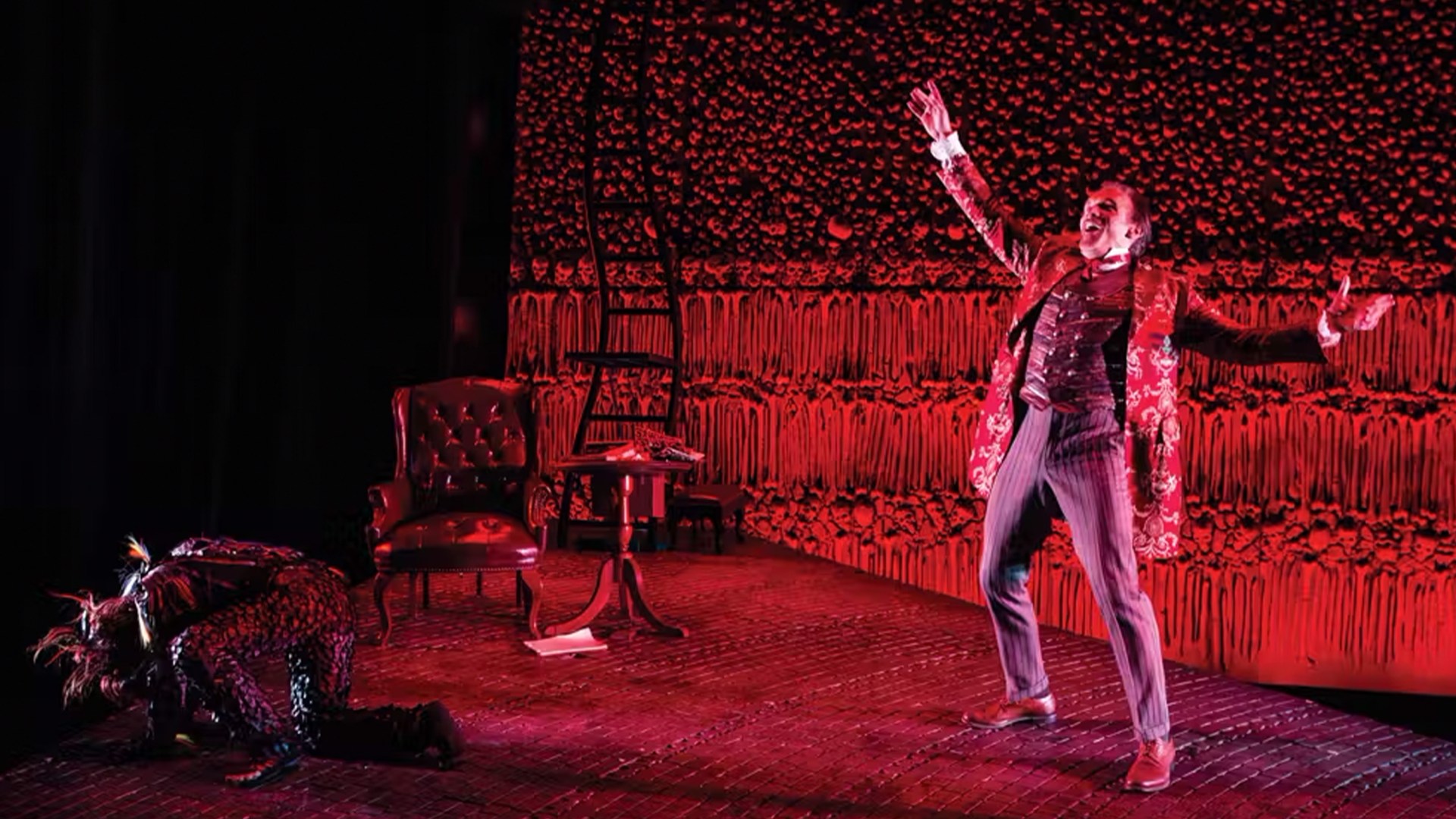
I can see how some theatergoers might have been confused. It’s October, after all. Marketing materials for The Screwtape Letters, a theatrical adaptation of C. S. Lewis’s epistolary novel currently on a national tour, show a sinister man cast in red before a wall of skulls and femurs. 

Last weekend, the California Theatre staged the two-actor play about demons and hell, complete with a glowing red mailbox, echo effects, vomit, and creepy lighting. Next weekend, the venue will host Symphonic Spooktacular: “Bewitching Broadway.” If you didn’t know the Screwtape book, you’d be forgiven for thinking this was similar spooky-season fare. 

But frights weren’t the point of this show. At least, not the jump scare kind. Fear of God? For sure. And I think the audience in San Jose’s gilded California Theatre mostly knew that’s what they were in for. That is, I think they were mostly Christians. At least if the laughs were any indication.

The packed house for the 7 p.m. showing laughed at jokes about what demons eat—“municipal authority with graft sauce,” “a lukewarm casserole of adulterers.” They laughed at how humans get led astray from their faith: sometimes by pastors, sometimes by sex, sometimes by friends they want to impress, sometimes by “moderation in all things.” 

They did not laugh about the terrifying prospect of respectable people “progressing quietly and comfortably” toward hell. That warning they took seriously. They did not laugh (well, maybe they gave a knowing chuckle) at veiled Jesus references. 

All the play’s lines, funny or otherwise, come from C. S. Lewis’s original text, first published in 1942. (The show excerpts 24 of the 31 letters in his novel.) Screwtape takes place on one spare set—essentially an armchair and a desk—with dialogue recited by one character, the senior demon Screwtape, who dictates to his pantomiming minion, Toadpipe. 

Screwtape wears a waistcoat and a smoking jacket. Toadpipe wears a scaly metallic onesie. Screwtape speaks in a posh British accent. Toadpipe babbles and hisses. The addressee of Screwtape’s letters—his nephew Wormwood, a junior demon—is never shown. Nor is the human “patient” that Wormwood is attempting to tempt under his uncle’s tutelage.

It’s hard to sustain 90 minutes of monologue, and my attention drifted at times. But Screwtape (Brent Harris) does an admirable job with what he’s given, introducing elements of physical comedy to break up the staging and varying his delivery as the show goes on. (By the end, he’s despairing, hair standing on end, at the prospect of the patient’s salvation.) 

His role necessitates dramatic flair, and he provides—though sometimes his delivery is too exaggerated to be effective. Sometimes, it’s just weird. More laughs came in response to his thrusting and sex sounds, which accompanied an already-odd passage from Lewis about fashionable female body types. That passage is unobjectionable in its takeaway—it’s a warning about pornographic desires and the pressure they put on women—but it also shows its age, and Harris’s interpretation doesn’t help its cause.

More so than the play’s challenging structure, whoever takes on the character of Screwtape has to contend with the production’s purpose. Fun? Sure. But this is also an altar call. 

The “justice of Hell is concerned only with results,” whereas the Enemy, “heretical” as it is to admit, is motivated by love, proclaims the beleaguered uncle. “Real life” may seem to be lunch and the newspaper—but there’s actually nothing more real than this world of heaven and hell, powers and principalities. “We want cattle who can finally become food,” sneers Screwtape. “He wants servants who can finally become sons.”

Preaching is the point. Screwtape’s theatrical adaptation has been put on for almost two decades now by Fellowship for Performing Arts, a “not-for-profit New York City–based production company producing theatre and film from a Christian worldview” for “intellectually and spiritually diverse audiences.” (This tour will continue along the West Coast before visiting Arizona, Kentucky, Ohio, and Michigan.) 

Its other productions have included The Great Divorce and Paradise Lost as well as stagings of Genesis and Mark’s Gospel. Most theater groups don’t have a statement of faith. FPA’s is the Nicene Creed. No wonder that the staging is barebones and the casting is slim. The point isn’t a big-budget production but something streamlined that can carry the gospel to as many theaters as possible.

The company’s founder, Max McLean, played Screwtape himself for many years. (CT profiled him in 2012.) Right now, McLean is acting in a show he wrote called C.S. Lewis Onstage: Further Up & Further In and working on a Screwtape movie. 

During his post-show talk in San Jose, as the audience effused praise for what they’d just seen, McLean said that the Screwtape show had been convicting and even life-changing for some viewers, judging by feedback he’s received. The point of the production, he reiterated, was for viewers to understand the “wiles of the devil” and to “put on the armor of God.” 

Some elements of the show are alarming—like when Screwtape, illumined in icy blue light, mocks a human who realizes too late that he wasted his days on earth; or when he describes the noisiness of hell to a bashing soundtrack, as compared to the silence and music of being with the Lord. Those vignettes were sobering for me, a Christian. If any agnostics in the audience saw them, I bet they had a reaction too.

But most viewers, I’d wager, weren’t skeptics but believers—several of whom, like me, have read the original book. (There was a show of hands during the talk.) We were the in-group, laughing cheerily at cracks at celebrities and sexy temptresses and selfish people who are too particular about their tea and toast, giddy when the demons gag on words like prayer and love. Ha! Take that! We wear the armor of God! “Mm,” murmured the woman next to me as she watched, in the same way some congregants hum approval along to sermons. 

Ultimately, it’s C. S. Lewis himself who sets us straight. Through the words of Screwtape, Lewis warns of worldly vice and snobbery but also of Pharisaic hubris, spiritual pride, an “inner ring of trained theocrats.” At least on stage, it’s hard for those warnings to land as powerfully as the more theatrical jabs at hourglass silhouettes and Madonna. But they’re certainly in the original text.

In the novel, which I read again post-curtain, a preface caveats that the sinful humans Screwtape mocks are themselves not given “wholly just” portrayals. “There is wishful thinking in Hell as well as on Earth,” Lewis warns. Nobody is safe from the snares of Satan—but also, nobody is outside of the grace of God. 

Theology

A Real Revival Is Not Controllable 

It implies a movement of the Spirit, not just a boost in numbers.

A dove symbolizing the Holy Spirit.
Christianity Today October 22, 2025
Illustration by Christianity Today / Source Images: WikiMedia Commons

This piece was adapted from Russell Moore’s newsletter. Subscribe here.

“I saw on a news clip that Bible sales are up,” a woman said to me this week. “Does that mean we are in a revival?”

The news reports this woman noticed are consistent with what Bob Smietana at Religion News Service cited from a new Pew Research Center study: A growing number of Americans—almost a third—now believe religion’s influence is rising in America.

Last week, my friend David French noted in his New York Times column that he senses a changing spiritual temperature, but argued that it might not be revival we are feeling. French sees something more like a revolution—a movement that combines the language of faith with what political scientist William Galston calls the “dark passions” of anger, resentment, and revenge.

At the same time, in recent years we have seen signposts of what very few would doubt are moments of revival—the renewal at Asbury University, for instance. Whatever one thinks of the word evangelical these days, one mark of virtually anything included in that designation is a hope for and openness to revival.

It seems that this is a time of both warning and hope. One kind of revival is a sign of God’s favor, another kind a sign of God’s absence—and we ought to pay attention to both.

Almost 20 years ago, Jewish commentator David Frum, now at The Atlantic, offered an outsider view on why evangelical Christians seemed to so often want to claim their brand as a “majority” in American life—silent or moral or “real American.”

“Christian conservatives often react with hostility to bad news, even when they hear it from their friends,” Frum wrote. “Good populists, they confuse the observation that they are losing with the opinion that they ought to lose. And they usually reply to bad news by citing polling data that indicate substantial public support for their positions.”

I winced when I reread these words after all these years. While I don’t think I’m anybody’s idea of a populist, I can see how, at least psychologically, I did indeed embody the mindset Frum described. That was often, for instance, one of the ways I argued for the superiority of evangelical Protestantism to the mainline denominations—or how I argued that my more conservative Baptist wing was superior to the Baptists on our left. Our churches were growing, and their churches were not.

To some degree, my point was and is valid. After all, I was reacting to some of the more extreme liberalizing forces, which argued that modern people cannot accept virgin births or second comings, so Christianity must “change or die” by throwing the supernatural overboard. But if that argument worked on its own terms, then we should see Unitarian Universalist megachurches or global church-planting movements of congregations with rainbow flags. We don’t.

If someone said to me, “I want to quit my job and take up origami because I want to be a millionaire,” I might well respond by saying, “Have you ever seen a millionaire who became rich doing origami?” That would be addressing the argument on its own terms. But I would miss the chance to point out a more important problem: “You can’t even make a recognizable paper swan.”

Many of us went well beyond engaging the argument for revival on its own terms—often implicitly assuming that bigness is an argument for God’s blessing and that one’s “rightness” could be seen in the success itself. That argument, though, leads us to a heretical view of God.

If the growth of conservative evangelicalism in the late 20th century implied God’s approval of us, then did that mean God had previously approved of liberal mainline Protestantism when, in the first half of the century, it was growing? Back then, did God side with the massive and liberal Riverside Church in New York City and reject the small, struggling Gospel Mission down the street from it?

Was God an Episcopalian who became a Southern Baptist who became nondenominational and now has baptized himself with the Holy Spirit and become a Pentecostal? That’s the absurdity to which a metric of judging fidelity by “success” will lead.

Twenty-five years ago, the historian Martin Marty noticed this subtle change in us, in what he described as a shift from “truth claims based on unpopularity to truth claims based on popular success.”

Marty said the typical conservative evangelical mindset throughout history has included an insistence on an objective standard of truth—standing above and outside of history. This usually has resulted in what is considered strange, weak, and foolish when judged by the standards of the outside world. Marty pointed out that Jesus uses the metaphor of a “little flock” when speaking of his people, promising such as these the kingdom (Luke 12:32).

The implication in Jesus’ words is that those who follow him will be tempted to fear because they will feel, based on the evidence of quantifiable success, that they are endangered. The flock will be little when judged by the standards of human categories, but they will receive a kingdom given to them in Christ—and therefore not visible until he is (17:20–24).

When success is measured by public opinion, the stakes are high. When the sign of God’s favor is seen in popular response, we inevitably start to see the market—however that market is defined—as the revelation of God. And when the market shifts what it wants, the entrepreneurs must change with it. In some eras that means sexual “liberation,” and in others it means the humiliation of opponents.

Jesus describes the Beast of Revelation to John as having near-universal popularity and success: “Who is like the beast, and who can fight against it?” (Rev. 13:4, ESV throughout). In this case, what seems like revival is actually collapse, while what seems like collapse—believers being conquered (v. 7)—is actually revival.

Revival, as Jesus reveals it, entails a change of affection (2:4–5). Sometimes that is seen in explosive growth (as on the day of Pentecost), and at other times it is seen as a tiny remnant conserving what is true. In either case, the church—and individual Christians—should know both how to be “brought low” and how to “abound” (Phil. 4:11–12).

We should pray for revival. That starts with knowing what it is. Revival is not a market or an artifact. Revival cannot be controlled; it can only be received. Revival is the wind of the Spirit—a wind that often tears down a Babel before it calls out an Abram from Ur.

Revival doesn’t start with a blueprint or, God forbid, a marketing plan, but with a state of helplessness and dependence. When God showed Ezekiel a field full of dried-out bones and said, “Son of man, can these bones live?” the prophet responded, “O Lord God, you know” (Ezek. 37:3–4). That was the right answer. And it should be ours.

God can send revival. But that will mean, as it usually does, that the kind of religion the age wants—the kind that can be livestreamed and monetized—will first have to fall. Real revival is disturbing and disrupting, which is why so many of us, if left to ourselves, prefer the counterfeit kind.

Revival? We can’t handle revival. That’s the point. Revival—the real kind, the kind that can’t be controlled—handles us. And the first thing it blows away is the stick by which we measure our success.

Russell Moore is editor at-large and columnist at Christianity Today and leads its Public Theology Project.

Apple PodcastsDown ArrowDown ArrowDown Arrowarrow_left_altLeft ArrowLeft ArrowRight ArrowRight ArrowRight Arrowarrow_up_altUp ArrowUp ArrowAvailable at Amazoncaret-downCloseCloseEmailEmailExpandExpandExternalExternalFacebookfacebook-squareGiftGiftGooglegoogleGoogle KeephamburgerInstagraminstagram-squareLinkLinklinkedin-squareListenListenListenChristianity TodayCT Creative Studio Logologo_orgMegaphoneMenuMenupausePinterestPlayPlayPocketPodcastRSSRSSSaveSaveSaveSearchSearchsearchSpotifyStitcherTelegramTable of ContentsTable of Contentstwitter-squareWhatsAppXYouTubeYouTube