Culture
Review

Review: Angel Studios’ ‘David’

Artistically, it’s ambitious. Narratively, it works. But it’s no “The Prince of Egypt.”

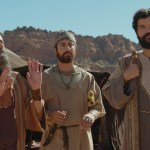
Brandon Engman as Young David in Angel Studio’s David.

Brandon Engman as Young David in Angel Studio’s David.

Christianity Today December 18, 2025
Copyright © 2025 by Angel, All Rights Reserved

This has been quite the year for animated Bible stories, from The King of Kings and Light of the World on the big screen to The Chosen Adventures on Prime Video. Now comes the most ambitious animated biblical production of them all: a rousing, epic, family-friendly musical about David called simply David.

The look and feel of the film—at least in its early scenes—will be familiar to anyone who has seen Young David, the prequel series that has been streaming on Angel and Minno for the past two years. David begins with the young shepherd (voiced by Brandon Engman) hanging out with his sheep in the fields and singing of the joy he feels just being with them in nature. He even saves them from a lion, just as he does in the prequel’s first episode.

But Young David stayed out to pasture for the most part and didn’t do all that much with David’s hometown of Bethlehem, aside from one memorable musical number. The film, on the other hand, ranges all over Israel and beyond, and it boasts some massive set pieces, from armies massed for battle in the Valley of Elah to singing and cheering crowds in the streets of Gibeah.

It’s not just the size of the storytelling that’s impressive; there’s also the way the film pays attention to smaller, more intimate details, like when Samuel (Brian Stivale) anoints David in the presence of his family. The prophet sings a blessing in Hebrew as he holds his horn of oil above the boy’s head. A hush comes over the film as leaves stir in the wind, a flame flickers in a lamp, and birds perch in the beams of Jesse’s house, keen to get a look at what’s happening.

The images in scenes like this have a depth and texture that is simply unparalleled in faith-based animation—and if Angel Studios has been surprisingly generous in releasing clips from the film online, it could be because they’re counting on viewers to be so impressed by what they see that they’ll head to the theater to see them all over again in even greater detail.

The story, of course, is a familiar one: the rise of David from simple shepherd to king of Israel, and his complicated relationship with the previous king, Saul (Adam Michael Gold), along the way.

We’ve seen part of this story already this year in Prime Video and Wonder Project’s House of David. But where that series leaned into the darker, grittier aspects of the narrative, full of battlefield violence and hints (just hints!) of sexual misdeeds, the animated David keeps things Sunday-school friendly.

For one thing, there is very little violence onscreen. The film can’t avoid the killing of Goliath (Kamran Nikhad) entirely, of course—it does omit the beheading—but it manages to suggest the darker parts of the story without quite showing them. Armies chase each other, but we don’t see what happens when one army catches up to the other. And when someone holds up a weapon to someone else, the camera cuts away before we see how the weapon is used.

The film tones things down in other, more unexpected ways too. After saving his sheep from the lion—by knocking the beast off a cliff, as he did in Young David—David then saves the lion itself, which is pinned against a rock. And when the adult David (now voiced by Phil Wickham) confronts the Amalekites who have captured his family (1 Sam. 30) … well, no spoilers, but suffice it to say he leads with nonviolence in a way that directly parallels his rejection of Saul’s armor before he fights Goliath. The Amalekites, incidentally, are wonderfully dark and ominous, and wear masks of bone and antler like something out of a Terry Gilliam movie.
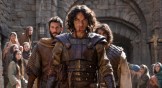

The film also completely avoids any hint of David’s love life. King Saul has no daughters to offer as a prize for killing Goliath, and David’s closest female relationships are with his kid sister Zeruiah (Sloan Lucas Muldown and Ashley Boettcher) and especially his mother Nitzevet (Israeli singer Miri Mesika). It’s particularly gratifying to see how big a role Nitzevet plays in this film. House of David and Of Kings and Prophets killed her off before they even began, contrary to the biblical narrative.

David makes its protagonist more heroic in other ways too. The biblical David and his men hid from King Saul by forging an uneasy alliance with the Philistines—one that entailed a fair bit of lying and killing on David’s part (1 Sam. 27; 29)—but the David of the movie plans to infiltrate the Philistines to save the Israelite army, until events conspire to draw him away.

Strikingly, a lot of these twists work. The film makes perfect dramatic sense on its own terms, and you can marvel at how cleverly it rearranges the narrative pieces of the biblical story. It just isn’t as morally complex as the original.

Bible nerds might get a kick out of some of the more obscure details that make their way into the script. One of David’s men is named Elhanan (Doron Rechlis), and when David’s men put on a skit celebrating David’s victory over Goliath, Elhanan plays the giant. (The biblical Elhanan had a history of his own with Goliath’s brother; see 2 Sam. 21:19 and 1 Chron. 20:5.)

The film also has some interesting parallels with another animated Bible movie, The Prince of Egypt. Like that film, this one emphasizes the hero’s closeness to his female relatives, and it casts an Israeli singer as his mother. It also features a scene in which a giant stone image of the king is defaced or destroyed. And in a song called “Tapestry,” David’s mother teaches him about trying to see the big picture, just as Jethro taught Moses in “Through Heaven’s Eyes”—a song that begins with the line “a single thread in a tapestry.”

For all its visual and artistic ambition, though, David isn’t as grown-up (for lack of a better word) as The Prince of Egypt. David has its serious moments, but it frequently goes for the joke in a way that the Moses movie didn’t—by finding humor in the cowardice of the Israelite soldiers, for example.

David is also arguably weakest when it should be most iconic—that is, when David fights Goliath. The confrontation between the Israelites and the Philistines plays like something out of a pantomime, as the Philistine king Achish (Asim Chaudhry) and the giant himself come across as campy, cartoonish villains. (Goliath is also super pale, which unfortunately plays into the “evil albino” stereotype.)

But there’s still a lot of movie to go after that, as David grows up and finds himself running from King Saul. And there’s plenty to enjoy, from the gorgeous visuals to the stirring music and the clearly articulated lessons about faith and courage. David may be a children’s film at heart, but it’s one that raises the bar for faith-based animation as a whole: thematically resonant for kids but artistically inspiring for viewers of all ages.

Peter T. Chattaway is a film critic with a special interest in Bible movies.

Culture

My Son’s Last Christmas at Home

Christmastime comes with its own losses and longings. God understands them.

A teenage boy decorating a Christmas tree.
December 18, 2025
Illustration by Elizabeth Kaye / Source Images: Getty

It is Advent. I ask my teenage sons to get the boxes full of Christmas decorations from the garage. I know what I’ll find inside: remnants of the past. Chubby-cheeked photos and little handprints on ornaments. Mid-elementary photos, strung together with curly ribbon, where teeth look so big in little mouths—so different from the chiseled jaw of my eldest, the one who made me a mother 18 years ago. Offhandedly I talk about his “last Christmas,” though next year, God willing, he’ll come home from college for the holiday. He won’t be gone.

But still, the season will be different than it has been these past 18 years. This December, I wake him each day and toast him a bagel before he drives to school. Not next year. The air in our home will have shifted. I’m not sure what to do about what’s coming. How do I mark a “last” with both joy for his future and sadness that the past is gone?

There’s this trend going around the internet in which a parent scoops up and holds an unwieldy teenager, an intentional “last time I picked you up.” The videos sound cheesy but can be surprisingly moving. We need rites of passage to mark not just the firsts but the lasts.

When my son turned 18 a few months ago, my husband said a blessing over him in front of extended family, marking the shift from boy to man. It was appropriate and beautiful. But now, as I open boxes and put up decorations, I’m not sure what this middle space between the milestones should look like. Graduation is coming, but it isn’t here yet.

I’m deeply conscious of a sort of dance mothers must do with sons—remaining a soft place to land but acknowledging that, as they grow, they are more completely entering the company of men. They need to prove themselves away from the home, putting the integrity and resilience we’ve hopefully instilled in them into practice.

But I already miss him. I miss the dress-ups and read-alouds. I miss gathering leaves on nature walks, eating snacks on blankets in the living room, and reading his illustrated Star Wars stories in first grade. I miss always being the one to hold and soothe.

My voice catches with self-restraint on the mornings where he heads out without much of a look back, grabbing his bagel. I say casually, “Hey, son. I love you. I’m proud of you.” These are sending words—a sort of benediction from childhood to adulthood. They seem the only appropriate ones, resonant with both sadness and joy. Words like these give a child a story to belong to, a home to return to, and an encouragement to explore, but they are tinged around the edges with longing for what was.

As I sit in my quiet house, looking out my kitchen windows, I wonder: What did God’s missing feel like as he called, “Where are you?” (Gen. 3:9) to his wayward children in the Garden of Eden? Surely longing propelled his love. But his rescue—though it went to great lengths—was often subdued, restrained. His people were in Egypt for 400 years, after all. And I meditate on his love for his Son. At Jesus’ baptism, when we hear the words of God the Father, he’s saying a version of the words I give my child. This is my beloved kid! Listen to him. I’m so proud of my boy (Matt. 3:17).

Friends ask me how I’m doing in this year of lasts. It’s not just my eldest. When spring comes, my other three children will be graduating from elementary school, graduating from middle school, and heading into senior year, respectively. In six years, our nest will be empty.

My children’s early years were full of great intention: going on library visits and to music class, reading The Jesus Storybook Bible daily, practicing hospitality with neighbors and churchgoers who would come for lunch most Sundays. We established rhythms of worship, play, and care.

As we begin this launching season, intentionality looks different. It is more understated guiding, more availability. It is less directive. They do the choosing and doing: selecting friends, doing homework, participating in activities of their own choosing. It is acknowledging what we always knew to be true in the lives of our children: God directs and holds. We are not in control. We’re witnesses to God’s work and simply along for the ride. Yet being along for the ride feels particularly vulnerable now, as if we’re turning a page into a new chapter we won’t have the privilege of writing.

To be vulnerable means to be fragile and finite and open to attack. As CT’s editor at large Russell Moore recently wrote, “Flesh and blood in Scripture is depicted as the ability to die, to be killed, to be vulnerable.” Our manger scenes seem tame to the reality of that first Christmas, Moore writes—Christ come to take on our flesh as a dependent infant who would one day die for the sins of the world. Christ is no stranger to being wounded for love’s sake.

When we love as Jesus did, we must always invite the possibility of being wounded. Love means opening ourselves to small hurts and major rejections, to pain, and eventually to loss.

For me as a mother, the loss of this family as we’ve known it for the last 18 years is its own sort of wound. (Don’t get me wrong, I’m also gleefully anticipating time with just my husband in a handful of years, and I’m excited to see how the next chapter will likely add new family members to love and enfold.) Things are changing. Whereas the chaos of early motherhood was its own transition, this calm of the sending years is new in its own way. The bookends of parenting put my finitude in stark relief.

This awareness of my own fragility is a gift. It reminds me that I am human and dependent on a good God. It reminds me that it is God, not I, who writes my children’s stories.

This December, we laugh as we take out the childish creations and place them on the tree: the quirky smiles, the painted handprints, the wording on T-shirts in photos that got cropped when they were made into ornaments. Behind my laughter is, of course, a wince—a loss that tries to transform itself into gratitude by slowing down time, sealing this moment into memory. Time still slips through my fingers.

My son places the star on top of the tree. I catch his eye. “Son, I love you. I’m so proud of you.”

Ashley Hales is editorial director for features at Christianity Today.

News

Bondi Beach Shooting Compels Christians to Stand with Jews

Jewish-Christian friendships offer solace and solidarity after antisemitic violence.

Christianity Today December 18, 2025
Getty Images / Edits by CT

On Sunday, two gunmen killed more than 15 people on Bondi Beach in Sydney, Australia, where the local Jewish community had gathered for a Hanukkah celebration. As antisemitic violence rises around the world, rabbi Josh Stanton says it is imperative that Christians respond in solidarity with their Jewish neighbors. 

The Bulletin sat down with Stanton, associate vice president for interfaith and intergroup initiatives at Jewish Federations of North America, and bishop Robert Stearns, president of the Israel Christian Nexus in Los Angeles, to talk about the threat of hatred toward Jews and the actions Christians can take in response. Here are edited excerpts of their conversation from episode 176.

We’ve seen too many instances of antisemitism and violence over the past year. How is your community responding?

Robert Stearns: Jewish communities are filled with fear because when antisemites chant, “Globalize the intifada,” they mean “Kill Jews everywhere.” Lo and behold, words of hate led to actions of hate. Our fear is that the tirade of hate that we have been hearing is going to manifest in physical, real ways across the country. Rabbi Yehiel Poupko says the Jewish people were “a family that became a faith that stayed a family.” When any one of us is targeted, all of us feel it. 

Josh Stanton: Our community in New York is reaching out to our Jewish brothers and sisters to express our care, our solidarity. The Jewish people have been persecuted and hunted down more than any other people in history. In the past, Christian support for Israel has had a lot of baggage, sometimes connected to specific eschatology or theological presuppositions. I have a moral obligation to stand against racism, bigotry, hatred, and violence in any form. Our community is deeply strategizing how we develop a more holistic, transcendent outreach to our Jewish brothers and sisters that’s not encumbered by some of the baggage of the past in Christian circles but far less evangelical circles. 

For two millennia there’s been a teaching of contempt, meaning that Jews are supposed to suffer in exile forever because they refuse to accept Jesus as the Messiah. As a result, many Christians theologically struggle with the idea that Jews have returned in large numbers to their ancestral homelands. Christians need to grapple with that theological issue at this moment in order to be good friends and allies of the Jewish people. Many are doing that. It takes time and intention.

The other aspect is replacement theology: the idea that, though Jews were in covenant with God, because of their refusal to accept Jesus as Messiah, they are no longer in covenant. I’ve seen Bishop Stearns and other deep friends of the Jewish community make clear that they are drawing from the teachings of Romans that Christianity was grafted onto the tree of Judaism. This tree has deep roots that we can draw from together, but it means that Jews are still in living covenant with God. If Christians are able to grapple with the teaching of contempt and replacement theology, there is so much that we can do together in friendship.

These crimes seem to be a violent outgrowth of protest culture, where all Jews get lumped into one generic community. How important is it that people understand Judaism’s diversity?

Stearns: By random historical coincidence, by act of God, for whatever reason, the majority of Jews in the United States have ancestry from Eastern Europe. That is not true in Israel and for Jewish communities around the world. If you go into French synagogues, a large percentage of French Jews are from North Africa, and they do not look the same as Jews of Eastern European ancestry. Many of them speak Arabic and have different customs. 

For Americans who don’t know the difference, it’s easy to paint with a single brush a highly diverse people that has been shaped by every culture that has hosted them, usually for the good. It would be nice if people listen to Jews as they describe themselves, rather than telling Jews who they are or who they are supposed to be. When we’re told who we’re supposed to be, it reduces our humanity. It turns us into the types of people you can hate. When you strip our humanity from us, it’s easy to hate an idea of who we are. 

Political progressives are searching for something to be for right now. That is an important journey for them to be on, but they cannot coalesce around hatred of Jews in Israel. That is not a reasonable way to find your way out of the political wilderness. Hatred of Judaism is not progressive and is not an acceptable path in American political discourse. Very sadly, a lot of the most radical anti-Jewish and anti-Israel voices today are from the progressive camp. For many Jews who have voted left of center, it’s a disillusioning and painful experience. It is not okay to blame one group of people for all of the ills of the world. That is a story as old as Jewish-Christian relations, and it is a story that we need to tell differently today.

How has American Jewish life changed since October 7 and since the outbreak of antisemitic violence?

Stearns: If we put aside, for a moment, the emotional and physical toll of the violence and hatred directed against Jews, there’s also a financial toll. Synagogues are spending, in many places, 20 percent of their budgets on security.

It takes two or three lines of security to bring your kids to Hebrew school. You tell your five-year-old child that in order to practice Judaism, you have to be wanded twice and go through a mantrap at your synagogue door. When I go to Episcopalian churches, I walk right in the front door. No one’s there, no guard, no locked doors. It is a different reality for Christians right now than for Jews. Unfortunately, the murders have taught us that security is absolutely essential for our physical well-being. What it does to us emotionally, day in and day out, being reminded of the fact that there are a lot of people out there who wish us harm, it’s excruciatingly painful.

For mission-driven organizations who want to feed the hungry, who want to care for the vulnerable, these security costs are like a 20 percent tax by virtue of humanity’s hatred of Jews, the ambient hatred in our society. How are we supposed to follow through on our mission when we can’t keep our doors open? How are we supposed to motivate and excite people about Judaism when it’s harder to get into a synagogue worship service than it is to check in for a flight at JFK airport?

How have you seen Christians effectively show up and show solidarity following instances of antisemitic violence?

Stanton: An increasing number of pastors and credible leaders from a broad spectrum of Christianity are waking up to the moral, transcendent obligation to care for humanity and specifically for our Jewish brothers and sisters. Scripture is generally the story of the majority getting it wrong and a little remnant getting it right. Then God partners with the remnant; something salvific comes from it. My prayer is for an awakening and an education coming, because I don’t think just the future of American Jewry is at stake. The future of the Judeo-Christian worldview and Western civilization and basic human rights truly is on the line. 

Stearns: It all starts with one friendship. What is a concrete message to Christians everywhere? Reach out to your Jewish friends. Say, “Hey, I care about you. Can we get coffee?” It’s amazing what can come out of one simple conversation over coffee.

The first time I felt okay after the extraordinarily painful attacks of October 7 was in the presence of Christians, because it was the first time I felt held emotionally and realized that I was not alone, that Jews were not alone.

The good that you can do, pastorally and relationally, transcends words. This is an amazing opportunity for Christians everywhere to reach out in friendship, to start to see Jews as Jews see themselves, and to fight antisemitism and the virulent strains of anti-Zionism together. 

History
Excerpt

The Story Behind Handel’s ‘Messiah’

Meet the unlikely characters who defined this musical classic.

Image credit: Illustration by Rick Szuecs / Source Image: Sora

Christianity Today December 17, 2025

Handel’s Messiah is one of the most popular classical compositions played at the holidays. Filled with biblical passages and soaring vocal and orchestral arrangements, Messiah takes listeners through the story of Scripture with an eye for the timeless theme of hope.

Clarissa Moll of The Bulletin sat down with Charles King, author of Every Valley: The Desperate Lives and Troubled Times That Made Handel’s Messiah,to learn more about who formed this important work and why, almost 300 years later, it resonates with those holding on to faith when life seems darkest. Listen to the entire conversation with special musical selections from Calvin University in episode 130. Here are edited excerpts.


Paint the landscape of George Frideric Handel’s world. How was it similar to or different from our own?

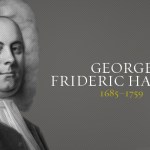
Charles King: Handel was born in 1685 in what would become Germany in the long shadow of conflicts in the Holy Roman Empire in Central Europe. This was the Enlightenment, a time of rationality, reason, and advances in science, but anybody who lived through that period would not have thought of it in that way. Disease was rampant, and many families buried more children than they ever saw to adulthood. Handel’s father was a barber surgeon and the local official charged with managing epidemics like typhus or the plague. From boyhood, Handel knew intimately what it was like to live in a worried and anxious age.

Handel spent most of his career in London as court composer to the royal family. He was at the absolute center of the political system of his day, but there was great division and dissension over politics, religion, and the shape of society. A sizable portion of British society thought that King George I, the king whom Handel served, was illegitimate. He had taken the throne in a dynastic change in 1714, and many felt he was the wrong selection. Underpinning everything in the British Empire was human enslavement and its accompanying wealth, including that of the patrons on whom Handel depended. 

In many ways, Handel’s world looked much like the world we know today. This period of deep worry about the state of the world produced what is arguably our greatest musical monument to the possibility of hope. Those things go together for a reason. People were looking for some way to think, feel, and believe their way toward a more hopeful world. 


How did religion function within this setting? Was Handel himself a religious man? 

Handel was religious in the normal 18th-century way but not in a “wear your religion on your sleeve” sense. The king he served was also the head of the established English church, so Handel composed music for the church and religious and courtly ceremonies all the time. It wasn’t until later in his life that he started going to church regularly and evinced a real sense of personal belief and devotion.

Messiah is completely composed of sacred texts, and we want Handel to be aware that he is divinely inspired. We want an angel to be sitting on his shoulder. But when Handel composed it, there’s no real evidence that he thought of it in that way, for one simple reason: His work didn’t predispose him to that kind of reflection. In addition to being a courtly composer, Handel also composed for the stage—working quickly, churning through new ideas, using whatever he had at hand, and then moving on. 

The truest spiritual father of Messiah is probably Charles Jennens, the librettist who created the structure and assembled the text. Jennens was from one of the wealthiest families in Britain, and he wanted for nothing. He also suffered from what we would now call chronic depression or maybe bipolar disorder. His preserved letters show incredible periods of manic work followed by deep depression, where despair, doom, and hopelessness enshrouded him. 

In the late 1730s or early 1740s, Jennens began attempting a systematic way to climb out of this mental state. As a believing Christian, he turned to Scripture and books on theology and philosophy. From this, he assembled the text of what we now know as Handel’s Messiah. He was trying to create his own personal, lighted pathway through the Bible. In the library at Gopsall Hall, his estate house in Leicestershire, England, he had surrounded himself with beauty—art and sculpture and painting—to pull him out of this state. He looked at Scripture similarly and thought, I have to get out of the state I’m in. How can I use the words that are most meaningful to get me there?

A decade or so earlier, Jennens’s brother had died by suicide, a death that hit his family very hard. Not only had they lost a family member, but the reason they lost him struck very deep. The family believed he had died by suicide because he had essentially gone off to Oxford University, met free thinkers, and lost his faith in college. When Jennens sat down to write the text of Messiah, he was also thinking about this and the role of faith in a person’s life: Is religion a thing that you think your way to? Is God a presence that you reason toward? Or is there something deeply ineffable, mysterious, awesome, and wonderful here? That pursuit infuses Messiah entirely. 

The first words you hear, from 1742 to the present, are “Comfort ye.” The words come like a trumpet up above the violins in the way that Handel orchestrated it. Quoting the prophet Isaiah, it’s as though Jennens says, “How would you live your day, your week, your life differently if you knew from the outset that things are going to be okay? How would you look for evidence of that in the world?”

There’s also something even deeper. In Isaiah 40, Jennens sees not just that you need comfort but that you need to be the one who’s comforting. “Comfort ye, my people”—that’s directed at us. Considering Jennens’s story, that is so profound. It’s as though he’s telling himself, “In the middle of my despair, in the middle of how awful everything is, I need to be the one to comfort others.” It’s amazing to me that in the 18th century, someone found that truth and wrote it down as the first thing they wanted someone to hear in this piece of art.


After receiving Jennens’s libretto, Handel waited before sitting down to write what he called a sacred oratorio in preparation for a tour to Dublin. After composing Messiah in 24 days, he asked a rather-complicated social figure to come with him and sing. Tell us about her. 

Susannah Cibber had begun a career on the London stage 15 years earlier as an ingénue in tragic roles. At the time, everyone was trying to capitalize on the Italian opera craze, and Cibber’s tradesman father recognized her musical talent and insisted that a better way for her to get into show business was to marry into it. He married her off to a man named Theophilus, who turned out to be a nightmare: a tough guy, serially unfaithful, terribly abusive, often drunk. Even worse, Theophilus sold visits with Susannah—sexual and otherwise—to young men who would pay his bar tab or his gambling debts. 

To complicate matters, Susannah fell in love with one of these men that she met in this way, a man named William Sloper. Theophilus sued her for divorce and her lover for damages. When the court found the lover guilty, the most intimate details of Susannah’s private life were aired in that London courtroom, and her life was ruined. People took down the testimony, accompanying the content with pornographic cartoons. After this, Susannah disappeared, appearing for the first time in Dublin at exactly the time that Handel was there. He casts her in the premiere in April 1742. 

Handel must have been aware of Susannah’s story because, among other things, he wanted her to sing, “He was despised and rejected of men, a man of sorrows and acquainted with griefs”—that amazing aria about the depths of Jesus’ suffering—this moment from which the entirety of Christian theology springs.

In Neale’s Musick Hall on Fishamble Street in Dublin, with two cathedral choirs and the equivalent of a military band, she steps forward from the choir to sing this. You could have heard a pin drop. Everybody there knew her story, and they could do the gender switch themselves. She was despised, rejected, a person of sorrows, and deeply acquainted with grief. 

As the story goes, silence followed that performance until a reverend in the audience who had just buried his wife stood up and said, “Woman, for this be all thy sins forgiven.” Of course, it really wasn’t her sins that were at issue; it was other people’s sins. But this was a transformative moment. This work of art about the power of redemption became the vehicle of this individual’s redemption at the premiere.

Susannah Cibber became the most highly paid, most successful tragedian of her generation. 


After the Dublin performance, how did Messiah become associated with Christmas? 

Thomas Coram, an agent for philanthropists, was burdened for impoverished foundlings in London. A foundling was a child who still had one or more parents alive but, because of poverty, was largely abandoned to his or her own fate on the streets. Few people cared about these children; most thought leaving them alone would teach their parents a lesson.

For 20 years, Coram worked to create the Foundling Hospital, an institution that served as a foster-care system for them. Just as Handel was about to pack Messiah away in his filing cabinet, if you like, the Foundling Hospital opened with a chapel, and a group of patrons asked him to do a benefit concert, where he repurposed some of Messiah for the event. 

After that, Messiah became an annual fundraising concert for the Foundling Hospital. Not in a grand cathedral or music hall but in this institution for abandoned and unwell children, many more people first heard this piece of music. As they looked up to the balcony in the chapel and saw the foundlings, people were very moved to think that the music was somehow helping the kids who were there. “For unto us a child is born.” Messiah is arguably the greatest piece of participatory art ever created. 


Do we, like Susannah Cibber and Charles Jennens and those foundlings, need life to bring us to our knees so we can receive this piece of music in the way it was intended? Is there a desperation that is almost necessary to apprehend Messiah’s message? 

Every generation has felt that Messiah is somehow written for them, because Jennens focuses on biblical passages that highlight contemporary anxieties. “Why do the nations so furiously rage together, and why do the people imagine a vain thing?” a soloist asks. Or “death, where is thy sting? O grave, where is thy victory?” 

For Jennens, that was the essence of the Christian story. Every piece of evidence is going to tell you that life will not be okay. The mystery of faith is how you believe the first thing you sang and believe it all the way to the final amen. Eighteenth-century audiences could feel that, and we feel it today. 

What’s more amazing, and hopeful too: Despite being very good friends, Handel and Jennens were political enemies. Jennens’s family supported the old Stuart dynasty that had been exiled when King George I, Handel’s employer, had come to power. These two people stood on opposite sides of the greatest political divide of their moment yet came together to create this. The story of Messiah reminds me that it takes all of us together to craft something new and hopeful in a deeply troubled and despairing world.

News

The Christians Helping People Enslaved by Cybercrime Scam Centers

After Myanmar’s military raided a compound, a network of ministries helps trafficking victims return home.

The KK Park complex in Myanmar's eastern Myawaddy township.

The KK Park complex in Myanmar's eastern Myawaddy township.

Christianity Today December 17, 2025
Lillian Suwanrumpha / Contributor / Getty

On October 20, rumors spread among victims held captive in a massive 520-acre scam center in Myawaddy Township, Myanmar, across the border from Thailand. “The gates are open,” people whispered, according to later-recorded statements. “The guards have abandoned their posts.”

The foreign workers at KK Park, many of whom had been tricked into online scamming and held captive by Chinese criminal organizations, hurried to the front gates of the compound to confirm the rumors.

It was true. Myanmar’s military had raided the compound, and the guards had left their post. The workers ran.

An estimated 1,500 people from 28 countries made it out. Some took shelter in nearby villages controlled by Myanmar’s ethnic armed forces while others swam across the Moei River into the Thai border town of Mae Sot, where Thai immigration intercepted them.

“This is heaven,” one victim recalled thinking when he got out, according to his testimony to International Justice Mission (IJM) staff two weeks later. In Mae Sot, he was able to buy Thai food for on 40 Thai baht ($1.25 USD) compared to 400 baht ($12.50) in the compound. “We didn’t have money to eat anything in the compound. And when we got out here, we felt like it’s really a heaven outside.” 

Many of the victims were lured to Thailand by false job ads, then whisked away to scam compounds in Myanmar, where Chinese bosses forced them to work long hours scamming innocent people online.

As the victims flooded into Mae Sot, Thai authorities contacted Mechelle Moore of Global Alms Incorporated (GAI), a Christian nonprofit helping scam-compound escapees. She quickly gathered her team members—who are trained in crime typology, reports of victim testimonies, and emergency response—and they drove over to the Thai-Myanmar Friendship Bridge, where authorities brought victims from neighboring Myanmar communities.

They set up stations to process victims by gathering their information, including nationality, and recording their testimonies. If the survivors had names and descriptions of traffickers, along with any evidence, team members recorded it for Moore to investigate further. GAI often shares this information with national authorities and embassies to better understand the syndicate’s structure, according to Moore.

Over the next few weeks, GAI, IJM, and other antitrafficking organizations helped explain to the escapees their rights, provide emergency essentials, conduct detailed forensic interviews, and help with victim identification, a long process of screenings and interviews with immigration authorities to determine whether an individual entered into scam work by coercion or willingly.

Moore noted that the scale of the cyberscam industry can be extremely disheartening. Still, she focuses on the individual.

“Go for the person in front of you. They matter to God,” she explained. “There’s a certain vulnerability in being tricked. They have PTSD, issues with panic, and shame. They need a lot of grace for what they’ve been through.”

Since scam centers first came onto the world’s radar in 2020, a lot has changed. Governments are starting to take action against the organized crime syndicates responsible. They’re raiding or cutting power to compounds, leading to the release of thousands of victims. Media attention has increased global awareness of the issue, and churches in Asia are seeking to help traumatized victims after they return home.

Yet the criminal syndicates are also adapting—quickly moving to different locations and restarting operations as they make just under $40 billion a year running cybercrime centers in Southeast Asia, according to the UN Office on Drugs and Crime. In total, the UN estimates 220,000 people remain held in compounds in Myanmar and Cambodia.

Other challenges exist: The sheer number of released victims is overwhelming governments and nonprofits. Meanwhile, governments struggle to differentiate between true victims and complicit criminals.

“In my 15 years of working for IJM, I have never seen such systematic brutality employed against trafficked victims,” said Andrew Wasuwongse, director of IJM Thailand.

The difficulty of caring for victims was evident after the raid on KK Park, Moore said. GAI and the other organizations at the border have small staffs and limited funding to care for the traumatized people leaving the compound. With no place to put them, the victims slept outside or in temporary shelters, while local churches and nonprofits cooked to feed them. Before the escapees crossed into Thailand, ethnic armed forces found themselves responsible for the care of hundreds of victims in addition to their own displaced peoples.

The majority of IJM and GAI staff were busy interviewing victims, which can take hours for each person, especially if the staff members need translators or if they gather evidence on traffickers. Identifying victims is complicated, as many countries still see them as scammers rather than trafficking survivors, and proving they were unaware of what they had come to Thailand to do is difficult. Meanwhile, embassies are overwhelmed and need to raise money to fly their citizens home.

“The general trend is more awareness [about forced scamming globally], but there are still fundamental challenges, like governments deciding where the line is between a scammer and a victim,” Wasuwongse said. “The view of many governments and authorities is still focused on stopping the crime, scamming, and fraud. Meanwhile, there’s doubt [about] whether the victims are really victims.”

Sam Dunnet, a doctor from New Zealand, was also on hand to help the released victims.  Dunnet had been coming to Mae Sot since 2013, initially to train and serve Burmese refugees in the Mae La refugee camp.

In late October, leaders of Global Advance Projects, which also helps scam-compound victims, asked her to assist with medical evaluations for those crossing the border. The Philippine Embassy had requested medical intervention, as many of their citizens had tuberculosis and cholera from poor living conditions in the compound and from camping out in the villages and jungles after escaping.

Dunnet noted that many of the victims she’s seen have torture wounds and struggle with exhaustion and a litany of other illnesses. Victims have said they worked more than 16 hours a day and their handlers would torture them if they didn’t meet a money quota or if they resisted instructions.

More than anything, Dunnet believes her most important role is to treat the broken souls of people who had been enslaved for months or years. Dunnet listened to heartbreaking stories of torture, beatings, severe untreated illnesses, suicidal thoughts, and guilt in defrauding so many people. She prayed for victims’ healing after they were deprived of basic humanity for so long.

Many of the victims came from African countries. Dunnet had previously served in hospitals and clinics across the continent, which helped her relate to the African survivors whom she met and even greet some in their native language. “There were many shame-and-honor problems—I knew that and the heaviness of carrying that,” she said.

She recalled Amy Miller, the head of Acts of Mercy holding a worship service with the victims. “It was full of repentance and prayer. It was so powerful.”

Due to increasing international pressure, in November, Myanmar’s military junta shared videos of its army bulldozing and bombing 150 buildings at the KK Park compounds.

Yet many, including Moore, believe it was only for show. The buildings demolished were all noncritical buildings, including spas, karaoke bars, and villas of the crime bosses. Meanwhile, satellite images and photographs show that the offices, dorms, and massive generators remain untouched.

“The only way out of this is divine intervention; [forced criminality] perpetuates itself,” Moore said. “This is not something that will dry up. The numbers are overwhelming. We need coordinated global effort, but there’s so much corruption in the world, that will always stop it from being eradicated. I don’t think man is capable of it.”

Still, Wasuwongse sees some progress. Some countries have sanctioned the Chinese crime bosses behind the centers. Thailand arrested a Chinese national who laundered the cryptocurrency earned from scam centers and turned it into property. IJM helped the Thai government convict 15 perpetrators for roles in trafficking to scam compounds. Wasuwongse also pointed out that the Philippine government has nearly eradicated smaller scam compounds in the country that had been fronting as offshore gambling businesses.

Recently, the church in Asia has better cared for victims who have returned home. In August, the Christian Conference of Asia held a gathering focused on forced scamming with participants from about a dozen nations. The church leaders assessed their response to the crisis and discussed ways to make church members aware of recruiters’ tactics, provide aftercare for victims, and advocate to their governments to protect victims.

Meanwhile, Talitha Kum Indonesia, part of an international Catholic network that fights human trafficking, is responding with victim-led initiatives that pinpoint the needs of the rescued, like creating guidelines for churches to provide trauma care and informing communities of recruitment tactics.

The international group 1000 Intercessors was formed two years ago to pray specifically for scam-compound victims. In a recent newsletter, the organization’s leaders shared the testimony of South Africans trapped in the compound’s prison who had not been fed for four days. The victims gathered together to pray and repent. Later that day, they called a staff member of 1000 Intercessors on a smuggled mobile phone to share the news: “Everyone is leaving! The gates are open. Everyone is fleeing KK Park!”

“None of the recent releases [and escapes] would have happened without God,” Moore said. She recalled feeling overwhelmed with the heaviness of the scam centers a year ago. “But God gives me hope when dealing with the one in front of me. He’ll show [the victims] something, or they’ll share ways he walked with them, ways he helped them stay hopeful. I always ask God to show me the small things [so] that I can see the goodness in it.”

Ideas

Dreaming Against the Machine

Technologies like AI privilege “growth” and “effectiveness” over imagination and inefficiency. God operates differently.

Christianity Today December 17, 2025
Illustration by Elizabeth Kaye / Source Images: Unsplash, Getty

This piece was adapted from the Mosaic newsletter. Subscribe here.

Many years later, facing the machines, I remember that distant afternoon when I picked up the novel One Hundred Years of Solitude. From the fantastic mind of Colombian writer Gabriel García Márquez, it offers a cautionary tale for our time.

The enchanted city of Macondo, known for its alchemy, has created a candy that causes insomnia. At first, citizens are dismayed by their lack of rest. But eventually they realize that this pill allows them the capacity for endless work, and soon “no one worried any more about the useless habit of sleeping.”

Although the insomnia doesn’t produce tired bodies, it does produce tired minds, and the people have severe memory loss. They forget the names of household objects; they lose their ability to recognize faces and remember their pasts. In their quest for infinite achievement, the Macondians realize they’ve lost a major prerequisite for thriving—their ability to dream. (Without deep, dream-state sleep, according to some research studies, memories aren’t properly processed.)

The people also find sleeplessness strips them of their imaginations, essentially turning them into machines. Now their sole purpose is to work, producing more for the sake of more.

Here’s the cautionary tale: I think we’ve eaten the candy. We’ve stopped sleeping. We’ve lost our memory.

Today, as in the magical world of Márquez, our relentless focus on more abundance, more progress, and more efficiency at any cost leads us to a dehumanizing amnesia that forgets faces and ignores history.

Our conversion into machines might appear to be godly stewardship of our resources. But our devotion is really to another kingdom. Jesus proclaims in Matthew 6:24, “Ye cannot serve God and mammon” (KJV), an entity identified by scholars as money, wealth, or avarice. In his book The Life We’re Looking For, Christian thinker Andy Crouch describes Mammon as a force that wants to “separate power from relationship, abundance from dependence, and being from personhood.” We proclaim Mammon’s gospel of greed, admiring the naive influencers and billionaire feudal lords who offer it their loyalty.

These days, Mammon has a new guise in the form of artificial intelligence. Amazon, UPS, and Target are laying off tens of thousands of employees—at least in part because they’re seeking to automate more and more of their operations to make products and deliver packages faster. The billionaire Peter Thiel, a professing Christian, has toured the world warning people about a coming Antichrist who will arise to impede technological progress. In his thinking, growth alone is godly, and there’s no room for restraint.

Meanwhile, Christian organizations and preachers promote the use of AI-directed spiritual formation as a strategy for church growth. Some groups market AI that can help you read the Bible or pray. Recently an AI artist reached No. 1 on the Christian music charts. Is our worship an act that we can outsource for efficiency?

How we labor testifies to the type of God we believe in. In Kahlil Gibran’s The Prophet, villagers ask the prophet to teach them about the virtue of work. He responds, “Work is love made visible”—not simply a means of production, as “machinist” theory would have you believe, but a spiritual discipline that reflects the character of God.

Mechanization makes this “visible love” irrelevant. Love is for humans. Machines are for efficiency, profit, and progress. They are not relational. They are tools used as a means to achieve a calculated end. The human end is different—to know God and love others.

When we become machines, we lose the memory of a heavenly love that operates outside our cost-benefit analysis. Jesus became flesh, was born of a virgin, and died an agonizing death on the cross. This was hardly productive by our mechanistic reckoning.

Indeed, Jesus disrupts efficiency in many of his interactions. Casting demons into swine disrupted a business for a pig herder but liberated a neighbor. The wealthy young ruler is surprisingly told to forsake his “productive” life and give his riches to the poor. Despite Judas’s complaint that the anointing oil could have been sold to feed the poor, Jesus blesses the improvisation of his devoted follower. Philosopher Jacques Ellul would call these human acts of apparently wasteful benevolence “an introduction of the useless” into the world of efficiency. But machines have no positive vision other than utility. The language they speak is profit.

Woe to the church that loses its ability to dream of another kind of world, the church programmed to consider only growth and effectiveness. And blessed be the church that, unimpressed by Mammon’s magnetic force, corrects the greed of Acts 6 and practices the radical solidarity of Acts 4. In these churches, pastors and influencers might not conjure so much content or curriculum—but they will remember what it means to move at the speed of humanity, which allows for error and rest. 

Some predict the AI revolution will lead to fewer work hours or a significant depletion of the workforce altogether. But in the 19th century, as industrialism boomed, not many would have expected that they would exchange their agrarian pace not for more leisure but for more dangerous, dehumanizing hours in factories. The ramifications of technology aren’t as predictable as the machines we make. We’ve already forgotten that too.


The theologian Walter Brueggemann wrote that dreaming is deep spiritual work, “rooted in energizing memories and summoned by radical hopes.” When we dream, our minds take the raw materials of experience or history and imagine something new.

Enslaved people dreamed as a revolutionary act against being made machines. So did abolitionists. They called on the stories of Scripture and what God had already done to ground an eschatological hope that defied their current circumstances. The dreaming of Martin Luther King Jr. energized a movement that Mammon had codified into discriminatory laws. In every case, imagination allowed for defiant joy. The marginalized could sleep in the peace of knowing a new tomorrow was possible.

In the Old Testament, once Joseph receives his dream, neither distractions nor detractors can keep him from the pursuit of the prophetic imagination God has deposited within him. Climbing in social status, he still has the discipline to deny himself what belongs to others. Imprisoned, he finds time to serve. Possessing great power, he doesn’t return evil for evil. Dreams are borrowed visions from God given to us to bless others.

Not all dreams are so noble. Outside the church, contemporary sorcerers strive toward a singularity where the useless habit of sleep no longer holds us back and in which suffering and death will be no more. We battle the principalities of a modern Docetism that attempts to liberate the mind (and soul) from the body. Thiel has funded multiple startups practicing eugenics in the form of gene manipulation. It seems that when billionaires aren’t attempting to liberate themselves from flesh and blood, they’re developing technology that strives to create a superior race.  

But we’ve seen this before. Satan sold us the same goods in the garden. The plot unravels on humanity when we attempt to strip God of his authority. Creating a world of convenience in our own image, we actually produce suffering and exploitation.

I am mindful that machinery has created better conditions for much of humanity—transportation, medical services, the technology that allows me to type this very article. But moderation still matters. Abundance theories lead us to believe contentment is naive and regulation is archaic. It is the insatiable appetite of man that leads us to a greed where “desire outstrips need,” as pastor and historian Malcolm Foley candidly puts it. Rather than trusting God with the increase as we slumber, we stay up late with a scarcity mindset, telling ourselves that without more we will have nothing and will be nothing. 

God’s grace and love are without limit, but our earthly resources and human capacity are not. “Rest is the glad contemplation of work well done,” said thinker Andy Crouch in a recent talk. And rest is not only for the cultivator but also for the land (Lev. 25). Isaiah 5:8 offers a warning to those who “add house to house and join field to field till no space is left and you live alone in the land.” The machine’s program is a colonizing spirit—when there is undeveloped land and vacant time, there is only opportunity for occupation.

Jesus, by contrast, lived an unpredictable life that allowed for improvisation, rest, and disruption. He had time for the outcast and the afflicted. He had time for intentional leisure with his disciples.

The command to rest is closely related to Jesus’ warning: We can’t serve two masters. We must reject the false gods and toss the ideological spoils lest we become like Achan, hiding trinkets that will lead to our destruction.

Dreaming in our age of machines will alleviate the insomnia mixed up by the crafty sorcerers of our day—the tech tycoons, AI evangelists, and work-worshiping Christians. They promise a paradise. They blaze a trail toward more and more and more. But ultimately, all we’ll have is the unsatisfying taste of production on our tongues, muted memories, and a trail of faceless humans in our wake.

Sho Baraka is editorial director of Big Tent for Christianity Today.

News

Church Provides Shelter, Aid During Bondi Beach Attack

Australian Christians are finding ways to support the Jewish community after an ISIS-motivated shooting killed 15.

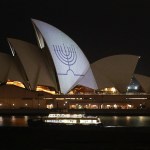
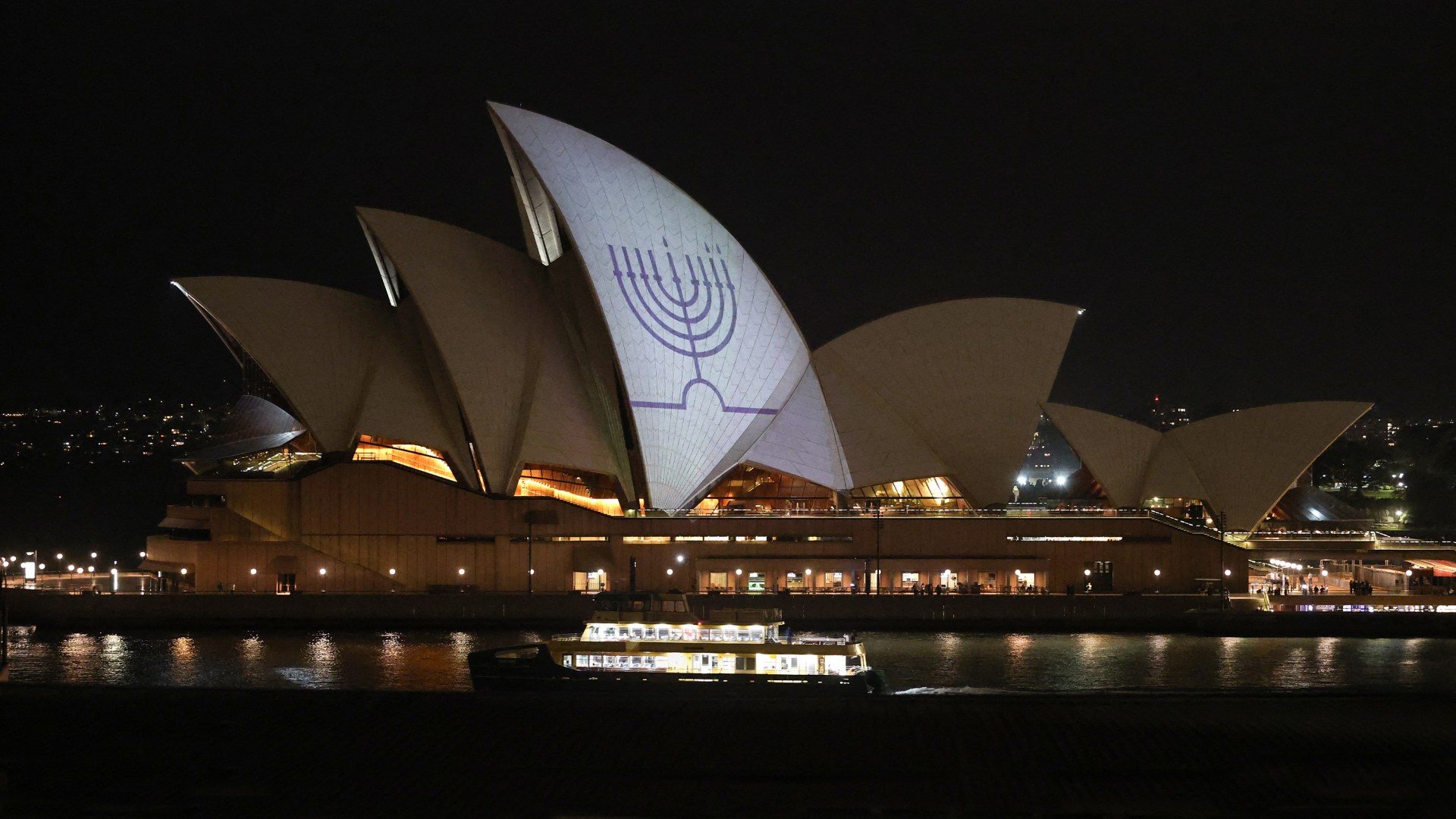
A Hanukkah menorah is projected onto the sails of the Sydney Opera House in memory of the victims of the shooting at Bondi Beach in Sydney on December 15, 2025.

A Hanukkah menorah is projected onto the sails of the Sydney Opera House in memory of the victims of the shooting at Bondi Beach in Sydney on December 15, 2025.

Christianity Today December 16, 2025
David Gray / AFP / Getty

It was just after 6:30 p.m. on Sunday when pastor Martin Morgan and about 20 volunteers returned to Bondi Beach Church, a block away from Sydney’s famed Bondi Beach. They had been delivering boxes of food to families going through difficulties. Once they arrived inside, they gathered to pray before chatting about the visits and that evening’s sermon.  

Suddenly, Morgan heard pops that sounded like firecrackers or fireworks. A few seconds later, they saw a woman in formalwear carrying her shoes as she ran past their door. She was the first of a wave of at least 50 people in a variety of beachwear running in the same direction, crying.

Most of them passed the Anglican church’s front door on Wairoa Avenue, but some yelled, “Get inside! Get inside! There’s someone with a gun!” before ducking into the building. Morgan and his team welcomed people into their church, locked the door, and began to pray for people who may have been hurt. The gunshots continued.

Then they heard helicopters and the sirens of emergency vehicles. The people sheltered in his church described seeing people bleeding and others lying face-down on the asphalt.

A hundred yards away from the church, Naveed Akram, 24, and his father, Sajid, 50, stood on a pedestrian bridge and opened fire on a Hanukkah celebration taking place at Bondi Beach, organized by the synagogue Chabad of Bondi to commemorate the first day of the Jewish holiday. Their social media post advertised jelly-filled donuts, a petting zoo, live entertainment, and the lighting of the first candle of a giant menorah.

The event’s location near a playground made the festival easy for hundreds of people to find. It also made them an easy target for Akram and his father, who had a recreational firearms license and owned six rifles. The pair used pump- and bolt-action rifles to shoot into the crowds of people on the half-mile crescent of beach.

One bystander, Ahmed al-Ahmed, snuck up behind Sajid Akram, tackled him, and disarmed him. Al-Ahmed held Akram at bay before leaning the gun against a tree to show police he wasn’t one of the attackers. He was among the nearly 40 people wounded.

The Akrams killed 15 people, including 41-year-old Chabad rabbi Eli Schlanger; a 10-year-old girl named Matilda; an 82-year-old Slovak citizen named Marika Pogány who delivered more than 12,000 Meals on Wheels over the course of a decade; and 87-year-old Holocaust survivor Alex Kleytman, who shielded his wife, Larisa, from the bullets.

Police shot and killed Sajid and wounded and detained Naveed. They found two rudimentary improvised explosive devices and two homemade Islamic State flags in the pair’s car at the scene. By 10 p.m., the prime minister declared the shooting an antisemitic terrorist attack. An Australian counterterrorism official believes the Akrams received training last month while visiting an island in the Philippines known for being a hotbed of extremism.

In the aftermath of Australia’s worst mass shooting since 1996, churches in the area are holding vigils and services while providing counseling and practical assistance to the Jewish community, bystanders, and neighbors. Christians are seeking to stand with the Jewish community as antisemitism rises in Australia.

Morgan, who mentioned his church also provided aid after a stabbing attack last year at the Bondi Junction Westfield mall, noted that caring for those affected by such an violent and traumatic event is a long-term commitment.

“In the end … the message of the gospel and the hope that Jesus offers is of great practical help,” Morgan said.

As those sheltering in Bondi Beach Church Sunday night scanned their social media feeds to stay updated on what was happening, Morgan and his church members also started praying for the dying and wounded. When they heard police had neutralized the shooters, they walked out to the street and began to direct traffic away from the beach and talk with neighbors.

Several of Morgan’s church members had joined the Hannukah celebration on the beach after the 5 p.m. church service. They were unharmed and comforted those who had been shot. The church building was open until midnight, serving coffee and tea and allowing people to gather, pray, cry, and process the attack. Morgan made sure the church remained open the next day as well.

On Monday evening, Morgan and assistant minister Matt Graham held their scheduled Nine Lessons and Carols service at St. Mary’s Anglican less than two miles away. They modified the service to include “a time of somber remembrance for the victims and prayers for those who’ve been affected, and that the Lord and the Prince of Peace would show how that peace works in the context of this sort of violence,” Morgan said. The service ended with a candlelit vigil.

For many in the Jewish community, the tragedy of the shooting is magnified by the fact that as antisemitism in Australia has grown since the Israel-Hamas War began, an attack felt inevitable. “Jewish friends of mine have been expecting something like this,” Morgan said. “They said, ‘It’s going to happen. It’s not a matter of if it happens, but when.’ They’ve been on tenterhooks.” 

The day after the shootings, Ben Pakula, a Messianic Jew and assistant minister at Grace Anglican church in Sydney, told Dominic Steele on The Pastor’s Heart podcast, “To be honest, I find it difficult to know how to respond. There’s an element of shock when you hear something like this, but I’m not surprised, I’m very sad to say.”

The country’s 117,000 Jews are concentrated in Sydney and Melbourne. Synagogues and organizers of Jewish events in Sydney’s eastern suburbs have expanded security since the October 7, 2023, Hamas attacks in Israel as antisemitic acts in Australia increased fourfold.

On October 9, 2023, government officials lit the sails of the iconic Sydney Opera House blue and white to mourn the victims in Israel. But when they learned of an unauthorized pro-Palestinian protest on the theater’s steps, they told Jews to stay home. Since then, graffiti targeting Jews has been sprayed on businesses and homes. Arsonists have burned a Melbourne synagogue, a Jewish childcare center, the cars of Jewish people, and their businesses.

“Once again since the Hamas pogrom of October 7, 2023, the Jewish people throughout the world are under violent attack,” rabbi Yehiel E. Poupko, rabbinic scholar at the Jewish Federation of Metropolitan Chicago, told CT. “This time darkness has come to the House of Israel in Australia during the celebration of Hanukkah, the Festival of Lights. When will it stop?”

In North Sydney on Sunday night, Jews for Jesus missionary Alexander Adelson had invited a few friends and families to his home to celebrate the beginning of Hanukkah. Adelson, who had moved to Australia from Israel, said his phone often buzzed with news notifications about attacks in the cities where his Israeli friends and family lived. Since moving to Australia, Adelson has turned off most of these, so that night it was one of his visitors who saw news of the Bondi Beach attack and told him.

“You think immediately of the people you should call to check on them, pray for them,” Adelson said, noting the similarity of his response to when he hears of bombing in Israel. Because the Jewish community is relatively small in Sydney, when a name comes up in the media, he thinks, Hey, I know that guy. What happened to him? What happened to his wife?

He admits that he sometimes feels helpless: “Because I cannot do much, it is much more powerful to pray for those people who potentially could be there and immediately to contact them.”

Morgan and Bondi Beach Church are looking for ways, no matter how small, they can help in the aftermath of the tragedy. The congregation is delivering boxes of food and toys to neighbors, many affected by their proximity to the attack.

One man who sheltered at the church was unable to reach his car as it was stuck in the crime scene, so a congregant drove him home to the other side of Sydney. Other church members also provided rides to bystanders. Meanwhile, Anglicare Australia, which is associated with the Anglican denomination, set up a counseling hotline.

“When a violent thing like this happens, which is so in-your-face violence and evil, that tension is going to take time and very special care,” Morgan said. “So we’re praying that God gives us wisdom to respond.”

This week, Morgan and leaders from different churches and denominations met to discuss the needs of the community in the aftermath of the Bondi Beach attack.

“The churches of the eastern suburbs are uniting rather than working in our own little separate silos,” Morgan said. “So we pray that we have the wisdom to take the next step in a way which actually increases that connectedness within the Christian community but also with the synagogues in the area.”

Adelson recommends Australian Christians reach out to the local Jewish community in tangible ways.

“Use your voice,” he said. “Bring them a flower. Bring them a postcard. Say something, that you are standing with them, because this is what makes the change in people’s mind and people’s understanding that we are not alone.”

Adelson has been inundated with phone calls and emails from people in Israel, the US, and Australia saying they are praying for the Jewish community.

“But it’s not only a small group of Jews for Jesus or a hundred Messianic Jews,” he said. “It’s thousands and dozens of thousands of believers around the globe who stand with them and are saying, ‘Never again. It shouldn’t happen, and we are here to support you.’”

Ultimately, Adelson says, there’s an opportunity to share the hope of Jesus at the right time. “We never forget about the comfort that we are hoping to share with them, and this comfort can come only through one source—through Yeshua, from him, from God.”

News

How Rhode Island Churches Responded to the Brown Shooting

God “draws near to us in our suffering,” local pastor Scott Axtmann preached after Saturday’s deadly attack. Area ministries were active too.

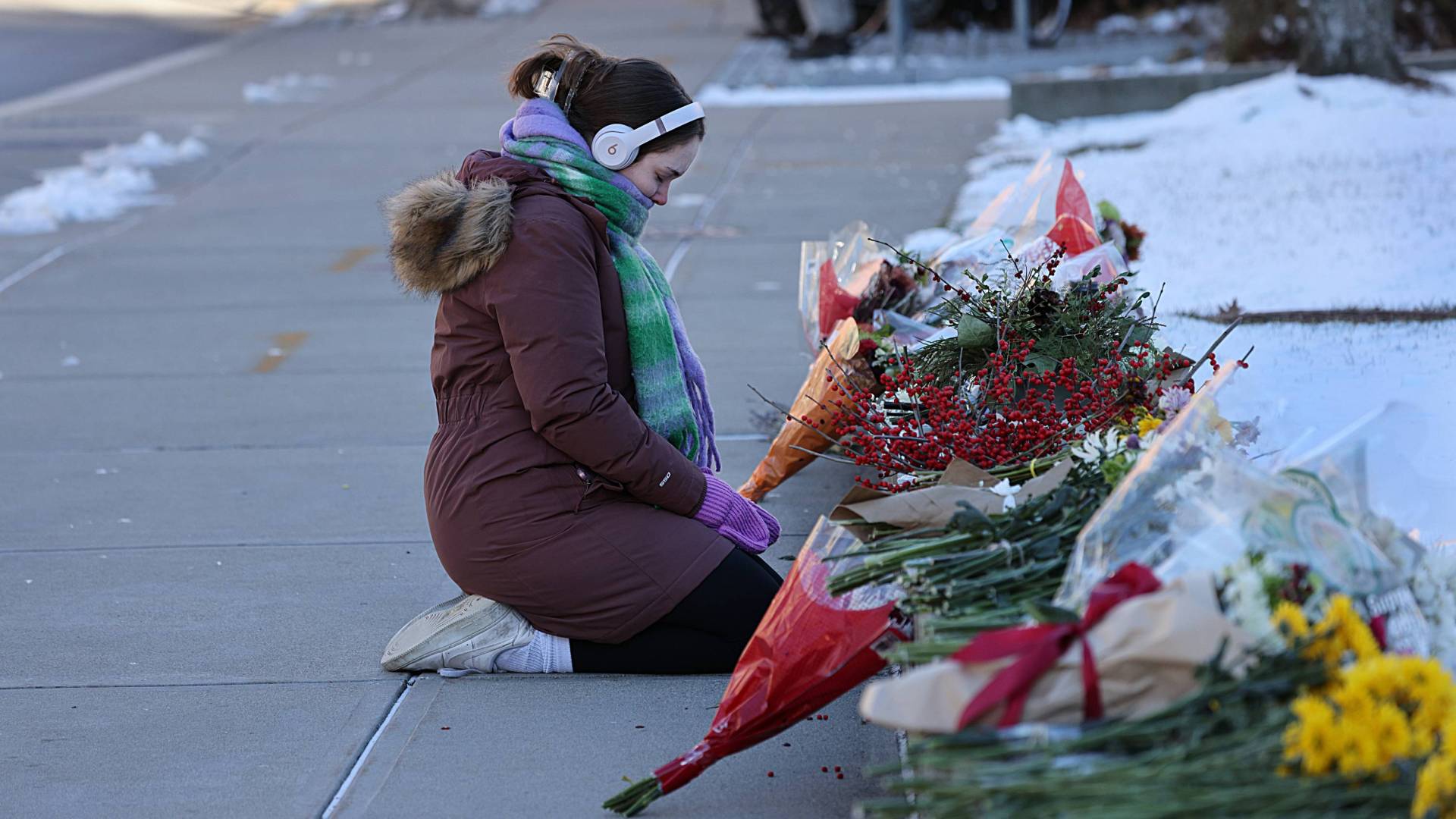
Brown University student kneels in front of a memorial

Photo by Suzanne Kreiter/The Boston Globe via Getty Images)

Christianity Today December 16, 2025

Brown graduate student Maddy Wachsmuth’s first notice of an active shooter on campus came from a GroupMe chat with other Christians. Even before students received official alerts, texts streamed in: “Urgent. Take cover. This is not a joke,” she described.

“It was scary getting messages the whole time,” she told CT. Some updates came from a student barricaded in a classroom. Wachsmuth prayed as she monitored the chat of nearly 300 Christian students and alumni. Later, students gathered at campus ministry leaders’ homes to pray, cry, and eventually eat takeout.

Three days after the shooting, the campus is much emptier between canceled finals, winter break, and a gunman still at large. But faith leaders, pastors, and Brown spiritual faculty are showing up, providing care for those who’ve remained after the attack that claimed the lives of two students and injured nine others.

On Monday, near the shooting’s site, a sign attracted passing students: “Do you need a hug? Prayer? Coffee, a snack? To talk to a trauma pastor or therapist? Place to stay? A ride to the airport? Or anything else? Let us know!”

For hours, therapists, pastors, and other Christians prayed with students and handed out hot drinks. Over the weekend, nearby Sanctuary Church put together 100 care packages for social workers and frontline responders. “Christians [shouldn’t] run from a crisis. They run into it,” said Andrew Mook, pastor of Sanctuary. “[We’re] trying to embody that as much as we can.” 

When Mook heard about the active-shooter situation unfolding, his thoughts flew to the dozens of Sanctuary members who might be in harm’s way. Over the next 15 hours, he and other church members reached out to as many of the students, postdoctoral researchers, faculty, and staff they knew. They set up a virtual prayer room and conversed there all night.

Mook learned later that the shooting left one of Sanctuary’s student attendees in critical condition. Another had a close escape from the lecture hall targeted by the gunman. Students spent the night in lockdown in dormitories or barricaded in university buildings. On Sunday, Sanctuary held a service after consulting with the mayor’s office. After the message, one Brown student shared her harrowing experience with the congregation. 

Other local ministries have also been busy responding. “Just about everyone knows someone directly connected to those who were in the classroom when the shooter arrived,” said Jarrod Lynn, a chaplain at Brown with Athletes in Action, a campus ministry focused on student athletes. “The sadness [and] weight of it all is slowly starting to settle in,” he said.

Christian Union, a campus ministry that serves Ivy League schools, routinely hosts events and makes its ministry center a place students can grab a nap, a snack, and a listening ear. Both murdered students had visited, and one, sophomore Ella Cook, was also a member of Christian Union.

Cook “exuded Christ,” said Kimani Smith, a multisite ministry director with Christian Union. “She was someone who was a sincere believer, and her walk showed it.” The pastor of Cook’s home church, an Episcopal congregation in Birmingham, described her as “incredibly grounded and generous and faithful” and “a bright light.” 

Recently, Cook had also started volunteering at a nearby crisis pregnancy center, according to Jared Cowgur, the lead pastor at BridgePointe Church, which partners with the center. “The tragedy hits close to home,” he said. “The staff at that ministry are understandably shaken.”

The other student killed was freshman Mukhammad Aziz Umurzokov, a scholarship recipient and naturalized citizen from Uzbekistan. Umurzokov was Muslim, Smith told CT, but “he was open to hearing about Christ.” Their encounters, preserved in snapshots in Smith’s camera roll, now strike him as a “divine moment of God allowing us to be a witness.”

Pastor Jacob Van Sickle of Sacred City Church learned about the shooting through a text from a Brown student while at his church’s annual Christmas party in downtown Providence. The party turned into a prayer vigil.

Around 10 to 20 percent of local churches’ populations are college students, most from Brown, Van Sickle estimated, and Cook had visited his church several times. That heartbreaking recognition “brought it closer to home,” he said. “Our students will be mourning in a different way.”

Lead pastor Scott Axtmann at Renaissance Church in the Riverside neighborhood is still hearing from members who had to shelter in place, were in the building just minutes prior to the shooting, or personally knew the victims. On Sunday, he went ahead with his prepared message, which focused on how Christ suffers alongside humanity. 

“He understands. He sympathizes. He suffers with us in our pain,” Axtmann preached. “It’s easy to feel alone in our pain, but the truth is that we are not alone. God is with us. … He draws near to us in our suffering.”

Though the shooter was still at large and she was running on little sleep, Brown student Wachsmuth felt compelled to go to Sanctuary as usual on Sunday. “It’s weird that we’re in this season of Advent,” she said, “longing for the New Jerusalem and longing for every tear to be wiped away. We’re feeling that even more.”

Books
Review

Union With Christ Means A Responsible Life

Theologian Kelly Kapic’s new book Christian Life is a corrective to anxious faith.

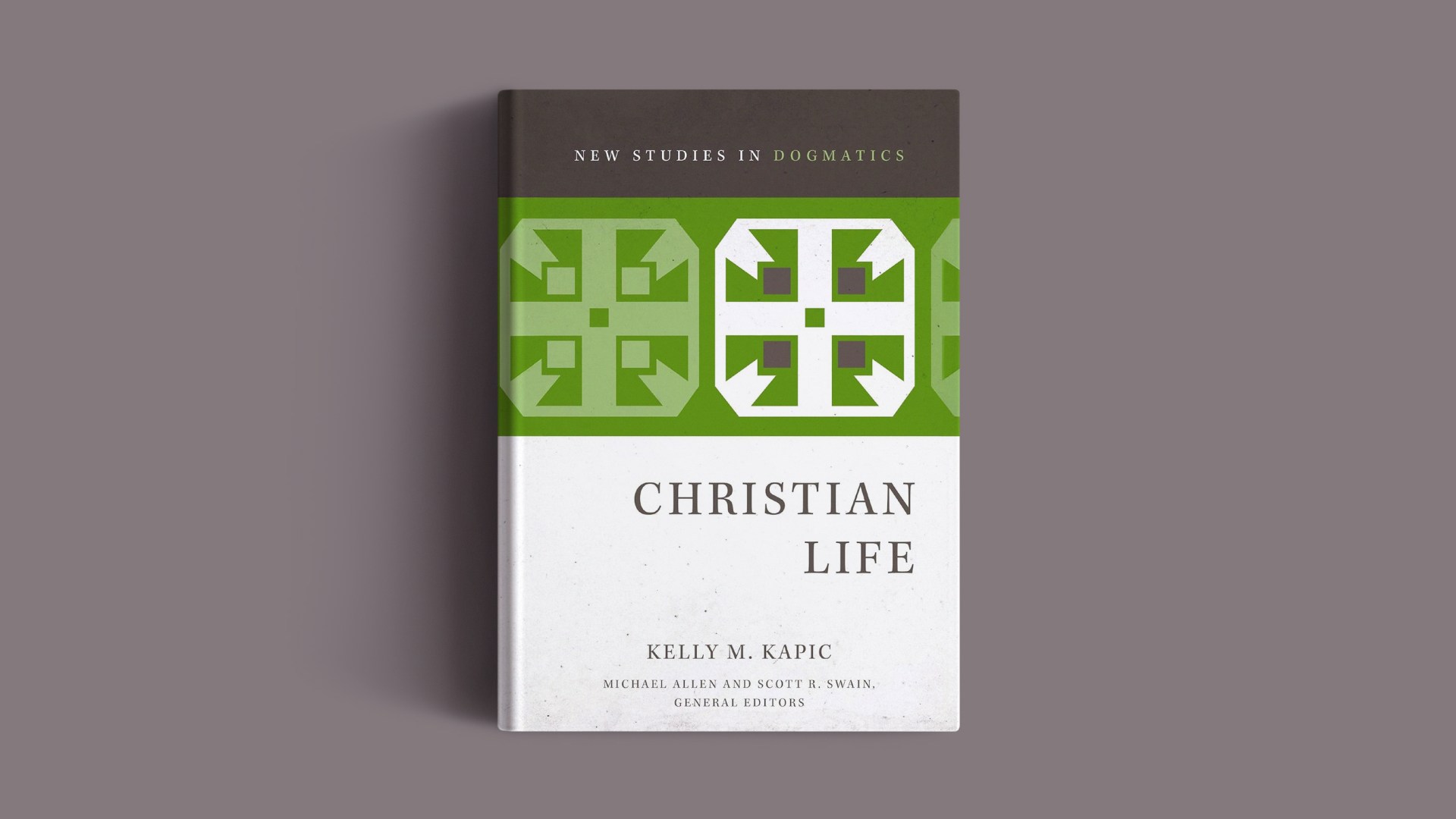
The book cover.
Christianity Today December 16, 2025
Illustration by Christianity Today / Source Images: Getty, Zondervan Academic

At a time when the word Christian has become a political football thrown about to gain favor and garner power, theologian Kelly Kapic provides a winsome corrective that I believe all Christians, especially American evangelicals, need to hear. In his new book Christian Life, he says the Christian life is “a response to the love of God.” Sounds simple, right? Yet simple is not simplistic.

God’s love is cosmic. It is also richly triune. Kapic writes, “We experience the life-giving power of the Spirit who unites us to the crucified and risen Savior as we learn to rest in the deep love of the Father.” Since the triune God is eternally self-giving, the human response to this love will likewise be the same. Union with the triune God requires a response of self-giving love for others. This is Christian life.

Kapic echoes what recent biblical scholars, such as John Barclay and Teresa McCaskill, and theologians, such as Tom McCall and Willie Jennings, have argued: God’s grace is unconditioned (you cannot earn it), but it is not unconditional (God still expects a response—he wants a relationship). In Kapic’s words, “While God does not need our obedience in order to love us, we who are made alive in Christ are called to participate actively in the Spirit’s work in and through the body of Christ.”  

While many American evangelicals reductively equate Christian belief with assent to a set of doctrines in order to “not go to hell,” this is a far cry from the fullness of Christian life. As Kapic argues, truths about the Father, Son, and Spirit are meant to shape the Christian life, a life growing out of union to Christ, a life that fosters gratitude and responsive love.

If Christian faith is more than doctrinal assent but proceeds from union with Christ and reveals itself through self-sacrificing love, this has implications for how we view discomfort, inconvenience, and suffering.

For instance, in Hannah Nation’s research, believers within the Chinese house church understand unity with Christ to necessitate suffering with Christ. The logic goes like this: Since the servant is not above the master (John 15:20) and because the master suffered, those united to the master will suffer. In a 2025 paper Nation presented at the Evangelical Theological Society, she called such a union “the backbone of public witness” for these Chinese believers. This lived theology does not glorify suffering, but it expects that a broken world will reject a crucified king and those unified with him. The Christian life, then, does not equate material abundance, health, and safety with God’s blessing.

Kapic’s book, like Nation’s work, provides the theological legs on which the Christian life stands. If we are united with Christ’s life by the power of the Holy Spirit, we will embody love—love of neighbor, love of enemy, love of creation, and even love of self. Such self-love, when mediated through this union, means we love ourselves through the Son’s love. Kapic explains, “When we turn from Christ to the ego [self], if we are speaking of Christian life, we are not, in fact, turning from Christ at all.”

Instead, we are relationally constituted; I am now in Christ. Therefore, I am able to more fully love myself since this self-love comes from Christ’s love of me. We can love fully because we have been fully loved. The Christian life is secure because its identity and value come from Christ, so we can run toward others rather than away from them.

Kapic reminds the church that our love proceeds from God’s love. But what is equally important is the way he offers this corrective. He models a winsome charity without falling for extremes. For instance, he neither elevates subjective, personal experience over God’s character nor elevates the objective reality of God in a way that becomes impersonal.

Many evangelical Christians either view personal experience suspiciously or see it as the sole determinant of a Christian life. Kapic presents a mediating position, valuing personal experience while not making it the sole determiner of a person’s faith. He writes that the more we can understand who God is and what he has done for us, the more we will be compelled to live with radical love toward God and others.

Richly experiencing a loving God draws us to worship. The more I read and reflected on the triune God’s immense love and goodness (an objective reality), the more my awe and love for God increased (subjective feelings). I found Christian Life shaping me more into the image of the Son. We are drawn into the life of love of the triune God. The incarnate Son is a human who has fully received the love of the Father and is also God our Savior, expressing the perfect love of the Father on our behalf. By the Spirit of Christ, we can receive the love of the Father and then love others.

Kapic’s book concludes by focusing on the body of Christ, the church, as one of the primary contexts in which Christians learn to love others. While, for many, the reputation of the church has fallen, it is nevertheless vital. We are united to Christ, so we are also united to one another. Our union with Christ matures in the context of the church. When we gather, we participate in Christ’s own threefold ministry: “He as our great Priest, King, and Prophet not only receives our worship but is also the leader of our prayers, laments, and corporate worship.”

As Kapic emphasizes, Jesus is not only the one we worship but also, mysteriously, the leader of our worship. Our union to Christ therefore connects us vertically to the triune God and horizontally to our spiritual siblings. Thus, just as a life of responsive gratitude is nonnegotiable for Christian life, so is participation in the corporate body of Christ.

This understanding of the church as the context of our joint formation pushes against individualism. It recognizes the unifying work of the Spirit, who gives gifts to each member (1 Cor. 12:11) and keeps Jesus central. Kapic emphasizes how the church, especially through local, corporate worship, is meant to shape our Christian lives.

Sunday liturgies ought to foster our communion with God and each other and have a demonstrable effect in our lives. Kapic notes, “If you want to know what people really believe or trust, observe their lives, actions, instincts, and intuitions; pay special attention to their checkbooks and day planners.”

Ultimately, Christian Life is about God’s agency and our response. Kapic draws the life-giving water of Christ from a deep well of theological tradition. Pay heed as he unpacks dense language and concepts. Theology isn’t just for experts. It is crucial to our daily lives, for understanding our identity and place in the world. To know who we are and how to live, we need deep theology, and Kapic draws up the bucket and hands readers a cup.

May Kapic’s Christian Life make readers long for more of Christ’s life-giving water, and may that change us to live out the self-giving life in grateful response to our union with the triune God.


Christa McKirland is dean of faculty and lecturer in systematic theology at Carey Baptist College in New Zealand. Her books include A Theology of Authority: Rethinking Leadership in the Church and God’s Provision, Humanity’s Need: The Gift of our Dependence.

Theology

In Bethlehem, God Chose What Is Weak to Shame the Strong

What is true of Good Friday applies to Christmas too.

Baby Jesus and a cross shadow.
Christianity Today December 16, 2025
Illustration by Elizabeth Kaye / Source Images: WikiMedia Commons

At Christmas, incarnation and revelation go hand in hand. God becomes flesh, and God grants us knowledge of himself. In Bethlehem, the immortal Creator of all is manifest in a mortal creature. The Lord shows himself forth in all his works, but in the incarnation, we see the nature and perfection of the one true God with maximal clarity and beauty (Heb. 1:1–4).

To be sure, the Incarnation isn’t limited to Christmas. It begins in the womb of Mary, continues throughout the whole earthly life of Jesus, and reaches its climax at the cross and empty tomb. Even now the risen and ascended Jesus remains incarnate, since he did not slough off his humanity when the Father raised him up to heaven to sit at his right hand. In point of fact, the Lord Jesus will remain human into all eternity. In this lies our hope, for “when Christ appears we shall be like him, for we shall see him as he is” (1 John 3:2). He is the one truly human being who ever lived. Jesus is our brother forever.

Yet for all this, Christmas is the proper moment to dwell on the Incarnation, because the birth of Jesus is God’s own entrance into the world—his transition from hiddenness to openness, from invisibility to visibility, from silence to speech. When the baby cries, God’s Word is with us, a voluble Immanuel in the form of a speechless newborn.

What sign is this? What does it mean that God became an infant? The claim is so preposterous—yet so marvelous—that even with the best of intentions our attempts to understand it go astray. 

One danger is to reverse the terms of God’s humanization by anthropomorphizing God. He’s just like us, we muse. The Swiss theologian Karl Barth coined the phrase “the humanity of God,” and although he did not mean it this way, it can suggest a version of the Christmas gospel that brings heaven to earth in exactly the wrong manner: projecting onto God whatever we think is best about us humans.

If incarnation is about revelation, though, we have to let God tell us about himself, not the other way around. We don’t know God before he introduces himself; we can’t speak on his behalf. And his speech, always and everywhere, is Jesus (John 1:1–18). When we turn the page to Bethlehem, the Lord speaks loud enough for the whole world to hear.

This is why it is fitting to include the Magi in our celebration of the Nativity, even though they were there not on the night of the birth but later, when Jesus was a toddler (Matt. 2:16). The Magi represent Gentiles. They anticipate the coming of all nations to the Lord of Israel, bending the knee and paying homage to the one God and Creator of all (Zech. 8:20–23). “Or is God the God of Jews only? Is he not the God of Gentiles too? Yes, of Gentiles too, since there is only one God” (Rom. 3:29–30).

Another wrong turn comes when we sentimentalize Christmas. I’ll admit that this is next to inevitable, given the mother and baby at its center, but we can at least be aware of the temptation. And it’s worth avoiding for a simple reason: Jesus Christ was born to die. In this he is unlike the rest of us, however brief or painful our lives may be. The Lord was always bound for the Cross, for the anguish of the Passion and the blood-mingled tears of Gethsemane. He was always going to be abandoned, denied, and betrayed by his friends. Whatever else we say of him—hymning him in his peaceful sleep, imagining him nursing at Mary’s breast, admiring the family crèche—we must not forget this.

Finally, while we are right to see humility at Christmas, the question is: What does it mean to call God humble? To be humble is to be lowly, and God is not lowly in himself. Rather, he becomes lowly for our sake. Nor is God weak, though he assumes our weakness to grant us his strength. Nor still is the humility of Bethlehem imposed upon God, as if it manifested an incapacity or lack.

No, the humility revealed at Christmas is the willingness of God, in his infinite love for sinners, to stoop down to our level, regardless of worldly appearances, regardless of the consequences for himself. In this sense we might apply the beloved line from Hebrews 12:2—that Jesus scorned the shame of the cross—to the manger as well. To be found a weakling in a bed of straw is, from the vantage of the powerful, nothing if not shameful. But the Lord scorns the infamy of the high and mighty to join himself to the low and weakly.

As Paul writes, “God chose what is foolish in the world to shame the wise; God chose what is weak in the world to shame the strong; God chose what is low and despised in the world, even things that are not, to bring to nothing things that are, so that no human being might boast in the presence of God” (1 Cor. 1:27–29, ESV). Paul is speaking about the “foolishness” of the Cross (vv. 18–25), but what is true of Good Friday applies to Christmas too.

For this reason, it’s worth stepping back from Joseph and Mary and the shepherds to ask what else the manger reveals of God, especially those things that might not seem obvious from first glance at a baby boy placed among farm animals. I’m thinking in particular of what theologians call the attributes of God: omnipotence, omniscience, and so on. These are what it means for God to be God, characteristics that define God as Creator in distinction from us creatures. They’re true of him in a way that could not be true of anyone or anything else.

Christmas sets God’s attributes in relief in beautiful and unexpected ways. For instance, think again of humility. There is nothing surprising in the weakness of a baby. All newborns are utterly dependent on their mothers for life and sustenance. What is surprising, then, is what the gospel adds to this: namely, the child in Mary’s arms is one and the same as the God who created her and even now sustains her in existence. The nursing babe is none other than he in whom all things hold together (Col. 1:17) and apart from whom nothing has been made (John 1:3).

Only a God with whom all things are possible (Matt. 19:26) can become incarnate in the form of an infant. The old hymn is therefore right to say, “Jesus, Lord, at thy birth!” For God’s “power is made perfect in weakness” (2 Cor. 12:9). When we peer into the manger and glimpse the Christ child, we need double vision. We are seeing weakness, yes, but also the matchless might that made the universe.

Then there’s God’s transcendence. Children sometimes imagine a physical deity who lives in the sky but leaves for a while to come to earth—the way a president might leave the capitol to go abroad for a time—then returns to the heavens, resuming a throne left temporarily empty.

Transcendence describes God’s utter difference from created existence and thus his remove from any and all limitations we take for granted. God shows himself transcendent at Christmas by remaining God even as he takes on our nature. As the church fathers liked to put it, in becoming human, the Lord assumed what he was not while remaining what he was. Jesus isn’t either divine or human. He isn’t a hybrid or a half god, like Hercules, or a “semi-demi-mini-god,” like Disney’s Maui. He’s fully divine and fully human, all that it means to be God and all that it means to be human—and yet a single person, undivided.

He is this, he can do this, because he transcends us. Being absolutely transcendent, he can be absolutely immanent, or near, to us. The one entails the other. In the words of Saint Augustine, God is “more inward than my most inward part and higher than the highest element within me.” If he were otherwise, he would be limited in some way and thus unable to be both our Savior and our brother, both our Lord and our friend, both our judge and our pardon.

In short, Christmas reveals God to be wholly unlike the gods of the nations, beyond myths and legends and idols of every kind. Only the God besides whom there is no other (Isa. 45:5) can become one of us without ceasing to be himself—without leaving heaven vacant. The Lord who sits on the throne also sleeps in Bethlehem. This is the mystery of the Incarnation.

The final attribute I want to lift up is wisdom. Wisdom is another word for God’s knowledge, or omniscience. God possesses complete understanding of everything. He teaches but is not taught. His knowledge, like his power, is limited by nothing and lacks nothing.

That knowledge is not like a computer—or perhaps an AI chatbot, minus the errors and hallucinations. God is not ChatGPT scaled up to have every answer to everything. His knowledge is his wisdom, and his wisdom comprehends far more than a flawless record on trivia night. 

Spoken of God, wisdom means something like the skill of an artist applied not only to the mind but also to actions, plans, and purposes. It means that God always does the right thing, in the right way, at the right time, for the right reason. His actions, in other words, are virtuous; he acts with righteousness without exception.

But he also acts beautifully. God’s wisdom is the movement in the symphony that makes it a masterpiece, the turn in the plot that makes you catch your breath, the unexpected move that in retrospect couldn’t have happened any other way. It’s so apt to the moment, so fitting to the need, that it’s obvious after the fact but couldn’t have been guessed in advance. It’s the father running to embrace the prodigal (Luke 15:20), the Samaritan stopping to help the man by the side of the road (10:33–34), the assumption of Mary that the risen Lord was a gardener (John 20:15).

And God’s wisdom is Christ himself, born in Bethlehem to a virgin from Nazareth. It’s Mary, the last in a line of Israel’s miraculous mothers, from Sarah and Rachel to Ruth and Hannah. It’s Joseph, who like his namesake brings his family down to Egypt for protection. It’s Herod, another Pharaoh intent on preserving his tyranny from the threat of Hebrew boys. It’s angels and animals, fellow creatures from Genesis’ opening chapter who greet the birth of their Creator in a stable. It’s shepherds, who marvel at the pronouncement that Israel’s royal shepherd has finally come.

All these and more fill the divine artist’s canvas, revealing the master storyteller in his incomparable wisdom. Every detail is in its place. Everything in the narrative was preparing for this. And now that we see it, we cannot help but step back in awe and wonder at our God. The Lord is great and greatly to be praised (Ps. 145:3). He has drawn near to his people in their need. With the “multitude of the heavenly host” (Luke 2:13, ESV), the only thing left to do is worship.

Apple PodcastsDown ArrowDown ArrowDown Arrowarrow_left_altLeft ArrowLeft ArrowRight ArrowRight ArrowRight Arrowarrow_up_altUp ArrowUp ArrowAvailable at Amazoncaret-downCloseCloseEmailEmailExpandExpandExternalExternalFacebookfacebook-squareGiftGiftGooglegoogleGoogle KeephamburgerInstagraminstagram-squareLinkLinklinkedin-squareListenListenListenChristianity TodayCT Creative Studio Logologo_orgMegaphoneMenuMenupausePinterestPlayPlayPocketPodcastRSSRSSSaveSaveSaveSearchSearchsearchSpotifyStitcherTelegramTable of ContentsTable of Contentstwitter-squareWhatsAppXYouTubeYouTube