Ideas

How to Fight Online Like a Christian

Contributor

Social media debates about theology can be good. But let’s not make it a quarrelsome spectator sport.

Christianity Today July 3, 2025
Illustration by Christianity Today / Source Images: Getty, WikiMedia Commons

I grew up with three brothers and one pretty tough sister. We fought—a lot. About who cheated at Uno. About who ate the last cornbread muffin. About whether Mom really said that or whether someone was just making it up. There were raised voices, bruised egos, and, occasionally, bruised arms.

But because we were family, we always made up. And oddly enough, the fights also made us stronger. They reminded us that while we might clash, we still belonged to one another. They also taught the other kids in the Chicago neighborhood where I grew up an important lesson: Don’t mess with the Butlers. They’re tough, and they’ve got each other’s backs.

In many ways, sibling fights have a lot in common with theological disputes among Christians. It’s not new for the church to have disagreements. And when it comes to defending essential doctrines, its good and godly to fight (Jude 3-4). But nowadays, it’s easy to see that many believers have become too quick to jump into squabbles, often lobbing accusations against one another in combative—and quarrelsome—subcultures on social media.

One recent conflict played out between Pastor Eric Mason and Tiphani Montgomery, who have large followings online. Their public dispute about accurate prophecy and spiritual submission set social media on fire, sparking both discussions and online fights among their followers. Reaction videos, breakdowns, and threaded think pieces circulated across platforms, with people quickly picking sides and sharing who they thought was right or wrong. Jackie Hill Perry and Preston Perry, who have done ministry work with Mason, also found themselves dragged into the dispute.

For some, it was a spectacle. For others, it was a personal theological clash on how to discern a real prophet from a fraud. But for many of us, it was also a moment to pause and consider what the online frenzy reveals about the church in our current age: how we teach, how we disciple, how we form convictions, and how we handle disagreement in public. 

From the Jerusalem Council in Acts to Paul’s rebuke of Peter in Galatians to the church fathers in Nicaea, Christians have always had to work out theological tensions in front of watching eyes. It has been part of how we grow and how we bear witness to the truth of Jesus Christ. Some theological conflicts need to be visible. And some questions must be asked and answered in front of the broader body.      

But in our modern age, public disagreements have also become a spectator sport. Our councils are Instagram posts, and our “letter to the churches” arrives as a 20-minute YouTube monologue or a thread on X. Soon enough, the views and comments flood in. And when the dust settles, we’re left with weaker fellowship and a diminished public witness.

If you’re a fighter, I understand the temptation. We live in an era that often downplays theology—even when it’s clear as day—as divisive or outdated. As a pastor, I find this especially frustrating. What we believe and teach, even on issues nonessential to salvation, matters to God. Theology shapes our lives in both good and bad ways. And because of that, it’s valuable and necessary to “correctly handle the word of truth” (2 Tim. 2:15) on all topics.

Pursuing doctrinal clarity can guide us, but it’s well-known that it won’t resolve all our fights. Sometimes the Bible doesn’t speak clearly on a subject. And when those topics come up, it’s fine to say so—knowing that our finite minds are wrestling with infinite truth that must be approached with reverence, not arrogance. We must have the type of humility that recognizes that while the Word of God is infallible, we are not. And that on this side of glory, our understanding will always be partial and incomplete (1 Cor. 13:9).

That’s not an excuse to doubt everything, but it’s one reason God commands us to be “quick to listen, slow to speak and slow to become angry” (James 1:19). How much more so should we do that when other sincere believers, equally committed to the authority of Scripture, arrive at different conclusions. We don’t have to surrender truth, yet we should refuse to assume we possess all of it and do so perfectly. We can hold our convictions with confidence and compassion while avoiding the trap of treating every disagreement like a battle to win. The church, after all, is a family, not a fan base.

In a fractured church with no shared court of discipline, public disputes on theology —especially among leaders—requires discernment. Public rebuke is a serious act. And while it may need to happen in some cases, our conversations should be rooted in love for Christ’s body, marked by spiritual discernment, and carried out with humility and a clear sense of responsibility before God.

One of the biggest problems I’ve seen with online disputes is that they become too fleshly. Even when one side might clearly be in the right, social media skirmishes have a way of bringing out a type of nastiness, often with a dash of pride, defensiveness, and anger. People don’t want to be seen as “the losers” in public or quickly apologize for what they could have said or done differently. And before long, godly character has taken a back seat as followers take sides, assign motives, and pick up offenses on behalf of someone they’ve never even met.

For many of us, blowups can also serve as a reminder that our spiritual growth cannot be outsourced to influencers or the latest pastor we’ve found on the internet. Online teachers and content creators can be incredibly helpful. But formation into the likeness of Christ happens most deeply in the context of real-life relationships: in families, in local churches, and in spiritual friendships where we are truly known. Discipleship requires more than access to good content. It needs mutual submission, accountability, and community.

We can embrace that and still see that something beautiful is happening online. As Richard Foster wrote in Streams of Living Water, “a new thing is coming. God is gathering his people once again, creating of them an all-inclusive community of loving persons with Jesus Christ as the community’s prime sustainer and most glorious inhabitant.” This beautiful cross-pollination is happening in part because of online platforms, which are helping Christians engage people they might never have encountered.

But as Tish Harrison Warren has previously discussed, this new landscape also raises important questions about authority and accountability. It means theological disagreement is more visible than ever, which can be good and help us grow if we approach it the right way.

The culture around us desperately needs to relearn how to disagree well. If the church can model that—if we can be sharpened, not shattered, by our differences—then our public theology can become not just a witness of what we believe but also a testimony to who we are and to whom we belong. And that, more than any trending video or clapback post, is what the world needs to see.

Chris Butler is the director of Christian civic formation at the Center for Christianity & Public Life.

Books
Review

The Worlds William F. Buckley Straddled

A landmark biography shows the storied conservative leader walking intellectual, journalistic, and financial tightropes.

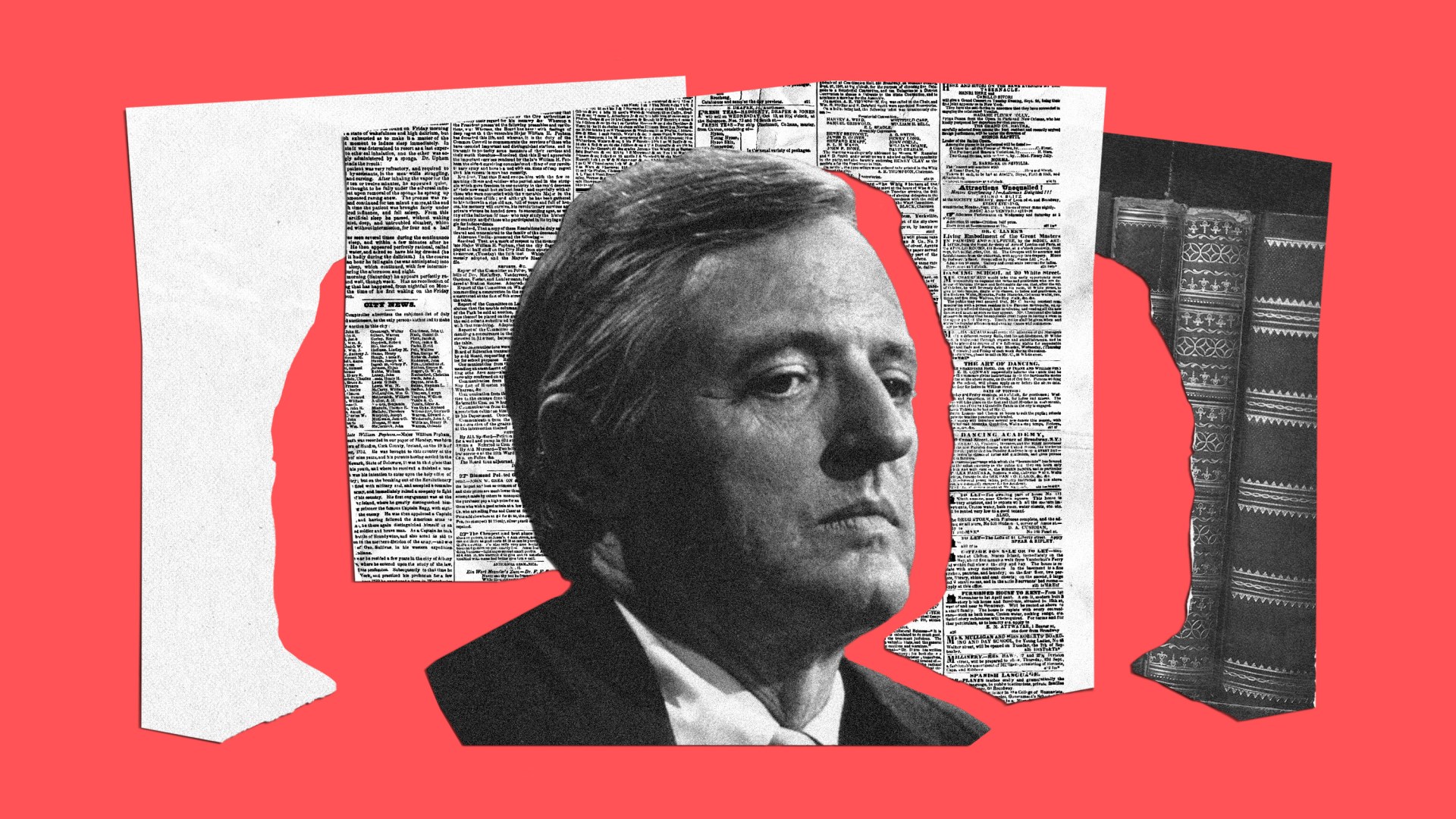
An image of William Buckley in a collage with newspapers and books.
Christianity Today July 3, 2025
Illustration by Elizabeth Kaye / Source Images: Wikimedia Commons, Pexels

William F. Buckley Jr., who died in 2008, needs no introduction to older readers. He founded the conservative journal National Review in 1955 and hosted the PBS program Firing Line from 1966 to 1999, setting the US television record for the longest-running public affairs show with a single host.

Sam Tanenhaus’s new biography, carrying the one-word title Buckley, checks in at just over 1,000 pages. But Buckley’s eventful life and colorful personality justify the length. Comedians parodied the way he slouched in a chair, rolled his eyes, and hung out his tongue. He also spoke multisyllabically with a distinctive Europeanized drawl reflecting Texas roots and early influence of a nanny and Parisian schools, through which he learned Spanish and French.

Buckley was rich, initially through his father’s entrepreneurship, and loved spending on lavish accommodations, sleek boats, and fine food and drink. Those who remember the movie Chariots of Fire could think him a cousin of Lord Lindsay, who practiced for a track event with glasses of champagne precariously perched on hurdles. Buckley never wanted to show sweat, but he wrote approximately 5,600 newspaper columns, as well as 40 nonfiction books and 10 spy novels.

He was also very smart. When atheist Ayn Rand met him, she said, “You are too intelligent to believe in God.” But Buckley did—and said so. He also believed in marriage, enjoying a good one that lasted 57 years. One of 10 children, he and his wife had just one, author Christopher Buckley. Never holding political office himself, he had independent instincts but also an affection for being close to power.

In 1936, when Buckley was 10, his tutor wrote, “If he can conquer his impatience and hastiness he should go far.” Tanenhaus concludes he “did not conquer either, then or later, but went far anyway.” But in what direction? Tanenhaus describes how, at times, “the worlds Buckley straddled—of journalism and advocacy, of personal friendship and ideological principle, of high motives and low connivances—were tearing him apart.”

Buckley’s early fame came at Yale University from 1946 to 1950. He was a champion debater. Tanenhaus describes him “rising on his toes, his shirttail tugging out over his belt (he favored big silver Texas buckles), as he delivered the cutting phrases.” He excelled on the Yale Daily News, finishing first in a two-month-long “heeling competition” that remained standard on the college newspaper for the next several decades. (Reporters, sometimes treated like dogs, had to go through obedience training.)

Buckley became top dog, handing out reporting assignments just after lunch (bacon-and-peanut-butter sandwiches) and working away until sometimes past midnight: He would “scream and yell at the younger kids,” his managing editor recalled. “He was so superior, so commanding,” one student said.

Soon after graduating, Buckley turned that ferocity against the school’s faculty in his first book, God and Man at Yale. The book, which became a bestseller, took aim at professors “who will tell us that Jesus Christ was the greatest fraud that history has known … who will tell us that morality is an anachronistic conception, rendered obsolete by the advances of human thought.” The resulting fame helped catapult Buckley into the court of Senator Joe McCarthy, who said Communists had captured not only campuses but also the federal government.

McCarthy was a liar who eventually drank a quart of liquor a day. Some reporters were complicit in hiding this fact, fearing that a truthful story would get them fired. As Tanenhaus notes, “A journalist who had knocked on McCarthy’s hotel door for a 7:00 A.M. appointment found ‘Mr. Anti-Communist’ sprawled naked on the bed gulping down a pitcher of martinis. He had not written the incident up.”

But in a book he coauthored, McCarthy and his Enemies, Buckley concluded that McCarthyism was a positive force “around which men of good will and stern morality can close ranks.” The book minimized the first part of the title to maximize the last: The enemies were so evil that McCarthy was the “virtuous disrupter,” and it didn’t matter that he wasn’t virtuous.

Buckley also found that attacking “American intellectuals and the liberal press” got him mentions in newspapers and helped book sales. He kept saying that those who depicted McCarthy accurately were displaying a “cynical attitude of malice.” As McCarthy imploded in 1954 on that new medium, television, “other supporters fell away, [but] Buckley grew more loyal.”

That was the first time Buckley acted as if character didn’t count, but not the last. He at one point dismissed complaints about U.S.A. Confidential, a publication Tanenhaus describes as “gutter journalism,” because “It’s on our side. … And anyway, you’ve got to write that way to reach a big public.”

As editor and owner of National Review, Buckley had editorial freedom but financial chains. He was rich but not so rich that he could overlook hundreds of thousands of red-ink dollars. National Review itself was intellectually classy but, as Tanenhaus writes, “For every page that sang, two or three were ponderous, pedantic, arid.”

Buckley implored his writers: “We have got to make National Review more readable.” Tanenhaus writes, “You could go through an entire issue and find much analysis but very little open-notebook reporting. … Writers limited themselves to theories, arguments, first principles.” Abstract principles and some racism led National Review to miss “the intricate humanity” of the civil rights movement as it editorialized, “Why the South Must Prevail.”

The magazine also isolated itself from moderate conservative support against the advice of staunch anti-Communist Whittaker Chambers, who saw a need to build coalitions. The Tanenhaus summary of Buckley in 1960 is “He had gone from boy wonder to aging enfant terrible: the author of a book of conservative argument rejected by three publishers … the editor of a little-read ultra-rightist journal drowning in debt.”

In those hard circumstances Buckley at first relished funding from wealthy businessman Robert Welch, one of a Boston group calling itself God’s Angry Men. Buckley responded to thousand-dollar checks with a National Review encomium: “Robert Welch is an amazing man, who runs a business, writes books … and is as conservative as they come.”

Welch, though, founded the John Birch Society, which asserted—among other oddities—that President Dwight Eisenhower was a Communist. Scholar Russell Kirk advised Buckley to speak out against “follies and frauds [and] loonies.” Buckley, showing he had learned from his McCarthy experience that immediate payoffs were not worth long-term infamy, attacked the Birchers’ “paranoid and unpatriotic drivel.”

Many donors and readers protested. Buckley said only two of the 200 letters he read agreed with him. Nevertheless, Buckley persevered. He made staff writers better. Critic and novelist John Leonard, who at age 19 had been Buckley’s assistant, hated “the condescension which people show toward Buckley. … When I was at NR I learned.”

In the 1970s Buckley had disappointments. He supported Maryland governor Spiro Agnew’s rise to become Richard Nixon’s vice president. Agnew resigned in 1974 after pleading guilty to tax evasion to avoid prosecution for bribery, conspiracy, and extortion. Buckley saw how sin had consequences more than personal: “It is a terrible irony that at the moment in history when liberalism is sputtering in confusion, empty of resources, we should be plagued as we are by weak and devious men.” 

Buckley was godfather to the first three children of Watergate felon Howard Hunt, a friend during Buckley’s brief time in the CIA after college. Hunt told him what had happened, but Buckley “disclosed nothing, save in elliptical allusions in his column—quasi-confessions offered to the God he knew was watching.”

Tanenhaus writes that Buckley “drew a sharp line between his ideological commitments and his social life. He could afford to do this, afford to float above what to others seemed mortal dangers. … When the new drug was LSD, Buckley and Jim Burnham each took a tab and went off to see the sex film I Am Curious Yellow. (On that occasion they both had martinis beforehand and fell asleep.)”

He kept running into financial problems. Buckley lived in 10 elegant rooms at mega-expensive 778 Park Avenue in Manhattan. He bought a 60-foot schooner even though “the price was more than he could afford.” A standard lunch was pâté de foie gras, stuffed roast pheasant, and Château Margaux wine. Buckley may have cut corners to buy bottles: He had to pay more than $1 million after the Securities and Exchange Commission ruled that he had violated antifraud law.

Buckley always had rejoinders to criticism. When writer Kevin Phillips in 1975 “mocked Bill for the vintage wines he took on his boats, Bill pointed out the clumsy social error. Every experienced sailor knew better than to take ‘vintage wines on a small sailboat’; they wouldn’t stand up to the pitching and tossing.” Tanenhaus doesn’t specify the size of the boat Buckley was then sailing.

One rejoinder expanded his audience beyond readers and PBS viewers. When ABC paired Buckley in 1968 convention commentary with Gore Vidal, the gay writer called him a “pro or crypto Nazi.” Buckley responded, “Now listen, you queer. Stop calling me a crypto-Nazi or I’ll sock you in your g— face and you’ll stay plastered.” Vidal, his baiting successful, responded, “Oh, Bill.”

Tanenhaus exhibits mixed sentiments about his subject. He ties his big package with a bow at the end, describing “the imagination and generosity, the kindness and warmth, that Bill Buckley demonstrated,” and that praise rings true. But Tanenhaus takes seriously the criticism of Gary Wills, who worked for NR in its early days but in 1979 complained that Buckley had become too much of a showman: “Intending to strike blows, he is applauded for striking poses.” 

One of Buckley’s 50 books has the title Nearer, My God: An Autobiography of Faith (1997), but those who look within it for deep discussion will be disappointed. He was a cradle Catholic who relished being cradled, with theological questions reserved for priests. He got right what’s basic: “The best way to put it is that God would give His life for us and, in Christ, did.”

Buckley became estranged from his brother-in-law and early coauthor, Brent Bozell, when Bozell became a pro-life crusader who attacked Geoge Washington University’s student clinic, swinging like a club a five-foot-high wooden cross. Bozell was convicted, and Buckley agreed he had taken his convictions too far. Buckley’s writing about abortion was safe, legal, and rare.

Bozell, writes Tanenhaus, “spent long hours at hospitals, prisons, and shelters and volunteered at Mother Teresa’s AIDS hospice—washing, dressing, and helping to feed the dying patients.” Later he was dying with a heart condition, severe back pain, and early-onset dementia. Buckley threw a banquet for him and at one point rose to speak “with the text he had prepared; but partway through, the avalanche of history crowded in on him, and he burst into tears. Unable to go on, he returned, still sobbing, to his seat.”

In 2007 Buckley had trouble walking but kept writing. He died in his office in 2008, a serious man who took joy in intellectual combat.

Marvin Olasky is executive editor of news and global at Christianity Today.

Culture

The Impossible ‘Squid Game’ Sacrifice

In the show (and in South Korean society) self-interest reigns supreme.

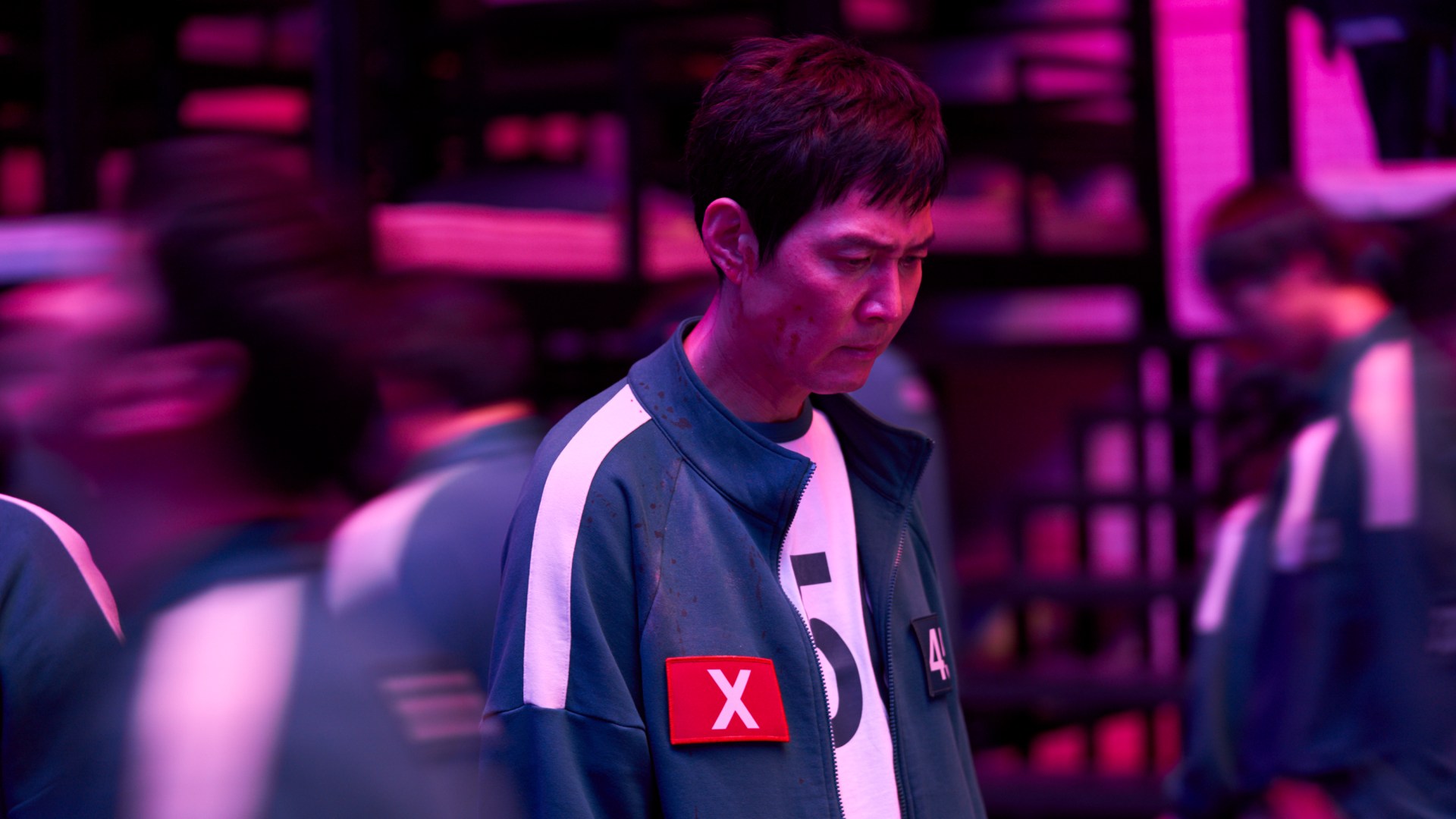
Lee Jung-jae as Seong Gi-hun in Squid Game Season 3.

Lee Jung-jae as Seong Gi-hun in Squid Game Season 3.

Christianity Today July 3, 2025
Netflix © 2025

South Korea is becoming a cultural powerhouse. K-pop and K-drama have gained international acclaim. The New York Times just named Parasite the best film of the 21st century so far, and animated children’s movie The King of Kings just surpassed that title to become the top-grossing Korean film ever in the United States.

The gripping survival thriller Squid Game, whose third season premiered on Netflix last weekend amid Emmy talk, is another example of South Korea’s global reach. But my country should not uncritically celebrate the success of a series that starkly reflects the fractured state of our society and the church. The rules of this not-so-fantastical world—demanding that even the vulnerable compete and exclude—stand in stark contrast to the gospel’s call to mutual care and community.

Squid Game opens with debt-ridden workers receiving invitations to a secret competition for a massive cash prize. The contest turns out to be a deadly game in which only one of 456 participants can survive, with each round modeled after a traditional Korean children’s game—seemingly innocent, then a brutal twist.

Season 1 follows Gi-hun (Lee Jung-jae), a man pushed to the edge of despair. As participants create alliances and face moral dilemmas, the show exposes how an unequal society can corrode human conscience. In season 2, Gi-hun—having won the first game—chooses to reenter a new version of it. Under the guise of “majority rule,” what seems to be a democratic process quickly devolves into deeper betrayal and isolation.

Now, in season 3, the game grows more brutal, requiring players to make life-or-death decisions about one another. Still, the show continues to ask, “Can people rely on one another?” Players form factions amid escalating psychological exploitation. As the series progresses, it highlights just how fragile—and costly—trust in someone else can be. (Warning: spoilers ahead.)

Ironically, the exaggerated dystopia portrayed in Squid Game ends up feeling like an honest portrayal of the real world we inhabit here in South Korea, where society is divided by political ideology and generation, region and economic status. Algorithm-driven information silos filter out opposing views, turning dissenting voices into targets of ridicule or hostility. Despite rapid economic growth and the aforementioned cultural achievements, we remain materialistic and anxious.

Statistics bear this out. South Korea has the highest suicide rate among Organization for Economic Cooperation and Development (OECD) nations, with youth suicide continuing to rise. Each year, more people are treated for depression and anxiety disorders, while the country’s birthrate remains the lowest in the world. Many young Koreans are giving up on dating, marriage, and starting families altogether. They describe their homeland with a grim portmanteau: Hell Joseon—a blend of hell and Joseon, Korea’s former dynastic name—capturing their deep disillusionment.

Intergenerational conflict is also intensifying. A previous generation may have built the so-called “Miracle on the Han River,” but younger Koreans often feel disconnected from, even resentful of, that economic legacy. In everyday speech and online discourse, dehumanizing slang—such as mom-chung (a derogatory term for entitled mothers) and gupshik-chung (a mocking term for younger students)—has become normalized. These insults, where the suffix -chung (meaning “bug” or “insect” in Korean) is added to a group’s name, reflect how disgust has entered our cultural vernacular.

Rather than offering an alternative, Christianity often mirrors these divisions. Young people are leaving the church in growing numbers, and many Sunday school programs have effectively ceased to function. In a society still influenced by Confucian values—in which harmony is maintained through clearly defined roles and a respect for hierarchy—women in the church often continue to face limited leadership opportunities. A large-scale Christian rally held in Seoul’s City Hall Plaza last year had Christians in the streets protesting proposed antidiscrimination legislation. Some church members left their congregations because fellow parishioners had joined the rally, while others considered leaving if their church didn’t get behind the cause.

So, how much of Squid Game is fiction, and how much reflects our reality?

By season 3, the logic of the game is no longer questioned—it’s absorbed. Participants don’t just survive; they manipulate, deceive, and dominate. Acts of mercy are viewed with suspicion. The show’s focus shifts from physical danger to psychological decay.

Whereas earlier seasons offered moments of hope or solidarity, season 3 underscores a harsher truth: In a world shaped by self-interest, even sacrificial acts can be tainted. It doubts whether human beings—flawed and fragile—can ever truly love one another.

In the end, the world of Squid Game isn’t just broken—it is spiritually bankrupt. In season 1, the inclusion of a fanatical Christian competitor reflected a broader social perception of faith as rigid, extreme, or irrelevant. Season 3 lacks Christian characters, though we do see players gathering around a shaman-like figure reminiscent of a mudang, a traditional Korean spiritual medium who performs rituals to seek divine favor or ward off misfortune. Her presence suggests a desperate search for meaning, the players’ belief driven more by fear than genuine faith.

In the final arc of Squid Game season 3, Gi-hun chooses death so that another player might live. At first glance, this seems noble, a kind of Christlike sacrifice. But as director Hwang Dong-hyuk explained in Squid Game in Conversation, a Netflix featurette released after the season, Gi-hun’s past was already stained by too much blood. The director noted that he “couldn’t let him live,” suggesting that Gi-hun’s death was inevitable—not as redemption but as the only path left in a broken world. His final act resists the system but does not transcend it.

Scripture points us to a different kind of salvation: “There is neither Jew nor Gentile, neither slave nor free, nor is there male and female, for you are all one in Christ Jesus” (Gal. 3:28). The gospel doesn’t rely on human virtue or sacrifice. It offers a grace that binds us together, even when the world pulls us apart and even when our pasts, too, are bloodstained.

In the end, Gi-hun’s act may not redeem the world. But it points to a longing that runs deeper than just getting ahead—a longing for restoration, dignity, and shared humanity. Mere survival isn’t the end of our story.

Michelle Park is a writer and translator with degrees in communication and media education from the US and South Korea, and eight years of experience teaching media and biblical worldview at an alternative Christian school.

News

Benue Attacks Raise Fears of Food Shortages

Nigerian farmers now find it difficult to feed their families and the nation.

A millet farmer working on his farm after abandoning his main farm due to attacks in Nigeria.

A millet farmer working on his farm after abandoning his main farm due to attacks in Nigeria.

Christianity Today July 3, 2025
Kola Sulaimon / Contributor / Getty

Usually at this time of year, Adakole Odaudu is at his farm to check on his crops. He normally gets up early during the summer rainy season in Benue State, Nigeria, to help his hired hands identify which portions of the farm need weeding. He guards against pest infestations that might threaten his okra harvest.

Yet Odaudu told CT that when his niece recently visited from Abuja—the nation’s capital—to attend a funeral in Benue, he could offer only a little okra to eat. In the past, he would have sent her back with at least a bag of gari—a food made from cassava, guinea corn, and rice. But this time, he couldn’t.

“I felt ashamed because it was meager,” he said.

Since a June 14 attack on Yelwata by Fulani herdsmen, who are predominantly Muslim, Odaudu said he hasn’t dared make regular visits to much of his land. He owns 14 hectares (just under 35 acres) of farmland but now survives on only three hectares close to his village, Otukpo Nobi. He can grow okra and cassava there but not rice or yams.

The Yelwata attack has strained Benue’s famous hospitality. Usually, farmers dash out to the gardens or fields to harvest fresh food to entertain guests. But now, residents of Benue fear venturing out.

This fear hamstrings Benue’s agrarian economy. The Fulani are a people group numbering more than 40 million: Two centuries ago, Fulani in what is now northern Nigeria fought a series of holy wars “purporting to purify Islam” and became for a time a ruling aristocracy. Recent attacks by Fulani herdsmen not only have left hundreds dead or displaced and farmlands destroyed, but they’ve also prevented those who remain from producing food staples used across Nigeria.

More attacks in Benue threaten Nigeria’s agricultural economy. More than two-thirds of the residents of Benue, “Food Basket of the Nation,” work as farmers. Heavy crop losses or failure to harvest will raise the price of groceries across Nigeria, especially for yams, maize, and soybeans.

According to the Nigeria Economic Summit Group (NESG), because of the rising costs, the country’s “food inflation rate is the second-highest in Africa and the fifth globally.”

NESG reported that among the major drivers of food inflation is “persistent insecurity in major food-producing areas in the country, which continues to disrupt supply chains and drive up prices.”

Odaudu now employs only two or three hired hands, far below the ten he would normally need. In the past, Nigerians would have considered him wealthy—he owned enough land to both feed his family all year and have crops left over to sell. Now he’s just trying to feed his family.

He hasn’t fled Otukpo Nobi but stated he can’t sleep peacefully anymore. Gunshots too often tear through the night air and prevent villagers from sleeping.

“We struggle to feed now,” he said. The harvest, once sold, will barely allow him to sustain the family all year.

Some Benue residents feel hopeless.

“All we can do is pray,” Odaudu said, “but we don’t even know if God hears our prayers.”

Odaudu is not a Christian—he believes in the ancestral spirits of the land. But he said his sister is a Christian, and he welcomes every prayer now.

“My sister prays, and she prays for peace every day,” he noted.

The latest attack made a bad situation worse, according to Benue resident Titus Tsendiir. The teacher from Makurdi, the Benue State capital, told CT that if nothing is done to check the attacks and restore peace, then farming will halt and prices of staple foods will rise.

Tsendiir invested his earnings from teaching—over 400 thousand naira (about $260 USD)—into his rice farm in 2023. But due to recent violence, he couldn’t harvest his crops.

“I’m not going to the village to farm anything like rice and all those things again,” he told CT.

He said after President Bola Tinubu’s June 18 visit to the state after the Yelwata attacks, some residents went to their farms to spray chemicals and prepare the land for farming but fled when they heard gunshots. 

“Before we knew, the younger brother to our chief was killed [by] that gunshot,” he said. “As I speak to you, he has not been buried yet.”

Both religious and occupational differences influence the conflict. Most attacks by Muslim Fulani herders target Christian farming villages, which often belong to the Tiv ethnic group. While some reports point to clashes between nomadic herders and farming communities as the primary source of conflict, Tiv paramount ruler James Ayatse, Tor Tiv V, claimed motives are darker.

“Your Excellency, it’s not herder-farmers’ clashes; it’s not communal clashes; it’s not reprisal attacks or skirmishes,” Ayatse stated in a townhall meeting with President Tinubu. “What we are dealing with … is a calculated, well-planned, full-scale genocidal invasion and land-grabbing campaign by herder terrorists and bandits which has been [going] on for decades.”

Tsendiir said the Pentecostal Fellowship of Nigeria is organizing a protest march, but the “attacks have continued.”

He added that the responsibility lies with government to restore peace quickly.

“If people return now and are able to farm, at least they will be able to salvage something this year.”

Ideas

In Those Days, There Was No King Over AI

How should Christians engage with artificial intelligence when people are doing what is right in their own eyes?

Animation by Nick Little

Like ancient Israel in the time of the judges, the artificial intelligence industry has no “king”—no regulatory body, no US federal laws, only piecemeal state-level oversight and patchy ethical principles that are largely ignored. Companies such as OpenAI suggest regulation is needed and then balk when actual regulations are proposed. Meanwhile, harms well-documented by tech companies themselves (including misinformation and manipulation, data bias, and damage to the environment) continue largely unabated.

While the AI landscape lacks the bloody tent-peg violence of the Book of Judges, it is marked by similar confusion, conflict, and lack of consensus (4:21; 21:25). AI companies and users are doing what is right in their own eyes. Engineers, lawmakers, lobbyists, critics, and consumers operate as if they were living in one house but in separate rooms with the doors shut.

Narratives promoting hype and fear clamor for our attention: One article describes AI as progress; the next sees it as devolution. Different parties paint the same proposed law as necessary or destructive. For instance, California lawmakers overwhelmingly voted for regulations that would have made tech companies legally responsible for rare, catastrophic harms caused by their large AI models and also required safety tests. OpenAI said the bill could slow innovation in Silicon Valley. Prominent voices in AI, including a top AI scientist at Meta, also opposed the bill, which was vetoed by Gov. Gavin Newsom. 

While the current technology behind AI might be new, the overarching story is not. For centuries, humans have done what is right in their own eyes, just like in the time of the judges. Yet it isn’t all bad news. Even the darkness of Judges had faithful leaders like Deborah and Gideon, who sought to follow God. So too today, there are voices advocating for the good of humanity across the AI landscape.

How then should Christians think about AI? How do we respond to AI innovations in a time of no king, no consensus, and no clear path forward? First, we must avoid giving in to hype or fear in our response. Instead, we must look to what God continually called the Israelites to do; we must love the Lord and love our neighbors. Because we love God, we must put others before ourselves when we think about personal, collective, and societal uses of AI. 

The sudden and largely unexplained emergence of AI into popular culture in 2023 produced an immediate knowledge vacuum. The technology appeared before anyone outside technical spheres had a chance to consider what it might mean. Even the creators of the software didn’t know what they had on their hands. Charlie Warzel at The Atlantic noted that “OpenAI didn’t expect ChatGPT to amount to much more than a passing curiosity among AI obsessives on Twitter.” As such, OpenAI did not give much of an explanation for ChatGPT’s purpose or exactly what it could do. If AI’s creators were not prepared for the AI boom, it’s safe to say no one was.

This vacuum of meaning was filled by a cornucopia of competing narratives that created our current moral, legal, and ethical chaos. Viewpoints varied from transhuman (“Humans will merge with AI”) and utopian (“AI will remove all work and usher in an era of leisure”) to dystopian (“Superintelligent AI could kill everyone”) and fearful (“AI will take your job”). They were hype-driven (“AI will supercharge the economy”), critical (“AI could increase inequality”), or dismissive (“AI is a fad”). 

One of the most prominent narratives attached to AI is technological inevitability: the idea that because something can be done, it will be done. This theory has been used to make AI seem impossible to stop while waving away challenges such as workplace implementation, environmental concerns, potential job loss, data use, and copyright infringement. The idea of technological inevitability is often pitched in geopolitical contexts. For example, a company named Scale AI in 2023 warned Congress that the US may fall behind China in AI development, “casting the AI race as a patriotic battle between ‘democratic values’ and an authoritarian regime.” More explicitly, prominent AI developer Jürgen Schmidhuber said, “You cannot stop it. Surely not on an international level,” because, he argued, different countries will have different goals for the technology. “So, of course, they are not going to participate in some sort of moratorium.”

Yet technology is not inevitable; we don’t have a mandate to pursue AI or any other tech advancement. This counter-narrative to technological inevitability challenges tech makers to justify their creations. Yet there is no overarching regulator or law requiring the justification of technologies despite their harms. Instead, each company does what is right in its own eyes.

Users also are doing what is best in their own eyes. AI has formative effects that, at their worst, can alienate us from our God-given activities, especially at work. For instance, excessive professional use of AI assistants may estrange us from the work God has called us to do, removing a key tool that God uses to shape and sanctify us into Christlikeness.

The idea that AI is inevitable may lead people to avoid questioning assumptions about AI products and their potential harms to customers, clients, and coworkers. People may focus on AI’s promises of workplace efficiency, but Christ followers must take into account inefficient but timeless Christian priorities such as mercy, goodness, patience, and perseverance when making decisions about AI.

When we consider AI’s impact on the workforce, we should think beyond our own jobs and consider our neighbors: Will AI’s text-generating capacities replace white-collar jobs? In some cases, concerns of losing a job to a bot are well-founded, as 1.7 million factory workers throughout the world have been replaced by robots over the past 25 years. Even though large-scale white-collar labor replacement has not happened yet, the pace of AI growth can cause anxiety among white-collar employees, similar to what US blue-collar manufacturing workers have faced for years. Both groups can use this experience to empathize with each other.

Our individual choices to use or reject AI tools contribute to large-scale trends such as these. Considering the effects on our neighbors might make this not a simple yes or no but a multi-faceted decision requiring prayer, nuance, and careful consideration. 

I have had to grapple with this balance of benefits and harms in my own AI use and applications. I work at Arizona State University in the technical communication program. My research lab created the Arizona Water Chatbot, which delivers information about water management and conservation to Arizonans.

With multiple desert regions, Arizona presents a complex and difficult water-management situation that includes declining amounts of water in the Colorado River and an ongoing megadrought. Information about these issues can be technical and difficult to understand, as each city has a different combination of sources supplying its water. Federal laws and local rules governing the water supply are continually renegotiated, and new forms of water reuse and recycling can also be complex. To further complicate matters, narratives about Arizona running out of water frequently collide with mandates for most urban areas to affirm that they have at least 100 years of water supply available.

While creating an AI bot to explain these issues may sound like an easy “yes” to promote human flourishing and good stewardship of creation, the reality is more nuanced. AI technology requires massive amounts of water to cool its data centers—up to 1.25 million gallons a day for just one huge center in Arizona. (The water bot has used approximately 35 gallons of water so far to answer the public’s questions.)

My team and I had to evaluate whether it was worth using water to share valuable information about conserving water. We believe the value of a bot that generates easily understandable information for the public on a crucial issue is worth the environmental cost that our computing requires. But some of our neighbors disagree that water in Arizona should be used for AI. We had to take the potential benefits and threats to our neighbors and the environment into careful consideration. Ultimately, we made the choice to use AI chatbots.

It was not an easy choice, because the environmental effects of AI use are significant and I believe God created the earth and calls us to take care of it (Gen. 2:15; Lev. 25:2–7). Even beyond water use, the energy costs are steep. An MIT article cited estimates from the International Energy Agency that electricity demand from data centers could double before the end of the decade. While “data centers account for 1% to 2% of overall global energy demand, similar to what experts estimate for the airline industry,” it added, “that figure is poised to skyrocket… potentially hitting 21% by 2030.”

The amount of energy needed to run these centers can stress power grids and affect energy availability for residents. With no regulation to guide this industry, energy demands may indeed grow and the attendant energy use may become a significant challenge. (Some AI companies are controversially trying to build their own green or nuclear energy plants.)

Yet as we analyzed the environment in our water chatbot project, we also considered the lived experience of those around us. What do our neighbors need? Is it worth using short-term ecological resources to help people understand their changing ecological environment? I think so.

The environment is not the only concern. When we all do what is right in our own eyes without looking out for others, it becomes easy to exploit our neighbors’ data. 

AI companies often train their tools using mountains of data without permission. In fact, author Robin Sloan argued that “the only trove known to produce noteworthy capabilities is: the entire internet, or close enough. The whole browsable commons of human writing.” This type of data collection lives in an ethical gray area where there are few rules. People in the United States are allowed to automatically collect or “scrape” words and images published to the internet for education and noncommercial uses. 

However, authors, comedians, artists, and musicians have sued AI companies such as OpenAI and Meta, claiming that they are violating copyright laws when their generative AI systems use scraped data to produce revenue. “The success and profitability of OpenAI are predicated on mass copyright infringement without a word of permission from or a nickel of compensation to copyright owners,” reads one lawsuit that includes author John Grisham as a plaintiff. AI companies have counter-claimed that their use is allowed under a copyright provision called “fair use,” among other arguments. There is as of yet no clear guidance on what to do here. In the meantime, AI companies appear to be doing what is right in their own eyes.

Even if legal questions are answered in court, ethical questions remain. Loving our neighbors—and respecting our neighbors’ data—is a serious challenge for designers of AI tools when the livelihoods of millions of artists and creatives are involved. Seeking permission from content creators or paying them to use their work may be the most loving way forward but may also prove to be impossible at scale. If so, the right thing to do would be to stop using AI in its current form. AI companies would have to seek more ethically sourced ways forward or stop developing AI altogether.

For now, each person and company must weigh the potential harm to their neighbors with the potential good AI could do for their neighbors. That’s what my team and I are trying to do with the chatbot. As someone who creates AI tools for the public good, I’m not making money off them. My team is not trying to build outputs that take work away from people, nor are we doing this work for our own glory. We are trying to help people. Yet we are still using tools from companies that take data without permission.

Ultimately, I hold this work with open hands. If current AI data sourcing practices are deemed illegal, I will discontinue the bot and seek other ways to help people with technology. 

Because there are few rules or norms for AI, some will think that an AI water bot is inherently unethical and should be shut down (or should never have been created). Others will think that shutting down a project seeking the public good over data concerns is an unnecessary overstep. Even when Christians disagree, we should do so in love, without seeking to win the argument for our own self-justification and without making a villain of the person with whom we disagree. 

Followers of Christ must think about how their use of AI affects others. As we do this, we can lead the way in loving our neighbors, whether we’re building AI technology in Silicon Valley or choosing to not use AI to write a report at work. AI may not have a king, but we do.

Stephen Carradini is an associate professor of technical communication at Arizona State University. His work focuses on ethical and effective implementation of emerging technologies.

Church Life

Seek the Kingdom Wherever It Is Found

President & CEO

A note from mission advancement in our July/August issue.

An illustration featuring a composite of three images: a mountain landscape, a busy street in India, and a farmer somewhere in Asia.
Source Images: Matthieu Rochette / Arto Suraj / Pat Whelen / Unsplash / Edits by CT

I will always remember the first year I traveled overseas as president and CEO of Christianity Today. Wherever we met believers, from the mountains of Papua to the streets of Bengaluru, they greeted CT as a friend. Most could name a recent article they had read. Their common request was that we do more to elevate the stories and ideas from their places in Christ’s global kingdom. 

As we framed the One Kingdom Campaign to shape the future of Christianity Today, we prioritized its Global Initiative. When Billy Graham founded the magazine in 1956, he envisioned 100 correspondents around the world telling the stories of the church. This part of the original vision, we felt, had not yet been fully realized. If we could interconnect followers of Jesus around the planet and serve as a central nervous system, then the global body of Christ could more effectively communicate and coordinate. The Global Initiative would help Christianity Today better represent the breadth and beauty of the whole kingdom of God. 

This initiative is for our brothers and sisters overseas—but also for us in the American church. We are in desperate need of a more capacious vision for following Jesus today. When we asked Christian author Ann Voskamp why she supports Christianity Today, she said that it’s easy to focus merely on the North American religious landscape and arrive at a kind of “flat-earth” Christianity. “We forget there’s a whole global church out there that is living out the words of Christ in rich, robust, orthodox ways that can inform and shape us,” she added. Or as Philip Yancey wrote in support of our global emphasis, “If you get discouraged about the church in America, go to the church in other countries and you will find life.” 

To be sure, God is doing good and beautiful things through the American church. But our part of the church, like every other part, is broken and sinful. Maybe we are discouraged. Maybe we are too caught up in national struggles and strife. Maybe we have forgotten how powerfully God can move. We need the examples of other brothers and sisters, sometimes in faraway places, to explode our comfortable vision of what it means when Jesus bids us take up our crosses and follow him. We need each other. 

You may have already noticed our increasing global coverage. We invite you to learn more about CT’s Global Initiative and to join us in seeking the kingdom wherever it’s found.

On a personal note, this month I will be concluding my service as president  and CEO of Christianity Today. I have been appointed to serve as president of the John Templeton Foundation beginning July 31, 2025.

Serving Christianity Today for the past six years has been the honor of a lifetime. The mission is compelling, the team is exceptional, and the future is bright. While I’m excited to return to the kinds of questions that motivated my academic work, I could not be prouder of what the team has accomplished at Christianity Today. 

I will remain connected to CT as a donor and friend. It was mine to serve CT for a time, but the ministry has a far grander story that began long before me and will endure long after me. 


Timothy Dalrymple was president and CEO of Christianity Today from 2019 to 2025. He is leaving CT to serve as president of the John Templeton Foundation.

Ideas

We’re Committed to Humans

Staff Editor

A note from CT’s editorial director and art director for print in our July/August issue.

Line drawing of a burning bush with branches resembling circuitry on a green background.
Illustration by James Walton

In 2008, Nicholas Carr asked if Google was making us stupid. It was “tinkering with my brain, remapping the neural circuitry, reprogramming the memory,” as he put it. (Don’t miss an excerpt of Carr’s recent conversation with Russell Moore.) With the speed of technological advance, is our technology simply a neutral tool? Or will using AI, like using Google, not just change how we process information but also change how we are intellectually and spiritually formed?

Already, changes are afoot. In 2025, the primary way users interact with generative AI is for therapy, according to the Harvard Business Review. We’re using AI for advice, care, and intimacy—things once found within networks of institutions, churches, and in-person communities. Does our use of AI somehow make us less human?

In this issue of Christianity Today, we’re putting these questions front and center.  

Many writers in the following pages focus not on technology’s efficiency, limitlessness, or productivity but on its impact on human lives—how we must define what being human means in relation to emerging inventions. Emily Belz introduces us to Christian tech engineers; Harvest Prude investigates the algorithms used in dating apps; and Haejin and Makoto Fujimura describe the intertwining of justice and beauty as what makes us uniquely human. 

Miroslav Volf tells us that an algorithm is unable to say “who we ought to be . . . and what we should desire” (p. 80)—for that we need the capacious love of God. As Kelly Kapic puts it, God’s “highest value is not efficiency . . . but love” (p. 50). 

In a recent TED Talk, technologist Tristan Harris warned of the necessity to take a “narrow path” in AI development, where “power is matched with responsibility.” As Christians, we know much about walking such a narrow path. 

Ashley Hales is editorial director for print at Christianity Today.


Software companies like Adobe keep introducing AI tools that aim to streamline creative work. If the last couple of years have been any indication, this endeavor will only expand. But each update is met with mixed reception. Now well into the surge of generative AI, creative professionals and working artists continue to debate its use.

In 2023, I wrote that generative AI in the creative marketplace only increases the value and importance of human-made art. The mass production of AI-generated content will create a longer-term validation of the slow process of making things by hand. I still stand by this argument.

As our art department worked on the art for this issue and its numerous articles discussing AI, we didn’t do much differently than we normally do. There are certainly some winks at the theme—Nick Little takes us to the digital world of vintage video games (p. 39) and we purposefully feature handmade art by fine artist Emily Verdoorn (p. 51)—but when we considered the relevance of making AI-generated imagery ourselves, it just wasn’t appealing. We love working with people too much. Just as our editors continue to work with writers on the stories and ideas in our publication, we still give preference to working with illustrators, photographers, and everyone in between. 

We don’t yet know where this age of AI will lead—whether to ruin or to prosperity. We’re building the plane while it’s in the air. But like the passenger on this issue’s cover art, we tend to cross a threshold where generative AI leaves us bored and disengaged—both as creators and as an audience. We want to be involved. We crave human ingenuity and personal connection. God designed us to make things, have ideas, and interact with other people. 

Therefore, generating art through AI will never be as impactful as making things up yourself. It will never be as rewarding or insightful as collaborating with fellow humans. AI might be a fine assistant, but it will never replace artists.

Jared Boggess is art director for print at Christianity Today.

News

Meet the Christian Engineers Helping to Shape AI

These young tech workers are struggling to live out their faith as they navigate a high-stakes industry.

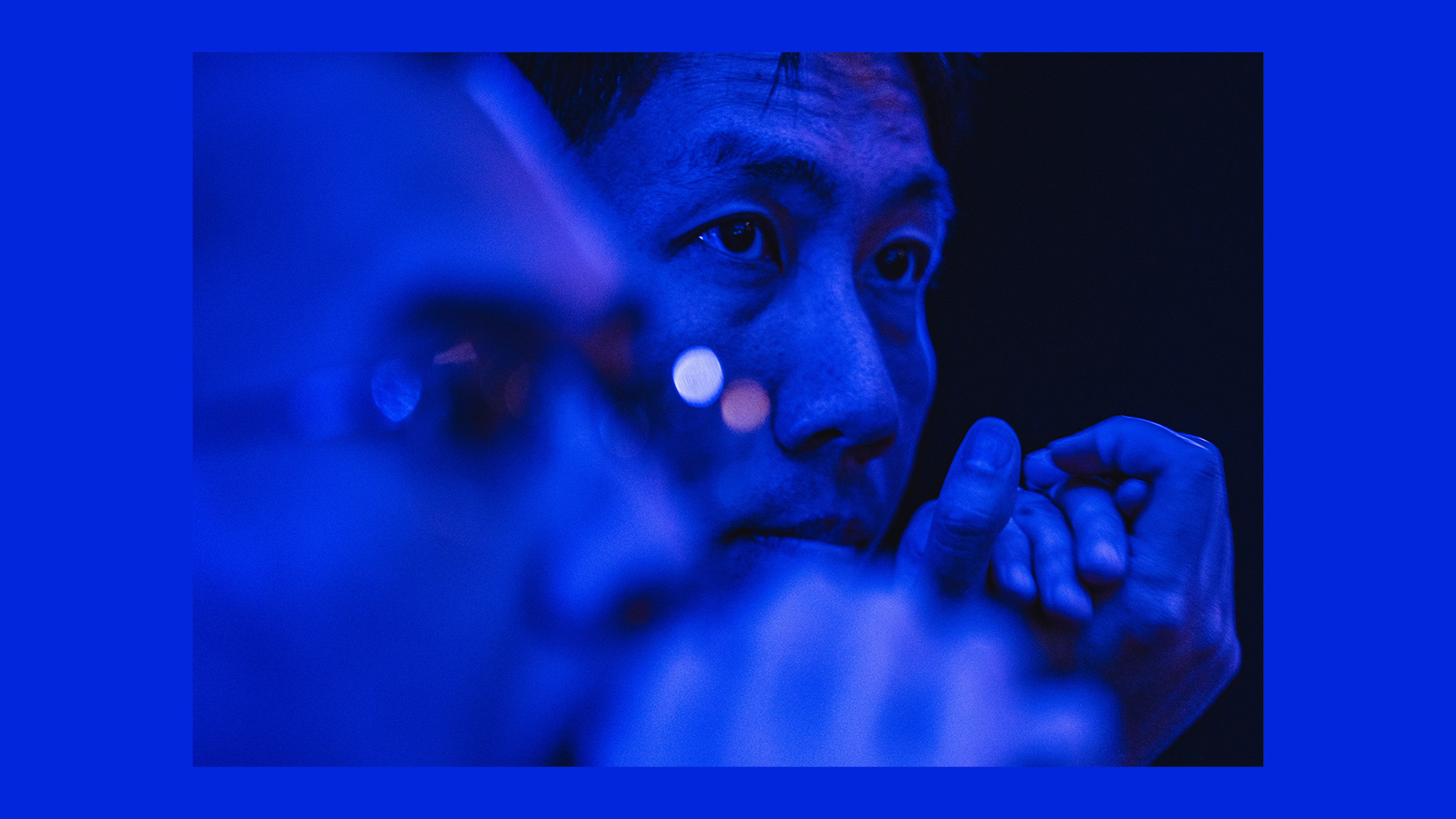
A photo of a tech engineer with blue lighting

All photographs from The Haunting of Verdant Valley, a photo book by Stephen Voss about the hidden toil of Silicon Valley. Used with permission.

Brydon Eastman was wrestling with an ethical quandary. As an applied mathematician at OpenAI, he debated what to do: Keep quiet and protect his job, or speak up and risk losing his position at a company on the cutting edge of artificial intelligence technology.

Eastman, 33, started his job with OpenAI in 2022, a few weeks before its famous chatbot ChatGPT debuted. The San Francisco office where Eastman worked had nap rooms, one way the company—like many others in Silicon Valley—encouraged employees to put in long hours. Those hours had gotten longer since Eastman took the job and ChatGPT rocketed to popularity and influence.

Feeling overwhelmed by his dilemma, Eastman went into a nap room and shut off the lights. He prayed for an hour and a half. By the end of that time, he said, he felt clarity from God: The issue was worth confronting. He posted his thoughts on his workplace communication platform, Slack, for the entire company to see. He worried about getting fired, thinking, This will probably cost me my equity. This will probably cost me a lot of money. But this is the right move. 

Looking back, he said, “This is following Jesus.” The confrontation “caused some people to change some decisions,” he said. “In the end it turned out okay.” Eastman recently left OpenAI to start a new company, Thinking Machines, which lets him work on projects with which he finds himself more “philosophically aligned.”

Any job can present ethical quandaries, but young Christian engineers working on AI are in the center of an unprecedented surge of technological innovation that is altering the way computers and humans interact. AI developments have also caused a rapid acceleration of tech investment—a “gold rush,” as one investment analyst put it.

In interviews with CT, engineers in their 20s and 30s shared how they are finding themselves carried along in a surging current of AI advancements, struggling to grab at branches to anchor themselves. 

They plan mathematical experiments, hunch over computers writing code, manage “data labelers”—people who annotate and categorize data used by AI models—and react in real time to the exploding amounts of new research. In crafting machines that reduce work for other humans, these engineers work longer and longer hours and often don’t feel they have time to pray through major issues that pop up. They also say they lack Christian mentors to help them navigate the rushing waters of AI. 

The industry has ballooned since ChatGPT debuted. Nvidia, a chip maker used by AI companies, saw its valuation skyrocket to $3 trillion last year, making it one of the largest companies in the world. Then Chinese newcomer DeepSeek shook up the market in early 2025 when it unveiled a model that was cheaper and more efficient than those from US tech companies like OpenAI. 

As the AI current flows ever faster, engineers often feel powerless to slow it down. “Even if I was 100 percent convinced [that] as a species we shouldn’t develop AI, as an individual there’s no way I could stop it,” Eastman said. “We’ve been building toward this invention for hundreds of years.” 

In the past, many technological developments progressed slowly enough for humans to cultivate discernment about them, said Mike Langford, a theologian at Seattle Pacific University who studies the intersection of theology and tech. But AI innovation “has happened so quickly that we haven’t had time to develop wisdom about how we use it.”

In this newest leap of technology, Christian AI engineers could build good, ethical tools that form our lives in ways we don’t yet realize. They’re excellent mathematicians, writers of code, and creative thinkers—and they’ve come to jobs at top tech companies with a moral framework from their faith. They could help companies prioritize data privacy, code equitable algorithms, and treat humans working behind the systems fairly. But they need support. They need guidance. They need rest. There is an air of desperation in Silicon Valley, as engineers compete for a small pool of jobs while continually fearing the next round of layoffs, sources told CT. They worry the AI bubble might burst at any time.

When he started working in AI engineering a few years ago, David Kucher, 26, reported he “felt like every minute you had to prove yourself.” He sensed “expectations of more and more and more.” 

Eastman didn’t join the industry to get in on the AI gold rush. He started his career by researching how AI mathematics could aid cancer treatment. He has great credentials, including a “finite Erdős number” of 3, which means he is three degrees removed from publishing research with mathematician Paul Erdős—a bragging right in the discipline. 

But research wasn’t to be Eastman’s path. Funding for postdoctoral studies fell through, and OpenAI recruited him. He began training machines. A large language model that forms the basis of, say, ChatGPT, takes months to train. Eastman worked in post-training, conducting mathematical experiments to prove the model could do specific tasks. 

Post-trainers reinforce and refine the language models with more math and human feedback, telling the model which responses are good or bad and mitigating incoherent, weird, biased, or just bad responses. That means when you ask ChatGPT a question such as “Can you give me a weather forecast for New York written in the style of a Shakespearean sonnet?” it gives a (somewhat) coherent answer. 

As these young Christian AI engineers build powerful tools, they navigate the half jokes from relatives: Are you building something to destroy humanity? Something that will take my job? Something to be greater than God?

Finding companions who understand the unique pressures of working in AI is key. Eastman stays in touch with one Christian mentor: Derek Schuurman, his undergrad computer science professor at Redeemer University in Hamilton, Ontario, where Eastman is from. A background at a small Christian liberal arts college is unusual in AI. Eastman’s education helped him understand that “this tech we’re building isn’t neutral,” he said. “That’s obvious to me, but that’s surprising sometimes to secular engineers or Christian engineers trained in secular institutions…. We’re imbuing particular values in these models.” 

In the absence of Christian friends in AI, Eastman reads Schuurman’s book A Christian Field Guide to Technology for Engineers and Designers. Schuurman, now a professor at Calvin University, wrote one chapter as a series of imaginary letters to a young engineer. He warns against ignoring rest, taking too much pride in high-profile projects, putting work ahead of friends and family, and falling into self-reliance from high compensation. Those tendencies don’t appear at the start of a career, he said, but set in insidiously:

Don’t forget… our entire life is a response to God.… If Christ’s lordship extends over all of life, then his lordship must also extend to engineering and technology. In the words of the late professor Lewis Smedes, we are called to “go into the world and create some imperfect models of the good world to come.”  

A tech worker in Silicon Valley working at his computer at night. From The Haunting of Verdant Valley, a photo book by Stephen Voss. Used with permission.

The engineers who spoke with CT don’t think they’re destroying humanity, but because of the pace of their work, they are navigating their own human limitations as they experience burnout, isolation, and cutthroat company culture. Though they say they don’t feel as though their colleagues are hostile to their faith, they also don’t find many other Christians at their companies. 

Affinity groups exist: Google DeepMind engineer Richard Zhang started a collective called Global Christians in AI, with about 250 subscribers. He knows another DeepMind researcher who is hoping to start a Bible study at Google.  

But the average programmer isn’t getting invited to Bible studies at work. Despite headlines about some Silicon Valley executives’ new interest in Christianity, employees on the ground don’t feel like they’re in the middle of some kind of Christian awakening in their offices. They all want to know more Christians in their field but in many cases haven’t found them. One goes on regular runs with his pastor, which helps. Some meet up with other tech professionals at church.

Faith is “still kind of off-limits” in tech companies, and that’s a concern with all the ethical questions around AI, said Hunter Guy, the cofounder and CEO of Study Aloud, an ed tech company. She has mentored industry professionals at Progressive Baptist Church in Chicago. When they disagree with a project or find themselves burned out, Guy said, tech professionals must ask themselves, “When do I walk away?” Part of what will allow Christians to do that, she added, is understanding that “purpose doesn’t end when your job does. Calling doesn’t end when your job does.”

Some Christian AI engineers sense a calling to stay in the field as long as they can. Kenya Andrews is also a member of Progressive Baptist and is friends with Guy. As a Black woman, Andrews is a minority in AI engineering. When she was a little kid, she and her dad built a computer from scratch. When she was a teen, people came to her with their computer questions.

Andrews went on to become the first in her Georgia family to graduate from college. Her parents were the first in their families to graduate high school. Her paternal grandfather was a sharecropper, and her paternal grandmother was a cook and maid. They were adamant that Andrews get as much education as possible.

Andrews, 30, has blown away their expectations: She recently completed a PhD in computer science from the University of Illinois Chicago. But the pressures of doing high-level machine learning research caused her to consider leaving her PhD program to go back to her old software engineering job, which suddenly felt simpler. She kept going because she felt a calling from God. She also didn’t want to let down her family or abandon the research to which she felt she could uniquely contribute. 

She went into AI to research justice in algorithms or, as she puts it, to build machines that treat individual humans as who they truly are. Algorithms are determining everything from employment and parole to health care options and mortgage eligibility. Evidence is piling up that these models are built on historical data with biases against racial minorities. An engineer at a big company may not have time to think about how a seemingly small choice for an algorithmic model will affect millions; a researcher like Andrews, in academia, does.

Her dissertation focused on how algorithms pull data from medical records to make health care decisions. “I think that really aligns well with ‘Love your neighbor as yourself,’ ” she said. “The Word talks about justice a lot… people who didn’t have humanity before, and [Jesus] now giving them humanity.” She added, “Everything I do is driven by me wanting to honor Christ. It’s not compartmentalized for me.” 

But because of the American political climate, Andrews said it’s been difficult to find support for diversity-related research. She was thinking about applying for a National Institutes of Health grant earlier this year. When she returned to the NIH webpage two weeks later, the grant was no longer listed. 

Like Andrews’s family, Michael Shi’s parents are thrilled and proud that he works in AI in Silicon Valley. But for Shi, 31, the job in this cutting-edge field has been all-consuming and stressful. “It has not been a physically, emotionally, spiritually healthy place to be,” he said. 

His own anger in tense moments has surprised him. On one high-profile project, frustration between him and his team escalated, which led to multiple blowups. The project was behind schedule, and he felt that the quality of work was below expectations. Meanwhile, different people on the team were vying for power. 

Shi said he yelled and made harsh statements to his coworkers. That incident caused him to have doubts about his faith. He wondered why he felt so angry. Shouldn’t God have transformed him more by now? A Christian shouldn’t react that way, he thought.

Tech workers board a night bus in Silicon Valley.From The Haunting of Verdant Valley, a photo book by Stephen Voss. Used with permission.

He feels like his church friends can’t really understand what’s going on at his workplace. He doesn’t know other Christians in AI. “I had not been giving much grace to others because I had not given myself space to receive grace from the Lord,” he said. “I’m beginning to realize that the expectations I place on myself or others place on me are not the same as God’s expectations for me. God is ultimately pleased by my faithfulness.” 

He tries to go for walks outside, which clear his mind. He goes to his pastor’s class on spiritual disciplines. But he knows he’s burned out.

On the other hand, Zhang at Google DeepMind doesn’t want Christian engineers to be so worried about burnout that they stop working hard. “The tension there is we’re called to be excellent,” he said. At another company he knows of, Christians have a reputation for being lazy. “It’s hard to balance.” 

A big part of the growing burnout is that the AI boom came shortly after the COVID-19 pandemic, which young engineers said both isolated them and erased their work-life boundaries.

Kucher, the AI engineer who entered the field a few years ago, started graduate school weeks before the pandemic set in. He was sitting in a room by himself facing down Zoom classes and math equations on a laptop. Work never stopped, and knowledgeable counsel was hard to come by. Now at a startup, he said, more weeks have become “bad weeks” at work. “The pace of stuff has been absolutely insane.” 

Like other Christian engineers, Kucher entered the industry because he wanted to create something that would help people and that they would use every day. Some of his graduate work involved improving medical imaging through machine learning.

He left one company after feeling disillusioned about its purely profit-driven product. Now he works at a company where he feels like he’s building something better. He’s spent a year and a half programming a chat application that can instantly pull together data analysis that would have taken a human a week to do. But there’s no break in sight for him. 

“It hurts to have things I prioritize—like exercise or volunteering at church—slowly, bit by bit, being eroded, depending on the week we’re having at work,” he said. He hasn’t found a Christian mentor in the AI field, despite trying. 

Kucher reminds himself that his identity is not his job. He fights for time to rest. “I am a child of God,” he tells himself. “I’m valued and I’m worthy, and I’m doing my best.”

Emily Belz is a senior staff writer at Christianity Today.

Photograph of Christine Caine standing in a black jacket with arms crossed outside of a modern house.
Testimony

Explosive Secrets Damaged Me. Surrendering to Jesus Saved Me.

A balcony view, a warehouse church, and the sweetness of the Word led me to the safe home of God’s love.

Photography by Sarah Partian for Christianity Today

Growing up in Sydney, I could not fathom that God could love someone like me. At our Greek Orthodox church—the cultural hub of the Greek immigrant community to which I belonged—I did not understand the three-hour services in an ancient language that none of us spoke.

I figured that God was too busy running the universe to care about me, and I never felt holy or worthy enough to think I could personally commune with him. I certainly don’t remember ever being encouraged to talk to him directly, and definitely not in my own words.

Besides, I had other things to think about. At school, I was ridiculed and misunderstood because English was my second language. I had taramasalata on my sandwich rather than vegemite and ate spanakopita instead of meat pies. Though I made Australian friends, my parents never allowed me to go to their homes for birthday parties or to hang out.

Instead, our Greek friends and relatives came to our house, where we ate heaps of Greek food, danced to the soundtrack of Zorba the Greek, and listened to my aunts’ many matchmaking attempts. (The movie My Big Fat Greek Wedding is a glimpse into the first two decades of my life, Windex and all.)

As a daughter, I was told that my sole purpose in life was to become a suitable wife to another Greek, in order to give birth to more Greeks. The prevailing thought among our community was that girls did not need to be too educated, because then no man would want to marry them. But I loved learning and wondered why the future painted for me was not appealing.

On the surface, we may have looked like a typical immigrant family—tight-knit, churchgoing, not wanting to draw attention to ourselves. What few people saw, however, was that secrets hung in the air like a thick, impenetrable fog.

The first secret was our long history of forced migration. My grandparents fled Turkey in 1922 during the Greek genocide and built a new life in Alexandria, Egypt. Thirty years later, Christians became a persecuted minority there, so my parents’ generation had to leave Egypt for Australia. Mum was only 16 when her parents put her and her sister on a ship bound for Sydney, where they worked hard to pay for the rest of the family’s passage. My dad arrived much the same way. But we rarely talked about any of this or the trauma they carried.

The second secret was a trauma of my own. From age 3 to 15, I was the victim of sexual abuse at the hands of several men. I carried this secret silently and alone, because no one ever talked about such things. The weight of the abuse and shame damaged my soul and left me with a deep distrust of men. I did not think to take any of my pain to a God who I assumed was indifferent.

The third secret further tilted my world on its axis. When I was an adult, I learned that my older brother, George, was adopted. When George confronted Mum about it, she turned to me and asked if I wanted to know the whole truth: I was adopted too. Only my younger brother, Andrew, was my parents’ biological child.

I discovered that my biological mother was a single Greek immigrant who had left me in the hospital, unnamed and unwanted. My parents adopted me when I was two weeks old, but because of the shame they’d felt at not being able to have children yet, they kept our adoptions secret for more than three decades.

It’s no wonder I developed patterns of destructive behavior and entered unhealthy relationships in my young adult life. I desperately sought love, significance, and security—things I did not find until I completely surrendered my life to Jesus.

Abstract image of olive leaves.Photography by Sarah Partian for Christianity Today

When I look back on how I came to know Jesus, I realize that he was pursuing me my whole life. In my childhood, sometimes the stony barricade cracked and glimpses of God shone through in my Greek Orthodox church. In Australia’s public schools, where religion classes were compulsory, I felt drawn to the Bible in my elementary years.

When I reached high school, I met Carol, a parent volunteer who started and ended every class with prayer. She was the first person I’d met who prayed to God like she expected him to listen, like God cared personally about every one of us.

But if my journey to Jesus were a GPS route, it would have been “recalculating” at every turn. By the time I reached my college years, I was far from God.

In addition to carrying the pain of my childhood years, I blamed God for my dad’s unexpected death when I was 19. My dad had had cancer, and we were relieved he was in remission—until he was suddenly gone. Why would God want us to be in so much pain? I was so angry with him.

Naturally, then, when a Christian friend invited me to a series of lectures by J. John, a Greek evangelist from England, I was hesitant. But because he was Greek, I went. After the first lecture, my friend connected me with him. I made it very clear to John that I didn’t agree with what he was saying. He didn’t flinch. He simply said, “Let’s go have coffee.”

John answered my endless questions with care and compassion and kept inviting me to ask more. I came to trust him and began to see that perhaps God was not as distant and cruel as I had assumed.

Two years later, I took a trip to Switzerland with friends to celebrate my birthday. Sitting on a balcony, I thought about God and all the times he’d shown me glimpses of himself. Against a sweeping view of Zurich, the fractured pieces of my life came together in a panorama, aglow with grace. In that moment, I felt God gently calling me to surrender everything to him and follow.

So that very day, at the prompting of the Holy Spirit, I made four crucial decisions: Go back to Sydney, end the relationship I was in, finish college, and go to church. These seemingly simple actions meant that my life would change forever.

Greek Orthodox girls did not go to Protestant churches or get baptized as adults. Their families didn’t just let them go. These choices cost me my family—for a time—and the person with whom I thought I would spend the rest of my life. I didn’t know what was ahead, but I did understand what I had to leave behind to become a fully devoted follower of Jesus.

Months later, a friend invited me to join her for a Sunday service. It was the first time I stepped inside a Pentecostal church, and at first glance I almost mistook it for a disco. The inside of the former warehouse was dimly lit, and the stage was set with colored spotlights, drums, and guitars. People were milling around in clusters, chatting, and there was no priest to be found.

As strange and unfamiliar as it was, once the service started, I was deeply impacted by the worship. The words were personal and intimate, inviting me to love God with all my heart, soul, body, and strength. When the youth pastor, a woman, delivered the message, I was captivated. The presence of God was thick in the air. All I could do was keep going back.

As I began reading God’s Word for myself, its beauty and truth gripped my heart. Like most Greek Orthodox church attendees, I grew up kissing the Bible, but I had never thought I could read or understand it myself. What I tasted was sweeter than honey and more precious than gold. Day by day, I could feel myself changing as deep healing worked into my wounded soul.

One day, I realized that the girl damaged by explosive secrets had found a safe home in God’s love. Where there was once distrust, there was now faith in the one who works all things for our good. I realized that I was finally learning to walk freely by the Spirit in grace and truth—and I longed to help others do the same.

Seven years after I first walked into that church, I married Nick (whom I met at a class in Bible college), and together we founded Equip & Empower, through which we minister throughout the world and oversee our three churches in Greece, Bulgaria, and Poland. In 2008, we started A21, a global organization against human trafficking that operates in 10 nations to reach, recover, and restore those trapped in modern-day slavery. And in 2010, we began Propel Women to empower, equip, and mobilize Christian women for leadership.

Each of these ministries is a testimony of how God has transformed the trauma of my past into compassion for those he calls me to love.

Whether we cross oceans or tread through minefields of painful secrets, God holds us safely in his hands. If we veer off course into yet another detour, he takes our wrong turns and recalculates them into better paths, bringing us to where he intended all along. His plans for us are always to bring life, in ourselves and through our stories.

Christine Caine is a speaker, activist, and author.

Theology

An Image of God for an Era of AI

Columnist

Our understanding of the imago Dei must be shaped by awe, mystery, and the person of Jesus Christ.

A pastor in a church baptizing a robot
Illustration by James Walton

Nearly 20 years ago, I took an artificially intelligent cyborg to vacation Bible school.

At the time, I was teaching a Christian ethics class at The Southern Baptist Theological Seminary, and I had my students confront the question of AI in their final exam.

I asked them to imagine their future great-grandson, “Joshua,” as a minister within what used to be called the Southern Baptist Convention (but is now the “Galactic Immersionist Federation”). In this imagined future, Pastor Joshua sits across the desk from Aiden, a little boy going to the church’s summer outreach program. Aiden wants to know how he can become a Christian. He wants to repent of his sins, put his faith in Jesus, and go to heaven when he dies.

The catch: Aiden is manufactured, a Frankenstein’s creation of cloned human body parts with a generative AI mind. The question my students faced was “What would you advise Pastor Joshua to do?” Should he walk Aiden through the answer to the ancient query “What must I do to be saved?” (Acts 16:30). Does the “whosoever” in John 3:16 apply to him—or, should I say, to it?

The point of that final exam was to dislodge students from their tendency to treat ethical dilemmas like a world-view concordance of right answers to premade questions. I wanted to see not so much their answers as how they arrived at their answers—how they integrated the Bible and the gospel into a situation for which they probably didn’t have preexisting slogans.

Today, those students are still far from having great-grandchildren, yet here we all are. We’re on the cusp of what some are calling an “axial decade,” in which advances in artificial intelligence may spur on the contemporary equivalent of the Axial Age (when the emergence of literacy transformed the way human beings exist in the world).

Pastor Joshua might not be born yet, but Aiden is here. And the church is not ready. Indeed, to talk seriously about AI is to risk causing the same reaction that many of my students had to their final—categorizing it as futuristic science fiction. But the root of our unreadiness is not that we don’t adequately understand what a chatbot is. It’s that we don’t sufficiently understand what a human being is.

The crisis of our age is a radical reducing of human life to a flow of data and information, so much so that some tech pioneers suggest eternal life can be achieved by uploading our minds to a digital cloud. Douglas Rushkoff describes this mindset as “the belief that we can code our way out of this mess,” presuming that in a world of code, “anything that isn’t yet code can eventually be converted to a digital format as easily as a vinyl record can be translated to a streaming file.”

Christians, of course, have a distinctive view of the human person as imago Dei—made in the image and likeness of God (Gen. 1:27). The problem is that modern Christians often unintentionally speak of this distinctiveness in terms just as machinelike as those used by the world around us.

We try to identify what “part” of us bears the image. We are morally accountable, we say, unlike other animals—and that’s true, but the Bible tells us there are other morally accountable beings in the universe (1 Cor. 6:3). Or we point to our ability for relationship—and that’s true also, but what does that say when people fall in love with their chatbots?

Perhaps most problematically, we speak of the imago Dei as our rationality, our ability to think and to reason. But intelligence has never been exclusive to human beings. The Serpent of Eden is described as “crafty” or “cunning” (Gen. 3:1; 2 Cor. 11:3), and the apostle Paul spoke of the “schemes” of the Devil (Eph. 6:11, ESV throughout).

After Genesis, though, the Bible doesn’t further define the concept of the image of God until the New Testament. Even then, it defines that image not as a what or a how but a who.

Jesus, Paul wrote, is “the image of the invisible God” (Col. 1:15). The Incarnation means that Jesus joined us in flesh and blood, in our suffering and creatureliness, in order to free us from our captivity to the power of death (Heb. 2:14–15).

All creation is meant, somehow, to recognize humanity as signifying the reign of God (Rom. 8:19). And in the flesh-and-blood person of Jesus, it does. Even the molecular structures of fish and bread obey him and multiply. In strikingly personal terms, Jesus says, “Peace! Be still!” to the wind and waves, and they respond (Mark 4:39).

Paul speaks of creation as revealing the “invisible attributes” of God (Rom. 1:20) in ways that mirror the concept of the image of God. This is not the potential to trace philosophical arguments from the order of the world back to God; the Bible says this revelation to humanity is “plain to them, because God has shown it to them” (v. 19). Something in our being is meant to resonate with the awe and mystery of the world, triggering us to recognize something—someone—behind the veil of what we can see.

The church in the AI age must recognize that to be human is not about “stuff” that can be weighed or quantified. We must understand that there’s a mystery to life that cannot be uploaded or downloaded or manipulated by technique. Simply recognizing this in an age of smart machines is a good start.

The world has always asked what the meaning of human life is. It is about to start asking what it means to be human at all. That’s a final examination question for us all.

A robot can give an answer, but that’s not enough. We should point to a Person. And in an age of artificial intelligence, as always, that will be strange enough to save.

Russell Moore is editor in chief at CT.

Apple PodcastsDown ArrowDown ArrowDown Arrowarrow_left_altLeft ArrowLeft ArrowRight ArrowRight ArrowRight Arrowarrow_up_altUp ArrowUp ArrowAvailable at Amazoncaret-downCloseCloseEmailEmailExpandExpandExternalExternalFacebookfacebook-squareGiftGiftGooglegoogleGoogle KeephamburgerInstagraminstagram-squareLinkLinklinkedin-squareListenListenListenChristianity TodayCT Creative Studio Logologo_orgMegaphoneMenuMenupausePinterestPlayPlayPocketPodcastRSSRSSSaveSaveSaveSearchSearchsearchSpotifyStitcherTelegramTable of ContentsTable of Contentstwitter-squareWhatsAppXYouTubeYouTube