News

Singapore Megachurch Pastor Criticized for Lack of Repentance

An interview with Kong Hee, who was convicted of fraud years ago, sparked controversy among Chinese Christians.

Singapore Megachurch pastor, Kong Hee, surrounded by computer cursors.
Christianity Today June 30, 2025
Illustration by Christianity Today / Source Images: Getty, Youtube

The last time Benjamin Juang heard Singaporean megachurch pastor Kong Hee preach was around two decades ago.

Juang was in high school when Kong toured Taiwan in the early 2000s to promote a new album by his wife, pop star Sun Ho. Juang brought his classmates to an evangelistic concert organized by the couple, and he bought one of Ho’s albums as a gift for a non-Christian friend.

The next time he heard of Kong was a decade later, when Singaporean authorities arrested Kong for siphoning $36 million ($50 million Singapore dollars) from the megachurch he founded, City Harvest Church, to support Ho’s singing career. The church claimed the music was an evangelistic effort to spread the gospel to non-Christians, yet others questioned how such music could support the church’s mission. Kong spent a little over two years in prison for criminal breach of trust and falsification of accounts.

After his release in 2019, Kong took a break from ministry before returning to his position as senior pastor at City Harvest Church.

So when Juang, now a youth pastor at a nondenominational church in Taiwan, heard that Kong was going to be a speaker at a local conference in early May, he signed up out of curiosity. He took notes as conference organizers played a prerecorded video interview between Kong and Peter Wan, senior pastor of The Hope Church in Taipei. While Kong spoke about his past ministry failures and the spiritual renewal and rebirth he felt while in prison, Juang noticed that Kong never mentioned why he was sent to jail or expressed remorse for his actions.

“Maybe they didn’t want to shift the focus [and turn] this into an apology video,” Juang said he thought at the time. “Maybe because pastor Kong Hee had already apologized … or maybe pastor Peter told him not to mention it and focus on his personal journey.”

The video, which The Hope Church later posted on its YouTube page, racked up more than 250,000 views and stirred controversy among Chinese Christians in Singapore, Taiwan, Hong Kong, and North America. Some questioned whether Kong was truly repentant and whether it was wise for him to return to ministry. Others defended the pastor, claiming that the interview showed how Kong’s trials had led him to turn his life around.

The discussion brought out issues of repentance and prosperity-gospel teachings—topics that Chinese churches in these regions are increasingly concerned about. It also revealed ideological divides among Chinese Christians online.

Juang felt that backlash as he posted four nuanced YouTube videos in response to Kong’s interview. In one, he explained that the video interview with Wan was never meant to be an apology video. In another, to address the misconception that Kong had filled his own pockets with church money, he clarified why Kong had been sent to jail. Negative comments poured in. 

“I don’t support Kong,” Juang said. “I don’t know if he’s repented yet. I don’t know if he’s as humble as he claimed. I am against the prosperity gospel. … I agree with all the other YouTubers.” 

But Juang bemoans how Chinese Christians are becoming more biased and divided, “just as hateful as everybody else.”

With a head of white hair and a broad smile, Kong Hee, 60, is one of the most prominent pastors in Singapore, where 18.9 percent of the population identifies as Christian.

According to the church’s website, Kong grew up Anglican and began church planting as a college student after hearing God say to him, “Kong, do you love Me more than all that the world can offer you? Will you live fully for Me and serve Me for the rest of your life?”

In 1989, he and his wife cofounded City Harvest Church with a congregation of 20 young people. The Pentecostal church, formerly part of the Assemblies of God, grew rapidly, as Singaporeans were drawn by Kong’s effusive, charismatic preaching style. At its peak in 2012, City Harvest had 33,000 congregants. Today, the church averages nearly 24,000 people each week and gathers at two locations in Singapore: a large downtown mall and a church building in the west of the city-state.

As a high school student in Taiwan, Juang thought Kong was cool. “He’s funny. He’s charismatic. … His entire presentation [was] more interesting and more geared towards younger people,” he said.

Asher Lum, a Singaporean Christian, agreed. Lum was a university student when he attended an Easter evangelistic rally in 2000 organized by the church. There he decided to believe in Jesus.

Kong’s preaching was instrumental in helping the engineer live out his newfound faith. The vibrant, energetic church was filled with young adults, and Kong’s messages often spoke about how to relate the Bible to the workplace and family relationships, Lum said.

Yet others criticized City Harvest for promoting the prosperity gospel, including claims that congregants who gave larger tithes would receive more blessings in their lives, such as job promotions.

To better reach young people, Kong and Ho launched the Crossover Project in 2000 with the goal of using secular music to “communicate the love of God to unchurched youth,” according to City News, the church’s in-house publication. Kong said the idea came to him when he visited Taiwan and noticed that although hardly any young people attended church, many would show up when Ho sang familiar pop songs. 

Ho’s first Mandopop album debuted in 2002, and she went on to record four more albums with Warner Music Taiwan, with several albums reaching double or triple platinum. Later, Ho released English-language singles like Fancy Free that reached the top of Billboard’s dance charts.

In 2007, Ho attempted to break into the US market by releasing her single China Wine with rapper Wyclef Jean. The music video drew extensive criticism from Christians for Ho’s scantily clad outfits, her suggestive dance moves, and the song’s lack of Christian messaging. Plans for a US album halted in 2010 as Singapore authorities began to investigate City Harvest’s use of church funds to invest in the Crossover Project.

Although Ho was never charged, Singapore’s Commissioner of Charities accused Kong of diverting funds to the project while claiming to use the money to help build a sister church in Kuala Lumpur, Malaysia. A witness testified that the church-building funds were used for promoting Ho’s music career instead. City Harvest, which had also purchased $500,000 worth of Ho’s unsold albums, said it was not illegal to use the church’s money for the Crossover Project, because it was in line with the church’s constitution.

On June 26, 2012, Singapore police arrested Kong and four church leaders and charged them in court the next day. 

During that time, many congregants left City Harvest. One attendee, Andrew Koay, wrote that he had decided to leave and attend another church. “I wasn’t taught to think about the messages; instead, I felt encouraged to take everything superiors say as gospel truth because my leader is ‘God’s anointed,’” he wrote.

Meanwhile, others like Lum decided to stay. When Lum first heard the news that Kong had been arrested, he felt confused and devastated. He had heard exciting updates that the Crossover Project had led to a revival in Taiwan and that Taiwanese Christians were moving to Singapore to study at the church’s School of Theology.

“We thought we were doing something for God, and suddenly everything stopped,” he said. “Did we [do] something wrong as a church?” 

Lum acknowledged that there could have been “some technicality about funding that went wrong.” But he remains convinced that the motives behind the project were pure. “We are not perfect people,” Lum said. “There are things that we are also not proud of. But God help[ed] us. God [forgave] us.”

In 2017, the Singapore High Court sentenced Kong to three-and-a-half years in jail after he appealed against his original eight-year sentence meted out in 2015. Five other church leaders also served reduced jail terms ranging from seven months to three years and two months for their roles in misusing church funds.

On August 22, 2019, Singapore authorities released Kong from prison after two years and four months for good behavior. Two days later, he went back to City Harvest Church. “I want all of you to know that I’m so sorry, so sorry for any pain, anxiety, disappointment, or grief that you have suffered because of me,” he said in a four-minute speech to church members.

“I hope to serve together with you in this house of God in the many, many years to come.”

He returned to the pulpit in August 2020.

Kong spoke candidly with Wan about his regrets about his attitudes and actions as the leader of a prominent, growing church. The “old Kong” was angry, intense, impatient, unforgiving, and excessively goal-oriented. Kong also said he had been “not so happy” in the past because of the stresses of his ministry, and feared he wouldn’t be successful.

“What’s the point of gaining a church and [losing] your soul?” Kong asked Wan.

Kong shared one instance where his temper flared. When an evangelistic crusade the church had organized in Singapore Indoor Stadium was not up to his standards, he gathered his key leaders and pastors together in a room, banged his hand on the table, and shouted at them at the top of his lungs.

In the heat of his anger, he threw a pen at a fellow pastor, an act which hurt the latter’s feelings deeply, Kong said. Kong then shared about how this action affected his relationship with his colleague.

For Juang, the fact that Kong had repented of his pride and self-righteous leadership style made the video a “better testimony” than if he had repented only for mismanaging church funds. Juang remembers feeling troubled as a high schooler when he noticed Kong speaking arrogantly from the pulpit.

“That kind of apology is something you rarely see among Chinese pastors,” Juang said.

Kong also admitted to Wan that when he and Ho were promoting the Crossover Project, he had begun to think he was a celebrity, and he thanked God for granting him a reset to that mindset. 

Yet Kong also praised the project, noting that the Holy Spirit had led them to “the right door, the right people.” When Wan asked Kong if he would change his approach to the Crossover Project today, the pastor was noncommittal. “You can never please both sides,” he said. “To the church, you have become worldly. Then to the world, you are not worldly enough.”

Singaporean pastor Jenni Ho-Huan believes Kong’s recounting of the Crossover Project serves as a cautionary tale about the dangers of success—including spiritual success. Prayers about God opening or closing doors treat God like a doorman, and open doors can be temptations and distractions, she argued.

“If he had spoken more about these dimensions and how his church now operates differently, relying more on a team approach, going slower, it would be more heartening,” Ho-Huan said.

Most of the negative comments focused on the fact that Kong did not mention or recognize in the video interview that he had sinned against God with the embezzlement. Some also chastised Kong for saying he had learned to forgive while in prison; his punishment was just, they said, as he had broken Singapore’s laws.

In the interview with Wan, Kong focused on the fact that his criminal trial and conviction marked that period with “a lot of soul-searching.” He also expressed gratitude to God for that “season of hardship,” which he came to realize was “an awakening.” He listed Watchman Nee, Teresa of Ávila, and Martin Luther as figures who were influential in teaching him to slow down and surrender.

“All I can say is that I didn’t hear any confession of wrongdoing, only that the ministry was huge, the ministry was too busy, the ministry used to be too aggressive, the prison was boring, the prison was not air-conditioned in the summer,” a Christian YouTuber in Taiwan known as DK opined in a video on his channel, which garnered more than 68,000 views.

“We all know that repentance, the premise, is the most central and precious point of the Christian faith,” another popular Taiwanese Christian YouTuber, Li En, said in a video that received 91,000 views. “I can only say I don’t know [whether Kong has repented] because I don’t see him mentioning anything about that in this video like this.”

Yet others disagreed. “I can feel total transformation on [pastor] Kong from [his] conversation, and his humble, transparent, and inner peace,” one viewer said. Another wrote, “Seeing Pastor Kong Hee’s life turned over and renewed by the Lord in prison, I feel happy and grateful from the bottom of my heart.”

City Harvest church members like Theresa Tan believe that Kong and the church are “bearing much fruit in repentance,” similar to what Scripture says in Luke 3:8.

When Kong returned to the church in 2019, he shared “with great honesty about how God led him to realize he had been too concerned about success and [about how] Jesus asked him if he was enough for him,” said Tan, who was part of the church’s staff for 15 years and is now managing editor of Singaporean Christian publication Salt&Light.

Tan also sees it in how different City Harvest has become. Prior to the court case, the church closely tracked the number of church members, as it was an important sign that they were carrying out the Great Commission, Tan said. But over the past six years, the church has learned to slow down.

Numbers are no longer “a chief concern—souls being saved are. And that could be one soul at a time,” she said.

Kong’s messages from the pulpit have also shifted. His sermons in 2013 and 2014 rallied congregants to be more than conquerors in seemingly insurmountable situations or expounded on God’s grand mission for the church.

Now, Kong talks about cultivating spiritual disciplines like practicing the presence of God daily. In a 2023 message, he quoted 1 Thessalonians 4:10–11, where Paul urges believers to make it their ambition to lead a quiet life, and declared, “The more I walk with Jesus, the more I understand this: There is a beauty and glory in being quiet.” 

Kong’s sermons prioritize the importance of silence and solitude, says Tan. One practice Kong encouraged congregants to do was to follow Jesus’ example of going away and praying by themselves. “It’s something that is hard for Singaporeans to really come away and be with God, right? But he models it very well for us,” Tan said. 

When she worked at the church from 2008 to 2023 to run its digital publication City News, Tan went on a three-day silent retreat with other staff, which felt hard to do initially. Today, she often spends a day alone with God. “It’s something that the pastor taught us,” she said. “It really makes you grow in your relationship with the Lord.”

At the end of the day, Ho-Huan believes it is not her place to say whether Kong has repented.

“The people who should take [Kong] to account are his family and fellow leaders or even other pastors in the city who are his friends,” Ho-Huan said. She noticed some marks of repentance in Kong’s sharing, such as the relinquishing of material goods, a maturing of his personality, a turning away from his previous ways of exerting control, and his experience of peace.

Yet Kong returning to lead City Harvest Church “does create problems, not because of a criminal record but because the spiritual record is muddy,” Ho-Huan said.

Kin Yip Louie, theological studies professor at Hong Kong’s China Graduate School of Theology, agrees. In his view, although Kong is aware of what led to his fall, he should also avoid situations that present similar temptations.

“Don’t be a senior pastor; just be a teaching pastor,” Louie said. “Don’t touch any money or administration duty. Just teach the Bible.”

[Editor’s note: Tan noted in a July 8 message that Kong had stepped down from executive duties, which includes handling church finances, in 2010.]

Additional reporting by Ivan Cen

News
Wire Story

Supreme Court Allows Religious Parents to Opt Out of LGBTQ Books in Class

Ruling says district’s refusal to allow students to skip lessons violates free exercise protections.

Child holds sign saying "Let Kids be Kids" and another "Bring Back the Opt-Out"

The Supreme Court heard arguments in Mahmoud v. Taylor in April.

Christianity Today June 27, 2025
Anna Moneymaker / Getty Images

The United States Supreme Court ruled Friday that parents of public-school children in Montgomery County, Maryland, have a right to opt their kids out of classroom reading times with books the school board labels as LGBTQ inclusive.

These books were introduced as part of a new curriculum in 2022 that included more than 20 new inclusivity books for pre-K through eighth-grade students. They promote storylines that teach gender is more a construct than a biological fact.

Some examples of books that may be read to students include Pride Puppy about a dog lost at a Pride parade or Uncle Bobby’s Wedding in which Bobby’s niece is confused by her uncle’s marriage to a man, but her mother “corrects” her.

The school board’s opt-out option for students was discontinued a year after the curriculum was introduced, leading a coalition of more than 300 Christian, Muslim and Jewish parents to file a lawsuit known as Mahmoud v. Taylor. Tamer Mahmoud, the petitioner in the case, is a Muslim Montgomery County parent, while the defendant in the case is Thomas Taylor, Montgomery County superintendent.

The coalition of parents claimed the board reversed decades of policy when it withdrew a previous commitment to tell parents when such curricula would be included and to allow parents to opt their children out of instruction at those times.

The school board said allowing parents to opt out became too burdensome and that discontinuing the practice was not a violation of the parents’ religious freedom. This argument prevailed in two lower courts.

The Supreme Court’s 6-3 decision conversely sided with the parents, granting them a preliminary injunction and restoring their right to opt their children out of these storybook times.

The decision states that the school board’s introduction of the inclusivity books, their decision to withhold notice from parents and then forbid opting out of the program “substantially interferes with the religious development of petitioners’ children.”

The decision agreed with the argument of the parents that the school board’s policies “unconstitutionally burden their religious exercise.” It recognized that one of the most important religious acts for people of faith is the religious education of their children, and this practice of religious education receives a “generous” amount of constitutional protection.

The High Court rejected school board’s description of the books as merely “exposure to objectionable ideas” or as lessons in “mutual respect.”

The Court said the storybooks “unmistakably convey a particular viewpoint about same-sex marriage and gender.” The books are designed to present certain values and beliefs as things to be celebrated, and certain contrary values and beliefs as things to be rejected.

Additionally, the Board specifically encouraged teachers to reinforce this viewpoint and to reprimand any students who disagree.

The Court further rejected the school board’s assertion that parents are free to place their children in a private school or educate them at home if they disapprove of what is being taught.

The decision explains public education is a public benefit, and the government cannot “condition its availability.”

The opinion of the Court was delivered by Justice Alito. Justice Sotomayor filed a dissenting opinion and was joined by Justices Kagan and Jackson.

“I’m encouraged by the Court’s ruling today to protect the rights of parents to raise their children according to their deeply held convictions, even as they are educated in public schools,” said Brent Leatherwood, president of the Southern Baptist Ethics & Religious Liberty Commission (ERLC).

“As the primary teachers of their home, parents should have the right to opt their children out of curriculum that actively undermines their religious convictions regarding marriage, family, gender, and sexuality. Religious families should be accommodated so that parents do not have to worry that their children will be indoctrinated in an educational setting.”

ERLC was among 10 faith groups siding with the parents in an amicus brief submitted in March … Other faith groups joining the ERLC in the brief include The Church of Jesus Christ of Latter-day Saints, the U.S. Conference of Catholic Bishops, the General Conference of Seventh-day Adventists, the Anglican Church in North America and the Jewish Coalition for Religious Liberty.

Also supporting the parents in amicus briefs were US Acting Solicitor General Sarah M. Harris, attorneys general from 26 states, 66 members of Congress, 35 members of the Maryland Legislature, as well as legal scholars, historians and others.

Oral arguments in the case were held April 22. In the hearing spanning more than two hours, the liberal justices considered the question of whether removing unwanted books in the school system was a local issue while Alito spotlighted a concern that the books contain a “clear” message that some may agree with but many religious people definitively do not agree with.

Leatherwood identified after the oral arguments that the conservative wing of justices seemed skeptical of the school board’s arguments, ultimately leading to the High Court’s majority decision backing the parents.

“Schools are for education — not indoctrination,” Leatherwood said. “The case before the court is a straightforward one. Parents, as the primary stewards of their children, have a right to shield their children from radical gender ideology material that burdens their religious exercise.”

Pastors

The Sermon as Sacred Art

To preach with power, you must do more than explain. You must create like an artist—crafting something beautiful, true, and alive.

CT Pastors June 27, 2025
edits by CT Pastors | illustration by cienpies / Gettty

If you preach long enough, a hard truth will emerge: You can preach a sermon that’s sharp, sound, and theologically airtight—and still watch it bounce off the congregation like a tennis ball off a brick wall. The people in the pews may nod their heads, but their hearts remain untouched. They might intellectually agree, but there’s no movement. No change. No growth.

Why does this happen? 

Because while minds engage, hearts lead. The heart, as both artists and preachers eventually discover, speaks a language only art can truly translate. We’re not just rational beings who occasionally have an emotional lapse. In truth, we’re deeply emotional creatures who occasionally dabble in reason. As a preacher, I understand that to truly transform the behavior of my listeners, the shift must happen at the affective level, not the intellectual level. This is why all people fail to do the good they know they should do and do the wrong they know is wrong.

Preaching that transforms

Consider the difference between sermons that inform and sermons that transform. The former traffics in ideas, exegesis, and argument. The latter traffics in beauty, mystery, and vulnerability. You can connect to someone’s mind through a clever turn of phrase or a well-structured outline. But to reach the heart, you need to offer them something more—something alive, something beautiful, something that risks vulnerability. You need art.

In The Artist’s Way, Julia Cameron insists that creativity is not a luxury reserved for the chosen few but a spiritual birthright. “The refusal to be creative,” she writes, “is self-will and counter to our true nature.” What Cameron understands—and what every preacher must learn—is that creativity is the pathway to the heart. This isn’t just theory. It’s something I’ve experienced firsthand.

This past Lenten season, I dedicated myself to the discipline of what Cameron calls “Morning Pages.” It’s the daily practice of writing three pages of stream of consciousness thought each morning. At first, it felt a little self-indulgent. But over time, it became a formative spiritual discipline that stripped away my armor of self-protection and helped me encounter my own soul in fresh and creative ways. For communicators, we cannot hope to touch another’s soul until we’ve been willing to encounter our own.

Vulnerability, beauty, and the preacher’s role

Artistry, at its best, is an act of vulnerability. It reveals the artist’s own longing, doubt, and hope. In the same way, a sermon that dares to be art exposes the preacher’s own heart. It is not content to merely explain the text; it seeks to embody it, to incarnate its beauty and its terror, its hope and its heartbreak. As Rick Rubin writes in The Creative Act, “The reason we’re alive is to express ourselves in the world. And creating art may be the most effective and beautiful method of doing so.”

Rubin reminds us that creativity is not about polish or perfection. It’s about presence. It means being fully engaged in the moment, listening to your own inner voice, and trusting that what you bring, even if it’s flawed or unfinished, still matters. 

The best sermons are not those that impress us with the preacher’s intellect but those that invite us into the preacher’s heart. In the best cases, that heart is immersed in Jesus and the Jesus revealed in Scripture. They are sermons that feel less like lectures and more like poetry, less like arguments and more like songs.

God’s design for beauty

The biblical story of the temple is a story about art. When God commands the construction of the tabernacle—and later, the temple—he doesn’t just simply provide a blueprint and a list of materials. He commissions artists, calling them by name:

Then the LORD said to Moses, “See, I have chosen Bezalel son of Uri, the son of Hur, of the tribe of Judah, and I have filled him with the Spirit of God, with wisdom, with understanding, with knowledge and with all kinds of skills—to make artistic designs for work in gold, silver and bronze, to cut and set stones, to work in wood, and to engage in all kinds of crafts. Moreover, I have appointed Oholiab son of Ahisamak, of the tribe of Dan, to help him. Also I have given ability to all the skilled workers to make everything I have commanded you.” (Exodus 31:1–6)

God calls Bezalel and Oholiab by name and fills them with the Spirit. Not for battles or leadership. Not for briefings or lectures. But for the purpose of artistry. The tabernacle and temple are not merely functional spaces; they are works of art, using gold and embroidery, carved cherubim, and radiant stones. Every detail was crafted to inspire awe, invite worship, and draw the worshiper’s heart toward the heart of God.

The temple was far more than a building. It was a signpost of the intersection between heaven and earth, the transcendent and the tangible. Its beauty wasn’t ornamental but essential. It stirred the heart, awakened longing, and reminded God’s people that he isn’t merely an idea to understand but a presence to encounter.

The sermon as sacred art

If the temple required artists, why should the sermon be different? The preacher is called not only to explain the mysteries of God but to embody them—to craft sermons that are themselves acts of sacred art. This does not mean every sermon must be a performance or every preacher a poet. It means that every sermon must risk beauty. It must risk vulnerability. It must risk the possibility that it might not just inform but transform.

The tools of the artist—imagination, metaphor, story, silence—belong to the preacher too. When we preach with artistry, we are not only inviting people to think about God but to experience him. We help them feel the ache of longing and the thrill of hope. And we invite them to bring their whole selves—their wounds and their wonder, their doubts and their desires—into the presence of the living God.

From head to heart

People don’t live from their minds alone. They live from their hearts—the seat of desire, where hope stirs and fear hides. In Scripture, the heart is more than emotion. It is the control center of the whole person. It’s the place from which we love, forgive, risk, and trust. 

This is why Solomon says: “Above all else, guard your heart, for everything you do flows from it” (Prov. 4:23).

It is the heart that moves us to action. So when we preach to the heart, we’re not bypassing truth for feeling—we’re aiming at the very core of a person’s being, where true transformation begins. 

As James K. A. Smith writes in You Are What You Love, “Our wants and longings and desires are at the core of our identity, the wellspring from which our actions and behavior flow.” A sermon that speaks only to the mind may win an argument, but it won’t change a life. Only one that connects with the heart can do that.

Art is the bridge between the mind and the heart. It is the language of the soul, the music that moves us when words alone fall short. As Julia Cameron puts it, “Art brings things to light. It illuminates us. It sheds light on our lingering darkness. It casts a beam into the heart of our own darkness and says, ‘See?’ ” 

The artistic sermon does the same. It dares to shine light into hidden places, to name the longing and the loss. It invites the congregation not just to understand but to feel. Not just to agree, but to be changed.

Preaching, at its best, is an act of sacred artistry. It is the work of crafting beauty from words, of inviting the congregation into an encounter with the living God. It is the creative work of connecting not just with minds but with hearts—the true center from which people live and move and have their being.

We should not be content with preaching sermons that merely inform. May we dare to create sermons that are themselves works of art—sermons that risk beauty, risk vulnerability, and risk the possibility of transformation. For it is art that reaches the heart. And it is the heart, and only the heart, from which true life flows.

Sean Palmer is the teaching pastor at Ecclesia Houston, a writer, a speaking coach, and the author of Speaking by the Numbers.

Pastors

Why this Theology Conference Might Belong on a Pastor’s Calendar

A theology professor makes the case that ETS—a gathering often viewed as just for scholars—offers surprising value for pastors seeking to grow, stay sharp, and shepherd wisely.

CT Pastors June 27, 2025
skynesher / Getty

What happens in seminary classrooms today often shows up in your pews tomorrow. To faithfully shepherd your church in the years to come, you must know where theology is heading. Few gatherings handle this better than the annual meeting of the Evangelical Theological Society (ETS).

Many pastors haven’t heard of this gathering. Or if they have, they probably assume it’s a gathering for academics—not shepherds. But what if that assumption is costing you something? What if ETS actually is a hidden gem that could sharpen your theology, broaden your perspective, and renew your pastoral calling? 

The ETS annual meeting may not have the flash or fanfare of mainstream ministry conferences, but its value for thoughtful, future-minded pastors is hard to overstate. It’s affordable, consistent, theologically rich, and—perhaps most importantly—unapologetically serious about doctrine. If you’re willing to look past the jargon and the name tags, you might find something that deepens your convictions and equips you for more faithful ministry to your church and community.

The Evangelical Theological Society describes itself as a “group of scholars, teachers, pastors, students, and others dedicated to the oral exchange and written expression of theological thought and research.” Its annual meeting, typically held in the weeks leading up to Thanksgiving and hosted in various cities around the country, gathers thousands of evangelicals committed to serious theological inquiry. It’s a place where research interests are presented and discussed and theological ideas are developed and refined.

While ETS is primarily geared toward those with academic interests in mind, I believe more pastors would benefit from attending. I understand why some might scoff at the idea that a local church pastor might spend their time and resources on what seems like an ivory tower gathering. But I am becoming increasingly convinced that if a pastor had a small stipend for personal development or continued training, this could be one of the wisest ways to invest those funds—especially when considering the cost-to-benefit ratio compared to other options on the pastoral conference circuit.

Though this list is far from exhaustive, I have five potential benefits in mind for why a pastor or pastoral staff should consider attending the ETS annual meeting. 

1. The ever-fluctuating conference circuit

It is hardly news that the conference landscape has shifted over the past decade. Major conferences like Together for the Gospel have shut down. Various evangelical circles continue to fragment. Conferences pastors once frequenteed are either changing or disappearing altogether.

Smaller, localized gatherings for niche audiences are popping up more frequently (which I find to be a rather good idea for localized partnerships to develop). And of course, a few major national conferences remain worth attending (I recommend TGC National, Sing!, CrossCon, etc.).

Despite these changes in the conference circuit, the annual meeting of the Evangelical Theological Society has remained remarkably consistent. It’s now in its 76th year and seems to have some staying power with no signs of slowing down. In a world of ever-shifting options, ETS may offer pastors and church leaders a reliable choice for ongoing theological development and team building that could prove to be a staple in their calendars.

2. The return on investment

One of the most compelling arguments for why pastors should consider attending the ETS Annual Meeting is simply the return on investment. It is not uncommon for national conference tickets to be in the $250+ range. For some pastors and churches, a single ticket may be the entirety of their development budget.

ETS, by contrast, is far more accessible: Even for non-members (the most expensive option), registration is only $150. The return on the investment is different from what you might expect from your normal conference experience, but it is significant. 

Each year, leading evangelical theologians give plenary addresses and participate on panels alongside younger and up-and-coming evangelical thinkers presenting new research.

If one were to look for a lineup of speakers to rival those who speak at ETS, the cost would be significantly higher. ETS offers this access at a fraction of the cost.

3. Getting a head start on theological conversations

While not everything you hear at ETS will feel directly “relevant” for your local ministry, one thing you will likely hear is what’s coming down the theological pipeline. There’s a rather consistent pattern: What shows up in the academy tends to make its way to the pews. Consider the open theism discussion of yesteryears or the Trinity debates in 2016. These weren’t abstract academic conversations; they eventually became hot topics in churches and on social media.

Because professional theologians are typically the ones to train future pastors in seminary, it is not surprising to see that the passions of professors often become the passions of pastors. Therefore, it can be good and wise for a pastor to keep a pulse on current academic conversations. 

With hundreds of presentations and panels each year, you will likely find a few different theological conversations worth engaging. 

4. The bookstore

A rather practical reason pastors should consider attending ETS is the bookstore. Major evangelical academic publishers such as Zondervan, IVP, Baker, Crossway, B&H, Kregel, Reformation Heritage, P&R, and many more show up each year with their inventory deeply discounted. It is one of the few spaces each year where you can physically hold available books and give them a look through. Most books at the ETS bookstore range from 25 to 50 percent off, which is difficult to beat. If you’re a book lover or stocking your church’s resource shelves, the savings alone may justify the trip.

5. Keeping the academy and church together

This argument may reveal my own desires a bit. I am passionate about keeping the life of the academy and the life of the church together. And I believe it is not just pastors who will benefit from attending the convention, but also the convention will benefit from having pastors in attendance. 

While I do not want all academic conversations to feel the need to always get into “practical” matters, we need spaces for deep intellectual work without always rushing to application and ministerial concerns. But we need academic theology that remembers its home. The local church is the proper soil for Christian theology, and if theology ever becomes divorced from the church—both universal and local—it withers. 

If it became a norm for both academics and pastors to be in attendance at theological presentations, academics might feel more freedom to reflect on why varying theological ideas bear significance in the local church.

To be clear, I do not want to see the annual gathering of the Evangelical Theological Society to become a mere conference for pastors. There are already very few spaces left for intellectual conversations to play out, and I do not desire to lose one.  For some of the conversations that take place at ETS, the presence of pastors encourages presenters to press into ways a theological idea might God’s people. This would not be a distraction from the intellectual development of theological ideas but the completion of them. 

What pastors should know when attending ETS

If you’re considering attending the ETS Annual Meeting, it helps to know a few things beforehand. Consider the following practical tips to make the most of your time:

Plan ahead for the schedule. There will be hundreds of presentations, plenary sessions, and panels all packed into a three-day span. You will not be able to attend everything. Choosing one session is a decision to miss two or three others, soI have found it to be a helpful exercise to get away for a few hours to plan my priorities. 

Just as a personal example, here are a few things I try to prioritize when planning my ETS schedule:

First, connect with friends and colleagues you might not otherwise see. Given that many of my academic relationships only come together face-to-face once a year at ETS, this is rather important for me. These are not just theologians working in research; these are friends I deeply appreciate.

Second, explore topics of interest. Sometimes I will attend presentations or sessions on a topic I have been considering, even if I’m unfamiliar with the presenter. This has often come with the double benefit of discovering new theologians worth following.

Third, seek out individuals of interest. Other times, I’ll attend a presentation not because of the topic, but because of the person presenting. Fred Sanders, for example, always sharpens my mind and inflames my affection for the Lord. Even if he is presenting on something I may not be interested in, I still make attending his session a priority. 

Fourth, do not overfill your schedule. With so many presentations and panels available, it is easy to jam-pack your schedule to the point of exhaustion. While you should try to take advantage of the event, you should do so while still enjoying the gathering. So a word of advice—save plenty of time to slowly browse and peruse the bookstore, try good restaurants in the city, find good coffee, and visit places of interest. Your mind will likely be more apt to keep up with some high-level thinking if your body and mind aren’t totally exhausted from the meeting. 

Finally, let theological inquiry lead you to worship. ETS is full of ideas—doctrines, passages, debates, and historical insights. It is easy to simply sit and consume presentations without taking the time to digest. Give yourself space to process. Begin each day in prayer. Take thoughtful notes. And at the day’s end, revisit what you’ve heard. Think about how these truths might shape your own soul and the souls of those God has entrusted to you.

Ronni Kurtz is assistant professor of systematic theology at Midwestern Seminary and author of several books, including Proclaiming the Triune God and Light Unapproachable.

News

Pastor Accuses Black Church Leaders of Taking Target Donation During Boycott

Four predominantly Black denominations are facing blowback from Jamal Bryant, who has led a months-long boycott of the retailer.

Christianity Today June 27, 2025

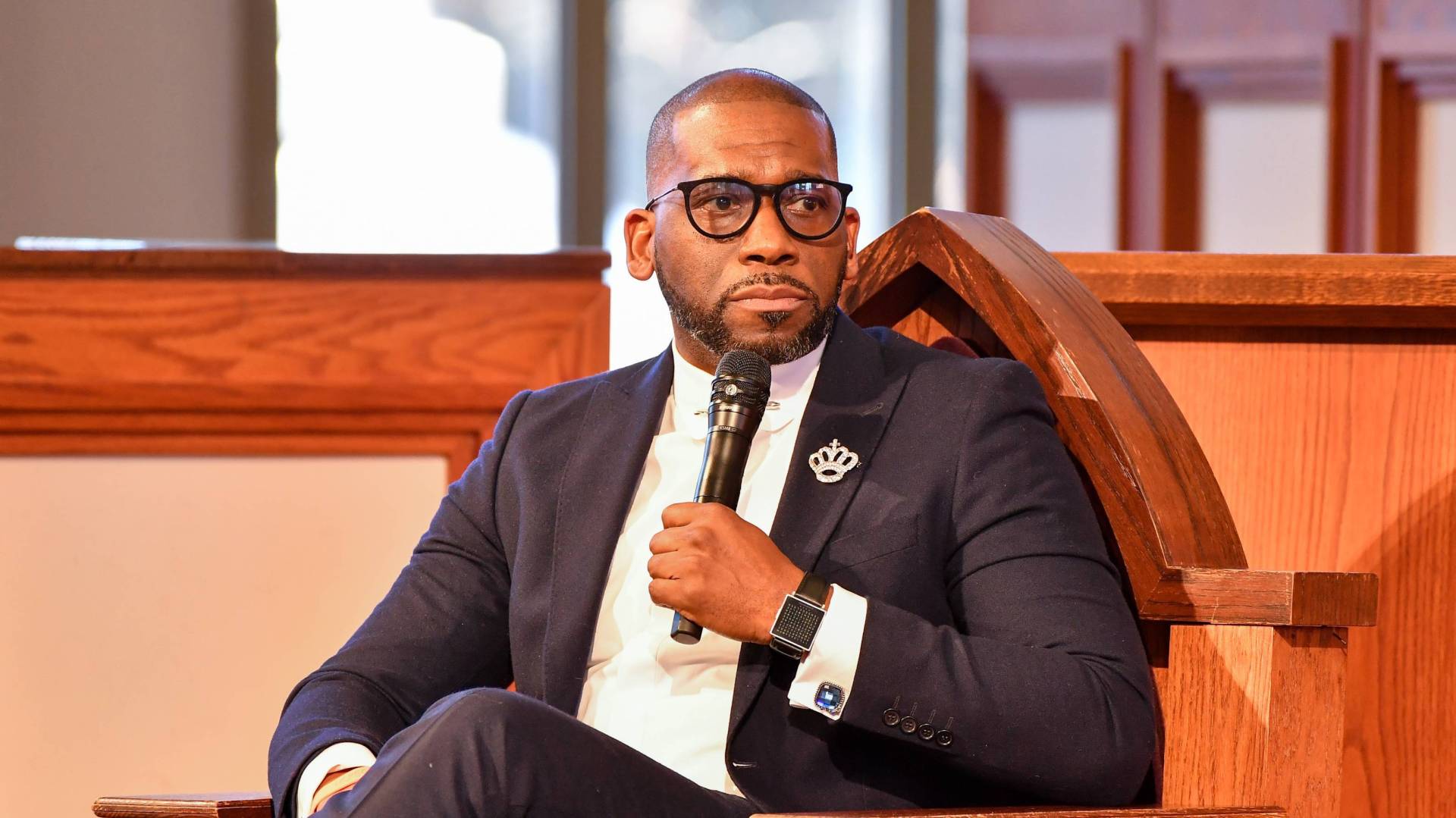
Jamal Bryant, a prominent Georgia-based minister, is criticizing four Black denominations that he claims have together accepted a $300,000 donation from Target at a time when many are boycotting the company for scaling back its diversity, equity, and inclusion (DEI) initiatives. 

Bryant, who pastors New Birth Missionary Baptist Church in Stonecrest, Georgia, launched the boycott as a 40-day economic fast against Target during Lent. In April, he announced the fast would continue as a full boycott because the retailer had not met demands, including depositing $250 million into Black-owned banks and restoring its DEI principles.

Speaking to his megachurch on Sunday, Bryant said he believed Target was going around him to engage with other Black church leaders.

He also claimed the company gave a $300,000 donation—“chump change,” he said—split between four Black denominations estimated to represent roughly 17 million congregants: the National Baptist Convention USA (NBCUSA), the National Missionary Baptist Convention of America, the National Baptist Convention of America International, and the Church of God in Christ. 

“I do not have ire with the Black church, because I recognize the fingerprints of satanic principality,” Bryant told his church, which was previously led by the late bishop Eddie Long. “I am not declaring war on any of those Baptist conventions. I am declaring war [on] the spirit of division.” 

Bryant has emphasized the collective power of Black consumers and has used faith as a rallying cry to stick to demands that Target meet its pledges to economically empower the community.

One of the denominations he mentioned has previously acknowledged donations from Target, but none responded to a request for comment sent by Christianity Today. An NBCUSA spokesperson told The Christian Post Wednesday the “four presidents of the Convention” will gather and respond before the end of the week.

NBCUSA’s president, Boise Kimber, highlighted the denomination’s partnership with Target during the denomination’s convention in Montgomery, Alabama, this month.

In an undated news release circulating on social media, Kimber wrote that NBCUSA and Target are working on a three-year plan around economic development and educational support that would be “very beneficial to the African American community.” 

Kimber said Target has also given the denomination a “generous donation” that will help it “provide scholarships, support senior citizens, and invest in entrepreneurship programs that uplift our people and the future.”

“If I thought Target was not sincere in their commitment to the African American community—I would be the first one on the picket line,” Kimber wrote. “Our communication with Target has been at the highest level and we are continuing the dialogue.” 

A spokesperson for Target declined to confirm the amount it gave but said in a statement that the company is “proud to be partnering with NBCUSA to make a meaningful impact in communities across the country by supporting access to education, economic development initiatives, and entrepreneurship programs.”

Many companies turbocharged their DEI policies after the police killing of George Floyd, which sparked nationwide protests for racial justice and conversations about lingering racial inequities in America. Target, in particular, was outspoken about its DEI initiatives and was honored for its work in 2022 by an organization that focuses on developing Black executives.

When the company began phasing out some DEI initiatives in January, it said it would end goals around hiring and promoting more women and racial minorities. The Associated Press reported at the time that the retailer would also end its goals around recruiting more suppliers and businesses owned by racial minorities, women, veterans, LGBTQ people, and people with disabilities. The company further said it would no longer participate in an annual index put together by the Human Rights Campaign, an LGBTQ-advocacy organization. 

Other companies have also retreated from DEI policies in the past year. Legal scrutiny on the programs have increased since the fall of affirmative action. Corporations also feel renewed pressure from President Donald Trump’s anti-DEI executive orders and from conservative activists who argue the policies are themselves discriminatory against many white and Asian people. 

Two years ago, Target faced a major backlash—and a boycott—from conservatives after it sold swimsuits that were designed for transgender people as well as designs from a brand that sold occult-themed LGBTQ clothing and accessories outside of Target.

Bryant has invited an LGBTQ-affirming guest on his podcast and preached at a conference hosted by an affirming church in Atlanta, but his boycott messaging has focused on the race portion of Target’s DEI policies rather than on LGBTQ representation.

Last month, Bryant announced the boycott would extend to Dollar General, which reportedly fired its chief diversity officer and removed language around diversity from a recent financial filing. 

When speaking to his congregants on Sunday, Bryant said he had called the president of one denomination and told him he had a week to confirm in writing that his organization stands with the boycott.

“White supremacy takes delight in us fighting one another,” he said on Sunday. “Do you understand how powerful we would be if Black people would just stick together and stop stabbing each other in the back and live with love of Jesus Christ?”

Haleluya Hadero is the Black church editor at Christianity Today.

News

Who Offers (Living) Water in Mexico’s Drought?

Tamaulipas residents deal with rations, outages, and sanitation challenges as tensions with the US persist over the scarce resource.

A collage of images from Mexico.
Christianity Today June 27, 2025
Illustration by Elizabeth Kaye / Source Images: Courtesy of Morgan Lee

Plastic bottles may be the closest thing to decorations in Magdalena Reyes Valderrama’s three-room home in northeastern Mexico. She’s hung a clock in the pink-walled walkway. A TV sits on a tablecloth depicting oranges. Laundry that the 100-degree heat has long since dried hangs on clotheslines and occasionally flutters in the breeze.

A brittle plastic chair sits here, and a solitary sock lies there. A campaign poster advertises current Mexican president Claudia Sheinbaum Pardo. When Reyes is nervous, she reaches for the nearest available cloth, her grandson’s T-shirt. She folds it and uses it to slap her right shin. Sometimes, she uses it to wipe her tears. Lately, life hasn’t played out as she hoped it would. 

Reyes, now 73, met her accordion-playing husband as a teenager. They had seven children and lots of fun, attending party after wedding after quinceañera. She didn’t attend much school growing up, but her husband supported their family. He never hit her, she says. Then he died of lung cancer in 2017 the year before their 50th wedding anniversary.

That death sent Reyes briefly to work for the first time. Now she survives on a pension of 3,000 pesos ($158 USD) per month. She owns her house, but money goes fast. Electricity to power the home’s three box fans costs 350 pesos a month. Her groceries—oil, salt, eggs, tomatoes, onions, rice—cost at least 500 pesos a month, so she eats two meals a day at the government’s meal program for seniors.

What else does she wish she could buy? Reyes pauses and looks away. She takes the folded T-shirt and wipes her eyes with it. Meat. Steak. Kentucky (the chicken of Kentucky Fried Chicken fame).

When she does cook, gas to heat her food costs 200–300 pesos. She can’t afford the gas to heat bath water, so she uses an immersive water heater, a footlong piece of metal that turns hot when its plugged in. The heat melts the handle and electric cord, so she’s had to buy three of the devices in the past year, 150 pesos each time.

Another cost is the water itself, the reason for the plastic bottles on the foyer windowsill and 22 other bottles on a cement ledge. These, along with two large metal vats, a handful of buckets, and a 750-liter tank beneath a statue of Mary, compose Reyes’s teammates in her relentless quest to make sure her household of seven has enough water.

At 7 a.m. on Mondays, Tuesdays, and Wednesdays, she starts running the tap, filling every vessel she can find. Ideally, this will quench the family’s thirst, sanitize their house, and wash their dishes, clothes, and bodies over the rest of the week. Reyes and the other 390,000 residents of Ciudad Victoria, a city that rests just over 1,000 feet above sea level and is nestled between two mountain ranges, do not take water for granted.

Ciudad Victoria is the capital of Tamaulipas, the northeastern Mexico state nestled just below the Texas border. It’s also the only northern state not experiencing drought—this year. From 2021 to 2024, local government officials rationed water for households and cut it for crops, measures that led residents to protest and left companies facing operational challenges.

A year ago, 80 percent of Tamaulipas faced water shortages. Then Tropical Storm Alberto watered the area, and that’s evident in an explosion of leafy plants, bushes, and trees. Nevertheless, the lush flora belies harsh truths. Vincente Guerrero Dam, which sits about 25 miles outside the city and supplies it with 70 percent of its water, sits at only 60 percent capacity.

Padilla, a town of 13,000 is adjacent to the dam. The government in the 1970s flooded Padilla’s original location and moved its infrastructure several miles away. The community is so evangelical, local Baptist pastor Juan López López happily points out, that the government constructed the evangelical church (not a Catholic congregation) when it rebuilt the town.

Padilla residents rely on local wells for their water, but they do need the dam. López’s household has water every day, though not at all hours. Next to his house sits a multicolored skiff. When the water in the dam is plentiful, he uses his boat to catch thousands of fish. Now, with the dam short hundreds of thousands of gallons of water and with an increase in carnivorous fish, his livelihood has taken a hit. “With the compassion of God,” López said, “we are living in the last days.”

Outside Tamaulipas, Mexico’s inland northern states are enduring extreme drought, and the country’s water reserves are at historic lows. Animals die of thirst. Farmers in Baja California, Sonora, Chihuahua, Coahuila, and Nuevo León, the other states that share a border with the US, consider giving up.

Their Texan counterparts also are troubled, and politics has taken over. The US has demanded its neighbor make good on a treaty whereby Mexico “must send 1.75 million acre-feet of water to the US from the Rio Grande every five years.” That’s over 570 billion gallons. Mexico has said it cannot keep up with deliveries because of the drought. In the five-year cycle that concludes in October, Mexico has so far sent less than 30 percent of the required water.

In April, US president Donald Trump threatened to hit Mexico with sanctions “because Mexico has been stealing the water from Texas Farmers.” But Chihuahua governor María Eugenia Campos said, “We can’t give what we don’t have. No one is obligated to do the impossible.”

Others say Mexico could do more for a “foreseen crisis” that has persisted for years. In 2002, about 100 American farmers used tractors to block a bridge on the border to demand that Mexico pay a long-standing water debt to the United States. Mexico has not addressed its water challenges, as countries like Australia with significant arid territory have done. In part because of the expense, Mexico has only four desalination plants. (Last year, Tamaulipas did lease some desalination plants from Dubai.)

Mexico “does not take sufficient advantage of wastewater reuse, which can be used to recharge aquifers, for consumption in industrial facilities, for agricultural irrigation or for urban use,” reported one website, Global Issues, in 2023. Numerous water-reuse plants either are inefficient or have improperly maintained facilities, meaning the country has less water to use.  

Further, Mexican farmers have increased the size of their farms while relying on aging and inefficient irrigation infrastructure. “I think all of us, those of us who farm, are aware that we are wasting a lot of water,” Fidel Hidalgo Tarano, a farmer, told PBS News, but “a sprinkler irrigation system or belt system … takes a lot of money.”

Mexico ultimately responded to Trump’s comments by agreeing to send water in the next six months, a promise that, if delivered upon, would be close to more water than the country has delivered to the US in the past four years. In January, the Tamaulipas government announced a $200 million plan to “modernize and upgrade” 200 kilometers of irrigation canals. A Ciudad Victoria aqueduct is currently in its bidding phase.

Meanwhile, the nonprofit The Bucket Ministry has distributed water filters to close to 10,000 Ciudad Victoria residents. Reyes’s household uses one. With 5.2-gallon (20-liter) jugs of filtered water selling for 17 pesos, family members had previously drunk water directly from the tap even when it gave them headaches or diarrhea.

Filters sometimes lead to church relationships. Two ministry leaders who attend evangelical church Amor Viviente—Living Love—helped Reyes’s tighten her filter correctly. They later sat and prayed with her for an hour and talked about her late husband and her mother, also deceased. She dropped her grandson’s T-shirt and opened her palm to accept a tiny seed symbolizing the genesis of faith.

Other Ciudad Victoria residents said the situation is out of their hands. One, Daniel Franco does not have a deed for the land he lives on with family members. They have no running water and fill their 450-, 200-, and 100-kiloliter tanks (a kiloliter is 264 gallons) and two smaller tanks with water from a city truck. But the truck comes only every other month, with no announcement of departures from schedule.  

News

Cults Target Nigerian Youth. Bible Clubs Try to Reach Kids First.

How two leaders use group discipleship to keep young Christians rooted in faith.

Nigerian children gathered in a building
Christianity Today June 27, 2025
Michael Ali / Unsplash

Emmanuel Sani Ujah said he recalls the night of February 3, 2014, as the day he “died,” but God brought him back. Ujah was involved in a car accident, which became the impetus for his Catch Them Young Bible Club.

“I was bedridden for a month,” he said. “It was during that time I truly understood what it meant to be given a second chance.”

Though as a teenager Ujah had a vibrant faith, he said disappointment dampened his spirit and love for God after he failed to secure admission to a university. Lying immobile in the hospital, 21-year-old Ujah thought about his earlier excitement for his faith.

Convinced that God had spared his life for a purpose, Ujah decided to start a club to help children develop and keep their fire for God into adulthood. Months later, he started the first club with six children in Abuja, Nigeria.

Young Nigerians like Ujah can face many challenges to faith. Cult groups, street gangs, and internet fraudsters in Nigeria target high school and university students for recruitment. Apathy and social influences can also pull them away from the church. So Christian clubs are fighting to capture children’s hearts first.

“There’s a big problem with the sense of belonging,” pastor Fortune Agula Musa said. “One of the things missing in church is that children between the ages of 12 and 18 don’t know where to fit. They are not children anymore, and they are not adults.”

In Nigeria, cults and fraud networks recruit and manipulate teens by pretending to care about issues that affect them, standing up for them against injustice, and offering friendship to vulnerable students. Cult groups in Nigeria often have ties to organized crime, according to research by the United Nations Office on Drugs and Crime.

Students pulled into these organizations must show loyalty to the groups and may engage in illegal acts. In some cases, clashes between cults groups turn deadly.

Musa’s church, Throne Room Glory Gwagwalada in Federal Capital Territory, Nigeria, started The Oxygen Club for 12-to-19-year-olds. The pastor formed the Bible club because of his own experiences: In 2004, a cult attempted to recruit him during his freshman year at the Federal University of Agriculture in Benue State.

Musa said his membership in a Christian club called All for Him saved him. The club gave new students on campus an orientation and warned them about the signs of cult recruitment.

Because of this, Musa recognized the cult’s “courtship” for what it was. First, members of the cult invited him and other first-year students to a party for freshmen. But that party was the beginning of the recruitment process.

“It was supposed to be like a riverside party, but when it got late in the night, they put off the generator,” Musa said. “And then it became a recruitment drive. They called it blending—they blend by beating them badly.”

Musa chose not to go, but students who attended told him about it later. Some students resisted the blending when they realized the cult had tricked them into attending a recruitment event. Musa said those in the cult beat the resisters especially hard, while those who showed a willingness to join were not so badly beaten.

Instead of getting involved in cult activities, Musa directed his energy into dance, drama, music, and learning at All for Him. This helped him remain “grounded in faith,” an experience he tries to replicate for students attending The Oxygen Club.

In addition to dealing with cult groups, Nigerian students face challenges similar to many in the US. Exposure to peer pressure, to new academic viewpoints, and to different religions in high school or college can lead underprepared students to question or to leave Christianity. Apathy toward faith can settle in as other priorities clamor for attention.

In the US, 35 percent of adults have switched religions between childhood and adulthood. Although changing religions is less common in Nigeria, a growing number of young people are moving from Christianity to traditional African religions. Research by George Barna indicates that an individual’s worldview sets around age 13—even if religious affiliation shifts later—so early discipleship is crucial.

“When children are taught the way of the Lord early in life, they will avoid anything that will lead them astray,” Ujah said.

Ujah competes with cult recruitment by engaging Bible-club members in a variety of activities. The club builds biblical knowledge through quizzes. The group also holds weekly meetings that give members a time and place to talk about daily challenges, and it provides mentorship from older members. Ujah also uses his background in tech to teach practical topics such as basic technology skills.

An early member of the club, Ashiofe Lakoju, said the club helped him shape and sustain Christian values. Ujah taught lessons on peer pressure and sexual purity, in addition to regular Bible lessons, to young men in the club.

“He gives us Scriptures to back up every teaching he takes us through,” Lakoju said.

Lakoju credited discipleship from Catch Them Young and from his church for helping him when curiosity about sex led him into pornography and anger issues resulted in fights during high school. He remembered that “the Scriptures say [to] guard your heart with all diligence.”

Ujah’s efforts have not always yielded success. He said one of his most failures was when one teen girl became pregnant with her boyfriend despite Ujah’s discipleship. “That incident still haunts me to this day,” he said.

He still blames himself, saying he feels he should have done more to guide her. Though more than 33 children have graduated from the club, Ujah still remembers the one he feels he let down.

“It’s a wound I carry and a lesson that keeps me watchful and prayerful over every child now,” Ujah told CT.

The club is now discipling 30 children and has expanded to include a group in Lokoja, Nigeria, but Ujah said lack of teachers presents a real challenge.  

“It limits how far we can reach,” Ujah said. “With more willing hands and hearts, we could touch even more young lives.”

News

ICE Goes After Church Leaders and Christians Fleeing Persecution

On Tuesday, Iranian asylum-seekers were detained in Los Angeles, adding to the count of church members taken despite lawful status.

Pastor Ara Torosian filmed ICE arresting Iranian members of his congregation.

Pastor Ara Torosian filmed ICE arresting Iranian members of his congregation.

Christianity Today June 26, 2025
Ara Torosian

On June 19, as Iran and Israel exchanged volleys of missiles and officials secretly finalized plans to dispatch American bombers to strike Iranian nuclear sites, pastor Ara Torosian published a letter to his church.

Torosian, an Iranian pastor at Cornerstone West Los Angeles, leads the church’s Farsi-speaking congregation. He came to the United States as a refugee 15 years ago after being imprisoned for his faith. He has always carried in his heart a prayer, Torosian wrote: “that Iran would be free.”

Now, explosions were rocking Tehran and other Iranian cities, wounding and killing children and grandparents, and Torosian was shouldering new burdens from halfway across the globe.

“There are people currently in Iran who were baptized in this very church and still listen to our sermons regularly. We are far from them,” Torosian wrote, urging Cornerstone’s English- and Spanish-speaking congregations to stand with and pray for the Persian worshipers. “We Farsi-speaking believers are living minute by minute with heavy hearts. We’re asking: Are our loved ones safe? Are they alive? What is happening to them?”

But five days later, the suffering of his loved ones came suddenly very close.

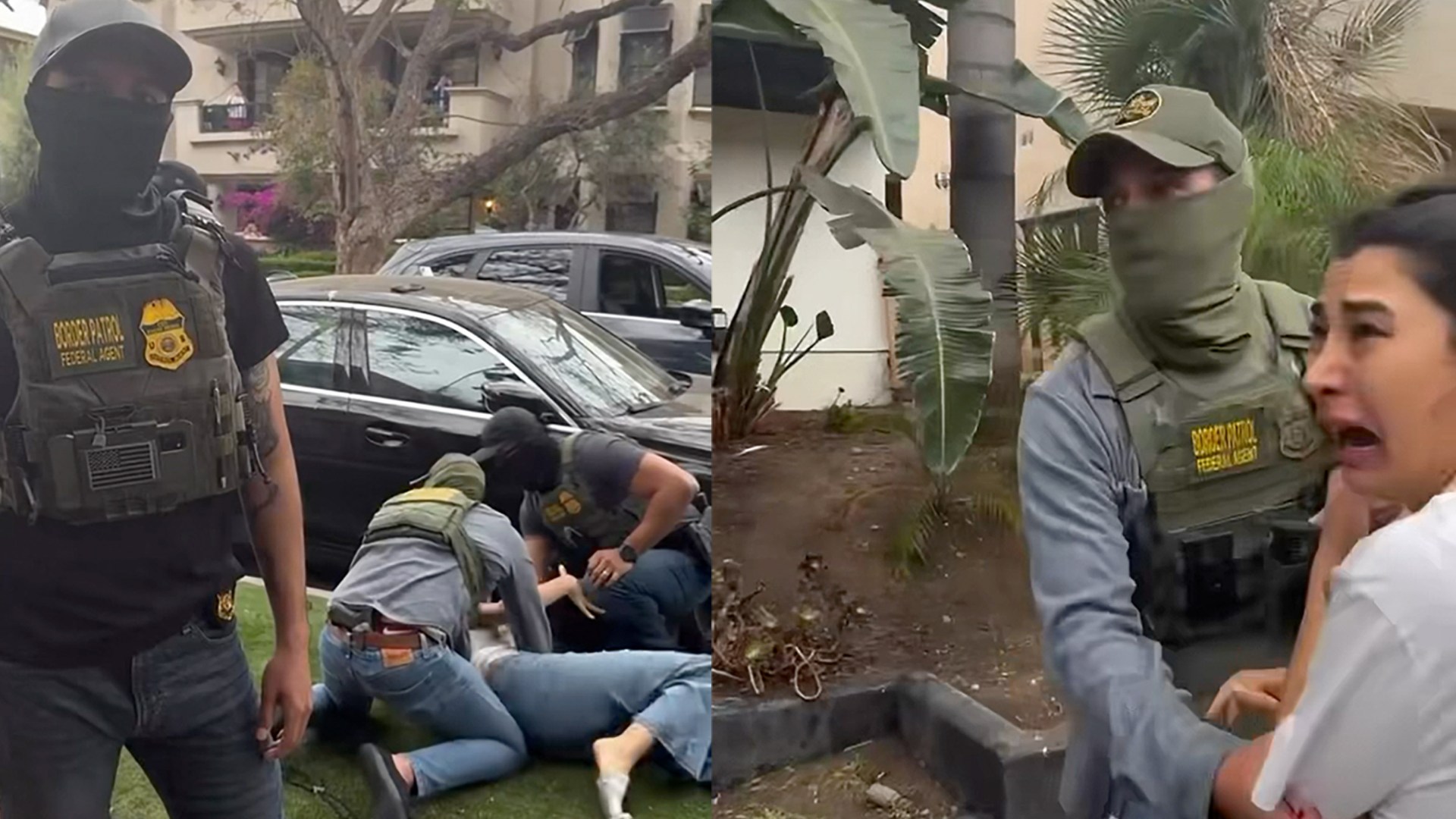
On Tuesday, the pastor recorded on his phone as masked federal immigration agents arrested two of his church members on a Los Angeles sidewalk. The Iranian husband and wife had pending asylum cases, according to Torosian. They fled Iran for fear of persecution for being Christians and had been part of his congregation for about a year.

The detentions add to a growing number of church members and Christians seeking religious protection who have been detained by Immigration and Customs Enforcement (ICE). Often they have no apparent criminal history. In many instances, they were in the United States lawfully, complying with orders from immigration courts. ICE has traditionally not deported individuals with pending asylum petitions, who are allowed to work while their cases proceed.

Earlier this week, according to Torosian, immigration agents arrested a separate Iranian Christian family who worshiped at Cornerstone. Ministry leaders told CT they have heard reports of other Iranians being detained in recent days. They echo stories of Iranian Christians the administration has already deported to countries such as Panama, where some remain.

Immigration arrests have shaken church communities across the country. In April, Kasper Eriksen, a Danish national and homeschooling father of four in Mississippi, was arrested at his final citizenship hearing after an apparent paperwork error. As of late May, he remained in ICE detention. “We have an army of prayer warriors fighting for us,” his wife Savannah, a US citizen, wrote in a fundraising appeal.

Also in April, pastor Maurilio Ambrocio was detained when he appeared for a routine check-in with ICE. He had lived in the United States for 20 years. The Tampa, Florida, church he ran served as a polling place. He was in the country illegally, was the explanation ICE gave for his arrest.

Not far away and around the same time, a small group leader and deacon at another Tampa church was taken by ICE. Gonzalo Antonio Segura was leaving home to go to work as a handyman on a Thursday morning in early April. Immigration agents met him at his car and detained him.

Ramon Nina, Segura’s pastor at Iglesia Comunidad de Fe, told CT that his phone rang at 7 a.m. during his early-morning prayer. It was Segura’s wife, distraught that agents had arrested her husband, leaving her alone with their two children. “I can’t erase those cries from my memory,” Nina said in Spanish. “He was very beloved, respected. Very servant hearted.”

Nina and the church hired a lawyer—another pastor in Florida—and together they drove up and down the state, trying to find Segura as he was moved between detention centers from Clearwater to Miami. No ICE facility would allow Nina a pastoral visit. Eventually Segura was transferred to Texas.

“My church is conservative. It votes conservative. But with what happened to Antonio, they all have come to the realization that this process that is being carried out is blatant. It’s discriminatory,” Nina said. Segura has been in the country for two decades. According to Florida state records, he was stopped once 17 years ago for driving without a license, a misdemeanor.

“He was undocumented. That was his crime, of course. But I think a man like this deserves a pardon. The president of the United States just pardoned a family that was found guilty of tax evasion,” Nina said, referencing the convicted businessman Paul Walczak.

In May and June, as the administration pushed to meet higher deportation goals, it began to detain more immigrants without criminal histories. According to government data, 65 percent of ICE “book-ins” at detention centers are not criminals. Only 7 percent are convicted of violent offenses.

The Department of Homeland security has said in court filings that it will prioritize deporting even immigrants who have had charges dismissed, and it has ended protections for some Christians facing persecution in their homelands, such as Afghans.

In Los Angeles, Torosian said the Iranian couple from his church called him for help when several men wearing US Border Patrol vests approached them near their home. As he filmed agents binding the hands of the husband, whose name CT is not publishing, the pastor told the agents, “He’s an asylum-seeker.”

“It doesn’t matter,” one agent says in the video.

“He came with CBP One,” Torosian replies, referring to the now-discontinued app that migrants used during the Biden administration to apply to lawfully enter the country.

“It’s no longer valid anymore. That’s why he’s being arrested,” another agent says.

Seconds later, the detained man’s wife collapses to the grass in an apparent panic attack, convulsing and hyperventilating. Torosian moves closer, attempting to comfort her. Agents tell him to keep away or face arrest himself.

The pastor asks if he can go with them or even follow them. “They need me,” he says. An agent says the pastor cannot go with them.

Torosian tells the agents that the couple was persecuted in Iran and fled because of their faith.

The agents don’t respond.

“They came here for freedom, not like this,” Torosian tells the agents. “I know you are doing your job, but shame on you. Shame on this government.”

Andy Olsen is senior features writer at Christianity Today.

News

Obergefell Changed America, but What About Evangelicals?

While support for legal marriage for same-sex couples ticks up, evangelical pastors and weekly churchgoers remain holdouts. 

Supreme Court considers 303 Creative

Protesters pray outside the Supreme Court.

Christianity Today June 26, 2025
Kent Nishimura / Los Angeles Times via Getty Images

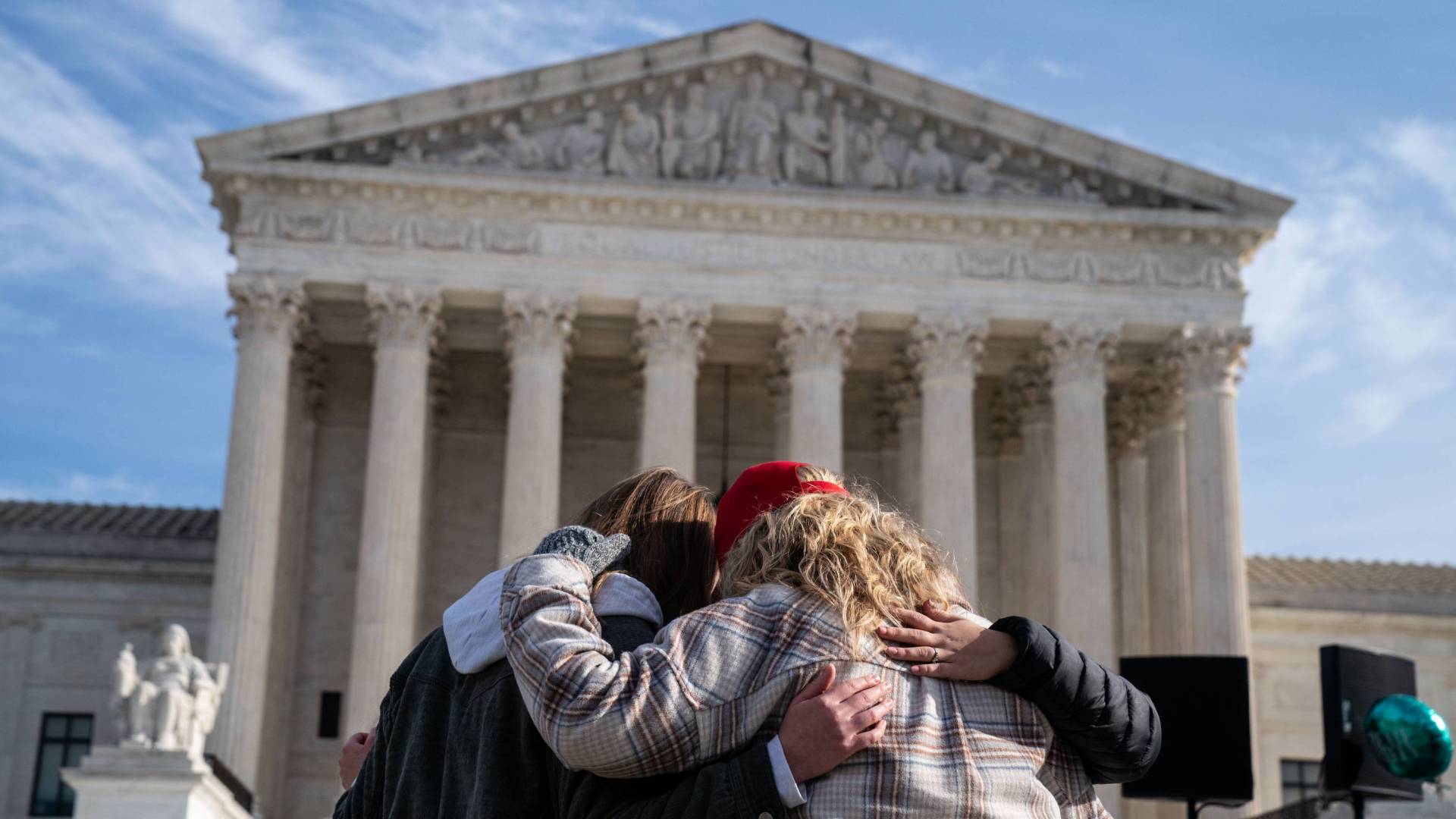
A decade ago, when the Supreme Court ruled in Obergefell v. Hodges to permit same-sex marriage nationwide, many evangelicals worried about what the legal redefinition of marriage would mean for the church and the country.

While some predictions—that the Obergefell ruling would lead to a decline in marriage rates and an increase in divorce rates—did not pan out, the concern that it would lead to schisms among American Christians has proven prescient, according to political scientist Mark Caleb Smith.

One of the clearest impacts of the 2015 ruling on the Christian landscape has been the way it forced denominational reckonings. Congregations have hotly debated whether to perform same-sex marriages and ordain gay clergy—and whether their fellowship can withstand disagreement on LGBTQ issues. 

Despite some recent calls to overturn the ruling and support for same-sex marriage slowing, even conservative Christian legal experts expect Obergefell v. Hodges to stand, leaving evangelicals to continue to reckon with the issue. 

While public sentiment around same-sex marriage changed quickly—a fifth of Americans who opposed it prior the Obergefell decision had changed their minds by 2018—the culture of conservative evangelical churches has not changed significantly. 

In surveys by Lifeway Research, evangelical pastors are as likely to oppose same-sex marriage today as they were prior to Obergefell v. Hodges, with fewer than 1 in 12 in favor. 

The latest Gallup polls show that just 24 percent of weekly churchgoers consider same-sex relations morally acceptable. The demographic—which is more likely to be conservative—remains one of the staunchest holdouts against same-sex marriage, and overall levels of support have stalled in the past few years. 

At the peak, around 2022 and 2023, just over half of Americans who identify as evangelicals said same-sex couples should have the right to marry, but their churches and pastors haven’t moved toward LGBTQ inclusion as mainline traditions have. 

When asked whether they would perform a wedding for a same-sex couple “if your religious group allowed it,” 90 percent of evangelical ministers said no, political scientist and statistician Ryan Burge found in a national survey. Black Protestants were similar, with 84 percent responding that they would not officiate a gay wedding.

Among mainline clergy, only 30 percent would not perform a gay wedding.

Obergefell v. Hodges became a flash point that likely accelerated already-present divisions in certain denominations. The Episcopal Church ordained an openly gay bishop in 2003, which led to some dioceses leaving to form the Anglican Church in North America. Similar disagreements led hundreds of congregations to exit the Evangelical Lutheran Church in America and the Presbyterian Church (USA).

An example from the last two years is the slow rupture of the United Methodist Church, which is the largest denominational split in the United States for decades and has led to a new Methodist denomination, the Global Methodist Church.

Other debates are ongoing.

“If you look at Calvin University and the Christian Reformed Church, they’re still in the middle of a pretty strong debate over these kinds of issues,” said Smith, director of the Center for Political Studies at Cedarville University. “Once Obergefell happens and every state has to issue marriage licenses … it forced churches to deal with it in a way that they really had not been forced to necessarily before.”

In the last couple years, Republican support for same-sex marriage has dipped.

“It’s not a huge downturn, but it’s noticeable,” Burge said. He surmises that the decline may be driven by opposition to transgender issues “dragging the numbers down” for other groups: “You can find polling data on sports issues, on gender transition for minors, on using pronouns in schools, that kind of stuff. None of that’s popular,” he added. “That might be part of the backlash too.”

While President Donald Trump made transgender issues a focus of his campaign, he shows no such inclination to go after same-sex marriage.

In 2015, when Kentucky clerk Kim Davis was jailed for refusing to issue marriage licenses to same-sex couples, then-candidate Trump responded matter-of-factly: “The decision’s been made, and that is the law of the land.” 

If anything, the GOP’s stance has softened on the issue during Trump’s tenure, and in 2020 he picked the first openly gay person to hold a Cabinet-level position in an acting capacity. The culture of the broader Republican Party has also softened: Previous iterations of the Republican Party platform contained references to marriage as an institution between “one man and one woman,” while the 2024 platform pivoted away from such language. It contained one reference to the “sanctity of marriage” without defining it.

Charles Moran, former president of the Log Cabin Republicans, a GOP group that represents LGBTQ interests, celebrated the change as the Republican Party showing it has “caught up with where society is” and saying that “it talks about serving the sanctity of marriage; that includes our marriages, too.”

“You have to wonder too how much Donald Trump’s politics are playing into this as someone who certainly seems to excuse some of these certain cultural issues like sexuality, LGBT rights,” said Daniel Bennett, an associate professor of political science at John Brown University. 

Bennett noted that many evangelical institutions have held to a traditional view of marriage, despite the larger shifts in public opinion: “A lot of the more conservative churches and institutions, like Christian colleges and universities … have very clear statements of expectations on gender and sexuality that affirm a more conservative or traditional sexual ethic, even with the culture moving in that direction.”

“It’s not as if these conservative institutions are being swayed by public opinion,” he added.

Obergefell also shifted the legal landscape for religious freedom cases, according to Miles S. Mullin II, vice president for the Southern Baptist Ethics and Religious Liberty Commission.

Mullin wrote that those who warned Obergefell v. Hodges would be a “slippery slope” have been proven right in the last ten years, citing the 2020 Bostock v. Clayton County ruling, which expanded antidiscrimination protections for LGBTQ individuals. 

“In the years following Bostock,” he wrote, “virtually every significant First Amendment legal battle would revolve around SOGI (sexual orientation and gender identity) issues as Americans with religious convictions regarding traditional marriage struggled to defend their First Amendment rights.”

In recent months, some groups have brought up the idea of pushing for the court to revisit its decision, with some pointing to Dobbs v. Jackson Women’s Health Organization, the decision that overturned the right to an abortion, as a playbook for revisiting the legalization of same-sex marriage. 

Conservative lawmakers have introduced measures in a handful of states asking the Supreme Court to strike down Obergefell v. Hodges. In May, an Oklahoma Republican lawmaker filed a resolution requesting the Supreme Court to overturn the ruling. Clerk Kim Davis’s lawyers are also still pushing for the Supreme Court to reconsider her case—and Obergefell.

Those efforts have also made their way into the church: At its gathering in June, the Southern Baptist Convention approved a resolution supporting efforts to reverse Obergefell v. Hodges

“We should still overturn Obergefell,” Andrew Walker, associate professor of Christian ethics and public theology at the Southern Baptist Theological Seminary, wrote for The Gospel Coalition. “Regardless of how long it takes, we shouldn’t stop arguing against same-sex marriage.”

Walker said that prior to 2015, opponents of Obergefell were at a rhetorical disadvantage, with critics framing them as arguing “against something” versus promoting a positive. “There’s a valuable lesson for Christians and conservatives when waging intellectual combat in the culture war: Don’t merely defend ideas. Defend people.”

The focus going forward, Walker argued, should be on the impact same-sex marriage, in vitro fertilization, and surrogacy has on children.  

For now, state-led efforts may be more symbolic than substantive.

“I think we’re a long way from that,” said John Bursch, senior counsel and vice president of appellate advocacy with Alliance Defending Freedom. Bursch argued before the Supreme Court on behalf of states that had prohibitions against same-sex marriage.

Bursch doesn’t see widespread grassroots support for overturning Obergefell. He contrasted the efforts with the large grassroots movement that sprung up in opposition to abortion in the aftermath of Roe v. Wade, the decision legalizing abortion nationwide.

“There was an immediate counter-response … you saw the March for Life spring up—and 40 Days for Life, and Students for Life, and Americans United for Life—and all these different groups who were basically spreading the gospel of life among the culture.”

That advocacy made it “politically acceptable for the court to go back and revisit Roe, and that’s how you get Dobbs,” Bursch said. “There was no similar reaction in the immediate aftermath of Obergefell. There was no ‘March for Marriage’ or ‘40 Days for Marriage’ or ‘Students for Marriage’ or anything like that. So what you saw is that support for same-sex marriage culturally continued to grow.”

Smith also believes revisiting Obergefell judicially is a long shot.

“This is probably the most conservative court that we’ve had, depending on how we define that term, for a long, long, long time. And on that court, there are probably only two members who are at all interested in that conversation,” Smith said, referring to Justice Clarence Thomas and Justice Samuel Alito.

But among the rest of the justices, including the more conservative members, Smith sees no appetite for revisiting Obergefell: “That just looks like a nonstarter, even within a very, very traditional court.”

News

Migrants Pushed Chicago to the Brink. They Also Brought a Revival.

Some pastors say God used busloads of migrants to grow city churches. Mass deportation is reversing that.

Migrants in Chicago board a bus to a downtown welcome center in August, 2022.

Migrants in Chicago board a bus to a downtown welcome center in August, 2022.

Christianity Today June 26, 2025
Anthony Vazquez /Chicago Sun-Times via AP

On a September morning in 2022, Jay Kim pulled into the parking lot of the Chicago-area church where he works and spotted a huddle of unfamiliar people standing near the edge of the property. When he climbed out of his car, two women from the group approached him, speaking in Spanish.

Kim, the outreach pastor at CityLine Bible Church in Niles, Illinois, understood only a little of what they were saying. They were new to Chicago. They were living temporarily at a Holiday Inn a couple miles down the road. Kim invited them inside the church to talk with another pastor, Eddie Rivera, who spoke Spanish and could help figure out what they wanted.

What the group wanted, it turned out, was work. They had come from Venezuela, they explained to Kim and Rivera. They had traveled through Central America and Mexico and into Texas, stripped by thieves and trials of everything but their clothes. They had arrived in Chicago on a bus the day before. They understood that the government—who exactly that meant, they could not be sure—was putting them up in a hotel. Maybe for days or maybe for weeks. After that, for all they knew, they could be on the street.

“They had been out about an hour, walking around, looking for work,” Kim said. “They were desperate.”

Kim and Rivera did what many pastors would: They gathered groceries from CityLine’s food pantry and clothing from a stockpile of donations. They packed them into a van, and Kim ferried the families back to the Holiday Inn.

A couple of days later, on a Friday morning, five more men appeared at the church. They, too, were staying at the hotel. When Kim drove them back, he learned that the hotel was housing perhaps a hundred migrants, mostly Venezuelan. Before he drove away, Kim told the men to invite their friends to church. He said the church could pick up anyone who needed a ride.

It was the kind of semi-impulsive act that CityLine’s lead pastor, Mohan Zachariah, encouraged: Take meaningful risks and see what happens. “We’re going to take a step out if the Lord brings something to us,” Zachariah had told them. Sometimes, for a church to grow, you have to welcome a stranger in a parking lot.

CityLine pastors and other ministry leaders in Chicago say that when they opened their doors to migrants who surged into the city during that time, something like revival came.

But nearly three years later, another stranger in another church parking lot cast those early days of outreach in a different light. In June of this year, CityLine’s leaders were scrolling through news of protests in Los Angeles against the Trump administration’s deportation efforts when they saw stories about masked federal agents arresting a man in an apparent immigration raid outside a Los Angeles–area church. Pastors there asked the agents to leave the church property, and one of the agents allegedly drew a gun. One shouted, “The whole country is our property.”

Now, two weeks after President Donald Trump ordered immigration agents to step up deportation efforts in Chicago and other major cities, pastors like Kim wonder: Can a revival survive what else is coming?

“They believe they can go anywhere and take any person,” Kim said. “No one can stop them.”

If the Lord flooded Chicago with migrants, he did so at the hands of both Republicans and Democrats.

Early in 2022, migrants—largely from Venezuela—were crossing the border into Texas by the tens of thousands, turning themselves in to authorities and beginning the long process of applying for asylum. With federal detention facilities overwhelmed, Customs and Border Protection released most of the migrants onto the street.

Texas governor Greg Abbott, a Republican, directed state employees to usher migrants in border towns onto chartered buses and flights, dispatching them to a handful of cities led by Democrats. Over the next two years, more than 2,600 buses carried almost 120,000 migrants out of the state. At least 41,000 went to New York. More than 17,000 went to Denver.

Progressive critics pounced, but they tended to overlook a similar—if smaller—program created by El Paso, Texas, mayor Oscar Leeser, a Democrat, which also bused thousands of Venezuelans north.

In Chicago, the buses delivered more than 33,000 migrants. (The city’s official count includes arrivals by airplane and is over 50,000.) The influx strained resources and tested compassion, which Abbott has boasted were explicit aims of his relocation program. Migrants slept in tents, on police station floors, in empty corridors of O’Hare International Airport, and on city buses. The city’s efforts to help them provoked outcries from some longtime residents.

But when CityLine’s pastors stumbled upon the migrants at the hotel, they took it as an answer to prayer.

In the summer of 2022, Kim began hearing stories about ministries and social-services agencies scrambling to help the waves of arrivals. He prayed for the migrants and asked around about how CityLine could get involved. “Nobody really had answers,” Kim said. “At that point, it was chaos.”

So he waited. And then, in September, the migrants came to him.

Chicago housed single men and women at various migrant shelters. But like other destinations for the Texas exodus, Chicago, together with the state of Illinois, contracted with hotels across the region to house migrant families. One of those hotels was the Holiday Inn in Skokie, near CityLine Church.

Early on the Sunday morning after Kim and Rivera first visited the hotel, they found about 30 migrants waiting outside before the 9 a.m. worship service. Men, women, and children had made the 40-minute walk. The church sent vans to the hotel to pick up more, and by the start of the church’s 11:15 service, the crowd had grown to around 50.

No one knew quite what to do. The church arranged chairs in a room separate from the main sanctuary and streamed the worship service to a screen while Rivera tried to interpret. But translating worship music was awkward. So the pastors fetched a bilingual guitarist from among the congregation. Could he lead a few songs in Spanish on the spot?

By the second service, the room was overcrowded. Rivera improvised a sermonette—his first time preaching in Spanish.

Over the following month, the number of migrants showing up for church nearly doubled by the week. More than 100 came for Rivera’s second Sunday preaching. Around 220 came the third Sunday. Soon attendance at the church’s impromptu Spanish-language worship hit 300. Dozens of migrants came to faith, according to the church.

“From zero Spanish to 300. That’s a lot,” Rivera said.

CityLine is not small; it averages 1,400 attendees a week. Even so, the birth of a new congregation virtually overnight sent the church scrambling. It launched a full-fledged afternoon service in Spanish, turning through a roster of guest preachers. Many weeks, it provided lunch  after the service—sometimes catered, sometimes prepared by church members. It bought two more vans for the shuttle service it was now running between the church and the Holiday Inn.

Pastors put out a church-wide call for volunteers: “We were like, ‘You don’t have to speak Spanish,’” Rivera said. More than a hundred people stepped up. They tended migrant toddlers in the children’s ministry. They chauffeured migrants in their own cars, communicating with Google Translate. They helped open CityLine Closet, sorting donated clothing, and they gave to the church food pantry.

Kim knew that people bring mixed motives to worship; much of the explosive growth came from migrants’ basic need to survive. “A lot of it’s out of desperation from a lot of the families that had heard what we were doing—this food, this clothing—and so they’re trying to make their way over,” he said.

All the same, Kim said, “I strongly believe God sent them.” If that was true, what choice did he have but to receive them?

“This just fell in our lap,” Rivera said. “It was the Holy Spirit who said, ‘Here you go: Spanish ministry. Figure it out.’”

Photo by Scott Olson/Getty Images
Migrants from Venezuela stayed in the lobby of a Chicago police station after arriving by bus in May, 2023.

Lely might never have come to CityLine, because she was planning to get on a bus to New York.

In the early fall of 2022, Lely walked across the dry Rio Grande riverbed and entered El Paso with her husband and their three young children. It was the culmination of a yearslong flight from Venezuela, in which they fled privation in their homeland, paused for a while in Ecuador, then followed a well-worn path that began on foot in sweltering jungle and terminated, eventually, in a cold holding cell in a Border Patrol facility.

After their release from detention, a local pastor told the family about buses that offered free rides to New York and Chicago. They immediately set their sights on New York, but other migrants warned against it. The city is immense. Prices are insane. Too many people had already gone there. Better to go to Chicago.

Lely, a pastor’s daughter who asked to be identified by a nickname, knew almost nothing about Chicago. She’d seen in movies that it had dangerous parts. But as the family lined up in a building where migrants were sorting themselves by their destinations, Lely found herself standing at a table to register for a Chicago-bound bus. Her family took snacks and waited in a cavernous auditorium among tired people arrayed in endless rows of chairs. Then someone shouted out that the next bus was leaving for Chicago. “We got on that bus to the unknown,” Lely said in Spanish.

To board a bus to Chicago was to roll the dice. Some days, buses departed Texas every few hours, scattering migrants like seeds in any suburb with a train station: Hinsdale. Woodstock. Joliet. City councils passed ordinances forbidding unauthorized buses from unloading within their borders, laws that bus companies sometimes ignored.

The ride took 18 hours. Lely and her husband had no money even to buy crackers for their children. But at rest stops along the way, strangers appeared and asked if they were hungry and handed them pizza and candy.

When the bus stopped for good, it deposited the family in front of a hotel in downtown Chicago at the bottom of a canyon of glass and concrete. They were instructed to wait outside, and all Lely could think about was how cold it was. “Horrible,” she said. “I had no idea where we were.” Someone pulled up in another vehicle and escorted them to a clinic so a doctor could examine the children. Then the family was driven to a Salvation Army shelter on the south side, where they would sleep until their strange new city provided another set of instructions.

To reduce confusing arrivals like these, Chicago officials designated a migrant landing zone, a cluster of tents in a parking lot nestled beside Interstate 90, where bus doors opened to the buzz of the freeway. The site became ground zero for Chicago’s migrant crisis, and Andre Gordillo was soon at the center of it.

Gordillo leads outreach to migrants at New Life Centers, a social-services ministry affiliated with New Life Church. He and his staff, along with hundreds of volunteers, memorized talking points in English and Spanish and greeted passengers as they spilled from buses. Migrants would get pulled into a tent, Gordillo said. “Let’s get you fed and a coat. And in the second tent, while you eat a banana and put on socks, here’s the reality in Chicago: We can help you this way, but we can’t help you that way.”

New Life Centers quickly became one of Chicago’s leading partners in processing migrants. The organization has housed many of them in its two shelters, with combined capacity for 1,700 people. Gordillo’s team has helped move more than 5,000 families from shelters, to hotels, and into apartments, and they’ve warehoused and delivered donated furniture across the city. “We’re almost like Amazon,” Gordillo said. At one point in late 2023, “we were doing 75 moves a day.”

Gordillo has seen over and over how migrant families finally reach their destination in Chicago only to realize their struggle is just beginning. The trauma hits after they’ve thanked someone for the furniture and bolted the door.

“They’re hungry—not just physically but spiritually,” he said. They want to “get settled in, to start anew, to lay down roots, to come into community.”

Lely and her family spent two nights at the Salvation Army center. Then someone told them they were being assigned to a hotel in a place called Skokie. A Holiday Inn. Lely was stunned by all of it: a free cross-country trip on an air-conditioned bus, strangers buying meals, a complimentary hotel that even had a pool. She had heard of Venezuelans going hungry on American streets or living in shelters for a month, and she had braced for as much. “I never imagined that so many good things would happen,” she said.

But Lely felt that at any moment the world could crumble around them. They still had no money or food. None of the other Venezuelans at the hotel knew how long they would be allowed to stay there. Almost as soon as Lely’s family arrived, her husband began walking the neighborhood and knocking on restaurant doors, asking about work. The Holiday Inn provided some meals—cereal, eggs, breakfast sausage, microwaveable vegetables—but they soon made Lely feel sick. She lost weight.

The family was also lonely. They were constantly being watched, and tensions rose between the Venezuelans and other hotel customers. In online reviews, guests complained that “illegal immigrants were openly being vaccinated in the main sitting area outside Bar Louie’s,” referring to the hotel restaurant. Another guest wrote on TripAdvisor, “My family felt extremely uncomfortable.”

Lely’s husband was unusually fortunate: He managed to find work within days, cleaning a few hours a week at a restaurant across the street from the hotel. With their first income in months, Lely bought a griddle so she could cook arepas—finally, something homemade.

After they’d been at the hotel nearly a month, one of the other Venezuelans came back from walking the neighborhood and shared news: There was an evangelical church nearby. They were offering rides to worship on Sunday. And they were offering food.

New Life Centers, a ministry associated with New Life Church, partnered with the city of Chicago to process migrants arriving on buses from Texas.New Life Church
New Life Centers, a ministry associated with New Life Church, partnered with the city of Chicago to process migrants arriving on buses from Texas.

When Lely and her family first visited CityLine Church in the fall of 2022, the Spanish-language ministry was barely two weeks old. It was already buzzing. The family was among more than a hundred migrants from the Holiday Inn who crowded into a room separate from the church’s main sanctuary as pastors cobbled together music and a sermon delivered by an inexperienced preacher.

After worship, the group shared a meal. Lely’s family returned the following week and the week after, and the congregation swelled. As Venezuelans at the hotel began finding work and expanding their range, they met other migrants around the city and invited them to the church.

CityLine leaders moved the Spanish-language service into ever-larger spaces in the building and eventually into the main sanctuary. By the spring of 2023, the church had hired a dedicated pastor for the immigrant congregation. Lely and her husband joined the worship ministry. It felt familiar; Lely had sung at her church back in Venezuela.

CityLine ran headlong into Chicago’s migrant surge. Volunteers delivered meals to migrants sleeping in police stations. Pastors connected with area shelters. The church’s clothing ministry loaned suits to men for immigration court hearings and job interviews. Trained counselors from the church visited the Holiday Inn, providing therapy for migrants who had been sexually assaulted and for couples struggling in their marriages. 

“The church grew exponentially because it started to be not just about us,” Lely said. “They started to look for people around the city.”

By early 2023, the state of Illinois was offering stipends to help migrants get out of hotels and into apartments. As families at the Holiday Inn began moving out, CityLine launched another ministry. Much like New Life Centers downtown, the church recruited volunteers to pick up furniture from a local nonprofit to outfit migrants’ apartments.

Friends at CityLine helped Lely’s family rent a place near the church and move in. They helped navigate paperwork. Everything in America is red tape, Lely said. “So many legal things, papers—over there, another there, this one here. Rules, rules, rules,” she said. “It can overwhelm you.”

The biggest “legal thing” CityLine made possible: Lely and her husband were married there last year. They had lived together for years as they sojourned across South and Central America, married in the eyes of God but not the law. It is a common predicament for migrants: No government will grant them legal status, so no government will allow them a marriage license. But in the United States, after applying for asylum, Lely and her man could finally produce enough identification to tie the knot.

In an outdoor ceremony last September, before more than 100 people seated on the church’s lawn, Lely wore a borrowed dress—another gift from the church. She kissed the father of her children for the first time as his lawful wife. “The most anticipated wedding,” she said.

The church, Lely said, became their extended family, their connection to virtually everything else beyond the tiny world of their apartment, communication barriers notwithstanding. “There are a lot of people who speak only English, but I know that they care deeply for me, that their love for me is real,” Lely said. “They won our heart. They helped us in absolutely everything.”

For all the vitality CityLine’s migrant ministry infused into the church—“It has changed us,” said Zachariah, the senior pastor—it also took a toll. At times it all felt like too much, and staff members wanted to quit. The project rubbed some the wrong way in the conservative church, an independent congregation that was once part of Harvest Bible Chapel.

One church member, whose family has since left the church, wrote emails to Zachariah criticizing the ministry as a “social justice experiment.” In his response, Zachariah wrote, “By ‘social justice’ or ‘social gospel’ experiment, do you mean us caring for people who are in need who’ve come to our doorstep asking for help? Because we’ll do that all day long.”

Zachariah has said from the pulpit that America is a land of laws, you should follow the law, and immigration laws exist for a reason. At the same time, Zachariah said, migrants have watched people die along their journey here. Some were robbed and raped. “You could say, ‘Well, they should have never come. They should have stayed home,’” he said. “You could say all those things. But when they’re here, that’s a very mean thing to say to somebody who’s struggling.”

Migrants used city warming buses in downtown Chicago to escape the cold in January, 2024.AP Photo/Erin Hooley
Migrants used city warming buses in downtown Chicago to escape the cold in January, 2024.

Lely’s struggles did not end when the family finally settled into an apartment. Even after they bought a car and her husband tried his hand at various lines of work, including delivery driving, they passed through what she called desert moments. “You say, ‘And now who’s going to protect me? This is where only you, God, can help.’”

There was the time in 2023 when they had a car accident and lost their insurance. Lely’s husband could not work. They were evicted from their apartment for missing their rent, and they struggled to find another landlord willing to take them, given their lack of credit. Then Lely discovered she was pregnant with their fourth child.

Were it not for the church, she said, that stretch might have finished her.

“There is something ingrained in this country,” Lely said. She sees people who seem to possess every worldly good but have still fallen into depression and emptiness. “I mean, if you’re here and you don’t seek God in a serious way, if you don’t submit yourself to God, it’s like a wave that is going to swallow you.”

This year, as the Trump administration targets Venezuelans for deportation and has renewed its vow to tighten the screws on Chicago’s immigrant community, Lely has at times felt that wave swelling closer to her. On one hand, she has undeniably passed through intense joys, has seen how America was obviously a blessing: a place where her husband could work legally while they are being considered for asylum. A place that would allow them to finally marry. A place, after so many years of wandering, where she could finally belong.

“Then this government comes and makes you see everything the other way around,” Lely said. “You don’t belong here. We don’t want you.”

She has seen restaurants emptied and families stay home from church. She has heard her pastor say they lock the doors during the worship service. Attendance at the Spanish-language service is not what it used to be, hovering now somewhere north of 50. Lely’s family is virtually the only one from the original Holiday Inn group that still attends. People come and go for various reasons, Lely said, and they don’t always tell you whether fear has driven them away. But the energy is not what it once was.

Now, Lely thinks more about previously unimaginable hypotheticals—about how her family would afford to live if they had to return to Venezuela with its wrecked economy. Her husband works two different shifts as a janitor, leaving home most mornings at 5:30 and returning around 11:30 at night. “We’re in saving mode. Alert mode. Quiet mode,” she said. “It’s better to have no free time but to have money.”

Recently Lely was talking with a friend who quoted from 2 Timothy, reminding her that God did not give them a spirit of fear but of power, love, and self-discipline. Lely has tried to hold on to that. To block out images that bubble up in which her husband is arrested and she is left alone with four children, in which a voice on a government commercial is telling her to leave the country now or be hunted down.

“It’s what they want,” she said. “To terrorize you.”

Closer to downtown Chicago, Andre Gordillo’s church is also trying to hold back the fear. Gordillo worships at the New Life Church campus in Chicago’s Little Village neighborhood, or “La Villita.” Like CityLine, the congregation saw lives changed as it welcomed migrants from the Texas buses.

“In the last 2 years, we have baptized more people than in the last 20 years,” said Paco Amador, who pastors the Little Village church. He has prayed with people who decided to believe in Jesus. He has officiated a flurry of weddings. His church has planted Bible studies and small congregations in several communities that previously had few Latinos. “I would say that is a revival, or at least the spark of revival.”

As the president has repeatedly promised the largest mass deportation in history, Amador has sometimes laid awake at night, wondering if this will be the end of a miracle God has been doing in his community. “If these mass deportations happen, they would almost end up decimating a revival,” he said.

In early February, for the first time in 15 years, the church locked its doors during worship and posted ushers at the entrance who looked “less Latino and more white,” Amador said. In the past two weeks, even before President Trump vowed anew to target Chicago for immigration enforcement, stories swirled of a growing crackdown in the city. Agents have increasingly detained individuals at routine check-ins with Immigration and Customs Enforcement (ICE) and at court hearings. 

Amador said his pastoral team goes back and forth over whether to cancel church activities or to act as if nothing has changed. “There is a sense of constant fear,” Amador said. “Many people have definitely decided to stay home.”

Claudia Vázquez is one of them. Vázquez, who has lived in Chicago for 30 years, runs a cleaning-and-catering business that employs six women and provides tacos for New Life’s summer events. This year, she canceled all 11 of her contracts for outdoor gatherings. Parks and public spaces are too risky. She told her employees, “It’s more important that you be safe. Stay home with your family.”

Vázquez and her elderly mother did not attend the church’s outdoor Father’s Day service, which it traditionally holds at a park on the edge of the neighborhood. Looking at photos of the event, she noticed several other families missing from the undersized crowd.

The morning of the service, at a federal office seven miles west from where the church was worshiping, at least two fathers were detained by ICE after receiving text messages telling them to come to the office for a check-in.

“I fail to see how this makes anything great,” Amador said.

Andy Olsen is senior features writer at Christianity Today.

With additional reporting from Laura Finch in Chicago.

Apple PodcastsDown ArrowDown ArrowDown Arrowarrow_left_altLeft ArrowLeft ArrowRight ArrowRight ArrowRight Arrowarrow_up_altUp ArrowUp ArrowAvailable at Amazoncaret-downCloseCloseEmailEmailExpandExpandExternalExternalFacebookfacebook-squareGiftGiftGooglegoogleGoogle KeephamburgerInstagraminstagram-squareLinkLinklinkedin-squareListenListenListenChristianity TodayCT Creative Studio Logologo_orgMegaphoneMenuMenupausePinterestPlayPlayPocketPodcastRSSRSSSaveSaveSaveSearchSearchsearchSpotifyStitcherTelegramTable of ContentsTable of Contentstwitter-squareWhatsAppXYouTubeYouTube