Books
Review

The Mixed Legacy of a Leading Evangelical Family

A new book follows Lyman Beecher, his boundary-pushing children, and their grand ambitions to improve the world.

The Beecher Family

The Lyman Beecher family.

Christianity Today June 24, 2025
Illustration by Christianity Today / Source Images: Getty

These days it can be easy to forget that, through the heyday of the great awakenings and for a long while after, one hallmark of the evangelical stream of Christianity was the wideness of its banks. In 1740, when George Whitefield’s Anglican superiors urged him to remember that theirs was the only true church, the sensational revivalist responded, “I saw regenerate souls among the Baptists, among the Presbyterians, among the Independents, and among the Church [of England] folks—all children of God, and yet all born again in a different way of worship: and who can tell which is the most evangelical?”

A century later, when Princeton Theological Seminary graduate Robert Baird sat down to write the first major history of religion in America, he included among the “evangelical churches” not only the Episcopalians, Congregationalists, Baptists, Presbyterians, and Methodists but also the Lutherans, German Reformed, Reformed Dutch, Cumberland Presbyterians, Reformed Methodists, Reformed Presbyterians, and even Quakers. It was a big tent, to say the least—less a stream than a vast ocean.

Obbie Tyler Todd’s riveting new book, The Beechers: America’s Most Influential Family, opens a window into this earlier season in evangelical history by telling the story of one of its leading families. The Beechers did not see eye to eye on almost any particular theological or political question. But at a more fundamental level, like most evangelicals of their day, they embraced a faith that called them to improve the world.

One can certainly quibble with Todd’s subtitle. Did the Beechers exert more influence in United States history than, say, the Adamses, with their two presidents and numerous other luminaries, let alone the Rockefellers or the Kennedys? But there is no question that the members of this one family played outsize roles in the major dramas of their time. Readers will be struck not only by the extent of their sway but also by the depth of their optimism that God’s will might be done on earth as it is in heaven—a conviction as characteristic of their moment as it is discordant with our own.

The clan’s paterfamilias, Rev. Lyman Beecher, radiated this hopeful outlook. Although he revered Jonathan Edwards and felt deeply loyal to the Calvinist tradition, he contributed to its cultural diminishment by charting the path of a “New School” of Presbyterianism, which was vastly more sanguine about the promise of human strivings. Lyman had no shortage of those, throwing himself into campaigns for temperance and for evangelizing the West.

His enthusiasm for reform and suspicion of Roman Catholicism (another common article of 19th-century evangelical faith) rubbed some of his neighbors the wrong way. When a church where he was serving in Boston caught on fire, Todd writes, “the firemen, many of whom were Catholics, refused to put [it] out.” And that was not all. “In an instance of unbelievable irony,” he goes on to relay, “the church basement, rented out by a local merchant who had been secretly storing jugs of rum, began to explode. Boston’s ‘temple of temperance’ was now overflowing with liquor.”

If “Beecherism” went too far in the eyes of some, it was not thoroughgoing enough for others. Lyman, for one, was no revolutionary. During his stint as president of Cincinnati’s Lane Seminary, a group of students, led by the abolitionist Theodore Dwight Weld, started fraternizing with the local Black community and pushing the administration and trustees to accept the gospel’s radically emancipatory implications. “Although Lyman was quick to point out that Lane had been the first seminary in the United States to admit a Black student, James Bradley, this was not nearly enough for the Lane rebels,” Todd writes. “Weld and his ‘Weldites’ were, in some sense, out-Beechering Beecher.” Lyman’s children would, in more ways than one, end up doing the same.

Part of what makes Todd’s book such a rich read is that it tells a family story through and through. As he narrates the Beechers’ ups and downs, he beautifully captures so many perennial human dynamics. Lyman, for example, was not aware of his own contribution to traditional Calvinism’s eclipse. There was an unnoticed slippage between the ideas he believed he stood for and the way he lived his life. He was, meanwhile, overly attuned to his children’s waywardness when it came to what he regarded as the basic truths of the Christian faith. Like so many parents, he set out to shape them in accordance with his own deepest values, only to bump into the stubborn reality that, like it or not, they got to be their own people and to direct their own steps. 

Both things were true: Lyman’s imprint ran deeper than most, and the Beecher children were prone to wander. All seven of his sons who lived to adulthood went on to become ministers. All seven also abandoned anything resembling strict Calvinism.

Lyman’s third-eldest boy, Henry Ward Beecher, went on to become the best-known minister in all the land. In no small part, this owed to his talent for marrying faith and reform (almost always—like his father—in a moderate rather than revolutionary mode). But in the years after Lyman’s death, Henry Ward also became embroiled in arguably the best-publicized sex scandal of the 19th century. He was charged with sleeping with Elizabeth Tilton, who was, along with her husband Theodore, a member of Beecher’s congregation in Brooklyn, New York.

The Beecher-Tilton affair divided sibling from sibling, with some rushing to Henry Ward’s defense and others leading the charge against him. For years afterward, it continued to produce no shortage of pathos and petty squabbling within the family—to wit, when Isabella, Henry Ward’s half sister and sometimes public accuser, showed up to the reception following his funeral, his widow, Eunice, barred her at the door of their home. Isabella waited outside, but to no avail.

She was by that point an avid practitioner of spiritualism and claimed she was able to commune with her dead brother and resolve their differences even while his body lay in the grave. In so many ways, Isabella could not have fallen farther from her father’s tree. And yet, tellingly, when she died, an oil painting of Lyman still hung in the very center of her Connecticut living room.

For Lyman’s part, he was proudest of his eldest daughters. Catharine founded Hartford Female Seminary in the early 1820s. At the end of that same decade, she rallied women across the nation to oppose President Andrew Jackson’s insidious plans for removing the Cherokee from their rightful lands.

Although Catharine’s most lasting work was in education rather than activism, her sister went on to become an abolitionist icon. Harriet Beecher Stowe’s best-selling 1852 novel, Uncle Tom’s Cabin, won countless new recruits to the cause of freedom. So many, in fact, that it got the attention of President Abraham Lincoln. According to a famous story Todd recounts, Stowe met Lincoln at the White House in the winter of 1862, where he reportedly remarked, “So you are the little woman who made this big war.”

Both Catharine and Harriet eventually wound their way out of the Presbyterian fold and joined the Episcopal Church. It was not what Lyman would have chosen for them, even though there was plenty of room to roam within the surprisingly capacious boundaries of the evangelical fold of their day.

Yet there were limits too. When Harriet’s son Charley flirted with joining the Unitarian church, his mother drew a hard line in the sand. “I protest with all the energy of my heart & soul against your joining the camp of the Unitarians,” she wrote to him. Her father could not have said it better himself.

As Todd underscores, “In the house of Lyman Beecher, there were numerous enemies of Christianity, but only two represented complete apostasy from the faith: Catholics and Unitarians.” Charley relented, at least formally even if not in his heart. Family ties were not everything for the Beechers, but amid all the centrifugal energies of the age, they never stopped exerting an inordinate pull. 

The saga of this storied 19th-century evangelical family is, in Todd’s expert telling, not a simplistic morality play. In these pages, the Beechers appear as the complex, multidimensional persons they in fact were. They embodied a generous vision of orthodoxy even as they clung to various forms of prejudice. Their intense investment in familial relationships proved time and again to be at once grounding and crushing. And their myriad efforts to grow the church and better the world—their unremitting “Beecherism”—should function as both a source of inspiration and a cautionary tale.

This book is a must-read for anyone interested in the longer history of evangelical Protestantism and its momentous impact during a critical period in the development of a much-younger United States. As the nation now careens toward the 250th anniversary of the Declaration of Independence, with pessimism surging on all sides of the lines that divide, The Beechers should spur us to deep reflection on the possibilities and pitfalls of the human impulse to improve. Lyman and his brood would have it no other way.

Heath W. Carter is an associate professor of American Christianity at Princeton Theological Seminary and the author of Union Made: Working People and the Rise of Social Christianity in Chicago.

News

Muslim Militants Went on a Syrian Rampage

One Alawite survivor turned off the lights. One was too heavy to kidnap. One quickly showed a surprising ID.

Security forces loyal to the interim Syrian government ride in the back of a vehicle.

Muslim militants riding in the back of a truck in Syria.

Christianity Today June 24, 2025
Omar Haj Kadour / Contributor / Getty

This is a three-part series about the Alawite sect in Syria and the March massacre in its community. To read the previous story of a pastor ministering among them and the context of the massacre, click here.

On March 6, Ziad nervously scoured social media, hiding in a windowless room in his apartment. He had heard gunfire, and over the long course of the civil war in Syria, he had learned how to distinguish the various weaponry. These were military-grade machine guns. Bands of balaclava-clad militants in pickup trucks shouted “Allahu Akbar” as they attacked a government office just a mile from his home in the coastal city of Lattakia.

The 46-year-old educator and his wife, Zeinab, knew the militants were looking for Alawites. The couple belonged to the heterodox Islamic sect that many Sunni Muslims in Syria hated for their connection to the deposed Assad regime. Others went further and condemned their beliefs as heretical. Medieval and Ottoman-era fatwas declared Alawites deserving of death, and videos circulated of mosques calling for jihad against their community.

Ziad did not leave his home for the next three days.

When the dust settled, the March massacre claimed the lives of at least 1,700 Alawites. Ziad, currently in Lebanon and granted anonymity to preserve the safety of his relatives in Syria, describes the terror the community experienced.

“O God, save us,” he prayed quietly. “We didn’t do anything wrong.”

Six months earlier, when Bashar al-Assad’s regime fell, Ziad hoped for a transition to democracy and wide-scale reform. Assad’s father, Hafez, seized power in a 1970 coup and disproportionately selected Alawites for key military and government posts. But few from the community truly benefited, Ziad said, while most lived in relative poverty—as in other rural regions. The regime permitted no dissent and cultivated insecurity among its minority religious populations to curb any threat to its power.

While Alawites make up a majority in the coastal plains and mountains of western Syria, the ethnoreligious group represents 10–13 percent of the overall population. Sunni Muslims and Greek Orthodox Christians live among them in peace. But as militants barged into homes, looting cell phones and cash, they killed adult Alawite males and sometimes whole families.

Ziad had barred the iron gate to their building. Perhaps this spared their lives.

He and Zeinab sat in the darkness to avoid showing signs of life in their apartment. And as he scrolled Facebook for updates, he learned of the carnage.

A stray bullet hit Zeina Jdeed, his former student who was then in her third-year of medical studies, while sheltering in her apartment. The wound should not have been fatal, but she lost too much blood after gunmen pinned her family inside the foyer and refused to let them make the 900-foot trek to the nearby hospital.

Militants forced Yasser Sabbouh, head of Lattakia’s cultural center, out of his apartment at gunpoint. Ziad attended many lectures and concerts hosted by the Alawite intellectual. But instead of seeing an invite to an upcoming event, Ziad learned that militants had dumped his friend’s bloody body outside Sabbouh’s home.

By the end of the third day, relative calm returned to the city. But violence continued elsewhere, and Ziad left the apartment only to buy food at the local grocer before hurrying home. He filled his time reading about the history of ancient Mesopotamia and lamenting the current state of Syria and Iraq. He also called his friends and relatives, wondering if they were all right.

In total, the militants killed 11 of Ziad’s relatives in their family village. His wife mourned the deaths of three relatives. Zeinab’s uncle survived a kidnapping, she said, after assailants forced him at gunpoint from his home and shoved him into their getaway vehicle. But the car had a flat and couldn’t carry the weight of its plus-sized victim as it jerked down the road. The kidnappers pushed him out and went in search of an easier target. He was lucky, Ziad said.

While Alawites usually marry within their sect, Ziad’s father’s cousin married a Sunni Muslim, which ended up saving her family’s lives. When the militants broke down the door to their home, they put a gun to the head of the couple’s adult son and demanded all the gold in the house.

“He’s Sunni,” his Alawite mother pleaded, since Islam assigns religious identity through the father, who was not present at the time. She fumbled for his ID card as her Alawite daughter-in-law stood petrified and their three-year-old daughter cried out, “Leave him alone!”

Convinced by the ID’s indication that he shared their Sunni identity, the militants transported them all two miles away to a safe area in Lattakia—in exchange for $3,000 in gold. The family returned days later to learn that looters had taken their furniture, appliances, and valuables.

Syrian president Ahmed al-Sharaa condemned the killings on March 10, vowing to hold criminals responsible. But militants still roamed the area at night, Ziad said, and with their faces covered, no one knew who they really were. The couple eventually regained confidence to move about in their city, making sure to return by nightfall.

More than 40,000 Syrian refugees, mostly Alawites, have fled to Lebanon in the last three months, many of them crossing the porous border illegally. Ziad and his wife were determined to come with their passports stamped. He told no one, not even his parents, of their plans to leave. Anyone who travels has money, he said, and would become a target. But government offices were slow to reopen and process his paperwork.

Even in Lebanon, the fear remains ingrained. When she learned that this interview at their safe house in Beirut would take place after 7:00 p.m., Zeinab instinctively recoiled, thinking it wouldn’t be safe to come to her after dark.

A few of Ziad’s friends eventually made it to Rwanda, and he and Zeinab will soon travel onward to Southeast Asia. Syrians are not welcome in many places, Ziad said, and suspects it will be a decade until it is safe and stable enough to return home. The interim constitution continues to enshrine strongman rule and the role of Islam, he explained, and Sharaa declared it could take five years to prepare for presidential elections.

“I am not ashamed of my Alawite heritage,” said Ziad. “But I want to go anywhere I won’t hear ‘Allahu Akbar.’”

The next story will explore the religious beliefs of Ziad’s sect. For the previous story on how a church ministered to displaced Alawites, click here.

Ideas

A War of Choice—the Wrong Choice

Staff Editor

A case that the recent US strikes on Iran are unlawful, unnecessary, unpopular, and risky—especially for persecuted Iranian Christians.

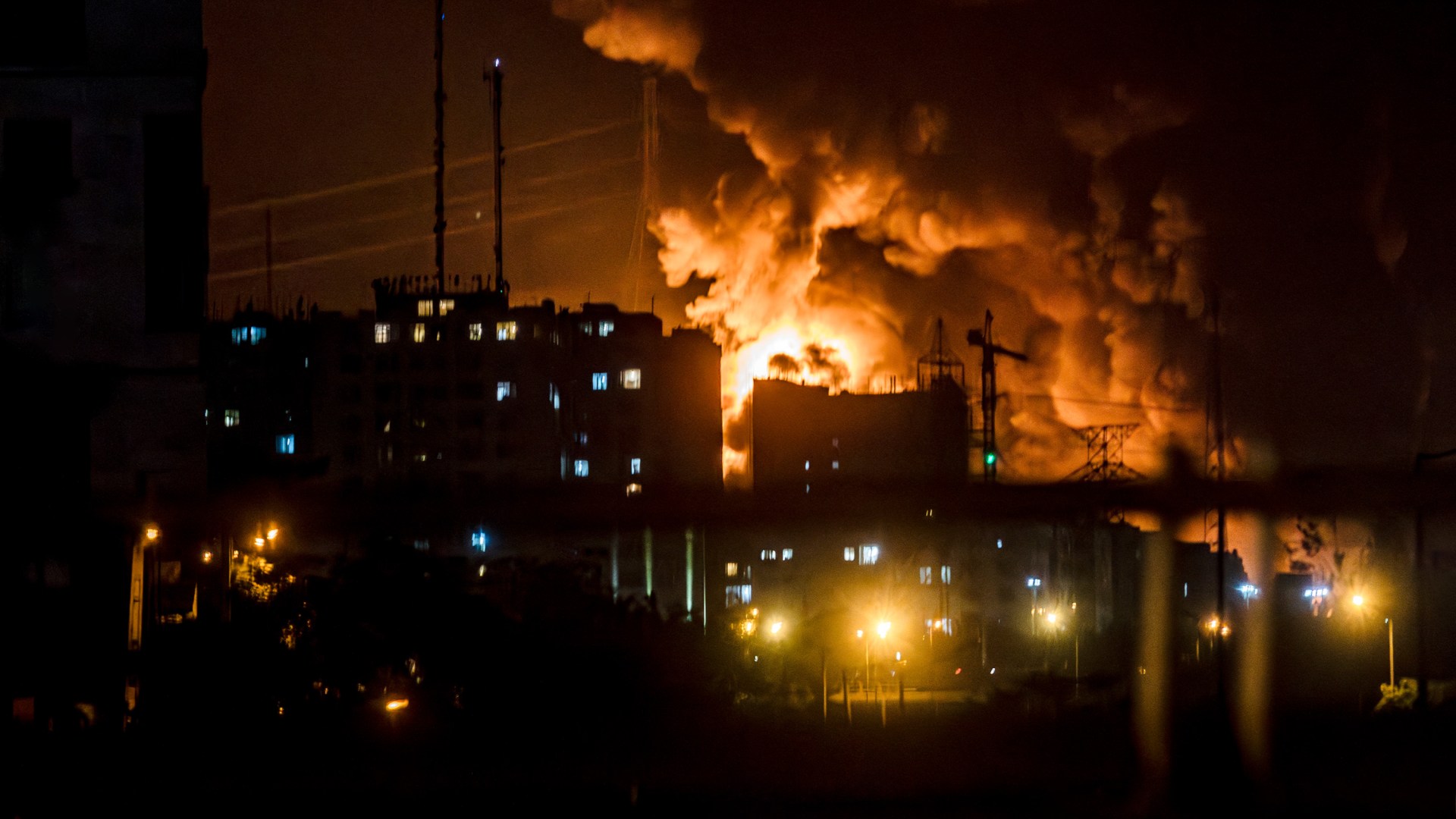
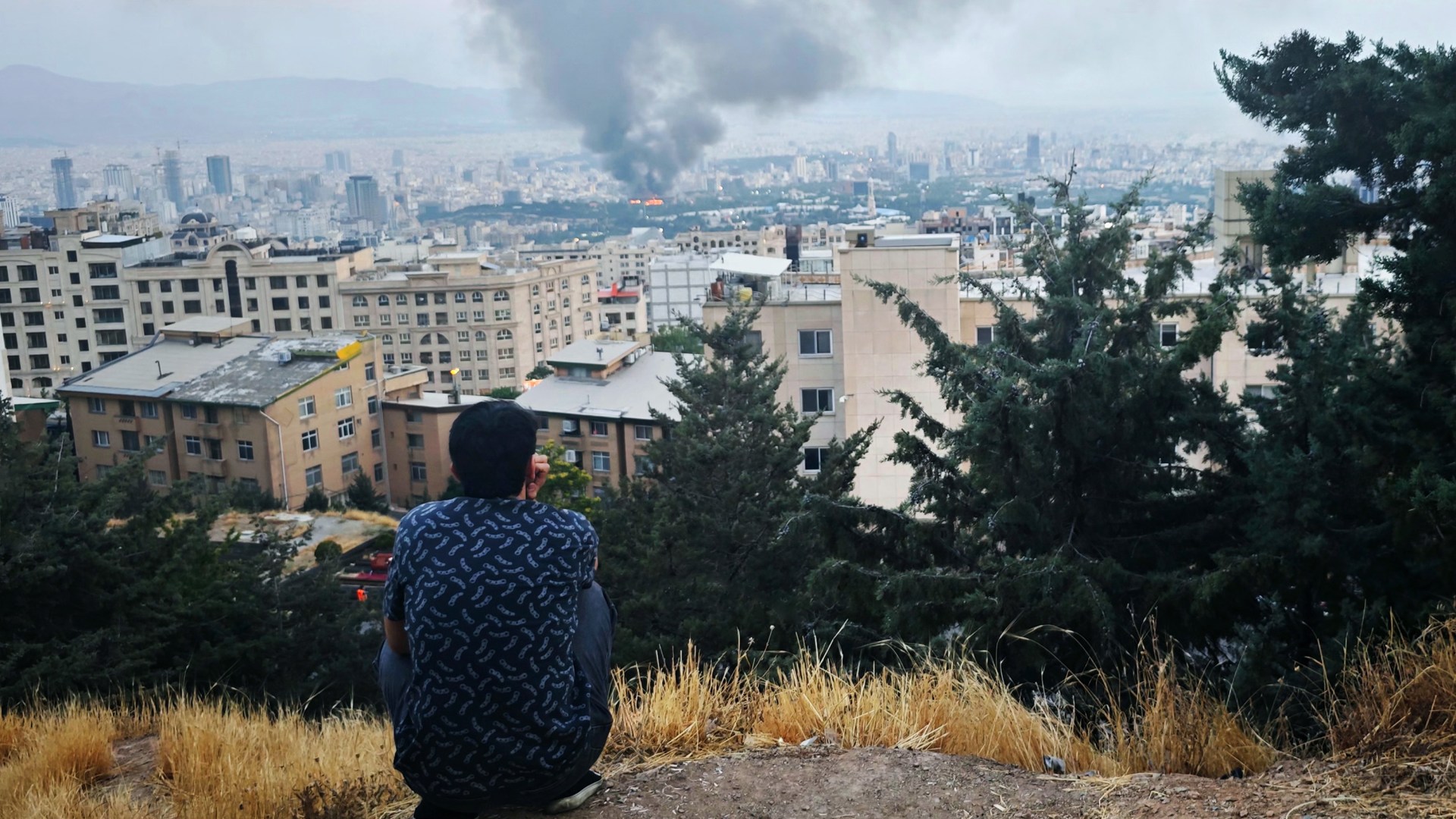
A targeted location in Tehran ablaze on Sunday, June 15, 2025 during the third day of Israel's strikes against Iran.

A targeted location in Tehran ablaze on Sunday, June 15, 2025 during the third day of Israel's strikes against Iran.

Christianity Today June 23, 2025
KHOSHIRAN / Contributor / Getty

President Trump’s decision to join the Israeli attack on Iran was a long time coming.

Tehran would get nuclear weapons very soon if we didn’t take action, US and Israeli officials warned in The New York Timesin 1995. George W. Bush tasked the Pentagon with studying strike options to “stop the bomb clock, at least temporarily,” and on the campaign trail in 2008, John McCain jokingly sang, “Bomb, bomb, bomb, bomb, bomb Iran.” Israel said a bomb was imminent during the Obama administration—perhaps less than three years away, per the country’s defense minister in 2011—and the Biden administration reportedly prepared plans to bomb Iranian nuclear sites early this year.

That long run-up may lend US participation in this war an air of inevitability. In my view, it shouldn’t. This is a war of choice, and it is the wrong choice. These US strikes on Iran are unlawful, unnecessary, unpopular, risky, and of dubious strategic value. They may or may not succeed in temporarily stopping the bomb clock, but they are a strategic gamble. For those of us eager for the freedom and safety of Christians and other oppressed people in Iran, this is a moment to pray for wisdom and peace.

Vice President JD Vance—likely aware that a majority of the American public, including a majority of Republicans, opposes US war with Iran—insists that the Trump administration does not want to escalate this conflict to boots on the ground. Indeed, he insists that the US isn’t at war with Iran at all.

That latter claim is laughable. (If Iran bombed Fort Bragg, would we accept the claim that they weren’t at war with us?) It also points us toward the legal problem, which is that the US Constitution assigns the power to declare war to Congress, not the president, and Congress did not declare this war.

Notes on the Constitutional Convention from James Madison, which include comments from “father of the Bill of Rights” George Mason, make the intent here inescapably clear: The framers of our Constitution thought no single man was “safely to be trusted” with this enormous power. They were interested in “clogging rather than facilitating war [and instead] facilitating peace,” permitting the president to act alone only “to repel sudden attacks.” We are not under sudden attack.

I believe this attack also violates the War Powers Act of 1973, which was passed over the veto of Richard Nixon in an effort to constrain lawless presidential warmaking.

The War Powers Act has three scenarios under which the president can initiate military action: “(1) a declaration of war, (2) specific statutory authorization, or (3) a national emergency created by attack upon the United States, its territories or possessions, or its armed forces.” None of these conditions are applicable here.

Even if these strikes were necessary, the president—like many presidents before him, Democrat and Republican alike, who deemed themselves trustworthy with power that was never theirs—is breaking his oath to the Constitution. As the prophet Habakkuk warns of abuse of power, “Therefore the law is paralyzed, and justice never prevails” (1:4).

But my contention is that the strikes weren’t necessary. A clip of a conversation between pundit Tucker Carlson and Republican Senator Ted Cruz circulated online in recent days because Cruz, who supports forcible regime change in Iran, couldn’t say how many people live there. Here’s a more important number: Iran’s gross domestic product ($341 billion as of 2025) is less than half of US defense spending ($850 billion in 2024).

That is, the money we spend on our military every year is more than twice as much as the Iranian economy. That’s not Iran’s entire government budget. It’s all of Iran’s economy. The whole thing.

This isn’t to say Iran can’t do anything to harm US interests—and especially US forces stationed around the Middle East. But Iran cannot pose anything like an existential threat to America, not even if its nuclear program were much further along than it was before these strikes. This is a poor, weak country half a world away, separated from the US by an ocean and surrounded by hostile powers. There is no scenario in which Iran somehow conquers the United States.

Yet there is a scenario in which the US loses this war in the style of the last two decades’ losses in Afghanistan, Iraq, Yemen, Somalia, and Libya. There is a more-than-plausible scenario in which this is the beginning of another yearslong quagmire that destabilizes a society and leaves tens or hundreds of thousands of innocents dead with little or nothing to show for it. We should know by now that US-orchestrated regime change does not reliably lead to liberty and peace.

I think in particular of the danger war brings to Christians in Iran. Already a persecuted minority subjected to imprisonment, raids, fines, beatings, and other cruelties for their faith, Iranian Christians will be even more vulnerable if this war is prolonged. It’s not like bombs will bypass all the Christians’ houses. Moreover, tyrannical regimes under pressure often grow more tyrannical, especially toward dissidents and ideological minorities like Christians under an autocratic Islamist state.

And while we may hope that the conflict could bring to power a new, more lenient government in Tehran, there’s no guarantee of that outcome—quite the opposite. The number of Christians in Iraq shrank by more than 80 percent due to the US-initiated war and its aftermath.

“Iraq was estimated to have nearly 1.5 million Christians before the 2003 U.S.-led invasion,” the Associated Press reported in 2021. Those ancient churches had roots stretching all the way to the early church. But today, “church officials estimate only a few hundred thousand [Christians], or even less, remain within Iraq’s borders,” many of them feeling “abandoned, bitter and helpless,” less free to worship than they were under the dictatorship of Saddam Hussein. We should all want freedom for Iranian Christians, but it is naive to imagine that an American war is a sure-fire way to get it.

Looking ahead, I hope Vance’s yes is yes in his promise about escalation (Matt. 5:37). I want to trust that he’s telling us the truth (1 Cor. 13:6–7). I pray for Trump and Vance “and all those in authority, that we may live peaceful and quiet lives in all godliness and holiness,” in the US, Israel, and Iran alike (1 Tim. 2:2).

And still, I admit I’m skeptical of the prudence of our leaders and worried about where we go from here. With the writer of Ecclesiastes, I suspect that “what has been will be again, what has been done will be done again” (1:9).

“The quiet words of the wise are more to be heeded than the shouts of a ruler of fools,” he says (9:17). But all I hear is shouting. “Wisdom is better than weapons of war” (9:18). But we fallen people are better at building weapons than being wise.

Someday, God himself “will judge between the nations and will settle disputes for many peoples. They will beat their swords into plowshares and their spears into pruning hooks. Nation will not take up sword against nation, nor will they train for war anymore” (Isa. 2:4). But that day doesn’t seem to be coming this week.

Bonnie Kristian is the editorial director of ideas and books at Christianity Today.

News

Israeli Attacks Bring Iranian Christians Both Fear and Hope

Many in the Iranian diaspora want to see a regime change yet fear the toll on their homeland and the underground church.

Smoke rises after a reported Israeli strike on a building in Tehran, Iran on June 16, 2025.

Smoke rises after a reported Israeli strike on a building in Tehran, Iran on June 16, 2025.

Christianity Today June 23, 2025
Stringer / Getty Images

Since the moment Israel attacked Iran on June 13, Shahrokh Afshar has been concerned about the members of his church who live in Iran. The former Muslim and founder of Fellowship of Iranian Christians, the first Iranian Christian organization in the US, now pastors an online congregation with Farsi speakers from six countries. 

Hundreds of civilians have died in Israeli strikes, and one of his church members decided to stay in Tehran as thousands fled the capital. She is the only person remaining in her apartment building, and she described to him a scene of fear and suffering. 

The government is listening to people’s phone calls and arresting people on the streets, she said. On Sunday, Iranian authorities executed a man accused of spying. Her daughter’s friend lost her entire family in an Israeli bombing, and the cemeteries are full of people burying their loved ones.

She asked the church to “please pray that Iran will not retaliate against America, because the war will get even worse than what it is,” Afshar said. Iran’s growing underground church is “very, very scared,” he added. For several days, many Iranians had no power, water, or internet access. 

Afshar has been praying over the map of Iran for 30 years and acknowledged the complex set of emotions among Iranians. “On the one hand, you are happy that someone has come to rescue you from the hands of this dictator,” he said, referring to Iran’s supreme leader, Ayatollah Ali Khamenei. “On the other hand, it’s your country, your neighborhood, your neighbors, your loved ones who are being bombed. How are you supposed to feel?”

For decades, Israel has observed with trepidation an Iranian regime driven by a deep-seated hate for the Jewish nation. Iran’s recent nuclear advancements have brought the regime to “the brink of true nuclear capability,” foreign policy expert Walter Russell Mead wrote in an October Wall Street Journal opinion piece, predicting 2025 would be an “interesting year.”

Eight months later, Israel launched an operation it hoped would prevent Iran from accomplishing its stated goal of destroying Israel. It eliminated top Islamic Revolutionary Guard Corps commanders and nuclear scientists and shattered crucial infrastructure at Iranian nuclear sites. 

After Israel began its strikes on Tehran, fears spiked and residents fled the city,  backing up the highways with traffic. Iran’s densely populated capital is home to more than 10 million people—approximately 10 percent of the country’s population. 

On Saturday, the United States sent its stealth bombers and bunker-buster bombs to strike three nuclear sites, including Fordow, a facility buried deep beneath a mountain and a target Israel could not take out on its own. 

The war has also impacted everyone in Israel, said Meno Kalisher, pastor of the Jerusalem Assembly House of Redemption. The death toll in Israel would be much higher from Iran’s retaliatory strikes had Israel not invested heavily in bomb shelters and missile-defense systems. Still, dozens of Israelis have died from missile fire targeting civilian populations and occasionally overwhelming Israel’s defenses. 

“We really trust the Lord and pray,” Kalisher said. “We are praying for the Iranian church.”

Most people in his congregation have access to bomb shelters. In Iran, bomb shelters are scarce. Meanwhile, the Islamist government has spent more than $700 million a year supporting groups like Hamas and Hezbollah.

All five of the Iranian diaspora believers Christianity Today spoke to believe that while Iranians are fearful of bombings, most are relatively open to strikes that could topple the regime—an estimate based on conversations with friends and relatives as well as information gathered from online platforms. 

“They are suffering through this, the people of Iran, but they know they have to pay a price for their freedom,” said Hormoz Shariat, founder of Iran Alive Ministries, a Christian broadcasting platform. “So they’re not bitter against Israel, and they’re not bitter against the US. Actually, they’re hopeful.”

Shariat said many Iranians have been “begging” Israel to launch an operation in Iran that mirrors the targeted attacks in Lebanon last year that killed dozens of Hezbollah operatives and wounded hundreds. 

Iranians don’t want an endless war with mass casualties, he noted, but they welcome Israeli strikes that remove leaders “with laser accuracy.” He said Iranians are hopeful that regime change is within reach. 

As the death toll rises, Afshar noted on Monday that “some people in Iran are having second thoughts because their loved ones are getting killed. Tehran has become a ghost town.”

In the wake of modern-day Israel’s establishment in 1948, economic and military ties flourished between Israel and Iran for several decades. Those ties deteriorated in 1979 when revolutionaries toppled Iran’s secular monarchy and established an Islamic republic. 

Ayatollah Ruhollah Khomeini replaced the shah, and the new leader severed ties with Israel and the West, implemented strict dress codes, and suppressed human rights. Muslims and Christians (who compose less than 1 percent of the population) have suffered under Khomeini and his successor, Khamenei. 

According to the Open Doors World Watch List, Iran ranks number nine on the list of countries where it’s most dangerous to be a Christian. Believers from a Muslim background frequently face arrest and long prison sentences for perceived Western influence. 

Iran’s authoritarian rule has cast a dark shadow over the country and launched multiple waves of protests. The Green Movement of 2009 began with widespread allegations of election fraud and expanded to a series of protests against the Islamic Republic of Iran’s crackdown on civil liberties. More than 30 people died. 

According to a BBC investigation, Iranian authorities killed more than 75 people in the wake of protests connected to the 2022 death of Mahsa Amini. The 22-year-old woman died in custody after morality police arrested her for allegedly failing to wear a headscarf. 

A Jewish Iranian who converted to Christianity after he immigrated to the United States in 1975 said some Iranians in the diaspora are less critical of Tehran because they emigrated prior to the regime’s wave of repression. Yet those who lived through its darker days have become disillusioned, he noted. CT granted him anonymity to protect his family members in Iran.

One of his religious Muslim friends in Iran quit attending mosque after the death of Amini and the government’s brutal crackdown on protesters. 

“Thousands and thousands of mosques have been closed in Iran, from what they’re telling me,” he said. Some Muslim clerics blame the shuttering of mosques on a lack of funding, but others say the more likely cause is poor attendance. 

Said Najafy, an Iranian Christian and ministry leader in Belgium, said the regime has wanted to destroy Israel since 1979 and the Iranian people have suffered as a result. He grew up in a religious Muslim family and lived in Iran until 2000. Some of his family members fled Tehran in the wake of the bombings.

“We want to go back to the old days when we were friends,” he said. “We are praying and hoping that the regime will fall as soon as possible.”

Najafy joined virtual prayer meetings this past week with Christians in Iran and the four Farsi-speaking churches in Belgium. He said Iranian Christians are both praying for God’s protection over civilians and rejoicing that “Israel is the helper, coming and eliminating this evil regime that has been ruling for almost five decades.”

On Thursday, Israeli prime minister Benjamin Netanyahu directly addressed the question of Israel seeking regime change in Tehran. “That may be a result, but it’s up to the Iranian people to rise for their freedom,” he said, noting that Israel “may create conditions that will help them do it.”

Shirin Taber, an Iranian American Christian and author of Muslims Next Door, has tracked Iran’s resistance movement. Her organization, Empower Women Media, focuses on gender equality and religious freedom—rights she hopes are part of a systematic change in Iran. 

According to Taber, Iran’s opposition movement is multilayered. Iran’s Gen Z is bold, tech-savvy, and willing to join public protests, but that’s not enough to bring about change. “If anything, it actually puts people in harm’s way, and people have been killed,” Taber added.

Taber said another tier of Iran’s opposition movement works behind the scenes and includes a coalition of people in business, technology, art, and journalism. She believes it’s possible the regime could collapse in the next few weeks, creating an avenue for opposition movements to step in. 

Shariat, the founder of Iran Alive Ministries, is less optimistic. He has observed infighting between Iranian factions. 

He stays focused on his ministry broadcasts into Iran, which have been happening daily since the Israeli attacks began. The Iranian church is full of “baby Christians” who are fearful of what lies ahead, he noted.

“Our message to believers is that you are different. Don’t be afraid,” Shariat said. “This is the time to shine for Jesus. Go bring comfort to others.” He hears stories about Christians outside the capital opening their homes to people fleeing Tehran.

Meanwhile, Afshar encourages his online congregation to engage in an ancient church practice called lectio divina that involves “beholding God and sitting at the feet of Jesus” in a time of quiet prayer. The practice has helped the Christian woman in Tehran as she battles her fear. She told Afshar, “I have no fear because I practice the presence of God daily in my walk with him.”

Jenna Mindel Knows What Gen Z Is Yearning For

An inaugural Young Storytellers fellow on her peers search for good, truth, and beauty.

An inaugural NextGen Accelerator fellow on her peers search for good, truth, and beauty.
Rachel Patterson

Earlier this year, Jenna Mindel wrote for Christianity Today about new research showing that for the first time in American history, men were more likely than women to be religiously affiliated. “In the wake of the #MeToo movement, feminism, and ‘Red Pill’ masculinity, Christian women are left with a lot of conflicting messages about what it means to be a woman,” wrote Jenna. “These are questions the church needs to be prepared to answer.”

Jenna spends a lot of time pondering Gen Z’s understanding of culture and faith. Last year, she published a piece about Gen Z turning online for spiritual guidance. 

“I don’t have all the answers,” the 23-year-old said. “But rigidity is something I spend a lot of time resisting. I want to be a voice that is faithful and willing to sit in the nuance and complexity of tough situations.”

Thanks to Christianity Today’s Young Storytellers Fellowship (formerly, the NextGen Accelerator), Jenna is feeling more confident in staking out this ground. In 2024, CT launched the program, seeking to encourage and equip the creatives of the next generation. This now-annual fellowship gathered 15 young creatives to expand their storytelling gifts for the glory of God.

“Any young Christian who is discerning what it looks like to be unashamedly Christian and unashamedly an artist should apply for the program,” Jenna said. “It’s for anyone asking the question ‘What does it look like to re-enchant Christians toward faith when so many are disenchanted?’”

Currently an admissions counselor at Biola University, Jenna hails from Tacoma, Washington, where she grew up in a homeschooling household of seven, shaped by Adventures in Odyssey, VeggieTales—and Christianity Today. As a high schooler, she visited the Southern California Christian college and loved it. Even though it was a financial stretch for her family, her parents encouraged her to go. 

Jenna had already begun pursuing journalism as a high school student when she interned at a local magazine. As a sophomore, she and a friend started a true-crime podcast that told the stories of killers in the Pacific Northwest. 

At Biola, Jenna contributed to the school newspaper and magazine and served as editor in chief of the yearbook for two years. She also created a podcast for GRIT, an online resource that began as a blog discussing relevant issues for the school’s female students.

“Our GRIT boss would always say, ‘When it comes to feedback, 10 percent of those out there will be very conservative and 10 percent will be very progressive and those people are never going to be happy with anything that you post or produce,’” said Jenna. 

This framing helped Jenna realize what she was getting into when she followed her curiosity. 

“I was just really interested in figuring out ways to engage other people,” she said. Growing up, she noted that most of her family’s conversations centered on guns, politics, and criticizing politicians. 

Jenna resonated with journalism because it allowed her to hear and engage other perspectives. As she was preparing to graduate last year, Jenna began looking for jobs at Christianity Today. “I definitely want to work at a Christian magazine, and CT is my favorite.” 

“CT is really needed because we need a space for meaningful conversations about culture that aren’t just black and white and good and bad, but where we can seek nuance and complexity,” she said. 

So when she saw applications open for the fellowship, she decided to apply and was accepted shortly after. “Post grad feels like you’re standing on a cliff and there’s like a foggy mass in front of you,” she reflected. “You don’t know what’s next. You’re trying to figure that out.”

Amid this uncertainty, entering the fellowship felt like a “soft place to land.” The program, which ran from last August to this January, included biweekly Zoom meetings and in-person gatherings in Washington, DC, and Chicago. Christianity Today editor in chief Russell Moore, author Karen Swallow Prior, and pastor Jon Tyson shared with the cohort.

Jenna appreciated hearing these perspectives as she began her work as an admissions counselor. She still wanted to pursue journalism and also felt the pressure of trying to keep up with the impressive LinkedIn updates she saw her peers posting. 

“These sessions helped me realize, I’m on track. I’m still going. I can be a Christian creative and have a nine-to-five, and that’s valid,” she said. 

By hearing words of advice from these Christian leaders and the fellowship flying the cohort in to spend time together, Jenna could feel that Christianity Today had her back. 

“Through this program, CT affirmed that both my work is worth investing in and that I am worth investing in as both an artist and a storyteller.”

“You’ll get invited to a Christian workshop, but then you have to pay $120 or whatever,” she said. “I totally get that, but it was really sweet after so many unpaid internships and workshops to feel like I was being invested in. I felt like the program really changed the game for me in terms of how I view myself and my work.”

Jenna also appreciated that the cohort included people from varying circumstances—some working full-time and others unemployed, some working in creative jobs and others working traditional nine-to-fives.

“Sometimes it feels like in creative spaces that you’re either in a faith space that kind of reduces creativity, or you’re in a creative space that kind of reduces faith, and you can’t hold them both together,” she noted. “The NextGen Fellowship was amazing because it felt like everyone was really intentional about their creative practices and their faith.” 

Jenna thinks frequently about how Gen Z is the least-religious generation, a reality that exists alongside “yearning for religion and faith and spirituality.” 

“It’s really easy to be cynical about faith and about Gen Z when you’re looking at the numbers, but I think there’s an openness toward spirituality and mystery,” said Jenna. 

She appreciates that Christianity Today engages culture beyond a paradigm of “secular and sacred.” 

“I love Taylor Swift, and CT has published a lot of pieces about Taylor from a lot of different perspectives. But it hasn’t just been like, ‘She is not Christian and she is bad,’” she said. “Instead, it might take the angle that ‘This is not a Christian song, but here’s what we can learn from it.’”

Beyond familiar cultural reference points, Jenna also appreciates CT’s global coverage. 

“It’s really important for Christians to engage outside of expressly Christian spaces and also for Americans to get out of thinking we’re the whole world,” she explained. “CT is great because it’s actually reporting on both heartbreaking but also encouraging things that are happening globally in the church.”

Gen Z isn’t looking for easy answers, says Jenna. 

“CT, through things like the NextGen Fellowship, is cultivating meaningful conversations with Christian leaders who can sit with people in the hard things,” she observed. “We don’t need more information. We need presence. Obviously, that can be hard with occupying a digital space, but equipping people to be witnesses of Christ through presence, through those things, is important.”

During one fellowship session, Jon Tyson described his regular walks in New York City, where he intentionally focuses on the city’s beauty. This practice stood out to Jenna as a practical tool for meaningfully engaging with the world amid larger feelings of despair, anxiety, and stress. 

“The true, good, and beautiful isn’t just limited to Christians. Every image bearer holds beauty and can create beautiful things,” she said. “A lot of Gen Z Christians are yearning for an acknowledgement of that.”

News
Wire Story

Texas Bans Abuse NDAs in Law Named for Kanakuk Victim

The Lone Star State joins Missouri in passing new legislation to protect survivors of child sexual abuse.

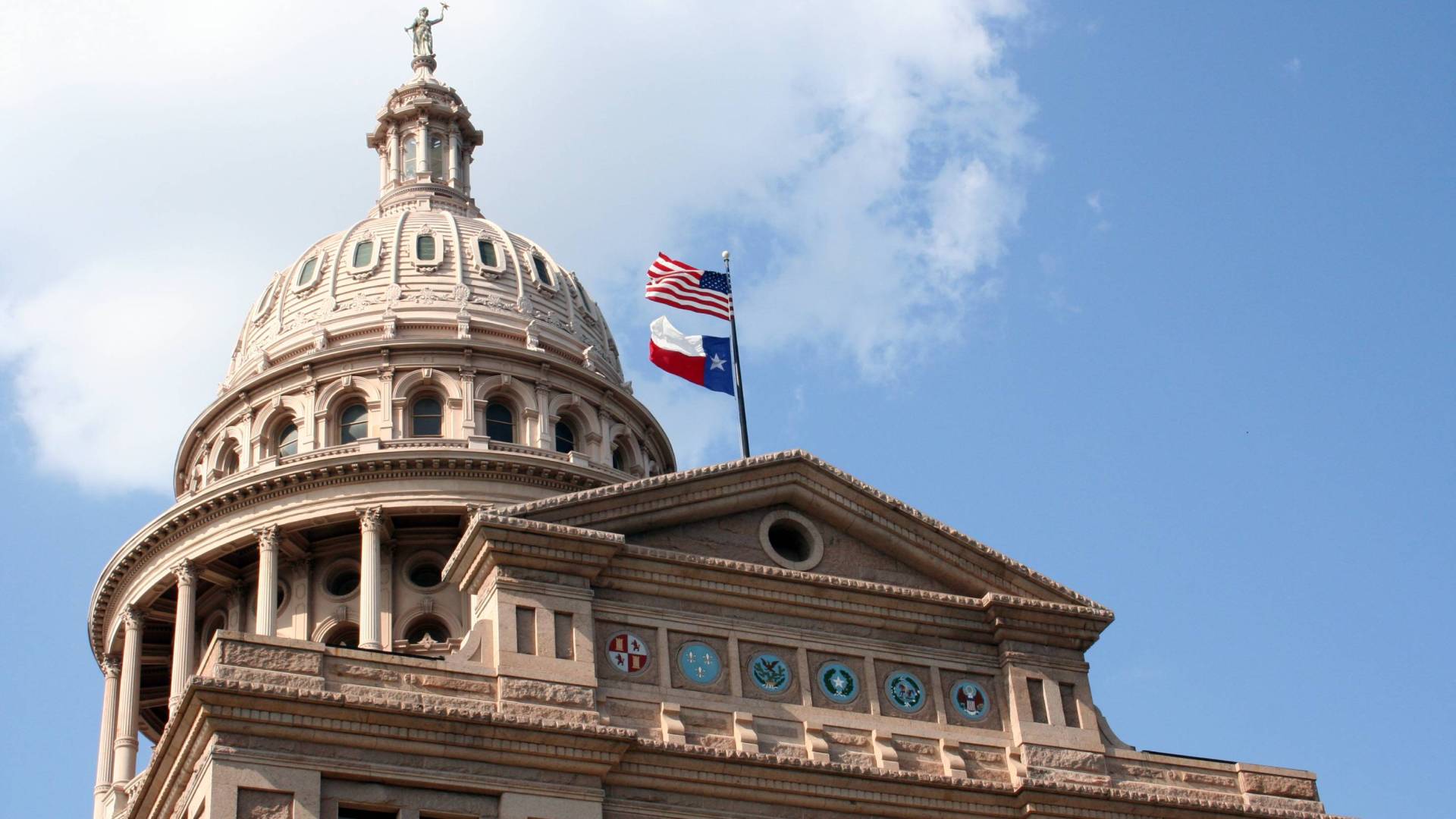
Texas Capitol in Austin with Texas flag and US flag
Christianity Today June 23, 2025
Brandon Seidel / Getty

A new Texas law, signed by Texas Gov. Greg Abbott on Saturday, bans non-disclosure agreements (NDAs) in cases involving sexual assault, child sexual abuse, and human trafficking and releases victims from existing NDAs in such cases.  

State lawmakers had passed the bill at the end of May, after similar legislation passed in Missouri weeks earlier.

The laws are named in honor of Texas native Trey Carlock, who died by suicide when overcome by the trauma of an NDA related to sexual abuse at Kanakuk Kamps in Missouri, his sister Elizabeth Carlock Phillips has said while advocating for the legislation.

Texas and Missouri leaders are in a growing push to end the misuse of NDAs against abuse survivors who enter civil settlement agreements.

The use of NDAs to silence sexual abuse survivors makes such agreements controversial, Jeff Dalrymple, director of abuse prevention and response for the Southern Baptist Convention Executive Committee, has told Baptist Press.

“In addition to legal considerations, ministry leaders should carefully consider both ethical and moral implications of NDA use. There may be situations in which an NDA could be an appropriate tool for a ministry to use, for instance, to protect the private information of ministry participants or in employment transitions,” Dalrymple said in April.

“However, they should never be used to prevent survivors of abuse from sharing their stories or to allow responsible parties to avoid responsibility for their actions.”

Jeff Leach, a Southern Baptist and member of Cottonwood Creek Church in Allen, was among five authors of the House version of the Texas bill.

Carlock sued Kanakuk after enduring what he described as a decade of child sexual abuse by then camp director Pete Newman, and accepted a civil settlement with a restrictive NDA that family members say led to Carlock’s 2019 suicide.

“I am proud to be Trey’s sister,” Phillips said when Texas was considering the bill, “and I hope Texas will be proud of Trey’s Law.”

Newman is serving two life sentences plus 30 years in a Missouri state prison for sexual crimes involving multiple minors at Kanakuk. Civil lawsuits are still being filed related to the abuse, most recently in April.

As Christianity Today previously reported:

Many child victims do not speak about what happened to them for decades. More than half of the victims of abuse in the Boy Scouts waited until they were 50 to disclose, according to Child USA. A 2014 German study found the average age for child sexual abuse survivors to disclose what happened to them is 52.

Most states have no laws limiting the use of NDAs. Since 2017, when the #MeToo movement started to bring attention to the problem of sexual harassment, several states have passed laws restricting the use of NDAs in the workplace.

In Maine, for example, the law now says an NDA can prevent disclosure of factual information “only if the agreement expressly provides for separate monetary consideration.” In Illinois, an NDA has to be the “documented preference of the employee” and “cannot use language that would completely prohibit employees from making truthful statements.” In Oregon, the victim of sexual assault has to ask for an NDA, and employers cannot make the request for an NDA a condition of a settlement offer. 

Two states—California and Washington—now completely prohibit NDAs from covering sexual harassment or abuse but only for conflicts between employers and employees. NDAs may still be used in other legal settlements. There are no legal restrictions on settlements involving children. 

Tennessee passed a bill in 2018 nullifying NDAs in childhood sexual abuse cases and is the only other state to have done so to date. But more than a dozen states have passed legislation limiting to varying degrees the use of NDAs in employer-employee settlement agreements regarding sexual abuse claims, the international law firm Ogletree Deakins reported, in addition to the federal 2022 Speak Out Act.

Trey’s law becomes effective August 28 in Missouri and September 1 in Texas.

Additional reporting by Christianity Today.

Culture

Andrew Peterson: ‘C.S. Lewis Gave Me a Way to Think About Jesus’

The creator of The Wingfeather Saga discusses the books that changed his life with CT’s editor in chief Russell Moore.

An open book with a lion and a Tolkien map showing through holes in the pages.
Christianity Today June 23, 2025
Illustration by Elizabeth Kaye / Source Images: Unsplash, Wikimedia Commons

Recently on The Russell Moore Show, Russell Moore spoke with singer, songwriter, and author Andrew Peterson about the authors who, by God’s grace, helped hold their faith together when it could have come apart. Listen to the full conversation on our website or wherever you get your podcasts. This excerpt has been edited for clarity and length.

One of the things that I noticed when I was thinking about the authors that I love the most is that almost all of them write in multiple different ways. Novels, short stories, essays, poems—some combination of those four. You as an author do this too, including writing children’s books.

What about in your own childhood? What books mattered to you, and how did you come across them?

When I was a kid, I was reading a lot of Hardy Boys, The Chronicles of Narnia, [and] Lloyd Alexander’s Chronicles of Prydain and The Black Cauldron (which became a really bad Disney movie). I loved Beverly Cleary, including The Mouse and the Motorcycle.

Then around eighth grade, I begged my dad and mom for a series of fantasy novels called Dragonlance Chronicles, which were these Dungeons and Dragons–adjacent adventure stories. My parents were very nervous because it was the ’80s; the most evil thing you could do was play Dungeons and Dragons. I remember getting in huge trouble because I had borrowed my friend’s Dungeon Masters’ guide. I had the book in my bedroom that I’d borrowed like contraband.

I’ve literally never once played. But my friends did, and I loved the pictures. I was always into drawing trolls and dragons.

It was a big deal that my parents agreed to buy me this series. And man, Dragonlance just lit me up. I loved reading what I see now is really bad fantasy, but at the time it was an escape.

We have a podcast series by my colleague Mike Cosper on the Satanic Panic, Devil and the Deep Blue Sea. One of the things that’s interesting to me is that though my parents were comparatively very relaxed, all around me there were people for whom Dungeons and Dragons was going to lead you right into sacrificing goats. Many of them were suspicious of anything that depicted gods or evil figures. But the same people didn’t seem to have the same problem with Narnia.

We’ve bumped into that with my children’s fantasy book series, The Wingfeather Saga. People that are really upset about Harry Potter give Lord of the Rings and Narnia and George MacDonald a pass. I don’t really know why. I don’t think it’s a bad idea to be careful, but when there is a moral undergirding to a story … In Harry Potter, for example, the power of sacrificial love is the central theme.

What about C. S. Lewis? When did he come into your life?

I liked his books as a kid, but I didn’t always love the fact that they seemed to be trying to teach me something. I’m a pastor’s kid, and I was wary of that; what I wanted was pure story. If I sniffed a Sunday school lesson … I didn’t really fall in love with the Narnia books until I reread them in college.

I was also reading all the time as a kid—except for the required reading. I don’t think that in most ways you and I are “rebellious.” So where does that come from?

The thing that popped into my head is the C.S. Lewis quote:

I thought I saw how stories of this kind could steal past a certain inhibition which had paralyzed much of my own religion in childhood. Why did one find it so hard to feel as one was told one ought to feel about God or the sufferings of Christ? I thought the chief reason was that one was told one ought to. An obligation to feel can freeze feelings. And reverence itself did harm. The whole subject was associated with lowered voices; almost as if it were something medical. But supposing that by casting all these things into an imaginary world, stripping them of their stained-glass and Sunday school associations, one could make them for the first time appear in their real potency? Could one not thus steal past those watchful dragons? I thought one could.


This comes up with the Wingfeather animated series. The team is amazing, and screenwriting is a completely different discipline than what I do—so I’m not writing the scripts, but I’m reviewing them and making notes. There are times when I think the writers think of Wingfeather as a kid’s show written by a Christian, and there will be moments where they’ll try to make a moral point. My most consistent note in the sidebar of the scripts is often “no teachable moments.” This is not a Sunday school lesson. They’re running for their lives; let them run for their lives. Which is not to say that stories don’t teach us. I would hope that if the parents are watching the show, the teachable moment is at the dinner table after it’s over. But that sense of moralizing—I’m allergic to that.

With C. S. Lewis, one of the things that you maybe picked up as being “teachy” actually had the opposite effect on me. For instance, when he would say something like, “Now of course you should never go into an actual wardrobe”—to me that gave a kind of wink-nod, conspiratorial, “You’re in this as we’re going through this story together.”

When I was a teenager and I was about to lose my faith, I found Mere Christianity because I knew Lewis from the Narnia books. And part of what was important to me about that book was not the arguments; it was a similar tone to “You really probably don’t want to go into a wardrobe.”

Did you have a moment similar to that when it comes to Lewis’s nonfiction work?

I remember reading Mere Christianity in college, and I’ve reread it since. You get the sense that he was actually honest. The only reason he was able to write about some of the doubts that we have is because you could tell that he had also experienced those doubts and there was no shame involved. It felt like talking to a friend; his voice is so clear.

I was in the middle of a desolate season when I read Till We Have Faces; it was like God slipped that book under the door.

I had kind of lost my faith after high school and was just casting about. But I was playing music, a language that resonated with me. It was hearing Rich Mullins’s music that was the doorway for me back to rediscovering C. S. Lewis and then rereading Lord of the Rings.

All those authors were multidisciplinary—G. K. Chesterton too. Murder mysteries and books of theology and poems. That was so intriguing to me—there were all these entryways into their work, but you got the sense they were all talking about the same thing.

And my hunch is that’s why those writers have such staying power. It’s because they weren’t just doing one thing.

Then there’s Frederick Buechner. My first book of his was The Eyes of the Heart. I couldn’t believe how good it was. He has a way of constructing a sentence that nobody else really does. That book also came to me at the right time.

What about Wendell Berry?

I discovered Wendell Berry because of a friend who was reading a book of his poems on the road and mentioned Jayber Crow.

That became one of the books that changed my life.

I had exactly the same sort of experience reading Wendell Berry, right around the time I was moving to Kentucky. What Buechner was doing in a solitary way Berry was doing in the context of a community. You had that sense of membership that shows up in the essays, in the poems, in the short stories, in the novels, and it all fit together.

C. S. Lewis gave me a way to think about Jesus. That has never left me. And then Frederick Buechner gave me a way to think about my faith and my story. And then Wendell Berry helps me think about how I live in a practical way, not just in community with my family and my church and my neighbors but with the frogs that live in the pond and the birds that come to the feeder and the plants that are growing in the front yard. When I finish a Wendell Berry book, I end up with concrete changes in the way that I go about my days.

Church Life

Fleeing a Massacre, Syrian Muslims Found Comfort Through Church

Revenge attacks against deposed president Assad’s heterodox Alawite sect led local evangelicals to model reconciliation between diverse sects.

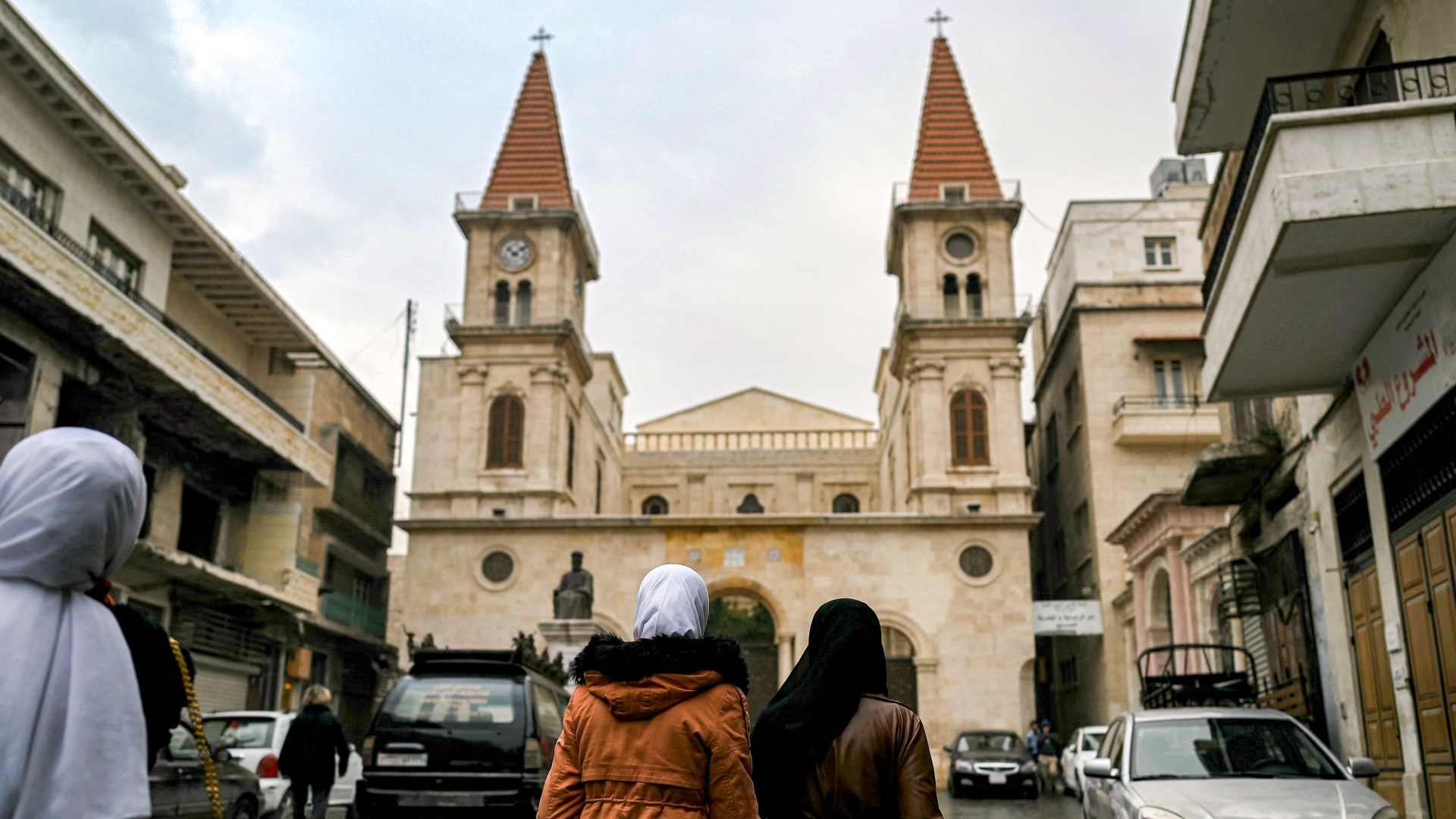
Muslim women walk near a church in Syria

Muslim women walk toward a church in Syria.

Christianity Today June 23, 2025
Ozan Kose / Contributor / Getty

This is a three-part series about the Alawite sect in Syria and the March massacre in its community.

A small congregation in the Tartous countryside of western Syria held an unusual Mother’s Day service this March.

The passages were customary, as the pastor read from Proverbs 31 and 1 Corinthians 13. So were the praise songs, including an Arabic version of “How Great Thou Art.”

The crafts, snacks, and cake were like those served at any youth-focused event. Fifty moms and their kids enjoyed the cool weather at a lakeside pavilion under pleasant gray skies. Enthusiastic girls acted out the parable of the prodigal son, emphasizing that God’s love is for everyone. This, too, was a typical message.

The unusual aspect was who was in the audience. Half the families were Syrian Alawites, a heterodox Muslim sect, three weeks removed from a massacre that killed more than 1,700 men, women, and children from their community.

In Syria, Mother’s Day is celebrated on March 21, and the event offered a small measure of joy amid great tragedy. The service was so successful the church repeated it twice more in the following weeks, according to Bassem Khoury, the church’s pastor. Christianity Today agreed not to use his real name as the country remains unstable.

“Suffering is an opportunity to direct people to God’s love,” Khoury said.

Khoury described how his evangelical church ministered to hundreds of Alawites fleeing the coastal villages of Jableh and Baniyas and as far away as Hama and Homs, cities 50 miles to the east. Local Christians offered food, medicine, and words of comfort. Khoury preached about Jesus—but also about reconciliation between Syria’s diverse religious groups, Sunni Muslims, Alawites, and Greek Orthodox Christians. And the families witnessed a unity the pastor prays his nation may one day reflect.

Khoury served from extensive experience. Throughout the 14-year Syrian civil war, he has offered aid to Alawites, Muslims, and Christians displaced by the fighting. Some came from Raqqa, once the seat of the self-proclaimed ISIS caliphate. Others came from Aleppo, where current Syrian president Ahmed al-Sharaa led a rebel offensive.

They arrived at Tartous and the nearby city of Lattakia, seeking safety in the Alawite stronghold of then-president Bashar al-Assad. Assad and his father, Hafez, who seized power in a 1970 coup, hailed from the sect and promoted fellow Alawites to key positions in government and the military. Others toiled in the agricultural fields, as the regime cultivated loyalists from all sects rather than depending on a single group.

Alawites, a ninth-century offshoot of Shiite Islam, make up the majority of residents in the Syrian coastal and mountainous region, living among Sunni Muslims and Christians, mostly from the Greek Orthodox church. The sect, which represents 10–13 percent of the overall population, relocated to relative isolation in the 13th century to escape persecution for their heterodox beliefs. (In coming parts of this series, CT will explore Alawite beliefs and why other Muslim groups consider them heretical.)

During the civil war, rebels seized much Syrian territory but never dislodged the regime from Tartous and Lattakia. Jableh hosted a major army installation near the military base of Assad’s Russian allies. Baniyas suffered a massacre of its Sunni residents in 2013 after the government dispelled a rebel attack. But overall, the area remained religiously mixed. As the war continued to rage, local relative stability led many internally displaced people from all sects to seek refuge.

Khoury first came in more peaceful times, commuting from about an hour away. In 2009, he began planting a church in a village of Alawites and Greek Orthodox Christians, not far from the famous Crusader-era Krak des Chevaliers castle. With the outbreak of civil war in 2011, his small congregation dwindled to near zero as members fled the conflict.

But as displaced Syrians arrived, Khoury relocated to the Tartous countryside full-time. He introduced himself to weary individuals arriving at the village square and provided food and medical aid, following up with home visits. Word spread, and more came. And in every encounter, he was clear about his faith. Over time, Khoury worked with a network of 10 evangelical churches that provided aid to 2,000 families.

The chaos of war provided an opening for Christian witness outside his church’s own community. Still, local authorities accused the church of exploiting the displaced, Khoury said. Khoury countered that he never spoke against anyone’s religion, only presenting his own.

And then in December, the Assad regime fell.

“Syria was an exhausted country undergoing a slow death,” Khoury said. “And now with the rapid political changes, we are experiencing PTSD.”

The rapid rebel triumph was a shock, he said, and fear ruled the area. Sharaa, the new president, reassured religious minorities they would be included in the new Syria. The new regime even offered to place a guard at Khoury’s church, which he declined. But in December, videos circulated of an arson attack on an Alawite shrine in Aleppo and the burning of a Christmas tree in a Christian village near Hama.

Mysterious messages then appeared on social media, stoking anti-Alawite prejudice. Syria’s majority Sunni population already harbored resentment toward the sect due to Assad’s long and oppressive rule. And Islamic extremists recalled medieval and Ottoman-era fatwas declaring Alawites to be non-Muslims and worthy of death.

The massacre began on March 6, triggered when groups formerly connected to Assad attacked the military base in Jableh. By March 8, the government announced it had regained control of all affected areas. But during that time and in the days that followed, militias affiliated with the new regime went house to house throughout the area, killing Alawite residents.

Khoury knew what to do—the same as before. But this time, his neighbors also needed help. While their village was not attacked, all Alawites felt under threat. As thousands streamed into the area and cars clogged the roads, he posted the church number on social media. Anyone requesting assistance was welcome.

From the civil war onward, Khoury has viewed his service through a lens of biblical reconciliation. Through the cross, Jesus broke the barriers between peoples to create a diverse church, he teaches. The church should then reach out to help a diverse world learn how to live together in peace.

By opening his church’s doors, Khoury gave opportunity for Muslims to hear directly from Christians about their religion, helping dismiss characterizations about worshiping three gods or aligning with Alawites against the Sunnis. But Khoury also sat Alawites and Sunnis together, and as everyone mixed, they became friends.

In groups of 25, the displaced families presented problems requiring immediate solutions. Many fled under duress and needed clothes. Restless kids needed toys. But church members also facilitated discussions about Syria. Sects often held wrong ideas about one another, which political and religious extremists exploited to further the conflict. Now members of the various groups imagined what a shared future might look like.

Still, in the weeks following the massacre, most Alawites remained holed up in their homes, fearful of more revenge attacks on their community. The church designed the Mother’s Day event to draw them out, to remember the beauty of nature, and to encourage those who were suffering to continue living life, Khoury said.

After the kids created purple-and-white paper hearts adorned with messages to their moms, Khoury led the mixed religious assembly in discussion about the prodigal son. The older brother, they observed, represents those who reject the other, no matter what. Khoury remembers an attendee saying, “But God is not what I imagined as a God of punishment. He is a God of forgiveness and love, awaiting our return.”

Khoury said in the past, local Alawites did not oppose the church but generally left them alone. Attitudes have warmed considerably since the massacre. For Palm Sunday, the church marched in leafy procession through the village streets, with several neighbors joining in. For Easter, they held two outdoor gatherings for the youth, hosting more than 200 children in total. Six new families are now regularly attending services, with 30 kids added to Sunday school.

Khoury does not know whether the current openness of Syrians will continue. He is encouraged by the lifting of sanctions and the appointment of a female Christian as minister of social affairs. But his church will continue to serve, he said, without discrimination between sects, in hope of a better future.

“Syrians were left like sheep without a shepherd,” Khoury said. “We introduce them to Jesus, who will never leave his people.”

The next story will introduce Ziad, an Alawite who survived the massacre.

News

Kenyans Protest Police Killings

Churches call for prayer, justice after death of 31-year-old blogger.

People take part in a demonstration in Kenya following the death of blogger Albert Ojwang while in police custody. 

People take part in a demonstration in Kenya following the death of blogger Albert Ojwang while in police custody. 

Christianity Today June 20, 2025
Anadolu / Contributor / Getty

Kenyans are expecting large demonstrations next Wednesday, June 25, in response to accusations that police killed a popular blogger earlier this month. The date marks one year after government forces killed at least eight people who were protesting tax increases. 

A police officer in Nairobi, Kenya, shot a bystander Tuesday during ongoing demonstrations. A blogger, Albert Ojwang, died in police custody a week earlier. Ojwang’s killing reignited long-standing accusations of extrajudicial killings by security forces, many of whom have never been punished. Two police officers involved in Tuesday’s shooting have been indicted and will be arraigned in court soon. The bystander survived and is now in stable condition.

The Kenya Coalition of Church Alliances and Ministries (KCCAM) is convening for a national day of prayer on Sunday for Kenya’s concerning increase in police-brutality cases, the latest involving Ojwang’s death. Church leaders asked the police to allow peaceful demonstrations to proceed without interference.

KCCAM urged the president to have security agencies protect Kenyans: “We note your statement on Ojwang’s killing and ask you to assure the nation of swift and just accountability and instil visible measures to reform the security sector in line with the values enshrined in our Constitution.”

Public tension has been building since June 7, when detectives arrested 31-year-old Ojwang, a secondary school teacher and blogger who had made derogatory comments about Eliud Lagat, second in command in the National Police Service (NPS). Ojwang’s arrest came as part of an investigation initiated after Lagat filed a complaint. The NPS transported Ojwang over 220 miles (350 kilometers) from his home in western Kenya and booked him in Nairobi’s Central Police Station that night. The following morning, he was dead.

The NPS initially issued a statement claiming he had died from hitting his head on a wall while in police custody. An investigation by the Independent Policing Oversight Authority ruled out the possibility of death from self-harm. An autopsy report by five pathologists concluded that Ojwang had died from head injury, neck compression, and other injuries. Someone had interfered with the footage from police-station cameras.

In a statement, police said Ojwang was found in his cell and rushed to Mbagathi District Hospital, where he was pronounced dead. Doctors at the hospital refuted that statement, saying Ojwang arrived at the hospital already dead.

Kenyans called for the resignation of NPS’s Lagat, who had complained about Ojwang’s blogging. Lagat has now stepped aside. The head of the police station, an officer on duty that night, and a camera technician have now been arrested in connection with Ojwang’s death. The technician admitted to accepting 3,000 Kenyan shillings (about $23) to delete and alter footage from the night of Ojwang’s death. Three detainees who allegedly assaulted Ojwang in a deal to get released have also been arrested. Twenty-three people, including 17 police officers, have been interrogated in connection with the case.

Kenyan president William Ruto condemned the death. Kenyans are remembering the deaths of 58 citizens who reportedly died last summer at the hands of security forces amid protests against proposed tax increases. Some see Ruto’s government as repressive, brutal, and responsible for “disappearing” opponents.

The Missing Voices report released in May this year by the International Commission of Jurists cites “159 cases of extrajudicial killings and enforced disappearances in 2024.” Ruto has promised to stop extrajudicial killings by law enforcement agencies. Activists and rights groups have criticized him for failing to stop the killings and have accused him of abetting police overreach.

The Kenya Christian Professionals Forum supported the police inspector general’s directive to indict officers linked to the death of Ojwang, and condemned the use of violence by police and other security agencies: “We strongly … urge the government to facilitate and enable the truth to come to light.”

Apple PodcastsDown ArrowDown ArrowDown Arrowarrow_left_altLeft ArrowLeft ArrowRight ArrowRight ArrowRight Arrowarrow_up_altUp ArrowUp ArrowAvailable at Amazoncaret-downCloseCloseEmailEmailExpandExpandExternalExternalFacebookfacebook-squareGiftGiftGooglegoogleGoogle KeephamburgerInstagraminstagram-squareLinkLinklinkedin-squareListenListenListenChristianity TodayCT Creative Studio Logologo_orgMegaphoneMenuMenupausePinterestPlayPlayPocketPodcastRSSRSSSaveSaveSaveSearchSearchsearchSpotifyStitcherTelegramTable of ContentsTable of Contentstwitter-squareWhatsAppXYouTubeYouTube