News
Wire Story

Suspected Assassin Preached on Spiritual Warfare

Man charged with murdering Minnesota legislator said God would raise up apostles and prophets to correct the church.

Scene of Minnesota legislator's assassination
Christianity Today June 16, 2025
Stephen Maturen/Getty Images

Vance Boelter, the man arrested in connection with the killing of a Minnesota state legislator and her husband and the shooting of a state senator and his wife on June 14, is an evangelical missionary who has preached in the Democratic Republic of the Congo in recent years.

The FBI identified Boelter, 57, as a suspect in the killing of Rep. Melissa Hortman, a Democrat, and Mark Hortman at their home in Champlin, a suburb of Minneapolis. The suspect, who impersonated an officer to gain entry to the Hortmans’ home, was still at the crime scene when police officers arrived, but he escaped after an exchange of fire. 

Earlier, the suspect had shot and wounded Democratic state Sen. John Hoffman and his wife, Yvette Hoffman, at their home.

Boelter identified himself on LinkedIn and other websites as the CEO and president of two security services companies, Praetorian Guard Security Services and Red Lion Group, the latter based in DRC, in Central Africa. On his LinkedIn page, which shows that he worked as a general manager at 7-11 in Minneapolis until 2021, he lists himself as open to work.

But in a video dated February 2023, Boelter is seen preaching at La Borne Matadi, a church in Matadi, on the western coast of the DRC. In one sermon he tells the audience that “people don’t know what sex they are” because the devil “has gotten so far into their mind and their soul.”

In another sermon at the church, one of three he gave from 2021 to 2023, according to Wired, Boelter said, “They don’t know abortion is wrong, many churches,” he told the audience. “They don’t have the gifts flowing. God gives the body gifts. To keep balance. Because when the body starts moving in the wrong direction, when they’re one, and accepting the gifts, God will raise an apostle or prophet to correct their course.

“God is going to raise up apostles and prophets in America,” he added, “to correct his church.”

On the now-defunct website for Revoformation, a nonprofit apparently founded by Boelter, a biography said that he was ordained in 1993 and had attended Christ for the Nations Institute in Dallas, a charismatic “Spirit-filled Bible School,” according to its website, that helps develop ministry skills.

The biography said that Boelter had spent time in Jerusalem, the Gaza Strip and the West Bank, where, it says, “He sought out militant Islamists in order to share the gospel and tell them that violence wasn’t the answer.”

Boelter also earned a degree in international relations at St. Cloud State University in Minnesota, as well as a master’s degree in management and a doctorate in leadership from Cardinal Stritch University in Milwaukee.

Law enforcement in Minnesota said a list containing more than 70 names, presumed to be potential targets, was found in the vehicle parked outside the Hortmans’ house. It included Minnesota Governor Tim Walz, the Democratic vice presidential nominee in 2024, and US Representative Ilhan Omar.

Walz appointed Boelter to Minnesota’s Governor’s Workforce Development Board in 2019, according to reports. Walz ordered flags in his state to half-staff in honor of Hortman. “Today Minnesota lost a great leader,” said Walz.

Boelter was arrested after an extensive manhunt and has been charged with murder and attempted murder.

Correction: A previous version of this article incorrectly stated the location of the Democratic Republic of Congo and the city of Matadi. DRC is in Central Africa and Matadi is in the western part of the country.


Theology

What You Should Know About the Tragedies of Jewish History

Loving your neighbor includes understanding your neighbor.

Jews being burned at the stake and crusades against Jerusalem
Christianity Today June 16, 2025
Illustration by Christianity Today / Source Images: WikiMedia Commons

In this series

The attack on Jews in Boulder, Colorado, two weeks ago; combined with the attack two weeks before in Washington, DC; combined with the arson at the home of Pennsylvania governor Josh Shapiro a month before that; combined with attacks on Jewish students on college campuses; plus antisemitic conspiracy theories aired on popular podcasts (Joe Rogan, Tucker Carlson, Candace Owens)—may all be ending a long honeymoon.

A survey of 1,732 Jews last fall found more than 90 percent saying antisemitism is a problem and has increased during the previous five years. Facts support fears: The most recently published FBI data shows a 63 percent increase in anti-Jewish hate crimes between 2022 and 2023. Although Jews comprise only 2 percent of the US population, 15 percent of all hate crimes in 2023 were anti-Jewish. 

That sad fact goes along with triumph. Jews make up one-third of all US Supreme Court justices and one-third of all American Nobel Prize winners. Jews have education and  income well above the American average. But when we look at religion-based hate crimes in 2023, the victims two-thirds of the time were Jewish. So the question remains: Is this golden age of Judaism just a blip?

I’ve enjoyed this golden age. I was born into a Jewish family in 1950 as American Judaism began its long summer of success, but each year summer ended soon after Tisha B’Av in August. That’s the 24-hour-fast day on which Babylonians destroyed the first temple in 586 BC and Romans destroyed the second in AD 70. On that day in AD 132, Israelites lost their last war against Rome and saw Jerusalem leveled, with Jews prohibited from living there. 

Critical to understanding Judaism is its marriage of faith with nationality. A born Jew like me, according to Judaism, is a Jew, period. Becoming a Christian in 1976, though, made the Good News real for me and mostly buried the parent-imbued sense that bad news is just around the corner—but I understand the feeling. Seven in ten American Jews say remembering the Holocaust, the World War II murder of 6 million Jewish civilians, is “essential” to Jewish identity. The sad historical fact is that for two millennia trouble has been frequent, as remembered each Tisha B’Av.

During those centuries, restrictive laws across Europe pushed Jewish families from place to place. They rarely became landowners. Jews worked at whatever urban trades they could. A few became moneylenders since the Catholic church did not allow Christians to compete with them. Those moneylenders sometimes became rich. Jewish economic success led to jealousy and covetousness among those Christians who sought opportunities to steal or who saw Jews as eternally bearing responsibility for deicide.

An opportunity arose after Pope Urban II in 1095 called for a crusade to retake Jerusalem. As participants in the First Crusade headed toward Palestine, some killed along the way 5,000 Jews in northern France and along the Rhine. Other crusades brought similar destruction. Popes sometimes offered, as an incentive for crusade participation, the cancellation of crusaders’ debts to Jews.

Roman Catholic doctrinal changes also contributed to increased tensions. In 1215, the Fourth Lateran Council, a major church conference in Rome, established the doctrine of transubstantiation: the bread and wine of the Lord’s Supper seen literally as Christ’s flesh and blood. During the next several centuries, angry priests and mob leaders repeatedly claimed that Jews desecrated wafers. The Lateran Council also decreed that Jews should wear a special badge to differentiate them from the general population.

Other new charges spread. The “blood libel” accusation—that Jews killed Christian children to use their blood in Passover rituals—first appeared in 1144 in England and resurfaced throughout the 1200s. Holy Roman Emperor Frederick II investigated the charge and found it without merit, but it remained popular among those seeking a cause for mob action, as in Germany in 1298.

Around 1220, someone—an Italian, an Englishman?—invented a story of meeting a Jew who had insulted Jesus on the way to the Crucifixion and thus had to wander the world for all time. That legend of the “wandering Jew” spread throughout Europe, retold in hundreds of publications with settings frequently altered. Some leaders spread zany stories for political effect. In 1321, French Jews supposedly encouraged lepers to poison wells used by Christians. Jews were innocent, but 5,000 Jews and lepers died. The following year, King Charles IV expelled those who had survived.

That was only a prelude to the Black Death riots of 1348–1349, when Germans and others accused Jews of causing the bubonic plague by poisoning wells. Pope Clement VI acknowledged Jewish innocence, but assault wiped out many Jewish communities already hurt by disease. Basel, Switzerland, residents burned 600 Jews at the stake and expelled the city’s other Jews, converting the synagogue into a church and destroying the Jewish cemetery.

The end for Spanish Judaism came in 1492, when the Spanish government gave all Jews the old choice of exile or baptism under pressure. Some hurriedly baptized, known as conversos, manned Christopher Columbus’s ships. At least 100,000 Jews left. Many headed to Portugal only to be kicked out five years later. Most wound up in Muslim lands. Spanish officials confiscated all Jewish property, ploughed under Jewish cemeteries, and either destroyed synagogues or turned them into churches or pigsties.

One city that did not expel Jews pioneered a new technique to restrict Jewish social interaction with the rest of the populace: Venice officials in 1516 began requiring Jews to live in a special area of the city that included a factory for metal (ghetto in Italian). Ghettoization also made it easier to slap on extra taxes and expropriate Jewish property. In 1555, Pope Paul IV advised cities everywhere within Christendom to set up ghettos.

Jews also served as a source of entertainment. As I’ve written elsewhere, “For two centuries, from 1466 to 1667, Rome’s annual carnival entertainment prior to Lent starred eight Jews wearing only loincloths who had to run a distance of a quarter mile between jeering spectators. The spectators threw rocks and garbage at the runners and then forced rabbis and other community leaders to kiss a statue of a pig.” On the Protestant side, Martin Luther turned into a fierce antisemite, leaving a mark on German culture that endured murderously into the 20th century.

Church Life

Christianity Is Declining in Australia. Or Is It?

New study finds hundreds of thousands of people, especially those over 55, are quietly turning to Christianity.

Christianity Today June 16, 2025
Illustration by Christianity Today

Christine Hill grew up in a non-Christian home in Geelong, Australia. As a child, she attended the local Methodist church on her own—until one day when the church sent her home with a packet of tithing envelopes the pastor expected her family to fill.

“The money was very tight, so I stopped going,” Hill said.

It took more than half a century—when Hill was 75 years old—before she finally came to know and accept Jesus. She recalled miraculous dreams and the influence of her son’s conversion nudging her toward faith.

Late-in-life conversions like Hill’s are becoming more common in Australia, according to a new study on the country’s religious trends. While news headlines point to the decline of Christianity in Australia and the fact that Christians no longer constitute a majority, people over the age of 55 are increasingly converting to Christianity, and people ages 15 to 24 are more open to the faith.

Andrew Grills, pastor of City on a Hill Geelong, is seeing this swell of newcomers firsthand. He noted that in early May he attended a meeting with some other pastors in the City on a Hill network throughout Australia, and all of them mentioned seeing new faces in the pews each Sunday.

“I’ve been here for 13 years, and we’ve never seen anything like it,” Grills said. “It’s an uptick across demographics but especially young folks, and I would say a preponderance of young men.” Even though City on a Hill targets people under 30, a group in his congregation of older people, who call themselves the Experienced People in Christ’s Service, put together their own conference last month. “It was booming!” Grills said.

Nearly every week, people are coming into Grills’s church and telling him their stories about how they met Jesus. For instance, one family in crisis said they discovered a box in the attic with a letter from their grandfather to his children. In it, he shared how he became a Christian in Ireland in the 1920s. As a result of that letter, the whole family is now following Jesus, Grills said.

On a Sunday in May, Grills met a man who had recently converted from witchcraft. “He’d heard an audible voice calling his name, and it started a process where he said, ‘I think God is real.’” The same Sunday, a 19-year-old with no faith background showed up with a King James Bible. The man told Grills that he had also heard a voice calling him, but no one was there. “He thought he was going mad,” Grills recounted.

“The humbling thing is that it’s not that we’re getting better at communicating the gospel,” Grills said. “It’s that God is doing the kind of stuff you hear about in the Muslim world.”

For Hill, the encounter with Jesus began decades before her conversion. At night, she’d often dream she was driving a new car and couldn’t put on the brakes. After she and a friend got baptized at a New Age spiritualist church, she suddenly stopped having that dream.

“But then I started dreaming that I was lost,” said Hill, a registered nurse at the time. “I was trying to go to work, and I could never find how to get there. Or I might finally get there but couldn’t find the ward.”

Hill often visited fortunetellers and New Age practitioners then, looking for answers about the future of her youngest son as he struggled with mental health issues. Her son would drive an hour to Melbourne to visit a Daoist temple. When he didn’t come home after one of those trips in 2022, Hill remembers praying to God in desperation: “Lord, bring him home safe.”Hours later, she found him down the beach not far from home. He told her that he’d found the Lord but didn’t explain how.

That started her on a quest of her own. She began reading books written by Puritans and articles about Christianity. She bought a King James Bible. She stopped going to yoga and tai chi classes. She threw out her Christmas decorations and knickknacks and got rid of all her novels because she wanted to remove every non-Christian influence from her home. “There’s enough of my own sin around every day that I struggle with,” she said.

Since she didn’t attend church, she tried to baptize herself in the ocean. Twice. She says she nearly drowned both times. A nearby church agreed to baptize her after she prayed with them to accept Jesus as her Savior. After those baptizing her brought her out of the water, they asked if she wanted to speak in tongues. “No, I didn’t feel like speaking, but I just felt wonderful,” she recounts.

Months later, the thought occurred that she needed to attend church “to fellowship and go somewhere where others are praising the Lord.” She searched online for “reformed churches” and became a member at a local Christian Reformed Church.

Australia’s most recent census data reveals that for the first time since Australia became a country, Christians did not make up a majority of the population. Christians registered just 44 percent of residents, down 17 percentage points from a decade earlier. In addition, nearly 40 percent had marked “no religion,” an increase of 16 percentage points over the past decade.

While mainstream media reports aren’t wrong to say that thousands of people no longer identify as Christians, demographer and social analyst Mark McCrindle believes that those numbers don’t tell the whole story.

“It’s not just that Australians are less religious or less active in their faith,” McCrindle said. “It’s more that they’re reinterpreting the census question.”

His research-based advisory firm published a report this year examining the country’s religious trends using the Australian Census Longitudinal Dataset (ACLD) from the Census of Population and Housing and surveying nearly 3,000 Australians. The report found that respondents are moving away from cultural identification with Christianity and toward a measure of active practice.

“You go back 40 years, and we had almost 9 in 10 Australians saying their religion was Christianity,” McCrindle said. “But that’s all changed. People, unless they’re active in the practice, don’t tick the box.”

Yet the report found that in the past five years, more than 784,000 new people did tick the box. The trend toward Christianity has been consistent in the past two decades, McCrindle found. He believes the shift is meaningful because people are now giving more honest answers about what they practice and believe.

Hill’s conversion fits the trends McCrindle sees on paper, as nearly 195,000 Australians over the age of 55 moved from no religion to Christianity in the last five years, making up 25 percent of the country’s Christians converts. In the last decade, the proportion of Christian converts over 55 increased by 11 percentage points.

The other significant trend is among 15-to-24-year-olds. Even though they are the age group most likely to leave Christianity, more than half of them are open to conversations about views different from their own. And the ones who are Christians? They are more likely than any other age group to regularly attend church.

Australia’s post-Christian society is also post-secular, McCrindle said. “The ‘Aussie dream’ pathway has not delivered, and they want to know, ‘Where can I find meaning, substance, and truth?’” McCrindle noted. “For many, Christianity answers those questions.”

Stephen McAlpine, author of Being the Bad Guys, said young Australian men in particular feel left out of the culture.

“[A young man] has got to demonstrate that he’s not the toxic Andrew Tate guy,” McAlpine said. “The alternative is more a faux champion, the feminized man. If they don’t want that, what are they going to do?”

McAlpine said that what they need is transcendence, a meaningful interaction with God. So they end up visiting churches even though they grew up without faith backgrounds.

“Jordan Peterson was a gateway drug for many young men into the church because he was someone who stood up to some of the things that he saw [as] wrong in the culture and was brave,” McAlpine said.

That means the people showing up at church come from untidy backgrounds and live in complex situations. “They’re much more like the people on Crete that Paul writes about,” McAlpine said. “But they’re looking for community. And they’re going to make mistakes.”

McCrindle notes that churches shouldn’t be discouraged by news reports of the decline in Christianity in the country but rather be more aware of the opportunities: Young people are more open to exploring the faith, older people are searching for meaning and reengagement with Christianity, and immigrants are moving to Australia, bringing the world to its shores.

“There are undercurrents of opportunity, undercurrents of fruitfulness, and, I think, undercurrents of great hope for the church and the future of Christianity in Australia,” McCrindle said.

Grills is taking advantage of the new opportunities. Even as God uses supernatural means to draw people to Christ, the congregation is also engaging more in evangelism, such as running continuous Alpha courses.

“Seeing God do the supernatural stuff is actually helping us get better at the normal stuff,” Grills said. “The harvest is plentiful. It feels like a lot of time we’re sowing, sowing, sowing, and there’s very little fruit. And now suddenly there’s fruit, and that makes you more excited about more fruit.”

While Grills is hesitant to call it a revival, noting that the increase isn’t as pronounced as the growth of Christianity in the UK, “it’s definitely a change,” he said. The church has also seen an uptick in the number of people willing to leave their jobs and enter full-time ministry: “Often we’ve had one or two or three or four. But this year it’s twelve.”

Hill said Jesus has changed her. She said she’s a gentler, softer person. “I keep asking the Holy Spirit to make me more like Jesus,” she said. “I want to be changed—heart, mind, and soul.”

She recognizes that finding Jesus can take a lifetime. Now “I can look back and see he was with me the whole time, protecting me, directing me,” Hill said. “There was no way that he was letting the lost sheep off, because I was a little lost sheep.”

Her next-door neighbor is in his 80s and selling his house. Soon after she became a Christian, Hill gave him a Bible. A few weeks before he moved, he came to her house for a meal.

He asked, “Can you tell me how you go about it?” When she asked what he was referring to, he responded, “Speak to the Lord and give him your heart.”

Hill found the sinner’s prayer on the internet, and they prayed it together.

“I wasn’t evangelizing him,” she said. “I just asked him about the Bible and talked with him about the things of life.”

News

Malaysian Minister Accused of ‘Pushing a Christian Agenda’ Wins Defamation Case

Muslim groups decried Hannah Yeoh’s memoir, in which she details her faith journey.

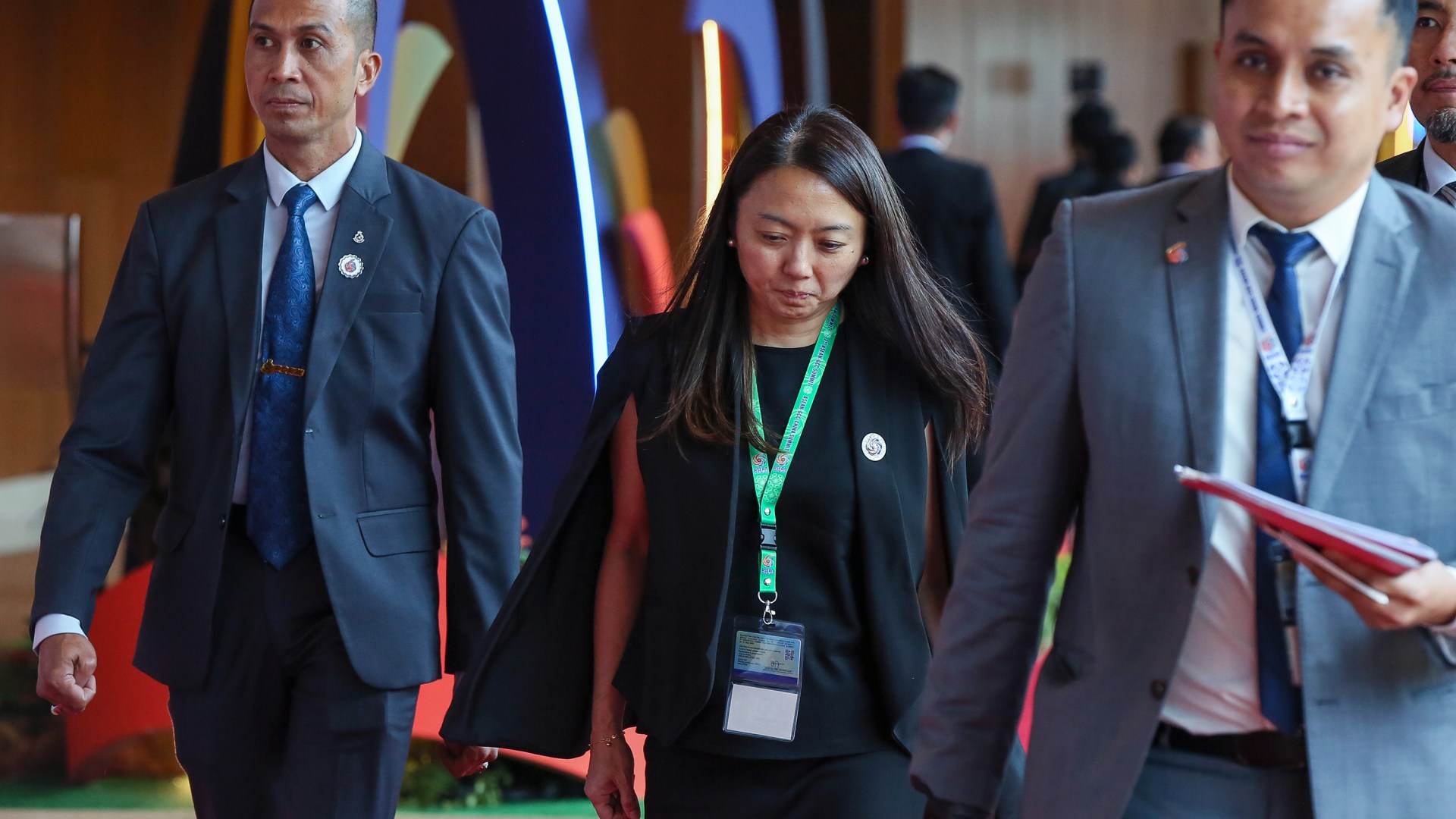
Hannah Yeoh, the Malaysia Minister of Youth and Sports, seen during the 46th ASEAN summit in May 2025.

Hannah Yeoh, the Malaysia Minister of Youth and Sports, seen during the 46th ASEAN summit in May 2025.

Christianity Today June 16, 2025
SOPA Images / Contributor / Getty

Malaysia cabinet minister Hannah Yeoh won a defamation case in late May against university lecturer Kamarul Zaman Yusoff, who accused her of using her memoir to turn Malaysia into a Christian nation.

The long-running suit, which Yeoh filed in 2022, centers on two of Kamarul’s Facebook posts from May 2017 that suggested she was “pushing a Christian agenda” through her political position. One of the posts specified Yeoh’s autobiography, in which she wrote about her faith journey and why she decided to run for office.

High Court judge Aliza Sulaiman ruled both posts defamatory and said they portrayed Yeoh as a threat to Islam, the predominant religion in Malaysia.

“In a multiracial and multireligious country where the issue of religion is, of course, very sensitive, [Kamarul’s] accusations can expose someone to hatred, ridicule and contempt,” Aliza said in her verdict on May 30.

The court ordered Kamarul, a political scientist at the Universiti Utara Malaysia, to pay RM400,000 ($95,000 USD) in damages to Yeoh. He plans to file an appeal against the decision.

The High Court’s ruling “finally vindicates me of these false allegations said about my book and my faith that I had endured for years,” Yeoh told CT in a text message.

“I trust fully in the Lord with the outcome. … Justice has truly been served.”

Christian scholars in Malaysia lauded Yeoh’s victory in the defamation suit even as the space for expressing non-Muslim viewpoints shrinks.


Yeoh, who was trained as a lawyer, entered politics in 2008 and is now Malaysia’s minister of youth and sports. As the rare Christian female politician in a nation where about 64 percent of the population is Muslim, the 46-year-old is no stranger to attacks.

At the center of the controversy is her 2014 book, Becoming Hannah: A Personal Journey. In it, Yeoh shares how her faith shaped her foray into politics—an about-face from her earlier desire to stay in Australia after her studies to practice law. Her Christian identity permeates the book, which quotes heavily from Scripture and details prophecies.

While testifying in November, Yeoh explained her reasons for writing the book. “Ever since I became a politician … a lot of churches don’t want to be associated with politicians,” she said. “In answering the call to serve my country via politics, I did not want to be a preacher anymore. But, many people wanted to hear my story on coming into a dark space to fight corruption [via politics].”

In January, a Kuala Lumpur police chief said 182 police reports had been lodged against Yeoh over her book, claiming it sought to “spread Christianity” and turn Malaysia into a Christian country. Several Muslim organizations had also called for the Ministry of Home Affairs to ban her book.

Last December, the High Court dismissed a separate defamation suit filed by Yeoh against former inspector general of police Tan Sri Musa Hassan over similar comments he made at a talk at Universiti Teknologi Mara. Yeoh claimed that he had accused her not only of using her book as a tool of evangelism but also of having connections with Christians and Jews who seek to undermine Islam and Malaysia.

A member of Malaysia’s Democratic Action Party (DAP), she first won a seat in Parliament representing her hometown of Subang Jaya at the age of 29. Some of the electorate derided her young age and inexperience and began calling for her to step down during her first term, she told the Singaporean Christian publication Salt&Light.

Yeoh admitted that at the time, she entertained the thought of quitting.

“Sometimes after obeying and saying ‘yes’ to God, there’s still the work to be done,” she told Salt&Light. “And the work is tough. Many times, I felt like giving up and even threatened God, saying: ‘I don’t want to do this anymore.’”

A pastor encouraged her to muster faith for the long haul, pointing her to how Jesus bore the cross for our sins even though many, including those closest to him, rejected him.

Five years later, Yeoh became speaker for Selangor State Legislative Assembly, making her the country’s first female speaker and the youngest to take on the role.

In 2018, Yeoh became deputy minister of women, family, and community development after the long-ruling Barisan Nasional coalition handed the reins of power to Pakatan Harapan, a coalition the DAP was part of. During this stint, she championed policies to end domestic violence, abandonment of babies, and child marriages.

At the time of writing, Malaysia still allows girls below the age of 18 to get married if permitted by the sharia court.

In 2022, Yeoh was appointed minister of youth and sports, where she has made it her mission to help Malaysia obtain its first Olympic gold medal.

Despite the challenges, Yeoh noted that it is important for Christians to participate in politics.

“If we stayed away, people will not see God,” she said in the Salt&Light interview. “I think the greatest mistake is to believe the Enemy when he says the church should never be involved in politics. It is not a defiled and dirty place where we can’t be a light. In fact, the darker the place, the easier it is for you to shine.”

Although the decision in Yeoh’s case makes it clear that unproven allegations about religious minorities will not be accepted in the court of law, the court of public opinion may hold a different view, said Malaysian human rights lawyer Andrew Khoo.

“As Kamarul Zaman himself is reported to have said, he saw it as his duty as a lecturer and a Muslim to inform the public of the book’s contents for fear that Christianity may influence them,” Khoo said. “This feeds into the contemporary narrative that Christianity is lurking in the shadows … taking every opportunity to sow the seeds of religious confusion.”

Even though religious freedom is a constitutional right in Malaysia, Islam is often seen as “the religion of the federation, while the others do not matter,” said Chris Chong, who teaches political science at Universiti Tunku Abdul Rahman in Petaling Jaya.

The constitution restricts the proselytizing of Muslims and prohibits ethnic Malays from converting to other faiths.

Both Chong and Khoo feel the space for interfaith dialogue and for the sharing of non-Islamic views has shrunk over the years.

“Such discourse is now often restricted to select groups and only in closed-door situations for fear of ‘confusing’ the public,” Khoo said. “Tolerance and sufferance [have] taken the place of acceptance, and religious diversity has increasingly been viewed as a threat to the majority religion.”

Culture
Review

Wes Anderson Finds God, Played by Bill Murray

The Phoenician Scheme is absurd and imperfect. It also takes faith seriously.

Mia Threapleton as Liesl and Benicio Del Toro as Zsa-Zsa Korda in The Phoenician Scheme.

Mia Threapleton as Liesl and Benicio Del Toro as Zsa-Zsa Korda in The Phoenician Scheme.

Christianity Today June 16, 2025
Courtesy of TPS Productions/Focus Features © 2025 All Rights Reserved.

I was hesitant to see Wes Anderson’s new movie, The Phoenician Scheme. (Props to the marketing team; the Instagram clips of Bryan Cranston doing a “classic backhand lay-up” got me to the theater.)

Still, I was skeptical as I settled into my seat. I’m familiar with Anderson’s quirky style; his cinematography and editing play starring roles in movies like The Grand Budapest Hotel and Fantastic Mr. Fox. The appeal of his work lies in its design sensibility and dry humor, its absurdity and creativity. 

But I also often find Anderson’s movies, including Moonrise Kingdom and The Wonderful Story of Henry Sugar, coast on looks without much character development or depth. The characters are often, well, characters—more tropes than real, complex individuals. (The exception is Isle of Dogs, one of my favorite films.)

For fans of the Anderson aesthetic, The Phoenician Scheme doesn’t disappoint. I was charmed by the title sequences’ choreography and set design. There’s some genuine hilarity, including a basketball game to settle a contract dispute. But once again, I found the main plot—a wealthy businessman (Benicio del Toro) with morally questionable strategies embarks on an industrial endeavor—to be less than compelling, another entry in the “rich-people-suck” genre. The industrial titans’ outbursts made me wince; watching these stock characters argue is like watching Elon Musk and President Donald Trump’s current social media spat

In short, this plot isn’t strong enough to carry the film’s deeper themes—what reconciliation looks like for a broken family, what faith means apart from monotonous practices or a solid moral code. The style of The Phoenician Scheme doesn’t match the substance. But that substance is still compelling. 

Underneath the wheeling and dealing is a more powerful story: The agnostic businessman’s relationship with his Catholic daughter, Liesl (Mia Threapleton), a novice nun about to take vows. Zsa-zsa asks Liesl to be his heir on a “trial period.” Curious to find out more about a family mystery, she agrees to follow her father around as he meets with business partners about a future industrial project. 

Conversations about faith lend Liesl and Zsa-zsa more heft than typical Wes Anderson characters—they’re able to access nuance and intimacy and even to change their minds. Zsa-zsa survives many assassination attempts; after each one, we see some glimpse of his heavenly judgment. (One scene involves him asking God, played by Bill Murray, questions about ethical business practices.) When Zsa-zsa returns to reality, he offers sentimental confessions to his business associates that ultimately prevail over his violent and deceitful tactics.

Something of a Paul on the road to Damascus, Zsa-zsa is the last man you’d expect to come to faith. But he ends up sacrificing his own fortune and employing more ethical business practices to fund a project he believes will help the country of Phoenicia. We see him do what the rich young ruler couldn’t (Matt. 19:23–26): He gives up his material desires for the greater good. 

Liesl is the lens through which her father is able to see faith differently; she’s often praying over conflicts and forgiving those who wrong her before they come to apologize. As the two get closer, she is able to accept his flaws while feeling more confident in challenging his violent, exploitative business practices. Though Zsa-zsa acknowledges that he’d like Liesl to leave the convent and be his permanent heir, he also gifts her a bejeweled rosary and asks her probing questions. He wants to support her future even if it conflicts with his desire for her life.

Toward the end of the film, Mother Superior (Hope Davis) insists that Liesl cannot take her vow because she is too attached to material things, like the bejeweled rosary. Shortly after, the head nun is paid off by Zsa-zsa and roped into his industrial scheme. It’s a painful reminder of the church’s shortcomings and its misguided push for institutional prestige and power. 

But The Phoenician Scheme isn’t just looking to point out the failures of the institutional church; it’s exploring, however glancingly, the struggles of the individual Christian life. When Zsa-zsa confesses to his daughter his desire to be a man of faith, she in turn confesses to him that no one answers. That’s a very relatable fear: What if God isn’t listening? 

For a moment in the theater, the dry humor, cynical side-eye, and quirky aesthetics faded into the background. I remembered my own experiences of doubt and God’s silence. Liesl’s reflection shook me: honest and genuine and, again, not what I’d expect from a Wes Anderson movie.

As a Christian, I’m often pessimistic about Hollywood’s engagement with religion. I assume portrayals will be unabashedly negative, as in Mickey 17’s harsh representation of prosperity-gospel teaching, megachurch pastors, and the church’s platform in American politics. Or I assume Christianity will be relegated to a mockable character trait, an archetype for hypocritical characters—think Angela from The Office and Marianne in Easy A—or ditzy ones, like Shirley in Community

Sometimes faith is less sinister conniving than outdated superstition. That’s the attitude of Han Solo in Star Wars and of another Harrison Ford cult-classic figure, Indiana Jones. But by the end of Raiders of the Lost Ark, Dr. Jones has changed his mind. In fact, I think that’s the kind of film The Phoenician Scheme could be understood as: a coming-to-faith testimony wrapped in an action-packed plot.

For us as believers, it can be disheartening to see movies that take a glib or combative approach to Christianity. On the one hand, we imagine how nonbelievers might understand any unfair critiques. And on the other, we’re ashamed of the all-too-fair criticisms they level. Financial corruption, sexual abuse, and spiritual manipulation are terrible realities; we have a responsibility to be honest about our sins, even if it’s painful to watch them on screen. 

But I also don’t want story lines about Christianity to be reserved for “faith-based” films. These stories preach to the choir (pun completely intended), and they aren’t the kind of movie I am going to with my nonbelieving friends here in Hollywood.

I left The Phoenician Scheme a little numb, still absorbing what I had watched. It took me a few days to realize the olive branch that had been extended to people of faith. The subtle conversion story almost got lost in the set design, editing, lackluster plot, and character-actor absurdity, as funny as Bryan Cranston might be playing basketball. 

But it didn’t get lost, not entirely—which means I can add this film to the encouraging examples of recent movies and television series that take faith seriously, projects like A Real Pain and MinariNine Days and First Man, Women Talking and ConclaveSeeing big-name directors like Wes Anderson engage faith in their stories is surprising and refreshing and reminds me to check my assumptions about the film industry writ large. The Phoenician Scheme, while not the most obvious or richly emotional come-to-faith story, gives me hope that we will continue to see more authentic and serious displays like it.

Mia Staub is editorial project manager at Christianity Today.

Ideas

The Millennial Dad Dividend

Staff Editor

Every young father I know is a great dad. I think it’s a major sign of hope.

A cutout image of a father holding their child, with cutout hearts and stars around them.
Christianity Today June 13, 2025
Illustration By Elizabeth Kaye / Source Images: Unsplash

Earlier this year, a new acquaintance asked what signs of hope I see for our society. It’s easy enough to list what’s wrong, he observed. We all play the critic. But what’s good and getting better? What’s encouraging?

For a moment, I was flummoxed. My first ideas didn’t seem serious enough for the conversation we’d been having. Then it came to me: the dads.

Without exception, every millennial and zoomer dad I know is a great dad. I know that’s anecdotal, but there are numbers to back this up, and I’m not alone in noticing that something here has shifted. Yet I don’t see much attention to what this shift will mean long-term. What harvest will we reap in 20, 30, 40 years from today’s good fathering? How will the dad dividend pay?

I don’t want to overstate the change at hand. There are good fathers in every generation and plenty of bad ones kicking around now. But I’m confident the difference I see is real and will prove important.

Here’s what this looks like in the data: American dads are spending more time with their kids. Compared to just five years ago, millennial fathers specifically “are doing 17 more minutes of [child] care per weekday and 32 more minutes per weekend day,” as The New York Times’ Jessica Grose recently reported, “for a total of 2.5 hours more child care a week.” That stacks on similar growth at the start of this century and the end of the last. Men are doing more around the house, too, and support for paternity leave is also rising.

Here’s what it looks like on the ground: “Millennial fathers—at least the ones I hang around—are more interested in being great fathers than anything else in life,” in the words of Andrew O’Donovan, who writes about modern fatherhood on Substack. “In the case of almost all of these fathers, they came from broken homes, homes with absent fathers, homes with angry fathers, homes with emasculated fathers, or homes with a smattering of any of the above. We’ve known for some time that [we] want to be better fathers.”

In my observation, they’re succeeding. When the dads in my circles take their kids out without the moms—and they do, and it’s not “babysitting”—they don’t need to be handheld about what the baby’s eating these days or where to find the swimsuits. They know. And they know how to phone the pediatrician and how the church nursery works and what makes their toddler feel better when he has gas.

Beyond knowing, they do. They change diapers and handle bedtime, answer teacher emails and go to medical appointments. They don’t need to be persuaded to avoid a time-suck commute if feasible, or to take as much paternity leave as they can, or to be as helpful as possible during the birth and the newborn period. They may be professionally accomplished and ambitious, but it doesn’t come at the expense of their families.

Time spent on chores and childcare may or may not be evenly split between spouses, depending on a given family’s work arrangements. A homeschooling mom, for instance, will almost always spend more time with the kids than her formally employed husband, and mothers tend to gravitate toward jobs with more flexible schedules. But however those roles shake out, the dads I know are true partners, neither dominating their wives nor expecting them to manage the household alone. They do not wall off whole swaths of parenting and family life from the male purview. They do not utter the dread phrase I’d help if you’d just tell me what to do.

And it’s not only the responsible side of child-rearing in which these dads excel; just as significant is that they have friends and hobbies. They watch sports, go to concerts, and enjoy a beer. They exercise, join book clubs, learn new skills, and actively cultivate their marriages. They’re enthusiastic about their churches and small groups. And crucially, they do all this in front of their kids. They model fatherhood as a life of rest along with work, play along with discipline, joy along with duty.

These dads make parenthood look natural and normal, not the death knell of fun and freedom. They father in a way that debunks the inequality of mothering and fathering as verbs, the one commonly used to mean lifelong care and the other the act of a single night. They delight in their kids and show them that this delight does not subsume all the other goods of life. They demonstrate daily that entrance into fatherhood, while not always easy, adds far more than it takes.

Now, again, many men in older generations were excellent fathers, and the time-use improvements aren’t equally distributed. Dads who don’t marry or go to college are not increasing their weekly childcare time, and changing attitudes around cooking in particular suggest that religiosity strongly correlates with willingness to help around the house. (And many millennial men, of course, are not becoming dads at all.)

In other words, the dads I know—dads who are, almost universally, married college grads who go to church every week—are to a degree exceptional. What I’m seeing in my husband and our friends and family is not the average.

Yet neither is it some wild outlier, and even if only a minority of dads are as dedicated to good fatherhood as my dad friends are, that still matters. That will still change things.

How differently will my sons and my friends’ sons think about fatherhood because of the fathers they know now? Perhaps they will be less ambivalent about the whole project of becoming parents than our generation has been.

Or how differently will our daughters think about marriage, about trusting someone enough to take the plunge of raising children together? Perhaps they’ll take vows with justifiable assurance that, as O’Donovan proclaims, the “Homer Simpsonification of the modern father is dead.”

And how differently will all these children think about God if their earthly father, though imperfect, is an aid instead of a hindrance to understanding the Father’s love?

We cannot help but draw the connection, I suspect, and surely we are intended to draw it. Jesus did in the Sermon on the Mount. “Which of you, if your son asks for bread, will give him a stone?” he asked. “Or if he asks for a fish, will give him a snake? If you, then, though you are evil, know how to give good gifts to your children, how much more will your Father in heaven give good gifts to those who ask him!” (Matt. 7:9–11).

How much more will a generation shaped by good dads multiply the good gifts they’ve received? I wait in hope to see it.

Bonnie Kristian is the editorial director of ideas and books at Christianity Today.

Culture

The Silent Jesus Movie That Became a Blockbuster

‘The King of Kings’ put artsy visual techniques to exalted effect. It’s just been rereleased.

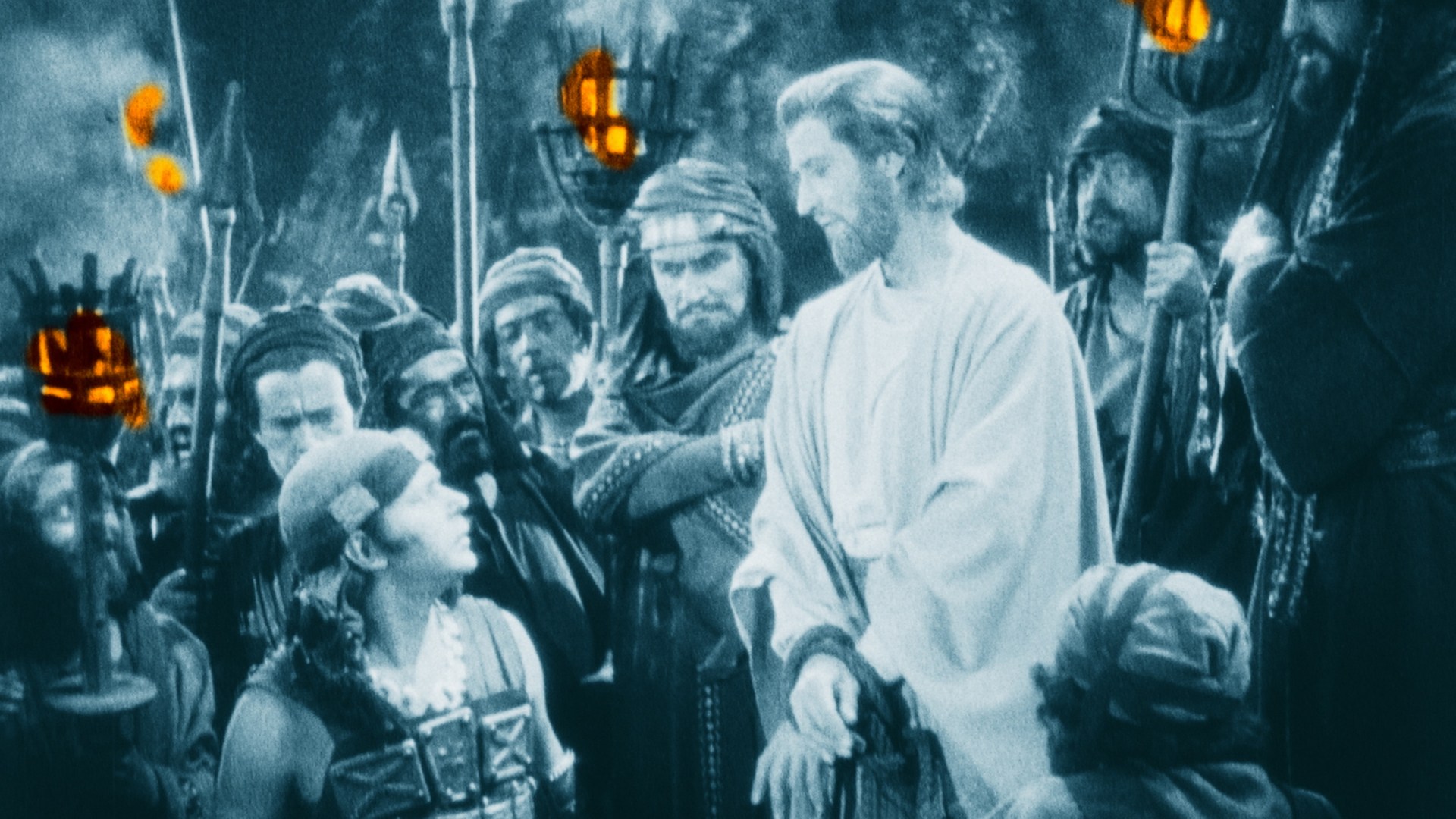
Jesus being betrayed by Judas

H.B. Warner as Jesus in King of Kings.

Christianity Today June 13, 2025
Courtesy of Flicker Alley

Jesus of Nazareth is trending. The fifth season of The Chosen—the first multi-season series about Christ and the disciples—is about to drop on Prime Video. The King of Kings—a Korean animated feature released in the US via Angel Studios—is now streaming on video on demand after grossing $66 million in theaters. Mel Gibson is gearing up to shoot his sequel to The Passion of the Christ in Rome’s Cinecittà Studios this summer. And Terrence Malick is in post-production on The Way of the Wind, which features Jesus as a main character. (Alas, Martin Scorsese’s The Life of Jesus, an adaptation of Shūsaku Endō’s biblical novel, has been postponed indefinitely.)

The popularity of Christ as a screen subject is a matter of record—according to Guinness World Records, he is the fourth-most-portrayed character in film (behind the Devil, Santa Claus, and the Grim Reaper!). What is less understood is that all these representations are descendants of the first mainstream Hollywood retelling of Jesus’ life and ministry: the 1927 silent epic The King of Kings. The domestic Blu-ray debut of Cecil B. DeMille’s seminal blockbuster provides a convenient opportunity to revisit the defining Jesus film of the 20th century.

Before movies could talk, Jesus attracted the attention of some of the world’s most successful film artists. Alice Guy—the first woman to direct a movie—refashioned the Passion play into a series of striking tableaux for her 1906 production, The Birth, the Life and the Death of Christ. A decade later, D. W. Griffith dramatized the persecution and death of Jesus as one of four parallel story lines in his magnum opus Intolerance

Introducing Jesus to a new generation of moviegoers was a task Cecil B. DeMille undertook with the utmost sincerity. The autocratic 46-year-old director had risen to the top of Hollywood after a series of sophisticated boudoir comedies, the popularity of which led to the formation of his own production company. His 1923 drama The Ten Commandments represented his first foray into biblical adaptation, though it is properly understood as a modern melodrama featuring an extended prologue about Moses and the Egyptians.

DeMille showed interest in an adaptation of the Genesis flood narrative but abandoned the idea once he learned that Warner Bros. was preparing Noah’s Ark, a production that would soon become notorious for the accidental deaths of three extras during the shooting of the climax. Presented with the idea of fashioning a large-scale retelling of the life of Christ, DeMille turned to his trusted scenarist Jeanie MacPherson to develop what he hoped would be, in his own words, “the greatest love story ever told.”

In separate biographies, writers Robert S. Birchard and Scott Eyman each recount, in amusing detail, the making of The King of Kings. From the start, DeMille’s goal wasn’t merely to entertain the masses but to educate them. (The opening title card explicitly situates the film within the context of the Great Commission.) He took pains to present the gospel narrative in a way that would not offend sensitive viewers and was especially careful in his depiction of the Jews, laying the blame for Christ’s death on certain individuals—namely Judas and Caiaphas—rather than an entire people group.

DeMille was also acutely aware that poor behavior from his cast and crew during production could translate into a public relations nightmare, and he strictly forbade foul language, blasphemy, and smoking on set.

For the title role, DeMille chose H. B. Warner, an English-born actor whose stage and screen career had been waning. (Contemporary viewers might know him best as Mr. Gower, the pharmacist who slaps young George Bailey in It’s a Wonderful Life.) At 50 years old, he was certainly among the most mature of all onscreen Christs. Fine-boned with warm, interrogating eyes, Warner exudes a graceful physicality, and while his movement comes across as stylized and theatrical, he still looks “right” for the role. DeMille was fully aware that this performance would be taken as the definitive screen portrait for a generation. “The visual impression of Jesus is going to be planted in the minds of people by the man who plays Jesus in this picture,” he said.

Filming lasted several months—the crucifixion scene alone took two weeks, wrapping on Christmas Eve—and cost a reported $2 million, though the budget was likely inflated, with funds diverted to keep DeMille’s flagging studio afloat. But the movie became the third-most-popular release of 1927—behind Wings (the first Oscar winner for Best Picture) and The Jazz Singer (the film that ushered in “talkies”). Despite DeMille’s attempts to circumvent charges of antisemitism in his depiction of the Pharisees, the Jewish press objected to the portrayal of Caiaphas as a money-grubbing Christ killer, which led Paramount to re-edit the film for general release. (Both versions are available today.)

To watch The King of Kings in 2025 is to appreciate that silent film has a language and syntax of its own. Jesus’ first appearance, his face gradually coming into focus as a young girl’s sight is restored to her, is an exercise in radical subjectivity that puts the viewer on the receiving end of a miracle. The addition of spoken dialogue—if it were technically feasible at the time—would have been a distraction, shattering this delicate reveal.

The sequence is followed shortly after by a scene in which Mary Magdalene is cleansed of her demons, each personified as one of the seven deadly sins and rendered ghostly through double exposure. Such bold stylistic choices demonstrate the primacy of visual storytelling and give credence to critic Susan Sontag’s observation that “with the coming of sound, the image making lost much of its brilliance and poetry.”

In the 1920s, as more light-sensitive panchromatic film stock became available, “soft style” cinematography began to change the look of films. Throughout The King of Kings, Christ is depicted as a being of light, emphasized by the translucent glow that emanates from his snow-white tunic. Taking John 8:12 literally, his skin seems to emit a supernatural radiance, and the bright band of light that appears around his face and head—achieved by a photographic effect called, appropriately enough, a halo—turns him into a living fresco.

If the very nature of film depends upon light, what better subject than the Light of the World? In The King of Kings, the beauty of Christ and the beauty of silent film meet on an exalted plane of cinema art.

Ironically, DeMille’s intensely pictorial rendering of the Gospels has the effect of making the plot—the actual scene-by-scene progression of the story—feel heavy and plodding, which explains why the film could be a tough sell for the distracted contemporary viewer. The Chosen relies as much on dialogue as DeMille’s film does on visuals, and is therefore much friendlier, more digestible, to a modern audience.

For its time, however, The King of Kings was considered quite modern. As Stephenson Humphries-Brooks notes in his survey Cinematic Savior, DeMille’s Jesus is directly addressing the sins and excesses of a decadent America still in the thrall of the Jazz Age. The final image—in which the risen Christ, ascending into heaven, hovers over a modern industrial skyline—bends time and space to remind viewers that the Lord is as present in the here and now as he was in ancient Judea.

Nearly a century has passed since The King of Kings premiered at Grauman’s Chinese Theatre. What will audiences make of it nearly a century later? Flicker Alley’s new Blu-ray release, which showcases a recent restoration by Blackhawk Films, a new score by Robert Israel, and a host of bonus material, calls for a fresh assessment. The luxurious two-color Technicolor sequences have been burnished to a brilliant finish. (The Resurrection alone is apt to widen a few eyes with its lustrous red and green hues.) It supplies yet more evidence—as if any more were needed—that art can sometimes take us, as Aleksandr Solzhenitsyn put it in his Nobel Prize acceptance speech, into a realm “beyond words.”

Nathaniel Bell manages the internship program and teaches film history for the Snyder School of Cinema & Media Arts at Biola University. He lives in Whittier, California, with his wife and three sons.

Culture

Teach Us to Number Our 18 Summers

As a mom, I found pressure—and then freedom—in counting the years with my children.

A child and mother walking on a calendar
Christianity Today June 13, 2025
Illustration by Mallory Rentsch Tlapek / Source Images: Pexels

Fireflies played hide-and-seek at the edge of the woods as my three best friends and I prepared to spend the night in a small blue tent under the stars. It was late August, and we were celebrating my 12th birthday at my house in the suburbs of Philadelphia, where cornfields and dairy farms surrounded hilly residential roads like mine.

A photo from that night shows four smiling, sunburned faces glowing in the lantern light. I have bangs and braces, and I’m sporting denim overalls with a fuchsia T-shirt, matching pink socks, and white Keds. My friends and I were thrilled to be camping out “all by ourselves” (a stone’s throw from my parents’ open window).

Earlier that evening, after a hike through the woods, each one of us had been inexplicably pelted with something like warm raindrops, despite clear skies. As we tried to puzzle our way through the mystery, my mom casually mentioned the little brown bats fluttering overhead, knowing the slightest insinuation would be enough.

“Ugh, it’s bat pee!” we screamed, running for cover. I still laugh when I think about discovering my dad’s dark silhouette in the upstairs window. He always was a great shot with a water pistol. The warm water really clinched the deal.

Looking back on a childhood full of happy summer memories, that August night stands out as one of the most joyful. It wasn’t elaborate or expensive. It would not have been Instagram-worthy. And the best parts were unplanned.

Why, then, do I find myself fighting the urge to meticulously craft an unforgettable summer for my own children? And why is my focus so often diverted to travel websites, theme-park reels, and listicles like “137 Ways to Have an EPIC Summer with Your Kids”?

I’ve been a Christian my whole life. I know that nothing in this world will ultimately satisfy me or my children. But I’m continually sidetracked by a desire to be their maker of memories and facilitator of fun—as if my God-given title of mother isn’t enough.

A Motherly article originally published in 2018 offers some insight into the parenting zeitgeist. The headline and deck read, “We only have 18 summers together with our kids. But I’m determined to make the most of it.” A young mom describes how her heart sank when she realized that the clock is ticking. She resolves to squeeze in as much summer fun as possible before her toddler grows up.

An accompanying Facebook video has received millions of views. It’s one of countless “18 summers” posts that pop up every year. At their best, these posts are meant to encourage parents to savor their little ones’ childhood. At their worst, they prey on our emotions, inciting guilt, anxiety, and a willingness to click on whatever product or experience promises to assuage the panic. If you’re thinking, Get off social media, I’m with you. But you don’t have to be on Instagram to feel the pressure. It’s in the air.

I stood next to the concrete sandbox last week, chatting with a group of moms while my toddler coated herself in dirty Brooklyn playground sand. One friend told me she dreads the ubiquitous question “What are you doing this summer?” She worries she hasn’t planned enough activities for her kids. She’s not alone.

Many parents and children are battling anxiety already. For most of us, the idea of counting summers is just one more unwelcome source of pressure. It would be easy to reject the whole concept, to dismiss it as another example of the monetization of childhood.

At the same time, I think the “18 summers” narrative can go deeper than dollar signs. “Teach us to number our days, that we may gain a heart of wisdom,” Psalm 90:12 tells us. Perhaps adding up summers is a way of acknowledging not just the brevity of childhood but also the impermanence of our own lives. For followers of Christ, this can unleash a sense of freedom where our culture sees fear.

As I pondered the nine summers I’ve experienced with my son and the three I’ve had with my daughter, a few takeaways surfaced. I hope to tuck them away in my travel bag between the sunscreen and bug spray as my family prepares for another season of long, hot days and short, muggy nights.

First, I can’t plan my way to peace. And believe me, I’ve tried.

Seven years ago, when my husband and I left the suburbs of Charlotte to move to New York City with our two-year-old, I devoured blog posts with curated lists of kid-friendly parks, cafés, and museums. Soon I was dragging our jogging stroller down steep flights of subway stairs and pushing our son across the five boroughs from Monday to Friday. 

At the time, I wouldn’t have admitted that I was lonely. Unsure of myself as a new parent in an intimidating city, I responded by filling every minute with activity. Meanwhile, my connection with God faded into the background like the hazy Manhattan skyline. Sure, we went to church each Sunday, but when Monday arrived, the daily grind of freelance work, potty training, and chasing the perfect outing crowded my waking hours.

I researched, planned, and scheduled. Tomorrow I will go to the zoo, carry a backpack full of 3.2-ounce applesauce pouches, and make wonderful memories with my kid. Enter the Book of James: “Why, you do not even know what will happen tomorrow. What is your life? You are a mist that appears for a little while and then vanishes” (4:14).

These days, I enjoy large swaths of unscheduled, unhurried time with my kids. I still love a good outing, but I’m far more likely to choose rest over exhaustion.

A certain amount of summertime planning is of course necessary. My husband and I are both juggling careers and family life. But control is an illusion. We can’t even bank on 18 summers. I hope we have that much time and more as a family, but my job is to trust God one day at a time. That helps take the pressure off.

Second, I wholeheartedly resist the urge to compare my life with anyone else’s. That’s easier said than done, especially for millennial moms like me and young Gen Z parents. I’ve seen “18 summers” used to hawk everything from luxury vacations to $800 electric balance bikes for toddlers. Those particular temptations don’t grab me, but I still battle envy when friends head to summer homes or embark on cross-country adventures. I’ve spent beyond our budget to book short getaways, telling myself we deserve to escape the city for a little while.

Vacations can be wonderful opportunities to rest, rejuvenate, and reconnect as a family. But if I’m living for the next vacation, I’ve slid into idol territory and need to search my heart for the source of discontentment.

We all know that social media is a highlight reel and often a place to show off. I can quickly find myself along for the ride on another family’s vacation, a bit creepy at best and covetous at worst.

I asked Trillia Newbell, an author and Christian mom of two teenagers, how she handles the summertime comparison game. Her advice for parents of little ones is this: “Take the pressure and the burden that you are feeling and cast it on the Lord. And ignore the voices that aren’t helpful.”

And she added, “Encourage one another” (1 Thess. 5:11). I can get so caught up in the pressures of parenting that I forget to build others up. Trillia reminded me that the mom who appears to have it all together is fighting internal battles just like the rest of us.

Speaking of battles—my third takeaway is the most intense. As I count my summers, I must remember that time is not my enemy. But I do have a very real adversary.

In their book Risen Motherhood, Emily Jensen and Laura Wifler describe the cosmic battle between good and evil in terms every parent can understand.

It’s a bit like being downstairs quietly washing dishes … while upstairs the kids are in a Nerf gun battle. … We feel like time is quietly passing, but in reality, an epic war is raging right over our heads. Only the sounds of furniture bouncing and ceiling joists shaking cause us to look up with wonder.

The whole of the Bible makes it clear that “we do not wrestle against flesh and blood” but against “cosmic powers” and “spiritual forces of evil in the heavenly places” (Eph. 6:12, ESV). Jesus warned against Satan’s lies and healed the demon possessed. But invisible cosmic battles can feel unreal in the midst of the everyday chaos of parenting.

“We see the light fixture shake and sense that something is wrong,” the authors of Risen Motherhood write. “The echoes of concern stir our souls, causing us to second-guess our reality. But Satan makes every effort to distract us, conceal the real battle, and lead us off course.”

When I treat time as my enemy and ignore the real battle, I’m tempted to cram as many experiences as possible into these short years with my children. Regret is the ultimate dirty word. Heaven forbid that I regret not booking that vacation, signing up for that camp, recording that vertical video.

As the cares of the world pull me down, distracting me from what’s truly important, my heavenly Father looks on me with mercy, compassion, and unfathomable love. I don’t have to perform to earn his favor. I just have to love God and those he has placed in my life and teach my children the truth that will set them free.

“Mama, will you sing?” my sweet boy asks me from the top bunk as I lay below, next to his little sister. I’m exhausted, but I sing until they fall asleep. Most nights, “Amazing Grace” is part of the lineup. I love the final verse:

When we’ve been there ten thousand years,
bright shining as the sun,
we’ve no less days to sing God’s praise
than when we’d first begun.

Eighteen summers will be gone in the blink of an eye. Perhaps someday I’ll wish I could transport myself back to the bunk bed in our small apartment. But I’ve put my hope in Christ, and because of him, I don’t have to fear the passing of time or my own mortality.

Bring on the summertime, the campouts, the bat pee. It will all go by too fast. But the clock is ticking toward a new beginning—a reality far more joyful than the most perfect summer.

Kristy Etheridge is an editor at Christianity Today.

Books
Review

Godly Homes Need More Than Godly Routines

Phylicia Masonheimer is right: Household disciplines can encourage faithfulness. But they can also encourage idolatry.

Christianity Today June 13, 2025
Illustration by Elizabeth Kaye / Source Images: Getty

If you, like me, do not yet own a shiny robot from Elon Musk, you probably do your own dishes, vacuum your own floors, and tackle your personal Everest of laundry. In Every Home a Foundation: Experiencing God Through Your Everyday Routines, Phylicia Masonheimer helps cast a grander vision for the endless counter wiping and meal prepping that can bury us in mundanity. 

As Masonheimer describes it, our work in the home is not simply a list of drudgeries that prevent us from undertaking work of real eternal significance. Her book invites us to pursue household labor as a practice of faithful stewardship, ruling over it rather than being ruled by it.


Masonheimer is the founder and CEO of the ministry Every Woman a Theologian. She hosts the Verity podcast, as well as a conference of the same name. She has authored several dozen booklets on various topics ranging from purity culture to the end times, plus a few full-length titles. She lives with her three children and husband on a farm in rural Michigan.

Every Home a Foundation is divided into two parts: “A Theology of Home” sets the framework for how our homes shapes our lives as believers, and “A Liturgy of Home” explores homemaking systems and strategies. 

In the opening pages, Masonheimer tells her story of becoming a stay-at-home mom after a decade of extensive work-related travel. Amid the culture shock of this transition, she came to realize that her identity had been wrapped up in productivity. Vanity, desire for recognition, and the influence of social media had caused her to see home as an impediment to a fulfilled life rather than a pathway to it. “Idolatry of work cannot coexist with a strong theology of home,” she candidly writes. 

The truth that changed everything was a biblical theology of home. As Masonheimer describes it, this theology “teaches us God’s desire for and purpose within the places we live. … [It] is simply God’s perspective and heart for how His children experience homelife.”

Masonheimer starts where the idea of home was born: in the Garden of Eden. God placed Adam and Eve in the garden to rule and keep it. But this home was tainted by the Fall, and its inhabitants were banished from God’s presence. God then called Israel to be his special people and to live in fellowship with him. But once again disobedience brought about eventual exile. 

Interestingly, Masonheimer makes no mention of the tabernacle or temple, where God’s presence specially dwelt and where he met with his people. Instead, she writes, the revelation of God’s character “was communicated to families in their homes—not in church buildings—as they lived, worked, and worshiped together.” This comment appears misleading since divine revelation happened almost exclusively in gathered assemblies, as with the giving of the law at Mount Sinai, regular rituals of temple worship, and prophetic declarations. 

Masonheimer goes on to trace the history of home “coming out of the medieval era.” But these sections neglect any reference to the Reformation, which dignified ostensibly secular forms of work, including homemaking, through the concept of the priesthood of all believers.

From here, Masonheimer turns to the consequences of the Industrial Revolution. This social shift disrupted patterns of investment across generations in the skilled art of keeping a home and taught women to seek emancipation through professional labor. Over time, the art of keeping a home shrunk down to the drudgery of keeping human beings fed and clothed as efficiently as possible. Today, we often view it merely as a place to recharge before rushing back into “real life.”

How can we restore the glory of homemaking in a culture that often demeans it? As Masonheimer is quick to point out, this won’t happen merely by jumping on the “tradwife” bandwagon. The crucial task, she argues, is relearning the truth that our homes aren’t primarily our own: God has entrusted them to us so we might use them for his kingdom’s sake.

“By seeing our home rhythms as an act of service,” Masonheimer writes, “we move outside ourselves to a selfless point of view. … I’m not just cooking dinner; I’m giving my time to those in need of food. The work of the home is an act of love for our closest neighbors: those who live within our walls.” By contrast, discontentment shows distrust in God and handicaps our ability to care for the home he provides. “Stewardship grows diligence, patience, and a grateful heart, she writes. “Loving the home you have is an act of defiance against discontent.”


Here, Masonheimer sounds an important note: The home lies at the headwaters of effective ministry. Through it, we minister not only to those around us but also to ourselves. “We resent the repetitive nature of it,” she admits.

But what if the repetition is exactly what we need? We despise the dirtiness of it, but what if this selflessness is the shaping of our character? We hate that it is unseen and uncelebrated, but what if this hiddenness is teaching us humility? … If all work matters to God, and God Himself is a worker, it follows that the simple tasks of our everyday life matter to Him.

In affirming this truth, Masonheimer strikes back at one byproduct of our modern secular age: its habit of hiving off God and religion from almost all of our actual living. This mindset pervades many Christian homes, which can easily resemble secular ones except for the occasional trip to church. But the God of the Bible, as Creator and Redeemer, cannot be held within such bounds. He is never absent from even the smallest details of our lives. 

Only by refusing this artificial compartmentalizing of the sacred and the ordinary, Masonheimer argues, can we learn to recognize God’s presence in the work, often outwardly unfulfilling, that upholds our homes. This leads her to recommend home-based “liturgies” that can restore a sense of sacred purpose and meaning. Liturgy, as she defines it, “is a physical action leading to communion with God,” and “through liturgies of the home, we experience a deeper intimacy with God because these daily acts are a form of worship.” As she emphasizes, “liturgy is not something trapped within a church building; it is the pattern, the expected trajectory, of Christian life.”

This is clearly true in one sense. As the Reformers affirmed, all of life is lived coram Deo, or before the face of God. Yet this understanding of liturgy also tempts Masonheimer, at times, to downplay the church more than she should. At one point, she writes that reclaiming the dignity of homemaking “doesn’t begin in a church building; it begins with the rhythms of faith at home.”

She repeats this juxtaposition elsewhere, saying that spiritual discipline “does not begin in a church building or a Bible study group.” In her desire to extend Christian practice beyond Sundays and church buildings, Masonheimer risks dulling the vibrant reality of the church itself.

Though present everywhere, God chooses to meet with his people in a unique way when they gather in his name (Matt. 18:20). Most fundamentally, our callings flow from our identity as the set-apart people of God who sit under the authority of his Word. Seen in this light, the identity of any Christian family shines brightest within the gathered people of God, not in contrast to it. 

The goal of the Christian home is raising up a new generation of worshipers. In this vision, our homes are outposts of this kingdom, but only the church itself is built with the living stones of faithful servants. Christ is not the cornerstone of “every beautiful thing we build,” as Masonheimer claims, but of the church, which God is building with blood-bought believers (Heb. 9:11–28). 

In fairness, Masonheimer clearly affirms the church as an antidote to Western individualism. She gives readers an appealing tour of the church calendar, showing how families can mark days, weeks, and months by celebrating the history of redemption. But her appeal to church tradition, though welcome, can obscure the centrality of regular Sunday worship in marking what she calls “the sacred nature of time.”


Masonheimer’s emphasis on home routines occasionally leads her book in other questionable directions. To take one example, this emphasis can elevate matters of outward discipline and order above the posture of our hearts.

To Masonheimer, discipline is hardly a dirty word. By embracing and cultivating it, she argues, we establish something beautiful and, by God’s grace, eternal. She describes regular habits of Bible study, meditation, and prayer as bringing renewed vitality to our work, relationships, and physical health.

“When we live without boundaries,” Masonheimer writes, “we constantly experience the unwanted consequences of our actions. … Undisciplined people experience the most bondage—bondage to stress, overwhelm, fear, and chaos.” But setting such boundaries will accomplish nothing without an underlying change of heart. In fact, Jesus pointed to self-righteousness, not lack of discipline, as the most enslaving spiritual position (Luke 18:9–14; Matt. 19:16–22; Luke 5:31–32).

A disorganized home might mask disorder at a deeper level, but an outwardly organized home can be equally disordered. Masonheimer writes skillfully to those unaccustomed to exercising practical dominion in their homes. Yet structure and routines can easily become idolatry, especially to the task-oriented. 

Christianity’s claim is not that better systems and routines can solve our sin but that only Jesus and his forgiveness can effect lasting transformation in our hearts and homes. If our goal is faithfulness to Christ rather than fruitfulness of our own making, we must guard against building household structure simply to feed idols of control or measurable success.

More concerning than Masonheimer’s approach to household discipline, however, is her occasional mishandling of Scripture and biblical principles. In one instance, she distills Christianity to Romans 12:21 (“Do not be overcome by evil, but overcome evil with good”), which misses Jesus’ atoning work for sin. Similarly, her list of the “lasting values of the Christian faith”—which includes “compassion,” “benevolence,” “generosity,” “forgiveness,” and “hospitality”—could easily be equated with simple moralism.

Though the Bible dignifies all ordinary work, Masonheimer sometimes writes in a way that elevates it far beyond scriptural warrant. “The spiritually disciplined home life is, in itself, freedom,” she writes in one place. Elsewhere, citing Psalm 51:12, she claims that “repeated tasks, when understood through a lens of sacred purpose, restore to us the joy of our salvation,” an outrageous promise given that this passage concerns David pleading with God for divine forgiveness after his adultery with Bathsheba.

At one point, Masonheimer grants that “cleaning a home is not sacramental” in the sense of mediating God’s presence. A later passage, however, appears to describe housework as a channel of special revelation: “These daily tasks are not in the way but are the way to truly knowing God’s love, brought down in humble form to the ‘manger’ of the mundane.”

God has promised that his Word will not return void (Isa. 55:11). To which Masonheimer boldly adds, “Your effort to break the chain of unhealthy home rhythms and unsafe home cultures will never return void, and God is your cheerleader every step of the way.” Yet God gives no such guarantee to our own flawed labors, insisting instead that “unless the Lord builds the house, the builders labor in vain” (Ps. 127:1).


Every Home a Foundation is deeply personal. Masonheimer fills her pages with stories, memories, poetry, and home rhythms. The book achieves a seamless blend of the landscape, history, understanding, and personality that make her life and her spiritual guidance appealing to many.

At times, however, the book can slip too readily into the mode of modern “influencer” culture. The sheer volume of autobiographical stories and details can communicate the first part of Paul’s instruction in 1 Corinthians 11:1 (“Follow my example”) while downplaying the second (“as I follow the example of Christ”).

Home matters to God, and it should matter to us. Masonheimer has crafted a compelling argument to that effect, even if it sometimes strikes confusing notes. Every Home a Foundation affords a valuable glimpse into her life, from her own perspective at a particular moment in time. At the end of the day, however, we are all responsible for living out the truths of God’s Word among communities of fellow believers. With their help, we can trace furrows of faithfulness in the fields given by God, in whose sacred presence we live out every moment of our ordinary lives.

Simona Gorton is a writer living with her husband and three children in Harrisburg, Pennsylvania. She is the author of Mothering Against Futility: Balancing Meaning and Mundanity in the Fear of the Lord.

News

Fighting for Nigeria’s Pro-life Soul

A Christian doctor pushes back against efforts to make abortion legal.

Pro-life protesters hold placards during a peaceful rally in Nigeria.
Christianity Today June 13, 2025
NurPhoto / Contributor / Getty

A teenage girl sat hunched on a chair in a small, sterile consulting room at Umaru Shehu Specialist Hospital in Maiduguri, Nigeria. Her hands trembled as tears streamed down her face. Her eyes were red and swollen. Words tumbled out as she pleaded with the doctor, explaining her fears of an unplanned pregnancy and a future she felt unprepared for.

During the first three years of gynecologist Dr. Shiktira Kwari’s practice, several other women approached her with the same request: Please perform an abortion.

“I always use that opportunity to talk to them about God’s plan for our lives and what the implication of their action [aborting the baby] is going to be,” Kwari said. “I always let them know that I have a moral and a personal belief against termination of pregnancy. I cannot offer them [an abortion], and I cannot also refer them to where they can get one.”

Kwari’s Christian faith influences not only her personal life but also how she conducts her medical practice. In addition to refusing to offer abortions, she counsels the teens and married women she cares for at Asokoro District Hospital Abuja.

“The number of women approaching me now has reduced drastically because they already know my stance,” she said.

But Kwari said she’s concerned about the efforts of pro-choice organizations to create more cultural acceptance and access to abortion in Nigeria. She believes pro-choice efforts have intensified with the rise of social media. Both Nigerian and international feminists have become more assertive with claims that Nigeria’s laws restricting abortion are against women’s rights.

In Nigeria, abortion is illegal except in cases when it may save the woman’s life, such as an ectopic pregnancy or eclampsia. Morally, though, Kwari doesn’t count those situations as abortions.

“Ectopic pregnancy is also life-threatening. … If you don’t do the surgery and remove the baby wherever it has implanted, that woman is going to die,” Kwari said. “So I cannot say, ‘Oh, I’m a Christian, I cannot do this,’ and then I’ll watch the woman die. So in situations like that, of course, we intervene. And that is acceptable by law.”

The law allows sentences of up to 14 years in prison for performing an illegal abortion and up to seven years for seeking one. Still, abortions are common, and the law is enforced inconsistently. Between 1.8 and 2.7 million women and girls seek abortions every year, often through unregistered abortion clinics. While cases of women charged with procuring an abortion are hard to find, authorities did recently charge a doctor and family member for giving a 10-year-old girl an abortion to cover up her sexual assault.

For years, International Planned Parenthood Federation affiliates and other pro-choice organizations have tried to influence changes to Nigeria’s abortion policies. Their efforts include influencing the nation’s health ministers to favor abortion rights.

In December 2024, Catholic activists with CitizenGO Africa protested efforts by Nigerian health ministers Mukhtar Yawale Muhammad and Osagie Ehanire to revise the penal code to allow more abortions. The activists criticized foreign nonprofits such as Ipas Nigeria Health Foundation for pressuring the Nigerian government to relax abortion laws. They also started a petition to expel International Planned Parenthood  from Nigeria.

International nonprofits provide most of the financial support for efforts to legalize abortion in Nigeria. Last week, the Gates Foundation committed to spending most of $200 billion over 20 years on “Africa’s future,” including international family planning efforts. Marie Stopes International—an organization known for promoting abortion rights in Africa—received $30 million per year from USAID before a Mexico City Policy–based funding cut in 2017. International Planned Parenthood also lost funding during the cuts.

“These NGOS come with something that we need—like drugs, vaccines, family planning methods—but then underneath, of course, they have another motive,” Kwari said. 

Efforts to legalize abortion have gained more traction after Women at Risk International launched the first “March for No Tolerance” in Lagos State in 2019 to campaign against sexual violence and support legal abortions.

In June 2022, the Lagos State government bowed to pressure and released a 40-page policy guidance document to “to provide safe and lawful abortion services within the ambit of the law.” Opposition from Protestant and Catholic leaders and laypeople resulted in the policy’s suspension within a few days. Pro-choice activists have continued to call for Governor Babajide Sanwo-Olu to reverse the suspension. They argue for “safe termination of pregnancy,” seeing themselves as opposing “powerful religious beliefs.”

Nigeria doesn’t have a cohesive pro-life movement—the Catholic church and individual Christians drive most efforts to keep abortion illegal.

“Nigerians, we are very religious people. We won’t want to be seen as outrightly in support of abortion,” Kwari said.

Pro-choice advocates use deaths from back-alley abortion and childbearing complications as reasons to legalize abortion. But one 2018 study concluded that abortion laws in Nigeria do not impact where women choose to go for abortions. Most maternal deaths result from treatable complications such as severe bleeding, infections, or eclampsia. And while complications from illegal abortions account for an estimated 6,000 women’s deaths each year—about 10 percent of Nigeria’s high maternal death rate—this number is down from 20,000 deaths in 2002.

Legalizing abortion also wouldn’t solve the country’s poor doctor-to-patient ratio. Nigeria has about one doctor for every 4,000–5,000 patients—well below the World Health Organization’s recommended one doctor for every 600 patients.

Kwari, like other Christians in Nigeria, has argued that liberalizing abortion laws would open the door to moral decay and worsen rather than reduce teen pregnancies, sexually transmitted infections, and drug abuse. Though Nigerian Christians tend to oppose abortion in cases of rape, church-run organizations advocate for stopping rape in the country and helping victims heal after assault.

“Abortion always leaves a scar,” she said. “It often leads to deeper vices until one is completely destroyed.”

To address issues such as teen pregnancy and STIs, Kwari uses the Health Week—a program common in Nigerian churches to educate members about topics such as disease prevention and maternal health—to present biblical teaching about abstinence and premarital sex.

Kwari told CT that a culture of life must begin in the church and family. She encourages Christian families to talk openly about premarital sex. These conversations can help counter peer pressure and social media influences that drive early sexual activity and abortion, she said.

“Children must be able to talk to their parents about everything and confide in them,” she said. “It is very dangerous for children to be left to discover this on their own.”

Once, a woman in church confided in Kwari that she had missed her period and was having marital difficulties. When a pregnancy test confirmed that she was pregnant, the woman cried and pled Kwari for an abortion. Kwari encouraged her to keep the baby and rely on God. While not everyone takes Kwari’s advice, this woman did—she moved to her parents’ house, gave birth, and later reunited with her husband. When Kwari met her again few months later, “She was joyful and committed to her child.”

Kwari attributed this to divine intervention. 

“God’s Word is the most powerful truth we have,” she said, “so I’m really grateful to God that we still have that opportunity to use his Word.”

Apple PodcastsDown ArrowDown ArrowDown Arrowarrow_left_altLeft ArrowLeft ArrowRight ArrowRight ArrowRight Arrowarrow_up_altUp ArrowUp ArrowAvailable at Amazoncaret-downCloseCloseEmailEmailExpandExpandExternalExternalFacebookfacebook-squareGiftGiftGooglegoogleGoogle KeephamburgerInstagraminstagram-squareLinkLinklinkedin-squareListenListenListenChristianity TodayCT Creative Studio Logologo_orgMegaphoneMenuMenupausePinterestPlayPlayPocketPodcastRSSRSSSaveSaveSaveSearchSearchsearchSpotifyStitcherTelegramTable of ContentsTable of Contentstwitter-squareWhatsAppXYouTubeYouTube