Ideas

Theodore Roosevelt’s Jewish Contradiction

The 26th president championed the causes of Jews. And he was antisemitic.

Christianity Today June 9, 2025

When I was trying to assess President Teddy Roosevelt’s views of Jews for my new book, American Maccabee, I realized it would be easy to say that Roosevelt was “a man of his times” and indeed a Christian of his times. But that easy description is not, in fact, a simple one.

America is a nation of contradictions, and perhaps no one better inhabited the national tensions than our 26th president. He was both New York patrician and North Dakota cowboy, trigger-happy colonel and Nobel Peace Prize laureate, boxing-ring brawler and wordsmithing scholar. He felt a genuine affinity for the Jewish people, championed their causes, and earned their gratitude. But at the same time, he was not wholly immune from the antisemitic currents coursing through American history.

If we seek to distill coherence from the conflicted record, we risk ignoring too much historical evidence. We oversimplify. “TR,” as he is commonly known, was in truth a mix of impulses, instincts, and ideas, some of them admirable and others reprehensible. He was complicated—like us.

Roosevelt rose to power in an age when the question of Jewish belonging in America felt urgent. His social circles were dominated by a kind of genteel Judeophobia. It may not have been as crass as the antisemitism of heartland farmers or urban toughs, but it was antisemitic nonetheless. 

Roosevelt fraternized with the likes of Henry Adams, descendant of two presidents and a notorious Jew hater. Adams was delusional about Jewish influence. One person who knew him joked that Adams was paranoid, suspecting that “the Jews are all the press, all the cabinets, all the gods and all weather.” 

That friend wasn’t far off. “We are in the hands of the Jews,” Adams once lamented. “They can do what they please with our values.” 

The esteemed Harvard professor may have been an extreme case in Roosevelt’s circles, but he wasn’t alone in his prejudices. Reactionaries of his ilk bristled at the specter of affluent Jews overtaking their universities, institutions, clubs, summer getaways, and the nation itself. They worried about poor Jews as well, feeling overwhelmed with fear when they witnessed indigent Jewish refugees fleeing Eastern Europe for the golden shores of America.

Moving in these circles, Roosevelt had opportunities to reject the bigotry of his friends. In his 20s, TR threatened to resign from a club because it sought to exclude a Jewish applicant on account of his faith. He also took a friend to task for arguing that Jews in the military were unfit to be officers. Likewise, Roosevelt complained to a literary companion that his latest story included strictly Gentile protagonists. “There ought also to be a Jew among them!” Roosevelt admonished the writer. 

These moments of private candor are revealing. TR had nothing to gain but much to lose from chastising his friends over their bigoted attitudes. 

Then, on the world stage, Roosevelt emerged as an outspoken critic of Jew hatred around the world. It earned him the affection of Jewish voters, who supported him in record numbers.

Yet even Roosevelt was sometimes guilty of assuming the worst about Jews. He occasionally peddled conspiracy theories that Jews were orchestrating global events. As Spain violently suppressed Cuban rebels, TR alleged—falsely and without evidence—that French Jews were enriching themselves off the conflict. 

“The Jew moneylenders in Paris, plus one or two big commercial companies in Spain, are trying to keep up the war,” he told a naval captain. The Jew as war profiteer was an old libel repeated ad nauseam, and TR should have known better.

Similarly, during the First World War, he claimed there was a Jewish conspiracy influencing then-president Woodrow Wilson.  

“All the Jews around him (and there are many of them) are pro-German and pacifist,” Roosevelt griped to a British member of Parliament. It wasn’t true. The old prejudice reared its head. 

The full record includes some ugly personal prejudice as well. When a Jewish reporter conveyed doubts about the sincerity of TR’s intention to step down from the presidency, Roosevelt condemned the journalist as a “circumcised skunk.” Roosevelt also used an ethnic slur when he was mad at a Jew in his own party. The particular term is not only offensive in our day but also regarded as unpublishable in his day. When the bit of correspondence was published in an edited volume, the phrase was delicately changed to “graceless person.” 

This mixed record—sometimes standing up to antisemitic prejudice but sometimes indulging in it himself—is even more complicated by the fact that Roosevelt’s opposition to prejudice and his prejudice against Jews could be fused together. In numerous episodes in his life, his philosemitic and antisemitic instincts appear simultaneously.

Consider one example: When Roosevelt served as New York City police commissioner, he came up with a clever plan to undermine the antisemitism of a hateful rabble-rouser who was planning, provocatively, to give a speech on the supposed evils of Jewry on the Lower East Side of Manhattan, the heart of Jewish life in America at the time. TR mused that “the proper thing to do was to make him ridiculous.” He decided he would assign the bigot a police detail consisting exclusively of Jewish officers. 

But then Roosevelt ordered a deputy to collect Jewish officers not by inquiring who was Jewish but by discerning who looked Jewish. In Roosevelt’s words, “Don’t bother yourself to hunt up their religious antecedents; take those who have the most pronounced Hebrew physiognomy—the stronger their ancestral marking, the better.” Here Roosevelt demonstrated that supporting Jews and stereotyping them could go hand in hand.

Roosevelt showed comparably paradoxical inclinations in his presidency. He made history in 1906 by naming the first Jew to sit in the cabinet, Oscar Straus.  

Roosevelt had deep faith in Straus’ abilities but also thought of him as an ethnic exception. As the president told a Christian theologian, “I want the Jewish young man who is born in this country to feel that Straus stands for his ideal of the successful man rather some crooked Jew money-maker.” The irony is unavoidable. He broke down barriers for Jews in America, but partly because he was indulging ugly prejudices about conniving Jewish financiers.

This counterintuitive blend of benevolence and bias was strikingly commonplace in the Rooseveltian era. As the scholar John Higham has keenly noted, “A stereotype may express ambivalent emotions. It may blend affection and contempt. … Many Americans were both pro- and anti-Jewish at the same time.” 

Roosevelt was, in fact, a man of his time. And a Christian. A survey of leading ministers in Roosevelt’s day finds some virulent antisemitism. A preacher in Baltimore said Jews were “merciless, tricky, vengeful,” their humanity lost in greed, and concluded that “of all the creatures who have befouled the earth, the Jew is the slimiest.” Another minister in Detroit thought bigotry itself was evidence of the awfulness of Jews. He alleged that “antisemitic feeling” was rooted in “the craftiness of the Jew.” 

Yet the most fervent defense of Jews in Roosevelt’s era also came from Christian clerics. Roosevelt knew many of these ministers personally. Some of them spoke out against the waves of mob violence—pogroms—that were happening in Russia during TR’s presidency. 

The American Baptist Missionary Union organized a meeting in Buffalo to support Jewish victims, identifying the plight of Jews as a Christian concern. The group said that Baptists in particular had a responsibility to fight for religious freedom since their own ancestors were persecuted for their faith. Around the same time, the famed Congregationalist theologian Lyman Abbott publicly pressured Roosevelt to intercede for Russian Jews, saying, “It is time for the United States government to interfere in the cause of humanity.”

TR did interfere, at times condemning the pogroms and resisting calls to stop Jewish refugees from coming to America. He later gave part of the money he had won with the Nobel Peace Prize to the National Jewish Welfare Board and supported the idea of a Jewish state “around Jerusalem.”

But the record is complicated. To see Roosevelt as a man of his times and a Christian of his times requires we acknowledge the full depth of the contradictions of his feelings toward Jews. The historic record demands we reckon with the paradoxes of the president, his faith, and the nation he led. It offers us, too, the opportunity to reckon with our own contradictions. In our moment—as the question of Jewish belonging reemerges with fresh urgency—we would be wise to remember that we are heirs to Theodore Roosevelt’s America and all its incongruities.

Andrew Porwancher is professor of history at Arizona State University. His latest book is American Maccabee: Theodore Roosevelt and the Jews.

News

Southern Baptists to Vote on Financial Disclosures, Legal Fees, ERLC

Going into its annual meeting, SBC faces slipping trust and pushes for greater accountability.

Dallas skyline

Southern Baptists gather for their annual meeting June 9–11 in Dallas.

Christianity Today June 9, 2025
Roy Burroughs / Baptist Press

Ask Southern Baptists their favorite part of their annual meeting, and nearly everyone will tell you: the missionary-sending presentation. Couples and individuals getting ready to serve abroad introduce themselves from the convention stage, with those bound for sensitive countries hidden in silhouette, and the crowd prays for them.

They represent what leaders see as the heart of the Southern Baptist Convention (SBC): autonomous churches coming together to fund missions and ministry work as they have since the launch of the SBC’s Cooperative Program 100 years ago.

“The genius of the Cooperative Program has proved itself over a century,” said Albert Mohler, president of the Southern Baptist Theological Seminary, last month. But “it has never been uncomplicated. It’s never easy.”

As Southern Baptists celebrate the anniversary of their cooperation, they must also confront the current challenges of working together, with major votes expected around expenditures and the future of their public policy entity as they gather in Dallas this week.

In discussions ahead of the annual meeting, leaders referenced a sense of strain in their fellowship. Southern Baptist voices questioned whether the entities are stewarding budgets well, whether convention leaders represent their beliefs, and whether the SBC is doing enough to ensure cooperating churches hold to Baptist doctrine.

On the agenda, Southern Baptists will decide whether to allot $3 million in giving to cover mounting legal expenses related to abuse cases, which have cost the SBC $13 million so far.

Messengers are also expected to vote again on proposals to require additional financial disclosures and to do away with the Ethics and Religious Liberty Commission (ERLC). Both came up at previous meetings, but the issues have grabbed more attention this time.

Shaken confidence in the business of the convention corresponds with Americans’ declining trust in institutions across the board, including in churches. The concerns took on more momentum this year as some called for a DOGE-like push toward greater transparency and accountability.

Some pastors, including South Carolina pastor Rhett Burns, have called for the disclosure of financial details like the salaries of executives heading convention entities.

“This is something that has been building for years. The awareness for greater financial transparency is greater than it’s ever been,” said Burns.

Burns evoked a famous 1985 sermon from W. A. Criswell when he laid out what he believed were the choices facing the SBC in the conservative resurgence. Today, Burns said the question is “not ‘Whether We Live or Die’ but whether we DOGE or die.”

Entity leaders and others, meanwhile, have opposed the disclosure of the kind of information a nonprofit would include on a 990 form and have defended the trustee system. They have asked Southern Baptists to approve an updated version of the convention’s financial plan.

Sarah Merkle, a professional parliamentarian who specializes in the work of denominations and ministries, said many organizations are facing “more scrutiny of trustees and board directors.”

She warns people, though, that, “accountability and transparency aren’t ends in themselves” and the push for a DOGE-style gutting of SBC bureaucracy may not have the intended effect. “It’s not a fail-safe way to ensure the work of the gospel goes forth,” she told CT.

Debates about disclosures only scratch the surface of underlying tensions in the convention, though. The SBC—which includes 46,876 independent churches—navigated political divides around President Donald Trump and contradictory views of the abuse crisis and the SBC’s response.

“God has given us much to celebrate in our confession and our cooperation,” Executive Committee president Jeff Iorg told a packed ballroom on Monday, a day before the full annual meeting sessions begin. “We also acknowledge the business we must do and the competing voices.”

In February, the Executive Committee—which oversees SBC business outside the annual meeting—approved a budget for $190 million in Cooperative Program funds, including $3 million to cover anticipated fees from abuse lawsuits. The convention will vote on whether to approve the allocation for the legal costs.

Since 1925, the Cooperative Program has collected $20 billion for sending missionaries, planting churches, training leaders, and doing other SBC ministry work. Until now, the Executive Committee has avoided using Southern Baptist giving to pay the legal costs, but it’s depleted reserves to the point that the convention has put its headquarters in Nashville up for sale.

Committee members recognize that churches want their dollars to go to the missionaries on the stage, not the lawyers behind the scenes, but bills also need to be paid. The SBC continues to fight a multimillion-dollar lawsuit by former president Johnny Hunt, and Iorg anticipates the SBC could continue to be named in future lawsuits against local churches.

Rob Collingsworth, a leader with Criswell College, expects the disagreements over the abuse response in the first place—whether the convention has done enough or too much—will factor in to the vote over the allocation.

“It’s not just $3 million,” he said on the Baptist Review podcast. “It’s not just some fees. It’s $3 million related to some stuff that’s very visceral to both people who sexual abuse happened to them or happened to someone close to them, or they felt like the way the convention approached it was wrong.”

After years of stalled reform efforts, several outspoken survivors involved in earlier efforts to address the abuse crisis opted not to attend this year’s meeting. The public legal cases costing the SBC millions come from former leaders suing for defamation.

Hunt’s 2023 lawsuit has also come up in the recent push for financial transparency. In seeking damages from the SBC, he claimed $610,000 in annual salary and employment benefits. His immediate past position was vice president at the North American Mission Board.

The SBC may also consider a motion to defund or abolish the convention’s public policy arm, the ERLC. Messengers who say that the entity no longer adequately represents Southern Baptist interests in Washington and doesn’t work closely enough with the Trump administration have pushed to abolish or defund the ERLC in three previous conventions.

Last year’s raised-ballot vote against the ERLC didn’t pass, but many predict that the issue could go to a written vote this year. It takes majority votes at two meetings in a row to abolish an entity. Another proposal recommends reforming the entity by limiting the scope of its advocacy rather than threatening its existence.

It’s been a tumultuous year for the ERLC. Its president, Brent Leatherwood, faced backlash from Southern Baptists for a remark commenting on President Joe Biden’s decision to drop out of the 2024 race. Then the former ERLC board chair erroneously said Leatherwood was fired in July, only for the entity to retract the statement the next day.

Former ERLC president Richard Land has urged the denomination to hold on to the ERLC, as have a group of former SBC presidents who say the agency “forged a path forward fighting abortion, helping pave the way to see Roe v. Wade overturned and now Planned Parenthood defunded. They are continuing to battle transgender ideology and pornography and to promote biblical values regarding marriage, family, and sexuality.”

The SBC is also expected to once again vote on whether to amend its constitution to require affiliated churches to appoint only men as pastors, reflecting the Southern Baptist position in its statement of faith, the Baptist Faith and Message, which also turns 100 this year.

At the 2024 annual meeting, the proposal—called the Law Amendment—did not reach a two-thirds majority, with some believing the move would be unnecessary or redundant. This year, more Southern Baptists see the need to make their position clear after learning that the SBC’s credentials committee failed to remove a church with a woman serving as a teaching pastor.

The church, NewSpring in South Carolina, opted to leave on its own after being questioned. In previous years, Southern Baptists have voted down churches, including Saddleback, that opted to appeal when the committee found them “not in friendly cooperation” with the convention.

Some advocates of the Law Amendment say it will reduce needless and repeated controversy at future meetings.

“Instead of challenging the credentials of churches with women pastors at every annual meeting, the Law Amendment would allow messengers to instruct the Credentials Committee and the convention on what cooperative compliance with the Bible and the Baptist Faith and Message should look like,” wrote Colin J. Smothers, a Kansas pastor and the executive director for the Council on Biblical Manhood and Womanhood.

Messengers know that the business of the convention, even with its controversies and debates, remains important. But it ultimately matters to them because the cooperation is what allows them to fund missionaries and ministry.

Leading up to the annual meeting, Nate Akin, director of the network Baptist21, referred to the trellis and vine, symbols of how the SBC needs a certain amount of structure to effectively support Great Commission work.

Andrew Hébert, a pastor from Longview, Texas, who has chaired the SBC’s committee that helps run the annual meeting and served on its sexual abuse task force, prays for unity around the mission to overcome divisions.

“I hope that Southern Baptists are reminded about why we cooperate in the first place. It’s easy to get mired in the weeds,” said Hébert.

“This is a good year to do it. We’re reminded of how much God has done over the past 100 years.”

This story has been updated to correct Rhett Burns’s name and to link a statement from NAMB.

Culture
Review

Friends Build Up. ‘Friendship’ Tears Down.

The new movie starring Tim Robinson and Paul Rudd blames individuals, not systems, for the failure.

Tim Robinson as Craig Waterman and Paul Rudd as Austin Carmichael in Friendship.

Tim Robinson as Craig Waterman and Paul Rudd as Austin Carmichael in Friendship.

Christianity Today June 9, 2025
Courtesy of A24

Our understanding of what constitutes a healthy friendship changes at least a few times as we age. In my earliest years, I awaited each playdate with barely restrained impatience, eager to climb monkey bars, roller-skate, or build snow forts with like-minded enthusiasts. Like the poet William Wordsworth, who in childhood “bounded o’er the mountains,” I dashed from playground to soccer field to backyard jungle gym, ending each encounter by sprinting alongside a friend’s departing car and furiously waving an invitation to return.

Middle school tempered such abandon. For a few awkward years, friends served as reliable life rafts amid the social challenges of early adolescence. I clung to companions for security as much as for any collective experience. Late high school and college relaxed apprehensions about loneliness and freed me to approach others for cerebral as well as emotional reasons. Philosophical conversations and deep dives into Scripture sharpened minds and deepened trust among those willing to lovingly challenge each other’s preconceptions.

A return to graduate school three years after getting married introduced another vital dimension to new friendships. A handful of scholars committed to pursuing our own wives and, like the man of Uz, disciplining our eyes (Job 31:1), and we provided support and correction for each other as we sought to upend the tired trope of the licentious literature instructor. Appreciation of expert storytelling in both approved canon and pop culture joined with awe at the narratives God was spinning in our own lives to provide life-giving, spiritual interdependence during challenging times. These are the types of relationships I still value most: those that combine faith, intellectual inquiry, and deep concern for one another’s well-being.

C. S. Lewis saw matters a bit differently.

In the “Friendship” chapter of The Four Loves (1960), the philosopher attempts to rehabilitate a type of love he feels Western society has long neglected. Lewis argues that an abundance of poetry celebrating romance and familial affection—and the relative absence of modern lyrics extolling friendship—mirrors society’s sad dismissal of the latter in favor of the former.

Friendship, he suggests, can offer more than companionship or support. It also provides people with focusing lenses through which they each see more clearly those deep issues that compel their attention. Though Lewis admits we can survive without friendship, he thinks this connection invaluable when it unites individuals isolated by what they had thought important but unique insights or passions.

Oddly, Lewis holds that those invigorated by mutual pursuit of the same vision end up caring far more about that which they jointly seek than about one another. Ideological adventurers united by philia necessarily learn a little about each other’s personal lives but, he argues, do not focus on one another’s pasts, professions, or families. This narrow definition of friendship does not encompass the accountability Jesus recommends among spiritual siblings who lovingly challenge one another about sin (Matt. 18:15–20), or Paul’s encouragement to follow punishment with forgiveness and comfort so that a brother “will not be overwhelmed by excessive sorrow” (2 Cor. 2:5–8).

Lewis’s claim about friendship consistently trips up my students whenever I teach this book, whether or not they call themselves Christians. Churched and unchurched alike intuit the importance of lifting a fallen fellow (Ecc. 4:10), an eventuality Lewis mentions only to dismiss. In his own life, he appears to have compartmentalized roles I have benefitted from melding. His talk with fellow scholars revolved around creative endeavors. Confession was reserved for mentors like Father Walter Adams. Personal matters like marriage he shared not even with close friend J. R. R. Tolkien. (Those interested in a visual dramatization of this complex friendship may appreciate the recent The Mythmakers.)

My own immense respect for C. S. Lewis also stumbles over this passage. I’ll agree that when the truth two people seek is the divine mystery, love of God rises higher than all other loves. In my experience, however, it also deepens our understanding of those we care for, including friends. Surely a love that hopes to exercise patience and kindness (1 Cor. 13:4) requires interpersonal knowledge enough not to be flabbergasted when a friend suddenly, desperately requires emotional and spiritual support?

This brings me to the new movie Friendship. The film, directed by Andrew DeYoung, dramatizes the tragedy of the friendless life—but with enough quirky humor to make us ask whether the problem lies more with the individual than with the societal shifts we tend to blame for today’s loneliness epidemic.

At the center of the film is an impossibly awkward, socially inept buffoon who has somehow managed to secure a job, wife, and child. Craig Waterman (Tim Robinson) treats his coworkers with disdain, though longing to join their circle during cigarette breaks. He responds to his wife’s fears about her cancer’s possible return with tone-deaf optimism and repeatedly fails to connect with his teenage son. He appears constitutionally incapable of nurturing any sort of relationship, an inability likely perpetuated by a job in which he markets addictive apps designed to imprison users in mind-numbing button pushing. His own joyless, friendless life has long accepted the repetition of dull evenings lounging safely alone in a recliner.

When new neighbor Austin Carmichael (Paul Rudd) invites Craig to disrupt the doldrums with a journey into the sewers, Craig experiences that rush of friendly adventure which many of us first encounter as children. Austin introduces Craig to an axe head carved by Neanderthals and to wild mushrooms he can serve up for breakfast, drawing Craig into a number of situations that dirty his shoes and challenge his inhibitions. More importantly, Austin eventually invites Craig into a life-giving, supportive community of middle-aged men willing to share what weighs on their hearts.

In the fleeting glimpses Craig gains of this intimate community before utterly disqualifying himself for participation in it, he misreads the room, betraying an inability to interpret the relative seriousness of others’ actions and words. He treats matters too casually or fails to grant them deserved gravity. Subsequently rejected by both the group and his new friend, Craig slides backward from a mature interdependence he just barely touched and cannot understand into that second, anguished stage I identified with early adolescence.

Lewis said that friends “hardly ever” talk about their friendship—absorbed as they are in a common interest—but all a rejected Craig can do is think about the friendship he’s lost and unsuccessfully try to reproduce with others the brief connection he found with Austin.

Instead of continuing the ongoing conversation about how new tech provides the risk averse with shallow, low-cost options for pastoral care, romance, counseling, and yes, friendship, Friendship suggests that the real problem lies with individuals, not systems. Sin plays no role in the storytellers’ calculations; Craig and Austin and the rest simply are who they are, without any possibility of change. The thick comedy makes it hard to tell whether the movie intends to blame Craig’s failures on an inconceivable dearth of experience (he is married, after all) or on some undiagnosed personality disorder. 

Like the comedies Superstar and Napoleon Dynamite, which lay pariahs’ amusing problems at their own feet, Friendship implies that those without the right personality type will forever be stuck at a primitive stage of development, incapable of forming a connection in which two friends “carry each other’s burdens” (Gal. 6:1–2). We can be thankful that the church does not require “people skills” for admittance—though the “renewing of your mind” Paul describes (Rom. 12:2) sometimes, miraculously, extends even to someone like Craig.

Paul Marchbanks is a professor of English at California Polytechnic State University. His YouTube channel is “Digging in the Dirt.”

News

Young Evangelicals Eager for Revival in Europe

“There is a fire among us.”

Young people in front of the Brandenburg Gate in Berlin
Christianity Today June 9, 2025
Stefano Guidi/Getty Images

Doing her best Billy Graham impersonation—hand raised, mouth open as if in mid-proclamation of the gospel—a 20-something woman posed at an Instagram-ready podium tucked away in a side vestibule at the European Congress on Evangelism. Her friend snapped photos that made it look as if she were addressing the massive crowd at one of Graham’s historic meetings.

But Ophélie Prisca-Diane, who is currently serving with Youth With A Mission in Paris, told Christianity Today she doesn’t think evangelism is just a thing of the past. In fact, she sees it as a thing of the future. She expects Christians her age to do big, big things.

“There is a fire among us,” Prisca-Diane said. “Our generation is very open to the gospel, more than generations before.”

She wasn’t the only one at the gathering of evangelical leaders with great expectations for Gen Z, the group of people currently between the ages of 13 and 28. Amid talk of secularization and potential persecution, Christian leaders repeatedly expressed confidence that young people would usher in the re-Christianization of the continent. 

Franklin Graham, president and CEO of the Billy Graham Evangelistic Association, said equipping young people was one of the prime motivations for the congress. He said he and others have been encouraged to see people in their teens and 20s “taking hold of the gospel” and he hopes the congress will empower them to go further.

“There is a younger generation,” Graham said at the opening of the congress, “taking the challenge of preaching to the continent and the ends of the earth.”

Some data suggests a generational renewal of Christian faith has already begun. A recent report from the Bible Society shows that young people, particularly men, are attending church in increasing numbers in England and Wales. And a 2023 survey from Ipsos indicated growing interest in prayer and church attendance among Gen Z in Great Britain, France, Germany, Sweden, the Netherlands, and Hungary.

But while there may be a relative uptick of religious interest, that doesn’t really change the overall picture of demographic decline. Roughly one in ten young people in Europe appear to attend church on a weekly basis—a stark contrast to older generations. There has been a steady, if not strictly linear, decline in religious practice for decades.

Today, significant numbers of Europeans between the ages of 16 and 29 are not affiliated with any religion: 90 percent in the Czech Republic, 75 percent in Sweden, 70 percent in the UK, and 64 percent in France.

In Estonia, so few people attend Sunday school that the number is less than the margin of error, according to Estonian theologian Gunnar Mägi, who now serves as president of Tyndale Theological Seminary in the Netherlands. 

Nonetheless, Mägi, like other evangelicals in Europe, is hopeful.

“Europe is not post-Christian,” he told CT. “It is pre-revival.” 

This isn’t just “evidence of things not seen” either (Heb. 11:1, KJV). The Tyndale president said he can’t help but be encouraged when he looks at young people across the continent and observes “worship and hunger like I’ve never seen before.”

Three of those young people were witnessing on the streets of Berlin during the evangelism congress. Inga Morozov, Stefan Carl Seppel, and Markus Martin, all from Estonia, say they have a heart for evangelism and an eagerness to tell people about Jesus. They took breaks from the congress to head out to Potsdamer Platz, stand in front of the famous Brandenburg Gate, and ask people if they have a personal relationship with Jesus or whether they know God’s love. 

Martin, who hails from an island in the Baltic Sea, said he grew up in a Christian household but didn’t start evangelizing until a couple years ago. He attended a Christ for all Nations FireCamp in 2023 and learned how to share his faith. He came back inspired.

“I really felt, well, on fire afterward,” he said. “I sensed the potential for a revival in my generation, a movement of the Holy Spirit.” 

He feels the Holy Spirit leading him personally, too, and he steps out in faith. He told CT he had a dream of a young boy and his family and it felt to him that the dream was from God. Then he saw the boy and family from his dream near the Brandenburg Gate.

“We shared the gospel with them,” he said. Though nothing came of the interaction, Martin was undeterred in his enthusiasm to share Jesus with as many people as possible in Berlin and back home. 

In some ways, the Estonians looked like other young tourists in the cosmopolitan German capital. Seppel said the three of them enjoyed zooming around on rented scooters. But they also stopped the scooters to ask people if they wanted to be prayed for. 

That enthusiasm for sharing their faith is exciting for older leaders at the congress. But as experienced evangelists they know that early eagerness can fade and missionary zeal can wane. Graham said channeling that fervor and fostering a long-term commitment to evangelism begins with training and teaching young people the Bible. 

“There’s so much confusion,” Graham said. “Young people don’t know the Word of God. We need to take the headlines they’re reading on the iPhone and see what the Bible has to say about the issue and teach them the Word of God.”

Evangelical perspectives on sexuality may prove to be a stumbling block for many young people in Europe. Surveys show wide acceptance of homosexuality and support for same-sex marriage, as well as transgender rights. In Ireland, for example, three-quarters of adults express support for transgender sexual identities. In Norway, support increased 15 percentage points in 10 years. In Switzerland, a majority now favor allowing nonbinary gender identities on national identifications, and in Serbia, 64 percent want people to have access to medical procedures altering sexual characteristics.

Graham challenged the European evangelists gathered in Berlin to address sexual ethics and not to shy away from cultural conflicts. He believes young people in particular will respond. Youth rise to a provocation, Graham said. So provoke them. 

Pastor and evangelist Greg Laurie echoed this argument. He said at the congress that he believes in confidently confronting young people with Christian beliefs and calling them to surrender their lives to Jesus. 

Speaking at the European congress, Laurie recounted his own encounter with a challenging young evangelist named Lonnie Frisbee in 1970. The story was turned into the movie Jesus Revolution a few years ago, showing how Frisbee became a powerful witness for Christ and helped Laurie as a young man find his way to faith.

Frisbee’s sexual identity and ethics have been the subject of ongoing controversy since his death in 1993, and Laurie has been clear about his own position, saying he believes homosexuality “is outside of God’s order, and no amount of emotional arguments or political spin can change that precept of Scripture.”

Laurie didn’t get into the messy details of Frisbee’s life but referred to the “wayward youth” of the Jesus movement and spoke about how he was a passionate evangelist. He urged young people today to do the same and said he senses another Jesus movement coming in Europe.

“We’re going to evangelize, or we’re going to fossilize,” he said. “Preach more on the Cross and the blood of Christ, because that’s where the power is.” 

Mägi told CT that events like the congress stir up waves of evangelism across the continent. Young people attend the gathering or camps put on by Christ for all Nations—or spend a year with Youth With A Mission—and then go back to places like Estonia, ready to stir up a revival in Europe.

It’s a biblical model, he said. Mägi points to the early church: “Who were the workers in Acts? They were new, fresh, young believers who were quickly trained.”

There are moments in history, the seminary president said, when God opens a door. Sometimes older Christians don’t recognize the opportunity in front of them, but young believers do. 

“It’s possible to miss the moment,” he said. “These young people won’t let that happen.”

News
Wire Story

Died: Jennifer Lyell, SBC Abuse Survivor and Former Lifeway Executive

Once one of the highest-ranking women at a Southern Baptist entity, she fought public perception and legal fallout after reporting alleged abuse by a seminary professor.

Jennifer Lyell headshot in black and white

Jennifer Lyell

Christianity Today June 8, 2025
B&H Publishing / Edits by Christianity Today

Jennifer Lyell, an editor and author whose promising career in Christian publishing was derailed when she accused a former Southern Baptist leader of abuse, died Saturday. She was 47.

“Jennifer passed gently into the arms of her Redeemer, surrounded by loved ones,” said her friend Rachael Denhollander, who said Lyell had suffered “a series of massive strokes, leading to her becoming unconscious sometime Monday afternoon. She was found Thursday evening after missing a medical appointment.”

For much of her adult life, Lyell had been a Southern Baptist success story. She came to faith at 20 at a Billy Graham crusade, went to seminary, dreamed of becoming a missionary, taught the Bible to young women and children and became a vice president at Lifeway, the Southern Baptist Convention’s publishing arm. There she worked on about a dozen New York Times bestsellers, according to a biography from her time at Lifeway.

By 2019, she was one of the highest-ranking women leaders in the nation’s largest Protestant denomination. Lyell had gone into publishing reluctantly, after her desire to be a missionary went unfulfilled.

“Eventually, I’m always convicted of the reality that my life is not my own. It was bought at an incomprehensible price,” she said in a 2009 profile published by Southern Baptist Theological Seminary, where Lyell had earned a master of divinity degree. 

While at seminary in 2004, the 26-year-old Lyell met David Sills, a professor in his late 40s who became her mentor and a surrogate father figure, welcoming her into his family. Sills was also president of Reaching & Teaching International Ministries, a missionary nonprofit.

In 2018, Lyell told her bosses that Sills had allegedly used force and his spiritual influence to coerce her into nonconsensual sexual acts over the course of 12 years. Sills admitted to misconduct and resigned from his seminary post and as president of the nonprofit, but no details were made public.

But when Sills found a new job with another Christian ministry the next year, Lyell went public with her allegations of abuse, telling her story to Baptist Press, an SBC news outlet. Rather than portraying her claims as abuse, the Baptist Press article said Lyell had had “a morally inappropriate relationship” with a seminary professor. That story was later retracted and Baptist Press apologized.

But the damage was done. Lyell was labeled a temptress and adulteress who led a Christian leader astray. She was showered with hate, with pastors and churches calling for her to be fired. A prominent activist journalist published an account alleging that Lyell had been less than truthful and arguing that Sills had been denied a chance to return to ministry. Lyell eventually left her job at Lifeway amid the turmoil.

“We are saddened to hear the news of the passing of Jennifer Lyell. Lifeway sends our prayers and deepest sympathies to Jennifer’s family and friends,” Lifeway spokesperson Carol Pipes said on Sunday in a statement.

“It takes years and years to recover from trauma, and no one should be in the position of having to explain it to the whole public while they’re still trying to do that,” she told Religion News Service in a 2021 interview, in which she said she regretted coming forward.

Controversy over the Baptist Press story, as well as other accusations that SBC leaders had mishandled abuse cases, led the denomination to order a major investigation into the Southern Baptist Convention Executive Committee’s handling of abuse. A 2022 report published by the investigative firm Guidepost Solutions found that SBC leaders had mistreated survivors and long sought to downplay the problem of abuse in the denomination, leading to a series of reforms.

The report, however, led to more trouble for Lyell. Sills sued the SBC and its leaders after the Guidepost report appeared, saying they had conspired to make him a scapegoat and that he was “repentant and obedient.” He also sued Lyell.

Lyell never backed down from her account. Earlier this year, in a deposition, she detailed the alleged abuse and how the Bible had been used to silence her for years.

“I do not need to be under oath to tell the truth—and there are no lies that will shake my certainty of what is true,” she said in a social media post when the suit was filed.

Lyell had rebuilt her life after leaving Christian publishing, attending law school and finding a new career. But like many adult women who accuse male spiritual leaders of abuse, she continued to be viewed with suspicion. Her death comes as reforms in the SBC protocols on abuse have slowed and one of the major planned reforms, a database to track abusive leaders, appears to be stalled permanently.

Still, Lyell never relented, said fellow survivor Tiffany Thigpen. “She inspired me. She encouraged me. She made me feel better about myself than I thought I deserved. And when I tried to deflect her words, she’d stop me and say, ‘No, stop. I need you to hear me,’” Thigpen said in an email.

Megan Lively, another abuse survivor, said her friend was “much more than the awful things that happened to her.” In a text to RNS, Lively noted that Lyell, who loved the music of Rich Mullins and the West Wing television show, was a Sunday school teacher and author of The Promises of God Storybook Bible for kids.

“She was one of the smartest and generous people I will know. She loved her Savior and is now at peace,” Lively said in a text.

Lyell is the second prominent SBC abuse survivor to die in recent months. In May, Gareld Duane Rollins, whose allegations of abuse against Texas judge and Southern Baptist leader Paul Pressler helped spark a major reckoning with abuse in the nation’s largest Protestant denomination, died after years of illness.

Lyell remained a person of deep faith. A quote from the C. S. Lewis book The Lion, the Witch and the Wardrobe adorns a pair of paving stones in her front lawn. The quote explains how Aslan the lion, a Jesus-like figure in the book, had come back to life—in a story that parallels Easter.

“When a willing victim, who has committed no treachery was killed in a traitor’s stead … the Table would crack and death itself would start working backwards.”

Pastors

Pastoring in the Age of Deconstruction

Not all deconstruction is the same. A pastor offers three categories to help you listen better and shepherd well.

CT Pastors June 6, 2025
BBuilder / Getty / edits by Christianity Today

The first time I heard the term, I was a campus minister at the University of Missouri. I figured I knew how to respond to it. But after several dozen conversations with deconstructing college students, it became clear: I didn’t have the tools to help these students re-engage with Jesus. 

Often, students would raise fairly typical objections to Christianity in these conversations, and I had fairly typical answers to their questions. Sometimes, I could tell these answers landed well. It was exactly what they needed—a clear, compassionate answer to their doubts. 

But for others, something wasn’t clicking. I’d offer my gracious, rational answers to their questions, but it just wasn’t working. By “not working,” I don’t mean the student was unconvinced—I mean they were simply unmoved. They’d often say something like, “Yeah, I get what you’re saying.” But their expression said something else:“You didn’t hear the heart behind my question.”

I continued in this pattern for about two years, until it dawned on me: The intellectual answers to my students’ questions were important. Very important. But for many of these young people—especially those who used the term deconstruction—those facts and proofs weren’t the right starting point. Not the first conversation we needed to have. Not even the second or third. 

Over time, I began thinking of my students who were deconstructing in terms of three general categories, or buckets, before I began to address their doubts, concerns, or anger toward the church. There are deconstructing students, and then there are deconstructing students. They may all use the term, but these young people are coming from very different places. 

So the first conversation I learned to have with students was this: “What do you mean by deconstruction?” Sometimes I would even lay out the three categories. In almost every case, students found them extremely helpful. As a pastor, it gave me a clearer sense of how to walk with them wisely and well.

As you work with younger (or older!) people deconstructing their faith, I hope and pray the categories below are helpful toward your own shepherding conversations. 

Bucket 1: The Doubting. These are the people who are eager to hear our apologetics answers. They don’t feel angry at the church or personally burned. They are highly motivated to believe. However, there are cracks in the pavement. They have lingering doubts—unspoken fears and nagging questions about faith and about themselves. 

Sometimes they’ve been shunned or treated like an apostate just for being intellectually curious about Christianity. They’ve been told that “real Christians” don’t ask questions. And so they’ve learned to keep quiet or to assume they’re on the verge of falling away.

Pastoring these folks means surprising them with a gracious, thoughtful answer to their doubts. It means inviting them to freely express their concerns. It means demonstrating to them that Jesus is not anxious about their hard questions and that difficult questions are often an invitation toward deeper faith.

Sometimes—not often—those doubting may describe their questions as “deconstruction.” That may be because they’ve seen publicly deconstructed folks online expressing similar concerns or doubts as reasons to abandon faith altogether. It may also be because they’ve never been part of a healthy church where doubts were expressed and addressed winsomely. So instead of understanding the their questions as normal and their doubts as growing pains, they fear they are going astray. 

This is why I’ll often encourage these students to use a different word—doubt. As we’ll see below, the difference matters.

Bucket 2: The Disillusioned. The disillusioned often have all sorts of doubts too, but their struggle isn’t intellectual—it’s emotional and cultural. They’re disappointed. Disoriented. Disheartened. Especially when it comes to the American evangelical project. 

I believe—and statistics back this up—that this group represents a huge swath of those who’ve dechurched. Two decades ago, when I left the church, I was here. I’d received good, thoughtful answers to my questions. That wasn’t the issue. The issue was the mismatch I saw between Jesus’ teaching, church history, and American evangelicalism.

It wasn’t that American evangelicals were sinners or even that many prominent leaders had fallen. What unsettled me is that they did not even seem to have the same mission as Jesus, the early church, or even our Protestant forefathers and mothers. 

According to research by Michael Graham and Jim Davis, nearly two-thirds of the dechurched respondents say that their parents’ expressions of evangelical faith played a role in pushing them away. The top five reasons? 

• Their emphasis on culture war lost me over time (14%)

• Their lack of love, joy, gentleness, kindness, and generosity (14%) 

• Their inability to listen (14%) 

• Their inability to engage with other viewpoints (13%) 

• Their racial attitudes or actions (13%)

That tracks with my experience. Even more striking, many of the dechurched are still theologically orthodox in their beliefs. Like me two decades ago, they don’t feel ready to walk away from Jesus or even the church at large. They’re just deeply disillusioned with the American evangelical church’s vision of its own mission. It doesn’t align. 

So what do they need? 

This was the steepest learning curve for me over my years working with college students. But eventually, I cracked the code, and it wasn’t that complicated. Students needed what I needed 20 years ago. They needed me to (1) affirm their concerns about American evangelicalism; (2) widen their vision to include the global, historic church, and (3) refocus our conversations on the gospel message of Jesus. 

This is why in my book The Light in Our Eyes, I devote several chapters to doing this very work. I name what’s broken in American evangelicalism. Then I introduce readers to our historical context, contrasting it with the vision of the early church, the historical Protestant church, and the original vision of evangelicalism. Finally, I use historical Protestant categories (Jesus as our Prophet, Priest, and King—as explained in the Heidelberg Catechism) to reintroduce readers to Jesus’ bigger, better, and more beautiful vision for the church. 

Bucket 3: The Deconstructing. Finally, there arethose who are truly deconstructing—those who’ve moved beyond doubt or disillusionment and have made a leap—consciously or unconsciously—into a secular framing of Christianity. 

Jacques Derrida—the literature professor who coined the term deconstruction—defined this vision of life as that which sees all “truth” as originating in power structures. This means, for the true deconstructor, the history of the church, the Scriptures, and local pastors have no real authority over the definition of Christianity. They’re seen as part of the problem.

The irony is that this supposed rejection of external influence often leads to a faith that is remarkably similar to the American and Western vision of life. The great paradox of individualism is that the individual, in rejecting all authorities, fails to see how their own individuality is deeply shaped by the informal authorities around them: television, music, cultural assumptions formed by centuries of history and philosophy, Western rhythms of life, and more. 

Thetrue deconstructor needs the same kind of pre-evangelism practices we’d offer to someone outside the faith. Their secularized vision of love, freedom, and beauty may sound inspiring, but it is dead in the water. It promises what it cannot provide and leaves people wanting. 

As pastors, our task is to affirm the deep longings underneath their questions—the ache for wholeness, justice, and belonging—and then gently uncover how the secularized vision they’ve adopted falls short. Only Jesus—as our loving Priest, liberating Prophet, and peaceful King—can bring these dreams from hope to fulfillment.

Nicholas McDonald serves as associate pastor at Redeemer Presbyterian in Indianapolis. He is the author of The Light in Our Eyes and Faker.

News

In Brazil, Evangelicals Rise to Record Levels, But Growth Is Slowing

For the first time, 1 in 4 people in the country are Protestants, but the prediction of outnumbering Catholics by 2032 is unlikely to materialize.

A woman walks before Sunday services at an evangelical church located in a partially deforested section of the Amazon rainforest in Brazil. 

A woman walks before Sunday services at an evangelical church located in a partially deforested section of the Amazon rainforest in Brazil. 

Christianity Today June 6, 2025
Mario Tama / Getty

For the first time in Brazil’s history, evangelical Christians now account for more than a quarter of the population, according to new census figures released Friday.

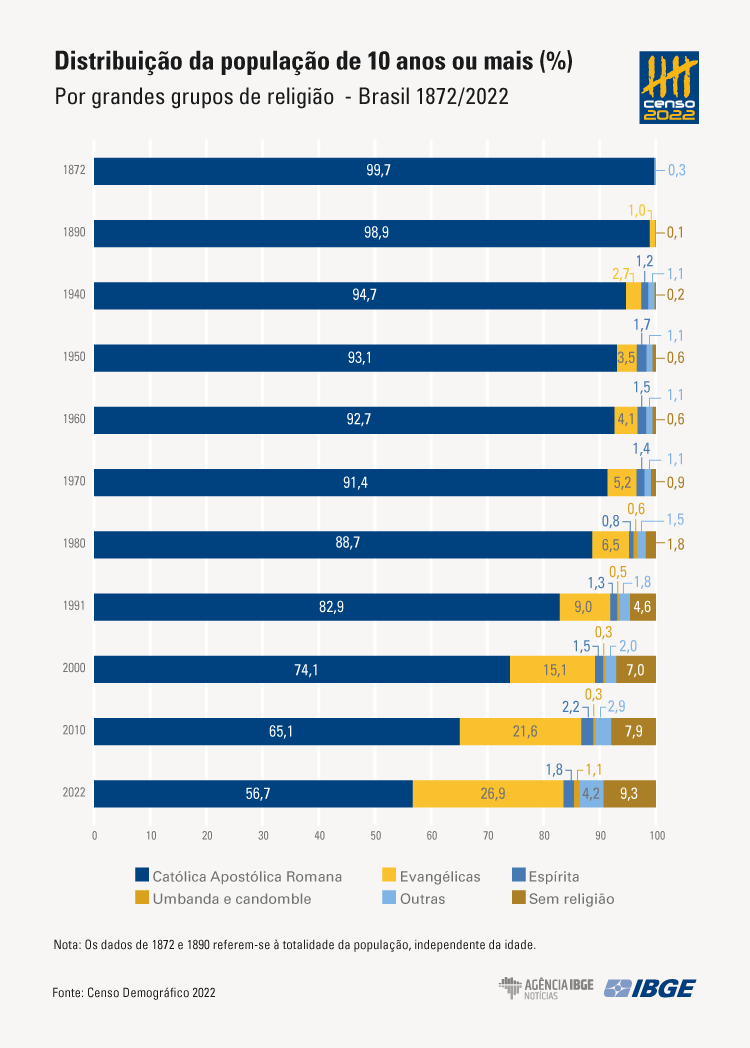
In the 2022 data, published by the Instituto Brasileiro de Geografia e Estatística (IBGE), evangelicals numbered 47.4 million people, or 26.9 percent of Brazilians aged 10 and over, up from 21.6 percent in 2010. 

The evangelical figures include Pentecostals as well as all other Protestant groups; a denominational breakdown is expected in the coming months. 

Meanwhile, the share of Brazil’s historically dominant Catholic population fell from 65.1 percent to 56.7 percent. Those who identified as having no religion increased from 7.9 percent to 9.3 percent. In two states, evangelicals outnumbered Catholics for the first time.

The momentum of evangelicals’ growth, however, is slowing. Between 2000 and 2010, the total number of evangelicals in Brazil rose from 26.2 million to 42.3 million, an increase of more than 16 million people. From 2010 to 2022, the increase was just over 5 million people. 

Demographer José Eustáquio Diniz Alves, a retired professor from the National School of Statistical Sciences, said the data doesn’t change trends but delays the moment when the number of evangelicals is expected to surpass the number of Catholics in the country.

In 2020, Alves published academic articles arguing that, based on trends shown in previous censuses, this overtaking could occur in 2032. “In that hypothesis, I was working with a trend of accelerated growth of evangelical churches and a sharp decline in the number of Catholics,” he said. Instead of accelerating, however, Protestantism grew at a slower pace.

As a result, the religious transition “will probably occur in the 2040s or even in the 2050s,” Alves said. In a revised version of his article, he puts 2049 as the possible date.

This deceleration was expected. Anthropologist Livan Chiroma, coordinator of Aliança LAB, the research and missional intelligence department of the Brazilian Evangelical Alliance, detected a cooling trend starting in 2018. By tracking data on evangelicals in public opinion polls, Aliança LAB found that polling institutes stopped betting on continuous growth during this period.

This timing coincides with the presidential election won by Jair Bolsonaro with heavy support from evangelical leaders. “Many believers seek a spiritual space in churches, not a political one,” Alves said. “When religious leaders adopt radical partisan positions, some members feel uncomfortable and even betrayed.”

As evangelical growth slowed, the proportion of people classified as religiously unaffiliated increased—up from 14.6 million in 2010 to 16.4 million in 2022. The nones—including atheists, agnostics, and those who declare no religious identity—account for 9.3 percent of Brazilians, the highest proportion in history.

The census also confirms the profile and the geography of Brazilian evangelicalism, which is predominantly female. Women make up 55.4 percent and men 44.6 percent—in the Brazilian population overall, 51.8 percent are women and 48.2 percent are men.

In general, evangelicals are less white than the national average—38 percent, compared to 44.3 percent—and more Black (12 percent, compared to 10.7 percent of Brazilians overall). Of the Indigenous population (only 1.4 million people), 32.2 percent identify as evangelical.

In another unprecedented shift, evangelicals outnumbered Catholics in two of Brazil’s 27 administrative regions: Acre and Rondônia, both located in the country’s northern Amazon region. In Acre, evangelicals made up 44.4 percent of the population, compared to 38.9 percent Catholics. In Rondônia, the numbers were closer—41.1 percent evangelical and 40.9 percent Catholic.

The growth of evangelical Christianity in the Amazon is a well-documented trend. As early as the 1991 census, when evangelicals made up just 9 percent of the national population, they already surpassed 20 percent in Rondônia. While missionary efforts in the region remain strong, scholars argue that demographic factors play a more decisive role in this expansion.

“We need to see the Amazon in less exotic terms,” said Chiroma. “Missiology tends to view the region through a lens of exoticism—river communities, Amerindians, the ‘noble savage,’ as sociologists put it. But while these groups are present, what’s often overlooked is the growing urbanization of the region, which is where much of this growth is happening.”

One example is Igreja Batista Bíblica Emanuel, a conservative Baptist congregation in the eastern outskirts of Porto Velho, the capital of Rondônia. When the church was founded in 2000, the area was sparsely populated and mostly rural. Since then, Porto Velho’s population has grown by 38 percent, reaching 460,000. Rural plots have given way to makeshift housing and, later, to large-scale public housing developments, bringing with them the same urban challenges faced by other major cities.

Pastor Antônio de Souza, who leads the church, spoke to CT over the phone while police helicopters circled overhead, searching for suspects in the neighborhood’s dirt alleys. The previous Sunday, someone was shot on the empty lot next to the church. “There’s been an urban explosion in Porto Velho, with all the problems that brings,” he said.

In the midst of a population lacking security and care, churches fill a void. “We can evangelize in places where most people can’t even enter,” said Souza.

The country’s most populous region, the Southeast, is also the most religiously diverse. Catholics make up 52.2 percent, evangelicals 28 percent, the religiously unaffiliated 11 percent, and spiritists 2.7 percent.

In the South, 62.4 percent are Catholic, and 23.7 percent are evangelical. In 14 municipalities in Rio Grande do Sul state, though, the number of Catholics exceeds 95 percent. These are mostly small cities with a significant number of Italian and Polish immigrants who are Catholic.

In the Center-West—where the Brazilian capital, Brasília, is located—52.6 percent of residents are Catholic, and 31.4 percent are evangelical.

Brazil’s Northeast is the main stronghold of Catholicism and, consequently, the country’s least evangelical region. In the nine Northeastern states, 63.9 percent of the population identifies as Catholic and 22.5 percent as evangelical.

Piauí state has the lowest proportion of evangelicals at 15.6 percent. The percentage of Catholics is 77.4 percent, the highest in the country.

The lowest percentage of Catholics is in Roraima, in the country’s far north, at 37.9 percent. In that state, 34.3 percent are evangelical, and 16.9 percent are religiously unaffiliated—the highest number in the country.

Pastors

Preaching After the Poet

In the wake of Walter Brueggemann’s passing, we’re left with his challenge: Preach not to explain but to evoke. Not to tame but to testify.

CT Pastors June 6, 2025
Sojourners / edits by Christianity Today

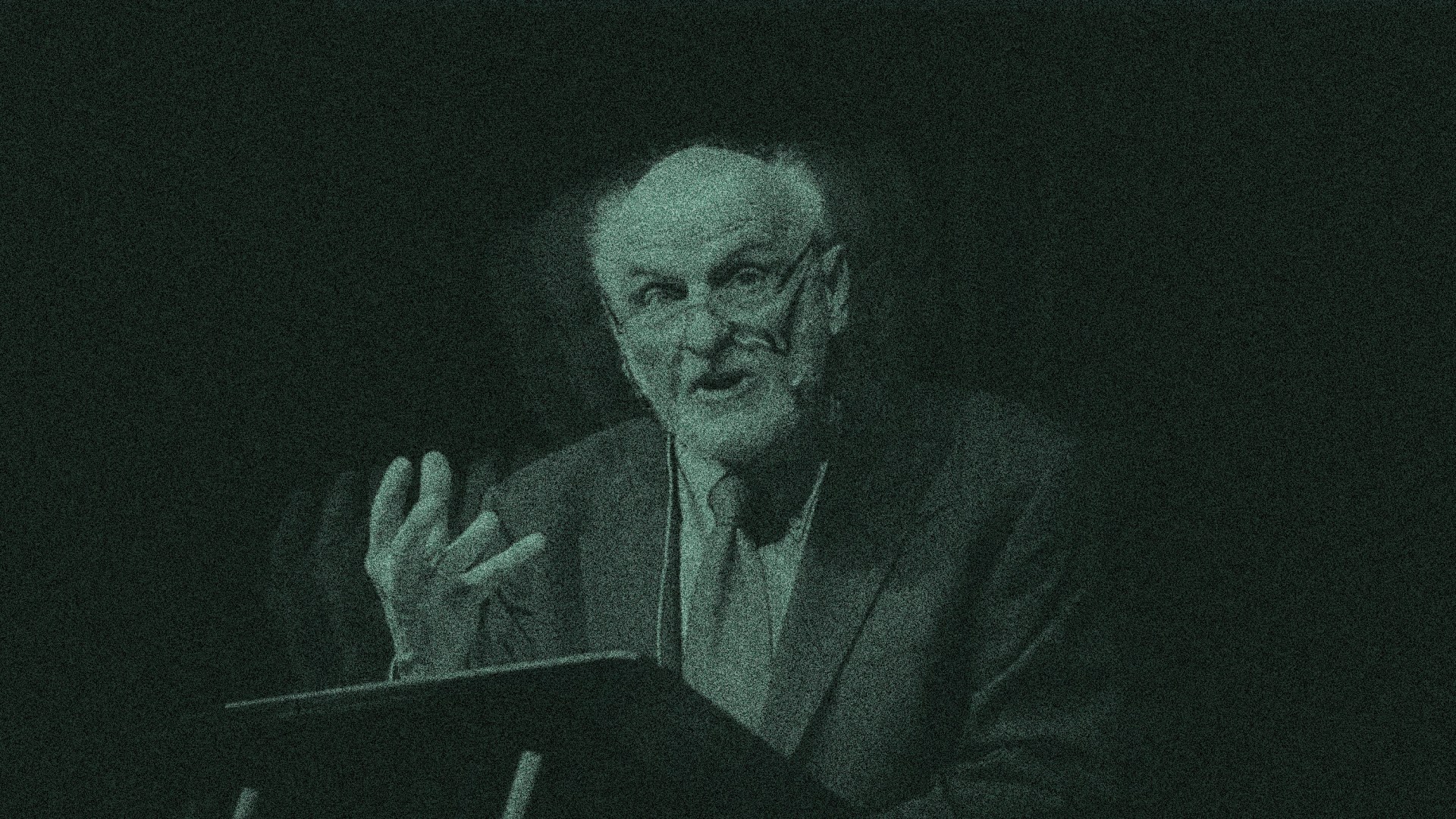
Walter Brueggemann has died

But if you’ve ever preached a sermon shaped to surprise, charged with tension, or haunted by hope, then you know his voice has not gone silent. His passing marks the end of a remarkable earthly ministry, but his words are still loose in the world. As Brueggemann himself might say, they’re still dangerous. Because they still dare to speak of God.

Brueggemann never saw preaching as mere instruction or religious pep talks. He insisted, again and again, that real preaching is an act of poetry—dangerous, disruptive, and drenched in God’s imagination. 

“The poet/prophet,” he wrote in Finally Comes the Poet “is a voice that shatters settled reality and evokes new possibility in the listening assembly.” That voice, for Brueggemann, was always poetic in its bones—artful, evocative, unsettling. And it was never tame.

Finally Comes the Poet was the book that gave many of us in the pulpit permission to stop preaching like technicians and start preaching like artists. At a time when sermon outlines were becoming indistinguishable from college lectures or TED Talks, Brueggemann reminded us that the gospel doesn’t fit into three alliterated bullet points. It erupts. It lingers. It builds a world and invites us to enter.

For Brueggemann, the sermon’s purpose was not to inform. It was to destabilize. His words didn’t just explain Scripture—they made it quake. He didn’t champion the poet/prophet for stylistic flourish but for theological necessity. He believed, with the biblical prophets, that language could open or close the human heart to God. So we must speak carefully. Or better: daringly.

In The Prophetic Imagination, Brueggemann lays out the anatomy of prophetic ministry. He describes the prophet’s work as holding two tasks in tension: evoking grief and summoning hope. In a culture addicted to denial and numbed by consumerism, the prophet speaks to break the spell. 

“The prophet does not ask if the vision can be implemented,” he writes. “For questions of implementation are of no consequence until the vision can be imagined. The imagination must come before implementation.” That line should be painted on the door of every preacher’s office. In Brueggemann’s world, imagination isn’t escapism—it’s resistance. To preach imaginatively is to defy the powers that be and proclaim another way is possible.

That’s where A Way Other Than Our Own comes in. That little book—structured as a Lenten devotional—is vintage Brueggemann. It’s full of short reflections, sharp phrases, and a deep sense of Scripture as the ground of alternative life. “Lent is about noticing,” he says. Noticing the lies we’ve accepted. Noticing the fears we’ve baptized. Noticing the illusions that masquerade as truth. But also—just as critically—noticing God’s steady, surprising work in the wilderness.

Preaching, for Brueggemann, was wilderness work. It wasn’t about relevance. It was about resistance. And that tone—that urgency, that poetry, that holy defiance—is the legacy many of us carry forward. Not just his theology, but his was way of speaking it to the saints.

He had a gift for phrasing things in ways that made you squirm and smile at the same time. He could drag Israel’s ancient drama right into your living room. Quote Jeremiah and make it sound like he’d been reading the morning paper. Talk about Pharaoh’s rebellion with such clarity, it felt like you could name your own.

Underneath that sharp edge was always a deep pastoral well of compassion. That’s why Prayers for a Privileged People still stuns. In those prayers, Brueggemann speaks not from the scholar’s chair but from the pastor’s heart. He confesses. He pleads. He weeps. His prayers are bruised and bold—full of trembling faith in a God who listens and who still dares to act. Reading them, you get the sense that, for Brueggemann, preaching and prayer are one and the same. Both were ways of speaking honestly to and about God in a world grown cynical.

That honesty—that refusal to sentimentalize God—was one of Brueggemann’s great gifts to the church. He never polished the Prophets. He never smoothed out the Psalms. He let their anguish linger. And he let their hope rise with force.

In an age obsessed with metrics and strategies, Brueggemann called preachers to embrace mystery again. “I want to consider preaching as a poetic construal of an alternative world,” he wrote. 

The purpose of such preaching is to cause us to cherish the truth, to open the truth from its pervasive reductionism in our society, to break the fearful rationality that keeps the news from being new.

That’s a tough word to live into. It means the sermon isn’t about control. It’s about trust. You’re not just delivering content; you’re stewarding a holy disruption. That’s risky. But it’s also faithful.

Walter Brueggemann believed the Bible speaks a world into being. And preaching, at its best, participates in that generative speech. So we don’t just explain what the text meant—we let it speak now. We let it summon courage. We let it expose empires. We let it name grief and offer  unimaginable joy. That’s what he taught us to do.

For those of us who preach, his legacy isn’t just in the footnotes—it’s in the posture. He taught us to stand before the text with awe. To enter the pulpit with trembling. To honor the poetry of God’s speech, not just the logic of our own. It’s not that he was against clarity—he was against flattening. Against reducing the mystery to technique. Against offering answers where Scripture offers only presence.

In a world where Christianity often sells itself as a system of certainty, Brueggemann invited us to rediscover faith as holy disorientation. “The gospel is not a set of certitudes,” he reminded us, “but an invitation into pilgrimage.” His words always pointed us somewhere: toward the margins, toward the ache of exile, toward the wild fidelity of God.

That’s why his death matters—not just because a scholar has passed but because a poet of the kingdom has gone quiet. Yet his words are still ringing in pulpits and pews around the world. His imagination reshaped ours. His fearless fidelity to the biblical witness gave us a way to speak again—not as marketers, not as managers, but as prophets and poets and people of the Book.

There is a kind of preaching that tells the truth. 

And another kind that lets the truth. 

Brueggemann showed us how to do the latter. 

He taught us how to stand between Pharaoh and the Promised Land and still sing. Still preach. Still trust. 

He showed us that the gospel is not polite. It does not settle. It breaks chains and builds futures.

What does his legacy mean for preaching? It means we must stop settling for safe speech. It means our churches must recover a preaching identity that is both poetic and prophetic. It means we must believe again that the Word is alive and that, when we speak it faithfully, it speaks us into newness.

To preach in the shadow of Brueggemann’s life is to accept the risk of awe. It is to believe that the Word of God is not a relic but a river. Not a formula but a fire. 

And if we dare to enter it, we may just emerge speaking like poets. Like prophets. Like people who have been undone—and remade—by grace.

So, no, this is not an obituary. This is a thank you. A vow. A prayer.

Thank you, Walter Brueggemann, for teaching us to speak with holy imagination.

We vow to keep preaching with fire and poetry.

And we pray: Lord, let the poets keep coming.

Sean Palmer is the teaching pastor at Ecclesia Houston, a writer, a speaking coach, and the author of Speaking by the Numbers.

News
Wire Story

Evangelical Consultant Johnnie Moore Appointed to Lead Gaza Aid Effort

The former religious freedom commissioner and Trump faith adviser steps in after the first weeks of food distributions.

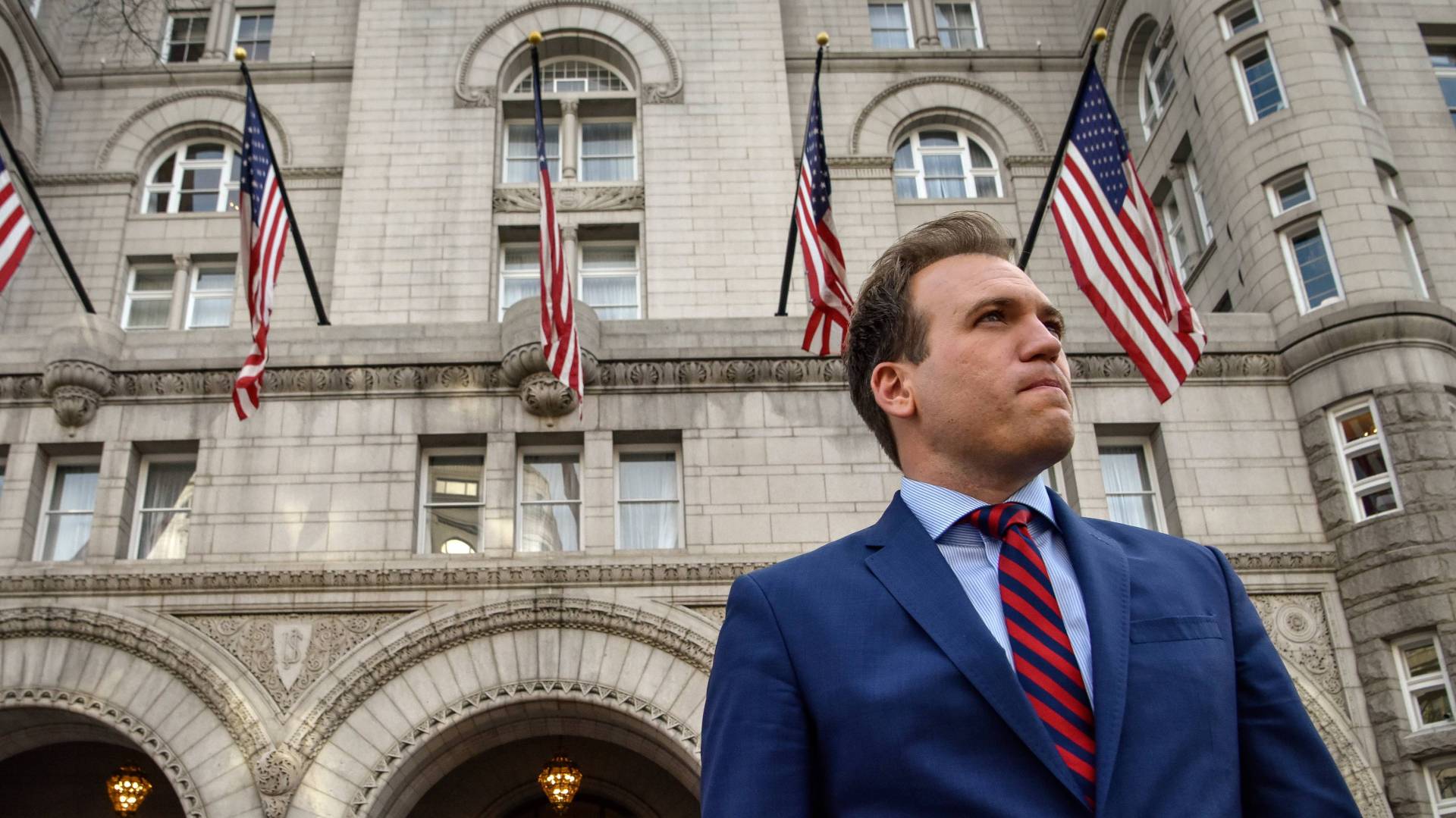
Johnnie Moore in blue suit in front of Trump building with American flags

Johnnie Moore

Christianity Today June 6, 2025
Bill O'Leary / The Washington Post via Getty Images

American evangelicals, driven by a biblical vision to protect Israel, have long been integral to US. diplomacy in the Holy Land. And now they have another player on the team.

Johnnie Moore, the evangelical public relations executive with deep ties in the Middle East, was appointed chairman of the embattled Gaza Humanitarian Foundation on Tuesday.

The Trump administration appointed Mike Huckabee, another prominent evangelical, and a former Southern Baptist pastor who has described himself as a Christian Zionist, as the ambassador to Israel earlier this year.

The Gaza Humanitarian Foundation, created within the past year, is a private group, formed with Israel’s blessing after it sought to circumvent the aid relief previously provided by the United Nations. Israel has long accused the UN of anti-Israeli bias and has alleged that aid from the UN ultimately falls into the hands of Hamas, the militant group.

From March to May, Israel had blocked all food and aid from entering Gaza, a move it said was aimed at pressuring Hamas. When Israel lifted the food blockade in mid-May, chaos ensued at the distribution points, with Israelis opening fire on dozens of Palestinians as they approached the GHF hubs.

Moore, like Huckabee, denied the shootings took place and blamed the media for false reporting.

In a Fox News op-ed published Tuesday, Moore wrote, “Over 7 million meals were delivered free to Gazans—no trucks seized, no aid diverted, no violence at distribution sites.”

The Red Cross and the UN human rights office said 27 people were killed on Tuesday. The Israeli army later acknowledged that it opened fire, though it has not said how many were killed.

Moore, 41, stepped into the role of chairman of the GHF after its previous head, Jake Wood, resigned hours before the initiative was set to begin late last month.

Wood cited concerns over the GHF’s ability to adhere to the “humanitarian principles of humanity, neutrality, impartiality, and independence.”

Moore was co-chairman of Donald Trump’s evangelical advisory board during Trump’s first campaign for president in 2016. The following year, Moore and other evangelicals pressed Trump to move the US Embassy to Jerusalem from Tel Aviv. Trump later appointed Moore to serve as a commissioner on the United States Commission for International Religious Freedom.

Moore is part of a much larger group of white evangelicals that forms the backbone of US support for Israel. These evangelicals believe there is an eternal bond between God and the Jewish people and that Christians should support the biblical covenant God made with Abraham and his descendants. Their vision for the state is rooted in the belief that God promised the land of Israel to the Jews in eternity.

Moore’s pro-Israel views have landed him roles on several boards or task forces of Jewish-led organizations. Those include the Anti-Defamation League and the International Fellowship of Christians and Jews, one of Israel’s largest philanthropic organizations. He is the 2017 recipient of the Medal of Valor from the Simon Wiesenthal Center.

Moore started out as a spokesman for Liberty University, the school where he also earned a PhD in public policy. He later founded a public relations group, Kairos, which was acquired in 2022 by JDA Worldwide.

During the National Religious Broadcasters convention two years ago, Moore talked on a podcast about his “zealous advocacy” for Israel, saying, “I started going to Israel and going to Israel again and again and again. I found so much of my faith come alive through that experience. … Israel has impacted me far, far more than almost anything else. I almost can’t think of my life as inseparable from Israel in some ways.”

Died: Walter Brueggemann, Scholar of Prophetic Imagination

The Old Testament professor was widely taught in seminaries and influenced many mainline and evangelical ministers.

Walter Bruggeman obit image
Christianity Today June 6, 2025
Westminster John Knox Press / edits by Christianity Today

Walter Brueggemann, one of the most widely respected Bible scholars of the past century, died on June 5 at his home in Michigan. He was 92.

The author of more than 100 books of theology and biblical criticism, Brueggemann was professor emeritus of Old Testament studies at Columbia Theological Seminary in Decatur, Georgia, until his retirement in 2003.

His specialty was the Hebrew Bible and especially the Hebrew prophets, and his books were aimed primarily at clergy and church leaders. But through sermons, Brueggemann’s concepts, have become familiar to many churchgoers.

Though ordained, Brueggemann never served as a pastor of his own church. He was, however, a much sought after and eloquent preacher and lecturer.

“He had incredible way to discern what was happening in the world and the church and to speak into that with a much needed word,” said Conrad L. Kanagy, professor emeritus at Elizabethtown College in Pennsylvania, who wrote a biography of Brueggemann and edited some of his books.

Brueggemann’s books were broadly influential, especially in mainline Protestant circles, but his work impacted many evangelicals as well. His 1978 The Prophetic Imagination sold more than a million copies and remains a classic that is still frequently assigned in seminaries. In the book, he showed how the biblical prophets, called to imagine a different world, disrupted politics and the dominant culture and its assumptions.

“It is the vocation of the prophet to keep alive the ministry of imagination, to keep on conjuring and proposing future alternatives to the single one the king wants to urge as the only thinkable one,” he wrote.

Brueggemann himself was critical of American consumerism, militarism and nationalism.

“Walter Brueggemann is one of the world’s great teachers about the prophets,” said On Being podcast host Krista Tippett. “He translates their imagination from the chaos of ancient times to our own. He somehow also embodies this tradition’s fearless truth-telling together with fierce hope—and how it conveys ideas with disarming language.”

As news of his death spread online, several evangelical professors spoke of his influence on them.

“His Theology of the Old Testament reframed how I approached the Bible when I was a 23 year old seminary student. His other works continued to challenge me,” Steve Benzer, professor of pastoral ministry and theology at George W. Truett Seminary at Baylor University, said on social media.

Kaz Hayashi, professor of Old Testament at Bethel Seminary in Minnesota called Bruggemann “a great blessing for me and for the church.”

Breuggemann was text-focused but resisted the dominant modes of biblical interpretation because they put distance between the reader and the text. He sought to help pastors hear God’s voice within the biblical text.

Brueggemann was born in Tilden, Nebraska, in 1933. His father, a pastor in the German Evangelical Synod of North America, ordained him. He and his brother, Ed, grew up in Blackburn, Missouri.

As a teenager, Brueggemann and his brother visited a Black church on the edge of town. It later influenced his commitment to social justice.

His academic journey began at Elmhurst College (now university), in Elmhurst, Illinois. He went on to study at Eden Theological Seminary and Union Theological Seminary. He received a Ph.D. in education from St. Louis University, while teaching at Eden Theological Seminary in St. Louis. He left Eden for Columbia Theological Seminary, a Presbyterian school, in 1986.

Brueggemann, however, remained an active minister in the United Church of Christ. He was a frequent speaker at its conferences as well as a mentor to countless church leaders.

He is survived by his wife, Tia, and by his sons James and John and their families.


Apple PodcastsDown ArrowDown ArrowDown Arrowarrow_left_altLeft ArrowLeft ArrowRight ArrowRight ArrowRight Arrowarrow_up_altUp ArrowUp ArrowAvailable at Amazoncaret-downCloseCloseEmailEmailExpandExpandExternalExternalFacebookfacebook-squareGiftGiftGooglegoogleGoogle KeephamburgerInstagraminstagram-squareLinkLinklinkedin-squareListenListenListenChristianity TodayCT Creative Studio Logologo_orgMegaphoneMenuMenupausePinterestPlayPlayPocketPodcastRSSRSSSaveSaveSaveSearchSearchsearchSpotifyStitcherTelegramTable of ContentsTable of Contentstwitter-squareWhatsAppXYouTubeYouTube