Inkwell

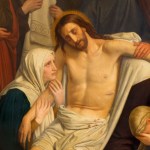
Joseph of Arimathea

Inkwell April 20, 2025
Photography by Kwnos IV

The air is cool and smells of jasmine. It is fitting
that we are in a garden; he would meet with me
in the garden of my home. He knew I was afraid,
so he would come to me when no one could see.
I had so many questions, but he never ran out of
answers. All my years in the temple couldn’t come
close. Sometimes we laughed, sometimes we ate.
I never remember silence; there was always
something I needed to know.

He is silent now. I am still afraid, but I cannot let
the dearest friend I ever had go to the grave
without custom. I have brought my finest linens,
freshly laundered. I have brought my oils – frankincense,
myrrh. The garden is full of jasmine and gardenias.
Even the nightingales mourn him. They sing their
sad song while I go about my task. I have brought
my wash cloth of finest linen. I dip it into the stream,
wring it out. I wipe the bloody brow of my friend,
he who was not afraid to be that which he is.

He who felt no need to explain, defend himself.
This is the gentlest work I will ever do – wiping
the tears from eyes that will no longer open.
I wash his wounds, too many to count – in his side,
his hands, his brow and back. There are places
the skin threatens to come off altogether – I have
seen this before. I have been prepared for such
a time as this.

I ease the muscles back into place; I seal with oil
what threatens to come undone. I anoint him in
the aroma of his heavenly home and encase him
in linens. I never remember the moon glowing this bright.
I can see him so clearly. I try to find fear in his face,
but can only see peace. I weep quietly as I work –
the most important task I will ever do.

The table is set; he is bathed in moonlight.
Eventually, they will come for him. Til then,
I will have one last night in the garden with my friend.

Jessie Epstein is a writer and actor based between Los Angeles and the Midwest. Her work can be read in Identity Theory, orangepeel, and Anti-Heroin Chic, among others. Her debut chapbook of poetry, Francesca Dons Beatrice’s Cloak: A Lovergirl’s Guide through Dante’s Inferno, is available through Bottlecap Press. Find more on her Substack and website

Ideas

I Confessed My Sin with a Christian Nationalist Pastor

We stand on equal footing at the cross.

Christianity Today April 17, 2025
Illustration by Mallory Rentsch Tlapek / Source Images: Getty

On a recent work trip down South, I visited a church for its Wednesday Lenten service. I chose the church casually, simply identifying a familiar denomination and going from there.

I love the communion of saints and especially the sense of home that comes from walking into even an unfamiliar church, the liturgy drawing me in like the arms of distant cousins at a family reunion. But as the service progressed, I began to feel out of place, like I’d wandered into the wrong hotel ballroom and discovered myself in a stranger’s wedding reception. I caught a strange whiff of American politics that I couldn’t make sense of in a Lenten service.

Afterward, I went back to my hotel room and searched the pastor’s name online. What I discovered disquieted me. I’d just been led in worship and guided into penitence by a Christian nationalist pastor who was a member of the Black Robe Regiment, a gathering of clergy initially committed to overthrowing the 2020 US presidential election. The whiff now made sense. So did curious references to Israel in the church service as I learned of the regiment’s antisemitic leanings.

With each Google hit, I grew more and more indignant. Who did this man think he was to lead me toward repentance? I shared my dismay with friends, and they agreed. The whole experience had clearly been a sham, an exercise in religious pageantry, a quiet yet sinister display of Christian nationalism. Or was it?

As I traveled home later that week, I kept turning over that evening in my mind. Together, we had bent our knees to confess our sins. Together, we had acknowledged our self-indulgent appetites, our intemperate love of worldly goods and comforts, our indifference to injustice and cruelty. Together, we had voiced our pleas for God’s mercy and a renewed spirit of true repentance.

The liturgy united the congregation under the same words of penitence. In such a context, shouldn’t I be able to expect that my neighbor was just as sorry for his sins as I was? Shouldn’t his sins that seemed so obvious to me be illuminated for him in these words of confession?

In the call and response of the liturgy, we had spoken as one voice, the pastor’s voice blending with mine and those around me. And yet I could not—I refused to—number myself among those who needed forgiveness like he did. How could I when dark shadows lurked within that dimmed sanctuary in the hearts of some around me? Personal repentance was hard enough, but corporate repentance, I was discovering, was even more complicated.

In the fundamentalist Christian circles in which I was raised, we often joked about the Sadducees. They were “sad, you see” because their religious trappings belied disbelief in the Resurrection. They didn’t know what they were missing, we said. They had all the right outfits and ceremonies without the right beliefs.

The Pharisees, too, were sad because, like their priestly counterparts, they were whitewashed tombs (Matt. 23:27–28), clean on the outside but filled with dead theology on the inside. They were the ones Jesus identified as hypocrites in Luke 18, the ones who would pray with great gusto as they set themselves apart from the low-life tax collectors who lamented under the weight of shame.

Right beliefs always birthed right actions, we believed. This logic applied to everything from saving sex for marriage to not cheating on your income taxes to choosing a version of the Bible that was the most accurate translation.

When it came to repentance and forgiveness, we were to be known by certain fruits (Matt. 7:16), namely public confessions before the congregation (often for private sins) and a clear turning away from evil to do good. Metanoia, the Greek word for repentance, means literally “to change one’s mind.” Repentance was hard, we were told, but cathartic, too. To ask for forgiveness was to experience sin made as white as snow, to be made right with God—a rightness that should be evident to all (Isa. 1:17–19).

As I considered the Pharisees and Sadducees in light of my Lenten worship visit, the parallels were clear. A Christian nationalist pastor was a Sadducee, belonging to a regiment of self-righteous religious leaders drawn away by earthly power and worldly concerns. A Christian nationalist pastor was a Pharisee, ready to criticize the spiritual convictions of others as “less than”—less than committed, less than strident, less than ready to take up arms and fight for the cause of righteousness.

The news headlines testified clearly: the Black Robe Regiment did not have right beliefs or right actions. Surely that made me the humble tax collector in Jesus’ story, then. No wonder I’d had such difficulty worshiping in that service.

I held this position of pride as a signifier of my own contrition and my own righteousness until I remembered one vital detail from Jesus’ story in Luke 18—the location. Jesus had situated his parable of these two men within exactly the same space—worship at the temple. Misguided or not, they were both still showing up at church.

In a church landscape where congregations are increasingly divided along political lines, I’ll admit that I long to worship with people like me—people who think like me, live like me, believe like me. Misguided parishioners can stay home, please. Misguided pastors? Surely we’ve got enough of those.

But more often than not, I realize—usually in confession—that these impulses are not fruitful for the body of Christ or the common good. It is valid to desire a faith community that upholds orthodoxy and orthopraxis. Paul warns the church at Galatia to beware of ministers who would “pervert the gospel of Christ” (Gal. 1:7–9). He instructs the Corinthians to avoid associating with believers who persist in sin (1 Cor. 5:10–12). Yet God also reminds the church through the prophet Samuel that he alone is the best discerner of hearts (1 Sam. 16:7). The Spirit teaches us how to hold those truths in tension.

Scripture and the confessional liturgy of the church also call us to a deeper level of humility. Regardless of how sorry anyone else might be for the things they’ve done or left undone, I am called to repent. Regardless of how our politics divide us, acknowledging our sin does not. We are each dead until made alive through Christ. The ground is level at the foot of the cross.

Confession also reminds me that whether or not my neighbor and I see eye to eye on what requires repentance, Christ calls me to forgive. If our sins are so great that they must be cast to the east and west to be far enough away not to haunt us (Ps. 103:12), the Christian nationalist pastor and I must both be desperately in need of redemption, neither of us fully aware of what the breadth and depth of that forgiveness must be.

Holy Week is an annual reminder that the upside-down kingdom of Jesus enlightens the eyes of those who have been drawn to earthly power. I pray that they find the Jesus who arrived in Jerusalem on a donkey more compelling than a president in a luxury car in the White House driveway. I hope that earnest study of Scripture reveals the error of their ways.

I also pray that my sins will become even more evident to me than others’ are. That the Holy Spirit will enlighten my eyes to see how often, like Peter in Gethsemane, I, too, abandon Jesus in favor of power. I pray that Golgotha will cast an appropriate shadow over my own self-righteousness.

The empty tomb gapes with extraordinary welcome for all of us in the face of our unbelief. Alleluia.

Clarissa Moll is producer and moderator of The Bulletin at Christianity Today.

Theology

More than a Deathbed Conversion

The thief on the cross next to Jesus waited in suffering for the promise of paradise. So do many of us.

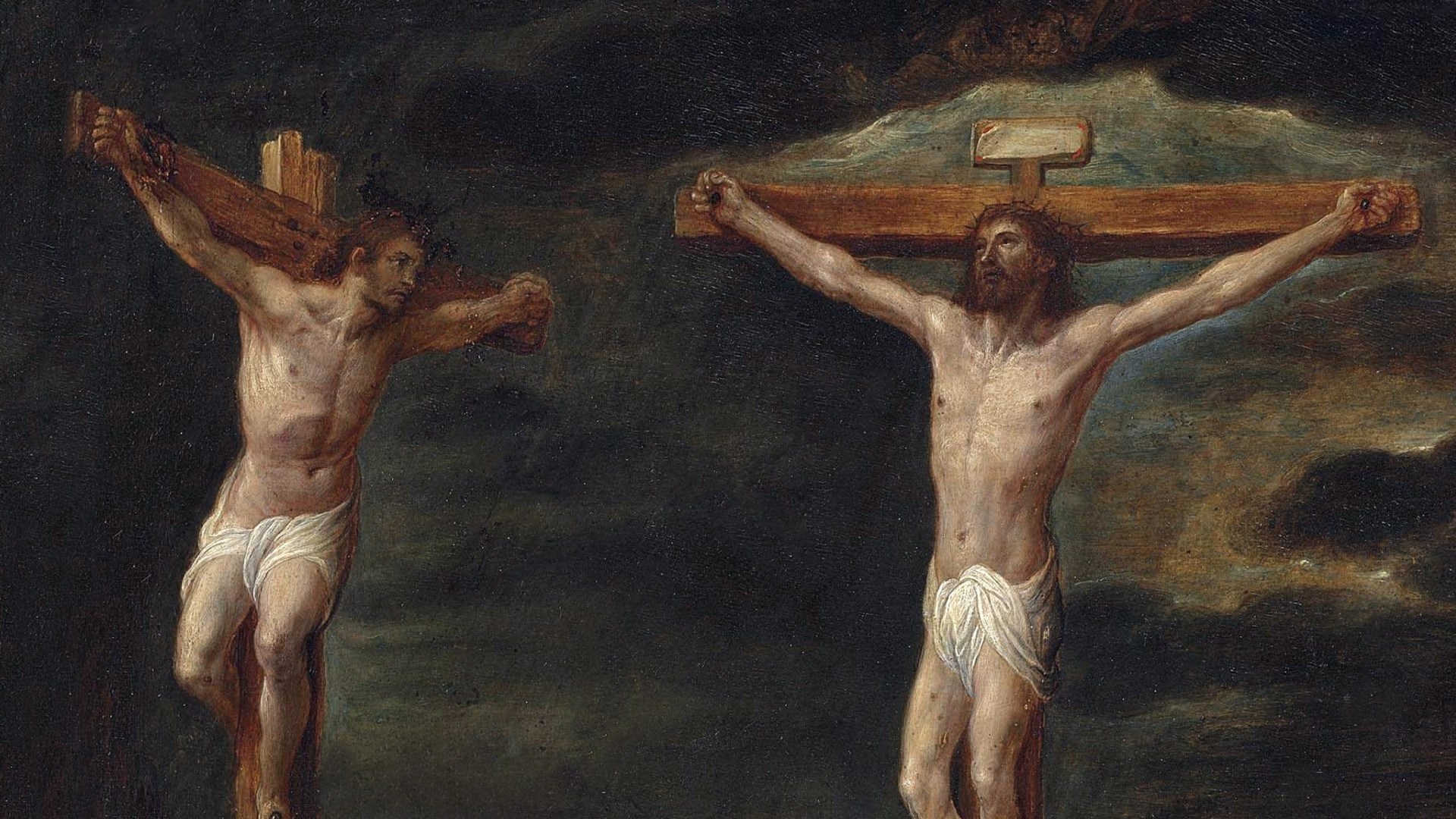
A painting called The Crucifixion with the Two Thieves by Jan Snellinck.

Detail from The Crucifixion with the Two Thieves by Jan Snellinck.

Christianity Today April 17, 2025
Wikimedia Commons / Edits by CT

When readers thumb through their Bibles for examples of courage, few consider flipping to the passage of the penitent thief on the cross (Luke 23:32–43). Whether in sermons or hospital rooms, his story has become a sort of byword for eleventh-hour repentance.

In contrast to his unrepentant companion, he’s seen as the poster boy for the deathbed conversion, the face of the last-minute participation prize: he is the anyone Christ can save. But what if the story of this man, whom tradition calls Saint Dismas, has more to teach us?

While Dismas’ example remains an incredible testimony of salvation in Christ, a look at details in the surrounding text reveals a deeper layer to his story—where we find not only a companion for the one who has sinned but also an example of faith and courage for the one who faithfully suffers.

We are first introduced to Dismas as he is being led away with Jesus to be crucified, likely still reeling from the shock of a beating (v. 32). Luke’s gospel labels Dismas and his companion (named Gestas, as tradition has it) as “criminals.”

But instead of using the standard word for “thief” (kleptai), Matthew and Mark use the Greek word lestes, which most Bibles translate as “robber”—that is, someone who takes goods by force—for its connotation of violence. For reference, this is the same word used in the story of the Good Samaritan for the robbers who beat up the traveler on the Jericho road.

What’s even more interesting is that the first-century historian Josephus’ use of this term suggests an additional element of opposition to Roman authority. In fact, John’s gospel uses the word lestes, translated as “rebel,” to describe Barabbas, whose crimes were insurrection and murder (18:40). Given the timing, it’s possible both Dismas and Gestas were among Barabbas’s compatriots (Mark 15:7), albeit fatally lacking Barabbas’s public relations clout and popularity.

Like Jesus’ death, the two mens’ death sentences were designed to crush the spirits of both victims and observers—as crucifixion was often used against political enemies to show off the intimidating power of the Roman Empire and stand as a warning to potential imitators.

This background may explain why Dismas and his companion initially expend such excruciating effort in hurling abuse at Jesus (Matt. 27:44; Mark 15:32). Crucifixion places stress on the chest cavity, making it painfully difficult for a victim to inhale. The struggle to take each breath and deliver every curse would have made it a painful and deliberate act.

Mockery in the midst of pain suggests more than just a dark coping mechanism. These men would have grown up hearing stories of a coming messiah who would throw off Roman rule and bring justice to their people. To them, Jesus, who seemed to be nothing more than the latest in a string of pretenders, represented the ultimate failure to make things right.

Luke doesn’t tell us exactly when Dismas’ change of heart begins. Perhaps it’s the moment when Jesus spends some of his own precious breaths to ask God to forgive his enemies rather than destroy them (Luke 23:34). Maybe Dismas could sense the purpose, the sheer intentionality undergirding Jesus’ distress, so different from his own. Whatever the moment, a sense of conviction blossoms, and Dismas rebukes his fellow rebel.

“Don’t you fear God,” Dismas asks, loud enough for Gestas to hear him on the other side of Jesus, “since you are under the same sentence? We are punished justly, for we are getting what our deeds deserve. But this man has done nothing wrong” (v. 40).

This remark displays an almost shocking shift in awareness. He accepts that his sentence is balanced on the scale of justice not only with respect to the governing authorities, Rome and Judea, but also before God as ultimate judge. Despite the inhumane mode of his death, he seems to reckon with the fact that he is reaping the wages of a life lived for violence.

Perhaps even more unexpectedly, he then turns to the one many call Messiah and dares to hope: “Jesus,” he pleads, “remember me when you come into your kingdom”(v. 42).

But Dismas is not making some blind and desperate swipe at grace here. His language is that of a vassal to a king who would grant favors after taking up his reign. By acknowledging his sin and appealing to Christ’s mercy, Dismas gives up all belief in his former revolution and throws in his lot with an entirely different kind of savior.

There’s a prophetic sense to his words, too. Present-day readers may take Jesus’ resurrection for granted, but few, if any, of his first-century followers anticipated crucifixion for their messiah. In that respect, Dismas was the first person to understand and believe that Christ’s cross did not negate his coming kingdom.

At the climax of Jesus’ supposed weakness and shame, Dismas recognizes Christ’s kingly power and glory. He also appeals to Jesus’ own generosity. As Rachel Gilson notes, Dismas has the “faithful audacity” not only to believe in Jesus’ coming victory but also to believe “that the victory was won in order to be shared” even with someone as guilty as himself.

Jesus mercifully accepts Dismas’ request, albeit with a different favor than Dismas might have expected. Instead of merely responding to his request regarding a “kingdom,” Jesus promises him a place in “paradise” (v. 43). Dismas would have immediately recognized the term for the place of the righteous dead. As is his habit throughout the Gospels, Jesus offers Dismas something that includes yet surpasses the scope of an eventual earthly rule—by forgiving Dismas’ sins and welcoming him into his heavenly kingdom.

Dismas and Jesus suffer side by side on their crosses for about six hours. But as final as their last words recorded are, that is not where Dismas’ story ends.

As the sky darkens and the ground shakes, does Dismas wonder whether now is the moment for the heavens to tear and this true Messiah’s kingdom to be realized? Yet all at once, Jesus cries out and breathes his last. The ground steadies, the sun shines back through the clouds, and everything returns to the way it was before. With the main “spectacle” over, the entire crowd begins to trickle away (v. 48) As the sun begins its descent toward the horizon, all grows quiet. The kingdom isn’t coming, at least not this day.

Jesus has died, but Dismas remains on the cross for hours longer, in mounting pain. It is believed Dismas languished on the cross for at least twice as long as Jesus did. And yet as every new breath grows more difficult than the last, Dismas has the perseverance to wait for paradise. With each shudder, he clings to the promise he received, despite the clear death of its giver. I wonder if, at any point, Dismas asked himself whether the lifeless man beside him would—or could—keep his word.

As dusk draws near, soldiers come to break the ankles of both Dismas and his fellow rebel, destroying their balance and brutally cutting off their airflow to hasten their deaths, as the Sabbath was soon to begin (John 19:31–32). It probably didn’t take much longer for Dismas to die, presumably in unimaginable agony. And yet we can be sure that Dismas’ faith held on—and that his spirit endured into eternity—for Jesus is not one who fails to fulfill his promises.

What can we learn from this man’s story? Those praying for loved ones who are far from Christ can still be encouraged by the way Dismas turned to the Lord for salvation in the last moments of his life. Nevertheless, it’s important not to caricature Dismas as merely a “foxhole theist” who made a last-ditch effort out of hopeless desperation. Doing so makes light of his faithfulness and ultimately the faithfulness of the one who saved him.

In the midst of unbearable pain, Dismas clung to the promise of a kingdom that looked nothing like the one he had lived his whole life expecting. This man of action, who had relied on his physicality to further his cause, ultimately found what he was searching for when he was forced to do nothing but suffer and believe unto death.

Dismas’ endurance beyond Jesus’ death is what makes him a companion to the long-suffering. He has gone before those for whom, whether by age or chronic illness, every breath is a burden. Dismas is a brother to all those whose service to God looks mostly like waiting on his promises. In Dismas, we are reminded that faith itself is an act of courage.

His and our Savior remains the Man of Sorrows, who is near to us in our suffering—the one who is glorified even when our limbs no longer have strength. With Dismas, we reaffirm our trust that, as Trevin Wax says, Christ can “take up our burdens upon himself and deliver us from our despair.” And even in the moments when it seems Christ is absent, the promise that held the thief holds us, too.

Tori Campbell has written for The Gospel Coalition, David C Cook, and The Yale Logos.

Theology

Even Our Corpses Belong to Christ

The Son did not forsake his body in the grave, and he won’t forsake ours either.

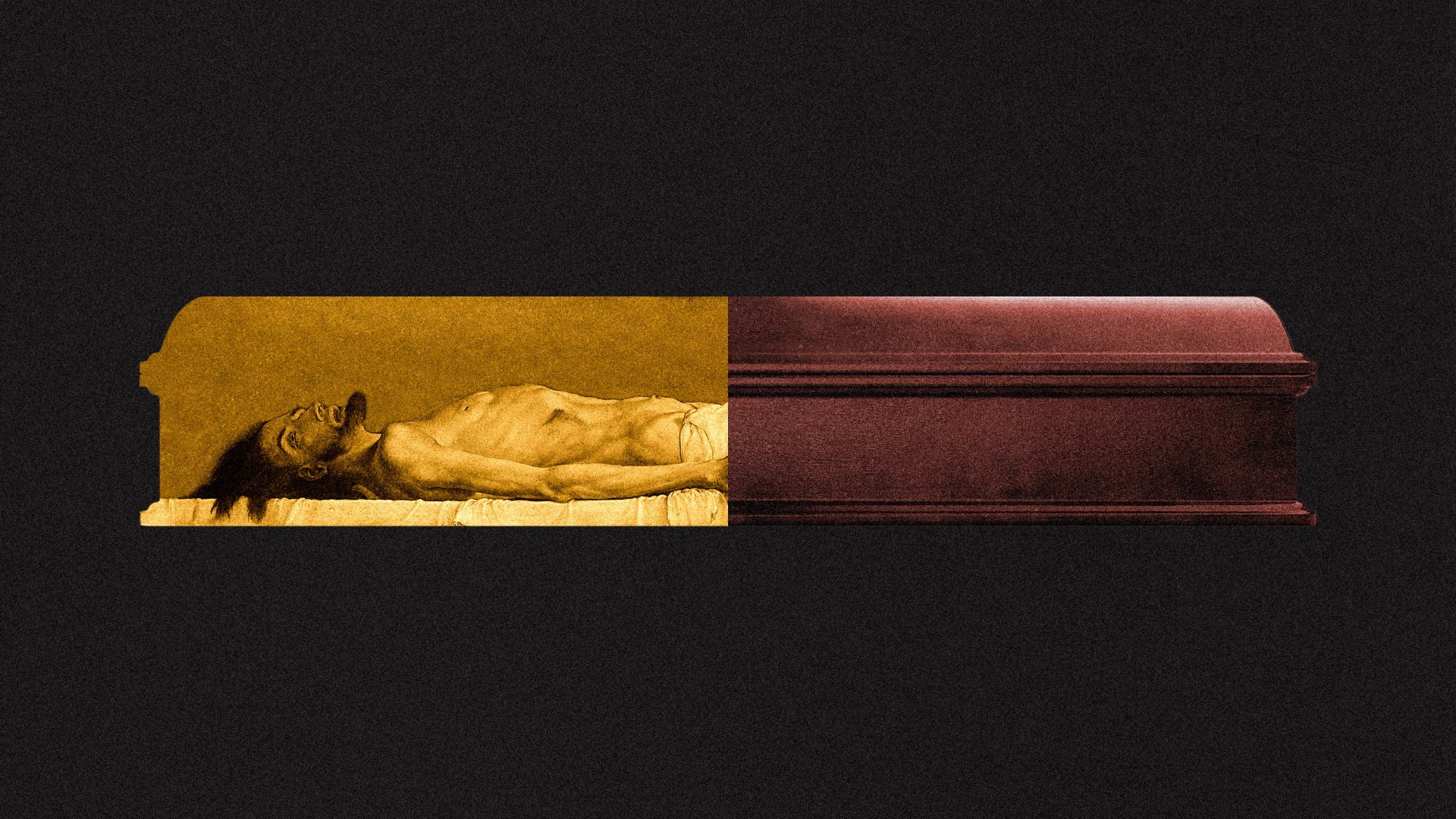
A collage of Jesus' corpse and a coffin.
Christianity Today April 17, 2025
Illustration by Elizabeth Kaye / Source Images: Getty, Wikimedia Commons

My son’s first day of life was also my grandmother’s last.

She was among my closest friends and biggest cheerleaders, yet she died a thousand miles away as I sat holding my new baby boy. I cried both tears of joy and tears of sorrow that day, one after the other and all mixed together.

As my mind darted between the two hospital rooms, two loved ones, and two lives, I found myself pondering the question “What is our only hope in life and death?”

The answer, according to the first question of the Heidelberg Catechism, is this: “that I am not my own, but belong—body and soul, in life and in death—to my faithful Savior, Jesus Christ.”

Every year, on my son’s birthday and the anniversary of my grandmother’s death, this familiar liturgy rings in my head all day. Initially, the portion that stuck out to me most was “in life and in death” because of my simultaneous proximity to the beginning and the end of life—that my baby boy’s only hope in life and my grandmother’s only hope in death is Jesus Christ.

More recently, I’ve been struck by the preceding phrase, “belong—body and soul.” It seems intuitive that a Christian’s soul belongs to Jesus (Col. 3:3) in death as in life. Even many non-Christians affirm the persistence of our souls after death. But what does it mean for our bodies to belong to Christ in life and death? And why does it matter?

While mulling over these questions, I was reading John of Damascus, an eighth-century monk. In his work On the Orthodox Faith, the Damascene makes a claim I hadn’t noticed before:

For since both the body and the soul had their existence in the same way from the beginning in the hypostasis of the Word, and although they were separated from each other in death, each of them remained because they had the one hypostasis of the Word. (Compare with Peter Lombard’s Sentences, book 4, distinction 21, chapter 1.)

For the Damascene (and nearly everyone else in church history), death was defined as the separation of the soul from the body. Yet John of Damascus insisted that the Son of God was “inseparable from both” his body and his soul, even in death. In other words, he remained united to his human soul and body even after death.

Since the person of Christ is the person of the Son, his soul and body both depend upon him for their existence. If the Son’s soul or body were to exist independently from himself at any point, then the “person of Christ” and the “person of the Son” would refer to two different persons, which is a heresy known as Nestorianism, instead of one and the same.

In other words, the Son’s human soul and human body must depend upon and remain united to himself in both life and death.

Protestants, evangelicals in particular, have recently begun to (re)appreciate Holy Saturday—the day between Good Friday and Easter—and Christ’s work after his death.

“Christ dies a human death, as all humans do. His body is buried, and his soul departs to the place of the dead,” Matthew Emerson said in an interview for CT. “While he is there, he proclaims his victory over the powers of death. Then, in his resurrection, he achieves victory over death itself.”

In other words, in order to secure full victory over death for our salvation, the Son had to stay united to his soul in death. But it is equally important that the Son remained present and united to his body in those three days it laid dead in Joseph’s tomb.

Beyond being a theological factoid, why should this matter to us? I would argue there are at least three reasons this is significant for our faith, especially as we contemplate our hope in death.

The first reason this truth matters is because of the ancient dictum What has not been assumed is not healed. The early church father Gregory of Nazianzus crafted this statement to affirm the existence of Christ’s human soul. The logic goes like this: If human souls need healing, then the Son must assume a human soul. That’s because whatever part of humanity is not assumed by the Son—that is, united to his divinity—could not be healed from the effects of sin and death.

Therefore, if human bodies (more specifically, dead human bodies) need healing in the form of resurrection, then the divine Son must unite a human body to himself and must remain united to that body even after it is buried in the ground.

As Scripture says, Jesus took up our infirmities (Isa. 53:4), which must include the ultimate and final infirmity—death—if he is truly to heal all our diseases.

Not only must Christ assume every aspect of our human nature, but also he must experience every stage of human life, the church father Irenaeus observed. Jesus became an infant, a toddler, a teenager, a full-grown adult. And relevant for our purposes, he became a corpse. All this so that Christ could restore every part of our lives, including the lack of life in our bodies after death.

The second lesson is that God does not disdain our human frailty. The excommunicated church leader Nestorius was wrongly nervous about associating the Son with the womb of Mary. A divine being could not be associated with birth canals and blood, he thought.

Contrary to Nestorius, the gospel relies on the fact that God humbled himself to the point of gestation, birth, infancy, and death, even death on a cross (Phil. 2:8). But God the Son went even further by remaining united to his human corpse after it was buried—he was present in the cold, dark, and silent tomb. The God we worship does not disdain the fleshy pits of human life or death.

As Charles Wesley wrote, “’Tis mystery all! Th’Immortal dies!” He continues, “Amazing love! [H]ow can it be / That Thou, my God, should die for me?” It’s worth noting that this line has often changed in more recent versions to “That you, my king, would die for me”—potentially because they were nervous about associating the immortal God with death!

But we need not be nervous about picturing the divine Son in the borrowed tomb of Joseph of Arimathea. We can wholeheartedly declare that Jesus, the immortal God, died a criminal’s death with last-minute funeral arrangements. This profound theological truth should inspire a deep appreciation in us for the extent of God’s love demonstrated in the death of Christ (Rom. 5:8).

Last but not least, as Christ’s body is bound to God, so our bodies are bound to Christ in death. For just as the immortal Son of God lay dead in a tomb, present with his human body, God the Son will remain present with us as we too are buried one day in “borrowed”—that is, temporary—tombs (Ezek. 37:13–14). God is never absent or distant from the brokenhearted and grief-stricken (Ps. 34:18), nor does he forsake our souls or our bodies, even in death (139:8, 12).

As David wrote in the Psalms, “My body rests in safety. For you will not leave my soul among the dead or allow your holy one to rot in the grave” (Ps. 16:9–10, NLT). This is, in some sense, not literally true (Acts 2:29), since David’s dead body eventually rotted into dust.

So how can David—and how can we—sing this Psalm honestly? It is only because of Christ, the “holy one,” whom this verse prophetically pointed to. God did not leave Christ’s body to rot in the grave but rose him to life again, as he will raise us all on the last day (John 6:40).

Scripture assures us that our entire lives are “hidden with Christ” (Col. 3:3) and that this is not just a spiritual reality—our physical bodies are also united to him, from womb to tomb and beyond.

Because of this, we need not fear the decay of death. Regardless of the decomposing state of our physical bodies, Christ holds them together in himself. Whether our corpses turn to dust in concrete crypts, are separated limb from limb, or are engulfed in flames at the martyr’s stake, they remain united to Christ, whose body is united to the Godhead.

In summary, because the union between the Son and his humanity persists even after death, the union between Christ and his body, the church, persists even after our deaths.

So we need fear neither death nor dissolution, and we need not lose hope. God the Son shared in our humanity, body and soul, in life and in death, “so that by his death he might break the power of him who holds the power of death—that is, the devil—and free those who all their lives were held in slavery by their fear of death” (Heb. 2:14–15).

“For if we have been united with him in a death like his, we will certainly also be united with him in a resurrection like his.” (Rom. 6:5).

On a day in the church calendar when we recognize hope and anticipation in the midst of death, may we take heart in the grace of God, who became human to live and die on our behalf. God is not ignorant of what lurks behind the curtain of death, even if such ignorance brings us anxiety.

Rather than fear, I can hope that my grandmother’s body will ultimately not see decay but be raised with her Savior, to whom she belongs. Likewise, I can have hope when I consider my son’s future, not because his body is currently healthy but because of Christ.

One day, everyone, including our parents and friends, children and neighbors, will taste death. But as they descend into the grave, may we remember that it is a place God himself has known, a place where God himself is present (Ps. 139:8), and a place God has ultimately defeated.

We can all rest in peace knowing that in life and death, our souls and bodies belong to God.

Ty Kieser is assistant professor of theology, program director, and faculty in residence at Criswell College in Dallas.

Culture
Review

Review: The Chosen Season 5

Vivid, artful, imperfect but faithful: Even if you know every beat of the Holy Week narrative by heart, the hit show’s latest season is worth watching.

The Last Supper from Season 5 of The Chosen.

The Last Supper from Season 5 of The Chosen.

Christianity Today April 17, 2025
Courtesy of The Chosen

Season 5 of The Chosen is vivid: bright fabrics and flowers, fountains and palms, glugs of olive oil and wine, the gleam and clatter of silver pieces, and the blood of butchered animals pooling in straw. The snap of unleavened bread. The flicker of candlelight. The scent of perfume, bought at great price and poured with abandon over Jesus’ feet. Some of the Roman costumes look chintzy. There’s a fog machine in the Garden of Gethsemane. But these misses are the exception, not the rule. It’s a very pretty show. It looks nice on the big screen, where it’s playing through Easter Sunday, April 20, before coming to Amazon Prime in June.

Season 5 of The Chosen is also artful. It’s historically sensitive and structurally inventive; each episode begins with out-of-sequence scenes from the Last Supper, then returns to chronological storytelling from Palm Sunday through Gethsemane. Flashbacks detail the disciples’ backstories: James the cantor and Nathaniel the architect and Simon the Zealot. Old Testament references abound. We see the clattering dry bones of Ezekiel, Abraham leading his son to slaughter, and David singing a psalm. The women in Jesus’ life honor him with a Dayenu, a song traditionally sung during a Passover seder. No Marcionism here. 

Admittedly, The Chosen is sometimes a little on the nose. This season of the enormously popular dramatization of the Gospels—crowdfunded by adoring fans, set for two more seasons of prestige television after this one—is no exception, though it’s hard to give the writers too much grief for that. When dialogue has to explain Messianic prophecy and Passover rituals and the triangulated authority of Pilate, Herod, and Caiphas and preach the gospel in modern-day parlance, it’s no wonder it’s at times a bit artificial. 

See Philip, exegeting Jesus’ table-flipping and whipping at the temple: “It was an assault on the wrong version of our system of worship and sacrifice.” See Herod, parsing the power structure: “I’m the one saddled with the onerous task of mediating the balance of power between the temple and Rome.” See Jesus, convincing Thaddeus to follow him: “You will have said yes to the world’s no.”

The show is thick with Scripture, including the lengthy Farewell Discourses from Jesus in the Gospel of John. But there’s also humor (“I’ll hold for the joke,” Jesus quips after revealing his Nazarene origins) and modern-day colloquialisms (“People have been eating it up,” Peter boasts of his own preaching) and poetic little phrases. The case against Jesus is “thinner than a silk strand.” The city has a “messianic fever” that needs to cool. A “small militia of malcontents” is stirring up the crowds. Jesus, insists Pilate, is “singular.”

This mishmash is a creative choice. It mostly works (but not always), as does the acting, which is mostly great (wide-eyed John and wry Herod, nervous Matthew and heroic Mary Magdalene, Nicodemus with his scrolls and, above all, Jesus) yet sometimes falls flat. Pilate’s flair is fun, though often feels more suited for the stage; Gaius is earnest but somehow unbelievable. 

Sets, costumes, scripts, structure: All matter. But mostly, season 5 of The Chosen succeeds because it’s telling a really good story. 

Well, of course. 

Of course! The story at the heart of our faith is good, and not just in the sense of entertaining, though it’s certainly that. Season 5 is where we approach the crux (pun intended) of the action. A king enters a city on a donkey, palms aflutter. By the end of the season, he’s betrayed with a kiss, sold out for coins—“the price of a slave,” as Judas puts it. There are the machinations of high political drama, the breast beating of classical tragedy, and again and again, stunning irony: the Messiah himself washing feet as his disciples protest, tears gleaming in their eyes. Those disciples swearing loyalty and yet dozing off to sleep. 

It’s a good story because it’s got momentum and intrigue and complex characters but, most of all, because it’s good. It’s good news for us that Jesus is washing feet and doing the Father’s will, even as he digs his fingernails into rocks and doubles over in sorrow, sweat beading his brow. 

You simply must give The Chosen team credit for how clearly this goodness comes through— Jesus’ humility, Jesus’ devotion to the Father, Jesus’ ringing pronouncements in the temple square. Both anecdotally and as measured by the show’s sheer success, audiences can’t help but feel it. A colleague told me that in her local movie theater, when Jesus chastises the disciples—“Will you just please do as I say and not object, for once?”—women in the audience shouted, “Amen!”

As annoying as I found the pitch for branded hoodies and mugs that opened the theatrical screening and as skeptical as I am about some of the franchise’s upcoming spinoffs—Bear Grylls!—and, yes, amid all those debates about Latter-day Saints influence and a pride flag on set and Scriptural embellishment, I’m convinced this is an earnest show, created out of love for the gospel and a desire to share it with others. I walked out of that theater more a believer in Jesus, and (for now) a believer in this show, a conversion experience I share with other critics.

It’s such a good story. But it’s not an easy one. 

And to The Chosen’s credit, it doesn’t pretend otherwise. By season 5, the miraculous healings are mostly done; this is a time for hard teachings. Why these particular people, eating pomegranates and saying prayers, in this time and this place? What about the families of the moneychangers in the temple? Didn’t they need to eat? Why the almost nonsensical randomness that leads to Jesus’ arrest and crucifixion? So many reluctant men, passing the buck to each other.

Then there are the big questions: Why does God alleviate suffering for some and not others? It’s a question the show makes explicit in the character of Little James, and in a miscarriage, and in an invented plot line about Thomas’s fiancée, whom Jesus refuses to raise from the dead. That plot line gives me pause, as it gave others too.

The other big question for season 5: Why does Judas betray Jesus? Producer Dallas Jenkins has already started addressing this season’s treatment of the most mysterious disciple; to my mind, these episodes offer a few different interpretations for his decision. Disillusionment? Greed? Possession? (Pay attention to a roll of his eyes and a clench of his jaw.) “You and I are not the same,” Judas insists to Caiphas as he makes his backroom deal. Judas thinks Jesus is the Messiah, he says. But “I suppose I have not seen enough.” 

Why do I find myself feeling sorry for the last of the Iscariots as he plants that kiss?

The Chosen hasn’t suppressed these kinds of complications, and that’s part of its success as an artwork. This show is trying so hard not to be propaganda. That said, it does have a theology to impart, and it’s started to get at some answers through prophecy and snippets of theodicy and assurances of love from Jesus. But it’s too early to pass judgment on how the show will tackle the problems of pain and betrayal, of which so much theology has been written, in the episodes that remain. 

“Oh my God,” exclaimed an audience member, shaken by the season’s final scene, in my movie theater as the finale credits rolled. I laughed out loud. More irony.

But I also found her outburst telling. Of course she knew what would happen next, right? The news really is good. Just wait for season 7. 

But that’s the thing about a good story. Even when you’ve heard it a thousand times, you’re moved, again and again. You can’t wait to see what happens next.

Kate Lucky is the senior editor of culture and engagement at Christianity Today.

News

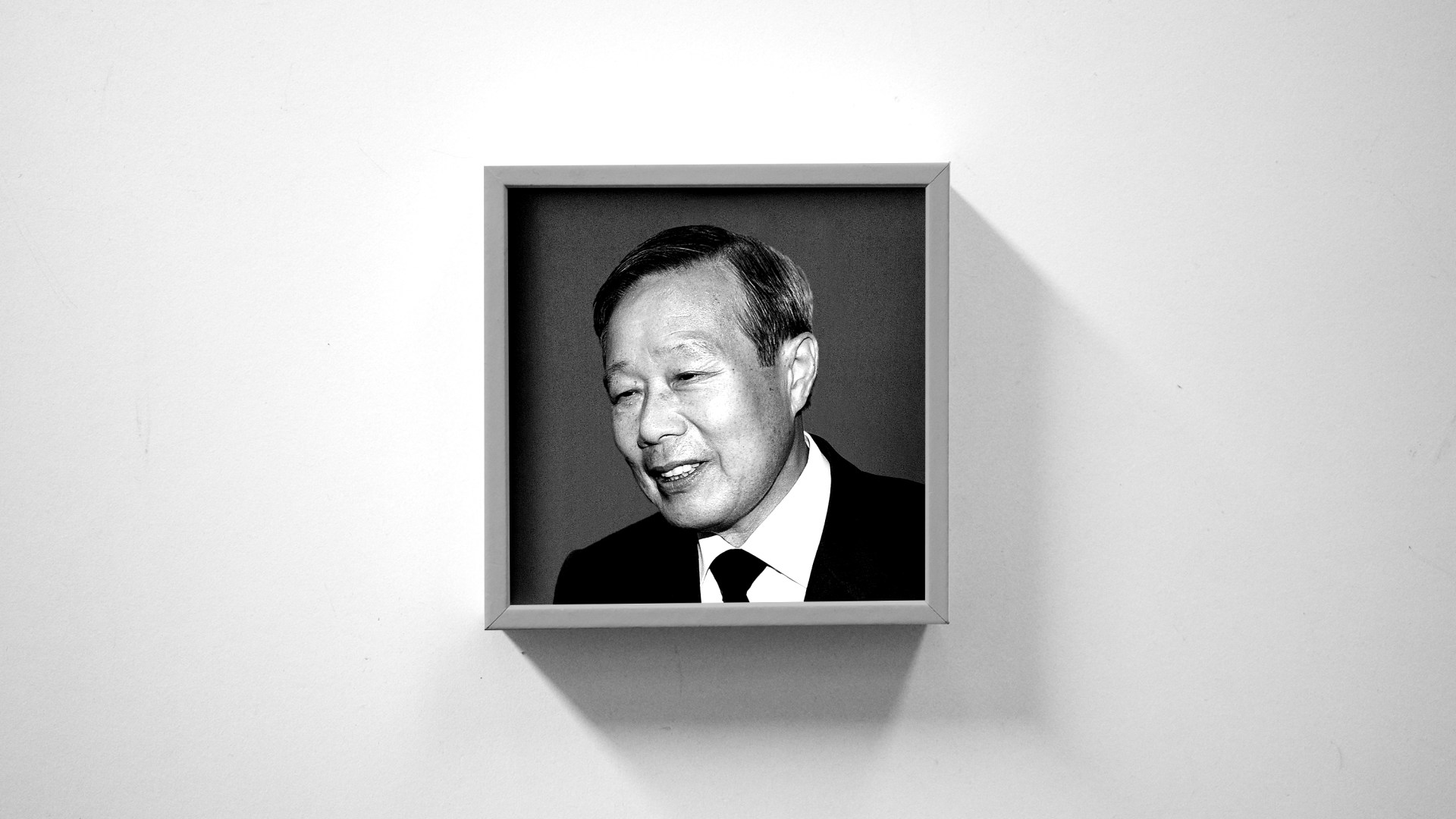
Died: Kim Shin-jo, North Korean Commando Turned South Korean Pastor

“I came to kill the president, but God chose to save me.”

Kim Shin-jo
Christianity Today April 17, 2025
Illustration by Christianity Today / Source Images: AP Images

Kim Shin-jo, a North Korean soldier who tried to assassinate the South Korean president and who later became a pastor, died on April 9 at a nursing hospital in Seoul. He was 82.

Kim was the only member captured in South Korea from a North Korean commando unit that attempted to launch an assault on the Blue House, South Korea’s presidential residence, in 1968. After his capture, he embraced Christianity and served as a pastor in South Korea, where he preached a message of reconciliation and restoration.

Kim was born in 1942 to a poor family in the coastal city of Chongjin. Korea was liberated from Japanese rule in 1945, and USSR troops occupied the north. In 1948, North Korea became its own country. Kim Il-sung, (no relation), who became chair of the Communist party that same year, spread his cult of personality through the country’s education system, and Kim attended schools steeped in ideology that venerated the leader.

After graduating from high school, Kim served in the army, and the government later selected him for an elite special forces unit under the direct command of Kim Il-sung’s inner circle. The Kim Il-sung regime, intent on forcibly reunifying the Korean Peninsula under communism, trained such units for covert missions in the South.

On January 19, two days before the planned attack, the commando unit encountered four brothers who were gathering firewood on the South Korean side of the Demilitarized Zone. Military policy required them to kill any civilians they encountered. However, after internal deliberation, the unit chose to spare the Woo brothers. The brothers immediately reported the incident to the local police, prompting authorities to enter high alert. Their warnings ultimately foiled the assassination attempt.

On January 21, Kim and his 30 fellow commandos approached the Blue House, preparing to assassinate President Park Chung Hee, but South Korean forces began shooting at them. By the end of the day, later known as the “January 21 incident,” South Korea had killed 29 commandos and captured Kim alive. One soldier escaped back to North Korea.

During the news conference, Kim shocked the South Korea society by declaring he came to “slit the throat” of Park. But within weeks he began to defend himself. “I didn’t fire a single bullet toward any civilian. I didn’t come to kill the people of South Korea—I was simply carrying out an order to kill the president of South Korea.”

Following his capture, authorities placed Kim under tight surveillance, classifying his situation as a special security case. They eventually released him after determining that he had not harmed any civilians during the Blue House raid and had fully renounced North Korean ideology.

Kim’s defection resulted in the execution of his family in North Korea under the regime’s collective punishment system. He credited his survival to “God’s sovereign grace.”

At a national level, the January 21 incident sparked the government to adopt stronger national security policies against North Korea, bolster security around the Blue House, and establish the Homeland Reserve Forces. Around the country, anti-Communist sentiment grew.

In 1970, Kim became a South Korean citizen. As he began his new life, he asked himself, “Who am I? Why am I here? What am I living for?” As he later recounted in his autobiography I Speak of My Sorrowful History (1994), these existential inquiries marked the beginning of his journey of faith.

The same year, he married Choi Jeong-hwa, who had written him comforting letters after having been moved by his story. Her devotion and faith became the catalyst for his own spiritual transformation. In 1981, he was baptized at Sungrak Church in Seoul where he confessed, “I came to kill the president, but God chose to save me.”

Kim’s conversion was not merely a change of religion. His education in North Korea had been deeply steeped in Communist ideology, and only through faith did he begin to contemplate human dignity and the existence of God. He often said his faith had liberated him from a life of bondage.

In 1989, Kim founded the Christian Fellowship of Defectors for the Gospel. The ministry offered resettlement, spiritual restoration, counseling, and community resources for North Koreans who had crossed the border. He regularly led Bible studies and prayer meetings and mentored North Korean youth.

Kim frequently spoke throughout the country, delivering more than 3,000 talks on national security and Korean reunification. His lectures combined gospel evangelism with anti-Communist education and testimonies about life under the North Korean regime, stories that resonated especially with youth and military personnel.

Kim also emphasized North Korean human rights and the repatriation of abductees. He advised the South Korean National Assembly and a political party on North Korean and human rights and he consistently advocated for dialogue between South and North Korea to be grounded in truth and human rights.

Kim’s life after conversion did not exempt him from hardship. In the 1980s, he began receiving death threats from the North, including threatening letters, either sent anonymously or signed with revolutionary slogans. Some of these accused him of being a “puppet of the South” and warned him that “punishment is coming.”

On January 21, 1997—the 29th anniversary of the Blue House raid—Kim was ordained as a pastor and began serving at Sungnak Sambong Church. He also ministered at Sungrak Church, the church that baptized him.

In his later years, Kim focused on writing and spiritual reflection. In addition to his autobiography, he published a devotional, The Goose That Cannot Fly. In it, he compared himself to a migratory bird who had been stopped “not by failure, but by grace.” “But in being stopped, I was saved,” he wrote.

Kim died of old age after a two-month stay at a nursing home. Among the mourners at his funeral was Woo Seong-je, the youngest of the four Woo brothers who encountered Kim before the assassination attempt in 1968. Woo stated, “Through him, I saw that the life I saved went on to save many more.”

Kim is survived by Choi and his son and daughter.

Ideas

MLK’s Famous Letter Changed a DC Church

A newly discovered note from CT’s first editor, Carl Henry, shows how King’s Birmingham Jail missive shifted a white pastor’s view on integration.

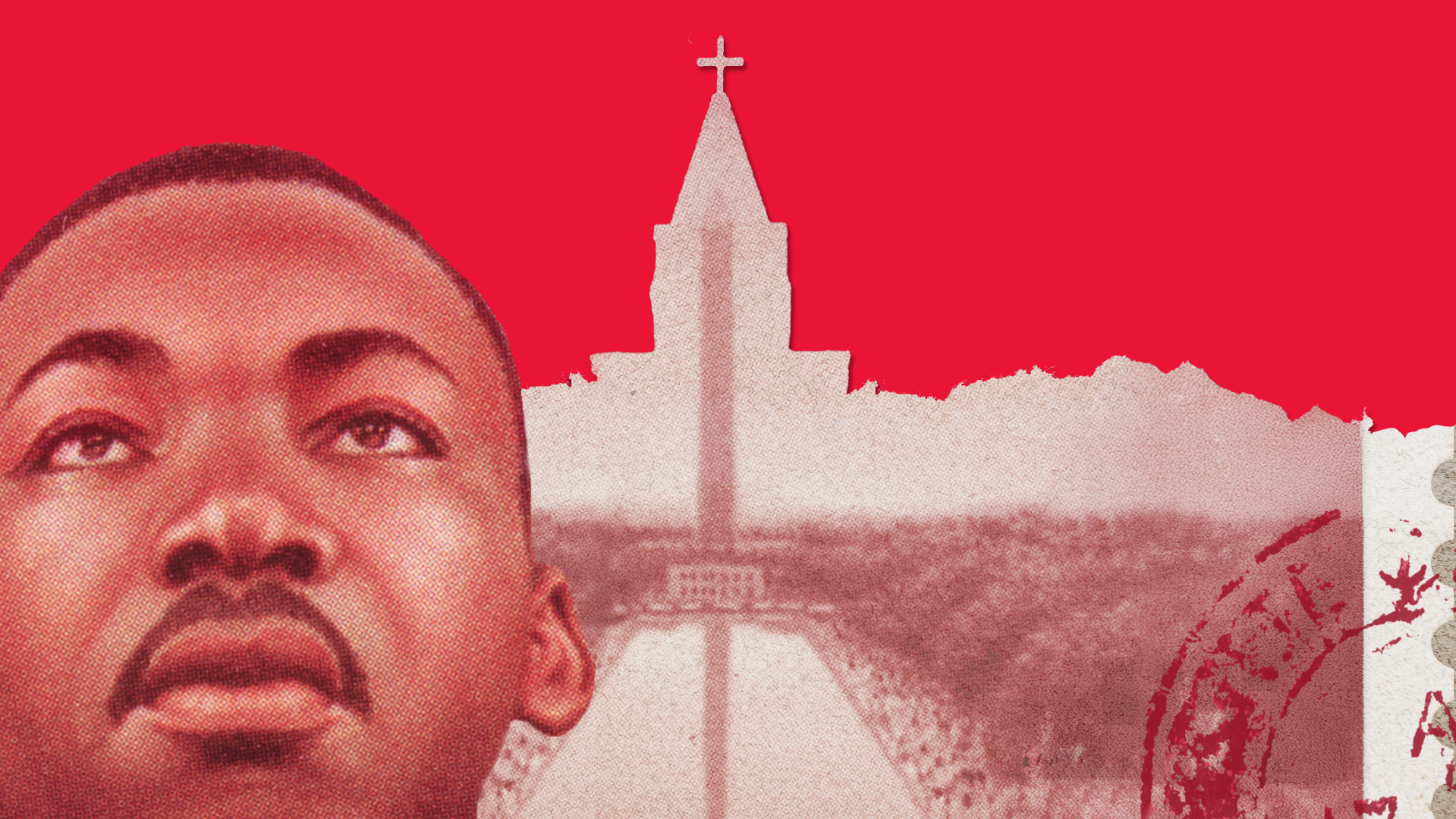
MLK Jr. church postage stamp on a red background.
Christianity Today April 16, 2025
Illustration by Sparkle Boea / Source Images: Getty

Every April since 1963, thousands recall Martin Luther King Jr.’s Letter from Birmingham Jail and its timeless call to reject complacency in the face of injustice. Aimed not at staunch segregationists but at well-meaning white moderates, King’s letter sent shock waves through the nation and countless churches. His words still challenge us today—but back then, they forced many to reckon with their own passivity in real time.

One of those people was R. B. Culbreth. As pastor of Metropolitan Baptist Church (today Capitol Hill Baptist Church) in Washington, DC, Culbreth pastored a congregation that, like many Southern Baptist churches, had not yet integrated its membership. For years, Metropolitan embodied the kind of moderation King decried: supporting civil rights in theory while hesitating to take a firm stand. But around the time King penned his letter, Culbreth shifted his views, which we know about because of a recently discovered letter written by Carl F. H. Henry, a Metropolitan member who was also the first editor of Christianity Today

On May 2, 1963, Culbreth would have watched in horror, alongside millions of Americans, as television channels broadcast brutal scenes from civil rights protests against racial segregation in Birmingham, Alabama. Day after day, newspapers printed vivid pictures and television networks aired shocking footage of peaceful demonstrators being knocked off their feet by high-pressure hoses and attacked by police dogs. For Culbreth, the images would have been more than just headlines—Birmingham was his hometown, a city he loved.

Just weeks before those images hit the news, King wrote directly to people like Culbreth. As clergy far and wide were digesting the letter and the violence in Birmingham, something happened that changed Culbreth from a typical white moderate to someone who publicly supported integration. 

By 1963, Metropolitan Baptist Church was nearly a decade into grappling with how to navigate the changing racial and political landscape as a downtown church in the nation’s capital. In the early 1950s, Black Washingtonians endured a city nearly as rigidly segregated as any in the Deep South. The only privilege they had over their counterparts in Atlanta or Birmingham was the ability to ride in the front of a bus—until it crossed into Virginia. 

Many African Americans lived in Washington’s notorious “alleys”—cramped, squalid areas hidden behind main thoroughfares. These dwellings, originally built as horse stables, lacked plumbing and basic sanitation. Some 15,000 were forced out of their homes during the redevelopment of southwest Washington in the 1950s, relocating to the area of southeast Washington known as Anacostia. To this day, many of the city’s low-income and predominantly Black communities remain concentrated in Anacostia, a lasting legacy of mid-century displacement and segregationist housing policies.

Following the Supreme Court decision in Brown v. Board of Education in 1954 striking down segregated public schooling, resistance to integration intensified, leading to an explosion of private Christian schools. In 1953, Metropolitan considered starting its own Christian day school modeled after a church school in Charleston, South Carolina, citing concerns about evolution and racial integration. But after heated debate, the board of deacons narrowly voted against it.

By that time, Metropolitan had begun sponsoring a Sunday school and chapel in Anacostia, the fruit of the labors of an elderly widow and longtime white member named Anna Johenning. However, the once-majority-white neighborhood around the chapel, like much of the city, was undergoing demographic changes, and Metropolitan’s leadership, fully aware of the sensitivities of “racially mixed areas,” adhered to the Southern Baptist policy of segregated services. African Americans were welcomed to weekday programs but were encouraged to attend a separate afternoon service on Sundays.

As the conscience of the nation came under growing pressure to desegregate, members began questioning the chapel’s practice of segregated services. In response, Culbreth explained the church’s position in a 1962 letter to Samuel Southard, a professor at Southern Baptist Theological Seminary. He noted that while Metropolitan had no Black members, African Americans who visited Sunday services were seated without discrimination. The Southeast Chapel followed a similar approach in its morning worship service, while Black attendees were encouraged to attend an afternoon service designated for them. Weekday programs for children were fully integrated, with roughly 60 percent white and 40 percent Black participation. 

It’s unclear why the chapel’s children’s programs were integrated while Sunday services were kept separate. Culbreth insisted that the church was neither seeking integration nor actively maintaining segregation, and he acknowledged that many members would oppose any formal integration efforts: “We are not seeking to integrate, neither are we making an issue of it to remain a segregated church as such,” he wrote in his letter to Southard. Then came Birmingham. 

The brutal images of police dogs and fire hoses turned on peaceful demonstrators shocked the nation. But what I believe moved Culbreth even more was King’s open letter, which was addressed to white pastors and civic leaders sympathetic to the cause of justice yet cautious about its methods.

“I have almost reached the regrettable conclusion that the Negro’s great stumbling block in his stride toward freedom is not the White Citizen’s Counciler or the Ku Klux Klanner, but the white moderate, who is more devoted to ‘order’ than to justice,” King wrote on April 16, 1963. He rebuked those who called on African Americans to “wait” for relief while shielded from the suffering that flowed out of “the disease of segregation,” noting further that “shallow understanding from people of good will is more frustrating than absolute misunderstanding from people of ill will.” 

A few weeks later, Culbreth delivered a sermon titled “The Musts of Jesus.” In it, he decisively broke with his previous moderation, publicly coming out in favor of integration and condemning the silence of white ministers in Birmingham, the position he had previously defended. It’s unclear whether Culbreth viewed the shift as repentance. The change, though, was big enough for others to notice. 

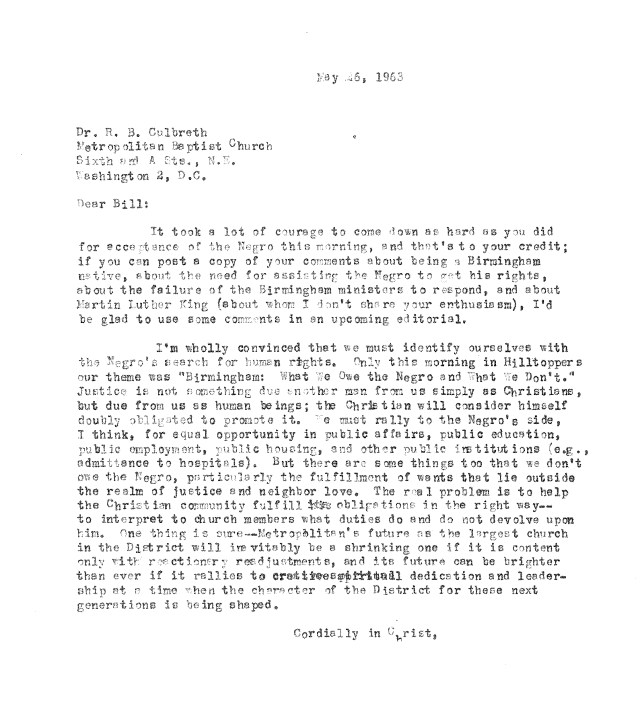
After the Sunday sermon, Henry, CT’s top editor at the time, told Culbreth in a letter that his call “for acceptance of the Negro” had taken “a lot of courage.” 

“And that’s to your credit,” Henry added, while also expressing some concern regarding King (“about whom I don’t share your enthusiasm,” he wrote, without offering further details). Among other things, Henry commended Culbreth for his words about “the failure of the Birmingham ministers to respond” to civil rights demonstrations. 

“I’m wholly convinced that we must identify ourselves with the Negro’s search for human rights,” continued Henry. “Justice is not something due another man from us simply as Christians, but due from us as human beings; the Christian will consider himself doubly obligated to promote it. We must rally to the Negro’s side, I think, for equal opportunity in public affairs, public education, public employment, public housing, and other public institutions.” 

Carl F.H. Henry letterCHBC Archives
A letter from Carl F.H. Henry to R.B. Culbreth, May 26, 1963.

What Metropolitan needed, concluded Henry, was “creative spiritual dedication” at a time when the character of Washington (and of the nation) was being determined. Was the church ready for the challenge? Was it ready to repent from the sin of partiality and the comfort provided by silence?

After Culbreth’s sermon, members began showing a change of heart and moved toward desegregating services at the chapel in Anacostia.

The church’s deacons soon affirmed that “all candidates for membership shall be treated in the same manner,” rejecting any two-tiered approach to membership. By 1964, segregated services at the chapel were a relic of a not-so-distant past. When the chapel was finally ready to constitute itself as an independent church in 1966, the majority-Black congregation adopted the name Anna Johenning Baptist Church as a tribute to the member of Metropolitan who had initiated the work. 

Metropolitan, which changed its name to Capitol Hill Metropolitan Baptist Church in 1967 and then to Capitol Hill Baptist Church in 1995, welcomed its first African American member in 1969: Margaret Roy. The fight for racial integration, however, was not quite complete. Four white families left the church when Roy joined. But despite experiencing some serious unpleasantness, Roy resolved “that she would treat people right regardless of how they may treat her,” she recalled in an interview conducted in 1997. At a women’s Bible study, Roy said one woman “turned her back on her,” but the same woman later “became a friend.”

Today, Anna Johenning Baptist Church—now called The Temple of Praise—and Capitol Hill Baptist Church, where I pastor, continue to preach the gospel in their respective communities on separate sides of the Anacostia River. They don’t maintain special ties. But a shared history unites them into one story, and a shared Spirit unites them into one body. And though a river divides them today, one day a river will unite them.

In Revelation, the apostle John paints a picture of the saints gathered around the river of the water of life, a crystal-clear body of water flowing from the throne of God. On either side of the river are the branches of the tree of life, whose leaves are “for the healing of the nations” (22:2). One day all the saints will join at the foot of that river to worship the Lamb. On that day (v. 4), every wound of sin and strife and every tear of injustice will be wiped away because we will see his face.

Caleb Morell is an assistant pastor at Capitol Hill Baptist Church and the author of A Light on the Hill: The Surprising Story of How a Local Church in the Nation’s Capital Influenced Evangelicalism.

Ideas

The Model Immigrants in Legal Limbo

Contributor

They followed the law. They got in line. They never took welfare or committed a crime. So why would Kevenson and Sherlie be sent back to Haiti?

A collage of photos of the couple from the story.
Christianity Today April 16, 2025
Illustration by Elizabeth Kaye / Source Images: Courtesy of Kimberly Snelgrooes

If you’re driving northeast out of Amarillo, Texas, up Highway 60 toward my hometown of White Deer, you might stop for gas at the Cefco in Panhandle, population 2,358. And at the Cefco counter, you might meet Sherlie Joseph, a young Haitian woman who greets her customers with a gentle accent and a kind smile. 

She’s a legal immigrant who has lived in Panhandle since July 2023 with her husband, Kevenson Jean. They entered the US by applying for a spot in the CHNV (Cuba, Haiti, Nicaragua, and Venezuela) humanitarian parole program, which the Biden administration created in January 2023 in an effort to control the flood of people from those countries who were crossing the southern border on foot.

Like other approved applicants, Sherlie and Kevenson had to have American sponsors—ordinary people, not government officials—who were willing jump through bureaucratic hoops and financially support the couple while they got their bearings in the US. Only then could they apply to the program from Haiti and, after approval, travel here by plane.

That’s how Sherlie and Kevenson ended up in this small Texas Panhandle community. They are model legal immigrants, the kind of couple any politician would love to tout in a stump speech: They got in line. They filled out the paperwork. They completed background checks. They proved that they had the financial resources and personal support networks to make their own way in America without burdening the social welfare system. Once they got here, they entered the legal workforce, often doing jobs that few Americans want, slowly climbing the ladder to better-paying roles. They’re even church-attending, Bible-believing Christians.

And until a federal judge halted a Trump administration plan on Monday—a ruling sure to be appealed—the US government was kicking them out of the country.

That might seem bizarre if you’ve mostly heard discussion of a crackdown on illegal immigration. Kevenson and Sherlie are here legally, so why would they be removed?

The narrow answer is that on March 29, along with more than 500,000 other people who went through the same entry process, they received a form letter with orders to leave the country by Thursday of next week: April 24, 2025. President Donald Trump was ending the Biden-era humanitarian parole program, the letter explained, so back to Haiti they were told to go—back to a country with barely the semblance of a government, a country so troubled by gang violence that bodies rot in the streets and armed drones roam the capital city, aiming for gang members and sometimes hitting children instead.

The broader answer is that the president ran on a commitment to secure our borders, and, as pitched on the campaign trail, his plan hinges on deporting illegal immigrants, focusing on those with criminal records. This is a reasonable policy objective that has broad support among many Americans. 

But since coming to office, the Trump administration has not limited its focus to people here illegally and people committing crimes. It has targeted an ever-wider group of immigrants, including people—like Sherlie and Kevenson—who followed the law at every turn. White House rhetoric has blurred the difference between illegal immigrants, refugees, and asylum seekers and between visas like an H-1B (for professionals) and an F-1 (for students). Glib social media posts have suggested with varying degrees of subtlety that all migrants are criminals, lumping together legal immigrants like Kevenson and Sherlie with someone who walked across the border with pockets full of fentanyl.

Legally, the president is within his rights to decline to renew the CHNV parole program, which was offered at the discretion of the Department of Homeland Security. (His authority to revoke the two-year paroles already granted is what was challenged in court.) But legal does not mean prudent, let alone right. And though border security is a good policy goal, the means we use to achieve that end matter. We can support strong border security and reject cruel and capricious policies that mislead the American people and upend legal immigrants’ lives. As Christians, we can want order in our immigration system and obey Christ’s command to care for the vulnerable (Matt. 25:31–46).

This is a lesson Kevenson and Sherlie’s friends in Panhandle have learned since that notice arrived in March. One of the couple’s sponsors, Kimberly (Kim) Snelgrooes, is a childhood schoolmate of mine. She met Kevenson back in 2019 when she was visiting Haiti on a short-term mission trip. They became good friends on that trip, and Kevenson eventually went to work for the nonprofit ministry Kim founded in Haiti, Hills of His Grace

But as gang violence worsened, the job put Kevenson in danger. In 2021, thieves in Haiti’s capital, Port-au-Prince, held a gun to his head, demanding the US dollars he had just collected for ministry operations. So when Kim heard about the CHNV humanitarian parole program, she asked Kevenson and his then-girlfriend, Sherlie, if they wanted to apply with Kim’s family’s help.

That sponsorship was a big commitment: Anything Kevenson and Sherlie needed—from airline tickets and housing in Texas to medical care and legal assistance—the Snelgrooes family promised to provide. But though Kim and her husband, Jered, were the ones who signed the I-134A petition and hosted Kevenson and Sherlie in their home for their first six months in America, resettling the couple was a responsibility shared by their community in Panhandle, especially other members of the town’s First Baptist Church. This network helped the young Haitians find jobs, learn to drive, navigate the grocery store, and otherwise become self-sufficient new Texans.

Since Kevenson and Sherlie received their deportation notice, their American friends have scrambled to understand what’s happening and determine what might be done. The more they learned, Kim told me, the worse it seemed.

Trump’s decision to cancel the program may hold up in court, even after Monday’s halt: Policies that live by executive action can easily die by executive action. But pushing for these immigrants to lose their legal status isn’t reasonable or just, for it goes well beyond simply closing the program to new applicants. It also rescinds the permission previously granted to people like Kevenson and Sherlie, people who have spent years building peaceful, productive lives in the US while taking legal steps to achieve permanent residency and then citizenship.

On paper, that might not sound like a huge deal. Tough breaks, perhaps, but just an unfortunate side effect of a necessary reform. But for Kevenson and Sherlie and the community that has come to love them, it’s chaotic, confusing, and cruel.

This couple was allotted less than a month to rearrange their entire lives and told they’d be fined $998 per day if they missed the deportation deadline. Kevenson was further told that he’d lose the commercial driver’s license he earned after completing a program at Clarendon College Pampa Center to become a commercial trucker—a gratuitous twist of the knife. If they head back to Haiti, Kimberly told me, they’ll return to a “very real humanitarian crisis.” Even reaching their families’ homes, they explained to a local news outlet, would be extremely dangerous.

For now, pending new legal developments, Kevenson and Sherlie will stay in Texas. But their lives are still in limbo. If the Trump administration wins on appeal, they’ll have to decide what to do.

One alternative would be to go on to a third location, maybe Canada. But that prospect isn’t practical or appealing—they love Panhandle, Kim said. “They have a community of friends here. We’re their family, and they want to be where their people are.” Yet how can they stay, if those daily fines come back in the mix? Monday’s court ruling was a welcome reprieve, but the matter is far from settled.

That’s not for lack of trying. If there’s anything like a silver lining in this story, it is the way Panhandle has rallied to the couple’s side.

This town is Trump country through and through. In the 2024 general election, nine in ten voters in Panhandle’s county cast their ballots for Trump. They voted for border security; make no mistake. But they didn’t vote for this. “I don’t know anyone in Panhandle who knows our story and thinks we ought to be forced to leave,” Sherlie told me.

I’m certain she’s right. This part of Texas is my home. I understand the culture. Respecting law and order means a lot out here, but so does justice and fair treatment and taking care of your neighbor. And as word spread about the deportation notice, locals stepped up on Kevenson and Sherlie’s behalf.

Their landlord said they can stay in their home rent-free if their work permits are revoked, “as long as it takes to get things sorted out.” They’ve had offers of cash jobs. Some church members have been researching whether the building can function as a sanctuary in the political sense or if immigration officials will force their way in. (Last week, a federal judge “declined to block [a] new Trump administration policy allowing immigration authorities to carry out arrests at ‘sensitive locations’ like churches and other religious spaces.”) Other church members have been consulting with attorneys, praying for promising legal appeals like the one on Monday, and writing letters to elected officials like Congressman Ronny Jackson, pleading for help. 

“There was a 90-year-old lady at church on Sunday who asked if I could help her learn how to cut and paste on her computer so she could email her representatives expressing concern for this administration’s treatment of legal humanitarian parolees,” said Peggy Chaney, Kim’s mom. “She listens to Fox News 24/7, very conservative, and a die-hard Republican. But she thinks this is wrong.” 

She’s right. And that realization—that willingness to place even the strongest political convictions beneath the authority of Jesus—is exactly what I pray to see here in West Texas and across our country over the next four years. It is possible to like Trump’s policies, including his drive to stop illegal immigration and secure the border, and yet refuse to cede an inch of our Christian responsibilities to do justice to the foreigner (Ezek. 22:29).

“It is time that all the churches stir themselves to make plain to the nation the tragic mistake it is making. … The method is not democratic, is not in accord with American traditions, and is not right.” Charles Clayton Morrison wasn’t talking about Kevenson and Sherlie when he said that. The editor of The Christian Century magazine from 1908 to 1947, he was writing on the internment of Japanese Americans during World War II

I don’t want to overstate the similarities between the two situations. American politics does not need another overwrought World War II analogy. But lately I often find myself thinking about the internment program and how American Christians were slow to condemn its injustice. 

The “churches failed to organize a unified protest against the evacuation during the first critical months of 1942,” documents historian Gerald L. Sittser in A Cautious Patriotism, though “they did pull together to meet the practical and religious needs of the Japanese later on. It was that early failure to protest the government’s policy, in fact, that reinforced their commitment to serve the Japanese Americans once evacuation began.” That commitment was good and redemptive—but what might have happened if Christians had acted before the evacuations were a sure thing? Could internment have been prevented altogether?

With time, many American Christians did protest the government’s treatment of Japanese Americans. For churches on the West Coast in particular, I suspect the injustice must have become impossible to ignore. That’s certainly how it is in Panhandle. While you’re chatting with Sherlie as you buy a coffee and fill up your tank, our country’s big and complex and amorphous immigration policy is at least partly simplified. It has a face, the face of a friend.

The task before us as Christians, I think, is to cultivate compassion and stay alert to injustice before it is glaringly present among us—before it’s too late to stop a big government bureaucracy grinding up innocent people’s lives. We can’t simply assume the courts will make things right.

As followers of Jesus, we each must cultivate a critical eye toward our “own” parties. We must stay alert, recognizing that earthly rulers are prone to manipulation, power plays (Matt. 20:25), and ungodly acts of injustice (Ecc. 5:8–9).

Again, that doesn’t mean being soft on immigration. It doesn’t mean turning a blind eye to crime or accepting disorder at the border. It’s possible to pair strong border policy with compassion and justice. It’s not possible to pair compassion and justice with indifference to human suffering (Luke 10:25–37).

That’s what makes the people of Panhandle such a worthy example right now. They’re overwhelmingly politically conservative Republicans. Most folks are evangelical Christians. They typically support Trump and his administration’s goals.

But they don’t support what’s been happening to Sherlie and Kevenson, and they are pulling together to protest the couple’s treatment and rallying to meet their needs. The people of Panhandle have not been idle in the face of injustice. They have “not become weary in doing good” (Gal. 6:9).

The question before the rest of us is whether we’ll follow that good lead. And right now, that question is particularly pressing for those of us who may wield some small influence with the party in power. Criticism from Democrats is unlikely to have much sway on Republican leadership, but for politically conservative, evangelical Christians who may yet broadly support this administration, this is an Esther moment. 

The people of Panhandle have been pleading for the king’s mercy, but the moment demands a louder and broader outcry, especially if the administration tests Monday’s judicial ruling. For, as Esther asked (8:6), how can we bear to see disaster fall on people like Kevenson and Sherlie? How can I bear to see the destruction of this family, and so many others too? How can we remain silent in such a time as this?

Carrie McKean is a West Texas–based writer whose work has appeared in The New York TimesThe Atlantic, and Texas Monthly magazine. Find her at carriemckean.com.

News

Under Trump, Conservative Christians Want to Reshape Public Education or Flee the System

While some states move toward bringing the Bible back into schools, homeschool advocates prioritize parental rights and freedoms. 

Students with school supplies in front of a cross
Christianity Today April 16, 2025
Thomas Simonetti for The Washington Post via Getty Images

“We’d rather be free than have it be fair.”

Laura Gideon, a Christian homeschooling advocate, repeated the line from the rotunda of the Iowa State Capitol, where parents sat in rows of chairs alongside school-aged kids and babies sleeping in strollers.

Homeschool Iowa’s annual Capitol Day, held in early April, invites families to Des Moines to hear speakers, tour the Capitol, and talk with legislators.  

Gideon, director of public relations for Classical Conversations, a Christian homeschool program, argued that parents should be “left alone to shoulder the God-given responsibility to train up their children in the way they should go.”

In Iowa, the lobbying efforts are to discourage the state legislature from adopting new regulations on homeschooling; families can currently educate their kids outside of public schools without any initial reporting requirements or mandatory number of instructional days.

In Gideon’s words, the pursuit of equity in public education would lead to “Marxist,” redistributive policies—echoing recent pushback against DEI initiatives. She claimed efforts to close education gaps with state standards or regulations will inevitably lead to the restriction of freedoms or unfair impositions on parental rights. She urged attendees to “promote and protect education independence.”

In neighboring Illinois, current proposed legislation that would require homeschoolers and private schools to register with the state and meet curricula requirements or face misdemeanor charges elicited outcry from the Illinois Christian Home Educators and the Home School Legal Defense Association.

As sweeping changes to the US Department of Education raise questions about the future of American public schools, conservative voices are speaking out about parents’ rights to make educational decisions without government interference—while others call on Christian parents to stay in the public school system and seek to reform it.

In his 2023 bestseller Battle for the American Mind, Fox News’s Pete Hegseth (now the the US  defense secretary) argued that the public school system had become a tool of indoctrination and that Christians ought to advocate for a return to classical education and lead an insurgency against the liberal agenda.

Building on the momentum of the school choice movement, President Donald Trump campaigned on promises to “end wokeness” in American public schools and has sought to withhold federal funding from schools that facilitate diversity, equity, and inclusion (DEI) programs or promote gender ideology.

Meanwhile, postpandemic anxiety about education continues to be a boon for homeschooling and school choice. Advocates have seen an increase in interest in alternatives to public education as data suggest that closures and online instruction have left students with learning gaps and loss

Aaron Neely, the executive director of Homeschool Iowa, said that while the majority of parents homeschool for religious reasons, the number of nonreligious homeschooling families is increasing. Nationally, 3.4 percent of students were homeschooled during the 2022–2023 school year, up from 2.8 percent in 2018–2019.

Today’s school choice coalition includes advocates of homeschooling, expanding charter and private schools, offering school voucher programs, and loosening federal regulation of education. In states like Iowa, distrust in public education and the convergence of interests among right-wing activists and conservative Christians have strengthened the movement. 

“The New Right is very Catholic,” said education researcher Jennifer Berkshire, coauthor of The Education Wars. “And there are libertarian entrepreneurs, who have always overlapped with evangelicals when it comes to education. Right now, it feels like it’s all fused.”  

Events like Capitol Day illustrate Berkshire’s point. Iowa attorney general Brenna Bird, a Catholic, told attendees, “You are the salt and light of the world.” Turning Point USA, the conservative activist organization founded by Charlie Kirk, was a top-billed sponsor.

Trump has issued an executive order directing his secretary of education to reduce the federal education department “to the maximum extent appropriate and permitted by law.” The order, signed March 20, promises to reimagine the US education system, “returning education to parents and communities” and securing parents’ ability to choose where their kids go to school with as little government interference as possible. 

The Trump administration is also taking its fight to the public system by seeking to reduce the size and power of the education department and give state governments more leeway to implement faith-based curriculum or weed out content with a perceived liberal or “woke” slant.

Some Christian leaders are cheering the reduction as a move toward decentralization and away from a system they perceive as being overrun with ideology that runs counter to their faith. Others are hoping it allows Christians to reshape public education from the top down by infusing it with their values. 

Ryan Walters, Oklahoma’s state superintendent, has requested full control of federal funds allotted to the state’s schools, saying that the move is in line with the president’s vision of education and that it will allow the state to “take the reins” of its schools. 

Walters, a member of the Church of Christ, has spearheaded efforts to get the Bible into the classroom. The state legislature refused his request for funding to purchase Bibles for public school classrooms, and Walters is now seeking donations to supply schools with “God Bless the USA” Bibles with the support of country singer Lee Greenwood.

Last year, the state announced that all public schools would be required to incorporate the Bible and the Ten Commandments into their curriculum. 

In states like Oklahoma, where over 90 percent of students attend public schools and students in rural communities have limited options, Christian advocates see value in reshaping public education rather than abandoning it. 

In some ways, Berkshire says, this is a familiar battleground. In the 1980s and ’90s, evangelicals in the camp of leaders like author and conservative activist Tim LaHaye decried the growing influence of “secular humanism” in public schools and advocated for increased institutional support for school prayer, with the backing of President Ronald Reagan. 

But much of that fight has been forgotten, according to Berkshire, because conservatives eventually retreated—the movement splintered over different goals, and those with fringe views alienated others in the coalition. Now, Berkshire said, conservative school choice activists have momentum on their side, as well as galvanizing culture-war issues like critical race theory and gender. 

“There’s a split between people who want to seize the institution back and others who think that the schools are too lost,” she said.

For many Christian parents, doubts about the quality of instruction in math or phonics are secondary or at least on par with concerns that public schools have become too ideological.

“It feels like shooting yourself in the foot to, as the expression goes, ‘hand your kids over to Caesar’ for hours of the day,” said Christine Hill, a mother of two teens who drove halfway across the state for Capitol Day. 

Christian students also express concerns about the effects of having to constantly confront teaching that conflicts with their closely held beliefs. 

“I don’t want to be told over and over that we evolved from slime,” said Levi Hill, Christine Hill’s 15-year-old son. “Homeschooling is better for your mindset. It’s a more well-rounded education.” 

Activists describe public schooling as a threat to children’s moral formation. At Capitol Day,  Attorney General Bird said it is imperative to preserve the right to homeschool “because we want kids with strong character and the right moral compass.” She reminded the audience of the importance of engaging in activism on “parental rights issues like vaccines.” 

Both Gideon and Bird referenced Proverbs 22:6, suggesting that preserving parental rights is about securing the right for parents to raise their children “the way they should go.”

Some Christian homeschool advocates are quick to say that the decision to educate their children isn’t about fear or dismantling public education. Some see it as a way to guard against stress and overscheduling. Others say that it’s the best way to care for their neurodivergent children.

Gideon’s insistence that homeschooling families would “rather be free than have it be fair” appeals to parents with options. “You can’t have both fairness and freedom,” Gideon also said. “One must be sacrificed to secure the other.” 

The freedom to choose may be best understood as a privilege rather than a right, author and homeschool parent Gretchen Ronnevik wrote for CT

Ronnevik also suggests that parents should keep a healthy perspective when it comes to the power of their choices in light of God’s sovereignty: “Our ability to raise our children in the faith isn’t dependent on our location, our income, and other material advantages. Great saints have been raised in places where Christianity is illegal. Many deeply faithful Christians never spent a day in school. God is not bound by our educational choices.” 

addApple PodcastsDown ArrowDown ArrowDown Arrowarrow_left_altLeft ArrowLeft ArrowRight ArrowRight ArrowRight Arrowarrow_up_altUp ArrowUp ArrowAvailable at Amazoncaret-downCloseCloseellipseEmailEmailExpandExpandExternalExternalFacebookfacebook-squarefolderGiftGiftGooglegoogleGoogle KeephamburgerInstagraminstagram-squareLinkLinklinkedin-squareListenListenListenChristianity TodayCT Creative Studio Logologo_orgMegaphoneMenuMenupausePinterestPlayPlayPocketPodcastprintremoveRSSRSSSaveSavesaveSearchSearchsearchSpotifyStitcherTelegramTable of ContentsTable of Contentstwitter-squareWhatsAppXYouTubeYouTube