Books
Excerpt

Parents of Prodigals Can Trust God is Good

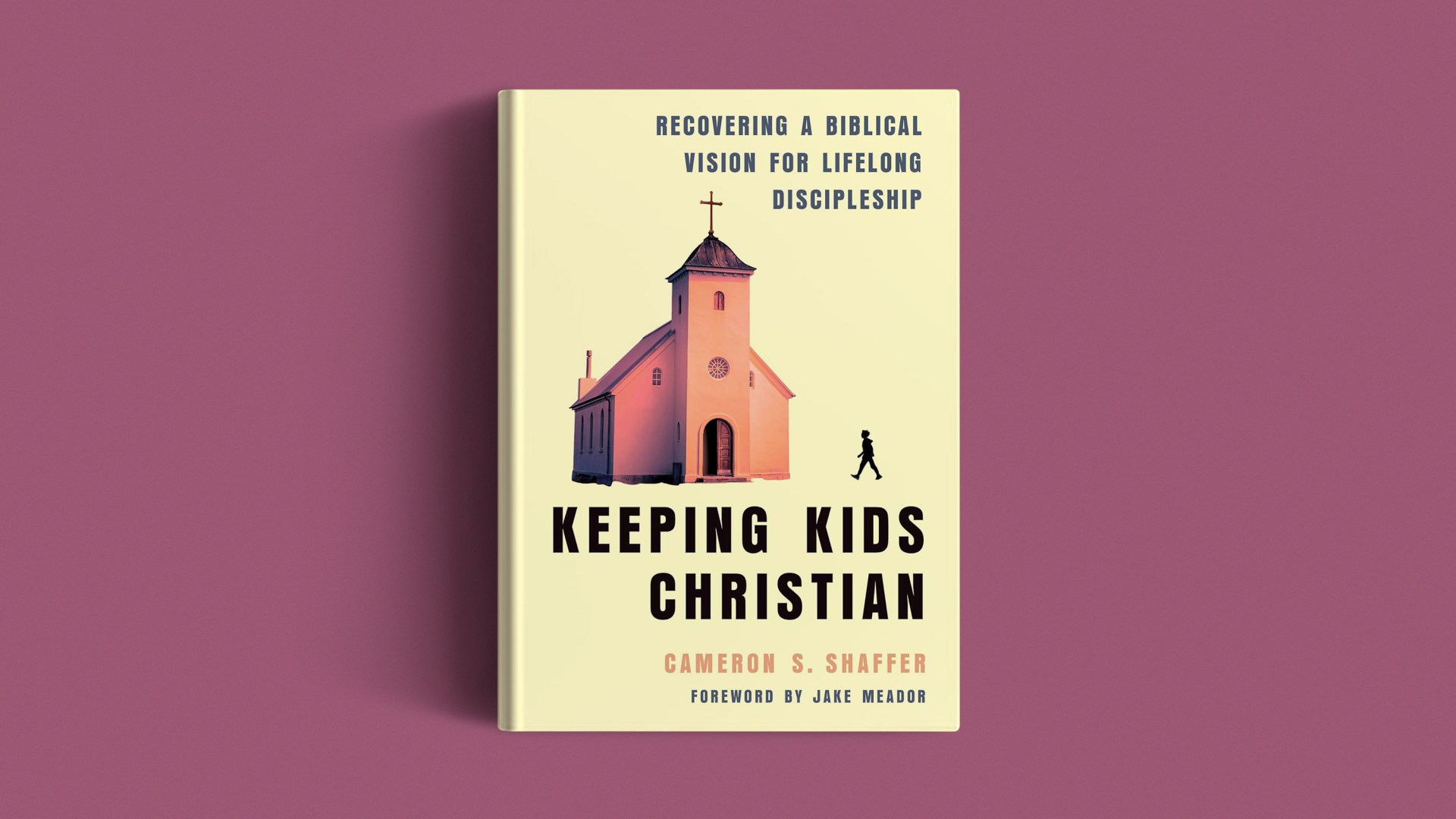
An excerpt from Cameron Shaffer’s Keeping Kids Christian.

The book on a purple background.
Christianity Today February 24, 2026
Illustration by Christianity Today / Source Images: Getty, Baker

One of my theological mentors was a great example of authoritative parenting, and yet two of his three adult children in no way considered themselves to be or lived as Christians.

Once I asked him and his wife what they thought about this, and their response was to point to their kids’ baptisms. This was not a desperate naiveté of the sort when a parent recalls that their kid once said the sinner’s prayer and therefore it meant that no matter how they lived their life and what their belief was, they were actually saved. No, when they pointed to the baptism of their children, they were pointing to the reminder of God’s promise: “Turn to me in faith, and I will be a God to you and your children.”

Their baptism is a permanent reminder of God’s promise to freely offer salvation. They were children of the covenant, and that would never change. Were they Christians? Not in any real sense, but the gift of baptism was a blessed comfort to their parents that God had already acted in their lives and marked them as his own and he wasn’t done with them yet. They may have wandered from the faith, but their story is not over.

This is true whether the kids were baptized as babies or baptized based upon their profession of faith and later abandoned Christianity. The great dechurching has come for the children of all Christian denominations.

And the great dechurching underscores the reality confronting many anxious parents: They can do everything right, or think they did, and their kids still may not remain followers of Jesus.

The hope of God’s people lies in his grace for the kids who have grown. And like with conversion, God’s gifts of the family and church have a role to play in building up the faith of adult children. Even when they have grown up, it’s never too late and no one is ever too far gone from the grace of God.

Parental influence remains the strongest factor in whether these adult children eventually return to the faith, with grandparents also playing a significant role. If pastors and churches desire to see young adults hold on to their faith—and to equip parents to exercise their lasting influence effectively—they must first understand why some kids walk away.

One of the most straightforward ways a transition away from faith occurs is when young adults stop identifying as Christian altogether. They no longer claim the label of Christianity, whether in surveys, conversations, or personal reflections. They may not be hostile to Christianity, but they don’t care about it anymore. This is related to but distinct from another significant shift: when kids cease to live according to Christian teachings, particularly in areas like regular church attendance, prayer, and engagement with Scripture.

While they might still consider themselves Christians in some sense, their lives no longer reflect active participation in the faith community or adherence to its practices. This drift often coincides with entering college or the workforce, where routines and priorities change.

Perhaps the most profound change occurs in those who undergo a process of deconstruction or deconversion. This involves reevaluating their beliefs, questioning long-held assumptions, and ultimately rejecting the faith they were raised in. The internet, with its wealth of information and diverse perspectives, can often play a significant role in accelerating this process.

My observation is that kids who are told they need to be a Christian in order to be a good person are most vulnerable to deconstruction. When they enter into a world full of non-Christians who are good people living fulfilled lives, many of whom are nicer than the Christians they know, it places into sharp relief the moral reasoning of their faith and invites a serious reexamination of it.

Mitigating this goes beyond parents and churches being transparent about sin, grace, and repentance (and therefore addressing hypocrisy) and requires getting the gospel right: Yes, Jesus sanctifies his people and they should improve morally, but the reason to be a Christian is to be rescued from sin and called into the fellowship of Jesus.

In many cases, these doubts and questions were already present during adolescence but were suppressed or unnoticed until the individual gained independence from parental oversight. It is this category of deconstruction and ceasing to believe that most people refer to when they speak of young adults leaving the faith. It represents a deep and often painful break from their religious upbringing.

Theologically, there are three ways we should understand why young adults raised as Christians might leave the faith. One perspective is that these kids never had genuine saving faith to begin with. While they were part of the covenant community, they were never truly united to Christ by faith. Their outward participation masked an inward lack of trust and transformation. As John writes, “They went out from us, but they were not of us; for if they had been of us, they would have continued with us” (1 John 2:19, ESV). As soon as the parental obligation to participate in the life of the church was lifted, they were able to act according to their true convictions. The good news here, of course, is that Jesus saves sinners, even sinners who grew up in church.

A second dimension is that belief is not a static state but a dynamic one. Many deconversion stories involve kids who sincerely believed in Christ during their youth but later moved away from that belief. These were not people who faked their faith or even deceived themselves. They truly believed in Jesus and the tenets of the Christian faith.

While saving faith is rational, its essence is trust in Christ, not intellectual assent or sheer willpower. Faith rests upon Christ as he is offered in the gospel, which means that someone’s earlier belief, even if it later fades, was not nonexistent simply because it didn’t endure.

Their belief was genuine in that it was rational and honestly held in the mind, but it was not a faith that truly rested upon Christ; the person’s mind and emotions may have been in the right spot, but they were never regenerated by the Holy Spirit. Just as belief can waver or change during young adulthood, so it is not permanently fixed in a current state of unbelief for a young adult.

The fact that someone no longer believes now does not mean they are beyond the reach of God’s grace. The sincerity of earlier belief and its current absence are both part of a larger spiritual journey.

The third theological lens is the story of the Prodigal Son, which offers hope for those who have wandered away from the faith. Many young adults enter phases of life where they become skeptical, disengaged, or entangled in sin. Yet the parable of the Prodigal Son (Luke 15:11–32) reminds us that God’s grace is always available, and those who stray can return.

The father celebrates the son’s return as if he had been lost and dead (v. 32) because relationally, that was what he was to his dad—estranged. And living estranged from God is as if we’re lost and dead to him. Returning in repentance is what restores us to life through God’s grace. The good news for parents of prodigals is that God specializes in finding the lost and raising the dead, and no one is beyond his reach.

Many parents do their best to protect their children from the sinful influences of the world—and they should! But sometimes that protection manifests in unhealthy ways, with the values and currents of the world unacknowledged and the curiosity of the kids met with dismissals. When parents impatiently or thoughtlessly pass over their kids’ questions and objections, they don’t prepare them for life outside the home. The faith of a child is like a tree; unless smaller winds blow on them to strengthen their resistance, they will collapse when the big storms hit.

Kids need to have the doubts and questions of their faith met lovingly and directly to build their resolve. For kids who walk away from Christianity, parental influence is often a determining factor in whether they eventually return.


Parents who can maintain a sincere, confident, and routine faith while extending warmth—even to children who have left the faith—create an environment of trust. When adult children feel they can approach their parents without fear of judgment or rejection, they are more likely to remain open to conversations about faith.

Do the children trust that their parents will listen to their experiences and questions without dismissiveness? When kids bring up negative childhood faith experiences, will they trust their parents to be humble and open to the criticisms, even if the parents don’t ultimately agree with them? Will the parents demonstrate care and love regardless of their children’s current beliefs or choices?

This does not mean acceptance or endorsement; it means the same kind of warmth and patience given to the child as a toddler or teenager, though expressed in an age-appropriate way. Even into adulthood, this is what helps kids hold on to and return to the faith.

Encouragingly, parents who fell short during their children’s upbringing can still make a positive impact. By embracing sincerity, warmth, and a listening ear, they can rebuild trust and foster an environment conducive to their children retaining or turning to faith. You never stop being a parent, which means that even empty nesters can continue learning how to parent.

One common danger is reverting to the dynamics of the parent-child relationship from earlier years. Parents must remember that their children are now adults with their own autonomy. Attempting to assert control, dismiss their skepticism, or dictate their faith journey is likely to backfire, pushing them further away. Respecting their independence while maintaining a supportive presence is crucial. Parents should aim to model a faith that is both confident and compassionate, demonstrating how belief is lived out rather than imposed.

Conversion happens by faith and covenant. Sometimes parents are terrible, and by the grace of God he saves their children anyway. Sometimes parents are wonderful and do everything so right that it’s not even “doing” something but just the very essence of their home life, and their kids do not come to faith in Jesus. And sometimes kids don’t stay Christian, and the failure of their parents to raise them well is the worldly cause of their not remaining in the faith.

All three of these are common realities in the church.

We have the reminder that salvation is always by God’s sovereign grace. We live in a fallen world, and doing everything right does not change the arithmetic of salvation. We may have been the very best parents, but that does not save our children. When we do everything right as parents, we are just stewarding God’s blessings well; he works through the normal means of family and church, but salvation is still his gift and prerogative to deliver. We need to entrust our kids to our Father and his provision of salvation through Jesus by the Spirit.

When we fail, God’s grace is powerful. He can work despite our parental failures and save our children. If we did wrong by our kids and they are still in the church, we should be reminded that God worked for their salvation despite our missteps. If we are to serve the church as positive models, we must confront our mistakes through repentance and striving to do better. And when we fail and our kids do not stay Christian, God’s grace—the work of Jesus to save us from our sin and sorrow—remains our hope.

God remains our only hope in life and death, blessing and sorrow, and we need to place the affliction of our kids walking away from the faith in his hands. And we continue to trust the grace of God for our kids. The Holy Spirit goes where he wills, and the children of God are born not of blood but through the blood of Jesus and faith in him.

When the sorrow of our children departing from Christianity confronts us, whether or not we did our best when they were kids, there is nothing better to place our hope in than the grace of God. His grace and purposes cannot be thwarted and will prevail. Our children’s stories are not done, and God is at work. Because of this, prayer for our children can and should characterize our lives.

The hope that the church can provide parents is not the promise that God will assuredly save their children, but that assuredly God is almighty, gracious, and abounding in steadfast love.  Parents of prodigals can trust that God is good and that the gospel of grace remains true even when the kids they love have wandered from the faith.

Cameron Shaffer is the senior pastor of Langhorne Presbyterian Church and serves on the board of directors for the World Reformed Fellowship. Content taken from Keeping Kids Christian by Cameron S. Shaffer, ©2026. Used by permission of Baker Books.


Books
Review

They May Forget Your Sermons, but They’ll Remember This

Reuben Bredenhof’s new book encourages pastors to focus on small acts of faithfulness.

The book on an orange background.
Christianity Today February 24, 2026
Illustration by Christianity Today / Source Images: Getty, P&R Publishing

A scene in the new film Wake Up Dead Man: A Knives Out Mystery offers a glimpse of what a good pastor looks like.

Without giving too much away, I can tell you that the film is about Father Jud Duplenticy, a Catholic priest who finds himself in the center of a murder mystery at his new parish. Father Jud is a prime suspect. His reputation, freedom, and future are at stake, and he does what any reasonable person would do: He tries to clear his name. To do this, he must solve the murder. This leads him to call the construction company that provided burial equipment connected to the crime scene. The call is meant to be a quick, fact-finding conversation, but it doesn’t go as he planned.

On the other end of the line is Louise, the woman who processes orders for the company. To Father Jud’s frustration, she’s chatty and not particularly helpful. As he tries to get off the phone quickly and politely so he can get back to his “real” work, she interrupts.

“Hey, Father, could I ask you somethin’?”
“Yeah, it’s—though, I mean—well, if you can make it quick.” …
“Father Jud, would you, uh—could you—”
“Louise?”
“Oh, God.”
“Louise?”
“Will you pray for me?”

In the brief silence that follows, Father Jud is deciding what kind of pastor he’s going to be. Despite his personal crisis, he does the priestliest thing imaginable: He takes a deep breath and says yes.

Father Jud pauses his plans—as urgent and important are they are—and takes time for this woman who is sharing her heart. For a few spectacularly unspectacular minutes, he becomes fully present to the sorrow of a stranger.

He offers no brilliant words of wisdom. As far as we know, the grieving woman doesn’t have a breakthrough. Yet it is one of the most moving and faithful depictions of the beauty, simplicity, and complexity of pastoral ministry I’ve ever seen in a film.

What does it mean to be a good and faithful pastor? I think it looks like Father Jud. It has little to do with great sermons and nothing to do with big platforms. Instead, it is about interruptions to our grand plans and the choice again and again to see those interruptions as the holy ground of ministry—much like Jesus did.

I watched the film as I was reading The Ministry of Small Things: Wisdom for Those Who Serve the Church. That scene shows us what this book invites pastors into. Rather than offering a vision of leadership built on platforms and influence, Reuben Bredenhof turns our attention to the small acts of faithfulness that are at the heart of pastoral ministry.

It is commendable for pastors to desire to “rise above the ordinary,” he writes, “but we don’t have to be notable or do notable things.” He adds, “In the pursuit of meaningful service for the Lord, we should remind ourselves that oftentimes the little things are the big things.” The late-night phone calls and hospital visits, the conversations that never make it into sermons or annual reports: These are the seemingly small things that end up being a big deal for the people we serve.

Like Father Jud on the phone, the book gently and compellingly insists that the core of ministry is found not in the fireworks but in the unremarkable, easily overlooked acts of presence through which God so often does his deepest work.

Bredenhof is professor of mission and ministry at Canadian Reformed Theological Seminary in Ontario. He previously pastored Reformed congregations in Canada and Australia. Both “hats”—professor and pastor—come through in this deceptively simple book that oozes with thoughtful and hard-won pastoral wisdom.

The Ministry of Small Things is an accessible and practical book on the art of pastoral ministry. It is composed of 30 short chapters, each of which is four to seven pages long. Every entry focuses on a different aspect of pastoral ministry, and all 30 have roughly the same flow. The chapters, with titles like “Just Show Up” and “Be Ready for Surprises,” each include a Bible verse that serves as a springboard. Bredenhof develops the themes through a combination of anecdotes and biblical reflection, ending each chapter with a question for further thought. Some entries resonated with me more than others did, but each offers a nugget of wisdom.

Bredenhof covers a lot of ground, but two key themes emerge. The first is the importance of presence. He writes, “In my eighteen years of being a pastor, I came to learn that a good portion of my work was a ministry of presence. God’s people need you to be there for them, literally.” Woven throughout the pages are example after example of how pastors can and should be present with their people in both joys and sorrows.

On the theme of presence, Bredenhof describes how important it is to be “the predictable pastor.” God’s people should come to expect their pastors to be there. They should know that pastors will visit in the hospital or at home. And, he adds, when pastors do visit, they should have clear and intentional plans to make the best use of the time while also remaining flexible enough to navigate the inevitable surprises.

Bredenhof is aware of the limitations of time, space, and capacity. A pastor can’t be in two places at once. His or her ability to be present really does depend on factors like the size of a congregation and the number of pastors on the church’s team.

The second clear theme in the book is the importance of the Scriptures for the work of a minister. Bredenhof believes the Bible is the bedrock of pastoral ministry. He writes, “This is what ministry is all about, bringing the Word of God to bear on the pressing matters of their heart.”

The book is full of stories showing how God’s Word can do the slow work of transformation. This is why Bredenhof makes the case that Scripture is the most powerful tool and resource for pastoral care. He writes, “No matter how compassionate or intelligent you may be, you cannot [yourself] feed the sheep of Christ effectively, much less tend to their spiritual heartaches and bruises. What you need—and what they need—is the unchanging truth of God’s Word.”

Bredenhof repeatedly encourages pastors to feast on God’s Word and feed God’s sheep with that same life-giving food. If pastors want to love and bless the people under their care, they must first know and love the Scriptures.

As I read this good little book, I’m not sure I discovered anything new about pastoral ministry. That is by no means a criticism or a weakness. Bredenhof’s aim is not originality. His goal is to offer encouraging, convicting, and compelling reminders of what really makes a good minister.

This book encouraged me as a pastor. Still, I want to highlight one weakness and one note for consideration.

The central weakness of the book relates to the author’s treatment of the Holy Spirit.

There is a common and wry criticism of certain corners of the evangelical tradition related to a pattern of downplaying the importance of the Holy Spirit in the Christian life. The criticism is that evangelicals often worship the Father, the Son, and the Holy Scriptures. I think that is an apt criticism of this book.

As a pastor, I affirm so much of what Bredenhof emphasizes in the book. What’s missing, however, is a clear and sustained emphasis on the role of the Holy Spirit in a pastor’s life. In addition to being present and relying on the Scriptures, good pastors also learn how to walk in step with the Holy Spirit as they shepherd God’s people.

For instance, Bredenhof urges pastors to branch out beyond bread-and-butter passages like Psalm 23 and Romans 8 when they encourage parishioners with God’s Word. Instead, pastors should try to share a word that speaks to each individual’s situation. He writes, “To speak a word ‘in season’ requires that we think carefully about the person we are going to visit. We should reflect on their circumstances and consider what might be a needed word from God.” Bredenhof acknowledges the ministry of the Holy Spirit in applying the word to the parishioner’s life but makes no mention of the Spirit in the pastor’s work of discernment. Asking the Holy Spirit for wisdom would certainly help!

Similarly, in his chapter “Ask the Questions You Don’t Want to Ask,” Bredenhof addresses the common situation where pastors feel they ought to press further and dig deeper in a conversation. He describes this intuition as a “gut feeling,” something that is “not quite the tingling of Spiderman’s ‘spidey-sense,’ but more like the prompting of a pastor’s ‘shepherd sense.’” As I read that, I thought, Why not just call this what it is, my brother? This is the voice of the Holy Spirit in our hearts and minds and bodies. Why not give it the right name so we can develop this attunement?

Perhaps, as I suspect, Bredenhof assumes the Holy Spirit is working in ministry. It is still a miss not to spell this out or develop it more fully.

To be fair, Bredenhof is not totally silent on the Holy Spirit. He sprinkles helpful mentions and commendations along the way. But in general, the ministry of the Holy Spirit came across more as seasoning used to add a little flavor than the meat and potatoes of pastoral ministry.

I initially chalked this up to the fact that Bredenhof writes from the perspective of a Reformed tradition that may not talk about the Holy Spirit the same way more charismatic traditions do. But then I read his postscript, in which he shares a key verse that has shaped his ministry from the beginning: “Not by might, nor by power, but by my Spirit, says the Lord of hosts” (Zech. 4:6, ESV). What he writes in the postscript makes clear that he believes the Holy Spirit is indeed what enables anyone to be a faithful and fruitful pastor. I wish he would have said more about the Spirit.

One last point of consideration: Bredenhof does not hide the fact that he wrote his book with men in mind. He doesn’t say it outright, but we can assume as much based on his exclusive use of male language (brothers, his, him, etc.). This is not surprising given that his branch of the Reformed tradition has only male pastors.

This review is not the place to debate women in church leadership, nor do I want this aspect of the author’s theology to detract from the value of the book. Bredenhof’s ideas can still be applied to female pastors.

Overall, The Ministry of Small Things offers a kind of pastoral theology in miniature, where the small things add up and the sum is greater than the parts.

Kevin Antlitz is an Anglican priest at a Pittsburgh church positively overflowing with kids. He and his wife have three children under ten, whom they pray will never know a day apart from Jesus.

News

The Many Factors of America’s Math Problem

Ubiquitous screens, classroom chaos, a dearth of qualified teachers: The reasons our children are struggling in math class are multitude.

A computer and several math problems
Christianity Today February 24, 2026
Illustration by Elizabeth Kaye / Source Images: Getty, WikiMedia Commons

I can tell you the story of how math instruction is failing many students in my town of Midland, Texas. But the problem is far bigger than Midland. It’s the nation’s story—and understanding what steps we can take to fix our math problem starts with understanding what is broken. 

On that question, I found a lot of agreement among teachers, parents, students—and Matt Friez, a local doctor and member of Midland Independent School District’s Board of Trustees. (Midland ISD doesn’t allow teachers to speak on record, and my request for comment from the district went unanswered before publication.) My sources pointed to generational, technological, administrative, personnel, political, and pedagogical factors that together are robbing a whole cohort of children of the math skills they need.

Some problems are unique to this generation. Neuroscientists see alarming trends that indicate Gen Z is “less cognitively capable” than previous generations, with dips in executive functioning abilities and lower working memory. These difficulties correlate with growing up in a highly digital age where information like phone numbers, addresses, and multiplication tables is always at our fingertips and therefore doesn’t need to be mentally stored, processed, and recalled. 

The last decade of educational practices, instead of pushing against this pattern, have only exacerbated it as school-issued screenshave become the norm. And building mental skills is like building muscles: Without practice, we lose capacity.

Classroom dynamics are also newly challenging compared to decades past. Multiple teachers talked with me about the difficulty of getting through a lesson when just one or two students are disruptive. Even low-level behavior problems that don’t merit classroom expulsion can derail a teacher’s ability to deliver quality instruction, and until recently, many districts moved away from firm discipline even as student misbehavior increased post-pandemic. (Midland ISD is working to strengthen student discipline.) 

The difficulties inherent to bilingual classrooms are real too. As teachers, students, and Friez all explained to me, kids who don’t speak English fluently—some of whom have been educated in this district since early childhood—struggle to understand math instruction in an English-only classroom. Low literacy, including among native English speakers, creates a similar hurdle. If students can’t read and understand a word problem, how can they solve it?

Hiring is another pinch point for campus administrators and district leaders. Teacher shortages are a crisis nationwide, and it’s not like you can hold off on teaching algebra until a proficient teacher can be found. Instead, seasoned educators frantically try to fill gaps. One veteran teacher told me she regularly instructs her fellow math teachers in how to get through their daily lessons. Even well-meaning and hardworking teachers, she said, often don’t understand the material themselves, which raises serious questions about the quality of collegiate teacher education programs.

To all this, state benchmark testing pressures educators to “teach for the test,” lest their school lose needed resources. This often looks like introducing new concepts more rapidly than students can handle, rushing on to a new topic before children master the first.

Here in Midland, in an effort to increase classroom accountability and hold students to grade-level standards, our school district has begun requiring daily data reporting from all teachers. Both the teachers and Friez talked about using daily “exit tickets”—short quizzes to check for understanding—with teachers being required to post results at the classroom door for administrators to see. The goal is good, but in practice, it’s just another item on teachers’ already overlong checklists. 

Then there’s the culture wars: Education has become a battlefield in these larger political conflicts. Here in Midland, where it’s not unusual to see election results of 90 to 10, you might expect culture warring to be rare. Yet even here we’re caught up in these fights, guilty of giving more attention and outrage to tribal disputes than the difficult practical work of ensuring our children can do math. Teaching methods and class content have been politicized, judged less for their usefulness than their fit with ideological agendas—to the point that concerns about equity have led some districts to cancel advanced math classes.

And undergirding all these factors is an often-unrecognized philosophical shift in math instruction driven by novel guidance from influential experts and authorities. With the advent of the controversial Common Core instructional standards, which was broadly introduced around the same time national math performance peaked, instructional emphasis moved from “drill and kill” fluency practice to building conceptual understanding. 

If that sounds fuzzy, well, for many students, it is. Classroom time is increasingly given over to complex discussions of math concepts, while fundamental math fluency is neglected. What good is it to understand triangle congruence defined by rotations, reflections, and translations when you can’t multiple 12 times 12 in your head? 

Grade inflation can ensure students make it to graduation day. But with all these forces shaping their daily instruction and classroom experience, it can’t make them competent and confident in math.

This is a difficult conversation for all of us. But it’s also undeniably necessary. “Given the challenges of the political nature of public education, and the fact that we have so many students far behind, it is essential that we operate in the sphere of truth and grace,” Friez told me. And these, he added, are “two bedrocks of Christianity. We must recognize and acknowledge the truth—but just as God gives us all grace when we didn’t earn it or deserve it, we need to extend that same grace to teachers, students, administrators, parents, extended families, board trustees, and everyone when we discuss truths that might not always be pleasant.”

This is part two of a three-part series on math education in America. Read parts one and three at this links.

News

Four Years into the War, Life Goes on for Ukrainians

Even as Moscow weaponizes winter, locals attend church conferences, go sledding, and plan celebrations.

Ukrainian women in a warm cafe.

Christianity Today February 24, 2026
Global Images Ukraine / Contributor / Getty

Nearly every day, Anna Ulanovska hears the whine of Russian drones from her home in the Ukrainian countryside outside Sumy, a northeastern city just 12 miles from the war’s frontline.

Her 7-year-old son has little memory of life before Moscow’s drones—the smaller remote-control quadcopters and the larger Iranian-made Shahed drones—became a constant threat in their region. Missile attacks have repeatedly hit Sumy, contributing to the rising civilian death toll.

“We are under constant pressure here. That’s our reality now,” Ulanovska said. “But we can’t put our lives on hold.”

Amid ongoing stress and trauma, many Ukrainians have tried to preserve a sense of normalcy since the full-scale war began on February 24, 2022. Despite safety concerns, Ulanovska traveled to Kyiv in mid-February for a two-day Christian women’s conference.

She joined seven women from her Pentecostal church, Christ for Everyone, and traveled by bus—avoiding the railway system Moscow has repeatedly targeted in her region. They gathered with about 120 women from across the country to listen to biblical teaching from pastors’ wives and other Christian women. “It was kind of a refreshment for me,” she said.

Back home, Ulanovska sees signs of ordinary life persisting amid the grief and fear of war. Beauty salons remain open. Grocery stores are somewhat busy and well stocked. Children enjoy sledding on freshly fallen snow. Last year, her teenage daughter invited ten friends to celebrate her birthday with bowling and roller-skating.

Anna ShvetsovaCourtesy of Steven Moore
Anna Shvetsova

Anna Shvetsova, chief operating officer of the nonprofit Ukraine Freedom Project, has witnessed similar efforts to embrace life. Her 89-year-old grandmother lives in a small city in the Sumy region and struggles to walk yet still attends church every Sunday—even when the electric grid is down and temperatures plummet. She explained to Shvetsova that to get to church she “just needs to walk 100 meters and then she is able to catch a bus.”

Other examples of normalcy during wartime strike Shvetsova as somewhat humorous. After she returned to Kyiv from a work trip abroad earlier this month, one of her organization’s assistants described how Russian strikes on the energy grid had affected daily life.

“She tells me how they were for four days with no electricity, with no water, and she’s telling me all this, and she has a fresh manicure!” Shvetsova said. In Kyiv, she added, most coffee shops, restaurants, and nail salons continue operating, even during blackouts.

Still, Ukrainians are war weary. Many, including Ulanovska and Shvetsova, are skeptical of ongoing negotiations, which they believe Russia is using to buy time. The United States brokered its third round of peace talks in Geneva last week. Both sides described the negotiations as “difficult.” Kyiv and Moscow remain divided over key disagreements, including territorial concessions and security guarantees.

Russian president Vladimir Putin has demanded Ukraine hand over territory it still controls—roughly the size of Delaware—in the eastern Donetsk region. Ukrainian president Volodymyr Zelensky has suggested the idea of a demilitarized zone instead and called for Western security guarantees to ensure Moscow can’t rearm and seize more of Ukraine in the future.

Some analysts argue the enforcement of effective sanctions can pressure Russia into concessions. “Russia is a gas station with an army,” said Steven Moore, founder of Ukraine Freedom Project and an American Christian who lives in Kyiv. “If you cut off the gas revenue, then the army withers.”

Russia occupies roughly 20 percent of Ukraine’s territory. Since 2024, it only made marginal gains of less than 1.5 percent of Ukrainian land. Yet since the full-scale invasion began four years ago, Moscow suffered between 275,000 and 325,000 battlefield fatalities, more losses than any nation in any war since WWII. 

Ukrainians have suffered immensely, with civilians describing Russian war crimes, abductions, and torture. According to the United Nations, 2025 was the deadliest year for Ukrainian civilians since 2022. Russia fired more than 54,000 drones and nearly 2,000 missiles at Ukrainians cities, killing more than 2,500 civilians.

Moscow has also weaponized winter, striking Ukraine’s energy infrastructure as temperatures plunged to a 16-year low last month.

“In January and February, Russia launched the worst attacks on the Ukrainian electricity grid, and heating systems collapsed because heating cannot work without electricity,” Ulanovska said.

In late January, Kyiv mayor Vitali Klitschko said 5,600 apartment buildings had lost heating and urged residents to leave the city if possible. More than 600,000 of the capital’s 3 million people temporarily relocated. Some who stayed set up tents inside their homes and piled on layers of clothing. 

Some residents fought despair by organizing evening block parties, pooling together their camping grills for cooking, warmth, and conversation. Spontaneous dance parties popped up around the city, and children bundled up to enjoy sledding.

Shvetsova said she left the city February 1 and stayed with her parents in the Sumy region, where they had a wood-burning stove to keep warm. Still, she said they had electricity for only two hours a day—not enough time to charge the battery system she had bought for them. Many Ukrainians are solving this problem by installing solar panels and charging the batteries with generators, she added.

While she was traveling back to Kyiv on February 9, her neighbors called to inform her that the cold had caused the radiator in her apartment to burst, flooding through her balcony and onto the street. She moved to a hotel for several days.

Despite the host of challenges, Ukrainians continue on. Many of Shvetsova’s friends bought high-end batteries and stayed in Kyiv. As Shvetsova walks along the city sidewalks, she hears the hum of generators—lifelines for residents and local businesses.

Her friends serving in the military emphasize the importance of normalcy when they return home on leave. Often they host parties at restaurants. “There is no reason to fight if we give up on celebrations, birthdays, and church,” Shvetsova noted. “What are we fighting for?”

Ulanovska recalled the first day of the war on February 24, 2022. She could see the Russian tanks from her home near Sumy. “If somebody had told me that it would last for this long—four years and it hasn’t ended yet—I wouldn’t believe that we would be able to survive through all these trials and tribulations and attacks, terrible days and nights, and losses,” she said.

Now she looks back and believes God has been with her family, teaching them to trust him even as drones fly overhead. “We’ve started living according to the Scriptures—we don’t worry about tomorrow,” Ulanovska said. “There’s enough for today.”

Theology

A Russian Drone Killed My Brother. Is the World Tired of Our Suffering?

On the fourth anniversary of Russia’s invasion of Ukraine, a Ukrainian theologian meditates on self-interested calls for a comfortable peace.

A collage of images showing a Ukrainian soldier, a drone, and an explosion.
Christianity Today February 24, 2026
Illustration by Elizabeth Kaye / Source Images: Getty, Pexels

On July 7, 2024, my phone rang early in the morning. My older brother Misha’s voice was shaking: “Andriy is critically or even deadly wounded by Russians—yesterday late evening—on his birthday.”

A Russian drone had hit my younger brother, a military medical doctor who had spent two and a half years saving wounded soldiers at the front, on his 33rd birthday—the same age as Christ when he went to the cross.

The next two weeks were filled with waiting. We received hospital updates, held on to a hope that kept rising and falling, and prayed even when it felt like no one was listening. On day 5, I wrote in my journal, “Lord, you are silent. Why?” On day 12: “Does prayer actually change anything, or is it simply our inability to accept what we cannot control?”

On day 15, his heart stopped.

During those days of waiting, I kept thinking of the story of Isaiah prophesying to King Hezekiah in 2 Kings 20. It resonated with what I was seeing not just in the ways many Christian communities have reacted to Ukraine’s suffering but also in the ways fellow believers have responded to my own grief.

In this story, God had just miraculously saved Hezekiah, healing his deadly illness and delivering Israel from the hands of the Assyrians. Then the Babylonian envoys arrived with gifts, presenting themselves as peaceful allies. Hezekiah sought friendship with Babylon and showed the ambassadors every treasure in his kingdom: silver, gold, spices, oils, and the armory. Nothing was hidden from them (v. 13).

Isaiah came to Hezekiah with a clear message: “The days are coming when all that is in your house, and what your fathers have accumulated until this day, shall be carried to Babylon; nothing shall be left. … And they shall take away some of your sons who will descend from you, whom you will beget; and they shall be eunuchs in the palace of the king of Babylon.” (vv. 17–18, NKJV throughout).

Hezekiah selfishly responded, “‘The word of the Lord which you have spoken is good!’ For he said, ‘Will there not be peace and truth at least in my days?’” (v. 19). He called the prophecy good because its consequences would come after his lifetime. He would have peace; he did not care that others would suffer later.

On the eighth day of Andriy’s struggle, I wrote, “War destroys not only with bullets. It destroys dreams, plans, and the future. What is the future when the present is so uncertain?”

As Ukraine marks four years since Russia’s full-scale invasion on February 24, 2022, and as pressure grows for a “peace deal” that would reward Russian aggression and leave millions of Ukrainians under occupation, I see a dangerous pattern in some parts of the Western church: a willingness to accept peace that merely moves violence out of sight rather than confronting its roots. It is Hezekiah’s error: prioritizing personal comfort over lasting justice and becoming fatigued by others’ suffering rather than standing in solidarity with them.

We have buried six members of my close and extended family. Five more are serving at the front. I am writing not as a distant observer. My family and I live with the direct consequences of other people’s choices about our future.

Hezekiah’s mistake was not that he wanted peace. Peace is good. His mistake was wanting peace only for himself and seeking it by showing his treasures to those who would later harm his children. He gave up long-term faithfulness for the comfort he had right then. But we, as the community of hope, are not called to take the easy, short-term path.

Throughout Scripture, God’s people repeatedly face a choice: Will we act as court prophets, who bless power for access and safety, or as true prophets, who speak God’s Word even to those in power? Jeremiah condemned the court prophets of his day who cried, “Peace, peace!” when there was no peace (Jer. 6:14). They offered spiritual approval in exchange for royal favor, supporting unjust projects rather than confronting them.

True prophets do the opposite. They speak unwelcome truth, stand with the vulnerable even when it costs them, and refuse to let quick deals obscure what matters to God.

Hezekiah acted like a court prophet, hoping for security through alliance. But Babylon, far from being a friend, became Israel’s conqueror a century later. The very power Hezekiah trusted enslaved his children.

Isaiah showed a different way. He did not change his message to please the king, even though theologians mostly see Hezekiah as a good ruler. To be prophetic here was not just to predict the future but to clarify what God valued in the present. Isaiah spoke the hard truth that the king’s choices would cost the next generation. This is what it means to be prophetic—not to judge from afar but to witness faithfully, challenge power, and live out hope, even when it is risky.

On the 13th day, as I watched Andriy slip away, I wrote, “What is hope? Is it faith in the impossible, or simply an inability to accept reality? When does hope become cruelty to oneself?”

These questions are not just ideas for my family. We bring them to every funeral, every prayer meeting or lecture in a bomb shelter, and every talk with widows and orphans in our churches and at our seminary’s refugee hubs for displaced Ukrainians. Many of us in comfortable churches also need to learn to sit with these questions if we want to be faithful right now.

What does a prophetic church look like in real life? I have seen glimpses. It looks like the seminary faculty member who moved to the frontline city of Zaporizhzhia to train pastors caring for traumatized people instead of leaving for safety. It looks like partner churches in Kherson that have stood under Russia’s massive shelling for four years, still showing up, asking questions, and refusing to move on to the next crisis. It looks like Christian leaders in Kharkiv who do not let politics decide whether they stand with people who are suffering.

The prophetic church does not offer easy answers to those who are suffering. Instead, it offers support, stands against inhumane treatment, and walks with people through grief even when it sounds like doubting or blaming God.

On the 11th day of waiting, I wrote, “Lord, is it a sin that my thoughts are not in church today but with Andriy in Odesa in the military hospital? Do you understand our pain? Probably you do. You lost your son.”

What would it look like for evangelical communities in North America and Europe to hold space for grieving for Ukrainian Christians after four years of war? Not to fix, not to explain, not to rush toward comfortable reconciliation with those still killing us or those who refuse to condemn not just the war but its cause—simply to stay present in the long silence between crucifixion and resurrection.

Hezekiah refused to hold that space. He heard the warning and quickly thought about how to make himself comfortable. Peace in my days. Thank you, Isaiah! The next generation would have to take care of themselves.

The prophetic church refuses short-term and unjust peace deals that sacrifice future generations for its present comfort. It asks not “How can we have comfortable peace in our days?” but “What legacy of faith and justice are we building for our children?” We must measure our choices and presence by their impact on those who come after us, not just on ourselves.

On the day we buried Andriy, traffic on Rivne’s main street came to a standstill. Hundreds of people lined the long road to the Alley of Heroes, a section of the city cemetery reserved for Ukrainian soldiers killed in the war. Strangers got out of their cars and knelt as the procession passed. At the Alley of Heroes, I stood among the graves of other fallen defenders. Each grave was someone’s broken heart, someone’s unfinished story, someone’s future lost because of past decisions, such as the 1994 Budapest Memorandum.

I do not know how this war will end. I do not know what Western or Russian evangelical churches will choose in the coming months and years or how many will grow tired and turn away, looking for peace in their own time while Ukrainian children live with the results of that silence. But I do know what Hezekiah’s story asks of us in Ukraine.

Will we show our treasures to those who promise unjust temporary comfort and the protection of Christian values if it means we stay silent? Will we call devastating prophecies good just because the harm falls on someone else’s children? Will we measure faithfulness by how well we protect our seats at the tables of power, or will we measure it by whether we stand with the suffering and vulnerable even when it costs us? Will we be like the king Hezekiah or the prophet Isaiah?

The answer we give as the church will shape Ukraine’s future and our own. History’s slow judgment means today’s compromises echo for generations—our generations. Let us have the courage to reject any unjust peace that depends on the suffering or exile of our children. True faithfulness insists on justice—without which there is no grace and mercy—that endures beyond the present.

Taras Dyatlik serves as the engagement director with Scholar Leaders and a theological education consultant with Mesa Global, and he is also the chairman of the International Evangelical Theological Alliance for Eastern Europe. He blogs here.

Church Life

Worship, Bible Studies, and Restoration in South Korea’s Nonprofit Prison

Somang Prison, the only private and Christian-run penitentiary in Asia, seeks to treat inmates with dignity—and it sees results.

Somang Correctional Institution

Somang Correctional Institution

Christianity Today February 23, 2026
Image courtesy of Somang Correctional Institution

At 13, Cho felt his life split in two. His family moved from South Korea to the United States, uprooting him from his comfortable life and dropping him in a school where teachers and classmates spoke a language he didn’t understand.

Struggling to learn English, Cho became an easy target for bullies. Classmates mocked him, their racial slurs following him down hallways. Cho’s loneliness hardened into anger, and that anger soon found an outlet through his fists. Although he had grown up attending church with his family, he fell away from his faith.

He gravitated toward other Korean American teenagers who seemed to understand him, but this sense of belonging came at a cost: His new friends often settled conflict through aggression, and violence gradually became normalized. CT agreed to provide Cho with a pseudonym due to security concerns, including being identified by other inmates.

In his 30s, Cho returned to South Korea hoping to start over. He got married and became a father. On the surface, his life appeared stable. But unresolved anger toward the world and its treatment of him lingered within.

When Cho fell victim to fraud, his life unraveled. Faced with mounting despair and uncertainty about his family’s future, Cho tracked down the perpetrators and set fire to their office. He ended up imprisoned at the Christian-run Somang Prison in Yeoju, where he remains today, now in his 40s.

Yet in Somang Cho found new life through the prison’s Bible studies and worship services. Before entering prison, he had strained relationships with his wife and daughter. Through Somang’s counseling and family programs, those bonds began to mend. His wife and daughter were the first to recognize changes in Cho’s life: how he spoke and took responsibility for past harm. A pastor baptized Cho, a moment he described as “unforgettable.” Cho saw how God’s grace had sustained him even when he wasn’t seeking God.

“I came to prison as a wounded avenger, full of rage and bitterness,” Cho said. “God’s grace is transforming me into a wounded healer—someone whose scars can bring hope to others.”

Somang, which means hope in Korean, is the only privately run, nonprofit prison in Asia and is operated by the Christian nonprofit Agape Foundation. Rather than viewing incarceration as simply punishment, Somang seeks the restoration of its inmates based on the belief that Jesus can bring real change, according to warden Kim Young-sik. The prison encourages reconciliation first with God, then with their families, and finally with the wider community. 

“Punishment may restrain behavior temporarily, but restoration asks something much harder—whether a person is willing to take responsibility, confront the harm they’ve caused, and begin repairing broken relationships,” Kim said.

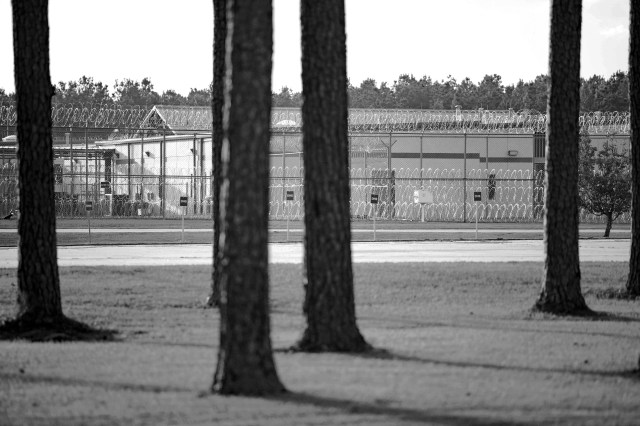
Last December, I drove to Yeoju, a city about 50 miles southeast of Seoul, South Korea, to find out what makes this prison unique. My two-hour drive to the facility brought me out of the city onto a quiet mountain road. Snow lined the narrow climb as my surroundings grew increasingly remote. At the end of the road stood Somang, an imposing concrete building.

Inside, Somang’s atmosphere felt unexpectedly warm. A Christmas tree stood beneath bright lights in the visitors’ lobby, and guards greeted me with kind smiles.

It took a decade for the Christian ministry leaders and legal professionals of the Agape Foundation to come up with an operational plan for Somang Prison and gain government approval for its approach toward criminal justice. They framed the project as a contracted facility fully overseen by the Ministry of Justice.

By allowing the state to control sentencing, security, and legal compliance while Agape focused on daily operations and rehabilitation programs, Somang’s operational structure presented a partnership rather than a challenge to state authority.

Opened in 2010 as the first private prison in Asia, Somang has a capacity of 400 inmates and admits about 20 new prisoners each month. Admission is limited to adult men who are serving sentences of seven years or less, have no more than two prior convictions, and have at least one year remaining on their sentences. Individuals convicted of organized crime or drug offenses are excluded.

Inmates must apply voluntarily and pass a multistep screening process, including a Ministry of Justice review and an interview conducted by Somang wardens, before receiving final approval from the ministry.

Somang’s reported recidivism rates from 2011–2022 are notably lower than national averages (about 10% compared to 21–26%). From 2020–2022, the rate further dropped to between 5 and 8 percent.

One study by a government-affiliated research institute found that Somang’s and public prisons’ recidivism rates were “not significantly different” when accounting for the facility’s selective admissions criteria. Yet Somang pointed to methodological limitations in the study, noting that critical factors influencing recidivism—such as mental health, addiction history, and risk assessment scores—were not fully accounted for in the comparison.

On the Tuesday I visited, the prison held two worship services. Nearly 300 incarcerated men wearing blue prison uniforms entered the main hall in orderly lines, each man wearing a badge that bore an identification number and a photograph of himself—a requirement in South Korean correctional facilities.

A praise team composed of volunteers from a local church led worship as the lyrics were projected onto a large screen behind them. Some inmates closed their eyes while others sang softly, their heads bowed or hands folded. The prison guards also joined in the singing. At the back of the hall sat the family members of the inmates, some holding infants. The inmates were not allowed to mingle freely with relatives, but families could request supervised visitation meetings following the service.

After worship, pastor Ahn Il-kwon preached on Romans 7:19, which says, “For I do not do the good I want to do, but the evil I do not want to do—this I keep on doing.” He reflected on the inner struggle between old patterns and renewed life in Christ, framing the passage as an honest description of how change begins not with denying past failures but with confronting them before God.

Ahn was once in his listeners’ shoes. When he was a young man, authorities arrested him on economic charges, for which he served an eight-month prison sentence. During his incarceration, Ahn embraced the Christian faith. Following his release, he became a pastor and devoted more than three decades to serving the marginalized, particularly Koreans returning from the United States with few resources or support, through his ministry World Cross Mission.

The two-hour service felt like those typically held in churches rather than inside a prison with barred windows, locked doors, and layered security gates. One reason it felt so ordinary was that prison guards called prisoners by their names or brother rather than by their identification numbers.

Kim, the warden, said the practice reflects a Christian understanding of human dignity. Calling inmates by name affirms that they are people before they are offenders, he said. He often returns to Psalm 22:22, “I will declare Your name to My brethren” (NKJV), as a reminder of how he understands his role: serving men who temporarily wear prison uniforms but whom he regards as brothers in Christ.

Several other practices in Somang are unique. Unlike most state-run prisons in South Korea, where guards deliver meals to inmates in their prison cells, Somang allows prisoners to leave their cell blocks and gather in a shared dining hall at mealtimes. The guards and inmates eat the same meals. (On the day I visited, they had bibimbap, a Korean rice dish topped with vegetables and meat.) Eating together reflects a Christian conviction that all people have equal worth before God, even though the prisoners are accountable for their wrongdoing, Kim said.

Somang also offers the option to attend faith-based programs in addition to the standard work assignments and vocational training found in most South Korean prisons. All new inmates take a mandatory month-long course on fatherhood, during which the men often break down in tears as they express remorse and gratitude to their spouses, parents, and children—and commit to live differently.

The prison also runs ongoing family counseling, empathy programs, and reconciliation sessions led by Christian counselors. These initiatives, Kim said, help inmates confront broken relationships honestly, treating reconciliation with God as inseparable from the slow work of repairing trust with others.

These programs changed Cho’s life. After his arrest, he first learned about Somang through his wife, who encouraged him to apply after reading a news report about the facility, he said. He sought a transfer to the facility from the government-run prison where he was held.

Cho’s days soon became structured around Somang’s twice-weekly worship services, along with activities like copying Scripture by hand, attending prayer meetings, and receiving pastoral counseling. At first, he participated out of routine rather than conviction. He wanted something to fill the long hours of the day and liked the structure these programs gave him.

His interest in faith deepened when he enrolled in a Bible study course. “That was the first time I felt peaceful, as I stopped making excuses for myself,” he said. “I had to face what I had done and call it what it was: sin.” This self-reckoning was the beginning of a genuine faith in God.

Former inmate Heo Junseo’s life also took a turn when he encountered Jesus at Somang during his incarceration from 2019 to 2021. One time, after Heo got in a fight with another inmate, guards sent him to solitary confinement for one week. He had little to do but sit and stare at the wall. Then a guard slipped a Bible through the door.

“I didn’t read the Bible because I was seeking God,” Heo said. “I read it because I was resistant. I wanted to know what this book was that people kept insisting could change me—and whether it really had that power.”

As he read the Bible for about six hours each day, his perspective began to change. For the first time, he stopped justifying his past. “I realized I had been lying to myself about who I was,” Heo said. “I wasn’t making excuses anymore. I just started confessing what I had done and who I had become.”

As Heo was increasingly convicted, he felt “a stillness I had never experienced before.” Looking back, he understands that moment through Scripture: “Therefore, if anyone is in Christ, the new creation has come: The old has gone, the new is here!” (2 Cor. 5:17).

On the day of my visit to the prison, he emceed the worship service, introducing speakers to the stage. Now in his 30s, Heo is a husband and the father of an infant daughter and serves in Ahn’s ministry.

Many formerly incarcerated people in South Korea encounter high barriers to reintegrating into society—barriers ranging from public stigma to difficulties securing stable employment. Correctional facilities release more than 50,000 people each year in Korea. Despite government efforts to provide housing and employment support, many struggle to reconnect with society.

To support that fragile transition, Somang maintains ties with former inmates. Twice a year, the prison gathers current and former inmates for a “homecoming” so staffers can walk alongside people navigating reentry. Some former inmates volunteer, offering mentorship, practical help, and spiritual support to those still inside or newly released. Kim described this as an extension of Somang’s restorative vision.

Instead of returning to his hometown, Heo chose to settle in Yeoju. He commutes to Chongshin University, a Presbyterian seminary in Seoul, where he’s studying to be a pastor. With World Cross Mission, he ministers to those struggling with addiction and reentry after incarceration.

He also returns regularly to Somang Prison to serve those still on the inside. “I’m here because God stayed with me when I had nothing to offer,” Heo said. “If God could use my broken years to shape me, then I believe he can use this time too.”

News

‘I’m Not Being Disrespectful, Mama. I Just Don’t Understand.’

America’s crisis of reading instruction is by now well-known. But have you checked on your kid’s math skills lately?

A sad child with several math symbols
Christianity Today February 23, 2026
Illustration by Elizabeth Kaye / Source Images: Getty, Unsplash

When it comes to math in schools, there’s one thing on which teachers, students, parents, and administrators tend to agree: We have a problem no one can seem to solve. 

The data backs this up. According to the National Association of Educational Progress (NAEP), which has been tracking student performance since 1990, fourth and eighth grade math scores peaked nationally in 2013. After that, scores modestly declined across the country until the pandemic—and then plummeted. 

Since then, big-picture trends show mostly flat lines with some glimmers of modest progress. Only 6 percent of children enrolled in American schools tracked by NAEP attend schools that have recovered pre-pandemic levels of mastery in reading and math, with high-income districts being nearly four times more likely to recover than low-income districts. (There is one notable outlier: According to NAEP data, Alabama—a state not historically known for strong academic achievement in its public schools—is the only state in the country with statewide average achievement exceeding 2019 rates.)

Big picture data aside, it’s important to remember that each data point informing those charts is a child with unique abilities and challenges—a student who needs to be able to do math.

“When my daughter was in eighth grade, she told me she was probably going to drop out of school,” Ebony Coleman—a parent in Midland, Texas, and founder of the parent advocacy group JumpStart Midland—said when we talked last month. It was the 2024–2025 school year, and her daughter’s outburst shocked Coleman. The girl had always had decent grades and seemed to be doing well. 

Quitting wasn’t an option Coleman was going to entertain, so she began digging into the problem to see what was really happening. “My daughter told me she didn’t understand what was going on in the math class,” Coleman said. When she asked questions, the girl said, her teacher couldn’t or wouldn’t answer them, instead chiding her for being disrespectful and interrupting the lesson. 

“I’m not being disrespectful, Mama,” Coleman recalled her daughter saying. “I just don’t understand.” 

Alarmed by her daughter’s desperation and frustration, Coleman started looking beyond the report cards, which had consistently shown adequate progress. What she found surprised her. In eighth grade, she learned, her daughter couldn’t read an analog clock. She didn’t understand basic fractions or how to turn them into percentages. She didn’t know her multiplication tables. Middle school math was getting more difficult, but she didn’t have the foundational skills necessary to do harder computations. Her struggles would only get worse.

A group of middle school Midland Independent School District (MISD) teachers, who didn’t speak on the record due to district policy, told me they are not surprised: They see the same thing every day. (I reached out to the district for comment but did not receive a statement before publication.)

One teacher said many middle school students arrive in her classroom unable to understand the difference between multiplication and division. Other students don’t understand a number line or positive and negative numbers. Many have no fluency in basic math skills, yet they’ve continually been passed to higher grades. 

This is what Coleman discovered of her daughter’s education. “The problem starts in the early grades, but it shows up in the later grades because you need those building blocks in order to be successful,” she said. “But these days teachers don’t usually tell you that your kid is failing. They just pass them along.”

By middle school, let alone high school, it’s hard to catch up. “I feel like if things weren’t sugar-coated back in elementary—if those teachers had really told me that my child was not doing well—things might have been different,” Coleman told me. “Maybe the gap wouldn’t have gotten so big.”

Coleman’s frustration with her daughter’s teachers is more than understandable, but many teachers are frustrated too. They’re pressured by administrators and parents alike to consistently produce students with good grades and bright futures. Too often, they find this to be an impossible demand.

Picture a classroom overcrowded with students who have a wide range of baseline abilities. This variation is concealed by the fact that, like Coleman’s daughter, they all have a long record of passing grades. So teachers have to suss out who’s actually performing at grade level. Then add a few students who are unmotivated, uninclined to participate, or even disruptive. Sprinkle in a handful of children who don’t speak English and therefore struggle to participate no matter how eager they are to learn. Finally, recognize that every kid in the room is tempted to cheat or goof around on the district-issued Chromebooks used for many—perhaps all—assignments, quizzes, and tests.

Would you want to manage that classroom? 

This is why it’s easier for many educators to improve letter grades than student mastery. According to the teachers I interviewed as well as national reporting, educators across the country are turning to grade inflation and unmerited grade curves—sometimes even at the direct instruction of district administration, per teachers I interviewed. This masks systemic failure with high GPAs beginning in elementary school.

It should be obvious: This is bad for students. Eventually their ignorance catches up with them, whether in higher grade levels, on the job, or at a prestigious college campus. 

The University of California San Diego has offered remedial math classes for nearly a decade, but in the last five years, the number of students who test into these courses has jumped from 32 (in 2020) to over 1,000 (in 2025). In fact, placement test results show many students need remedial elementary and middle school math, not just high school math. And these are young adults who were admitted to a selective university, in many cases with transcripts showing high grades in advanced math classes. 

Perhaps this mode of failure went little noticed for so long—even by engaged parents like Coleman—because it reassures us that everything’s okay. Or perhaps it’s because it doesn’t match the type of educational problem we’ve been trained to look out for.

“We’ve all heard of No Student Left Behind,” said Dr. Matt Friez, a local physician and member of Midland ISD’s Board of Trustees, “but I think that shift ended up leaving lots of kids behind, because schools just keep passing them along.” In this system, Friez told me, “there’s not motivation to be really honest about where everyone’s at because there’s so much pressure to keep everyone on track. So now we’re graduating people who can’t do basic arithmetic. It’s really sad.” 

Friez believes this is a national problem, including here in Midland, in the school district he helps lead—the district where my own children are being educated. 

“We’re kind of at a crisis as far as where our kids are at in math,” Friez said. Across the district, he told me, math mastery in Pre-K to second grade looks strong. But then it starts dropping, really falling off in fifth grade. “By the time you get to junior high, 60 to 70 percent of our kids in all our junior highs are two-plus years behind in math. That is just completely unacceptable.”

This is part one of a three-part series on math education in America. Read parts two and three at these links.

News

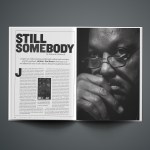
The Complicated Legacy of Jesse Jackson

Six Christian leaders reflect on the civil rights giant’s triumphs and tragedies.

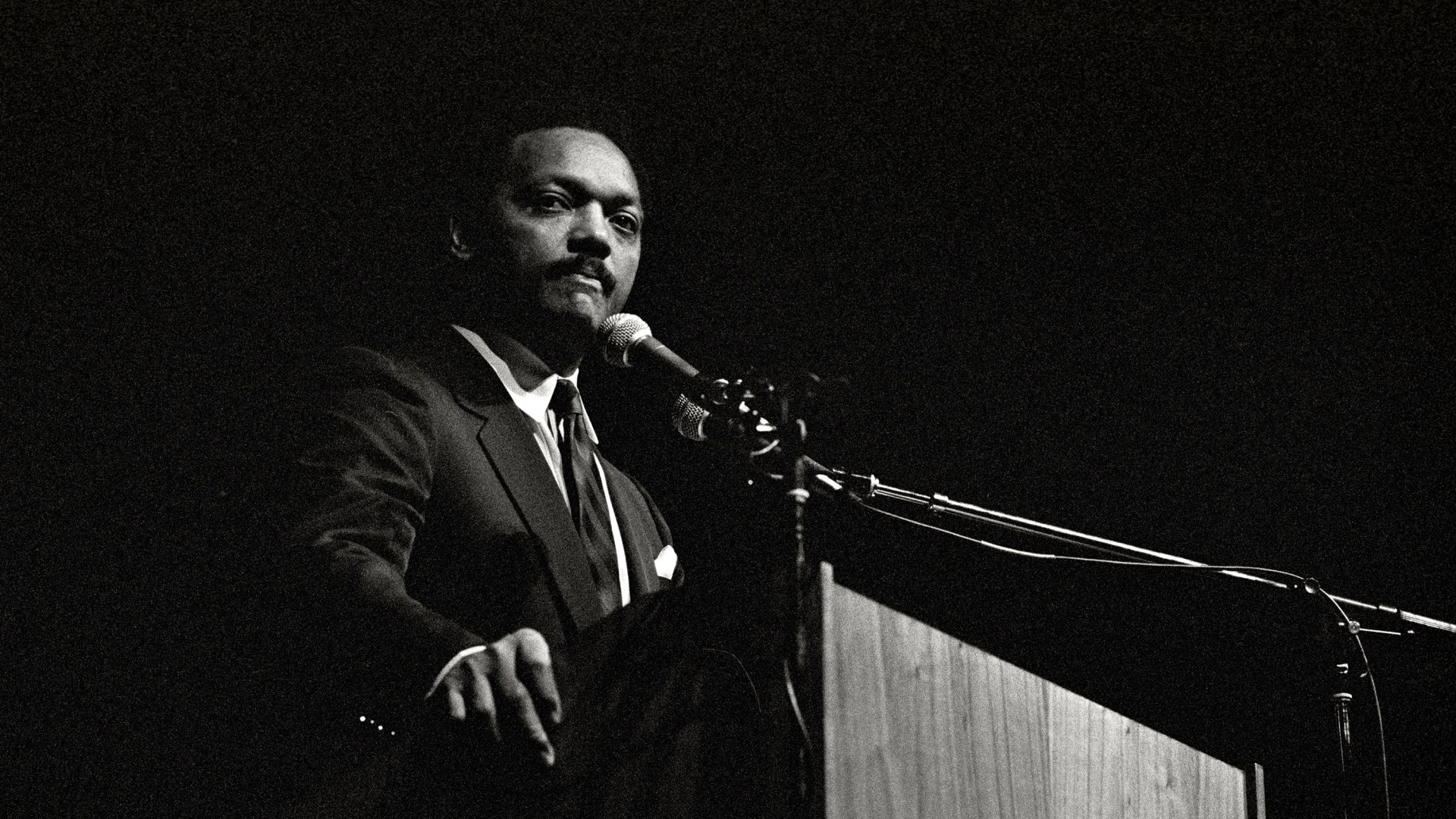
Reverend Jesse Jackson speaking to a Democratic gathering at the Cheyenne Civic Center on April 20, 1989.

Reverend Jesse Jackson speaking to a Democratic gathering at the Cheyenne Civic Center on April 20, 1989.

Christianity Today February 20, 2026
Mark Junge / Contributor / Getty

Jesse Jackson, the towering civil rights leader and Baptist minister who played a prominent role in Democratic politics for nearly 60 years and laid out a populist vision for America that shaped a generation of Black pastors, activists, and politicians, died this week. He was 84. 

Jackson’s family confirmed his death, which came just three months after the former presidential candidate was hospitalized for a rare neurological disorder called progressive supranuclear palsy. Jackson had previously been diagnosed with Parkinson’s disease. 

Born in the segregated South in 1941, Jackson became active in the Civil Rights Movement during his college days, leading demonstrations and sit-ins in his hometown of Greenville, South Carolina. After college, he moved to the Midwest to study at Chicago Theological Seminary, where he organized a group of students and faculty members who drove down to Selma, Alabama, to support Martin Luther King Jr.’s campaign for voting rights. 

When King was assassinated in 1968, Jackson positioned himself as his successor and went on to achieve significant influence within the Democratic party. He ran for president twice in the 1980s, shoring up support among the nation’s Black churches. Years later, former president Bill Clinton tapped him to serve as a special envoy to Africa and later awarded Jackson the Presidential Medal of Freedom, the nation’s highest honor for a civilian. 

Throughout his career, Jackson remained a political lightning rod. He also faced some controversies and personal blunders. In 2001, he revealed that he’d had an affair, which resulted in the birth of his daughter. Several years later, he apologized after being caught on a hot mic making a crude comment about then presidential candidate Barack Obama. The former president, who accepted the apology, said this week that he credited Jackson with laying the foundation for his own successful presidential campaign. 

This week, Christianity Today reached out to several Christian leaders to learn about Jackson’s work and influence. Here is what they said. 

Justin Giboney

History demonstrates that political establishments thrive off the perception of having it all figured out and under control. Unquestioned, this deceit cultivates complacency in the people and corruption in leadership. But the Bible consistently reveals how these leaders secretly fear an uprising from the people and often use various methods of misdirection and pacification to keep the common man from realizing their power (Ex. 32; Matt. 21:46; Mark 12:12). The people, and the system as a whole, always need a Jesse Jackson—a disruptor akin to Socrates’ gadfly—to call out the subterfuge and reset the terms of engagement.

Post Martin Luther King Jr., no one has shaken the establishment to its core and organized the grassroots like Jackson. Never short on shrewdness or ambition, he was a political mastermind who championed civil rights and Black dignity. But his impact wasn’t limited to Black America; he gave voice to Arab and Muslim Americans and white farmers as he called the US to account with endless energy, biblical allusions, and Black church homiletics. —Justin Giboney is president of the And Campaign. 

Chris Butler

When I was growing up in Chicago, I attended routine Saturday morning meetings at Jesse Jackson’s organization, Rainbow PUSH Coalition. I watched pastors, precinct captains, union leaders, and neighborhood organizers gather to sing, pray, strategize, and then disperse across the city to register voters and advocate for housing, education, and employment. Weekend after weekend, the gathering was a vibrant display of faith and action. But this type of work did not just come about—the reverend himself made it happen. 

Then, there was Jackson’s work on the national stage. One of his most consequential legacies may be something many Americans overlook: After Jackson ran for president in 1988, he successfully pushed the Democratic party to end a winner-take-all distribution of delegates during presidential primaries and instead award delegates proportionally. The change allowed minority and long-shot candidates, who were unfairly penalized by the previous system, more opportunities. Former president Barack Obama, for example, would have had a much tougher path to clinching the party’s nomination in 2008 if that institutional shift did not occur. 

I am grateful for Jackson’s example that prophetic witness requires both moral clarity and political savviness. Gratitude, however, does not demand uncritical loyalty. In his later years, Jackson embraced positions I could not affirm—especially on some social issues. Still, his commitment to building systems that would outlast him remains instructive: Faithful activism plants trees under whose shade we may never sit. Nevertheless, we can trust God with the harvest. —Chris Butler is the senior pastor of Ambassador Church in South Holland, Illinois, and the director of Christian civic formation at the Center for Christianity & Public Life.

Charlie Dates

The children of Israel had Moses and Joshua. A later generation had King David and the prophet Isaiah. My grandparents had the Rev. Dr. Martin L. King Jr. And for many in my generation, we had Rev. Jesse L. Jackson Sr. whose voice and virtue changed our lives. 

Pundits and politicians will note the political significance of the civil rights leader; as a consequence of Rev. Jackson’s presidential runs, the United States ultimately elected its first African American president. Economists will speak of the Black entrepreneurs who were awarded significant contracts because of his demands of corporate America. Civil rights scholars will name him as the champion of society’s nobody. But I remember his impact in ministry.  

When I was a senior in high school, Rev. Jackson gave me the opportunity to introduce him at a commemorative event honoring King in Chicago. At that point, it was one of the largest audiences I had ever addressed. During my conversations with him, he told me to reach for the moral high ground. As a pastor, he pleaded with me to make my sermons passionately human. He told me the world needed to hear my preaching, and that my voice should not merely be kept inside the church but also reverberate outside of its walls to dismantle despair and instill hope. He was right. He was our reverend. —Charlie Dates is senior pastor of Progressive Baptist Church and Salem Baptist Church in Chicago.

Mika Edmondson

One of my most formative memories of Rev. Jesse Jackson was his 1972 appearance on Sesame Street. For roughly a minute and a half, he led a beautifully diverse group of children in his unforgettable refrain: “I am somebody.” With poetic power and pastoral clarity, he captured the doctrine of “somebodyness”—a deeply biblical truth that every human being bears unassailable dignity and immeasurable worth. This was the core conviction of the Civil Rights Movement and of Martin Luther King Jr., Jackson’s mentor. 

From Operation Breadbasket to his presidential campaigns, Jackson’s public life was an attempt to embody that belief: Everybody is somebody. As a Black child growing up in the housing projects of East Nashville, those words widened my horizon and helped reshape my sense of self:

I am somebody …

I must be respected,

Protected,

Never rejected.

I am God’s child!

For that gift, I will always be grateful to Jesse Jackson. —Mika Edmondson is lead pastor of Koinonia Church in Nashville and the author of The Power of Unearned Suffering: The Roots and Implications of Martin Luther King, Jr.’s Theodicy.

Delano Squires

The Rev. Jesse Jackson was a towering figure in the Civil Rights Movement, a powerful orator, and a skilled political operator. But as a Christian who covers issues related to human flourishing, I am most interested in his work on matters of the family.

In the immediate aftermath of the Supreme Court’s Roe v. Wade ruling, Jackson stood up for the unborn. In 1973, he told Jet magazine, “Abortion is genocide.” He heard the economic arguments abortion defenders made to justify their stance but understood that you do not eliminate poverty by eradicating the poor. Unfortunately, he changed his position on the issue. But his concern about the state of the Black family persisted. 

In 1986, CBS aired a documentary called The Vanishing Family: Crisis in Black America. In a roundtable discussion after the program, the civil rights leader described the rise in out-of-wedlock births and broken homes as a problem of “moral degeneracy.” Years later, he gave a platform to C. Delores Tucker, an activist who criticized rappers and music executives pushing lyrics that degraded women. 

Jackson will undoubtedly be remembered most for his contributions to civil rights and politics. But we shouldn’t forget his other efforts to strengthen the moral fabric of the country. —Delano Squires is the director of The Heritage Foundation’s Richard and Helen DeVos Center for Human Flourishing.

Christine Jeske

Jesse Jackson rooted his call to “hold on to hope” in the Biblical promise that though Christ, suffering produces character, and character produces a hope that does not disappoint. But how do you hope when your dreams are labeled “unelectable”? When you stand beside your mentor at his assassination? When justice seems impossible? Jackson’s life and teaching offer insight into how to hold on to hope through disappointment. 

In my early 20s, I worked at a camp serving children from under-resourced families. Each week, our director led us in Jackson’s famous call and response: “I may be poor … I may be small … But I am somebody. … I am God’s child!” This truth—that we each deserve respect as the somebody we are—continues to guide my work as a researcher today, and it carries a hope that we need as much now as ever. —Christine Jeske is an associate professor of anthropology at Wheaton College and the author of Racial Justice for the Long Haul: How White Christian Advocates Persevere (and Why).

News

The Churches That Fought for Due Process

An Ecuadorian immigrant with legal status fell into a detention “black hole.” Church leaders across the country tried to pull him out.

Detainees are transferred to an ICE facility during a federal immigration enforcement operation in Chicago on October of 2025.

Getty

Manuel Mayllazhungo had been detained in upstate New York for a little over a week when ICE officers told him he was being transferred south, to a facility in Louisiana.

Louisiana, Mayllazhungo had heard, was usually a detainee’s final glimpse of America.

The 37-year-old Ecuadorian man shuffled, irons on his wrists and ankles, into a room where guards began processing him to be transported. They searched him and rifled through his pockets.

When a guard pulled out a scrap of paper containing a list of hand-scrawled phone numbers, Mayllazhungo told him he needed it. “That’s the number for my lawyer,” he said. “I need to communicate with her.”

“That won’t help you anymore,” the guard responded. “You’re going to your country. You don’t exist anymore in this country.”

Then, according to Mayllazhungo, who shared his account over the phone in Spanish, the guard dropped the scrap of paper into a trash can.

Mayllazhungo had been taken on July 11, 2025, on his way to a roofing job near Buffalo. He and a coworker were parked in a white Chevy van outside an apartment, waiting to pick up another roofer, when masked immigration agents—Mayllazhungo guesses 10 in all—surrounded them. They told him to exit the vehicle or they would break his window and drag him out.

As an agent twisted his arm behind his back and snapped on handcuffs, Mayllazhungo tried to understand why he was being detained. He had a driver’s license. He had a pending U visa, a special status granted to immigrants who are victims of violent crimes and are aiding police investigations. That status came with permission to work and, supposedly, protection against deportation.

Mayllazhungo was no bad guy, he thought. On the contrary, he’d been the victim of assault and robbery—much of his life savings was stolen by men he alleges were United States citizens.

“Here is my work permit,” Mayllazhungo said to an agent who was arresting him. “And he told me, ‘I don’t care.’ They told us, ‘You are criminals.’”

Now, after days in detention, Mayllazhungo had only his partner’s phone number. He knew it by memory. He called María to tell her they were sending him away.

But how much could she help? María, whose last name CT is withholding, spoke limited English and Spanish—her first language was Quichua, same as his. She was undocumented and could not even drive.

For all Mayllazhungo knew, he was falling into a pit where the only exit was Ecuador.

The man had entered federal detention six months into an unprecedented scaling back of due process protections for migrants in the United States. The Trump administration, in its determination to refashion immigration policy, was arguing that detainees are not entitled to challenge their removals before a judge, an assertion the Supreme Court has repeatedly said runs afoul of the Fifth Amendment. The Department of Homeland Security (DHS) also asserted it could deport immigrants with less than a day’s notice, a claim judges have viewed skeptically as a thinly veiled attempt to deprive them of their constitutional right to appeal.

But federal leaders were also circumventing due process in much quieter ways. Though Immigration and Customs Enforcement says that it permits detainees access to legal counsel, the agency has made it increasingly difficult for migrants in some detention centers to connect with the outside world. Such practices are at the heart of lawsuits against DHS alleging mistreatment at an ICE facility near Chicago and at another in Minneapolis.

“It’s always been challenging when someone’s detained,” said Mayllazhungo’s lawyer, Tina Colón Williams. “But it’s never been like this. This is the new era of barriers in communicating with clients and the new era of speed and swiftness in removal.”

As she struggled to reach Mayllazhungo, Williams eventually tried a strategy completely new for her. While he waited to board a flight to Louisiana, she mobilized individuals from four churches across the country to try to free him.

Williams was fresh off maternity leave when ICE arrested Mayllazhungo. His 17-year-old son called her with the news.

Already juggling the demands of being a pastor’s wife and worship leader at her church in New Haven, Connecticut, Williams, a mother of three, was catching up on all the dizzying ways US immigration law had changed while she was out of the game for three months in early 2025.

Williams’s firm, Esperanza Law, specializes in removal defense—representing clients the government intends to deport. Mayllazhungo had first come to the firm for help with a removal order he’d incurred as a teenager after he missed a 2005 immigration hearing. The piece of mail notifying him about the hearing had been sent to the wrong address, so he never saw it. Complicating Mayllazhungo’s current case was the fact that he had also been robbed. He was working with police to identify suspects, so the firm helped him apply for a U visa.

“It’s an incredibly powerful kind of visa,” Williams said. It can erase outstanding removal orders and qualify recipients for a green card. “It’s really helpful to law enforcement to have something like that so people can report crime and criminals can be held accountable.”

The government issues only a limited number of U visas each year, however; the wait to receive one can stretch more than a decade. Qualified applicants like Mayllazhungo receive a preliminary approval—called a “bona fide determination”—that allows them to work while they wait. That generally protects them from deportation.

After Mayllazhungo entered detention, Williams tried to contact the ICE officer assigned to his case and explain his situation. It would be okay, she thought. She’d seen this play out plenty of times.

Years ago, on her very first day at the law firm, she had approached some ICE officers to talk about a client who was about to board a deportation flight. The client was the victim of a crime and was applying for a U visa, she told them. Would they release the client while the visa was pending?

The officers argued against it but eventually sympathized. “It was like, ‘Okay, fine. We’ll give you time,’ ” Williams said.

In another instance, a client suffered a crime, and the day before a deportation hearing, the judge on the case ordered: Shut down the whole thing and don’t move forward with the removal.

So Williams felt reasonably confident she could persuade the people in charge of Mayllazhungo’s detention that “this is all a misunderstanding. Just release him. He has a U visa; like, what’s the point?”

“Maybe I was too naive,” she said later in an interview, “thinking of another era where there was discretion and mercy.”

For five days, Williams tried to reach someone. She sent emails to every address she could find, but all went unanswered. She made calls to the ICE detention center in Batavia, New York, where Mayllazhungo was being held, about 45 minutes from Buffalo. She phoned two different ICE field offices. She listened to “oddly cheerful” hold music while waiting for call center operators.

No one would help her. “The detention facilities are basically black holes,” she said.

Finally, she succeeded in scheduling Mayllazhungo for a virtual appointment, a confidential video call where she could get his permission to take the next steps and attempt to have his removal order canceled.

She could also take a statement from him, explaining why he missed his court appointment 20 years ago, explaining that he was a clueless 17-year-old kid at the time. He could share how other lawyers had convinced him that there was no removal order, that it had all been a misunderstanding and therefore he had nothing to worry about. He could share about his two US citizen sons at home in Buffalo, ages 5 and 17, who depended on him as the family’s sole breadwinner.

The evening before the virtual meeting was supposed to take place, Williams and a coworker were driving home from back-to-back court hearings near Boston. The lawyer was eager to see her infant son, to clear her head.

Then her phone rang. María’s contact blinked onto the screen. The woman called often, at all hours. But this call was different. María was panicked. They were taking Manuel to Louisiana, she said. Maybe tonight.

They’re about to remove him, Williams thought.

The lawyer had few tools at her disposal.

Williams knew she would eventually have to petition the judge who had issued Mayllazhungo’s deportation order—a judge in Arizona—to reevaluate his case. The petition would automatically protect Mayllazhungo from deportation, but it was also risky: If the judge decided to keep the removal order in place, Mayllazhungo would probably be deported swiftly.

Petitioning the judge would take time, and Williams was running out of that.

She needed to let ICE know that she was working on reopening the case; they might keep him off a plane for a while if she could contact an officer responsible for Mayllazhungo—something she had so far failed to do by phone and email.

She might reach someone if she went to the detention center in person. But it was already dinnertime, she was still returning from Massachusetts, and the Batavia facility was a six-hour drive from New Haven. Even if she walked in her front door, hugged her husband, walked back out, and drove through the night, Mayllazhungo could be gone by the time she got to Batavia.

Williams needed someone who was already close to Batavia, who could knock on the door of the ICE facility and deliver a message for her.

“Who is going to stop what they’re doing without charging a bunch of money and drop whatever to go print something and file something for a complete stranger?” Williams said. “I think it’s the church.”

She dropped off her coworker and then on her way home called her husband, Josh Williams. He is the lead pastor at Elm City Vineyard Church in New Haven, Connecticut, and he also oversees Vineyard evangelism and justice initiatives at the national level. Did he know anyone in Buffalo who could deliver paperwork for her to a detention center?

By the time Williams arrived home, she was shooting texts to leads. Sometime around 7 p.m., she got a call from the pastor of Buffalo Vineyard Church, Emily Defnet.

“Sorry, I don’t know you,” Williams said. She explained Mayllazhungo’s situation. Could Defnet or someone Defnet trusted leave immediately and drive to Batavia before 9:30? “They would need to print out this form, talk to an ICE agent there, and have the ICE agent call me.”

Defnet could not go herself but said she would check around. She remembers Williams adding, “And by the way, he might already be deported, so this might all be a lost cause.”

The pastor texted her church staff, who texted their own networks. Within an hour, Williams got a call from a woman named Allison Lang, the operations director at a Free Methodist Church in Batavia only two miles from the detention center. “I’m on my way to the church,” Lang told Williams. “We have a printer. Let me know what you need.”

Around 9 p.m., Lang stopped her car in front of the detention center gate, holding some legal papers and a cover letter from Williams.

A man in the guardhouse told her that the ICE officers she needed had gone home for the day. But he took the papers and promised to deliver them to his supervisor when he finished his shift, before midnight.

The following morning, an email appeared in Williams’s inbox from an attorney with the Office of the Principal Legal Advisor, the legal arm of ICE.

Finally, she thought, someone was talking with her. But the message was not encouraging. The ICE attorney told her that only once she filed the motion with the judge in Arizona, and not before, would they pause the deportation.

In other words, ICE would stop nothing unless a court forced it to.

A photograph of an ICE detention facility in Jena, Louisiana.AP News / Matthew Hinton
An ICE detention facility in Jena, Louisiana.

That afternoon, Williams received another email, this one from an ICE officer assigned to Mayllazhungo’s case. The detainee was already on his way to Louisiana, the officer said. So Williams tried again: Would ICE consider releasing him while his case was pending, she asked, given its tradition of respect for certified U visa recipients?

It would not. “No explanation,” Williams said. “Just, ‘No.’”

“They knew he had deferred action,” she said, referring to a type of status that delays deportation and that generally accompanies U visas. “He had a bona fide determination. He was the victim of a crime. And they kept him detained anyway.”

The only person who could stop Mayllazhungo’s deportation now was a judge in Phoenix who had never even met him and who had last touched his case so long ago the court records weren’t even available electronically.

Williams would have to draft a large filing in haste, print it, and deliver it to a courthouse on the other side of the country as quickly as possible. Even mailing it overnight seemed out of the question; Mayllazhungo could disappear from the country before the package arrived.

Williams needed someone who could hand-deliver the documents. She grabbed her phone and reached out to her husband again: Did he know any Vineyard people in Phoenix?

He gave her the name of an Arizona woman who works with Vineyard USA, the denomination’s headquarters. For the third time in 48 hours, Williams was on the phone asking favors of a stranger: “Do you have time? Can you do this now?”

A flurry of paperwork: Williams pulled together what she had. She wished she could have consulted with Mayllazhungo first. “That declaration would have helped the motion be stronger,” she said. “But I wasn’t given access to my client.”

She sent a digital copy to the woman in Arizona, who printed and hole-punched two copies and drove them to a federal building in downtown Phoenix.

Motions to reopen a removal case automatically pause a deportation, giving judges time to review the file. After a court employee stamped the documents, Williams breathed a little easier—her client would theoretically remain in the country at least a while longer.

Mayllazhungo did not learn about his reprieve for days. For a week and a half, he remained in Louisiana at a crowded terminal for deportation flights known as the Alexandria Staging Facility.

Around him, other immigrants disappeared constantly into departing planes. No one was calling him—watchdog groups have documented that Alexandria is a “black box” with extremely limited contact with the outside world and frequent complaints of inhumane conditions.

Mayllazhungo was transferred back to Batavia at the end of July. For weeks, he waited on word from the judge. During phone calls with María, he finally let his guard down enough to talk openly about what the family should do next—the line was monitored, but the couple spoke in Quichua, wagering that no one listening would understand them.

They “hoped beyond hope” that the judge would vacate Mayllazhungo’s removal order, Williams said. Barring that, she wanted at least to ask a judge to release Mayllazhungo on bond—a long-standing practice with detained immigrants who pose no public risk.

Except by this time, ICE had shifted its stance. Over the summer, a new Department of Homeland Security (DHS) directive banned judges from granting bond to most detainees, effectively cutting off the avenue by which most immigrants escape detention, including asylum seekers and those without criminal records.

The policy has been challenged in court; anyone who watches prime-time television legal dramas understands that federal and state judges commonly release accused nonviolent criminals on bond while they await trial.

But in early February, two judges on the 5th Circuit Court of Appeals upheld DHS’s practice of indefinite detention—despite more than 3,000 previous rulings from hundreds of federal judges who concluded that denying bond to non-criminal detainees violates Constitutional protections.

The Supreme Court may ultimately decide whether America will have two parallel prison systems: One in which an accused arsonist or embezzler or drug dealer might walk free on bail, and another in which a student who overstayed her visa or a roofer who overlooked a piece of mail must be jailed for months.

María was the first to learn the immigration judge had decided against Mayllazhungo. On August 29, she tried calling Williams twice and got no answer.

Williams was at a press conference at a New Haven high school, standing behind a podium ringed with microphones. She fought back tears as she spoke about a teenage client, Esdrás Zabaleta-Ramirez, whom a judge had just ordered released from ICE custody.

The young man had been detained at his job washing cars. Williams fought for his release as ICE shuttled him between states and tried to expedite his deportation to Guatemala. Zabaleta-Ramirez’s classmates staged rallies. Teachers wrote letters. Now he would, against all odds, be able to return to his junior-year classes.

After the press conference, Williams was venting to a colleague about the difficulty of their work, about how the arbitrary nature of ICE decisions was so demoralizing. The teen’s release was a huge victory, but what was the lesson to be learned? Everything felt random.

Her coworker told her she should take the rest of the day off, get a massage or something. Williams looked at her phone and saw two missed calls from María. She vowed to let it go to voicemail if the woman called a third time.

But on her drive home the phone rang again, and Williams picked up. María explained that she had just looked up Mayllazhungo’s case online and seen that the judge had denied their motion to reopen his case.

He could be deported at any moment.

Williams pulled off to the side of the road and, again, began texting pastors. Her options were limited: Other lawyers might have been able to file a federal case in New York to stop the deportation, but she was not licensed to practice there. She could appeal the Arizona judge’s ruling, but that might stretch on for weeks or months, and Mayllazhungo would have no protection from deportation while the appeal played out.

To keep him in the country as long as possible, her only remaining option was to file with ICE a formal request for stay of removal—in other words, officially asking ICE for mercy.

Soon Williams was on the phone again with Lang, the church administrator in Batavia. They made a plan: The filing would require a thick stack of papers, so Williams would email it to María to have it printed. María would bring it, along with a filing fee, to Lang, who would deliver it to ICE at the Batavia detention center.

Four days later, on September 2, Lang pulled into a gas station off Interstate 90—just across the freeway from the detention center. She parked in front of a Tim Hortons, next to a car with two Ecuadorian women and two children inside.

The women got out. One of them, Mayllazhungo’s adult stepdaughter, spoke English—she said that ICE had also detained her husband that summer.

When they handed Lang a thick package of documents, the heft of it shocked her. She imagined the sensitive information it contained, the reality that these papers might be a man’s last hope for seeing his family again.

The first time Lang delivered paperwork for this family, a month earlier, she sensed that God had called her to do it. “I have no doubt in my mind that the Lord opened up my schedule that evening,” Lang told me.

She felt that same sense of calling this time, but also a rush of grief—holding all those pages, looking at the kids in the back seat of the car and this pair of women who were “beside themselves” with worry, as she described it. “I was not prepared for how much emotional weight was going to come along with meeting his family.”

Lang didn’t really know what to do with that feeling. She had only one idea.

Nobody expected press conferences for Mayllazhungo or his family. But standing with these women between cars at a gas station in upstate New York, Allison Lang grabbed their hands and prayed for them.

Lang was not unfamiliar with prisons. Her father had worked at a medium-security state facility and brought home stories. Other relatives also worked in corrections.

Still, walking through the detention center entrance, Lang felt intimidated. She was mildly surprised that guards had even allowed her in; across the country, politicians and pastors and other officials were being denied access to ICE facilities.

“You can just sense that everybody’s on high alert,” she said.

An officer (“very cordial,” Lang said) seated her in a tiny waiting room. After 45 minutes, a woman emerged and began inspecting the papers, asking questions that Lang texted to Williams.

“I was like, ‘Oh gosh, I don’t know any of this. I didn’t go to school to become a lawyer.’”

The woman wanted to see Manuel’s passport. It wasn’t in the file.

They took all of his IDs when he was detained, Williams wrote Lang.

More ping-ponging text messages: Manuel’s family had a digital copy. Would they accept an email? More waiting. Finally, the officers agreed to receive the file.

Lang drove away feeling grateful that a pastor’s wife–lawyer 400 miles away had tapped her as an unlikely legal courier. “Do I know why? No,” she said. But she would offer that kind of help again, “as great or as little as it turns out to be.”

Photo of Tina Colón Williams speaking at a press conference in New Haven following the release of a detained teenager in August 2025.Image courtesy Rachel Lacovone / Connecticut Public
Williams speaks at a press conference in New Haven, Connecticut, after the release of a detained teenager in August 2025.

Nearly a week later, Williams received a message from ICE that her request for mercy had been denied. Again, the agency offered no explanation.

“It would not be a difficult thing to have released this man,” the lawyer said. “There’s all sorts of compelling factors in this case. I don’t know if they didn’t read it or if they read it and they were just like, ‘Whatever.’”

Within days, ICE transferred Mayllazhungo back to the Alexandria Staging Facility in Louisiana.

During his first 24 hours there, Mayllazhungo said, he was handcuffed without food or water. He was given no access to a bathroom.

The facility seemed far too crowded. New men arrived at all times, pouring in by the hundreds. “I don’t know where they were coming from, but they just kept coming,” he said.

Mayllazhungo shivered in a frigid room while he tried to sleep. He was issued a set of clothes to wear but had no access to laundry services. After several days, he washed the uniform in a sink and slept on the uniform while it dried.

Anger reached a boiling point. Detainees complained loudly to guards that they were hungry, that they had asked to use a bathroom and were refused, that they were thirsty.

One day, according to Mayllazhungo, guards told them to get over it. “They said that we deserved worse punishment than we were getting, because we’re criminals.”

That, Mayllazhungo said, is what started the brawl.

Several detainees snapped. Even with their hands and feet cuffed, “they fell on top of ICE,” he said. (Many guards at Alexandria work for Geo Group, the private prison company that manages it, and are not employed by ICE.)

Men grabbed at officers, trying to strike them. Mayllazhungo said guards rushed in from around the facility to break up the fight. Mayllazhungo, who said he did not participate in the conflict, fled with other detainees, pushing each other to escape the chaos.

Mayllazhungo thinks that’s when his wrist broke.

Not until some time after calm returned did he realize he could not move his right hand. He can’t recall the precise moment when he injured it—maybe somewhere in all the shoving, his wrist twisted the wrong way inside the tight cuffs—but it was red and throbbing with pain. He could not make his fingers grab food to bring it to his mouth.

Mayllazhungo said he requested medical care multiple times but received none.

ICE did not respond to multiple requests for comment on this story. The Alexandria Staging Facility is designed to house detainees for no longer than 72 hours, though many have reported longer stays. Mayllazhungo’s descriptions of conditions there are consistent with other accounts.

After five days at Alexandria, Mayllazhungo was bused to another facility in Louisiana about 45 minutes away.There, he was allotted one or two ham sandwiches a day. He could talk to María again. He had a single call with Williams, during which the connection was so bad they could hardly understand one another.

The women were asking Mayllazhungo, Did he want to appeal the judge’s ruling? The lawyer could not promise it would make a difference, but she had reviewed the judge’s decision and spotted all kinds of flaws in the reasoning. There was a chance, if they moved quickly. She said she would drop everything else and fight if Mayllazhungo gave the word.

But he was so tired. He had been in detention now for more than two months. His hand was swollen. Every dollar they spent fighting this in court María could not earn back, because she couldn’t work. Everything, always, was on his shoulders.

“It’s okay,” he finally told them. “Just leave it.”

On one of the last few days of September, Mayllazhungo felt handcuffs drop from his wrists as he stepped off a plane in Guayaquil, Ecuador.

He took a bus into the mountains, toward the village where he had grown up. He had not seen it in 20 years. He had a sister there who would probably take him in.

Now, Mayllazhungo spends his days searching the countryside for odd jobs to earn money to send back to his family. In December, he spent a few days helping a local builder assemble windows.

Back in Buffalo, a local Catholic church has been supporting María and the kids with some basic needs. Other churches have also offered to help.

Williams hates that they could not save her client from deportation. It’s a consolation, maybe, that each filing that church people helped her make “slowed down the process and changed something,” she said. She also believes that “it makes a difference, psychologically, for the families impacted by this, knowing that there are other human beings out there in the world who care and who are willing to help.”

In Ecuador, Mayllazhungo can at least speak to his sons daily by phone. His 5-year-old asks, “Where did you go? Why don’t you come home?”

The phrase he heard over and over—from immigration agents, from detention center guards, from American leaders—echoes in his head and messes with him: “You’re a criminal.” Except, he said, he isn’t. “I was clean,” he said.

Soon after arriving in the mountains, Mayllazhungo saw a doctor about his wrist. An x-ray confirmed it: The bones had broken.

Andy Olsen is senior features writer at Christianity Today.

History

Troubling Moral Issues in 1973

CT condemned the Supreme Court ruling in Roe v. Wade and questioned the seriousness of Watergate.

A CT magazine cover from 1973 and an image of an anti-abortion poster.
Christianity Today February 20, 2026
Illustration by Christianity Today / Source Images: Getty, CT Archives

When the US Supreme Court in Roe v. Wade in January 1973 ruled that the US Constitution protects the right to abortion, CT showed no hesitation in decrying both the legal reasoning and the moral travesty of abortion. 

This decision runs counter not merely to the moral teachings of Christianity through the ages but also to the moral sense of the American people, as expressed in the now vacated abortion laws of almost all states, including 1972 laws in Massachusetts, New York, and Pennsylvania, and recently clearly reaffirmed by state-wide referendums in two states (Michigan and North Dakota). 

We would not normally expect the Court to consider the teachings of Christianity and paganism before rendering a decision on the constitutionality of a law, but in this case it has chosen to do so, and the results are enlightening: it has clearly decided for paganism, and against Christianity, and this in disregard even of democratic sentiment, which in this case appears to follow Christian tradition and to reject permissive abortion legislation.

The Court notes that “ancient religion” did not bar abortion (Roe et al. v. Wade, No. 70–18 [1973], VI, 1); by “ancient religion,” it clearly means paganism, since Judaism and Christianity did bar abortion. … 

Having previously seen fit to ban the formal, admittedly superficial, and possibly hypocritical acknowledgment of God that used to take place in public-school prayers and Bible readings, the Court has now repudiated the Old Testament’s standards on capital punishment as cruel and without utility, and has rejected the almost universal consensus of Christian moral teachers through the centuries on abortion. Its latest decision reveals a callous utilitarianism about children in the womb that harmonizes little with the extreme delicacy of its conscience regarding the imposition of capital punishment.

CT noted that many commentators seemed to think only Roman Catholics were opposed to abortion, but that just wasn’t the case, quoting Maryland Rep. Lawrence J. Hogan. 

Hogan said that much anti-abortion activity comes from Protestant ranks. In Maryland, he said, a Baptist minister is heading the fight, and in Minnesota the anti-abortion leaders are Lutheran. He added that Orthodox Jews are also strongly against abortion. Reform Jews, however, seem to favor abortion. …

Protestant leaders seem divided on the issue. While the Baptist minister in Maryland opposes abortion, W. A. Criswell, former president of the Southern Baptist Convention and pastor of the First Baptist Church of Dallas, seemed satisfied with the high court’s ruling. “I have always felt that it was only after a child was born and had life separate from its mother that it became an individual person, and it has always, therefore, seemed to me that what is best for the mother and for the future should be allowed.” …

Two Protestant theologians, Albert C. Outler of Southern Methodist University and J. Robert Nelson of Boston University School of Theology, disapprove of the decision. The two men, both Methodists, disagree with their denomination’s official position, which is strongly pro-abortion.

CT also noticed a need for Christians to think clearly on another moral issue in 1973: homosexuality.

The last two years have witnessed a flood of literature advocating tolerance, approval, and even a kind of appreciation for homosexual behavior. Much of this writing comes from ostensibly Christian quarters. Because of the religious or Christian language in which the prohomosexuality arguments are often couched, evangelicals need to familiarize themselves with the biblical approach to this problem.

Editor in chief Harold Lindsell took on the issue in “Homosexuals and the Church.”

My purpose here is not to consider the case for or against laws restricting homosexual conduct. Nor will I discuss whether homosexuals should be given equal job opportunities in business, government, and the armed forces. I will not here make a case against private homosexual activities between consenting adults. My intention is to deal with two questions: What is the Christian or biblical view of homosexuality? And what should the attitude of the churches be toward the place of homosexuals in their midst? …

I exclude from discussion non-practicing homosexuals; there is no reason why they should not be received into any church and ordained to any ministry. My concern here is with practicing homosexuals. …

Everywhere Scripture dictates that believers are to love sinners even as they hate their sins. The lack of compassion many Christians show for homosexuals is inexcusable. It may be easier to show compassion for the drunkard and the adulterer than for the homosexual. But this ought not to be. Christians who are deeply offended by homosexual behavior must still reflect the compassion of Christ for sheep who have gone astray. And they must have a heart of loving concern for homosexuals’ redemption and for their personhood, however much it has been defiled by sin.

CT reported that some evangelicals were also very concerned about feminism in 1973 and the changing social exception for women in American society. 

The credit or blame for the most provocative remark to be heard during a church convention so far this year probably goes to Mrs. Harold Walker of Fort Smith, Arkansas. “Most church problems are caused by women!” she told the National Women’s Auxiliary of the American Baptist Association last month. Mrs. Walker, a thirtyish pastor’s wife and mother, made the observation in an address to the auxiliary in which she roundly denounced women’s lib.

“I believe Paul knew what he was talking about when he placed woman in her rightful place in the church,” said Mrs. Walker. “If you have been in church work very long, you know that most church problems are caused by women—women who rebel against fulfilling their God-given position.”

Some 1,000 women were on hand for the auxiliary meeting, which preceded the annual national-messenger of the ABA in Little Rock, Arkansas.

The magazine also gave space, though, to an evangelical woman who argued that feminism was deeply Christian

The original women’s rights movement was fervently religious. For the most part, nineteenth-and early twentieth-century feminists professed Christianity and took the Bible seriously. When critics hurled theological arguments against them, they sought to answer with well-reasoned rebuttals. Christian feminists of the 1970s may find it helpful to see how they waged the battle. … 

The feminists liked to refer to the first chapter of Genesis, pointing out that God created both male and female human beings in his image and gave them joint dominion over the earth. Alluding to Psalm 8, Quaker abolitionist Angelina Grimke wrote that woman (like man, created in God’s image) was “crowned with glory and honor; created only a little lower than the angels—not, as is almost universally assumed, a little lower than man.” Woman at creation was given the same honor, privileges, and responsibilities as man.

Critics who opposed equality for women bypassed Genesis 1 and preferred to stress Genesis 2. This chapter clearly taught, they insisted, that woman was created for man and that man was superior to woman. Wasn’t Eve given to Adam to be his helpmate? Wasn’t it obvious that God intended the woman to honor and serve the man rather than to have her own independent existence?

No, said Christian feminists. They could not believe that woman had been created as an afterthought, solely for man’s benefit. One way they refuted this interpretation was to argue that the words translated “a help meet for him” could just as well be rendered “a helper like unto himself.” The expression did not signify weakness, subservience, and inferiority. (After all, God himself is spoken of in Scripture as our helper.)

CT editors were very interested in a massive, multi-denominational push for evangelism in 1973, dedicating numerous articles over the course of the year to “Key 73.” 

When this vision abruptly broke upon the American church scene, it met with spontaneous, unconditional acceptance. How wonderful for North America! Replace disunity and cynicism and selfishness with the flame of God’s love moving from heart to heart! Reach every home with a winsome witness to Jesus Christ! And yet, will it happen? Why shouldn’t it happen? Others have written in these columns that action is the order of the day: let each Christian select a personal evangelistic project and begin to put heart and strength into its accomplishment. American and Canadian churches will be transformed! Imagine the difference if every Christian begins to say: “God works through me; God works where I am!” Imagine the many new converts who will join them in the worship and service of God! 

But can this vision be realized? Can we actually come under the compulsion of God’s Spirit so that we are transformed into God’s envoys to the unbelieving world around us? I believe so.

A mid-year check-in reported that Key 73 was seeing “phenomenal” results.

Although the first phase in many places began unspectacularly, there were already impressive pilot programs in 1972, and Christians in Los Angeles, Minneapolis, Detroit, and Seattle, among other metropolises, found their stride in the first weeks of the new year. … Scripture distribution quickly accelerated to the point where the American Bible Society was dispatching 600,000 to 700,000 copies of Luke-Acts weekly. …

On the local level, there are impressive reports of evangelical engagement. In one New York area, twenty-one churches in the Kenmore-Tonawanda region, spurred by Kenmore Baptist Church, distributed 50,000 copies of Touched by the Fire (Luke-Acts) by personal presentation house to house on a Sunday afternoon in March.

CT continued to inform readers about Christians in Communist-controlled countries. Carl F. H. Henry reported that, despite persecution, Christians in places like Burma refused to give up the faith. In fact, the church saw “survival and growth.”

When nearly all the missionaries were ordered out of Burma in 1966, many observers feared the worst. But the church in Burma is very much alive and is growing—evidence, perhaps, that the early missions efforts provided a solid base for the church to carry on with its own leadership. … 

Ten years ago General U Ne Win ushered in a socialist government and isolationist policies after wresting control from then Premier U Nu. Since that time the country has deteriorated steadily on the economic front. Rice and teak exports have dwindled. Warring insurgents control nearly half the land area. Because of these and other factors, inflation has hurt Burma—and the churches—badly. Small churches have a difficult time paying a full-time pastor. Some pool their funds to hire one man to work on a circuit basis.

All the denominationally supported general-education schools were nationalized in the mid-sixties. However, the Bible schools and seminaries are still open, and more than forty Bible schools hold classes. … Street meetings are still carried on, and Bible distribution is taking place. Radio scripts are produced in the country and shipped to Bangkok for production and later airing on Far East Broadcasting Company transmitters from Manilla.

Not all issues of 1973 were as clear-cut as Communist persecution, sexual ethics, and abortion, however. CT went back and forth on the seriousness of reports that some people working for President Richard Nixon broke into the Democratic Party headquarters at the Watergate office complex. 

At stake are moral and ethical issues that cannot be overlooked. Citizens have a right to expect their government to act uprightly. When public figures breach the common canons of conduct, every citizen should be morally outraged. …

We will accept at face value the claim of the President that he was not personally involved in the sordid Watergate affair. But now that he knows of its existence and is aware of the names of those who have already been tried and found guilty, and probably of others who have not yet been brought to justice, his duty is clear. It is Mr. Nixon’s solemn responsibility as President and as a Christian to see that the matter is thoroughly and fully investigated, that executive privilege is waived so that the facts can be uncovered, and that the full weight of the judicial processes is employed to guarantee that justice is done.

Mr. Nixon has one other responsibility. He should purge his administration of all who have been involved in this squalid affair. In this way people everywhere will know that his administration will not put up with this sort of thing, and even more, that he himself has taken a stand for ethical and moral principles that have suffered so greatly because of Watergate.

Editors stated that Watergate went beyond standard political intelligence gathering, but noted that Washington immorality was rampant:

The illegal acts that the term [Watergate] now signifies must be condemned.

Billy Graham … commented that Watergate is “a symptom of the deeper moral crisis that affects society.” How right he is! Anyone at all familiar with the Washington scene knows there are skeletons stacked high in some congressional closets. If all these doors were opened, the Watergate scandal would no doubt rate only second billing. 

The magazine was also alarmed at allegations that the immorality of the Nixon administration was somehow the fault of evangelicals, since the president was closely associated with Billy Graham and regularly invited ministers to lead worship services in the White House.

None of this can be laid at the door of revivalism and pietism. Evangelical evangelists including Wesley, Whitefield, Edwards, Finney, Moody, Torrey, and Graham have always preached against such sins. Billy Graham put it clearly: “Lying, cheating, stealing, fornication, and adultery are always wrong. They are a breach of God’s law no matter who does them.” The Watergate and Pentagon Papers malefactors operated on the principle that the end justified the means, a principle that Hitler’s Eichmann used so murderously.

Evangelicals believe in ethical absolutes and have always said that good ends must be secured by right means. …

The Watergate and Pentagon Papers malefactors may have had plenty of religion; what they lacked was genuine Christianity and obedience to the Ten Commandments. If they had refused to lie, cheat, and steal, there would have been no Pentagon Papers case and no Watergate. If the principles advocated by revivalists and pietists had been upheld, there would have been no need for a Senate investigating committee (which, we might add, has on the whole produced a regrettable spectacle in which prejudice and an accusatory attitude seem to belie claims of objectivity).

It wasn’t the last time that evangelical association with political leaders would raise ethical questions.

addApple PodcastsDown ArrowDown ArrowDown Arrowarrow_left_altLeft ArrowLeft ArrowRight ArrowRight ArrowRight Arrowarrow_up_altUp ArrowUp ArrowAvailable at Amazoncaret-downCloseCloseellipseEmailEmailExpandExpandExternalExternalFacebookfacebook-squarefolderGiftGiftGooglegoogleGoogle KeephamburgerInstagraminstagram-squareLinkLinklinkedin-squareListenListenListenChristianity TodayCT Creative Studio Logologo_orgMegaphoneMenuMenupausePinterestPlayPlayPocketPodcastprintremoveRSSRSSSaveSavesaveSearchSearchsearchSpotifyStitcherTelegramTable of ContentsTable of Contentstwitter-squareWhatsAppXYouTubeYouTube