Inkwell

The Ripening of Faith

A discomfort with deconstruction

Inkwell March 2, 2025
Still Life with Fruits & Foliage by Abraham Mignon

THE NIGHT BURNS BRIGHT and dark in my memory, a contrast of moods and scenes like a Caravaggio painting. The cathedral; bright, honeyed stone and gold instruments glinting on the altar. The kindness of my friend and his saving of an excellent seat for me as I skidded in, breathless, the sweet furor of bedtime rituals with my four children still an echo in my brain, a slight wildness in my eye. And the music, a many-layered brightness of harmony and word, hued like a crimson sunset to my synesthetic mind as a small choir sang a selection of ancient Orthodox chants and prayers.

I let myself breathe deeply as the music surged forward, let my eyes rove the warm, dappled space of the medieval church that summer night. But the longer I looked, the more darkness I saw. The shadows like dirty flocks of ravens in the high corners, the vivid stained glass windows I loved so well in the daytime obscured by night, the pain at the back of so many prayers I heard chanted, pleas for God to put an end to despair and death. And the darkness of my own weary heart when the concert had ended and I sat outdoors at a nearby pub and confessed to my long-time mentor and friend, a priest, that I found myself almost unable to pray.

A gentle, river-haunted quiet rose around us as my friend contemplated my dilemma. Laughter erupted from the next table. A horn blared from the road. My cider glass was cold in my hand and I held its chill against my face as the discomfort of my confession ebbed away.


I WAS DISTURBED by my incapacity to pray, by a sense of growing inward lethargy, and the attendant grey silence that seemed to meet it from the heavens. My faith, after a diagnosis of mental illness in my teens, was something I’d fought hard to keep. The story of my belief was one of fierce and hard-won exultation, of beauty triumphing over depression and deep fear. I studied theology for four years. I’d written full books in witness to the gracious help I had found in God. But the past years had ushered me into a different season of interior life, presenting me with the challenge of sheer exhaustion. I was unable to perform my faith by prayer or long hours of study and devotion, and in that lack, I felt abruptly uncertain of myself, and of God.

I’ve always been a little haunted by the allusions in Scripture to those who “fall away.” What does it mean to lose sight of the thing you most love, the lodestar to your universe? Falling away… it sounds like just losing your grip in an offhand way, one afternoon when things got a bit busy and life was too stressful. Or maybe it was something that could happen when life asked more than you could give, if say, you lost several people you loved, or bore two babies amidst lockdowns and loneliness, or moved three times, or battled appendicitis and pneumonia and just endured a darn hard spate of years.

Like, say, me. Maybe in the weary end of that you really could just… drift away from prayer, and then from faith, to find yourself lost in a dark ocean, miles from the surety and passion that once anchored your story.


MY DISCOMFORT WAS HEIGHTENED by having watched a number of my friends deconstruct their faith and find themselves unable to put the pieces back together. I understood the deep pain that began their unravelling, the betrayal of others and the confusion that seemed to further shatter their belief into unmendable pieces. But even in the worst days of my illness and doubt, I had somehow never lost my sense of God as potently good and real… until, maybe now? Until this spiritual inertia. I found myself returned in thought to the early days of my faith when I feared an indifferent God. My interior exhaustion left me with the startling fear that a great, uncaring silence would descend when my own voice died and my prayers failed.

I glanced up at my friend when the panic of that thought burned my face. I found him already looking at me, all compassion. He leaned forward and spoke. His suggestions were simple.

“If you can’t pray, just say one prayer: Lord Jesus Christ, Son of God, have mercy on me, a sinner. And find an icon to pray it with, every day,” he said.

So, very weary, a little desperate, and a little more than skeptical, I did. I didn’t know what else to do.


THE ICON I CHOSE was the Eleusa, or the Madonna of Tenderness, an ancient image of Mary cradling Jesus. Their cheeks touch as they lean into each other, mother and child holding hands, a circle of undisturbed affection created by the curve of their bodies and Mary’s capacious arms. But though everything speaks of their almost exclusive intimacy, their gaze is turned outward to the viewer in something I felt at first as challenge, but with each passing day more keenly, as invitation.

I set the icon up in a corner of the paned window by my reading chair. Each morning, I snatched ten minutes to sit down and silently pray. Nothing else. And looked at the icon. I knew the basic theology behind iconography, the idea of the image as a kind of window into the landscape of the divine. So I tried to let the icon look at me as much as I looked at it. There was a strange kind of daring in this exercise for me.

For much of my spiritual life, I had come to my times of devotion tensed for effort: to read, to concentrate, to think rigorously and pray fixedly. I felt I must think the right thoughts and conjure the correct feelings in order to reach God. Now, I did almost nothing. I waited on him to attend to me, feeling a little audacious. It was the strangest thing, sitting there with no exertion but that of gazing at the little Christ, asking for mercy, waiting for I had no idea what. For something to shimmer at the back of the icon and answer me?


THE STRANGE AND STARTLING thing—was that it did. Not, of course, immediately, and not in an actual shimmer, but in a potent sense of a great affection hovering all around me. It was like watching a storm gather on the horizon, only this was a gathering of mercy in my interior skies. I felt my gaze increasingly drawn into the circle of love imaged in the cradling of Mary and her Christ, and knew myself tenderly drawn to share their joy.


It was not something I understood. A reader and writer my whole life, a questioner of doctrines, with two theology degrees under my belt, I found it all a bit ridiculous. Words nor explanation could encompass it. My rational mind groped to untangle this mercy, but my soul simply stood by in welcome. I found myself in the presence of mystery.


AROUND THE SAME TIME, I began to read Annie Dillard’s Pilgrim at Tinker Creek. My first try, twenty years before, had been badly timed. Back then, I’d been raw and grieved by the new diagnosis of my mental illness. I craved very certain answers about God’s will, his mercy, and his might. Dillard’s pilgrim-hearted writing felt like a threat then—too formed by the problems of suffering, too willing to deal in unanswered questions. But now, as my effort eased, my hands opened, and the answers I thought I knew were pushed aside by something benevolent and great, I rediscovered her writing and found it heady and wild. “Our lives are a faint tracing on the surface of mystery” she wrote. These words now sang in concurrence with my growing sense of this benevolent presence who came in response, not to my strength, but my frailty.

I realized one day that the primary shape to my devotion had become that of need. Which brought me to the instant and astonished understanding that much of my faith life had been built on the assumption that the way I prayed or the Scripture I studied could conjure God’s help and presence in my life. I found myself suddenly unsure of what God demands. I used to think he asked so much; holiness of life and a swift performance of righteous deeds and a clear conscience and constant prayer. But in the turbulence of my past difficult years or the season of prayerless angst that followed, I had offered almost no fixity.

My own deconstruction began to gradually take place, but not one of disintegration. What came undone and fell away was not the substance of my faith, but the performance I thought it required and the means by which I thought God could be summoned, predicted, and even in some sense controlled by my language, my discipline, my managed emotion. I was led by my need, not to an abandonment of faith but to its unexpected enlargement. Not a decay, but a ripening. I read a poem by Denise Levertov one day in which she opens by railing at God for the suffering of the world and then, like a child whose strength has been spent in sobs, ends in brief assertions.

I do nothing, I give You
nothing. Yet You hold me

minute by minute
from falling.

I knew exactly how she felt.


IN THE AUTUMN, a few months after the concert, I sat one evening in a different sanctuary, the tiny “lady chapel” of the parish church pastored by my Anglican priest husband. Every few weeks he gets one of the retired priests in the congregation to lead the Wednesday service of Eucharist so he can stay with the children and I can attend. I stumbled in at the last minute, knelt, and joined in the liturgy. As usual, I felt keenly that I brought little to the table. But as the thought came that night, after months of sitting in the presence of love, asking for mercy, I was halted by a sudden insight. I bring nothing to this Table and never have, for it is the Lord’s and he is the giver. And the gift he gives is himself.

How do you get mystery in your hand, how can you taste Love in a broken world? You hold it open before Christ’s table.


I LOVE THE IRISH way of speaking about a person, “Why look, it’s himself.” It reminds me a little of how God describes himself in the Bible as “I am.” That night, as I took the bread of God’s table into my hands, a cheeky voice inside of me said, “Ah look, it’s himself.” Because it was. And this is the mystery. Not that I have taken heaven by the trappings and attainments of my gritted faith or incantational prayers but that Love has put himself in my hand. There he is. A slight heft of tangible mercy, bread for my stomach and health for my soul.

And prayer rose in me like laughter, a mirth of gratitude spilling over into effortless praise.

Love ever ancient, ever new. I never lost it, I needed only to lose the idea that I could summon something already given. I have come to believe that Love is the mystery that arrives within our stories, vast and benevolent, thrusting himself into our hands, our broken hearts, our weary, prayerless minds. My faith will always shift and change, not because he is less true but because his kindness is so much greater than my frail imagining. Love grows. Fear crumbles away. Faith ripens.

And joy gathers, a great brightness upon the horizon of my heart.

Sarah Clarkson writer whose work centers on beauty and grief, story and quiet. She studied theology at Wycliffe Hall in Oxford with a focus on theodicy. Her most recent book is Reclaiming Quiet, written to answer my own questions about what it means to have a quiet mind in a fallen, screen-driven world.

Inkwell

Tongues

Inkwell March 1, 2025
Photography by Diana D.S.

I. In the beginning

Was the Word, and the words we know by heart:
Let-there-be, a blatant answer to the dark
And then Adam, still tasting the first quick air
In his lungs, learning what it means to garden
With a swell behind his teeth, a gaping breath—
Language tumbled out like a kid’s first work of art.
Naming the animals and every lonely star,
Stumbling into poetry at the sight of his girl.
Imago Dei, a tongue to set the earth
In order, and interrogate the dark.

II. Babble, Babel

Broke us, shattered every phrase we had
Before, and bent our tongues toward another plan.
The end of this tower, even unity’s end
Because what sort of stale communion can
Be celebrated now? At least dirty hands
Can be washed, and dirty feet rubbed clean,
But who will tame my tongue? I can’t.
In the lonely, fractured aftermath
My words mark me unclean, another Adam
With the stench of bad fruit lingering on my breath.

III. Pentecost struck

Us suddenly, with a whispering wind
At our ears, and a dark like before creation.
Then one soft word to break the silence open
And a spark of light once again.
Spirit Holy, grant us the gracious gift
To speak in tongues of fire like this
Fire that hovers above our bowed heads.
White-hot coal pressed to the lips
As a new word takes its shape within
Us, a speech sweet as incense.

Ava Pardue is a young poet currently studying at Wheaton College in Illinois. She has a musical collaboration forthcoming with Dr. J.D. Frizzel, and her work has been recognized by the Wells Young Poets Contest and Black Fox Literary Magazine, among others. Her poetry focuses on themes of hope and victory over darkness.

Inkwell

urban revival project

Inkwell February 28, 2025
Photography by Josh Hild

and what should we make

of these babylonian towers that
loom with unnatural surety
over streets stamped into the earth and
trees planted in lonesome rows
?
of the crushing on the escalators
and on the trading floors
with silicon idols hovering and
the tetragrammaton of luxury brands flashing
to blot out the stars
?
of corporations and churches and
universities and slums and
sweating train carriages
?
of sewage in rivers and
bitumen hot plates and
pillars of smog that lead
nobody to noplace
?
of locked glass to hold the milk and
honey, for those who can afford it
and the pills of prophetic visions, for
those who cannot
?
of cafés and gastropubs and
dancehalls and protests and
sirens echoing within open mouths
?
who would be lord of this place, a place
metastasized across the face of the earth, a place
that steals and then blends and then
spits you out a changeling
?
only one who loves its constituent parts

here’s the secret: there is no such thing as
corporations or churches or universities or
slums or cafés or gastropubs or
dancehalls or protests

there is only your brother and your sister
a tumult of them, organised
in a thousand crazed geometries
a kaleidoscope of holy images

A. A. Kostas is a writer and poet who has been published most recently in Meanjin, The Clayjar Review, and The Rialto Books Review. He currently resides in Singapore. You can read more of his work on Substack: https://waymarkers.substack.com/ 

Church Life

Tio Pedro’s Mission Field Is Carnival

Most evangelicals shun the holiday. But one man sees Brazil’s favorite festival as a key evangelistic opportunity.

Tio Pedro's ministry reaching those attending Carnival in Brazil
Christianity Today February 28, 2025
Illustration by Mallory Rentsch Tlapek / Source Images: Getty, YWAM

“Free spiritual counseling.” 

So says a banner that Pedro Souza hoists from a church during Brazilian Carnival each year in Ouro Preto’s town square. Known for its colonial architecture, the city of 75,000 hosts one of the country’s liveliest celebrations, drawing thousands of Brazilians from around the country.

Tio Pedro, as he’s better known, sees a missions opportunity. Each year, he and hundreds of volunteers from evangelical churches all around the country travel to Ouro Preto to hang out under a tent in the square, offering prayer and counseling to Carnival tourists. 

“Many people enter thinking that they will find someone who reads their palms or tells their future,” said Tio Pedro, who works full-time with YWAM in another city. “Instead, they find Jesus.”

At 63, Tio Pedro has reached out to partiers since 1986, two years after he joined YWAM to run a program to train future missionaries. His ministry is unique; most Brazilian evangelicals flee the city for multiday retreats organized by their churches in the countryside. The further from Carnival, the better.

For centuries, Catholics celebrated Carnival in the weekend preceding Ash Wednesday, attempting to indulge in behaviors the church prohibited during Lent, like eating meat or sweets. (During the Middle Ages, the church also discouraged any kind of physical relations or intimacy.) When Portuguese Catholics brought the festival to South America, it also took on the cultural and musical influence of enslaved Africans and turned into a multiweek extravaganza.

Evangelicals have eschewed the holiday since the earliest days of Pentecostalism in Brazil, uncomfortable with both the rampant drinking and the casual sex and also desiring to distance themselves from the Catholic church. 

Tio Pedro gets why many evangelicals feel uncomfortable with the immorality they see celebrated during Carnival. But he doesn’t get why the church physically retreats each winter. 

“Out on the streets, we can reach people who would never think about getting into a church,” he said.

Nágila Araújo was one of those people. In 1998, the 24-year-old was at the peak of her professional belly-dancing career and was headlining several upcoming shows. Though raised by a Pentecostal mother, Araújo had stopped attending church because she believed its teachings disagreed with her profession.

That year, Araújo traveled with friends to Ouro Preto. On the first day of Carnival, she saw Tio Pedro’s banner. Intrigued by its offer, she walked inside, holding a beer. 

Soon, a young woman came to share the gospel with her. Despite her artistic success, Araújo had been suffering from health problems. When she had confided in her mother and a doctor about them, both encouraged her that turning to Jesus could remove her from a lifestyle where she often drank too much and could heal her body. Hearing the same message preached at Carnival overwhelmed her—and convinced her to accept Christ. 

Araújo returned home the next day and began attending a Foursquare church. Two years later, she began sharing her testimony at churches across the country. Earlier this year, she was ordained as a pastor. 

Araújo is grateful for Tio Pedro and his volunteers’ “bold” strategy.

“It takes courage for someone to go out on the streets and approach drunk college students sitting on the curb or depressed people in the middle of a party,” she said.

Araújo connected with Tio Pedro’s Carnival ministry just four years after it moved to Ouro Preto from where it had begun in Belo Horizonte, a bigger city in Minas Gerais state, about 60 miles north. 

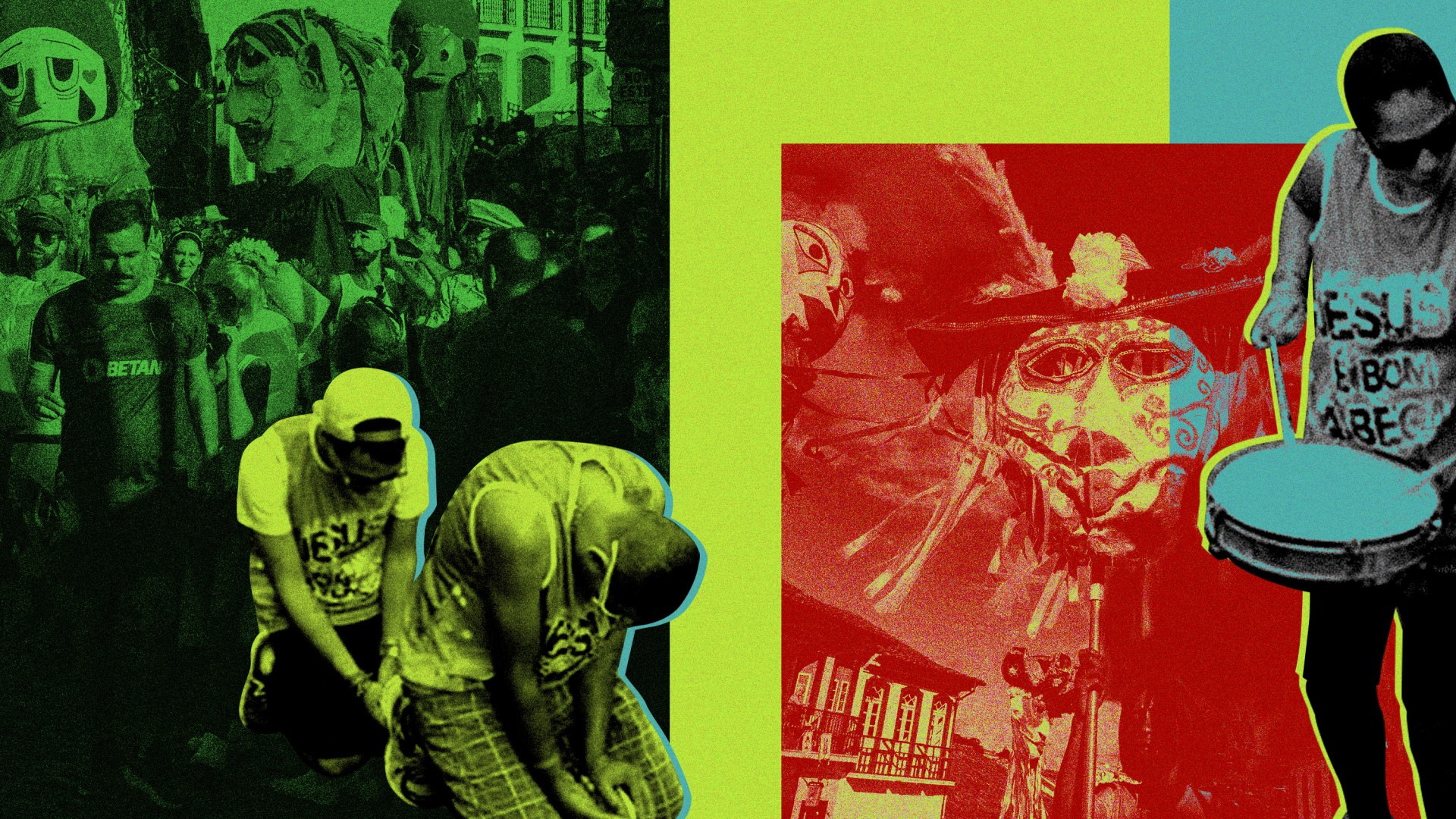
That same year, Tio Pedro began organizing his own bloco de carnaval (an informal group of people, often dressed in costumes, who follow a band playing live music in the streets), naming it Jesus É Bom à Beça (something like “Jesus Is So Good”).

For the past 27 years, he has welcomed hundreds of evangelicals, mostly from Belo Horizonte, who show up with costumes and instruments a couple days before Friday, the first day of Carnival. The other days, the participants serve on prayer, counseling, or street-evangelism teams. But everyone joins the bloco

This year’s bloco theme is Luz do Mundo (“Light of the World”), a message that the Jesus É Bom à Beça marchers will express through two Christian samba-enredos written by Pedro do Borel, a Rio de Janeiro worship artist. 

This year, Jesus É Bom à Beça will sing these two songs on repeat for two hours. But every 100 meters, they will also momentarily stop playing and singing to kneel and pray for the people celebrating Carnival around them. As has done every year with his bloco, Tio Pedro will approach the microphone and read Proverbs 24:11: “Rescue those being led away to death; hold back those staggering toward slaughter.”

“It’s not uncommon, after a moment of prayer, to look up and see people crying, impacted by what we are doing,” Tio Pedro said.

Outside of parade hours (Jesus É Bom à Beça will parade on Sunday and Tuesday this year), the group sets up its headquarters at a Baptist church building in the town square. From there, Tio Pedro dispatches people to minister at the tent, perform short theater productions meant to capture the attention of partygoers, give out water bottles to thirsty people, and strike up evangelistic conversations with those celebrating—at all times of the day. 

In 2000, one volunteer approached Franklin Cruz, one of the Carnival attendees, as he walked back to his hotel, drunk, in the middle of the night. As the smiling woman made her way down a narrow, steep street on one of Ouro Preto’s famous cobblestone hills, Cruz immediately knew he was in for a memorable night. It just turned out to be unforgettable in a different way than he expected. 

When they crossed paths, the woman asked if he was interested in talking to her about Jesus. Cruz listened, intrigued enough that when he returned to his home in Rio, he befriended a Christian who convinced him to find a church. Within a year, he had been baptized. In 2007, he was ordained as a pastor and 10 years later planted a church in the city of Volta Redonda. 

“My life with Christ started because on an ordinary day, someone decided to do an unusual thing: preach the gospel in the streets during Carnival,” he said.

Despite the testimonies that have emerged from Tio Pedro’s ministry, some still see it as merely providing a cover for believers hoping “to satisfy their carnal desires,” as Rafael Cézar, the pastor of Igreja Resgatar in Pindamonhangaba, accused in a 2023 video

“It would be interesting if these Carnival evangelists,” he said, “instead of going to Carnival, went to hospitals, to China, or to North Korea.”

Two years ago, Araújo attended a meeting where a group of church leaders called for an end to Jesus É Bom à Beça bloco. When it was her turn to speak, she shared her own testimony and handed out a copy of her book to each person. 

“We all have sinned and fall short of the glory of God, but righteousness is given through faith in Jesus Christ to all who believe,” Araújo said, recalling the words of Romans 3:22–23. “We must look with mercy on those who are at the party, but many legalistic people think they just deserve to burn in hell.”

Musician Atilano Muradas heard this kind of criticism when he started composing and playing worship songs in Brazilian rhythms. “Some people listened to these songs and took part in Carnival before their conversion, so they link them with sin,” he said. 

Muradas was a leader at an evangelical samba school that paraded from 1997 to 2009 in the city of Curitiba. Ultimately, the initiative ended after losing funding. 

While it lasted, Carnival offered the samba school the chance to sing Christian songs for nearly an hour and set up a tent where partygoers could drop by and interact with evangelical participants.  

Cruz trusts in this divine interaction. Two years after encountering Tio Pedro’s troupe, he returned to the streets in the Carnival, as an evangelist. “The first year, I was afraid,” he said. “I thought I might be tempted to go back.”

These days, Cruz makes a point of going to the last night of Carnival each year, the very night he first encountered the gospel. He looks for openings for conversations that he hopes will help people come to the realization he once did. 

“There are many other Franklins out there waiting to hear a word of hope,” he said. “I want to do for others what was done for me.”


Correction: An earlier version of this article misstated the year Franklin Cruz was ordained a pastor.

Ideas

NPS Rangers Found My Husband’s Body

After Rob’s tragic death, National Park rangers cared for my grieving family. Their job isn’t negligible.

A ranger cut out of a pink slip from the government over a postcard of Mount Rainier
Christianity Today February 28, 2025
Illustration by Mallory Rentsch Tlapek / Source Images: Getty, WikiMedia Commons

In the hope chest beside my bed, I keep a small gift given to me by a National Park ranger. The gift box is ordinary, just a battered cardboard shipping box, but its contents are priceless. Inside that box are the items a ranger salvaged from my husband’s backpack on the day he died.

Since the day police chaplains arrived at my campsite to tell me that my husband, former CT editor Rob Moll, was dead, I’ve benefited from the care of the National Park Service. After Rob fell to his death in the backcountry of Mount Rainier National Park, a ranger hiked almost three hours into the wilderness to meet Rob’s climbing partner at the accident scene. From there, rangers and staff coordinated to have Rob’s body airlifted out of the mountains back to the trailhead.

A ranger collected Rob’s belongings, separating out the crushed and bloodstained, and painstakingly compiled the report of his accident, describing every heartbreaking detail. Rangers collaborated with local law enforcement to locate me and, seven hours later, deliver the news—and that box—to me and to my four children.

The National Park Service (NPS) reports that the year Rob died, 382 other people also died in US national parks—382 ranger responses to car crashes, drownings, falls, and other accidents. In a park system that boasts millions of visitors per year, these numbers might seem negligible, an unlikely work assignment in an otherwise bureaucratic governmental agency that desperately needs downsizing. But when it is your loved one who needs that kind of care, a ranger means the whole world.

In the years since Rob’s death, park employees have continued their ministry in my life. A few months after Rob’s death, Shelton Johnson, the Yosemite National Park ranger made famous for his appearance in Ken Burns’s documentary The National Parks: America’s Best Idea, reached out to express his condolences. He’d only met Rob in passing when we visited the park in 2018, but that kind gesture made me feel seen after the casseroles and sympathy cards had petered out. When I needed help with postmortem paperwork, a staff member from Mount Rainier National Park talked me through my survivor rights under the Freedom of Information Act in a way I can only describe as tender.

And the list could go on. Three years later, a former interpretive ranger at Great Smoky Mountain National Park volunteered to help me chart out hiking options there that a mom with four kids could handle with both the weight of trauma and a longing to redeem the relationship with nature that death had marred. Five years later, a ranger at Glacier National Park swore in my youngest as a Junior Ranger—encouraging her to explore, protect, and preserve our nation’s resources—returning a sense of agency and purpose within a landscape that had stolen her childlike trust and previously had meant only grief.

I can only imagine that President Donald Trump does not understand these complex gifts that our National Park staff offer, as he has tasked Elon Musk and DOGE with reducing the federal employee headcount, including the 20,000 of national park employees.

Republicans and Democrats have, for many years, disagreed about land use within the Department of the Interior, from conflicts about oil extraction in the Alaskan wilderness to the controversial designations of national monuments like Bears Ears in Utah. Good Christians, too, disagree on how public lands should be managed. The National Park Service is certainly not immune from poor administration; its difficulties are well documented. Trimming the fat is warranted.

And yet, when Elon Musk and DOGE fired 1,000 full-time NPS workers and forced resignations from more than 700 more earlier this month—around 9 percent of the workforce—they did not respond to these larger concerns. Instead, Musk removed those who clean bathrooms and maintain trails. He dismissed interpretive rangers who run educational programs. DOGE fired staff who conduct administrative tasks at ranger stations, entry points, and visitor centers. They let go of rangers who help families find their way back when they become lost on trails. Musk and DOGE fired precisely the sort of people who tended to my family in the days we needed them most—and do the same for countless others every year.

But to fire a National Park ranger is to fire a first line of defense, a first line of care. To fire a park ranger is to fire a woman like ranger Margaret Anderson, who died stopping a potential shooter from accessing crowds at Mount Rainier National Park in 2012. To fire a park ranger is to fire a man like ranger Nick Hall, who died as he attempted to rescue hikers on the Emmons Glacier in the park just a few months later. To fire a park ranger is to fire the person who answered the phone on July 19, 2019, at the White River Ranger Station—a call from the backcountry pleading for help because a man, my beloved husband, had fallen down a 100-foot scree field on Barrier Peak.

Though I’m the producer and moderator of CT’s flagship news podcast, The Bulletin, you’ll rarely hear me talk about politics. I like my moderator role at the show because it affords me a neutrality that I prefer when it comes to topics that raise the blood pressure and cause division.

However, my children know there’s one department of the government that will always be precious to me—the Department of the Interior, and within it, the National Park Service. Like a community of mourners, members of the NPS surrounded me in my darkest hour and cared for me simply by completing the tasks in their job descriptions. And in the years since, their ordinary acts of service have restored a love for our nation’s wild places that could have died on that rocky peak five and a half years ago.

God instructed Israel to place three items inside the ark of the covenant: a jar of manna, Aaron’s staff, and the two stone tablets holding his commandments to his people (Heb. 9:4). Each of these items symbolized God’s enduring presence with his people—his provision in their time of need, his desire for relationship with them beyond their sin, and his Word that would guide them in holiness as they loved him with their whole hearts. None of these items made the ark holy. Instead, it was God’s presence resting above these memories that made the box precious.

My cardboard shipping box is filled with seemingly ordinary items as well—a trail map, a compass, a battered metal tin of ten essentials, a bag of expired, unopened beef jerky. None of these items are holy either. Yet thanks to a National Park ranger who was just doing his job that day, I am brought near to God’s power and love in the presence of this simple box.

Jesus told his followers, “Whatever you did for one of the least of these brothers and sisters of mine, you did for me” (Matt. 25:40). National Park employees work for the federal government; they aid the public. But in their routine tasks on the day Rob died, rangers engaged a higher calling—whether or not they realized it. Airlifting, report filing, and box filling were all acts of worship, reminders that even in the shadow of death God will never abandon his beloved (Ps. 16:10).

That kind of love doesn’t deserve a pink slip. It deserves commendation and always will.

Clarissa Moll is producer and moderator of The Bulletin at Christianity Today.

Books
Review

Some Miracles Happen Supernaturally. Others Happen ‘Hypernaturally.’

A new book on faith and science shows how God uses ordinary providence to bring about extraordinary outcomes.

An image of outer space getting torn away to reveal angels and heaven.
Christianity Today February 28, 2025
Illustration by Elizabeth Kaye / Source Images: Pexels, Wikimedia Commons

According to the Bible, Jesus has a great aptitude with physics, chemistry, and biology. As verses like Hebrews 1:2 and John 1:3 attest, the whole universe was made through him! Even now, Jesus holds everything together—from quantum particles to distant galaxies (Col. 1:17). He is the author and upholder of creation—just as surely as he is the author and upholder of salvation.

According to a quote often attributed to Johannes Kepler, the 17th-century astronomer, when we study the cosmos, we are “thinking God’s thoughts after him.” Thus, when a group of astrophysicists jump for joy at hearing a billion-year-old gravitational wave for the first time, they’re hearing a sound that was spoken in joy. When researchers delight in discovering an intricate pattern, they are sharing the delight of a maker who imagined the pattern in the first place. When chemists use a catalyst to make more out of matter, they are mimicking the cosmos-catalyzing work of Christ.

Jesus made it all. That makes all scientific engagement inescapably personal—especially for people of faith. Science helps us know God more.

According to the 16th-century Belgic Confession, God speaks through two books: the Bible and creation. And in order to read creation, we need science. 

We also need good books like Kenneth Keathley’s Faith and Science: A Primer for a Hypernatural World. In a world where so much rhetoric casts faith and science as opponents, it’s important to get an honest lay of the land. We need to learn the truth—that faith and science have not always been in conflict and that, historically, the church has held a high view of God’s gift of science. Keathley clearly explains what the Bible teaches about creation and general revelation. He shows, too, how people of faith have taken different approaches to making sense of the intersection of faith and science.

In particular, he argues, people of faith have labored to distinguish between scientific knowing and faith knowing. As Keathley observes early in his book, “Science and faith both look at the universe God created, but they ask different questions. … Science studies creation to understand what the world is and the processes that bring everything about. Faith explores God’s plan and purposes for the world. Science studies the ‘how.’ Faith seeks to understand the ‘why.’”


As I read Faith and Science, I learned a few things, mostly about that curious word in the book’s subtitle: hypernatural. Keathley defines hypernaturalism as the “extraordinary use of natural law by the God described in the Bible. When God acts hypernaturally, He employs natural law and natural phenomena in an extraordinary way to bring about His will.” 

As Keathley explains it, hypernatural moments occur when providence (the natural way God made things to work) and miracle (direct supernatural intervention) intersect, yielding an outcome that outruns “what can be accounted for naturally.”

Keathley cites several biblical examples. Peter, for instance, finds a gold coin in a fish’s mouth after Jesus instructs him to look inside the first fish he catches (Matt. 17:24–27). Daniel spends a night in the lion’s den but isn’t consumed. God parts the Red Sea with a natural wind. And he destroys Sodom and Gomorrah with what, according to some speculation, might have been a comet. Even prophecy has a hypernatural edge when it involves ordinary events playing out precisely as predicted but according to a supernatural orchestration.

Taking in Keathley’s definition, part of me wondered if hypernaturalism already exists within the parameters of providence. Since God made everything, then surely everything is already, by nature, tinged with God’s miraculous capacity. If so, why create a distinct category of hypernature?

Perhaps this category helps people hold two opposites together: that the world operates in an empirically explainable way (a more basic definition of providence) and that God occasionally intervenes to accomplish his will (through an exercise of special providence). Hypernaturalism describes one facet of how providence and miracle overlap.

Keathley sees hypernaturalism as having one basic goal: “to demonstrate that providence, not simply chance or necessity, is the driving force behind all of creation.” In his view, there are no gaps between the natural workings of the cosmos and the supernatural providence of God.

For most of his book (chapters 4–8), Keathley offers fascinating examples of where he sees hypernaturalism at play in the universe—beginning with the concept of a Big Bang. After briefly explaining this theory (that the universe began at a singular point in time) and reminding readers that it originated with a Catholic priestand physicist named Georges Lemaître, Keathley notes how it challenged an “eternal view of the cosmos” that held sway for millennia.

If the universe had always existed, then scientists could understand it without reference to any higher power. But a Big Bang needed something (or someone) to get things started. Today, the Big Bang theory is broadly accepted in the scientific world. Keathley sees the Big Bang as a hypernatural event—God got things going and, through the laws of physics, made something out of nothing. As Keathley writes,

The big bang theory implies that there is a Cause greater than the universe—something outside our world as we know it caused this big bang to occur. It also demonstrates that the universe is contingent and not self-originating …[and] shows us that there are limits to scientific inquiry. … While it does not provide definitive proof of God’s existence, it does fit remarkably well with the biblical doctrine of creatio ex nihilo.

Keathley also sees hypernatural dynamics in the finely tuned nature of the universe—a design so intricate and complex that it invites the question “Who thought this up?” Of course, the more science understands nature, the more finely attuned it seems. The deeper science looks, the more detail it sees.

In fact, I’ve come to believe that scientific investigation will never reach the end of creation’s mystery, in either its infinite or its infinitesimal dimensions. Perhaps there is no end to the wisdom that God will reveal through the finely tuned nature of creation. Perhaps the work of science will continue in a new heaven on earth—forever.

To that end, the idea of hypernaturalism is a compelling pointer. What if the mystery of how God works through the natural and supernatural is equally eternal? What we’re trying to articulate now, with our limited theological and scientific capacities, might be the same stuff we’ll be thinking about for all eternity. In that case, we’ll never really exhaust the mystery of how deeply all things hold together in Christ.

Affirming this can be quite freeing. It relieves some of the pressure believers feel to lock down every detail of how God exercises his sovereignty in the realm of nature. Knowing we’re not meant to resolve all the mysteries of providence, we can gratefully leave them in his hands.


A humble acknowledgement of mystery can pave the way for generous dialogue between competing perspectives on faith and science. Near the end of his book, Keathley models this gracious spirit in describing the difference between old-earth creationists (OEC) and evolutionary creationists (EC):

It seems that the difference between EC and OEC lies in where each sees special divine action occurring. EC argues that the universe was sufficiently front-loaded, rigged at the beginning, so that life was able to evolve in at least one place—earth. They would say that the hypernatural moment was the initial moment of the Big Bang. By contrast OEC argues that, in addition to the Big Bang, the fossil and genetic evidence indicate that a number of hypernatural actions can be detected at various stages of natural history.

Keathley himself identifies as old-earth creationist. Yet he chooses to see the best in the motivations of believers with different views (including young-earth creationists as well). He can recognize how each worldview seeks to affirm God’s cosmos-creating power and glory, honor Scripture, and respect all that is good in the gift of basic science.

In my experience, most Christians agree that God providentially cares for humanity via the technologies, medicines, and other scientific discoveries. We’re all thankful for these gifts—for what we know, and for what is yet to be known. But one thing I’ve learned from the scientists I’ve met over the years is that they always know what they don’t know. With every discovery comes a whole new set of questions.

Theologians can learn from this kind of humility. When it comes to understanding the ways of God, who is infinitely more mysterious than the workings of the universe, perhaps we could take our lead from Augustine, who once wrote in his Confessions that he can experience far more than he can understand about the Trinity. Much the same might be said about God’s weaving of the natural and the supernatural.

John Van Sloten is a writer, teacher, and pastor. His latest book is God Speaks Science: What Neurons, Giant Squid, and Supernovae Reveal About Our Creator.

News

Watching Trump Repeat Putin’s Lie Fills Ukrainian Pastor with Fear

Oleg Magdych was there when the war began. He knows who started it.

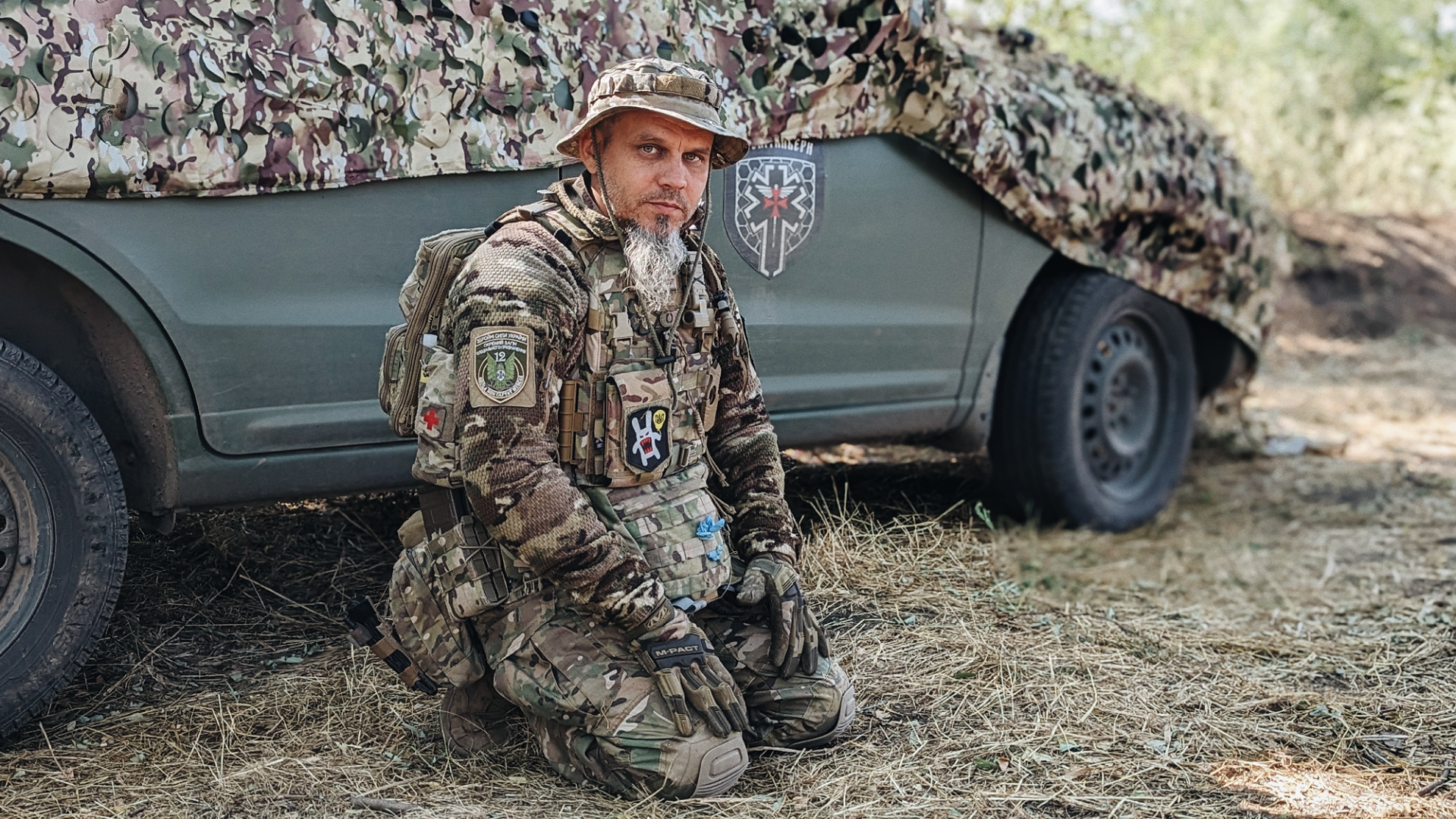
Ukrainian pastor Oleg Magdych in fatigues near the Russian front.
Christianity Today February 28, 2025
Courtesy of Oleg Magdych

Oleg Magdych was driving supplies to Ukrainian troops in the eastern Donetsk region three years ago, on February 24, 2022. He remembers stopping for gas at 5 a.m. That’s when he heard it: Russian shelling in three different directions. 

The invasion had begun.

The sound of those exploding shells confirmed the nondenominational Ukrainian pastor’s fear: The Russian military buildup on Ukraine’s borders—more than 100,000 soldiers amassed to the north and east—was not just a show of strength and a negotiating tactic by Russian president Vladimir Putin, but indeed a harbinger of assault on Ukraine. 

If his ears didn’t convince him, Magdych also saw the invasion with his eyes. Russian planes came out of the sky to drop bombs on the Ukrainian military outpost a mile away. 

Magdych immediately turned around and went back to Kyiv to evacuate his family and join the fight to protect the capital, he told Christianity Today. He has continued working to support the defense of his country for the past three years as a chaplain and commander of a volunteer battalion that specializes in medical evacuations.

He also joined the fight on social media, trying to post enough to counter Russian lies about the war. 

“They have special divisions within their army whose job is to get online and make comments on social media,” Magdych said. “It’s hard to beat that.”

In the past three years, Magdych has witnessed the rising tide of Kremlin propaganda. He’s seen American evangelicals and conservative journalists repeat as facts things he knows are not true. Now he’s even seen the president of the United States taken in by the falsehoods.

Magdych was sitting in a bunker on the frontlines when he read Donald Trump’s social media post blaming Ukraine for starting the war—as if Ukraine had somehow caused its own invasion. 

“I couldn’t believe my eyes,” Magdych said. “At first I thought it was a prank post that I read. But then I saw the same news in different sources.”

Fighting the war is hard enough, Magych said. But when even your allies repeat your enemy’s lies, what hope is there for victory?

On Monday, the Trump administration’s shift went further than social media statements, when the United States broke with European allies and voted against a United Nations resolution on responsibility for the war. The UN wanted to state clearly that Russia was the aggressor. The US voted against the affirmation of the fact, joining with North Korea, Belarus, and Russia to oppose the resolution.

Trump’s decision to blame Ukraine marks a major propaganda victory for Putin. The Kremlin has been trying to reframe the nature and origin of the war since day one. 

At a March 2022 rally in Moscow, Putin claimed the invasion was actually a “special operation” designed to “save people from genocide.” During an interview with former Fox News host Tucker Carlson last February, he repeated the lies, making up facts to justify an invasion of a sovereign nation. 

In Russia, the propaganda is enforced by law. Russians who use the term war instead of special operation face up to 15 years in prison.

Some Russians have refused to accept this. More than 15,000 people were imprisoned for protesting the war. Many more people have fled the country: between a few hundred thousands and 1 million, according to some estimates

Some, like Andre Furmanov, have continued to speak about the injustice of the war and refused to accept Putin’s version of events. Furmanov regularly invites people into his home to discuss Kremlin spin.

“I’ve said enough publicly and privately to go to jail for 15 years,” Furmanov said. “I’m honestly overwhelmed, shocked, and grateful to God that I haven’t gone to jail. Yet.” 

Furmanov was working on a sermon when he read Trump’s repetition of the lie about the start of the war. He told CT he had the same reaction as when he heard about Russia’s illegal annexation of the Crimean Peninsula in 2014: He thought it was a stupid joke.

To him, all this official lying feels like the old Soviet Union coming back. He grew up under Communism and served in the Russian army in the late 1980s. He said he would find opportunities to tune in to foreign radio broadcasts on his military receiver and just be amazed at the stark contrast in narratives.

The Soviet media portrayed President Ronald Reagan as a “belligerent, war-hungry leader intent on escalating the arms race and pushing the world to the brink of nuclear war,” he said. Western media, on the other hand, would emphasize the diplomatic aims of Reagan’s presidency.

“I always sensed that something was wrong with my country,” he said, “but nobody ever told me the truth.”

The collapse of the Soviet Union and the end of the Cold War confirmed the truth for him. The Russian government was lying; Western journalists could be trusted. 

Furmanov said the specific claims have changed since the Soviet days. Putin claims he is protecting Christendom from the West’s moral decline, stopping NATO encroachment, and preventing the genocide of ethnic Russians. But the quest for complete control—even control over the truth—is very familiar. 

Putin secured his fifth term in office last year, extending his presidency until at least 2030. Most of his political opponents are either scattered or dead. The president seems convinced he can say whatever he wants without fear of anyone in Russia contradicting him with the facts.

And now the president of the United States will say what Putin says, too. 

Trump, who has repeatedly praised Putin, falsely labeled Ukrainian president Volodymyr Zelensky a “dictator without elections.” When asked during a press conference last week if Putin was a dictator, Trump refused to use the same label for the Russian leader, insisting, “I don’t use those words lightly.” 

Furmanov said he wants Americans to understand how shocking that is. 

“The vocabulary of the US president and the propagandists of Russian federal TV channels have become practically indistinguishable,” he wrote on social media.

Trump’s rhetoric seems as if it has had an impact, too. American conservatives used to be skeptical of Putin and Russia. They used to support Ukraine. In 2022, a few months after the war began, a little more than 40 percent of Republicans said the US was providing too much military assistance. According to a Gallup poll last December, skepticism has increased dramatically. Now, 67 percent of Republicans believe the US is doing too much for Ukraine.

Furmanov and Magdych said the lies the Kremlin puts out have taken their toll. The two of them have both tried to debunk many, many falsehoods: Ukraine’s president prevented elections; US aid to Ukraine far surpassed the amount contributed by Europe; Ukraine lost $100 billion of American money; and more. 

Meanwhile, the Trump administration has seldom mentioned well-documented Russian atrocities. More than 14,000 Ukrainians died during Russia’s first invasion in 2014, and an additional 46,000 have died since 2022. That number includes 12,000 civilians. Russians have raped, tortured, and intentionally targeted civilians.

Russian forces have also kidnapped an estimated 20,000 Ukrainian children.

Magdych doesn’t know how the war will end, but he’s worried about what happens to his family and his church if negotiations leave Russia with the upper hand. 

Will Russia draft his son into the military to invade other European countries? Will Kremlin officials target his wife, a psychologist, for her work with Ukrainian veterans? Will they shut down his church since it’s evangelical and not Russian Orthodox?

“You may say it’s an exaggeration,” Magdych said. “But that’s exactly what happens in every occupied village and city the [Russians] are demolishing.” 

Culture

‘House of David’ Is Faith Based—and Fantastical

The new series on Amazon Prime tells the story of Saul, a shepherd, and lots of giants.

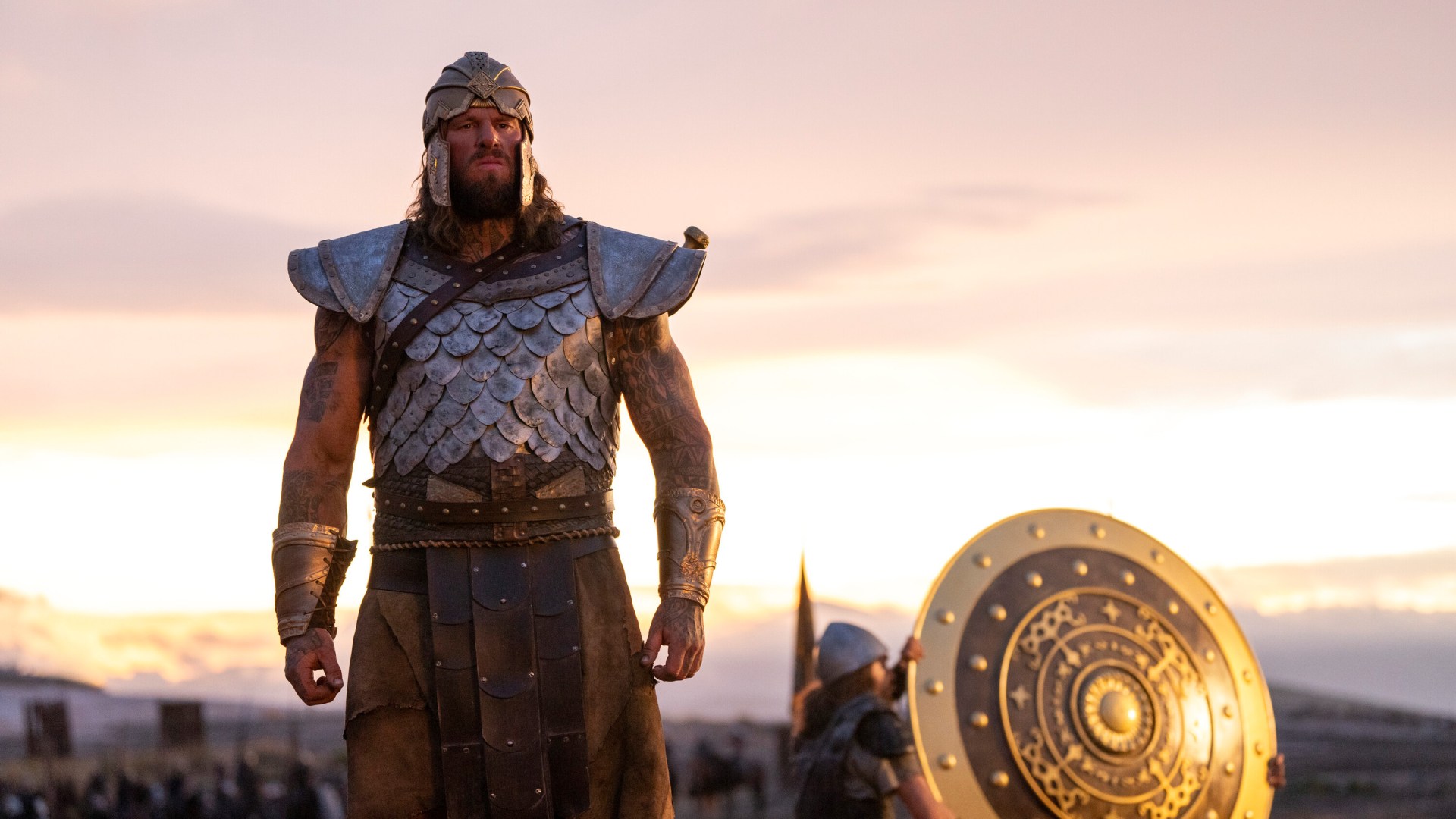
A still from House of David showing Goliath.

Martyn Ford as Goliath in House of David Season 1.

Christianity Today February 27, 2025
© Amazon Content Services LLC

Three thousand years ago, the elders of Israel came to the prophet Samuel and asked him to give them a king like all the other nations had. After watching the first three episodes of House of David—the new Prime Video series about Samuel, King Saul, and the shepherd who slew Goliath—it’s tempting to think that the show was prompted by a similar cry: “Give us a fantasy series like all the other nations have!”

A fantasy series? Isn’t David historical? And isn’t this supposed to be a faith-based drama that stays true to the biblical narrative?

Well, yes. House of David was created by Jon Erwin, codirector of hit Christian movies like I Can Only Imagine and Jesus Revolution. It is very much geared toward an audience that wants a faithful adaptation of the Bible—not only bringing its characters to life but also presenting them as Scripture-respecting role models to boot. (David, played by newcomer Michael Iskander, says at one point, “I believe all the words of Moses.”)

But House of David is also aimed at an audience that wants a family-friendly alternative to shows like Game of Thrones, so it leans hard into parts of the Bible that other movies don’t. At the same time, it introduces plot points that push the story closer to The Lord of the Rings than to Gladiator.

This tendency to underline (or even exaggerate) the fantastical is apparent from the show’s first scene. The giant Goliath (British bodybuilder Martyn Ford) steps out from behind the Philistines and challenges the Israelites to send one of their champions to fight him in single combat. He’s huge—super huge. The biblical character was only 6’9”, or maybe 9’9”, depending on which manuscript you read. But the Goliath of House of David is at least twice the height of anyone standing near him; the filmmakers have said he was meant to be 14’.

After its dramatic opening, the series jumps back a year to show the events leading up to the confrontation, with the first three episodes detailing well-known political and familial drama. King Saul (Ali Suliman) lets power go to his head; the prophet Samuel (Stephen Lang of Avatar) rebukes him for disobedience; David’s oldest brother, Eliab (Davood Ghadami), says David is too young and inexperienced to join the army.

But all this is merely groundwork for a sweeping origin story about the giants. That’s because House of David ties the David-and-Goliath narrative to passages from other biblical books that aren’t normally referenced in major films or series about these characters. Usually, Goliath is treated as little more than a Philistine who happens to be somewhat taller than usual. But in House of David, he is part of a much deeper mythos—what you might call a shared universe.

Saul’s son Jonathan (Ethan Kai), spotting a massive handprint high up a wall in a village that’s just been attacked by a mysterious force, is reminded of a verse from Genesis about the giants who lived before the Flood (6:4). Saul, hearing that giants might be afoot, says none have roamed the land since Joshua’s day (Josh. 11:21–22). And David, for his part, calls the giants “the sons of Anak,” claiming they are the offspring of angels who came down from heaven and mated with human women (Num. 13:33; Gen. 6:1–4).

If the series limited itself to these biblical callbacks, that would be intriguing enough. But it doesn’t stop there; it draws on other sources and invents new elements to build an entire subplot around its larger-than-life villains.

Achish (Alexander Uloom), the Philistine king of Gath, goes looking for the giants—he calls them “gods”—because he wants to form an alliance with them against the Israelites. His quest takes him into a valley where Goliath and his brothers (1 Chron. 20:5) live with their mother in a cave—a setting that brings to mind the ghost-haunted, subterranean spaces of J. R. R. Tolkien’s stories. The mother of the giants is a regular-sized woman named Orpah (Sian Webber): a nod, presumably, to the rabbinic tradition that says Goliath and his brothers were the sons of Ruth’s sister-in-law, the Moabite widow who returned to her gods and did not follow Ruth and Naomi to the land of Judah (Ruth 1:3–15).

The series has other supernatural elements too. The king of the newly defeated Amalekites (depicted as blood-drinking cannibals) seems to be casting a spell against one of Saul’s daughters while he is chained and put on display in Saul’s tent. David’s mother, Nitzavet (Siir Tilif)—who is apparently dead before the series begins, though the biblical David’s mother was alive well into his adulthood (1 Sam. 22:3–4)—is seen in flashback and seems to have prophetic knowledge of David’s destiny. And when Saul is finally rejected by God, we suddenly see the world through his spirit-afflicted eyes (1 Sam. 16:14–16). The imagery goes dark, like the world as seen by Frodo when he wears the One Ring.

The series seems to draw from the postbiblical tradition for some of its less fantastical elements as well. The David of this series is belittled by his father and brothers—and overlooked by them when Samuel comes calling—not merely because he is the youngest person in the family but also because he is illegitimate, a “bastard” whose very existence brings shame to his father, Jesse (Louis Ferreira). This might seem like an odd and unnecessarily complicated bit of backstory at first. But a quick check of the Jewish Encyclopedia reveals that this, too, might be rooted to some degree in the rabbinic tradition that says David was thought to be the son of a slave woman and thus did not get the same upbringing as his brothers.

As a faith-based project aimed at a mass audience in general and a family audience in particular, House of David can’t help sanitizing some of the more adult parts of its story. As far as we can tell, the Saul of this series has just the one wife, Ahinoam (Daredevil’s Ayelet Zurer), not the harem alluded to in the Scriptures (2 Sam. 3:7; 12:8). The narrator tells us Saul was told to slay the Amalekite king but doesn’t mention that Saul was told to kill every Amalekite man, woman, and child too (1 Sam. 15:3). Saul’s younger son Eshbaal (Snowpiercer’s Sam Otto) is portrayed as a hedonist, always drinking and flirting—but so far, at least, his debauchery is depicted in very PG terms.

This is not to say that the show doesn’t warrant some sort of parental advisory. There is a fair bit of action-movie violence here, as well as a hint of offscreen cruelty courtesy of a spy named Doeg (Ashraf Barhom). And there is even a brief bit of circumcision humor. (Between this and recent episodes of The Chosen and The Promised Land, that seems to be a thing now.)

Still, it’s interesting to compare this series to, say, Of Kings and Prophets, a major secular network series about Saul and David that aired briefly in 2016. (Fun fact: Martyn Ford, who plays the hairy, bearded Goliath in House of David, played a bald, clean-shaven Goliath in an episode of that series.)

Of Kings and Prophets emphasized the sex, violence, and moral ambiguity in the David story—including David’s own murderous impulses (1 Sam. 25:21–22, 34)—but barely acknowledged David’s faith. House of David has the opposite issue, emphasizing David’s spirituality while (so far) eliminating the sex and downplaying the violence except when it’s committed by the bad guys or absolutely justified on the part of our heroes. It would be encouraging to see an adaptation of the David story that captured both sides of the story. But who would be the audience for it?

In any case, I’m curious to see where House of David goes from here. Erwin has teased an even deeper dive into Goliath’s origins in future episodes. Several characters—including the aforementioned Doeg—are taken from later passages in the Bible; their presence may be a foretaste of where the series will go. (Among other things, Stewart Scudamore, who has at least half a dozen other Bible movies on his résumé, appears here as an elder named Adriel, which suggests there could be a wedding in the show’s near future; see 1 Samuel 18:19 for details.)

Mostly, I’m curious to see how the series follows the template that it’s setting for itself. The Bible does have a few verses about David’s men slaying giants after Goliath dies (2 Sam. 21:15–22; 1 Chron. 11:23; 20:4–8), but those passages are brief.

The shepherd’s story gets a lot more earthbound after this. House of David may have to pad its story even more to keep the fantasy alive.

Peter T. Chattaway is a film critic with a special interest in Bible movies.

News

When Down Under Churches Listen to Refugees, Part Two

Some Christians strive to make Australia “a more welcoming country, which we haven’t always been.”

Mridula Amin Restaurant goers sit in a Main Street in Dandenong, a southeastern suburb of Melbourne, at night.
Christianity Today February 27, 2025
The Washington Post / Contributor / Getty

The first part of this article concluded with venerable Australian expert Hugh Mackay criticizing politicians in his country who make asylum seekers seem threatening to longtime residents.

Australians have legitimate concerns about the cost of housing. But Mackay compared some politicians to a person leading a horse out of a barn by blindfolding it as if there were a fire, though there’s not one: “If you can incite a bit of anxiety, your position as an incumbent government is more secure.”

Australia hasn’t always curtailed immigration. In 1945, then–minister for immigration Arthur Calwell popularized the phrase populate or perish and said that unless the country grew through mostly white immigration, it would suffer in defense and development.

Australians excluded Asians and welcomed British newcomers until the White Australia policy ended in 1973. For five years, immigration numbers drastically decreased. They have fluctuated ever since. Today, people from Asia and India make up the majority of immigrants to Australia, where the population is seven times greater than it was when the White Australia policy began.

In the late 1990s, Naomi Chua and Chris Helm worked in the government housing estate in Carlton, an inner-city suburb of Melbourne.

Helm said he struggles to find many central figures in the Bible who weren’t displaced or refugees at some point, from Adam and Eve to John on the isle of Patmos: “It’s actually a very common human experience, and God is in the midst of it. From laws to anecdotes and stories of people welcoming and caring for the other, [it] seems absolutely woven through the whole biblical narrative.”

Helm called that biblical history “a mandate. It’s what God calls us to do, to recognize that so many people are not where they want to be, are not amongst their family or their people and therefore need welcome and care.”

Two years ago, Chua began Embrace Sanctuary, a nonprofit group designed to build community between refugees and Australians through education and help in the resettlement process. Chua said they adopt a posture of learning and hearing the refugees’ stories, “so that we become more compassionate, a more welcoming country, which we haven’t always been and aren’t always.”

In January, Chua teamed up with Helm in his role with Scripture Union to welcome 104 people to the Sanctuary Family Retreat in Anglesea, southwest of Melbourne. Family members from Gaza attended, even though they had been in Australia for just two months: “If you want to see what trauma looks like, just see the 7-year-old and the 3-year-old and the 2-year-old. They were just hyper alert. The little girl was screaming all the time. The little boy was punching everything in sight, a ball of rage.” 

By the end of camp, after six days of activities and persistent care from the volunteers, the boy was running up to people and hugging them. His mother prepared a Palestinian meal for everyone one night. Helm thanked her for the delicious food.

“She teared up,” Helm said. “She was struggling with English. She was trying to say, ‘No, please don’t thank me. I thank you for giving me the opportunity to cook a meal, to contribute to our community, to share something that I can do with our community.’ She was overwhelmed with gratitude.”

Community-care worker Alexandra Mikelsons said of her clients, “They just need time for someone to listen to them. That is really helpful for people who are not able to be helped in other ways. Like, the reality is, there’s no house for you to stay in. But just being able to chat about it is incredibly helpful for people, and to have people who genuinely care about it and say, ‘This is really awful,’ and can empathize and know that we have hope.”

South of Melbourne, Waurn Ponds Community Church also emphasizes empathy—plus barista-style coffee on the church’s shiny industrial coffee machine. “We were going to charge people when we first got it,” pastor John Richardson said while steaming milk for my chai, “and then I thought, Let’s just be generous.”

Church members serve custom cups of coffee for free on Sundays and during the week, for workers in the childcare center and for attendees of parenting classes and staff meetings. “There’s just something nice about having a nice cup of coffee or chai to build hospitality,” he said as he handed over a steaming cup of tea dusted with cinnamon. 

That generous mentality spilled over when Richardson received an email a few years ago about Judith and Fidelis Okogwu, an immigrant South African family whose financial backing had dissolved.

“They had their suitcases, and they had got a rental,” Richardson said. “They had nothing else. They had no cutlery, no beds, no nothing.”

The church quickly put together a team but made sure it included people who had the capacity for long-term relationships, such as “an older woman who would be able to help Judith in the kitchen and set things up but wouldn’t take over, an older man who could have conversations with Fidelis about his own business and be that older man that Fidelis could respect,” Richardson said.

Richardson’s mother, who had done work with Salvation Army for decades, helped him think through what people need after their material needs are met.

“What was really unhelpful was announcing to our church community that we’ve got a family that we need a whole bunch of stuff for,” he said. People are well-meaning, Richardson said, but they give what they don’t want anymore, and then, when the family attends church, they unthinkingly say, “Oh, you’re the poor family that we help out.”  

Richardson said, “We can’t help everybody, but when we do, we give the best of what we can, because that’s giving dignity and respecting who they are, that they’re in a vulnerable situation.”

But their situation often becomes less vulnerable over time.

The two women from part one of this story, Tahira and Najeeba Sadaat, visit Mikelsons at 3216 Connect less than once a month now, instead of every week.

Mikelsons still offers food and gas vouchers and helps them fill out paperwork, prioritize bills, and connect with other services.

But it’s not just their material needs that they’re caring for; they have built a friendship as well. Tahira Sadaat said, “Yeah, we talk.”

Amy Lewis is a freelance journalist who lives in Geelong, Australia.

This story has been corrected to clarify that Naomi Chua was the founder of Embrace Sanctuary.

addApple PodcastsDown ArrowDown ArrowDown Arrowarrow_left_altLeft ArrowLeft ArrowRight ArrowRight ArrowRight Arrowarrow_up_altUp ArrowUp ArrowAvailable at Amazoncaret-downCloseCloseellipseEmailEmailExpandExpandExternalExternalFacebookfacebook-squarefolderGiftGiftGooglegoogleGoogle KeephamburgerInstagraminstagram-squareLinkLinklinkedin-squareListenListenListenChristianity TodayCT Creative Studio Logologo_orgMegaphoneMenuMenupausePinterestPlayPlayPocketPodcastprintremoveRSSRSSSaveSavesaveSearchSearchsearchSpotifyStitcherTelegramTable of ContentsTable of Contentstwitter-squareWhatsAppXYouTubeYouTube