The Bible Story That Explains Australia: Jezebel and Ahab’s Violent Vineyard

The biblical story of Naboth’s vineyard teaches non-indigenous Christians like me how God views the injustice that made Melbourne.

Christianity Today July 12, 2023
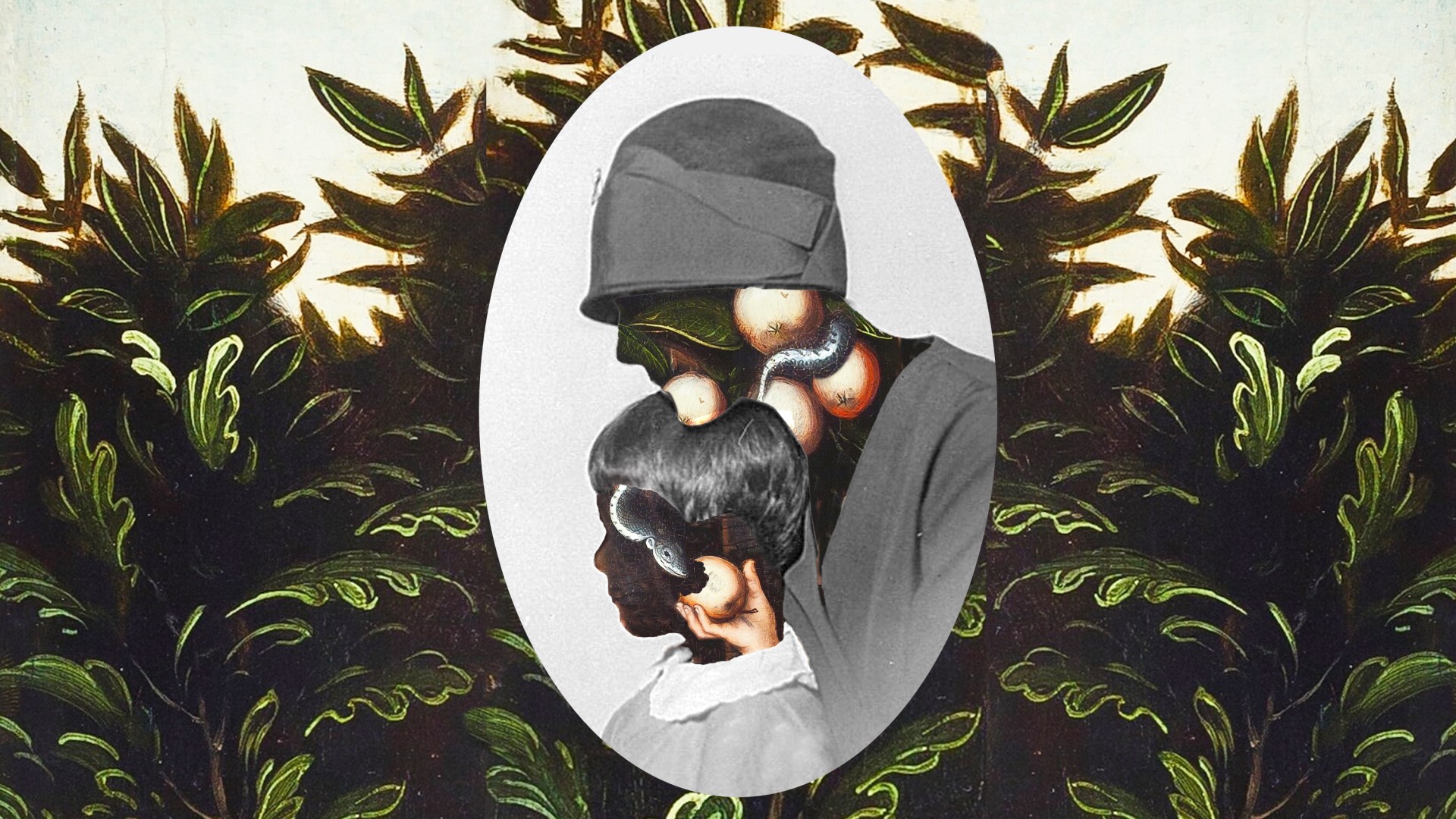
Illustration by Mallory Rentsch / Source Images: WikiMedia Commons

As an increasing number of Australians realize, our nation was founded on the legal lie that the continent was terra nullius, “nobody’s land.” The truth is that Aboriginal people had been living on the lands now called Australia for at least 65,000 years by the time the first Europeans arrived. However, since British law said no one was here, most settlers didn’t bother making treaties.

One exception was John Batman, who was born in Australia to a convict father and a free mother who had paid passage to keep the family together. After encountering challenges trying to access a land grant in other regions, Batman staked out land near Merri Creek, otherwise known as the home of the Wurundjeri nation, and signed a treaty with them that exchanged handkerchiefs, flour, and other supplies for most of what is now Melbourne.

Even if their signatures weren’t faked, the most the Wurundjeri people possibly agreed to was temporary hospitality. They considered the land as something they belonged to, not as a possession that could be sold as under English law.

In the end, it didn’t matter. In 1835 the governor responded to Batman’s treaty with a letter in the king’s name: The treaty was invalid because the land already belonged to the crown. Within a few years, most of the indigenous inhabitants in that region were either killed or forcibly displaced far from their ancestral home.

While the themes in this story show up across Australia’s history, this is the particular story of the land on which I live and work. I first learned about it while preparing to preach on 1 Kings 21 at a church near Merri Creek where the treaty was signed. I don’t often like to compare myself with biblical villains—especially not Ahab and Jezebel, two of the wickedest rulers in the Bible. Yet when we read about what God judged them for, the violent entitlement and casual cruelty with which European settlers stole Melbourne sound uncomfortably familiar.

Ahab ruled the breakaway northern tribes of Israel in the ninth century BC. The Bible paints him as one of their worst kings. He “did more evil in the eyes of the Lord than any of those before him” (1 Kings 16:30), which was no small effort. He and his wife Jezebel routinely break Israel’s covenant with God and drag Israel deep into idolatry, building a temple of Baal and violently persecuting the prophets of God. Elijah the prophet famously challenges him and his 450 prophets of Baal on Mount Carmel with a contest to see which god would answer their sacrifice with fire (1 Kings 18).

Yet God’s covenant spans the horizontal as well as the vertical; he is enraged by injustice on earth no less than by offenses toward heaven. So, in 1 Kings 21, God’s heavy judgment on Ahab is traced back to an incident involving a field and a relative nobody named Naboth.

Naboth owns a vineyard that has belonged to his family for generations. Unhappily for Naboth, however, the vineyard is next to King Ahab’s palace. When Ahab decides that Naboth’s vineyard is the perfect place for a vegetable patch, he asks Naboth if he can buy the field.

Naboth says no. “The Lord forbid that I should give you the inheritance of my ancestors” (v. 3). I mentioned above why the Wurundjeri elders would never have agreed to sell their land to Batman; in a similar way, godly Israelites like Naboth saw themselves as custodians, rather than owners, of their ancestral land, which could never be sold permanently (Lev. 25:23).

Incensed that Naboth has repudiated him, Ahab returns home to sulk. He refuses to eat dinner and lies in bed feeling sorry for himself, before a frighteningly powerful political leader pays him a visit.

Jezebel eviscerates Ahab for moping. “Is this how you act as king over Israel? Get up and eat! Cheer up. I’ll get you the vineyard of Naboth the Jezreelite” (1 Kings 21:7). She writes letters in the king’s name and arranges for Naboth to be falsely accused and executed on blasphemy charges.

Suddenly, Ahab finds the field available. Cold, decisive, and deadly efficient, Jezebel has little pity for those in her way. Ahab jettisons any qualms he has with his wife’s actions and seizes the murdered man’s field for himself.

Often it can appear that the names and stories of those like Naboth, who have found themselves in the cross hairs of those acting with impunity, have long been forgotten to history. Yet God remembers. Through the prophet Elijah and a couple of eavesdroppers, God delivers a chilling message: One day, dogs will lick up Ahab’s blood on the very ground where Naboth’s blood was spilled (v. 19).

The prophecy comes true three years later, when Ahab picks a fight with the neighboring nation of Aram at Ramoth Gilead and dies from a stray arrow in battle (1 Kings 22). As the cleaners are washing Ahab’s blood from his chariot, a pack of dogs comes and starts drinking from the bloody puddle, as prophesied, in Naboth’s field.

It’s the beginning of the end for Ahab’s dynasty. Two sons succeed him. The first (Ahaziah) dies, and then, during a reboot of the battle that killed his father, the second (Joram) is wounded and returns to Jezreel to recover. Ahab’s former general, Jehu, is sent on a mission from God to finish him off and take the throne for himself. He scores an arrow through Joram’s heart and dumps his body in Naboth’s field—once more fulfilling Elijah’s prophecy in 1 Kings 21.

Jehu was one of the soldiers who, years earlier, overheard Elijah’s words of judgment: “Have you not murdered a man and seized his property?” (1 Kings 21:19) As he ends Ahab’s dynasty, he declares that justice has finally come for what Ahab and Jezebel did to Naboth (2 Kings 9:25–26).

“Remember how you and I were riding together in chariots behind Ahab his father when the Lord spoke this prophecy against him: ‘Yesterday I saw the blood of Naboth and the blood of his sons, declares the Lord, and I will surely make you pay for it on this plot of ground, declares the Lord,’” Jehu tells his chariot officer. “Now then, pick him up and throw him on that plot, in accordance with the word of the Lord.”

Have you not murdered men, women, and children and seized their property?

Those who live, work, and worship on stolen lands are advised to tread thoughtfully. God hasn’t forgotten what happened here in Australia. He has humbled kingdoms greater than ours for less.

Indigenous Australians haven’t forgotten how they lost this land either. For Stan Grant, a prominent journalist and Aboriginal man, the injustice tests his faith:

Where was God when our land was invaded? Where was God when we were killed in the Frontier Wars? … I was raised by people with hope in God. A hard hope. The despairing hope of a people forsaken. A people who wait for God's justice.

These injustices took place long before I was born. Yet we nonindigenous Australians inherit together the guilt as surely as we inherit the land itself. Like Ahab, we have enjoyed the proceeds of crimes done in our name. Ahab himself did not arrange the murder, but the order went out in his name, and he was unjustly enriched by it. Likewise, God holds Jezebel and Ahab’s heirs accountable for the sins of the house of Ahab as a whole (1 Kings 21:21–24).

While individualistic Western culture struggles to recognize corporate sins, a biblical theology of sin reveals that God regularly holds groups of people responsible for their corporate sins, even generations later. These corporate sins call not for denials of individual culpability but for corporate repentance on behalf of the community (Josh. 7; Ezra 9; Dan. 9; 1 Cor. 5).

Even Ahab recognizes the need for public repentance when confronted by the wickedness Jezebel has done in his name. After Elijah delivers God’s judgment, Ahab responds by acknowledging his sins with public actions: sackcloth, fasting, and humility (1 Kings 21:27). Because of this repentance, God delays judgment and allows his family to remain for one more generation.

Nonindigenous Australians are beginning to repent of the sins done in our name by acknowledging that the places we live and work tell a history that precedes European settlement. Later this year Australians will vote on whether to formally acknowledge indigenous Australians in our constitution and facilitate a consultative indigenous Voice to Parliament.

Whether or not this legislative proposal succeeds, many Australians will continue to acknowledge indigenous inhabitants in more local ways. For instance, recently my son’s class opened a school assembly the way an increasing number of events in Australia are marked:

We acknowledge the Wurundjeri people as the traditional custodians of the land on which we meet today and pay our respects to elders past and present.

Two decades ago, few practiced “acknowledgements of country” outside activist circles. But with increasing support for reconciliation between indigenous and nonindigenous Australians, it’s become common to hear these statements (or a “welcome to country” given by an indigenous person with ancestral connection to that place) as a prelude to a sporting match or at the landing of an airplane.

For nonindigenous Australians (like me), acknowledging that this land belonged to a specific people, like the Wurundjeri people, shows respect for their humanity and culture, as well as their continuing struggle to survive as a unique and irreplaceable culture in the wake of European colonization.

Many nonindigenous evangelical Christians have eagerly adopted this practice, seeing it as a way to love their indigenous neighbors. Some even incorporate acknowledgments of country in Sunday services.

A minority of Christians worry that acknowledging country might be inadvertently participating in “pagan spirituality” by invoking ancestral spirits. Those who genuinely believe this should of course spare their consciences.

Other skeptics dismiss acknowledgments as mere secular rites that risk becoming rote. This underestimates the true danger of reciting liturgies: Over time, they have a profound potential to change us for the better.

But for me, as an Old Testament scholar, I understand these acknowledgements as reflecting the character of God we see in the Ahab story—and indeed throughout Scripture. God seeks not just true worship but also true justice. God holds groups accountable for corporate sins. God opposes proud oppressors but shows grace to those who humbly repent.

Nonindigenous Australians cannot undo what was done in our name. We cannot revive the generations cut short by disease or violence or recover lost languages and cultures. We could offer to leave, but most of us have nowhere to go.

It’s humbling to acknowledge something we have little power to right. But time and time again, we observe in the Bible that repentance marks the first step in obedience. For myself and my fellow nonindigenous Australians, following God begins by asking forgiveness for the lie of claiming this continent as “nobody’s land.”

Andrew Judd lectures in Old Testament and hermeneutics at Ridley College, on Wurundjeri land now known as Melbourne, Australia.

News

What Anti-Trafficking Experts Think of the Hit Movie ‘Sound of Freedom’

Ministries and former law enforcement have some caveats to add to the film about Operation Underground Railroad’s Tim Ballard.

Tim Ballard (Jim Caviezel) is a former Homeland Security agent on a mission in 'Sound of Freedom.'

Tim Ballard (Jim Caviezel) is a former Homeland Security agent on a mission in 'Sound of Freedom.'

Christianity Today July 12, 2023
Courtesy of Angel Studios

In a field crowded with franchises like Indiana Jones, the unexpected box office success of the summer is a movie about child sex trafficking, Sound of Freedom. Based on the story of Operation Underground Railroad’s Tim Ballard, the small-budget film has earned $45 million since its July 4 release.

The movie tells the story of Ballard (Jim Caviezel, who played Jesus in 2004’s The Passion of the Christ) becoming frustrated with his work as a Department of Homeland Security agent arresting pedophiles. He wants to rescue the children being sex trafficked, but he says at one point, “Most of those kids are outside of the US.”

He quits his job and goes rogue to track down a brother and sister who have been trafficked, traveling to Mexico and Colombia. He and his assembled team try to set up an Epstein-style island sex club to entrap traffickers and rescue the children.

This isn’t an explicitly faith-filled film, aside from Ballard quoting Mark 9:42 (“It would be better for them if a large millstone were hung around their neck …”) as he’s arresting a pedophile. The real Ballard is a member of the Church of Jesus Christ of Latter-day Saints.

But the film has drawn a Christian audience concerned about trafficking. It is distributed by Angel Studios, the same company that distributed The Chosen (as of May, Lionsgate is now The Chosen’s distributor). Sound of Freedom had been dead in the water after its distributor Fox Latin America dropped it in 2019. But Ballard said in an interview with Fox News that he was visiting the set of The Chosen when he met Angel executives: “They made a deal in five days.”

In real life, Ballard’s anti-trafficking organization, Operation Underground Railroad (OUR), became known for the types of dramatic rescue operations depicted in the film. Ballard also runs the Nazarene Fund, which has rescued Yazidis and ran private airlift operations to rescue persecuted Afghans out of Afghanistan after the US military exit in 2021.

Staffers with experience in anti-trafficking ministries that CT interviewed recognize that this is a movie, so the story will be dramatized. But they want audiences to understand that a lot of anti-trafficking work in the US looks different from what’s in the film.

Prior to the film, organizations already encountered the idea among volunteers that they were going to go on dramatic rescues.

“We’re not taking doors down. We’re not taking people over our shoulder,” Jeff Shaw told CT. Shaw is the chief program officer for Frontline Response, a Christian anti-trafficking organization based in Atlanta that has operations in Georgia and Ohio. Shaw was “blown away” by the movie and is recommending it to people, but has caveats: “Even child trafficking victims that have been ‘taken,’ most of the time, they’re resistant to being rescued, because they’re not in that psychological space, either. So a big part of our trainings is deprogramming our volunteers into what their expectation should be about how people are going to respond to them, and what sex trafficking looks like.”

Rescue operations do happen, experts told CT, but they are often a small part of anti-trafficking work. Anti-trafficking ministries in the US do the less dramatic work of offering hot meals during street outreaches, having safe houses available that involve long-term rehab and recovery, educating and supporting children at risk of exploitation, training employers to recognize trafficking, and collaborating with law enforcement. Sometimes ministries’ work looks like poverty fighting, addiction recovery, or relationship building.

“It’s great that [the film] is raising awareness,” said Suzanne Lewis-Johnson, a former FBI agent and a Christian who worked on child trafficking cases in Ohio for a decade. “But if we become too hyperfocused on what we think trafficking looks like, we miss the real thing. We tend to base our programs and approaches on the anomaly. … We’re going to miss what’s under our noses if we think it’s these people overseas moving through networks.”

Sudden abductions of children as depicted in the film do happen, she says, but that’s not typical. Traffickers in the US usually traffic people that they know, according to statistics from Polaris, an anti-trafficking organization that runs the US National Human Trafficking Hotline. Polaris describes the “top three recruiter types” as family members or caregivers, intimate partners, and employers.

“We’ve had survivors say to us, ‘I didn’t know I was trafficked because it didn’t look like what it looks like in the movies,’” said Beck Sullivan, the chief program officer at Restore, an anti-trafficking organization that works in New York City. Sullivan, too, thought the movie was good for raising awareness, and she appreciated the closing text in the film that notes that the US is among the largest consumers of child sex, showing that the demand problem is domestic. But: “It’s important for people to get educated on what it looks like in their town.”

Some of the trafficking fighting methods depicted in the film—creating an island where Ballard and his team ask traffickers to bring children, or one character buying children out of sex trafficking to free them—could inadvertently create more demand for trafficking children and worsen the problem.

“You can’t help but ask the question, ‘Did they go take more kids away from their families in their communities to come meet this demand?’” said Shaw from Frontline Response. “It’s complicated.”

Shaw saw the film in a packed theater and as he was sitting there, he was thinking to himself about what the millions who have seen the film will do next.

“What can this American audience that watches this film of something that’s happening in Central and South America do to get activated locally?” he said. “We’re not going into the rainforest in a motorboat to … rescue children.”

He hopes people will look up anti-trafficking organizations in their communities. He remembered a 2011 sex trafficking documentary, Nefarious, that provoked an outpouring of support and volunteerism for anti-trafficking organizations. At Frontline, after that film came out, he remembered packed trainings and onboarding people “as fast as we could” to do tasks like outreach or manning hotlines.

Many of those people became long-term volunteers, but when the COVID-19 pandemic hit, some consistent volunteers pulled back. And while Frontline still has many volunteers ready to do a service day here and there, the organization hasn’t gotten back some of those consistent volunteers it relies on.

He hopes to see the Nefarious effect again—“people’s hearts getting broken, God calling people into the work, and then them committing themselves to it.”

“I think as Christians, we want to go get everybody saved, as opposed to meeting people where they’re at,” he said. “Maybe [trafficking survivors] leave the safe home and go back, and then they come six more times before they decide to stay. It’s really being prepared to let that process unravel in God’s timing.”

Bob Rodgers is the CEO of anti-trafficking ministry Street Grace, which is focused on helping children in Georgia, Tennessee, and Texas. Street Grace has partnered with OUR in the past. He thought the film was well done but that it depicts a “sliver” of what trafficking can look like.

“We’re grateful to the film and the attention that it draws to the issue, but it’s important for people to realize that that’s not necessarily what trafficking looks like in Houston or DC,” he said. “It’s our kids in our communities being bought and sold by people in our communities.” He’s not criticizing the film—“it was not filmed to be a domestic or local issue”—but he wants audiences to know what domestic organizations are doing.

Street Grace, for example, focuses on using technology to interrupt demand for child sexual exploitation and has long-term programs to keep children out of trafficking situations. On an average day, Street Grace is doing corporate trainings, talking to law enforcement, and instructing children in youth leadership academies about leadership skills, healthy boundaries, and how to protect themselves online.

Rodgers is hopeful that the film has people interested in the issue, and it comes at an important moment. The pandemic “kind of disrupted everything, while trafficking and sexual exploitation exploded as the entire world was pushed online,” he said. He said anti-trafficking groups have had a hard time keeping pace with “the bad actors” online.

Lewis-Johnson, the former FBI agent who is now CEO of No More Trafficking, left the bureau in part because she wanted to be able to talk to Christian audiences about what trafficking is really like.

“We want to do the big giant thing,” she said. But fighting trafficking “requires all of us to do what seems like the small things, consistently, together.”

She said rescue operations by inexperienced people can be botched because traffickers are good at deception—“They try to make the good guy look like the bad guy.” And she has encountered well-intentioned nonprofits that mishandled trafficking situations because they didn’t have experience—buying a ticket for a woman to go back to her trafficker, for example. In trafficking cases, “you’re trying to put a puzzle together, and you don’t have the picture on the box or know how many pieces there are,” she said.

“The reality is, there’s more evil in the world than what you know,” said Lewis-Johnson. “No single human is the answer—I know from what I saw that there is a good God who is restraining people [from evil]. … If we humble ourselves and pray, we will see the tide turn.”

News
Wire Story

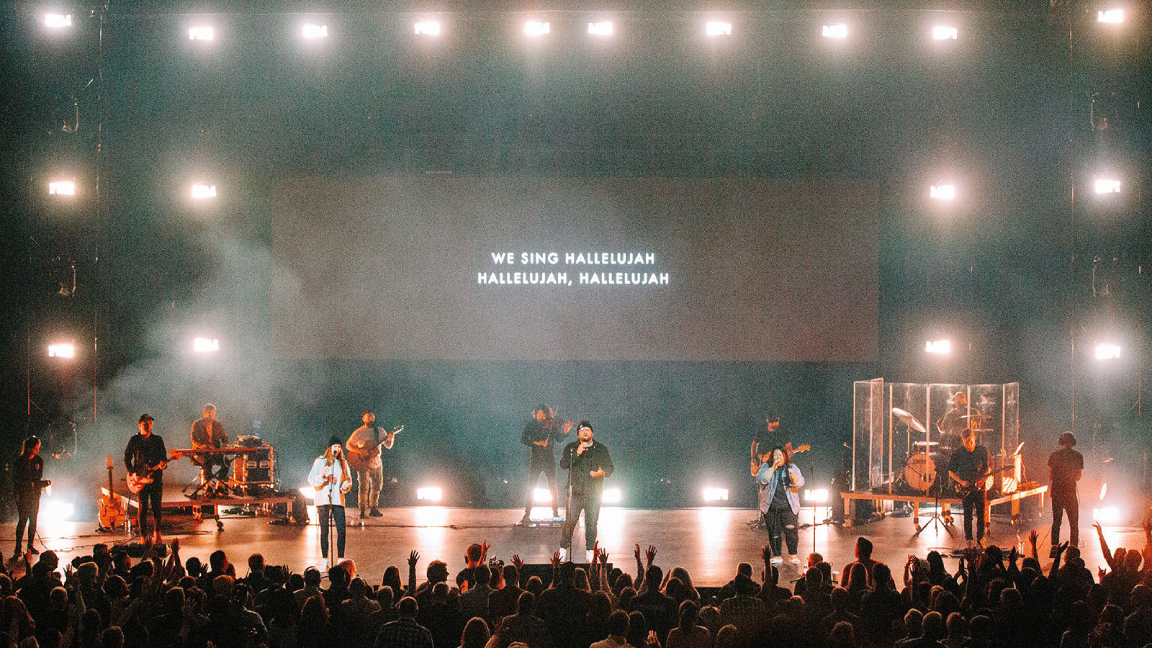
Churches Continue to Sing Hillsong and Bethel Despite Controversies

Study: Worship leaders say they don’t care what music tops the charts, but trust peer recommendations and what they have heard at conferences.

Worship service at Bethel Leader Conference in 2019.

Worship service at Bethel Leader Conference in 2019.

Christianity Today July 12, 2023
Courtesy of Bree Anne/Unsplash/Creative Commons

For the past decade, a handful of megachurches have dominated worship music, churning out hits such as “Goodness of God,” “What a Beautiful Name,” “King of Kings” and “Graves Into Gardens.”

And though churches like Australia-based Hillsong and Bethel Church in California have met with scandal and controversy, worship leaders still keep singing their songs.

A new study released Tuesday found that few worship leaders avoid songs from Hillsong and Bethel, two of the so-called Big Four megachurches that dominate modern worship music.

The study found that most worship leaders connect with songs because they’ve experienced them firsthand at a conference or by listening to them online, or because a friend or church member recommended them—rather than seeing the song at the top of the charts or on a list of new songs.

Elias Dummer, a Christian musician turned marketer who is part of the research team behind the study, said most worship leaders think they have good reasons for picking the songs they use in worship. But they may not be aware of how social forces—like the popularity of certain churches—affect their choices.

“While people say that that they care about the songs—they pick the same four churches over and over again,” said Dummer.

The new study is based on a survey of more than 400 church worship leaders in the U.S. and Canada that was conducted in the fall of 2022—drawn from both social media groups of worship leaders and an email list from a major music publisher.

Worship leaders were asked what they thought about the pace of new music being produced, how they picked new songs, what they thought the motivations were behind new songs and whether they’d pick a song—or avoid it—based on the artist or church that produced it.

Only 16 percent of worship leaders said they were less likely to choose a song with ties to Hillsong, while about 1 in 4 said they were less likely to choose songs with ties to Bethel (27%). More than half of worship leaders said they were likely to choose songs with ties to Hillsong (62%) while nearly half (48%) said they were likely to choose songs with ties to Bethel.

Researchers also found that recommendations from friends on social media (54%), congregation members (56%) and church leaders (76%) made it more likely that worship leaders would choose a song. Hearing a song at a live event (76%) or streaming online (70%) also made it more likely they’d choose a song.

“The most influential factors in discovering a new worship song are peer endorsements and personal experiences,” according to the study. “Worship leaders mainly trust their friends and fellow church leaders to provide them with song recommendations.”

Just under half (47%) of those worship leaders were concerned about the number of new songs available for churches to sing. The study found the big four churches release about 40-50 new songs each year, on top of the hundreds of songs available from other sources—from modern hymn writers to artists on YouTube.

About 40 percent said there is a bit too much new music, while a small number (4%) said they were “completely overwhelmed” by new music. A quarter (27%) said they could handle more music.

That last number surprised research team member Marc Jolicoeur, worship and creative pastor at Moncton Wesleyan Church in Moncton, New Brunswick, Canada.

“We can’t exactly say why they would want more songs, whether that means they’re looking for more diverse theological views, for more diverse styles, or more diverse voices,” he said.

Only a third of worship leaders thought songs were written with the needs of local churches in mind, while slightly more thought songs were divinely inspired. Just over half (57%) thought songs were inspired by something that happened in a writer’s life. Few believed songwriters wrote songs out of obligation to a contract.

For his part, Dummer said worship songwriters likely do have contractual obligations to meet—and it is unlikely they have moments of personal spiritual inspiration for all of the songs they write.

“There’s a lot of throwing things against the wall,” he said.

Still, it’s more likely that worship songwriters are writing from personal experience than from trying to communicate theological principles, said research team member Shannan Baker, a postdoctoral fellow at Baylor University. That’s in part because it would be easy to get things wrong by using the wrong phrase or word.

Baker said she’d done some interviews with writers who said they often start writing sessions with other musicians by talking about what’s going on in their life and seeing if a theme emerges. She also said that despite the popularity of megachurch-driven hit music, worship leaders often consider songs on a case-by-case basis, rather than thinking about where those songs came from.

Glenn Packiam, a former worship leader and songwriter turned pastor, said understanding how songs get written—or how they get chosen for worship—is a complicated task. And it often starts by trying to figure out what song, or what message, works best in a local congregation.

“Our No. 1 priority was to write songs for the people in our church,” said Packiam, who led worship for years at New Life Church in Colorado Springs. “We wanted to write songs that helped the church find language for the various experiences that we’re going through.”

He pointed to a song called “Overcome,” written by Jon Egan, a colleague of his at New Life in the early 2000s. That song became a rallying cry for the church when New Life pastor Ted Haggard resigned in scandal and later, when the congregation was reeling from a shooting at the church.

“That song ended up being a gift for our church,” he said.

Packiam, now pastor of Rockharbor Church in Costa Mesa, California, went on to study worship music as a ritual while earning his doctorate. He said that once songs go out into the world, they will mean different things in different contexts. That may provide comfort to those grieving or inspiration to those facing a challenge. The songs have a life of their own once people begin to sing them in worship.

Packiam believes there are more than consumer forces at work in worship songs.

“I don’t want to look at a particular song or a particular church that’s making music and say, oh gosh, it’s just a conglomerate machine,” he said. “What if the Lord is blessing this and causing it to produce fruit?”

News

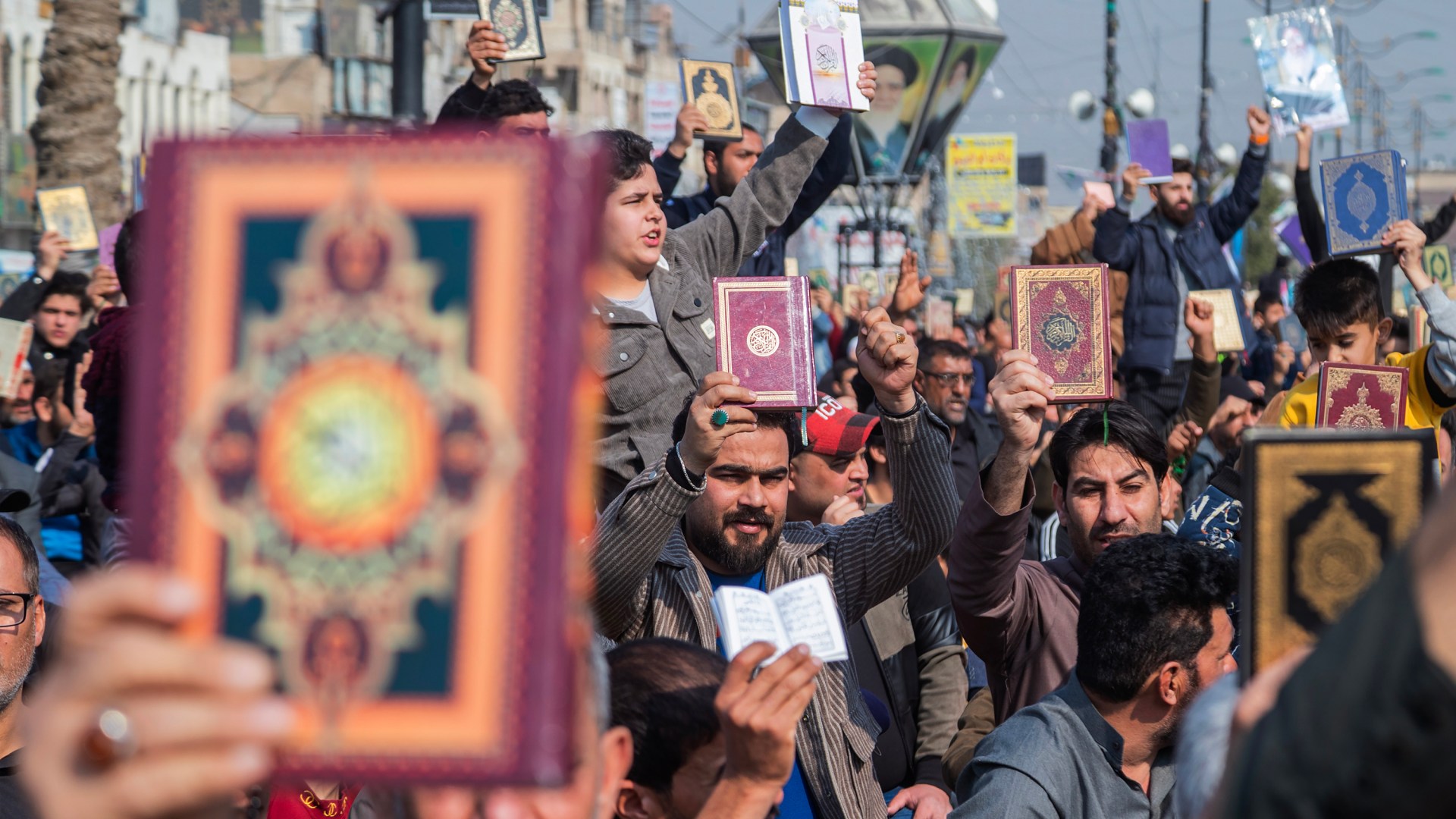
Quran Burning in Sweden Singes Muslim-World Christians

Rejecting the act of an atheist “Christian” refugee, church leaders escape the ire of protests in Iraq and Pakistan.

Protesters in Iraq hold up the Quran in response to the burning of a copy of the Quran in Sweden.

Protesters in Iraq hold up the Quran in response to the burning of a copy of the Quran in Sweden.

Christianity Today July 11, 2023
Hadi Mizban / AP Images

Following the burning of the Quran in Sweden last month, Christians in the Muslim world have been vocal in their condemnation.

But some expressions of disapproval may have been forced upon them.

“Christian religious figures … [must] state their positions regarding this explicit crime,” stated the Association of Muslim Scholars in Iraq. “Their silence puts them in a position of refraining from criminalizing and condemning it.”

The Sunni-based group had plenty of reasons to be offended. The stunt occurred in front of the Grand Mosque of Stockholm on the first day of Eid al-Adha, one of two primary Muslim holidays. And prior to being lit on fire, the Quran was kicked about and stuffed with bacon—provocation against Islam’s prohibition of pork.

But the greatest Iraqi ire may have been that the culprit was one of their own—and a Christian. Salwan Momika, a 37-year-old father of two, sought refuge in Sweden sometime after 2017. But his checkered history had many Middle East Christians criticizing him as well.

In fact, he is an atheist.

His Instagram post announcing his act declared his lack of faith in anything save secular liberalism. Citing the protest as an act of democracy in defense of freedom of speech, he also asked for financial support. And it is reported that upon arrival in Sweden, he volunteered for a far-right party known for its opposition to Muslim migrants.

But earlier, he worked for Shiites.

Momika professed admiration for Abu Mahdi al-Muhandis, the deputy commander of Iraq’s Popular Mobilization Forces (PMF), who was killed with Iran’s Qasem Soleimani in a US drone strike in 2020. Under the PMF’s command he enrolled with Christian compatriots in “The Spirit of Jesus Brigades” in the common fight against ISIS.

He also tried founding his own political party in Iraq, the Syriac Democratic Union. The established, similarly named Christian party in Syria denied any connection to him.

“He is a showoff who wants the spotlight,” said Habib Ephrem, president of the Lebanon-based Syriac League. “He has no specific ideology and stirred up controversy in the Muslim world—for nothing.”

Some observers speculated that Momika’s aim was to create conditions in which it would be impossible to deny his citizenship request and send him back to Iraq.

At least it has given Christians an opportunity for witness.

“What happened in Sweden was an unwholesome use of the concept of personal freedom,” said Ara Badalian, senior pastor of Baptist Church in Baghdad. “True Christianity is characterized by love, tolerance, and rejection of violence and hatred.”

The patriarch of the Assyrian Church of the East spoke similarly.

“We call upon the governments of all countries, particularly the Swedish government, not to allow these actions perpetrated in the name of ‘personal freedom,’” stated Mar Awa Royel, who quoted Ephesians 4:32. “This is what the Bible teaches us: Be kind to one another.”

Hind Kabawat, former deputy head of the United Nations-affiliated Syrian Negotiations Commission Office, framed it in terms of the Golden Rule. Momika’s actions serve only to prompt Islamic attacks on Christianity.

“If he delved deeper into the Christian religion to which he claimed to belong, he would find that it prohibits and condemns what he did,” said Kabawat, a Presbyterian from Damascus. “But he does not care where things will go, or how many people will be affected by his behavior.”

Ephrem, in condemnation, also defined his religion in opposition to Momika.

“Love is the essence of Eastern Christianity in its yearning for the dignity, freedom, and equality of every human being,” he said, “and in its respect for diversity, pluralism, and anyone who is ‘other.’”

Love, kindness, and dignity, however, are not always experienced in the reverse.

“It was most certainly a vile act, one that is inexcusable and completely condemned,” stated a bishop in the Chaldean Catholic Church, requesting anonymity to comment freely. “However, it is also a bad precedent, as it goes to show the anger that Christians feel about being persecuted.”

And from Momika’s hometown of Qaraqosh, one resident put it plainly.

“I am not sure if I feel safe anymore,” this anonymous Christian stated.

The Swedish embassy in Baghdad was briefly stormed amid mass demonstrations, which Momika’s one-time Shiite allies called for. Saudi Arabia, Jordan, and Turkey also issued condemnations—which called into question Sweden’s NATO application.

Protests extended as far as Pakistan, where terrorist threats were issued.

“No church or Christian will remain safe in Pakistan,” stated Nasser Raisani, spokesman for Lashkar-e-Jhangvi, vowing to make the country “a hell for Christianity.”

Like their brethren in the Middle East, Christian leaders in Pakistan clearly condemned the burning of the Quran. But they also asked for protection.

Terrorist groups “have been allowed to operate unchecked by the state,” stated Ata-ur-Rehman Saman, coordinator for the National Commission for Justice and Peace, which advocates for human rights on behalf of the Catholic Bishops’ Conference of Pakistan. “This is making life miserable for [Christians].”

One Christian leader, requesting anonymity so as not to jeopardize his ministry, told CT that the situation is not fair. Expressing full sympathy for Muslims about the Quran burning in Sweden, he chided his government for failing to take action against atrocities against Christians.

On the same day two Christian youths were jailed on accusation of blasphemy against Islam, a Christian cleaning woman was raped and murdered. Local believers pray, advocate, and appeal to the authorities—but little gets done.

“I don’t know if we can do anything more than this,” he said. “What is done against us gets swept under the rug.”

And Peter Calvin, a Pakistani Christian leader, is feeling apprehensive.

“We are not afraid, but we feel the heat,” he said. “The Lord has protected us in the past, but it will be several weeks—if not months—until this incident is forgotten.”

Still, putting the anger in context, he praised the Pakistani people. Religion is personal, and convictions are to be respected.

Meanwhile, despite nationwide protests, not one report has surfaced about attacks on the religious minority. In preventing such attacks, he credited both the actions of authorities and the quick condemnation from Christian leaders.

But he also made a distinction.

“We would not react in anger if someone did this to the Bible,” Calvin said. “If they did, our retaliation would be to pray for them.”

They will soon have an opportunity. In Sweden, amid new protest applications to burn the Quran outside a mosque, one person requested to burn the Torah and Bible outside the Israeli embassy.

The furor has impacted Swedish society. With an 11-point rise from February, 53 percent of the population now favors banning the public burning of religious books. The Swedish Christian Council expressed its solidarity with Muslims, and the government is looking into a law that would require at least partial reintroduction of a blasphemy law scrapped in the 1970s.

Kabawat, also the director of the interfaith and peacebuilding program at George Mason University, supports such a measure. Local bodies have done well to condemn Momika, framing the protest as his individual act alone. Reactions from the Muslim world will vary—some ignore while others exploit.

But Sweden must not become a country where insulting religion is tolerated.

Wary of religious freedom issues around the globe, the World Evangelical Alliance (WEA) treads cautiously.

“We must maximize freedom for every individual, while maximizing welcome for every community,” said Wissam al-Saliby, advocacy officer for the WEA. “We need to have this conversation.”

Heading evangelical engagement with the United Nations in Geneva, Saliby was the first non-state representative to speak at Tuesday’s special UN Human Rights Council (HRC) meeting in response to the Quran burning. He emphasized that human rights are the responsibility of the state, while securing pluralistic societies are the responsibility of all.

So his first word, jointly delivered with the World Council of Churches, was to condemn the incident in Sweden. Back in 2012, the WEA acted similarly against Florida pastor Terry Jones—after the secretary-general first personally visited Jones in a failed effort to stop his Islamophobic protest.

Wherever evangelicals have significant social and political capital, Saliby told CT, they must consistently call for the protection of minorities. Not only is it the right thing to do, but evangelicals are also minorities themselves in much of the world. Blasphemy and anti-conversion laws should be repealed, for example, because the public square must be open to all people of faith as well as to those with none.

Some feared the UN push by offended nations would revive past efforts to forbid “defamation of religions” in international law.

“Muslim states are beyond this now, and behind-the-scenes negotiations were initially constructive,” said Saliby. “But the HRC resolution still included vague language implying a nexus between the desecration of sacred texts and banned hate speech. This led most Western states to vote against the resolution that should have been adopted by consensus, and to emphasize that it is the role of their respective judiciaries to verify whether specific acts amount to banned hate speech.”

The final tally was 28 for and 12 against, with seven abstentions.

Every society—even in the West—defines freedom differently, Saliby continued, and the WEA must keep to an international minimum as it represents evangelical opinion. Hate speech is a significant societal problem, and the global WEA body endorses the UN-backed Rabat Plan of Action to determine when it crosses the line into incitement to violence.

The Christian minimum, however, is drawn instead from the image of God.

“Our ability to reject God and his love,” Saliby said, “establishes the absolute right of freedom of expression, religion, and the changing thereof.”

Secure in God’s love themselves, all Christians should condemn Quran burnings.

“Insulting religions does not reflect our Christian witness,” said Saliby. “Our Lord and Savior is bigger than this.”

Editor’s note: The article was updated with additional information and quotes after the UN vote.

News

SBC Study Raises Concerns about Lack of Worship Leaders

Decline in children’s music ministries bodes ill for future, scholar says.

Christianity Today July 11, 2023
Tom Keenan / Lightstock

Southern Baptist Convention (SBC) music ministries seemed like they were thriving in 1938. The instruments in churches across the denomination were valued at more than $10 million (the equivalent of nearly $217 million today). Fanny Crosby was the most popular songwriter. And vocal quartets, especially male quartets, were in great demand.

But as the Sunday School Board of the SBC surveyed more than 1,000 churches that year, it noticed one dire problem. The SBC was facing a shortage of qualified music ministers.

“We must point out,” the board wrote, “the greatest single need for a program of better music in Southern Baptist churches—the desperate need for well-trained choir leaders in the churches.”

Eighty-five years later, some things haven’t changed.

“There just aren’t enough people out there to serve as worship leaders,” said Will Bishop, associate professor of church music and worship at Southern Baptist Theological Seminary.

Bishop is the author of the first large-scale study of music in SBC churches in nearly 100 years. “A Snapshot of Southern Baptist Church Music: 2022,” as yet unpublished, surveyed 127 congregations across the country, asking them 111 questions about the music in their worship services.

Bishop’s work differs from the last big study of SBC music in scope and size. The 1938 survey had 1,381 respondents (out of 28,844 SBC churches) and asked each of them 24 questions. It focused on practical concerns like the total monetary value of the instruments in each church, the church budget for paying musicians and purchasing sheet music, the makeup of church musical ensembles, whether the choir was robed, and the use of mimeographed bulletins.

Bishop has a much smaller sample of churches—not enough to be representative, but enough to serve as a snapshot of SBC church music today. He also has a much wider range of questions. As someone responsible for training future music ministers, he wanted to know a lot of details. He asked about the frequency of choir use, how often new songs were introduced, and what percentage of music ministers had non-music responsibilities as part of their jobs (the answer: 58 percent). Bishop also inquired about hymnals, orchestras, vocal teams, and worship leaders’ titles.

Some of the details he has turned up are fun and quirky: Three percent of the churches reported they have at least one harp player in the congregation. Secular songs sometimes used in SBC services include “California Dreamin’” by the Mamas & the Papas; “Take Me Home, Country Roads,” by John Denver; “Man in the Mirror” by Michael Jackson; and “The Lion Sleeps Tonight,” a South African song popularized in the 1950s and ’60s by the Weavers and the Tokens.

More seriously, the study paints a picture of a denomination adapting and changing while also holding on to musical tradition. Despite declining membership over the past several years, the SBC is the largest Protestant denomination in the United States with more than 46,000 congregations. Bishop’s survey shows that many of those are still singing Fanny Crosby’s hymns. She ranked second among the 127 churches in the study, surpassed only by Chris Tomlin.

According to Bishop’s study, Tomlin is the author or co-author of about 1 out of every 25 songs sung in SBC churches today.

The data corroborate recent research about consolidation in the worship music industry and the small circle of influential songwriters producing chart-topping worship songs. Of the 10 living songwriters with the most widely sung music, eight are affiliated with Passion, Bethel Music, Hillsong, or Elevation Worship.

Much of the industry caters to the needs of megachurches, which have the resources to recreate the high production level of audio and video recordings by popular artists. Bishop worries that a lot of the research on worship music is skewed that way too. Most studies rely on data from Christian Copyright Licensing International or streaming platforms. He suspected they were not capturing an accurate picture of SBC worship, which includes many small churches that don’t have a lot of resources for music production.

“You hear a lot of folks say, ‘Southern Baptists do this or that,’” Bishop said. “I found myself wondering, ‘What do Southern Baptists actually do?’ I may think I know based on my experience, but I’ve only been part of a few churches.”

About 20 percent of the churches in Bishop’s survey have 50 or fewer people in the pews every week; 30 percent have between 50 and 100. Some reported data wouldn’t show up in a search of copyright license reports. One in five SBC churches sing more hymns than modern songs. One-third sing an equal number.

As he got into the nitty gritty of the survey data, though, Bishop became most concerned about the music ministry pipeline. Few SBC congregations seem to be emphasizing the kind of programs that encourage young people to pursue worship music training or to participate in music ministry at all. Only 44 of the 127 congregations he surveyed had an active children’s choir. Less than 10 percent had a youth choir.

“Churches have not prioritized training young people to do worship ministry,” Bishop said. “We’re not thinking about the future.”

As an educator who works with current and future worship ministers, Bishop was most worried by the responses to the question: “Can you name a young person in your church who 1) has expressed a call to or interest in pursuing a vocation in church music/worship, or 2) you could envision pursuing a vocation of church music/worship in the future?”

Half of the respondents said no. Another 10 percent said they weren’t sure.

“Music is a way to disciple,” Bishop said. “I see bad things on the horizon when I see bad numbers for youth and kid ensembles.”

Brady Paul, pastor for worship ministries at Capitol Hill Baptist Church in Oklahoma City, agrees it’s important to create opportunities for children and youth to participate. His church, which participated in the survey, has a 20- to 30-person choir, a 12-piece orchestra, and a worship band that all regularly play throughout the year. Members of the church with musical skills are encouraged to join.

“Choirs and orchestras open up a wider door,” he said. “As pastors, we’re called to equip the saints for ministry. Ensembles are more ministries for the saints to be involved in.”

Paul says that’s how he learned. He developed a love for music and a sense of belonging in the church through his participation in choir. He learned to play by ear, sing, and collaborate in church ensembles. He also had a strong model to follow: his father, a worship leader in SBC churches for more than 25 years.

At the same time, Paul has seen how difficult it is to recruit and retain passionate young people for music ministry. When he began pursuing a degree in worship arts at Oklahoma Baptist University in 2016, he was one of eight students in the program. By his last year, he was one of two.

Fewer people raised in church choirs and ensembles mean fewer people considering music ministry as a career path, so the widespread lack of opportunities for young people to explore and develop musical abilities in their churches worries Bishop.

“It’s not like we can push a button at seminary and out pops a worship leader,” he said. When he encounters pastors and church leaders looking for new worship leaders coming out of SBTS to fill positions in their church, he asks them, “Who do you have to send us?”

There’s no quick fix for the problem, but Bishop believes he knows where to start: “Find a way to invest in the young people in your church.”

News
Wire Story

Black Churches Concerned About Expulsion from SBC

Letter from the denomination’s National African American Fellowship says vote on Saddleback and Fern Creek could “disproportionately impact” minority congregations.

Voting at SBC annual meeting.

Voting at SBC annual meeting.

Christianity Today July 10, 2023
Courtesy of RNS - Emily Kask

Earlier this year, Southern Baptists expelled five churches from the nation’s largest Protestant denomination for having women as pastors.

Now, the leader of a fellowship of African American Southern Baptist pastors wonders if their churches will be next.

In a letter last week, the president of the Southern Baptist Convention’s National African American Fellowship asked to meet with the denomination’s president, saying the SBC’s recent decisions to expel churches with women pastors had caused “division within the SBC and may disproportionately impact NAAF affiliated congregations.”

“Many of our churches assign the title ‘pastor’ to women who oversee ministries of the church under the authority of a male Senior Pastor, i.e., Children’s Pastor, Worship Pastor, Discipleship Pastor, etc.,” wrote the Rev. Gregory Perkins, pastor of The View Church in Menifee, California, and president of the NAAF.

He also said a proposed amendment to the SBC’s constitution to bar churches with women pastors violated the autonomy of local churches—a vital Baptist belief.

During the recent SBC annual meeting, local church delegates, known as messengers, voted to affirm the decision to expel Saddleback Church in Southern California—one of the denomination’s largest churches—and Fern Creek Baptist Church in Louisville. Those two churches had appealed an earlier decision made by the SBC’s Executive Committee that they were no longer in “friendly cooperation” with the convention.

Three other expelled churches—including two predominantly Black churches where women had succeeded their late husbands as pastors—did not appeal.

Messengers also voted to change the SBC’s constitution to bar churches with women pastors. That proposed change would only allow churches to be part of the convention that affirm, appoint or employ “only men as any kind of pastor or elder as qualified by Scripture.” The change must be ratified at the SBC’s 2024 annual meeting in order to take effect.

“This may signal to churches in the SBC that do not believe that women should be the Senior Pastor but allow women the usage of a pastoral title, or appoints a woman to a pastoral role, are no longer welcome in the SBC,” wrote Perkins.

Among the churches that hold the belief that women can lead in non-senior pastor roles is the church Perkins pastors, which has one woman on staff with the title of pastor. He wrote that many of the more than 4,000 congregations in the NAAF hold that view as well.

Perkins said that leaders of the NAAF respected the SBC’s democratic process and that messengers had the right to vote their conscience. However, they asked for a time of “prayer and dialogue” to discuss the consequences of the votes at the SBC meeting.

The letter, sent by email, was also posted on the NAAF website. That website also includes a link to a document with more details about how the decisions made by the SBC could affect churches. That document urges pastors to take an active role in the discussion over the issue of women pastors.

“You must be an active participant in this conversation and decision-making process as it has long-term implications for your church and other NAAF affiliated congregations,” the document advises.

While SBC churches cooperate to fund missions, seminaries and other ministries, each local church is autonomous. They choose their own pastors, own their own buildings and control their own finances.

Perkins said that Christians who believe the Bible may come to different conclusions about how to apply its teachings. He said churches should engage in a “vigorous, yet constructive dialogue.”

“To disfellowship like-minded churches who share our faith in Jesus Christ, our belief in the authority of Scripture, our mandate to carry out the Great Commission, and our agreement to give cooperatively based upon a local-church governance decision dishonors the spirit of cooperation and the guiding tenets of our denomination,” he wrote.

The letter was addressed to SBC president and Texas pastor Bart Barber and copied to board members and officers of the NAAF, as well as staff at the SBC’s Executive Committee.

Barber confirmed he had received the letter.

In recent years, the SBC has touted the growth of Black, Hispanic and other diverse congregations in the convention. However, a number of high-profile Black churches have left the SBC in recent years over issues of race and politics.

He Built a University, Sheltered Fleeing People, and Worked for Peace in Congo. Then He Was Arrested.

The government detained Lazare Sebitereko Rukundwa in June and is holding him without charges.

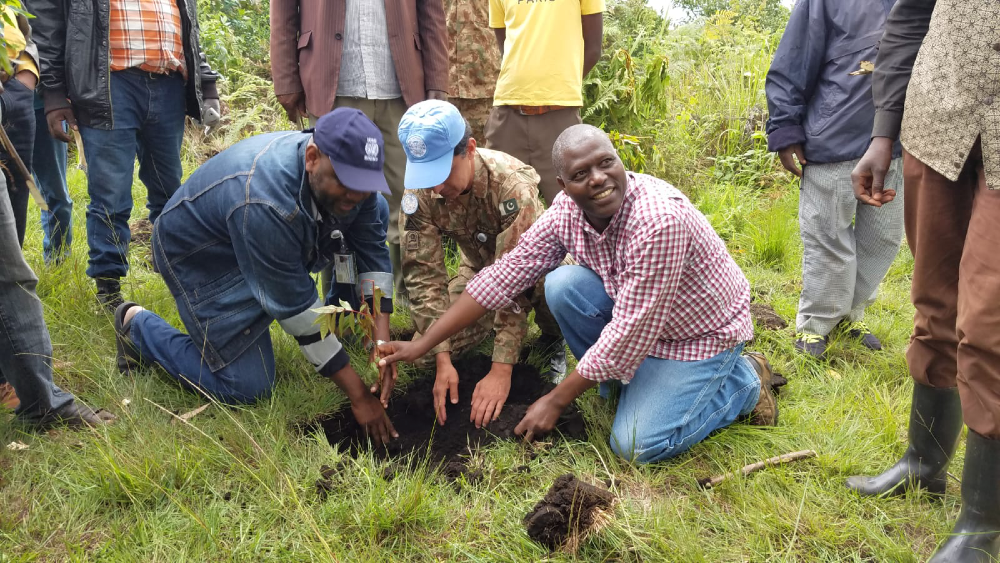
Lazare Sebitereko Rukundwa plants a tree in the Democratic Republic of Congo.

Lazare Sebitereko Rukundwa plants a tree in the Democratic Republic of Congo.

Christianity Today July 10, 2023
Photo used with permission.

The Congolese government is holding a Christian leader in prison and not releasing any information about where he is or what he’s charged with. Lazare Sebitereko Rukundwa does not have access to medication, and the Red Cross has not been allowed to see him, according to several people close to the situation.

Rukundwa’s arrest came after a United Nations report stated he led a campaign encouraging people from his ethnic group to take up arms. He has long been an advocate for peace in the region and categorically denies the report, which he says is based on a false accusation.

“It’s obvious that this group of UN experts have made an error by its informants with malicious intentions aimed at tarnishing my name and endangering my life,” he wrote in a statement. “Sharing false information is a weapon that destroys innocent lives.”

After a previous arrest, Rukundwa was released for lack of any evidence to substantiate the allegations. But some officials complained, and he was arrested again.

Rukundwa is president of Eben-Ezer University of Minembwe and has dedicated his life to education, development, and empowering churches in Eastern Congo. He played a critical role in bringing solar power to the region.

“Lazare is among few people in those mountains who is respected and loved across the tribal lines, even from communities in constant conflicts and fighting,” says his friend of 25 years, Freddy Kaniki.

CT Global managing editor Morgan Lee spoke with him before his arrest about the challenges currently facing Christians in Congo and the hope he holds for change.

How have your life and work been impacted by the persistent unrest in the Democratic Republic of Congo?

More than 80 percent of our region has been destroyed, and very few places now remain. We have had a lot of killings. We have conflicts with bullets. We have a humanitarian crisis.

The conflict that has lasted from 2017 up to now has been 100 percent manipulated by politicians and from there become tribal. It’s destroyed villages, livestock, and crops and caused people to flee their homes. Starting in 2019, we started hosting thousands and thousands of internally displaced people who were coming in with no help at all.

We turned our university into a humanitarian agency and turned churches and schools into shelters for these displaced people, and every house became a shelter for up to five families. We have shared food, clothes, and whatever we’ve had.

We have gone out to talk with the government. I have met the president, many ministers, ambassadors, and humanitarian agencies in and out of the country. We are accredited in Kinshasa, the capital. We have written reports and shared letters looking for help. But the government hasn’t helped and neither have UN agencies. No one wanted to come and help.

Currently, we don’t see prophetic voices coming from the ground standing against what is happening. We hear a few voices, either in the social media or in some churches, but we don’t see the body of Christ going to the media, using radio or television, or even visiting the areas that have been affected.

Where are you in the DRC?

We live in the eastern part of Congo, which borders Burundi, Rwanda, and Tanzania. Before the partition of Africa, people were scattered all over the area. So drawing national boundaries divided families between those countries.

Within eastern Congo, we live in Minembwe, a very mountainous region and very remote place. We live in the heart of villages, a small area that has been developed by the locals themselves. Our university is actually in the middle of all these villages. We have several different tribes, including the Banyamulenge who are Congolese Tutsis, the Bembe, the Bafuliru, the Banyindu, the Bashi, and many other small groups. This is an area that draws people from different races because of agriculture and livestock.

It is very difficult to reach the area. There are no roads and very limited ways of communication. In the past, we had bad roads, but around 2017, when the wars started, it limited the number of cars arriving.

Now, the only way we really have out of the area is by air. We have a small airstrip.

My university was the first ever to be introduced in the area, which was quite an adventure. But of course, when you don’t have any person to do it for you, you create with God. In Minembwe, God worked with churches and local NGOs and individuals to actually replace the government and bring the development that they want.

How did Christianity arrive in Minembwe?

British Assemblies of God missionaries first came in the area and then were followed by the Swedish and Norwegian Pentecostal churches and by the Catholics.

The Banyamulenge, who were the majority ethnic group living in the area, were actually the last to convert to Christianity. The Banyamulenge resisted until the early ’50s when there was a big wind of revival and they started converting by themselves.

We asked the old people who were there what happened, and they told us they didn’t understand. There was this wind of revival, the Spirit of God moved across the forests and the savanna where they were living, and people just moved from one place to the other, looking for the church or for a pastor or an evangelist to pray for them.

Today, about 90 percent of the whole area are Christians.

Now, the question that you probably ask me is “If 90 percent of Congolese are Christians, how is there a war?”

Yes, exactly. That’s the question I had.

Just after independence, we had all this war, conflict created by the greedy Europeans who had colonized Africa. In Congo, we had the Belgians and King Leopold. Almost 10 million Congolese were killed by the brutality of colonialism.

There is a trend of conflicts and killings, which don’t necessarily come because of the Congolese themselves but are an inheritance from the colonial past. And since independence, we have not been very lucky to have good leaders or good governance.

Probably the other issue is Congo has deep reserves of all minerals that are needed in the world. Everyone would like to come and have them for themselves. It brings me back to the Bible where it says that the devil comes to steal, kill, and destroy.

But this is not just an issue for the Congolese. Anyone who is using a phone, a laptop, an electric car today, anything solar powered, anyone who is using material that is originally coming from these troubled countries should also be reflecting on this.

Sure, we can take it and use it to get rich. But if we have the Spirit of God in us, we should reflect on this reality.

Is the violence targeting Christians?

The Allied Democratic Forces (ADF), a militant Islamic group, is targeting churches in the western province of North Kivu. This is a very recent development. The ADF will kill people without any distinction.

Churches have also been destroyed with villages by the armed groups of Mai-Mai. The Mai-Mai will come, kill, and destroy the village, properties, and community infrastructure, including churches, schools, and clinics.

Recently, churches that belonged to Banyamulenge in Goma, the capital of North Kivu, were completely destroyed—only because the people who pray there belong to the Banyamulenge community or Tutsi communities.

Are evangelicals participating in the violence?

If 90 percent of the population of Congo profess to be Christians, then all the problems that are happening are being done by Christians.

There is insecurity everywhere, people fear for their lives, and we don’t see prophetic voices. When you know that you are in an area controlled by armed groups and if you dare to tell them to stop, you will be the victim. It’s not everyone who is willing to give his or her life for others. So you find that there are many people who see what is happening as evil, but they fail to denounce it.

I’ve talked to bishops and pastors in different regions and countries, but everyone seems to be not very interested. The rebels are working together. But we fail to see the church working together.

How has your university helped bring peace in this current conflict?

Our university has become one of the pillars of hope in this area. We have been able to not only work with others to provide food, but we have also been able to provide education. We have been able to give our conference hall to the displaced churches.

Many of the members of those churches have received food and seeds. I was encouraged to see them bringing the harvest to the church and sharing seeds with others who don’t have any.

You create a space for people to come and feel the peace that comes from God. You create a community within the crisis—a community that works together, a community that supports one another. They share not only food; they also share laughter.

One way of giving hope … is to be the church in the midst of wars and crisis and conflict, where now we can say, “I was sick; you gave me medicine. I was hungry; you gave me food. I was bereaved; you gave me condolences. I was naked, and you clothed me.” This is the church that God wants to see.

The world we live in has conflict everywhere. But the church is here to be the salt and to be the light, where we may not do everything, but at least we play our part.

How can readers help your situation?

There is definitely a range of things for those who want to intervene.

We have hundreds of widows anyone can help. We also have our clinic, where anyone who wants to can pay for salaries of nurses or doctors or provide medical supplies. You can contribute seeds or agriculture or livestock or help us find another water source.

We have a primary school, a secondary school, and vocational training for those who cannot go through the university or those who cannot finish high school. We have single mothers, many of [whom] were raped or got pregnant in some other hard circumstance, some of whom are minors. We bring them through vocational training.

There are also Christians all over the world who can lobby for peace. They can speak on behalf of the thousands of those who cannot speak and ask their governments to learn about the crisis of Congo.

We need to ask the humanitarian world why they are not helping Minembwe.

For those who want to intervene in prayers, we need peace. It feels like the powers of darkness are hovering over the eastern Congo. Pray for our leaders. It is absolutely vital that God fill our leaders with the Spirit of God and the spirit of leadership and lead them to end this war. Pray for our neighbors, that God will give them goodwill in contributing solutions to the Congo rather than fueling the conflict.

Pray that maybe the national companies that are involved with or envy the minerals of Congo, that God can talk to them. The Congolese need to become shareholders in the mining to end poverty.

Does the conflict challenge your faith?

Yes and no.

Today, the displaced churches from at least six different denominations have come together to form a church called Umoja, the word for unity. They pray together in the same building, and we have actually left it for them.

All of this work has been done by local people helping the internally displaced people. The local people themselves worked together and supported one another. Now we have about 10 villages that have been rebuilt around Minembwe.

Today, I can say many people have chosen to work together, not waiting for anyone else to come and do it on their behalf. The government is absent; humanitarian agencies are absent; politicians are absent. But I see hope coming. I see peace, and the possibility of rehabilitation, reconciliation, and stability.

There are those that through the conflict, through difficulties, through all these challenges, faith becomes firm.

But we also see others have actually lost their faith. We see Christians who were stealing other people’s cows. We have seen them getting involved in violence and destroying the houses of others. We have seen them killing other people.

Faith can be strengthened through conflict and through difficult times, but we see also that it can actually be weakened.

News
Wire Story

Medical Missionary Leaves After 50 Faithful Years

Rebekah Naylor, 79, is stepping down from International Mission Board.

Rebekah Naylor outside construction site of Bangalore Baptist Hospital’s expansion.

Rebekah Naylor outside construction site of Bangalore Baptist Hospital’s expansion.

Christianity Today July 7, 2023
Courtesy of IBM Photo Archive.

The first time she retired, in 2002, Dr. Rebekah Naylor, a longtime missionary surgeon, came home to Texas after 35 years in India to care for her mother, who was ailing.

Along with doing that, she joined the faculty at the University of Texas Southwestern Medical Center in Dallas, where she taught surgery for eight years. She later became a consultant for Southern Baptist global relief and development work, taught at Southwestern Baptist Theological Seminary and helped her church start a health clinic in Fort Worth, Texas.

This fall, the 79-year-old Naylor will retire again, stepping down from her role at the Southern Baptist Convention’s International Mission Board, where she’s helped promote medical missions around the world.

Now, for the first time in 50 years, she plans to take a proper break.

Not bad for someone who, as a teenager, never wanted to leave home and who was overwhelmed when she felt God’s calling on her life.

“Even going to college seemed like a mountain to me,” said Naylor in a recent interview, looking back over her career. “So how could I be a medical missionary?”

But once she makes up her mind—especially about something she believes God wants her to do—almost nothing stands in her way. That combination of faith and tenacity has served her well. Following that call to missions, Naylor, the daughter of a Baptist preacher turned beloved seminary president, graduated from Baylor University, then went to medical school at Vanderbilt, where she was told that women were not welcome in surgery.

But a missionary surgeon in Thailand, whom she met while visiting that country as a medical student, believed in her. While the faculty at the medical school thought her hopes of becoming a surgeon were a lost cause, she said, this missionary did not.

“I got to help him a lot in the operating room and discovered that I loved surgery,” she told Religion News Service. “It was really that experience that made me go back to medical school that fourth year and tell the faculty I was going to be a surgeon.”

After finishing her training, Naylor was assigned to a fledgling hospital in Bangalore, India, which had opened with 40 beds and a small staff outside the city limits. Over the years, the hospital expanded to 400 beds, a large staff and an attached nursing school. Naylor went from being a staff doctor to medical director to CEO, treating thousands of patients and delivering a host of babies while doubling as the hospital’s only OB-GYN for years. She also ended up training many of the staff who now run the hospital.

“We grew up together,” she said, referring to her long relationship with the hospital and the people who work there.

Along the way, there were struggles, including conflict with the Indian government and a decision by the SBC’s International Mission Board to sell the hospital in the late 1980s. The mission board was moving away from running institutions such as hospitals because of the costs involved.

“That came as a shock,” she said. “And of course, with a lot of sadness.”

Selling the hospital proved difficult, Naylor said, because it was so valuable that no one could afford it. Eventually, she helped negotiate an agreement with Christian Medical College, a school founded by missionaries in the early 1990s that educates health care professionals.

God made a way for the hospital to continue to grow and thrive, said Naylor, who as leader had a knack for getting things done and the ability to adapt when things did not go the way she planned.

“We were always moving forward,” she said. “I was a planner. But very much trusting God to just show us what those next steps could be.”

Naylor’s long service and can-do attitude helped inspire other medical professionals to put their training to work in missions, said Rick Dunbar, an emergency room doctor and former chair of the IMB’s board of trustees. Dunbar called Naylor both a friend and one of his heroes. In recent years, he said, the two have worked together in promoting the mission board’s medical work. Dunbar said he’s been inspired by her ability to focus and her dedication to living out her faith.

“After she discerns God’s will for her—she pursues it with a bulldog tenacity,” he said.

Along with that tenacity comes a tenderness, he said, and care for the people she works with. And a desire to help others see how they can live out their faith. He described Naylor as magnetic—attracting people to her and inspiring them to join in the work.

One example of that: In the 1990s, she stepped down as CEO of the hospital and turned that role over to an Indian leader. Then she stayed on staff, serving as his No. 2 leader. It took a while for the staff to adjust, she said. But when someone asked her a question, she deferred and pointed them to the new CEO. Doing so was essential for the hospital’s future, she said.

“I very much wanted the hospital to have a long life,” she said. “And if it were going to have a long life, it had to have strong local leadership.”

Even after coming home in 2002, Naylor stayed involved with the hospital, making frequent visits to Bangalore Baptist Hospital and the people she loves.

“Bangalore is, even now, a second home, and I’ve been able to return frequently,” she told Baylor’s alumni magazine in 2022 when the university honored her service to the church. “It’s the people, the relationships. Bangalore is very significant in my life.”

Naylor was recognized during an IMB event at the recent Southern Baptist Convention annual meeting, where IMB President Paul Chitwood noted her medical service and her strategic work in helping Indian pastors start hundreds of churches.

“Her work and her life speak for themselves,” Chitwood told RNS in an email. “She has been a proponent of the gospel of grace and physical and spiritual healing for the people of South Asia for more than 50 years.”

Naylor said she is hopeful for the future of medical missions. There’s still a need for hospitals, she said, but also for clinics and other health care options. Health care professionals have a host of opportunities to teach doctors, nurses and other health care workers around the world. And missionaries can also help with providing mental health services.

“This is a huge crisis worldwide,” she said, adding that missionaries have long provided care for those who have no other options.

In retirement, Naylor said she hopes to find more time to play the piano, especially the music of Bach, one of her favorite composers. She also hopes to read; to travel for pleasure, rather than for work; and to spend time with her friends. She’ll also help out at her church, teaching a Bible study and helping oversee the church’s health clinic.

“I’m not worried about having something to do.”

Church Life

Colorado Springs’s New Christian Mayor Wants to ‘Disrupt’ Politics with Unity

Nigerian American Christian Yemi Mobolade went from pastor and community organizer to city leadership.

Colorado Springs mayor Yemi Mobolade (center)

Colorado Springs mayor Yemi Mobolade (center)

Christianity Today July 7, 2023
Christian Murdock / The Gazette via AP

Yemi Mobolade moved to Colorado Springs to start a church. Thirteen years later, he became the city’s mayor.

Even though his position isn’t a pastoral one, his faith is central to his platform, as well as his experience in local ministries, nonprofits, businesses, and economic development. Mobolade ran a campaign on hope and optimism, taking his core values from Micah 6:8: “Do justice, love mercy and walk humbly with God.”

“I want to disrupt and confuse this whole experience we call politics,” Mobolade said. “I want to call God’s people back to doing it well.”

A Nigerian American, Mobolade was sworn in last month as Colorado Springs’ first Black and first immigrant mayor, telling residents, “As your mayor, I pledge to live courageously, lead with empathy, and remain humble. As your mayor, I pledge to lead by example and create a city government that is transparent, accessible, and proactive. As your mayor, I will work tirelessly to ensure our city government represents the aspiration and needs of its residents.”

His new position builds on years of community involvement and unity-building in Colorado’s second-biggest city.

He also quoted Chris Tomlin’s “God of this City,” saying, “Greater things are yet to come, greater things are still to be done in this city.”

https://www.instagram.com/p/CtKnHDLLJfE/

Before he landed in the evangelical hub that’s home to Focus on the Family, the Navigators, Young Life, and Biblica, Mobolade grew up in a family of faith in Nigeria. Both his parents were pastors, and he came to know the Lord at a young age.

“I am really proud of the work that they did with my siblings and I, ensuring our faith was an active part of the way we lived our life, not just from a religious church experience, but from how we modeled generosity,” he said. “They modeled community and leveraged their influence in the right ways to help others.”

Mobolade’s parents also wanted their children to have more opportunities, so when he was 17, he came to the United States to study at Bethel University. Mobolade believes the ability to attend college in the US was a blessing not just from an educational standpoint, but also from a personal and leadership standpoint. It taught him to stay hopeful and optimistic, to see challenges as opportunities for growth.

“When you come from a world where you had less, you come here and you just feel so blessed. Then you want to leverage and maximize that and, for me, even pay that forward,” he said.

After receiving his undergraduate degree in business, Mobolade went on to earn masters degrees in management and leadership from Indiana Wesleyan University and in intellectual leadership from A. W. Tozer Theological Seminary.

In 2010, he moved to Colorado Springs to start a church through the Christian & Missionary Alliance and has held a variety of positions in the city since. He’s cofounded multiple meeting houses to serve as cultural gathering places downtown. He worked in outreach at First Presbyterian Church and cofounded a nonprofit that brings together 100 area churches. He worked in small business development for the city.

Stu Davis has witnessed Mobolade’s leadership and values firsthand. He serves as the director of a nonprofit he and Mobolade cofounded called COSILoveYou, which gathers more than 100 local churches together for community service projects.

“I’m quick to brag on Yemi,” Davis said. “I think he’s one of the most gifted leaders that I’ve ever had the chance to be around. I’m a big admirer of him, his skill set and his ability to convene people.”

“In this day and age, when Christians walk into the room, sometimes they’re not well received, especially if people in the room know where they’re coming from,” he said. “I have yet to witness a room that Yemi walks into, regardless of where people stand politically or their values, where he is not well received. He just makes space for a lot of people to be at his table.”

https://www.instagram.com/p/CscDEIKug_5/

A part of this leadership is Mobolade’s willingness to listen to others and recognize what they bring, even if he doesn’t see eye to eye with them about everything.

In the mayoral race, Mobolade defeated Wayne Williams, an experienced politician who served as Colorado’s secretary of state from 2015 to 2019. Williams’s campaign didn’t refrain from attacking Mobolade, and Mobolade admits that it was difficult to watch the negative ads.

Still, when Mobolade was assembling an informal advisory council, he chose Williams as one of the members.

Mobolade considered how his favorite US president, Abraham Lincoln, chose advisers. Three members of Lincoln’s presidential cabinet were men who had run against him for the Republican nomination. This example, combined with his faith, convinced Mobolade to reach out to Williams, even though they had just recently been at odds.

“If I wasn’t a person of faith, I don’t think I would offer that [to Williams],” Mobolade said. “I need him not only to help unite the city, but he has a lot to offer that I can learn from. I feel like I have something to learn from everyone.”

This story also relates to one of the key themes from Mobolade’s life and career: unity. When working with COSILoveYou, Mobolade brought up the concept of communitas. He explained that this Latin word carries the meaning of “community birthed out of a shared mission.” Davis said that this was a key concept for their work.

“A call to action of some kind, some big lever that we can collectively pull, that tends to foster a lot more unity than just saying, ‘Hey, let’s get together for the sake of being together,’” Davis said. “Unity for relationship’s sake is a good thing. But it often doesn’t start with just relationship. It has to start with some sort of collective action.”

Another lesson from the church Mobolade says he’ll take into his new role is the importance of humility in leadership.

While serving at a church in Indiana, Mobolade witnessed the destructive nature of poor leadership. He examined his own faith as a result and tried to reconcile the bad environment and the hurt he and others were experiencing versus the ideal that the Bible calls the church to.

When he left that church, Mobolade felt called to lead in a godly way and be the change he wanted to see.

“I remember coming across a quote that was attributed to St. Augustine that said, ‘The church is a whore, but she’s my mother.’ This faith that I’d grown up in had made mistakes, but I think the essence of that quote is that the church has prostituted itself and made mistakes, but at the same time, she’s family,” Mobolade said. “That’s a key part of my life and the reason why I know God and Jesus. In that moment, I made a decision to begin to redeem my family name.”

Theology

I Don’t Want My Son to Inherit the Sins of His Mother

My worries for my child’s physical health shouldn’t surpass my concern for his spiritual well-being.

Christianity Today July 6, 2023
Illustration by Mallory Rentsch / Source Images: WikiMedia Commons

The past few years have seen groundbreaking advances in biotechnology—particularly in the areas of human cell therapy and gene editing.

In March, experts gathered for the third global conference to discuss the ethical dilemmas involved in their work—less than five years after a Chinese geneticist announced he had performed “gene surgery” to prevent a set of twins from inheriting their father’s HIV disease. Currently, related research on screening embryos for polygenic disease, including type 1 diabetes, is hotly debated.

Some are concerned this capacity could someday lead to a kind of “techno-eugenics” and “designer babies,” where prospective parents could pick and choose their future child’s genetic traits—or simply edit out their child’s genetic disorders to set up for the best life possible.

As a mother with type 1 diabetes (T1D), I understand the underlying impulse to protect my child, even as I know he was created in God’s image. I live in a constant state of awareness and worry that my son might develop my own chronic illness.

Type 1 diabetes is a life-altering autoimmune disease with no cure. The most current research on its cause points to a strong genetic factor—complex and polygenic—which increases the risk of diabetes in children whose parents have T1D. In my own family, I was diagnosed 14 years after my sister, cementing the genetic link behind what felt like an otherwise random diagnosis. Today, if my son developed T1D, that link would be obvious: He inherited it from me.

Knowing my child’s inherited risk of T1D, I pray against it daily, asking the Lord to keep my toddler healthy. I’m eager to do anything that might spare him from inheriting the same disease that impacts every aspect of my own life.

Outside that fear, I am quick to bond with my son over our shared personality traits and skills—reveling whenever people notice our similarities. He looks just like you; he has your nose! If he grows up to love baseball, we’ll salute his dad’s Little League career for that. And if he ends up enjoying science, I’ll give myself and my engineering degree a pat on the back.

But my encouragement sometimes extends beyond my child’s objectively positive qualities. When stubbornness and pride peek through—or when he reacts hastily in anger—I find myself amused at these echoes of my own willpower and determination rather than recognizing them as early sprouts of the sinful tendencies my son has inherited and learned from me.

Today, many of us cling to the physical health of ourselves and our families as the pinnacle of security. But as a mother, the fear of transmitting my sins—which are fatal without the hope of Jesus—should be far greater than my fear of passing down my genetic disease. And while I am sensitive and vigilant to watch for every possible sign of my diabetes, I often overlook a much more dangerous and likely inheritance: my persistent and devastating sins.

Do humans really inherit sin? Science and the Bible both say yes. It’s not just a narcissistic desire to see ourselves in our children; studies show that an individual’s genetic makeup may determine up to 60 percent of his or her temperament. In addition, a child’s environment and caretakers unmistakably, though less quantifiably, contribute to his or her personality.

The question of nature versus nurture is difficult to answer when we’re parenting our little ones—since they can mimic learned behavior as early as any innate mannerisms surface. But whether my son is genetically predisposed to pride because of my DNA or simply observes my prideful actions, internalizes my emotions, and mimics my reactions, the resulting characteristics are surely passed down from me.

As parents, it is easy to overlook our kids’ sins, especially when they are familiar to us—both because of a self-conscious awareness of our own guilt and a hopeful yet willful ignorance of its existence in them. But the Bible points to the lasting damage of inherited sin.

Because of Adam, all humans inherit sinful natures (Rom. 5:12), but—much like specific genetic traits—parents can also pass along certain sins.

The Books of Kings and Chronicles trace weaknesses through Israel’s and Judah’s royal lines. King Jotham did what was right in the eyes of the Lord—except for failing to remove the high places where people sacrificed to other gods (2 Kings 15:34–35). This oversight became a snare for his son, Ahaz, who then created idols in every city (2 Chron. 28:25). The father’s partial disobedience became his son’s Achilles’ heel, leading to complete ruin.

And as many faithful acts as King David is known for, he is also remembered for two defining sins—adultery with Bathsheba and the murder of her husband (2 Sam. 11). David dealt with these sins personally, but he passively ignored them in his sons: Amnon, who committed adultery, and Absalom, who murdered Amnon and later mounted a military takeover.

These biblical accounts tell us not just that generational sin exists but that it destroys. Sins dismissed by parents can cause familial fractures, physical loss, and separation from God. And Scripture says that, just like any fatal illness, all sin leads to death (Rom. 6:23; James 1:15).

Sin is a disease that we are all born with an innate proclivity for, and it’s one that I can choose to either coddle or correct. And while I can’t prevent my son’s sinful nature, I can take his spiritual health as seriously as his physical health.

But before I can do that, I need to first take responsibility for the sinful impulses in my own life.

Just as Ahaz was ruined by a sin that didn’t seem to bother Jotham, my son could be impacted deeply by some disobedience I am thoughtlessly modeling. That bit of gossip or junky TV show I’ve been meaning to stop watching may feel harmless to me—but those seeds could gain traction and power in my son.

If he were someday diagnosed with diabetes, I can anticipate a heart-wrenching guilt alongside the need to apologize for the sure pain in his future. Would I feel the same responsibility over any sinful habits I may inadvertently pass on to him?

Second, I need to take seriously even the faintest sign of sin.

If I noticed my son displaying an early symptom of diabetes, I would recognize it immediately and fall to the ground in prayer. But when it comes to seeing signs of envy or hints of bitterness, I brush them aside. I am familiar with the early signs of T1D, so I can spot them quickly—I know them because I lived them. The same is true for the specific sins we might share. This gives me a special responsibility (and capacity!) to understand and address his sin.

The persistent recognition of sin—both in ourselves and in our children—is an uncomfortable process. But ultimately, it gives me the opportunity to point my son to the relief promised in the grace of Jesus rather than ignore his need for mercy and sanctification.

As parents, modeling the need for grace requires us to confront sin. When it comes to teaching kids what to believe, many philosophies focus on not pushing too hard. And while I certainly don’t want to impart shame, I’m more than willing to face some discomfort—if only because I know it could protect my son from the consequences of sin and prevent his long-term suffering.

Showing my son the goodness of a God who sees, forgives, and loves us should actually loosen my grip on his physical health. My obsession with the wellness of my family serves only as a reminder that I have no control over it. We can enroll in every study, monitor every symptom, and pray every night, but my son may still develop type 1 diabetes. In fact, he may develop a scarier and more urgent illness that catches me completely off-guard. Where will that leave us?

Ultimately, it's not just that there are worse things to fear than chronic illness; it’s that there are better promises to anticipate than physical health. In Mark 2:5–12, Jesus forgave the sins of a paralytic who had been lowered in front of him by friends. The crowd was confused, waiting still for Jesus to heal him.

As a parent, I am guilty of this mix-up. I often bypass the true need of my son’s faith in Jesus and Jesus’ miraculous forgiveness of sins—in favor of his temporary state of health and wellness.

I will continue to pray that my child never inherits my diabetes, but I can rest in the fact that our eternal bodies will be powerful and imperishable (1 Cor. 15:42–43). I rest in the fact that physical suffering is temporary—but identifying sin, taking it seriously, and pointing my son to the forgiveness of Jesus will have an eternal impact.

As much as I pray for a healthy child, my most desperate aim is for my son to know the Lord, to recognize his sin, and to be free from its burden. And if he inherits anything from me, I hope it is this understanding of grace.

Anna Taylor is a mom, biomedical engineer, and writer. Her experience in clinical trials, paired with a master’s degree in science and religion, helps her reconcile Holy Scripture with science, suffering, and skepticism.

Apple PodcastsDown ArrowDown ArrowDown Arrowarrow_left_altLeft ArrowLeft ArrowRight ArrowRight ArrowRight Arrowarrow_up_altUp ArrowUp ArrowAvailable at Amazoncaret-downCloseCloseEmailEmailExpandExpandExternalExternalFacebookfacebook-squareGiftGiftGooglegoogleGoogle KeephamburgerInstagraminstagram-squareLinkLinklinkedin-squareListenListenListenChristianity TodayCT Creative Studio Logologo_orgMegaphoneMenuMenupausePinterestPlayPlayPocketPodcastRSSRSSSaveSaveSaveSearchSearchsearchSpotifyStitcherTelegramTable of ContentsTable of Contentstwitter-squareWhatsAppXYouTubeYouTube