Ideas

Debate Medicine. Not Mortality.

MAHA makes some good points. But I also want to consider more than what is best for my body.

Collage of a skull and syringe in red and blue on a cream background. Cropped image from "Through an Opening in the Wall, a Skull Appeared, plate 1 from Edmond Picard’s Le Jure" by Odilon Redon in 1887
Christianity Today September 11, 2025
Illustration by Abigail Erickson / Source Images: Getty, The Art Institute of Chicago

If you want to quickly determine whether someone is the type to give out unsolicited medical advice, tell the person that over the past year you’ve received more Botox injections than Kim Kardashian, Jennifer Aniston, and Gwyneth Paltrow combined.

That doesn’t sound good, does it? And yet that was my reality back when I got Botox for chronic migraines—one of the neurotoxin’s many medical uses. Relaxing muscles by inhibiting nerve endings, it’s also good for treating muscle tremors and tension, overactive salivary or sweat glands, and conditions related to the vocal cords.

There are plenty of other things we do in the pursuit of health that don’t seem all that … well, healthy. The keto diet, for example, is touted as effective for weight loss but involves eating so much fat it can aggravate heart problems. Another recent fad—intermittent fasting—can be dangerous for those who struggle with either metabolic conditions or disordered eating.

With Robert F. Kennedy Jr.’s recent efforts to “Make America Healthy Again,” some (stereotypically) conservative Christian views on health and wellness are having their moment. There’s been a groundswell in vaccine skepticism, as well as rising opposition to Big Pharma and processed foods—all hallmarks of “crunchy Christians” whose views on health and wellness were, until recently, somewhat fringe.

Some of these developments are undeniably good—the push for healthier food, for example. But others, like vaccine skepticism and the eschewal of the medical establishment, are contentious, including within Christian circles. This brings us to a crossroads: What do we do when Christians disagree on something as fundamental as what’s healthy and what’s not? Is there any unity to be had amid these hotly debated differences?

Back to Botox, which I received four times a year for many years—and which Kennedy has tried as a treatment for the neurological condition that affects his voice. I had chronic migraines for two years before I took the plunge. The idea of injecting a toxin into dozens of points all over my head freaked me out. (Botox treatments for chronic migraines have high doses, roughly four times what’s usually administered for cosmetic purposes.)

I also agonized over its potential long-term side effects, which according to many medical studies are negligible but according to much of the internet are severe. There are all sorts of horror stories, ranging from losing feeling in your face to dying from the Botox getting into your bloodstream.

There were also, of course, all the opinions I heard from seemingly everyone—from my physical therapist to my closest friends. Botox is poison. The studies on it are biased. It’s not worth it. Most celebrities won’t even go near that stuff these days. I have a friend who got Botox, and now her face is stuck in a permanent frown.

Receiving unsolicited feedback on my medical decisions was nothing new. By now, I’ve almost gotten used to it. But with Botox, I couldn’t brush off the concerns as easily, because they were concerns that I largely shared.

From cryogenics to biohacking and the newfound field of longevity science, much of modern society is obsessed with being as healthy as possible for as long as possible. Even medically assisted suicide, though seemingly in opposition to the “live forever” movement, is just the other side of the same coin. “At the center of the world’s fastest-growing euthanasia regime is the concept of patient autonomy,” claims a recent article on medically assisted suicide. Whether by extending the human lifespan or by cutting it short, both fields aim to control what is, to many people, the scariest, most uncontrollable phase of life: death.

As a Christian who has spent many years in pain, I’m decidedly not obsessed with being in control of when and how my life ends. On the one hand, coming so frequently face-to-face with my own frailty has me agreeing with Paul, who wanted to be “away from the body and at home with the Lord” (2 Cor. 5:8). On the other, whenever I focus on God’s promises, I realize that my earthly life has value, even the scary parts that I’d rather avoid.

There’s nothing wrong with wanting to live a long, healthy life here on earth. But at the same time, when it comes to when we die and how, Christians should know we have nothing to fear. (As a well-known Easter hymn says, “Lives again our glorious King … / Where, O death, is now thy sting? … / Once he died our souls to save… / Where thy victory, O grave? Alleluia!”) This fearlessness makes us salt and light to a world that’s controlled by the uncertainties of mortality, and it should also change how we approach the topics of health and wellness.

From microplastics to food dyes to injectable neurotoxins, modern life has no shortage of real threats to our health. And as a professional patient, I have many reservations about Western and alternative medicine alike. But when I remove the fear of death from my medical decision-making, it frees me up to consider more than what is best for my physical body. What is best for my mind, my soul, and the people around me? And most importantly, how can I make this decision in a way that offers hope to a watching world? When the fear of dying predominates these decisions, it also overrides all these nuances.

In spite of the frequent exhortations not to do Botox, many of which I found difficult to shake, I ultimately decided to go ahead with the treatments. Why? At the time, I was living in constant, high-level pain. My mental health was deteriorating, my spiritual life was basically nonexistent, and even my marriage was suffering beneath the pressures of my illness. After my first treatment, I had some pain-free days—not many, but more than the zero I’d had before. And that, in the end, seemed worth all the potential downsides.

Was getting Botox the right decision? I don’t know. Maybe my face will droop in a few years, or maybe future research studies will show that Botox has shortened my lifespan. This choice never felt black-and-white. But at the time, one option felt like giving in to fear over a future that God held firmly in his hands, and the other felt like his provision for the season I was in.

Our lives are full of medical gray areas, and Christians will likely continue to disagree on how best to steward and care for our physical bodies. But one thing we can and should agree on is that our lives are not our own and that our calling as believers is to show the peace of Christ to a world darkened by the fear of death.

Natalie Mead is currently pursuing an MFA while writing a memoir about chronic pain, relationships, and faith. Read more of her writing at nataliemead.com.

Ideas

The Cameras Missed Me on 9/11

I can’t find any footage of my escape from Manhattan that horrible day. I looked and looked—and finally asked what I wanted to prove.

The Twin Towers on 9/11

The 9/11 attack on the Twin Towers.

Christianity Today September 11, 2025
Illustration by Christianity Today / Source Images: Getty

They say a picture is worth a thousand words, and I believe it. Images have the power to shape public opinion, even to shift history. In my work as a New York City tour guide, I’ve seen firsthand how photographs bring the past to life. For all their side effects, smartphones have made photographic memories more widely accessible than ever before. We are uniquely wealthy in snapshots of who we used to be, milestones showing how far we’ve come.

Recently I began searching through photo archives of the September 11, 2001, attacks in New York City. I wanted to see if I could find any visual record of my husband and myself from that day. 

Although I have been telling our story for years—as an author and a tour guide and a speaker at schools and libraries and churches across the country—I still sometimes feel the need to prove we were there that day. I wanted a witness: some reassurance that we mattered, that our story counts. I asked God to help me find the photographic evidence I thought I needed. As has happened so often in my life, God did provide reassuring evidence, just not the kind I expected.
Finding a photo or footage struck me as a real possibility because we were there. We watched the second jet ram into the South Tower from the balcony of our apartment just six blocks from the World Trade Center complex. Our frantic attempt to put distance between us and the burning towers took us through downtown streets and into the toxic debris cloud when the towers crumbled. 

We remember the smell, the shock, the sound of buildings collapsing, the panicked shrieks from frightened people all around us. But memory, especially when shaped by trauma, can blur with time. I’ve found myself longing for something more concrete—something outside myself.

Although most Americans who lived through that day carry searing mental snapshots, footage from 9/11 is surprisingly scarce, especially compared to the flood of visual documentation we’d have if a comparable tragedy happened today. In 2001, cell phones in the USA were rudimentary, with bad service and no cameras, and few fleeing the attacks grabbed cameras on their way out the door. Only one known video has a clear shot of the first plane hitting the North Tower.

I started my search for images of us with a deep dive on YouTube. One clip stopped me cold. 

Permission by Luc Courchesne

A photographer filming the burning North Tower panned to our building, 21 West Side Highway. (I’ve circled and annotated it in the footage.) My husband Brian and I aren’t visible, but I know we were on our balcony at that very moment. I know because we were still there when a passenger jet flew directly overhead, and this footage shows that plane hitting the South Tower seconds after the photographer panned to our building.

The clip was shot by acclaimed Canadian artist and academic Luc Courchesne, who happened to be in New York at the time. It brought my memories back in sharp, almost-unbearable detail: the roar of the second jet, the maneuver before impact to cause maximum damage, the shock of witnessing it all at such close range.

It was the second strike that sent me into a full-blown panic that day. I bolted down 24 flights of stairs, barefoot in a nightgown, with Brian close behind, carrying our terrified Boston terrier, Gabriel. We ran to the southern tip of Manhattan, as far as we could get from the towers, unsure of what would happen next. 

When the buildings collapsed, a cloud of pulverized debris blotted out the sky. It felt like stumbling blind through a toxic snow globe. Struggling to breathe, Brian and I clung to each other and recited the Lord’s Prayer aloud together. Certain the end had come, I felt the ache of a faith I’d let fade since childhood, its absence sharpest when I needed God’s comfort most.

Unbeknownst to us then, Courchesne had kept his camera rolling and was submerged in the dust cloud right alongside us—seeing what we saw, feeling what we felt. Again his footage stunned me. I couldn’t believe he had the presence of mind to keep recording amid such horror. 

We didn’t appear in this video either, yet it gave me a visual record of what we’d endured, something I’d never had before. It deepened my determination to keep searching, too, so I sought and received permission to comb through the archives of the National September 11 Memorial and Museum.

The collection houses over 81,000 artifacts and continues to grow as more people choose to share what they’ve saved, everything from first responders’ hardhats to Tupperware filled with dust from the collapse. I thought of my own ziplock bag of charred paper scraps that had blown into our apartment. I’m not ready to donate them. At least not yet.  

When I arrived at the museum offices, an archivist led me to a quiet conference room where she projected videos and photos onto a large screen. She’d selected these images based on the path we’d taken before we had been unexpectedly evacuated from Manhattan by boat and taken to safety in New Jersey. Among them was footage filmed by a tugboat deck hand, Ralph Gundersen, who in 2019 donated a rarely seen video of his participation in the 9/11 boat rescue.

Courtesy of the 9/11 Memorial & Museum and Ralph Gundersen

Then just 21, Gundersen was aboard the Dory B, one of the first boats on the scene. He filmed the rescue with a Sony camcorder as his boat filled. Courchesne, too, captured scenes of boarding.

Permission by Luc Courchesne

I cried as I watched dogs being handed off from the docks, remembering how Brian lowered Gabriel down to strangers before we jumped aboard a New York Waterway ferry. He was covered in the same dust as we were, licking the debris from his fur and clawing at his eyes. The toxins, which included ground glass, ravaged his throat and lungs. He barely made it through the following days and suffered lasting effects until his death several years later.

I increasingly suspect I too suffered lasting effects: I was diagnosed with uterine cancer in March, one of nearly 70 illnesses now tied to 9/11 exposure. This year has been filled with doctor appointments and surgeries, reinforcing to me that the toxic clouds of 9/11 are not just a memory from my past but a part of my present.

Courtesy of the 9/11 Memorial & Museum and Ralph Gundersen

Gundersen’s footage was raw and moving, but though the clip showed the tugboat docking very near to where we boarded our ferry, we weren’t visible in this video either.

Courtesy of the 9/11 Memorial & Museum and Ralph Gundersen

Two weeks after the archives visit, I returned to the museum for a screening of Dust: The Lingering Legacy of 9/11. The 2021 documentary includes rare footage of survivors walking unmasked through the toxic cloud, unaware of the danger they were breathing. More people have died from 9/11-related illnesses than died in the attacks themselves, the documentary reported. Cameras are still capturing that day’s effects more than two decades on.

This summer, I watched hours of 9/11 videos and combed through countless stills from every angle. I saw chaos, compassion, grief, survival. I saw echoes of our story. But I did not see us.

I wanted to see myself in a picture to show that we’d been there. That our story mattered. That our suffering was real. I thought a photographic record could prove those truths to others. Maybe I even needed an image to prove that to myself. No photographic proof arrived.

But after all those hours of searching, I came to believe no proof was needed to verify the most important truth: God had seen us that day. 

When we ran down those stairs, when we prayed in the dust cloud, when we held our frightened dog, when we boarded the boat—he saw us. And he sees us still.

In Scripture, the act of being seen by God is often a turning point. Hagar, abandoned in the wilderness, names God El Roi—“the God who sees me” (Gen. 16:13). When no one else saw her, he did. That divine seeing was enough to carry her forward, and it is enough for me too. 

After the attacks, Brian and I were invited to Redeemer Presbyterian Church in New York City, where we quickly became deeply involved. In time, Brian joined the church staff while I led short-term international mission trips for more than a decade. On those trips, I began sharing my testimony—how God met us at our lowest point on the day of 9/11—and often returned to the verse that became my anchor, Galatians 2:20.

Over the years, I’ve come to treasure sharing what God has done in our lives, grateful to be a witness to his glory. Twenty-four years later, I continue to tell my testimony whenever I can—because I’ve seen firsthand the hope and healing found in God’s love.

Our testimony, like every Christian’s, is sacred—not because a camera caught it but because Christ transformed it. What matters most can’t be frozen in a frame; it lives in our hearts and our changed lives. To testify is to remember what God has done, even when the world forgets. And we trust that the God who redeems is also the God who remembers.

I went looking for photographic evidence of our presence that day. What I found instead was a deeper truth: I am a witness. The power of my story is revealed in how God guided us, strengthened us, loved us through the hardest days. On 9/11 and all the days after.

God is still writing my story, one day at a time, and because of him, I know I am seen. I know I matter. And I know my story counts. 

The Cameras Missed Me on 9/11

Christina and her husband two weeks before the attacks.

1 of 3

Christina Stanton and her husband two weeks before the attacks.

Image courtesy of Christina Stanton.

A photo of Christina Stanton after the 9/11 attacks.

2 of 3

Christina Stanton and her husband two weeks after the 9/11 attacks.

Image courtesy of Christina Stanton.

Christina Stanton and her husband now.

3 of 3

Christina Stanton and her husband now.

Image courtesy of Christina Stanton.

Log in or subscribe to view the slideshow.

A special thanks to the 9/11 Memorial & Museum collection and the gifts of Rodney G. JeanBaptiste and Ralph Gundersen, as well as Nimia Kurator and Luc Courchesne.

Christina Ray Stanton wrote an award-winning memoir of her 9/11 experience. A licensed NYC guide since 1995, she is among the few tour guides still active who toured the World Trade Center both before and after 9/11.

News

‘We Won’t Stop Worshiping’

As governments across Africa clamp down on churches, Rwandan pastors call out political overreach.

Bible reading at home in a village near Gicumbi, northern province, Rwanda. (photo by: Godong/ Universal Images Group via Getty Images)

Godong / Contributor / Getty / Edits by Christianity Today

Christianity Today September 11, 2025

Yesterday, AJ Johnson showed how new government regulations for churches in Rwanda are suppressing Christians’ ability to worship. Today, Johnson describes the pushback.

Congregations worship in the shadows. A latch clicks. Sandals shuffle over tile. When the hymn begins, it comes out more mouthed than sung so the sound won’t climb the stairwell.

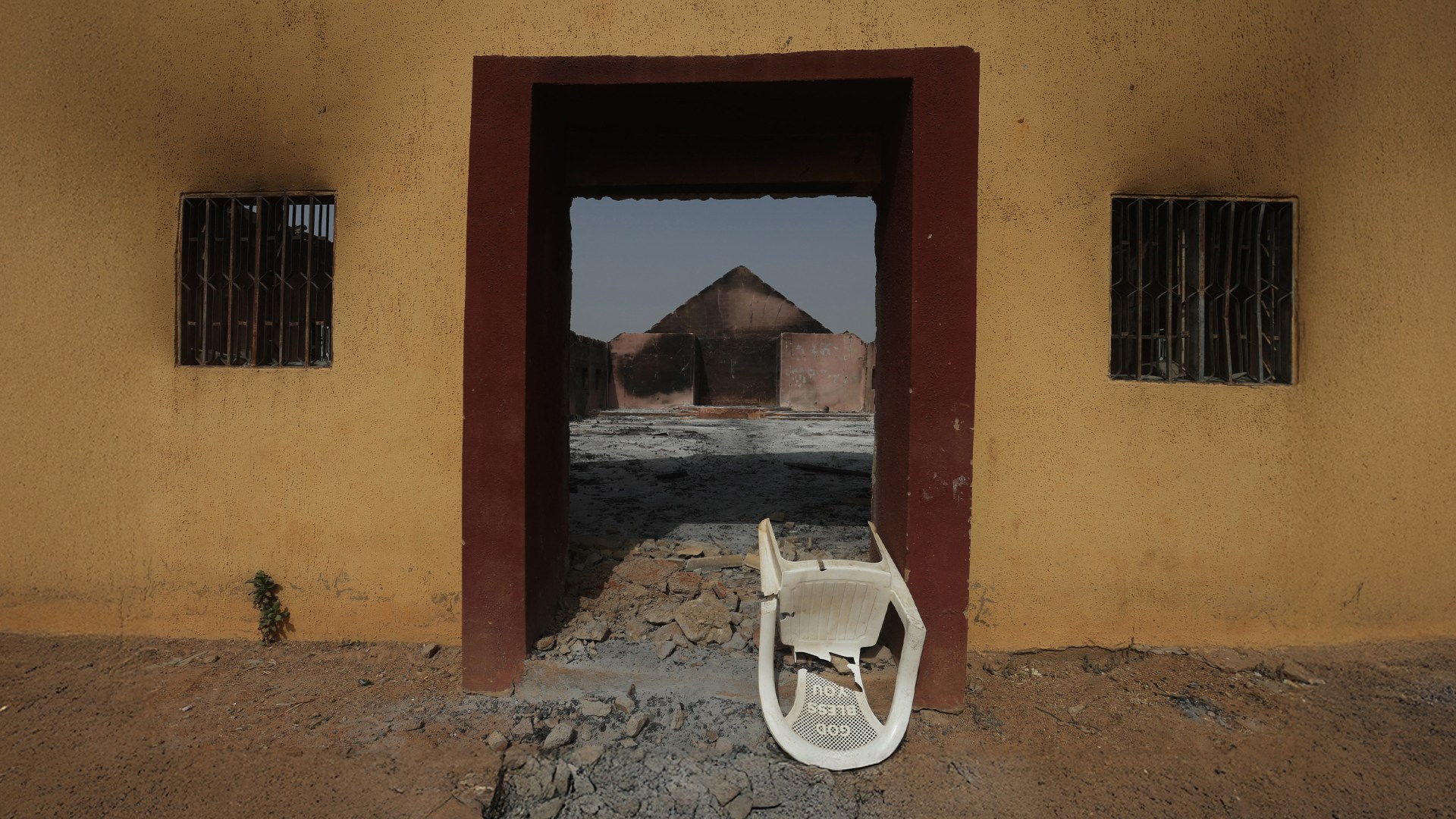
More than 7,700 churches remain shuttered following the Rwandan government’s August 2024 mass inspection of prayer houses. The government’s tightening regulations have not only burdened churches and driven some underground—by requiring extensive pastoral training and inspecting church facilities from toilets to noise levels—but also produced a chilling effect on pastors’ speech.

Despite the risk of retaliation from the government, some Rwandan pastors are pushing back against the new rules. CT has agreed to change or withhold some church leaders’ names for their protection.

For rural pastors, the reforms are simply untenable. “In Kigali, you have neighbouring communities that would be affected by the sound coming from a church but in Kagera, there is a church up in the mountains so there are no neighboring homes. The congregants don’t have cars or even motorbikes so the issue of parking should not be a requirement,” said pastor Kabagambe Nziza of New Life Bible Church.

Rural churches can’t gather enough local signatures in support of their congregations. “Why demand 1,000 signatures? Are churches political parties?” interjected another pastor, whose name CT agreed to withhold to avoid reprisals.

Human rights groups amplify these cries. The World Evangelical Alliance submitted a report to the UN in July calling the Rwanda’s church regulations contrary to the country’s constitution and “not in compliance with international human rights standards.”

A February report by the Christian organization Open Doors says these regulations derive from a “dictatorial paranoia,” a dominant persecution engine in Rwanda, with the government exerting significant control over religious institutions and practices.

The closures are not just spiritual. They rip at Rwanda’s social fabric.

Beyond their role as centers of worship, churches serve as hubs of trauma care and community healing. More than 64,000 Rwandans have participated in Mvura Nkuvure, community-based sociotherapy led by faith groups, to walk toward trust and shared dignity.

Participants say the therapy builds safety, trust, care, and respect between former enemies. Survivors and perpetrators meet through church-led reconciliation forums to listen and forgive, a process many describe as restoring not just emotional wholeness but also the bonds of community life, Catholic News Agency reported. An academic review in 2024 confirmed churches and faith-based institutions fill critical gaps in mental health care in Rwanda, supporting survivors of conflict with culturally attuned, accessible care.

Without churches, neighborhoods lose job training, counseling, orphan aid, and loans. Kamanzi, the pastor from the previous article, stacks chairs after a service. “Churches are not just about preaching. They are places of healing and community,” he said. Now underground gatherings fill the void, but fear lingers: “We try not to sing too loud.”

In late July, a group of evangelical Rwandan pastors and ministry leaders started quietly working on a draft position paper proposing adjustments to the current regulatory framework. Although they haven’t formally published it out of concern for safety, the document reflects a growing but cautious internal push for government reforms. The position paper’s key proposals include reinstating the five-year compliance period for branch leaders, removing the 1,000-signature quota in rural zones, accepting modular or informal theological training for pastors, and exempting churches already approved in prior inspections.

“Regulation is not evil,” the draft reads. “But it must be humane, equitable, and anchored in dialogue.”

So far, the position paper’s writers have issued no official communication, nor has any government response indicated such a paper has been submitted. Authors of the document have refrained from identifying themselves publicly, citing fear of reprisals.

In a rural village, another pastor leads prayers in a mud-walled barn. Her congregation, too poor to soundproof their building or pay the fees, kneels on dirt floors, their whispers mingling with the rustle of maize stalks outside. “These rules are for cities, not us,” she said. “But we won’t stop worshiping.”

Her defiance reflects a broader struggle.

Rwanda’s rigid, one-size-fits-all regulations, shutting down thousands of churches and mandating pastoral credentials, stand out. Still, they echo a broader African trend of governments tightening control over religion, often lumping genuine faith communities together with rogue operators with sweeping rule changes.

In Kenya, a task force convened after the Shakahola starvation cult and proposed requiring theological certification and a state registry for pastors. In 2023, the doomsday cult led by Paul Nthenge Mackenzie compelled followers to starve themselves to “meet Jesus,” an instruction claiming more than 400 lives, many of them children. Authorities recently found five more bodies at nearby gravesites, raising the number of suspected burial locations to 27. The fallout prompted fierce debates about how to prevent religious abuses. One task force recommended the state impose more regulations. Some evangelicals have resisted, fearing politicization and threats to religious freedom.

In Tanzania, the government shut down the church of politician Josephat Gwajima after he accused the state of human rights abuses. Equatorial Guinea issued a decree mandating all religious bodies re-register or risk closure. In South Africa, new data-privacy laws have raised compliance concerns for churches sharing member photos or testimonies online.

Though these efforts vary in origin, some triggered by abuse, others by suspicion or strategy, they reveal a regional trend toward the formalization, filtration, and at times frustration of religious expression. These uniform policies, meant to weed out predators, often ensnare humble worshipers, driving devotion underground as they fail to distinguish between the faithful and the fraudulent.

Rwanda’s broad regulations have turned sanctuaries into secret gatherings. Rural pastors like Nziza face the same demands as urban megachurches. The 1,000-signature rule alienates small congregations, forcing thousands to worship in secret. This rigidity, critics argue, sacrifices spiritual freedom for bureaucratic control, silencing the very communities it claims to protect.

Back in his house, as twilight falls over the Kigali ridge, Kamanzi pulls a white candle from a drawer and places it on the windowsill.

His youngest son, tugs his sleeve. “Papa, when will we go back to church?”

Kamanzi kneels beside him, his eyes fixed on the flickering flame.

“Soon,” he whispers. “But until then, we worship here.”

Books

Christian Parents’ Mistakes Aren’t the End of the Story

Q&A with author Kara K. Root about anxiety, trust, and raising kids well.

The book cover on a purple background.
Christianity Today September 11, 2025
Illustration by Elizabeth Kaye / Source Images: Getty, Brazos Press

A few weeks ago, the morning after some squabble I now can’t recall, my eldest daughter and I were alone in the car. A tense silence was still hanging heavy between us. “I’m sorry for how I acted last night,” I said. “It’s your first time to be 14, and it’s my first time to be a mom of a 14-year-old, and sometimes I really mess that up. I spent a lot of years learning how to take care of everything for you. Sometimes it’s hard to remember that now it’s time to learn how to let go.”

As the tension between us dissipated, I caught a fleeting glimpse of the little girl who used to exasperate me by tossing squished grapes off her highchair. How quickly she was gone, replaced with this young woman who is both deeply familiar and not wholly knowable. It is good that she’s not mine to control, I thought. She is meant for more than I can control.

But this shimmering recognition—this settled trusting in God’s plan and provision for both of us—isn’t the territory where I normally reside, despite my best intentions. Organization and direction come easily to me. I can always try a little harder, prepare a little better, worry a little more. And I can always imagine that this will give me the sense of sufficiency and security I desire.

Of course, I recognize the sinfulness in all this. I know how parental anxiety and attempts to control the uncontrollable contribute to our culture’s well-documented childhood anxiety epidemic. Yet every day, like the apostle Paul, I do what I do not want to do (Rom. 7:15). I manage, cajole, suggest, engineer, and solve for the best possible outcomes that I believe only I can see on the horizon ahead. 

But God’s horizon is further still, and sometimes I manage to remember it. That’s one of the central messages that Kara Root, a pastor and spiritual director, shares in A Pilgrimage into Letting Go: Helping Parents and Pastors Embrace the Uncontrollable, the new book she coauthored with her husband, Andrew Root, which published this week. 

This interview has been edited and condensed.

I was excited to come across your book because I both work at a church and am the mother of teen girls, and I found it ripe for discussion. There’s the deep dive into the life of Saint Cuthbert and the travelogue of your family’s 63-mile pilgrimage to Scotland and England. But my favorite part was your diagnosis of what I see as one of the main challenges facing modern parents and pastors: the way our anxiety causes us to grasp ever more tightly for control over those we love. You’ve named at least one facet of this thing we’re all living with—but why do you think modern Westerners are particularly prone to leaning into control as a way of dealing with the unpredictability of life?

It’s hard to answer that in a short way after answering it the long way in the book! I think we often see control as our only tool. It’s given to us at every turn as our remedy, especially on social media. We have a puppy, and I looked up one thing about dogs. Now the algorithms are sending me a million things about how to train your dog, how to calm your dog, how to take control of this or that. It’s very easy to go down any little rabbit hole and try to fix whatever it is that you think is wrong. If we think we have the capacity to control and fix it, maybe it will make us feel more existentially secure.

And everything is moving faster—under pressure to be bigger and more and better—so we’ve got that pressure internally as parents too. We’re always grasping for resources, feeling like if we just had enough knowledge, enough capacity, enough confidence, enough whatever, then we could manage, and we could avoid whatever it is that that scares us, perhaps fear of failure at being a parent. And there’s no signpost you can reach that lets you say, Well, I’ve arrived, or I am now functioning as a good parent. We’re always turning back onto ourselves.

My son just left home to do a study abroad in Scotland as a college junior, and I know he can do this. Yet here I am in another country giving him a checklist and waking up in the middle of the night just texting, How’s it going? How’s the packing? I don’t need to be doing that—but I find that anxiety propels me. In one sense, we are letting go of control. We let him figure it out and get on the plane and go by himself. But inside, I’m still grasping for control. That struggle doesn’t stop.

It’s as if I think that being in control will let me prevent something bad from happening or ensure a great experience. But really, we have no control of anything—but we’re held in the care of a loving God, so when things go wrong, that’s not the end of the story.

Do you see any difference between Christians and our secular neighbors on this? Or put another way, when faced with an unpredictable situation, is the average American Christian likely to respond more similarly to her secular American neighbor or to her African Christian sister?

I’m taking a leap here, but I’d say our secular American neighbor. The culture we’re swimming in, the air we’re breathing, is full of this sense of control and anxiety about little things. 

I’m in Copenhagen right now, and we drove into town at 4:00 p.m. Everybody’s just sitting around along the riverbanks and in the parks because this is the time of day that you get off work and you sit around with your neighbors, coworkers, and friends. It’s a different way of life.

This is not an African sister. This is a Danish sibling. But how interesting to grow up in a culture that prizes connection, belonging, and prioritizing something like watching the sunset together. Whereas for us, it feels like we’re going to get behind somehow if we spend time that way—we’re going to lose our way. And plus, who has time for the sunset when you’re running to soccer practice and violin lessons and youth group and whatever else?

That strikes me as right, but it makes me wonder: What does it say about us that our culture is forming us more than our faith and the work of the Spirit are? 

Part of it, I think, is our sense of American exceptionalism—the idea that certain things can’t or don’t happen to us. It’s easier for us to live in this denial of our mortality because we have more ways to feel secure. Although it’s interesting that, as things in our lives or our society crumble, it seems like our existential fear is heightened.

I have a friend who teaches English to immigrants from all different places, and she tells me that they seem to be able to be less anxious even in the midst of objectively higher risk. Many have been through terrible things, and they know you have to keep living in the midst of them—and that life is more than those terrible things. We still have people we love and moments we share. 

But as Americans, I think much of our sense of well-being relies on external structures that we’ve created either for ourselves or that have been given to us, and I think the church does that too. Many people want to go to a church that looks like it’s successful and busy—maybe too busy even for them to do all the things that the church is doing. 

There’s also a weird sense of shame if we’re not doing all that we could be doing: I could be doing so much more reading. I could be learning another language. I could be learning to invest. It always feels like we’re wasting our time.

But that’s this bizarre pressure that we put on ourselves, and we import that into the church and reduce our faith to an optimization tool. We think about how much more we can optimize with God on our side or how Christianity can give us better tools to accomplish what we already wanted to do. But actually, Christianity is saying that’s not what life is about. It’s about something completely different.

What does that say, then, about the formative power of our faith and the work of the Spirit? I work at a church, and I know our best intentions are to love and lead all people to deeper life in Jesus Christ. Any program we have is geared toward that objective. But so often it seems like we’re going somewhere we don’t intend to go. What’s happening there? 

Well, I think part of it is this idea that we can even lead people into deeper relationship with Jesus Christ. The way that that’s phrased very much puts it on us and puts the control in our hands. 

I’m a pastor, and the core sort of narrative that has formed in my congregation is one of trust that we all already belong to God and to each other. That’s the foundational reality of the universe that we can’t change. But we ignore it all the time. We fight against it all the time. 

In Jesus Christ, we’ve been reconciled to God and other people, though, and so the people we’re journeying with are siblings, not competition. They’re not targets of our need to convert or whatever else. They’re living in the world that God loves, just as we are.

What would it look like if we could surrender ourselves into that reality and actually live like that’s true,  like God is already active, already doing something in our lives and in the lives of the people around us? And what if we walk through this world with this anticipation? What’s God going to do today? What’s going to happen here?

That’s really different from putting that pressure on ourselves. Is it my job to make sure that people’s lives are open to the work of Christ? Is it my job to make sure that there’s something transformative that happens in the children’s ministry or in the sermon or whatever else? No, that’s not my job. That’s the Holy Spirit’s job. The idea that we or our church is somehow in charge is so ridiculous in the course of history.

The church has been through so much, and it’s going to go way past us. We just get this one little moment to receive it and watch and join in what God is doing. But if we’re so focused on trying to make something happen, we could be missing God doing something right now. 

Turning more specifically to parenting, so much of raising kids well and being in local church ministry for that matter is mundane and routine, not a spontaneous mountaintop experience. I know experiences like that can’t be forced. But you write about seeking those moments—they’re called moments of resonance in the book—by setting a table and inviting a posture of openness to be met by something beyond what we are capable of producing. I love that and have had those moments, but also, what does it look like practically to do this day in and day out when life is sloggy and unexciting? Is there a place for formational practices here? 

Often that kind of experience happens where we’re not looking for it. You’re in the middle of an ordinary Thursday, and sometimes every moment is excruciating. Maybe the kids are fighting over music in the back seat of the car. But parenting also goes by so fast, and sometimes it just strikes me, as they’re bickering, that I get to be their mom. We can’t force mountaintop experiences, but we can try to be present in the moments that we have. We can practice, maybe at the end of the day, noticing what we might have missed along the way and thinking about what we can be open to tomorrow.

When my daughter was preparing for kindergarten, she was so excited. Her big brother had already been in school two years; she was ready. She had her clothes picked out in July. But the moment she crossed the threshold of the classroom, she just melted down. There were so many kids—it’s chaos, and it’s overwhelming. She was inconsolable. I just couldn’t calm her down. 

I took her out in the hallway, and I was doing the thing of trying to get her to change, trying to control her. Nothing I did was working. I wasn’t meeting her in this moment. But then in desperation, not because I had any great faith, I knelt down and looked in her little face, and I said, “Maisy, God has a surprise for you today.” 

She stopped crying for a minute, and her eyes got really big, and she said, “Really?” And I told her yes and that at pickup I wanted her to tell me what God’s surprise was. 

I walked out the building thinking, Okay, God, you better show up. I just told her you were going to be there. All day long I’m praying and nervous. But then I picked her up, and she came running over and said, “Mom, you were right. God did have a surprise for me.” I can’t even remember what it was now, but it became our daily liturgy to talk about God’s surprise.

It was always something ordinary. It was ordinary life. And it took me a while to realize we can always expect this presence of Christ in our moments. God feeds me when God promises to feed me, but we have to train ourselves and each other to notice these gifts. It’s about belonging to God and belonging to each other. God wants to give me something every day and care for me, but also we belong to each other. I’ve experienced the presence of God in how we care for one another.

If we stop asking what we need to do to fix this moment, we can instead notice God in this moment.

Yeah, if we trust that God’s really real, we can. But I don’t know that we do. I actually think that’s our main problem in church. We believe God’s real. We’d like to think God’s real. That’s how we aspire to live. But we don’t live like God’s real. We live like it’s all up to us. 

What would it look like to actually trust this real, living God—to trust that God is going to do something, is already doing something?

As a mom with two teen daughters who has entered a season where family conflict too often seems to be the norm, I appreciated your idea of “points of aggression” as a way of explaining what’s happening under the surface in our relationships: When everything and everyone is a challenge to be managed or optimized, our relationships with our children and our churches get distorted. I see that play out in a lot of ways, but I also find myself wanting to ask how that works with our real needs for healthy authority. What does healthy authority—whether parental or spiritual—that avoids these points of aggression look like in families and churches? What are some concrete differences you’d expect to see?

Part of our anxiety, including in parenting, is that we are so afraid of disappointing people. Our feelings have been given a lot of power in today’s world. But we have to say no to be able to say yes. Just holding that boundary provides a sense of safety and security for kids. It tells them there are reliable ways to be in the world—that it’s not up to them to figure everything out.

One of the difficulties in parenting today is this idea that we have to create our own identities and curate ourselves in the world. We’ve put that on kids from a very young age. This may be changing in younger generations, but many parents will say, We’re not going to tell you what to think or what to believe or what to do. You have to be you. But sometimes children just need someone to tell them what to do. 

Every time our kids would say they didn’t want to go to church, we’d tell them that’s what we do. Our family goes to church. It’s who we are. 

If you don’t set that kind of boundary, if you ask them to create their own identities, you’re asking kids to do more than what is their rightful work as kids. And I think what we intend to be gentleness and grace is going to devolve into aggression. It’s like that in our culture. We live in a very unforgiving and merciless society. 

But what the Christian story has that the rest of culture doesn’t is mercy and forgiveness. What’s beautiful about the Christian story and about Christian parenting is not that you’ll avoid all these mistakes. It’s that those mistakes aren’t the end of the story. God is already holding us. We get to come back again, and our relationships become stronger because of the apology and the forgiveness and the rootedness with one another. 

Thinking back in your family’s life, you’ll see those moments that on the front end or in the middle felt like disasters but ultimately made you stronger down the road. And God’s never done with us. That’s the beauty too. God is always going to do something, through everything that happens. Are we willing to participate in that, or are we going to resist or ignore it?

One thing that’s different about being a Christian is a sense of eschatology too—that we have a God who promises that the end is complete love and connection. And so if we’re in a situation that’s not okay, we know it’s not the end yet. Any one bad moment is not the defining moment. We trust ourselves into this bigger story. We have a further horizon. And I think our culture has made every decision, every moment, so fraught—as though somehow we can control it all. But the truth is we’re held in God no matter what. Whatever happens, even if it’s not what thought you wanted to have happen, it’s not the end of the story.

I see that so often in so many things. Everything becomes higher stakes if you lack this longer horizon. And this is where we often see how formation matters. I’ve also said to my children that we go to church—or do other things—“because this is what our family does.” I have used that same line many times. Sometimes I wonder why we’re doing it. But then in difficult moments I see the effects, and I realize that these practices have formed my children in a particular way.

Our faith is a very corporate thing. We read Scripture together, and we practice faith together, and we show up at church together because this community helps us to be the church. We’re not the church by ourselves. And some days you’re going to be the one feeling it, and other days you’re totally not, but someone else is going to be holding you up in faith. We need each other, and kids need to see that life in community along the way. They need to understand that they’re part of this community that believes and this community is holding them.

News

Suspect in Charlie Kirk Assassination Arrested

Two days after the conservative activist was fatally shot, authorities apprehend a 22-year-old Utah man.

Charlie Kirk in a black T-shirt holding a microphone at an outdoor event.

Turning Point USA founder Charlie Kirk

Christianity Today September 10, 2025
Andri Tambunan / AFP via Getty Images

Key Updates

September 12, 2025

Utah authorities named the suspect in conservative activist Charlie Kirk’s assassination as Tyler Robinson, 22, and said they had taken him into custody in St. George, Utah.

A judge ordered him held without bail on suspicion of aggravated murder, felony discharge of a firearm causing serious bodily harm, and obstruction of justice, with prosecutors promising formal charges soon.

Utah Gov. Spencer Cox said a family member reported the suspect to a family friend, who reported Robinson to Utah law enforcement. Sources told the Associated Press that the suspect’s father had recognized him from photos released and asked a youth pastor for help convincing Robinson to turn himself in. Cox praised the family who “did the right thing” to help with the arrest.

Cox said the suspect had grown “more political” and that the family member said Robinson brought up at a recent dinner that he opposed Kirk’s views, that Kirk was “full of hate,” and that Kirk was coming to Utah Valley University. 

The family member said Robinson had “implied” he committed the crime, according to Cox. The suspect’s roommate had also shared with law enforcement Robinson’s Discord messages about retrieving his rifle. 

Investigators found several online trolling references engraved on bullet casings found with the gun used in the assassination, such as, “notices bulges OwO what’s this?” and “If you read this, you are gay lmao.” One casing read, “Hey fascist! Catch!” along with up, right, and three down arrows, likely a gaming reference.

The governor said surveillance footage showed Robinson’s car arriving on campus about four hours before the shooting, and that he blended in among students because of his age.

At the press conference the Utah governor addressed the nation’s young people, saying he knew many of them admired Kirk and many hated him.

“You are inheriting a country where politics feels like rage. It feels like rage is the only option,” said Cox, a Republican who belongs to the Church of Jesus Christ of Latter-day Saints. “We can choose a different path. Your generation has an opportunity to build a culture that is very different than what we are suffering through right now.”

He quoted something Kirk had previously said: “Turn off your phone, read Scripture, spend time with friends.” He added later that having the video of the killing available to view was not good for humans: “Log off, touch grass, hug a family member.”

“We can return violence with violence, we can return hate with hate. That’s the problem with political violence, it metastasizes,” Cox said. “At some point we have to find an off-ramp or it’s going to get much, much worse. … History will dictate if this is a turning point for our country. Every single one of us gets to choose right now if this is a turning point for us.”

September 10, 2025

Christians and politicians called for prayer after conservative activist Charlie Kirk was shot Wednesday afternoon.

Within hours, they learned Kirk, the 31-year-old executive director of Turning Point USA, had died, and their prayers for recovery turned to mourning the leader and decrying the violence that killed him.

Kirk had been speaking from a tent to thousands of students gathered in the courtyard of Utah Valley University when a single bullet sailed toward him and appeared to hit him in the neck before he collapsed.

The shooter fired from the student center building, about 200 yards away, per university reports. By Wednesday evening, police had questioned and released two individuals but had not publicly identified a suspect.

President Donald Trump and Vice President JD Vance memorialized Kirk, one of the best-known young conservative voices in the country and a friend of the administration, with the president saying on Truth Social, “No one understood or had the Heart of the Youth in the United States of America better than Charlie.”

“Charlie was killed while working to peacefully persuade others,” wrote pro-life activist Lila Rose. “May his witness call us to reject hatred and violence and to embrace the power of truth spoken in love.”

The fatal shooting comes amid a sense of swelling political violence in the US, including the murder of a Democratic lawmaker in Minnesota in June and an assassination attempt against Trump during a Pennsylvania campaign rally last year. Texas pastor Jack Graham, an evangelical adviser to Trump, called Kirk a “martyr.”

Kirk was an evangelical Christian, and his wife, Erika, runs a Christian clothing brand and Bible-reading project called Biblein365. She posted from the Psalms on X: “God is our refuge and strength, a very present help in trouble.”

On social media, where Kirk had millions of followers, his death stirred responses from Christians who appreciated his politics as well as those who disagreed.

They called his killing gruesome and horrific. They asked for prayer for his wife and two kids, sharing photos and video clips of the young family. And they expressed feeling unsettled by the current political climate, rhetoric, and violence.  

In a survey last year, the majority of American voters (66%) agreed that the threat of political violence was a major problem in the US, with Trump supporters most concerned (74%).

Kirk’s movement of young conservatives took off during Trump’s first term, expanding to around 800 campuses including dozens of Christian schools.

Many college chapters held vigils in Kirk’s memory Wednesday night, gathering with candles and posters. Supporters saw him as a hero for free speech on campus; students shared about how they took interest in conservative politics and spoke out about their faith as a result of Kirk’s dialogues.  

At Liberty University in Virginia, where Kirk was scheduled to speak at convocation next month, hundreds gathered to hear from student leaders as well as chancellor Jonathan Falwell. They grouped together to pray on the steps and lawn in front of the student union, while a vocalist sang “Amazing Grace.”

Turning Point USA is popular but has also been divisive. On its website, the organization urges conservatives to “take up arms in the culture war.” Some professors reported harassment after it launched a watch list to expose “leftist propaganda” in college classrooms.

Kirk had partnered with Jerry Falwell Jr. to form the Falkirk Center for Faith and Liberty at Liberty before Turning Point USA began its own faith arm in 2021. TPUSA Faith sets out to “unite the Church around primary doctrine and to eliminate wokeism from the American pulpit.” It offers biblical citizenship classes, courses for pastors, and church events.

Utah Valley University in Orem had been the first stop of Kirk’s “American Comeback Tour,” with events across 10 cities in September and October.

The university told The New York Times that six officers from the college’s police department worked the event, in addition to Kirk’s security team. Police chief Jeff Long said, “You try to get your bases covered, and unfortunately, today, we didn’t. Because of that, we have this tragic incident.”

The leaders of the school’s TPUSA chapter donned American Comeback T-shirts and MAGA hats as they promoted the event for weeks with posters, videos, and a giant cutout of Kirk’s head.

Kirk was manning his “Prove Me Wrong” table, answering questions from the crowd on the Orem, Utah, campus. According to news reports and footage taken during the incident, he had been responding to a question about mass shootings when the bullet fired.

“Charlie Kirk got Gen Z off the sidelines. We owe him much,” wrote Southern Baptist pastor Dean Inserra following Kirk’s death.

This is a breaking news story and will be updated.

Books
Review

Don’t Erase Augustine’s Africanness

A new book recovers the significance of the church father’s geographic and cultural roots.

The book cover on a yellow background.
Christianity Today September 10, 2025
Illustration by Christianity Today / Source Images: Getty, Liveright Publishing

Here is an intriguing question. For several centuries, the study of early Christianity has attracted the interest of multiple thousands of scholars, most of whom have applied the highest critical standards. Given the overwhelming mass of books that resulted from this project and the limited nature of the available source material, what on earth remains to be said?

To see one notable answer to that question, consider the work of the scholar Catherine Conybeare, who places those early Christian studies in a very broad historical context—in terms of not just political and social trends but the imaginative study of the senses and emotions. Like many contemporary scholars, she studies such matters as touch and aurality, matters earlier generations would have thought impervious to reconstruction. Her well-known book The Laughter of Sarah concerns the role of delight in Jewish and Christian exegesis.

In her new book, Augustine the African, Conybeare brings her interpretive toolkit to bear on the great church father, emphasizing the importance of his geographic and cultural origins. We already know, of course, a great deal about Augustine’s life and his theological reflections. But Conybeare shows how creative scholars can return time and again to a mine of material that still appears to be inexhaustible.

Intellectually, we may know Augustine came from Roman Africa, with its vital center at Carthage. But what difference, if any, did that make to his life and thought? How might these have differed if Augustine had been the product of Spain or Sicily?

For Conybeare, these origins were crucial. Augustine was absolutely grounded in a culture located in what we would today call the nation of Tunisia and its border fringe of Algeria, the region where his life began and ended.

At every stage, Augustine’s life and career must be understood in that African imperial context, with all its implications of hybridity, of ethnic and linguistic complexity, of aspiration and discrimination. These themes pervade Augustine the African. Based on impeccable scholarship and lucid writing, Conybeare’s book reshapes our understanding of that one (crucial) saint, and her insights extend to many other figures of the early church. The book deserves a very broad audience, not least because it recounts such a fascinating life story. Adding immensely to the book’s value, this study of the saint’s “erased Africanness” speaks into ongoing conversations about the long-lasting heritage of empire and colonialism.

I offer a paradox. As a part of the empire, Roman Africa was utterly distinctive but also quite typical. Yes, the particular mixture of cultures in Augustine’s Africa was peculiar to that region, but at the same time, it was one example of a much larger story.

When we think of the Roman Empire, we generally think of a society ruled by, well, Romans, those conquering military foreigners who built their spectacular cities, roads, and fortifications. Our minds might even replay the legendary scene in Monty Python’s Life of Brian, where a bumbling Jewish revolutionary protests, “What have the Romans ever done for us?”—right after conceding “the sanitation, the medicine, education, wine, public order, irrigation, roads, a fresh water system, and public health.” Our vision of Roman oppressors confronting insurgent natives owes much to our knowledge of first-century Judea.

But matters had changed fundamentally by the time Augustine was born in 354, and that was nowhere truer than in defining the category of “Romans.” Through the long centuries, local elites had come to identify ever closer with Roman ways, lifestyles, and culture, culminating in 212 with the extension of citizenship to all free men within the empire. (The decree came from the Roman emperor Caracalla, best known to modern audiences from the film Gladiator II).

Whatever their indigenous roots, the people of London and Córdoba, Milan and Cologne, Marseille and Carthage, were all Romans, and that status belonged to them just as much as to anyone born on the river Tiber. That did not of course mean that older cultures and languages vanished overnight, but they were increasingly marginalized. Romanitas, Latin for “Roman-ness,” was a matter of wealth, education, and social class. Whenever we look at early Christian leaders from Gaul or Spain, we have to place them in that context of an acquired culture and an ambiguous relationship to the indigenous past.

In that sense, Augustine’s North Africa was a microcosm of the wider Roman world. Here, Latin-speaking “Roman” elites—who might or might not have any Italian ancestry—lived alongside the speakers of Berber tongues, who today are more respectfully known as the Amazigh people.

Augustine himself personified that cultural mingling, as the son of a Roman father, who was likely the descendant of freedmen, and the famous Monnica, who was (almost certainly) of Berber stock. The family would assuredly have spoken Latin at home, and the saint never learned Berber—but when Monnica or Augustine told a slave or peasant to do something quickly, they presumably deployed at least a few select words of the older language.

For Conybeare, that mixed background repeatedly formed Augustine’s life and career. Although he lived in Milan and Rome, he actually did much of his writing in North Africa, notably at Hippo Regius, where he served as bishop from 396 until his death in 430.

Hippo itself offers a nice epitome of Augustine’s Africa, both its indigenous foundations and the colonial and imperial structures successively erected upon them. The city’s name is of Punic (Phoenician) origin, reflecting one early wave of colonizers. It later became a seat of the (Berber) Numidian kings, whom the Romans had conquered in the first century BC—hence the royal status implied by “Regius.” The Romans then reconstructed the city as a settlement for their own ethnic stock—literally, it was a colonia—but it can never have been far removed from those older native peoples and their cultures.

Augustine was highly conscious of that African background, and he describes contemporaries in terms of “we Africans.” In Italy, his closest friends shared that provincial background. Even so, he never had any doubt about his Roman status or his claim to the glories of a millennium of Latin culture and thought.

He lived, after all, five full generations after the edict of Caracalla. We can imagine Augustine’s shock and disappointment when he arrived in Italy and found himself mocked for his provincial accent, which in practical terms made it impossible to work as a teacher of rhetoric. Overnight, the faithful Roman became an outsider.

Much of Conybeare’s book explores that culture clash, with all its implications both psychological and theological. She does this brilliantly, forcing us to appreciate how Augustine’s theology grew out of “his own sense of himself as displaced and wandering.” Perhaps only someone as agonizingly cut off from full Roman status could write the woeful cry of mourning for the fallen imperial capital that inspired his City of God.

The problem of defining the universal as opposed to the local and provincial profoundly affected Augustine’s theorizing about the nature of the universal church and its ecumenical values. This issue became sharply evident in his debates with the Donatists, who questioned the validity of sacraments performed by priests who had compromised with Roman persecutors. Conybeare adeptly describes the savage feuds and schisms that were so pervasive within African Christianity. So often, her book compels us to reconsider everything we thought we knew about Augustine’s thought through that African lens.

Although this goes beyond even the ambitious scope of her fine book, I would add two footnotes that grow directly from Conybeare’s material. The first concerns the fate of Christianity in North Africa, in what for several centuries had been a critical hearth area of the faith. After the Islamic conquest in the late seventh century, Christianity vanished almost wholly from the region, probably because the “Romans” and Latin speakers fled, leaving behind the Berber peasants and nomads, whom that faith had touched only lightly. That does cast a rather grim light on the nature and extent of Christian evangelization in Augustine’s time.

Also, the essential work of placing Augustine in his African setting should never obscure how his life played out just as fully within the vast Roman Empire. When Augustine lay dying, his city of Hippo was being besieged by the Vandal people, who not only captured it but also went on to seize Carthage and to sack Rome itself in 455. Those Vandals came from what we would now call Poland, where they stayed until a series of messy interactions with Roman governments and armies led them to march through Germany, France, and Spain on their way to North Africa. That Vandal intrusion, which devastated the older Latin Catholic world, demonstrates the inseparable connection between the African and Roman realities.

Augustine famously distinguished between the glorious and unchanging city of God and the turbulent and sinful earthly city where we find ourselves in the present life. Conybeare’s book amply reminds us just how wrenchingly complex and conflicted that earthly city actually was—and how longingly Augustine turned to the city that is to come.

Philip Jenkins is distinguished professor of history at Baylor University. His latest book is Kingdoms of This World: How Empires Have Made and Remade Religions.

Church Life

What I Learned Living Among Leprosy

My 16 years at a rural hospital in India showed me what healing and restoration in Christian community look like.

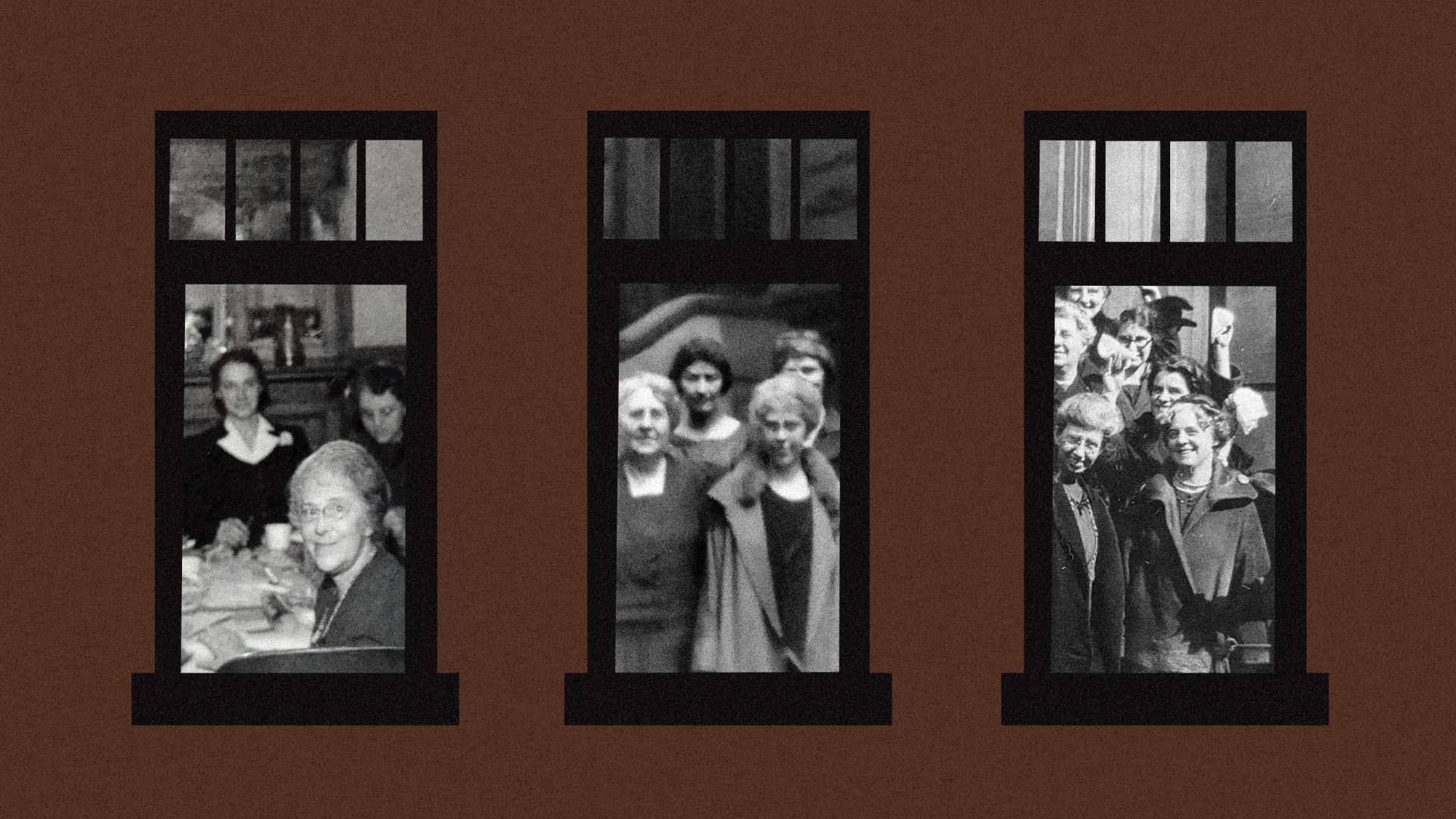
Collage of old photos on a vintage scrapbook on a piece of patterned clothe
Christianity Today September 10, 2025
Illustration by Abigail Erickson / Source Images: Getty, photos courtesy of Ann Harikeerthan

In 1994, my mother began working as a doctor at a rural hospital run by the Christian Medical College in Vellore, India. I would play elaborate games on the spacious hospital grounds with fellow neighbors’ kids and my big brother, John. We imagined that we were traveling through land, sea, and space in a rusty truck by the hospital’s parking shed, and we raced each other on bicycles.

As I played these games, I didn’t always notice the men and women who also lived on the campus grounds. Sometimes, these uncles and aunties would stop to chat with us, and I would gaze curiously at their flat noses, their missing fingers, and the crutches and wheelchairs they used to get around. 

At the time, I had no clue these uncles and aunties were leprosy patients. They never mentioned their ailments but spoke affectionately to me, calling me “en rasathi” (“my princess” in Tamil) or asking, “Chellam, saptiya?” (“Sweetheart, did you eat?”).

The realization that these aunties and uncles were living with leprosy dawned on me one Sunday after church, when I saw people sitting in line by the church gate. They were dressed in tatters and held out aluminum bowls between deformed limbs as they begged for coins. Because they appeared to have leprosy, they had been sent out of their villages and had to beg for money because no one would give them work.

But the aunties and uncles I spoke with on the hospital grounds looked and felt different. Although they also lived with leprosy, they wore saris or shirts with pants or dhotis, which signified that they were well-groomed in South Indian culture. They made a living from the work they did in Ulcer Ward, the hospital’s leprosy rehabilitation center, or on the hospital campus. They did not seem dissimilar to other adults I knew. They were people whom my family and I could depend on and build relationships with.

My 16 years of living with and loving people with leprosy has taught me that healing is an inherently communal act. I learned that leprosy patients could experience belonging in loving Christian communities that could treat deep-seated emotional wounds, which medicines and surgeries are unable to fix.

At the age of five, I visited Ulcer Ward with my mom to see Karunayan Uncle, who held my foot in his paw-shaped hands, placed it on a piece of paper, and clumsily clutched a pencil between his curled thumb and index finger to draw a perfect outline. When we returned a few days later, Karunayan Uncle gave me a pair of custom-made sandals with brown leather straps and specially fitted rubber soles—something that he had created to prevent leprosy patients from injuring their feet.

Other Ulcer Ward residents provided for the medical community’s larger needs. Prakasam brought us meat and eggs every week. Balasamy swept dead leaves off the ground we played on. Many of them made candles we would light during frequent power blackouts.

But one agonizing experience helped me to understand why the people at Ulcer Ward needed us. When I was around ten years old, a pale patch appeared on my cheek. A nanny caring for my neighbor, Rahul, noticed the spot and warned Rahul not to touch me, although he disregarded her advice and told me what she had said.

“You live so close to [Ulcer Ward],” my own nanny said to me, barely concealing her aversion. “It must be leprosy.”

That evening, my mom explained that the people living at Ulcer Ward were currently undergoing treatment for or were cured of leprosy. They could not pass on the infection. But she took me to her pediatrician colleague anyway, and they found out I was mildly malnourished. After I spent a few weeks on a better diet, the patchy skin on my face disappeared.

This incident disturbed me. What if Rahul and other kids had decided to shun me? I could only imagine how the uncles and aunties at Ulcer Ward felt, knowing their families would not hug them, hold their hands, or kiss their cheeks.

As a teenager, I began noticing more of the suffering these aunties and uncles experienced. They could not feel physical pain and did not notice when they hurt themselves, so they often developed ulcers.

This was the reason behind the rehabilitation center’s name, as many who lived there had chronic ulcers that refused to heal and needed to be dressed every other day. I would imagine their wounds on my body and the pain they could not feel and pray for God to heal them.

Years later, as a doctor interning in that very hospital, I cared for the patients at Ulcer Ward. I dressed wounds, offered words of encouragement, and heard stories of hurt and hope.

More than two millennia ago, Jesus did what we put into practice at Ulcer Ward. He demonstrated that healing stigmatizing diseases like leprosy is not just about treating the body; it also requires communal restoration.

One story depicts Jesus reclining at the table in the home of a man known as “Simon the Leper” in Bethany (Mark 14:3). Simon was likely a man healed of leprosy who was once deemed untouchable in society. Yet Jesus spent time with and possibly shared a meal with him.

Another story shows Jesus declaring his willingness to heal a man with leprosy after he begs Jesus to make him clean (1:40–42). Although Jesus could have healed this man from afar, as he did for ten people with leprosy (Luke 17:11–19), he did two incredible things in this encounter.

First, Jesus touched the man with leprosy—something many people then and now would consider taboo. Second, Jesus told the man to go show himself to the priest (Mark 1:44). Upon receiving Jesus’ healing touch, the man could now reintegrate into society by seeing a priest who could pronounce him “clean” (Lev. 14:20, 31).

As Jesus’ actions reflect, a person with a stigmatizing illness requires a communal response to heal from physical and emotional wounds fully. Touching a person whom society has deemed untouchable is one of the clearest ways of saying, “I accept you for who you are.”

Much of what Ulcer Ward was like grew out of physician Paul Brand’s vision, said Anand Zachariah, a doctor at Christian Medical College who also grew up on the hospital campus. Brand, a missionary surgeon from the UK who grew up in India, discovered that people with leprosy lost their limbs because of their loss of ability to feel pain, rather than because of rotting flesh. Brand and his team pioneered and performed countless reconstructive surgeries at the rural hospital my mom and I worked in.

Brand also ensured that the rehabilitation centers he established for leprosy patients would educate them on how to care for their numb limbs as they healed from surgery. But his rehabilitation plans went beyond physical care to addressing spiritual and emotional needs as hospital staff encouraged Christians in the medical community to accept, welcome, and love the leprosy patients in their midst.

The uncles and aunties I grew up with at Ulcer Ward have since reintegrated into society. Many returned to their villages when their families agreed to take them back, and others who were unable to return because their families would not accept them now live in elderly care homes.

Leprosy is not as common in India today as it was in the past. Thanks to early intervention and rehabilitation, the disease does not result in physical disabilities as severe as they once were. Yet over half (60%) of the more than 200,000 new cases reported worldwide each year are from my country, and stigma against people with leprosy continues to persist in society, as well as within the church.

Churches in India often segregate people by language, occupation, caste, and wealth. Some churches only welcome people of one caste; in other congregations, poor people sit on the floor while the rich sit on chairs. Some Christians continue to shun people with leprosy and do not permit them to worship in the same space.

To become places of hospitality and welcome—as Ulcer Ward was for people recovering from leprosy—Indian churches can care for people who live with stigmatizing diseases as Jesus did, by having meals and worshiping God together. Churches can help people with leprosy gain sustainable livelihoods by hiring them or funding vocational training.

I live more than 900 miles from Vellore now, but I visited the city in late August and met with former Ulcer Ward patients.

Gopalan Uncle, a man in his 70s, continues to develop ulcers on his feet and finger stumps because leprosy irreversibly damaged the sensory nerves in those regions. But the staff at Ulcer Ward never treated him any differently. “They slung their arms around my shoulders or held my hands and sat next to me, chatting with me for hours,” he recalled.  

Lakshmi Auntie, who is in her 50s, teared up as she recounted how her family abandoned her when she was first diagnosed with leprosy. Doctors amputated her right leg three decades ago because the ulcers on her leg kept getting infected, and she spent months bedridden at Ulcer Ward while recuperating. Today, she wears a prosthetic limb and uses crutches or a wheelchair to get around. “The staff at Ulcer Ward cared for me better than my family ever could,” she said.  

As I shook their hands to say goodbye after our three-hour-long conversation, Gopalan Uncle said, “Go wherever Jesus leads you.” Lakshmi Auntie placed her hands on my head and prayed a blessing over me: “May God give you a long and healthy life, always surrounded by family who loves you.”

Ann Harikeerthan is a medical writer at Christian Medical College in Vellore, India.

Ideas

The Myth of Tech Utopianism

Staff Editor

What a book on feminism helped me realize about our digital age.

Christianity Today September 10, 2025
Animation by Elizabeth Kaye / Source Images: Unsplash

After 18 years and many failed attempts, the US and Britain laid down the transatlantic telegraph cable successfully in 1858. The first message on August 16 from Queen Victoria to President James Buchanan expressed her congratulations for his presidential win.

Buchanan replied in a message that took more than 16 hours to transmit through thousands of miles of copper cables: “May the Atlantic telegraph, under the blessing of heaven, prove to be a bond of perpetual peace and friendship between the kindred nations, and an instrument destined by Divine Providence to diffuse religion, civilization, liberty, and law throughout the world.”

We have long supposed technology can usher in utopia. Although it promises “perpetual peace,” the telos of modern technology more often detaches us from our bodies, our places, and our communities. Especially in artificially intelligent forms, technology makes us more machine than man, more functionality than being.

Take for instance, a recent argument by Mary Harrington in her book Feminism Against Progress, which shows the underbelly of such promised tech utopias. She argues the modern feminism that has won out is a feminism of freedom (where women grasp unfettered autonomy) rather than a feminism of care (which flourishes within local, embodied, and social relationships).

This feminism of freedom sees women and men as “fungible, interchangeable work units,” defined not by their God-given personhood, nor by their embedded place among families and society, but by their economic output. It’s an argument educators like Alan Jacobs and Alan Noble have also made.

It’s only a short leap to see that if men and women are interchangeable, if we are defined more by our late-modern capitalistic output than by our sexed bodies, our common human limitations, and our social relationships, then technology can serve the role of savior.

Technology promises liberation from the pesky challenges of being human (such as motherhood, argues Harrington) in favor of “Meat Lego Gnosticism,” where we can disassemble and reassemble ourselves like fleshed Lego bricks to find an authentic, self-made individuality. Such liberation promises utopia in terms of equality, freedom, and a lack of consequences, but it ends up more akin to Frankenstein’s monster.

We increasingly look to new technologies to eradicate what we’ve construed as the problem of being human. We need simply look at the headlines to see how we look to technology to save us.

But false gods demand sacrifice. We are sacrificing our young people in what appears to be a rise in suicides after they use AI chatbots for therapy or companionship. We can also consider the uptick of gender dysphoria and affirmative models of care even while the 2024 Cass report showed that transgender medical technologies should be used much less frequently. We are sacrificing the poor: Harrington observes the forced hysterectomies of sugarcane workers in India for the sake of productivity.

We know from Old and New Testament stories that false gods end up distorting humanity; they promise liberation but enslave us. Psalm 135 reminds us that idols “have mouths, but do not speak;  they have eyes, but do not see;  they have ears, but do not hear, nor is there any breath in their mouths. Those who make them become like them; so do all who trust in them” (v. 16–18, ESV). While the tendency to idolatry is old, our new technologies make their promises seem attainable.

But why, then, is this so appealing?

In Acts 8, we read of a famous magician, Simon. People know him as “the Great Power of God” and treat and worship him as a god (v. 10). Yet when the men and women of Samaria believe Philip’s preaching of Christ and his kingdom, they convert, leaving magic behind. (Interestingly, Simon, too, is baptized). When Peter and John arrive in Samaria, they lay hands on and pray for these new believers to receive the Holy Spirit.

False gods also require our resources. We are marshaling vast sums of economic resources for technological “progress” (Nvidia recently became the first $4 trillion public company, to cite just one example) without much, if any, ethical regulation.  

Simon sees power. He offers money to the apostles so he, too, could bring the power of the Holy Spirit. We know the rest of the story: The apostles soundly rebuke him and tell him to beg God’s forgiveness. But Simon has a longer story in some early church writings.

Church father Justin Martyr links Simon with early Gnostic heresies, describing him as a god with a prostitute companion. Dante places him in the eighth circle of hell—where different types of fraud are punished. Although scholars debate whether the Simon of Acts 8 is the same Simon to whom the early church leaders responded with such vitriol, what is clear is that both Simons are guided by similar motivations: the elevation of the self above the true God, the idea that they can transactionally obtain the power of God, and a desire to harness that power for personal gain. Simon believed money could make him into a god. With this power, he likely believed he’d cement control, security, success, and perhaps an eternal legacy.

Although we may have stopped trying to buy the Holy Spirit as Simon did, we still attempt that transaction’s end goal: to make ourselves gods, limitless, unattached, powerful, and self-determining. Technology is our modern-day magic. Except now we offer ourselves as the payment to our technologies, in whose image we are increasingly being made.

Most technologies are not morally neutral. The media theorist Marshall McLuhan noted in his book chapter “The Medium is the Message” the example of an electric light bulb. In contrast to many other objects, it is “pure information” and “a medium without a message.”

But generally, he argues, the idea of a neutral tool doesn’t hold up, because “it is the medium that shapes and controls the scale and form of human association and action. … Indeed, it is only too typical that the ‘content’ of any medium blinds us to the character of the medium.”

In other words, it is not just what sort of content an AI chatbot puts out that is something to evaluate but the very existence of the AI chatbot (the medium) that influences how we process information, how we experience relationships, or what we think love is.

To presume that our current digital technologies are simply neutral tools is to naively underestimate both the power of sin and the power of God. Writer Paul Kingsnorth calls this pervasive power “the Machine,” which is “a tendency within us, made concrete by power and circumstance which coalesces in a huge agglomeration of power, control and ambition.”

We are often blind to our complicity. McLuhan also notes our self-deception when we believe only content matters without understanding how the medium is the message; then we operate “in the true Narcissus style of one hypnotized by the amputation and extension of his own being in a new technical form.”

Mammon, or Simon, or “the Machine,” or “Meat Lego Gnosticism”—all whisper the same lie in a different dress for every age. You will not surely die. You will be like God.

The question for those who claim the name of Christ is this: Will we continually sacrifice ourselves for the vision of a disembodied technologically achieved utopia? Or will we instead find our greatest security in the God who gave up the power and riches of heaven to take on our human flesh and who bore our god-hungry sin upon his cross?

Ashley Hales is editorial director for print at Christianity Today.

News

The Hymns Still Rise in Rwanda, but They Do So Quietly Now

Why one-size-fits-all regulations are sending churches underground.

A local church in Nyamata, Rwanda.

A local church in Nyamata, Rwanda.

Christianity Today September 10, 2025
UCG / Contributor / Getty

On a sun-warmed ridge at the edge of Kigali, Rwanda, where the paved road gives way to red clay and goats roam between kitchen gardens, pastor Kamanzi folds his hands beside a chipped water tank and listens. From the living room, ten voices in low unison sing “Yesu Ni Wanjye,” barely louder than the creaking of banana leaves in the wind. No drums thump. No amplifiers hum. There are just whispers, because anything louder invites trouble.

Kamanzi’s house is solid but plain: glazed brick, iron windows, tiled floors swept clean that morning. I have also swept clean this story for pastors’ safety. Due to the autocratic political environment in Rwanda and personal risk to church leaders involved in advocacy, I have at times withheld or changed names, such as Kamanzi’s, and identifying details, such as church locations. I cross-verified all reported statements and facts with publicly accessible documentation and human rights organizations.

Inside the 2,180-square-foot house, a single bulb swings overhead. A plastic table holds an open Kinyarwanda Bible, a bowl of sugar cubes, and an envelope stamped “Loan Installment Due.” A threadbare curtain, sewn from three different fabrics, divides the room in two. Behind it, a mosquito net hangs limp above the bunk bed where Kamanzi’s sons sleep.

Kamanzi built his church from nothing, selling his old house, taking loans, laying tiles, installing toilets, even muffling the ceilings with foam. He thought he had followed every rule the Rwanda Governance Board (RGB) has thrown at his church since 2018. Yet in March, an anonymous complaint about noise sealed its gates. “They shut us down despite the evidence of all the improvements we’ve made,” Kamanzi said, his eyes darting to the window. “Now we worship here in shadows, praying no one reports us again.”

Kamanzi’s story echoes across Rwanda, where the government’s blanket regulations, meant to curb rogue preachers and ensure safety, push thousands of churches into hiding. The RGB enforces Law No. 72/2018 and its 2025 updates, demanding theological degrees, soundproof buildings, parking lots, and hefty fees from every pastor and branch. Officials hail these measures as protections against exploitation. Critics call them a chokehold on faith.

As of August 2024, the inspections had hit 14,000 prayer houses, closing 9,800 for noncompliance with building codes, hygiene regulations, and noise rules. By June 2025, over 7,700 remained shuttered, unable to reopen due to stricter 2025 regulations and leaders scrambling or going underground.

President Paul Kagame drives this crackdown, viewing unchecked churches as manipulative and accusing some of “squeezing money” from the poor. In a 2024 speech, he doubled down on exploitation concerns: “These unscrupulous people who use religion and churches to manipulate and fleece people of their money and other things, will force us to introduce a tax.”

Kagame’s vision aligns with Rwanda’s post-genocide rebuilding, prioritizing order over unchecked growth. The 1994 genocide by Hutu extremists killed 800,000 people in just 100 days, targeting mostly the Tutsi ethnic group but also some moderate Hutu and Twa people. That trauma continues to shape how Rwandans understand community, politics, and faith.

The RGB, under CEO Doris Uwicyeza Picard as of March, rolls out these church restrictions through meetings and online systems. Summarizing a March 21 consultation session with Picard and church leaders, the RGB promised efficiency: “RGB will put in place all means through online system that will facilitate Faith Based Organisations to get services related to getting all required documents including registration and compliance certificates.”

The board’s former CEO, Usta Kaitesi, who oversaw earlier enforcements, emphasized accountability in 2024. In a post by Christian Daily, she defended the reforms: “There should be an intentional willingness to comply with the law.” She argued the initial requirements applied only to senior clergy, but the 2025 updates extended to all leaders.

Many churches, like pastor Kamanzi’s, had made the necessary adjustments. But the March regulation No. 01/2025 enacted by the Rwanda Governance Board (RGB) now required all church branches to secure 1,200 hours of theological training (roughly one year of study) for every pastor and branch leader, at least 1,000 supporting signatures from local residents, and a fee of 2,000,000 Rwandan francs (approximately $1,400 USD) to register each new church or mosque.

Kamanzi said the abruptness of these changes felt the most suffocating. “The new requirements were introduced with no transition period for existing branch pastors to obtain the required education,” he explained.

Previously, such qualifications applied only to leaders who oversaw several congregations, not to those tending a single flock. For many churches, especially rural or newly compliant ones, the goalposts moved just when they thought they had finished the changes.

Buildings must prove exclusive worship use, meet district codes, and include soundproofing, even in remote areas with no neighbors. Foreign theology degrees need equivalence certificates. RGB officials frame this as safeguarding believers, stating in the March meeting summary that regulations will “enhance good leadership” and promote “transparency and accountability in Faith Based Organisations.”

These rules apply uniformly, whether a church sits in Kigali’s bustling neighborhoods or on a remote hillside with no neighbors to disturb. This one-size-fits-all approach, while aimed at standardization, often ignores the realities of rural congregations, pushing them toward closure or secrecy.

Some pastors cheer these changes, seeing them as a cleanup of charlatans. Laurent Mbanda, Anglican archbishop of Rwanda, urged compliance: “If we had taken the requirements more seriously and taken responsibility, we would have made significant progress in complying with the standards.” Esron Maniragaba, president of the Evangelical Free Church of Rwanda, welcomes infrastructure upgrades: “Government efforts to have churches build better structures are welcome to all of us.”

Fred Kayitare, pastor at Harvesters Church in Kigali, embodies this support. After planting his church without formal training, he pursued a theology degree and sent four others from his congregation for theological training. Kayitare “totally agreed” with the theological training requirements and said, “I am the living example. I planted a church before I attended theological college. I can witness the change and transformation I acquired from school. I’m another person now. And everyone at our church who knew me before can witness that.”

Recent graduations highlight compliance efforts. On August 2, 100 students from Africa College of Theology (ACT) in Kigali earned degrees in theology and leadership, “pledging to be responsible, inspiring religious leaders,” according to AllAfrica. A week later, Bible Communication Center Rwanda celebrated its 11th graduation, equipping more pastors with accredited training. In February, 46 leaders graduated with global diplomas from a partnership with Erskine Theological Seminary, focusing on practical ministry skills. These ceremonies show churches adapting, with ACT alone training hundreds since 2018 to meet RGB demands.

Yet opposition swells. Church leaders say the regulations don’t feel like protection. They feel like punishment.

Tomorrow, AJ Johnson will provide the second part in this series showing how Rwandan leaders and overseas communities are pushing back.

Apple PodcastsDown ArrowDown ArrowDown Arrowarrow_left_altLeft ArrowLeft ArrowRight ArrowRight ArrowRight Arrowarrow_up_altUp ArrowUp ArrowAvailable at Amazoncaret-downCloseCloseEmailEmailExpandExpandExternalExternalFacebookfacebook-squareGiftGiftGooglegoogleGoogle KeephamburgerInstagraminstagram-squareLinkLinklinkedin-squareListenListenListenChristianity TodayCT Creative Studio Logologo_orgMegaphoneMenuMenupausePinterestPlayPlayPocketPodcastRSSRSSSaveSaveSaveSearchSearchsearchSpotifyStitcherTelegramTable of ContentsTable of Contentstwitter-squareWhatsAppXYouTubeYouTube