News

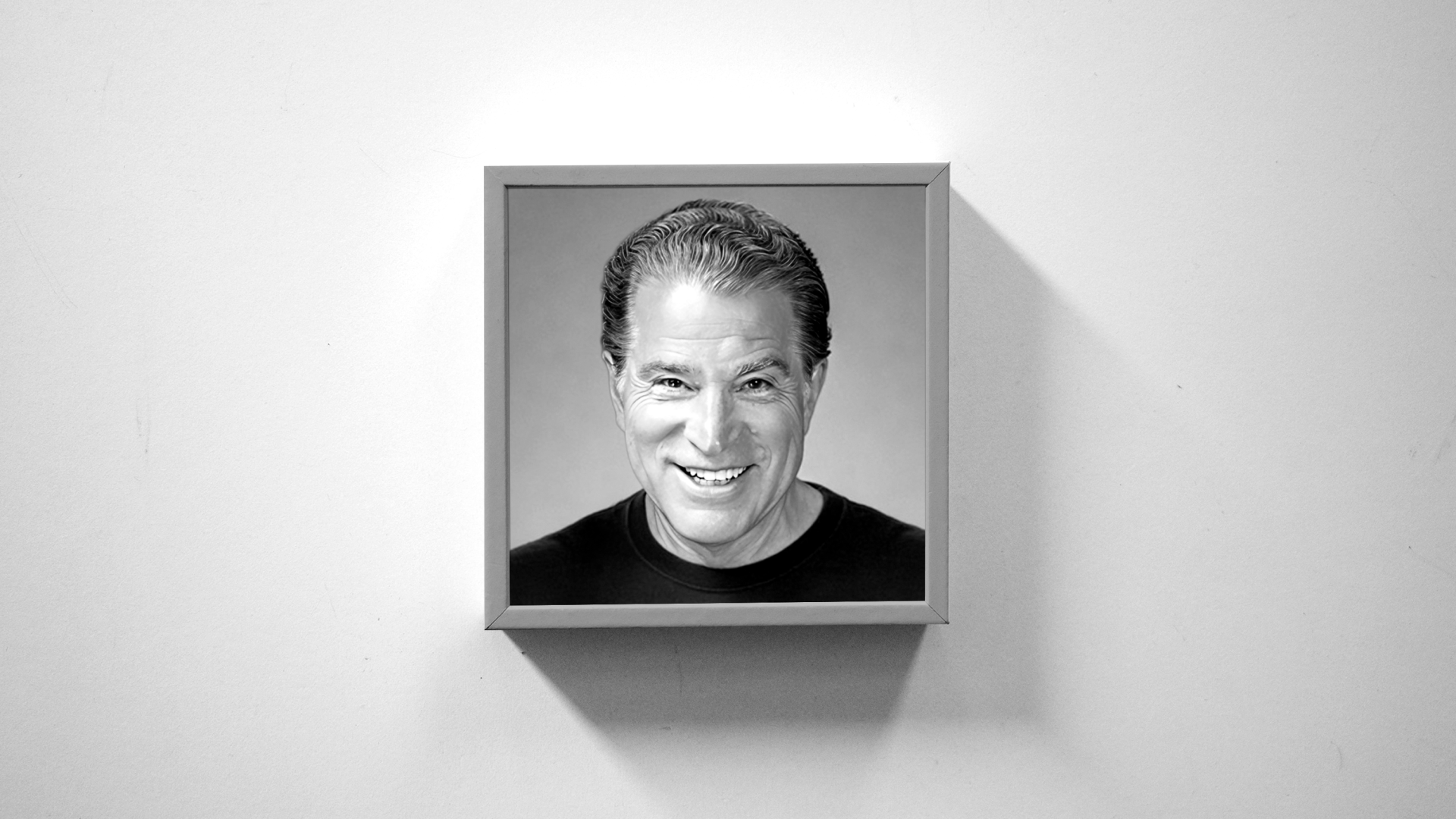
Died: Christian Publishing Executive Robert Wolgemuth

As author, agent, and former Thomas Nelson president, Wolgemuth shaped the Christian book world for decades.

Source image: Facebook / Edits by CT
Christianity Today January 22, 2026

During the final five years of his life, Robert Wolgemuth published two books about living with purpose in one’s later years. The title of his 2021 book, Gun Lap: Staying in the Race with Purpose, refers to the last minutes of a race, when a gun sounds to signal that the lead runner has started the final lap. Wolgemuth found the gun lap to be a powerful metaphor for how he wanted to approach the end of his life—moving forward with intensity and purpose. In his book, he encouraged other men to do the same.

“You’ve experienced all kinds of things. Don’t go retire to someplace where shuffleboard and square dancing is on the menu,” Wolgemuth said in a 2021 interview while promoting Gun Lap. “You have a lot of mileage left in your tires, to change the metaphor.”

One of the most influential men in evangelical publishing, Wolgemuth was a literary agent who represented writers like Albert Mohler, Kevin DeYoung, Nancy Leigh DeMoss (now his wife), and Joni Eareckson Tada. He collaborated with James Dobson, Max Lucado, Randy Alcorn, and R. C. Sproul and was the author of Lies Men Believe and She Calls Me Daddy. After the loss of his first wife in 2014 and after his own battles with cancer, Wolgemuth began to write and speak about making peace with age and death while still pursuing one’s calling.

Over the course of his decades-long career in Christian publishing, Wolgemuth held powerful positions at Campus Life magazine,Word Publishing, and Thomas Nelson before forming his own publishing company and literary agency (now Wolgemuth & Wilson).

Robert Wolgemuth died on January 10 of complications from pneumonia. 

Andrew Wolgemuth, Robert’s nephew and now a partner at Wolgemuth & Wilson, told CT that his uncle “brought kindness to his interactions with everyone he worked with” and continued working creatively and bringing fresh ideas to the publishing process until the end of his career. 

“He was consistently on the edge of his seat,” said Andrew Wolgemuth. “He was excited about the work he got to do. Over the course of his career, he sat in every seat around the table. He was a marketer, a publisher, an author, and an agent. He brought a 360-degree perspective to every project.” 

Warren Cole Smith, editor in chief of MinistryWatch, told CT that Robert Wolgemuth was “one of the most important and influential men in evangelicalism you’ve never heard of.”

Wolgemuth was born in 1948 in Waynesboro, Pennsylvania. He attended Taylor University, graduating in 1969 with a degree in biblical literature. After graduating, he spent several years on staff with Youth for Christ.

From 1976 to 1979, Wolgemuth was the business manager for Campus Life magazine, the print publication of Youth for Christ. He became vice president of sales and marketing for Word Publishing in 1979, a position he held for five years.

In 1984, Wolgemuth was hired as the president of flagship Christian publisher Thomas Nelson. Two years later, he and former Thomas Nelson CEO Michael Hyatt formed a publishing company, Wolgemuth & Hyatt Publishers, which they sold in 1992 before forming their literary agency, now Wolgemuth & Wilson. 

Over the course of his career, Wolgemuth served two terms as the chairman of the Evangelical Christian Publishers Association. In 2005, he received an honorary doctorate from his alma mater, Taylor University. He wrote or cowrote over 20 books; his coauthors included John MacArthur, R. C. Sproul, Nancy DeMoss Wolgemuth, and Joni Eareckson Tada. 

Wolgemuth sought to address what he saw as biblical illiteracy among Christian men. He was the general editor of the Men’s Daily Bible (Christian Standard Bible), published by Lifeway. He also wrote the notes for the NIV Dad’s Devotional Bible, published by Zondervan. His devotionals, study Bibles, and books have sold over 2 million copies.

Wolgemuth married Nancy Leigh DeMoss, founder of the ministry Revive Our Hearts and author of the best-selling book Lies Women Believe, in 2015. Writer Hannah Anderson referred to the partnership as “the closest thing evangelicalism has to a royal wedding.” Wolgemuth had been DeMoss’s literary agent prior to their romantic involvement, and he continued collaborating with her in publishing and Revive Our Hearts throughout their marriage. 

In 2015, when DeMoss announced their engagement, she made it clear that their partnership was both marital and missional. She wrote, “I love this man dearly and look forward to becoming Mrs. Robert Wolgemuth. But my life mission has not changed. It will now be our life mission to magnify the Lord together.” For ten years, Robert and Nancy Wolgemuth ran Revive Our Hearts as a married couple, appearing together on radio broadcasts and podcasts and coauthoring books, including You Can Trust God to Write Your Story.  

Following the announcement of Wolgemuth’s death, Hyatt celebrated Wolgemuth in a post on social media as “a man of quiet humility, gentle strength, and unwavering integrity.” Greg Laurie, pastor of Harvest Christian Fellowship and author of Jesus Revolution, paid tribute to Wolgemuth as well, calling him “a legend in Christian publishing.” 

Mohler, president of Southern Baptist Theological Seminary, described Wolgemuth as “one of the greatest encouragers in ministry and writing I have ever known.” Wolgemuth’s longtime friend and client Tada memorialized him as a “skilled and seasoned leader” who “excels in character and kindness.”  

“He was consistent,” said Andrew Wolgemuth. “Robert was committed to his friends and neighbors, his local church. He was the same person in the office and out of the office.” 

Robert Wolgemuth is survived by his wife, Nancy DeMoss Wolgemuth; his two daughters; five grandchildren; and eight great-grandchildren. 

News

This Year, Protections for the Unborn Won’t Come from Washington

Contributor

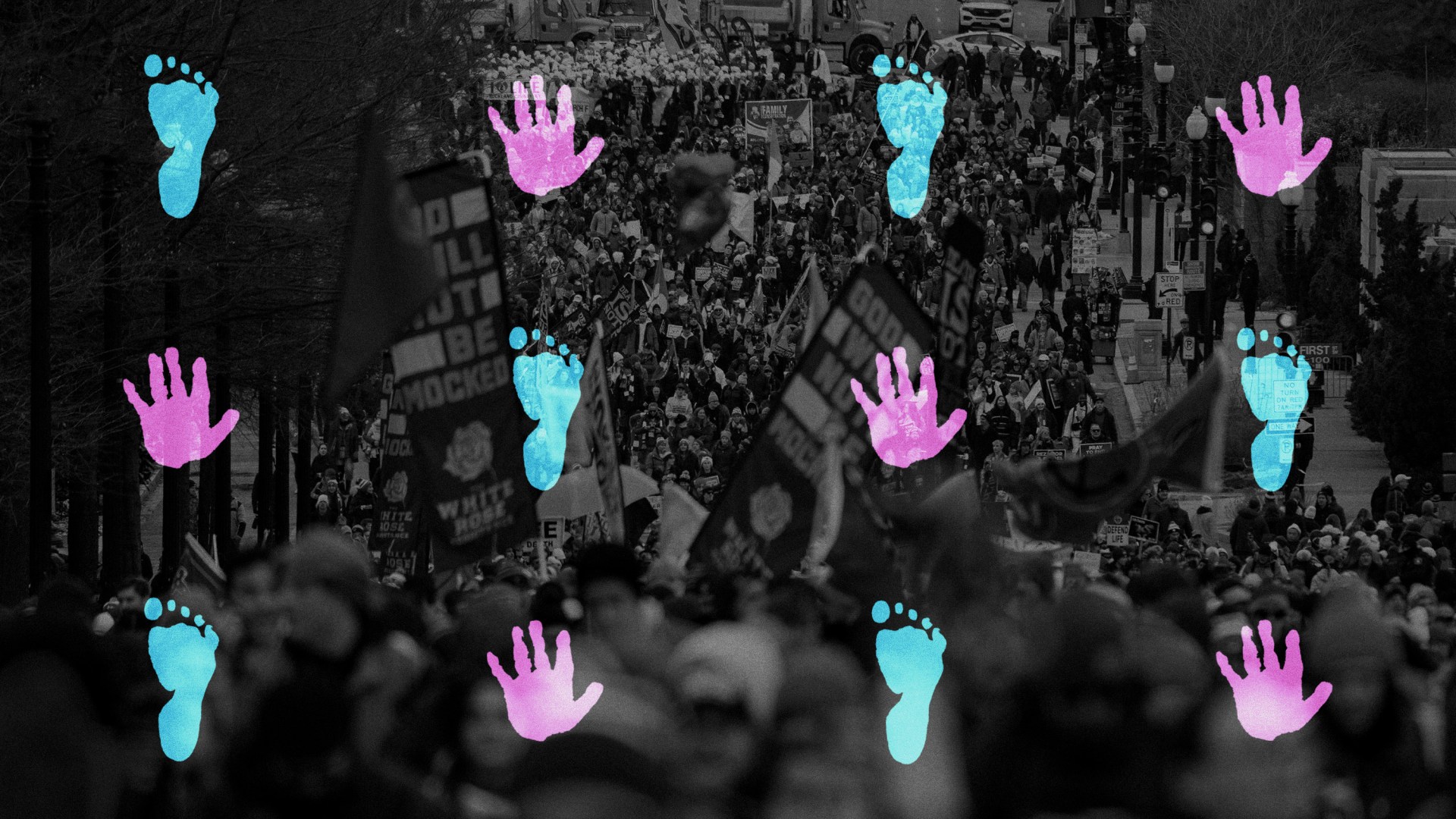
The White House and Congress seem uninterested in new pro-life measures. But crisis pregnancy centers will continue their mission, one life at a time.

An image from the 2025 March for Life.
Christianity Today January 22, 2026
Illustration by Christianity Today / Source Images: Getty

For nearly 50 years, the annual route for the March for Life in Washington, DC, ended at the Supreme Court in a gesture of protest against Roe v. Wade. After the Supreme Court overturned Roe in 2022, the March for Life selected a different route that took the marchers past the Capitol, where they hoped Congress would enact legislation protecting unborn life.

But this year, pro-lifers are not likely to get any new protections for the unborn from Congress or the Supreme Court, even though both are under the control of conservatives.

The pro-life movement’s ultimate goal has always been nationwide legal protection for human life from conception. From 1973 to the early 1980s, pro-lifers lobbied for a constitutional amendment, which never came close to getting out of Congress. In the mid-1980s, the movement pivoted to a short-term strategy of overturning Roe through the Supreme Court, but its ultimate goal was always securing constitutional protection for the unborn, not merely reversing Roe and returning the issue to the states.

Pro-lifers therefore resumed campaigning for national protections for the unborn as soon as Roe was reversed. A constitutional amendment is out of the question in the current polarized political climate. But some pro-life conservatives such as Robert P. George have said Congress could pass a statute declaring that the 14th Amendment already protects the unborn.

In both 2023 and 2024, several dozen conservative Republicans in the House attempted to do this with the Life at Conception Act, which declares that human beings have constitutional protection from the moment a human egg is fertilized. But even though the House is under Republican control—and even though the Judiciary Committee is chaired by conservative pro-life Republican Rep. Jim Jordan (R-OH)—the Judiciary Committee has no interest in considering this measure. 

That’s partly because a measure declaring that human life begins at conception would likely restrict in vitro fertilization (IVF), which President Donald Trump and many Republicans support. In 2024, when a Life at Conception Act had 125 Republican cosponsors in the House, some of the Republicans who initially expressed support for the measure quickly backtracked when asked whether they endorsed a measure that could potentially be used to restrict IVF. The next year, the Life at Conception Act had only 68 Republican cosponsors—barely more than half the previous number. (Since then, latecomers have nudged that number to 93.)

And even though the Supreme Court has a solid conservative majority, it has not shown much interest in restricting abortion since Dobbs v. Jackson Women’s Health Organization in 2022. Instead, it has punted in abortion cases by issuing rulings that preserve abortion access on narrow procedural grounds while avoiding larger constitutional issues. In June 2024, for instance, the Supreme Court preserved access to the abortion drug mifepristone when it ruled that medical groups challenging the Food and Drug Administration’s (FDA’s) approval of the drug lacked standing to sue.

In the wake of the Supreme Court’s ruling, the Trump administration has not shown much interest in restricting mifepristone either. On the contrary, the FDA approved a second generic version of mifepristone on October 1. 

Today nearly two-thirds of abortions in the United States are induced through medication, and most of those involve the use of mifepristone. The pro-choice Guttmacher Institute says the widespread availability of chemical abortions is one reason the annual number of abortions in the United States increased by 10 percent between 2020 and 2023, despite new restrictions on abortion in many conservative states. The FDA’s approval of a new version of mifepristone could lead to even more abortions. 

With the Trump administration and the Republican Congress uninterested in restricting mifepristone or implementing new legal protections for unborn human life, there is no reason to expect a politically induced reduction in the number of abortions.

Furthermore, Trump outraged many supporters of the pro-life cause when he suggested that Republicans needed to be “flexible” on the Hyde Amendment when negotiating with Democrats about extending subsidies for Obamacare. The idea that a Republican president and some congressional Republicans would consider accepting federally funded insurance coverage for abortion has already prompted several pro-life and conservative pro-family groups to threaten to withhold donations to Republican congressional candidates who are “soft” on abortion.

Nor will the Supreme Court be much help, because this year, it does not have any cases on the docket that could result in restrictions to abortion access. Instead, the most that the conservative Supreme Court will likely give the pro-life movement this year is protection for crisis pregnancy centers, shielding them from state attorneys who issue subpoenas against them for allegedly purveying misinformation. 

This is not the same as protections for the unborn, but it might be the best pro-lifers can get from conservatives in Washington. And if that’s the case, pro-lifers can use the protections to expand their work in the one place where they might have the greatest opportunity to save unborn lives. 

That place isn’t in Congress. It’s not at the Supreme Court. Instead, it’s in crisis pregnancy centers and other local venues where pro-lifers can continue their mission, one life at a time.

Daniel K. Williams is an associate professor of history at Ashland University and the author of Abortion and America’s Churches.

Ideas

It’s Not ‘Christian Nationalism.’ It’s Conservative Identity Politics.

Academics and pundits critiquing evangelical voters have misdiagnosed their behavior.

Donald Trump speaks at the Faith & Freedom Coalition's Road to Majority Policy Conference in Washington, DC on June 22, 2024.

Donald Trump speaks at the Faith & Freedom Coalition's Road to Majority Policy Conference in Washington, DC on June 22, 2024.

Christianity Today January 22, 2026
Samuel Corum / Stringer / Getty

Nearly a decade ago, many of us watched in shock as Donald Trump was elected president of the United States. Until that point, it was easy to write off his presidential run as an egotistical attempt to gain fame and power, with circumstances aligned to allow him to win the Republican nomination. But his victory meant that there was a real audience not disturbed by his bravado, sexism, and race-baiting. Academics like me were eager to understand what happened to the country.

Into this breach came the concept of Christian nationalism. Given that an estimated 81 percent of white conservative Christians voted for Trump, it was easy to envision them as the main culprits behind his rise. Several academics (notably Sam Perry, Andrew Whitehead, Philip Gorski, Paul A. Djupe, and Joseph Baker) wrote articles and books on this subject, and as media attention followed, the notion of Christian nationalism quickly caught on among the public.

Our national conversation focused on white Christian nationalism, as the concept may mean something entirely different for minorities. Before long, Christian nationalism was offered as an explanation of both why white conservative Christians voted for Trump and what was wrong with their political activity. But from nearly the very beginning, there have been reasons to suspect it was not a particularly effective way to understand them or their politics.

The first issue is how the term has been defined. The basic definition of Christian nationalism is that it is “an ideology that idealizes and advocates a fusion of American civic life with a particular type of Christian identity and culture.” Yet academics do not all share the same definition, and they emphasize distinct elements, which makes it challenging to figure out what exactly falls into this bucket. Some theories, for example, emphasize social identities while others focus on symbols.

Many other definitions of Christian nationalism have been published in online articles over time. They include assertions that Christianity defines America, an ideology that Christians should rule, and the notion that the United States is by and for only Christians. Before we can confidently use it to diagnose political movements however, we need to settle on what it is.

Second, there are reasons not to trust the analytical tools often used by academics to assess Christian nationalism, such as a popular scale developed to capture similarities between religious and secular institutions. Several academics have questioned the statistical soundness of these scales, and conservative Christians have rightly argued that agreement with some statements used in the measurements (“The success of the United States is part of God’s plan” or “The federal government should allow prayer in public schools”) does not necessarily make one a Christian nationalist. If the people being described reject that description, caution is warranted when using it to assess their motivations.

That said, conservative Christians have become politically active in ways that are concerning. Some, particularly activists, prioritize political salvation over spiritual salvation and view electoral victories as a key needed to remake society. There is value in finding a term that captures this activism and help us understand politically active conservative Christians and what motivates them. In my work as a sociologist, I have come to believe the concept that best describes the current phenomenon is conservative identity politics.  

To understand my view, we must go to the roots of identity politics. Liberal political organizer L.A. Kauffman defines the concept as “the belief that identity itself—its elaboration, expression, or affirmation—is and should be a fundamental focus of political work.” 

In the United States, our modern notion of identity politics emerged on the left in response to the backlash against Marxism in the 20th century. As writer and academic Yascha Mounk noted in his book The Identity Trap: A Story of Ideas and Power in Our Time, Marxism had been a major organizing principle for progressive social movements. But support for it was collapsing during the 1960s and ’70s, particularly as the abuses in Communist societies became more apparent. Thus, identity politics became a useful tool for the political left.

Identity politics, to be clear, is different from the Civil Rights Movement, which organized around universal and theological values of equality to push back against the rampant racism and other challenges faced by African-Americans. But over time, identity politics—as defined by Kauffman—did infiltrate civil rights causes, leading many activists to focus on narratives of oppression where concerns of only marginalized groups can be recognized.  

Identity politics originally focused on racial minorities, women, sexual minorities, and the poor. In contemporary society, it has expanded to include oppressions, as deemed by activists, based on sexual expression, disabilities, body types, and other criteria. With the rise of the Trump-fueled conservative identity politics, we have now also seen it develop on the right.

I differentiate modern conservative identity politics from early white supremacy because supremacy was based on maintaining power for the majority group rather than defending a marginalized group, which is how many conservatives—including evangelicals—currently see themselves. A large chunk of Trump supporters, for example, believe white people and Christians are themselves oppressed groups in need of protection. Their critics may recoil at that idea, but whether detractors are convinced oppression exists is irrelevant. A lot of conservatives believe it does, which fosters identity politics. 

In my forthcoming book, Identity Politics in the United States, I lay out three pitfalls that comes with engaging the world mostly—or only—through the lens of identity. First, it leads people to use language that dehumanizes those they see as oppressors (such as men, white people, Christians, or the “woke”).  Second, it creates a strong tendency to compel agreement and constantly police boundaries among those who want to be in good standing with the group. Third, it leads people to dismiss their own previous moral standards and intellectual commitments to maintain fidelity to a cause.

Personally, I have concluded identity politics, whether on the left or the right, is not an effective way to engage in open discourse or critical thinking. It ushers in ethnocentrism that feeds the polarization damaging our society. It also incentivizes us to seek out solutions for groups we like and ignore the concerns of others when we, as Christians, should seek out solutions that serve everyone—even in a society where oppression creates different concerns for different social or ethnic groups. 

When I was doing research for my book, I tested out my theory on conservative identity politics. I designed an empirical online survey and presented it to 38 conservative Christians who are highly supportive of Trump. My goal was to see if they saw their own politics through the lens of Christian nationalism or identity politics. For Christian nationalism, I used language from two sociologists who argue white Christian nationalists think that:  

America was founded as a Christian nation by (white) men who were “traditional” Christians, who based the nation’s founding documents on “Christian principles.” The United States is blessed by God, which is why it has been so successful; and the nation has a special role to play in God’s plan for humanity. But these blessings are threatened by cultural degradation from “un-American” influences both inside and outside our borders.

In contrast, I created my own definition of identity politics for the respondents. This was:

Conservative Christians who are active in politics have a vision of restoring traditional moral and sexual values. Those values oppose the humanist values held by progressives who control the media, academia, and the entertainment industry. Thus, culturally, conservative Christians envision themselves as maligned by the larger culture. Those who control the culture have a power that conservative Christians do not possess and use that power to marginalize Christians. That marginalization can come in the form of legal consequences such as Christian bakers who refuse to serve same-sex marriages, or social consequences such as suffering the effects of “cancel culture.” Thus the vision conservative Christians have is that they are a group fighting to improve the larger society but face a powerful deadly enemy who will crush them in order to maintain their culture power.

A little more than half of respondents (21) told me the Christian nationalism statement either absolutely or probably described how they think. But nearly all the respondents (36) said the same about the statement informed by the concept of identity politics. This was a single survey and doesn’t scientifically represent the larger Christian population, but I have done other analysis that has reaffirmed this finding. This means that, among politically active Christians who support Trump, more are driven by elements of identity politics than of Christian nationalism.

I say all of this because those of us concerned about conservative Christians who seem to prioritize politics over the gospel need to be aware of their true motivations. Honest assessments allow for real conversations. Blanket accusations of racism and authoritarianism are often thrown around by academics and pundits in discussions about Christian nationalism. I am not saying these aren’t real concerns – racism and authoritarianism do exist. But making sweeping charges won’t alter the attitudes of activists if they don’t see those things as the driving factors in their political choices.

The conversation around Christian nationalism pathologizes conservative Christians. By the media and many on the left, they are envisioned as uniquely authoritarian and possessing fear and hostility toward outgroups. Since other groups have not undergone the depth of academic assessment that conservative Christians have, we do not have concrete evidence that shows they are different from everyone else.

However, identity politics is featured on the left and the right, and the problems it creates for conservative Christians are not unique to them. My caution is just as relevant for believers supporting progressive causes as it is for conservatives. Instead of falling into the trap of identity politics, both groups need to engage in the public square without surrendering biblical principles and the gospel, which is our ultimate priority.

For conservatives, concerns about anti-Christian discrimination may allow us to have better conversations because, frankly, the current approach is not working. As I look at many of the writings criticizing Christian nationalism, they fall short in accomplishing what they should, in theory, be trying to do: convincing Christians to rethink how they engage politics. Instead, they seem to be more preoccupied with attaching stigma to politically conservative Christians than with finding what exactly makes Trump’s political movement appealing to them, and tackling it head on.   

Research indicates that conservatives are not more politically active than other religious groups. Yet since Trump’s election, their activism has grown. The emergence of the late Charlie Kirk’s organization, Turning Point USA, provided a venue that mixed Christian belief with Republican politics. It is appropriate to be concerned with how this type of activism dilutes the gospel. But to truly challenge the movement, we need to do a better job of understanding it. 

George Yancey is a professor of sociology at Baylor University and author of the forthcoming book, Identity Politics in the United States: An Exploration of Identity in Red, White, and Blue. He also vlogs on YouTube.

Theology

How to Know If You’re Growing in Patience—or Just Giving Up

Columnist

The right kind of waiting can save us. The wrong kind will destroy us.

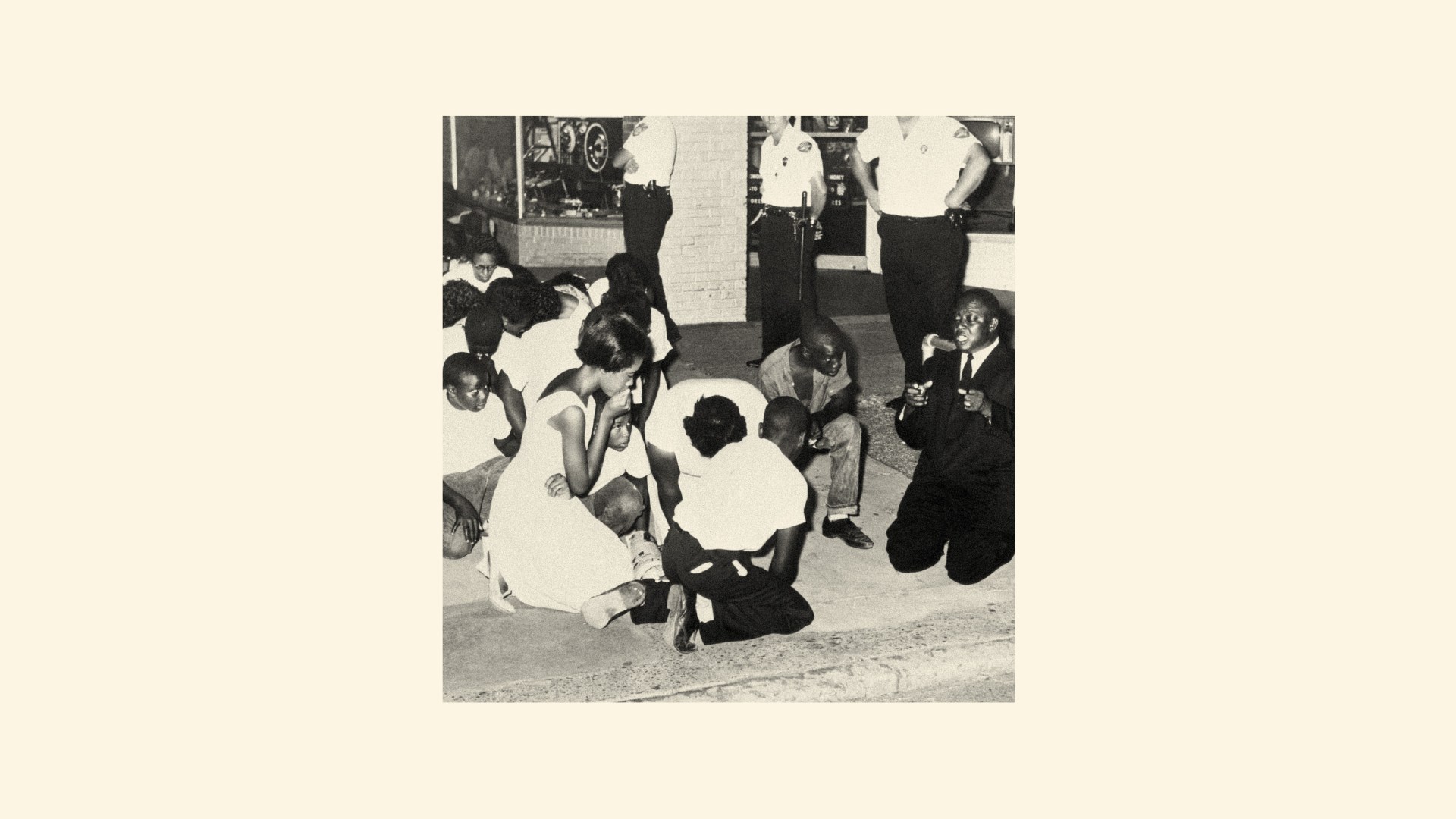
A photo of people praying at a peaceful Civil Rights protest.
Christianity Today January 21, 2026
Illustration by Christianity Today / Source Images: Getty

This piece was adapted from Russell Moore’s newsletter. Subscribe here.

Whenever some terrible atrocity comes to light in the news cycle these days (in other words, about every 15 minutes), I hear the question “But what can we do?” I usually urge prayer and patience. The first part I have no doubts about, but I’m starting to realize the second one needs more context. That’s because, just like faith or hope or love or grace, the word patience often stands in for a cheap imitation. The right kind of patience can save us; the wrong kind will destroy us.

Last year, Leon Wieseltier wrote in his journal Liberties a kind of jeremiad against patience. It is, he wrote, the virtue those of us who believe in democracy often commend against all kinds of revolutionaries and enthusiasts, and rightly so. Still, Wieseltier wrote, patience can also be paralyzing when we don’t know where the line is between wise acceptance and unwise resignation. As he put it, “Sometimes patience has the lamentable effect of turning a player into an umpire, and umpires have no sides.”

Those words made me wince because they called to mind Martin Luther King Jr.’s “Letter from Birmingham Jail” to the “white moderate” pastors who told him they agreed with his goals but he should wait patiently for justice. Noting his own consistent commitment to nonviolence and persuasive witness, King wrote, “I have tried to make clear that it is wrong to use immoral means to attain moral ends. But now I must affirm that it is just as wrong, or perhaps even more so, to use moral means to preserve immoral ends.”

King wrote and spoke very differently when addressing a different audience than those who remained silent “behind the anesthetizing security of stained glass windows.” Many, after all, concluded King’s movement was too patient, too slow. Some decided his patience just wasn’t working. We can see why someone would come to that conclusion a full decade after the Supreme Court’s desegregation decision with Jim Crow still in effect all across the South. To those, King counseled patience. This difference wasn’t inconsistency.

If someone thinks he or she has sinned too much to be forgiven, I am not going to say “Obey God” and walk away—not because obedience is unimportant but because what that person will hear, with an already-faulty view of obedience, is “Work harder.” But if another friend tells me he’s been caught embezzling money but it really wasn’t that much, and if the company wanted him not to do it, they should have paid him more, I am not going to say simply, “Rest in God’s grace.” Again, that’s not because he shouldn’t rest in God’s grace but because he has a wrong definition of grace.

Patience is indeed what’s called for in this time and in all times. Patience is worked in us by the Spirit. But the efficacy of this virtue requires that we know what it is and isn’t. Let’s look at some common views of patience.

First, think about cynical patience. This is what King called out in the Birmingham pastors. This kind of patience says, “You’ve got to be realistic” or “Idealism is for losers.” It acts as a moral sedative against doing what is right and accepts the Devil’s account of reality—that force is ultimate, that cruelty is power.

Second is demoralized patience. Those with this kind of patience wait not because they trust but because they have given up. Demoralized patience is waiting without hope. Over time, it loses the ability even to imagine a different kind of future.

In reality, the first kind of fake patience feeds on the second. Most people aren’t calculating and opportunistic. But for those who are—the cynics—nothing is more of an obstacle than people who actually hope—who aspire to something better. The cynics often tell people to be patient when what they really want is for the demoralized to shrug and say, “Well, it is what it is.”

Sometimes what feels realistic or reasonable or mature is just a way of saying to oneself, “Nothing meaningful is coming. Adjust yourself accordingly.”

In the days of the prophet Ezekiel, the problem was not just with exiles who feared God had forgotten them but also with those who were left behind in their homeland. They concluded that injustice and violence would continue: “The Lord has forsaken the land, and the Lord does not see” (Ezek. 9:9, ESV throughout).

This pattern of thinking ends with the cynics leading the demoralized to hopelessness—right where the cynics want it. And God denounced the cynics, who had “disheartened the righteous falsely, although I have not grieved him, and you have encouraged the wicked, that he should not turn from his evil way to save his life” (13:22).

But neither of these false views is what the Bible means by patience. Paul wrote of endurance, a patient bearing-up under suffering, this way: “We rejoice in our sufferings, knowing that suffering produces endurance, and endurance produces character, and character produces hope, and hope does not put us to shame” (Rom. 5:3–5). He then wrote that “if we hope for what we do not see, we wait for it with patience” (8:25).

This is hopeful patience. It recognizes delayed outcomes but does not decay expectations.

In fact, Paul wrote that waiting with hope is not passive but active, even when we don’t know what to do. The Spirit prompts us, after all, to “groan inwardly as we wait eagerly for adoption as sons, the redemption of our bodies. For in this hope we were saved” (vv. 23–24). That’s full of lament but not despair.

If what we define as patience makes us less able to determine what is wrong, it is not patience of the Spirit. Patience instead lets go of the need to control timetables or to have hopes that are immediately measurable.

Hopeful patience does not refuse to bear witness. Often this kind of patience cannot see the next steps to take, but not because it no longer believes there’s a way forward. Sometimes hopeful patience doesn’t know how to achieve justice, but not because it has concluded that injustice is inevitable or that good and evil are the same.

Impatience, on the other hand, leads first to frenzy and then compliance. When we expect everything to be immediately made right, we become frantic when it is not. For some people, that then means forcing change to happen—even if it mimics the ways and means of the unjust. If Martin Luther King Jr. had decided to fight Bull Connor with fire hoses and attack dogs of his own, he would have lost regardless of who won—it would just create a contest to find which Bull Connor was bigger.

Even for those who retain moral integrity and authority, a waiting that isn’t energized by both hope and lament will lose heart—and give up. Eventually, the impatient look around for what does seem to work, and often they find the same thing the cynical propose and the demoralized accept.

The patience of the Spirit is different because it conforms us to the patience of God himself. If we misunderstand that, we miss it all. In The Perilous Deep: A Supernatural History of the Atlantic, author Karl Bell explores how the chaos of the oceans led to the genre of “cosmic horror” by such writers as H. P. Lovecraft. Lovecraft’s Cthulhu and other monsters are terrifying because they are, in a sense, patient. They slumber in waiting because they do not care about human beings at all. They represent a meaningless, unfeeling universe. But that is not the patience of the God and Father of Jesus Christ.

The impatient look at the injustice and suffering of the world, and they conclude, as do the cynical and demoralized patient, that everything will be this way forever (2 Pet. 3:4). They cannot see that the patience of God is active: “The Lord is not slow to fulfill his promise as some count slowness, but is patient toward you, not wishing that any should perish, but that all should reach repentance” (v. 9). Patience with hope keeps checking in, even if that means asking, “How long, O Lord?” or sighing in utterance too deep for words.

Patience is not Zen-like detachment. That’s why some of the most patient people I know feel as if they’re impatient. And some of the people who think they are patient are just procrastinating or scared or numb. If you are anguished and unsure of what to do, pray—stop and just say that in the presence of God. You will find that you are either appealing for God to intervene or praying for him to bring to mind what he is calling you to do.

Patience endures suffering, but it doesn’t cause it. Patience endures evil, but it doesn’t endorse it. Let’s wait, but not as those who have no hope.

Russell Moore is editor at large and columnist at Christianity Today and leads its Public Theology Project.

News

Christians Provide Food, Medicine, and Spiritual Hope at Venezuela’s Border

After Maduro’s ouster, ministries in Cúcuta, Colombia, don’t know if Venezuelan migrants will return home or if more will flee.

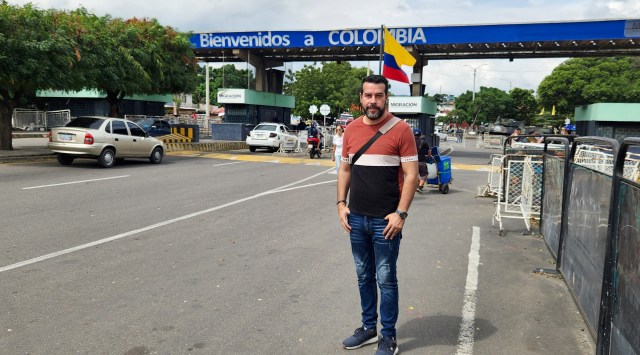
The Simón Bolívar International Bridge on the Colombia-Venezuela border.

The Simón Bolívar International Bridge on the Colombia-Venezuela border.

Christianity Today January 21, 2026
Image courtesy of Hernán Restrepo

On a sweltering Sunday in Cúcuta, Colombia, the worship team at Casa Sobre la Roca prepared onstage in the cool, air-conditioned sanctuary as parishioners, many from the city’s upper-class neighborhood, mingle before the first service.

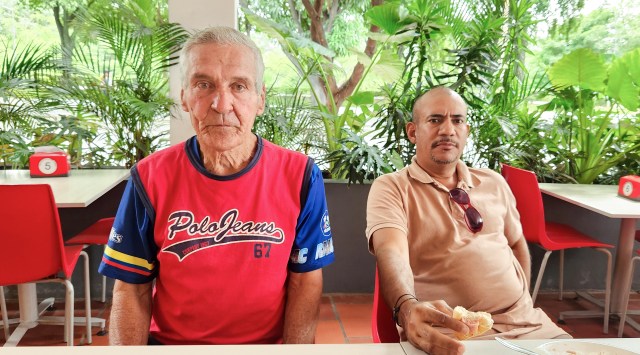
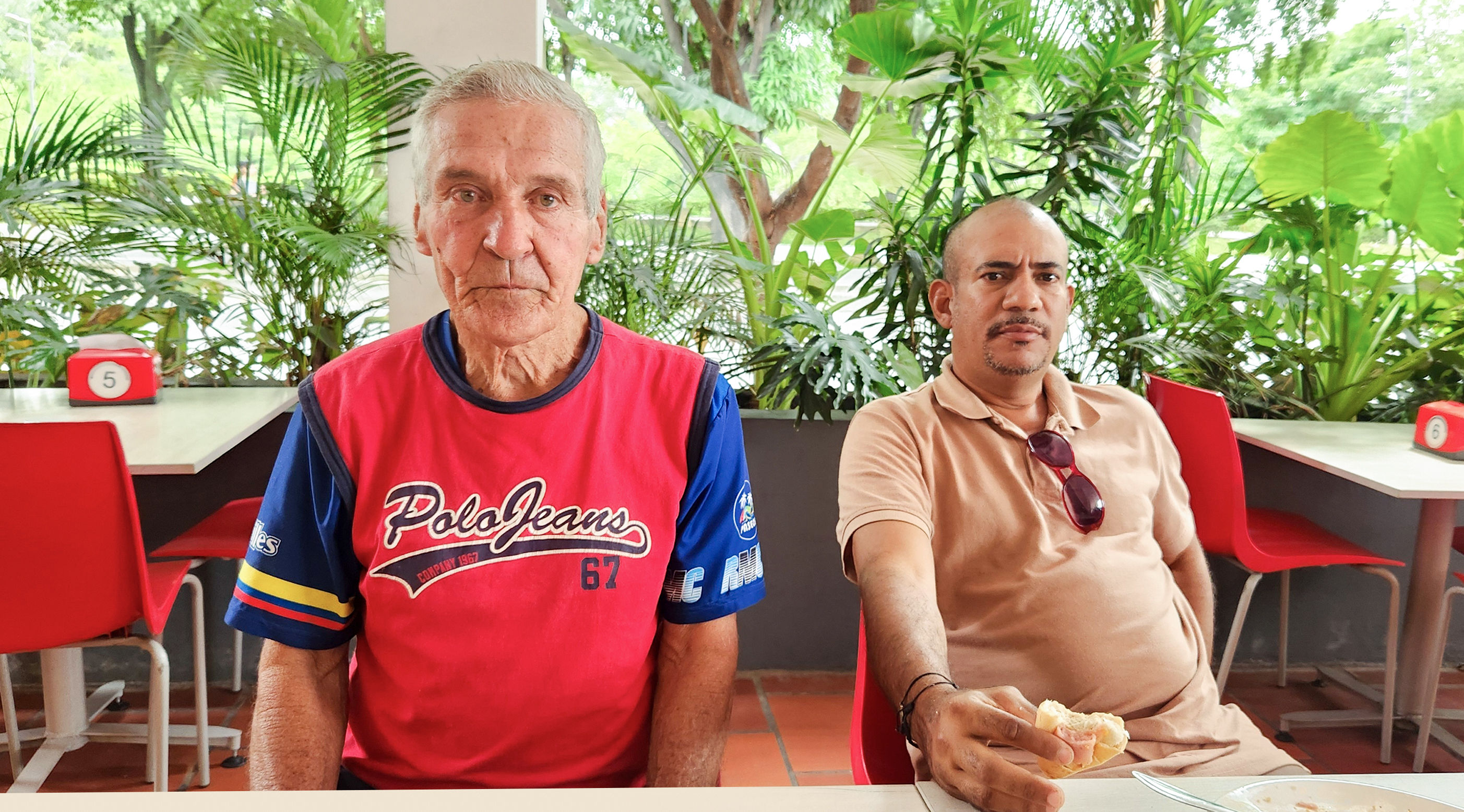
Unnoticed, a grey-haired man with deep wrinkles etched in his face and a trash bag in his hand limped to a seat in the last row. Minutes later, a younger man with a trimmed goatee holding his own plastic bag slid into the seat next to him. Their shoes were worn from days of traveling from their home in Valencia, Venezuela, to the Colombian border town of Cúcuta.

Jonathan Coche-Vásquez and his uncle Frank González left Venezuela on January 2 and first heard about the US military capture of President Nicolás Maduro on the radio a day later, when they were already in Colombia. 

The news brought them new hope for their country. But as the days passed, that elation dissipated as Venezuela’s Chavista leadership remained in power. They were encouraged to hear that officials with the US State Department had arrived at the embassy in Caracas to assess reestablishing diplomatic ties, as well as that opposition leader María Corina Machado would meet with President Donald Trump, which ended up happening on January 15.

“We know things are going to change. We hope it will be for the better, but no one knows how long it will take,” González said. “We decided to leave the country because the hunger and poverty we experienced in our city, Valencia, couldn’t wait. We want to get to [Colombia’s capital of] Bogotá to find work in gardening or construction.”

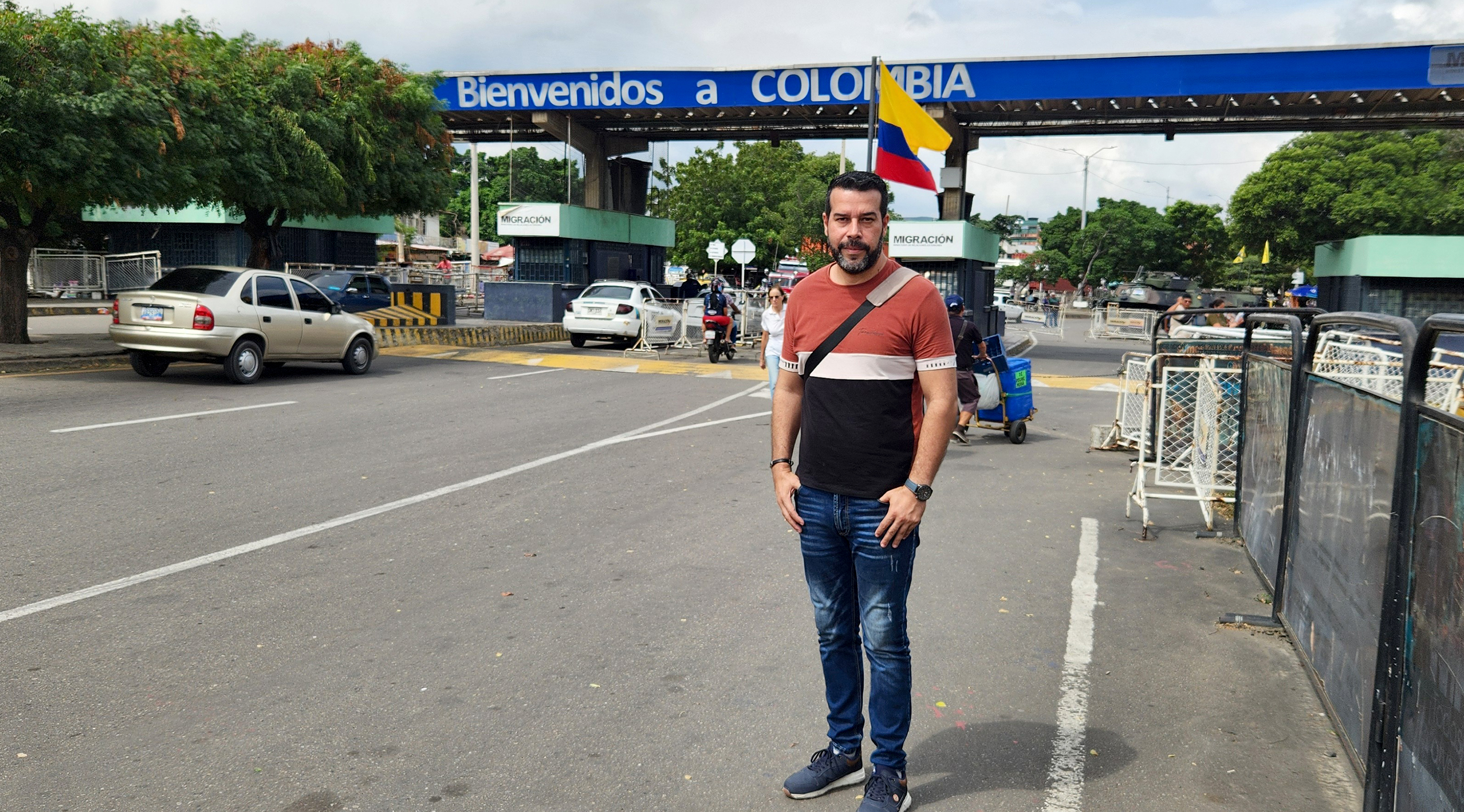
Jonathan Coche-Vásquez and his uncle Frank González.Image courtesy of Hernán Restrepo
Jonathan Coche-Vásquez and his uncle Frank González.

The night before, the two had slept in the Colón Park, a popular spot for Venezuelan migrants and displaced Colombians due to its enormous trees that offer respite from the relentless heat. But as they slept, robbers stole their backpacks and the little money they had. All they had left were a few changes of clothes that they hauled in their garbage bags. On Sunday, they stepped into Casa Sobre la Roca after a church member invited them to the service.

The pastor preached about the meaning of truth, interspersing his sermon with political commentary about Colombia’s upcoming elections. Despite struggling with fatigue, González and Coche-Vásquez listened attentively, shedding tears at the final moment of reflection on Jesus’ words in John 14:6, “I am the way and the truth and the life.”

Like González and Coche-Vásquez, two in three Venezuelans who have left the country would not want to return without security guarantees and a reinstatement of rule of law, as they fear state repression, poor quality of public services, and increased insecurity. Cúcuta, the main city along the porous 1,370-mile border separating Colombia and Venezuela, is often the first stop for Venezuelan migrants escaping poverty and violence.

As a result, in the past decade, Christians—many of them Venezuelan refugees themselves—have opened shelters, soup kitchens, medical clinics, and churches to aid the new arrivals. More than 215,000 Venezuelans now call Cúcuta home, along with 37,000 in the nearby city of Villa del Rosario.

Uncertainty remains after the US military strike on Caracas. Ministry workers don’t know whether they’ll see an influx of Venezuelans coming into Colombia or an exodus of refugees returning home. Either way, they are eager to help in whatever way they can. 

One of them, Ediober González (no relation to Frank), has helped distribute food for migrants through organizations such as Samaritan’s Purse since 2018. A Venezuelan Baptist pastor, he and his family decided to flee the country in 2015 after seeing his children’s school teach a propagandistic history of the Cuban Revolution.

“I understand that [people] are fleeing not only poverty but also the lack of freedom in our country,” he said.

Ediober GonzálezImage courtesy of Hernán Restrepo
Ediober González

Maduro had led Venezuela since Hugo Chávez’s death in 2013, and under his authoritarian rule, 8 million people left the country due to hyperinflation, political repression, gang violence, and a shortage of food and medicine.

Since arriving in Colombia, Ediober González noted that Cúcuta had received two major waves of Venezuelan migrants—the first following the country’s economic collapse between 2016 and 2018, and the second during the COVID-19 pandemic in 2021 as inflation increased dramatically.

He recalls that during the two previous waves, rivers of people could be seen waiting to cross the Simón Bolívar Bridge, the main border crossing between Colombia and Venezuela, every day. Thousands more crossed through informal paths, taking advantage of the shallow waters of the Táchira River.

Today, the bridge is much emptier. A week after Maduro’s ouster, only a few migrants could be seen walking into Colombia carrying heavy backpacks. TV news reporters from around the world gathered by the border to interview migrants and immigration officials. Meanwhile, traders carrying bundles of clothes, toys, and medicines crossed the bridge to sell their wares in Venezuela.

Seeing the migrants resting on the sidewalk after crossing the bridge reminds Ediober González of Philippians 4:12—“I know what it is to be in need, and I know what it is to have plenty. I have learned the secret of being content in any and every situation, whether well fed or hungry, whether living in plenty or in want”—a verse that has helped him through difficult times in Colombia.

Despite having studied literature at a top Venezuelan university, Ediober González worked odd jobs upon arriving in Colombia: painting houses, selling bread, and making cakes. Up until four months ago, he worked for the Italian nonprofit Terres des Hommes, delivering food baskets to families at risk of malnutrition. But with the shutdown of USAID, the organization had to close its operations in the city.

Without that aid, more migrants are begging for money to pay for bus tickets to other cities in Colombia where they can find work and food. While Ediober González found the work of secular nonprofits meaningful, it also presented challenges to his Christian faith. In the past, he has disagreed with the content of their workshops on gender and sexual health. In one case, he turned down a job that would have made him recommend abortions to pregnant migrants.

Currently Ediober González is looking for work while making a little money on the side by giving rides in his car. As the deacon of his Venezuelan church in Cúcuta, he also takes on preaching responsibilities. His wife is a schoolteacher in the city.

After crossing the Simón Bolívar Bridge, many migrants head to the city of Villa del Rosario outside the southern edge of Cúcuta. Here the rent is cheaper, and the hillsides are dotted with unpainted brick houses with tin roofs.

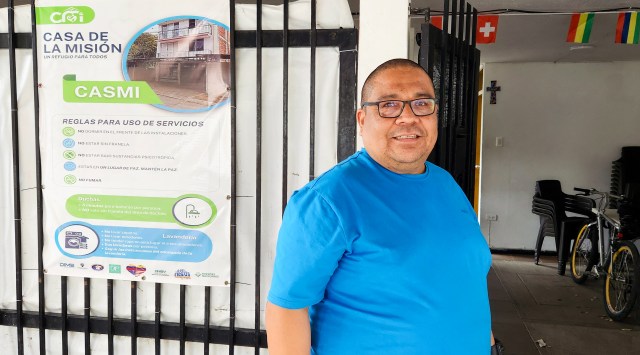
In 2021, the Venezuelan National Baptist Convention, with the help of resources from the International Mission Board, opened a migrant shelter called Casa de la Misión in the city. The three-story building includes showers, laundry stations, and a doctor’s office, as well as two dormitories that can accommodate six men and six women.

The shelter’s doctor, Bruno Mendive, is originally from Caracas. Frustrated by continuous power outages and the lack of medicine, which made his work nearly impossible, he packed up his belongings, strapped them to the back of his bicycle, and rode to Colombia.

In 2020, he put his medical skills to work to treat the migrants who arrive at Casa de la Misión with heat exhaustion, dehydration, and blisters on their feet, as well as respiratory and gastrointestinal problems.

“The Venezuelan migrants I care for are glad to realize that a fellow countryman is helping them; they feel more at ease,” Mendive said. These days, he sees an average of 50 people a day. During the height of the previous migration waves back in 2021, the shelter received as many as 600 visitors a day.

Mendive said he feels grateful to God for the opportunity to help not only his fellow Venezuelans but also Colombians displaced by violence. In 2025, more than 100,000 people fled the Catatumbo region, north of Cúcuta, due to clashes between National Liberation Army guerrillas and the Revolutionary Armed Forces of Colombia’s 33rd Front, according to the Ombudsman’s Office.

Mendive recently accompanied humanitarian missions to nearby towns like Tibú and El Tarra, providing medical care, especially to children.

“More than advice, migrants need to talk,” said Venezuelan pastor Boanerges de Armas, director of Casa de la Misión and pastor of Global Missionary Baptist Church, which meets in the shelter. “Here, we give them food, clothing, and medicine. But we also listen to them and then pray for them before they continue on their journey.”

De Armas knows the pressures they face and the worries they have about family back home. He  is cautious when he speaks about current events with his daughter, who still lives in Anzoátegui, Venezuela. She told him that the government sends “social fighters” to inspect citizens’ phones. If they find any anti-regime photo, meme, or WhatsApp conversation, they can detain the offenders, accusing them of attempting to undermine the peace of Venezuela.

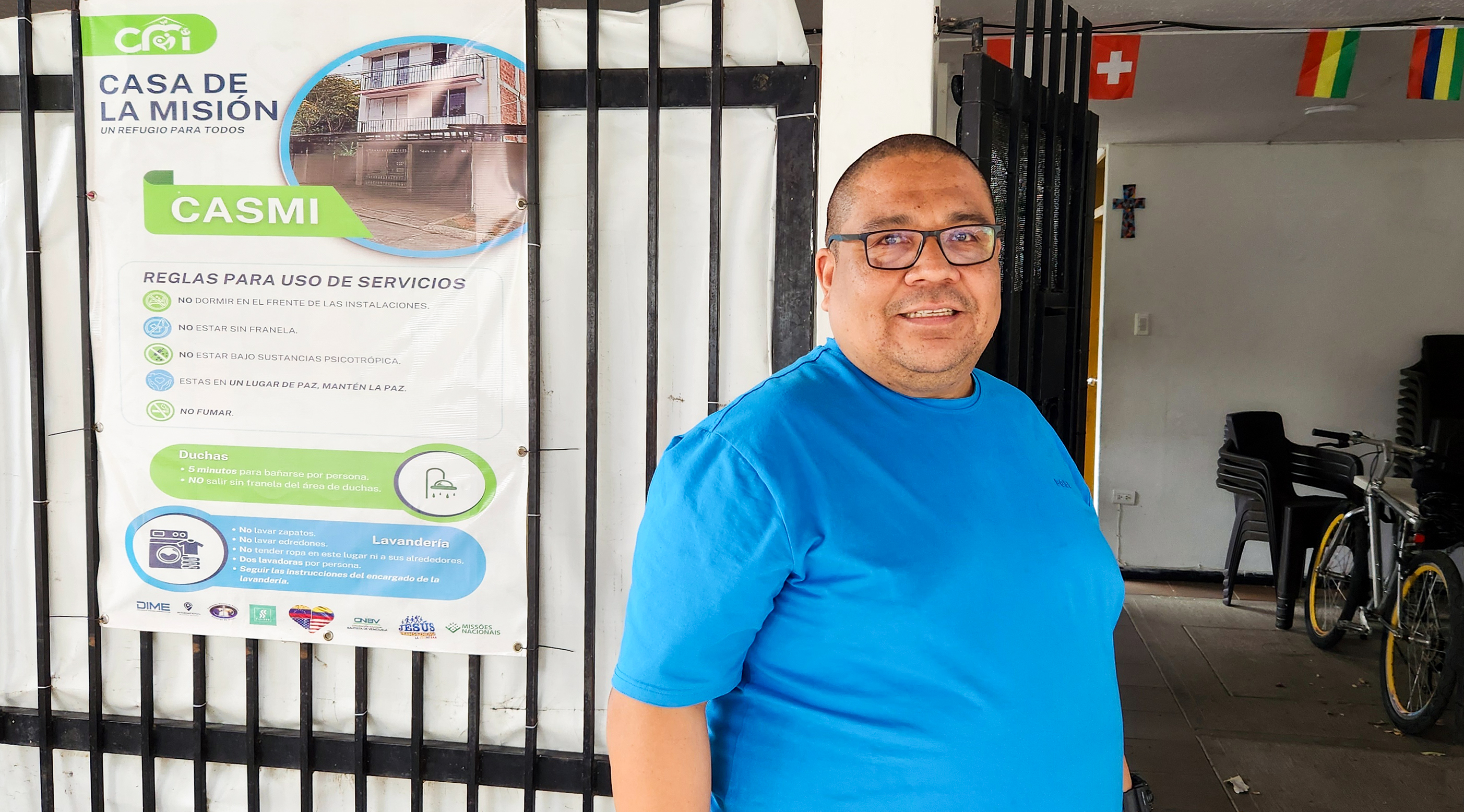
Boanerges de ArmasImage courtesy of Hernán Restrepo
Boanerges de Armas

He noted the shelter also serves as a missionary training center, using a three-year curriculum created by the Venezuelan Baptist Convention. So far, hundreds of young Venezuelans have come through the program to learn not only theory but also the practical skills of being a missionary and helping the community they are in. Through the program, 70 students have gone on to plant their own churches.

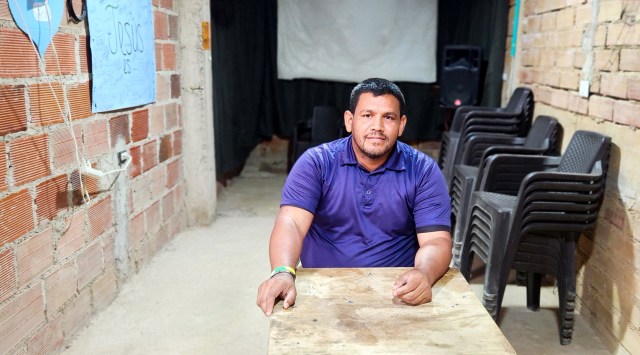
William Lacle graduated from the same program while living in Venezuela, before moving to Colombia in 2020 to become a missionary. During the pandemic, he and his wife would go to the Simón Bolívar Bridge and pass out food to fellow Venezuelan migrants, at times giving out 1,000 bowls of soup a day, he recalled.

“God has placed in my wife and me a great love for migrants,” he said. “Then God placed in our hearts the desire to establish a church and a soup kitchen. When we were looking for a place to do it, and we visited this hill [in Villa del Rosario] for the first time, I began to cry inexplicably, and I knew it was here.”
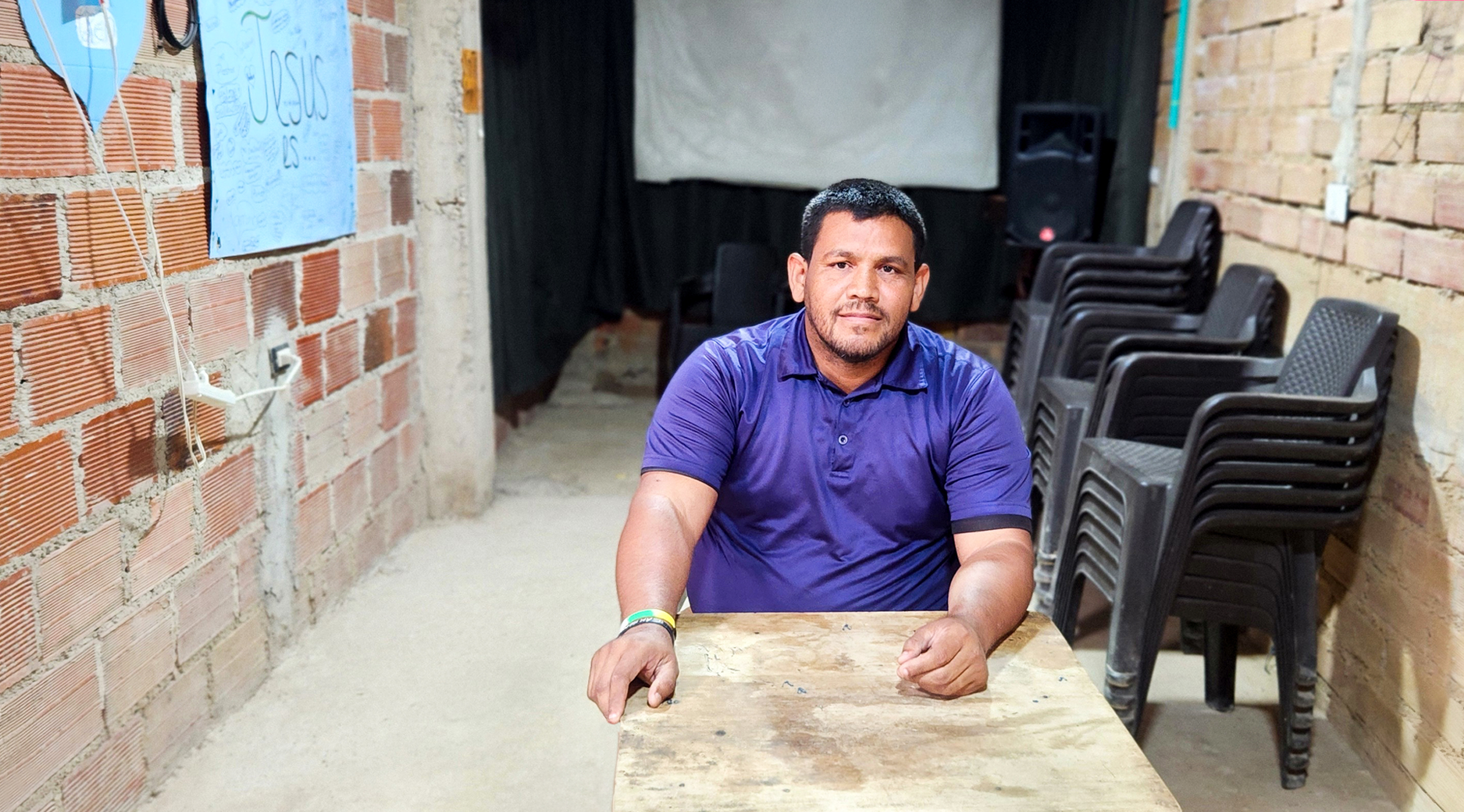
William LacleImage courtesy of Hernán Restrepo
William Lacle

Today, Lacle pastors Missionary Baptist Church Mi Alto Refugio, a small brick church just two miles away from the shelter. He’s constructing a second floor to the building to expand the capacity of their community dining hall, which currently provides hallacas (Venezuelan tamales) for breakfast and rice with sausage for lunch to hundreds of children, thanks to donations from the Christian nonprofits Blooms and Root and Semilla de Trigo Association.
On Sunday, 20 people filled the pews of his church, a mix of Venezuelan migrants and Colombians displaced by guerilla fighting. Lacle stood at the pulpit to preach about Romans 8:6—“The mind governed by the flesh is death, but the mind governed by the Spirit is life and peace.” A little more than a week after Maduro’s capture, he said that “the only way to have peace in this changing world is by believing the Word of the one who never changes.”
De Armas and Lacle believe that change will only come to Venezuela if the entire Chavista power structure—not just Maduro—is arrested. That includes Vice President Delcy Rodríguez, who is now Venezuela’s interim leader; her brother Jorge Rodríguez, president of the National Assembly of Venezuela; minister of the interior Diosdado Cabello; and minister of defense Vladimir Padrino.

“Maduro was like their puppet,” Lacle said. “Until they also leave power, Venezuela will not change completely. A tree may give you shade, but what gives it stability are all its roots. If you don’t cut the roots, the tree will remain standing. That’s what’s happening in Venezuela.”

Until that happens, the Venezuela migrants in Colombia won’t be able to return, he said. Lacle recognizes the strategy of Chavismo—the socialist political movement that brought Hugo Chávez to power—in the face of this new power vacuum.

“Socialists are experts at stretching out the process,” Lacle said. “Just like guerrilla groups in Colombia, they always say, ‘Let’s have a dialogue’; they buy time, rebuild their strength, wait for the waters to calm, and then stay in power doing whatever they want.”

The local Colombian churches in the border region also minister to the migrants and the displaced. For instance, Casa Sobre la Roca runs a home for orphaned girls in Cúcuta, providing them with food, clothing, and education until they graduate from university. Currently, it houses 34 girls. The church also operates similar shelters in eight cities across the country.

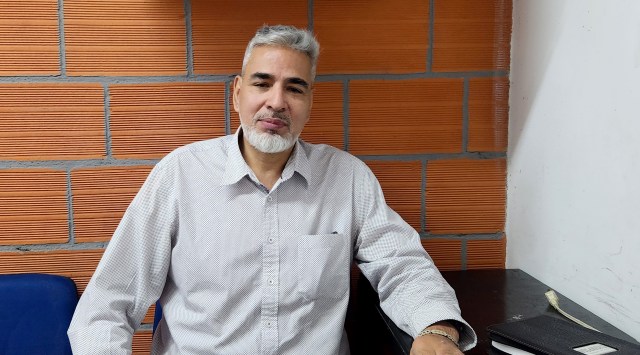
At the church’s Sunday service, Jesús Alberto Monsalve Cardozo was easy to spot sitting in the front row with the other church leaders in the congregation of 450 people. He is over six feet tall with white hair.

The leader of the marriage and prayer ministry, Cardozo was once a colonel of the Bolivarian National Armed Forces of Venezuela, where he was so well known for his faith among the military that many referred to him as “the Pastor.”

He decided to leave the military in 2021, months before his promotion to the rank of general. He said he felt God call him to full-time ministry and convict him to step down, as accepting the new position would force him to participate in publicly known alliances with drug traffickers.

Afterward, he left for Colombia. Since then, he has held different jobs: a librarian, a pet medicine salesman, and the operations director for a security company. Despite the difficulties of adjusting to his new life in Colombia, none of it compared to his sadness in learning about the ever-deteriorating situation in his home country.

In his daily conversations with his mother, who is still in Venezuela, he hears the struggles she and other elderly Venezuelans have getting the medical care they need.

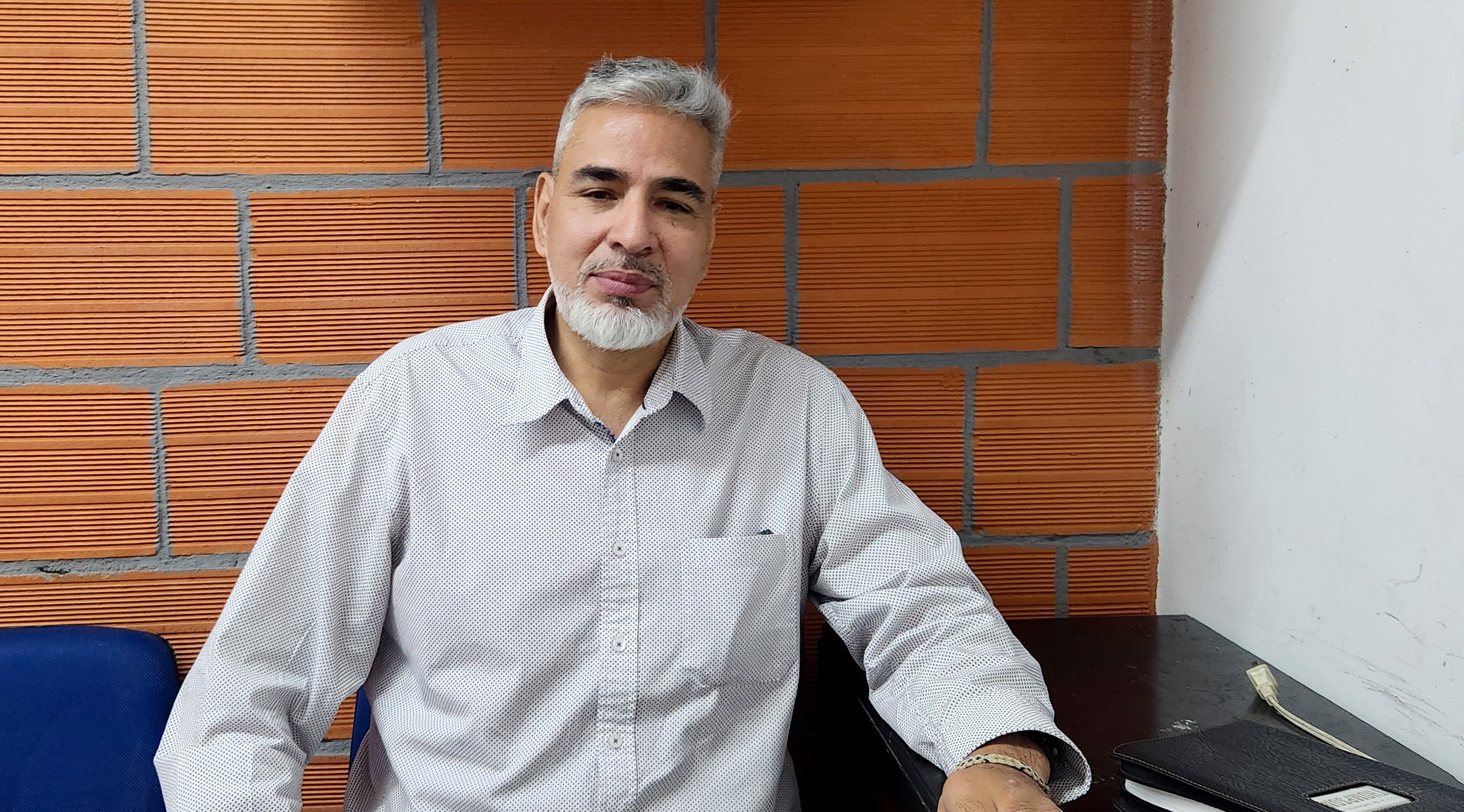
Jesús Mansalve CardosoImage courtesy of Hernán Restrepo
Jesús Mansalve Cardoso

When news of Maduro’s ouster reached him, Cardozo’s first thought went to his family in Caracas. Yet he also felt relief, believing that God’s justice had finally arrived. He noted that a violent disruption is often needed to change the status quo in long-standing dictatorships.

“Nothing will change until a disruptive element begins. In Venezuela, that disruption began with Maduro’s capture,” Cardozo said. “What I see Trump really seeking is to first introduce a disruptive element so that there can be a transition, without the country falling into total anarchy.”

He noted that he and his wife would be open to returning to Venezuela if things change; however, it’s currently too dangerous for them. “But I’m very excited about the idea of returning, not only to continue my ministry as a preacher in the Armed Forces but also to contribute with my knowledge to the reconstruction of Venezuela,” he said.

At the end of Casa Sobre la Roca’s service, the pastor invited those attending the church for the first time to receive Jesus into their hearts. Frank González, the Venezuelan migrant, stepped forward with tears in his eyes. Jonathan Coche-Vásquez remained seated. His feet hurt too much for him to stand up. But both said they prayed the prayer of faith.

Would they return to Venezuela if things turn out well? “Of course,” González replied as he and Coche-Vásquez lifted their garbage bags and resumed their journey toward Bogotá. “That’s where our home is. That’s where our family is.”

Correction: An earlier version of this article named the wrong nonprofit that Ediober González said recommended abortions to migrants.

Culture

Guerilla Art For Grit City

Two friends are taking Tacoma by storm with paper and ink.

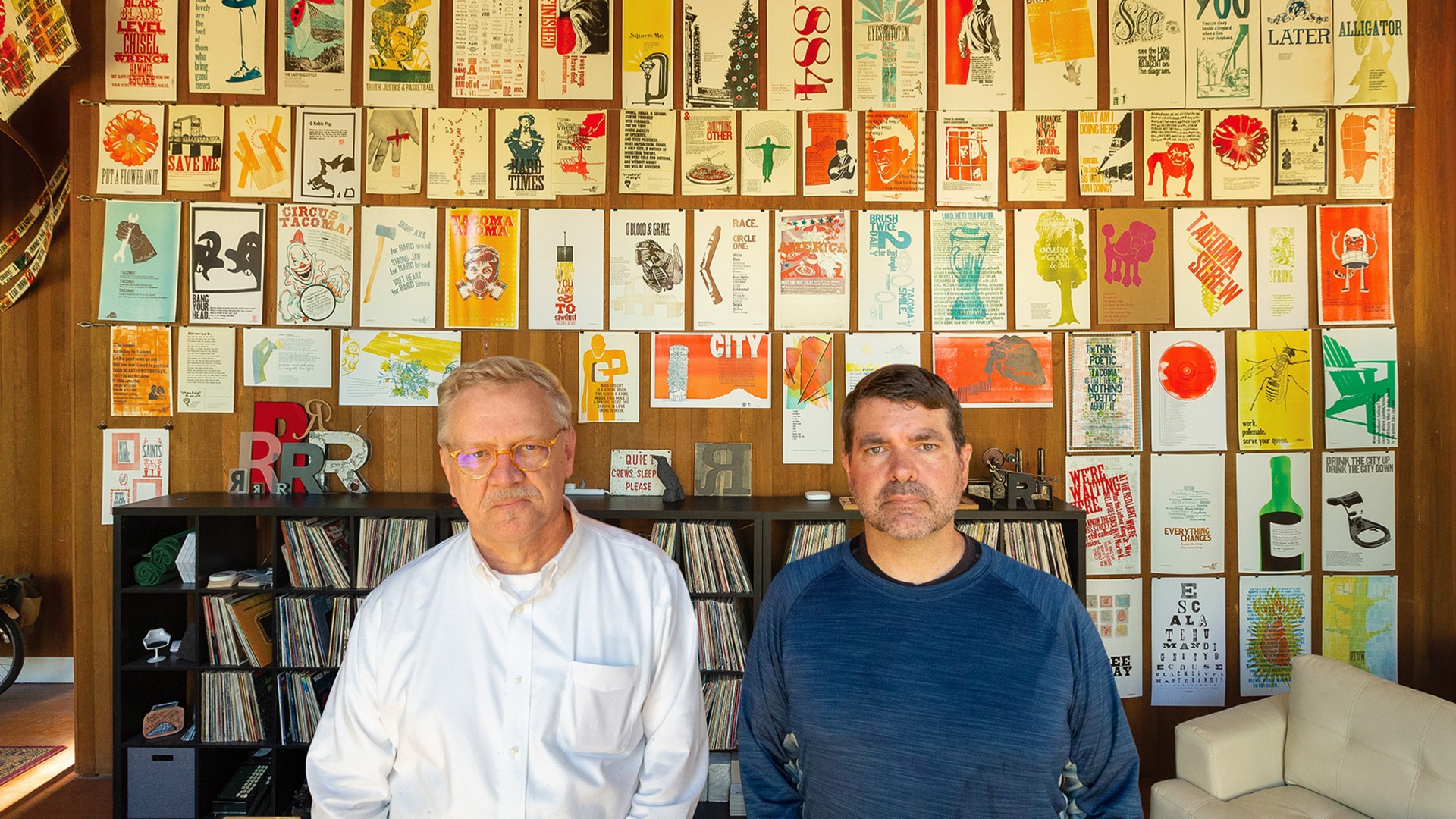
Lance Kagey (L) and Tom Llewellyn (R) standing in front of a wall displaying their hand-printed posters.

Lance Kagey (L) and Tom Llewellyn (R) standing in front of a display of their hand-printed posters.

Christianity Today January 21, 2026
Image courtesy of Sierra Hartman

Paper was once a far more precious resource. Sometimes, our ancestors would scrape markings from parchment, clean it, and start anew. Historians call these documents, inscribed with layers of text, palimpsest. Often, visible traces of past writing remain underneath the new words. I couldn’t help but think of that age-old practice as I stepped into the basement of Lance Kagey’s home last month.

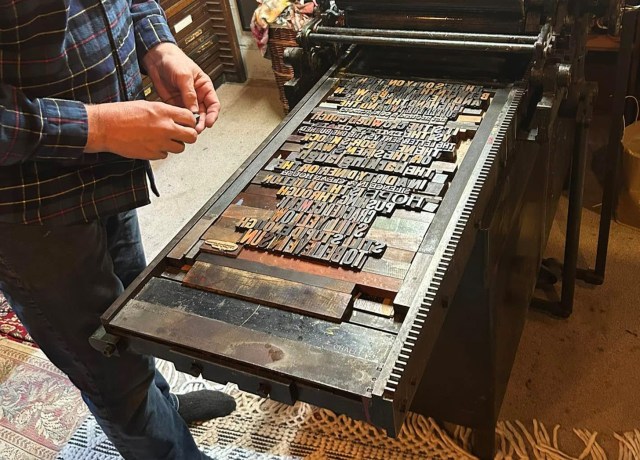
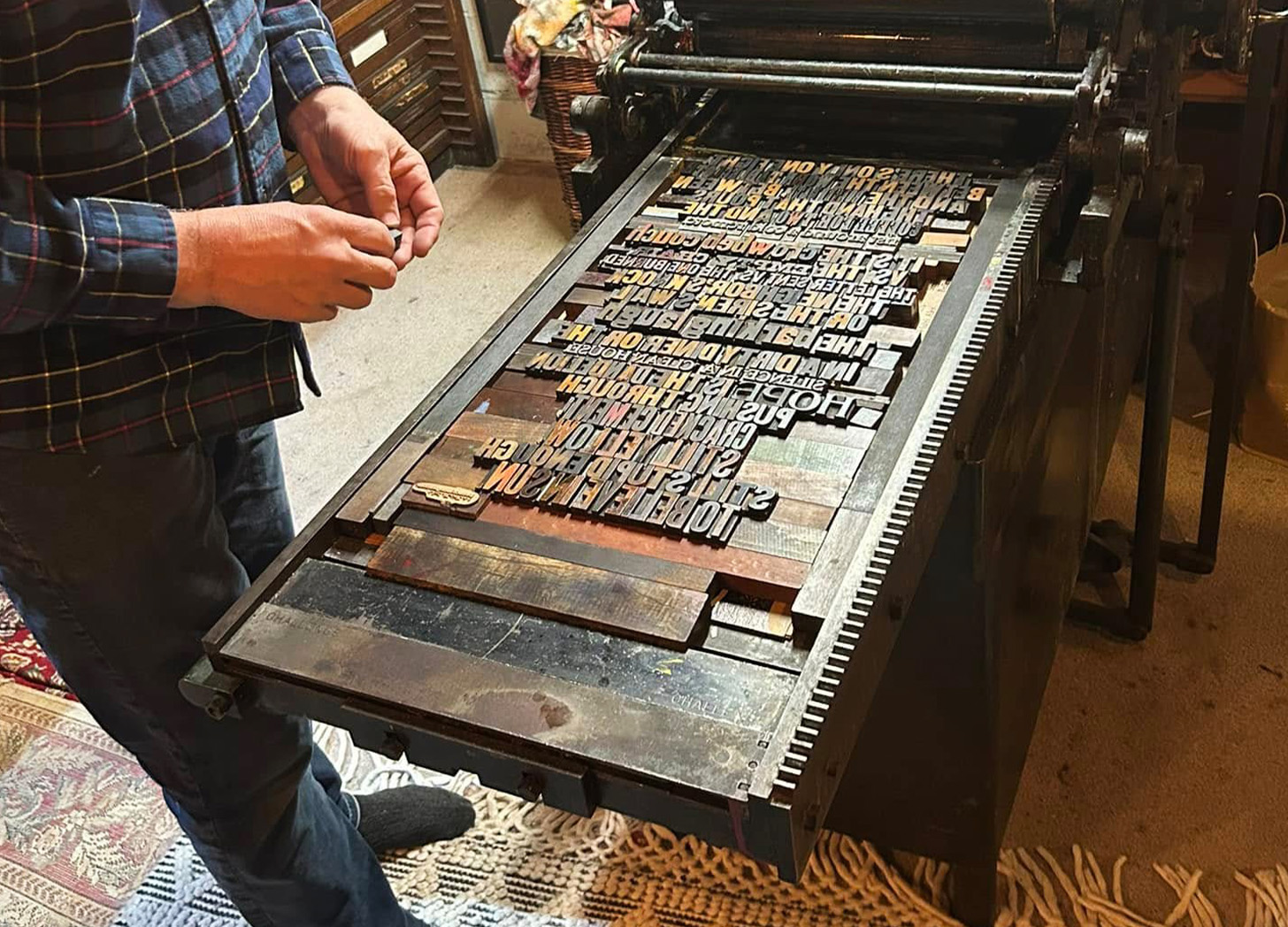
Palimpsest is a good word for it. The bottom level of Kagey’s historic house in Tacoma, Washington, is a study in bygone eras adapted ingeniously for reuse. Old wooden cabinets line the perimeter, holding trays upon trays of vintage letterpress wood type. Artwork and artifacts from decades gone by fill the remaining wall space.

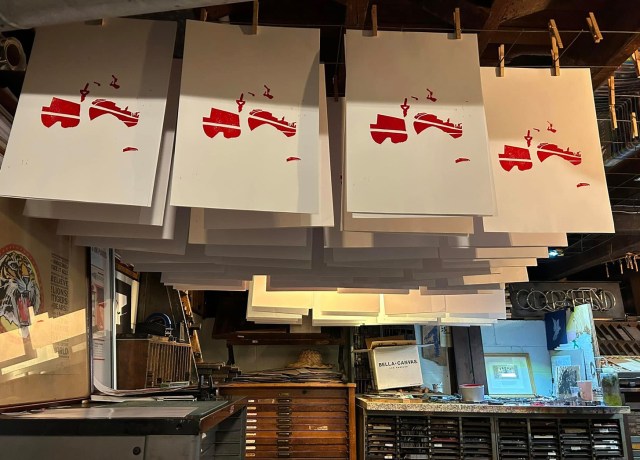
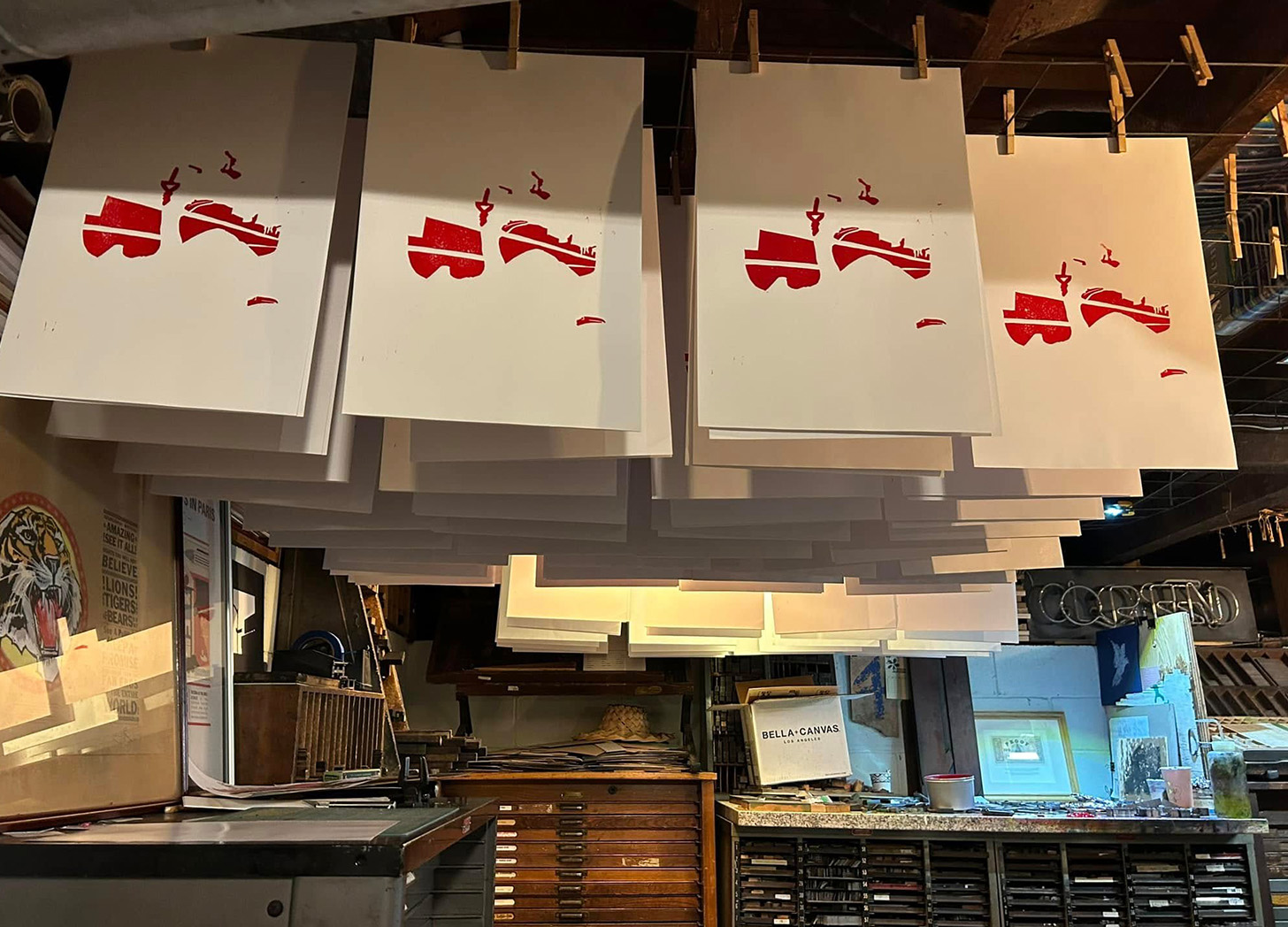
In the middle of it all stands an industrial relic that’s been given a new reason for life: a cylinder letterpress, complete with a manual crank. Rows of freshly inked pages often float above the machine, hung to dry with clothespins like laundry.

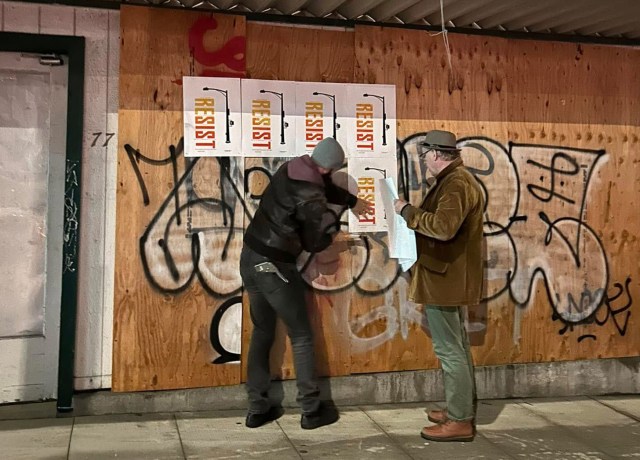
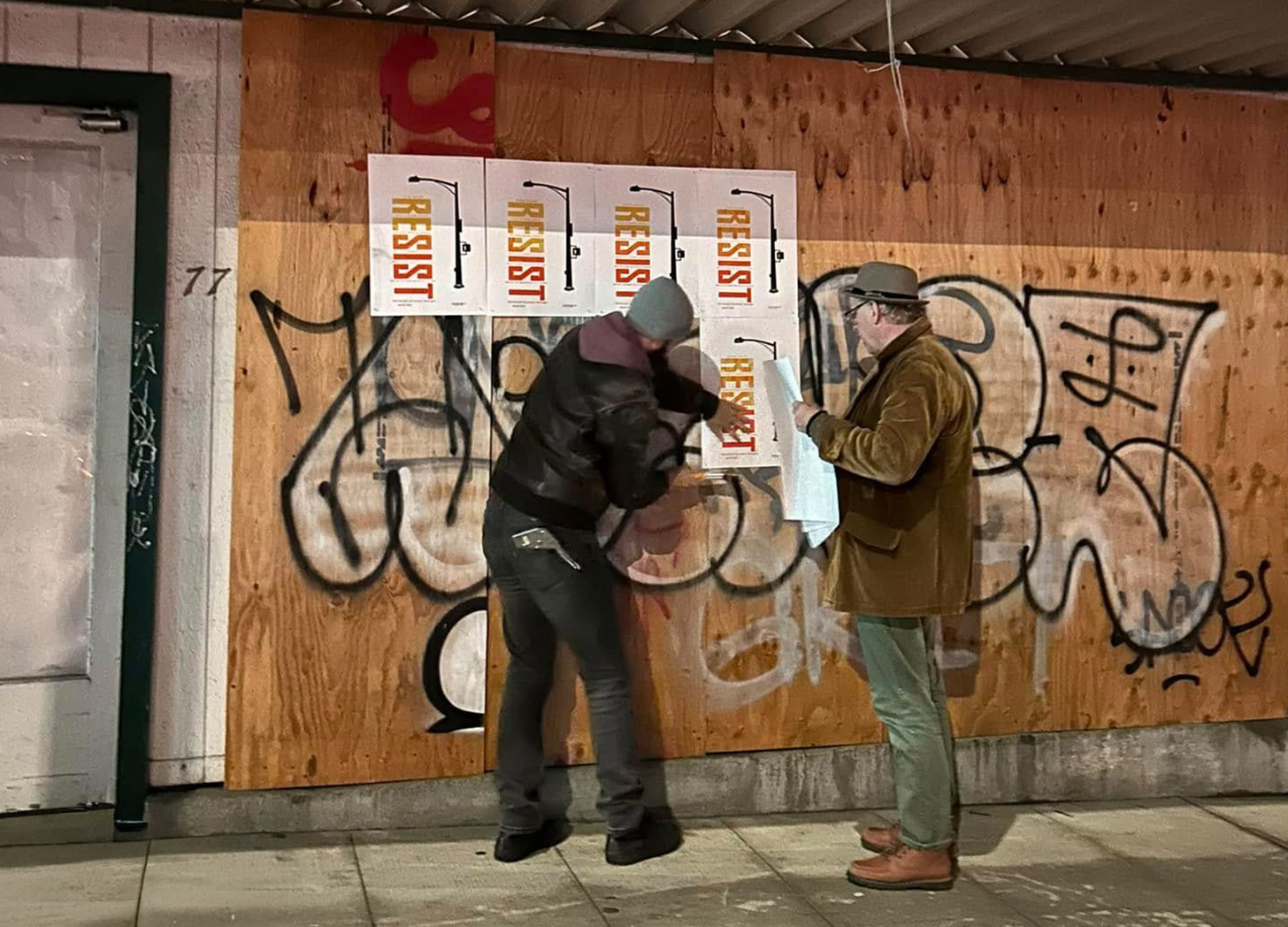
What the printing press churns out could also be called palimpsest, with layers of color, words, and meaning. This art is part of a creative endeavor known as Beautiful Angle, the brainchild of Kagey and his equally creative friend, Tom Llewellyn. Roughly once a month, the two men develop a new poster design and then print a short run of about 100 copies. Using wheat paste and staples, they hang their completed work all around Tacoma.

This effort to engage with their city, crafting physical art in a world gone digital, has now been unfolding for more than two decades, generating a substantial body of work and an enthusiastic fan base. The artwork is compelling, the messages provocative, and their reach surprising.

I had the chance to sit down with Kagey and Llewellyn in that basement studio to hear more about their work, their fierce loyalty to their locale, and the role faith plays in this unique undertaking.

Image used with permission.

How did this whole thing start?

Kagey: I had taken some letterpress classes and fell in love with the old-school process of printing.

You mean the kind that Gutenberg invented, with the movable type?

Kagey: Exactly. It’s the printing method where you press one color of ink onto one page at a time. We found this 1952 Challenge proof press on eBay for $50. But it was in Ohio, so it cost me six times that much to have it shipped here.

Wait. You’re saying you invested in a press before knowing what you wanted to do with it?

Kagey: That’s right. Well, we knew we wanted to make art.

Llewellyn: We came up with the poster project very quickly once the press was here. We’re both big fans of street art.

Street art being public art that’s not officially authorized by anyone.

Llewellyn: Right. The beauty of street art is that you’re not waiting on an editor or publisher or mediator between you and your audience. If you don’t care about getting paid, you can create whatever you want. And that’s worth a lot.

Kagey: Street art posters have a long history. We decided, “What if we just made one poster a month?”

Llewellyn: We wanted a schedule that would be sustainable over the long haul. Now here we are, 23 years later, still going.

Why did you choose posters as your art form?

Kagey: Art that goes up unofficially can come down unofficially. We’re making art that is meant for people to peel off the walls or telephone poles and take home for themselves.

Llewellyn: A poster is a very specific medium with three levels of impact. You have the drive-by impact where something cool turns your head. Then there’s the impact of stopping to read the words. And then if you take it home and hang on your wall, it has an ongoing impact.

Image used with permission.

For the uninitiated, why bother going old school with the printing? Couldn’t you do the same thing more quickly and cheaply with Photoshop and a color printer?

Kagey: The process is a key part of the end product. I don’t see this press through a nostalgic lens. It’s a tool that we are pushing to use in innovative ways.

Llewellyn: Every single print that comes off of the press is unique. Each has slightly different flaws or levels of ink. Sometimes there are imperfections in the wood blocks themselves that add character you wouldn’t get from a digital copy.

Kagey: The limitations of analog make the design better. We had one poster concept where I knew I wouldn’t have enough letters in one particular wood type for all the text. If I don’t have enough E’s in one font, I have to choose a different typeface for certain words. That creates design choices in real time.

The Christian artists I know are constantly wrestling with how to express the truth about themselves (which includes their beliefs) without their art becoming simplistic propaganda. How have you navigated that tension?

Llewellyn: This isn’t an evangelistic project. We both grew up soaked in church, so biblical language shows up regularly in our work. We talk about our faith all the time, but we talk about lots of other things, too. There’s no hidden agenda.

Kagey: I’ve been reading Makoto Fujimura’s Art and Faith. Part of his thesis is that we are creators made by the Creator. It is in our nature to make. The making itself is the thing.

Llewellyn: Sometimes in Christian circles there’s almost a mentality that as long as art is faith-based, quality doesn’t really matter. To me, that’s verging on taking the Lord’s name in vain. The opposite should be true. Art made by people of faith needs to be astonishingly good and honest.

The thing about work of the caliber you two are doing is that it gains widespread attention and accolades. That raises the question: Why limit yourselves to Tacoma? Why keep this goodness local?

Kagey: The simplest answer is that Tacoma needs our love. When we started, the city still had that “ugly stepsister syndrome.” People always focused on Seattle. No one ever talked about Tacoma.

Llewellyn: There’s something compelling about a city that needs you. It’s like that quote from G. K. Chesterton: “Men did not love Rome because she was great. She was great because they had loved her.”

Kagey: We’re not just cheerleaders for Tacoma, though. We talk about its flaws, too.

Llewellyn: We refer to Tacoma as the “holy city,” picking up on the biblical idea. We want this community to see its own sacredness in the midst of its ordinariness.

Image used with permission.

It makes me think of Jeremiah 29, where the Lord instructs the exiles to seek the prosperity of the city where he sent them. What is it you hope your work is doing for Tacoma?

Kagey: When we first started, we were just putting the posters out there, expressing ourselves. But our art has become much more of a community event. And we realized part of our goal was to have people connect around a common activity and build relationships.

Llewellyn: Now often, there will now be 50 people gathered before we even arrive to hang posters. And while they’re there, they’re interacting, asking each other which posters they have, comparing tools they’re using to take down posters. It’s become a community rhythm.

Kagey: The repetition has been key. The only way to get into the cultural consciousness of a place is to keep showing up in the same place and not spread out too much.

Llewellyn: We have to keep the focus on one little area and go deep rather than broad.

Over two decades in, is it still fun?

Llewellyn: Definitely. We’ve been friends for so long. We’re just relaxed with each other. Even after all this time, there’s something very Willy Wonka-ish about putting blank paper in one end of the press, turning the crank, and watching that first poster come out the other side. It’s still pretty magical.

J. D. Peabody is the author of the fantasy trilogyThe Inkwell Chronicles as well as Perfectly Suited: The Armor of God for the Anxious Mind. His website is www.jdpeabody.com.

Ideas

Protesting in Church Is Wrong. So Is Immigration Theater.

Staff Editor

Demonstrators should not disrupt worship services. ICE should be competent, cool-headed, and constrained by the Constitution.

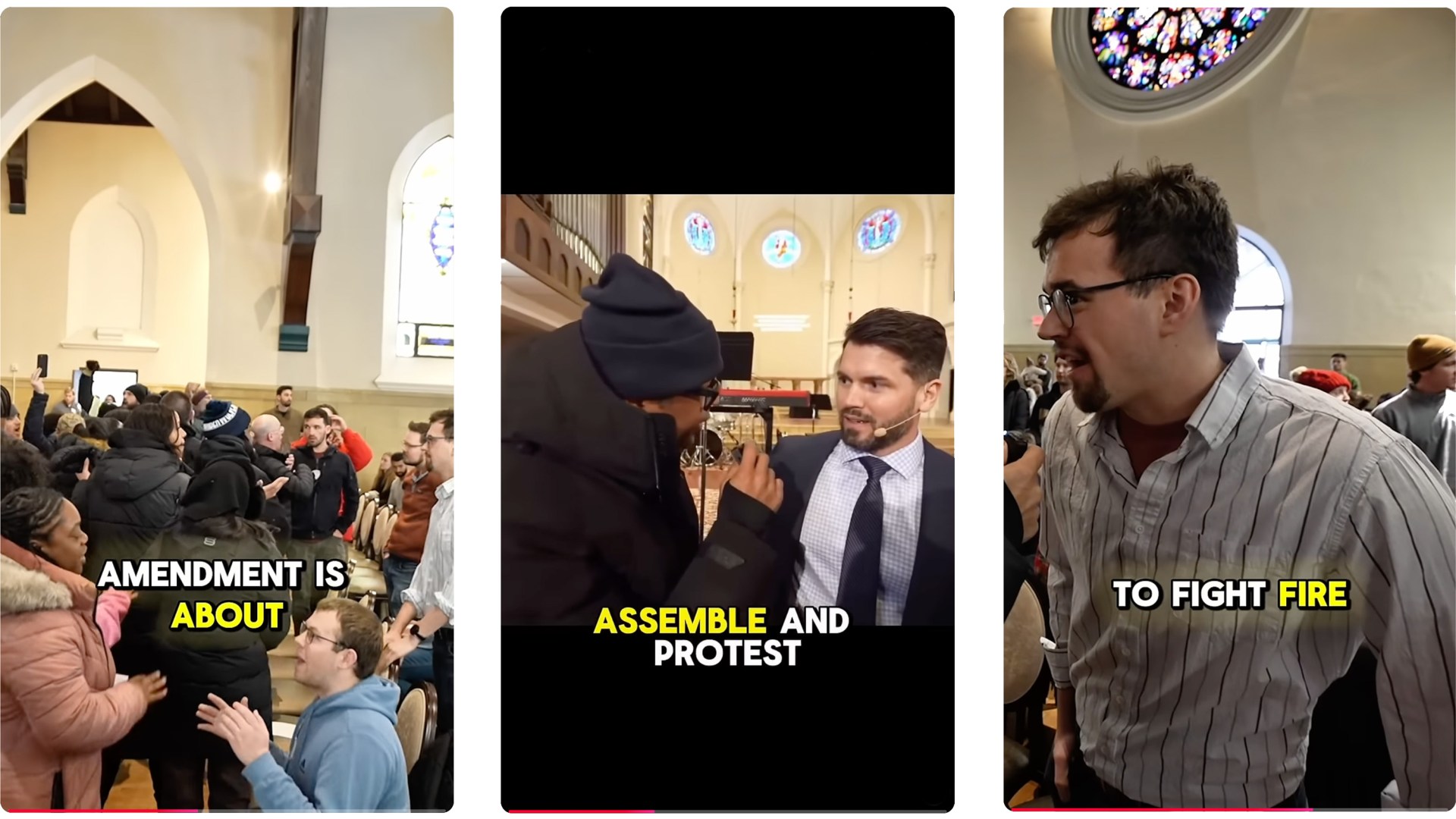
Screenshots from videos of the protest in Saint Paul.
Christianity Today January 20, 2026
Source Images: Don Lemon, Youtube

This past Sunday in Minnesota, a group of protesters barged into a Southern Baptist church in Saint Paul during the worship service. Chanting “justice for Renee Good” and “hands up, don’t shoot,” they spread out in the aisles and refused to leave.

Alerted ahead of time by the organizers, former CNN host Don Lemon showed up too. Though he said on camera that he wasn’t there as an activist, Lemon described the disruption in a transparently approving tone, endorsed a “traumatic” experience for kids at church as “what protesting is about,” and later accused the targeted congregation of an “entitlement [that] comes from a supremacy, a white supremacy.”

Amid the demonstration, Lemon inanely insisted to the preaching pastor at Cities Church, Jonathan Parnell, that the whole thing was merely an exercise in free speech that the congregation should tolerate—or even welcome—in their sanctuary during their worship.

This is bunk. Protesters should not disrupt worship services, and anyone with the scantest constitutional knowledge knows that what these demonstrators did is not the free speech our First Amendment protects from suppression by the state.

Demonstrators should stay out of church services for many reasons. One is a matter of federal law, which explicitly prohibits attempts to “interfere with any person lawfully exercising or seeking to exercise the First Amendment right of religious freedom at a place of religious worship.” They should also stay out because of property rights. For though a church is generally open to all comers, it is still private property with all the privileges that entails, including the right to exclude unwanted speech and assembly.

But most of all, protestors should stay out because disrupting worship is wrong, regardless of the demonstrators’ cause or the worshipers’ religion. It is wrong because it is a disordered assertion that your politics matter more than their devotion to God.

It is wrong because it is an announcement that no inch of space, no moment of time, no seriousness of purpose may be exempt from our volatile national discord—that there is no such thing as sanctuary.

It is wrong because it is not what you would want done to you.

Now, I don’t say this because I’m opposed to these protestors’ cause. I’m not confident in my interpretation of the videos of Good’s death, but I lean toward believing the shooting is unjustified. I hope she does get whatever insufficient, temporal justice we can muster on this side of eternity.

More broadly, I’m long since on-the-record as favoring pretty open immigration laws. This isn’t a view I hold lightly or ignorantly. I understand why so many are reflexively bothered or angered by scenes of chaos at the border. I don’t want chaos either, and I easily agree with the 8 in 10 Americans who want to deport people who are here illegally and have been convicted of violent crimes. I also understand how rapid, high-volume immigration strains red-state border communities flooded by migrants on account of their location—and deep blue cities flooded by migrants on account of their foolishly expansive welfare guarantees.

Even so, my preference is something far more akin to the relative simplicity of the Ellis Island system than anything we’ve seen in my lifetime, with particular welcome for people oppressed by Communist and other totalitarian regimes. Much of what ICE (Immigration and Customs Enforcement) is doing in Minnesota strikes me as inefficient, theatrical, harsh, and deliberately disruptive.

Moreover, the Twin Cities were my home for eight years, the bulk of my adult life, and I’m sad to see them in turmoil once again. I just watched a video on Reddit that appears to show door-to-door raids in my old neighborhood. I’ve run past those very doors time and again. I’ve walked our dogs and strolled our babies there. It’s not right.

This is an immigrant-heavy neighborhood, but the immigrants, many of whom arrived as refugees after helping the US in the Vietnam War, are not a problem. On the contrary, their arrival helped transform that neighborhood from a notorious stretch of porn theaters and prostitution to one of the best concentrations of Southeast Asian restaurants in America. It’s certainly not perfect—we lived near a crime-ridden nuisance bar, and one time I watched a man flee the cops through my next-door neighbor’s yard, handgun still in hand. But immigrant families weren’t the people patronizing that bar, and that man was an American.

The immigrants on my block were quiet. A multigenerational Hmong family grew vegetables in their flower beds and had family cookouts with a 20-gallon soup pot in their garage. They were good neighbors. Is someone pounding on their door without a warrant, shouting for their papers? And if they’re churchgoing—as they may well be, for there are many Hmong congregations in Saint Paul—will ICE barge into their services, as the Trump administration has expressly allowed? It is a deeply American instinct that drives me to say: Leave them alone.

After each fresh outrage, many well-meaning people develop a common tick. X is wrong, of course, they say, and I’d never endorse it. But when you consider how bad Y is, well …

I want to be very clear that I do not suffer from that tick. The conjunction I am using here is not but. It’s and: Demonstrators should not disrupt worship services. And immigration enforcement should be competent, cool-headed, and constrained by the Constitution.

One of Lemon’s interviewees, a congregant at Cities Church, got it exactly right.

“I don’t necessarily agree with everything that’s going on in the Twin Cities right now,” he said. “But I don’t think it’s good to fight fire with fire. I think it’s good to speak up. I think it’s good to protest, but I think it’s better to do it in a peaceful way. [This] is trespassing. … This is a house of God.” Next week, may he and his church worship in peace.

Bonnie Kristian is deputy editor at Christianity Today.

Books
Review

What to Do About Reparations

A new book values justice for Black Americans, but its secular thesis only goes so far.

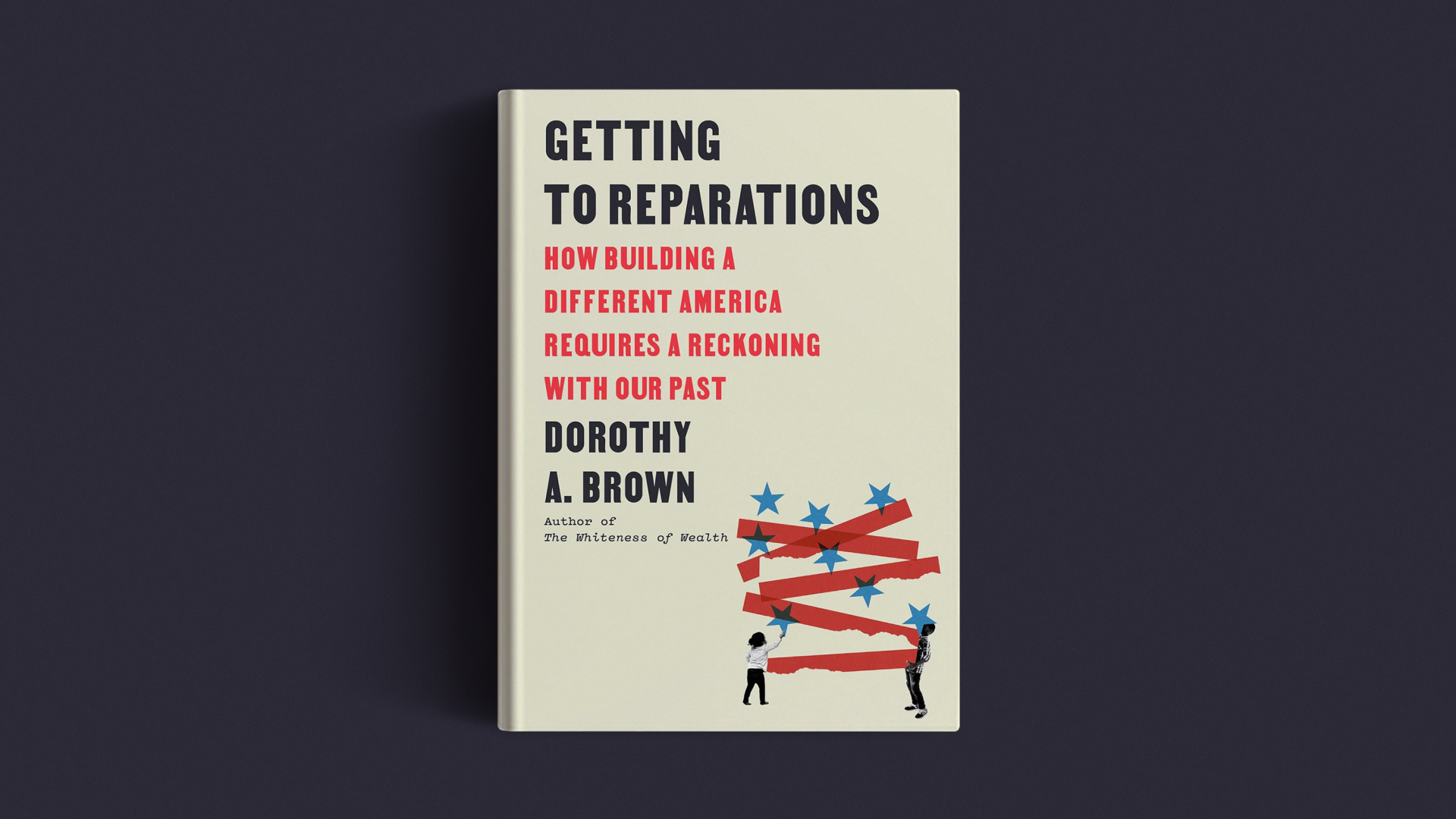
The book cover.
Christianity Today January 20, 2026
Illustration by Christianity Today / Source Images: Getty, Penguin Random House

More than a decade ago, writer Ta-Nehisi Coates successfully pushed reparations into the contemporary conversation with his seminal essay on why, after 250 years of slavery, 90 years of Jim Crow, and decades of discriminatory housing policies, the United States owed a debt to African Americans that it simply could not wish or wave away.

Calls for reparations have been around since the end of the Civil War, when Union general William T. Sherman and the federal government promised to allot some 400,000 acres of confiscated land in the American South to newly freed Black families—an order that became known as “40 acres and a mule” and was ultimately foiled by President Andrew Johnson.

Roughly a century and a half later, the Black Lives Matter movement, Coates’s work, and the nation’s renewed focus on racial injustices paved the way for reparations to gain momentum in some corners of the political left. In 2019, Democratic politicians, who rely heavily on the Black vote, were pressed to answer questions about where they stood on the topic. State and municipal reparation efforts also grew. The city of Evanston, Illinois, dispensed payments to Black residents (or their descendants) who were affected by discriminatory zoning policies from 1919 to 1969. Various institutions, including prominent and often elite universities, launched their own efforts while liberal states like California and Maryland waded into the waters.

As political winds shifted, however, many efforts have slowed. Federal legislation focused on reparations to Black Americans has never really been on the table, and it seems highly unlikely that it will be on offer anytime soon. But in her new book Getting to Reparations: How Building a Different America Requires a Reckoning with Our Past, Georgetown University law professor Dorothy Brown argues reparations are critical not only for reckoning with slavery but also for building our future. Reparations, she believes, are vital for America to bind up its racial wounds.

I approached Brown’s secular book on the topic with an already-favorable view of reparations, though not only for the conventional reason of supporting Black flourishing. I have come to believe that reparations can be done in a way that resonates with God’s justice, as distinct from secularized “justice.” Reparations as an exercise in white ethnic shame or self-laceration would be wrong, a step away from reconciliation. But reparations carefully and fairly designed for the country to correct past injustices, make right on its broken promises, and help us move forward as a single integrated people is, in my view, a good—and biblically defensible—project.

As Christians, we take this posture in our individual lives of faith: Whenever we do not meet the requirements of God’s law, we repent by not only acknowledging our sins of omission and commission but also making a change in our actions, literally an about-face. Applying this concept to our national sins, Christians should wrestle with how restitution completes a process of national repentance.

While reparation does not require assuming white Americans have inherited the guilt or sin of their ancestors (a reasonable concern from skeptics, in accordance with Ezekiel 18:20), it does involve US institutions like the national government and other living entities, which have overseen and participated in injustices, paying the debt they have accumulated over centuries.

And though this issue is often debated along partisan lines, the basic principle of reparations is not the purview of any one political party. In fact, it’s deeply biblical. Reparations is simply a politically charged term for a well-attested biblical principle of restitution.

In Exodus, for example, we see God instituting laws of restitution for various forms of theft and damage (22:1–15). The principle persists in the New Testament when Zaccheus promises to “pay back four times” anyone he has defrauded and is applauded for it by Jesus (Luke 19:1–10). America isn’t ancient Israel, and Zaccheus was talking about his own personal sins. But as we think about what justice looks like now, it’s worth, in my view, taking these principles seriously both individually and corporately.

Reparations are not a quick fix for what ails America’s racial disparities. Nor are they, as Brown acknowledges in her book, a panacea for Black poverty. We will need many other reforms and changes to solve American racial disparities. But this could be an indispensable step in repairing our torn social fabric.

Brown’s book offers more than an argument for reparations. It offers brief practical considerations for how the country could implement them. In under 220 pages, Brown makes a scrupulous and compelling argument: Black Americans were not only brutalized by chattel slavery but also excluded from government-backed mortgage programs, business loans, land, and other opportunities. This argument even converted some opponents to supporters in focus groups she conducted. Still, while Brown’s book is backed by robust historical research, I found some of her arguments to be lacking, particularly her stance that all Black people in America—not just American descendants of slaves—should be eligible for payments.

Brown writes for a skeptical audience, which is a good approach for this topic. Reparations remains a fraught topic for politicians and an unpopular idea among most Americans, who largely view restitution as both impractical and unnecessary (the only exception here being Black Americans, who mostly support the idea). Brown, a Black tax lawyer, says she herself was a skeptic until “very recently.” She changed her mind after realizing the US paid reparations for the deaths of Italians, specifically Sicilians, who were lynched by white mobs in the South between 1890 and 1910.

The book details how over time the US government has also paid reparations to other groups: President Ronald Reagan signed a law in 1988 giving  $20,000 to surviving Japanese Americans who had been put into World War II internment camps. The US has given Native American tribal nations cash payments (up to $1.3 billion in total) for lands the government seized during the 18th and 19th centuries. Even some white slave owners were compensated during the Civil War to soften the blow of losing slaves emancipated by President Abraham Lincoln.

If the country awarded reparations to those groups, then why not, she asks, to Black Americans who suffered during chattel slavery and in its aftermath? Brown writes,

The failed effort to provide land to newly freed families was followed by 150-plus years of exploiting black labor and building white wealth, via different means. You could work for your former enslavers under onerous “sharecropping” agreements that made them rich and kept you poor. If you refused, your unemployment would make you guilty of the crime of “vagrancy” and allow you to be locked up and “leased” to individuals, small businesses, and large companies like U.S. Steel to work for no pay. Blackness was criminalized.

At times, those mechanisms did not prevent blacks from achieving self-sufficiency, and through some miracle, black people still managed to own things and benefit from their own labor. … States employed racially discriminatory legal actions like eminent domain to do the same, while sundown towns—places where black Americans could work but had to be gone by sundown or put their very lives at risk—made sure black people were forbidden from living there, much less building wealth there.

Brown further explains the downstream modern effects: Racially restrictive housing covenants and decades of redlining prevented prospective Black homeowners from buying homes, which hampered wealth creation.

While the US government has aided the creation of wealth for some Americans, Brown notes how Black veterans returning from World War II could not benefit as much as white veterans could from the GI Bill, an instrumental government move that grew America’s modern middle class. In more recent decades, sentencing disparities for offenses tied to crack and powder cocaine, though not explicitly discriminatory, have led to the disproportionate incarceration of Black people.

While Brown’s research is strong, her clarity on what realistic change could look like unfortunately is not. Citing various studies, she notes that the total cost of labor worked during slavery, loss of free time (which she notes is difficult to measure), and other losses from institutional harm can easily rack up to eye-popping dollar amounts.

But after she provided all the critical historical lessons, it was disappointing she didn’t write more on what could be feasible and realistic regarding compensation for those harms. From my own vantage point, one idea I’ve found to be persuasive is for the national government to compensate every African-American family in the amount of the nation’s racial wealth gap, though of course other structural reforms are important to reduce racial disparities. Brown however punted the answer to a theoretical presidential commission she hopes would be created to study the topic.

Ultimately, Brown provides a strong argument for the need for reparations. But as she acknowledges, the devil is in detailed policy prescriptions, and her own book fails to deliver on the details.

Where she does describe details—Brown’s idea of reparations includes both direct cash payments and legislative reforms in various areas like education, taxation, and criminal justice—she doesn’t adequately wrestle with how bundling them together will likely mean the former will be forestalled while politicians continuously debate the latter.

Brown also largely ignores the topic of fatherhood and the two-parent household. Many have long blamed family breakdown as the sole reason for Black poverty. While that’s untrue, it is true the nuclear family is good (Gen. 2:18) and its goodness has been recognized socially through positive economic impacts. But Brown fails to acknowledge this component in a meaningful way. She touches on it only briefly, dismissively mentioning it in an aside about some high-poverty states using block grants given by the federal government.

While it is a strong book with some weak spots, the most pressing problem I see is her assertion that reparations should go to all Black people in America, not merely the descendants of slaves. While I understand where she is coming from—Black immigrants can face discrimination akin to that facing African Americans—it doesn’t seem to have reached a level to warrant reparations. Rather, reparations should primarily be for those who suffered under the institution of slavery and bore subsequent injustices, predominately affecting African Americans.

More than half of Black immigrants in the US arrived after the year 2000, including my own family, who immigrated from Ethiopia. Black immigrants who came to America during periods of legal segregation and disenfranchisement should be eligible for some form of reparations, while others who encountered injustices more recently can seek standard redress in courts. It doesn’t strike me as just to give historical reparations to newer immigrants who weren’t part of the original chain of harm, especially considering that some, such as Nigerian Americans, have a median household income above the average American and white American household incomes.

Brown’s work helpfully addresses reparations skeptics and provides some useful starting points for readers to understand the US history of injustice toward African Americans. The facts she assembles are valuable. But Christians cannot merely adopt her secular framework. We must interpret the facts in light of the Bible’s view of justice and, from the sturdy ground of God’s Word, move forward into acts of repair.

Haleluya Hadero is the Black church editor at Christianity Today.

Theology

The Gospel Is Good News Before It’s Good Advice

Yes, Christianity can improve your life, build social cohesion, and foster respect for reality. But more importantly, Jesus is our Savior.

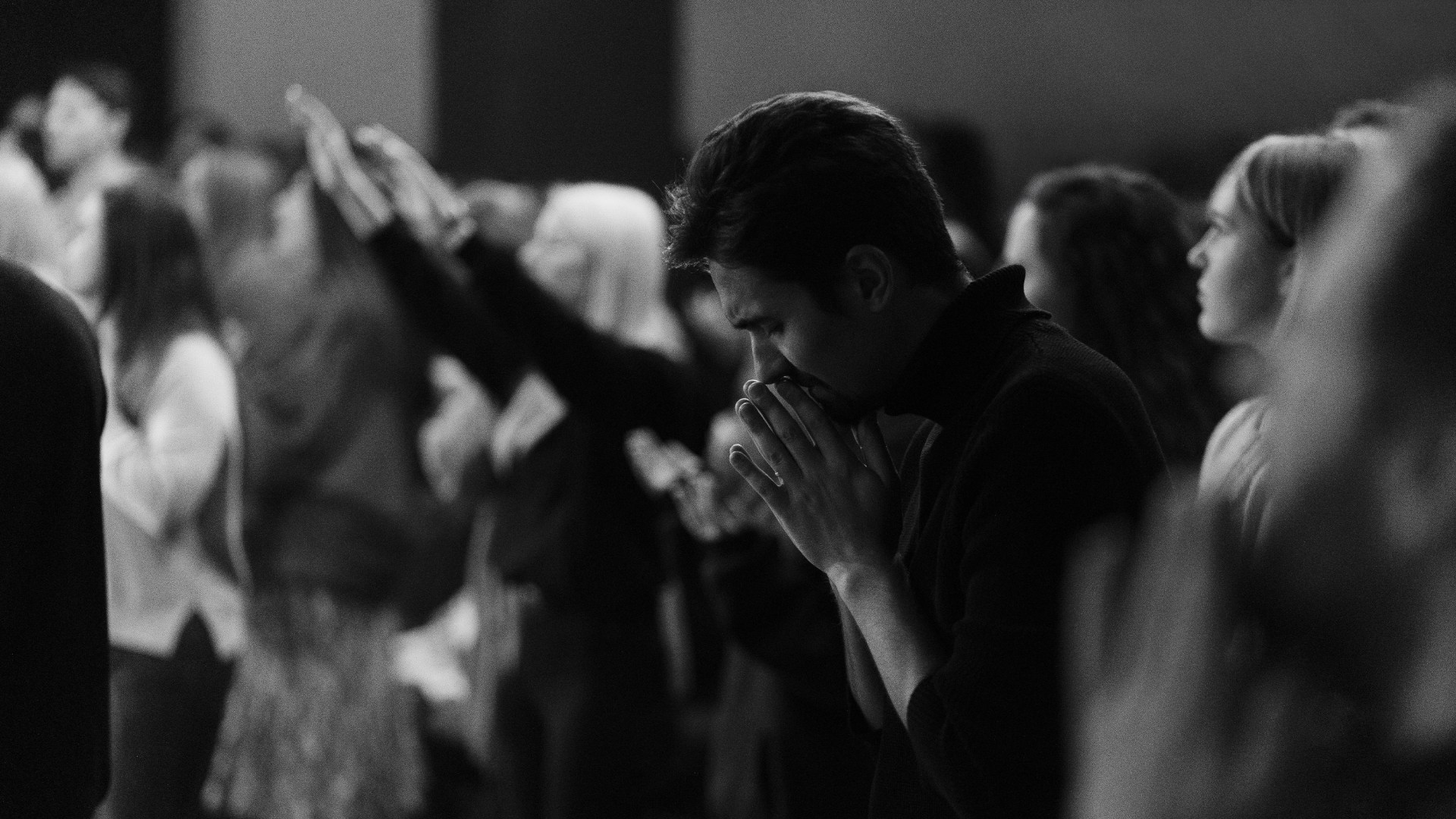
A man praying in church.
Christianity Today January 20, 2026
Lucija Ros / Unsplash

Christianity is having a moment in the West. Influencers and thought leaders are going public with their Christian convictions in a way that seemed unimaginable just a few years ago. Ross Douthat is commending the faith in the pages of The New York Times in a robust and forthright way. Christians in the UK are actively entertaining the possibility of revival. New vistas for evangelism and engagement are opening up. There appears to be a genuine feeling of need for a transcendent God, a heavenly Father, particularly among younger generations. The claims of the Christian faith are receiving renewed and serious interest, praise God. 

For many, this new attraction in Christianity is about its social utility and personal benefits. Podcaster Joe Rogan, for instance, has said that living according to the “principles of Christ” has proven good and satisfying. The writer Derek Thompson, an agnostic, has concluded that religion “works a bit like a retaining wall to hold back the destabilizing pressure of American hyper-individualism.” British journalist Louise Perry converted after considering Christian sexual ethics. “Observing quite how sociologically true [Christianity] is was very persuasive to me,” she said.

At one level, we can give a very clear amen to these impulses. Rogan’s sense of the usefulness of the principles Jesus taught is a recognition of Jesus’ wisdom and authority. The capacity of the faith to inform and shape our common life is real. The convictions of the Christian faith accord with reality. The law of the Lord is pleasing and useful; following Jesus makes us more human. That there are tangible, real-world benefits should not be surprising.

But as thinkers including sociologist Peter Berger have pointed out, historically, when the Christian faith is embraced as a useful commodity, the results are unavoidably self-liquidating. There is a risk, that is, in emphasizing the utility of Christianity. We might lose sight of a very simple truth about the Christian faith: The gospel is good news before it is good advice. 

This pertains to both sequence and priority. In the Gospel of Matthew, Jesus begins his earthly ministry with the announcement “Repent, for the kingdom of heaven has come near” (4:17). And in the Gospel of Luke, Jesus opens his public work by drawing on the language of Isaiah, describing his anointing specifically in terms of verbal proclamation (4:14–20). These episodes precede other teachings by Jesus and are the context in which those teachings are offered. 

As many scholars have noted, the word we translate “gospel” has its etymological roots in the idea of a public announcement. In Greek, the term euangelion, or evangel, has to do with military victories. In Christian usage, it became a pronouncement of God’s triumph in the life, death, resurrection, and ascension of Jesus Christ. Jesus’ announcement of the kingdom of God frames all his preaching, teaching, and deeds of power.

Rogan-style openness to the wisdom of Jesus is a step along the way. But that wisdom must be located—and kept—inside this complete sequence of events.

The crowds around Jesus often recognized his words as carrying weight, having authority. Yet their engagement with him was frequently fragile and ambiguous. It was often fleeting, connected only to the most tangible benefits of his presence: bread and miracles. It was not a step toward a more ultimate destination. It was not acceptance of Jesus’ overarching pronouncement or recognition of their own humility and desperate need. It was not a willingness to “count the cost,” to submit to the way of the Cross and the lordship of Jesus. It was not a reception of the whole euangelion.

And without that reception, we cannot live according to the “principles of Christ.” Without the gospel, we are unable to live in the way of Jesus, and any attempt to do so will prove unfruitful in our lives and societies. As a matter of sequence, then, the Good News comes before good advice. 

This is also a matter of priority: It reflects the priority of grace in the gospel. Psalm 119 testifies of the blessedness of God’s law: Happy are those whose lives accord to it. Yet the pattern of Jesus’ own ministry, with his proclamation of the kingdom preceding his teaching and ministry generally, reflects Israel’s trajectory in the Old Testament. The law is given at Sinai only after God’s gracious deliverance in the Exodus. The law, by which the people of Israel are instructed in true freedom, comes only in the context of their freedom already won by Yahweh. 

The law is a blessing and a life-giving thing as it arises in this context of God’s deliverance and Israel’s dependence upon him. But human beings, frail and weak as we are, are unable to live according to that blessing in and of ourselves. This is what Martin Luther identified as the pedagogical use of the law: While the law is a blessing and guides us in the way of wisdom, it also exposes our sin and our need for a savior. And only by that Savior’s rescue are we empowered to live into the law and lay hold of its tangible benefits. 

Our reception of the Good News—our humble acceptance of Jesus as our Savior and embrace of him as the one who brings God’s kingdom near—is essential to our obedience to God’s law. The gospel is the means by which a “more complete subjection and affection towards our Liberator [has] been implanted within us,” to borrow a phrase from the early church father Irenaeus of Lyon. This implanted affection, the love of God poured out in our hearts, is a necessary element for us to benefit from the moral teachings of Jesus and the social advantages of our faith.

At the end of Douglas Coupland’s remarkable novel Life after God, the narrator realizes and reveals, “My secret is that I need God—that I am sick and can no longer make it alone.” It’s true that there are salutary practical benefits of the Christian worldview. But this very personal and vulnerable realization is what the church must, in participation with the Holy Spirit, continue to proclaim and seek to elicit from our hearers.

As we come in dependence, recognizing our lack and need (Matt. 5:3), we receive grace, God’s unmerited favor, such that the Spirit gives us the power to live according to the law (Titus 2:11–12; Eph. 2:8–10; Ezek. 36:26–27). Joy, gratitude, and love for our Savior are far more potent and sustaining forces for obedience than a dispassionate recognition of the tangible benefits of a particular system for moral order (John 14:15). It is only as we are empowered by gratitude, wonder, and praise for God that we can enter fully and sustainably into the good way of Christ. 

People come to Jesus in all kinds of ways. If a fresh recognition that Christ teaches a better and more human way of life is drawing people to our faith, how wonderful. But the church must pray for—and insist upon—a deeper recognition of the gospel in its fullness. Jesus does teach and embody the good, true, and beautiful way to be human. More than that, though, as our Redeemer and Savior, he makes it possible for us to walk in that way. 

Peter Coelho is the rector of Church of the Ascension, an Anglican parish in Pittsburgh.

Ideas

‘Think of It As a Best Friend and Youth Pastor in Your Pocket’

Staff Editor

A Q&A with the cofounder of a Duolingo-style “Christian AI” app aimed at Gen Z.

A hand holding the sheep character from Creed's AI app.
Christianity Today January 20, 2026
Illustration by Christianity Today / Source Images: Creed, Pexels, Unsplash


The “Christian AI” market is getting crowded.

At Gloo, users are “getting more personal” with their chatbot “than with most pastors.” Pray.com’s AI-generated Bible videos are styled like video games and replete with dramatic monsters and sexy ladies.

New to the scene is Creed, which bills itself as a “digital companion for churches and believers.” CT spoke over Zoom with Creed cofounder Adi Agrawal about the app’s tech, business model, user base, and goals.

This interview has been edited and condensed.

First, to make sure our readers have a good sense of what Creed does and how you do it, tell me about your tech stack and training. What large language model are you using as the base for the app, and what are the specific resources that you use to train it?

Think of the product as a Tamagotchi meets Duolingo for a Christian.

Think of it as a best friend and youth pastor in your pocket that you can talk to about any questions, be it your personal life, be it faith questions, be it your Bible studies. It’ll give you answers rooted in Scripture, but it’ll also build on that relationship over time. It remembers things you tell it. The more you talk to it, the more personalized it gets. It develops personalized faith paths for you, and it’ll help you answer questions and find community around you so you can discover Christian events. If you’re not affiliated with a church, it’ll recommend churches for you to go to. So it’s not just talking to a screen.

On the back end, we’re not building our own models. We’re using off-the-shelf models from OpenAI, Google, etc. But we noticed that everyone’s using ChatGPT, and people are asking it super personal questions like “Should I get a divorce? Was I the wrong one in this situation?”

ChatGPT will give you an answer, but whose values determine that answer? Who is determining what those values are? That’s a little bit of a black box, but the values are determined by a few companies in Silicon Valley.

So how do you set guardrails around that? How do you make sure the answers you get back from the AI are something your pastor or your church leader or your parents would agree with?

We take off-the-shelf models and fine-tune them on Scriptures—30 different versions of the Bible. And then on top, a few nonbiblical texts as well, like the texts of C. S. Lewis or a few other, broader Christian authors.

Then we also use denomination-specific teachings. Different denominations have pastors and priests whose teachings are widely accepted, so we use a few of those. Our offshore teams annotate those texts and label them to ensure some level of denomination-specific accuracy. For the same question, what you might expect as a Southern Baptist is going to be different from what you expect as a Catholic.

Then the third layer is church-specific nuances. We work with churches in our partner network directly so they can go set their values on “topic X” on top of that denomination-specific nuance. Right now we only have 12 or so churches in our network, and we’re building that out.

And then we set very, very strict guardrails. One of the big issues with AI is hallucination. How do you ensure it’s giving you actual answers? How do you ensure it’s not just making things up? So every answer passes through three filters of checks.

And any kind of sensitive topic—say, transgender rights or gay marriage—we are not going to give you like, “Oh, you should do this” or “You should not do this.” We’ll cite Scripture, and then we’ll tell you to go talk to your pastor or go talk to your parents. A very middle-ground approach where we as a company are not being prescriptive. We want to be very sort of value-neutral, and we want you to go talk to actual trusted authorities.

If there’s any mention of self-harm or harm to others, we have a human who will intervene and will be like, “Oh, do you want me to call up your parents?” or “Do you want me to call up this hotline for mental health issues?” We want that human intervention layer in case there’s something that’s super alarming.

You’ve mentioned parents, and that plus your description of Creed as an AI youth pastor makes me think your target audience is teenagers. Is that accurate? Can you give me some sense of your typical or ideal user demographics?

Yeah, initially we went to market with a focus on Gen Z. It’s a bit surprising though: About 60 percent of our users are 15- to 30-year-olds. Then I’d say the fastest growing demographic is 50- to 70-year-old women. That’s another 30 percent, and then 10 percent is 30- to 50-year-olds, a mix of males and females.

We found unexpected success with demos other than Gen Z, so now we’re trying to make it more age- and gender-neutral in terms of the design and the tone of the AI’s answers. If you use the app today, the way it talks is very Gen Z. But we’re implementing a new voice where it’ll essentially reflect back your own personality and your own voice. It’ll adapt to you. If you use emojis, it’s going to use emojis. If you use full sentences with capitalization, it’ll like that.

You said in your fact sheet that you had 200,000 users in the first four months. Do you have a number for daily active usership yet?

Daily active users are around 25,000.

Okay. And then turning toward the business side, you mentioned in your fact sheet that you got funding from Andreessen Horowitz Speedrun. Is your cohort with them ongoing? And I’m also curious about how much funding you were awarded.

We started Speedrun in July of this year. When you start, you get $500,000 from them. We finished Speedrun in October, and then after we finished, we raised $4.2 million.

That is speedy. Accurately named! I would guess that as you’re working with these venture capital folks, you’ve presented a business model for what to do after that initial funding. What is the model going forward?

It’s very similar to Duolingo. It’s monthly and annual subscriptions on the consumer end. And then we also offer in-app purchases in addition to the subscription. So think of e-commerce, or very similar to gaming [with] in-app purchases.

I haven’t used Duolingo in a long time, so I’m not sure: Is there any advertising? Is there sale of user data, or is it just those direct user purchases?

Just those [direct purchases]. We were going back and forth on whether we should show ads. There are pros and cons. If you show ads, you could potentially make more money, but it really ruins the user experience if you’re chatting about deeply personal issues and suddenly seeing ads. People start to question where their data is going. So we’re going to hold off on ads and purely go with subscription revenue for now.

Turning from tech and business, I’m interested in your goals for Creed. I think the single most surprising thing in the fact sheet you sent was this sentence: “If you tell your companion that you are feeling sad, it will pray for you.” For me, that raises the question of what your team understands prayer to be. What do you think it is and how you think it works?

When it says the companion will pray for you, it’s more like it’ll pray with you. It’s not going to pray for you. It’s more like, “Oh, do you want to pray with me? And how are you feeling?”It’s almost like generating personalized prayers for you that fit your mood and fit the way you like to be prayed with.

I think the beauty of AI is it’s not pushing something at you. Rather, it’s working with you to build something in collaboration. So this prayer would be very customized to how you’re feeling and the way you like to pray. You can tell the companion, “This is how my church or my pastor taught me how to pray,” or you can give it a YouTube-style sample prayer.

There’s no simple, one-size-fits-all approach to this. How you need to pray can look very different from person to person.

Just to make sure I understand, you’re saying it would write a prayer that the user would say as opposed to the chatbot praying in its own voice?

Yeah, this would write a prayer, and it’ll basically speak the prayer out loud with the user. So it’s almost like a friend would do it. Like you’d ask a friend, “Hey, can you pray for me?”And then you both would pray that together—

Speaking in unison.

Yeah, speaking in unison. Then there’s this other feature we just launched. It’s almost like a prayer wall where you can have other users pray for you. Say you’re in a remote town in Tennessee, and you don’t have a church community or a lot of friends around there, and your mother’s sick, and you want prayer. Other users will join you in that prayer. We launched that two days ago, and we’ve already seen a good adoption of that feature.

I read an article in which a pastor was thinking about this kind of product and specifically about prayer. He made a point that I’ve not seen elsewhere, and I’m interested in your response to it. He said the difference, perhaps, is that one of these prayers is by a soul saved by Christ and the other is written by a program; and, whatever the implications of that, which might God prefer? Does God want to receive a prayer written by a machine?

That’s a very valid point, and you could go philosophically down that whole rabbit hole, but I think our end goal is helping people out in times of duress.

And sure, a machine-made prayer is definitely not up to the standards of a prayer written by an actual human. But in that situation, if that machine didn’t write a prayer, that prayer would not have happened. So we’d much rather have a prayer, even if it’s of a slightly lower quality, than no prayer at all.

I think that’s how I think about it, but I think that’s a very valid point in terms of what God prefers. God would probably prefer a human-quality prayer, but it’s hard to scale that service to 3 billion Christians worldwide.

Of course. I think maybe the alternative would not be that they would turn to a custom human-written prayer, but that they would just pray.

Half of our users are folks who very recently turned to God and Christianity. We’ve noticed they use this almost as an introduction to exploring more about the body of Christ and reading the Bible. A lot of them are not familiar with that whole process of praying or what’s the right way to pray—or even getting the words into their minds, in terms of how you compose that prayer. So we don’t want to supplant them praying for themselves; rather we want to build that habit into them.

That’s good transition to another question I had. I was struck by the fact sheet’s mention of “Duolingo-style daily quests such as daily prayers/devotionals—the more of these quests that you complete, the more points you accrue, opening up richer devotionals, faith milestones, and tailored guidance.”

And I was baffled by this idea of gamifying the practice of faith and then apparently—correct me if I’m wrong here—withholding the best discipleship materials until people level up or maintain a streak, like in Duolingo. If we’re dealing with new Christians, people who really need help, wouldn’t we give them the richest devotionals off the bat?

We’re not withholding devotionals. The way it works is the more points you get, the more sort of rewards you win. These rewards aren’t discipleship frameworks. It’s more like you can customize your character. You can open up new characters. You can buy a hat for your characters. It’s more those sorts of rewards versus actual texts or devotionals. Those are open to everyone, starting day one.

The characters—you sent images of users holding the screen with what looks like a sheep. Is the sheep—and maybe later other characters—what you all had in mind when the fact sheet described Creed as “embodied” with a voice, personality, and memories?

Yeah. A lot of chatbots—like ChatGPT, Claude, all of them—are abstract chat forms. But our whole thing was: Can you make this more embodied? Can you give it a personality with a voice, proactively following up with users?

That is what we mean by “embodied” versus the more abstract chatbot forms. This idea of embodied companions has been one of the biggest trends in consumer AI over the past couple of years. Most of these embodied AI companies are AI boyfriend or AI girlfriend apps.

Just to clarify, you don’t mean a physical piece of hardware, like Friend. You mean the image on the screen?

Yeah, this is on the screen. This is not a physical thing.

So these other embodied AIs are sexualized, weird, romanticized companions. They’re all millions in revenue, but they’re so toxic, and it’s so unhealthy for the future—not just the future of Christianity, but also the future of our younger generations, that people are spending hours per day having weird, sexualized interactions with these AI boyfriends and girlfriends.

Our initial motivation was to appropriate that same technology but use it to get people closer to God, learn more about the Bible, get them out and discover community instead of having weird interactions.

Yeah, one thing I appreciate in the fact sheet was your policy of cutting people off after an hour of use. That that is a real distinctive you don’t see with a lot of the big names in AI.

The more time you spend, the more money they make. It is a very unhealthy cycle.

Right. That’s a great caution to have. I do wonder about blurring the lines by using “embodied” this way, because having an avatar isn’t usually what we mean when we say “embodied.” It’s a picture instead of text, but it is on a screen still, right? It’s not embodied.

Yeah, I agree with that interpretation. It’s not truly embodied, I guess.

Okay. As I was preparing for this, I was thinking about when Paul writes to the Galatians, and he’s very worried about them. He says he’s in the pains of childbirth until Christ is formed in them, because he’s their pastor and he loves them.

When I think about a young, lonely Christian who maybe has moved to a new city, is struggling to find friends, struggling to get plugged into a local church community—when I think about that person being told that this program is going to be their source for pastoral care, it honestly makes me sad.

And it strikes me as a pretty dark vision for the future of Christianity and the future of the local church. I do appreciate your sense of the importance of pushing people to go find a local congregation, pushing people to get off the screen. I want to affirm that. But on the other hand, it seems to me that merely by offering pastoral care with no pastor, you’re kind of giving up on the local church at a level so fundamental that those tweaks may not matter.

At the very outset, this is not a replacement for pastoral care. And when you download the app, one of the first things you’ll see is “Find church events near me,” “Find a church near me.”

We very much positioned this as a “Christian best friend” app. We are not that pastoral authority. Best case, we might be a youth pastor, but we’re definitely not any kind of authority. We want to push you to actual resources.

And we’re acting very much as lead generator for local churches. As a company, and for me personally, local churches are a backbone of our future, and they need to be revived. Obviously they’re going through a very challenging time now, and we want this app to pull people off TikTok and introduce them to the faith, introduce them to local churches, help provide local pastoral care. I think that’s the funneling role we see our app playing.

I assume everything’s very data-driven. You have the data to make sure things are working the way as intended. If at a certain point—a year, five years down the line—you are not reliably getting data that people are getting off the internet and becoming meaningfully involved—joining, volunteering—in a local church community, what do you do?

If at any point we notice we’re trying to funnel them to actual, real-life engagement, and they’re not doing that, I think that means we failed in our mission as founders and building this company.

And I think at that point, we’d probably want to pivot the business and do something else entirely. That mission is just so central to why we started doing this. And if we fail in that, I think we failed as founders of this company—and at that point it would be better to even shut this down than to get people addicted to some phone game and not go out into the actual world.

Correction (January 20, 2026): An earlier version of this article mistitled Adi Agrawal.

Apple PodcastsDown ArrowDown ArrowDown Arrowarrow_left_altLeft ArrowLeft ArrowRight ArrowRight ArrowRight Arrowarrow_up_altUp ArrowUp ArrowAvailable at Amazoncaret-downCloseCloseEmailEmailExpandExpandExternalExternalFacebookfacebook-squareGiftGiftGooglegoogleGoogle KeephamburgerInstagraminstagram-squareLinkLinklinkedin-squareListenListenListenChristianity TodayCT Creative Studio Logologo_orgMegaphoneMenuMenupausePinterestPlayPlayPocketPodcastRSSRSSSaveSaveSaveSearchSearchsearchSpotifyStitcherTelegramTable of ContentsTable of Contentstwitter-squareWhatsAppXYouTubeYouTube