Books
Excerpt

Fighting Addiction Starts with Forgiveness

An excerpt from Freely Sober: Rethinking Alcohol Through the Lens of Faith on God’s grace in setting the captives free.

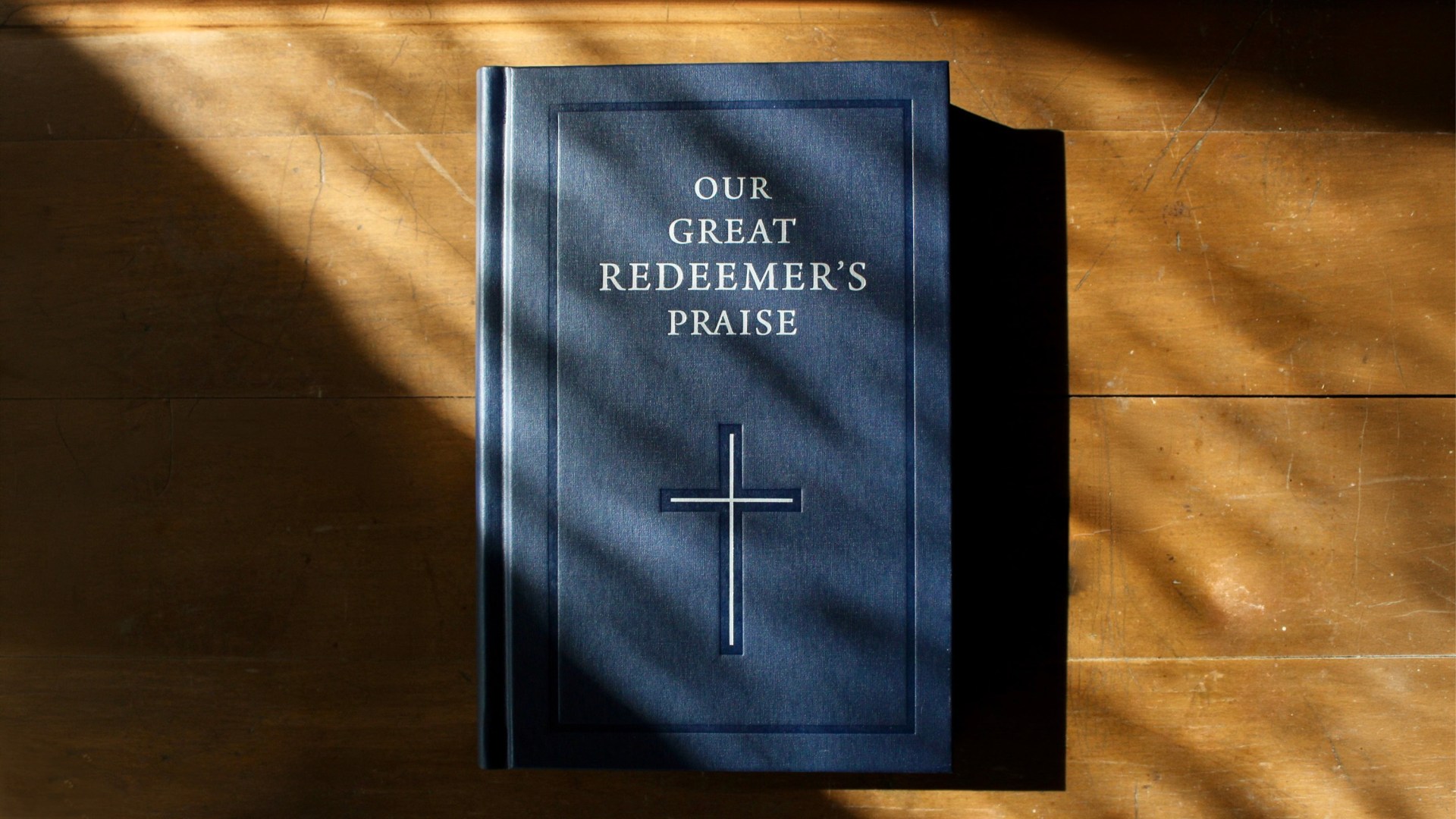
The book cover.
Christianity Today January 6, 2026
Illustration by Christianity Today / Source Images: Getty, IVP

I’d gone through the entire day feeling good, energized, and productive without wanting to drink. I assumed the feeling would continue as the day progressed. But my cravings returned as reliably as the rising sun.

As usual, I dreaded making dinner, so when I saw my neighbors outside with their kids in the afternoon, I avoided cooking. I brought my own children over to play and pushed responsibility out of my mind. As was so often the case, the wine at their house was flowing freely. I often went there, quietly hoping they’d offer me a glass, as they almost always did.

Accepting the glass really didn’t feel like a deliberate choice.

Wine with friends on a beautiful Tuesday afternoon—that’s a very normal thing to do. Normie drinkers do that, and I was definitely normal—at least I tried to be.

I drained the glass within ten minutes. My friend graciously offered a refill. Who was I to refuse? I could get a little buzz, which would help with the dinner dread, and my husband wouldn’t even know I’d been drinking. Or I could tell him it had just been a little.

Once home, I was brooding with self-hate for decisions I knew had brought this on. I chugged a glass of water, made a pile of cheese quesadillas, and ate until I felt sick. I hoped without hope that the food would soak up the alcohol. That’s it, I told myself. I’m quitting drinking tomorrow.

Fifteen years after these awful tendencies had begun in my life, they were still running rampant and worse than ever. I knew there was a better way, but everything seemed pointless compared to a buzz. Yoga, meditation, prayer, exercise—sure, I thought those might help a little, but they were so tame compared to the chemical high of alcohol.

That was how my mind operated back then—almost feral when it came to a fix. If you look closely at both people and animals, there’s a natural, almost primal instinct to fix what feels off—as fast as possible.

Animals and humans cope with pain differently, but it’s for the same primary reason: When a core need goes unmet, we reach for something to fill the gap. When social, emotional, and spiritual deficiencies overshadow our sense of security, belonging, and purpose, our brains search for anything that will ease our pain. Drinking is simply one method of temporarily meeting our unmet needs.

This is the theology of addiction I wish I had heard in the beginning of my recovery journey. It echoes the truth I mentioned earlier: You can’t self-discipline your way out of addiction. You can’t pray hard enough or be “spiritual” enough to beat alcohol dependence on your own. That’s not because you’re weak—it’s because life is challenging and substance reliance is powerful. By grace, Christians are uniquely empowered—not merely by mental or emotional tools but by a spirit made alive through the Holy Spirit (Gal. 5:16).

As Christians, we carry something our secular counterparts don’t: a spirit made alive by the Holy Spirit. Recovery isn’t just behavior modification—it’s soul-level renewal, dealing first with any spiritual roots that may be feeding our addiction, empowered by the Spirit of God within us.

Thankfully, we can implement self-forgiveness, which can help us overcome the Enemy’s greatest tool: shame. We can do this by applying Scripture and evidence to understand God’s perspective, instead of continually relying on our own faulty beliefs.

This theology reminds us that addiction is far deeper than a sinful choice. It’s more like being in bondage. Maybe that sounds dramatic to you. But even if you wouldn’t describe yourself as a captive, isn’t alcohol dependence exhausting? Praise God, Jesus came to set the captives free (Luke 4:18). And we don’t have to earn that freedom by perfect behavior or religious effort; instead, we receive it through acceptance, surrender, and grace.

Remember the beautiful words God gave to Paul: “My grace is sufficient for you, for my power is made perfect in weakness” (2 Cor. 12:9, ESV throughout). You might feel weak, as if you’ve failed. But the gospel assures us that we need not be strong. God’s grace is not for some future, better version of you—it’s for right now, in your raw, real efforts to make better choices. God sees your desire for change and meets you there in whatever wilderness surrounds you.

Psalm 34:18 reminds us, “The Lord is near to the brokenhearted and saves the crushed in spirit.” Being crushed in spirit resonates with me bigtime. How many times did I disappoint myself? How many times did I end up back at square one? This Bible verse was often my only solace. You and I don’t need to prove ourselves to God. He already knows us, loves us, and is committed to our restoration.

Today, I’m able to look at my experience through the lens of mental health and addiction theology. I can better understand Scripture and God’s perspective on these matters in my heart, and I can see each step of my journey to today with grace and truth.

“For I do not do what I want, but I do the very thing I hate,” wrote Paul (Rom. 7:15). For me, that may be the most relatable verse in the entire Bible.

Sound familiar?

The verses after that one can be a comfort for us, though: “As it is, it is no longer I myself who do it, but it is sin living in me. For I know that good itself does not dwell in me, that is, in my sinful nature. For I have the desire to do what is good, but I cannot carry it out” (vv. 17–18, NIV).

We are all born with a sinful nature, unable to overcome it without the grace of Christ. He atoned for every part of our nature, including those elements that feel out of our control. We relieve performance pressure by accepting this fallible nature and believing that any good in us comes from God alone. It’s not possible to “do what is good” without God. And while giving everything to God may seem difficult, there’s hope in day-to-day, even moment-to-moment, surrender.

In the case of addiction, the “sinful nature” of seeking alcohol has compulsively taken root in the brain. The addicted or dependent brain turns off certain natural functions that must be intentionally retooled to work correctly again. In the grip of addiction or dependence, our brains naturally gloss over painful memories or consequences. Often, our minds deceive us, downplaying the anxiety, hangovers, headaches, and regret, convincing us that the situation isn’t that bad or that we don’t have a “real” problem. But we need to see through these biased memories and misunderstood myths.

In the video “How an Addicted Brain Works,” a Yale Medicine team explains that “addictive substances trigger an outsized response when they reach the brain,” which ultimately causes “dopamine to flood the reward pathway, ten times more than a natural reward.” I want to emphasize again what researchers explain about alcohol and the reward system: “Achieving that pleasurable sensation becomes increasingly important, but at the same time, you build tolerance and need more and more of that substance to generate the level of high you crave.”

Once we’re aware of scientific realities, we can begin to view our own situation from a more rational perspective. So, please, forgive yourself for what you didn’t know. Forgive yourself for taking all the blame and being lied to by the world about the harms of alcohol.

Once you take all the pressure off yourself, you can healthily take up a mantle of responsibility—which is graciously lightened by our Lord: “‘My grace is sufficient for you, for my power is made perfect in weakness.’ Therefore I will boast all the more gladly of my weaknesses, so that the power of Christ may rest upon me” (2 Cor. 12:9). Thank God he didn’t make us dependent solely on our own strength. Today’s world tells women to save themselves, love themselves, and find themselves. That’s the wrong answer. We have a role to play, but we are not the remedy. He’s the solution.

In a sermon, the pastor Alistair Begg once said, “Don’t ask me what I feel about myself. Ask me what I know about God.” I want to tattoo that on my forehead. Our feelings are fleeting and unreliable. But what’s true about God? God’s truth is immovable, unchangeable, covenanted. Don’t just say you believe it. Actually believe it.

Our triggers have power only when we deliver their demands. They’ll soon shut down when they realize we refuse to do so anymore. We know that God is sovereign and that only he holds the swirling of the universe in his hands. By the power of the Holy Spirit, God has given you the ability to say no. And he’s promised to help you do it.

Pain is inevitable, but we have control over how we cope with it. You’ve been using unhealthy tools to cope with uncomfortable parts of life, but now you know there are alternatives for that.

When we think of “spiritual” tools, we might think of prayer, Scripture, and worship. We can rely on these, but God has provided us even more to help us overcome—friendships, family relationships, mentors, marriages, church family, biblically grounded books, podcasts, support groups. And we have healthy coping mechanisms like breath work, exercise, laughter, and music. We can put God first in our journey and also deploy the many modes of recovery that prove helpful.

When we “work it”—as they say in Alcoholics Anonymous, the tools and healthy ideas we’re learning now—we are free to make better choices in the future. Forgive yourself for choices you made long ago without fully understanding their consequences. In hindsight, you might have chosen differently.

Adapted from Freely Sober by Ericka Andersen. Copyright (c) 2026 by Ericka A. Sylvester. Used by permission of InterVarsity Press.

Church Life

Death of a Eulogy

Christian funerals are increasingly secular. But how can Christians go quiet on the gospel at these of all moments?

A Funeral by Anna Ancher

A Funeral by Anna Ancher

Christianity Today January 5, 2026
WikiMedia Commons

I’m troubled by a trend I’ve seen with funerals. 

For the last decade, I’ve been the preaching minister at a rural congregation in the Bible Belt South. My outpost is nowhere near Nineveh. In fact, if anywhere enjoys protection by the ghosts of Christendom past, it’s here. A lot of conservatism lives in my backyard—conservatism of every kind, but especially theological conservatism. The impulse is strong to protect the deposit of faith from our forebears and guard against worldly powers that would undermine our beliefs. If the Christian funeral is going right anywhere, it ought to be going right here. 

But I’m not confident it is. For instance, a few months ago I preached at the funeral of a great Christian man from our church, one who had lived a long and prosperous life as Psalm 91:16 envisions: “With long life I will satisfy him and show him my salvation.” 

The problem when someone lives so long, however, is that the funeral is not usually well-attended. He had outlived most of his congregational contemporaries, so it was a small gathering primarily comprising extended family members I did not know. Still, these were Christian folks. After the service began and it was my turn to speak, I started, as I like to do, with some remarks of sympathy for the family and a few anecdotes about the deceased, qualities I’d admired, that sort of thing. 

Then, somewhere in the middle of the eulogy, I made the turn to the gospel, the only hope we Christians have and the sole hope of this man now slumbering in the Lord. But a strange feeling came over me, and as I spoke I was alarmed by the body language of my listeners (always distressing for public speakers). It seemed I had mostly lost them. 

Some were fidgeting again with their programs. (Now what was the next item on the agenda? Oh, right, the closing prayer.) Some were checking the time. Their lack of interest after ten minutes seemed to interrogate me: What are you talking about? And are you almost finished? We just wanted a nice service, not a sermon.

What I felt in that moment I intuit elsewhere and in other ways. More folks are opting for whichever form of funeral can call the least amount of attention to death. Even the word itself—funeral—is out of style, and I hear ever more of memorials, celebrations of life, private gatherings. We would not like a preacher, people say. Someone from the family will say a few words instead

When I am asked to speak, I sometimes hear similar messages in the tone and subtext of the family’s desires for the service: Don’t go too long. Accentuate the positive. Our loved one wouldn’t want us to be morose.

It leaves me wondering if that’s really what the deceased wanted. How can Christians come to the end of their lives and, on death’s doorstep, abandon the gospel? A funeral strikes me as exactly the wrong time to drop this theme.

Of course, I understand it when nonbelievers want to avoid talk of death. These choices make sense from unchurched families. But I’m talking about the funerals of women and men who, from every indication of their lives, were on the right side of this story. These were churchgoing, Bible-reading, Christian-radio-listening folks, people who heard 70 or 80 Easter sermons about Christ as the resurrection and the life, the victor over death itself (1 Cor. 15:20–32). 

How can such Christians come to the end of their lives—lives of taking up crosses, following the crucified one, dying daily, knowing that Christ alone conquered death—only to ask for a low-key funeral with no clear presentation of the gospel? And how can Christian families be content with a service more likely to share hobbies than the truth itself? What does this say about the faith of those in our pews or the direction things are heading for American Christianity? 

I’ve come to think that parishioners’ desires for basically secular funeral services with a Christian veneer reveal that our theology is not sufficiently robust. Their attitude calls into question whether I am proclaiming the gospel often enough, clearly enough, or winsomely enough. Parishioners’ desires for tepid preaching at Christian funerals portends the failing of our hope. 

To be sure, funerals accomplish many things. They are mostly for the family, for the living, I hear often. I wonder if this is true. Either way, celebrating or remembering life is a good work. Still, Christians are supposed to be all in on the Resurrection. 

Few moments in life warrant as clear and confident an articulation of the gospel than a funeral. That doesn’t mean overdone, opportunistic sermons that capitalize on a captive and grieving audience to win souls. In my experience, funerals that seek to convert the living most often only irritate them. What I am prescribing is a eulogy that simply and clearly articulates, clings to, and celebrates the Christian hope. 

Congregants may have little appetite for a witness that takes death seriously while proclaiming escape in Christ’s empty tomb. Such loss of appetite for the gospel (especially in the wake of death) is troubling, but it is also a firm reminder of the important work ministers do. We are not the first to say the words “Now I would remind you, brothers, of the gospel” (1 Cor 15:1, ESV). In every age, this will be our fundamental task, for our people (saved and sanctified though they are) are prone to forget it. 

Matthew D. Love teaches preaching and ministry at Harding School of Theology.

Ideas

Christianity Today: A Declaration of Principles

Editor in Chief

Where we stand at seven decades—and how readers can help.

Hands holding a CT magazine.
Christianity Today January 5, 2026
Illustration by Christianity Today / Source Images: Getty

The evangelical world includes a vast variety of perspectives, ethnicities, and geographies. It’s blue-collar and advanced degrees, covenantal and dispensational, Reformed and charismatic, and none of the above, all under the same tent.

Christianity Today lives in that big tent. In common with our fellow evangelicals, we believe in the authority and sufficiency of the Bible and the centrality of the gospel of Jesus Christ. We desire to live out our faith in service to others and to see more people in more places embrace the life-transforming Good News.

CT is committed to orthodox Christian doctrines on the Trinity, Scripture, Adam and Eve, the Fall, Christ’s redemptive work on the cross, resurrection, and biblical inerrancy. We affirm the Nicene Creed and the Apostles’ Creed as well as CT’s own statement of faith. These commitments shape our journalism and all content production at every stage.

We apply these understandings when thinking through much-debated current issues. CT is pro-life. That includes more than opposing abortion—we also oppose euthanasia and eugenics—but certainly not less. CT hosts disagreement on tactical questions about the best ways to end the evil of abortion but not on the ethic of life. All of us, born and unborn, regardless of ability or disability, are created in God’s image.

We believe that God designed sexual activity to be in the context of a marriage between a man and a woman and that all Christians are called to chastity—abstaining from sex before marriage and practicing fidelity within marriage. We believe the sexed bodies given by God determine whether we are men or women. To be blunt, CT is not theologically affirming on LGBTQ issues and does not publish affirming perspectives.

As a US-based media ministry, we endorse and uphold the US Constitution with its checks and balances, rule of law, and Bill of Rights. We are dispositionally conservative—not reactionary or opposed to progress but biased toward due process and respectful of time-tested wisdom. We oppose extremists on the right and the left who put power above persuasion. 

We believe Christians are called to show compassion to the poor, the homeless, and immigrants. We see that many governmental aid programs have failed, so we look for ways to further charity. We oppose racism, antisemitism, and ethnic hatred.  

We try to approach every issue through the lens of Scripture, and therefore we oppose any attempt to put humanity’s purported wisdom above God’s. We remember that all have sinned and fallen short of the glory of God, so we are skeptical of ideological pronouncements. We value street-level reporting over suite-level orating. 

We do not lobby for or against legislation or endorse or oppose candidates for office, though certainly we praise and critique policies and politicians. And though many of our journalists do vote, per our editorial code of ethics they are not permitted to donate to campaigns or political action committees. 

We aim to be transparent. Journalism as an industry has seen rapid change over the past four decades, much of it mystifying to the reading public. CT has begun to publish our internal editorial policies, including our corrections policy, our fact-checking policy, and a statement on how we investigate abuse allegations

Within our commitment to evangelical orthodoxy, we welcome readers and writers from an array of denominations and theological traditions. You’ll find in our pages differing opinions on baptism, predestination, and roles of women in the church and home. On these and other weighty matters of faith and practice on which evangelicals disagree, we work to represent a variety of views in our pages—and to represent them fairly.

Now that I’m 75, I feel all the more strongly about affirming the basics while learning from others in areas of disagreement. I hope for more time with my wife of 50 years and within my journalism profession of 55 years. But I also look forward to life on a new earth where we will see Jesus face to face and I’ll be able to sit in a Library of Congress reading room where every volume is filled not just with imaginings but with truth. 

In the meantime, I want to learn more from not only CT staff and freelancers who work within our commitments but also readers. What is your response to this declaration? Please let us know by sending an email to editor@christianitytoday.com. We’ll publish a diversity of letters in an upcoming issue.

Marvin Olasky is editor in chief of Christianity Today.

Culture

The Vanishing Gifts of Boredom

How technology steals uncomfortable yet formative human experiences.

A person holding a phone.
Christianity Today January 5, 2026
Mark Aliiev / Unsplash

While any time is good for “out with the old, in with the new,” the New Year offers a fresh calendar page on which to plot out changes we hope to enact in our lives. Though research reports that most Americans make New Year’s resolutions for embodied life changes—better eating, more exercise, less shopping, and more socializing—ever-present digital technologies are obstacles to our success from day one. 

The Bulletin’s Mike Cosper sat down with historian and author Christine Rosen to talk about this tension between the life we need and the life to which technology lures us. They discuss the disciplines of slowing down, practicing patience, and choosing embodied relationships over virtual ones. Here are edited excerpts from their conversation in episode 138.

What do you as a historian think is going extinct in our culture, and how is it dying out?

When my sons were working on handwriting in elementary school, I noticed how little time was spent teaching them cursive writing. I always struggled with handwriting as a left-handed person, and I wondered, Is this valuable for my kids? 

My generation used to take for granted certain experiences, such as face-to-face interaction, waiting patiently without being entertained, the ability to do things with our hands. There weren’t many alternatives to these. Today, a vast range of digital experiences are supplanting the old ways of doing things. 

From childhood all the way to adulthood, we form habits. Some of those are individual, but many of them are cultural and social. The questions that drive me are “How does taking away tactile, embodied experience change how we understand the world around us?” “How has technology changed the way we develop our habits of mind?” “How has it changed the way we solve problems and the questions we ask?” And in light of these questions, what’s worth preserving? What things might we be embracing too rapidly without asking important questions about the opportunity costs involved?

We carry devices with us everywhere we go. They are intimately part of our daily lives in a way that previous technologies never were. We have to ask tougher questions and have tougher boundaries because everything about technology is meant to infiltrate your daily life.

Because we’re human and we like to trust these objects and all the information on them, we start to seek wisdom from them rather than just information. We look to them to make judgments for us rather than just provide options or convenience. These are questions of value and virtue. That’s not what technology is supposed to do for us or to us, but it is something I think we have too often allowed it to do. And it’s not good for us.

What is the appeal of the mediation of a device for us?

There’s both the convenience and ease of the technology and a conceit that all the world’s information is available at your fingertips. These technologies have risen at the same time that society has become more mistrustful, lonely, and secular. Our mistrust of institutions has us looking around for easy answers, but the challenges are really about human nature.

Today, whether we’re surrounded by strangers on the bus or sitting in a meeting at work or with our loved ones around a table, when we begin to feel uncomfortable, we can remove ourselves mentally and emotionally. That has consequences.

When we didn’t have that option, we had to learn those human skills of “how to deal,” as the kids used to say. We couldn’t escape. Now that we can escape, we find ourselves doing it all the time. We are all prone to this. 

Because of the design of the internet and search being driven by ad revenue, it is clear: We are the product. The devices are designed by people who know how the human mind works and what keeps us coming back for more. Monetizing our attention is the goal. It doesn’t matter if that attention is positive, negative, hateful, or happy. Because we are flawed creatures, we tend toward impatience, anger, fear, anxiety—the things that really fuel unsavory behavioral responses online. Is that true of the entire internet? Of course not. But over time, through passivity, we have relinquished ourselves to much of it. 

Silicon Valley theorists and technologists are already trying to implement a tech utopia that overlays a virtual world on the real world. Their argument is that virtual reality is great because the real world’s too difficult for many people. A virtual world gives them more control. 

However, trying to escape our physical reality cultivates certain anti-virtues. Control is a conceit: It’s created by the people who create the platforms. That vision of the future is deeply unhealthy and inhumane and also proto-totalitarian because it gives so much power to a few who create a world that many must live in with little control. 

A lot of theorists are arguing that we can rebuild in different ways that allow for connection without so many of these negative side effects. I’m optimistic that we can move into a new era where architecture and design questions can come to the forefront and address human needs and human experiences.

We still live in physical bodies, and one day, those bodies will become weak or sick. Bodies of those we love will become weak or sick. Then, what do we owe to the other person? We cannot live by whim. We have to live by obligation and trust. We owe each other things if we’re healthy communities.

How might we think differently about the role of waiting in our everyday lives?

Some years ago, I realized that whenever I had a moment, waiting for the bus or waiting in line—or just interstitial time—I would pick up my phone and look at it. I would go online and waste time. Those minutes accumulate over a day, a week, and a lifetime. 

Interstitial time is actually quite valuable. It allows your brain to rest from stimulation. It allows your mind to wander and maybe come across a new idea. It also teaches some form of patience. 

When you scale up hundreds of millions of people who fill every single moment of downtime or boredom with entertainment, you are cultivating a population that has vast cultural impatience—and not just for each other but for solving difficult issues in politics or in communal life. You can see how it scales up.

Do I want people to sit around and be bored all the time? No, but boredom does teach some things. It teaches a kind of mental discipline. It teaches an acceptance that you can’t always control your environment, and it lets your mind have the fallow time that it needs in a world where you’re constantly bombarded with stimulation and information.

The availability of technology also creates a mindset where we’re expected to be productive at times in our life where maybe we shouldn’t. Our leisure time has now become something we measure and manage and want to feel productive doing. The self-tracking movement started a lot of this for people. It can be helpful for people who are trying to achieve certain physical goals or fitness goals or whatnot. 

This idea that we should become more machinelike in our behavior—I’ve got 15 minutes. I’ve got to make my widget; I’ve got to answer all my emails—we feel efficient because we can do what we should. In some countries, however, workers rebelled against their employers, saying you cannot send an email after 6:00 p.m., because they were completely overwhelmed and burned-out and didn’t have a clear separation between their work world and their private world. 

We do need boundaries. We need that backstage time where we can let down our hair

and be with our people and not have to worry about being productive. That impulse to productivity is also something that doesn’t allow for contemplation and rest. And these are things that humans need. We need time for those things.

Where are you encouraged by people’s recognition of embodied needs?

The most encouraging thing is that people are simply willing to be more skeptical and ask more questions before they adopt new technologies. I mean it sincerely: We have to actively defend human things. 

For example, a smartphone wants to introduce an embedded sensor on your phone that’ll monitor your heart rate and your galvanic skin response on an app that tells you when you’re anxious. If you’re talking to someone who makes you anxious, you could possibly eliminate that person from your life because of this feedback. 

But what if you look up and see your good friend? They’re just annoying because sometimes friends can be annoying. Do we need to outsource and externalize our own intuitions, our own emotional experiences, to machines, to algorithms, to the phone? This is where we should pause and evaluate. 

The same thing is true with people at the most vulnerable stages of life, children and the elderly, where there’s a real push to outsource their care and feeding to technology. Do older people need monitoring, not by fellow human beings but by robots or constant surveillance cameras and sensors they can wear, so absent caregivers are alerted in the event of a person’s fall? No, that’s our job as humans. We owe that to each other. 

My wonderful libertarian friends scold me for being pessimistic about where some of these technological horizons are taking us. They say, You’re just being a curmudgeon. You’re being too reactionary. 

To them, I always say, Look at what Silicon Valley theorists think about humans. Humans are often described as obstacles to their bigger project. They talk about humanity, but they rarely talk about people. I care about people. I think we should care about people. Our gold standard should be human interaction, the thing that most people actually crave and need.

History

When the Times Were ‘A-Changin’’

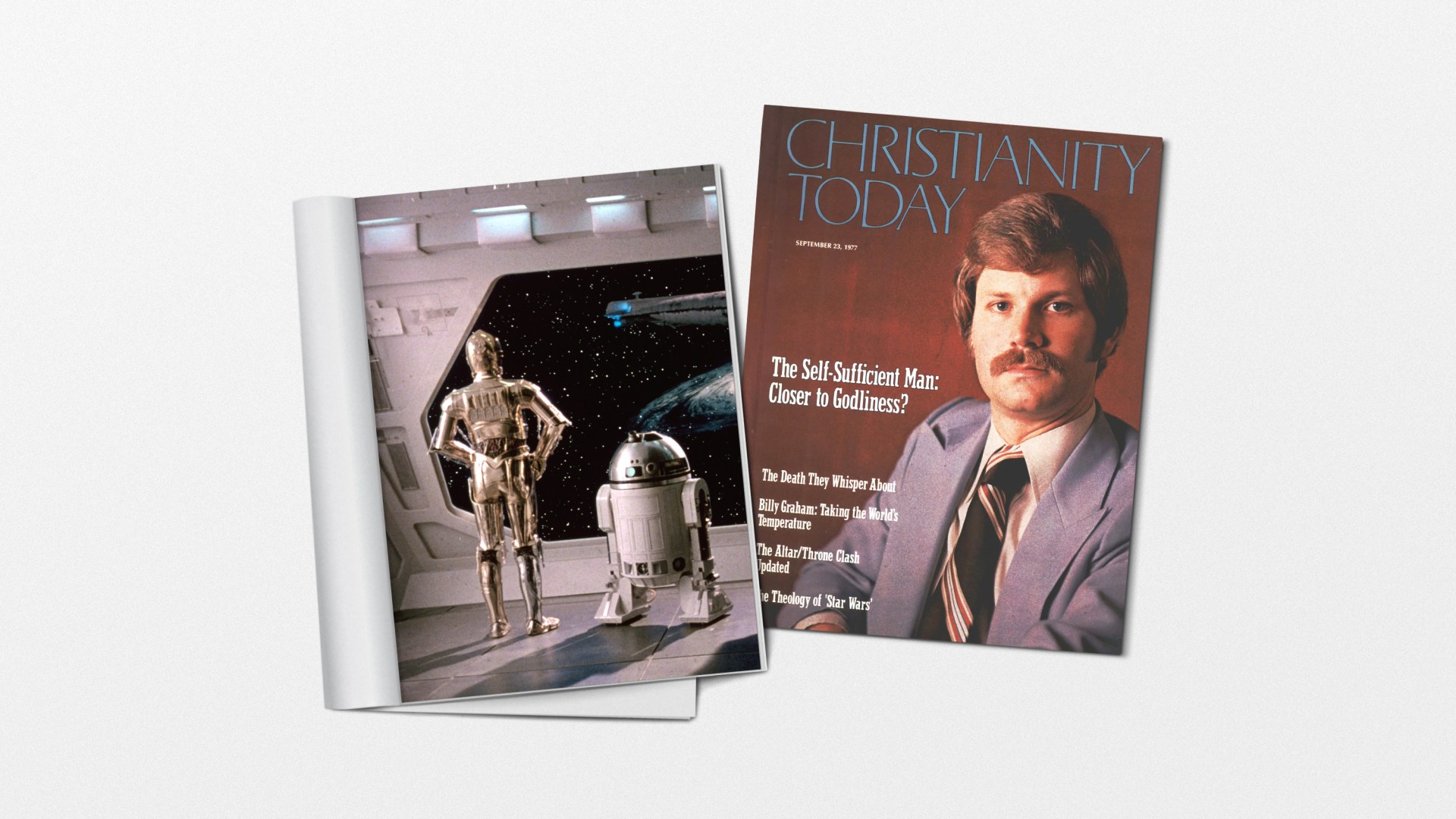
CT reported on 1967 “message music,” the radicalism on American college campuses, and how the Six-Day War fit into biblical prophecy.

An image of soldiers and a CT magazine.
Christianity Today January 2, 2026
Illustration by Christianity Today / Source Images: Getty

CT readers learned that singers—including Bob Dylan, Sonny Bono, Bobby Goldsboro, and Paul Simon (mistakenly called “Pete Simon”)—were putting out music with a message.

Message music is not a style of music, like rhythm and blues or swing. It is a song in any style that speaks directly or indirectly to a basic problem of mankind. Not all rock ’n’ roll songs are message songs. Most of them are about the traditional topics of popular songwriters: love desired, love fought for, love gained, and love lost. But there are songs that are far more serious. They speak of fear, anxiety, war, loneliness, hope, and the difficulties and contradictions of life in the twentieth century. …

They lay bare hypocrisy, hidden fears, the doubts and inadequacies of our generation; they reveal the difficulties of living when the “times they are a-changin’.”

Some of the messages were alarming. On college campuses, a growing number of students embraced radicalism and calls for revolution. CT published FBI director J. Edgar Hoover’s 3,500-word analysis of the “New Left” and its dangerous “gospel of nihilism.” 

To dismiss the New Left, as some do, as a collection of simpletons, eccentrics, and jocular fools is to commit a grave mistake. Its adherents should not, as so often happens, be judged strictly by their Beatnik dress and ways (repugnant as they may be to most Americans). … 

Basic to the New Left’s mood is the idea that contemporary American society (contemptuously called the “Establishment”) is corrupt, evil, and malignant—and must be destroyed. To reform it, to change it for the better, is impossible. It must—along with its Judaic-Christian values—be liquidated. “Let’s face it. It is, to use the crudest psychological terminology, a sick, sick, sick society in which we live. It is, finally, a society which approaches collective insanity—a system of authority-dependency relationships which destroys life and health and strength and creates debility, dependency, and deathliness.” 

For that reason, members of the New Left take great delight in desecrating the American flag, mocking American heroes, and disparaging American history. They contemptuously hiss and boo officials of our government and show scornful disdain for opinions with which they disagree (the New Left at heart is extremely totalitarian, intolerant, and opinionated in nature). They urge resistance to the draft (even on occasions try to interfere physically with the legitimate activities of armed-services personnel on college campuses present for the purpose of recruiting), burn or mutilate draft cards, endeavor to dictate to university administrative officials how these institutions should be run.

One evangelical group sought to engage students directly with the Christian account of what made society “sick, sick, sick” and tell them about the cure that could be found in Jesus. Seven hundred Campus Crusade for Christ staff members spent a week evangelizing students at the University of California, Berkeley. 

CCC activists buttonholed students with straightforward, person-to-person gospel appeals. They staged noon rallies before thousands and conducted evening meetings in scores of residence halls. They infiltrated “The Forum,” a popular Telegraph Avenue coffeehouse frequented by hippies and budding political radicals, and scored many conversions there. Nightly they put on high-quality programs at a 3,000-seat theater. They saturated surrounding neighborhoods with a visitation campaign, and in the campus Plaza area they manned Christian literature tables next to tables run by such groups as the Campus Sexual Rights Forum, the leftist Students for a Democratic Society, and the Maoist-oriented Progressive Labor Party. 

By the end of the week almost 1,000 decision slips were tabulated. … Widespread criticism resulted. The Daily Californian editorialized … “there are limits to these activities which should not be overstepped, and this group of zealots has managed to transgress those boundaries with gay abandon.” It complained that students had been roused from bed by early-morning telephone calls—a charge [Campus Crusade for Christ leadership] denied.

CT reported efforts to loosen legal restrictions on abortion and ongoing public debates about the ethics of abortion.  

Prestigious leaders representing religion and ethics, law, medicine, and the social sciences disputed, debated, and defended the world’s abortion practices during a three-day International Conference on Abortion held this month in Washington, D. C. …

Dr. Herbert Richardson of the Harvard Divinity School, one of the conference conveners, summarized the ethicists’ closed-session discussions: Human life begins at conception, or at least no later than eight days after conception. Abortion should be performed—if at all—only in exceptional cases. Both theists and non-theists saw human life as qualitatively different from all other earthly life, and therefore worthy of special respect. And theists agreed among themselves that religious affirmations are relevant: God is creator of man and the author of life; man is created in the image of God; man is the steward of the gift of life and not its complete master.

Beyond this, opinion diverged. Some moralists deemed it morally possible to take the life of an unborn child under certain conditions as a “human response to God’s love and his neighbor.” Others held that the fetus has inviolable rights; no individual or society has the right to say which shall live and which shall die.

CT also looked at new developments in birth control and asked, “Which Methods Are Moral?” 

The pill—which is relatively expensive and must be taken daily—is popular among affluent, sophisticated people, while the IUD is the most feasible means of mass birth control for developing nations. Though only about 95 per cent effective, the IUD is inexpensive and, once the small loop or ring is inserted in a five-minute operation, requires little attention. An estimated 1.3 million women now use the IUD in India, and South Korea credits 400,000 IUD insertions with a significant drop in its birth rate. … 

The U. S. Food and Drug Administration is studying the safety and effectiveness of IUDs and should report by mid-year. Although ethical discussions on birth control tend to be divorced from biology, scientific evidence leads such Christians as William F. Campbell, a missionary doctor in Morocco, to fear that use of the IUD is “a kind of abortion.”

The biological question is at what point the IUD stops human life—before or after the male sperm fertilizes the female egg. The ethical question is whether a fertilized egg is a human being—whether the IUD may be the mechanism for microscopic murder.

Internationally, CT reported a revival in Indonesia

“It’s too early to put all the pieces together,” says Dr. Clyde W. Taylor, executive secretary of the Evangelical Foreign Missions Association, “but there can be no doubt that revival has broken out.”

Taylor says the best estimates show at least 200,000 conversions from Islam to Christianity within the last eighteen months. Mission boards are assigning top priority to getting help to the workers in Indonesia, now the world’s fifth-largest country. Nowhere before has there ever been a comparable response from Muslims—missionary experts often regard them as among the hardest people in the world to reach.

The success of Wycliffe Bible Translators was also encouraging. CT reported that in 1967, Wycliffe had become “the world’s largest Protestant missionary organization.” 

Evangelical breakthroughs almost invariably occur under strong leaders. Bob Pierce has been the Billy Graham of the evangelically rooted World Vision movement and through plaintive pleas and skillful promotion raises millions of dollars annually for orphan care and general relief work in the Far East. Dapper Bill Bright has led Campus Crusade for Christ, with its simple but intensive evangelistic zeal, into hundreds of colleges in the United States and abroad. In the case of Wycliffe, the genius has been that of soft-spoken W. Cameron Townsend, now 71, whose diplomacy has won him entrée to scores of traditionally anti-Protestant government residences in Latin America. 

Fifty years ago this month, Townsend, product of a California farm family, arrived in Guatemala as a $25-a-month salesman for the Bible House of Los Angeles. The real challenge came with his discovery that the Scriptures were of no use to the Indians because they could not read Spanish. Prodded by their complaint that “God doesn’t know our language,” Townsend set out to translate the New Testament into the then-unwritten Cakchiquel dialect. Although it took twelve years, Townsend not only achieved that goal but also inspired similar projects across Latin America and subsequently in other parts of the world. 

Out of these projects grew Wycliffe, which was incorporated in 1942 and today operates on a budget of about $5,000,000.

Several Communist countries seemed to grow more accommodating and tolerant toward Christians. As CT editors surveyed the global situation, they grew concerned that the temporary ideological compromises of dictators would deceive naive Christians.

Never has the religious situation in Communist countries been more confused and ambiguous than it is today.

Except for Mao’s China, where the fury of the barbaric “cultural revolution” strikes hard against Buddhists and Muslims as well as Protestants and Catholics, a relative calm and a sort of “peaceful coexistence” now seems to prevail between governments and various religious groups. Church delegations from Communist countries visit the United States and other Western nations almost routinely. Various churches of the Soviet Union and other Communist nations have been permitted to join the World Council of Churches and international denominational bodies. 

The greatest breakthrough in church-state relations in the Soviet Union was the first visit of the head of the Soviet Union to the Vatican in January of this year, the fiftieth anniversary of the Bolshevik Revolution. Church dignitaries are now more often invited to official state receptions in Communist capitals though they are not yet asked to say grace at banquets given by Communist leaders. …

A superficial observer might be easily tempted to misinterpret such phenomena. He might conclude, hastily and optimistically, that … a promising new era of a dialogue between Christians and Marxists is at hand. American churchmen, knowing neither the language nor the extent of complex problems in these areas, often make inaccurate and misleading appraisals of the religious situation. Their opinions tend to reflect wishful thinking rather than historical realities.

Evangelicals were struggling in Cuba, eight years after the takeover of Communist Fidel Castro.

The harassment continues more subtly than in 1965, when fifty-three Baptists were arrested simultaneously. Thirty-four of them were brought to trial and sentenced for a variety of offenses, from espionage to “twisting biblical texts for the purpose of ideological diversionism.” To go about with Bible in hand is still an offense. Informers have infiltrated the churches—a fact not only admitted but boasted about by Dr. Falipe Carneado, director of the government’s department of religious matters. Churches cannot build. Theological students are whisked away to military service or to work camps. Unbelievers have been known to attend a church service, stand up at a given moment and sing the national anthem, then accuse those who do not join in of disrespect.

A common device is the street plan. Both ends of a street where a church is located are roped off. …

All in all, the picture is dark. One Cuban expressed it this way: “Our experiences are very sour. We breathe an atmosphere of insolence, tyranny, blasphemy, hypocrisy, lies, betrayal, and indignity. Our palm trees are so sad that they seem to be weeping, and our rivers are dry one moment and flooding at the other. This island is a huge prison with international jailers. We have returned to the time of the Vandals. The only thing we can do is raise our eyes to our blue skies, to the shining sun, to the twinkling stars, and to our God.”

The Castro regime also imprisoned Christian missionaries. CT reported on the experience of two American evangelicals who went to Cuba to plead for their son. 

The Rev. and Mrs. Clifton Fite returned to Waynesboro, Georgia, believing the Cuban government will “deal kindly” with requests to release their missionary son David from prison. … 

The Fites had tried to see their son since he was imprisoned two years ago on charges of currency-exchange violations. They finally succeeded, through the Cuban ambassador in Mexico. Officials “listened with reverence and responded with courtesy” during the fifty-one-day stay in Cuba, Fite reported.

In June, Israel went to war with Egypt and a coalition of Arab nations. CT published firsthand accounts from evangelicals in Jerusalem and Beirut and analyzed the political, military, and eschatological context of the Six-Day War.

Israel, hedged on three sides by Arab foes and outnumbered twenty to one, began fighting to ensure its survival as a nation. After mounting swift air strikes against Egyptian forces, Israeli troops in three short days circled and captured the old city of Jerusalem, controlled the Gaza strip, reopened the Gulf of Aqaba and reached the Suez Canal. …

The Christian can best understand the imbroglio in the Middle East through his knowledge of the prophetic Scriptures. Although the Bible does not describe future developments in detail, it offers much in the way of broad prophetic outline. … The believer will not be bewildered by the tides that sweep the world, nor will he despair over the headlines. …

The prophetic clock of God is ticking while history moves inexorably toward the final climax. And as that clock ticks, the Christian believer lifts his head high, for he knows that a glorious redemption draws near.

Ideas

From Panic Attacks to Physical Discipline

How one new year turned my life around spiritually and physically.

A man sitting by a window.
Christianity Today January 2, 2026
Andrik Langfield / Unsplash

Ten years ago, I was at the unhealthiest moment of my life.

I was a former missionary who had become a corporate lawyer. I had a head filled with great theology, but my job in mergers and acquisitions at an international law firm—combined with parenting two young sons—had driven my body into the ground. I suffered from constant panic attacks and insomnia, the kind that left me with suicidal thoughts and no sleep unless I took sleeping pills or had a few drinks.

I am no longer that person. I now run a law firm; I have four young boys; I write books. My life is certainly not less complicated, but panic attacks are a distant memory and I’m arguably in the best shape of my life.

Lest that sound boastful, let me be clear—God saved me. When I was spiraling out of control, I didn’t know what to do. But God used the grace of spiritual and physical disciplines to change everything about my life.

It started with a new year’s conversation I still remember to this day. I sat down with two of my best friends and asked them to keep me accountable to a few daily and weekly rhythms in the new year.

A decade later, I’m still wrestling with why habits are so spiritual—including health-related ones. Here are four things that I’ve learned.

First, you are mostly your habits. From Aristotle to James Clear, most of humanity has been clear on what makes up a life: our habits. According to one study, about two-thirds of daily actions are not choices we consciously make; they are the product of habit.

This is particularly important when it comes to our bad habits. Take mine at that time: scrolling emails constantly at home, eating things that make me feel horrible, snapping at my kids. All of us know better.

But the part of our brain that knows better is not the part that is churning along in habit. So we become the way I was: a good head with bad routines.

The problem is, when your head goes one way and your habit goes another, your heart tends to follow the habit. Habits start to get really spiritual really quick.

Second, habits are worship drivers. We are living in a resurgence of liturgy. Liturgies are the things in a worship service we put on repeat because we want to be formed in the image of the God we worship. But notice the similarity of habits and liturgy: Both things we do over and over, both things form us.

The big difference is that liturgy admits that it’s about worship. In our day-to-day lives, our patterns often obscure what we worship. But that doesn’t mean we’re not worshiping. The only question is what we are worshiping.

Third, your body is spiritual. It’s impossible to talk about habit without talking about embodiment, because we’re talking about a lower brain function. The impact of habit is very different from the impact of head knowledge. One does not automatically transfer to the other. You have to take knowledge and put it into practice. And that’s when whole-life transformation begins to happen. Jesus illustrated this very colorfully for us (Matt. 7:24–27).

Modern Christians tend to get nervous here, because we think that when we talk about the body, we are leaving the realm of spirituality. But this is not how the Bible sees the world. God made our bodies. He called them good. He saved us by the body of his Son. He is going to raise our bodies to new life. As C. S. Lewis put it in Mere Christianity, it’s no use trying to be more spiritual than God.

This is precisely why the spiritual disciplines are so physical, and why physical disciplines are so spiritual. It’s we who divide up the world into sacred and secular. Well, us and the Enemy. But it is not God. He’s very clear on this: Our bodies are sacred—and our habits are too.

Fourth, physical disciplines are spiritual disciplines. This means that the ways we eat and exercise are as spiritual as the ways we fast and pray. I am a living testimony to this. I will attest that spiritual disciplines like morning kneeling prayer and putting Scripture before phone absolutely changed my life ten years ago. But I am a lawyer, and I would not be telling the whole truth and nothing but the truth if I did not say that respecting sleep, embracing a healthy diet, and practicing regular exercise changed my mental health as much as the spiritual disciplines.

This is because anxiety is never just a head problem; it’s always a habit problem too. (The reverse is true as well, by the way.)

But I used to worry this fact somehow meant I was admitting that “the world’s” solutions to my mental health were better than God’s solutions. I don’t know when I forgot that all truth is God’s truth. I don’t know where I missed that everything biological is also theological. I don’t know why I didn’t take “honor God with your bodies” (1 Cor. 6:20) as seriously as “make disciples of all nations” (Matt. 28:19).

But I didn’t. I was a product of our modern, gnostic moment like we all are, and I had limited Christianity to a head project. But even people who love the head like Abraham Kuyper said that Christ calls out “Mine!” over every square inch of the universe. That means bodies too.

When you put all of the above together, you realize that your embodied habits have an enormous spiritual impact on what the Bible calls “the heart.” The way I like to put this is that the body teaches the soul. By that, I mean that God doesn’t just use our knowledge of him to shape our habits; he also uses our habits to shape our knowledge of him.

For example, moderate exercise is not only good for our health but also trains our heart to respect discipline of all kinds. For the sake of loving our families better and for the sake of self-control, Christians should see some form of exercise, however limited, as holy and useful to the Christian life.

Likewise, eating simply and healthily is not only good for our physical and mental health. It’s central to interrupting everyday idolatries such as gluttony and vanity. Christians should see a healthy diet as central to stewarding their body to love neighbor, and as central to rejecting loving anything more than God.

And a sleep rhythm is as spiritually formative as a sabbath rhythm is physically formative. Christians cannot be people who preach a gospel of peace while living in the unrest of incessant work. Calling it a night or taking a day off to sabbath are central ways we proclaim the truth of the gospel—and central ways we enjoy the truth of the gospel. On the cross, Jesus said “It is finished” partly so that you can calm down and take a nap.

If I could go back ten years and meet myself in the midst of my anxiety crisis, I would want to encourage that version of myself: “Embrace the new year health habits! God made your body. Caring for it does not have to be vanity. Stewarding your mental health is necessary to loving God and neighbor. So do it for love.”

This new year, I want to encourage you to do the same. Our bodies bear the image of God, and God is love! We shouldn’t idolize our bodies, but we shouldn’t ignore them either. We should image God through them by stewarding them for the sake of loving God and loving others.

Habits won’t change God’s love for you. But God’s love for you should change your habits.

Justin Whitmel Earley is a lawyer, speaker, and author from Richmond, Virginia. He is the CEO of Avodah Legal and the author of numerous bestselling books, including Habits of the Household and, most recently, The Body Teaches the Soul.

Books

Reexamining Thomas Jefferson

Three books on history to read this month.

Three book covers.
Christianity Today January 2, 2026
Illustration by Christianity Today.

This piece was adapted from CT’s books newsletter. Subscribe here.

Walter Isaacson, The Greatest Sentence Ever Written (Simon & Schuster, 2025)

Walter Isaacson’s brief book The Greatest Sentence Ever Written marks America’s 250th birthday by considering the Declaration of Independence’s second sentence and its “self-evident truths” of equal rights by God’s endowment. The Greatest Sentence is a great concept for a book, focusing on an undeniably great sentence. But the book doesn’t live up to its potential.

Isaacson, the author of popular biographies, including one on Benjamin Franklin, gives surprisingly sparse attention to what the declaration’s second sentence actually says. Instead, he is mainly concerned with using the sentence to offer anodyne comments about American capitalism needing communitarian constraints. Many Christians would agree with him about how a free society also must inculcate care for one’s neighbors.

But Isaacson seems ambivalent about the second sentence’s invocation of God’s created order as the basis for human equality. On the book’s first page, Isaacson claims that the Declaration based fundamental human rights “on reason, not the dictates or dogma of religion.”

In the next sentence, however, Isaacson acknowledges that Jefferson and his composition committee (including Franklin and John Adams) asserted that God created us equal and endowed us with fundamental rights. Isaacson assumes but does not demonstrate that Jefferson wouldn’t have explained the grounds of our rights in religious terms. He speculates that John Adams suggested the “endowed by their Creator” phrase.

Louis P. Masur, A Journey North: Jefferson, Madison, and the Forging of a Friendship (Oxford University Press, 2025).

More rewarding than Isaacson’s book is Louis P. Masur’s gem A Journey North: Jefferson, Madison, and the Forging of a Friendship. This book is a microhistory of Jefferson and Madison’s six-week trip in 1791 to the northern states, which solidified the Virginians’ friendship and political alliance for the next 35 years.

The six-week journey itself doesn’t yield much source material. But Masur imaginatively uses highlights of the trip to illumine Madison and Jefferson’s views on topics such as science, race, and language.

The men’s Federalist opponents swore that Jefferson and Madison were in the north to bolster the incipient Democratic-Republican Party. (New England was the nation’s stronghold for the Federalist Party of George Washington, John Adams, and Alexander Hamilton.) Masur insists that the trip was not primarily political but was for “health, recreation, and curiosity,” as Madison put it.

Madison and Jefferson fished, hunted, and studied plants and trees. They stayed at dozens of inns, which Jefferson diligently rated in his journals. (He would have loved posting Google Reviews.)

Masur is fully aware of the men’s failings, especially regarding slavery. He represents these founders as the curious, humane, and imperfect people they were. They were admirably capable of learning. Jefferson, as on many scholarly topics, became nearly obsessed with the science behind New England’s sugar maples. He tried to grow them in Virginia for decades; alas, the climate there was too warm.

One of their most fascinating encounters was with Black farmer Prince Taylor of Fort George, New York. Taylor, a Continental Army veteran, owned a 250-acre farm “which he cultivates with 6 white hirelings … and by his industry and good management turns to good account,” Madison noted. Such an arrangement of Black ownership and white labor would have been incomprehensible in Virginia. Madison didn’t comment further on Taylor, but the experience reminded the slaveholders that the principles bolstering Virginia plantation slavery did not hold true everywhere, even in the America of 1791.

Daniel J. Boorstin, The Lost World of Thomas Jefferson (Beacon Press, 1948)

Daniel J. Boorstin’s classic book The Lost World of Thomas Jefferson helps us fathom the cosmology that lay underneath Jefferson and Madison’s curiosity about sugar maples. Boorstin, a historian and librarian of Congress, mapped Jefferson’s intellectual world and those of colleagues affiliated with the American Philosophical Society (APS), which Jefferson served as president. These associates included the radical democrat and skeptic Thomas Paine and the English Unitarian minister and scientist Joseph Priestley. Priestley’s writings on Unitarianism profoundly influenced Jefferson’s mature religious views.

Boorstin shows that Jefferson and his APS circle viewed God as the “Supreme Maker” and the great “Architect and Builder” of the world. Jefferson’s views about nature and political rights depended on a created order. While his specific beliefs (including his denial of the Trinity) contradicted the great tradition of Christian theology, Jefferson could never dispense with the eternal God as the creative force behind the observable world.

Whether discussing human equality or botanical science, Jefferson assumed that nature operated according to predictable rules and that a rational Creator stood behind those rules. Jefferson thus doubted specific Christian doctrines, but his views of creation were conventional among Americans of the founding generation.   

Thomas Kidd is research professor of church history at Midwestern Baptist Theological Seminary.

Ideas

Where Your Heart Is, There Your Habits Will Be Also

We won’t want to change until we know why we need to and what we’re aiming for.

Christianity Today December 31, 2025

Tuesday, 7:45 a.m. The alarm clock glowed in my face, reminding me that I needed to log in to work in 15 minutes. I said good morning to my husband, jumped into a pair of sweatpants, brushed my teeth, and grabbed a bowl of cereal to eat while catching up on messages from my coworkers.

This is how every day went for months.

I didn’t see any problem with my routine—I’m not a morning person and don’t like to be up any earlier than I have to—but my husband gently pointed out that my priorities seemed out of order.

“I want to start the day by connecting with you,” Zack said. “When you check your phone first thing in the morning, it feels like it is more important to you than I am.”

Then it hit me. Does God feel the same way? I wondered.

I realized that my habits were reinforcing my tendency to prioritize work over my relationship with Zack and my relationship with God. I asked myself, What am I saying to myself when work is the first thing on my mind when I wake up? Who am I prioritizing? Why? 

We’ve since found some answers and built a new routine for our mornings, and it’s stuck for five months and counting. In asking myself why it’s so much easier to stick with this rhythm than following ideas from social media or sporadic urges to do better, I realized I’ve given this routine more thought and care than I have most habits.

We won’t want to change until we know why we need to. We won’t know how to change until we know what we’re really aiming for. As the Bible continually emphasizes, good habits start with questions about our own motivations.

In many cases, we hardly have to convince ourselves that we need to change. We’re aware that we reach for desserts too often, we neglect the exercise our bodies were made for, and prayer often can be our last resort. We could all come up with a number of habits we’d like to change.

But we often miss the chance to go a layer deeper and think about who we are becoming. We often forget to see ourselves as characters in the story of the gospel, living it out or rejecting its truth in our daily actions.

Justin Whitmel Earley, author of Habits of the Household, says, “Our routines become who we are, become the story and culture of our families.” Earley calls habits “little routines of worship, and worship changes what we love.”

When I woke up 15 minutes before work, I was prioritizing comfort, sleep, and a prompt work attendance over so many other things: a few minutes of prayer, a healthy breakfast, a hug for Zack. I shaped myself in habits of hurry; I worshiped productivity.

The problem wasn’t that I was starting early or had a short morning before work. It was that I had allowed my heart to worship work, and thus I neglected the other responsibilities God had given me. I was starting to love success and recognition over all else. I would check work messages on evenings and weekends and respond immediately to coworkers even during designated off-hours. Without realizing it, I was telling myself every morning that success at my job was the most important thing in my life.

The Bible has much to say about the rhythms of our daily lives, including an entire book (Leviticus) with detailed instructions for what to eat, how to deal with medical issues, and how to celebrate holidays. Moses reveals the reason for attending to these details: They are “so that you, your children and their children after them may fear the Lord your God as long as you live by keeping all his decrees and commands that I give you, and so that you may enjoy long life” (Deut. 6:1–2).

Habits are worship—or lack thereof—and good habits prime us to love God. Then, our love for God primes us for good habits.

“Seemingly tiny habits cause major spiritual growth,” writes Hanna Seymour, author of the forthcoming book Everyday Spiritual Habits. She adds that our “run-of-the-mill and even chaotic days are fertile soil for producing a spiritually deep and rich life.”

As Jesus said, “Those with a noble and good heart, who hear the word, retain it, and by persevering produce a crop” (Luke 8:15). When I was offering the first fruits of my time and energy on the altar of work, my life did not produce a crop. My fields of righteousness were withering. I had the fruit of ambition, not the fruit of the Spirit.

When we find problems in our priorities, we shouldn’t immediately try to change our behavior. We should start with our hearts.

One of my college professors once assigned an essay from Miroslav Volf about “plumbing the depths”—diving into our own hearts with prayer and honesty to discover the motives under our actions. Reflection brings meaning, my professor said. This isn’t something we need to do every day or even every week, but some practice of reflection is essential for an intentional life.

“Desire and reward drive our habits,” writes David Mathis, an editor at Desiring God, and “the ultimate goal of cultivating holy habits is having Jesus.”

Practically, this often looks like asking ourselves questions, and the new year offers a fresh opportunity to do so. Some good starting questions are “Why isn’t this habit working?” or “Who am I becoming in light of this habit?” Seymour suggests asking, “Who do I want to become, and what small spiritual habits can I start to help get me there?” Then, like little children, we can ask ourselves why again and again. And we finally start to go deeper.

What hasn’t been working? I’m having trouble getting up in the morning. Why? I go to bed late and don’t get enough sleep. Why? I scroll Instagram because I don’t want to go to bed. Why? I’ll be stressed and tired tomorrow morning. Why? Work is my top priority, and I’m scared to mess up.

There’s my real reason: I am idolizing work. Once I see my logic out in the open, I can ask God to rework that narrative and rewire my heart.

James gets to the root of a problem through a similar type of questioning:

What causes fights and quarrels among you? Don’t they come from your desires that battle within you? You desire but do not have, so you kill. You covet but you cannot get what you want, so you quarrel and fight. You do not have because you do not ask God. When you ask, you do not receive, because you ask with wrong motives, that you may spend what you get on your pleasures. (4:1–3)

There’s the root: “You ask with wrong motives.” “You do not ask.” That answer seems a long way from “What causes fights?” Similarly, the roots of our behavior might seem far from our habits. We might be surprised by what God unearths as we prayerfully examine our hearts.

After we find the root, we can start a process of thoughtful trial and error: Starting a new habit that forms us to be more like God, asking him for help, and receiving his grace as we fail and try again.

“We can’t be holy in the abstract,” says Tish Harrison Warren, author of Liturgy of the Ordinary. “We learn the craft of holiness day by day in the living of a particular life.”

Of course, even with intentional reflection and thoughtful plans, it takes time and perseverance to unlearn old habits and replace them with better ones.

Mathis writes, “Christian perseverance is not passive.” One of the few times the English word habit is used in the New Testament, Mathis says, it is talking about perseverance (Heb. 10:24–25). We need Spirit-fueled strength and accountability in the church to make lasting habits. (To fight cycles of sin or addiction, we often need more—but never less—than introspection and accountability.)

Sometimes, though, our habits only last a few weeks. Some habits don’t work in our lives, even when we care about our goals and think we understand the root issues. We try—and fail. When that happens, another round of reflection often helps us discover what’s not working. That helps us understand whether we need to change a habit or ask God to change our hearts.

Zack and I recently adjusted a habit that we’d had trouble sticking with: In the summer months, we took a 15-minute walk together after breakfast. As the weather got colder, we gradually fell out of the routine until one day we realized we had dropped it. We still wanted to maintain our time together in the morning—to us it communicated, “You are important to me”—but taking a walk felt miserable in the dark and freezing temperatures.

So we found an alternative. In the winter, instead of going outside, we spend a few extra minutes waking up together, cozy in bed. In this case, it was our habit, not our hearts, that needed to change.

It takes a lot of energy and time to get out of the ruts we’ve fallen into. But what’s more exhausting is staying there. As Earley says, “What’s heavy is continuing to do nothing. What’s burdensome is continuing to follow default cultural habits.”

Our old habits are heavy. Jesus’ burden is light. And when we cast our burdensome patterns at his feet in prayer and reflection, we can increase our clarity of mind to worship him.

Elise Brandon is a copy editor at Christianity Today.

Culture

My New Year’s Resolution: No More ‘Content’

I want something better than self-anesthetizing consumption.

Christianity Today December 31, 2025

In March of 2020, I was trying to finish my PhD while caring for a six-month-old and a two-year-old. Miraculously, I defended my dissertation that month in one of the first-ever virtual defenses at my institution, thanks in part to the availability of content. I limit screen time in our house, but I’m not an absolutist, and that month, I needed something that could hold my toddler’s attention. (A big thank you to Amazon’s If You Give a Mouse a Cookie series.)

Many parents will recognize my dilemma. With a pang of guilt, we turn on the TV to occupy our children’s attention, knowing that when we need to make dinner or talk to the pediatrician on the phone, our kids often need help passing the time. Even acknowledging this reality, we still worry (often appropriately) about how much iPad is too much for our elementary schoolers, and we fret over the time teens spend on TikTok and Snapchat.

Of course, screen time isn’t just a concern for kids. It’s an everybody issue, and we all know it, based on the language we use to describe our scrolling (“mindless”) or Netflix watching (“rotting”). As my toddler watched Moose bake muffins, the pandemic was changing adults’ relationship to content too. Stuck inside and socially isolated, many of us turned to streaming platforms and algorithms not only to engage with ideas, experience art, or unwind with loved ones but also simply to occupy ourselves. Grownups, too, needed color and sound to fill our quarantined days.

The entertainment industry responded to our demand. More podcasts launched during the first half of 2020 than in all of 2019. The number of streaming subscriptions worldwide surpassed 1 billion during the pandemic. Between October 2019 and August 2020, TikTok’s US user count jumped from 39 million to over 100 million.

Pre-2020, we were already watching Instagram clips and YouTube comedy shows. But five years ago, content started to imply something other than entertainment. I’m not the first person to point out how the meaning of the word has changed over the past decade. Content creator is now a recognizable label for a profession that involves simply making things to post on the internet. On social media, “content” can be an advertisement, a funny first-person monologue, a music video, or a Canva-generated text box with an inspirational quote. It’s a catchall for anything you might use to capture attention online.

In the world of content, process and form don’t matter. Any creator seeking views has every incentive to learn only one thing—how to attract and momentarily hold attention. On the consumer side, the term’s ubiquity has eroded our ability to distinguish between different art forms and modes of expression.

As a musicologist, I worry that the content ecosystem is distorting the public’s perception of the value of music. The late philosopher Alasdair MacIntyre wrote at length about human “practices” and the goods internal and external to them. He described the game of chess, for example, as a practice with internal goods (the logical puzzle, the learning process, the relationship with other players, the feel of a rook or knight in your palm) and external goods (winning competitions, becoming a world-famous player, securing prize money).

For an obscure singer-songwriter, the goods internal to making music are attainable simply by doing the making. These goods—the pleasure of hearing and producing different harmonies and timbres, the satisfaction of improving one’s skills on an instrument, or the connection with other musicians during a jam session—don’t rely on external acclaim, recognition, or economic reward. In fact, in MacIntyre’s framework, a musician who seeks primarily external goods isn’t a good musician.

Over the past century, technology has incrementally made it easier to separate consumable music from the process of music making itself. It’s easier to turn music into pure externalities, a straight shot of content. With a tap, you can generate a soundtrack for a video on TikTok or create a viral dance video. You can make an AI-generated Christmas song and hit the No. 1 spot on the iTunes Christian chart.

Not everyone thinks that’s a problem. When I wrote about the AI-generated soul singer Solomon Ray last month, I saw multiple variations of the same sentiment in the comments: If the music is good, who cares if it’s AI-generated?

But we can’t assume that something has value—internal or external—simply because it captures our attention. This will be obvious to parents who have had to think about whether to let their children watch shows like Cocomelon (at least one tech reporter has called AI video-generation platforms like Sora “Cocomelon for adults”). That cartoon may hold my baby’s attention. Does that make it good? No, but it does make it useful—useful to me, the parent who wants my child focused on something. Content is, above all, a tool of the attention economy.

Boosters of platforms like Suno, which generates AI music, are betting that our one-sided relationship with content is so entrenched that we won’t care if we’re listening to a song created by a program that steals, slices, and liquefies music made by human artists. To succeed, Suno needs a user base that does not value the goods internal to the process of music making—learning to creatively voice chords on a piano, figuring out how to play a guitar tuned in DADGAD, or collaborating with another singer. Earlier this year, Suno’s CEO admitted the platform is for people who don’t want to learn to play an instrument or even learn complex production software (and apparently, who don’t care that others learn either).

When we reduce our engagement with art to passive self-occupation, we treat ourselves like little machines that need to plug into a content-powered-battery for a little while. We think we’re getting what we need from a low-stakes Netflix drama or half an hour of scrolling through audio-visual miscellany, and we assume the provenance of what we’re watching doesn’t matter much, if at all. The proliferation of content has been so successful that we rarely think of our media intake as interaction with the creative output of other human beings.

There’s discussion to be had about the distinction (or whether there is one) between art and entertainment. Maybe we shouldn’t take our posture toward middlebrow television dramas so seriously. And what about Roland Barthes’s “Death of the Author”? It’s debatable how central the identity or intent of a creator ought to be to a reader, viewer, or listener.

But at the moment, I’m convinced it’s no less urgent to resist the creep of AI-generated “unserious” media. I don’t want an AI version of The Great British Baking Show as much as I don’t want AI-generated poetry and symphonies.

Whether I’m watching You’ve Got Mail for the 50th time or listening to Igor Stravinsky’s The Firebird, encountering human creativity helps me better know my neighbor—and it helps me know something about God. This is why I find AI Bible content both worthless and disturbing. I want to see and hear how another human being imagines or experiences the divine. Art that depicts biblical stories or figures has value not because of its accuracy but because it is a meeting point between Scripture and the human imagination. The artists are interpreters, illuminators. Their art is meaningful because it represents God’s willingness to reveal beauty, goodness, and truth on human terms.

Through human-generated art, whether in a painting by one person or a film created by thousands, I learn something about my world and the people in it. Human-made art makes my world more legible; AI-generated art makes it murkier.

It doesn’t matter if the neural networks present in AI models somehow reflect the human brain (anyway, philosophers like Mary Midgley argue that these comparisons are entirely invented and incorrectly frame human thought as a mechanized function). If we believe humans are imbued with a unique potential for transcendence, to receive revelation and then participate in creation, AI’s pastiche of output is worthless.

The pandemic and the years after gave us permission to be content seekers, to cultivate a relationship with media that is entirely self-serving, even self-anesthetizing. I’m not saying that contemplating art should always be hard or that it shouldn’t bring pleasure, but just as I hope my kids mature in their relationship with art as they get older, I’m resolving in 2026 to start rehabilitating my selfish relationship with content.

To start, I’m looking for ways to rehumanize the entertainment I interact with—to find an artistic version of “Buy local.” How can I do more to strengthen the communities and institutions in my city that support artists? The pandemic weakened already-shrinking local music scenes, but they are still there. Instead of abstaining from Spotify entirely, I can fill more of my listening time with music made by local musicians. I can show up to hear them play at small shows, cultivating an appreciation for the DIY.

If content in the attention economy is, above all, useful, I want to find ways to subtly resist that system by creating and enjoying art that is decidedly not useful but undeniably good. I do this every week when I sing with my congregation on Sunday morning—church is one of the few places where Americans regularly make music together. The church can be a place where we start to reacquaint ourselves with the varied cacophony of unpracticed human voices singing with confidence. If I know your unfiltered voice and you know mine, we might be less likely to be satisfied with a polished AI facsimile.

If we don’t check our comfort with content now, AI will consume our capacity to recognize the value in human creativity and practices. The CEOs of Suno and Sora are betting against human connection and collaboration. It’s time to start that garage band you’ve been daydreaming about.

Kelsey Kramer McGinnis is the worship correspondent for Christianity Today and the author of The Myth of Good Christian Parenting: How False Promises Betrayed a Generation of Evangelical Families.

Church Life

Plan This Year’s Bible Reading for Endurance, not Speed

Twelve-month Genesis-to-Revelation plans are popular, but most Christians will grow closer to God and his Word at a slower pace.

An open Bible
Christianity Today December 31, 2025
Emmanuel Phaeton / Unsplash

Last year, on January 1 alone, over 3 million people subscribed to one-year Bible reading plans on YouVersion. Millions more downloaded read-in-a-year podcasts; The Bible Recap was the most popular show of any genre on New Year’s Day 2024, and The Bible in a Year with Fr. Mike Schmitz wasn’t far behind.

Old-fashioned paper Bible sales are up in general as well, and around the new year is presumably the most popular month to buy offerings like The One Year Chronological Bible or The Bible Recap 365-Day Chronological Study Bible. Empty checkboxes sit next to chapter numbers, just waiting to be ticked off.

This is all good news, right? Sort of.

Bible-in-a-year plans do offer a clear pathway to daily Scripture engagement. Ideally, they create sustained habits. They encourage readers to move beyond their favorite books and finally tackle tricky ones. For those who succeed, they provide a sense of accomplishment. All good things.

But the plans are also far from perfect, and given their increasing popularity, it’s essential to consider their drawbacks:

  • They prioritize quantity over quality, often leading to shallow understanding and low levels of retention while underplaying the role of meditation and prayer in processing Scripture.
  • They teach us to read Scripture quickly in isolation rather than slowly in church community.
  • They impose human ambitions on a living Word—a Word with its own purposes beyond ours.
  • Participants find themselves tempted by self-reliant pride when they’re keeping up the pace and shame when they fall behind.

Reading too cursorily is better than not reading at all. But in my experience, the latter is often the result of Bible-in-a-year plans, which are rarely completed. As a ministry leader, church volunteer, and Bible teacher, I’ve watched scores of people start January in Genesis—peers, older women, small group members. I can count on one hand the number who’ve made it to Revelation by December.

In the majority of cases, failure to keep the plan led those people to quit reading the Bible daily altogether. Maybe they’d have stopped spending time in Scripture no matter their strategy—that’s possible. But the scale and pace of these one-year plans seem particularly problematic.

YouVersion doesn’t publish completion rates for year-long plans, and download rates for podcasts aren’t particularly helpful information (most plan-beginners subscribe to a new show, meaning every episode is downloaded to their phones whether or not they listen). But in 2014, Bible Gateway did share its Bible-in-a-year statistics with Christianity Today.

Back then, plan participation peaked on January 1 and dropped 30 percent in the first week. By the end of February, reading plan traffic had dropped by a third, and by May, half. These numbers are only slightly higher than the percentage of people who persevere in keeping any given resolution.

Why are so many people quitting? Lots of reasons. Two stand out.

First, the state of reading. Consider the data: More than 50% of US adults haven’t finished a book in the past year, and 22% haven’t finished a book in three years. Less than 9% of American adults read poetry. (One-third of the Bible is poetry.) Approximately 20% of Americans have a reading disability that impairs their ability to read quickly and in large quantities, and 54% of adults have a literacy below sixth-grade level (the NIV Bible is translated at an eighth-grade level).

According to the National Endowment for the Arts, “Reading itself is a progressive skill that depends on years of education and practice.” If Americans aren’t practicing the skill of reading, we cannot expect them to be competent Bible readers.

Podcasts and audio Bibles help in this regard, but they’re not a magic bullet. Other than for folks with reading disabilities, listening likely won’t result in better comprehension and retention than reading printed text. And audio doesn’t address the related crises of declining attention spans and waning critical thinking skills.

Americans aren’t very good at reading, and the Bible is a difficult book to read. Read it in a year? Three chapters a day, every day? The average church attendee is doomed from the start.

One-year plans often do “work” for habitual readers. In their cases, the difficulty of the task is a stretch but not a leap. Personally, I’ve read the Bible in a year three times—but reading is my occupation and I had read most of Scripture at least once before my attempt. Even then, reading in a year was difficult (and I never hit the infamous “just 20 minutes a day” benchmark). Which introduces the next reason most people fail.

The established goal of read-the-Bible-in-a-year plans is straightforward—but in order to achieve it, most readers need to develop a habit of daily reading. Unfortunately, one-year plans aren’t structured in a way that optimizes habit-building.

According to behavioral scientists, habits are made by setting small, easy goals and adjusting those goals incrementally over time. That’s the principle at the heart of the hugely popular book Atomic Habits. As author James Clear writes, “Rather than trying to do something amazing from the beginning, start small and gradually improve. Along the way, your willpower and motivation will increase, which will make it easier to stick to your habit for good.”

Clear’s work also emphasizes the importance of making habits enjoyable by prioritizing systems over results: “When you fall in love with the process rather than the product, you don’t have to wait to give yourself permission to be happy. You can be satisfied anytime your system is running.”

One-year plans divide the Bible into large, equal-sized chunks rather than starting small. They quickly arrive at some of the most complicated books, like Leviticus. And they provide little along-the-way training to help Bible readers become better readers—it’s impossible to both cover the material and offer substantive assistance in 20 minutes per day.

In my experience reading the Bible with Christian college students, most need to stop every two or three verses for explanation. They may need help with theological vocabulary words. They may have questions about God’s character. They may wonder what’s going on when their values bump up against what they’re reading.

But most of their questions are ones of simple comprehension: Who is that again? What did he do? What’s he saying? Why did he say that? Rushing by these clarifications means missing out on even a shallow understanding of what’s happening. Does reading the Bible count as reading the Bible if you don’t know what it means?

I have seen young people fall in love with Bible reading, but reading fast is not the way.

Quick, big-goal plans drain willpower and overemphasize the importance of the stated goal (reading the whole Bible at pace) rather than fostering actual motivation for reading the Word. Readers can’t be satisfied anytime their system is running, because they’re usually falling behind in reaching their goals.

Sometimes it’s a fine idea to sit down and read a whole book of the Bible in one gulp or perhaps to listen to it read aloud that way, as the early church did. But sometimes is the operative word.

Say you want to read more Scripture this year. What’s most likely to work?

Because attention spans are short and habits are still being formed, new Bible readers should start small and go slow. A psalm a day. A gospel read at a manageable pace. Instead of skimming the entire Sermon on the Mount in one day (day 259 of a one-year plan) and moving on, take the text in digestible portions, allowing time to research your questions and consider applications.

Because most people don’t yet enjoy reading the Bible, new readers should integrate Bible reading into activities they do love and celebrate reaching milestones. Read the Bible with your morning coffee. Read it with someone you enjoy being with—a friend, a spouse. Read it on your porch. Read it right after exercise while flooded with endorphins. And then reward yourself for faithfully showing up. Buy a new highlighter or a scone at your favorite bakery. Listen to a favorite song that only gets played when you hit an established goal. Pray a psalm of celebration.

Because reading is difficult for many and the Bible an especially difficult book, new readers should also always seek out teachers—not just online voices but actual flesh-and-blood people who can answer questions in real time. This might look like weekly meetings with a mentor or an organized Bible study at a local church.

I built my appetite for Scripture alongside my grandfather. I followed him to Bible studies and watched his face as he explained the tricky parts to curious church members. He glowed with passion and joy. I wanted to love the Bible like he loved the Bible. Eventually I did.

I learned discipline in Bible reading at a church fellowship hall studying Daniel around white plastic tables. I was a young mother among a dozen retirees. Their dedication to study inspired me to be dedicated too. As the study progressed, I read more and more faithfully.

Over the years, I’ve appreciated booklong reading plans from YouVersion or BibleProject. I’ve read books of the Bible alongside recommended commentaries. I’ve read the Bible in groups using the latest Beth Moore or Priscilla Schirer study. And I’ve read the Bible with my kids.

But nothing worked as well as simply choosing a spot to read, leaving my Bible there, showing up every day with a hot coffee, and giving myself permission to read as little or as much as I wanted to. Some days that looked like ten verses. Some days a whole book. When I miss, I’m not devastated or embarrassed. There are no chapters to make up. Just a hot coffee and the spot on the couch I like and a book I love to read in the presence of a God I love to read about.

When readers have successfully developed both the appetite and discipline required to read the Bible, then it’s time to consider reading the whole thing. Passion and habit will lead the way.

Small goals and slow reading won’t appeal to everyone. Part of the reason yearlong plans are so popular is that they offer a quick path to the desired goal of “having read” the Bible.

Not unlike a bucket list (see all the national parks, eat at all the pizza places in a city, travel to every continent) or Pokémon (catch ’em all), this desire is often at least partly about acquisition and achievement.

Perhaps the first step for the modern American church is to forget about winning and scoring and “having done” a thing, and to learn to love the game—growing in love and knowledge of the Lord, however long that takes.

JL Gerhardt leads Bible meditation at Deep Water. Slow Reading. She’s the author of the audio memoir The Happiest Saddest People

Apple PodcastsDown ArrowDown ArrowDown Arrowarrow_left_altLeft ArrowLeft ArrowRight ArrowRight ArrowRight Arrowarrow_up_altUp ArrowUp ArrowAvailable at Amazoncaret-downCloseCloseEmailEmailExpandExpandExternalExternalFacebookfacebook-squareGiftGiftGooglegoogleGoogle KeephamburgerInstagraminstagram-squareLinkLinklinkedin-squareListenListenListenChristianity TodayCT Creative Studio Logologo_orgMegaphoneMenuMenupausePinterestPlayPlayPocketPodcastRSSRSSSaveSaveSaveSearchSearchsearchSpotifyStitcherTelegramTable of ContentsTable of Contentstwitter-squareWhatsAppXYouTubeYouTube