
Books
Excerpt

Science and Scripture Agree: Singing Lifts Our Spirits

Why Christians erupt in song, even when hope seems lost.

Source Image / Priscilla Du Preez / Unsplash

We hurried through dinner, leaving the dishes for later, and huddled around an iPad on the kitchen table. It was time for the Disney sing-along, and my musical-loving family was not about to miss it. The truth is, most days during quarantine, our Amazon Echo devices have been blaring Spotify playlists from Hamilton or High School Musical or any of the Descendants movies. We love music and dance, and our home reflects it, even if there is a battle between our preferences.

Worship and the World to Come: Exploring Christian Hope in Contemporary Worship (Dynamics of Christian Worship)

There’s something about a song that lifts our spirits in difficult seasons. We’ve seen clips of Italians standing on their balconies, belting out folk songs and operas—and no doubt we’ve seen a few parodies, too! I’m thinking of a scene from an English street where one well-intentioned neighbor tried leading his neighbors in a rousing pub song from his back garden and was greeted with a rowdy exhortation to be quiet. Our impulse when we are feeling blue is to sing, grumpy neighbors notwithstanding.

Sociologist Randall Collins argues that humans are seekers of something he calls “emotional energy,” which he defines as a “feeling of confidence, courage to take action, [and] boldness in taking initiative.” Gaining more emotional energy, according to Collins, is the goal of social interaction. Researchers James Wellman Jr., Katie E. Corcoran, and Kate Stockly-Meyerdirk argue that what Collins calls “emotional energy” may “primarily represent oxytocin,” a chemical associated with well-being. When “oxytocin levels rise, stress levels decrease and the person experiences feelings of love, calmness, trust, and motivation to interact socially.” There are a few human activities that provoke a rise in oxytocin levels, but most of them involve physical touch, something societies around the world are in short supply of during the COVID-19 crisis.

So what do we do without physical touch and social interaction? We sing. According to the same trio of researchers, studies show that “after a group singing session, oxytocin increased significantly for singers.” Singing makes us feel better. Science, as it turns out, agrees.

So would the ancient Hebrews. In their songbook, the Psalms, they lift up praise and petitions, laments and sorrow, and calls for God’s attention and action. But they were not simply singing to feel better, as an act of ritual catharsis. In prayer and in song, they lifted their souls to God, their covenant God—the sole sovereign over creation who had bound himself to them in love. We learn from the ancient Hebrews that the power of singing is not simply in the song but in who you are singing to.

Centuries after the Psalms were penned, two traveling teachers were arrested, beaten, and thrown in prison. They were the first generation of followers of Jesus the Messiah, convinced that he was the Son of God, indeed, that he was Israel’s God who had come to rule as king. Crucified by the Romans, he had been raised up and made to be the Lord of the whole world. Chains in a Roman prison in Philippi could not quell the surge of their hope. And so it was that Paul and Silas, at midnight when the hour was dark and the outlook was bleak, began to sing. Christians sing like it’s morning even while it’s midnight in the world.

Singing became a signature of the early Christian communities. Several decades after Paul’s death, a regional governor named Pliny wrote to Emperor Trajan that Christians would gather on a particular day of the week and sing hymns to Christ as to a god. In weekly worship and in dark prison cells, when hearts are buoyant and when hope seems lost, Christians sing.

Christians don’t sing simply because we’re happy; we sing because we are people of hope. In the face of fear, in the shadow of death, in the midst of suffering and pain, we stand tall. We are shaken but not moved, pressed but not crushed, down but never out. Christians are those who believe that because Jesus was raised from the dead, the worst day will not be the last day. So we sing. And we welcome you to sing along.

Glenn Packiam is an associate senior pastor of New Life Church in Colorado Springs. This article explores themes from his book Worship and the World to Come: Exploring Christian Hope in Contemporary Worship (IVP Academic).
Books

New & Noteworthy Books

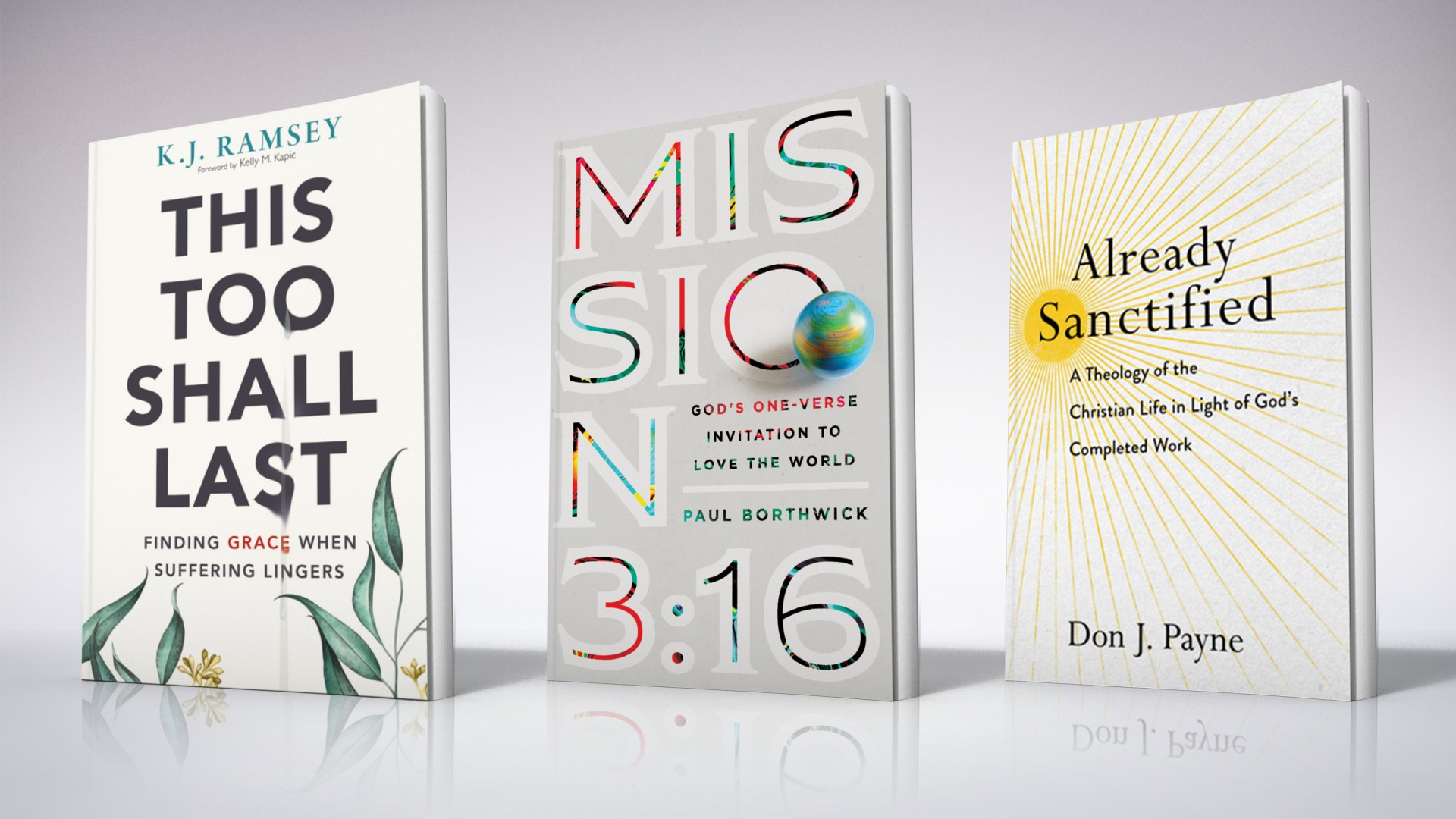
This Too Shall Last: Finding Grace When Suffering Lingers

K.J. Ramsey (Zondervan)

God is sometimes called the Great Physician. But the painful truth is that he doesn’t heal all our wounds, whether physical or emotional, in this lifetime. In This Too Shall Last, writer and professional counselor K.J. Ramsey draws on her own experience to reassure fellow sufferers that God’s glory can shine through our weakness. “I’m a chronically ill thirty-one-year-old,” she writes, “who in the last decade has spent more hours sick on a couch than standing in the workforce. But it’s on couches, through tears, that I’ve come to see that living with suffering that lingers can mean more fully receiving God’s presence that lasts.”

Mission 3:16: God’s One-Verse Invitation to Love the World

Paul Borthwick (InterVarsity Press)

Most Christians can effortlessly recite the words of John 3:16. Paul Borthwick, a missiologist and former professor of global Christianity at Gordon College, wants us to remember the verse as more than a staple of Sunday school memorization drills. In Mission 3:16, Borthwick describes it as God’s “elevator pitch” to all who would share in the Great Commission. Breaking down the verse phrase by phrase, he shows how it reveals “the missionary heart of God: the God who seeks after lost people, sacrifices to pay the penalty that we deserve, and sends us out to carry out his mission in the world.”

Already Sanctified: A Theology of the Christian Life in Light of God’s Completed Work

Don J. Payne (Baker Academic)

The doctrine of sanctification is a common source of anxiety among believers. We wonder how far along the road to holiness we ought to be or whether we’re doing enough to pursue forward progress. Denver Seminary professor Don J. Payne argues that we’re apt to neglect the past-tense dimension of sanctification—the work God has already done to guarantee our growth to Christlike maturity, however short we fall at present. This notion of “accomplished sanctification,” he writes, “does not eliminate struggle” or “provide shortcuts in the process of spiritual maturation.” But it lends confidence that “God creates everything related to holiness and makes possible everything related to transformation.”

Books
Review

Even Among Well-Meaning Christians, ‘Born Again’ Is Often Misunderstood

Recapturing the meaning of a much-stereotyped phrase.

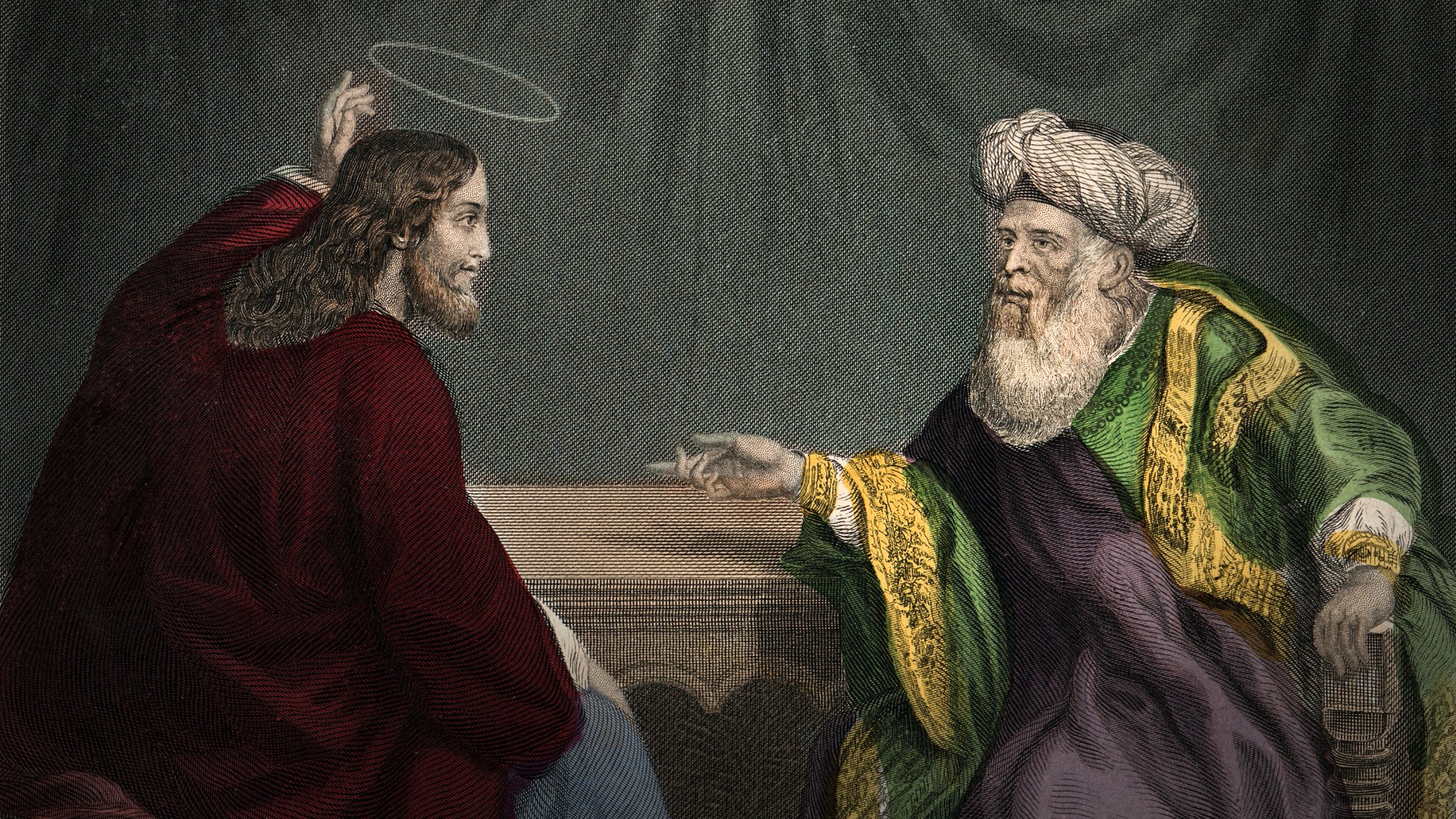
Vintage engraving of Jesus Christ And Nicodemus, Ye must be born again

Vintage engraving of Jesus Christ And Nicodemus, Ye must be born again

Duncan1890 / Getty

Being called a “born-again Christian” can mean many things to many people. For some, it means you are a Bible-thumping fundamentalist or a political conservative. For others, it means you were converted at a Billy Graham crusade. Countless stereotypes have created endless confusion.

In New Life in Christ: What Really Happens When You’re Born Again and Why It Matters, Steven J. Lawson moves beyond today’s (mis)use of the phrase to recapture its biblical meaning and extraordinary significance for the Christian life. With pastoral care, he takes us back to that eerie late-night encounter between Jesus and Nicodemus in John 3. Nicodemus, like many today, was as religious as they come. By today’s standards, he would be the popular pastor or professor everyone knows and respects. That makes Jesus’ words of warning so surprising: “No one can see the kingdom of God unless they are born again” (v. 3). Nicodemus admits he has no idea what Jesus is talking about: “How can someone be born when they are old? Surely they cannot enter into their mother’s womb a second time to be born!” (v. 4).

As the teacher of Israel, Nicodemus should have remembered Moses and the prophets, who used several metaphors to describe this second birth. Moses told the people of Israel they needed God to circumcise their hearts (Deut. 30:6), and Ezekiel promised Israel that one day God himself would act as a surgeon, removing the dead heart of stone and implanting a heart that beats (Ezek. 36:26). Jesus may move the metaphor to the delivery room, but the message is the same: Unless the Spirit of God does something supernatural, we remain spiritually lifeless.

Unfortunately, even the most well-meaning Christians today can get this miracle backwards. We think the new birth is something we must do. But that misses the miracle of it all. It also misses the meaning of the metaphor: Birth is something that happens to us, not something we accomplish. How much more so with matters of the heart? Lawson stresses that the new birth is the work of the Spirit, not the work of any sinner. Jesus says as much when he tells Nicodemus that one must be born of the Spirit (John 3:5). But like the wind, the Spirit is sovereign, blowing wherever it wishes (v. 8).

That might sound unnerving to evangelicals today, in that it pictures the new birth as something other than an offer we can choose to accept or reject. But Jesus is in the habit of turning preconceived assumptions upside down, even if they belong to Israel’s most renowned scholar. The reason Jesus’ words are so shocking is this: Like babies in the womb, we can do nothing to bring about this new birth. It is not something we initiate. Nor is it a cooperative effort between us and God. It is completely his doing, a phenomenon so unnatural it can only be attributed to the Holy Spirit.

As Lawson reminds us, accepting Jesus is not what triggers the new birth, as if God sits around waiting—hoping!—that somebody somewhere will believe so that he can make that person alive. In reality, apart from new life, we will never believe. Our depravity is that pervasive, sin’s grip that enslaving. In another audacious exercise in ticking off Israel’s religious experts, Jesus tells the Pharisees not only that they won’t come to him for life but also that they can’t (John 6:44, 65). Not unless Jesus draws them, that is; until then, they will never believe in the Father who sent him.

The fact that the new birth produces faith and repentance, rather than stemming from them, is truly liberating. We do not preach or evangelize as if we must somehow work the sinner over until he or she is willed into the kingdom. We are more like the prophet Ezekiel: God tells us to speak words of life to a valley of dry bones. They are dead until they begin to rattle and come alive (Ezek. 37).

The point is, let’s remember who the true miracle worker is: God, not us. We tell others about King Jesus, and then we wait and watch the kingdom fill up, as the Spirit who created the cosmos creates new life in hearts otherwise dead in darkness. No, we can’t see the wind. But we know its power because we can see its effects: a kingdom full of new life in Christ.

Matthew Barrett is associate professor of Christian theology at Midwestern Baptist Theological Seminary, as well as the executive editor of Credo Magazine. He is the author of many books, including None Greater: The Undomesticated Attributes of God (Baker Books).

Books
Review

The Speed of Our Souls—and Our Soles

An avid walker explains why walking is good for spiritual growth.

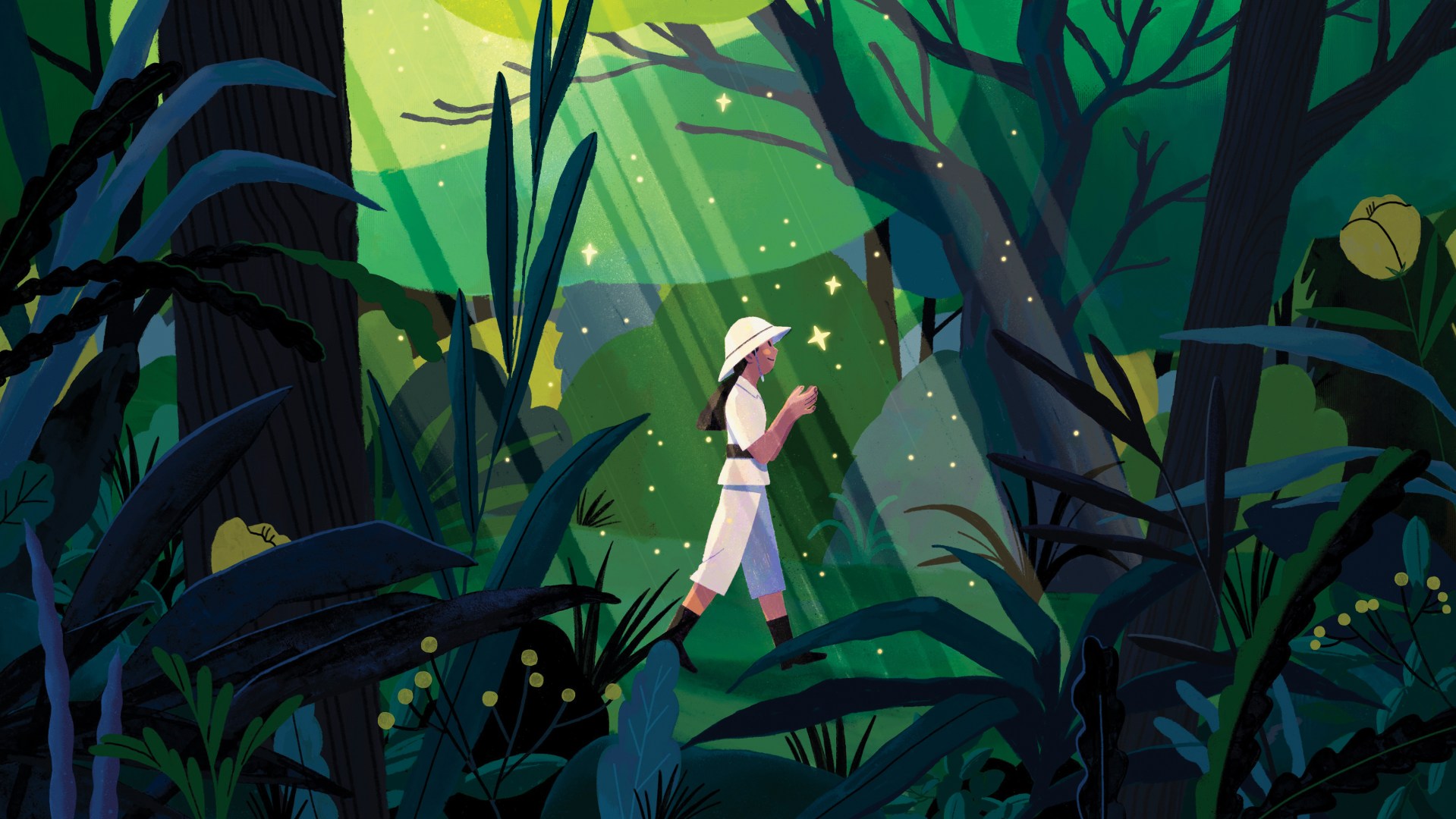
Illustration by Ran Zheng

I used to dream of a library devoted entirely to walking. Most of the books, spanning the centuries in many languages, would be narratives: accounts of exploration, pilgrimage, jaunts in the countryside, strolls in the city, purposeful journeys, and rambles with no particular destination. The shelves would contain works as various as The Narrow Road to the Deep North and other travel writings by the 17th-century Japanese poet Matsuo Bash; Samuel Taylor Coleridge’s notebooks recording his impressions of the mountains in Britain’s Lake District (when “fell-walking” just for the experience, not for any practical purpose, was regarded as highly eccentric); Werner Herzog’s memoir Of Walking in Ice; and Bruce Chatwin’s genre-crossing foray into the Australian Outback, The Songlines. Surely, somewhere, there must be an enormously wealthy, passionate walker who would like to endow such a project.

God Walk: Moving at the Speed of Your Soul

God Walk: Moving at the Speed of Your Soul

HarperCollins Children's Books

256 pages

$24.22

Alas, I never found such a figure. More’s the pity, too, since in the past 20 years alone, enough good walking books have been published to fill a number of shelves in that imaginary library: not only superb chronicles of walking but also books about walking, the most influential and widely imitated of which is Rebecca Solnit’s Wanderlust: A History of Walking. In recent years especially, there has been a vogue for books that champion walking with considerable fervor. (See, for instance, Antonia Malchik’s A Walking Life: Reclaiming Our Health and Our Freedom One Step at a Time, and In Praise of Walking: A New Scientific Exploration, by Shane O’Mara, a professor of experimental brain research at Trinity College Dublin.) And for readers who want to have their cake and eat it too, there’s a subgenre I call “cynical-inspirational,” including books such as John Kaag’s Hiking with Nietzsche: On Becoming Who You Are and Erling Kagge’s Walking: One Step at a Time, both published in the past couple of years. (Someone should tell these pedestrian philosophers that a walker never takes “one step at a time”: Before one step is complete, another step is already in progress.)

As a lifelong walker (and non-driver) with my own mini-library of walking books (not to mention magazines like the issue of Freeman’s that includes the essay “Walking While Black” by my dear friend and walking companion Garnette Cadogan), I have viewed these developments with mixed feelings. Much as I value walking, I don’t want to sell it to anyone, and I don’t want anyone trying to sell it to me. But isn’t that attitude prideful, a bit too fastidious?

The Pace God Keeps

Which brings me to the book under review. Mark Buchanan is a Canadian pastor and the author of many books. His latest, God Walk: Moving at the Speed of Your Soul, is unapologetically inspirational in its intent. He hopes to motivate readers who walk only when it’s obligatory (they are legion) to walk more, yes, but his goals extend well beyond that. He wants all of us to think about walking and practice walking with a new mindfulness, informed by God’s self-revelation in Scripture. To this end, Buchanan draws on a rich variety of biblical texts; the motif of walking, he argues, runs through the Bible in a way that most of us have never noticed.

Before going further, I need to tell you two things. First, there is a lot in God Walk that rubs me the wrong way. Sometimes this is a matter of disagreement with an argument; in other instances, it’s a matter of taste or style (and the distinction between principled disagreement and “taste” is often difficult to make). But, second, there is a lot in God Walk that I value; I’m not at all sorry to have spent time reading and thinking about the book, and I am happy to add it to my walking library.

I love the way God Walk opens, with an epigraph from Japanese theologian Kosuke Koyama’s wildly idiosyncratic, insightful, and sometimes maddening little book, Three Mile an Hour God. It’s worth quoting the full passage from which the epigraph is taken:

God walks “slowly” because he is love. If he is not love he would move much faster. Love has its speed. It is an inner speed. It is a spiritual speed. It is a different kind of speed from the technological speed to which we are accustomed. It is “slow” and yet it is lord over all the other speeds since it is the speed of love. It goes on in the depths of our life whether we notice it or not, whether we are currently hit by a storm or not, at three miles an hour. It is the speed we walk and therefore it is the speed the love of God walks.

If you have read Rebecca Solnit’s Wanderlust, you will recall a striking and oft-quoted passage that Buchanan refers to in his first chapter, when he suggests that we walk not only for utilitarian reasons but to be “closer to reality”:

We walk because three miles an hour, as the writer Rebecca Solnit says, is about the speed of thought, and maybe the speed of our souls. We walk because if we go much faster for much longer, we’ll start to lose ourselves: our bodies will atrophy, our thinking will jumble, our very souls will wither.

Do you not feel this?

I do.

I walk because three miles an hour seems to be the pace God keeps. It’s God speed.

I wish that Buchanan had done more to tease out the implications of a “slow God” who condescends to us, walking with us at the speed of love, which is also the speed of thought. Alas, he does so only very intermittently. Instead, in his first chapter, he makes a move that left me scratching my head and tugging at my beard. Under the subhead “A Physical Discipline,” he tells us that the “seed of this book was annoyance, or grief, or something in between.” What caused this feeling? Well, you see, “many spiritual traditions have a corresponding physical discipline and Christianity has none. Hinduism has yoga. Taoism has tai chi. Shintoism has karate. Buddhism has kung fu. Confucianism has hapkido. Sikhism has gatka.” But Christianity? Zilch.

You can guess where Buchanan takes this. We hear a little bit on Gnosticism (“incarnation’s mortal enemy”), followed by the preposterous assertion that the “Christian faith” once had “a corresponding physical discipline” but “then lost it.” And this discipline, of course, was walking.

I’m not going to undertake here the wearisome job of sorting out all of the ways in which this is wrong, conceptually muddled, and lacking in evidence. At first, I found it hard to believe that Buchanan seriously believed this himself. But never mind. This setup gives him a rubric of sorts—chapters 6 through 15 explore different facets of walking (“Walking as Exercise,” “Walking as Friendship,” “Walking as Remembering,” and so on).

But it isn’t necessary to buy the argument about recovering Christianity’s “lost” discipline (a “physical” discipline that is also a “spiritual” discipline) in order to profit selectively from Buchanan’s many-sided reflections on walking and the Christian life. Some readers may connect particularly with his account of “Walking as Prayer,” others with “Walking as Attentiveness” (one of my favorite chapters) or “Walking as Suffering.” I can’t imagine many readers making their way through the book without several such experiences of deep resonance and illumination.

More Awake, More Attentive

At the end of each chapter, under the heading “God Speed,” Buchanan includes a brief reflection set apart typographically from the main text. These oblige the reader to make intuitive connections; they function a bit like the sudden juxtapositions in haiku. My favorite among them is the one at the end of Chapter 15, “Walking as Flight,” which offers a fresh angle on Søren Kierkegaard.

Kierkegaard was “odd,” Buchanan acknowledges, but his father was even odder. He would take his two sons on walks around the streets and shops of Copenhagen, visiting the tradesmen. “It was a delightful daily ritual.” But, Buchanan adds, “these walks were all imaginary.” The father recounted them to his sons as they sat together in their house, as if telling them a story. “Odd” doesn’t begin to describe it.

And yet, however strange and perhaps even deforming it must have been to grow up in that setting, Kierkegaard’s “imaginary walks . . . did nothing to hamper his creativity.” Indeed, Buchanan suggests, they “prepared him for the real thing” (when he grew up, he walked the streets of Copenhagen daily). They “made him more awake, more attentive, more humble, more curious, more approachable.” And then we’re able to see how Kierkegaard’s imaginary walks bear on the theme of “Walking as Flight”: “For your next walk, imagine you are that person, that man, that woman, that child,”—in other words, a walker “displaced by war or hunger or catastrophe.”

Should you read this book? The answer might depend on your impressions of these few pages on Kierkegaard. If you don’t like them, you probably won’t enjoy the book. But if, like me, you find them absorbing, yes, by all means, you should read God Walk. No doubt you will have your own quibbles with the author, and you will find some parts of the book more appealing than others, but you won’t regret having made the journey.

John Wilson is a contributing editor for The Englewood Review of Books.

Testimony

The Tirade That Made Me a Christian

After an unwelcome move halfway across the world, I vented my anger to God. Then I learned to give him control.

Photo by Kenny Wong

I can still smell the incense. My dad would light three sticks of it, prop them up in a bowl of uncooked rice, kneel, and bow until his forehead met the ground. Three times he would bow—slowly, reverently—and the room would grow somber and silent. I remember watching the smoke curl in the air and disappear into the dining room lights.

Platters of our favorite Chinese delicacies filled the dining table. My mouth waters thinking about the sea cucumber, bamboo shoots, abalone, extra-large shrimp, flavorful shiitake mushrooms, and special vegetables we procured from the only Asian supermarket in our area—which was still over an hour away.

A single chair, situated away from the table, represented the spirit of my grandmother. Each dish represented a special offering to honor her memory. She had died from lung cancer, and I had never met her in person. I only knew of her from a portrait in my dad’s office. When I was a little girl, this portrait frightened me—I was convinced her eyes were following my every step.

After all the family members took turns kneeling and bowing, my dad would take the incense out the back door, and we would sit down to enjoy the feast.

The Glow of New Life

I grew up in a culturally Buddhist home. By “culturally Buddhist,” I mean that religion didn’t influence my day-to-day life. When it came to rituals like honoring the spirit of my grandma, I was only going through the motions.

Our family lived in Boulder, Colorado—a beautiful city nestled in the mountains. The fresh mountain air was scented with pine—and sometimes pot. Boulder is filled with granola-type hippies, plenty of new-age crystals, and throngs of the spiritually open-minded. Growing up culturally Buddhist in an immigrant home, I knew nothing about American holidays except for what I learned at school. Christmas revolved around presents and Santa Claus. Easter had something to do with a giant white bunny, jelly beans, and colorful hidden eggs.

During my sophomore year of high school, a friend I sat next to in math class, Jean, underwent a notable change in disposition. Intrigued, I asked her the secret of her newfound glow.

“Well, Viv, I became a Christian. I have a personal relationship with Jesus now. He died to forgive my sins, and now I’m born again and made new. The glow is from my new life in Christ.”

Oh, no. Disappointment filled me from head to toe. Jean was funny and smart. How could she get duped into becoming a weird Jesus freak? But over the course of the year, the change in her stuck, and she continued to transform before my eyes. God worked in her life in specific and unexplainable ways. She liked to say that human beings could never be satisfied with relationships, shopping, awards, or achievements. God had made people with a God-shaped vacuum that only he could fill.

My heart felt restless. Even as a teenager, I could already see the futility of going after bigger, brighter, better. The temporary thrill of winning an award or buying something new to wear could not relieve the emptiness I felt inside.

I started going to church and attending the youth group, mostly to check out the cute boys at first. Before long, I started asking questions and learned that I wasn’t expected to have blind faith. Over time, I grew captivated by the person of Jesus, who spoke words of radical hope. His invitation to enter a relationship with the God of heaven proved irresistible. The summer before my junior year of high school, I gave my heart and life to Jesus—or so I thought.

I knew Christians were supposed to read the Bible, so I bought a copy at the bookstore. But no matter how much I read, very little made sense. To be honest, I found the Bible pretty boring. I also knew that Christians were supposed to pray, but whenever I tried, I would get distracted or fall asleep.

On Sundays, if I happened to wake up in time, I would drive by myself to church. I cried through every song during worship. I wanted to know God, to love him and live for him. But then I would drive home, and life went on as usual. I would return to my selfish ways and take matters into my own hands. Christianity wasn’t working for me, so I planned to casually toss it aside like just another teenage phase.

Then my life got turned upside down. My dad went through a midlife crisis and moved our family from Boulder to Hong Kong. I had big plans for my senior year. Now they were dashed. I didn’t know a soul. I didn’t read or write Chinese, and I didn’t speak Cantonese (we grew up speaking Mandarin, a completely different dialect). Everything was different: the currency, the climate, the culture and customs, the ferry, the red taxicabs, and the railway system.

I remember sitting on my bed in our little flat, tears burning in my eyes. Angry and confused, I unleashed my frustration and let God know exactly how I felt. But at the end of my tirade, I added a sincere prayer: “In my heart of hearts, I want to know you and do your will. I need a church and a youth group, some Christian friends. And if you do that, I will give you my whole life. I’ll hold nothing back.”

Into God’s Hands

Shortly thereafter, I got involved with the debate team at Maryknoll Convent School, the all-girls Catholic school I attended. One of the top schools in Hong Kong, it sat at the corner of a busy intersection in Kowloon. The girls at Maryknoll were polished and confident. I’d never been in a more academically challenging environment.

Classes there were taught in English, but the students bantered in Cantonese. When I learned that the debate team competed in English, I decided to take part. The girls on my team became my closest friends.

After one of the debates, a boy from a rival boys school approached me. “Excuse me,” he said. “Are you a Christian? Would you like to come to our youth group?”

The following Friday, I attended the meeting, hosted at a Christian and Missionary Alliance church near our home. That night, I learned that the Christian life wasn’t just hard to live—it was impossible to live, at least by our own efforts. God supplied the power source. Reliance upon him and his Spirit enabled us to live as Christians.

When we moved to Hong Kong, all the things I had clung to so tightly were suddenly stripped away. But in their place came a spiritual breakthrough. For the first time in my life, I felt willing to give God total control. Once I made this commitment, Scripture came to life in a new way. And God’s Spirit began to lead, guide, comfort, and convict.

In Hong Kong, I met regularly with a mentor who showed me how to study the Bible and live out my faith. I asked her a thousand questions, and she faithfully invested her life in mine. I wrote her name next to Hebrews 13:7 in my Bible (“Remember your leaders, who spoke the word of God to you.”), and since then, I’ve added the names of several others who have aided my spiritual growth.

Over the years, I’ve often needed to recommit to God’s rule and reign. This was especially true as I puzzled over my career path after college and suffered through financial challenges, family and ministry heartbreaks, and a cancer diagnosis several years ago. But each time I placed my heart, life, plans, hopes, and dreams into God’s hands, I found that his faithfulness is unwavering.

Vivian Mabuni is an author, speaker, and host of the podcast Someday is Here. She and her husband have served with Cru for 31 years. Parts of this essay were adapted from her book, Open Hands, Willing Heart: Discovering the Joy of Saying Yes to God (WaterBrook).

Church Life

Welcome to Christian Camps’ Weirdest, Hardest Summer

More than a hundred sites have called off their peak season, while others reduced and reimagined their staple programs.

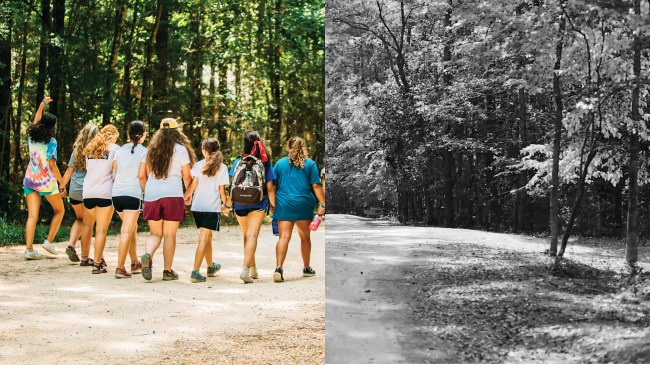
Photos Courtesy of Seneca Hills

The sounds of Christian camp are the soundtrack of my summers. Joyful shouts from the athletic fields echo across the valley in the afternoons, and voices lifted in praise roll from the chapel at dusk.

Each year, my family moves to the grounds of the 250-acre camp in rural northwestern Pennsylvania, where my husband serves as executive director. During the off-season, we long for camp and pray for the rowdy campers and staff members who will trek down the gravel lane the next summer.

Camp can be a peaceful place. But this year, many camps are eerily quiet. The ones that are open are emptier than usual. Staffers wave instead of smacking high-fives. The smells of disinfectant and hand sanitizer overpower the familiar cedar cabin scent. “Let’s go wash our hands!” is a common refrain. Like so many things in the age of coronavirus, camp is not the same.

When the pandemic shut down schools and businesses back in the spring, Seneca Hills Bible Camp and Retreat Center, where my husband works, became a food distribution site for kids to get free meals on the weekends. Other Christian sites, like Camp Cho-Yeh outside Houston, offered their cabins to health care workers who needed to isolate from their families while treating COVID-19 patients. Crescent Lake Bible Camp in Rhinelander, Wisconsin, was among the locations that replaced spring break camps with childcare programs for frontline workers.

Like most businesses and ministries across the country, Christian camps felt the economic halt right away. Church retreats and events were called off in March, April, and May due to bans on mass gatherings across the states. Before long, camps were forced to grapple with the unimaginable: no summer camp.

By May’s end, more than 100 Christian camps had announced cancellations. Most of the rest made dramatic changes to summer programming. Summer camp can represent half of a camp’s annual revenue or more, so skipping it for a year comes as a massive financial blow.

Dan Busby, president emeritus of the Evangelical Council for Financial Accountability, predicted camps and conferences would be among the ministry sectors hit hardest by the shutdowns because of their seasonality. Camps owned by a single church or regional church body can barely hold on from month to month.

In March, Vanderkamp Center, an ecumenical campsite in upstate New York, announced it would be shutting down for good after 55 years of ministry, citing faltering finances and the COVID-19 pandemic. LifeWay Christian Resources canceled 311 camps and events scheduled for this summer. It announced plans to sell the Southern Baptist Convention’s Ridgecrest Conference Center in North Carolina, which called off its traditional two-week camp sessions and postponed the rest of its programming (like sessions for families).

Industry experts predict that summer 2020 is only the beginning, and the coronavirus crisis is going to hamper enrollment for years to come. With families unable to afford the cost or afraid to send their kids into close quarters where viruses can spread quickly, Christian camps aren’t just asking whether they can survive one year with no camp or fewer campers—they’re looking at perhaps two or three years below the capacity they’re used to.

Camp after quarantine

Camp directors and staff will tell you it’s not the financial pressure but the campers themselves who inspire them to keep camp going somehow. They see camp as a crucial place to train the next generation of Christian leaders—a gospel-infused, community-centered environment away from screens and school pressures.

Camp staff know firsthand that the concentrated fellowship time in the cabins and on the grounds stands to bear gospel fruit in young believers.

“After COVID-19, we will see a groundswell of support for this distinctive ministry,” said Gregg Hunter, president of the Christian Camp and Conference Association (CCCA). “People will be hungry for a new experience, and I believe their souls will need feeding.”

Experts agree.

“We have to be prepared that there will be long-term impacts on the psyches of these young people,” said Jacob Sorenson, a researcher and consultant specializing in Christian summer camps. “They need places of healing when this is done, and camp can be one of those places.”

But the pandemic isn’t over, and this year, many camps decided to do the unthinkable. They called off summer offerings, some for the first time ever. Others opted to transfer activities to the virtual realm they’d otherwise encourage campers to escape.

The future of Christian camps may depend on how ministries respond to this crisis. Camps stake everything on trust. Many of the CCCA’s 870 members built their reputations on growing the faith of young campers over decades of ministry, establishing relationships with churches, and serving families across multiple generations.

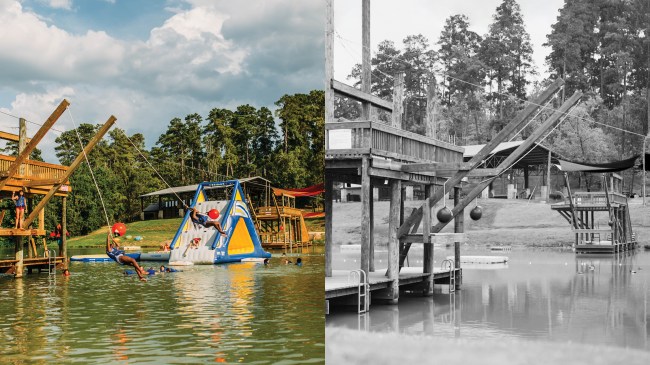
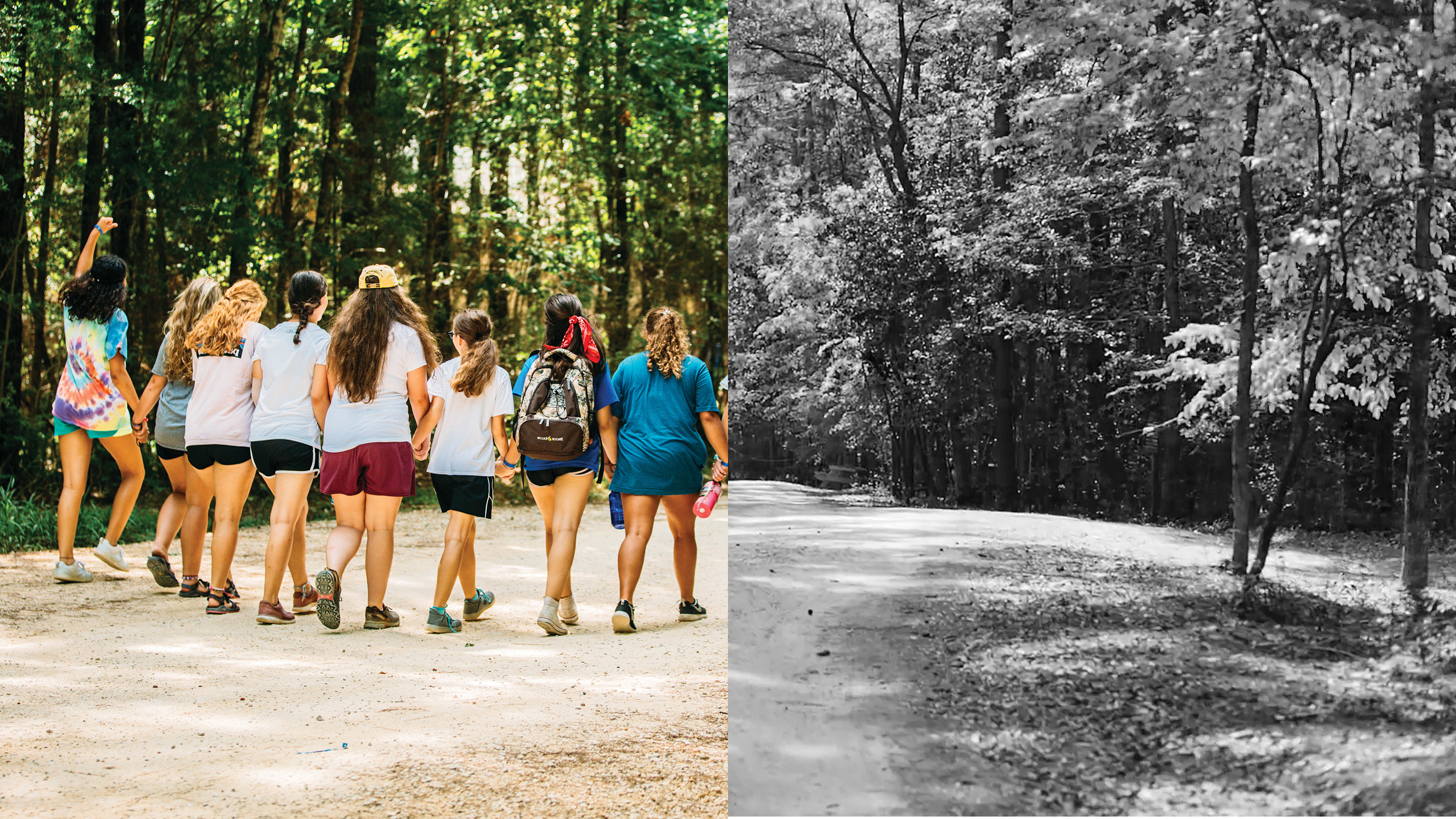
Photos by Alyssa Chilton (left) and Brady King (right) / Courtesy of Camp Cho-Yeh

Over the years, camps have reassured parents that their children will be spiritually nurtured and kept safe as they swim, climb, and play. In recent years, they have emphasized that staff members are background-checked and trained to protect campers from abuse. And now, camps must meet the challenge of keeping participants safe from the coronavirus—whether that means taking new precautions or canceling camp for a season.

Camp Cho-Yeh in Texas was among the first to say it would stay closed for the summer.

“It makes me so sad to think that this place is going to sit empty over the course of the summer,” president and CEO Garret Larsen said in a video in late March.

With over 4,000 campers attending the camp each summer for Bible studies, color war competitions, rock climbing, archery, and water games, Cho-Yeh’s enrollment ranks in the top 5 percent of summer camps in the US. It brings in $4 million of its $7 million budget during summer.

Cho-Yeh was set to run out of cash in May, but a Paycheck Protection Program grant extended the camp’s resources by eight weeks. Larsen initially cut 42 of the camp’s 50 full-time staff members. Then, once Texas lifted its mandatory 14-day self-quarantine rule for travelers, the camp opted to move forward with a shortened season—1,500 campers over five weeks instead of the typical ten.

COVID-19 represents a unique threat to the camping landscape. From hugs and high-fives to team-building activities and cabin bunk beds, camp and social distancing do not mix. In 2009, swine flu loomed over summer plans but was manageable: The H1N1 virus could be treated with antiviral drugs, and patients needed to be quarantined only until they had been fever free for 24 hours. But the new coronavirus has been harder to track and contain, due to a longer incubation period.

Camps that serve medically vulnerable populations or that meet on college campuses had to cancel in-person summer camp, according to the American Camp Association.

Certain state restrictions, such as in Arkansas, mandated that camps stay closed through May, when they would typically be training staff to prepare for campers in June, July, and August.

Most camps tried to minimize risks by cutting programs and amping up health precautions. Cho-Yeh developed a cohort model for keeping campers in smaller groups, shortened sessions to give more time to clean in between, and adopted protocol for isolating kids who show COVID-19 symptoms.

SAMBICA in Bellevue, Washington, did away with camp-wide gatherings and overnight camps and restricted enrollment to county residents.

Forest Home Christian Camps in California had a plan in place—screening for sick campers, upgrading air filters, providing hand sanitizer, and isolating the sick—but in the end, its Mill Creek Canyon site had to call off this summer’s camps and retreats. “Given the close community experience of camp with large group gatherings, group dining, team competitions, and shared lodging, we did not see a practical way to operate camp safely,” it stated.

Word of Life Youth and Family Camps, one of the biggest Christian camps in the country, canceled summer camp and fall retreats at its home campus in the Adirondacks.

Like many camp ministries shifting plans, the camp asked participants to consider registering for a 2021 session or even donating their deposit rather than requesting a refund. “As you can imagine, this situation has significant stewardship challenges and any gift would be much appreciated,” the New York–based camp wrote. “We need your support and contributions in order to sustain our current operations and to continue sharing the gospel with this generation and generations to come.”

Groups that had registered for LifeWay’s 96 FUGE camps were given the option to transfer their deposits to a 2021 session or accept a 50 percent refund and 50 percent LifeWay credit.

Other camps are asking for additional donations to see them through the uncertainty that will extend well beyond the lifting of public-gathering bans. Cho-Yeh’s Larsen suspects that after canceling some 2020 sessions, enrollment in 2021 will not return to pre-pandemic levels.

Camp as spiritual formation

Christian camp is a special place for folks like me. Year after year, I get to watch shy campers slowly open up. I see counselors’ beaming faces as they describe campers praying to receive Jesus as their Savior. I watch my own sons’ sense of adventure, confidence, and faith grow as they play and help during our summers spent at Seneca Hills.

Camp is also a special place for the Christians who were those shy campers and new believers, who trace the pivotal moments in their spiritual journeys to cabins in the woods.

“The typical camp experience, when done well, is a quantum leap forward for people’s faith formation,” said Kara Powell, executive director of the Fuller Youth Institute at Fuller Theological Seminary.

“My hope and prayer is that camps, youth leaders, churches, and youth ministries will pray and come up with some creative options.”

Research indicates that there’s something particularly effective about the setting as a tool for spiritual growth.

Photos by Alyssa Chilton (left) and Brady King (right) / Courtesy of Camp Cho-Yeh

Sorenson, the camping consultant, found that two months after attending camp, 96 percent of campers reported that camp helped them grow in their faith, and 94 percent reported growing in their knowledge of God. His research also shows that attending a Christian summer camp correlates with a lasting increase in self-confidence, commitment to personal devotions, church attendance, faith conversations and practices in the home, and understanding of faith’s relevance to life (Sorenson calls this “horizontal faith”).

Other research has been more mixed, with a study in the journal Leisure/Loisir finding that the initial spiritual high after summer camp can fade over time.

One of Sorenson’s biggest takeaways, though, matches the goals of camps that focus on getting kids to unplug and play together: Young people admitted that camp freed them from electronics and social media.

As Christian camps increasingly compete with more options for kids’ summer schedules—including sports training and school activities—they have positioned themselves as a uniquely outdoorsy, incarnational, and community-driven option. In an era when teens and children have less contact with creation, camp provides an ideal location to encounter God and build friendships with each other without the distractions of school and smartphones.

But this year, many camps that couldn’t count on holding in-person activities over the summer opted to try to offer online programs rather than cancel summer activities altogether.

“In a lot of ways, it’s the antithesis of what camp is for us,” said Kellie von Borstel, camp director of Montlure, a Presbyterian church camp in Arizona. “We’re doing this because we don’t want to cancel summer camp.”

Montlure decided to offer virtual camp after calling off its overnight and day camp programs for the summer. It is using a virtual camp portal through the Presbyterian Camp and Conference Center Association, where campers can log in to participate in each day’s camp activities: craft how-tos, hiking videos, and online Bible studies.

While virtual camp is better than no camp, many kids were weary of Zoom by summer. When surveyed in the spring, less than a quarter of families were interested in enrolling in online camp.

Camps like SAMBICA in Washington offered “Camp in a Box” for elementary schoolers who couldn’t attend in person this year, with art supplies and camp swag, plus interactive videos.

To some outsiders, the efforts to pivot or offer camp activities in the midst of a pandemic may seem a bit much. What’s one year, after all? But for those of us in the camp community, our prayer is always that this summer would be the one that changes lives, that we would witness the undeniable work of God among us in our staff and campers.

Camp doesn’t just have the potential to change the lives of the kids who attend, but it impacts their families for generations to come. I think of the story of Caleb and Luke Fugate, brothers who each worked at Seneca Hills for six summers and now serve in pastoral and youth ministry. Members of the Fugate clan have camped and worked at Seneca Hills for three generations, but only because Caleb and Luke’s Uncle John accepted Christ there as an 11-year-old camper and returned home to Punxsutawney, Pennsylvania, to share the gospel with his parents and siblings.

Those kinds of stories still happen. In Johns Creek, Georgia, 1,000 families find Perimeter Church each year through Perimeter’s Camp All-American. Roughly 40 percent of the camp’s families have no prior church affiliation.

So whether through an abbreviated session, an online rally, or a socially distanced campfire, we entered the summer with the expectation that God would be at work as he always is, and that he would provide the financial backing to get us through this difficult season and the ones that lie ahead.

Megan Fowler is a contributing writer for Christianity Today.

Ideas

Want to Love Your Neighbor? Start By Fighting Your Own Sin.

Columnist

When we “make every effort to be holy,” it works toward the common good.

Prixel Creative / Lightstock

What are some effective ways to love our neighbors? Most of us would say things like taking a meal to someone who is ill or helping repair a broken faucet. Thinking further, we might point to less tangible actions like praying for people, apologizing quickly for an offense, or offering a word of encouragement.

In each case, we think of a positive behavior directed toward someone else. These are the “one another” actions, conforming to the many New Testament instructions on how to treat those God places around us.

Each “one another” is an expression of the Great Commandment to love our neighbor as we love ourselves. Outdo one another in showing honor, forgive one another as Christ forgave you, bear with one another, submit to one another in love. These expansive expressions of the principles of the Old Testament Law prescribe how we can live in community and offer indispensable instructions for maintaining the common good. Finding meaningful ways to love one another is not simply “a good idea” or “a nice suggestion”; it is the hard work necessary for the well-being of the group.

But to truly love one another, we must direct our efforts at godliness not just toward others, but inward. The call to love our neighbor is given in reference to how we love ourselves. It explicitly links the spiritual health of the individual to the health of community.

Yet we instinctively divide our sins into two categories: those that affect our neighbor and those that affect only us. The ancient god of individualism whispers that some sins are just between God and me. If there are consequences, they will impact only me. And this is simply not true. The consistent message of the Bible is this: Personal sin yields collateral suffering, without fail.

Consider Achan, who believed he could take the spoils of war for himself and conceal them in his tent (Josh. 7). God’s punishment of not only Achan but his entire household drives home the lesson that personal sin is sin against our neighbor. Communal well-being is harmed by individual rebellion.

We are not so different from Achan. We tell ourselves a similar lie as we bow to the god of individualism: “As long as my selfishness is concealed, as long as I don’t act openly on my impulse to belittle, as long as no one knows I am addicted to this behavior, or this substance, or my own bitterness, no one is harmed but me.” But personal sin yields collateral suffering.

Why? Because what we do in the secret place is the most accurate representation of who we truly are. It reveals the motives of our hearts, the overflow of which invariably splashes onto our neighbor. Personal sin yields collateral suffering. But here is good news: Personal holiness yields collateral blessing.

The consistent message of the Bible is this: Personal sin yields collateral suffering, without fail.

Just as the sin done in secret will be dragged into the light, so also the good work of righteousness done in secret will be rewarded by the Lord (Matt. 6:1–18). When love, joy, peace, and patience are our daily meditation; when kindness, goodness, and faithfulness are our mindset; when gentleness and self-control are our mainstay, these virtues overflow our hearts and become a source of blessing to our neighbors.

We cannot help but interact with one another in life-giving ways when these are the content of our character. Uncommon personal holiness, hard sought, serves the common good.

Thus, perhaps the most basic way to “love your neighbor as you love yourself” is to “make every effort … to be holy” (Heb. 12:14). What if a personal fast from social media made you more eager for face-to-face friendship? What if a quiet decision to delay a purchase made you more generous? What if resting from work made you kinder to your family? An uncommon approach, to say the least—a road less traveled, a narrow path—and the very path of our great high priest, who was tempted in every way we are yet was without sin. Uncommon personal holiness, hard sought, poured out for the common good.

Taking a meal to someone is certainly loving our neighbor. But repenting and turning from our “personal” sins is as well. It is choosing to walk the narrow path of our Savior, that we might love our neighbor out of the overflow.

Books

White Evangelicals Have a Complicated Relationship with Christian Nationalism

Three books try to make sense of this political ideology.

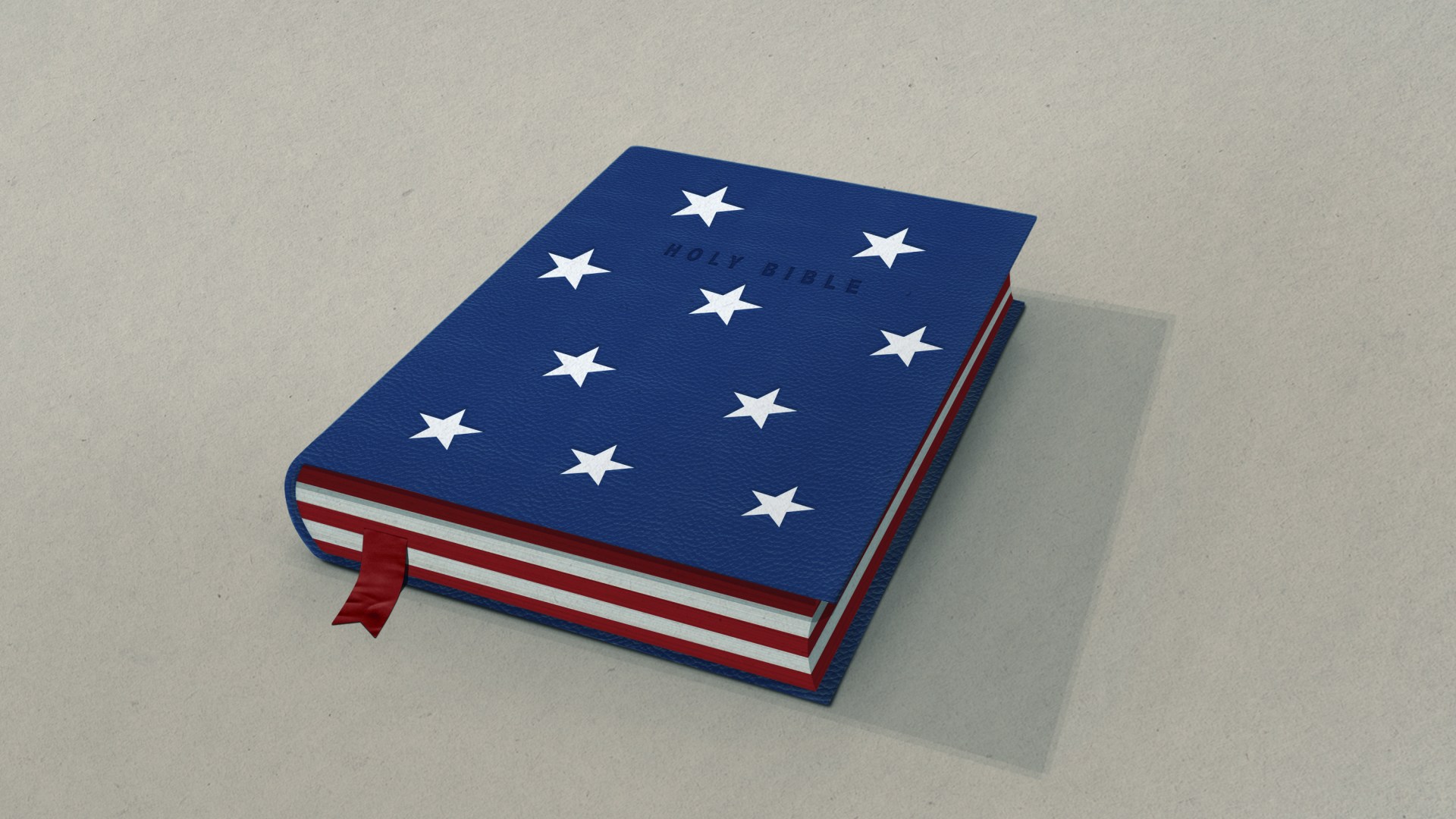
Illustration by Rick Szuecs / Source Image: Envato

In the mid-2000s, it was fashionable among journalists and academics to worry that America was on the verge of becoming a theocracy. Conservative white evangelicals had fueled the election of George W. Bush and helped turn Mel Gibson’s The Passion of the Christ into a box-office smash. They seemed poised for renewed political and cultural dominance. And so books and articles poured forth warnings about the peculiar dangers of “Dominionism,” “Christian Reconstructionism,” and various other movements conspiring to impose Christian beliefs on an unsuspecting populace.

This narrative came crashing down with the election of Barack Obama. Almost overnight, fears of America descending into a theocracy evaporated. Pundits began forecasting the death of the Religious Right, and the same evangelicals who had helped propel Bush to power spent the next eight years playing defense. More and more, they saw themselves not as ascendant governing partners but as targets of a crusading secularism.

And then Donald Trump broke everything. His surprising election, enabled in part by white evangelical support, reawakened fears that religious conservatives would mobilize underneath a theocratic banner. Margaret Atwood’s 1985 novel The Handmaid’s Tale, which imagines a fundamentalist dystopia where women are forced to breed, enjoyed a second life repurposed as a Trump-era cautionary tale (and a hit Hulu series).

Yet the idea of America descending into a genuine theocracy lacked the same surface plausibility it had during the Bush years. Though white evangelicals enthusiastically carried Trump into the White House, his lack of personal piety made him an unlikely candidate to preside over a thoroughly Christianized commonwealth. Nor, by and large, did his evangelical supporters mistake him for a godly statesman. Rather than King David, Trump was Cyrus, the pagan Persian emperor who, after conquering Babylon, allowed the Israelite captives to resettle in their homeland and rebuild the temple in Jerusalem.

Still, with Trump in office, the political fortunes of religious conservatives appeared to improve. This set the stage for a new journalistic and academic preoccupation: uncovering why white evangelicals flocked so fervently to Trump. The books and articles that typify this genre still feature concerns about conservative Christians manipulating the levers of power. But with the specter of full-dress theocracy having dimmed—and with Trump styling himself more as a champion of American greatness than a vindicator of the faith—attention has shifted to a distinct but overlapping phenomenon: Christian nationalism.

Privilege and Power

Much like nationalism itself, Christian nationalism can be tricky to define, especially since the term can be employed in either a descriptive or pejorative manner. As a political ideology, it touches on deep currents of religious, national, and even racial or ethnic identity. Yet it’s difficult to set precise boundaries, since those who sympathize with this ideology differ in their levels of support for its signature causes. Cast the definitional net too narrowly, and you might miss an important matrix of shared goals and antagonisms. Cast it too widely, and you might lump together people who have no business standing shoulder to shoulder.

Difficulties like these are on display in three new books that take the measure of Christian nationalism from various angles. In different ways, these books portray a movement committed to preserving its own privilege and power, favoring the interests of native-born white people over immigrants and ethnic minorities, and using legal authority to impose a Christianized moral order. The books are not uniformly persuasive. But each, in its own way, is worth reading and pondering.

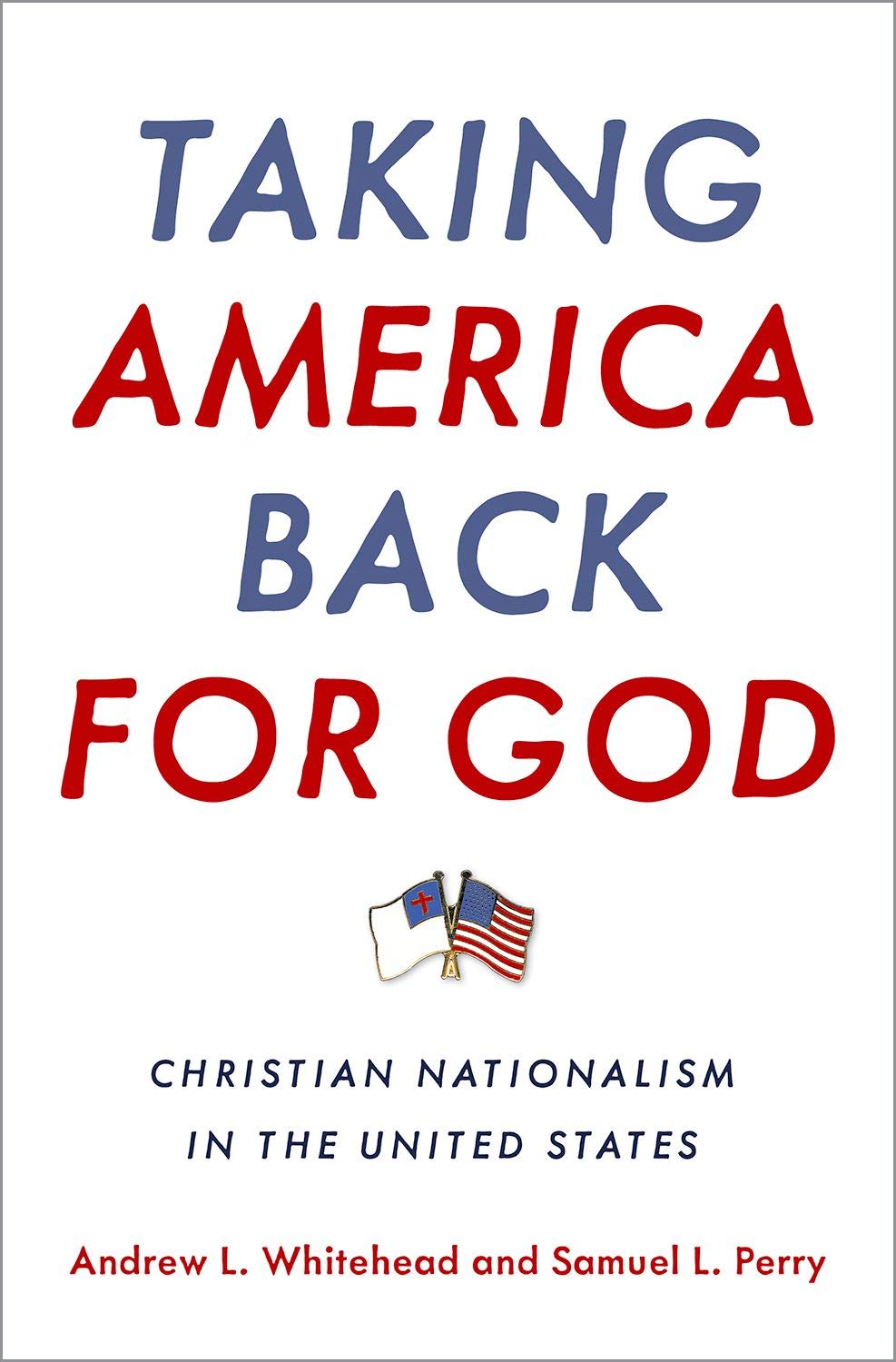
Sociologists Andrew L. Whitehead and Samuel L. Perry undertake a fair-minded, survey-driven analysis in Taking America Back for God: Christian Nationalism in the United States. Whitehead and Perry define Christian nationalism as an “ideology that idealizes and advocates a fusion of American civil life with a particular type of Christian identity and culture.” As one might expect, the cultural vision of Christian nationalism draws heavily on the belief that America’s founding principles are sacred. Such a commitment manifests itself in fervent defenses of Second Amendment gun rights and controversies about patriotism and the American flag.

Crucially, it also manifests itself in an instinct for preserving boundaries, including racial and ethnic boundaries. In the authors’ telling, Christian nationalists aim at accumulating or preserving power and privilege for white, native-born Christians—especially Protestants. They have an aggrieved sense of the country belonging to us rather than them (with examples of them including “Muslim terrorists” or “violent Mexican immigrants”). Whitehead and Perry make a compelling case that champions of Christian nationalism are disproportionately likely to believe that immigrants undermine American culture. Their research also shows heightened skepticism toward interracial marriage, transracial adoption, and narratives of racial inequality in law enforcement.

As the above sketch suggests, Whitehead and Perry stress that Christian nationalism is fundamentally a political vision rather than a religious one—a judgment echoed by journalist Katherine Stewart in The Power Worshippers: Inside the Dangerous Rise of Religious Nationalism. As a “political ideology” rather than a “religious creed,” she writes, Christian nationalism promotes the “myth that the American republic was founded as a Christian nation.”

Whereas Whitehead and Perry strive for sociological precision, Stewart is openly hostile toward the movement and its goals. She is “alarmed” by what she sees and is bent on resisting it. At times, her wariness toward white evangelicals and sense of conspiracy borders on the comical. The book, for instance, opens with the author recounting her decision to dress in “camouflage” (a “floral print blouse” and a pink cardigan) while attending a Family Research Council event at a Baptist church.

The Power Worshippers accuses evangelicals of plotting to “replace our foundational democratic principles and institutions with a state grounded on a particular version of Christianity.” As Stewart sees it, this plot has advanced through nakedly self-interested appeals to religious liberty. Conservative Christians, she writes, have “gamed the American judicial system to advance an agenda of ‘religious liberty’ that in reality serves to establish a very clear set of privileges for one variety of religion.”

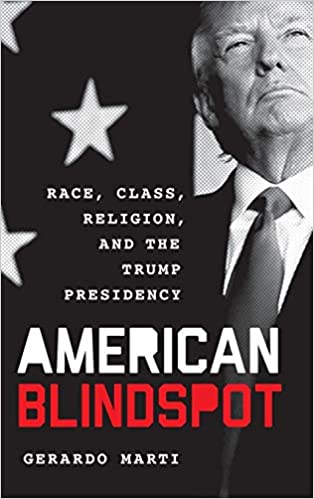
While Stewart brings an activist’s edge to her work, scholar Gerardo Marti looks at Christian nationalism through a historical lens. In American Blindspot: Race, Class, Religion, and the Trump Presidency, Marti explores the deep-rooted dynamics that made America fertile ground for the intertwining of racial, national, and religious identities. From the very beginning, he contends, efforts to define the “true” American identity were inseparable from the “legitimization of white settler superiority and the establishment of a clear racial hierarchy.”

Marti runs through the many historical moments that contributed to making whiteness and Protestantism semi-official markers of American identity. These include failing to protect the rights of black Americans after the Civil War, denying admission to immigrants from Asia and elsewhere out of concern for the economic interests of whites, and criminalizing immigrants from Mexico in the Immigration Reform and Control Act of 1986. This latter measure gave rise to many of the challenges faced by immigrant families and communities today.

Protection from Threats

All three books acknowledge that Christian nationalists are seeking protection from various threats—to their religious liberty, their economic standing, and their overall cultural influence. Yet none of them tells the full story of the motivations in play (although Perry and Whitehead, especially, demonstrate that Christian nationalists have deeply problematic attitudes toward race). And in the course of analyzing Christian nationalist commitments, the authors betray commitments of their own that can’t help but skew their judgment.

On the topic of religious liberty, Stewart egregiously frames religious conservative advocacy as a conspiracy to “infiltrate” the judiciary and bend the law to religious ends. She radically distorts the size of the conservative legal effort relative to the size of the groups that oppose it. And she fails to distinguish between efforts to carve out space for religious communities and individuals to live out their beliefs and efforts to impose those beliefs on a pluralistic society.

Perry and Whitehead, though more measured in their analysis, run into similar confusions. They contend that Christian nationalists seek a privileged place in public life for Christian symbols because they regard other religious believers (and nonbelievers) as threats to America’s supposed status as a Christian nation. From this the authors conclude that religious freedom, in the Christian nationalist lexicon, only encompasses the “freedom to be a Christian.” But it’s at least debatable whether Christian symbols in public places violate any principle of state neutrality. In a 2019 decision involving the Bladensburg Cross, a World War I memorial on government land, the Supreme Court ruled (in a 7-2 opinion) that some religious symbols take on secular meanings over time, which is effectively what Christian nationalists seem to desire.

More tellingly, Perry and Whitehead contend that Christian nationalists have responded to society’s shifting views of marriage and sexuality by invoking religious liberty as a pretext to “discriminate against sexual and gender minorities.” Yet their argument goes beyond highlighting matters of inconsistency or incoherence in the Christian nationalist understanding of religious liberty. Their loaded language (“discriminate”) simply presumes that cases involving conflicts over sexuality or gender shouldn’t be resolved in favor of religious traditionalists.

Another threat felt acutely by certain Christian nationalists is economic insecurity. In his book, Marti critiques white-working-class resentment toward immigrants competing in the labor market. But his analysis, which jumps from the Reagan presidency to the Tea Party era, neglects a crucial period needed to understand the sources of this resentment (whether reasonable or not). The loss of American manufacturing jobs, many of which were moved overseas, further eroded the foundations of working-class stability. Trump gained support, in part, by vowing to shore them up.

Marti is extremely critical of capitalism. He is sensitive, as well, to how evangelicals have sometimes identified free-market economics with divine providence. Yet despite acknowledging that white evangelicals tend to “reside on the middle and lower end of the economic spectrum,” he still discounts their attraction to Trump’s economic platform, which departed from the capitalist playbook by attacking corporations for hollowing out the working class by shifting their jobs abroad (to China, especially). You don’t have to rule out xenophobia and racism to concede that worries about immigration might have other, more sympathetic motivations.

Beset by Anxiety

Ultimately, however, the perception of threat transcends any one political or cultural issue. An air of anxiety permeates Christian nationalist thinking, a fear of something precious being wrested away. As these books point out, Christian nationalists are declining in number and receding in cultural influence. White evangelicals have long pictured themselves as an embattled minority. But 2016 marked a turning point. Instead of rallying around a candidate who broadly shared their goals, they opted for Trump and his bare-knuckled promise of protection from enemies.

Such anxieties have roots in evangelicalism’s own ethos. We are a people who grew up hearing altar calls at the end of every sermon, and our worship “experiences” are often drenched in emotional fervor. Translated into political terms, the enthusiasm of our religious lives often flows into overheated rhetoric. As feelings of political crisis intensify, many white evangelicals have strengthened their commitments to various forms of Christian nationalism, along with the cultural and historical myths that undergird them. Stewart is not wrong to observe that Christian nationalism—against a backdrop of rising economic instability and other perceived sources of disorder—offers its adherents “confidence, an identity, and the feeling that their position in the world is safe.”

But Christian nationalists are hardly the only ones beset by anxiety. In various ways, the authors of these books reveal their own discomfort not just with ardent Christian nationalism but with any confident, religiously informed politics. Marti contends that Christian nationalists, because of “confidence of the rightness of their position,” only welcome political partnerships that “do not challenge their premises.” Whitehead and Perry also condemn the alleged dogmatism of Christian nationalists, claiming that it “serves to inhibit any chance of compromise” and allows “no possibility of alternative viewpoints.” In Stewart’s understanding, America is not locked in a culture war but a “political war over the future of democracy.”

In rejecting religious dogmatism, however, these criticisms flirt with setting up a secular rival whose premises are equally nonnegotiable. Stewart’s “democratic” ideal seems to be little more than a brute assertion of the majority’s will. The Christian Right, she claims, is a “militant minority,” but her book trumpets “our existing majority,” which (ominously) deserves “the power to which it is entitled.”

Behind such worries lies a conception of politics that focuses too narrowly on power. Within such a framing, the question of whether certain convictions are true gets safely bracketed to one side or dismissed with scare quotes. Marti, for instance, suggests that the “coercive push for a desired order” stems not from rational deliberation, but “from a set of values and discourses embedded within institutional structures.” But if this is true, then any proposal, say, for lower rates of immigration need not be debated on its merits. It can be written off as perpetuating unjust “structures.” Critics accuse Christian nationalists of subverting democratic norms, but reducing politics to the raw imposition of power poses a similar danger.

Listening and Learning

How, in the end, should evangelicals receive books like these? It’s a complicated question, not least because evangelicals have a complicated relationship with Christian nationalism as these authors portray it.

Many evangelicals—on both sides of the Trump divide—will recognize themselves in at least some of this portrait, even if they distance themselves from its ugliest tendencies. It’s possible, after all, to hold conventional patriotic attachments without deifying the flag; to acknowledge a Judeo-Christian influence on the founding of America without treating the Constitution as divinely inspired; to fortify religious liberty without excluding non-Christians from its blessings; and to sympathize with white-working-class struggles without demonizing immigrants or members of other races. Yet the arguments and evidence these books compile cannot be waved away merely by asserting that white evangelicals are free from the problems they depict.

These books do not hold a mirror up to conservative Christians; they refract the movement through a biased set of lenses. Yet they can still be read with caution, charity, and humility. If nothing else, they expose blind spots (to invoke Marti’s book title) that lurk within certain white evangelical communities. Listening attentively helps us recognize and untether ourselves from ideologies that are fundamentally incompatible with the gospel. It also signals a willingness to give our critics a fair hearing, even when they are ungenerous.

In the end, life within a deliberative democracy means we are stuck listening to each other—and, in the best cases, learning from each other as well. If we want to convince skeptics we can play by democracy’s rules while holding fast to Christian truth claims in the public square, then listening is where we must begin.

Matthew Lee Anderson is a postdoctoral fellow at Baylor University’s Institute for Studies of Religion and the founder of Mere Orthodoxy.

Editor’s note: Want to read or share this article in Chinese (Simplified or Traditional)? Now you can!

Interested in helping CT improve the quality and quantity of our translations? Share your feedback here.

You can now follow CT’s latest content on WhatsApp and Telegram.

News

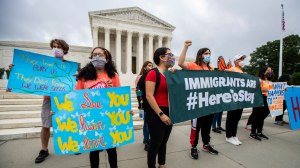
Priest Balances Christian Conviction and Legal Strategy in DACA Case

An Episcopalian law student on the team behind the Supreme Court victory and a Southern Baptist pastor are among the Dreamers celebrating Thursday’s decision.

Christianity Today June 19, 2020
Manuel Balce Ceneta / AP

Among the thousands of immigrant Christians, church leaders, and advocates praying for a victory in this week’s US Supreme Court decision on the Deferred Action for Childhood Arrivals policy (DACA), one was an Episcopal priest on the team who worked on the case.

Armando Ghinaglia is himself a DACA recipient, a native of Venezuela who was raised in Texas. A curate at Christ Church New Haven and a law student at Yale, Ghinaglia worked for the Connecticut legal clinic that argued against the Trump administration’s rationale for rescinding DACA in 2017.

The Supreme Court ruled in its favor on Thursday.

The crux of the team’s argument, Ghinaglia said, was how little effort appeared to have gone into the decision to end a program that would devastate so many. Under DACA, young people who were brought into the country before age 16 can apply to stay and work in the US legally as long as they are currently working, honorably discharged from the military, or in school. To qualify, they must have no felony convictions and fewer than three misdemeanors.

While the arguments against resciding DACA were personal to Ghinaglia and steeped in his Christian belief in the imago Dei, his legal team also knew that Chief Justice John Roberts would be the likely swing vote, and, “we figured John Roberts was not going to be emotionally sappy.”

They stuck to a fairly dry defense, saying that the administration had violated the Administrative Procedures Act (APA), and the court agreed, 5-4.

“The ease with which people within the administration were willing to dispose of DACA residents” was insulting, Ghinaglia said. “I latched onto that.”

“For something as simple as removing an animal from the endangered species list,” he explained, the government usually provides thousands if not tens of thousands of pages of research and justification, called the “administrative record.” The administrative record for ending DACA was about 250 pages.

The Supreme Court found that the administration had indeed not considered alternatives or directives to mitigate the social and economic consequences of ending the program.

In ending the program, Roberts wrote in the majority opinion, “Acting Secretary [Elaine] Duke should have considered those matters but did not. That failure was arbitrary and capricious in violation of the APA.”

The team also tried to make the case that DACA should be subject to the equal protection clause of the 14th amendment, but only Justice Sonya Sotomayor agreed, claiming the administrations “discriminatory animus” had been downplayed in the majority opinion.

“I would not so readily dismiss the allegation that an executive decision disproportionately harms the same racial group that the President branded as less desirable mere months earlier,” Sotomayor wrote.

The court’s decision did not determine whether DACA itself is legal and did not shore the policy up against future challenges. It merely said that the Trump administration’s decision to end it did not follow legal procedure.

As a Christian, Ghinaglia said he has to balance his desire to win a case—especially one with a humanitarian outcome—with his convictions and values.

His legal team chose not to argue that DACA was about the worthiness of certain immigrants and assigning blame to others because he said that approach doesn’t fully acknowledge the humanity of the 700,000 people who depend on DACA for stability and security.

Late in the case, his team did opt to appeal to the utilitarian argument for DACA, he said. After COVID-19 struck, the team wrote a letter to court detailing how many DACA recipients were on the front lines of the pandemic and what their disappearance might do to the country.

Thursday’s victory is not final. The program does not provide permanent legal status, nor does it open a path to citizenship. But for today, DACA recipients—known as “Dreamers”— can enjoy a degree of security and protection from deportation after years of legal limbo.

It’s both a relief and “surreal” for people like 25-year-old North Carolina pastor Jose Ocampo, who lobbied against rescinding DACA two years ago.

After developing “an immunity to planning and getting my hopes up,” Ocampo can finally join his friends in mapping out post-college aspirations: continuing his work in ministry and possibly starting a family.

He says this knowing, as Ghinaglia does, that the reprieve could be short-lived.

“The country needs to figure out what they’re going to do with not only Dreamers but refugees and other immigrants,” Ocampo said, referencing the other groups who have had been affected by the Trump administration’s steep curtailment of most immigration policies including Temporary Protected Status, refugee resettlement, and grounds for asylum.

The administration still has ample options to reverse DACA, Ghinaglia said, but most would require it to come out firmly against Dreamers themselves. Ironically, he explained, if Trump had issued an executive order simply ending DACA because he found it beneficial to do so, the courts could have done little to stop it.

As Roberts wrote, “The dispute before the Court is not whether DHS may rescind DACA. All parties agree that it may. The dispute is instead primarily about the procedure the agency followed in doing so.”

Ideas

Bostock Is as Bad as You Think

We cannot stake religious liberty on a “wait and see” approach.

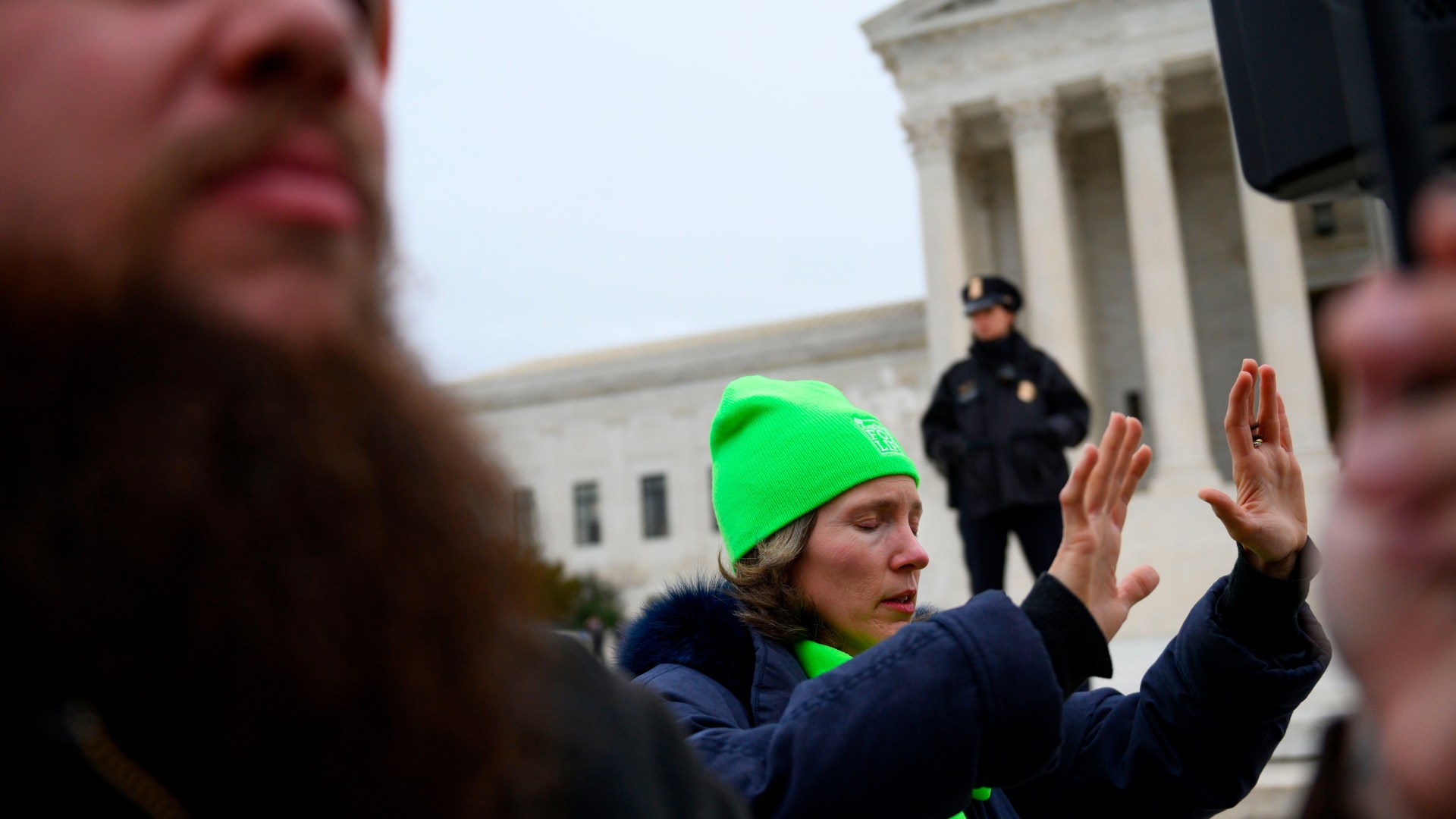
Prayer before the Supreme Court in January, 2020.

Prayer before the Supreme Court in January, 2020.

Christianity Today June 19, 2020
Roberto Schmidt / Getty Images

In the aftermath of Monday’s Bostock decision, a common refrain issuing from social media and various articles has been, “Yes, this decision is consequential, but let’s wait and see how it plays out.”

The Religious Freedom Restoration Act (RFRA) we’re told, is religious liberty’s safe harbor. US Supreme Court Justice Neil Gorsuch, in his opinion, cited the RFRA as key to settling future religious liberty disputes. Professor Daniel Bennett recently wrote,

The case will certainly have major implications for religious exercise. But contrary to initial reactions, this decision should not be read as a decision that dooms religious liberty in America, but rather as an inevitable step toward something Congress and most state legislatures have thus far been unable to do: crafting a compromise that balances LGBT rights and religious freedom.

To accept the logic of such voices as Gorsuch and Bennett, one must rely on at least two assumptions: One, that progressives see some sort of compromise as desirable; and two, that the Religious Freedom Restoration Act’s provisions remain intact in the present form, well, forever.

As much as I want to share in Gorsuch and Bennett’s patient optimism for a better way forward, I believe the aforementioned assumptions are flawed. Monday’s decision, barring a comprehensive statutory compromise, will be judged by historians as a significant inflection point in the never-ceasing culture wars.

We already have the evidence for why.

On Thursday, Senate Democrats attempted a voice vote to pass the Equality Act, legislation profoundly hostile to religious liberty. To do this by “unanimous consent” only signals that Democrats, with the wind at their backs, have little desire to defend religious freedom and are advancing a take-no-prisoners approach in their culture war victory.

In a move that demonstrates just how cowed Republicans are in wanting to spend any political capital on defending religious liberty, only three Republican Senators rose to challenge it: Senators Josh Hawley, Jim Lankford, and Mike Lee. Were it not for these three Senators, the Equality Act would surely become law. Even still, given Monday’s ruling, it seems that the spirit of the Equality Act has indeed become law, and all that awaits are its future entailments elsewhere in federal law.

A lesser-known feature of the Equality Act undermines the argument that RFRA will sufficiently protect religious dissenters. To understand why the Religious Freedom Restoration Act is not the permanent salve some declare it to be, consider that a provision of the Equality Act aims at specifically undoing RFRA of its provisions where they come in conflict with sexual orientation and gender identity. The firewall heralded as the last preserve of religious liberty is already on the chopping block.

Toxic legislation with little resistance is not a good sign for religious liberty’s future. And yet, here we are.

In an interview from last year with National Review, noted religious liberty scholar Douglas Laycock of the University of Virginia said that the Equality Act

goes very far to stamp out religious exemptions… . It regulates religious non-profits. And then it says that [the Religious Freedom Restoration Act] does not apply to any claim under the Equality Act. This would be the first time Congress has limited the reach of RFRA. This is not a good-faith attempt to reconcile competing interests. It is an attempt by one side to grab all the disputed territory and to crush the other side.

For now, the Religious Freedom Restoration Act remains intact, but its provisions are one election away from passage if Democrats take control of the Senate. Even still, that its provisions remain intact is no sure proof that it will give relief to those who appeal to it in future cases.

In 2016, Harvard Law professor Mark Tushnet infamously compared those with traditional views about sex and gender to racists and Nazis. He was more than honest about what victors in the culture war ought to do: Give them no quarter. Writes Tushnet,

For liberals, the question now is how to deal with the losers in the culture wars. That’s mostly a question of tactics. My own judgment is that taking a hard line (“You lost, live with it”) is better than trying to accommodate the losers, who – remember – defended, and are defending, positions that liberals regard as having no normative pull at all. Trying to be nice to the losers didn’t work well after the Civil War, nor after Brown. (And taking a hard line seemed to work reasonably well in Germany and Japan after 1945.) I should note that LGBT activists in particular seem to have settled on the hard-line approach, while some liberal academics defend more accommodating approaches. When specific battles in the culture wars were being fought, it might have made sense to try to be accommodating after a local victory, because other related fights were going on, and a hard line might have stiffened the opposition in those fights. But the war’s over, and we won.

“No normative pull at all.” What does that mean? It means the Judeo-Christian understanding of sexuality and gender are not remotely persuasive or deserving of protection. It means to leave no room for it to flower or grow, especially if it is a hindrance to social justice. This hypothesis is what a lot of us have been saying for some time: Nothing within the internal logic of progressivism explains why there should be robust protections for those holding beliefs deemed harmful to society.

Are we really to believe that cultural elites so brazenly contemptuous of historic Christian belief will have the magnanimity to leave cultural and public space for those who they liken to racists to continue in their bigotry? We can hope, but I am not optimistic.

Like anyone, I am fallible and cannot predict the future. Maybe RFRA will stay intact; perhaps a compromise will be struck. If one is, expect religious liberty to grow increasingly narrow in its conception. A lot of religious liberty’s future hinges on elections, personnel, and policy. Those are doubtlessly important. What we must do in the meantime is work even harder, in truth and grace, to explain that what we believe is believed not just by faith alone, but reason as well. We must work even more diligently in our churches and in our homes to catechize ourselves, to know that what our faith teaches is not only true but beautiful. We must promulgate and fortify the virtues of courage, gentleness, humility, perseverance, and hope. A belief in an enchanted world such as our own is to believe that the God who created it and stands behind it always wills our good, even in the face of great challenge.

Because we believe that Christ is the ultimate Lord and Judge of history, Christians reject all forms of fear and panic, but that should not stop us from being honest about the bleak future awaiting religious liberty.

Andrew T. Walker is associate professor of Christian ethics and apologetics at The Southern Baptist Theological Seminary.

Speaking Out is Christianity Today’s guest opinion column and (unlike an editorial) does not necessarily represent the opinion of the publication.

Apple PodcastsDown ArrowDown ArrowDown Arrowarrow_left_altLeft ArrowLeft ArrowRight ArrowRight ArrowRight Arrowarrow_up_altUp ArrowUp ArrowAvailable at Amazoncaret-downCloseCloseEmailEmailExpandExpandExternalExternalFacebookfacebook-squareGiftGiftGooglegoogleGoogle KeephamburgerInstagraminstagram-squareLinkLinklinkedin-squareListenListenListenChristianity TodayCT Creative Studio Logologo_orgMegaphoneMenuMenupausePinterestPlayPlayPocketPodcastRSSRSSSaveSaveSaveSearchSearchsearchSpotifyStitcherTelegramTable of ContentsTable of Contentstwitter-squareWhatsAppXYouTubeYouTube