Ideas

Let This Cup Pass

President & CEO

Jesus submitted to suffering, but he did not welcome it. Neither should we.

Christianity Today March 27, 2020
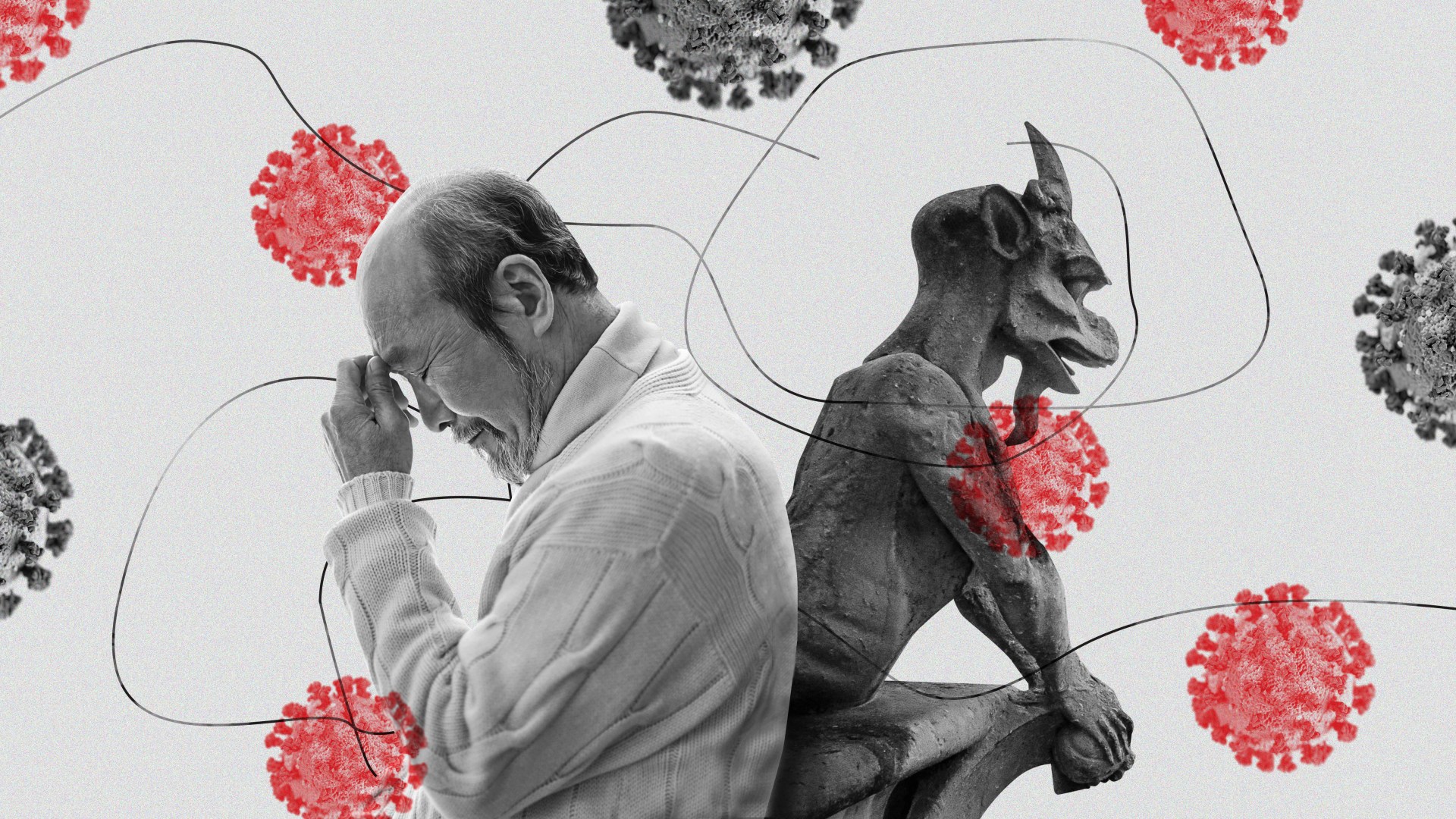
Illustration by Mallory Rentsch / Source Images: saemilee / Getty Images

For today’s musical pairing, listen to Experience by Ludovico Einaudi. See video below. Note that all the songs for this series have been gathered into a Spotify playlist here.

“Then he took a cup, and when he had given thanks, he gave it to them, saying, ‘Drink from it, all of you. This is my blood of the covenant, which is poured out for many for the forgiveness of sins.’”Matthew 26:27–28

“Then he said to them, ‘My soul is overwhelmed with sorrow to the point of death. Stay here and keep watch with me.’ Going a little further, he fell with his face to the ground and prayed, ‘My father, if it is possible, may this cup be taken from me. Yet not as I will, but as you will.’”Matthew 26:38–39

Day 8. 576,859 confirmed cases, 26,455 deaths globally.

The United States now has more cases of COVID-19 (over 86,000) than any other country in the world. The numbers of confirmed cases and fatalities have quadrupled over the past week as the disease continues to spread, symptoms surface, and testing catches up with reality. New York City is engulfed. Other cities will follow.

We are fighting a pandemic of disease and a contagion of panic simultaneously. We work to flatten the curve, but we cannot say where on the slope we stand.

We are reminded of you, Jesus, when you gathered in Jerusalem for a last supper with your disciples. You shared the bread of your broken body and the cup of your blood. With your blood, “poured out for many,” you established a fellowship of suffering. We share in your suffering and you share in ours, redeeming it from the inside out.

Later that night you crossed the Kidron Valley to the foot of the Mount of Olives, to the Garden of the Gethsemane. Gethsemane means “oil press.” You were about to be crushed for our sake, and you knew it. You brought your dearest friends partway with you, then left them behind to fall prostrate before your Father. The weight of what approached was so immense you wept blood with your tears.

“Let this cup pass,” you said. You did not welcome suffering. You did not celebrate its approach, even though you knew it was for the salvation of the world. You were willing to suffer for our sake—“Yet not as I will, but as you will”—but you did not love suffering for its own sake.

The cup of fellowship you shared in the Last Supper and the cup of suffering you accepted in the garden are the same cup—the cup of your blood, poured out for the world. Fellowship with you and suffering with you are inseparable.

Now, like you in the garden, we see suffering rising around us inexorably like a flood tide. We see the cup held out for us to drink.

If we must drink the cup, let us drink it with faith and join you in the fellowship of your sufferings. And yet we pray, as you prayed before us: Let this cup pass, O Lord. Let it pass, if it be your will.

Sign up for CT Direct and receive these daily meditations—written specifically for those struggling through the coronavirus pandemic—delivered to your inbox daily.

Ideas

Online Communion Can Still Be Sacramental

The bread and the cup Zoomed for you.

Christianity Today March 27, 2020
Illustration by Mallory Rentsch / Source Images: Lisa Forseth / Lightstock / Kari Shea / Andres Jasso / Lauren Mancke / Unsplash

Can ministers bless the Lord’s Table over Zoom? The worldwide pandemic provides all-new context for this theologically untested—and for some unthinkable—question. It may be time to consider what we mean by “presence.”

National guidelines now limit gatherings to 10 people. Churches have transitioned to online services and Zoom meetings. The sermon livestream is no problem—we’re comfortable with the Word transferring digitally. A recent study from the Pew Research Center easily pulled together 50,000 online sermons from Pentecostal to Catholic. Eighty-three percent of American protestant pastors agree that viewing a livestream is an acceptable option for the sick.

The controversy is with the latter half of Word and Table. “This is my body”—Christ’s words make our faith explicitly physical. But COVID-19 has transformed our physical bodies and gatherings from blessed unity to social-distanced partitioning. Hugs and hands convey fear instead of love. The bread and the cup elicit worry of viral transmission.

With physical gatherings canceled, congregations with quarterly Communion may slide the schedule a bit. But many evangelical Lutherans, Anglicans, and Presbyterians celebrate with bread and wine weekly. The shared Table is ordered and integral to worship. What now? Do you have to be present to partake of the presence?

Some “low church” nondenominational churches like Saddleback have long offered instructions to follow along with your own grape juice and livestream. Never mind 1990s HTML wonders like eHolyCom. While the United Methodist Church wrote exploratory papers in 2013, most sacramental denominations have relegated online Holy Communion to an exotic theological issue—akin to “Can extraterrestrials be saved?” (or to virtual cathedrals in the immersive Second Life video game). John Dyer offers a recent and extensive John Dyer offers a recent and extensive survey.

For many, online Communion is untenable. The Westminster Confession 27.4 forbids it. A conservative reformed professor told me, “The situation you describe is essentially private Communion.”

Today’s situation forces a reconsideration. COVID-19 may be the spark, but the kindling fueling the fire burning isn’t theological discourse. It’s in that last “I love you” text message you sent your spouse. The white-on-blue bubble carries an instantaneous reality, a moment of intimacy and presence that moves our heart and mind more than any adjacent physical stranger in that coffee shop (or perhaps that pew).

The means of digital communication have become ordinary and invisible to our most meaningful relationships. We laugh and cry and express intimacy and frustration with a cross-cut of iMessage and emojis, FaceTime and Instagram stories. We challenge our best friend on workout apps and ask private medical questions via telehealth.

The essential word is presence—along with the dramatic and sustained cultural shift in our understanding of it. A daily digital culture has shaped our interactions to the point that human presence is not synonymous to physicality.

Communications scholars have long understood this. It’s our words, yes, but also the verified identity of our interlocutor—that photo and number so you “know it’s them.” It’s real-time interactive signals like those three dots that appear when your relation is typing a response. It’s both low-resolution icons like a thumbs up and high-resolution facial expressions when we switch to video—those incredibly important nonverbal eyebrow lifts!

This new normal has changed us. New technologies that first appear as toys (we play with them) soon turn into tools (we use them) and then become our technological terroir—that assumed background environment wherein something like “texting” becomes the conversation (or argument!). These “environmental” technologies shift the focus from the tech back to the substance of human presence. Being present doesn't require being in person.

What does this technological presence have to do with sacramental presence?

Sacramental controversies have bounced between the metaphysical and the practical. Wine or grape juice? Leavened or unleavened? But most central are the contentions around God’s real presence. The means of grace? A memorial? A millennium of Midrash expounds on “This is my body … do this in remembrance of me.”

Nearly all Christians agree: There is a holy mystery in how God is present to us at the Table. In the language of communications, I assert the presence of Jesus is mediated. Mediated in the bread and the wine, the Holy Spirit, and the people of God (the body of Christ). Mediated like the truth and intimacy of an “I love you” text message.

Imagine a video conference call with 40 faces in small squares across the screen, each with a cup and a piece of bread in view. We worship and pray and the pastor or priest consecrates with language from the Book of Common Prayer, “send your Spirit upon these gifts”—the non-physical, all-present Spirit of God. Then as one body we partake together. In unity. Not privately. Present to one another.

Arguments from a previous generation about digital Communion were binary: offline and online. The internet was seen as anonymous and individualistic. A cold keyboard couldn’t compare to warm shoulders.

Yet the imagined video conference call—not so much imagined anymore—is an extension of known relationships of the local body. Why can’t the signs of God’s presence—the bread and wine—and the signs of our presence—our smiles and voices—signify both the goodness of the embodied world and the reality of the spiritual one? There is nothing inherently Gnostic—disembodied—here. Real bodies. Real bread. And the real presence of the Triune God, on Zoom this weekend and joyfully gathered back together in person once this too has passed.

Cultural shifts have often been tectonic plates on which the church builds as we apply the unchanging Word to the changing world. The physical gifts of God for the present people of God.

Chris Ridgeway writes at the intersection of faith and technology. He is the cohost of the Device & Virtue podcast about ethics and everyday tech and lives in Chicago.

News
Wire Story

Facebook Live Bloopers: Church Edition

Church leaders are navigating new digital waters, with some hilarious results.

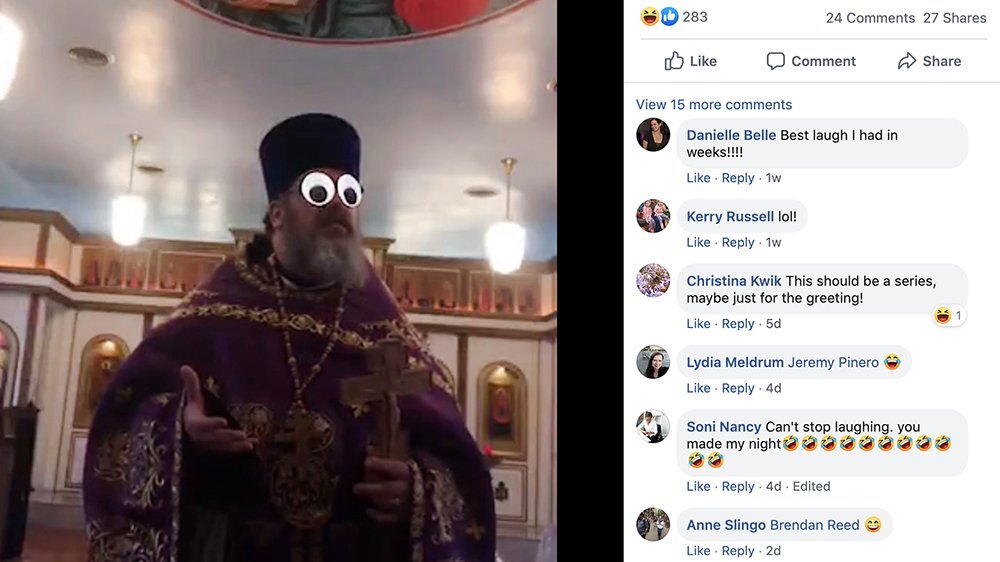
The Rev. Adam Sexton, of St. Andrew's Orthodox Church in Ashland, Virginia, posted stills of his livestreamed sermon when filters impacted his message

The Rev. Adam Sexton, of St. Andrew's Orthodox Church in Ashland, Virginia, posted stills of his livestreamed sermon when filters impacted his message

Christianity Today March 27, 2020
Screenshot / RNS

Megan Castellan has been livestreaming morning prayer from home every day through the coronavirus pandemic for her parishioners at St. John’s Episcopal Church in Ithaca, New York.

But Thursday’s prayer (March 26) was an “epic disaster,” Castellan told her followers on Twitter.

Both the rector’s dog and cat decided to participate in the Facebook Live video, hovering over her shoulders on the couch.

Offscreen, her husband, forgetting Castellan was on camera, made a loud phone call, then motioned to her that he was going to go get tested for COVID-19, the disease caused by the coronavirus.

Castellan, also briefly forgetting she was on camera, responded by miming sticking a swab up her nose, part of the testing process.

Then a “mysterious loud noise” sent her dog leaping off the couch to investigate, returning in time to lick the rector’s hand enthusiastically through the final prayer.

Castellan briefly considered recording the video over again, she told Religion News Service, but then she realized that as lives have been upended by the pandemic, maybe somebody else needed to hear that everything was awful this morning and that everything that could go wrong, did.

“We don’t want to fail in public, but I also think that one of the things that has restrained the church in doing online things is we don’t want to seem ridiculous and we don’t want to fail,” she said.

“The truth is, if you look at a lot of what we do, it is inherently ridiculous, especially to an outsider. And so we just need to sort of lean into that and let it go a little bit.”

Clergy across the globe are learning similar lessons as they turn to the internet to offer encouragement to congregants ordered to stay home to slow the spread of the coronavirus and to continue services online as their houses of worship temporarily close.

Over the last couple of weeks, more than 15,000 new churches have signed up for the Church Online Platform, a livestreaming service for churches. Many others have turned to livestreaming features available on social media platforms like Facebook and YouTube.

With so many using those tools for the first time and the internet’s inability to forget, some hilarity was bound to follow.

Most clergy, like Castellan, seem to have maintained a sense of humor about the inevitable bloopers.

“It reassures people that they’re allowed to be human if we are allowed to be human,” she said.

Here are a few online church fails that have gone viral.

Tom v. tree

The Bible encourages Christians to “fight the good fight.”

But worship leaders of Marietta First Church of the Nazarene in Marietta, Georgia, seem to have read that as “fight the good ficus.”

The church has been streaming its services on YouTube for about a year, but that couldn’t prepare it for what happened when a “skeleton crew” filmed worship Sunday in an empty sanctuary.

As its appropriately distanced worship band sang “Open up the Heavens,” an artificial tree toppled over onto the drummer, who was visible in the corner of the screen. A minute-long battle ensued, as the drummer, identified as Tom Winterbottom, attempted to continue playing, then to push the tree back into position, sending an overhead light swaying.

The church has embraced the viral mishap, posting a video clip zoomed in on Winterbottom’s struggle on its social media channels.

“This wasn’t planned, but God used it to bring laughter to the hearts of many. For that, we are thankful,” senior pastor Gerald Carnes wrote.

Fiery sermon

Stephen Beach, vicar of St. Budeaux Parish Church in Plymouth, England, delivered a fiery sermon on March 19.

The message was meant to be the last in a series of short videos Beach posted on YouTube as an “online worship experience” for members of his congregation, part of the Church of England.

Leaning into the frame in front of a glowing cross-shaped candelabra, the vicar briefly introduced the topic of waiting. Then he glanced down at his shoulder, which evidently was a bit too close to the candles.

“Oh dear, I’ve just caught fire!” he exclaimed, batting out the flames engulfing the sleeve of his sweater.

In the next video, Beach kept his distance from the candles but encouraged viewers, “You must watch the outtake. My family are really impressed with it.”

Googly Eyes Rector

Adam Sexton of St. Andrew’s Orthodox Church in Ashland, Virginia, had never used Facebook Live until recently.

When the archbishop of Washington closed all parishes in the diocese and directed Orthodox believers to pray at home, Sexton wanted to make the Divine Liturgy available to them.

So, the rector recounted in a March 15 Facebook post that has been shared more than 2,000 times, his child walked him through how to use the livestreaming feature. Unfortunately, the child didn’t walk him through its filters, which overlay special effects on speakers’ faces.

When he stepped close to the camera, he realized afterward, a pair of large googly eyes appeared on his face throughout the video.

“I have no idea why or how but it’s hysterical and I’m not even mad,” Sexton posted. “It’s fantastic. So so so funny.”

Undeterred, he said, “We’ll give it a shot again next week.”

Facebook filters strike again

It wouldn’t be the last time Facebook filters foiled well-meaning clergy.

A Twitter user tweeted a video clip Monday that has been viewed since then more than 7 million times of a Roman Catholic priest livestreaming Mass in Italy wearing a series of virtual accessories.

As the priest greeted viewers, “Buona sera,” a colorful digital helmet appeared over his face.

The video then cycled through a few more filters, making the priest appear to be lifting weights before donning a Blues Brothers-style dark hat and sunglasses.

“Technical difficulties won’t stop him. He’s on a mission from God,” one Twitter user responded.

UPI since has identified the priest as the Paolo Longo, parish priest of the Church of San Pietro and San Benedetto di Polla in Salerno.

Longo later posted an invitation to pray the rosary with him on Facebook, noting in Italian, “Even a laugh is good.”

Rewatching ‘Spider-Verse’: A Theological Response to the Possibility of a Multiverse

A new book explains Stephen Hawking’s physics yet points to the manifold wisdom of God.

Christianity Today March 27, 2020
Illustration by Rick Szuecs / Source images: Guille Pozzi / The New York Public Library / Unsplash

Life was a lot simpler when there was just one Spider-Man. Okay, so it was a stretch of the imagination to think that a teenager bitten by a radioactive spider might develop superpowers and save the world, but it was manageable. One hero, one world. Simple.

Then, in 2018, Columbia and Sony unleashed Spider-Man: Into the Spider-Verse. It was a huge hit—critics and fans were delighted, an Oscar was awarded, and the movie made more money than any other Sony animation in history. What was the key plot device of this barnstorming blockbuster? A multiverse.

Yes, that’s right—the universe, I’m afraid, is old hat. That “uni” sitting at the front of it implies “one,” and it just won’t do any more. The Spider-Verse was a whole new realm; one in which there were countless Spider-Men and Spider-Women, countless New Yorks, countless bad guys, and countless storylines to be exploited—which the writers did to great (and brain-boggling) effect.

As it happens, interactive systems of parallel universes have existed in the world of science fiction for many years—from the big screen and small screen to paperback novels—and they have become a staple for any author looking to play with possibilities and muddle our minds. Thankfully, though, such complex extravagancies need not trouble us here in the real world, for the multiverse is fictional.

Isn’t it?

Leveling Up

The rather surprising answer to that question is: not necessarily. Over the past decade or so, more and more top-level scientists have not only entertained the notion but have bought into it wholesale. According to some of the best minds in the business, there may very well be a lot more going on than just our own little (very, very big) universe. There may be lots of universes. There may even be an infinite number of them.

What on earth(s) is going on here? Where has such a strange idea come from? Is there any evidence for it? More to the point for Christians: What does it mean for God? Does he still exist? Might there even be Gods?

The first thing to point out is this: The concept of a multiverse can be arrived at by following many different scientific routes. It is, therefore, far too simplistic to write it off as an atheistic version of pie in the sky—one that was devised purely to try to get rid of God. Multiverses show up as possibilities when we start to ask questions about physics—and they show up often enough to be worthy of real, considered discussion.

Back in the mid-2000s, the MIT cosmologist Max Tegmark bit the bullet and reviewed all the different multiverse models that had been doing the rounds. He decided that every existing theory could be placed into one of four categories, which he called Levels I to IV. They are, briefly:

Level I: Our own universe carries on forever (or very, very far)—way past anything that we can currently, or could ever, observe.

Level II: There are other regions of space that have the same basic laws of physics as ours, but different constants of nature—different particle types, different numbers of dimensions, etc.

Level III: There are parallel and inaccessible universes that are constantly being created by quantum mechanical effects. Some of these will be very similar to ours, while some end up being very different.

Level IV: Anything goes. There is an infinite number of universes, all with their own laws of physics—some have no gravity, some no electricity, etc. The only limitations in place are due to the abstract laws of maths and logic.

Most, but not all, practising physicists are on board with the existence of at least a Level I multiverse. It should be pointed out, however, that this could still quite sensibly be called a universe, since there is only one of it. When we hit Levels II or higher, though, controversy reigns. This is because other universes are undetectable to us—and will almost certainly remain so, regardless of technological breakthroughs. Multiverses of these types, it would seem, are pretty close to being a matter of scientific gut instinct, or of taste, or of faith.

Getting Rid of God

Having said all this, there is an undeniable attraction to the multiverse for atheists because the existence of many universes can help them deal with an issue that is otherwise quite problematic for their worldview. One such thinker was Stephen Hawking, who nailed his atheistic colours to the mast in the years before his death in 2018. When discussing the dilemma of “fine-tuning”—the inescapable fact that our universe has rules and constants that are magnificently suited to our human existence—he wrote:

The discovery relatively recently of the extreme fine-tuning of so many of the laws of nature could lead at least some of us back to the old idea that this grand design is the work of some grand designer.

Hawking is right. The mind-blowing precision of the values we measure smacks of divine intervention; even the hard-nosed atheist Fred Hoyle admitted that “a common sense interpretation of the facts suggests that a super-intellect has monkeyed with physics.”

This often-undesired conclusion can be avoided, however, if a multiplicity of universes exists out there somewhere. Ours is perfect for us, yes, but there was bound to be at least one cosmology like that amongst the ensemble. The mystery, therefore, goes away. Hawking again writes:

The multiverse concept can explain the fine-tuning of physical law without the need for a benevolent creator who made the universe for our benefit.

Hawking saw fine-tuning and the necessity of a First Cause as being the two strongest arguments for the existence of God. In the 1980s, working with professor James Hartle of UC Santa Barbara, he figured that he had found a way of dealing with both of them—by combining the two most successful scientific theories of all time: quantum mechanics and general relativity.

The outcome was a universe that appeared to have no beginning in time, thus removing the need for a First Cause. What’s more, as the Hawking-Hartle model was let loose, it was capable of describing not only a universe that looked very loosely like ours but also billions of other universes. Hawking’s reassessment of the rules had not just brought about one potential cosmos but had built a countless number of them vying for his attention. Suddenly, the Spider-Verse doesn’t seem quite so crazy.

The Grand Design

Hawking’s model and its seemingly endless list of possible worlds caused him a major headache because pretty much each time the model was run, it predicted lifeless, empty universes. Why then, was the actual final outcome—ours—so rich and life-bearing? To answer this, the scientific genius decided to leave his specialized world of physics and dip his toe into a little philosophy. His solution was most unusual, and it makes the plots of most superhero movies look rather bland by comparison.

Hawking gives an example of his thinking in his book The Grand Design. He concedes, for instance, that his model allows for the existence of a universe just like ours but with a moon made out of cheese. The thing is, though, we have been to the moon, and we have discovered that it is not made of cheese. This discovery, Hawking says, has the most extraordinary effect: It echoes backward through time, explores his evolving multiverse, and removes all universe versions that contain cheese-moons before they become reality.

In other words, every measurement we ever make of anything fixes that value in place. If I measure the length of my driveway and I find that it is 10 yards long, then all universes that might have existed in which it is 9 yards or 11 yards are cut out of the multiverse system before they even get going. If this sounds rather outrageous, that’s because it is. Hawking readily admits as much: “This leads to a radically different view of … the relation between cause and effect. … We create history by our observation, rather than history creating us.”

What is even more strange about this is that nothing in the actual science of his model demands this odd backward-in-time behaviour. Professor Tom Lancaster of Durham University told me in an interview that it is simply not necessary to argue that these alternative universes are in any way real, let alone posit that our present is changing the past: “Hawking’s physics does not require retrocausality.”

Time-traveling measurements or not, it is clear that the Cambridge cosmologist was convinced he had dismissed God from the table. No longer was there a traditional beginning to the universe, so a First Cause was irrelevant. Fine-tuning was not due to a divine Architect but was brought about by our own observations: We see ourselves, so we must be here by definition. After all, any universe in which we would not have existed has been deleted from the multiverse by our mere presence.

The Sign Given to Us

Don’t worry if you are finding this unsatisfactory or unconvincing. You are not the only one. In general, cosmologists are not in favor of Hawking’s theory. Even Jim Hartle, its co-inventor, is not committed to its actual truth, as he told fellow big-thinker Aron Wall (who holds the office next to Hawking’s old one). The unavoidable fact is that the Hawking-Hartle model ultimately predicts the existence of a sparse, boring, lifeless universe, and that it is, therefore, wrong.

But that is not really the point.

Trying to figure out where we came from is difficult—and no one knows how to do it. What makes Hawking so special is that he came up with a new idea when it looked like there was nothing at all to be done. He took a scientific step in the right direction and opened up the field for others. He gave his colleagues fresh hope that the laws of physics might, one day, be completely devised and understood. His thoughts on the expansion of the universe, on black holes, and on quantum information include some of the best physics done by anyone.

Where Hawking falls down is his theology. The case for God is not simply the First Cause argument and the appearance of design. Hawking only ever considered a God who was a vague and distant landlord, disinterested in his creation. And he was, of course, right to conclude that such a god is not worth all that much.

Instead, the case for the Christian God is historical, philosophical, psychological, experiential, scientific, and more. The Bible, for example, is a testable document. It describes real people, real events, and real places—and, when we subject it to examination on these points of evidence, it stands firm. This can help us make a decision about whether we can trust it on other more supernatural fronts, such as its central tenet: that Jesus rose from the dead. This assertion forms the capstone of Christianity—yet Hawking doesn’t give Easter a single mention.

Hawking’s colleague professor Don Page, with whom he wrote many papers, thinks this is a key point:

I personally think it might be a theological mistake to look for fine tuning as a sign of the existence of God … In other words, I regard the death and resurrection of Jesus as the sign given to us that He is indeed the Son of God and Saviour He claimed to be, rather than needing signs from fine tuning.

Page, like many others, is a scientist convinced of the truth of Christianity. While he clearly does not see his science as causing any problems for his faith, he also rejects the idea that cosmology should be the sole source of evidence for its truth. Hawking’s mistake, then, was to begin looking in one domain only—physics—for answers. Whenever we do that, our understanding will be incomplete, for we risk missing out on insights offered from other areas of human interest. History can inform psychology; biology can inform art. And—somewhat crucially in Hawking’s case—theology can inform science.

Manifold Wisdom

So then: What of beginnings, and what of the multiverse? The universe almost certainly has a beginning; but even if it doesn’t, that does not prove Christianity wrong. Wall, for example, says, “I think that belief in the creation of the universe does not really depend on there being a first moment of time.” God could have made a universe that stretches back infinitely far in time, he says, just as a human author could write a book that never specifies just how far back its fictional universe goes.

And, as far as the multiverse is concerned, the short answer is that we really have no idea whether it exists or not. We will probably never know, since those parallel universes are likely to remain forever beyond our reach. Christians need not be afraid of this conclusion, though—for, as Hawking’s fellow Oxbridge professor John Lennox reminds us: “God could create as many universes as he pleases. The multiverse concept of itself does not and cannot rule God out.”

This notion leads to some intriguing questions: Did God make other people in these other universes? Did they fall? Did Jesus die for them, too? Fascinatingly, humans have asked questions like this before. In the Middle Ages, theologians wondered about aliens living on other planets and about their relationship with God. Perhaps modern thinkers should revisit their work.

In Ephesians 3:10, Paul describes how God created our world and its salvation story to demonstrate his “manifold wisdom” to a supernatural audience. Manifold could equally be translated “many-colored” or “multifaceted.” Perhaps, then, God has displayed other colors and faces elsewhere. After all, it may turn out that one universe is simply not enough to exalt him fully—that a suitable display of God’s glory demands a few more.

Maybe, even, an infinite number of them.

The ideas expressed in this article are drawn from God, Stephen Hawking and the Multiverse: What Hawking Said and Why It Matters, by David Hutchings and David Wilkinson (SPCK, March 2020).

David Hutchings is a physics teacher at Pocklington School near York, United Kingdom. He is a fellow of the Institute of Physics and a leader in the local church in York. His first book, Let There Be Science:Why God loves science, and science needs God (Lion Hudson), was co-written with Tom McLeish, a fellow of the Royal Society.

Theology

Evangelism Isn’t a Chore. It’s a Joy.

When Jesus changes our lives, it’s only natural to invite others along.

Christianity Today March 27, 2020
Ivan Gener / Stocksy

I am rhythmically challenged. I can’t dance, rap, or do high fives. I miss the other person’s outstretched palm every time. I also don’t know what to do when someone approaches me to greet me. I never know if I am supposed to do a handshake, bro-hug, or curled-fingers hook. Last month a guy offered me a fist bump and I shook it by mistake. It felt awkward and horrible at the same time. That’s why I love watching people who’ve got rhythm. I love seeing an NCAA college basketball home crowd as they chant and throb in unison. Wedding guests on the dance floor doing the Bus Stop. Two friends performing their signature handshake—slap, slap, bump, slide. When people are in sync with each other, I see rhythm. I see harmony. I see joy.

In the same way that I am out of sync on the dance floor, we are out of step with God our Creator. God moves left, but we move right. God claps on the off beat, but we clap on the on beat. This is because we are ultimately on opposing sides (Eph. 2:12). In fact, the Bible describes us as “God’s enemies” (Rom. 5:10). We have stiff necks and ears that do not hear (Jer. 7:26; Ezek. 12:2). No wonder we can’t dance in time! We’re not merely rhythmically challenged—we refuse to dance in time with God.

But through his death and resurrection, Jesus puts us back in sync with God our Creator. His death and resurrection put an end to the hostility between us and God, resulting in the supreme blessing of peace (Eph. 2:13–19). God has “reconciled us to himself through Christ” (2 Cor. 5:18)! One aspect of reconciliation with God is that we are now put back in rhythm with our Creator. Paul goes on to explain that God has done this “in Christ” (v. 19). We are in Christ—thus, reconciled to God in Christ, we participate in perfect unison, rhythm, and harmony with God.

In most cultures the joy of reconciliation is expressed by eating together. Whenever my Chinese relatives eat together, it’s always at a round table—never a long rectangular table—because we’re eating together, face to face. The food is placed in the middle of the table and shared—we all eat the same dishes. And the host will pay for the whole meal—the bill is never split. It’s the opposite of Western individualism where everyone eats and pays for only what they order for themselves.

Interestingly, in the New Testament, often when someone is reconciled to God because of Jesus, the person celebrates this with a joyful meal. For example, immediately after leaving his tax office to follow Jesus, Levi throws a banquet for him (Luke 5:27–30). When the jailer in Philippi is saved, he is “filled with joy” and brings Paul and Silas back to his home for a meal (Acts 16:31–34). When Zacchaeus comes down from his tree, it’s to welcome Jesus into his home—with joy (Luke 19:5–7)! It’s the perfect expression of our reconciliation with God in and through Christ—a joyful meal with Jesus!

But even more interestingly, in the New Testament, after becoming reconciled to God, often the person tells as many of his or her family members, friends, and neighbors as possible about Jesus and invites them to the banquet with Jesus as well. It is a shared celebration. For example, Levi invites his tax-collector friends so that they, too, can eat with Jesus (Luke 5:29). Similarly, the Samaritan woman who meets Jesus at the well invites her village to come and meet Jesus, and they in turn invite Jesus to stay with them to meet as many of their friends as possible (John 4:28–30, 39–42). Likewise, the jailer’s whole household eats with Paul and Silas and also hears and believes the word of the Lord (Acts 16:32–34).

The pattern in the New Testament seems to be this: Someone meets Jesus and experiences reconciliation with God. There is an outpouring of joy, which is often expressed through a meal with Jesus. But it’s usually not a small, one-on-one meal with him. It’s a banquet where the person opens his home and invites many friends to come along to meet and to eat with Jesus. The joy that comes from knowing Jesus is infectious. The gladness that comes from reconciliation with God has a snowballing effect.

This is what Paul describes when he says the love of Christ “compels us” (2 Cor. 5:14). Christ’s love for us is infectious. We want everyone to experience what we’ve discovered. Once we’ve tasted the joy of being in harmony, peace, and union with God our Creator, we want everyone else to be reconciled to God as well. Paul calls this the God-given “ministry of reconciliation” (v. 18). In much of the New Testament, we see this ministry of reconciliation expressed through people opening their homes, joyfully eating, and sharing the words of Jesus.

When I was a boy growing up in Adelaide, Australia, my Christian parents often invited our neighbors into our home for dinner. Many times, they also hosted lunches for international college students who had no immediate family or friends in Australia. These meals were always fun, with much food and celebration. Over these lunches and dinners, my parents would share the words of Jesus. Bit by bit, many neighbors and college students came to know the Lord. It was so much a part of our family’s routine that I thought it was just the normal thing to do! Today, in the busyness of our Western lives, I now see how it’s not such a normal thing to do.

But, on the other hand, looking at the stories of believers in the New Testament and contemplating the words of Paul in 2 Corinthians 5:14–21, I can see how this actually is the normal and natural response of being reconciled with God. It’s in the very DNA of being a Christian to share our homes, meals, time, words, and lives with as many other people as possible. This instinctive desire to invite others to meet Jesus and “be reconciled to God” (v. 20) is the glad heartbeat of evangelism.

There is a bountiful joy in enjoying God’s reconciliation. Once we’ve tasted this joy, we want the whole world to taste it too. We open our lives, our mouths, our doors, our tables so that others can celebrate and have a meal with Jesus.

Sam Chan is an evangelist with City Bible Forum in Sydney, Australia. His book Evangelism in a Skeptical World received the 2019 Apologetics/Evangelism Book Award from Christianity Today. A medical doctor and theologian, he blogs at EspressoTheology.com.

This piece is part of The Cross, CT’s special issue featuring articles and Bible study sessions for Lent, Easter, or any time of year. You can learn more about purchasing bulk print copies of The Cross for your church or small group at OrderCT.com/TheCross. If you are a CT subscriber, you can download a free digital copy of The Cross at MoreCT.com/TheCross.

Ideas

The Suffering in Suffering

President & CEO

There will come a day when the last tear is shed. Until then, God has made himself present in our affliction.

Christianity Today March 26, 2020
Illustration by Mallory Rentsch / Source Images: saemilee / Getty Images

For today’s musical pairing, Der Klang der Offenbarung des Göttlichen by Kjartan Sveinsson. See video below.

“Then King Nebuchadnezzar leaped to his feet in amazement and asked his advisers, ‘Weren’t there three men that we tied up and threw into the fire?’ They replied, ‘Certainly, Your Majesty.’ He said, ‘Look! I see four men walking around in the fire, unbound and unharmed, and the fourth looks like a son of the gods.’”Daniel 3:24–25

Day 7. 511,603 confirmed cases, 22,993 deaths globally.

The suffering in this present moment is not captured in tallies and numbers. Alongside the loss of life is the loss of livelihoods, the loss of innocence, the loss of a sense of security. The scent of fear is in the air, and in the midst of the pandemic our epidemic of loneliness grows deeper.

Suffering has a tendency to isolate. It can carve us away from community, set us apart from the crowd, and strip away all our distractions and illusions and consolations. No one can experience our pain for us. No one can take it away. No one can cover it over with soothing words or glittering ideas. Even when we suffer together, we suffer alone.

“The most terrible poverty is loneliness,” Mother Teresa wrote, “and the feeling of being unloved.” Now the pandemic has made our spiritual isolation physical. We find ourselves in an enforced solitude, where our fears and anxieties echo in the emptiness. We ache for the presence of others.

Shadrach, Meshach, and Abednego were bound and hurled into the fiery furnace together, and they emerged unbound and unharmed. God met them in the fire. Christians are not wrong to read the story in the light of the Incarnation. Christ lowered himself into our condition. He made himself present with us. Christ entered into our sufferings and brought the love of God with him.

God does not empty our lives of suffering, but he fills our suffering with himself. In his book The Crucified God, Jürgen Moltmann writes, “The suffering in suffering is the lack of love, and the wounds in wounds are the abandonment, and the powerlessness in pain is unbelief.” There will come a day when the last tear is shed and the last wound is healed. Until then, God has made himself present in our affliction.

At the end of the day, we all stand alone before God. But this is merely to say that we are not alone at all. We stand alone before the one who brought us forth in love, who calls us homeward in love, and who fills even the fiery furnace with his loving presence. Per Moltmann, “The suffering of abandonment is overcome by the suffering of love, which is not afraid of what is sick and ugly, but accepts it and takes it to itself in order to heal it.”

Thank you, O Lord, that you are with us in our hour of need. Thank you that you have made yourself present in all the height and depth of our suffering. May we likewise enter into the sufferings of others and be bearers of your love there.

Sign up for CT Direct and receive these daily meditations—written specifically for those struggling through the coronavirus pandemic—delivered to your inbox daily.
Theology

In Italy, I’ve Rediscovered the Power of Three Types of Prayer

Psalms of lament felt hyperbolic before COVID-19. But amid 10,000 deaths, my locked-down church in Rome resonates with David more than ever.

A mural dedicated to all Italian medical workers on a wall of Papa Giovanni XXIII Hospital in Bergamo, the epicenter of Italy's COVID-19 outbreak, near Milan.

A mural dedicated to all Italian medical workers on a wall of Papa Giovanni XXIII Hospital in Bergamo, the epicenter of Italy's COVID-19 outbreak, near Milan.

Christianity Today March 26, 2020
Emanuele Cremaschi / Stringer / Getty Images

The COVID-19 pandemic has changed how Italian Christians pray and live their faith, amid a nation reeling from more than 10,000 deaths—the highest tally in the world—among 92,400 confirmed cases, second only to the United States [as of March 28].

During lockdown, we can no longer gather on Sundays or in home groups. Social gatherings, travel, and weddings are suspended, as are most businesses. If someone is caught outside their home without a valid reason, there can be a heavy fine.

But this season of exile has helped us discover three facets of prayer we often neglect in times of abundance.

1) Prayers of Lament

Psalms of lament often felt hyperbolic a month ago. For example, Asaph’s complaint that God has made his people “drink tears by the bowlful” could seem overdramatic; David’s cry to God of “How long will you hide your face from me?” was a distant feeling.

But as humanity struggles to contain a fear- and anxiety-provoking pandemic, lament feels newly relevant to all of us. In March 2020, Psalm 44 sounds pitch perfect:

Awake, Lord! Why do you sleep?
Rouse yourself! Do not reject us forever.
Why do you hide your face
and forget our misery and oppression?

We are brought down to the dust;
our bodies cling to the ground.
Rise up and help us;
rescue us because of your unfailing love.

Few Western Christians have experienced poverty, injustice, or persecution. Consequently, our worship usually reflects the moods of resourceful individuals in times of prosperity and peace: composed and mainstream. We do suffer individually; however, seldom is our corporate worship fueled by protest and mourning before God.

Lament is suffering turned into prayer. It’s the worship of people who feel out of balance and out of place. Historically, it has been the prayer of minorities, the poor, and the persecuted—of Chinese pastors in prison cells and of black slaves singing of justice and Christ’s coming.

If lament felt foreign to most Italians a month ago, pastors have found eerie echoes of biblical stories in what is currently taking place in the country. “To see wives who can’t perform rites or bid farewell to their dying husbands reminds me of how Jesus was hastily buried and women returned to the tomb to anoint his body,” Gaetano di Francia, director of the Union of Christian Biblical Churches in Italy, told me. “Their lack of closure will produce a deeper grief.”

The language of lament may prove to be one of the bittersweet lessons Christians learn from this crisis. It can help believers unlearn a spirituality of the center and learn a spirituality of the margins (as pastor Abraham Cho reminds us).

2) Prayers of Intercession

Never have I spent so much of my time in prayer interceding for others. I’m ashamed to confess that, in the past, I’ve often told people, “I’ll pray for you,” but then forgot to do it.

But now that the virus ravages Italy, I have been moved by images of overworked doctors and people lying in makeshift hospitals. A member of our church fell gravely sick, but the emergency room turned him away because it is fielding so many cases of the new coronavirus.

I can’t meet or lay hands on him due to the current national lockdown, but I have been praying for his recovery. As a church, we have prayed for doctors, created a common fund to help those in economic need, and fasted for our country.

The coronavirus crisis has united Italian evangelicals, who observed a National Day of Prayer this past Sunday [March 22]. “Pentecostals, Reformed, Wesleyans, Baptists, Congregationalists, and others met at the feet of the Lord, united by the Holy Spirit,” Giacomo Ciccone, president of the Italian Evangelical Alliance, told me.

“It is as if God prepared leaders and denominations around the country to come together in prayer for the nation and for the church,” Leonardo de Chirico, the alliance’s vice president, told me. “It was the easiest event to organize. Nobody needed convincing; all were already on fire for it.”

Mila Palozzi, a pastor at my congregation, Hopera Church in Rome, agrees that evangelicals desire to come together.

“In the Promised Land, Israel understood itself as a collection of tribes but in exile as one nation,” she told me. “So does Italy: this crisis is bringing churches and tribes together to pray as one body for our country.”

It’s a foretaste of the spirit of unity and intercession spreading around the world. For example, this coming Sunday [March 29] the World Evangelical Alliance will convene a Global Day of Fasting and Prayer.

3) Prayers of Silence

However, the news is so bleak and the suffering so global these days that we can feel overwhelmed in prayer. How can my prayers possibly meet this moment? Our honest response may be, “Lord, I’m dumbfounded. I don’t know what to say.”

When I watched army trucks driving corpses to be cremated because there is no longer space in cemeteries in parts of Italy, I was speechless.

But to wait upon the Lord is valid. To put our wordless trust in him is a legitimate prayer. When Paul writes about our present weakness and suffering, he adds:

“We do not know what we ought to pray for, but the Spirit himself intercedes for us through wordless groans. And he who searches our hearts knows the mind of the Spirit, because the Spirit intercedes for God’s people in accordance with the will of God.” (Rom. 8:26-27, NIV)

When words fail us, we can be still and know that God is God.

“As a family, we have chosen to fill our silences full of doubts with the secure promises of God,” Stefano Picciani, a preacher at Stadera Church in Milan, told me. “Asaph’s statement of trust in Psalm 73—‘Yet I am always with you’—provides words for our prayers.”

We rightly long to return to normalcy and corporate worship. Imagine the victory parties, and the joining of hands!

When this pandemic will be defeated, many will resonance with the sense of relief of Psalm 126 (“Those who sow with tears will reap with songs of joy.”) and the joy of Psalm 150 (“Let everything that has breath praise the Lord.”).

But alongside celebrations, we will be wise to remember the prayers we uttered in this time of sickness. May this pandemic humble our hearts and teach us the prayers of the weak, the concerned, and the speechless.

René Breuel is founding pastor of Hopera, a church in Rome, Italy, and author of The Paradox of Happiness.

News

Fake Dead Sea Scrolls Displayed at Museum of the Bible

Updated exhibit will focus on forgery.

Christianity Today March 26, 2020
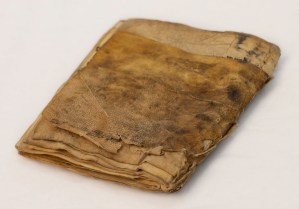
Image courtesy of Colette Loll / Art Fraud Insights

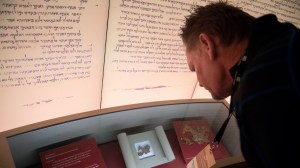
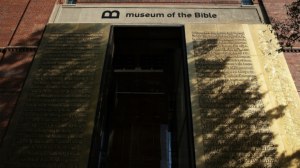
The Museum of the Bible displays 16 fragments of the Dead Sea Scrolls—and all of which are fake, according to an independent analysis contracted by the museum. The forgeries will remain on display, with an updated exhibit that attempts to use the embarrassing situation as an educational opportunity.

“Our goal is to educate the public about these items, educate the public about the academic process, and make a contribution to the field,” said Jeffrey Kloha, the museum’s chief curatorial officer. “We are currently developing content for updating our exhibit.”

The Museum of the Bible purchased the forged fragments in four different lots from four different antiquities dealers between 2009 and 2014. The Dead Sea Scrolls were one of most important discoveries in biblical archaeology in the 20th century. It was felt that a museum dedicated to the history of the Bible had to have examples of them, if they were available.

The ancient scrolls were discovered by Bedouins in 1947. A cobbler in Bethlehem named Khalil Eskander Shahin and known as Kando served as an intermediary between the Bedouins and the institutions that wanted to buy them. The Kando family kept some of the fragments, as an investment.

When a number of scroll fragments began to come on the market in 2002, some were directly connected to the Kando family, and few questions were raised about their authenticity. Before the Bible museum opened, however, a group of scholars examined the fragments while writing a book about the Dead Sea Scrolls. Questions began to surface about five of the 16.

When the museum opened, the Dead Sea Scrolls were displayed with signs acknowledging the questions about their authenticity.

“Some scholars insisted they were authentic, some insisted they were not,” Kloha said. “We felt as a museum it was important to help the public understand that these are challenging questions.”

Courtesy of Colette Loll / Art Fraud InsightsSpectral/RTI arc Honeycomb compact with double 365 power
Courtesy of Colette Loll / Art Fraud Insights

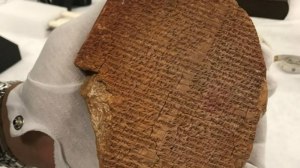
Steve Green, president of Hobby Lobby and chairman of the Museum of the Bible, was also fined $3 million and forced to return 5,500 ancient cuneiform tablets and seals in 2017, after a federal investigation determined they were from war-torn Iraq and not Turkey or Israel as customs forms had claimed.

Faced with some strong criticism and increased suspicion about the museum’s exhibits, the organization decided to hire an outside firm to independently examine all 16 of the Dead Sea Scrolls fragments. The Museum of the Bible contracted with Colette Loll, of Art Fraud Insights, who specializes in detecting forged artwork. Loll assembled a team of experts and launched a nine-month investigation.

The investigation revealed that most of the fragments were leather, rather than the parchment typical of the Dead Sea Scrolls. To the naked eye the materials look very similar. Under a microscope, the difference was obvious. More evidence of forgery mounted.

“We saw things like ink waterfalling off the edges, ink going into cracks, ink going over thick surface deposits,” she said. That would mean that when the text was written “this material was already decomposing,” Loll said, which provided more physical evidence of forgery.

Investigation Reveals Deliberate Forgeries

When the experts finished, Loll’s team had no trouble drawing a conclusion.

“After an exhaustive review of all the imaging and scientific analysis results, it is the unanimous conclusion of the advisory team that none of the textual fragments in the Museum of the Bible’s Dead Sea Scroll collection are authentic. Moreover, each exhibits characteristics that suggest they are deliberate forgeries created in the 20th century with the intent to mimic authentic Dead Sea Scroll fragments.”

The investigative report, which was paid for by the museum and is now available on the museum’s website, includes videos and images which will help people understand the forgery.

The museum hosted an academic symposium on March 13 to report the results of the investigation. A panel of Dead Sea Scrolls scholars were responded, including Christopher Rollston, professor of Semitic languages at George Washington University; Sidnie White Crawford, professor emerita of Hebrew Bible and Second Temple Judiasm at the University of Nebraska-Lincoln; and Lawrence Schiffman, professor of Judaic studies at New York University. All three praised the museum. Even though the fragments were one of the museum’s most prized possession, it did the right thing, funding an investigation and publicizing the results.

“They didn't have to fund these tests,” Rollston told CT. “Many other museums have not come clean like this. I think the museum deserves some credit for that.”

The three scholars also called for an inquiry into the fake artifacts, to figure out who perpetrated the fraud. “We need a full-scale criminal investigation,” Schiffman said.

Rollston hopes an investigative journalist will go to work on the scandal and find the perpetrator. He suspects it may be someone he knows, someone in the community of Dead Sea Scrolls experts, a trained scholar who perverted professional expertise to engage in criminal activity.

“I believe forgers do great harm to the field,” he said. “They prey on the hopes and desires of good people. I would love to see this person exposed and prosecuted.”

Other Scroll Fragments may be Suspect

There are about 70 other Dead Sea Scrolls fragments in other collections around the world that may be forgeries as well. The Museum of the Bible is encouraging the owners of those fragments to launch their own investigations.

“We hope to set a benchmark here for other collections and hopefully uncover the truth about all of these fragments,” Kloha said. “The ultimate goal is to have the truth and to be able to present it accurately and make it available to the world.”

He added: “We’ve learned a lot more about how forgers go about their methods. We have also learned that documentation from dealers can’t always be trusted.”

The news of the fakes may have damaged the credibility of the museum, but Rollston said he would not hesitate to visit with family members and friends who come to Washington, DC. “The serious blunders of the museum, these breeches of ethics and law, are part of the past,” he said.

Rollston recommends visiting the Israel Antiquities Authority room on the sixth floor, one of the largest exhibits of material excavated in Israel on display outside of Israel. And the changes that are coming in its Dead Sea Scrolls exhibit will make the museum even better.

“It will be really fabulous to put together an exhibit focusing on modern forgeries,” Rollston said. “It’s a useful thing for the public, a way to make lemonade out of lemons.”

Books

In a Time of Crisis, We Need Both ‘Sense’ and ‘Sensibility’

The Bible speaks to our rational and emotional needs. But how do we balance them in the midst of fear?

Christianity Today March 26, 2020
Illustration by Mallory Rentsch / Source Images: Claudia Wolff / CDC / 胡 卓亨 / Unsplash / Wikimedia Commons

We all need a little more “sense and sensibility” in our lives these days.

Sense and Sensibility: A Guide to Reading and Reflecting

Sense and Sensibility: A Guide to Reading and Reflecting

B&H Books

528 pages

$12.98

The title of the much-beloved first novel by Jane Austen takes on new significance in the age of COVID-19. We need more of Austen—her wit and wisdom—right now. But we also need the qualities of character that the title of her novel names. There’s nothing quite like a global pandemic—with its social distancing, self-quarantine, inconveniences, illnesses, and even deaths—to awaken us to the necessity of both sense and sensibility.

When Austen published Sense and Sensibility in 1811, these terms—“sense” and “sensibility”—referred roughly to what we mean today by “reason” and “emotion.” Then, as now, the two are often seen wrongly as being in opposition to one another. This view owes partly to the fact that the modern age that began in the seventeenth century is defined by the reign of reason or sense. Around the time that Austen was writing, more than a century after the Enlightenment, a reaction against reason emerged with the Romantic Movement. Romanticism exalted ‘sensibility’ in the form of emotion, imagination, and aesthetic experience. We’ve been toggling back and forth between the two ever since. In our individual lives, cultures, and church traditions, we tend to favor one at the expense of the other.

But Austen was wise in knowing that human excellence and social order require a balance of both reason and emotion, of sense and sensibility. In the novel, she embodies each quality in one of the two main characters, sisters Elinor and Marianne Dashwood. Elinor, the eldest daughter, is all reason and sense, whether in matters of family relations, domestic economy, social life, or love. Marianne, in contrast, is all feeling and romanticism, a perfect figure of today’s popular philosophy of “following your heart.”

The story shows how each sister needs some of what the other has. When Elinor faces heartbreak with almost inhuman stoicism, Marianne rightly chides her, “Always resignation and acceptance. Always prudence and honour and duty. Elinor, where is your heart?”

By contrast, Marianne, who is naïve and passionate to a dangerous point, puts her heart, her family, and even her very life at risk with her impulsive decisions. After coming close to death because of her foolish actions, Marianne finally confesses to Elinor that she sees her error: “I saw that my own feelings had prepared my sufferings, and that my want of fortitude under them had almost led me to the grave.”

Elinor, too, sees the folly of her ways and by the end is able to express her deep love for the man who has her heart. In other words, each sister comes to see the value of the other’s main character quality.

It might not seem like we can learn much from a novel about how to navigate a pandemic, especially one centered on domestic scenes of romantic despairs and triumphs, sisterly affections, and family strife. But, as I explain in my new introduction to the novel, Austen’s brilliance is in showing that the staging ground for character is not the extraordinary times but rather the ordinary ones. Crises, when they come, then offer many tests of our character. One of theses tests is how we balance the demands of reason and emotion. In other words, the sense and sensibility we display in times of crisis begin in the drama of the mundane.

This balance is necessary for our character as individuals and as a church body.

Because we are made in the image of God, we manifest his character in his reasonable nature as well as in his emotional capacity. The God named in Genesis 1 is called the Word in John 1:1. The Greek term used here is “logos,” from which we get the word “logical.” This term denotes all that is rational and reasonable, including the very order of the universe and all of creation. The ability we have to reason, to have sense, is an expression of the image of God in us.

Throughout Scripture, we are called to exercise this ability: “Come, let us reason together,” the writer of Isaiah exhorts (Is. 1:18). Likewise, we are urged by Paul in Second Corinthians 10:5 to use the power of reasoning required to “demolish arguments and every pretension that sets itself up against the knowledge of God.”

We see similar evidence in the Bible for both human and divine ‘sensibilities.’ Arguably, the Incarnation—the Word becoming flesh—is itself an expression of emotion. One of the original meanings of emotion is “a physical disturbance,” a bodily response or movement. As God in a human body, Jesus is in fact a physical presence, a presence that did (and does) indeed disturb the physical universe, as well as the spiritual reality behind it.

It’s significant, too, that the scriptures record many emotions of Jesus. He felt sadness and grief—and even wept—at the death of Lazarus. He displayed anger when he turned over the tables in the temple and when he denounced the Pharisees as “snakes” and a “brood of vipers.” And many, many times, Scripture records Jesus’ first response to human pain and suffering as that of feeling compassion.

The evidence is clear: To be human is to think and to feel, and to deny one at the expense of the other is to distort the very image of God. But what, exactly, does that look like during our current crisis?

The common sense, short term precautions we are all taking to stem the spread of the virus—frequent hand washing, social distancing, self-quarantining, schooling and working at home or online—are reasonable steps for our circumstances. Two weeks ago, I thought it was reasonable to go to the gym and simply be extra cautious about sanitation. A week later, I stopped going. And now my gym, like most others, is closed. Even harder than making decisions for myself is helping my parents—who are elderly but healthy and mobile—adjust to these current (hopefully temporary) threats to their wellbeing.

As the circumstances weekly and daily change, whether for better or worse, what is reasonable also changes. So, too, will our emotions fluctuate. We will feel anxiety, fear, loneliness, and anger about what we think we might face—and what some of us are facing. But by God’s grace we will also feel compassion, along with love, joy, kindness, goodness, faithfulness, gentleness, and self-control.

The Bible speaks of both our rational and emotional needs during times of crisis. Proverbs 1:33 tells us that “whoever listens to me will dwell secure and will be at ease, without dread of disaster.” Security is an external state measured by reason and sense; ease describes an internal condition, a feeling or sensibility. God ministers to both, and calls us to do the same.

Karen Swallow Prior is the author of Booked: Literature in the Soul of Me, Fierce Convictions: The Extraordinary Life of Hannah More, and On Reading Well: Finding the Good Life through Great Books. She will begin this fall as research professor of English, Christianity, and culture at Southeastern Baptist Theological Seminary.

Books

Screwtape’s Practical Advice for Dealing with the Present

What C. S. Lewis’s senior devil would recommend in response to COVID-19.

Christianity Today March 26, 2020
Illustration by Mallory Rentsch / Source Images: Pedro Lastra / CDC / Unsplash / Run Studio / Getty Images

What you should do is imagine all the bad things that could happen. Picture each awful possibility as you lie awake at 3 a.m., letting image after image flood your mind. Think about how you would bear it if you were sick from the coronavirus, or if COVID-19 struck someone you loved.

That’s what Screwtape would advise. A lot of people are looking for practical counsel at the present, and one excellent resource is a series of letters “written by Screwtape” and published by C. S. Lewis. Of course the author of The Screwtape Letters (which fell into Lewis’s hands sometime during the relentless Nazi bombing of London in 1940–1941), does not speak to our situation specifically. Screwtape said nothing about the coronavirus in his advice to his nephew Wormwood, a junior devil tasked with temping one particular human in the World War II era. Nevertheless, there is much to learn from the senior devil, and the lessons can be applied to our present situation.

For example, Screwtape has suggestions for what we might think about when we’re lying awake in bed at night. He tells Wormwood to encourage the human’s mind to run. “We want him to be in the maximum uncertainty, so that his mind will be filled with contradictory pictures of the future, every one of which arouses hope or fear.” Humans love to have “courage.” They like to imagine how they would “be strong” and exert control over the universe in lots of different hypothetical futures. “Let him forget,” Screwtape writes, “that, since they are incompatible, they cannot all happen to him, and let him try to practice fortitude and patience to them all in advance.”

Lewis, who was a rather old-fashioned Christian, tried to dissuade people from listening to this sage counsel. “Readers are advised to remember that the devil is a liar,” he wrote in the preface The Screwtape Letters in 1942. “Not everything that Screwtape says should be assumed to be true even from his own angle.”

Lewis would say that what we need to do in this situation is to “accept with patience the tribulation which has actually been dealt out to [us]—the present anxiety and suspense.” For him, the anxiety we feel about our future is our present cross. The Christian challenge is to take it up, like Jesus took up his cross. We should acknowledge our fear, ask God for help, and then to pray as Christ taught us, “Thy will be done.” When we do that, an amazing thing begins to happen. The power that fear holds over us, if not eliminated, is at least diminished, and we find the strength to carry on.

One only has to lay awake for an hour or two, though, mulling over the facts from that informative article on the first symptoms of COVID-19, to know that Screwtape’s advice is far more compelling. The choice between trusting prayer and sleepless worry is hardly a choice at all!

Focus on Personal Relationships

Screwtape offers more advice. He would counsel us all to nurture interpersonal hostility at this time, something easily done when we are flooded with anxiety. In crisis, other people can become a threat or, at least, sources of irritation. It’s what we feel when we go to the grocery store looking for hand sanitizer and toilet paper and find only empty shelves. We are instantly overcome with irritation and even anger toward the people who took more than they needed. We begin to see everyone else in the store through a lens of judgment. Encourage that process, Screwtape says. Point out that other people are stupid. Find the perfect gif to convey your disdain. It might take a little while, but that’s okay. Take that time to marinate in the juices of your hostility.

Once you’re properly annoyed at strangers you don’t know, you can turn your attention to people closer to home. Screwtape recommends cultivating “a good settled habit of mutual annoyance; daily pinpricks.”

In the particular case dealt with in The Screwtape Letters, the senior devil gives advice on a relationship between mother and son. But we can easily adapt the counsel to our own particular circumstances: it works between spouses, roommates, or siblings, just as well as between parent and child! Whoever you’re stuck with, obsess over his or her most irritating behavior. Think about why they would do such things. Remark frequently to yourself that you would never do such things and speculate on their possible motivations.

It’s especially important at this point to narrow your imagination, so as not to nurture compassion. Don’t, under any circumstances, think about the fears and insecurities that might have brought the other person to this moment in time. If you do, you might glimpse the real person in the midst of their own struggle, and then you would lose your chance for a good disdaining.

The Importance of Staying Busy

Another bit of advice during this time of quarantines: Screwtape would urge us to avoid the simple pleasures and beauties all around us. It’s fine to think about beauty as an abstraction, of course. What you don’t want to do is go for a walk start saying stupid things to yourself like “that’s a bird,” when you see a bird, or “that’s a breeze,” when the wind stirs.

It’s the sensual bursts of pleasure that are the problem, distracting us as they do from our full plate of anxieties. Lewis upheld the boring old traditionalist notion that the aim of human life is to glorify God and enjoy him forever. He thought that humans had the peculiar capacity to receive glory through the gifts of retinas and palates. Small, inconsequential pleasures become worship, if you notice them as they happen.

“To experience the tiny theophany is itself to adore,” he wrote in another book, Letters to Malcolm. “We are being touched by a finger of that right hand at which there are pleasures for evermore.”

What nonsense. Screwtape helpfully teaches us how to avoid this: Be busy. That can be hard, of course, in a time when stores are closed and events are canceled and people are required to stay home and spend time alone or with their families, but with a little effort it is still possible. There are a lot of streaming videos to watch, social media statuses to update, and various forms of entertainment to join in. Anything with noise is good, as noise “defends us from silly qualms, despairing scruples, and impossible desires.”

Worry also takes up a lot of attention, as does ambition. Think about how you are going to get ahead, as everything’s shifting and changing in this current situation, and strategize your future successes.

The precise details of your preoccupation aren’t important, according to Screwtape. If time passes and you didn’t even notice, you’re doing it right.

Finally, Screwtape would want us to ignore any painful awareness of our precarious state, as humans who exist in time. Normally, that isn’t too tall of an order. But in moments like this, when our lives are disrupted by a virus, there’s a real risk we’ll be confronted with our mortality, limitations, and lack of control. But that can be avoided!

One good idea, here, is to turn to technical matters. Screwtape writes that the best method is to focus on ways that “earth can be turned into Heaven at some future date by politics or eugenics or ‘science’ or psychology, or what not.” Science is a tricky one, because it can get you started imagining you don’t know things and thinking about the great expanses of space and time beyond human comprehension. But as long as you focus on the part that gives you a sense of mastery, you’ll probably be okay.

The idea is to avoid exposure to thoughts of danger. When there’s a war, like when Screwtape was writing, or a pandemic, as in our own time, it can be very difficult because “not even a human can believe that he is going to live forever.”

The problem with that unsettling thought, is it can awaken thoughts of something beyond this life, and stir up an “appetite for heaven.” That appetite is terribly uncomfortable for those unfortunate enough to acquire it, since it cannot be satisfied by anything you do.

According to Screwtape, the ideal scenario is for humans to face death only when surrounded by “doctors who lie, nurses who lie, friends who lie, as we have trained them, promising life to the dying, encouraging the belief that sickness excuses every indulgence, and even, if our workers know their job, withholding all suggestion of a priest lest it should betray to the sick man his true condition.”

No Time Like the Present

As Christians well know, it is only in the present that we have the freedom to act—to obey the “present voice of conscience,” bear “the present cross,” receive “the present grace,” or give thanks “for the present pleasure.” Lewis would add that it is only in the present we can remember the past, when God was faithful, or look to the future, when God restores and fulfills all things.

Thankfully, we can spare ourselves that messiness if we choose to live in the past, focusing on regrets we cannot rectify. Or better yet, as we face the threat of this current pandemic, we can obsess about the future, endlessly playing out “what if” scenarios, instead of thinking about what is to come “just so much as is necessary for now planning the acts of justice or charity which will probably be … [our] duty tomorrow.”

Whatever lies ahead, we should do our best to avoid the moment where “time touches eternity.” Because it is there, Screwtape writes, “and there alone, all duty, all grace, all knowledge, and all pleasure dwell.” Good thing we have such a wise senior devil to give us practical advice on dealing with the present!

Gary S. Selby is professor of ministerial formation at Emmanuel Christian Seminary at Milligan and author of Pursuing an Earthly Spirituality: CS Lewis and Incarnational Faith.

Apple PodcastsDown ArrowDown ArrowDown Arrowarrow_left_altLeft ArrowLeft ArrowRight ArrowRight ArrowRight Arrowarrow_up_altUp ArrowUp ArrowAvailable at Amazoncaret-downCloseCloseEmailEmailExpandExpandExternalExternalFacebookfacebook-squareGiftGiftGooglegoogleGoogle KeephamburgerInstagraminstagram-squareLinkLinklinkedin-squareListenListenListenChristianity TodayCT Creative Studio Logologo_orgMegaphoneMenuMenupausePinterestPlayPlayPocketPodcastRSSRSSSaveSaveSaveSearchSearchsearchSpotifyStitcherTelegramTable of ContentsTable of Contentstwitter-squareWhatsAppXYouTubeYouTube