News

Is It Appropriate to Have the Easter Bunny in Church?

Experts respond.

Source Images: Ocamproductions / Lightstock / Cavan Images / Getty Images

Debates about bringing Santa Claus into church are perennial. But what about the Easter Bunny? We asked a variety of church leaders across the US to weigh in on whether this is good outreach, family friendly fun, or a distraction from message of Easter.

Caleb Campbell, pastor of Desert Springs Bible Church, Phoenix:

I think it’s totally fine as part of the egg hunt for kids or a prop for the sermon. However, I don’t think the pastor should do the sermon in a bunny suit—unless it’s a really good sermon.

Kevin Georgas, pastor of Jubilee Baptist Church, Chapel Hill, North Carolina:

It’s not something I’d get very worked up over. I wouldn’t have the Easter Bunny be a part of our worship liturgy but am not opposed to having an event where people take pictures with the Easter Bunny.

Amy Palma, pastor of South Fellowship Church, Littleton, Colorado:

While the Easter Bunny can be used as a tool to invite families outside the church’s walls, we have chosen not to do so. We do a glow-in-the-dark egg hunt event for that purpose, and to be honest an Easter Bunny in the dark would probably be a little terrifying!

Bobby Breaux, pastor of Twin Cities Church, Grass Valley, California:

Grace allows the church to have an Easter Bunny, but I do not think it is the best strategy for the holiday. Our egg hunt is offsite at an elementary school—so in children’s minds, not much association is made to the church. Our community sees it as a service we provide for free and an avenue where we advertise to young families our Easter church services.

Wendy Coop, host of the podcast Dear Pastor: Notes from a Virtual Pulpit:

Let’s not confuse the kids with the Easter Bunny unless we’re ready to explain why people even associate it with Easter. I’ve been at churches that had Easter egg hunts, and I was left explaining to the kids why bunnies don’t lay eggs and what this even has to do with the Resurrection. Unless you’re willing to go all in with the explanation, keep it focused on Jesus.

Darrell Deer, pastor of College Heights Baptist Church, Elyria, Ohio:

The Easter Bunny at church is over the line as far as I’m concerned. It confuses the issue and detracts from the real meaning of Easter. In this age when Christian distinctives seem to be blurring, it is important to hold onto and elevate the crucifixion and resurrection of Jesus.

Zeb Balentine, professor of worship arts at Bryan College, Dayton, Tennessee:

Personally, as a father of three, I would rather my church put the effort into communicating the message of the Resurrection than bring in an Easter Bunny. A church will have to decide if they want that holiday to be Christ-centered or not. An Easter Bunny certainly is not.

Katy Drage Lines, pastor of Englewood Christian Church, Indianapolis:

It’s not appropriate. It seems to me that if Christ’s resurrection is the exhibition of the power of God destroying death and offering reconciliation to all creation, then celebration of that event is diminished by a consumer-oriented bunny handing out chocolate to satisfy a sweet tooth.

News

How Christian Colleges Have Been Revising Student Handbooks Since Obergefell

Schools wrestle with best ways to serve LGBT students, stay true to traditional teachings.

Hill Street Studios / Getty Images

Lawyers on both sides say the lawsuit could be historic. Two former students of Fuller Theological Seminary were expelled because of their same-sex marriages, and each of them, claiming discrimination, is asking for more than $1 million in compensation. The court’s decision in the case could set a precedent furthering LGBT rights—or could reaffirm the religious liberty of Christian colleges and seminaries to set their own moral standards.

Court rulings are one aspect of a broad cultural change creating challenges for evangelical institutions. Paul Southwick, the attorney representing the two former Fuller students, pointed out his legal argument won’t be based on the 2015 Supreme Court ruling that legalized same-sex marriage, but Obergefell v. Hodges did partly precipitate this conflict.

“Now that it has been legalized nationwide and young people are getting married, I would expect to see this continue,” Southwick said, “because the majority of the people who are LGBT are also Christian.” About 55 percent of LGBT people are Christian, according to a Gallup poll.

Schools affiliated with the Council for Christian Colleges and Universities (CCCU) have been wrestling with how to best serve LGBT students while maintaining commitments to their traditional teachings on sexuality. At the same time, they want to avoid any possible public controversy, since controversy can be devastating to institutions in precarious financial positions. Some of the work schools have done to maintain this tight balance can be seen in the sexual conduct policies in student handbooks, which CCCU schools have been carefully crafting and re-crafting over the past few years.

It’s hard to “do justice to the nuance and thoughtfulness that many of these institutions have put into writing these foundational documents,” said Mark Yarhouse, director of Wheaton College’s Sexual and Gender Identity Institute. They “feel misunderstood around the topic,” he added.

Many have found that maintaining the status quo has required them to update their language. A survey of sexuality policies at Christian colleges and universities shows lots of definitions and clarifications that wouldn’t have seemed necessary in the past. Fuller’s definition of marriage as a “covenant union between one man and one woman” is one example. Pepperdine University, similarly, “affirms that sexual relationships are designed by God to be expressed solely within a marriage between husband and wife,” adding that this “view of sexuality and marriage is rooted in the Genesis account of creation and is maintained consistently throughout Scripture.” At Colorado Christian University, a student is prohibited from “participating in a relationship, outside of heterosexual marriage, involving sexual activity”—a very traditional stance that wouldn’t have required the word heterosexual in the past.

Some schools have felt the need to be more specific about what is prohibited. The student handbook at College of the Ozarks puts an extra emphasis on gender identity. It says that “sex assigned at birth is a person’s God-given, objective gender, whether or not it differs from their internal sense of ‘gender identity’ ” and “misuses of God’s gift of human sexuality will be understood to include, but not be limited to gender expression inconsistent with sex assigned at birth (transgender).” Messiah College has a policy that requires students to refrain from “ ‘same-sex sexual expression’ as it is embodied in culturally contextual practices (e.g., identifying as a couple or exhibiting expressions of physical intimacy).”

Other schools have adjusted their policies to emphasize the equity of their moral rules in the student handbook, showing they apply equally to gay and straight students alike. Westmont College in Southern California says it “will not condone . . . sexual relations outside of marriage between persons of opposite sex or persons of the same sex.” Northwest Christian University, in Oregon, sets expectations for the behavior of married and non-married students without ever referencing sexual orientation.

For LGBT students, language like this “makes a huge difference,” according to Erin Green, a co-executive director of Brave Commons, a group that advocates for LGBT students at Christian colleges. Green, who’s critical of Christian college LGBT policies overall, said that “having language that doesn’t stigmatize” or “isolate” LGBT students is essential for their well-being.

Some schools have put concern for LGBT students front and center in their policies. Abilene Christian University’s policy “affirms the full humanity and dignity of all human beings, regardless of their sexual orientation or gender identity.” Calvin University has a webpage for frequently asked questions on LGBT issues. It says, “We believe that homosexual orientation is not a sin, and we strive to love our gay, lesbian, and bisexual students as ourselves,” before affirming that “physical sexual intimacy has its proper place in the context of heterosexual marriage.” Anti-harassment policies that specifically mention sexual orientation and gender identity have also become common.

Shirley Hoogstra, president of the CCCU, notes that policies are only one aspect of a school’s relationship to LGBT students.

“While policies are important,” she said, “they don’t tell the whole story—what’s more important is the story of how CCCU institutions are caring for and developing students. It’s a holistic approach that’s much bigger than any one policy and encompasses the variety of resources and support available to students.”

Whatever the tensions among different constituencies at a religious institution, Hoogstra thinks the common commitment to shared values is stronger.

“Students, donors, faculty, and staff are at Christian colleges and universities because they love God and want to serve him faithfully,” she said. “CCCU campuses work hard to navigate living out their call to do both: care well for students and interpret Scripture faithfully.”

Hoogstra is concerned, though, about how these policies will be judged in court and how judges might interpret Title VII of the Civil Rights Act of 1964. If the court rules that the clause prohibiting sex discrimination also prohibits discrimination on the basis of sexual orientation and gender identity, it could have far-reaching implications. The CCCU has advocated for legislation that would balance LGBT rights with the rights of religious institutions to establish their own codes of conduct. For now, that balance is up to courts and colleges writing policies.

LGBT students at Christian colleges often agree that policies are not the most important part of their experience of life as a student. Spencer Post, president of OUTLaw, an LGBT student group at the Pepperdine University Caruso School of Law, said he feels supported at Pepperdine because he’s surrounded by faculty and staff who “know me and are very supportive of me personally and professionally.”

At the same time, policies can decide whether or not an LGBT student is safe and can show students that the administration is thinking about them as an important part of the community. When Pepperdine approved an LGBT student group, some undergraduates considered it an important step. Mark Davis, dean of students, told the student newspaper that the creation of the organization was “a strong example of the administration’s commitment to listen to students, meet them in thoughtful conversation and prioritize our God-given calling to love and care for each of them.”

Wheaton director Yarhouse said Christian colleges will have to continue to work on crafting the best policies, responding to the changing legal arguments, and addressing the shifting concerns of college communities. The best approaches, he said, ensure that “students feel seen, heard, valued, and respected” while also clearly articulating Christian values.

“The best policies are positively framed,” he said. “It’s always helpful to frame ‘what do we believe and why’ from a positive standpoint because Christianity has something positive to say in these areas.”

The sometimes painstaking work of crafting policies, however, may not prevent lawsuits or guarantee that courts look favorably on religious schools’ efforts to establish their own standards.

“How policy is framed,” Yarhouse said, “and how it ends up being adjudicated is yet to be determined.”

Liam Adams is a reporter in Colorado.

Have something to add? See something we missed? Share your feedback here.

News

They’re Not From the US. But They’re Ministering to the Nation’s Soldiers

Foreign-born chaplains serve growing diversity in American military.

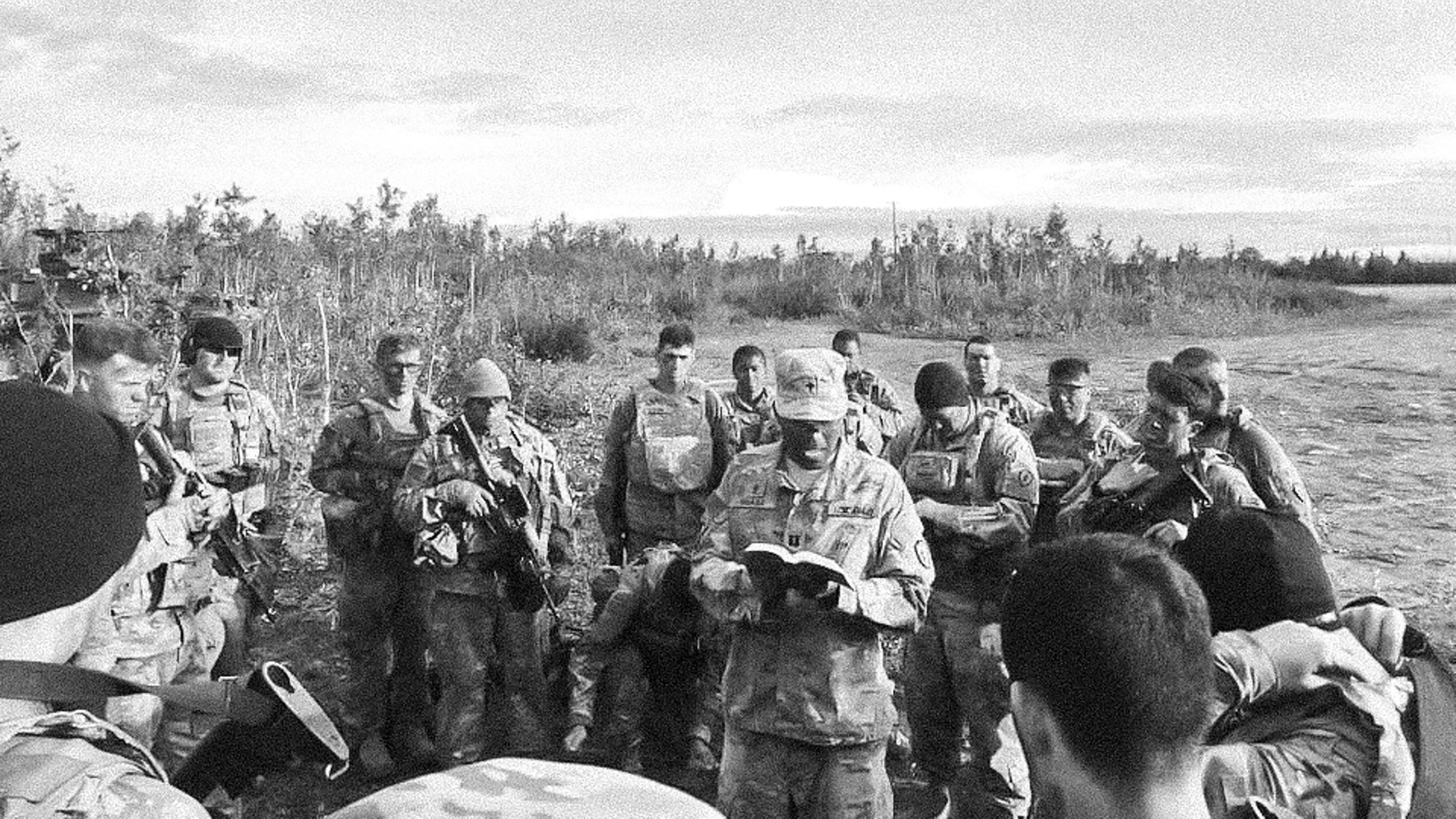
Chaplain Cornelius Muasa leads US soldiers in worship.

Chaplain Cornelius Muasa leads US soldiers in worship.

Courtesy of Cornelius Muasa

As the sun warms the horizon, a platoon of soldiers huddles up on a gravel road in Fort Leonard Wood, Missouri. Thumps of artillery become background noise as units practice on the nearby range. A few wisecracks start off the morning, along with some last instructions before the ruck march. Then Cornelius Muasa’s voice rises over the soldiers’ to ask a blessing on their day’s tasks, the chaplain carefully articulating the English words that are challenging after his native Kenyan tongue of Kikamba.

Growing up as a stuttering pastor’s kid in Africa, Muasa never imagined he would one day be serving God in the American military. But the Lord led him from a Kenyan church to a United States seminary to discover a global calling and a burden for soldiers.

Muasa is one of many foreign-born evangelical chaplains whose experiences have equipped them to minister to the growing diversity of the US and the American military. Nineteen percent of US Army chaplains and 10 percent of Navy chaplains were born outside the US, according to military spokesmen (The Air Force did not respond to CT’s request for data). These include Buddhists from East Asia, Roman Catholics from Europe, Muslims from Africa, and many evangelical Christians like Muasa from around the world.

Diversity drew Muasa to this ministry, and it’s why he loves it. There are about 1.3 million active-duty personnel in the US military, and the service members are more diverse than they’ve ever been—16 percent black, 16 percent Hispanic, 4 percent Asian, and about 5 percent who are immigrants to America.

“Ministering to American soldiers presents an opportunity like no other ministry,” Muasa said. “We can minister to individuals from all faiths and all nationalities. In the civilian population, I would have had to really go out of my way to find a Muslim, Hindu, Wiccan, and all the other religions. But in the military I can live out my faith among all these faiths, care for them in the name of Christ, and often share how my faith has helped me in trying times.”

The military chaplaincy puts intense demands on these ministers. Chaplains will move to a new job and duty station about every three years. They may deploy at any time. Starting lieutenant- or captain-ranked chaplains are each assigned to a battalion of 300 to 500 soldiers and their families.

This creates a very different work tempo than Muasa expected when he planned to become a Bible professor. He first came to America to attend Calvin Theological Seminary in Michigan. “My initial goal was graduate studies, but as a Christian, the Great Commission is at the center of everything I do,” he said. At Calvin, he heard military chaplain recruiters speak. He went from finding them intriguing to having a growing burden for the soldiers. He finished three master’s degrees and then commissioned into the Army.

In 2013, Muasa deployed with a transportation unit to Afghanistan. His unit experienced a lot of IEDs, injuries, and a soldier’s death. In that trial, he knew he was where he was supposed to be. He saw how he could help people “go from frustration [and] fear to being able to go out and do the mission,” Muasa said.

A multicultural background helps Sebastian Kim connect to American soldiers, who are increasingly diverse.Courtesy of Sebastian Kim
A multicultural background helps Sebastian Kim connect to American soldiers, who are increasingly diverse.

Foreign-born chaplains say their own diverse life experiences help them minister to soldiers. Sebastian Kim, who serves a battalion at Fort Polk, Louisiana, was born to Korean parents in Argentina. He moved to Brazil at age 7. This made him, he says, “a really confused kid,” but it also enabled him to learn Spanish, Korean, Portuguese, and English.

After studying theology at Gordon-Conwell Theological Seminary, Kim found God could use his multicultural background, his ability to speak multiple languages, and even his exposure to violence during his childhood in Brazil. The military could use them, too. “My call is to deal with brokenness and suffering,” he said.

Kim finds his language ability is especially useful as an Army chaplain: “Some soldiers open [up] better when they speak in their mother language. It’s like food—soul food.”

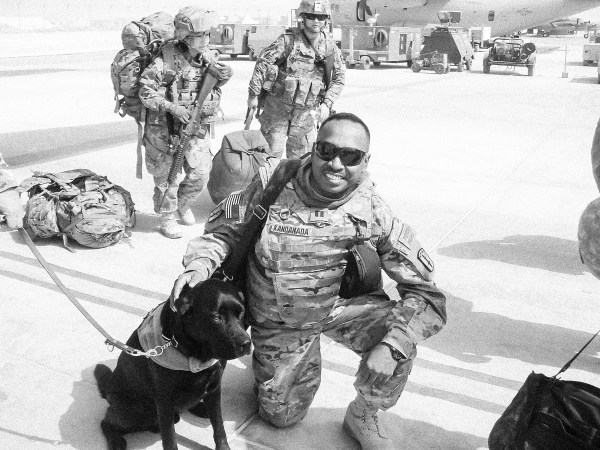
Raja Kandanada, a chaplain born in India, says it’s not just language that’s useful, but the entire experience of moving to an unfamiliar culture. Recruits are brought into military culture during 12 weeks of training and then are sent to a new state or even a foreign country.

Raja Kandanada was the pastor of an immigrant congregation in Boston but felt a debt to his adopted country.Courtesy of Raja Kandanada
Raja Kandanada was the pastor of an immigrant congregation in Boston but felt a debt to his adopted country.

“I can relate to the recruits to some degree, coming from India, leaving everything I knew, the family, and the struggles I faced in the new country,” said Kandanada, who currently works at the Pentagon as a family life chaplain. “As I share some common experiences with them, I can offer a word of hope, uplift their spirit, and ease their fears and frustrations.”

Mark A. Jumper, director of chaplaincy programs at Regent University, said this is a core concept of chaplaincy.

“All chaplains have to make a cultural addition of their receiving organization to their skill set. Foreign-born chaplains have already learned to navigate our culture,” he said.

That was certainly Muasa’s experience. Some of the hardships he faced became strengths as a chaplain.

“The initial challenge was cultural references went over my head,” he said. “An advantage is that I can bring a fresh perspective in biblically critiquing the culture. I can also . . . help others understand host nations’ cultural concerns.”

As immigrants to the US, these chaplains have also experienced racial prejudice. But they choose not to dwell on it. “I know that is not what America is about,” Muasa said.

Kandanada also experienced discrimination in India because of the caste system there. But in America, he experienced the divine love that transcends human boundaries.

“Although I was born in India, I was born again in the United States,” he said. “It is where I understood the meaning of God’s love.”

When Kandanada attended Bible school, he realized his call was “evolving, and it is global.” He became a pastor of immigrant congregations in Boston. When he spoke to a military recruiter, though, he started thinking about his debt to his adopted country.

“The American military has helped liberate the oppressed nations and deter the efforts of stronger nations that prey on weaker nations. I am glad that America offers that calming presence to those who wish to enjoy life,” Kandanada said.

That sense of mission and patriotism unites the chaplains with the soldiers they serve. The ministry is intense because the hardships are intense. Soldiers and their families deal with stress from life-and-death issues of war and the regular upheaval of moving, training, and deployment. In the midst of this, foreign-born chaplains have found a special calling.

“My job as a chaplain is to empower those who fight evil,” Muasa said. “America is my new home. This is one way of giving back for the opportunities, the blessings.”

Tonia Gütting is a freelance writer and the wife of a retired Army chaplain who is now a church planter with the Evangelical Covenant Church. She is a mother of three young adults and blogs at Sabbatics.

Have something to add? See something we missed? Share your feedback here.

Ideas

Is the Coronavirus Evil?

Or is this part of life in the world God made?

Christianity Today March 17, 2020
Edward Hicks / U.S. Public Domain / WikiMedia Commons

The [corona] of the wise is their wisdom, but folly is the garland of fools (Prov. 14:24).

As the coronavirus convulses a planet without immunity, self-quarantine has become a Lenten imposition even upon the faithless. Churches bar human touch and Communion reverts to self-serve, all in an effort to somehow contain a pandemic, a viral villain we cannot see.

Reportedly, Karl Barth wrote at the end of his life of a certain bacillus besieging his kidneys,

… this monstrosity does not belong to God’s good creation, but rather has come in as a result of the Fall. It has in common with sin and with the demons also that it cannot simply be done away with but can be only just despised, combated, and suppressed. … the main thing is the knowledge that God makes no mistakes and that proteus mirabilis has no chance against him.

The theological tendency is to view God’s creation as a good thing gone bad—all due to our avaricious overreach as humans. Any cursory survey of human history confirms this. “Wars and rumors of wars” (Matt. 24:6), along with every imaginable and unimaginable wickedness, ravage human life as God made it and causes love to “grow cold” (v. 12).

With Barth, the inclination is to ascribe bacteria and viruses and the diseases they cause to Adam’s folly. But unless God’s creation defies every characteristic of biological reality, bacteria and viruses are not bitter fruits of the fall, but among the first fruits of good creation itself. If the science is right, there would be no life as we know it without them. God makes no mistakes, and bacteria and viruses indeed are mirabilis (from the Latin meaning remarkable, or even amazing or wondrous, adjectives frequently used to describe creation) and part of the plan from the start. Death itself is required for organic life to exist. This is true of eternal life too. Christ died for the sake of new life (Rom. 6:9–11). Better to view creation not as something perfect gone awry, but as something begun as very good only not yet finished.

Jesus is the source and fulfillment of all creation—“the Alpha and the Omega, the First and the Last, the Beginning and the End” (Rev. 22:13). His purpose is love (John 3:16), which by design cannot be coerced. Thus, God factors free will into the system for the sake of genuine relationship. Allowing freedom to love means freedom to reject love. Ergo the rub. In order to have real relationships with people, God permits the possibility of no relationship. Extrapolate this logic to nature (from whence humans are made) and you might deduce, theologically speaking, that nature has been endowed with a similar freedom. The sea that inspires can also flood. The ground that stands firm can also quake and give way. The microscopic organism that serves life can threaten to take it away.

Freedom in Christ applies to the whole cosmos inasmuch as “in him all things were created: things in heaven and on earth, visible and invisible … all things have been created through him and for him” (Col. 1:16). And yet, Jesus, though he heals many, does not rid the whole world of viral infection any more than he abolishes all disease or disaster. Jesus saves us from our sins but not from our suffering and death. He doesn’t even save himself. Instead, Jesus descends deep into our humanity to share it with us for love’s sake. Our core calling as Christians remains to respond with love to God and to our neighbors as ourselves. Historically we’ve loved best amid life at its worst. Such is the way of the Cross and its glory.

“In this world you will have trouble,” Jesus assured us. “But take heart! I have overcome the world” (John 16:33). With faith, hope and love, we abide the tension between beginning and end, between anxiety and peace, between what is and what will come.

Practically, to abide the tension means refusing to worry about our lives (Matt. 6:25) and give into the panic. It means resisting the urge to hoard for our own preservation. It means keeping social distance to interrupt the viral chain but breaking the distance to care for the sick in our midst, whether in our families, neighborhoods, or churches. It means serving those in need—the aged, the sick, and the vulnerable—without recourse, whether directly alongside health care workers and protocols or indirectly through our gifts and support of the trained. All the while, we never cease to pray (1 Thess. 5:17). Churches can choose to do rightly.

COVID-19 and the fear it generates must not be exploited as a means to marginalize and mistreat. It is not a “foreign virus” but endemic to our common nature as humans and thus a means of drawing us together for the good of all. It is our opportunity as the people of God in Christ to bear witness to our freedom from fear and our freedom to choose obedience and do good. “These three remain: faith, hope and love. But the greatest of these is love” (1 Cor. 13:13).

Daniel Harrell is Christianity Today’s editor in chief.

News

Houston Pastor Pleads Guilty in $3.5M Bond Fraud Scheme Targeting Elderly

Kirbyjon Caldwell has led the UMC’s biggest African American megachurch for decades.

Christianity Today March 17, 2020
Martinez Monsivais / AP

Kirbyjon Caldwell, the Houston entrepreneur-turned-pastor who leads one of the largest United Methodist congregations in the country, faces a prison sentence and punishment from his denomination after pleading guilty to a multimillion-dollar fraud scheme.

As a part of a plea deal in US District Court in Louisiana last Wednesday, Caldwell agreed to repay nearly $2 million as restitution to victims before his sentencing in July. He faces 5–7 years in prison and a fine of up to a quarter million dollars.

Windsor Village, a 18,000-member African American megachurch, stood by Caldwell when he was first indicted on conspiracy charges two years ago. He was accused of selling $3.5 million in worthless Chinese bonds to the elderly.

The UMC allowed Caldwell to continue to lead under the indictment, but he will now fall under church discipline.Caldwell preached the week before his plea and appeared in a promotional clip for last Sunday’s worship service, but the livestream of the gathering instead featured a sermon he preached back in January.

The church has not publicly addressed its senior pastor’s recent plea.

Caldwell had maintained his innocence, even when his alleged co-conspirator, a Shreveport investment adviser, pleaded guilty last year. His third request to postpone his trial was denied earlier this month.

Caldwell’s attorney, Dan Cogdell, said the pastor believed the “historic” Chinese bonds were legitimate investment opportunities (rather than worthless mementos) and never intended to defraud anyone. According to prosecutors, Caldwell used the “investment” money to pay off personal loans, including mortgages and credit card debt.

The US Attorney for the Western District of Louisiana accused Caldwell and the investor of using their positions to trick elderly victims into trusting them. “My office will continue to vigorously prosecute those who use confidence schemes to prey upon the elderly and people of faith,” David C. Joseph said.

The UMC Book of Discipline lists commission of a crime as a chargeable offense, and regional conference leadership said that following his plea, the disciplinary process will begin immediately.

“I am deeply saddened by this admission of guilt,” Texas Conference Bishop Scott Jones said in a statement to the United Methodist News Service last week. “This now triggers a disciplinary process. We do not tolerate crimes being committed by our clergy, and it is now clear that Kirbyjon Caldwell has violated our standards of conduct.”

Well-connected and financially successful, Caldwell is known locally for his community development work in Houston over the past 30 years, investing millions into his neighborhood and ministry. On a national level, he served as a spiritual adviser to presidents George W. Bush and Barack Obama.

Caldwell’s legal issues occurred in the midst of ongoing debates on whether his congregation should remain affiliated with the UMC and how it might be affected by a potential denominational split. Windsor Village had been the UMC’s biggest congregation for years (Kansas’s Church of the Resurrection now reports more members), and it’s still its largest African American congregation.

The church discussed and prayed over potentially leaving the UMC in 2018. Caldwell’s other two entities, Kingdom Builders and The Power Center, are not affiliated with the denomination and have their own boards and leadership.

Just 1 percent of Americans who identify as United Methodist are black, according to Pew Research Center’s Religious Landscape survey.

Books

The Moral Order of the World Points to God

The so-called “moral argument” gives evidence of God’s existence. But it also directs us to his goodness and grace.

Megan Vaughan

As far back as the Apostle Paul’s famous speech on Mars Hill, Christian thinkers have been contending for the credibility of the faith. Among contemporary evangelicals, the so-called moral argument for God’s existence is one of the most popular. Although the argument comes in a variety of forms, it draws on one central idea: If you’re a moral realist (rather than a moral relativist) who believes in objective good and evil, then, philosophically speaking, those ethical standards have to be anchored in a divine source. In other words, moral order doesn’t make sense without God.

The Moral Argument: A History

The Moral Argument: A History

Oxford University Press, USA

280 pages

$47.03

In their new book, The Moral Argument: A History (Oxford University Press), David Baggett, professor of philosophy at Liberty University, and Jerry L. Walls, professor of philosophy at Houston Baptist University, trace the history of these arguments from their ancient roots to contemporary proponents like C. S. Lewis, William Lane Craig, Ravi Zacharias, Tim Keller, and many others.

“The world has moral features to it that are best accounted for by theism,” says Baggett. “What gives moral duties their authority? What gives human beings their essential dignity and inherent worth?” We can only answer these questions, argues Baggett, with direct reference to God’s morally perfect nature and commands.

Christopher Reese spoke with Baggett about the influence of the moral argument and its relevance for both believers and nonbelievers today.

You draw a connection in your book from the moral argument to the life of Fred Rogers. Can you elaborate on that?

I love Fred Rogers, always have. I was in his original demographic when his show went national in 1968, so he’s one of my earliest memories. The remarkable documentary about him a few years ago made me realize that so much of what he did and stood for is at the heart of the moral apologetic enterprise. The dignity he recognized in people, the empathy he cultivated for the suffering, his care for the most vulnerable, his desire to touch both heads and hearts, his unyielding trust in God’s goodness, and his invitation to love one’s neighbor as oneself—in all these ways and others he embodied so much of what moral apologetics at its best is all about.

I’ve gone twice to the Fred Rogers Center in Latrobe, Pennsylvania, to conduct research and been enchanted both times. Especially in our cultural moment, we need more people like Fred to make goodness attractive. I can hardly wait to meet him in heaven.

As a scholar and teacher, how do you see students and others engage with the moral argument?

It’s probably been most gratifying to see my doctoral students learn to think about the moral argument in both academically rigorous and eminently practical ways. Many of them are pastors, so they bring a practitioner’s heart to their academic pursuits, and many of them have come to see the power of the moral argument in a number of fresh directions.

We often discuss the story of blogger Leah Libresco, who was an atheist until she eventually underwent a radical change of mind and became convinced that God exists. In her case, she came to think that it was her naturalistic assumptions that simply didn’t cohere with the rest of her beliefs, including her strong convictions about virtue ethics. In other words, it was the moral argument that persuaded her.

In your opinion, how persuasive is the moral argument relative to other arguments for God’s existence?

William Lane Craig has said that when he goes to colleges for debates, the moral argument is the one that tends to be the most persuasive among the audience. Similarly, when asked which argument from natural theology is the strongest, Alvin Plantinga says the moral argument.

Nothing much rides on which theistic argument is the most persuasive. The important thing is to see that the moral argument is an important apologetic resource and one that works best, I think, in tandem with other pieces of natural theology and special revelation. A number of factors likely contribute to the persuasive power of the moral argument. It has a disarming simplicity that appeals to the young, potential rigor that can appeal to the seasoned philosopher, and the resources to speak to everyone in between. Of course, no single argument in this arena reasonably can or should be expected to persuade everyone.

Skeptics often explain morality as a product of unguided evolution. What’s your reply?

We need some of the best Christian minds working in this area, because it’s a challenge that many like to pose. I’ve got to be briefer in my response than I’d prefer. “Unguided” is the key word here. Plenty of believers, including many of the best moral apologists, think evolution itself is potentially consistent with an intelligent designer. But it remains unclear to me how the distinctive features of morality—binding moral obligations, inherent human value, moral knowledge, and the like—are even potentially accounted for by evolution alone. That a behavior leads to reproductive success doesn’t make it morally binding, and it doesn’t invest it with an authoritative and prescriptive force. To think otherwise is to confuse moral and nonmoral goods, it seems to me.

Among the many proponents of the moral argument that you survey in the book, whose version do you think is the strongest?

That’s tough. I think each one has something to offer, all of them have their strengths, and their cumulative force is remarkable. Setting aside contemporaries, it’s hard for me to decide between the work of John Henry Newman and A. E. Taylor. Both wrote bona fide classics in the area: Newman’s Grammar of Assent and Taylor’s Faith of a Moralist. More Christians today need to rediscover and delve back into these great treasures, and our hope is that this history book would encourage them to do so.

Taylor’s work is brilliantly labyrinthine and can’t be done justice in an interview, but he recognized that who we are as people needs radical transformation, even transfiguration, and we can’t, as he put it, “pull ourselves up by our own hair” to enjoy the sort of goodness that we intuitively seek. He argued that the intrinsic features of moral guilt point in the direction of a personal and perfectly loving God as our first and final cause. He also recognized the role that great literature and a vivid imagination play in a properly expansive quest for truth.

What was C. S. Lewis’s distinct contribution to the moral argument?

Lewis gave perhaps the best-known popular version of the moral argument, most notably at the beginning of Mere Christianity. It came initially in the form of radio broadcasts during the Second World War, just as William Sorley gave his Gifford lectures on the moral argument in the throes of the First World War. It’s worth noting that Sorley talked about the loss of his son in that war. What both Lewis and Sorley show is that the moral argument is far from simplistic or Pollyannaish but rather can be talked about with credibility during the most trying of times.

That Lewis chose to begin his book about mere Christianity with the topic of morality says a great deal about his own convictions and abilities and also the power of the moral argument itself. Of course, Lewis’s version starts with a real, objective moral law to which we’re accountable and the invariable ways we fall short of that standard. We devote a chapter to him in the book, but there are a dozen chapters that come before him. The history of the argument is far richer than many realize. Lewis was standing on a lot of shoulders.

You praise some thinkers for how they interacted with their ideological opponents. What can we learn from their approach?

In my research, it was delightful to discover that the history of the moral argument, with few exceptions, included thinkers who were remarkably respectful toward their interlocutors. And in some cases, it was in the context of genuine friendship with ideological foes that some of the best work was done.

Newman, for example—who was notorious at times for his biting polemicism—carried on a lifelong correspondence with his “dear friend” William Froude, with whom he failed to see eye to eye. But the correspondence yielded great fruit. Despite their differences, perhaps because of them, the dialogue really was a kind of “iron sharpening iron.” In these divisive times, Newman provides a refreshing reminder that outreach, apologetics, and evangelism should feature love, kindness, and even friendship.

What answer does Christian theism offer to the question “How should I live?” that other worldviews don’t?

The moral argument has deep existential, pastoral, and devotional insights. It actually has a lot to offer both believers and nonbelievers, largely because it’s not just an argument for God’s existence. It’s also an argument for God’s goodness and love and grace. We recognize a moral standard, realize we fall short, but then discover that the one to whom we’re responsible is also the one who offers forgiveness for falling short and the grace to be transformed into the people we were meant to be. In other words, morality is but a penultimate foretaste of the glory to come.

How has the moral argument influenced or shaped your personal faith?

Well, for a long while now, I’ve felt a personal calling to work in this area, so it’s shaped much of my life and vocation. I was raised in the holiness tradition—which made ethics a natural fit when I discovered philosophy—and then, step by step, I made my way to the moral argument. Each part of the discussion is something that’s for me both intellectually satisfying and fascinating and also deeply devotional. It’s a privilege and joy when our God-given vocations and our spiritual lives go hand in hand, and that’s certainly been true for me. I can’t think of a better way to spend my life than thinking about the perfect and necessary goodness of God.

Christopher Reese is the managing editor of The Worldview Bulletin, co-founder of the Christian Apologetics Alliance, and general editor of Three Views on Christianity and Science (forthcoming from Zondervan, 2021).

Theology

Love in the Desert of Lent

This season’s greatest gift has nothing to do with discipline.

Ameer Basheer / Unsplash

When I hit a desert season in my spiritual life some years ago, I felt haunted by the abundance I had left behind. I missed about 10 years of sermons due to pregnancy nausea, crying babies, toddler tantrums, dirty diapers that needed changing right in the middle of the service, or my own human sin. (At least I thought it was sin, but it was more likely total and complete exhaustion.) I was a frazzled mother who brought my children to church in their pajamas and often felt disconnected from Christ there and everywhere else.

At the time, I thought my spiritual dry spell simply reflected how poorly I was doing and how undisciplined I felt in the chaos of parenting young kids. I believed that my faith could only grow in abundance—the abundance of felt worship, prayerful focus, and passionate commitment. But I was wrong. It took me years to learn that the Lord speaks in silence. And years again to learn that he holds onto me more tightly than I hold onto him. And still more years to realize that grace is best understood in periods of apparent failure, absence, and desolation.

As I look back on those desert years, I see that hard-won truth for what it is—a Lenten lesson. Although we often think of Lent as a time of strict discipline and self-denial, it requires something much more: a deep understanding of our belovedness.

The life of Christ bears this out. In the story of his encounter with Satan in the desert, we often think Jesus had victory over temptation simply because of his divinity. But the early church had a different perspective. They believed the secret to Jesus’ strength in the desert came from the event right before: his baptism in the Jordan River. Christ’s endurance lay not in the abstract power of “being divine” but rather in the human experience of being cherished by a Father who opened the heavens and said, “This is my Son, whom I love” (Matt. 3:17). That love was the secret of his ability to resist temptation. (In fact, this view was so important to early believers that they celebrated Jesus’ baptism long before they celebrated Christmas Day.)

This same love carries over to our practice of Lent. In the dry, arid season before Easter, we encounter the satiety of God’s care for us. When we turn to him, our disordered loves are exposed. And when we embrace the biblical promise that we’re cherished and known by him, we begin to put those disordered loves in proper order. That is the life-giving message I received from my wilderness experience. The Lenten desert does indeed expose us, yes, but it exposes us not for the sake of being exposed but rather for the sake of being healed.

We see this “desert love story” play out in the history of the early church. In A.D. 313, the Roman emperor Constantine made Christianity fashionable, and the church was flooded with new Christians (often with dubious motives) banging down the doors, wanting to be baptized. Priests were faced with a crisis.

Overnight, the requirements for all Christian initiates—three years of training and 40 hours of strict fasting—suddenly became impossible to enforce. So the church charged all new believers with 40 days of study and partial fasting before their baptism on the Saturday night before Easter. By A.D. 339, a mere 25 years later, the church father Athanasius reported that the 40-day fast was practiced the world over.

This baptizing of thousands of people might make some of us uncomfortable, and for good reason. Christianity as an empire religion should never sit comfortably with us. Nonetheless, the age of Constantine set in motion an innovation that radically changed the church: The original 40-hour fast became part of the ecclesial calendar in the 40-day form of Lent. It invited believers to eschew a “spectator faith” by participating in Christ’s wilderness trial.

The third-century desert fathers took this call literally and went and lived in the barren landscapes of the Middle East. One of them was Saint Anthony of Egypt. After hearing the gospel call to “sell your possessions and give to the poor” (Matt. 19:21), he sold everything and went into the Nitrian Desert.

In this inhospitable space, Anthony discovered that, even though he’d given up wealth, security, honor, relationships, and comfort, these very things followed him into the desert. He couldn’t pray. He couldn’t focus. He was tortured by thoughts of what he had given up—possibilities left unfulfilled, relationships left behind. He was in the desert, but his mind was back home.

So Anthony had to take an even deeper plunge into what the desert fathers later called the “full desert,” or what I call the “interior desert.” He did this “to give heed to himself,” as his biographer Athanasius later put it. He realized that simply giving up bad habits didn’t break their power. That was only the first step. In the interior desert, changing habits for good required replacing them with other rightly oriented affections and desires. He had to survey the spiritual chaos and then realign those disordered loves by the power of God’s love.

“I sang the Psalms against Satan, and he vanished away,” Anthony reported to younger monks (whom he called his “children”) toward the end of his life. “Often his devils would beat me, and I repeated again and again, ‘Nothing shall separate me from the love of Christ’ and at this, they rather fell to beating one another.”

When he was living in the desert, Anthony went so far as to move into a tomb to declare that his bad habits and thoughts were dead and had no hold on him, but he did so wrapped in the Spirit of Christ. He understood this fundamental truth: You can only confront your dark side in the presence of someone who loves you.

During the years of my spiritual desert, I told my husband that I couldn’t possibly give up anything else for Lent, because I felt as if everything had already been taken from me. I couldn’t give up coffee, because I could no longer drink a cup without being interrupted ten times. I couldn’t give up alcohol, because I wasn’t at liberty to drink while nursing. I couldn’t give up sleeping in, because I was already sleep deprived. None of my usual creature comforts were available to me, so I had to give up giving something up. And in that barren place, I began to understand that “feeling” close to God—my metric of spiritual success—was much less important than simply receiving the word beloved.

When he was a Yale professor, Henri Nouwen spent a six-month sabbatical with a monastic community in New York and arrived at a similar conclusion. He recognized that a monk’s journey into holiness is a journey into receiving God’s love to greater and greater depths. In October 1976, Nouwen wrote in his journal:

To respond to God’s love was a great act of faith. . . . This is the great adventure of the monk: to really believe that God loves you, to really give yourself to God in trust, even while you are aware of your sinfulness, weaknesses, and miseries. I suddenly saw much better than before that one of the greatest temptations of a monk is to doubt God’s love.

If we’re being honest, most of us dwell on our flaws before we dwell on God’s love. But the story of Jesus’ baptism in Scripture—located right before the desert temptation—reminds us that we need to listen first to God’s message of care before we try to know ourselves and our temptations. We must hear the call of Christ above our own voice of self-condemnation.

Fundamentally, Lent is an invitation to return to that wonderful and awful moment in the history of the universe when Jesus faced the Tempter. We participate in that experience by saying in so many words, “Christ has walked this dark path, and it is in him that I live and move and have my being” (Acts 17:28). We once again embrace a new identity and an entirely different way of looking at the self: It is not I but Christ who lives in me (Gal. 2:20).

In Christ, we receive the words “You are my beloved child.” In Christ, we’re led into wilderness areas—some of our own making, some imposed upon us—where we fight the Tempter with those same words of love. And in Christ, we ask ourselves, “What would it be like to hear ‘You are my beloved’ in the midst of this specific wilderness in my life?” Or, if we’re already vulnerable, we might wonder, “How can I not resent this pain but choose it again and again?”

As the years go by, I become more and more convinced that receiving God’s love from a place of weakness is absolutely essential to spiritual health. I want this experience for my kids as they grow (and sometimes flounder) in faith. I want it for myself. I want it for my theology students and the congregants in my husband’s small Anglican church in eastern Washington. And I want it for the global church as we participate in the life of Christ day in and day out. Together, we ask the loving Lord to help us know him and know ourselves.

That’s what Lent is all about. When we fast, give up social media, or relinquish other habits, we place ourselves in the wilderness. There in that barren space, we’re better able to hear the simplicity and power of the gospel message: We are loved by God and loved to the death. Only by staying grounded in this love does sin break its hold on us. Only by his affection do our temptations wither. And only through declaring ourselves beloved can we look ahead to what comes out of the desert—the resurrection of Christ, through whom all things are made new.

Julie Canlis is the author of A Theology of the Ordinary (Godspeed Press) and Calvin’s Ladder: A Spiritual Theology of Ascent and Ascension (Eerdmans), which won a Templeton Prize and a Christianity Today Award of Merit.

Church Life

Our April Issue: Behind the Scenes

Honoring the hidden heroes of our past can start right now.

Photo Courtesy of Kyunhchik Han Foundation

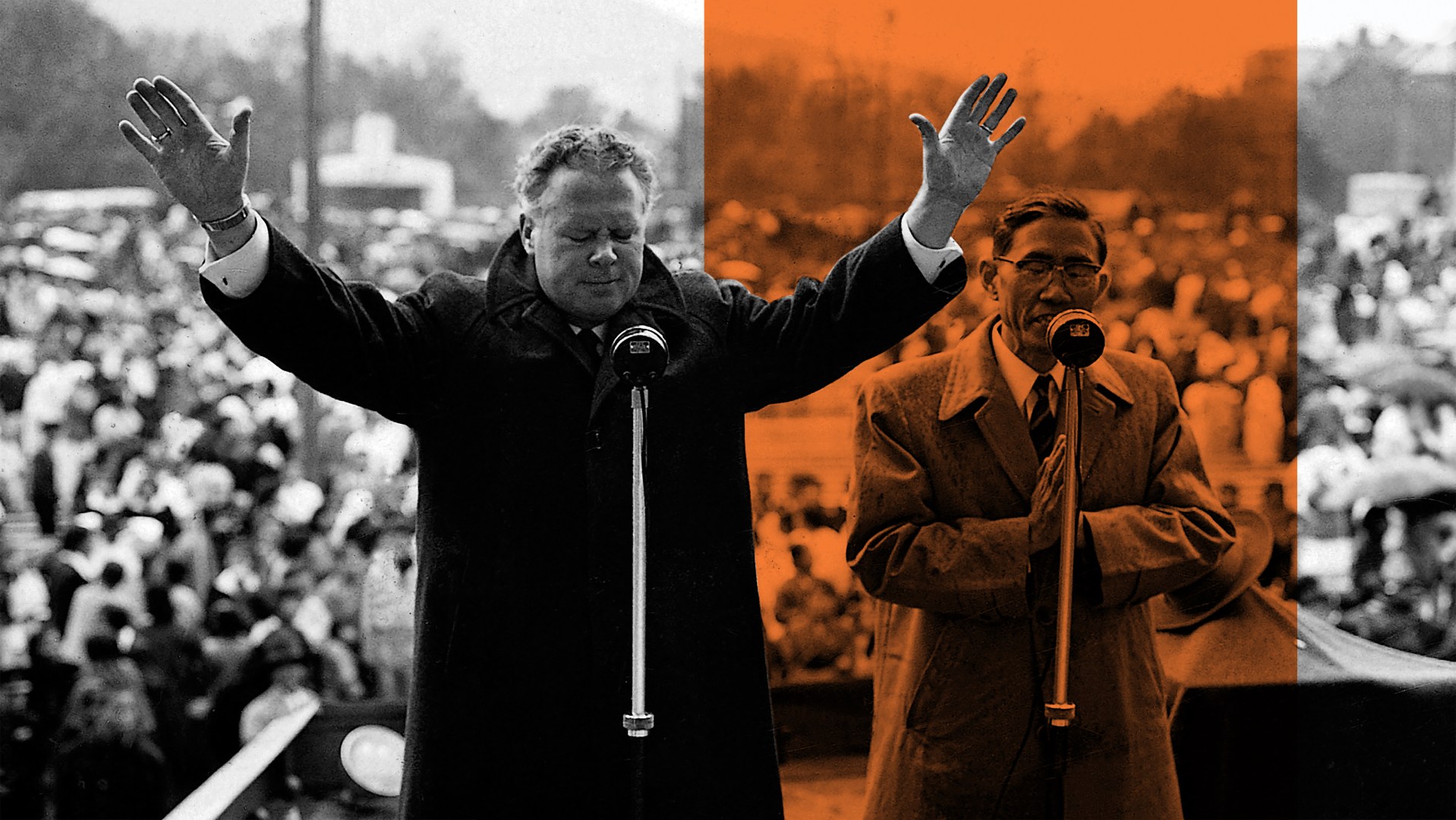
Our cover story this month features the work of Kyung-Chik Han, a South Korean pastor who worked tirelessly mobilizing churches to meet overwhelming needs in the midst of the Korean War. This issue went to press before the scope of the COVID-19 epidemic in that country was fully known and well before the World Health Organization declared the coronavirus a global pandemic.

Nevertheless, Asbury University historian David Swartz offers us a provocative reminder that many of our most important institutions—crucial in good times and bad—stand on the shoulders of unsung giants. It’s not unthinkable that every institution that has endured for more than a generation owes much, if not most, of its success to overlooked heroes.

Apple had Ronald Wayne, who helped forge the company and secured its first contract before leaving 12 days later. The Walt Disney Co. had Roy Disney, the founder’s lesser-known brother who built the iconic Florida theme park. And the United States had Robert Morris, the obscure founding father who may never have his own Broadway musical but who financed America’s revolution and was one of only two men to sign the Declaration of Independence, the Articles of Confederation, and the Constitution.

But stories must have heroes, and too many characters weigh down marketability. So less becomes more. In particular, some of our most trusted institutions have been especially good at naming only white men when they write their histories.

As I read Swartz’s piece, one name kept surfacing in my mind. I met Roselin “RoRo” Eustache years ago. Eustache is a pastor in Haiti, the archetypal “fixer” that the vast majority of missionaries and foreign aid groups around the world depend on. Eustache was educated at American universities and passed up opportunities to work at the United Nations and other large international organizations. Instead, he and his wife, Eline, stayed in their country and planted ten churches. They have helped build hospitals and Bible colleges and schools. They have drilled wells and facilitated adoptions. And behind the scenes, they have gotten who-knows-how-many American mission programs onto their feet, even if you won’t find their names on those groups’ websites.

“What I do most of the time is help missionaries who are in trouble. When they have a problem, I’m the one they call,” RoRo said. Securing government approval? Clearing a cargo container through customs? Hiring good employees? RoRo has tapped his broad network for all of it and has done so while running his own ministry, Haitian Christian Outreach.

This month, the Eustaches are celebrating 35 years of ministry, throwing a party at the first church they started in Port-au-Prince. “Anything that can extend God’s kingdom,” RoRo said, “I’m never tired to be a part of it.” Perhaps now a few more of us can join them—and the countless others who have been quietly expanding the kingdom somewhere between South Korea and Haiti.

Andy Olsen is managing editor of Christianity Today. Follow him on Twitter @AndyROlsen.

A modified version of this article was published in the April 2020 print issue of CT.

Church Life

Medium Matters

Like Christians of old, we’re embracing the new.

Illustration by Mallory Rentsch / Source Images: Annie Spratt / Florian Klauer / Utsman Media / Lauren Mancke / Unsplash

Early Christians were early adopters of emerging technologies. They were quick to embrace the codex, which allowed for (to use modern terms) more efficient data storage and transfer. The books that would form the Bible were easier to study and transport in codices than in scrolls. Advances in road making, ship making, and navigation powered the earliest missionaries in their efforts to carry the gospel to new lands—just as advances in steamships, railroads, and aviation would power waves of missionaries centuries later.

Storytelling technologies, in particular, have always been essential tools in the redemption of the world. There was the printing press, of course. But in medieval times, there were also illuminated manuscripts and stained glass that brought biblical stories to life for the illiterate majorities. More recently, evangelists such as D. L. Moody, Billy Sunday, and Billy Graham reached millions through radio and television broadcasts. And the Jesus film has been an extraordinary evangelistic tool.

I have often wondered: If Graham had founded Christianity Today here in the 21st century, what would it look like? How might it leverage today’s technologies? CT started as a print magazine. It remains a print magazine we love. It is also more.

I want to introduce you to CT Media, a new strategic initiative devoted to the question “What does our mission require of us today, when new and emerging technologies allow us to reach not only hundreds of thousands per month through the printed word but millions per month through multimedia content distributed digitally?” If we want the depth and the breadth of Christianity Today to reach younger audiences, more diverse audiences, and more global audiences, then we must develop the kinds of media those audiences are most likely to consume. This is not a matter of bending to cultural trends. It’s a matter of using every tool at our disposal to advance the grace and truth of Jesus Christ.

To that end, we have created a new position of chief creative officer and hired the outstanding Erik Petrik for the role. We are ramping up our podcast operations with the addition of Mike Cosper as our director of podcasting, and soon we will be adding capacity in video storytelling. Expect to see more multimedia journalism and thought pieces from our extraordinary team later this year.

Of course, maintaining our high standards of excellence as we branch into new media is not cheap. It’s incredibly important that we continue to receive the support of our faithful readers and friends. If you are not already doing so, please consider supporting us as we follow God’s calling upon this ministry. Rapid shifts in media technologies require new investments and an agile organization, but they also open up entirely new fields for expanding and serving the kingdom of God.

Timothy Dalrymple is president and CEO of Christianity Today. Follow him on Twitter @TimDalrymple_.

Ideas

God’s Mercies Aren’t So New

Columnist

Why an ancient bishop taught new believers about grace using the Old Testament.

Illustration by Mallory Rentsch / Source Images: Hodie Mecum Eris In Paradiso / Wikimedia Commons / Grafissimo / gldburger / ZU_09 / Getty Images

If you wanted to invite someone to repent, to count on the mercy and grace of God to blot out their darkest sins, where would you take them in the Bible? Most of us would start flipping to the New Testament. Maybe we would lead them to Jesus’ words in the Gospels, or to the epistles of Paul or John.

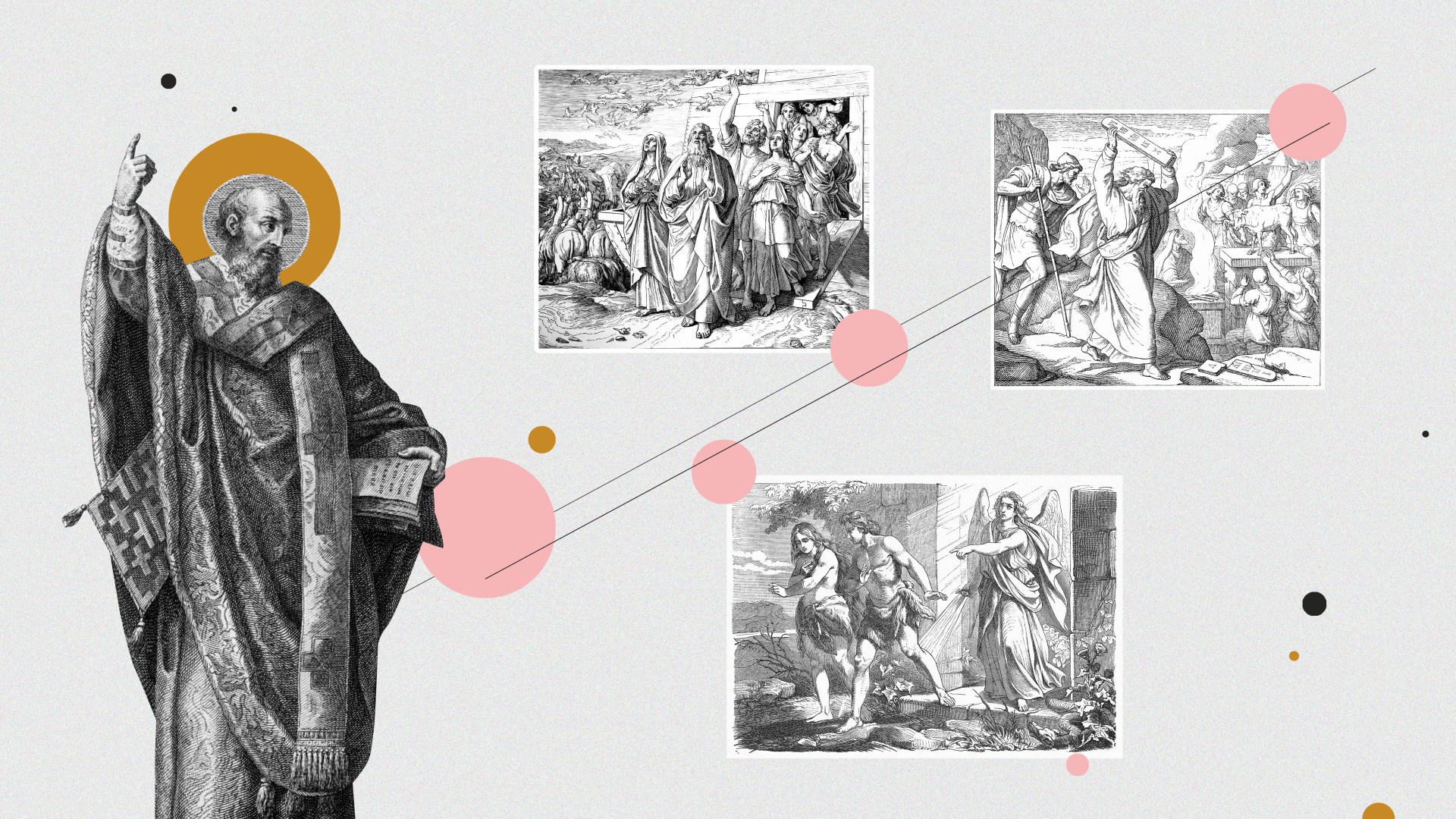
But Cyril of Jerusalem was not like us. Charged with preparing candidates for baptism during the season of Lent, the fourth-century bishop delivered a series of catechetical lectures designed to walk folks through the essentials of the faith. His second lecture, “On Repentance, the Remission of Sin, and the Adversary,” is largely devoted to calling listeners to repentance by assuring them “the sum of our sins does not surpass the magnitude of God’s mercies.”

All he does for about 10 pages is hit his hearers with a battery of Old Testament stories of God’s persistent determination to forgive the worst of our sins.

Kicking things off, he asks, “Would you see the loving-kindness of God and the extent of His forbearance?” He proceeds to recount Adam’s grievous fall into sin and God’s gracious restoration. In Cyril’s telling, even the punishment of exile from the Garden of Eden was a mercy designed to lead Adam to repentance. The bishop also mentions God’s mercy on Cain—the world’s first murderer!—whom he marked out to be spared for his crimes (Gen. 4:12). Even in the Flood account, Cyril spots God’s kindness, arguing that in delaying the deluge, God granted “a reprieve for repentance,” even though no one took advantage of it.

Concerned that any women in the crowd borne down with shame and possibly coming from a background of prostitution or adultery might not know that “repentance is open to men and women alike,” Cyril reminds them of Rahab and exclaims, “O the great loving-kindness of God, which is mindful even of the harlots in Scripture.”

But Cyril doesn’t stop there. He recounts the stories of kings of Israel like David; of notorious idolaters like Ahab, Jeroboam, and Manasseh; of violent pagans like Nebuchadnezzar. All were forgiven when they repented. And, the bishop declares, it’s not just individuals whom God forgives, for “[e]ven a whole people’s sin does not defeat the mercy of God.” Think about what happened with the golden calf (Ex. 32–34). God had saved his people, they had agreed to the covenant, and a half second later they all cheated on him with idols. Even Aaron, their high priest, was complicit in this grotesque act. But Moses pleaded with the Lord, and the Lord forgave them.

At this point Cyril lands the coup de grâce: “Now, if Moses, making supplication in behalf of the high priest who sinned, prevailed on the Lord by his importunity, will Jesus, His Only-begotten Son, imploring God on our behalf, not prevail?”

I hope this encourages you, but I also hope you didn’t miss a few big points.

First, consider this an invitation to read the church fathers. Cyril gives pastors a master class on how to preach the gospel of Christ from the Old Testament with boldness while still handling the particularities of the text with care. He captures the continuity of both the Old Testament and the New Testament, as well as the “how much more” of the gospel of Jesus. And he does it in a way that is suited to new believers.

Second, we need a proper view of God, and for that we need the Old Testament. Cyril helps us repent from our practical Marcionism—the heretical view that the God of the Old Testament and the God of the New Testament are different beings. If you’re not convinced, as Cyril was, that the God who forgave Israel’s sins in the desert is the same God who forgives ours in Jesus Christ, you simply won’t be able to declare the mysteries of God from the whole counsel of God as the apostles did (Acts 20:27). They saw no difficulty in preaching Christ from the Old Testament (Acts 2:14–41), which is unsurprising given that is exactly how Jesus taught them to read it (Luke 24:27).

Finally, I simply hope you see the unchanging mercy of God and trust him. Jesus Christ is the same, Old Testament and New, “yesterday and today and forever” (Heb. 13:8).

Derek Rishmawy is the Reformed University Fellowship campus minister at UC-Irvine and a doctoral candidate at Trinity Evangelical Divinity School.

Apple PodcastsDown ArrowDown ArrowDown Arrowarrow_left_altLeft ArrowLeft ArrowRight ArrowRight ArrowRight Arrowarrow_up_altUp ArrowUp ArrowAvailable at Amazoncaret-downCloseCloseEmailEmailExpandExpandExternalExternalFacebookfacebook-squareGiftGiftGooglegoogleGoogle KeephamburgerInstagraminstagram-squareLinkLinklinkedin-squareListenListenListenChristianity TodayCT Creative Studio Logologo_orgMegaphoneMenuMenupausePinterestPlayPlayPocketPodcastRSSRSSSaveSaveSaveSearchSearchsearchSpotifyStitcherTelegramTable of ContentsTable of Contentstwitter-squareWhatsAppXYouTubeYouTube