Church Life

After Soleimani’s Death, Iran’s Christians Brace for ‘Tsunami of Disaster and Opportunity’

An interview with Lazarus Yeghnazar on why Western Christians should focus on leaders not numbers in the Islamic republic.

Iranian mourners attend the funeral procession of military commander Qassem Soleimani in Tehran on January 6.

Iranian mourners attend the funeral procession of military commander Qassem Soleimani in Tehran on January 6.

Christianity Today January 9, 2020
Ali Shaeigan / ParsPix / Abaca / Sipa USA (Sipa via AP Images)

The killing of Iranian military leader Qassem Soleimani by order of President Donald Trump last week sent shockwaves around the world and prompted retaliation from Iran, an Islamic republic cited by some Christian groups as having one of the highest conversion rates in the world.

Lazarus Yeghnazar, whose research suggests as many as 1 million Christians now live in Iran, has been expecting something like this for years. He believes that, if war comes, it will create a humanitarian crisis but also an open door for evangelism—“a tsunami of disaster and a tsunami of opportunity.” And the 70-year-old Iranian Christian is in a position to know.

Yeghnazar and his wife, Maggie, married in Tehran shortly before the Islamic revolution in 1979. Love for their country and the Iranian church, as well as a successful engineering business, led them to stay in their home during the eight-year Iran-Iraq war.

Shortly after the war ended, the couple emigrated to the United Kingdom, where they began sending money to friends and church leaders in Iran. That effort eventually became 222 Ministries International, a church-planting and training network—still run out of Lazarus’s converted garage—that includes satellite television broadcasts and more than 50 underground churches in Iran. His brother, Sam, founded Elam Ministries, and his nephew, David, now leads that outreach to Iran.

In an interview last year, Yeghnazar predicted that Iran would open up soon and explained how Christians should prepare. In a follow-up this week, he explained how Suleimani’s death affects Iranian Christians.

How are Iranian Christians reacting to Soleimani’s death?

Now, with the drumbeats of war increasing, there is complete uncertainty and anxiety. What will happen in case of an escalation of hostilities and engagement in a war? Still, the very bitter memories of the eight-year war with Iraq remain. Iranian Christians will suffer more than any segment of society.

Christians have been suffering for the last four decades in Iran. Almost all rights and citizen’s privileges have been taken away from them. Freedom of worship, freedom of meeting together, are nonexistent. On many occasions, properties have been taken by the government, and many [people] were expelled from work, losing pensions, as soon as someone learns that they are Christian believers. So, in general, Christians have been pushed to a corner.

How might Iranian Christians be affected by Soleimani’s death? In other words, might this be the beginning of the “tsunami of opportunity and disaster” you predicted?

In case of a war, thousands of Christian families will become internally displaced as well as thousands will flee the country. It will be a humanitarian crisis. Meanwhile, I believe that tens of thousands of ordinary Iranians will flee the country as well, arriving in Armenia, Turkey, Azerbaijan [etc.], thus creating the largest-ever evangelism opportunity. This harvest is huge and will need great collaborative work. We need to connect, pray, plan, and prepare.

Why do you think Iran will open soon?

We are carefully watching [key] elements within Iran. … Iran is like a bus going down a hairpin-turned mountain road with no brakes. Anybody watching can see that they are going to die. Everybody wonders, “When will the driver jump out?” So, the question is: When will the Ayatollahs jump?

“One day, Iran will open. The way we behave as Christians when that happens will determine the future of the Church in Iran.”

I have been watching this situation very carefully, and already some of the Ayatollahs are abandoning the bus. Where are they going? Some are going to Russia, where their friend, [Russian president Vladimir] Putin, will accept them. But they do not have many other places to go. No Sunni country, like Saudi Arabia, will accept them. Iraq? Maybe, but probably not. Malaysia maybe?

Iran is imploding due to things happening inside. I pray for peace. But the DNA of the Revolutionary Guards is agitation and confrontation. They cannot live in peace. From day one, they have been at war with the world. For example: When the roadside bombs started blowing up in Iraq, I said, “This is from Iran.” Now, it’s the war in Yemen, the war in Syria. Those wars would be over if Iran weren’t present, feeding them. Everyone is worried about Iran getting a nuclear bomb. I won’t go into whether I think it is Iran’s right as a country to have one, like many other countries. But I do ask, “What do you think a regime like that, with that kind of DNA, would do with one?”

The regime in Iran is going to provoke the West to attack. Who knows how long that will take? But when it comes, it will create a tsunami of disaster and a tsunami of opportunities. And the church is ill-prepared to meet those opportunities. That’s why we are so committed to leadership development for Iran.

How did Islam become so dominant?

People lose sight of what happened in the past. Why, in the seventh century, was Islam able to walk in and people surrendered? The church had been there for hundreds of years. But every time Christians became rich and powerful, they subjugated others and dismissed them. The Christian church became landowners and levied taxes on the people. We forget about that reality.

When we lose sight of what God has called us to be, light and salt, we lose our influence. I believe the church, down to this day, has not figured out how to do godly governance inside a nation. Every time we mingle with politics and governance, we become corrupt. Like Elisha’s servant, Gehazi, we seek wealth, and we become lepers. When Islam came to Iran, it was not as if the church had not had the opportunity. The church had missed the opportunity.

If Iranian Christians get involved in governance, how will they protect themselves from the corruption so endemic to it?

When people ask, “Is it right for Christians to be in politics?” the answer is yes—if they can bring godly governance to the table. What will happen I don’t know. But I hope that we will have some Daniels and Esthers and Mordecais and Josephs who will be wise and provide for food in times of famine … so that people will say, “These Christians truly honor Jesus.” Because we do very well at serving the poor, but we are not very capable at serving the rich.

One day, Iran will open. The way we behave as Christians when that happens will determine the future of the Church in Iran. If we mess it up, it will be an unforgivable act.

How should the church be preparing leaders for a future role in Iran?

Daniels and Esthers are not produced en masse. It must be done as individuals. I think with all the excitement about mission opportunities in Iran that we are missing the point. Part of the problem is the model that the donors want to fund.

If I say to you, “Here is $5 million. You have two choices on how to spend it for the kingdom: You can lead 5,000 people to Christ, or you can develop 10 Apostle Pauls.” What would you do? I would not even blink. I would spend it on Pauls every time.

My concern is that God is going to open Iran, and we are not ready for the opportunity. All we can think of is going there and taking back some of our church buildings, doing some painting and remodeling, buying some new pews, and picking up where we left off. That will not transform the future generation.

We need some arrogant businessmen in the church, some blingy leaders. We need some aggressive thieves like Zacchaeus and killers like Paul, and we need to take them and polish them. The church cannot keep all these people in her womb and miscarry all this potential leadership by mislabeling them as “proud.” They are proud, and they are arrogant. They are extremely intelligent and assertive. But we need to give them time to mature. It takes patience to deal with this kind of person. It takes one-to-one mentoring. For the time we have remaining in ministry, I would like for 95 percent of mine and Maggie’s time be spent training and preparing these rugged, ghastly, arrogant individuals who love God. But their character needs transformation and reformation.

If I have any message for Western Christians, it is that. Don’t go after numbers. How deep is the growing church? How committed is the growing church? Because that tsunami will come, and if the seeds have not gone deep in the hearts of the believers, it will wash away. Then we will sit down and lament, “Oh, there was no revival after all!” No, that is not it. We will have lost the opportunity that was before us.

Dane Skelton is a Virginia-based pastor and author who blogs at daneskelton.com.

Church Life

#Blessed: The Ministry of Instagram Inspiration

Morgan Harper Nichols and Ruth Chou Simons are part of a movement to bring beauty, truth, and encouragement to millions scrolling on their phones.

Christianity Today January 9, 2020
Courtesy of Morgan Harper Nichols and Ruth Chou Simons

Most of our Instagram accounts resemble the modern equivalent of a high school locker: Here are photos of me and my friends, and here are things I find beautiful. Only now, the insides of our lockers are beamed across the world as quickly as we can slam them shut.

Instagram gets a lot of flak for being impossibly aspirational and for fueling competition and personal branding. This is especially true among American women, who are substantially more likely to use the site than their male counterparts (43% to 31%). But it has also come to develop a cadre of professionals who have brought their expertise to the little squares and 15-second clips of Instagram feeds and stories—therapists, poets, life coaches, and artists.

And in between the heavily filtered “outfits of the day” and sparkly sponsored content campaigns, there are also Christians doing their part to bring truth and encouragement this corner of the internet.

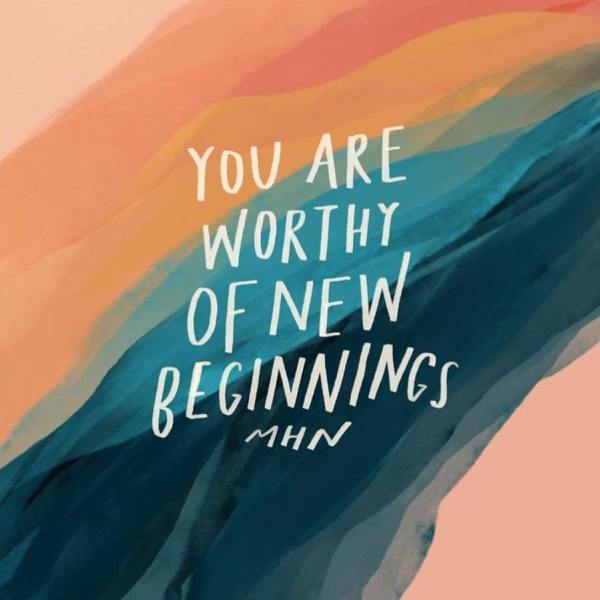
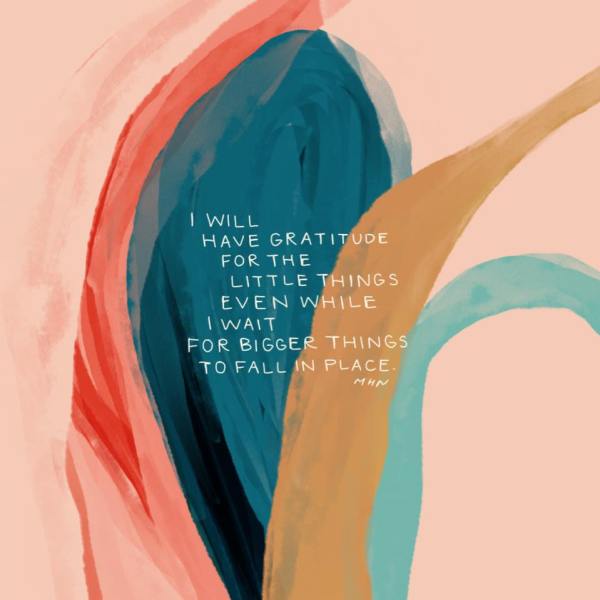
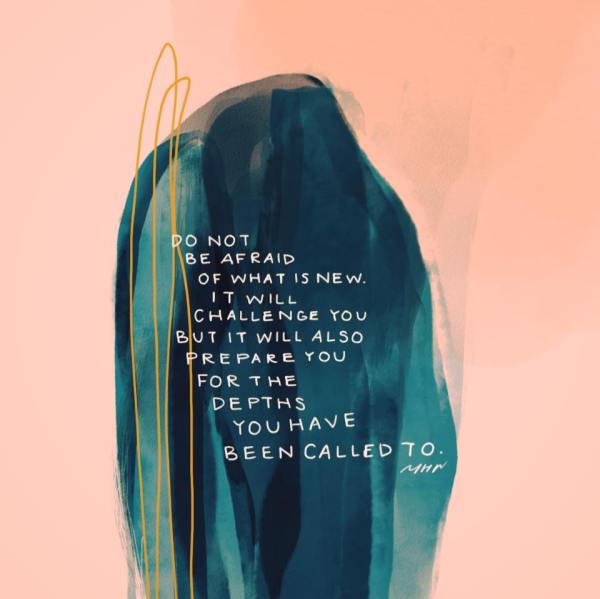
With more than a million followers on Instagram, Morgan Harper Nichols is one of them. Her painted and handwritten messages, inspired by the stories sent to her by fans, aren’t explicitly Christian but are undergirded by what her own faith has taught her about hope, grief, fear, self-doubt, and growth. She proclaims lines like “Let joy be joy” and “Take heart. Breathe deep. You have not missed out on what was meant for you.”

Courtesy of Morgan Harper Nichols

Instagram isn’t just about admiring something; it’s also about curating your own space and personality online. That’s why thousands re-post Nichols’s stories each day—a sign that they love her beautiful work, as well it what it says about them and to them.

“What I found was it wasn’t so much that I was this amazing writer who had the perfect words,” Nichols said. “For so long I’d been struggling to tell my story … and hundreds of other people feel that way, too.”

The 29-year-old had tapped into the art of the story, and she portrayed those universal themes in her Instagram artwork.

Instagrammers crave the re-postable. Blogger and artist Ruth Chou Simons recognized that early on. She saw the way inspirational quotes—“Relax,” “Be Brave,” and “Love What You Do”—were coming front and center in popular culture. Our pillows, coffee mugs, wall hangings, and notebooks are covered with them. But Simons decided she wanted to offer something more meaningful than empty platitudes.

“Biblical, theological books sometimes aren’t beautiful, and beautiful material and beautiful displays are sometimes void of truth,” said Simons. “I ultimately think of [Instagram] just as a delivery system … I’m going to give you theological truth, but I’m going to serve it up on a silver platter to you. I want to make it as palatable and as delicious and beautiful and fragrant as possible.”

She began sharing beautiful calligraphed Scriptures and hymn lyrics‚ and the re-posts went wild.

Dozens of Christian women, including Simons and Nichols, have turned Instagram into a full-time ministry. Their posts don’t always look the same, but they have a shared purpose. These accounts want to give women scrolling through Instagram something worth pausing for.

The Story Collector: Morgan Harper Nichols

Nichols’s explosion on Instagram was accidental. It started three years ago, on a night that had her feeling creatively frustrated and professionally stunted. She wanted to be an artist but also wanted to pay the bills, and that was getting harder. So she wrote a little poem.

“I believe it was God speaking through me, and saying the things I needed to hear about myself,” she said. She posted it on Pinterest, not Instagram (“This was my way of putting it out there without really putting it out there,” she said, laughing) and left it alone. A few months later, it had been shared over 100,000 times. “To this day I have no idea how it happened,” she said. “I didn’t even use hashtags or anything,”

Wanting to keep that momentum going, Nichols put out a call to her modest list of Instagram followers at that time: Send me your stories, and I’ll create a poem for you.

She thought maybe she’d get a few responses and get the ball rolling. “I was like, maybe for this whole next week I’ll just start writing for people’s stories,” she said. That was two years ago, and she never stopped. Now her followers aren’t just her audience. They’re her creative directors.

“I found so much more inspiration from other people’s stories than my own,” Nichols said. She estimates she’s crafted maybe a thousand poems by now that have been inspired by stories she hears from others via email, direct message, or Instagram comment. She spends time each week blindly scrolling and then randomly stopping on a name before taking to her iPad Pro to start digital painting. Like her peachy-pink color palette that varies lightly from post to post, Nichols’s poems are thematic and mostly tackle the quest for identity, the pressure to find it, and the shame of feeling like you haven’t.

Courtesy of Morgan Harper Nichols

As a result, Nichols's inbox serves as something like a time capsule of life in the late 2010s, especially life for young women. She’s Instagram’s Delilah—not the biblical Delilah, but the radio host Delilah. She listens to others’ stories, empathizes, and then finds just the right words to capture their situation. To Nichols, that’s ministry.

And now, offline readers can get a glimpse of the real-time stream of stories and artwork she creates. Her book, All Along You Were Blooming: Thoughts for Boundless Living, releases this month from Zondervan.

Nichols grew up a “homeschooled preacher’s kid” in a small Georgia town. She said she learned from watching her parents that ministry can happen off a pulpit, too. “I saw my parents just spend so much time with people,” she said. (Her sister, Jamie Grace Harper, is an award-winning CCM singer.)

Despite Nichols’s faith, you won’t find much Scripture in her feed. She said she deliberately avoids “Christianese” out of a desire not to alienate anyone.

Courtesy of Morgan Harper Nichols

“I try to think about the person who is like, ‘I haven’t prayed in years’ or ‘I’ve had really bad experiences with Christians in my life’; that person is heavy on my heart a lot,” she said. “It’s like the Scripture that talks about ‘peace beyond understanding’ (Phil. 4:7). Lately God has been showing me, ‘Go a little deeper than the words you’ve always known, and I will meet you there.’”

Nichols said she tries to be intentional about ministering to people in her physical spheres with more specific gospel language. But as the lines between private and public continue to blur online, she is feeling the pressure to share more about her “real life” self with her followers.

“I do think the internet could become a better place if we all felt less pressure to go into detail about everything,” she said. But sometimes, she gets messages from followers asking her where she ‘got her art.’ “I want people to know that, hey, I’m a real person,” she said, making a point to include pictures with her face in the mix with the inspirational quotes in her feed.

The Painter-Theologian: Ruth Chou Simons

Ruth Chou Simons has also had to consider the balance between showcasing her work and herself. For years, she had been blogging and Instagramming as @gracelaced—shorthand for how God’s grace is laced into our everyday lives—but recently began using her name.

“When I made the switch, I was a little anxious about it,” she said. “The goal wasn’t … to make a name for myself.”

Simons’s Instagram following, now up to 137,000, grew out of a blog she started years ago as a Christian mom at home with six boys. But she’s an artist by trade, and after graduating from art school, she struggled to find examples of Christians navigating the gallery world in a Christ-honoring way. She turned instead to the internet.

Courtesy of Ruth Chou Simons

Her feed is populated mostly by beautifully staged photos of her artwork: intricate eight-by-ten-inch paintings of Scripture in calligraphy, usually with the backdrop of natural beauty (flowers, creatures, colors). Sometimes it’s not Scripture, but a hymn lyric or a theological quote.

Her acrylic, oil-on-canvas and watercolor paintings are captioned with her own theological reflections (“micro-blogs,” she calls them).

“It always starts from the overflow of what I’m learning,” said Simons, author of Beholding and Becoming: The Art of Everyday Worship. Her husband, Troy, is a pastor and her closest confidant. Many of her ideas spring from conversations with him or their boys in the family car or around the dinner table.

“The fruit of that ultimately shows up in an eight-by-ten print that might look like I just painted my favorite flowers … but it really comes from so many hours of us discussing what it means,” she said. She’s careful not to cherry-pick verses or lift Scripture out of context.

Courtesy of Ruth Chou Simons

Simons is realistic about the pitfalls of social media, too: Instagram, namely, can inspire envy, shame, and shameless self-promotion. But if Christians are called to be kingdom-builders, surely this corner of the Internet needs cultivating too. She’s up for it.

“Most people are scrolling because they want some kind of distraction,” she said. “So if I want to earn the right to have somebody stop their scroll for five minutes, what is the most generous and life-giving thing I can offer?” The gospel, she answered.

Simons knows that people re-post on Instagram not just things they find beautiful, but things that will say something about themselves. So even though she’s often pressured by followers to share more personal information, she’s reticent. She wants to cast the widest net possible for others to identify with her. “The more specific I get, the more the story is about me,” she said. “If we focus on the way God works, then circumstances matter less.”

The fruit of Simons’s and Nichols’s ministries are different. But with every like, re-post, comment, and follow, both women are planting seeds in what’s arguably the internet’s largest garden.

News

States to Trump: We Want Refugees

With evangelical support, most governors agree to confusing new requirements.

Christianity Today January 8, 2020
Mario Tama/Getty Images

Forty-one states and 86 local governments have filed letters with the federal government telling President Donald Trump and the administration they will continue accepting refugee resettlements in their jurisdictions, according to a list compiled by the Refugee Council USA.

Trump signed an executive order in September requiring state and local governments to opt-in to refugee resettlement, an additional layer of bureaucracy that Christian ministries to refugees feared could make it harder to “welcome the stranger.” The deadline was thought to be Christmas Day, but there has been a lot of confusion around that detail.

Resettlement organizations, most of which are faith-based, have until January 21 to file the letters with the federal government. In the meantime, Church World Service; Lutheran Immigration and Refugee Service; and HIAS (a Jewish-American nonprofit group) are taking the Trump administration to court to stop the executive order.

Support for Refugees

Many state and local governments used their letters to express support for refugees. “Refugees strengthen our communities,” wrote Minnesota Gov. Tim Walz. “Refugees are doctors and bus drivers. They are entrepreneurs and police officers. They are students and teachers. They are our neighbors.”

Some governors told personal stories of local refugees giving back to their communities, and others extolled the economic boon of refugee communities’ contributions to the local economy. Still others made their statements on principle.

“The United States has long presented itself as a haven,” Virginia Gov. Ralph Northam wrote. “We promote the ideals upon which this country was founded, of liberty and freedom. But to uphold those ideals abroad, we must allow access to them here at home. We must practice what we preach.”

Some governors, however, expressed support for the idea of the executive order, even as they consented to continue accepting refugees. Tennessee Gov. Bill Lee filed a letter of consent, but in it agreed that state and local consent to resettlement should be required. World Relief’s Matthew Soerens told CT, however, that resettlement has always been done in cooperation with local governments. The executive order doesn’t change that. It does create administrative complications, making the process harder, and provides cover for states no longer wishing to receive refugees, even if the cities within their borders do wits to do so.

Wisconsin Gov. Tony Evers wrote that he was “disappointed that the administration has created an overly cumbersome and inappropriate process for those involved in refugee resettlement.” Evers added that “At a time when we are seeing labor shortages across our state, it is irresponsible for the administration to place obstacles in the path of talented and hard-working folks seeking refuge and a better life.”

Evangelical Support for Governors’ Letters

As GOP governors weighed their decision, the Associated Press reported that evangelical Christians presented the strongest political counterpoint to the pressure those governors felt from immigration hardliners. The Evangelical Immigration Table delivered petitions signed by evangelicals to 15 governors on December 9.

The Evangelical Immigration Table letter to Texas Gov. Greg Abbott said, “Many refugees resettled by the US refugee resettlement program are Christians or other religious minorities who were persecuted for their faith in countries without our country’s constitutional commitment to religious freedom.” It continued, “Regardless of their background, refugees are human beings made in God’s image, with inherent dignity and potential, and we have been blessed by their arrival in Texas; we desire to continue to be able to extend love to these new neighbors as an exercise of our Christian faith.”

Faith-based organizations such as World Relief and Catholic Charities play a large role in helping refugees resettle during their six months of supported adjustment. North Carolina Gov. Roy Cooper and Connecticut Gov. Ned Lamont referenced the active role played by faith groups in refugee resettlement. Nevada Gov. Steve Sisolack’s letter referenced several of the organizations by name.

In 11 of the 15 states that the Evangelical Immigrant Table lobbied, governors signed consent letters. Four—Texas, South Carolina, Florida and Georgia—did not. Refugees will continue to be free to live in those states, as they are legal residents of the US. More will also be able settle there. The resettlement agencies, however, will not able to receive funds to help the newcomers adjust to life in America.

An amicus brief filed by the attorneys general of California, New York, Illinois, Maryland, Pennsylvania, Connecticut, Massachusetts, Virginia, Oregon, Minnesota, New Jersey, and Washington contends that the executive order will disrupt family reunification. Family reunification has been one of the primary goals of refugee resettlement in the US, and while the order still calls for some priority to be placed on immediate family, the attorneys general claim “the narrow family reunification exception in the Executive Order” will negatively affect “myriad established refugee communities with cultural connections and resources for employment and other support.”

Several states that have signed onto the amicus brief have not produced letters of consent, or have not made those letters available to the public, which is required by the executive order. There has been a lot of confusion around the consent process, which the amicus brief criticizes for its lack of clarity. New York has not sent a letter of consent, but advocates doubt the state will be refusing resettlement.

Biggest Impact Is on Texas

Should the new policy go into effect as written, the largest change to refugee resettlement will be in Texas, which did not submit a letter of consent. The state has, until now, received the largest numbers of refugees in the country. Texas will lose about $17 million in federal funds, which agencies distribute to refugees, who spend the money in their local economies, according to the New American Economy, an immigration and economics research and advocacy group. While this is a tiny fraction of Texas’s state budget, the impact on local governments and school districts could be more noticeable. Consenting counties like Bexar and Dallas Counties in Texas will not be able to receive refugee newcomers.

The financial realities, the local government’s openness to refugees, and the advocacy of evangelicals were not enough to persuade Abbott to consent to resettlement.

Washington Gov. Jay Inslee wrote that his state would take up the slack and accept refugees who would have been sent to states that are “unable or unwilling to accept refugee families into their jurisdiction.” According to Inslee, “they will be welcomed in Washington State.”

However, there may not be any slack to take up in 2020. Regardless of consent, all states could see a sharp decline in refugee resettlement because of the historically low resettlement cap placed by the Trump administration for the coming year. In their letters, some governors mentioned this larger issue.

Illinois Gov. J. B. Pritzker wrote that “With a global humanitarian crisis of more than 70 million forcibly displaced individuals, including 25 million who are refugees seeking asylum, the United States should continue to provide leadership, in partnership with other countries, to offer resettlement for refugees. Our nation has the capacity to admit significantly more than the 18,000-person limit set by the presidential determination for FY20.”

Opening arguments in the lawsuit filed by Church World Service, Lutheran Immigration and Refugee Service, and HIAS were set to be heard in federal court in Maryland on Wednesday.

Theology

Love Your Neighbor in the New Year: Answer Their Emails and Texts

Jesus protected his time and also gave it up willingly. In this digital age, we’re called to do the same.

Christianity Today January 8, 2020
Illustration by Mallory Rentsch / Source Images: PeopleImages / Klaus Vedfelt / Getty Images

When a technological wave crests, I’m not usually riding it. I’m in favor of reading, not binge-watching; dinner parties, not Google hangouts. I was late to own a smartphone and join Facebook, and I still don’t use Instagram. Embarrassingly, I have to call my teenagers to turn on the TV.


Since I’m a Luddite, you might expect me to pen the familiar essay arguing for less technology use rather than more. But this is not that piece. Although a lot of people are resolving (rightly) to curb their digital addictions in this new year, many of us might need an urging in the other direction. The most virtuous among us might not be those who conspicuously publicize their return to various forms of analog life. Instead, those most like Jesus might be the ones who decide to become more digitally available, not less.

Few of us want to hear the call to more digital “dirty work,” but nonetheless, answering texts, emails, and direct-contact messages (from Slack and other apps) is one of the ways that we follow the biblical commandment to “love our neighbors as ourselves.” These invasive messages are grueling to deal with, and though I might prefer a return to a world where the phone actually rang, that is not the world I inhabit.

As I watch public figures make choices about their digital lives, I sometimes have a cynical response when I hear them eschew the burdens of certain technologies. I wonder who carries the real weight of their monastic choices and whom their unreachability is meant to serve. I’m thinking of the megachurch pastor who answers his email once a week and whom no one, outside his family, can reach by text. I think of his administrative assistant, and even his wife, who are no doubt responsible for fielding the tsunami of emails and populating the calendar.

I’m thinking of another ministry leader who doesn’t own a cellphone and recently canceled her social media accounts. I wonder about that seeming wall of impenetrability and the bewildered, lonely people standing on the other side of it. I think, too, of the parent who, in an effort to engage in the touted practices of deep work, silences his cell during business hours and relies instead upon his wife to pick up the phone when the kids need something. Digital isolation is a privilege afforded to the few, especially when the capacity for insulating ourselves correlates directly to our ability to foist the hassle onto someone else.

Answering every single email isn’t the answer, of course, especially in a professional context. So how do we discern the difference between mindless interruptions (that serve as distractions) and meaningful ones (that serve as invitations)? How do we balance the personal need for silence with the sometimes-unwelcome needs of others?

The life of Christ gives us a model.

In the gospels, we see that Jesus was not always reachable when people needed him. He withdrew for prayer, and his frantic disciples often came looking for him, chiding him for his retreat. His example teaches us that a constantly interruptible life is not the most purposeful one.

Still, the Jesus of the gospels not only withdrew to lonely mountaintops for prayer. He also allowed himself to be hassled by helpless crowds who always seemed to arrive at the most inconvenient times: on the way to other urgent appointments, on the Sabbath day of rest, or in the middle of meals and naps. For as many desolate mornings as Jesus spent in prayer, he spent as many harried afternoons answering the clamoring demands of the blind, the lame, and the demon-possessed. His proverbial phone, in other words, was sometimes set to “Do Not Disturb”—and sometimes it constantly buzzed.

Jesus both protected his time and willingly gave it up, and in this digital age, we are called to do the same.

One critical step is understanding—and resisting—the boundless responsibilities represented by our digital lives. As Laurence Scott helpfully illuminates in The Four-Dimensional Human, the internet has redefined embodiment and presence: “We have an everywhereness to us,” Scott writes. “It’s astonishing to think … how the limits and coherence of our bodies have been so radically redefined.” In other words, access to the internet blurs how we understand something as elemental as presence. When I’m sitting in my living room, ignoring my children and scrolling through Facebook or Twitter, where exactly is here?

The question of presence is essential for understanding personal agency—and agency is essential for understanding responsibility. Perhaps the most critical question we ask in our digital age is, “For whom can I really be responsible?”

The ethics of digital engagement are complicated to assess, and we’re certainly not meant to bear social responsibility for everyone who crosses our Twitter feed. Social media posting can have an especially scattershot quality to it, with noisy shouting obscuring who is obliged to respond. By contrast, texting, emailing, and other direct-contact applications can allow for digital engagement that tends toward the real rather than the virtual, the near rather than the far. They are the digital equivalencies of more traditional, person-to-person communication: the phone call and the posted letter.

To be sure, these means of communication can expand rather than shrink our geographic boundaries (to the detriment of our sense of agency and responsibility), but they can also offer us ways to minister to the people in our most proximal circles of influence—not the high school friend living across the world, not the acquaintance recently made at a conference, but my neighbor, the friend in my Bible study, my own family members.

Truthfully, of course, no matter whom it concerns, I’d like nothing more than to blissfully silence my phone and move through my day without interruption. But this isn’t always the most loving choice. When we allow and answer notifications, respond to emails, and reply to texts, we practice the kind of ministering attention that Jesus was known for.

For me, this strategic technological engagement has meant deleting social media apps from my phone. I don’t allow myself to be interrupted by people I only know in the form of their headshots. However, I’ve downloaded other apps, like Slack and Monday, which facilitate work with a volunteer team at my church. I used to treat Sunday as a technological Sabbath, but for this season of my life, a purposeful yes to church involvement means that I now carry my phone with me to church. I’m reachable if there’s an operational crisis in the children’s ministry where I volunteer, and I’m available to be called on if I need to fill an unexpected absence in one of our classrooms.

Leaning toward digital connection has also meant allowing notifications from WhatsApp, which allows my small group to share prayer requests. When I’m notified that little Nathan has fallen down the stairs and his parents are rushing him to the emergency room, I pray in virtual chorus with others. Similarly, I try treating my inbox with a fair amount of deliberateness and care. Though I’m apt to ignore intrusions by strangers, I try answering, if only briefly (and always delinquently), the messages that arrive there. Each of these choices represents the purposeful decision to be reachable—and also responsible.

How we use our digital technologies is arguably one of the most important spiritual questions facing us today. As followers of the incarnate God, we want to favor an embodied life over a virtual one. We want to engage practices that cultivate patience when technology teaches us to crave speed. We want to resist acedia—that ancient word for spiritual sloth—and reject the moral listlessness induced by the digital age.

We want to be people of the here, not people of the everywhere and anywhere. And sometimes, that can mean more digital connection, not less.

Jen Pollock Michel is an author and speaker living in Toronto. Her second book, Keeping Place, explores the shared calling of home. Her third book, Surprised by Paradox, released in May.

Top Stories of the Persecuted Church in 2019

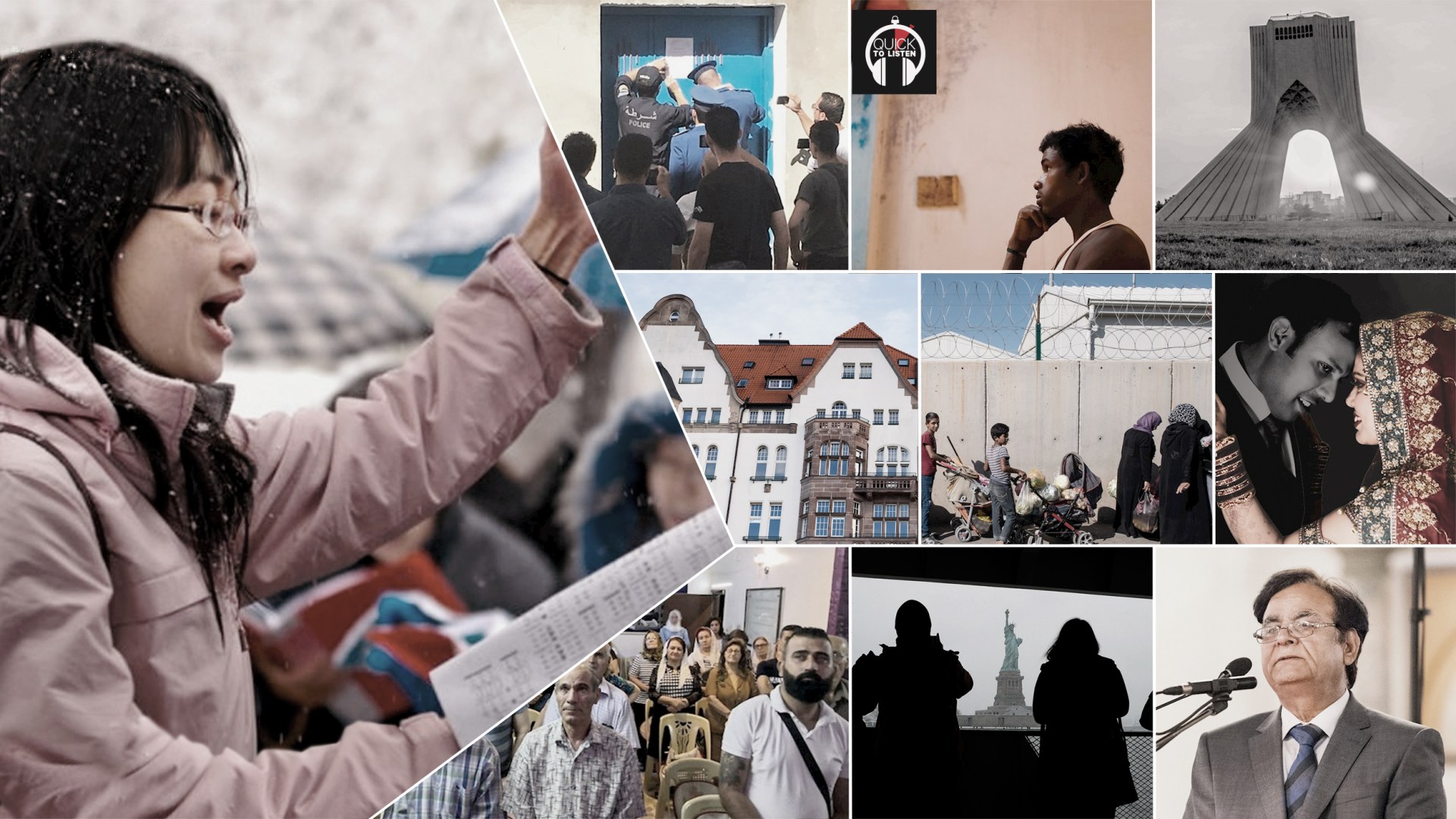
Christians continue to suffer around the world, from Algeria to Syria. Here are the 10 most-read stories from last year.

Christianity Today January 8, 2020

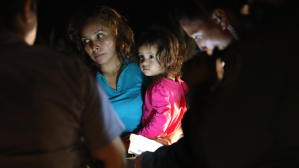
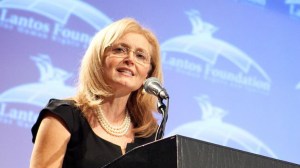
In 2019, Christians suffered around the world from Algeria to Syria, yet shared compelling testimonies of grace in the midst of suffering. Here are the top 10 articles on Christian persecution that readers clicked on the most, ranked in reverse order.

Reply All

Responses to our November issue.

Image Source: Peter Stark / Getty Images

Meet the Minnie Church

As a former Cast Member, I think Cast Member Church is a great idea. When you consider the size and scope of Disney, you have quite a large population to reach. While I was aboard the cruise ship Disney Wonder, I created and led the first ever Disney Crew Christmas Choir. Every evening we would perform Christmas carols on the grand staircase for the guests. I was able to include some Jesus songs in the set, like “O Come All Ye Faithful” and “Silent Night” (sung in three different languages). The cruise director would give a disclaimer prior to our show that “Disney does not endorse any specific religious beliefs.” Nevertheless, we sang songs of the story of Christ’s birth on the Disney Wonder!

Additionally, while working as a musician aboard a Princess cruise ship, I started and led a passenger Bible study. On each cruise, the first day would bring a handful of people. By the third day, I would have 25 to 30 guests.

I often felt like I was the only Christian on the entire ship! How I longed for fellowship while living at sea for months at a time. And I am sure I would have felt the same if I were at the parks.

Kurt Kelley Indianapolis, IN

What Real Leaders Look Like

Mark Galli reminds us of the importance of biblical character and spiritual maturity in our leaders. But he seems to say it’s either/or—we can have leaders gifted in strategy, finance, marketing and human resource development, or we can have 1 Timothy 3 leaders. I’ve known many CEOs who recognize they can do all things through Christ, but apart from him they can do nothing. Unfortunately, not all were capable and effective leaders. If elders regularly and candidly evaluated their senior pastor, and if boards of Christian nonprofits set clear expectations for their CEO then monitored progress, many of the problems Galli points out would be identified and addressed before they did serious harm. Unfortunately, far too many elders and boards fail to do that most important part of their job.

David Bugher Frederick, MD

In Europe, many Christians are deeply concerned witnessing the diminishing role of American leadership in the global church. The history of our own continent has taught us, ever since the Roman emperor Constantine gave privileges to Christians, that the church is weakened by allying with financial and political power. We hope that America will not follow the same path. As is rightfully pointed out, the growth and soundness of the church in the long run depend on leaders serving by the grace of God rather than other sources of power.

Trond Bruun Bergen, Norway

“Pastor, you are a good shepherd, but what we need is a CEO.” This was the counsel from one of the church leaders prior to a vote of no confidence regarding my pastoral leadership. I resigned, wondering about my future and that of the thousands of others pastors I learned were leaving ministry for reasons other than moral failure. I went on to have 15 more years of productive and enjoyable ministry. Recently, I happily retired after a total of 45 years in ministry. I simply want to say thank you.

Bruce R. Nelson Moorhead, MN

The Cross Is Our Stairway to Heaven

I resonated with the line in Jen Wilkin’s column: “Indeed, our stairway to heaven is not a ‘what’ but a ‘who.’ ” She cites John 1:51 in its traditional translations—angels ascending and descending “on the Son of Man.” Wilkin could have bolstered her point. The NLT and Amplified Bible more clearly identify Jesus as the stairway, as “the Son of Man, the one who is the stairway between heaven and earth.”

Evelyn Bence Arlington, VA

Pious Pledges and Consecrated Keggers

As I come upon my 18th year as a sister of Sigma Alpha Omega, I’m thrilled to see such a well-done piece highlighting the ministry that is Christian Greek life. I especially applaud the final section emphasizing that Christian sororities and fraternities are not intended to be a replacement for church but an additional fellowship and opportunity for Christian growth and development. While a student at North Carolina State University, my sorority sisters often drove me to church each Sunday when I did not otherwise have a ride, invited me to Campus Crusade and InterVarsity, and held me accountable to “not forsaking the assembling” with other believers outside of just my sisterhood.

Elizabeth Lusk Kroner,Sigma Alpha Omega Covington, KY

Working Harder to Understand Laziness

When Jesus comes, he will not ask whether we interviewed someone regarding their poverty and how they got here, nor what they’re going to do with the help we give them. He’ll ask if we fed and clothed them. I find most times that when people talk about laziness when it comes to poor people, they come from a place of judgment rather than compassion.

Dawit Baisa

Tempted in Every Way?

Oliver Crisp gets closer than most but still ends up like the rest of us, with a Jesus who’s invincible in the face of temptation. When God’s people are tempted, sometimes we sin, sometimes we resist. Jesus never sinned, always resisted, but only after desperate battle. If the Scriptures that showed us his deity are comfortable with this, why aren’t we? If Jesus was invincible in the face of temptation, then he was not made in every respect as we are and he was not tempted in every respect as we are. He does not understand our weakness from his own experience, and we have rejected Hebrews at a critical point.

Ed Neufeld,Providence Theological Seminary Otterburne, Manitoba, Canada

News
Wire Story

Christian Influencer Dale Partridge Shares Inspirational Quotes—But They Weren’t All His

After believing “all ideas are God’s ideas,” the 34-year-old blames earlier plagiarism on immaturity.

Christianity Today January 7, 2020
Dale Partridge / Flickr

Dale Partridge has made a living for most of the past decade by saying pithily positive things on the internet.

Best known for starting Sevenly, a social-good clothing company that claimed to raise millions for charity, Partridge has attracted hundreds of thousands of social media followers with his knack for spotting social trends and for his nearly endless supply of motivational sayings, perfect for a T-shirt or Instagram post.

Now the Bend, Oregon, serial entrepreneur, social media guru, and bestselling author—who left Sevenly in 2014 (editor’s note: the same year he was named to CT’s 33 Under 33)—has reinvented himself as a “revivalistic preacher and church reformer.” While churning out spiritual messages to his more than 600,000 social media followers, he co-hosts two podcasts (“Real Christianity“ and “Ultimate Marriage“) and leads a nonprofit called Relearn Church.

In August he told his followers in an Instagram post that if they followed Jesus, they’d been “declared ‘not guilty’ by the highest court in the universe.” He also told them this past fall to not let discouragement defeat them.

Discouragement, he said in a now deleted Instagram post, is a temptation that needs toughness and tenderness to overcome. “But in any case, discouragement is not to be tolerated or wallowed in,” his post read. “It’s to be fought.”

This spiritual advice, typical of Partridge, can stand with the words of the best religious thinkers. Perhaps because, it turns out, his advice came from two top religious thinkers.

The above sentiment about discouragement was borrowed nearly word-for-word from DesiringGod.org, a website founded by the widely read evangelical author and preacher John Piper. The “not guilty” line comes from the late author and theologian A.W. Tozer. (A post on the Relearn Church website was later updated to include the correct attribution and link to Piper’s site.)

A review of Partridge’s writings shows that the plagiarism in these posts is not a one-time mistake. According to critics who have tracked his tweets and Instagram posts, Partridge has commonly passed off quotes from celebrities, musicians, fellow entrepreneurs, authors and public figures including Ricky Martin, John Wooden, Ron Finley, and Martin Luther King Jr. as his own. Partridge’s habit of plagiarizing quotes even inspired a “Fake Dale Partridge” Twitter account, which reposted Partridge’s tweets from October 2014, along with the correct attribution.

In an interview with Religion News Service, Partridge admitted that he has unintentionally used others’ work without attribution but said the problem is now in the past.

“I have no problem admitting that was a past failure,” he said. “But I don’t think it’s persisting.”

Partridge also said that in his early 20s, he embraced something called “the uncopyright movement,” which put forth the idea that “all ideas are God’s ideas.” That belief, he said, also led him to be careless.

“That is to say, in my previous immaturity, I projected my personal perspective onto other people’s work and allowed a handful of unoriginal pieces of content (tweets, social media sentences, etc.) to be perceived as my own,” he said in an email. “It was wrong and I have repented of it.”

Partridge also said that at times, he was in a rush to post new content online and failed to be careful.

“The intense demand for churning out content as a social media personality and the speed of preparing notes for dispersion online becomes an easy trap to carelessly use a sentence or two from your notes, without citation in your digital content,” he said.

Heidi Campbell, professor of communication at Texas A&M University, said Partridge is one of a new kind of emerging “religious digital creatives.”

Campbell, who studies religion and digital culture, said that some religious digital creatives get their authority from the religious institutions they work for, which demand formal religious training and offer accountability. Others draw their authority mainly from the online platform they build.

Partridge fits in the latter category, using his social media savvy to connect with his hundreds of thousands of followers and to promote his spiritual message.

He told RNS that he’s learned from his past mistakes and hopes people will not hold them against him.

“I learned a lot in my years as a businessman,” he told RNS by email. “I was young and prideful and even hurt some of the people closest to me in that season. However, through painful humility, I have been matured by God. I’m not perfect. I’m still broken like anyone else. But I have grown from that time and I’m trying to learn how to be a man worthy of the calling before me today.”

Nick Laparra, a former pastor and host of the “Let’s Give a Damn” podcast, has had concerns since he started to follow Partridge’s social media after reading Partridge’s 2015 book, People Over Profit.

“I just started noticing he was trying really hard to say smart things,” Laparra said. “And then I was like, wait, I’ve heard that before.”

He began to run Partridge’s tweets through a Google search. Every time he came across a quote that was not original, he’d reply to Partridge, pointing out his concerns. Eventually, the two talked in 2016.

Laparra said Partridge defended his tweets at first, pointing to a line in his Twitter bio saying most quotes were not his own.

Laparra pushed back, saying that a line in his bio was not enough, and asked why Partridge wouldn’t just quote the author. Partridge responded by tweeting: “A long story that I’m writing on the future of social citation. You’ll be taken back when you have more information.”

Then Partridge seemed to change his mind and offered to apologize on his blog.

In a 2016 text message exchange that Laparra shared with RNS, he thanked Partridge for his blog apology, which has since been deleted. But Laparra believes Partridge’s plagiarism didn’t stop.

Laparra is concerned about Partridge’s rebranding as a pastor and the leader of a house church planting network. “One of the biggest ways that you are disqualified from leading people in a ministry setting is that you lose their trust,” Laparra said. “I can’t come to your church if I can’t trust what you are saying.”

Partridge first drew the attention of Jake Dockter, a faith-based activist in Portland, Oregon, when Partridge criticized Jarrid Wilson, a pastor who had advocated for suicide prevention, not long after news broke about Wilson’s death.

“Church, it is not accepting or tolerant or understanding or compassionate,” Partridge wrote in a since-deleted Instagram post, “to hire a man to shepherd a flock of God’s people who is openly struggling with mental illness. It’s unbiblical, it’s reckless, it’s dangerous, and as we’re seeing, it’s an easy target for the enemy to reign down national tragedy on the church.”

Dockter was shocked by the post. He said many churches have a “shame culture” when it comes to mental illness and treat suicide as a taboo topic. Partridge’s post, he said, reflected that culture.

The idea that pastors with mental illness should be banned from the ministry was, he said, “counterproductive and harmful.”

“It forces people to go back in the closet and not talk about mental health,” Dockter said.

Dockter, who considers himself progressive, also disagreed with Partridge’s claims on the role of women and LGBT people in the church. He said he began to wonder, “Who is this guy and why should we listen to him?” He then began to look at Partridge’s social media presence and his concern grew.

Partridge, who said that he was friend of Wilson’s, told RNS that he regrets some of his comments about mental illness. An Instagram post, he said, was not the right place to express his thoughts on the issue.

In turning to ministry with Relearn Church, Partridge has begun to get some formal education, enrolling part time at Western Seminary, an evangelical seminary with campuses in Oregon, Washington state and California. Partridge has highlighted his education on his personal and nonprofit websites.

In an email, the school confirmed his status but said it could not comment about Partridge’s admitted plagiarism. The school did provide a link to its rules about plagiarism.

Recently, Partridge has begun focusing on “dones”—people who are Christians but have given up on the institutional church.

“Millions of Christians are leaving the church, the institutional expression of the church,” he said in an interview. “And I would say they’re not looking for less Jesus. They’re actually looking for more Jesus.”

Partridge said people come to church seeking community and a spiritual experience—and instead get pop-culture sermons and programs. Instead of participating in a community, they are spectators, and often, he said, they feel alone in pews filled with people.

“I think people are homesick for the biblical expression of church,” he said. “They’re kind of living on starvation rations of relationship there. They’re connected on the internet but they don’t have a close community, where they feel like they have a group of people that love them regardless of their failures and their faults and their sin.”

To fill that need, Partridge has begun to advocate for house churches—small, autonomous congregations that meet in homes. He calls this approach “biblical church,” which he outlines on his podcast, on the Relearn Church website and in his new book, Real Christianity, which was No. 1 in new releases under “Christianity” on Amazon.com in early January.

Relearn Church, described until recently on its website as “a global church planting ministry,” works with a handful of house churches in the US and overseas that have a similar approach to ministry, according to Partridge. Until recently the site for the nonprofit—which was incorporated in 2017, according to tax documents—also listed a group of team members who contributed to the site.

But after RNS recently emailed contributors listed on the website, asking for details, the names disappeared.

Partridge said the group is reorganizing and will be adding a list of new contributors in 2020. The group will also begin producing a curriculum, he said. During its first year, the nonprofit received about $70,500 in revenue. In 2020, the group hopes to bring in $250,000, according to its tax documents. Visitors to the Relearn Church website can read articles, purchase Partridge’s books, and donate to the ministry.

Until recently, the site included a quote promoting Partridge’s Real Christianity book that was attributed to Richard Jennings of Dallas Theological Seminary.

“This book is like a splash of warm water on your face,” the quote read. “You still get the shock of being wet without the sting of cold words. It’s direct. It’s bold. But most of all, it’s accurate to the Scriptures.”

However, a spokesman for Dallas Theological Seminary said the school has no record of a faculty member, student or staff member by that name.

On a recent episode of the “Real Christianity” podcast, Partridge’s wife, Veronica Partridge, read the endorsement aloud, this time citing its author as Richard Davis.

Dale Partridge told RNS that as far as he is aware, Davis does not exist either. The quote praising the book, he said, was a “mock quote” used during the design of the store on the Relearn Church website.

When the site went live, the mock quote was published online and then later recopied for his podcast notes as “Richard Davis.” The quote was removed from the Relearn Church website after RNS asked about it. RNS also found several cases of plagiarism in the short book.

Partridge said there was no intention to deceive anyone with the endorsement. “I apologize for this embarrassing error. I spoke with my team and we are going to slow down and be far more diligent with anything we release.”

Church Life

My Favorite ‘Quick to Listen’ Episodes of 2019

The hosts of Christianity Today’s weekly news podcast on the episodes they won’t soon forget.

Christianity Today January 7, 2020

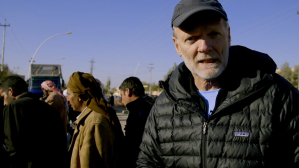
Each year that I’ve done this podcast, I’ve had the chance to connect with more and more listeners. It’s been such a gift to hear how this podcast has helped you all better understand the complexities and history of some of the biggest controversies in the Christian world. I am honored.

Once again, I wanted to highlight some episodes that have taught me something new or changed my own thinking. Man, we had good guests last year! Because I still stand by the words I wrote in last year’s list, I’ll just share them again here: “I hope that none of you listeners agreed with every single argument or point our guests made this year. Instead, I hope you’ve been challenged to reconsider something you already assumed to be true and that our conversation spurred you to lovingly engage in a hard conversation yourself and embrace curiosity over judgment.” Hope you’ll stay along for the next season of our show and maybe bring a couple of your friends with you. – Morgan Lee, co-host of Quick to Listen

News

Second Expelled Student Sues Fuller for LGBT Discrimination

Plaintiff joins lawsuit with request for more than $1 million.

Christianity Today January 7, 2020
Bobak Ha'Eri / WikiMedia Commons

Another former Fuller Theological Seminary student who says he was expelled because of his same-sex marriage has joined a lawsuit alleging the nation’s largest interdenominational seminary violated anti-discrimination laws.

In the amended complaint filed Tuesday morning, Nathan Brittsan, an American Baptist Churches USA minister, and Joanna Maxon, a former Fuller student who sued the school in November over a similar experience, ask for more than $1 million each in compensation.

The suit is believed to be the first of its kind, and its outcome could have wider implications for Christian colleges and universities who receive government funding. Title IX bars federally funded educational programs from discrimination based on sex, though dozens of Christian schools have received exemptions.

“It’s a very important case at this time in our nation’s history,” said Paul Southwick, the attorney representing Maxon and Brittsan. “This case could set an important legal precedent that if an educational institution receives federal funding, even if it’s religiously affiliated, even if it’s a seminary, that it’s required to comply with Title IX prohibitions on sex discrimination as applied to LGBT individuals.”

The Becket Fund for Religious Liberty will represent Fuller. Becket specializes in the defense of religious liberty and has taken on numerous high profile cases, including the Supreme Court cases Burwell v. Hobby Lobby in 2014 and Holt v. Hobbs in 2015.

Becket’s lawyers have not yet reviewed the amended complaint and are consulting with Fuller about the next steps in the legal defense.

“The claims here are dangerous for faith-based institutions,” said Becket Fund attorney Daniel Blomberg. “If the court was to accept them, then they would be harmful to religious groups of all backgrounds and particularly minority religious groups that have beliefs that the majority and the surrounding communities might find unpopular … We think that’s unlikely that courts would accept these kinds of arguments because they’re weak claims. But they’re dangerous.”

Maxon’s original suit was filed in November. She was expelled in 2018 after administrators noticed her wife was listed on her tax returns. Maxon, who took mostly online classes, had completed more than three years of course work and was in her final semester.

Brittsan received his letter of dismissal in 2017, two days before beginning his first quarter. In the letter, a dean said administrators knew about Brittsan’s same-sex marriage because of his request to change his last name. Brittsan had not told the school why he wanted to change his last name in the request, but administrators knew he was part of an LGBT-affirming church.

Brittsan had also disclosed his recent marriage to another dean and a professor who spoke with him before the administration sent the letter. The suit alleges, “Nathan was not informed that this discussion was actually part of an initial inquiry or investigation by Fuller into Nathan’s perceived Community Standards violation.”

Brittsan attempted to appeal his expulsion twice, according to the lawsuit, and asked for his disciplinary procedure records at least five times.

The suit alleges the seminary disputed his enrollment at the time of the appeals, as well as whether it was required to release the disciplinary records. Brittsan wanted to appeal his explusion to the Board of Trustees, but wasn’t allowed to do that without documentation of his disiplinary records, according to his lawyer. Brittsan filed a complaint with the US Department of Education Office of Civil Rights to obtain disciplinary records in January 2018, but still has not seen them.

The case will mainly hinge on Fuller’s Sexual Standards policy, which states the seminary holds marriage to be a “covenant union between one man and one woman” and believes “homosexual forms of explicit sexual conduct to be inconsistent with the teaching of Scripture.”

These policies are nothing new. Evangelical schools have traditionally asked students to adhere to certain standards in accordance with their faith, with many barring sex outside of marriage. After same-sex marriage was legalized, some schools changed policies to extend benefits to same-sex couples, revise their codes for students, or clarify their commitment to traditional marriage. Fuller maintained its comment to a “one man, one woman” view of marriage. There is a growing momentum around LGBT anti-discrimination measures in court and mounting legal effots to expand Title IX protections to gender identity and sexuality. According to Southwick, the combined lawsuit is the first against a Christian institution of higher education institution for expelling a married LGBT student since the Supreme Court decided Obergefell v. Hodges in 2015.

The suit claims Fuller violated Title IX as well as other legislation protecting LGBT people from discrimination. Fuller’s policy states, “The seminary does lawfully discriminate on the basis of sexual conduct that violates its biblically based Community Standard Statement on Sexual Standards.”

Fuller’s attorneys have two weeks to respond to the complaint. They are expected to ask the court to dismiss the case.

Books

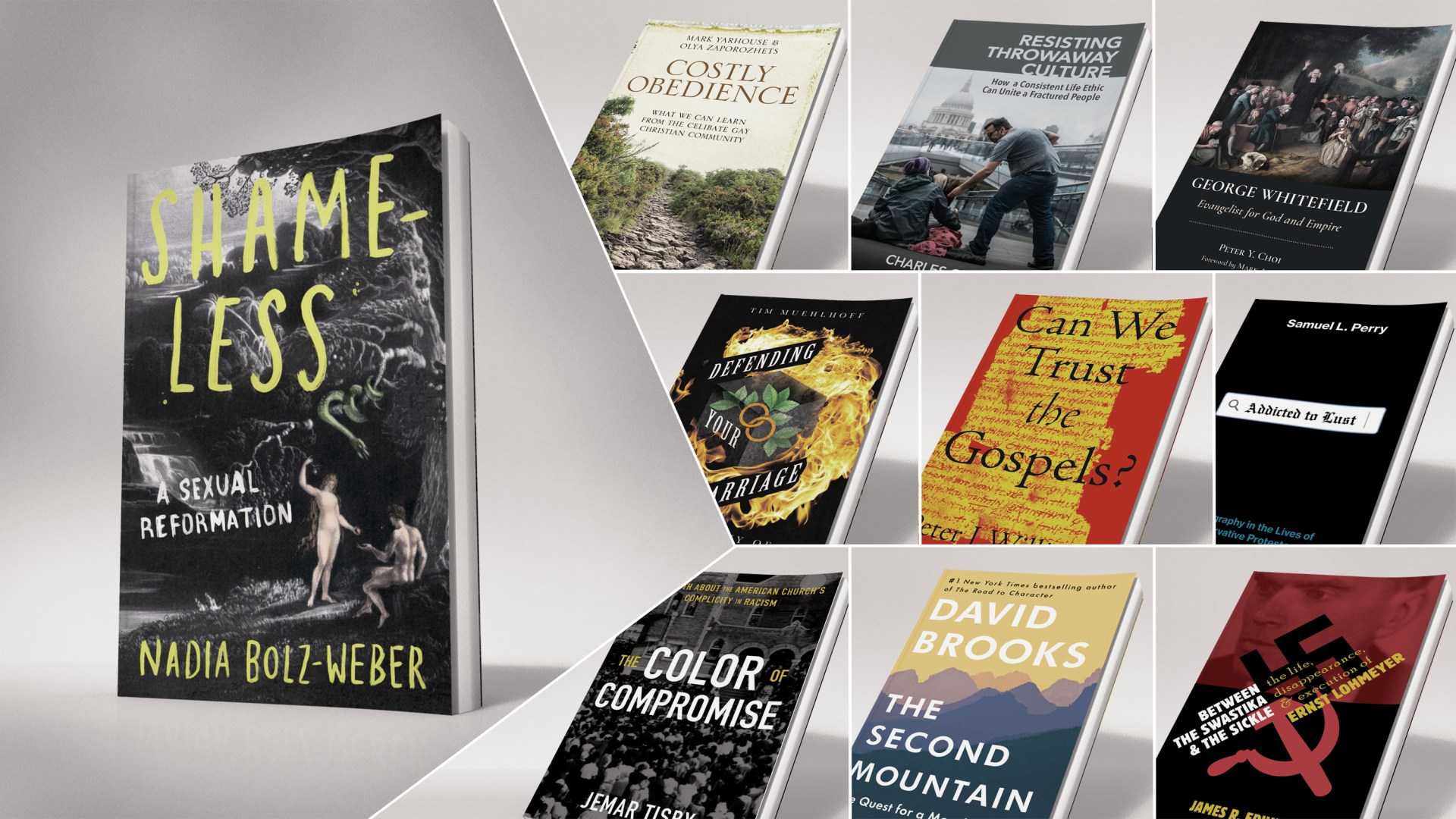
Christianity Today’s 15 Most-Read Book Reviews of 2019

We read about waging a smarter war on porn, Richard Mouw wrestling with evangelicalism, and Why secular substitutes for religion will always leave us exhausted and unhappy.

Christianity Today January 7, 2020

Here are our most popular book reviews of 2019, ranked in reverse order of what our online audience read most.

Apple PodcastsDown ArrowDown ArrowDown Arrowarrow_left_altLeft ArrowLeft ArrowRight ArrowRight ArrowRight Arrowarrow_up_altUp ArrowUp ArrowAvailable at Amazoncaret-downCloseCloseEmailEmailExpandExpandExternalExternalFacebookfacebook-squareGiftGiftGooglegoogleGoogle KeephamburgerInstagraminstagram-squareLinkLinklinkedin-squareListenListenListenChristianity TodayCT Creative Studio Logologo_orgMegaphoneMenuMenupausePinterestPlayPlayPocketPodcastRSSRSSSaveSaveSaveSearchSearchsearchSpotifyStitcherTelegramTable of ContentsTable of Contentstwitter-squareWhatsAppXYouTubeYouTube