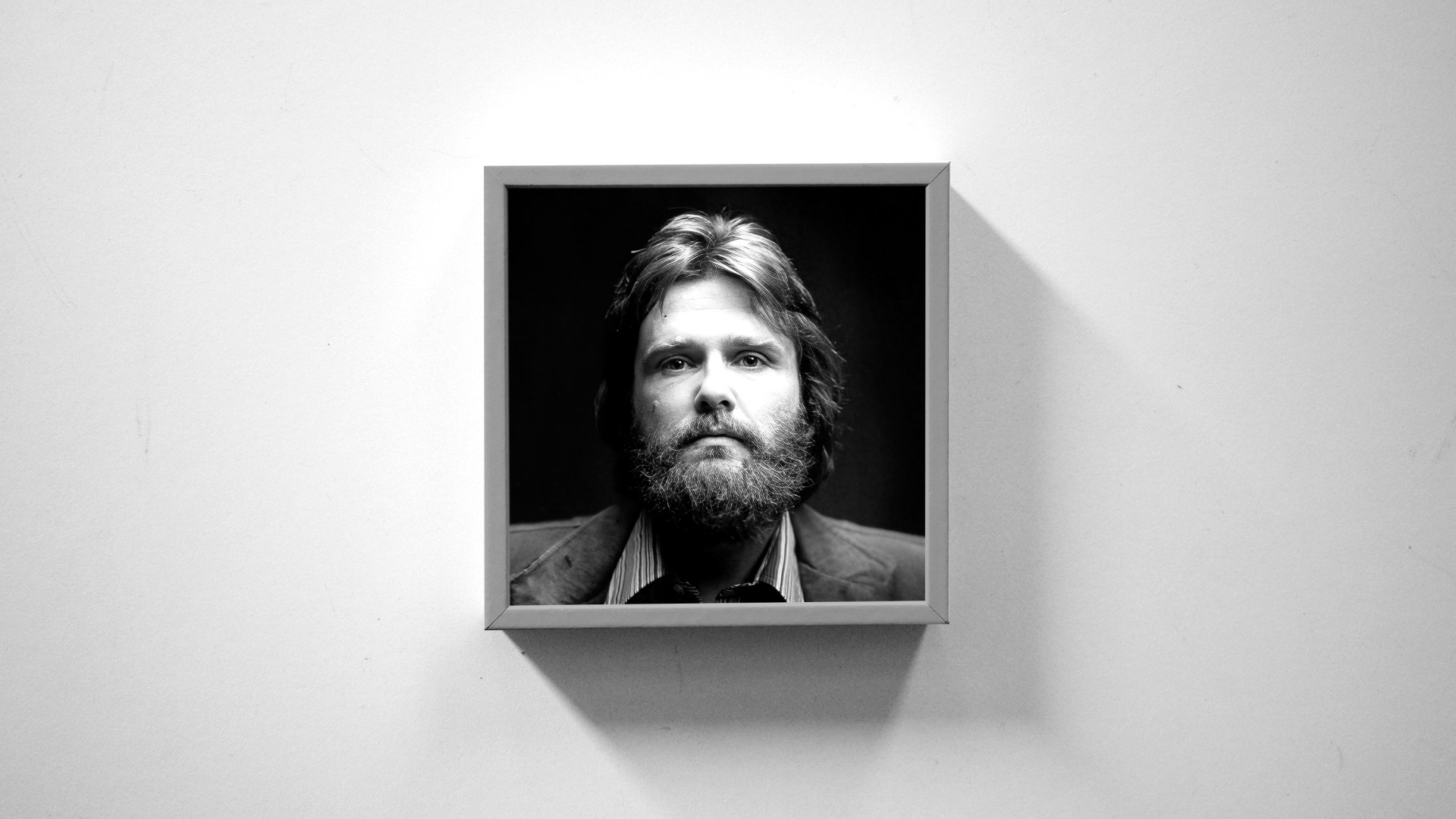
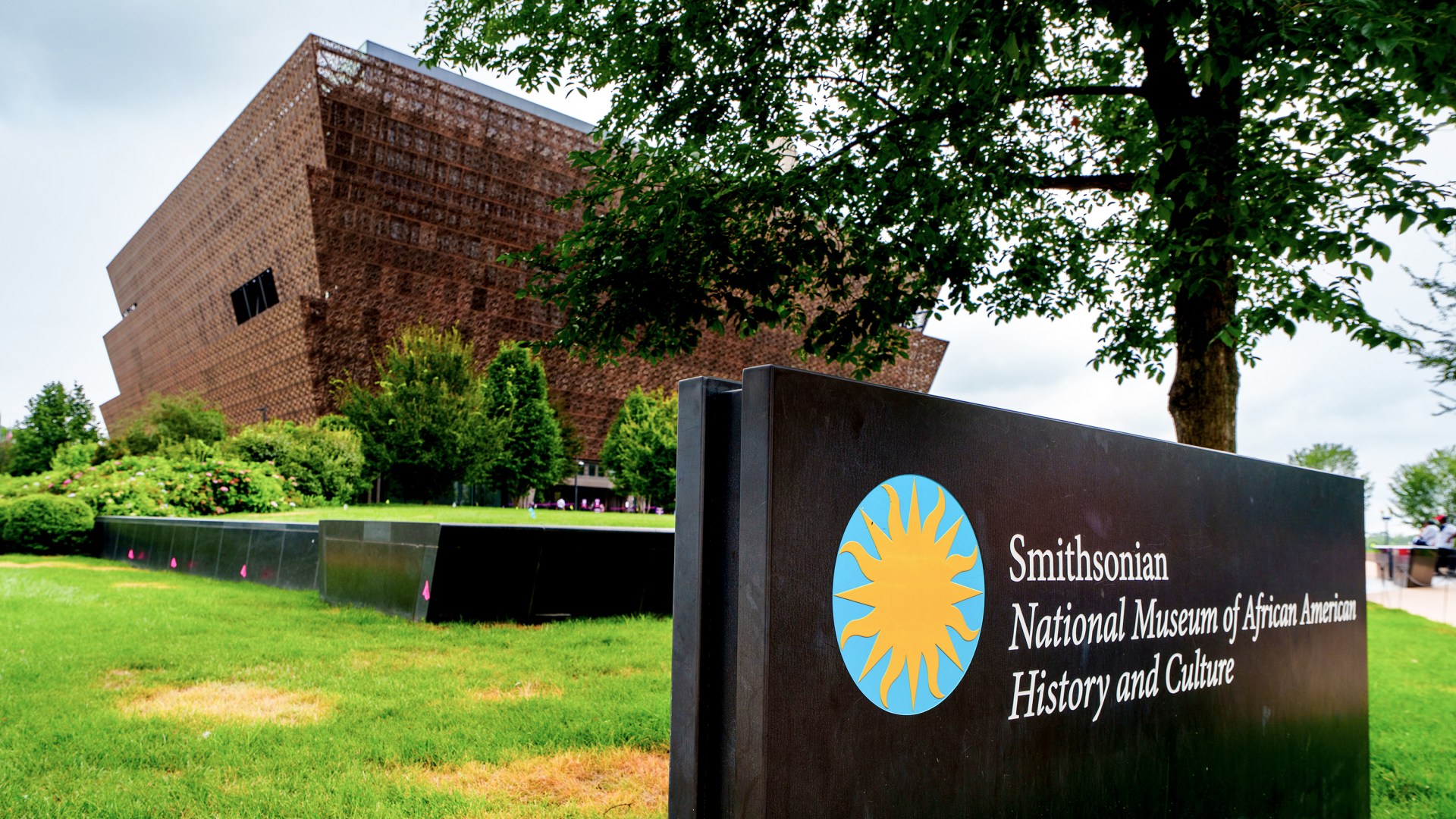
Lucian Mustata stands against a post-Communist architectural concrete building.
Testimony

The Father to the Fatherless Sang a New Song over Me

Abandoned at birth, I grew up in Romanian orphanages. Today I lead Eastern Europe’s largest Christian music festival.

Christianity Today May 27, 2025
Photography by Ioana Moldovan for Christianity Today

I was born in Romania in 1989, just nine months before the Communist dictatorship of Nicolae Ceaușescu ended and the world learned of the horrors of Romanian orphanages. Between 1966 and 1989, up to 20,000 children died of neglect in squalid residential facilities.

I spent my first four years in one of these orphanages. I don’t remember much, but what I do remember is shrouded in terror.

Confined to the room where they put children with disabilities, I was daily told I was stupid and was physically abused. Sometimes the other children stole my daily ration, leaving me without food. There was always the sound of screaming and crying.

I still carry physical and emotional scars from those dark days.

In 1993, the organization SOS Children’s Villages, based in Austria, set up a new private orphanage in Bucharest. I was chosen as one of the children to be relocated there. Where my first orphanage had 50 children under the care of a single staff member, SOS’s cluster of 15 homes had just 7 children per house, with a dorm mother in each one.

Daily life improved for me drastically, but there were still many difficulties. For one, the dorm mothers never stayed for long. In a single year, we could have two or three different caretakers, who left because of burnout or career changes. For us children, these dorm mothers were the most important people in our lives, and each departure only served to harden our hearts further.

Romania is a deeply Eastern Orthodox country, so my first experiences of Christianity were Sunday services and the religion class at school, which all of us were required to participate in. I don’t recall ever reading Scripture on my own, but I learned to speak to God about my life and to search for him out of my desperation—though I did not learn to call him Father until much later.

All of us orphans wanted to know more about our families and our own painful pasts. So when I turned 12, I asked my caseworker to tell me the details of my family.

I learned I had two older half brothers, one of whom had been adopted and lived in the United States. Our mother had the mental capacity of a six-year-old, the caseworker told me, due to a severe childhood brain injury. I was born as the result of her being raped, and she abandoned me at birth. That was how a doctor had found me and placed me in the government-run orphanage. No one had ever found out who my biological father was.

As difficult as it was to learn about my past, my story was not unusual for those I grew up with. Still, learning about my past only made me feel my isolation and loneliness more keenly.

The years passed until I turned 18: the year when I was cast out into the world, alone.

On the Christmas Eve after I left the orphanage, I was walking through Bucharest, hoping to listen to some carols. I hoped that maybe, even for a moment, I could feel a little less alone and taste a bit of the Christmas spirit.

As I walked through the city, someone handed me a flyer for exactly what I had been looking for: a free Christmas carol concert. I had no idea it was organized by a Baptist church. I didn’t know much about it at all, but I decided to go anyway.

From the moment I walked into the building, I felt that something was different. It was very crowded, so I had to stand in the stairwell and listen as the music began. I had grown up with somber sounds in ancient words. But inside the church that night, God sang a new song over me that flooded into my heart.

When the carols ended, the pastor gave a ten-minute message about the meaning of the holiday. He spoke about the incarnate Son of God, and about how Bucharest’s famous Christmas pageantries were empty trappings—celebrations without the one we were celebrating.

The pastor’s message resonated deeply with me as the Holy Spirit stirred in my soul. My life story testified to the vulnerability of being a child in a cruel world. Yet it was into that very world that the infant Jesus came.

After that Christmas Eve concert, I started to attend the church regularly, sitting in the back row of the 400-person service. Each week, I felt a new wound heal as God’s Word began to transform my life. I no longer reacted angrily if someone caused me offense. I felt the real encouragement and love of a Father whose heart goes out especially to the fatherless.

So I kept coming, week after week, and gradually gave my life to Christ.

Still, being an orphan in Romania meant bearing the badge of shame, marking me as unfit to belong in society. I knew receiving an education was essential to my ability to find a job and support myself. I did not want to become another statistic, one more orphan to succumb to poverty or even suicide. Yet I had no money to enable me to afford college.

In the absence of an earthly father, my heavenly Father began to provide for me. I passed the college entrance exam and was accepted as an information technology (IT) major at Bucharest University of Economic Studies, but I wondered how I would ever be able to pay for it.

Unbeknownst to me, God was stirring the heart of a woman from the admissions board to pay for my tuition. For three consecutive nights, she felt God calling her to support me—even though she had only met me for five minutes during the admissions interview. Two days before the payment deadline, she called to tell me that she and her husband had decided to cover all financial costs for my studies.

After completing two master’s degrees and working for the World Bank, I launched my own IT and digital marketing company and partnered with many renowned brands, including the royal house of Romania and the Ministry of Education. The local press began to call me the “Mark Zuckerberg of Romania.”

But God’s provisions weren’t only material. One summer, I signed up to go to a camp organized by my church. Due to an oversight, I was left out of the car assignments—an unfortunate incident that almost kept me from going.

One of the pastors, Boingeanu Cornel, noticed what had happened and kindly offered me a seat in his car for the three-hour drive. That journey marked the beginning of a beautiful and lasting friendship. Today, he has become like a father to me.

Following Jesus does not mean we will necessarily be successful in this life, and the gospel does not promise wealth or health. But after I experienced so many years of abandonment and pain, God’s providential care in my life was—and still is—cause for loudest praise. I learned that I have a good Father who cares for me even in the most ordinary of ways.

As I grew in faith, I wanted to find ways to serve the God who loved me. I began to see how the darkness of my childhood had carved out a bigger well within me for compassion for others and a desire to be a witness. My heart ached for those who did not know Jesus Christ—especially young people—and I began to pray for a way to share his love.

The seed that was planted in my heart at that Christmas Eve service has since grown into the vision of  HeartBeats Christian music festival, the largest of its kind in Eastern Europe. For the past three years, by nothing short of a miracle of God, HeartBeats has grown beyond Romania to Korea, Kenya, and Brazil, with over 500,000 attending in-person gatherings and many more joining via livestream in 2024.

Most importantly, through HeartBeats, thousands of young people around the world have found salvation in Jesus Christ as they worship and come to know our Father, just like I once did at a Christmas Eve concert in Bucharest.

I came to my Father’s house broken and empty. I came with nothing to lose and everything to gain for his sake—and he gave me everything.

Lucian Mustata is the founder and CEO of HeartBeats Festival and the web development company Lucian & Partners.

Sara Kyoungah White is an editor at Christianity Today.

News
Wire Story

Cooperative Baptists Welcome Afrikaners to North Carolina

Refugee resettlement group says faith mandate won’t allow discrimination.

Afrikaners arrive in the US with new refugee resettlement agreement.
Christianity Today May 27, 2025
Craig Hudson For The Washington Post via Getty Images

The 12×30-foot storage unit in a Raleigh, North Carolina, suburb is crammed full of chairs, tables, mattresses, lamps, pots and pans.

Most of its contents will soon be hauled off to two apartments that Welcome House Raleigh is furnishing for three newly arrived refugees. It’s a job the ministry, which is a project of the Cooperative Baptist Fellowship of North Carolina, has handled countless times on behalf of newly arrived refugees from such places as Afghanistan, the Democratic Republic of the Congo, Syria and Venezuela.

But these two apartments are going to three Afrikaners—whose status as refugees is, according to many faith-based groups and others, highly controversial.

Last week, Marc Wyatt, director of Welcome House Raleigh, received a call from the North Carolina field office of the U.S. Committee for Refugees and Immigrants asking if he could help furnish the apartments for the refugees, among the 59 Afrikaners who arrived in the US last week from South Africa, he told Religion News Service. It was a common request for the ministry that partners with refugee resettlement agencies to provide temporary housing and furniture for people in need.

And at the same time, the request was extremely challenging. After thinking about it, consulting with the Welcome House network director and asking for feedback from ministry volunteers, Wyatt said yes.

“Our position is that however morally and ethically charged it is, our mandate is to help welcome and love people,” said Wyatt, a retired Cooperative Baptist Fellowship missionary who now works for CBF North Carolina. “Our holy book says God loves people. We don’t get to discriminate.”

He recognized that Afrikaners are part of a white ethnic minority that created and led South Africa’s brutal segregationist policies known as apartheid for nearly 50 years. That policy, which included denying the country’s Black majority rights to voting, housing, education and land, ended in 1994, when the country elected Nelson Mandela in its first free presidential election.

Like Wyatt and Welcome House, many faith-based groups are now considering whether to help the government resettle Afrikaners after the Trump administration shut down refugee resettlement for all others.

This month, the Episcopal Church chose to end its refugee resettlement partnership with the U.S. government rather than resettle Afrikaners. Presiding Bishop Sean Rowe said his church’s commitment to racial justice and reconciliation, and its long relationship with the late Anglican Archbishop Desmond Tutu made it impossible for the church to work with the government on resettling Afrikaners.

In January, in one of his first executive orders, President Donald Trump shuttered the decades-old refugee program, which brings people to the US who are displaced by war, natural disasters or persecution. The decision left thousands of refugees, many living in camps for years and having undergone a rigorous vetting process, stranded.

But then Trump directed the government to fast-track the group of Afrikaners for resettlement, saying these white farmers in South Africa are being killed in a genocide, a baseless claim. The order left many refugee advocates who have worked for years to resettle vulnerable people enraged.

“Refugees sit in camps for 10, 20 years, but if you’re a white South African Afrikaner, then suddenly you can make it through in three months?” asked Randy Carter, director of the Welcome Network and a pastor of a CBF church. “There’s a lot of words I’d like to attach to that, but I don’t want any of those printed.”

Carter said he respects and honors the Episcopal Church’s decision not to work with the government on resettling the Afrikaners, even if his network has taken a different approach.

“The call to welcome is not always easy,” Carter said. “Sometimes it’s hard.”

At the same time, he said, it’s important resettlement volunteers keep in mind that the ministry opposes apartheid and racism, both in the U.S. and abroad, and is committed to repentance and repair.

The North Carolina field office for the USCRI resettlement group also recognized how fraught this particular resettlement is for its faith-based partners. 

“In our communication with them, we said, ‘Look, we know this is not a normal issue. You or your constituencies may have reservations, and we understand that. That should not affect our partnership,’” said Omer Omer, the North Carolina field office director for USCRI. “If you want to participate, welcome. If not, we understand.”

Wyatt got nearly two dozen comments on his Facebook post in which he announced his decision to work with the refugee agency in resettling the Afrikaners. Nearly all wrote in support of his decision. “I’m up sleepless pondering this,” acknowledged one person. “Complicated, but the right call,” wrote another.

USCRI did not release the names of the three Afrikaners who chose to settle in Raleigh, a couple and a single individual. Other Afrikaners chose to be resettled in Idaho, Iowa, New York and Texas.

Secretary of State Marco Rubio suggested last week that more Afrikaners are on the way. The Trump administration argues white South Africans are being discriminated against by the country’s government, pointing to a law potentially allowing the government to seize privately held land under certain conditions. Since the end of apartheid, the South African government has made efforts to level the economic imbalance and redistribute land to Black South Africans that had been seized by the former colonial and apartheid governments.

The South African administration got a chance to rebut the Trump administration’s claim when President Cyril Ramaphosa visited the White House on May 21.

However, Wyatt, who has been running the Welcome House Raleigh ministry for 10 years, providing temporary housing and a furniture bank for refugees, and now asylum seekers, said he has settled the matter in his mind.

“My wife and I have come to the position that if it’s not a full welcome, just like we would with anybody else, then it’s not a welcome,” he said. “If we don’t actually seek to include them into our lives like we would anybody else, then we’re withholding something and that’s not how we understand our holy book.”

News

Fuller Seminary Reaffirms Historic LGBTQ Stance

Some at the evangelical institution wanted to allow same-sex relationships, but trustees voted to maintain “historic theological understanding.”

Fuller Seminary building
Christianity Today May 23, 2025
Jeff McLain / Unsplash

Fuller Theological Seminary is sticking to its position on human sexuality.

After several years discussing and debating the evangelical institution’s stance—and considering changing policies impacting LGBTQ students, faculty, and staff—trustees voted to reaffirm Fuller’s “historic theological understanding of marriage,” while noting the school’s position that “faithful Christians” can hold other views.

“Fuller Seminary has historically shunned ideological polarities,” president David Goatley wrote in an email summarizing the May 18-19 board meeting. “We continue to seek another way—a Fuller way—that is a critical contribution to the church and the world.”

Board chair Shirley Mullen said the decision was made after years of long, thoughtful discussions about issues dividing Christians and about Fuller’s core identity. 

“This is a signal that Fuller is Fuller, Fuller will be Fuller,” Mullen told CT. “Fuller has sought to be a seminary that transcends the polarization of the moment. … We will be criticized by both sides, but we want to complicate the polarization and call people to the richness of the gospel.”

An academic task force considered other “third way” solutions to the ongoing conflict over sexual ethics. One proposal, circulated widely in 2024, opened the possibly of allowing same-sex relationships at Fuller. 

A draft of revised standard for sexual ethics said everyone at the multidenominational seminary would be asked to “live with integrity consistent with the Christian communities to which they belong.” Faculty and staff would be further required to support Fuller’s position and “contribute constructively to nurturing the seminary’s relationship of trust with global evangelical theological communities.”

If the school had decided to adopt that stance, members of the United Methodist Church, the Disciples of Christ, the Mennonite Church USA, the Metropolitan Community Church, American Baptist Churches, and mainline Lutheran, Presbyterian, and Episcopal denominations would have been allowed to work and study at the school while in LGBTQ relationships. 

Fuller is the eighth-largest seminary in the United States and one of the largest without a denominational affiliation. Professors all sign Fuller’s statement of faith and agree to uphold community standards, including the standard that says “sexual union must be reserved for marriage, which is the covenant union between one man and one woman.” But the school employs people from a wide range of Christian traditions and more than a dozen current faculty members belong to affirming churches. 

Fuller also has about 400 full-time and 1,500 part-time students who come from more than 100 different denominations. Online enrollment has grown in recent years.

Fuller founder Harold Ockenga hoped the institution could train ministers to go into denominations that were not evangelical and help reclaim them. Under his leadership, Fuller hired its professor of “ecumenics” in 1949, two years after its founding. The hire sparked fierce controversy and many critics questioned whether the school was really committed to its evangelical identity. The professor was let go after a few years, “sacrificed for the sake of expedience in the midst of a deep cultural and theological conflict,” according to historian Cecil M. Robeck.

The current president, Goatley, says the school continues to embrace that evangelical-ecumenical vision, through all the controversy.

“The Board of Trustees is committed to continuing Fuller’s long history of educating leaders in various fields of theology and psychology with the competencies needed for the various settings and contexts God calls them to serve,” Goatley said. 

Debates over what that means for LGBTQ students and faculty have roiled the seminary in recent years.

In 2019 and 2020, two former students sued Fuller, alleging discrimination. They claimed they were expelled for being in same-sex relationships and that violated the federal law prohibiting discrimination based on sex. The courts sided with the seminary, dismissing the case on First Amendment grounds. 

In 2024, Ruth Schmidt, senior director of Fuller’s Brehm Center for the arts and worship, was fired after she refused to sign the school’s statement of faith. 

Schmidt, who identifies as queer, had previously signed the statement as a student and an employee. But as she prepared for ordination in the United Church of Christ, she decided she was no longer willing to do it. 

“Even though I’m able to navigate this space, I can’t put my signature next to something that will harm the people that I’m called to serve,” she told Religion News Service. 

Schmidt was fired, prompting protests. A group of students took the stage at the end of a chapel service with signs saying  “LGBTQ+ Let’s talk about it,” and “I want to talk in safety.” They demanded a moratorium on expulsions and firings. A larger group of about 40 protested outside. 

Goatley asked for patience. 

“This is the journey that we’re on,” he said, “and we have to work with delicacy and with diligence because these matters are impactful—personally, ecclesiologically, communally, and institutionally.” 

Goatley said the trustees had tasked him, two deans, and six faculty members with reviewing the school’s community sexual standards and reporting to the board. When the group reported in May 2024, however, trustees did not vote on the report or any specific proposals but asked for further study and formed a new task force with members of the faculty, staff, and trustees, to be chaired by Mullen. 

That group met seven times but did not reach a consensus and did not make a recommendation to the trustees, Mullen said. Trustees looked at minutes of the meetings, letters from task force members, and a draft of a final report before voting to reaffirm the school’s position. 

“Fuller will assume that Fuller faculty and all those involved in mediating the educational experience will be committed to respecting and articulating the institution’s position on sexuality without feeling either morally or intellectually compromised,” Mullen said. 

The decision is unlikely to satisfy Fuller’s critics on either side. Mullen said that’s to be expected and is part of Fuller’s calling and identity. 

A statement of belief on the school’s website notes that the institution has regularly rejected conservative calls for stricter gatekeeping and finds many debates about the boundaries of evangelicalism to be distractions from the actual tasks of evangelicalism. 

“We are not perfect,” the statement says. “We do not have to be. We have God’s sure Word to guide and correct our steps; we have Christ’s sure grace to forgive our errors; we have the churches’ continued goodwill as, to the glory of God, we fulfill our mission and theirs.”

News

Murdered Staffer Had Deep Ties to Messianic Community in Israel

Yaron Lischinsky and Sarah Milgrim appear to be the latest victims of a global wave of antisemitic violence.

Mourners light candles during a May 22 vigil for the victims of the Capital Jewish Museum shooting, Israeli embassy staffers Yaron Lischinsky and Sarah Lynn Milgrim.

Mourners light candles during a May 22 vigil for the victims of the Capital Jewish Museum shooting, Israeli embassy staffers Yaron Lischinsky and Sarah Lynn Milgrim.

Christianity Today May 23, 2025
Kevin Dietsch / Getty Images

They were just days away from a marriage proposal when a gunman cut their lives short. 

Yaron Lischinsky and Sarah Milgrim were leaving a reception for young Jewish diplomats at the Capital Jewish Museum in Washington, DC, on Wednesday evening when a man fired into their group. The young couple, both employees of the Israeli Embassy, were killed.

Lischinsky, a 30-year-old Israeli citizen, had deep ties to his country’s Messianic Jewish community. 

“He was a godly young man, and he really just wanted to serve God and Israel with all his heart,” said Sandy Shoshani, whose husband, Oded Shoshani, pastors a Hebrew-speaking congregation in the King of Kings network in Jerusalem. “The family are precious friends and believers, strong in the Lord, and lovers of Israel.” 

Shoshani said Lischinsky’s family has been a part of her congregation for more than 20 years, and all five of the family’s kids have served in the Israel Defense Forces. Lischinsky finished his master’s degree three years ago and immediately began working for the Israeli Embassy in Washington, according to Shoshani. She described him as an intelligent, warm, and funny guy who loved everyone he met. 

Milgrim, 26, grew up in Kansas, where she was involved in Jewish student organizations. As a teenager, she witnessed an antisemitic hate crime that made her think about the threats faced by Jews in America. 

“I worry about going to my synagogue,” she told a local TV station in 2017. “That shouldn’t be a thing.” 

The couple attended the new members class at Church of the Ascension and Saint Agnes, an Episcopal church in Washington, Ryan Danker, a scholar at the John Wesley Institute, told CT. 

Federal authorities are investigating the Jewish museum shooting as both a hate crime and act of terrorism. They have charged 31-year-old Elias Rodriguez, a Chicago resident, with first-degree murder. Rodriguez reportedly told the arresting officers, “I did it for Palestine, I did it for Gaza.”

Antisemitic attacks have dramatically increased since the start of the war in Gaza, following the Hamas attacks in October 2023. New York City, home to the largest Jewish population in the world, experienced a 30 percent increase in antisemitic hate crimes between 2022 and 2024, according to one report

Jews for Jesus CEO Aaron Abramson said Jewish people always fear the violence underneath criticisms of the state of Israel. 

“This is part of the landscape of the hatred that we [live in]. And it’s scary for Jewish people,” he said. “It feels like it’s percolating just beneath the surface, and we know historically that antisemitic hatred, it doesn’t take long for it to turn into things like what happened in DC.”

The Messianic Jewish community in Israel is close-knit, and Abramson said many of his team members attended youth camps with Lischinsky growing up. 

According to Israel’s Central Bureau of Statistics, there are roughly 188,000 Christians in Israel. Three-quarters of them are Arab Christians. David Pileggi, rector of Christ Church in Jerusalem’s Old City, also knew Lischinsky and worked with his father for three years. 

Pileggi said Lischinsky frequently visited his church and enjoyed the Anglican liturgy. He said they talked several times about the possibility of reconciliation between Arabs and Jews. 

“The small Christian and Messianic Jewish community in Israel is paying a heavy price for the Gaza war,” he said. 

The deaths of Lischinsky and Milgrim drew widespread condemnation from world leaders, including US president Donald Trump, who posted on social media, “These horrible D.C. killings, based obviously on antisemitism, must end, NOW!” 

Culture

Why We Visit Graves on Memorial Day

Rituals of death can remind us of America’s “new birth of freedom”—and our rebirth and renewal through Christ’s sacrifice.

A military grave with flowers located at Arlington National Cemetery.
Christianity Today May 23, 2025
Katelyn Rindlisbaker / Getty

On Memorial Day we are meant to visit the dead. 

This duty was clearer when the Grand Army of the Republic (GAR) first inaugurated the holiday, then known as Decoration Day, in 1868. In General Orders No. 11, the GAR proclaimed that the 30th of May would be given to the “purpose of strewing with flowers or otherwise decorating the graves of comrades who died in defense of their country.” 

These days, the legal proclamation for Memorial Day no longer encourages Americans to decorate cemeteries. Yet the tradition endures. Across the country, local officials, veteran and military family organizations, and ordinary citizens still put flowers, flags, and other markers on service members’ graves. 

That’s not to say we find it the easiest tradition to keep. For many Americans, visiting a cemetery is an uncomfortable thought. Our spiritual but irreligious age shies away from the physicality of death. 

We prefer memorials that emphasize life, as if the final act is an inconvenience we can ignore. We rationalize our preference by saying it’s what the dead would want, when in truth, it reflects our waning capacity to confront death. We’ve lost “rituals of closure,” the forms and customs that once enabled us to embrace both ends and beginnings, as philosopher Byung-Chul Han argues in The Disappearance of Rituals. Absent such rituals, we “slip through” time, incapable of carving out the space to experience both the full magnitude of loss and the much greater promise of resurrection found in death.

The military is a rare domain that preserves a ritualistic approach to death. By necessity and custom, death is treated not as an aberration or inconvenience but as an inevitability. It shows up in daily events—with mission briefs, for example, detailing who will assume command should leaders fall in battle. 

Similarly, death has a prominent presence in institutional ceremonies. At the battalion ball my unit held before we deployed to Afghanistan, we kept a table empty, a place for our “missing man,” to honor our fallen, missing, or imprisoned brethren. These rituals, lacking in most civilian contexts, help the military community treat death with reverence, holding space for both intense grief and a profound sense of awe. 

Such reverence is visible to anyone who goes to a military cemetery on Memorial Day. This holiday brings hard men and women to their knees. Warriors who can stay calm as bullets and explosive devices rip through steel, bone, and flesh will kneel before graves, tears pouring from their eyes as they place their hands on the headstones of fallen brothers or sisters in arms. 

Yet however painful such moments are—and they are painful—the day ends in gratitude, not grief. We honor the men and women beneath the ground for their willingness to die for our country. Before we depart the cemetery, we stand and salute, knowing that what Abraham Lincoln once called America’s “new birth of freedom” comes through the willingness of Americans to lay down their lives. 

For even longer years and deeper reasons, the church, too, approaches death with reverence. We know that death is neither a discomfort to avoid nor an ethereal abstraction; it is a viscerally physical reality and, in some senses, a necessity. As Paul writes, “We were buried therefore with him by baptism into death, in order that, just as Christ was raised from the dead by the glory of the Father, we too might walk in newness of life” (Rom. 6:4, ESV throughout). As Christians, we believe in the resurrection not only of the soul but of the body as well. Our rituals for death embrace the physical, reminding us of our complete rebirth and renewal through Christ’s sacrifice.

Early Christians manifested this embrace with a commitment to burying the deceased, even though that went against many of the prevailing customs. In funeral liturgies, we continue, as theologian Timothy George put it, to “solemnize the departure of our loved ones.” In so doing, we recall the words of Isaiah, who rejoiced that God “will swallow up death forever” (25:8). 

For the church and military alike, our rituals make the gravesite sacred terrain. Joyce Kilmer, a Catholic soldier who fought in World War I, gave voice to this truth in a poem he wrote about a new grave formed in the woods of France:

In a wood they call the Rouge Bouquet
There is a new-made grave to-day,
Build by never a spade nor pick
Yet covered with earth ten metres thick.
There lie many fighting men,
Dead in their youthful prime.

There is on earth no worthier grave
To hold the bodies of the brave
Than this place of pain and pride
Where they nobly fought and nobly died.

Kilmer wrote in honor of the men of his unit, the 165th Infantry Regiment, American Expeditionary Force, who were killed in March 1918 near the Rouge Bouquet part of the Parroy Forest in France. Their graves, formed by falling shells and explosions, became a “place of pain and pride” that fused death and life, he said. Kilmer himself would die in battle shortly after composing this verse.

Over 1 million Americans have died in service to our country, and over 5 million people are buried across more than 150 national cemeteries maintained by the Department of Veterans Affairs. Arlington National Cemetery alone is the resting place for more than 400,000 service members and their families, and hundreds of thousands of others lie in family burial grounds or small local cemeteries. 

Yet regardless of whether a grave is marked by a solitary headstone buried by overgrowth or found among the thousands of immaculate tombstones in Normandy or Tunisia, each is a place for remembrance and contemplation. For me, words come to mind from the hymn first composed for Lincoln’s burial in 1865: “Grant that the cause, for which he died, / May live forevermore.”

As Americans, we visit graves on Memorial Day to hear those words. Even more, we can own those words. We sit with the dead to recognize that the future for which they died is only what we, the living, make of it. Rituals of death foster our determination to make that future worthy of the sacrifices so many have made. 

And for us as Christians, visiting gravesites is a way to physically bear witness to the words Jesus said to Lazarus’s sisters: “I am the resurrection and the life. Whoever believes in me, though he die, yet shall he live, and everyone who lives and believes in me shall never die” (John 11:25–26). With every grave we pray over and headstone we touch, we can give thanks to Christ, who forever vanquished death, our final enemy. 

Dan Vallone is an Army veteran and founder of Polarization Risk Advisory. He writes on the Army and its place in American society at Army 250.

History

Remembering Cherokee Tears and Dying Groans

How some Christians warned about and mourned the Trail of Tears.

Indigenous people walking the Trail of Tears
Christianity Today May 23, 2025
Illustration by Christianity Today / Source Images: Wikimedia Commons

May 26, 1838, was the start of what we know today as the Trail of Tears, the forced deportation of 16,000 members of the Cherokee tribe. This year, the anniversary falls on Memorial Day, America’s national commemoration for brave soldiers.

But not every solider wears a uniform. Some wield pens occasionally—but not usually—mightier than swords, as one Christian journalist who stood up for the Cherokee learned.

Jeremiah Evarts was born in 1781, eight months before the Battle of Yorktown brought American independence. He graduated from Yale in 1802 and edited the Panoplist, a monthly Christian magazine that later changed its name to Missionary Herald. (Panoplist means someone dressed as a soldier—or equipped with the shield of faith, the belt of truth, and other tools of a reporter as well as a warrior.)

During the 1820s, Evarts served as a missionary to the Cherokee and a columnist for the National Intelligencer, a Washington, DC, newspaper. In 1829, he wrote 24 articles opposing a forced move of the Cherokee from their farms in Eastern states to wilderness across the Mississippi River.

Evarts expressed sympathy for a tribesman scheduled to become “a vagabond, even while standing upon the very acres, which his own hands have laboriously subdued and tilled.” He tried to awaken readers’ sympathy for the Cherokee, “bound to us by the ties of Christianity which they profess … fellow Christians, regular members of Moravian, Presbyterian, Baptist, and Methodist churches, fellow-citizens with the saints and of the household of God.”

Theodore Frelinghuysen, a first-time senator from New Jersey, read the articles and decided to risk his political future. In 1830, in a Senate packed with orators such as Henry Clay, Daniel Webster, and John C. Calhoun debating “Indian removal,” Frelinghuysen spoke up, asking whether the obligations of justice change with the color of skin.

“Is it one of the prerogatives of the white man [to] disregard the dictates of moral principle, when an Indian shall be concerned?” he asked, telling fellow legislators that their plan would “blot the page of our history with indelible dishonor [and] inflict lasting injury upon our good name.”

Frelinghuysen said the cries of the exiled “will go up to God—and call down the thunders of his wrath.” He complained about “oppressive encroachments upon the sacred privileges of our Indian neighbors” and a lack of due process: Has America become “Asiatic despotism, sinking under the crimes and corruptions of by-gone centuries, feeling no responsibility and regarding no law of morality or religion?”

The United States in 1830 had an operating Congress. The debate was lively, but both the House and the Senate approved the deportation plan as Southern Democrats fell in line.

Evarts in the National Intelligencer quoted one congressional leader explaining, “We have succeeded in making the Indian subject a party measure. There may be some chicken-hearted fellows at the North, who will not stand by the party; but we shall carry the measure in both Houses.”

Theodore Frelinghuysen c. 1840 (left) and Jeremiah Evarts c. 1817 (right).WikiMedia Commons
Theodore Frelinghuysen c. 1840 (left) and Jeremiah Evarts c. 1817 (right).

That’s what happened, although a few Southern Democrats resisted. Rep. Davy Crockett of Tennessee said the treatment of the Cherokee was “unjust, dishonest, cruel, and short sighted in the extreme.” He said he had been “threatened that if I do not support the policy of removal, my career will be summarily cut off.” That’s what happened: Crockett, with his political career ended, eventually had a brief military career in Texas at the Alamo.

Other leaders did not want any delays. When a Georgia court condemned to death for murder George “Corn” Tassel, a Cherokee, and others questioned the verdict, Georgia responded by immediately executing him. When Cherokee chief John Ross was preparing to head to Washington with hopes of delaying removal by force, his opponents imprisoned him in a cabin with the decaying corpse of a hanged Cherokee dangling from the rafters.

By then, Evarts was dead: tuberculosis. We have records today of the pleas of Cherokee Christians. One protest stated, “Our cause is your own. It is the cause of liberty and justice. We have learned your religion also. We have read your sacred books. Hundreds of our people have embraced their doctrines. … We are indeed an afflicted people! … Spare our people!”

To no avail: The Cherokee removal deadline became May 1838. The first general in charge of preparation, John Wool, had some compassion. He ordered the purchase of 7,000 blankets, 4,000 pairs of shoes, and 4,000 “yards of assorted cloth goods from New York to distribute among poor Indians.” The War Department said no because the secretary of war, told to make the move as inexpensively as possible, had not authorized the purchase. Wool complained and gained reassignment to the Canadian border.

Some among the Cherokee did not believe America would be brutal. In May 1838, fake news spread through the tribe: The deadline would be extended for two years! They were surprised when soldiers arrived on May 26 and at gunpoint drove them toward wooden stockades, not even giving them time to pack.

A correspondent of The New York Observer, a conservative Presbyterian newspaper, publicized eyewitness reports of families “startled by the sudden gleam of bayonets in the doorway. … Men were seized in their fields or going along the road.”

Private John Burnett, who worked as an interpreter, said, “In the chill of a drizzling rain on an October morning, I saw them loaded like cattle or sheep into six hundred and forty-five wagons and started toward the west. … Many of these helpless people did not have blankets and many of them had been driven from home barefooted.”

Probably about 4,000 Cherokee died on the trail of tears. In 1841, John Quincy Adams said the use of force would be “among the heinous sins of this Nation for which I believe God will one day bring them to justice.”

In 1890, Burnett, 80 years old and still mourning, said, “Let the Historian of a future day tell the sad story with its sighs, its tears and dying groans. Let the great Judge of all the earth weigh our actions.” 

News

A Christian Orphanage Raised an Acclaimed West African Author

As a kid, Emmanuel Atossou started to tell stories to fellow orphans after he was separated from his family.

A collage of images relating to Togo and the author Emmanuel Atossou
Christianity Today May 23, 2025
Illustration by Elizabeth Kaye / Source Images: Pexels, Wikimedia Commons

The air in Tsévié, Togo, still carried the scent of goats and red earth when ten-year-old Emmanuel Atossou first stepped into the orphanage compound. He had just arrived from Côte d’Ivoire (Ivory Coast) where the 2010–2011 post-election crisis had forced his family to scatter.

With his older brother, Justin, by his side, Emmanuel’s world shrunk to a few bags, a trembling heart, and the hospitality of strangers. But what he found at Jésus le Bon Berger (Jesus the Good Shepherd) was not merely shelter—it was, unexpectedly, home.

“The smell of goats, the chickens, the red soil—it was all so new,” he remembered. “But the kids made it easy. They welcomed us instantly. We argued and made up like a real family. Within a day, I felt like I belonged.”

More than 35 million children in Africa live without parental care, according to African Union. For many children in West Africa, orphanhood can result in living in poverty, homelessness, or exploitation. Without strong systems of support, the odds are stacked against these children. Yet Emmanuel’s story—now dotted with literary awards and published books—testifies to what’s possible when Christian communities step in with compassion, discipleship, and long-term investment in children’s lives.

UNICEF estimates that nearly 2.7 million children live in institutional care worldwide. The World Bank notes that Togo’s score on the Human Capital Index stands at 0.43. According to World Bank, this means children born in Togo today will achieve only 43 percent of their potential productivity because of limited access to quality health care, food, and education.

In 2014, Faith to Action Initiative released a report suggesting ways churches across Africa could improve orphan care. Some measures include providing trauma and attachment counseling, creating “family style” environments with smaller child-to-caregiver ratios, encouraging pastors and caregivers to provide long-term care and discipleship, and training children in life skills they will need for adulthood beyond the orphanage walls.

For Emmanuel, orphanhood started not with death but with displacement. Emmanuel’s family fractured due to divorce in 2006. Then Côte d’Ivoire faced political upheaval triggered by a disputed presidential election in late 2010. The incumbent Laurent Gbagbo refused to concede to opponent Alassane Ouattara, and their standoff escalated into armed conflict—more than 3,000 people were killed in a few short months, and up to 1 million were displaced. Emmanuel’s father, Atossou Komi Fiagno, had grown increasingly ill and so sent his sons to Togo for safety and stability. Emmanuel’s mother remained in Côte d’Ivoire. Nine years later, his father died.

At Jésus le Bon Berger, life was simple but steady. Mornings started with devotions. Evenings ended with shared chores and whispered prayers. Emmanuel said the children found comfort not in luxuries but in rhythm—and in the assurance they were no longer alone. That’s where he found support to heal from trauma, find long-term Christian mentors, and change the trajectory of his life.

The local Christian relief organization Association Espoir Nouveau Togo (New Hope Association, AEN Togo) has supported the orphanage since 2005, providing school fees, meals, discipleship programs, and volunteers.

“They didn’t just send funds,” Emmanuel said. “They sent people. They sent presence. They sent love.”

AEN Togo funded the arrival of Noël Atikpo, a trainer who taught the children about psychological resilience, self-worth, and spiritual strength. Emmanuel said he looked forward to visitors, calling many of them “aunt” or “uncle.”

“Even if they brought nothing, their presence filled us with joy,” he said. “It was love in its purest form.”

Under the orphanage’s care, Emmanuel began to dream of becoming a journalist and a writer. “Most of the books we had were for children,” he said, recalling his middle school years. “I used to read them aloud to the younger kids. That’s how I fell in love with storytelling.”

Though no teacher formally mentored him as a storyteller, one donor—“Aunt Marie,” a French visitor—noticed his passion.

“She used to say I reminded her of her son,” he recalled. “That encouraged me. At the orphanage, people loved my oral stories even more than my written ones.”

In 2019, Emmanuel Atossou earned his high school diploma and left for Lomé, Togo’s capital, to study at the University of Lomé. Loneliness, financial strain, and uncertainty marked his first year outside the orphanage. His father died that year, and his brother had left the orphanage two years earlier.

“Before he died, my father left me a list of verses to read each morning and night,” Atossou said. “When I stopped praying after leaving the orphanage, those verses brought me back.”

Atossou walked miles to school, attended long classes, and often went without food. At his lowest, he worked construction jobs, missing exams to earn money for meals.

“Once I missed two full days of exams—four subjects—just to avoid starving,” he remembered.

Unable to afford textbooks, Atossou turned to YouTube and free e-books, studying late into the night despite his exhaustion from doing manual labor. He tutored classmates to make ends meet. Still, his resilience and hard work led to his selection as head of the university’s literary club presentation committee. Atossou pushed through his disappointment and loneliness, writing even when no one was reading.

In 2024, those early seeds planted at Jésus le Bon Berger—along with Atossou’s continued perseverance—blossomed into broad literary recognition. He won second place in a national writing contest with a paper about digital fraud and placed first in the Codjo Rodrigue Abel Assavedo International Literary Prize contest in neighboring Benin.

Atosou now has two books published—Dédicace aux Âmes (Dedication to the Souls) and Les Derniers Souvenirs (The Last Memories)—and two forthcoming. Short Édition, a French publishing house focused on short forms of literature, also published Atosou’s short story “Le cortège présidentiel et l’homme haillonné” (The Presidential Motorcade and the Ragged Man), in which he critiques the pitfalls of power and explores human dignity.

But Atosou hasn’t stopped dreaming. He plans to return to graduate school in September to study law and diplomacy. “For literary awards, it’s not enough to just write,” he said. “Academic credentials also matter.”

In a quiet corner of his home, manuscripts now sit beside law textbooks.

Atosou said his message to orphans and to the world is this: “Be resilient. Be courageous. Have faith. Life gets harder, yes—but giving up isn’t in the vocabulary of God’s children. Rain or shine, you will fulfill your purpose.”

News

In Gaza, Empty Markets and Unaffordable Canned Lentils

A Muslim-background believer describes the worsening hunger crisis, blaming both Israel and Hamas.

Displaced Palestinians gather to collect portions of cooked food at a charity distribution point in Gaza.

Displaced Palestinians gather to collect portions of cooked food at a charity distribution point in Gaza.

Christianity Today May 23, 2025
Bashar Taleb / Getty

For dinner last Monday, Osama Sawarih and his family sat down to eat flatbread and a handful of rocket lettuce grown next to his tent in southern Gaza. Sawarih looked at his family with concern. They’ve all struggled with stomach pains and diarrhea—signs of malnutrition.

Israeli forces destroyed the family’s house when they razed Sawarih’s neighborhood 16 months ago, displacing the residents. His family packed up some clothes and lived in Rafah near the Egyptian border for more than three months.

When it was safe to return home, Sawarih, a former Muslim who came to faith in Christ a decade ago, did his best to clean up the rubble and set up a tent for his wife and kids, who range from ages 2 to 17. His neighbors are also living in tents. Christianity Today agreed not to use Sawarih’s real name, as converts to Christianity face danger in Gaza.

Sawarih’s family has lived in constant fear since the attacks. Some of their relatives died in air strikes, and one died when thieves attacked him in his home. When Sawarih’s family is sick, they avoid getting medical help at a hospital. A Hamas member could be hiding there, putting an Israeli target on the building, he said.

Now, he’s struggling to find food for his family.

In the past two weeks, Sawarih has watched with increasing alarm as food supplies in Gaza dwindle due to Israel’s 11-week blockade of food, medicine, and other essentials into the Palestinian territory. The markets have no vegetables left, only expensive canned lentils. At home, Sawarih has only enough flour to feed his family for one more week.

He can’t afford the escalating prices. Sometimes his kids work in the fields to bring in extra income, and a church will occasionally send financial support. The Gaza Baptist Church used to hand out food and hot meals once or twice a month, but most food distribution centers have shut down as the food supplies have diminished.

“Our only thought is how to find food for my children,” Sawarih said.

Food security experts warned last week that half a million Palestinians in Gaza face “catastrophic” levels of hunger. Another million people can barely get enough food to eat, and if aid deliveries aren’t resumed quickly, the risk of famine is high, according to the UN-linked organization that monitors starvation risk across the globe.

The organization issued predictions of imminent famine last year that did not come true. But this time could be different.

Israel said that the blockade, which began March 2, is aimed at rooting out Hamas and forcing the release of remaining hostages Hamas kidnapped on October 7, 2023. The government insists Gaza is stocked with essential food and supplies, noting that nearly 450,000 tons of aid entered the region during the two-month cease-fire earlier this year.

Israeli prime minister Benjamin Netanyahu has accused Hamas of siphoning off aid as it enters the territory. Yet UN aid organizations say there is no evidence of any significant theft on the part of Hamas.

On the ground, Sawarih said it’s common knowledge in Gaza that Hamas is controlling the aid “to use it as a weapon and protect its members.”

For instance, he said leaders funnel the aid to specific camps to attract people to those locations so Hamas can hide its members among the population. Hamas continues to use Palestinians as human shields to gain the world’s sympathy and garner donations from Islamic communities, he noted.

He stays away from these camps, but now his family is running dangerously low on food.

Sawarih said the terrorist organization also “stores stolen aid, monopolizes it, and sells it at exorbitant prices.” He knows people who have ties to Hamas and have seen the tents of Hamas members filled with food. Those people told him Hamas distributes the food at night, and much of it goes to its own members. He said Hamas also controls many of the merchants and charitable organizations.

Some have tried to raise awareness about Hamas’s thievery, Sawarih said. Protests swept through Gaza in March, fueling the growing anger with calls for Hamas to leave the coastal strip.

“It does not care about the general public,” Sawarih said. “Rather, it exploits them to gain the world’s sympathy.”

Yousef Elkhouri, a Christian Palestinian who lives in Bethlehem, said his family in Gaza is also at risk.

They are surviving on what little canned and dry food they have left, and their health has deteriorated. Elkhouri’s parents, sisters, nieces, and nephews haven’t eaten fresh food or meat for two months, and their water supplies are contaminated. The Christian family, whose heritage in Gaza is centuries old, burns wood or cardboard so they can boil water to make it drinkable.

Elkhouri said churches send financial support to ministries such as the Shepherd Society of Bethlehem Bible College, which provides food, water, and medicine for the Christian community and their neighbors in Gaza. According to some estimates, Gaza’s Christians numbered between 1,000 and 1,200 before the war but have since dwindled to between 600 and 700.

Israel’s renewed bombing campaign adds another layer of suffering. Airstrikes last week killed more than 300 people, according to the Hamas-run Gaza Health Ministry, which does not distinguish between civilians and combatants. Israel claims it killed dozens of militants in the strikes and was targeting Hamas leader Mohammed Sinwar.

“They barely sleep due to Israeli constant bombardment, and now with waves of heat and no electricity, the situation is getting even worse,” Elkhouri said.

Sawarih added that Israel doesn’t care if everyone in Gaza is killed. “It only cares about its own interests, and it uses Hamas’s stupidity as an excuse to achieve its goals,” he said.

US president Donald Trump addressed the Gaza crisis during his Middle East tour of Saudi Arabia, Qatar, and the United Arab Emirates last week. “We’re looking at Gaza, and we got to get that taken care of,” he said. “A lot of people are starving. A lot of people. There’s a lot of bad things going on.”

The president also addressed the status of the remaining 58 hostages Hamas has held captive for nearly 600 days. Israel believes 20 are still alive. “They’re not in good shape,” Trump said. “Some of them are in better shape than others. … We’ll be working with [Israel] to get them.”

Michael Levy, whose brother Or Levy returned home in February after nearly 500 days of Hamas captivity, said his brother looked like a Holocaust survivor. “I want to be very clear: Hamas used food as a weapon,” Levy told CT. “They starved Or.”

Levy said that many days his brother split one can of beans between four men and that he lost 45 pounds during his time in captivity. “He was all skin and bones, and that’s it,” he said.

The Trump administration secured the release last week of Edan Alexander, the last living US hostage. Trump did not say how he would help Israel negotiate for the remaining hostages, but his administration is working on a plan to monitor renewed aid deliveries into Gaza.

The US will back a newly created nonprofit, Gaza Humanitarian Foundation (GHF), to set up food and aid distribution centers in Gaza protected by private security contractors to prevent Hamas from stealing aid, according to US ambassador to Israel Mike Huckabee. He added that Israel, which has agreed to the plan, would not be involved in the distribution of food or in transporting it into Gaza.

The UN has criticized the plan and refused to participate, noting concerns about population displacement, as the initial four distribution sites will be located in southern and central Gaza, which it claims would force residents out of the north.

Jake Wood, head of the GHF, told CNN that Israel has agreed to let the organization establish two distribution centers in northern Gaza as well.

GHF said it will begin distributing aid by the end of May. On Sunday, Netanyahu approved an immediate plan to allow a “basic quantity of food” into Gaza until the GHF plan is operational, and deliveries began on Monday.

Gaza may need more than basic aid to stave off the growing hunger in Sawarih’s family and the rest of Gaza’s 2 million residents. Panic has set in, and people are rushing to the few remaining places with food. Meanwhile, Israel launched an extensive ground campaign on Sunday, leading to more displacement.

On Wednesday, Sawarih could see smoke on the horizon from airstrikes in both the afternoon and evening. As he prepares for a long night of Israeli war planes on the horizon, he prays God spares innocent lives and protects his family from incoming rockets. He also prays for Hamas to meet its end.

“The more people suffer, the more [Hamas] uses it as a card to gain the world’s sympathy,” Sawarih said.

Still, he has felt God’s divine hand of protection over the years as he has lived and served in Gaza. “It’s unbelievable because it does not make sense,” he said. “But you are sure that God is the one who protects.”

Pastors

The Shepherd’s Way Is Slower

Wendell Berry’s “Jayber Crow” reveals what pastors risk losing when they trade presence for productivity.

Man teaching a boy how to farm and till the land.
CT Pastors May 22, 2025
AleksandarNakic / Getty / Edits by CT

I grew up under the tutelage of two different men: a farmer and a pastor. My father pastors a church in southeast Texas, serving the same place and people for nearly 30 years. He knows where to find the best gumbo in town and which neighborhoods flood first when hurricanes barrel through. He has performed around 500 funerals in that community and at that church. His roots run ‘deep’.

My grandfather, who is now with the Lord, was a small homestead farmer in east Texas, behind what we call “the Pine Curtain.” Summers with him meant cutting wood, moving feed, and fixing fences. At a long day’s end, he’d laugh and say to my brother and me, “Good work today, boys. Go to the well and drink as much water as you can handle.” Before we headed home, he’d slip us $100. At that age, we felt like millionaires. I miss him now more than ever.

I hear echoes of both men in the pages of Wendell Berry’s Jayber Crow. I discovered Berry’s poetry and essays in college but only read his novel last year—a moving story about belonging to a place and a people. While the whole work cut me to the quick, it was the dissonance between generational approaches to work and place, reflected in the characters Athey Keith and Troy Chatham, that shook me.

Why was I shaken? Well, I followed my father’s path as a local church pastor. I am a young shepherd with a young flock. Reading Jayber Crow, I realized I was falling into the same traps as the enterprising and ambitious Troy Chatham—traps my father’s generation avoided because the “tools” were less alluring. 

The story comes to us through Jayber Crow, an orphan turned local barber in Port William County, Kentucky. His life and work are rooted in this little place where he sees its people from within, as a coparticipant alongside them. This county seems obscure to everyone but those who live there. But this is how places work. You only get to know a place and its people through patient participation within it. 

Through Jayber’s eyes we meet Athey Keith, a Port William farmer with a fertile plot of land that he cultivates slowly and deliberately. Jayber describes him this way: 

“Athey was not exactly, or not only, what is called a ‘landowner.’ He was the farm’s farmer, but also its creature and belonging. He lived its life, and it lived his; he knew that, of the two lives, his was meant to be the smaller and the shorter. Of all this Troy had no idea, not a suspicion. He thought the farm existed to serve and enlarge him.” 

Athey sees himself as rooted in the land, embedded in the environment. For this reason, he isn’t eager to exploit it. Stripping the soil would be like stripping his own soul. He could rush, but he doesn’t. He knows that the way he works the land will shape the land long after he is gone.

Athey’s connection to the place itself determines the kinds of tools he is willing to use to complete the task. His tools are slow, patient, and manual. The pace of the plow ‘on’ the land is shaped by Athey’s beliefs about the plow’s place ‘in’ the land. It’s a tool. It is foreign to the soil, a necessary intrusion. The very least it can do is to cut its lanes slowly and deliberately. Athey won’t adopt tools that move over the land quickly. He is looking to cultivate, not crush.

But Athey has a son-in-law who wants to move fast. Troy, married to Athey’s daughter, Mattie, wants quick, powerful results and won’t wait for them. He eagerly embraces tools that promise this kind of rapid return and is indifferent to what these tools might do to the place itself. He gives no thought to the way of his work and how it might affect this place, interested only in what he can gain from the place, seeing nothing to give to it. Truthfully, Troy doesn’t see the farm—he sees through it. 

Initially, Troy begins by mimicking Athey’s methods, not because he wants to, but because it seems fitting given Athey’s authority. The real shift comes with the adoption of a new tool: the tractor. Jayber captures the dynamic of this moment:

“You couldn’t see, back then, that this process would build up and go ever faster, until finally it would ravel out the entire old fabric of family work and exchanges of work among neighbors. The new way of farming was a way of dependence … on machines and fuel and chemicals … and on the sellers of bought things—which made it finally a dependence on credit …Troy went into debt and bought his new equipment because he didn’t want to be held back … The tractor greatly increased the power and speed of work. With it he could work more land … [and] he could work at night.”

The tractor is more than a tool. It is a symbol of land-crushing speed. Along with a quicker pace, it brings a different posture toward land and time and neighbors. Athey gives into it—not because he agrees with it, but because he is growing old and can’t work the land as he once did. The tractor doesn’t just reshape Athey’s land; it changes everything, including the people and place of which the land is but a part.

Athey is a farmer, not a philosopher. Yet like most small farmers, he has cultivated an imagination of place by living with a profound commitment to the “territory underfoot” (Berry, “The Writer and Region”). The old farmer sees that the adoption of the tractor won’t remain restricted to the farm. Jayber notes: 

“And so the farm came under the influence of a new pattern, and this was the pattern of a fundamental disagreement such as it had never seen before. It was a disagreement about time and money and the use of the world. The tractor seemed to have emanated directly from Troy’s own mind, his need to go headlong, day or night, and perform heroic feats.” 

Our tools reflect what we believe about time, money, and how we work in the world. As tools reshape places, they reshape the people in them. Jayber’s laments:

“I confess that I heard this with a sense of guilt, for by the time Troy began to say such things I had bought the Zephyr and had succumbed to something of the same impatience. …  Even at my sedate top speed of forty miles an hour, I hated anything that required me to slow down. … Having begun by resenting the insult to Athey, I ended by yielding Troy a little laugh and a nod of understanding, which shamed me and did not make me like him any better.”

Jayber is shaped by a tractor he never uses. Its very presence in the place he inhabits begins to redefine the way he participates in this place. Troy won’t walk the farm like Athey did, and Jayber won’t walk the Port William County roads. His life accelerates as he drives through Port William like Troy drives over old Athey’s land—fast.

Our work is shaped by the tools we adopt. All work would benefit from more patient attention and unrushed presence, but it is essential when you work with people.. And pastoring ‘is’ working with people. Like good farmers, faithful pastors belong to the places they labor. When the apostle Peter exhorts the shepherds in 1 Peter 5, he tells them, “Shepherd the flock of God that is among you.” Pastors are placed people, serving real people in a real place. 

I grew up seeing stacks of pink “While You Were Out” notes on my pastor dad’s desk. When he went out to lunch with a deacon to discuss the upcoming community outreach, he couldn’t be contacted at the restaurant. If a church member stopped by the office while he was gone, the secretary would jot down her their name, the time she they dropped by, and her their home phone number on a pink note. If he was in his study, working on and praying for Sunday’s sermon, missed call notes would pile onto his desk awaiting his return.

His tools were slow and personal. Names were written in ink from the living hand of a secretary who had probably asked the person, “Hey, how’s your mother doing?” Recently, I had him pull up his 15fifteen-year-old church email account to see how many emails he has sent. It was just south of 5,000five thousand. My email account, active less than seven years since planting our church, has: over t20,000wenty thousand sent emails. 

Pastoring is slow work, but for young pastors like me, it has accelerated. And everyone loses when the pace of pastoral ministry quickens. Part of this is cultural, but we’ve also eagerly adopted tools of speed, telling ourselves, “We will redeem them.” In truth, they’re better at discipling us than we are at deploying them in faithful ways. 

Fast pastoring is shallow shepherding. Always. Athey feared Troy’s tractors would lead him to move too quickly over too much land. He was right. My father worried pastors from my generation would prefer digital communication with their people. When I complained about a dozen emails with a parishioner to schedule a lunch to talk about histheir marriage, my father kindly said, “Wouldn’t it be better to just call him to set that up? Then you could also pray for him and he would hear you.”  

Francis Schaeffer, in No Little People, wrote, “We must do the Lord’s work in the Lord’s way.” Troy is unwilling to do the farmer’s work in the farmer’s way. He is a land owner, not a farmer—showing no honor for the place itself, naive to how tools used reshape those who wield them. As dehumanization becomes the “cost of doing business,” pastors must weigh the cost of our tools and ask: Do these hinder us from doing the Lord’s work in the Lord’s way?

Like David rejecting King Saul’s armor in 1 Samuel 17, when we stand against the tools and spirit of the age, we will appear foolish. Are we willing to be forgotten shepherds who believe rocks from the brook might be more effective when slung with faith than the advanced armor of a king?

Pastors are shepherds. To do our work in the way of our Lord, we’d do well to remember he is a truer shepherd—a Chief Shepherd—who knows us all by name, who withdrew to quiet places, welcomed interruption, embraced obscurity, and spent the bulk of his ministry walking everywhere with people by his side. 

Athey asked what the land could carry. Troy asked what it could give him. The question for us is just as simple: Are we here to be with our people, or to get something from them?


One is ministry. The other is ambition in disguise. If pastors aren’t careful, they will see places and people through the prisms of their tools and see nothing but a means to an end—a place for their ministry, not a place in which to minister.

Kyle Worley is a pastor in Texas, the author of Home with God: Our Union with Christ (B&H), and the host of the Knowing Faith podcast. You can follow him on social media @kyleworley.

News

Supreme Court Rejects Nation’s First Religious Charter School

The deadlocked court affirmed the Oklahoma Supreme Court’s ruling that the Catholic school would be functioning as a government entity.

The US Supreme Court in December 2024.

The US Supreme Court.

Christianity Today May 22, 2025
Celal Gunes / Anadolu via Getty Images

In one of the most anticipated rulings of its term, a divided Supreme Court blocked Oklahoma from launching the nation’s first religious charter school.

The justices deadlocked 4-4, resulting in them affirming the lower court ruling in the case. The 2024 Oklahoma Supreme Court ruling found the proposed Catholic charter school to be a violation of both the Oklahoma Constitution and the US Constitution’s establishment clause, the part of the First Amendment which bans state-sponsored religion.

In 2023, Oklahoma’s charter board approved the founding of St. Isidore of Seville as a Catholic charter school. St. Isidore would be a virtual, K–12 school run by the Roman Catholic Archdiocese of Oklahoma City and the Diocese of Tulsa and funded by the state.

The high court’s ruling on Thursday was unsigned, leaving no clues of the breakdown of votes. At the hearing on the case just a few weeks ago, five of the eight participating justices appeared in favor of the arguments for the religious charter school. Justice Amy Coney Barrett had recused herself from the case.

Charter schools are taxpayer-funded and operate like public schools but without the same curriculum requirements. The Catholic charter school planned to include teaching about the Catholic faith.

Though the Supreme Court has previously upheld vouchers for individual students to attend religious schools, it has not ruled on a state entirely funding a religious school.

Under Chief Justice John Roberts, the court has expanded the legality of government aid to religious organizations, one example being the 2017 Trinity Lutheran case that allowed a church to receive a government grant for recycled tires for its playground.

But Roberts made a comment during the April arguments about the Catholic charter school indicating that he saw this case differently than those other cases.

“You rely heavily in your brief on a number of cases, Trinity Lutheran, Espinoza, Carson. Those involved fairly discrete state involvement,” Roberts said to one of the lawyers representing the Catholic charter school and the state charter board. “This does strike me as a much more comprehensive involvement.”

Justice Elena Kagan, who voted with Roberts in favor of the government grants for Trinity Lutheran Church back in 2017, also felt this case was different than the other government aid cases the court had heard.

“These [charter] schools look like regular public schools,” she said.

A number of Christian churches and organizations had filed briefs on the side of the Catholic charter school, including the Assemblies of God, Christian Legal Society, National Religious Broadcasters, and the US Conference of Catholic Bishops.

The case had interesting dividing lines, with the Republican attorney general of Oklahoma arguing the case against the Oklahoma charter board and the Catholic charter school. Meanwhile the Trump administration joined on the side of the Catholic charter school.

The Oklahoma Supreme Court, whose ruling was affirmed by the Supreme Court, found the case to be very clear-cut.

“St. Isidore, a public charter school, is a governmental entity and state actor,” the state supreme court wrote last year. “The funding will go directly to St. Isidore, dissimilar from giving scholarship funds to parents. … The state will be directly funding a religious school and encouraging students to attend it.”

The state court continued, “St. Isidore cannot justify its creation by invoking Free Exercise rights as a religious entity. St. Isidore came into existence through its charter with the state and will function as a component of the state’s public school system.”

Therefore, the court ruled, it “violates state and federal law and is unconstitutional.”

Apple PodcastsDown ArrowDown ArrowDown Arrowarrow_left_altLeft ArrowLeft ArrowRight ArrowRight ArrowRight Arrowarrow_up_altUp ArrowUp ArrowAvailable at Amazoncaret-downCloseCloseEmailEmailExpandExpandExternalExternalFacebookfacebook-squareGiftGiftGooglegoogleGoogle KeephamburgerInstagraminstagram-squareLinkLinklinkedin-squareListenListenListenChristianity TodayCT Creative Studio Logologo_orgMegaphoneMenuMenupausePinterestPlayPlayPocketPodcastRSSRSSSaveSaveSaveSearchSearchsearchSpotifyStitcherTelegramTable of ContentsTable of Contentstwitter-squareWhatsAppXYouTubeYouTube