Church Life

No Matter How Dark

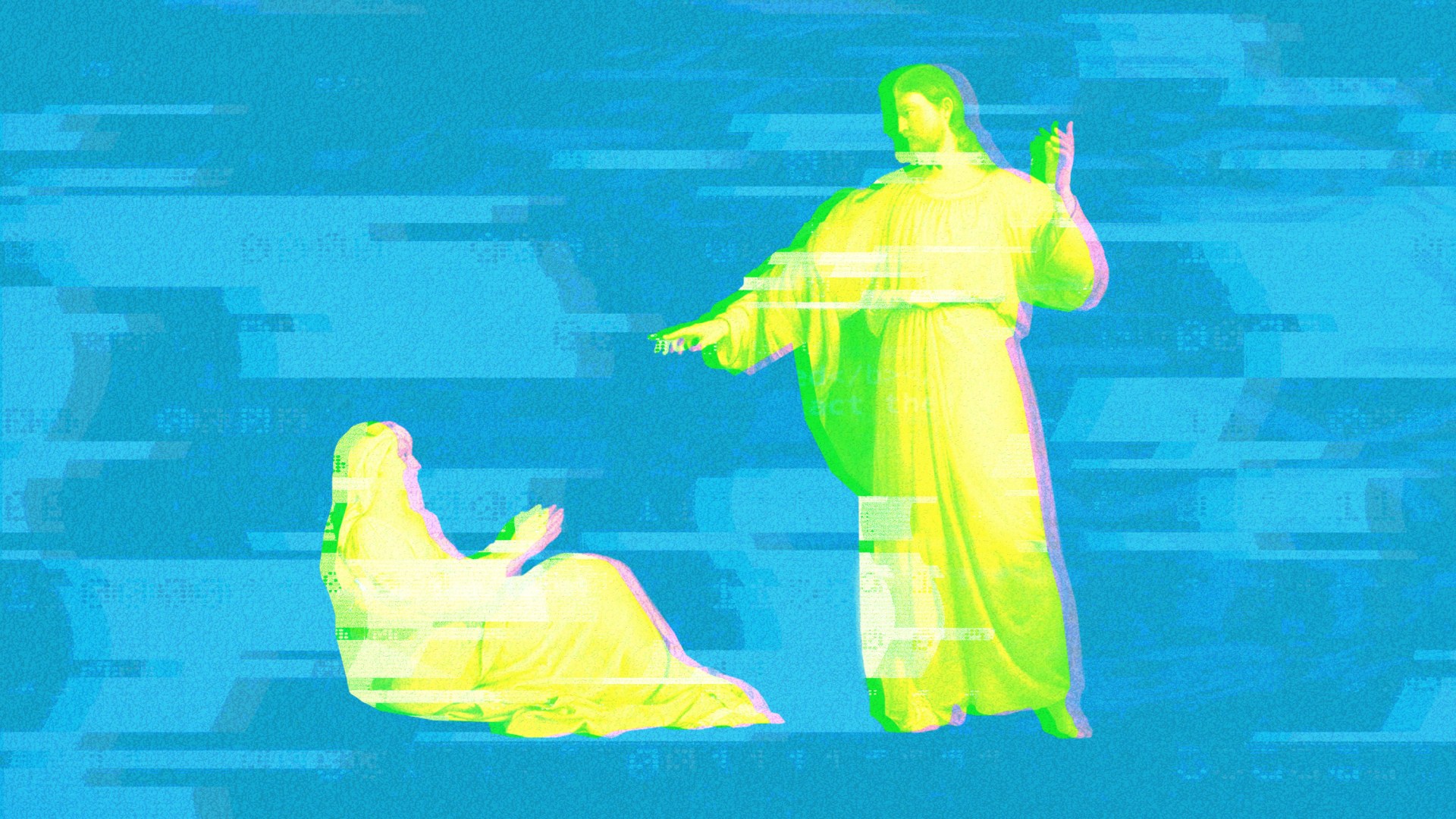
We are known and seen by the God who knows our deepest need.

Illustration by Jill DeHaan

I spent my 40th birthday in the hospital. This was not my plan.

A fever led to the doctor’s office. The doctor’s office led to a blood test. The blood test led to a phone call telling me to go to the emergency room; they were waiting for me.
That first day in the hospital was chaotic. The second day was full of testing and radiology. The third day, my birthday, I finally settled in. I spent most of that day waiting for my test results to come back so the doctors could determine how to treat me. I called my wife and asked her to bring the kids.


After I hung up, a cardiac surgeon—a man whom I had not met before but who would soon hold my heart in his hands—dropped by. He told me they had seen an issue on my echocardiogram and explained that I was in the early stages of heart failure and would need open-heart surgery.

This was the first time those words were spoken to me. “When?” I said.

He said, “In a few weeks, once we get your infection under control.”

Around the dinner hour, I found myself flipping through the channels. Alone. Struggling. Lost. It was a fine birthday, I told myself. It’s okay. You are going to be okay.

Then came a knock on my door. An older African American woman poked her head in and said, “I have your dinner.”

As she set the tray down on the table beside me, she looked at the number on my ID bracelet and asked me for my name and date of birth. I recited both like I had a hundred times that week.

She nodded, started to leave, and then stopped. “Wait,” she said. “Today is your birthday?”

“It is,” I said.

She straightened herself up, turned to face me, and put her right hand over her left—a portrait of dignity and poise. And then, with just the two of us in the room, she began to sing over me:

Happy birthday to you.
Happy birthday, dear Mr. Ramsey.
Happy birthday to you.

I wept.

It was such a dark day. I felt like my life was in the balance, which it was. And with such a simple gesture, that kind woman was a light. She did not know me. She didn’t know whether I was kind or mean, gentle or abrasive, honest or a liar. She just knew that since I was there in her hospital on my birthday, I was probably feeling a little lost. I mattered to her.

Advent reminds us that no matter how dark we might sense the world to be, we are known and seen by the God who so wonderfully made us and knows our deepest need—met for us perfectly in the gift of his Son, the Lord Jesus Christ.

Russ Ramsey (MDiv, Taylor University; ThM, Covenant Theological Seminary) is a pastor at Christ Presbyterian Church in Nashville, Tennessee, and the author of several books, including Van Gogh Has a Broken Heart.

Church Life

Night Skies and Dark Paths

God is our unwavering guide through incomprehensible darkness.

Illustration by Jill DeHaan

When I stepped from my tent into total darkness, the night was a void that felt expansive and oppressive all at once. Toeing my way forward, I sensed a canopy of trees above—an imagined imprint of the forest I knew to be there. Before the sun had given way to a lightless crescent moon, I had taken a mental snapshot of my surroundings, and it was with this vague and unfounded sense of direction that I stepped carefully ahead, slow and patient, hands outstretched.

I had the odd realization that it didn’t matter where I looked. Eyes forward gave no benefit in this darkness, so I let my purblind gaze wander. As I did, I caught the briefest flicker of light. Somewhere up and far. Angling my head skyward, I caught another pinprick. Stars, here and there, peeking through sprawling tree boughs. Now more appeared, and with increasing regularity the closer I drew to the edge of the woods.

Finally, I shuffled into an open field, and the sky exploded in celestial glory. I was not prepared for the vast greatness of this, the unsullied beauty of a wilderness nightscape. The heavens declared, and I heard it loud and clear.

The eerie thing was, as I gazed upward at the brilliant spectacle, the immediate darkness in which I stood was just as absolute as it had been in the forest. Up there, the Down here, I still couldn’t see past the end of my nose. I stood in that strange discordance—immersed in the dark yet basking in heavenly light.

I thought of Abraham, the spiritual father of stargazers everywhere. When he stood in the wilderness and tilted his face skyward, surely his nights were darker and his constellations brighter than any we see today. I imagined God calling Abraham, scattering visible signs of kingdom promise across the blue-black sky. Look to the heavens. Count the stars, if you can; that’s how generously I will bless you. I imagined Abraham’s stunned face.

Abraham held a promise as clear as the night sky, but his immediate path still led through dark terrain. He stepped forward in faith, hands outstretched, trusting God to steady his steps when he couldn’t see the way. Awash in starlight, Abraham believed God even as he fumbled through the dark. Each flickering star pierced the night, reminding him of the comforting voice that said, “Do not be afraid, Abram. I am your shield” (Gen. 15:1).

Looking to God, trusting him to keep his promises in his own perfect time, Abraham toed his way forward in the darkness of a fallen world, eyes fixed on the inbreaking of God’s light. And “Abraham, having patiently waited, obtained the promise” (Heb. 6:15, ESV). Ultimately, all of Abraham’s faithful stargazing was fulfilled in Jesus, the Light of the World—the one in whom “all the promises of God find their Yes” (John 8:12; 2 Cor. 1:20, ESV).

This is how we wait too. We stand in the night, gazing up at stars of unfailing promise. Sometimes the darkness of our paths is incomprehensible, but the faithfulness of our Guide is unwavering. And as we look to Jesus and await his glorious return, we can always trust him to steady our steps and to lead us “out of darkness into his wonderful light” (1 Pet. 2:9).

Scott James is an elder at The Church at Brook Hills in Birmingham, Alabama, and the author of children’s books and family devotionals, including The Sower, The Expected One, and, releasing in early 2026, Deep Breath, Little Whisper. He is also a pediatric doctor.

Church Life

In the Looming Darkness, Light

Jesus knows betrayal. But he remains the light.

Illustration by Jill DeHaan

I felt like I had been hit by a bus.

Unfortunately, I have been literally hit by a bus, so I know exactly what that feels like. But this was worse than the physical trauma of bleeding parts and broken bones. This was broken trust and a crushed spirit.

This metaphorical bus was the trauma of betrayal.

Betrayal breaks things you didn’t know could be broken and ushers in losses of things you didn’t even know you had until they are gone. The Encyclopedia of Psychological Trauma describes betrayal trauma as occurring “when the people or institutions on which a person depends forsurvival significantly violate that person’s trust or well-being.” Such treachery is life-altering. It changes not only your external life but your inner life too, making you doubt your own judgment and very beliefs because you misplaced them in the ones who broke your trust.

Jesus knows what it is to be betrayed.

On his way to the cross, where he would endure the worst physical pain possible, Jesus experienced perhaps the worst emotional pain possible.

Jesus was betrayed by a member of his innermost circle, handed over by a friend to enemies for mere silver. The incident took place in the darkness of the garden where he had gone to seek his Father’s will and to let his own will be known to God. The sign given for his betrayal was the symbol of love, friendship, and brotherhood: a kiss.

It’s hard to imagine a breach of trust deeper than this.

Yet Jesus knew he would be betrayed—and he kept on ministering anyway. Jesus didn’t accuse his betrayer but allowed the villainous disciple to accuse himself. At their last meal together before the cross, Jesus told the Twelve that one of them would do this. When Judas asked Jesus if he meant him, Jesus simply replied, “You have said so” (Matt. 26:25). And when Judas came for Jesus in the garden, Jesus said to him quietly, “Do what you came for, friend” (v. 50).

Jesus did not despair. He was not confused. He did not seek vengeance. He even instructed one who drew a sword in his defense to put the weapon away (vv. 51–52).

Jesus let the darkness be the darkness while he kept on being the light.

In the emergency room where I was taken after being struck by the bus, while the doctors did what they needed to do and a friend held my hand, there was a moment when I was overcome by pain. Yet in the looming darkness that swirled around me, I saw a light. In that light I felt the presence of God. I felt a peace I couldn’t understand (Phil. 4:7).

Later, in the darkness of betrayal, it was harder to see that light. But it was there. And to that light—to Jesus—I turned. I drew closer to his presence than I’d ever been before. And somehow, I was—and still am—at peace. Because “the light shines in the darkness, and the darkness has not overcome it” (John 1:5).

Karen Swallow Prior (PhD) is a popular writer and speaker. A former English professor, Karen is now a contributing writer for The Dispatch and a columnist for Religion News Service. Her writing has appeared in The New York Times, The Atlantic, Vox, The Washington Post, Christianity Today, and many other places. Her most recent book is You Have a Calling: Finding Your Vocation in the True, Good, and Beautiful (Brazos, 2025).

Church Life

What They Seem

Our Father knows how to give good gifts to his children.

Illustration by Jill DeHaan

There was a bike under the tree.

That’s what Dad said, anyway. But I didn’t see a thing, and I’m pretty sure I had 20/20 vision at 10 years old.

It was the same old yuletide routine with my old man. He began joking on Christmas Eve about what we were getting—and not getting—for Christmas. Our beloved tree sat there, barely upright in all its 1980s glory, gaudy gold tinsel dangling from homemade ornaments that would make any HGTV designer gasp in horror if she could only see it now. But clearly, no bike was lurking under those sad, dying pine needles. Just a gaggle of randomly wrapped presents my grandma had left the week before, none of which were remotely big enough to house any wheels, chains, or handlebars.

I decided to get bold. I asked Dad to promise me that there was a bike under the tree. This would be my ace in the hole, since grown-ups aren’t allowed to lie. To my surprise, he uttered the fateful words “I promise you.” My 10-year-old brain was dumbfounded. If I had been any good at math like Dad or shown any signs of being a fledgling engineering prodigy, I probably could’ve easily figured out the mystery. But I was the happy kid who dressed up like Spider-Man and built secret hideaways in our walkin-closets. You can see my dilemma.

Twelve hours later, in the wee hours of Christmas morning, I practically galloped to the living room with enough energetic glee to power a thousand Christmas trees. Yet there was still no bike under the tree. “I knew it. All men are liars!” I shouted to my oblivious siblings, not realizing my words were a prophetic signpost leading me to a life of preaching in the fairly distant future.

Except here’s the thing: There was a bike under the tree after all. My exhausted, 5:00 a.m. coffee-gulping old man told me to go to the garage, open the door to the crawlspace underneath the house, and look under the blanket. Sure enough, there it was in all its brand-new glory and wonder—sitting directly under the floor where that gaudy, almost needleless tree was somehow still standing.

All I can remember thinking at that moment was It’s settled. My father is a bona fide genius. How did he ever dream up a riddle like this?

Today, I look back fondly at this cherished boyhood memory of Christmas, and I’m reminded that things aren’t always what they seem. Even when my lenses have been clouded by the tears of all the sad things 10-year-olds can’t imagine they will someday have to endure, I still have a Father who knows how to give good gifts to his children (Matt. 7:11).

Every year, Christmas enters my life like the final page of a novel, where all the dark years and dashed expectations give way to the one thing we dare to hope will come true—and his name is Jesus Christ.

Ronnie Martin is director of leader care and renewal for Harbor Network and pastor in residence at Redeemer Community Church in Bloomington, Indiana.

Church Life

Christmas Tears

Christmas reminds us that God took matters into and onto his own hands.

Illustration by Jill DeHaan

Nothing represents the mosaic of the human experience quite like the tears of a newborn. Disorientation and discomfort mingle with joy and victory on that little one’s cheeks. Soon accompanied by the tears of mother and father, these simple drops of liquid carry all we are and all we hope to be. The infant’s cry marks a victory of sorts. New life is here. Hope is here. The little one’s future is pregnant with promise. Yet there remains the mother’s long road to recovery, the stubbed toes and scraped knees as the toddler learns to walk, the development of language, the gathering of experience, and the inevitable disappointments and losses of later years. The way new life arrived on Christmas morning shows us something of what God feels and intends for us. It shapes the expectations hidden within our imaginations and whispers to us the secret of who we really are.

An infant’s tears are a searching for the mother. When God drew near, his first desire was the comforting arms of another. Jesus’ tears remind us he came to the world to hold and be held by it. O Jerusalem, he later laments, how I longed to gather you beneath my wings as a hen gathers her chicks (Matt. 23:37). The infant crying to be held by his mother grew into a man crying to hold us too.

An infant’s tears are an announcement that something is wrong. Without vocabulary, all the child can do is cry. The Lord is birthed in solidarity with a world that cannot adequately express the depths of what ails us. There are, as it were, groans deeper than words. But somehow the tears of a baby capture the depth of it well enough. God did not stay in a far-off country but came near to suffer as we do. Jesus knows what it’s like to be us. 

Jesus’ Christmas tears are a reminder that God’s promises are always fulfilled. These are not wasted, vain tears. They are the tears of one who has come to carry us to a place where our tears will be wiped away. They are the tears of one who will make a way for us to come home. Christmas reminds us that God took matters into and onto his own hands. The newborn tears of Jesus move us forward to his lonely tears in Gethsemane, his agonized tears on the cross, and perhaps even Mary’s despairing tears at the tomb. Jesus’ life began and ended with tears so that, through resurrection, our days of tears would be numbered.

This is why we sing “Joy to the world, the Lord is come.” He came as a mother to hold a world whose tears are beyond expression. In that warm embrace, he carries us, comforts us, strengthens us, and restores us. “Why are you crying?” he gently asks Mary (and us). Just as he did Mary, he will call each of us by name (John 20:15–16). In a flash, in the twinkling of an eye, our tears of labor pain will be replaced by tears of joy. New life is here. Hope is here—our future is now pregnant with promise. Here on this day is all we are and all we will one day become. “Joy to the world, the Lord is come.”

Jonah Sage serves as one of the pastors of Sojourn Church in New Albany, Indiana. He completed his undergraduate studies in philosophy at Miami University (Oxford, Ohio) and received his master of divinity from The Southern Baptist Theological Seminary in 2013.

Culture

Talking Turkey

The wild bird has brought people together for centuries.

A vintage illustration of a wild turkey.
Christianity Today November 26, 2025
Edits by CT / Source Image: Library of Congress, WikiMedia Commons

Norman Rockwell’s 1943 oil painting, Freedom from Want, features a tableau of personalities around a dinner table. Their shoulders lean in, faces lit with anticipation, drawn in by what the matriarch of the family presents: the Thanksgiving turkey, the true main character of the scene. Who knows what conversation preceded the idyllic vignette—all the differing opinions on the hot button topics of the era—or which family members had conflicts with each other. In that moment, it mattered not. For the turkey had brought them together.

The turkey as a symbol of unity may sound familiar for those of us who eat forkfuls with mashed potatoes, dressing, and cranberry sauce. We may even have assigned to the bird a unifying, albeit somewhat fictitious narrative taught in elementary school, which paints friendly pilgrims and Native Americans gathering around the magnificent fowl. 

The only species native to North America, wild turkeys can live in just about any habitat as long as there’s water and shelter. It’s truly an all-American bird, in a category with other great American unifiers like Lady Liberty and Uncle Sam. While it’s a myth that Benjamin Franklin lobbied to make the turkey the national bird, he did tell his daughter in a letter that he wished the turkey would have been chosen instead because it was “a much more respectable bird.”

Today, researchers estimate there’s around 6 million wild turkeys across the United States. But despite its glowing reputation as a community centerpiece, this objectively weird-looking bird was once close to extinction. The survival of the wild turkey tells a powerful story of community and cooperation across differences. Every wild turkey that crosses the road—or arrives at the holiday table—represents the unified efforts of conservatives and liberals, biologists and hunters, and Christians and those outside the faith, reminding us that even in polarization, this great bird still creates unlikely friendships and brings people together. 

“By the 1900s, subsistence and commercial market hunting had caused decline in the species,” says Roger Shields, wild turkey program coordinator for the Tennessee Wildlife Resources Agency. Hunters noticed first. In response, a motley crew banded together, including hunters, biologists, conservationists, and lawmakers. 

The result was the 1937 Pittman-Robertson Act, legislation that aimed to restore populations and conserve endangered species through an 11 percent tax on firearms, ammunition, and archery equipment. The act symbolized the beginning of the wild turkey’s advancement to mend cultural divides, says historian Brent Rogers, inviting stakeholders “outside of political norms because there’s blood, sweat, and tears invested into it, for hunters and biologists alike.” 

While conservation efforts like President Roosevelt’s national parks initiative attempted to stave off threats to species like the wild turkey, at the turn of the century, habitat destruction caused by the industrial revolution prompted Aldo Leopold, a forest ranger in Arizona and New Mexico, to do more. He would one day inspire the likes of Wendell Berry and define a new conservation movement in the United States. 

Jessica Moerman, chief executive of the Evangelical Environmental Network, says that Christians bring a unique understanding to conversations about conservation. By “stopping and preventing activities that are harmful,” says Moerman, we contribute to furthering “Christ’s reconciliation of all of creation to God.”

Moerman is a scientist but also the daughter of a turkey hunter, and she remembers the turkey calls in her father’s office when hunting season opened. “My dad always said hunters are the greatest conservationists,” she said. 

Through the efforts of hunters, biologists, and conservationists, turkey populations increased by the mid-1900s. But the species remained at risk because of increased urbanization and decreased wild areas. Here, again, the wild turkey brought folks together. It turns out what’s good for the wild turkey is actually good for a host of other species too. 

Efforts began countrywide to restore turkey habitats, and in 1973, the National Wild Turkey Federation was formally established. The work of the NWTF brought initiatives from each state into one coordinated, national effort inclusive of hunters, biologists, conservationists, and environmentalists to transplant healthy populations and preserve their environments. And it worked. By 1974, the wild turkeys numbered 1.4 million.

Michael Chamberlain, the National Wild Turkey Federation Distinguished Professor at the University of Georgia’s school of forestry, works in research and advocacy for turkey conservation efforts. “Those vegetative communities are largely beneficial for a number of critters, whether it be birds, pollinators, insects,” said Chamberlain. “Those species are going to thrive in the same plant communities that turkeys thrive in.” 

Rogers, the historian, who is also a hunter, remembers seeing his first wild turkey in the 1980s, flying up out of the forested land his family had owned for decades. “Just watching it fly off, [I remember] thinking, That is a thing of grace and beauty.”

Today, Rogers uses all of the birds he hunts, even down to the feathers, which he sticks into his weathered Bible as bookmarks. (He even mailed me some, which now sit in the pages of my own Bible, marking my current reading spot in Acts.) He sees it as a reflection of God’s economy, where nothing is wasted. Raised Quaker in Iowa, Rogers has a feather resting on Psalm 8: “You put us in charge of everything you made, giving us authority over all things.”

“That is a privilege,” said Rogers after reading the passage over our Zoom call. “It’s also a burden. And as a hunter, you feel both.” For him, hunting carries a deep theological weight and responsibility that contributes to his particular hunting tradition. “I lay my hand on every turkey—even with people I’ve taken that are not spiritual people—and I say a prayer of thanks. Because to me, that’s a sacred act.”

Rogers and others like him believe that real hunters are also conservationists, because they know the cost firsthand. “A real hunter wants the animal to live more than you want it to die. And if you’re going to take, you have to give back.” 

This is the paradoxical thesis of the hunter-conservationists who are at the core of this movement. The work of Rogers, Shields, and at one time, Leopold, has inspired what modern conservationists call a “land ethic.” Leopold articulated this ethic throughout his teaching career at the University of Wisconsin and in the 1949 seminal work published after his death, A Sand County Almanac. Almanac influenced people like Wendell Berry and leaders of the second wave environmental movement in the 1960s and 1970s, including those who noticed the wild turkeys were still in need of attention.

For all its triumphs, the wild turkey’s population restoration is also a cautionary tale. By the year 2000 there were turkeys everywhere, says Chamberlain. But it’s not that simple, because even while restoration was finding success, populations were already declining. It was Chamberlain’s Wild Turkey Lab that sounded the alarm in 2015. “We got lulled to sleep, which is just human nature,” he said.

Today, new environmental factors play a large role in the ever-evolving needs of the species. There are fewer wild areas, more threats with cars and chemical presence, and fewer large predators, which leads to more nesting predators who eat eggs. Rogers emphasized the urgency to continue conservation efforts from all who care about creation: “Unless we’re investing in research to teach us about new threats, we’re not doing our full job as stewards.” Restoration this side of paradise requires constant diligence. 

When I asked Chamberlain what wild turkeys have taught him about community, he replied without hesitation, “Resiliency. You’ve got this bird that is so resilient but is yet vulnerable. The same goes for community. … Don’t take it for granted.” 

Wild turkey conservation teaches us that there are corners of our American landscape where the sharing of literal common ground is the antidote to an anti-“us” era. Like the turkey itself, we are resilient yet vulnerable, interdependent in ways that need care to flourish. Our relationships with one another are susceptible to atrophy through complacency. 

So while this Thanksgiving we may feel a unity around our own tables as fictional as a Rockwell painting, may we take heed of the very real call in Hebrews to show hospitality despite the many things that may put us at odds with one another. Maybe our eyes can fall on the centerpiece of the table—to the turkey itself—for a gentle and physical reminder of where the invitation in Romans to live at peace with others (12:18) has taken root and is still at work, shaping the very land on which we gather.

Culture
Review

Knives Out’s Benoit Blanc Says He Hates the Church

But there’s more to “Wake Up, Dead Man” than his condemnatory monologue.

Daniel Craig in Wake Up Dead Man: A Knives Out Mystery.

Daniel Craig in Wake Up Dead Man: A Knives Out Mystery.

Christianity Today November 26, 2025
Courtesy of Netflix © 2025

Wake Up Dead Man, the third installment in the murder-mystery movie series Knives Out, shows the church at its worst.

In his latest adventure, detective Benoit Blanc (Daniel Craig) encounters a congregation centered on its pastor’s authoritarian personality, rooted in reactiveness instead of restoration. Get ready for plenty of tropes about fire-and-brimstone fury.

And yet there are glimmers of the gospel. For the Christian, Wake Up Dead Man ends up being as hopeful as it is heartbreaking.

The film takes place at Our Lady of Perpetual Fortitude, a small Catholic church in a small fictional town. Right away, we meet Father Jud Duplenticy (Josh O’Connor), a young priest, former boxer, and somewhat-recent convert. After an anger-fueled accident in the ring, he hung up his boxing gloves and dedicated his life to the Lord. Now he’s learning what it is to be a believer, eager to share God’s mercy and love. He’s reminiscent of some of the pastors I grew up around—leaders who came to faith as adults and began guiding others down the same path.

Father Duplenticy is sent as an extra set of hands to a flock whose current priest, Monsignor Jefferson Wicks (Josh Brolin), is more about fear than forgiveness. Something is wrong; the cross that once hung in the front of the sanctuary is missing. (Monsignor Wicks’s mother, in a demon-possessed, greed-motivated rampage, tore it down when she learned she would not inherit her father’s fortune.) Now Wicks references the missing cross in every sermon, using it as a symbol to remind the congregation of their sins, the evils of the world, and their perpetual dependence on him as their access to the divine.

After a crass confession, it’s apparent (if it wasn’t already) that Monsignor Wicks is narcissistic, egotistical, and manipulative. He’s focused more on seeking attention from an up-and-coming conspiracy theorist and influencer than on being a shepherd, and he advises a wealthy woman that she can be healed via his prayers. He’s replaced Christ in his church both figuratively and literally.

At its core, Wake Up Dead Man is an entertaining murder mystery. It’s also rife with religious imagery and allegory. Christian viewers might enjoy a richer watching experience because they’ll get all the symbolism—a murder weapon in the shape of a wolf, a tomb opened after three days.

The writing is wonderful. Comedic timing brings levity. I genuinely enjoyed the film.

But it was also hard to watch as someone who loves the church.

Turns out, Benoit Blanc has baggage. He walks into Our Lady’s sanctuary, is asked whether he’s religious, and launches into a barely-pausing-for-air rant about hatred and hurt. Blanc says the church is homophobic, misogynistic, manipulative, abusive, and hypocritical.

A few of his criticisms are fair. The congregation he’s just arrived at is a veritable case in point when it comes to abuse and hypocrisy.

But much of his monologue is more reflective of how secular culture stereotypes the church than of how it actually operates or what it really preaches. Blanc’s speech is full of the same kinds of accusations that stop me from sharing the gospel with nonbelieving friends. Who wants to be called an ignorant bigot?

I saw Wake Up Dead Mean at a film festival this fall, surrounded by a largely secular audience. Blanc could barely finish his speech before the crowd erupted in cheers. The theater of over a thousand people was suddenly deafeningly loud, jeering at my religious community as I sat silent.

I’ll remember that uncomfortable moment for the rest of my life. I sat in a crowd of people who—whether personally affronted by the church or assuming the worst of what they’d heard secondhand—clapped for a damning speech about the bride of Christ.

This kind of condemnation is not new to me. I live in Los Angeles; I grew up here too. I love my city, but it’s not the easiest place to be a believer. It’s built on an industry defined by vanity, wealth, and idolatry. Just the other day, an Uber driver asked me if I was happy I was Christian, because, in his opinion, Christians hated everyone else. I went to a public school where believers were few and far between. We didn’t really talk about our faith out of fear of disapprobation. The assumption was we were exactly what Benoit Blanc claimed us to be—homophobic, misogynistic, hateful, hypocritical.

The cheers in the theater weren’t surprising. But still, they broke my heart.

As I sat in my velvet seat, I found my brow furrowing and my eyes narrowing. I was getting angry and defensive—not Monsignor Wicks–level mad but way too close, itching to jump from my seat and point at the specks in others’ eyes (Matt. 7:3–5). I wanted to go off on a diatribe of my own, to spout off about my local church—the donations we collected to aid in fire-relief efforts across LA, the hundreds of meals we serve to the unhoused on a weekly basis, and the camp we put on for kids in the foster-care system. I wanted to plead with them to see past the sins of individual Christians and look to the person of Jesus Christ instead.

Also, I wanted to argue, the Bible never promises a perfect people of God. Far from it. Josiah cries out against Israel’s iniquities (2 Chron. 34:21). John says anyone who claims to be without sin is a liar (1 John 1:8–10). Again and again, Scripture highlights the hypocrisy of religious leaders. Jesus flips the tables at the temple, saying the church has become “a den of robbers” (Matt. 21:13). “Woe to you, teachers of the law and Pharisees, you hypocrites! You give a tenth of your spices—mint, dill and cumin. But you have neglected the more important matters of the law—justice, mercy and faithfulness,” he declares. “You should have practiced the latter, without neglecting the former. You blind guides! You strain out a gnat but swallow a camel” (23:23–24).

All this corruption, of course, causes pain. That’s why I was also holding back tears as the crowd clapped, remembering the times I’ve had to convince myself to stay in the pews after sisters and brothers in Christ have been wounded by the church.

It is easy to point fingers at bad pastors. But sitting in that theater showed me how easy it is to get fearful, angry, and prideful myself.

In my experience living in Los Angeles, sometimes malice toward the church covers up serious questions, raw curiosity, genuine misunderstandings that can be addressed, and stinging injury God can heal. Scripture also says social condemnation will come to Christians—and we are to turn the other cheek. “If the world hates you, keep in mind that it hated me first. … They will treat you this way because of my name, for they do not know the one who sent me,” Jesus says (John 15:18, 21). Instead of getting angry, I must try to bless those who curse the church (Luke 6:28).

Father Duplenticy is the breath of air Wake Up Dead Man needs—modeling integrity, putting others above himself. If the Monsignor is the church at its worst, this priest is the church at its best.

Thanks to Duplenticy’s example, Benoit Blanc witnesses a life in imitation of Christ. That witnessing is integral to his ability (or inability) to solve the latest case. Whether his eventual Damascus road leads to contemplation or confession, I’ll leave for you to find out.

By the end of the movie, I sensed a shift in the audience’s posture. I’d calmed down too. There were even some mumbles and gasps when true mercy was extended. I left the theater hopeful.

Wake Up Dead Man isn’t out to reject Christ. It’s out to decry the human sin found among his people. That’s something all of us, believers or not, can get behind. But Christians have additional context: Sin is not the end of the story. Grace gets the final word in the mystery of faith.

Mia Staub is editorial project manager at Christianity Today.

Culture

I Wanted to Serve Both God and Mammon

A friend’s request for a rent check called my dual loyalties into question.

A golden stroller.
Christianity Today November 26, 2025
Edits by CT / Source Image: Unsplash

A good friend once asked me for help with the rent. They were going through a hard time, they explained. Would my husband and I be willing to cover this one expense until they got through it?

I didn’t know how to answer. We had just given birth to our second child, and I had recently quit my job. Before that, we had been living on nonprofit and education salaries that were considered low even within our industries, and were spending as frugally as possible so that our paychecks wouldn’t be swallowed whole by the cost of living in the San Francisco Bay Area. I interjected before the conversation could go any further and said we needed time to think about it.


“Open thine hand wide,” says the Book of Deuteronomy, in one of many verses that indicate how adamantly God expects his people to follow his generous example (15:8, KJV).

Comprehensive Old Testament instructions encompass both individual giving and systemic movements toward land redistribution, debt forgiveness, and almsgiving. The New Testament is similarly insistent that we honor God through showing material care to others. “For I was hungry and you gave me something to eat,” says Christ; “I was thirsty and you gave me something to drink.” In Christ’s own telling, whatever we do for the dispossessed, we do for him (Matt. 25:35, 40).

As the early church establishes itself, similar commands are given to the people of God, even as they struggle to survive under foreign occupation. Paul, commending the Corinthian church for its spiritual depth and maturity, concludes by reminding its members to practice radical generosity in order to “prove … that your love also is genuine” (2 Cor. 8:8, ESV).

He accompanies his command with a pithy little closing, astonishing to anyone used to the acquisitiveness of contemporary life. If the Corinthians give to one another, he says, they will be assured that “the one who gathered much did not have too much, and the one who gathered little did not have too little” (v. 15)

The assumption here is that having too much is a problem to be solved and that the people of God can help those who struggle with this particular problem by rerouting their resources. Anyone with too little—even, provocatively, with too little as a result of insufficient “gathering,” or planning and saving on their own behalf—can be cared for and protected by their more affluent neighbors.

This is a revolutionary way to think about our belongings and how they ought to be managed. The scriptural narrative, which identifies all of us as bearers of the image of God and therefore as possessors of inalienable value, gives us the corollary identification as each other’s keepers. What we do with our possessions must be constellated around our shared, inherent belovedness.

I find the Bible’s view of money beautiful but unpersuasive. I approach its teachings with the admiration and unease of a visitor to a foreign land: appreciative of what I am witnessing, sharply aware that my home is elsewhere.

Once my husband and I finished the conversation with our friend, I began thinking about all the verses about money that I’ve memorized without fully internalizing them. I reside within another narrative about wealth, and that narrative comes from the market economy.

The market and its teachings are so compelling that they have, on multiple occasions, moved me to tears. When we had our first child, I realized that there were gorgeous strollers to be had, models affixed with four-figure price tags that could roll my baby forth on sleek metallic frames that looked like ergonomic Scandinavian thrones. All the ads I scrolled through suggested that affording such a stroller was the next step in our progression as parents, in proving we were capable of providing for our offspring.

Our child’s low-slung plastic contraption seemed like an affront to her beauty and a testament to the insufficiency of my love. What had all these other parents done, I wondered, to afford their strollers? Why had I not figured out a way to do the same? I wanted the same thing that the ads wanted for me, which was to grow into the kind of person who could provide our child with the best of everything. This longing was potent enough to make me cry.

Once my child began expressing a greater interest in her surroundings, different questions arose. Why could I not provide her with Waldorf-approved toys in natural colors and textures? Why did regular admission to the baby gym seem so exorbitant? Was there any real benefit to mother-baby Pilates classes? Why was I failing to afford these things? The story that exists in my imagination, the narrative line I want to follow, features a woman whose purchasing power is commensurate with her love.

These ideas don’t seem objectionable: I want money so that I can grow into my God-given responsibilities as an adult woman. Yet they also don’t explain the protectiveness I feel toward my possessions or my reluctance to grant a friend’s request. As I considered the prospect of covering someone else’s rent, I tried to identify the reasons why we couldn’t help and realized that my logic didn’t make sense.

Was I withholding money due to fear of lack? Truthfully, my husband and I were making enough to cover our basic needs. Was I afraid that giving would compromise my child’s prospects? Our ministry and education salaries already qualified us for free preschool programming. Besides, my child had already been outfitted for the first five years of life with a raft of hand-me-down clothing and gifts from doting family and friends.

Making decisions based on financial prudence has a semblance of wisdom. Yet my reasons for wanting to protect my wealth are surprisingly ill-defined, suggestive of beliefs I can rarely bring myself to articulate. My relationship to money has the clarity of a pointillist image—coherent from a distance but disintegrating upon close inspection.


In her book The Age of Choice: A History of Freedom in Modern Life, historian Sophia Rosenfeld suggests that most of our moral questions are clarified when understood as outgrowths of an obsession. To a historically unprecedented degree, we are fixated on personal freedom. Whenever we weigh contemporary debates about money, abortion, vaccinations, or schooling, Rosenfeld says that we are really weighing arguments about individual autonomy and how to best maximize its expression.

As an example, Rosenfeld points to the way “My body, my choice” has become a rallying cry for both pro-abortion and anti-vaccination activists. That two groups associated with opposing political camps will frame their work so similarly—as advocacy on behalf of personal decision-making—illustrates our collective state of mind. We may disagree about how to wield our liberties, but we rarely have meaningful disagreements about whether more liberty itself is good.

Rosenfeld sees evidence of this not only in our political language but in our religious and romantic practices as well. She points to the relatively recent emphasis on individual conversion experiences as evidence of spiritual authenticity and to the shift away from arranged marriages toward companionate partnerships.

The goodness of unfettered personal decision-making has become what sociologist Pierre Bourdieu termed a doxa—an idea that defines a culture. Undergirding this particular doxa is the continued expansion of market capitalism. “The business of selecting and the logic of the menu of options,” Rosenfeld writes, “have become both a way of life and, it is widely assumed, a means to build a life.”

My attachment to money takes on a troubling shape against the backdrop of these arguments. Rosenfeld views democracy, capitalism, and liberal societies as equally oriented toward maximizing choice. But as democratic governments and liberal societies become captured by special interests, the market appears to be the only realm in which my choices are still guaranteed to mean something.

I’m not convinced that my government will be responsive to me. My neighborhood institutions, ranging from local storefronts to schools and churches, have struggled to regain their pre-COVID vigor. Money, if I am honest, extends the most credible promise of a good life. It offers one of the few remaining mechanisms through which I can exert my will and expect to see a result.

Rosenfeld would point out that the control I wield as a consumer is already far more limited than I think. Although we experience ourselves as independent decision-makers, she says, “we rarely make up the rules of the game or craft the banquet of possibilities.” Modern adults have comparatively greater freedom to date and marry as they like but no control over the proliferation of dating apps and diminishing in-person opportunities to meet a potential romantic partner. They have choices, yet those choices are shaped by the companies that code their algorithms.

We may perceive ourselves as free—Rosenfeld observes that much of contemporary discourse around marriage still centers on our right to choose our partner—while living in a network of conditions that heavily constrain our will. Personal liberty becomes a subjective experience at best and an illusion at worst.

So who, exactly, is facilitating our convoluted relationship with money? The most glaring culprits are tech companies.

For decades, Harvard Business School’s Shoshana Zuboff has produced landmark research examining the effects of technological advancement and corporate dominance on selfhood. Her masterwork, The Age of Surveillance Capitalism, coins the term “surveillance economy” to describe the system we currently inhabit, and gives it the credit, or culpability, for both the comfort and dissonance of contemporary life.

Zuboff proposes that capitalism, having played out the competition for land, natural resources, labor, and attention, has evolved yet again. The most aggressive corporations are no longer focused on these comparatively traditional realms of activity, but on using consumer data to generate “prediction products that anticipate what you will do now, soon, and later.”

Big Tech’s era-defining innovation, says Zuboff, is its understanding that we are disclosing information about ourselves every time we interact with a device, and that this information can be used to manipulate our relationship to our future. Clients pay tech firms to create “behavioral futures”—to aggravate emotionally vulnerable teenagers before the release of a new wellness product, perhaps, or to induce the correct forms of outrage in swing-state voters in advance of an election year.

“We are not surveillance capitalism’s customers,” Zuboff says.

We are the sources of surveillance capitalism’s crucial surplus: the objects of a technologically advanced and increasingly inescapable raw-material extraction operation. Surveillance capitalism’s actual customers are the enterprises that trade in its markets for future behavior.

Her claims would sound hyperbolic if they were not accompanied by nearly 700 pages of documentation laying out the patents, interviews, correspondence, and litigations that tech firms have generated in their attempts to monetize our behavior. She offers Meta’s infamous “61-Million-Person Experiment in Social Influence and Political Mobilization” as an early demonstration of how precisely companies can move users towards a desired outcome and Gonzalez v. Google as a more recent, and much darker, example of what is possible.

In Zuboff’s view, life under surveillance capitalism promises to be convenient and fun, a utopia of two-day deliveries and astonishingly well-curated “For You” pages. But this life requires a long obedience in a direction that we have no way of fully comprehending. In order to receive surveillance capitalism’s comforts, we have to surrender our ability to imagine a life independent of its incursions. Zuboff believes that we are battling for the “right to a future tense”—for our capacity to conceive of our existence outside the priorities of the market.

I understand this intuitively. On all my devices, my future as an adult woman has clearly been mapped out in the exact way Zuboff describes. I receive ads about the vacations my family can take as my children grow older. I come across videos about buying insurance packages for house and car, and about depositing money in college savings accounts. I am regularly served content about home decor, meal-prep subscriptions, anti-aging beauty products, and boutique health care services, all of which, if I am honest, I find appealing.

To me, the closed loop Zuboff describes—in which companies plant and cultivate our desires, in which we can be trained to salivate for whatever the market has on offer, in which our money will obtain the exact items we have been conditioned to want—offers a comforting way to live.

Helping my friend in response to the scriptural call to generosity only endangers my place in this ecosystem, all but guaranteeing that there will be no lavish vacation in my future, no subscription boxes in the mail. Why would I relinquish these things?


Jesus famously declared that it is impossible to serve God and Mammon, casting money as a spiritual presence to which we cannot give partial devotion—only total fealty. The sharpness of his phrasing always makes me want to blunt his words a little, to interpret this teaching as a general warning against divided priorities instead of a direct rebuke of humanity’s lasting wealth obsession.

Yet even a brief consideration of what money promises, and why we come to rely on it, makes it impossible to ignore Jesus’ meaning. He calls money an idolatrous deity because it aims to satiate the appetites we would otherwise bring before the Lord.

All our interactions with money are freighted with spiritual consequence. Rosenfeld’s history of choice and individuality is a history of how thoroughly capitalism has reshaped our concept of self; Zuboff’s analysis of the surveillance economy also functions as a study in human insatiability and greed. If religious practice consists of regular behaviors that gradually reconfigure our affections, then our history with money is clearly a history of devotion.

Today, no one acculturated to consumerism will find Paul’s letters immediately comprehensible. To me, the idea that “the one who gathered much did not have too much, and the one who gathered little did not have too little” sounds deranged. So does the idea that Paul’s readers should seek to imitate the Macedonian church, who managed their circumstances of “deep poverty” by “overflow[ing] in the wealth of their liberality” (1 Cor. 8:2, NASB here and below). Why should anyone, as a practical matter, not retain “too much” of what they have earned or respond to their own “deep poverty” with acts of lavish giving?

Perhaps Paul is too flippant, praising people for giving “according to their ability, and beyond their ability (v. 3). His letter, breezily cheerful in its recommendations, indicates total ignorance regarding the terror and need that permeate the relationship between people and their money.

But to a mind conditioned by Scripture, Paul is not deluded but is deeply, appropriately critical. His writing bridges a vast tradition, which has long subjugated money to the task of honoring God and people. He addresses money not because it is his special concern but because it is the preoccupation of his audience. The goal of his argument is to rob money of its primacy and remind his readers of its best use—to be generously dispensed as an expression of love. “For you know the grace of our Lord Jesus Christ,” Paul writes, “that though He was rich, yet for your sake He became poor, so that you through His poverty might become rich.”

Echoing Christ’s God-and-Mammon juxtaposition, Paul draws a connection between money and worship, arguing that the choice to retain or surrender our resources is also the choice to limit or consummate our devotion to God. We can appraise one another through the eyes of the market, or through the eyes of the Lord.

Even across millennia, Paul’s critique holds true. Surveillance capitalism has yielded structures that respond to our desires with alacrity, but these structures prioritize only viable consumers. Those of us who become too sick, too old, or too impoverished to sustain our earning and spending quickly grow irrelevant. We have built a market system that imparts meaning and comfort to human life and gives us the tools to care for one another. But this system retracts its services the moment we enter a state of actual vulnerability.

Conversely, Paul describes Christ’s generosity as a phenomenon activated by the circumstances that cause human-made systems to falter. Christ, when faced with our helplessness, responds by voluntarily dispossessing himself, giving so extremely that there is no possibility he can ever be repaid.

Taking Christ’s example seriously, as Paul asks his readers to do, has a vertiginous effect, reminiscent of the moments in Scripture that have people presented with a shimmering new reality—Moses and the voice of God in a burning bush, Ezekiel sighting a heavenly figure in a storm. These men are so overcome at the prospect of a realm more potent and profound than our own that their only response is to prostrate their bodies on the ground.

Paul’s letter reads like these instances of divine encounter, in which the sheen of the familiar briefly melts away and exposes us to the startling immanence of the holy. Like the flame that is also a presence, like the storm that is a vision of eternity, Paul’s letter is also an invitation to communion with the Lord. He casts our confrontations with material need as opportunities to apprehend a Christlike generosity, as paradigm-shattering as a voice in the wilderness calling my name, as a vision unfurling before me in the sky.

Rosenfeld, at the close of her book, seems to anticipate my reaction to Paul. Every doxa comes in for a reckoning, she says, and the morality of personal liberty, as unimpeachable and self-evident as it has seemed in my lifetime, is revealing its limitations. American society is at an impasse, gridlocked by conflicts that treat every political contest as a zero-sum game for agency, indebted to surveillance capital for the uneven pleasures of optimized consumption. She suggests that we take this opportunity to “start wondering, without prejudgment, if choice as we know it is really what freedom should be all about.”

In other words, if we are seeing fissures in our moral universe, perhaps we should peer into them. If I am drawn to Paul’s letters, it is probably because they read like missives from someone who has already glimpsed what is on the other side.

Paul, whose orthodoxies led him to violently persecute the church, was on the road to Damascus when he was apprehended. Christ asked Paul, “Why do you persecute me? It is hard for you to kick against the goads” (Acts 26:14).

With a few phrases, Christ punctured Paul’s understanding of his own life, framing it as not a story of piety and certitude but of a struggle against a presence that Paul detects but cannot accept.

When I read the account of this conversion, I also want it to be an account of my life. I too am a person who has been obsessed and troubled by the gospel ethic of generosity. I too want to be standing on the precipice of a reality I have intuited and yet hesitated to enter. I want, like Paul, to surrender my right to kick against the goads.

Ultimately, I went to my husband, who was already prepared to give our friend the money. I told him that I had my answer.

Yi Ning Chiu writes the newsletter Please Don’t Go. Previously, she was the columnist for Inkwell, Christianity Today’s creative NextGen project. 

Ideas

No Longer Politically Ensnared

Contributor

Both parties are enmeshed in an ongoing identity crisis. The chaos can give us a chance to rediscover what we’ve lost.

A bald eagle with a red net and a blue net.
Christianity Today November 26, 2025
Illustration by Elizabeth Kaye / Source Images: Getty, WikiMedia Commons

I grew up in the front row of the church and on the frontlines of Chicago politics.

My view of public life was formed in church basements, union halls, and on the front porches of red-brick bungalows lined up on the west side of the city. As a kid, my great-aunt Irene worked as a precinct captain, mobilizing voters for Democrats, while my cousin brought neighborhoods together to address local issues.

On Saturday mornings, I often saw a generation of seasoned Black organizers gather at an advocacy organization to sing rapturous Gospel music, listen to a sermon, and then pour out to register, educate, and mobilize voters. The job wasn’t merely to win elections but also to protect the dignity of our people.

At the time, the distance between my parents’ pews and my community’s politics wasn’t far—similar people and values, just different platforms of expression. Even inside the world of partisan politics, which I pursued as a calling later in life, I saw myself as a part of something separate and distinct. Over the years, however, that distinctiveness seemed to fade.

We’re currently living through a strange and volatile political time that could be an invitation for rediscovery—not only for the Black church but also for evangelicals across the board. 

On one side, the Democratic Party is in the middle of a very public identity crisis. The same night that New York City’s Zohran Mamdani, a democratic socialist, was elected mayor—with a mandate to push left-wing policies from public grocery stores to rent control—Virginians delivered a decisive win to Abigail Spanberger, a moderate who represents a very different vision for the party.

Meanwhile, Democratic leaders like governors Gavin Newsom and J. B. Pritzker and former Chicago mayor Rahm Emanuel are all positioning themselves as presidential hopefuls, each offering distinct styles for the party’s future: technocratic management, progressive populism, or pragmatic machine-style politics.

Republicans, for their part, are in no less turmoil. Georgia congresswoman Marjorie Taylor Greene recently announced she was resigning from her position after a high-profile fallout with President Donald Trump on a host of issues, including the Epstein files.

Separately, Tucker Carlson’s friendly interview with a white nationalist and avowedly racist antisemite ignited bitter infighting among conservatives, which, as commentator Jonah Goldberg recently told Vox, is “previewing the bigger wars to come about what the right is about, who can be tolerated as part of the coalition, and who can’t be.”

In short, both parties are drifting, while the coalitions that once held them together appear to be fracturing in real time. Some of the attempted realignment is symptomatic of the moral rot in our politics. As the parties are trying to discover who they are, however, it can also offer the American church an opportunity to retrieve our own identity independent of the political chaos. 

Three years ago, I ran for Congress as a pro-life Democrat. When I look back on it now, that was the moment the need for political renewal felt undeniable to me. Friends—even those who were Christians—withdrew, and former colleagues insisted I should “just be a Republican” because of my pro-life views.

Perhaps most painfully, many Black churches—whose pews had taught me a moral vocabulary of responsibility, family formation, and the sacred worth of children—lined up to support candidates who had discarded those values entirely.

This took place in the aftermath of the Democratic Party’s shedding of pro-life voices across the board. In 2010, for example, the party had around 40 national legislators who held pro-life views, according to New York Times writer Ezra Klein. Today, there’s virtually none. The Republican party has also backed away from its strong pro-life stance while the Black church, a traditionally Democratic voting bloc, has all but lost its distinctive voice on the issue.  

That’s not the only thing that has been lost. Many have strayed from talking about economic justice with a healthy respect for personal responsibility or a high view of the traditional family structure, while still defending the dignity of those who don’t belong to one. We rightly agonize over how to make our criminal justice system fair and equitable. But we can’t seem to do that while still holding fast to the belief that those who commit crimes should be held responsible for the harms inflicted on communities.   

While all this is happening, the Black church has also been losing political power. Young people are leaving and are increasingly becoming discipled by the liturgies of secular progressivism or the moral intuitions of secular conservatives. They are also being drawn to other traditions or to alternative spiritual movements—places where belief feels less superficial and the bar for belonging and participation feels higher.

When churches become little more than cultural outposts for partisan ideology, rather than the kind of spiritual communities that shape political judgment through Scripture, tradition, and discipleship, they cease to offer a compelling reason for continued participation.

The problem is not that Black churches, or any churches, lack moral convictions. It’s that we often express those convictions in the language of the parties rather than the language of the faith. We trade our prophetic distance for proximity to power and forget that our social authority arose from our willingness to be different.

Whether they admit it or not, both parties need religious Americans to succeed. An identity crisis gives the church an opportunity to make a demand on them—not as beggars seeking concessions but as citizens with the right to negotiate the moral terms of this country’s political future. I’m not saying we can ultimately control what Democrats or Republicans become. We can’t. But when we remember who we are and act accordingly, our voice can carry further than we know. 

This is where the history of the Black church has something crucial to offer. I say this not because it is the only Christian tradition worth analyzing, but because its historical political witness avoided the great temptations of cultural assimilation and retreat. At its best, the Black church offered something our politics rarely produces: compassion with conviction, justice rooted in righteousness, hope grounded in sacrifice, and resistance joined to reconciliation.

If the church hopes to speak with moral clarity into this political vacuum, we must learn again what the Black church once embodied.

The first thing to remember is that distinctiveness matters. The Black church held moral authority because its theology shaped its politics, not the other way around. It critiqued exploitation from the right and overreach from the left. It refused to treat the individual as an autonomous unit unconstrained by community, just as it refused to treat the community as a collective that bears no responsibility for individual decisions and actions.

At a time when both parties are fostering a culture that undercuts the biblical view of the imago Dei—whether through identity idolatry or hyper-individualistic autonomy—the church must recover its own distinctive vision of human dignity.

Secondly, we can maintain proximity to people who face disadvantages without being captured by partisans. The Black church was able to stand close to victims of housing injustice, health disparities, and other types of disenfranchisements without merely mimicking those offering plausible policy solutions. We need that kind of posture today to correctly address challenges faced by African Americans, working-class white communities, and immigrant populations navigating an upheaval in policy and enforcement.

Thirdly, we must remember that the church’s most powerful political act is in shaping voters, not in mobilizing turnout. We are called to disciple people by helping them think biblically about life, weigh tradeoffs, seek the common good, and discern justice. Election decisions matter, but we can’t treat them as substitutes for good discipleship.

Lastly, courage can be exhibited without belligerence. The current political atmosphere rewards outrage, while tribes treat disagreement as betrayal. But believers who know their identity in Christ can model the courage to speak without cruelty, challenge without demeaning, and confront without dehumanizing.

We don’t do this for civility’s sake but because it’s what Jesus demands of us. After all, we have not been called to be witnesses to the aspirations and anxieties of the left or the right, but to the kingdom of God breaking into the world. If we fail to do that, our moral authority will continue to erode, slowly at first (as it already has), and then all at once.

Chris Butler is a pastor in Chicago and the director of Christian civic formation at the Center for Christianity & Public Life. He is also the co-author of  Compassion & Conviction: The And Campaign’s Guide to Faithful Civic Engagement.

Dr. Nicole Martin: CT’s New President & CEO

Learn more about CT’s new President & CEO.

Dr. Nicole Martin has been unanimously selected by the Christianity Today Board of Directors to serve as its next president and CEO, bringing more than 25 years of nonprofit, academic and ministry leadership experience to this role. 

Dr. Martin has committed to reaffirm Billy Graham’s vision for CT by serving the church through creative and redemptive storytelling, informative journalism from an Evangelical Christian worldview, and resources and convenings that foster flourishing.

Just as Billy Graham created CT for believers who did not “feel at home in progressive mainline congregations or reactionary fundamentalist settings,” Dr. Martin brings a collaborative and unifying ministry leadership approach to this role that will bring together all parts of the global evangelical Christian family. During a time in our culture that is filled with relativism and a perversion of truth, Christianity Today will stand strong on a biblical foundation and point people to the life-changing power of Jesus Christ.

Join in the mission and vision of CT. You can do so by subscribing or giving to CT.

Apple PodcastsDown ArrowDown ArrowDown Arrowarrow_left_altLeft ArrowLeft ArrowRight ArrowRight ArrowRight Arrowarrow_up_altUp ArrowUp ArrowAvailable at Amazoncaret-downCloseCloseEmailEmailExpandExpandExternalExternalFacebookfacebook-squareGiftGiftGooglegoogleGoogle KeephamburgerInstagraminstagram-squareLinkLinklinkedin-squareListenListenListenChristianity TodayCT Creative Studio Logologo_orgMegaphoneMenuMenupausePinterestPlayPlayPocketPodcastRSSRSSSaveSaveSaveSearchSearchsearchSpotifyStitcherTelegramTable of ContentsTable of Contentstwitter-squareWhatsAppXYouTubeYouTube