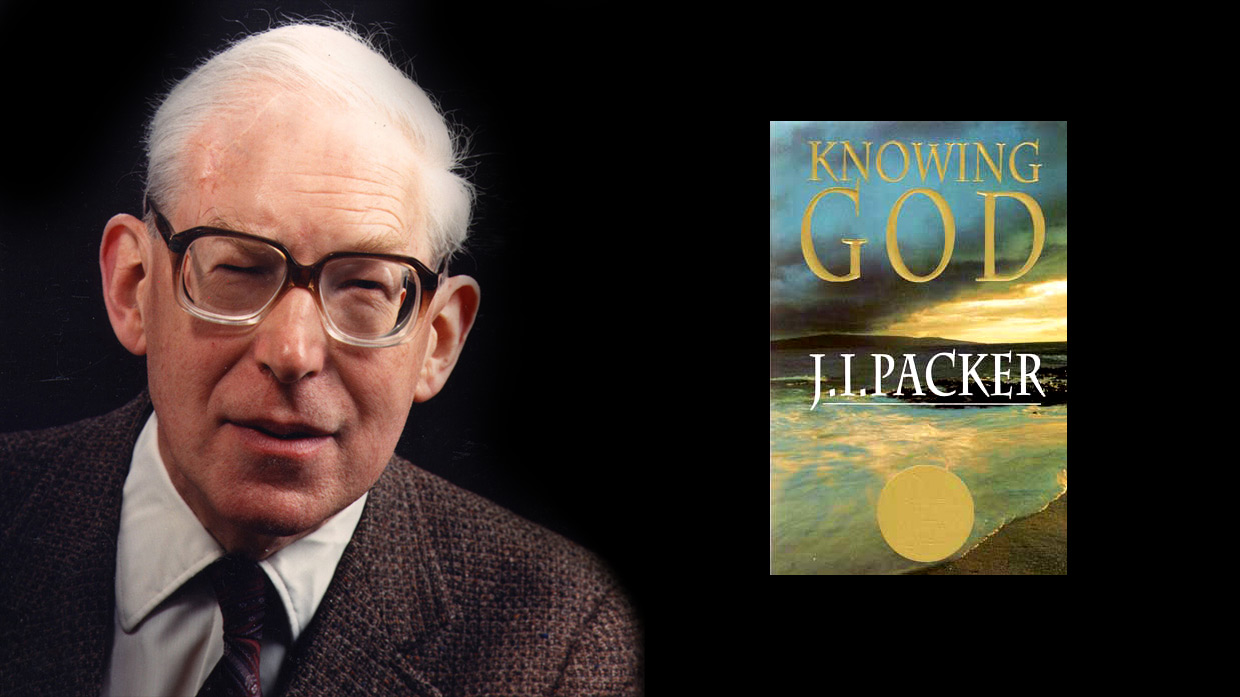
In my first sermon, I wanted to aim high. So I plagiarized from Knowing God, by J. I. Packer.
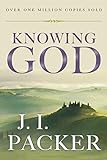
I was to preach for the first time to my home church in northern Ontario, having returned from a year of Bible school. I wanted to make good in the eyes of those who had discipled me, so I drew on the best book of theology I had ever read—which, of course, meant the best of about a dozen.
And by "drew on," of course, I mean "stole shamelessly from." In fact, I tried to summarize J. I. Packer's 35-page chapter on our adoption by God, perhaps one of the best treatments ever of that subject and itself a model of concision. My attempt to compress the already pithy certainly failed, and my plagiarism is inexcusable, but you have to admit: I had good theological taste already, even at the tender age of 17.
Knowing God does what very few books have been able to do: present page after page of carefully nuanced Christian doctrine in a style that people actually enjoy reading.
Forty years after its publication in 1973, Knowing God continues to bless readers around the world. It continues to inspire authors, too, as it does what very few books have been able to do: present page after page of carefully nuanced Christian doctrine in a style that people actually enjoy reading.
In so many churches, even those that pride themselves on serious preaching, you will hear pastors pause apologetically to warn their congregations, "Now, I'm afraid we have to stop here for a moment for some theology."
(One wonders, of course, what they thought they were doing before that, and what they think they will be doing after the dread theological interlude….)
J. I. Packer's Knowing God, however, makes no apology for theology. Or, rather, it does: it defends the value of theology from its very first pages, both telling and showing that knowledge of God, while it might pose dangers to conceited souls that delight in condemning other people's doctrinal shortcomings, is nonetheless essential to knowing God: to loving and serving and enjoying this Person at the center of our lives and our cosmos.
Packer looks askance at the trendy theologies of his day, and every day, that parade the false humility of epistemological diffidence about the knowledge of God, as if theologians deserve praise for providing sophisticated reasons why they cannot and will not tell us much about God who is so very "unknowable": "Churchmen who look at God, so to speak, through the wrong end of the telescope, so reducing him to pigmy proportions, cannot hope to end up as more than pigmy Christians."
God has gone to great trouble to make himself known, Packer avers alongside all Bible-valuing, Christ-honouring, Holy-Spirit-blessed Christians, and we must do all we can to learn all we can of what God has deemed important to tell us.
As Packer sets out chapter after chapter of the great truths of the gospel, however, he exhorts readers to render doctrine into worship and work, to "turn theology into doxology," as decades of his students at Regent College have learned to recite.
Thus Knowing God breathes a spirit of authentic piety. Packer has often been described, and enjoys being described as, a latter-day Puritan. Doctrine is key, but it isn't the core: Christ is, as mediated to us particularly through reflection on the Bible and attention to the Holy Spirit.
Any good theologian will say the same, of course. What makes Knowing God a rare and enduring blessing is Packer's ability to say it so well: to impart nicely balanced theological propositions by way of inviting conversational prose. Indeed, the book is a compilation of a series of magazine articles. And therein lies one of the secrets of its success: the author went to the trouble of acquiring a first-rate theological education (Packer earned his doctorate at Oxford) and then devoted himself to popular-level exposition. Few, few there be who do the same.
John Stott, of course, set a similar example in Biblical exposition, and today we have some authors who ply the same worthy trade. But how much more do we need of what J. I. Packer gives us in Knowing God: theology in a style that is at once authoritative, accessible, serious, pious, and inspiring.
If the contemporary church is growing to grow deep, both in North America and around the world, we need much more such writing—and speaking.
If the contemporary church is growing to grow deep, both in North America and around the world, we need much more such writing—and speaking. We are likely to get it, however, only from people who have paid the price Packer paid in terms of high-quality education devoted mainly to church-level discourse. Most scholars don't address the church because almost no PhD programs contain precisely any training in how to communicate effectively to laypeople (not even to students!), and few reputable schools give consideration for promotion and tenure to popular speaking and writing. Most scholars who love to teach the church literally have to do so alongside, and even in competition with, their professional advancement.
Alas, most of those who do address the church today lack anything like the rigorous training J. I. Packer undertook. A startling number of celebrity pastors haven't earned even a single degree in theological studies, and few have any training beyond the standard Master of Divinity degree—a program that typically requires no extended writing. We teaching types have a lot to learn about evangelism and church planting from our ecclesiastical entrepreneurs, to be sure. But they, in turn, quickly run out of material and their preaching either stays elementary or, dangerously, moves into areas beyond their training and ability. We need more pulpit partnerships and other communicative collaborations today between the evangelist-entrepreneur and the pastoral teacher.
As Jim Packer continues to teach at Regent and to write for the world, therefore, let us pause for a moment to give thanks for the extraordinary gift of Knowing God. And let us resolve to settle for nothing less than the best such teaching we can find today.
John Stackhouse succeeded J. I. Packer in the Sangwoo Youtong Chee Professorship at Regent College, Vancouver. His most recent book is Making the Best of It: Following Christ in the Real World (Oxford) and contains very little plagiarism.