





Several years ago, when I was still living in New York, I interviewed for a couple jobs in California. At the time, my greatest hope hinged on moving to the West Coast, but as I waited, I asked God to help me rejoice, whatever the answer.
One bitter cold day in January, I heard back: neither company wanted me. As I stood in my tiny kitchen, absorbing the news, I foresaw the familiar emotional spiral into which I could easily tumble. But I had pledged to rejoice.
Even though I didn’t feel gratitude or joy inside, I decided to act in celebration. Despite my dismay, I could still affirm with my body God’s unseen, but good, plan for my future. I made a pineapple cake and sangria – two small celebratory foods for me, especially in winter. To my surprise, the downward spiral never came. My heart shifted slowly toward trust, and I rode out the disappointment far more resiliently than expected.
That experience taught me of the power of physical and bodily celebration, even small, in honoring God’s good plan for my life and all of creation. Following Easter Sunday, the greatest occasion for celebration we know as Christians, we have a chance to use our physicality, the power of our bodies and senses, as we respond to the Good News.
During Lent, believers around the world spent 40 days lamenting and repenting of the sin and brokenness for which Jesus had to die. How much more should we give to celebrating his victorious resurrection three days later! While most of us know Easter as a daylong celebration, the church liturgy dedicates 50 days to the season of Easter, sometimes called Eastertide.
Given that American Christianity retains some marks of the ascetic Calvinism and Puritanism from which it emerged, 50 days of celebration may sound peculiar. Celebrations, after all, are keenly embodied and multisensory–rich in tastes, scents, and sounds—which perhaps explains why we are much more comfortable with the self-sacrifice of Lent than the feast of Easter.
But it’s only right to reserve our greatest celebrations for the two most important acts in God’s redemption of the world—Jesus’ birth and death—and to not limit them to one day.
Celebrations testify to our values. Moses instructed the Israelites, “Love the Lord your God with all your heart and with all your soul and with all your strength” (Deut. 6:5). That command surely means loving him with our whole bodies, too.
In marriage, the ultimate act of love between a couple involves their whole bodies—and the church endures in the next age, while Jesus said marriage would not. How could an annual service celebrating Jesus’ work on the cross suffice to show our love and gratitude in response? Would we give more of ourselves in sex than we do in worship?
This year, celebrating the 50 days of Easter is more than just an act of love due to God; it’s an act of faith I desperately need. Like the disappointment I experienced after those job rejections, I find myself reaching the start of Easter weighed down by anxiety, worries, and questions for God.
Shortly before Lent, I began battling a mite infestation that’s robbed me of sleep, money, and leisure time and will soon drive me from a beloved apartment. As I’ve endured these biting bedmates, endless cleaning and laundry, and even some degree of social isolation, it’s been difficult to remember that somehow God is still Lord over even these bugs. In the midst of yet another wee-hour wake-up from crawling things, he can seem more like the deists’ absent watchmaker—and that’s amid a fairly trivial trial.
It’s been harder to pray with a homeless friend near my BART station, who seems to face a new setback each week. I often ask God to show himself God of the orphan to her, but what if he lets us down?
This Lent it proved harder still to trust God while I watched from afar as a childhood playmate suffered his final death pangs from cancer (he died Maundy Thursday, three weeks before his 33rd birthday, only months into his marriage). And it was hardest yet to read the deep lament, grief, and anger from so many black friends, neighbors, and fellow Christians over continued injustice, racism and the frequent dismissal or apathy of white Christians, in which I am complicit.
Why do so many prayers for God’s kingdom to come seem to go unanswered?
Thankfully, such doubts don’t surprise God. They never have. Throughout the Bible, prophets urge God’s people to remember his deliverance, adjuring a disciplined recollection that doesn’t come naturally.
To help us, God appoints deliberate, embodied, and communal observances. In the Old Testament, he institutes the most significant, embodied ritual—Passover—to commemorate his most significant act of salvation, their deliverance from slavery to the Egyptians. And in the New Testament, Jesus reserves his most significant, embodied teaching for the reinterpretation of Passover that Christians practice as communion. Each time we eat and drink the Lord’s Supper–an act involving all five senses—we commemorate Jesus’ ultimate act of salvation, his death and bodily resurrection, through which the curse has been undone.
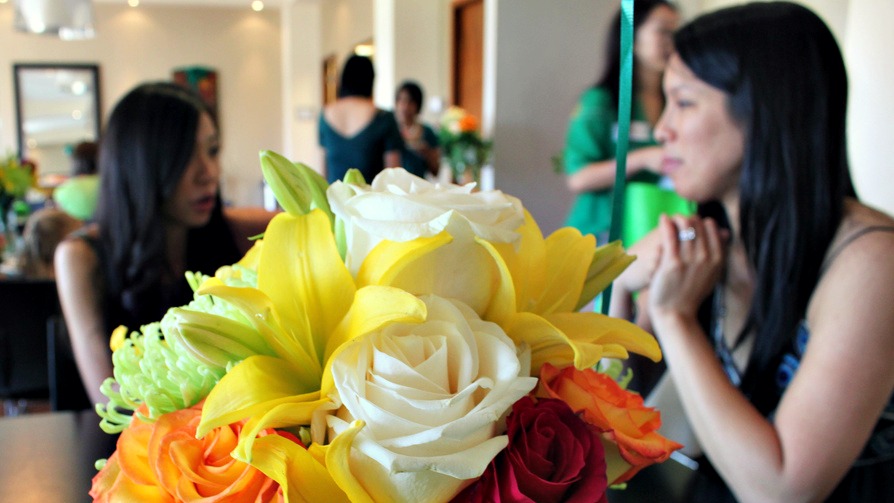
Here’s to 50 days of rejoicing in God’s now-and-not-yet kingdom. Keep out the good china. Buy fresh flowers for the house, or even your office. Put raspberries on your cereal. Host weekly dinner parties. Dress up each Sunday of Eastertide, or pin a flower to each week’s outfit. Burn your nicest candle. Add champagne to your orange juice on the weekends. Have a weekly family dance party.
He is risen. May our celebrations affirm that he is risen indeed.







