I hate to admit it, but my confidence as a woman isn’t always the steadiest. My identity hinges on different things depending on the week. Sometimes it’s my house. Sometimes it’s my cooking. Sometimes it’s my kids. One week last month, it was party planning.
My son just celebrated his third birthday, a milestone that led me to Pinterest in search of party ideas. I typed in “Curious George birthday party” and was inundated with images of banana-themed desserts, monkey-decorated favors, and color-coordinated accessories. It was so cute but so overwhelming, even for someone who had been through this before.
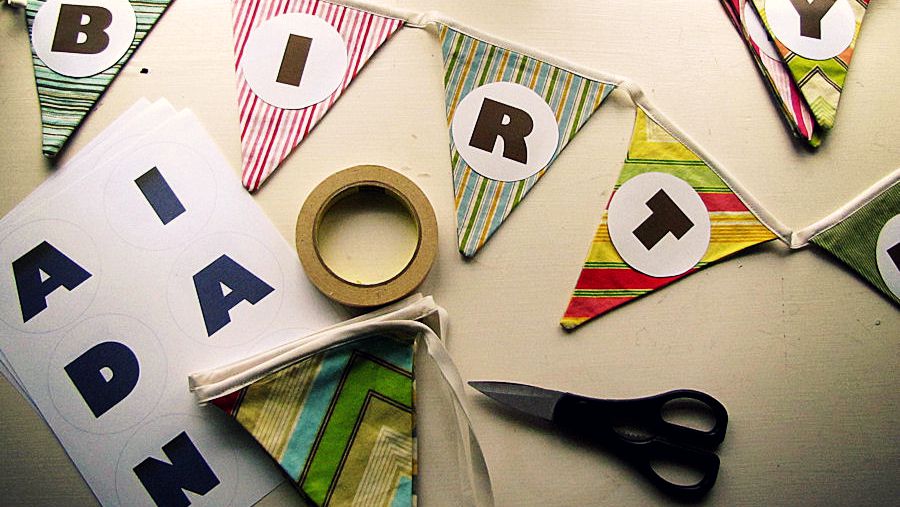
Two years ago I threw a whale-themed party for my son. Thanks to Pinterest, I incorporated whales everywhere: formal invitations, labels, cupcakes, fabric banners, even an inflatable whale pool and whale sprinkler. The coup de grace was the party favors: I filled my son’s old baby food jars with M&Ms in various shades of blue, covered the caps in blue gingham fabric, and attached custom labels with twine.
The party was absolutely precious—and I promised myself I would never do it again. These parties are exhausting, expensive, and stressful, so I decided to pull back. But it hasn’t been easy. Whenever I go to one of these elaborate Pinterest-inspired party, or scroll through the images of picture-perfect showers, homes, yards, and crafts, I feel pressure to keep up.
According to a survey of US moms, I am not alone. More than 4 in 10 of us admit to struggling with “Pinterest stress” and worrying that we are “not crafty or creative enough.” As a result, many of us take on projects we don’t really enjoy but feel like we’re expected to do. We end up in an endless cycle of comparison, and exhaustion.
In her new book, For the Love, Jen Hatmaker pinpoints the source of Pinterest stress, which showcases everyone’s greatest accomplishments:
The trouble is, we have up-close access to women who excel in each individual sphere. With social media and its carefully selected messaging, we see career women killing it, craft moms slaying it, chef moms nailing it, Christian leaders working it. We register their beautiful yards, homemade green chile enchiladas, themed birthday parties, eight-week Bible study series, chore charts, ab routines, “10 Tips for a Happy Marriage,” career best practices, volunteer work, and Family Fun Night ideas…. We combine the best of everything we see, every woman we admire in every genre, and conclude: I should be all of that.
Hatmaker is right. It’s unrealistic to expect any one woman to be industrious enough to complete all we see on Pinterest, yet we feel the pressure to try to be “her.” One dad spoke out to moms recently: “Just stop it!… don't try to be something you're not.” He went on:
There's a type of person who actually enjoys doing this kinda thing. She sits whistling in her craft room, making little doo-dads out of marshmallow fluff…while bluebirds flit about her shoulders—and she's having fun.
The description may be a stretch, but Scott Dannemiller has a point. Some women plan parties or make crafts, not to one-up their friends or meet invisible expectations, but because they enjoy it. These women do it for themselves and their passions. For them, it’s not a competition but a joy. That enjoyment—not the decorations, not the food, not the photo ops—should be our standard.
I appreciate this perspective because it makes room for everyone. As a mom who hates party-planning, I could judge other women who aren’t like me. I could make fun of their efforts. I could call their labor a waste of time. I could blame them for fueling the competition between women. Or, I could celebrate their gifts. I could honor the talent that was given to them by God. And rather than wonder how I will ever attempt to do the same, I could relax and enjoy it.
After I scaled down my kids’ birthday parties, I began telling people I am the “bar lowerer.” My gift to myself, and to others, is lowering expectations. If planning unimpressive parties, or cooking average meals, or wearing less makeup, or having a modest home, takes the pressure off others, then I will assume that role with joy. Making myself smaller, and less remarkable, can actually be an act of love.
In 2 Corinthians 12:9, God speaks these words to Paul: “My grace is sufficient for you, for my power is made perfect in weakness.” Paul then responds, “Therefore I will boast all the more gladly about my weaknesses, so that Christ’s power may rest on me.” I used to read these words as a personal encouragement: When I am weak, when I fail, when I run up against my limitations, I can make space for God to enter in. My shortcomings are an opportunity to trust in God and let him move.
I’ve come to see another way of reading the passage. In a culture that pressures us to look perfect and do it all perfectly, it is a powerful thing to boast in our weaknesses. In fact, embracing our weakness is an act of love. It shuts down our instincts to compare and compete, and it communicates belonging to people with weaknesses like ours. Just as Jesus made himself small and denied himself glory, we embody his love when we do the same.
Everyone has different gifts for different purposes. If you love party-planning, then plan on! I have enjoyed the most beautiful parties, showers, and church events thanks to the gifts of women like you. You reflect the creativity and hospitality of God.
But if that’s not your gift, embrace your limitations as a different form of love. You are making space for women to breathe, to cease striving, to rest. That is your gift, and your witness. You belong, and the party-planners belong, and the church is richer for you both.