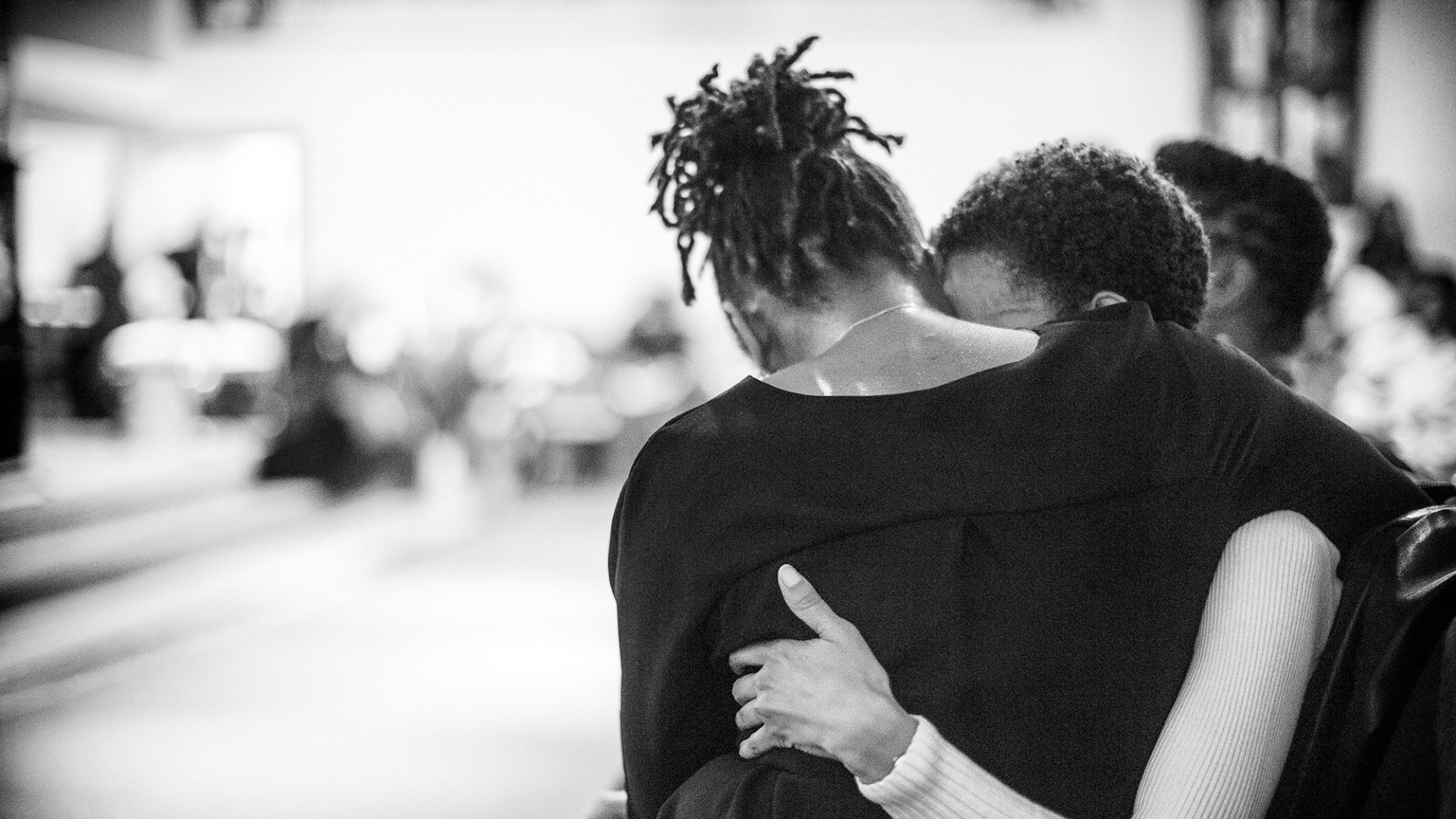
You may never know the woman next to you in church had a miscarriage.
Pregnancy loss happens to as many as one in five pregnant women before the 12th week. Yet researchers have found the topic remains a social taboo, often considered almost a nonevent because of the lack of status accorded to a developing child in the early stages in the womb. The experience is validated by many Christian women who harbor the pain of a “secret miscarriage.”
Add to that a general ignorance about abnormal cell development and other causes of most miscarriages, and many women would rather not suffer the victim-blaming inquiries of whether they lifted something heavy or smoked during the pregnancy.
There is some hopeful news, however, for couples grieving over the loss of an unborn child they already envisioned as part of their family.
If social support is generally lacking elsewhere, some new studies are finding there is one area of life that can have a significant positive effect on the mental health of women dealing with miscarriages: faith.
In a new study analyzing six waves of the National Longitudinal Study of Youth, sociologist Richard Petts of Ball State University found that religion may increase mental health and be an important coping mechanism for women dealing with pregnancy loss.
“The social support and framework provided by religion may be especially beneficial to mothers who miscarry but also have a live birth,” Petts noted.
The results were published in the March 2018 issue of the Journal for the Scientific Study of Religion.
Finding meaning
Researchers have generally found that religion can be an important resource for those coping with loss, including the death of a child.
Yet relatively little research has been done on the role of religion, pregnancy loss, and mental health. What studies that have been done have largely focused on a small group of women in a limited area.
Where Petts’s study makes a major contribution is in using six waves from 2000 to 2010 of a nationally representative sample of young women. The final sample size was 3,646 females who reported having a miscarriage.
His findings include:
- Levels of mental health were 6 percent higher among frequent religious service attenders than infrequent attenders who had a miscarriage but have never had a live birth.
- The levels of mental health were more than 8 percent higher for women with high religious participation who have had both a miscarriage and a live birth.
- There was a 3 percent positive difference in mental health among frequent attenders who had a miscarriage and were currently pregnant.
“Overall, these results suggest that religious participation may help protect against negative mental health outcomes among women dealing with miscarriage,” Petts stated. Though, the paper doesn’t distinguish religious affiliation, 86 percent of those surveyed identified as Christians.
Akin to experiences CT writer and author Trillia Newbell has described in her writing, other recent research affirms a positive role for religion in helping cope with miscarriage.
A study of 97 women in Israel found high rates of probable post-traumatic stress disorder and major depressive disorder following pregnancy loss after the first trimester. However, more religious women were less susceptible to PTSD, the researchers found.
“Religious belief often entails acceptance of adversity as guided by a larger force directing one's life,” researchers said. “It may also be associated with other factors associated with post-traumatic resilience, such as a larger, more tightly-knit social network.”
A Taiwanese study following 30 couples up to a year after pregnancy loss found that parents who have no religious beliefs and never attended rituals for the lost baby will predictably feel greater grief.
“Being a member of a religious organization not only affects one’s social support, but also one’s belief system, and potentially makes grieving less long-lasting and intense by providing bereaved parents with a reason and a meaning for their loss,” researchers said.
The difference between love and judgment
Not all religious influences are positive.
Studies also indicate people who have an image of a punishing, judgmental divinity who has forsaken them at times of loss face lower mental health.
One older study of 103 women in Pennsylvania who faced pregnancy loss found that beliefs such as that God was punishing them for their sins when they lost the baby were the most powerful predictor of greater maternal grief.
But in general, the research suggests that belief in a loving God who understands their pain and is a consoling presence and having a supportive network of religious friends are likely to help them cope with loss.
What can church congregations do?
Research suggests the first task is education, from the pulpit and in church websites and bulletins. Make people aware of the profound loss parents feel after a miscarriage and dispel myths that it was likely the woman’s fault.
Grieving individuals also can find value in religious rituals, from special prayers to burial ceremonies at cemeteries.
For many grieving parents, these rituals not only allow them to address and name their loss— parents are often encouraged to use the name they picked out at the services—but often provide hope that a merciful God will never forsake them.
For example, the Catholic blessing for parents after a miscarriage or stillbirth states, “Lord, grant mercy to all the members of this family, and comfort them with the hope that one day we will all live with you.”
David Briggs, a former national writer for the Associated Press who holds a master’s degree from Yale Divinity School, writes the Ahead of the Trend column on new developments in religion research for the Association of Religion Data Archives.