Voters in Arizona, Mississippi, Montana, New Jersey, and South Dakota were presented with state ballot measures this year concerning the legalization of marijuana for recreational or medical use. Washington, DC, residents were asked to weigh in on psychedelic mushrooms, with an initiative to effectively decriminalize them by putting their growth, possession, and sale “among the Metropolitan Police Department’s lowest law enforcement priorities.” And in Oregon, a ballot measure proposed making these same “magic mushrooms” permissible for closely supervised medical consumption while decriminalizing possession of hard drugs including heroin, cocaine, and LSD.
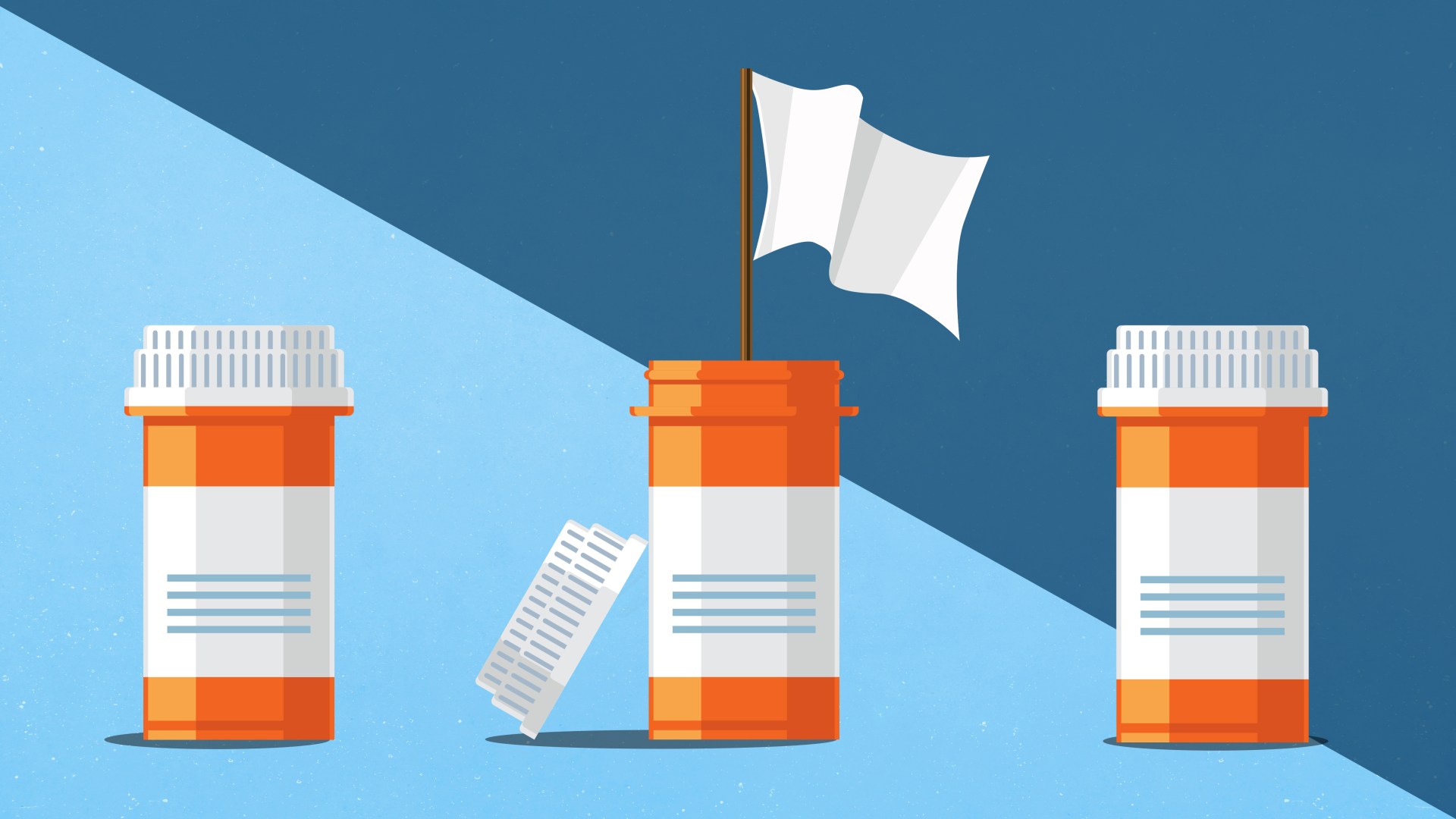
Every single measure succeeded, though the questions appearing on the ballot at all would have been unimaginable just a few elections ago—we are only eight years past the first state legalization of recreational marijuana. Our country’s prohibitionary approach to drug use is over a century old, but recent decades have seen a move away from marijuana prohibition, and this election’s mushroom initiatives suggest the drug war, more broadly, may be headed toward a truce. This is a shift Christians can, and do, support according to recent data. However, to support changes in drug laws is not to condone drug abuse, but rather a realization that the drug war has proven itself a moral and practical horror.
The Bible doesn’t discuss drugs. It doesn’t address addiction as a phenomenon with elements of illness, heredity, and moral agency alike; and it never mentions intoxicants like marijuana, psychedelic mushrooms, or narcotics. Yet we do have plenty of scriptural content on recreational alcohol use.
The Old Testament offers vivid accounts of intoxication as a cause of deep harm, like when Lot’s daughters—whom he’d offered up for mob rape in Sodom—enticed him to drink to a point of insensibility so they could have sex with him, behavior that now would be labeled drug rape (Gen. 19:4–8, 30–36). In Leviticus 10:8–10, God tells Aaron and his sons not to drink before going into his sanctuary so they can “distinguish between the holy and the common,” and the prophets and wisdom literature associate drunkenness with foolishness, gluttony, and pride. The New Testament likewise tells us to avoid drunkenness (Eph. 5:18; 1 Tim. 3:8; Titus 2:3).
Yet the Old Testament also labels wine as a good gift from God, a blessing to be given as a model of divine generosity (Deut. 15:13–15) and received as an expression of God’s loving care for his people (Deut. 11:13–14). Wine is used in the Lord’s Supper (Matt. 26:29), it’s recommended as medicine (1 Tim. 5:23) and as solace in misery and injustice (Prov. 31:4–9). Jesus, accused on one occasion of being a drunkard (Matt. 11:19), began his earthly ministry, in John’s account, by turning water into excellent wine so wedding guests could continue to celebrate (John 2:1–12).
Drunkenness is never defined in these passages. We’re left with some ambiguity between Jesus making wine for boozy partiers and the clear bans on intoxication that turns habitual, interferes with worship or duty, or occasions sin. How do we apply such ambiguity to the various intoxicants available in our time? A drug that produces inebriation analogous to five or ten drinks is obviously unacceptable for Christians’ recreational use, but a milder substance whose effect is comparable to one or two glasses of wine may be permissible. In those less certain cases, as in other matters of Christian liberty, we should neither judge (Rom. 14:13) nor tempt (Rom. 14:21) fellow Christians whose faithful conclusions differ from our own.
For those who’d allow mild drugs as licit for Christians, Scripture’s opposition to habitual intoxication remains consistent and adamant. Drug abuse is a sin. So why, then, should the drug war end? If the state wants to discourage sin, why would Christians object?
Because the war on drugs is an obscene failure. It fosters violent, organized crime and makes drug abuse and addiction more dangerous and treatment less attainable. This prudential case against the drug war applies whether you support prohibitionary laws to advance the common good or believe, as I do, that the government steps outside its bounds when it thus meddles with individual liberty.

The evidence of this failure is everywhere. In our criminal justice system, the drug war is a major driver of police militarization, mass surveillance and other civil liberties abuses, and mass incarceration. One in three new prison admissions is a drug offender. Drug enforcement saps police resources, too, with more than 1.4 million possession arrests each year (nearly half of them for marijuana) drawing limited law enforcement attention away from violent crimes like assault, armed robbery, and murder.
Meanwhile, the drug war is big business for organized crime, just like Prohibition was. “[I]f you look at the drug war from a purely economic point of view, the role of the government is to protect the drug cartel,” conservative economist Milton Friedman explained in 1991. “That’s literally true,” he continued, because only cartels and other unsavories with the money and unscrupulousness to get around the law can participate in the artificially lucrative black market for drugs. By banning domestic production and sales, our government grants them a de facto monopoly, and they accordingly smuggle and murder and sell dangerously tainted product.
The immense collateral damage of the drug war has done nothing to advance its promised cure. After more than $1.5 trillion spent over five decades in the United States, drug addiction levels have stayed flat, while our use rate is among the highest worldwide. By historic and international measures alike, our drug war has not helped a whit.
Most tragic of all is that we know how to do better. Our own history offers the example of ending Prohibition. With the return of safe, legal liquor sales, the homicide rate, which had spiked during Prohibition, took a prompt downward turn. Robbery, burglary, and assault rates did the same. We could do the same by ending the drug war.
We could also follow the example of Portugal, which decriminalized all drug possession two decades ago. By 2010, the rate of people seeking treatment for addiction had doubled, and hard drug abuse had fallen by half since the 1990s. Overdose deaths have become rare in Portugal because seeking treatment doesn’t risk harsh punishment. If we had Portugal’s rate, US overdose deaths would have been around 10,000 in 2018. Instead, 67,000 people died.
In the late 1980s and early 1990s, CT published a number of articles on the drug war. Reading these pieces now, the call for the church to wage a war “of goodness—a full-fledged wave of love, compassion, and rehabilitation that helps make drug use unattractive”—rings as true as ever. Profiles of churches doing exactly that are still worth a read, 30 years later. But in those same 30 years, the assumption, as one editorial put it, that a “strong-willed criminal-justice system” would curtail drug abuse has been cast into perduring doubt. The church’s loving war for goodness and grace—alongside an end to the government’s failed war on drugs—would prove a more hopeful and genuinely helpful battle plan.
Bonnie Kristian is a columnist at Christianity Today.